Navigating Media in Restricted Spaces: The Art of Careful Communication
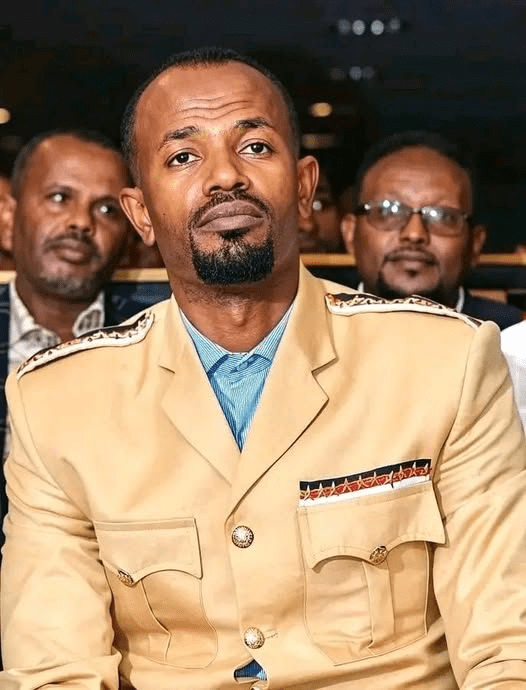
In an era of information saturation, those living under media restrictions face a unique challenge: how to express truth without inviting persecution.
In countries where media freedom does not exist, the act of communication itself becomes a calculated risk. Every word published, every opinion shared, every piece of information disseminated carries potential consequences—not just for the individual, but for their family, their community, and their cause.
The principle is simple but its application requires constant vigilance: in places without free media, nothing is simply as one wishes it to be.
The Landscape of Control
When media is not free, it is not merely absent—it is actively controlled. Information is filtered, shaped, and often fabricated to serve the interests of those in power. Independent journalism is suppressed. Social media is monitored. Private communications are intercepted.
In such environments, citizens learn quickly that open expression carries risks. A post critical of the government can lead to arrest. Sharing a news article from an independent source can invite interrogation. Even private conversations, if overheard by the wrong ears, can have life-altering consequences.
This is not paranoia. It is the lived reality for millions of people across the globe—including, many would argue, in parts of Ethiopia where media freedoms have been severely constrained in recent years.
The Power of Brevity and Clarity
For those who must communicate under such conditions, the counsel is wise: present information briefly and clearly.
Long, elaborate arguments provide more material for those who would twist words. Complex analyses offer more footholds for misinterpretation. The clearer and more concise the message, the harder it is to distort.
This does not mean abandoning truth or avoiding difficult subjects. It means recognizing that in restricted spaces, communication is a strategic act. Every word must earn its place. Every statement must be crafted with awareness of how it might be read—not only by intended audiences but by those who would use it as a weapon.
The Necessity of Self-Censorship
The advice continues: understand that what is not explicitly stated may be subject to distortion.
In free societies, context and implication can be taken for granted. Readers understand nuance. They fill in gaps with shared understanding. But when communication crosses boundaries—whether geographic, political, or ideological—what is left unsaid becomes vulnerable.
Those who monitor communications for signs of dissent are trained to find meaning in omission, to read between lines, to construct narratives from silence. The careful communicator must anticipate this, must consider not only what they say but what others might claim they meant.
Strategic Self-Presentation
The final counsel is perhaps the most important: exercise care in presenting one’s own thoughts and opinions.
This is not about abandoning principles or hiding one’s true beliefs. It is about recognizing that in hostile environments, the manner of expression can be as important as the content. Timing matters. Audience matters. The choice of words—and the choice of which words to leave unspoken—can determine whether a message reaches its intended recipients or lands its sender in prison.
Lessons for Diaspora Communities
For those who have escaped such environments and now live in countries with greater media freedom, the habits of careful communication do not always fade. Many in the diaspora continue to practice the same caution they learned at home—guarding their words, measuring their statements, calculating risks even when risks may no longer exist.
This is both a survival instinct and a connection to those still living under restriction. When diaspora communities communicate with people inside restricted countries, they must remember that their words may be read by more than their intended audience. A supportive message from abroad can become evidence against someone at home.
The Ethical Responsibility
For journalists, human rights advocates, and all who communicate across these boundaries, the lesson is clear: we must exercise care not only in what we say but in how we say it.
We must be brief where brevity protects. We must be clear where clarity defends. We must anticipate distortion and guard against it. And we must never forget that for many of our sources, our readers, our colleagues, the stakes of communication are not abstract—they are matters of life and liberty.
Conclusion
In a world where media freedom remains the exception rather than the rule, the art of careful communication is essential. It is not cowardice to measure one’s words. It is not compromise to consider consequences. It is wisdom—the hard-won wisdom of those who have learned that in places without free media, nothing is simply as one wishes it to be.
The goal remains truth. The commitment remains justice. But the path must be walked with eyes open, with steps measured, and with constant awareness of those who would use our words against us and against those we seek to serve.
This commentary is offered in solidarity with journalists, activists, and ordinary citizens around the world who continue to speak truth under conditions of media restriction. Their courage inspires us; their safety concerns us; their voices must be amplified—carefully, clearly, and with constant attention to the consequences.

Posted on March 6, 2026, in Events, Finfinne, Information, News, Oromia, Press Release, Promotion. Bookmark the permalink. Leave a comment.




 Advocacy for Oromia
Leave a comment
Comments 0