“Women Build Both Home and Homeland”: The Indispensable Role of Oromo Women in Nation-Building
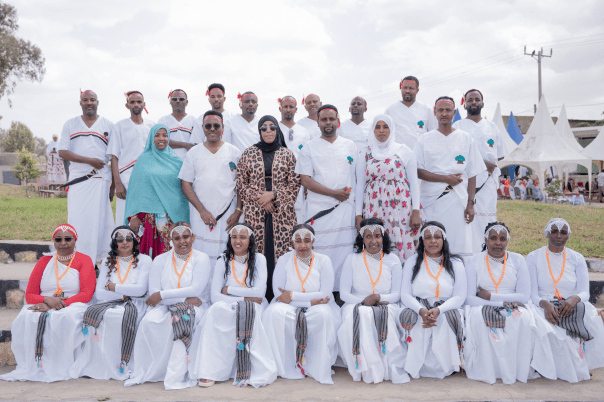
As International Women’s Day 2026 is celebrated globally, the women of Oromia stand as pillars of family, community, and liberation—their contributions finally receiving the recognition they deserve.
FINFINNEE, March 7, 2026 — As the world prepares to mark International Women’s Day on March 8, 2026, the spotlight turns to the indispensable role women play in every facet of society—from the daily rhythms of family life to the grand architecture of nation-building.
This year’s global theme, “Rights. Justice. Action. For ALL Women and Girls,” calls for translating commitments into concrete change: eliminating harmful practices, dismantling barriers to equality, and amplifying women’s voices on the world stage. Complementing this is the global campaign “Give to Gain,” which emphasizes that supporting and empowering women—individually, collectively, and nationally—is not charity but strategy. When women are empowered to contribute their full strength, participation, and potential, they become transformative forces in social and political change.
For Oromo women, this message resonates with particular urgency and pride.
From Home-Building to Homeland-Building
In Oromo society, the proverb holds true: a home without a woman is a deserted place. Women are mothers, sisters, wives, and daughters—each role carrying profound dignity and responsibility. But their contribution extends far beyond the domestic sphere.
The Women’s and Children’s Affairs Wing of the Oromo Liberation Army (DDD-ABO) has issued a powerful statement on the eve of International Women’s Day, affirming that Oromo women play a visible and undeniable role in both building families and building the nation.
“Women in Oromo society occupy a position of great honor and respect,” the statement reads. “From constructing homes to constructing the homeland, their contribution is clear and unmistakable. A home without a woman is an abandoned place.”
Women in the Liberation Struggle
The history of the Oromo liberation struggle is written in the blood and sacrifice of women. Despite facing double oppression—both as Oromos under a repressive system and as women in a patriarchal world—they have never been subjugated or silenced.
Throughout decades of struggle, Oromo women have shouldered immense burdens. They have been fighters on the front lines, organizers in the shadows, and the backbone of communities under siege. Foreign oppression and gender-based violence have sought to break them, but have only forged them stronger.
Their participation in the broader national movement has been unwavering, their commitment absolute. They have proven that the liberation of Oromia cannot be achieved without the liberation of Oromo women.
Political Participation: The Key to Lasting Peace
This year’s theme from the DDD-ABO carries a powerful message: “Women’s participation in politics is fundamental to peace, justice, unity, and nation-building.”
The statement emphasizes that when women are involved in governance and political decision-making, the outcomes are transformative. Their participation ensures lasting peace, upholds justice, strengthens national unity, and builds a proper foundation for the state.
“Women’s involvement in government and political decision-making demonstrates that they play a crucial role in achieving sustainable peace, ensuring justice is upheld, strengthening national unity, and building the nation properly,” the statement declares.
This vision aligns with the ABO’s commitment to establishing a peaceful and lawful government. The organization has put forward its symbol, Horooroo, as the choice before the people in the upcoming electoral contest.
Horooroo: A Symbol of Peace and Identity
The ABO’s electoral symbol, Horooroo, represents peace, reconciliation, justice, and the broad identity of the Oromo people. It embodies the right to self-determination and stands for democracy, justice, equality, and lasting peace.
As Oromia approaches its 7th round of elections in 2026, the ABO is contesting under this symbol, offering a vision of a lawful, people-centered government—government by the people, for the people. The DDD-ABO statement makes clear that this vision cannot be realized without the full participation and empowerment of women.
“To achieve this goal,” the statement affirms, “we must work together in unity. We must choose the ABO’s ‘Horooroo’ symbol in this 7th round of elections to build a lawful and just government that includes and empowers women to bring about real change.”
A Call to Action
As International Women’s Day 2026 is celebrated, the message from Oromo women is clear: their role in building both home and homeland is indispensable. Understanding this, ensuring their participation across all sectors—political, economic, and social—is not optional but essential for achieving lasting peace, restoring justice, reclaiming national truth, mending national unity, and building a democratic state.
The DDD-ABO concludes its statement with a rallying cry that echoes across Oromia:
“Victory to the Broad Public!
Women’s and Children’s Affairs Wing (DDD) ABO
March 7, 2026
Finfinnee”
The Road Ahead
This International Women’s Day, as the world reflects on the progress made and the journey still ahead, Oromo women stand as living proof that empowerment is not a gift to be granted but a right to be recognized. They have always built—homes, communities, movements, and a nation. The task now is to ensure they have their rightful place at every table where decisions about their future are made.
For in the words of the DDD-ABO, when women participate fully, peace becomes lasting, justice becomes real, and the homeland becomes whole.
International Women’s Day 2026 is being observed globally on March 8 under the theme “Rights. Justice. Action. For ALL Women and Girls.”

Posted on March 6, 2026, in Events, Finfinne, Information, News, Oromia, Press Release, Promotion. Bookmark the permalink. Leave a comment.




 Advocacy for Oromia
Leave a comment
Comments 0