Daily Archives: March 9, 2026

Oromo Women Celebrate International Women’s Day with Beauty and Strength at ABO Headquarters in Gullallee
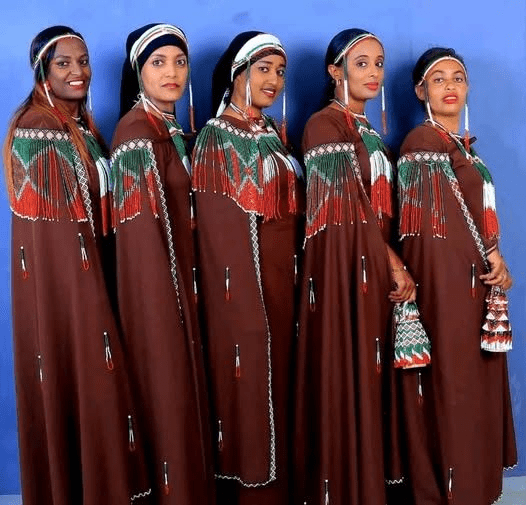
A historic celebration unfolds as Oromo women gather in their cultural attire to honor International Women’s Day, marking a moment that will be recorded in the annals of the struggle.
GULLALLEE, OROMIA — In a powerful display of cultural pride and unwavering determination, Oromo women gathered at the ABO Main Headquarters in Gullallee to celebrate International Women’s Day, adorning themselves in traditional attire that spoke to both their heritage and their resilience.
The celebration was not merely a commemoration—it was a declaration. Dressed in the vibrant colors and intricate patterns of Oromo cultural clothing, the women who gathered represented the heart of the Oromo liberation struggle. Their beauty, both external and internal, reflected the dignity of a people who have refused to be erased.
Beauty as Resistance
In the context of Oromo history, the act of gathering in cultural dress carries profound meaning. For generations, Oromo identity was suppressed, their language marginalized, their traditions denigrated. To stand today, openly and proudly wearing the clothing of their ancestors, is itself an act of resistance.
The women who filled the ABO headquarters in Gullallee demonstrated that the struggle for Oromo liberation is not only fought in the forest or through political organizing—it is also fought through the preservation and celebration of culture. Every traditional garment worn, every Oromo song sung, every dance performed strengthens the cultural foundation upon which the political struggle rests.
A Celebration Rooted in Tradition
The International Women’s Day celebration at the ABO headquarters was distinctively Oromo. While the world marks March 8 as a day to recognize women’s achievements and advocate for gender equality, the women of Gullallee infused the global observance with their own cultural particularity.
They came carrying not only the aspirations of women everywhere but the specific hopes of Oromo women—hopes for a liberated Oromia where their children can grow up speaking Afaan Oromo without shame, where their daughters can wear traditional clothing without fear, where their voices will be heard in the councils of the nation they are building.
A Day Recorded in History
According to organizers, this celebration at the ABO Main Headquarters in Gullallee has been recorded as a unique chapter in the history of the struggle. It will be remembered not only as an International Women’s Day event but as a moment when Oromo women collectively demonstrated their centrality to the liberation movement.
The gathering sent a clear message: the struggle for Oromia’s freedom cannot succeed without the full participation of its women, and those women are ready, willing, and determined to play their part.
Women at the Heart of the Struggle
The celebration in Gullallee reflects a broader recognition within the Oromo liberation movement of women’s indispensable role. From the ancient Siinqee institution—a traditional women’s system of mutual protection and conflict resolution—to the Qarree movement of young women activists today, Oromo women have always been at the forefront of resistance.
Yet their contributions have too often been overlooked in historical accounts. Events like this International Women’s Day celebration serve as correctives—public acknowledgments that the struggle could not continue without the women who fight, organize, endure, and sacrifice alongside their male counterparts.
Looking Forward
As the women of Gullallee dispersed after their celebration, they carried with them more than memories of a pleasant gathering. They carried renewed commitment to the cause, strengthened bonds with one another, and the knowledge that their participation is not merely welcomed but essential.
The celebration at the ABO headquarters will indeed be recorded in history—not as an isolated event but as part of a continuum of Oromo women’s resistance that stretches back generations and will continue until Oromia is free.
The Oromo women who gathered at ABO Main Headquarters in Gullallee on International Women’s Day 2026 have added their names to the long roll of heroines who have sustained the Oromo struggle. Their beauty, their strength, and their determination will not be forgotten.

Ilfinash Qannoo: A Voice That Sustained the Struggle, A Face That Inspires Generations
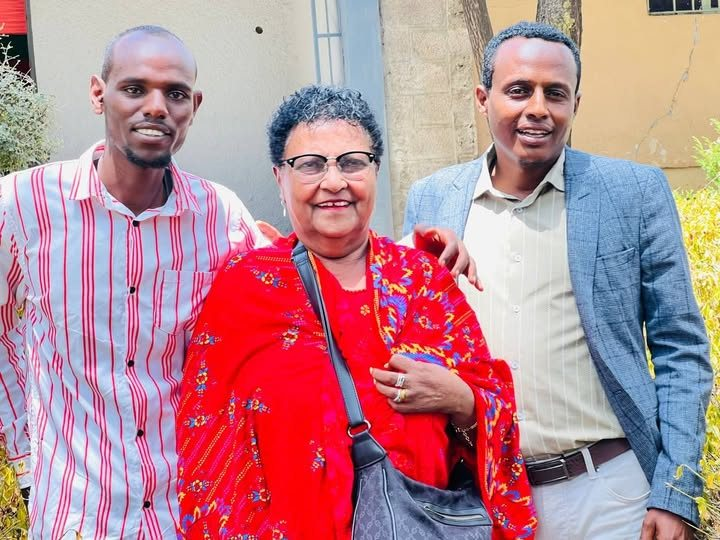
The power of art in times of struggle is immeasurable. It sustains the weary, emboldens the fearful, and etches the faces of heroes into the collective memory of a people. Artist Ilfinash Qannoo embodies this truth.
Just as her voice has supported the national struggle for decades, this image of her now reveals something profound: she has become a lasting legacy and a source of inspiration for today’s generation. She is a symbol of resilience and a heroic figure of unwavering determination.
The Voice That Never Weakened
For years, Ilfinash Qannoo’s voice has been inseparable from the Oromo struggle. Through periods of intense repression, through moments of hope and despair, through the long, grinding years when liberation seemed impossibly distant—her songs have been there.
Her music has not been mere entertainment. It has been sustenance for fighters in the forest, comfort for mothers who lost sons, encouragement for students risking imprisonment, and a thread connecting the diaspora to the homeland. When words failed, when hope flickered, when the cause seemed lost, her voice reminded Oromos why they fight and what they fight for.
This is the power of the artist in a liberation struggle: to articulate what cannot be said in political statements, to reach what cannot be touched by organizational structures, to heal what weapons cannot protect.
The Face That Speaks to Youth
In this photograph, something additional is visible. On the faces of the young people surrounding Ilfinash Qannoo, one reads a clear and undiminished determination. These are not casual admirers posing with a celebrity. These are youth who have learned from the history of those who came before and dedicated themselves to the hope of tomorrow.
Their expressions carry a vision—one that is clear, focused, and unshakeable. They represent a generation that refuses to accept the limitations imposed by oppression. They are the living proof that the struggle did not die with previous generations but was passed like a torch to hands ready to carry it forward.
The Symbol of Endurance
Ilfinash Qannoo has become more than an individual artist. She is now a symbol—a representation of what it means to endure, to persist, to remain faithful to a cause across decades. Her very presence in this photograph, surrounded by young people whose parents may not have been born when her career began, speaks to the continuity of the Oromo struggle.
She has witnessed phases of the movement that today’s youth only read about. She has sung through regimes that came and went, through victories and setbacks, through hope deferred and hope renewed. And still she sings. Still she stands. Still she inspires.
The Legacy Multiplies
What makes this image particularly powerful is the multiplication of legacy it captures. Ilfinash Qannoo’s voice and presence have inspired these young people. But they, in turn, will inspire others. The legacy does not end with her—it branches, grows, and reaches into futures she may never see.
This is the nature of true impact. Not to create followers but to create leaders. Not to build a monument but to plant seeds. Not to be remembered but to ensure that remembering becomes a living practice passed from generation to generation.
The Heroic Determination
Ilfinash Qannoo embodies a particular kind of heroism—not the heroism of the battlefield, though equally essential. Hers is the heroism of remaining creatively alive in conditions designed to crush the spirit. The heroism of continuing to produce beauty when ugliness surrounds. The heroism of giving voice to a people determined to be silenced.
This is gootittii jadbumma—heroic determination. It is the quality that refuses to accept defeat, that finds ways to express when expression is dangerous, that keeps creating even when creation seems futile. It is the quality that liberation movements cannot survive without.
A Vision for Tomorrow
On the faces of the young people in this photograph, we see the future of Oromia. They carry in their eyes the vision of a free homeland. They carry in their hearts the lessons taught by artists like Ilfinash Qannoo. They carry in their hands the responsibility to complete what previous generations began.
The struggle continues. The voice still sings. The faces still shine with determination. And in this image, captured in a single moment, the entire story of the Oromo people’s resilience is told: the elder who never gave up, the youth who will never surrender, and the unbreakable bond between them that ensures the struggle will outlast any oppression.
Ilfinash Qannoo’s legacy is not only in the songs she has sung but in the generations she has inspired. May her voice continue to sustain the struggle, and may the faces of today’s youth one day look back on this moment as the time they received the torch and carried it forward.

“Our Name is ‘Oromo Liberation Front.’ Freedom from Whom?”
A thoughtful examination of the question at the heart of the Oromo struggle—and why it reveals more about the asker than the answer.
The question arrives with predictable regularity, often from those who have never troubled themselves to understand Oromo history, never read a book on Ethiopian politics, never listened to an Oromo voice speak of their own experience. It is posed as a challenge, sometimes as a trap, occasionally as genuine curiosity wrapped in skepticism:
“Our name is ‘Oromo Liberation Front.’ Freedom from whom?”
The question deserves an answer—not because the asker is entitled to one, but because the answer reveals the fundamental injustice that has shaped Oromo existence for over a century.
The Historical Record
Freedom from whom? Let us consult the historical record.
Freedom from the Abyssinian empire that began incorporating Oromo lands through conquest in the late 19th century, imposing Amharic language, Orthodox Christian religion, and a feudal system that reduced Oromo farmers to tenants on their own ancestral lands.
Freedom from the Haile Selassie regime that systematized land alienation, that declared Oromo language and culture backward, that sent Oromo students to prison for speaking their mother tongue, that told an entire people their identity was a shame to be shed.
Freedom from the Derg that massacred thousands of Oromo civilians, that executed General Tadesse Birru—the father of Oromo nationalism—on March 19, 1975, that tortured Oromo intellectuals in Maikelawi prison, that waged war on Oromo peasants who dared to demand recognition.
Freedom from the EPRDF regime that continued the same project under new rhetoric, that created ethnic federalism as a cage rather than a liberation, that responded to peaceful Oromo protests with bullets and mass arrests, that killed hundreds of Oromo youth in the 2016-2018 uprising.
Freedom from the current Prosperity Party government that has overseen the deaths of over 7,500 Oromo civilians according to documented counts, that runs clandestine death squads called Koree Nageenyaa, that arms “counterfeit OLA” forces to commit atrocities that can be blamed on the liberation movement.
The Structural Reality
Freedom from a political system designed explicitly to subordinate Oromo interests to those of a ruling elite that has never, in over a century, permitted an Oromo to lead the country except as a figurehead serving non-Oromo masters.
Freedom from an economic order that extracts Oromo resources—coffee, gold, agricultural wealth—while leaving Oromo communities in poverty.
Freedom from a cultural hierarchy that continues to treat Oromo identity as provincial, Oromo language as less-than, Oromo traditions as primitive survivals to be replaced by “national” culture.
Freedom from a security apparatus that arrests Oromo activists without charge, that tortures Oromo prisoners with impunity, that shoots Oromo protesters as though their lives cost nothing.
The Personal Dimension
Freedom from the specific, intimate violence that Oromos have endured generation after generation:
The father taken away and never seen again. The daughter raped by soldiers. The son shot during a peaceful protest. The grandmother whose land was “redistributed” to settlers. The child forbidden to speak Afaan Oromo at school. The student imprisoned for organizing a cultural event. The journalist tortured for writing the truth. The singer assassinated for giving voice to a people’s pain.
What Liberation Means
So yes: Oromo Liberation Front. Freedom from all of this. Freedom from the political, economic, cultural, and military domination that has defined Oromo existence for over a century.
But the question also carries an implicit assumption worth examining: that the struggle for Oromo liberation is somehow exceptional, somehow unreasonable, somehow suspect. The asker rarely poses similar questions to other movements:
“South African freedom from whom?” From apartheid.
“Palestinian liberation from whom?” From occupation.
“Kurdish freedom from whom?” From denial of nationhood.
“Tibetan independence from whom?” From Chinese domination.
Only when Oromos seek freedom does the question become, in the mouths of some, an accusation.
The Counter-Question
So let us turn the question around: Why does the struggle of 40 million people—Ethiopia’s largest ethnic group—for self-determination strike some as inherently illegitimate?
Why is it that when Oromos demand the right to speak their language, govern their affairs, develop their resources, and live in dignity, they are met with suspicion rather than solidarity?
Why is the Oromo Liberation Front named as it is, while liberation movements everywhere else are understood as natural responses to oppression?
The Answer We Deserve
Perhaps the questioner genuinely does not know. Perhaps they have only ever encountered the official narrative—the one that presents Ethiopia as an eternal, harmonious nation where all peoples live in equal dignity, and any challenge to that narrative is by definition “divisionist” or “terrorist.”
To such a questioner, we offer an invitation: Learn. Read the history written by Oromo scholars, not only by Abyssinian chroniclers. Listen to Oromo voices, not only to government pronouncements. Visit Oromia and speak with farmers, students, mothers. Understand what it means to be a people whose entire existence has been shaped by the denial of the very thing the question assumes they already have: freedom.
The Simple Truth
The Oromo Liberation Front exists because Oromos are not free.
Not free in the fundamental sense that every people deserves: to live on their land without fear, to speak their language without shame, to govern their affairs without external domination, to develop their resources for their own benefit, to pass their identity to their children without apology.
Freedom from whom? From every system, structure, and force that denies Oromos these freedom rights.
The question is not “freedom from whom?” but rather: After all this history, after all this suffering, after all this resistance—how could there not be an Oromo Liberation Front?
The struggle for Oromo liberation continues. And one day, when Oromia is free, the question “freedom from whom?” will have an answer so obvious that no one will need to ask it.

Women’s Journey of Resilience, Excellence, and Transformation: From History to the Cosmos
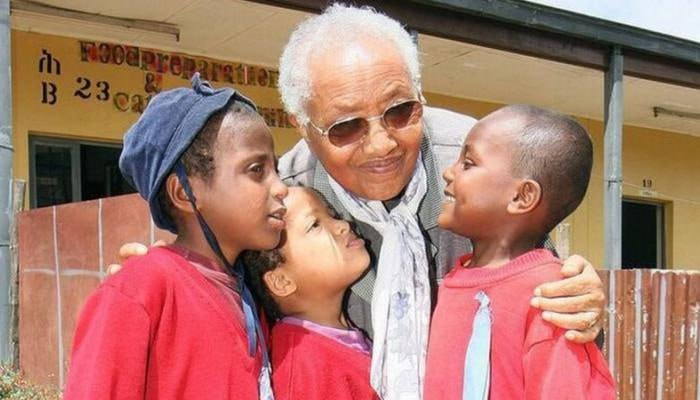
International Women’s Day is not merely a celebration of motherhood or sisterhood—it is a profound testament to human excellence, resilience, and the power to create change. Across centuries and continents, women have shattered every limitation imposed upon them, rising from the confines of domesticity to become leaders of nations, explorers of space, and architects of economies.
Once told that “their place was only in the home,” women today stand as presidents, astronauts, scientists, and visionaries reshaping the world. Their journey is one of triumph against impossible odds, and their stories illuminate the path for generations to come.
Oprah Winfrey: From Rural Poverty to Global Influence
In the rural Mississippi of the 1950s, a girl named Oprah was born into poverty and endured unspeakable abuse. The statistics said she would become another casualty of circumstance. Instead, Oprah Winfrey transformed her fractures into a bridge to success.
Without changing who she was—without denying her Blackness or her womanhood—she wielded her identity as her greatest weapon. She built a media empire that would make her one of the most influential figures on the planet. Her journey from a victim of horrific violence to a billionaire philanthropist and cultural icon stands as one of history’s most powerful testaments to resilience.
Oprah did not succeed despite her identity; she succeeded because she embraced it fully, proving that the very things society uses to marginalize women can become the foundation of unstoppable power.
Ethiopia’s Heroines: Legacy of Leadership and Courage
Turning to our own history, Ethiopia has produced women whose strength, intelligence, and vision shaped the nation’s destiny.
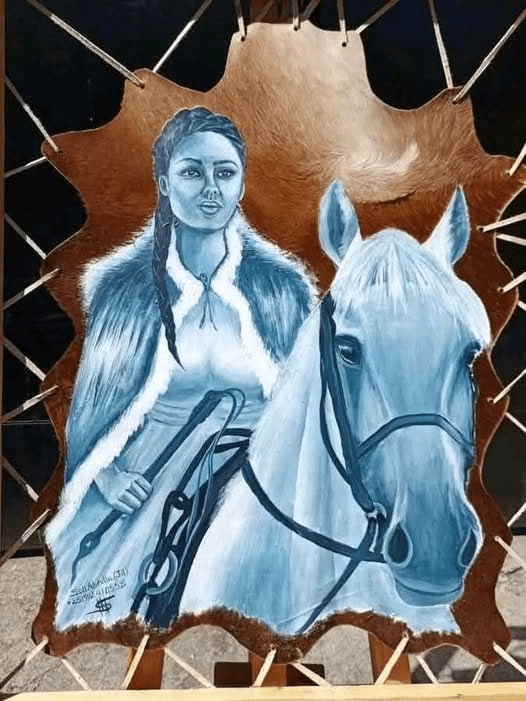
Empress Taytu Bitul: Diplomat and Strategist
Empress Taytu Bitul was not merely the wife of Emperor Menelik II—she was a leader in her own right, a brilliant diplomat, and a military strategist whose contributions to Ethiopia’s survival cannot be overstated.
At the Battle of Adwa in 1896, where Ethiopian forces defeated Italian colonialism, Taytu’s role was decisive. She commanded her own cavalry unit, fought alongside her husband, and outmaneuvered European diplomats at the negotiating table. When Italian representatives attempted to trick Menelik into signing away Ethiopian sovereignty through linguistic manipulation, it was Taytu who saw through the deception and exposed it.
Her political acumen, her courage on the battlefield, and her unwavering commitment to Ethiopian independence make her one of the most remarkable women in African history. She proved that women’s intelligence and strategic thinking are essential to national survival.
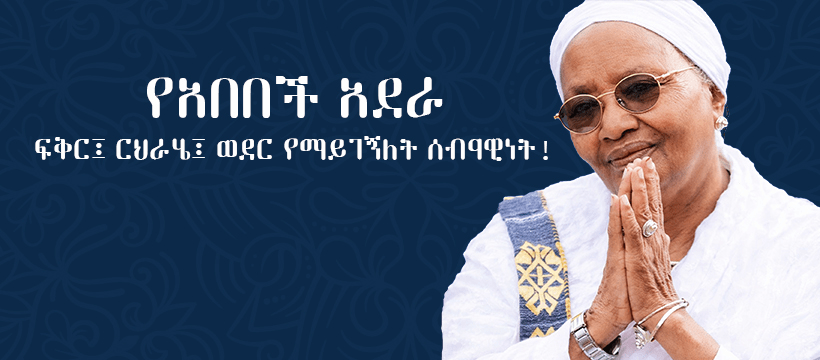
Emahoy Abebech Gobena: Africa’s Mother Teresa
Known as “Africa’s Mother Teresa,” Emahoy Abebech Gobena dedicated her entire life to humanitarian service. Born in 1935, she founded the Abebech Gobena Children’s Care and Development Organization, which has provided shelter, education, and hope to thousands of orphaned children.
Her life was a living sermon on compassion. She did not seek fame or fortune—she sought only to serve. In a world that often measures success by accumulation, Emahoy Abebech measured hers by the lives she touched, the children she saved, and the love she gave freely.
Her legacy reminds us that women’s power is not only expressed in boardrooms or parliaments but in the quiet, relentless work of caring for the most vulnerable. She transformed grief into grace and turned her life into a gift for generations.
Keketch Worede Woldetensae: A 19th Century Revolutionary
In the mid-19th century, long before women’s rights were a global conversation, a woman named Keketch Worede Woldetensae rose to challenge the injustices of her time.
Keketch fought for women’s access to justice and equality in an era when such concepts were barely whispered. She was a revolutionary who refused to accept that women should be silent, that their grievances should be ignored, that their voices should be suppressed.
Her struggle in the 1800s laid groundwork that would take generations to build upon. She may not appear in many history books, but her spirit lives in every woman today who demands to be heard, who insists on justice, who refuses to accept “because you are a woman” as a reason for limitation.
From Earth to the Cosmos
The journey of women from the confines of domestic spaces to the vast expanse of space itself represents the arc of progress. Today, women are astronauts who have walked in space, scientists who have unlocked the mysteries of the universe, and engineers who design the technologies that will take humanity to Mars.
This trajectory—from being told “your place is in the home” to claiming a place among the stars—captures the essence of women’s struggle and triumph. It is not merely about individual achievement but about the collective assertion that women’s minds, ambitions, and contributions belong everywhere that humanity reaches.
The Unfinished Journey
For all the progress celebrated on International Women’s Day, the journey is far from complete. Around the world, women still face violence, discrimination, and barriers to participation. In conflict zones like Oromia and across Ethiopia’s regions, women bear the heaviest burdens of war while receiving the least recognition for their resilience.
The women of Oromia, in particular, continue to fight on multiple fronts: against the violence of armed conflict, against cultural barriers that limit their participation, against a world that often overlooks their sacrifices. From the Siinqee tradition of mutual protection to the Qarree movement of young activists, Oromo women demonstrate daily that resilience is not passive endurance but active resistance.
A Call to Remember and Act
As International Women’s Day 2026 is observed around the world, we are called to do more than celebrate—we are called to remember and to act.
Remember the women who came before: Empress Taytu, who fought at Adwa; Emahoy Abebech, who gave her life to orphans; Keketch, who demanded justice in the 1800s; Oprah, who turned trauma into triumph; and the millions of unnamed women whose quiet courage built the foundation for every achievement.
And act: to ensure that the women of today—in Oromia, in Ethiopia, across Africa and the world—receive the recognition, support, and opportunities they deserve. For when women rise, humanity rises. When women lead, nations prosper. When women are free, the world is transformed.
On this International Women’s Day, we honor the resilience, excellence, and transformative power of women everywhere—from the battlefields of Adwa to the cosmos beyond, from the villages of Oromia to the boardrooms of global corporations. Their journey is our journey. Their triumph is our hope.
Special Report: ABO Women’s and Children’s Affairs Wing (DDD) Celebrates International Women’s Day in Gullallee
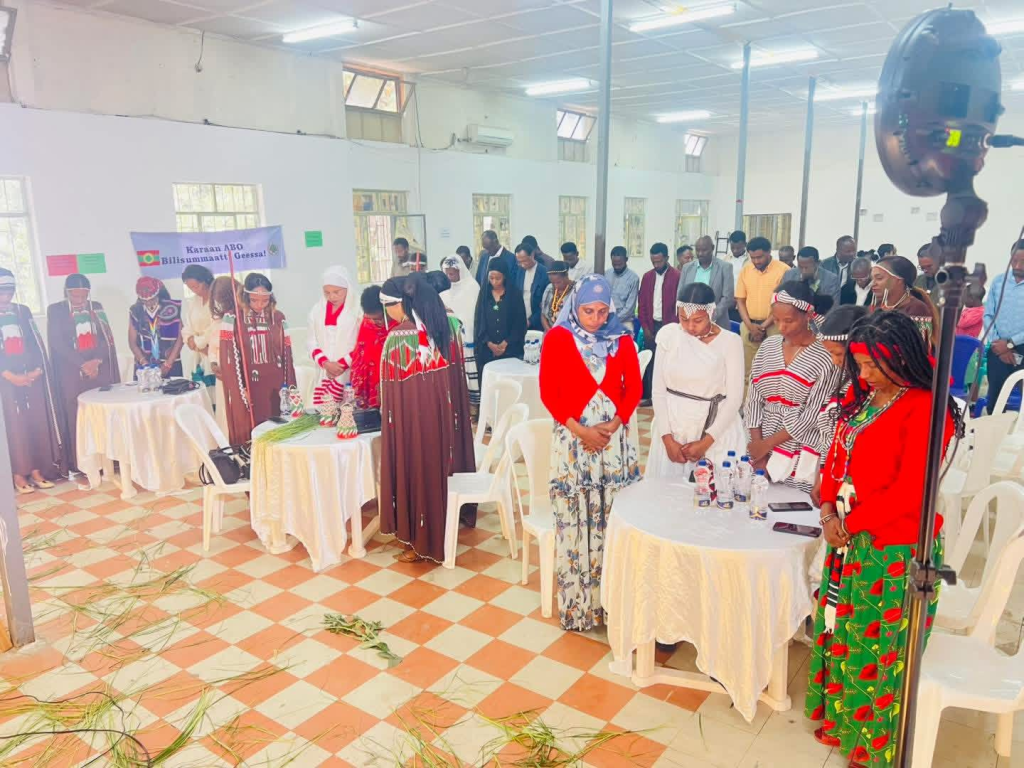
Under the powerful theme “Women’s Participation in Politics is Fundamental to Peace, Justice, Unity, and Nation-Building,” the Women’s Wing honors the indispensable role of women in the Oromo struggle.
GULLALLEE, March 7, 2026 — The Women’s and Children’s Affairs Wing (DDD) of the Oromo Liberation Front (ABO) celebrated International Women’s Day today at the ABO Main Office in Gullallee, gathering under a theme that left no doubt about the centrality of women to the liberation movement.
The event, held on March 7—one day ahead of the global observance—carried the resonant theme: “Women’s Participation in Politics is Fundamental to Peace, Justice, Unity, and Nation-Building.”
A Celebration of Recognition
The gathering in Gullallee brought together women fighters, community members, and leaders to honor not only International Women’s Day but specifically to recognize the contributions of Oromo women to the ongoing struggle for liberation.
The Women’s Wing organized the celebration with deliberate timing—ensuring that the message of women’s indispensable role would echo through the community before the world turned its attention to International Women’s Day on March 8.
The Theme: Participation as Foundation
The chosen theme reflects a profound understanding within the ABO: women are not merely participants in the struggle—they are its foundation. Without their full political participation, peace cannot be lasting, justice cannot be complete, unity cannot be achieved, and the nation cannot be properly built.
This recognition moves beyond rhetoric. It acknowledges that the liberation of Oromia cannot be separated from the liberation of Oromo women, and that any future Oromo state must be built with women’s full and equal participation from the ground up.
Women at the Heart of the Struggle
The celebration in Gullallee comes at a moment when the role of women in the Oromo liberation movement is receiving increasing attention. From the ancient Siinqee institution—a traditional women’s system of mutual protection and conflict resolution—to the Qarree movement of young women activists today, Oromo women have always been at the forefront of resistance.
Yet their contributions have too often been overlooked in historical accounts. Events like this International Women’s Day celebration serve as corrective acts—public acknowledgments that the struggle could not continue without the women who fight, organize, endure, and sacrifice alongside their male counterparts.
A Message to the World
By celebrating International Women’s Day with this particular theme, the Women’s and Children’s Affairs Wing sends a clear message to the international community: any engagement with the Oromo question must take seriously the role and rights of Oromo women. Peace processes that exclude women will fail. Political settlements that ignore gender equality are illegitimate. Nation-building that sidelines half the population builds on sand.
Looking Forward
As the world marks International Women’s Day on March 8, the women of the ABO and the broader Oromo community stand as living proof that the struggle for national liberation and the struggle for women’s liberation are one and the same. Their participation in politics is not a concession to be granted—it is a right to be recognized and a necessity to be embraced.
The celebration in Gullallee on March 7, 2026, will be remembered as a moment when the ABO affirmed, clearly and publicly, that the future Oromia they are fighting to build will be one where women’s voices are heard, their contributions honored, and their leadership embraced.
The Women’s and Children’s Affairs Wing (DDD) of the ABO extends warm International Women’s Day greetings to all Oromo women and to women around the world fighting for justice, equality, and liberation.




 Advocacy for Oromia