“Our Name is ‘Oromo Liberation Front.’ Freedom from Whom?”
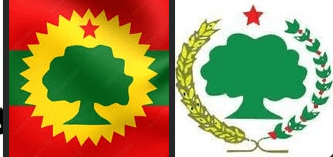
A thoughtful examination of the question at the heart of the Oromo struggle—and why it reveals more about the asker than the answer.
The question arrives with predictable regularity, often from those who have never troubled themselves to understand Oromo history, never read a book on Ethiopian politics, never listened to an Oromo voice speak of their own experience. It is posed as a challenge, sometimes as a trap, occasionally as genuine curiosity wrapped in skepticism:
“Our name is ‘Oromo Liberation Front.’ Freedom from whom?”
The question deserves an answer—not because the asker is entitled to one, but because the answer reveals the fundamental injustice that has shaped Oromo existence for over a century.
The Historical Record
Freedom from whom? Let us consult the historical record.
Freedom from the Abyssinian empire that began incorporating Oromo lands through conquest in the late 19th century, imposing Amharic language, Orthodox Christian religion, and a feudal system that reduced Oromo farmers to tenants on their own ancestral lands.
Freedom from the Haile Selassie regime that systematized land alienation, that declared Oromo language and culture backward, that sent Oromo students to prison for speaking their mother tongue, that told an entire people their identity was a shame to be shed.
Freedom from the Derg that massacred thousands of Oromo civilians, that executed General Tadesse Birru—the father of Oromo nationalism—on March 19, 1975, that tortured Oromo intellectuals in Maikelawi prison, that waged war on Oromo peasants who dared to demand recognition.
Freedom from the EPRDF regime that continued the same project under new rhetoric, that created ethnic federalism as a cage rather than a liberation, that responded to peaceful Oromo protests with bullets and mass arrests, that killed hundreds of Oromo youth in the 2016-2018 uprising.
Freedom from the current Prosperity Party government that has overseen the deaths of over 7,500 Oromo civilians according to documented counts, that runs clandestine death squads called Koree Nageenyaa, that arms “counterfeit OLA” forces to commit atrocities that can be blamed on the liberation movement.
The Structural Reality
Freedom from a political system designed explicitly to subordinate Oromo interests to those of a ruling elite that has never, in over a century, permitted an Oromo to lead the country except as a figurehead serving non-Oromo masters.
Freedom from an economic order that extracts Oromo resources—coffee, gold, agricultural wealth—while leaving Oromo communities in poverty.
Freedom from a cultural hierarchy that continues to treat Oromo identity as provincial, Oromo language as less-than, Oromo traditions as primitive survivals to be replaced by “national” culture.
Freedom from a security apparatus that arrests Oromo activists without charge, that tortures Oromo prisoners with impunity, that shoots Oromo protesters as though their lives cost nothing.
The Personal Dimension
Freedom from the specific, intimate violence that Oromos have endured generation after generation:
The father taken away and never seen again. The daughter raped by soldiers. The son shot during a peaceful protest. The grandmother whose land was “redistributed” to settlers. The child forbidden to speak Afaan Oromo at school. The student imprisoned for organizing a cultural event. The journalist tortured for writing the truth. The singer assassinated for giving voice to a people’s pain.
What Liberation Means
So yes: Oromo Liberation Front. Freedom from all of this. Freedom from the political, economic, cultural, and military domination that has defined Oromo existence for over a century.
But the question also carries an implicit assumption worth examining: that the struggle for Oromo liberation is somehow exceptional, somehow unreasonable, somehow suspect. The asker rarely poses similar questions to other movements:
“South African freedom from whom?” From apartheid.
“Palestinian liberation from whom?” From occupation.
“Kurdish freedom from whom?” From denial of nationhood.
“Tibetan independence from whom?” From Chinese domination.
Only when Oromos seek freedom does the question become, in the mouths of some, an accusation.
The Counter-Question
So let us turn the question around: Why does the struggle of 40 million people—Ethiopia’s largest ethnic group—for self-determination strike some as inherently illegitimate?
Why is it that when Oromos demand the right to speak their language, govern their affairs, develop their resources, and live in dignity, they are met with suspicion rather than solidarity?
Why is the Oromo Liberation Front named as it is, while liberation movements everywhere else are understood as natural responses to oppression?
The Answer We Deserve
Perhaps the questioner genuinely does not know. Perhaps they have only ever encountered the official narrative—the one that presents Ethiopia as an eternal, harmonious nation where all peoples live in equal dignity, and any challenge to that narrative is by definition “divisionist” or “terrorist.”
To such a questioner, we offer an invitation: Learn. Read the history written by Oromo scholars, not only by Abyssinian chroniclers. Listen to Oromo voices, not only to government pronouncements. Visit Oromia and speak with farmers, students, mothers. Understand what it means to be a people whose entire existence has been shaped by the denial of the very thing the question assumes they already have: freedom.
The Simple Truth
The Oromo Liberation Front exists because Oromos are not free.
Not free in the fundamental sense that every people deserves: to live on their land without fear, to speak their language without shame, to govern their affairs without external domination, to develop their resources for their own benefit, to pass their identity to their children without apology.
Freedom from whom? From every system, structure, and force that denies Oromos these freedom rights.
The question is not “freedom from whom?” but rather: After all this history, after all this suffering, after all this resistance—how could there not be an Oromo Liberation Front?
The struggle for Oromo liberation continues. And one day, when Oromia is free, the question “freedom from whom?” will have an answer so obvious that no one will need to ask it.

Posted on March 9, 2026, in Events, Finfinne, Information, News, Oromia, Press Release, Promotion. Bookmark the permalink. Leave a comment.




 Advocacy for Oromia
Leave a comment
Comments 0