Daily Archives: March 13, 2026

Developing a common narrative: Strategic framework

Developing a common narrative for the Oromo Liberation Front (OLF) is a profoundly complex and sensitive task. It requires navigating a rich but painful history, a diverse and global diaspora, internal political differences, and the ongoing realities inside Oromia and Ethiopia.
Applying the general framework from the previous answer to the specific context of the OLF, the process would need to be deeply participatory, historically conscious, and future-oriented. It’s not about creating propaganda, but about forging a shared story that can unify, guide, and inspire action toward commonly held goals.
Here is a strategic approach tailored for the OLF:
Phase 1: The Foundation – A Deep and Inclusive Listening Tour
The goal here is not to confirm a single party line, but to understand the full, lived experience of the Oromo people and the OLF’s place within that story.
1. Acknowledge the Complexity and Create Safe Spaces:
· The Challenge: The OLF’s narrative is intertwined with decades of armed struggle, political exile, diaspora life, internal divisions, and a peace process. Trust is fractured, both within the organization and between the organization and the broader Oromo community.
· The Approach: The process must be led by or heavily facilitated by individuals or a team that is seen as credible, empathetic, and as neutral as possible regarding current internal factions. This could be a council of elders, respected academics, or a dedicated narrative project team. The absolute priority is creating psychological safety where people can speak honestly about their experiences, including disagreements with OLF policy, without fear.
2. Map and Engage All Constituencies:
A common narrative for the OLF cannot be written in Addis Ababa or Washington, D.C., alone. It must actively seek out the voices of:
· Current Leadership and Cadres: Inside Oromia and in various international offices.
· Former Fighters and Veterans: Those who served in the armed struggle, both those who remain with the OLF and those who have since demobilized or joined other groups.
· The Diaspora: Across the US, Europe, Australia, and the Middle East. This group is diverse in its politics, its connection to the homeland, and its generational experience (e.g., those who fled the Derg vs. those born in the diaspora).
· Civilians and Civil Society Inside Oromia: Farmers, teachers, business owners, artists, religious leaders, and members of professional associations. Their lived reality under various governments is a crucial part of the story.
· Women and Youth: Their perspectives and experiences must be actively and intentionally sought, as they are often marginalized in political narratives.
· Oromos from Different Regions: Acknowledge and explore the regional cultural and historical differences within Oromia itself.
3. Methods for Gathering the Story:
· Oral History Projects: Conduct structured, long-form interviews with elders and veterans to capture the history of the struggle as lived experience.
· Diaspora Town Halls (Physical and Virtual): Host facilitated meetings in major diaspora hubs with a focus on listening, not presenting.
· Anonymous Digital Portals: Create a secure, anonymous way for people inside Oromia to share their stories, hopes, and fears without risking their safety.
· Art and Cultural Gatherings: Sponsor events where poetry (geerarsa), music, and visual art are used to express the current mood and collective memory. This taps into the deep cultural roots of Oromo identity.
4. Identifying Core Themes and Tensions:
After gathering this material, the facilitation team will look for patterns. For the OLF, these might include:
· Recurring Themes: The Quest for Self-Determination, The Pain of Exile, The Pride of Oromo Identity (Safuu), The Memory of Atrocity, The Hope for a Just Future.
· Central Tensions:
· Armed Struggle vs. Political Negotiation: What is the most effective path to liberation? This is a core, persistent debate.
· Unity vs. Political Pluralism: How do you maintain a united front while accommodating different political opinions within the movement?
· The Diaspora vs. The “Homeland”: The experience and priorities of the diaspora can feel very different from those living under the government inside Ethiopia.
· Tradition vs. Modernity: How does the struggle incorporate modern political ideas while remaining rooted in Oromo culture and the Gadaa system?
· The Role of the OLF: Is it a vanguard party, a broad national front, or a future governing body? The organization’s own identity is a key part of the narrative.
Phase 2: The Crafting – Building a Story of Struggle and Hope
5. Finding the Guiding Arc:
A powerful narrative for the OLF must hold its history and its internal tensions in a way that points toward a shared future. A simple “rise and triumph” story will feel inauthentic. More appropriate arcs might be:
· The Long Journey (Safuu): This arc frames the narrative as a centuries-long struggle to maintain Oromo identity, culture, and self-rule (birmadumma). The OLF is a key chapter in this much longer story. This honors the deep history and positions the current struggle as part of an ongoing, righteous journey.
· The Phoenix Rising from the Ashes: This arc acknowledges the devastating defeats, the periods of exile, and the internal fracturing. The story is one of repeated resilience, of rebuilding from near destruction, drawing strength from the enduring Oromo spirit. This allows for honest discussion of failure and pain.
· The Tapestry of the Oromo Nation: This arc explicitly celebrates the diversity within Oromia and the Oromo movement. It frames the different regions, political views, and experiences (exile, urban life, rural life) as different threads that, when woven together, create a stronger, more beautiful whole. This is a direct way to address and reframe internal diversity as a strength, not a weakness.
6. Drafting the Core Narrative (A Starting Point):
Based on the listening and the chosen arc, a drafting team creates a first version. It must be a story, not a political manifesto.
· Beginning (The Source): “For generations, the Oromo people have safeguarded Safuu (our moral code) and nurtured Gadaa (our democratic tradition). But our right to self-determination—to live freely on our own land—has been a constant struggle against forces that sought to divide and dominate us. Our story is one of resilience in the face of that challenge.”
· Middle (The Struggle and Its Crossroads): “In the 20th century, this struggle took new forms. The OLF emerged as an expression of our collective will to resist. This path has been marked by both great sacrifice and profound hope. We have known the pain of exile, the heat of battle, and the difficult work of political organization. There have been moments of fracture and moments of powerful unity. This is not a simple story of heroes and villains, but a complex human story of a people refusing to be silenced. We have debated—and continue to debate—the best path forward, from armed resistance to political dialogue, always anchored by the dream of birmadumma.”
· End (The Unwritten Future – The Call): “Today, the journey continues. We stand at a new crossroads, carrying the weight of our history and the hopes of our children. Our narrative is not yet complete. The next chapter—a chapter of peace, justice, and self-determination—will be written by all of us. It is a call to every Oromo, wherever they may be, to add their voice, their strength, and their vision to this unfinished story. Our unity is not in agreeing on every point, but in our shared commitment to a future where the Oromo people are finally free to tell their own story, on their own land.”
7. The Crucial Co-Creation Loop:
· This draft is then taken back to all the constituencies through a structured, multi-stage feedback process.
· The goal is to refine the language, adjust the emphasis, and ensure the narrative resonates and feels true. This is where the internal tensions are negotiated through dialogue, not suppressed. For example, feedback from different factions might lead to a line that acknowledges “the varied paths we have taken in our pursuit of justice.”
Phase 3: The Living Narrative – Uniting Action and Identity
8. Weaving the Narrative into the Fabric of the Movement:
· Internal Education: The narrative becomes the core of political education for all members and new recruits. It’s the story that explains who they are and why they struggle.
· External Communication: It informs all public messaging, from press releases to social media, providing a consistent and authentic voice.
· Decision-Making Guide: When faced with strategic choices (e.g., entering a peace negotiation, forming an alliance), leaders can ask, “Which choice is most faithful to our common story and moves us toward our shared future?”
· Cultural Production: Encourage artists, musicians, and writers to engage with and reinterpret the narrative, keeping it alive in the culture.
9. Allowing the Narrative to Evolve:
· The story is not static. As the political situation changes, as new generations come of age, and as new chapters are written (e.g., a peace agreement, an election), the narrative must be updated.
· Regular “state of the story” gatherings can be held to ask: “What have we learned? What new stories need to be told? Does our narrative still guide us well?”
For the OLF, developing a common narrative is not just a communications exercise. It is a fundamental act of political and social healing. It is an opportunity to move beyond a fragmented history and build a shared foundation for the future, one that is strong enough to hold the diverse experiences of the Oromo people and clear enough to guide them toward their collective aspirations.

Forging a Common Narrative: A Strategic Path Forward for the Oromo Liberation Front

Developing a common narrative for the Oromo Liberation Front (OLF) is indeed a profoundly complex and sensitive task—perhaps one of the most critical undertakings the movement can pursue at this juncture. It requires navigating a rich but painful history, a diverse and global diaspora, internal political differences, and the ongoing realities inside Oromia and Ethiopia.
The framework outlined below builds upon the strategic approach detailed in your prompt, offering a comprehensive vision for how the OLF can develop a narrative that unifies, guides, and inspires action toward commonly held goals.
Introduction: Why Narrative Matters Now
The Oromo people stand at a crossroads. Decades of struggle have yielded both gains and setbacks. The global attention on Oromia has never been greater, yet the path forward remains contested and unclear. In this moment, a common narrative is not a luxury—it is a necessity.
A shared story serves multiple essential functions:
- It unifies diverse constituencies around a common understanding of who they are and what they seek
- It guides strategic decision-making by providing a framework for evaluating choices
- It inspires continued sacrifice and commitment by connecting daily struggle to a larger purpose
- It communicates to the world the justice of the Oromo cause in terms that resonate across cultures
- It heals the wounds of internal division by acknowledging complexity while affirming shared destiny
The process of developing this narrative is as important as the product. A narrative imposed from above will fail. One co-created through genuine listening and dialogue can transform the movement.
Phase 1: The Foundation — A Deep and Inclusive Listening Tour
The goal here is not to confirm a single party line, but to understand the full, lived experience of the Oromo people and the OLF’s place within that story.
1. Acknowledge the Complexity and Create Safe Spaces
The Challenge: The OLF’s narrative is intertwined with decades of armed struggle, political exile, diaspora life, internal divisions, and a peace process that has generated both hope and disappointment. Trust is fractured—both within the organization and between the organization and the broader Oromo community. Different generations carry different memories. Different regions hold different perspectives. Different political tendencies offer different analyses.
The Approach: The process must be led by or heavily facilitated by individuals or a team that is seen as credible, empathetic, and as neutral as possible regarding current internal factions. This could be a council of respected elders (Jaarsolii), a committee of trusted academics, or a dedicated narrative project team with representation from various constituencies but independence from current leadership structures.
The absolute priority is creating psychological safety—spaces where people can speak honestly about their experiences, including disagreements with OLF policy, disappointments with the movement, and critiques of leadership, without fear of reprisal or marginalization. This requires explicit ground rules, skilled facilitation, and a commitment to confidentiality where requested.
2. Map and Engage All Constituencies
A common narrative for the OLF cannot be written in Addis Ababa, Washington D.C., Minneapolis, or Melbourne alone. It must actively seek out the voices of every segment of the Oromo world:
Current Leadership and Cadres:
- Military commanders operating inside Oromia
- Political leadership in various international offices
- Mid-level organizers and frontline fighters
- Those engaged in clandestine work inside Ethiopia
Former Fighters and Veterans:
- Those who served in the armed struggle from the 1970s through the present
- Veterans who remain with the OLF and those who have since demobilized
- Fighters who joined other organizations or went independent
- Wounded veterans and families of fallen fighters
The Diaspora:
- Major hubs: United States (Minneapolis, Seattle, Washington D.C.), Europe (Germany, UK, Norway, Sweden), Australia (Melbourne), Middle East (UAE, Qatar)
- Different generational cohorts: those who fled the Derg, those who left during the EPRDF years, those born in the diaspora
- Professional associations, student groups, women’s organizations, cultural associations
- Wealthy contributors and grassroots donors
Civilians and Civil Society Inside Oromia:
- Farmers and agricultural workers across different regions
- Urban professionals in Finfinne/Addis Ababa and regional cities
- Teachers, healthcare workers, and civil servants
- Business owners and market vendors
- Religious leaders from all faith communities
- Artists, musicians, poets, and cultural practitioners
- Journalists and human rights defenders
Women and Youth:
- The Qarree movement and young women activists
- The Qeerroo generation that led the 2014-2018 protests
- Elders of the Siinqee tradition
- Women who have experienced gender-based violence in the conflict
- Young professionals navigating identity in urban Ethiopia
- Diaspora youth negotiating dual identities
Regional Diversity:
- Wallaga (with its distinctive history and culture)
- Hararghe (eastern Oromia, with its Islamic traditions)
- Shewa (central Oromia, closest to the seat of power)
- Bale (with its revolutionary history)
- Borana (with its pastoralist traditions and border dynamics)
- Guji, Arsi, Jimma, Illubabor, and all other zones
3. Methods for Gathering the Story
The listening process must employ diverse methods appropriate to different constituencies:
Oral History Projects:
Conduct structured, long-form interviews with elders and veterans to capture the history of the struggle as lived experience. These should be video-recorded where possible, transcribed, and archived for future generations. The goal is not only information gathering but honoring those who carried the struggle.
Diaspora Town Halls:
Host facilitated meetings in major diaspora hubs with a focus on listening, not presenting. Create formats that allow both public sharing and small-group intimacy. Ensure translation where needed. Document themes without attributing individual comments.
Anonymous Digital Portals:
Create secure, encrypted, anonymous ways for people inside Oromia to share their stories, hopes, and fears without risking their safety. This could include voice messaging, written submissions, or secure apps. Publicize these through trusted channels.
Art and Cultural Gatherings:
Sponsor events where poetry (geerarsa, we’llu), music, and visual art are used to express the current mood and collective memory. This taps into the deep cultural roots of Oromo expression and reaches people who may not engage with formal political processes.
Focus Groups by Sector:
Convene small, facilitated discussions with specific groups: women farmers, diaspora youth, former prisoners, internally displaced persons, etc. The homogeneity of these groups allows for deeper sharing on specific experiences.
Written Submissions:
Invite essays, memoirs, and reflections from intellectuals, writers, and ordinary people willing to put their thoughts on paper. Create prompts that guide but do not constrain.
4. Identifying Core Themes and Tensions
After gathering this material, the facilitation team engages in systematic analysis to identify patterns, themes, and tensions. For the OLF, these might include:
Recurring Themes:
- The quest for self-determination (birmadumma) as the organizing principle of the struggle
- The pain of exile and displacement (godaanis)
- The pride of Oromo identity and the importance of Safuu (moral code)
- The memory of specific atrocities and martyrs
- The hope for a just and peaceful future
- The centrality of land (lafa) to Oromo identity
- The importance of language (Afaan Oromoo) as carrier of culture
Central Tensions:
- Armed Struggle vs. Political Negotiation: What is the most effective path to liberation? This is a core, persistent debate that divides generations and regions.
- Unity vs. Political Pluralism: How do you maintain a united front while accommodating different political opinions within the movement? Can there be unity without uniformity?
- The Diaspora vs. The “Homeland”: The experience and priorities of the diaspora—shaped by relative freedom, distance, and different stakes—can feel very different from those living under government inside Ethiopia.
- Tradition vs. Modernity: How does the struggle incorporate modern political ideas while remaining rooted in Oromo culture, the Gadaa system, and traditional values?
- The Role of the OLF: Is it a vanguard party, a broad national front, or a future governing body? The organization’s own identity is a key part of the narrative.
- Regional Differences: How do the experiences and priorities of Oromos from different regions get represented without one dominating?
- Religious Diversity: How does the narrative honor Oromos of all faiths—Muslim, Christian, and followers of Waaqeffannaa—without privileging any?
- Gender: How are women’s experiences, contributions, and aspirations fully integrated, not added as an afterthought?
Phase 2: The Crafting — Building a Story of Struggle and Hope
5. Finding the Guiding Arc
A powerful narrative for the OLF must hold its history and its internal tensions in a way that points toward a shared future. A triumphalist story—a simple “rise and triumph” arc—will feel inauthentic to those who have experienced defeat, disappointment, and internal conflict. More appropriate arcs might include:
The Long Journey (Safuu):
This arc frames the narrative as a centuries-long struggle to maintain Oromo identity, culture, and self-rule. The OLF is a key chapter in this much longer story—neither the beginning nor the end, but a crucial vessel carrying the aspirations of ancestors toward the hopes of descendants. This honors the deep history and positions the current struggle as part of an ongoing, righteous journey that precedes and will outlast any particular organization or leader.
The Phoenix Rising from the Ashes:
This arc acknowledges the devastating defeats, the periods of exile and near-extinction, and the internal fracturing that has marked the movement. The story is one of repeated resilience—of rebuilding from near destruction, drawing strength from the enduring Oromo spirit. This allows for honest discussion of failure and pain while affirming that the struggle itself is the constant.
The Tapestry of the Oromo Nation:
This arc explicitly celebrates the diversity within Oromia and the Oromo movement. It frames the different regions, political views, generations, and experiences (exile, urban life, rural life, armed struggle, civil society) as different threads that, when woven together, create a stronger, more beautiful whole. This is a direct way to address and reframe internal diversity as a strength, not a weakness.
The Unfinished Symphony:
This arc presents the Oromo struggle as a work in progress—a symphony to which each generation adds its movement. The themes are constant—freedom, dignity, self-determination—but the orchestration evolves. This honors the past while explicitly inviting the next generation to contribute their own composition.
6. Drafting the Core Narrative (A Starting Point)
Based on the listening and the chosen arc (or a combination of arcs), a drafting team creates a first version. It must be a story, not a political manifesto. It must speak to the heart as well as the head. Here is an illustrative draft:
Title: The Story We Carry: The Oromo Journey Toward Freedom
Beginning (The Source):
“Before there was an OLF, before there was an Ethiopia, there was Oromia—the land of the Oromo people. For generations beyond counting, our ancestors nurtured Gadaa, the democratic tradition that governed our lives. They lived by Safuu, the moral code that taught respect for creation, for one another, and for the dignity of every person.
This is our inheritance. This is who we are.
But our right to live freely on our own land—to speak our language, to govern ourselves, to develop our resources for our own benefit—has been a constant struggle. We have faced conquest, assimilation, and denial of our very existence as a people. Yet we have never surrendered our identity. We have never stopped being Oromo.”
Middle (The Struggle and Its Crossroads):
“In the 20th century, this ancient struggle took new forms. The Oromo Liberation Front emerged in 1973 as an expression of our collective will to resist—a vessel for the hopes of a people determined to be free.
The path since has been marked by both great sacrifice and profound hope. We have known the heroism of fighters like General Tadesse Birru, executed in 1975, whose final words affirmed his Oromo identity. We have known the pain of exile, as thousands fled to neighboring countries and distant continents. We have known the heat of battle, the long years in the forest, the clandestine work in cities.
We have also known internal division—moments when our unity fractured, when disagreements over strategy became wounds, when the movement struggled to hold together. These are not secrets to be hidden but truths to be acknowledged. A family that has known conflict can still come together. A movement that has known division can still unite.
There have been moments of profound unity as well—the mass protests of 2014-2018, when the Qeerroo and Qarree movements showed the world the power of a new generation; the gatherings of diaspora communities in every corner of the globe; the quiet solidarity of farmers and workers who sustained the struggle through decades of repression.
We have debated—and continue to debate—the best path forward: armed resistance or political negotiation, engagement with the state or refusal to recognize its legitimacy, prioritization of unity or accommodation of diversity. These debates are not signs of weakness but evidence of life. A living movement wrestles with hard questions.”
End (The Unwritten Future – The Call):
“Today, the journey continues. We stand at a new crossroads, carrying the weight of our history and the hopes of our children.
The story of the Oromo people is not yet complete. The next chapter—a chapter of peace, justice, and genuine self-determination—will be written by all of us. It is a call to every Oromo, wherever they may be, to add their voice, their strength, and their vision to this unfinished story.
Our unity is not in agreeing on every point. It is in our shared commitment to a future where the Oromo people are finally free to tell their own story, on their own land, in their own language, according to their own values.
This is the story we carry. This is the future we build. Together.”
7. The Crucial Co-Creation Loop
This draft is not the final product but a starting point for dialogue. It must then be taken back to all the constituencies through a structured, multi-stage feedback process:
Stage 1: Facilitated Small Group Discussions
Share the draft with small, facilitated groups representing different constituencies. Create structured feedback forms that ask specific questions: What resonates? What feels missing? What feels wrong? What would you add or change?
Stage 2: Regional and Diaspora Forums
Hold larger gatherings (physical where possible, virtual where necessary) to present the draft and gather feedback. Use professional facilitation to ensure all voices are heard and to manage disagreements constructively.
Stage 3: Digital Feedback Platforms
Create secure online platforms where individuals can provide feedback anonymously or with attribution. Publish the draft widely and invite written responses.
Stage 4: Synthesis and Revision
The facilitation team analyzes all feedback, identifying areas of consensus, persistent concerns, and suggestions for revision. They produce a revised draft with an accompanying document explaining how feedback was incorporated.
Stage 5: Leadership Endorsement and Community Launch
Present the revised draft to OLF leadership for formal endorsement, then launch the final narrative through a series of community events, publications, and digital campaigns.
Phase 3: The Living Narrative — Uniting Action and Identity
8. Weaving the Narrative into the Fabric of the Movement
A narrative that sits on a shelf serves no purpose. The final phase is about making the narrative live—embedding it in every aspect of the movement’s life.
Internal Education:
The narrative becomes the core of political education for all members and new recruits. It is taught in training sessions, discussed in study groups, and referenced in internal communications. Every member should be able to tell the story in their own words.
External Communication:
The narrative informs all public messaging—press releases, social media, speeches, interviews. It provides a consistent and authentic voice that helps external audiences understand the Oromo cause. Spokespersons are trained to communicate from within the narrative, not just deliver talking points.
Decision-Making Guide:
When faced with strategic choices—entering a peace negotiation, forming an alliance, launching a campaign—leaders can ask: “Which choice is most faithful to our common story and moves us toward our shared future?” The narrative becomes a compass, not a cage.
Cultural Production:
Encourage artists, musicians, poets, and writers to engage with and reinterpret the narrative. Commission works that explore different aspects of the story. Support cultural events that bring the narrative to life through performance and art. The narrative should sing, not just speak.
Healing and Reconciliation:
Use the narrative as a tool for healing internal divisions. Acknowledge past conflicts openly while affirming shared commitment to the future. Create spaces where former adversaries within the movement can tell their stories and find common ground.
9. Allowing the Narrative to Evolve
The story is not static. As the political situation changes, as new generations come of age, and as new chapters are written—a peace agreement, an election, a shift in strategy—the narrative must be updated.
Regular “State of the Story” Gatherings:
Hold periodic gatherings (annually or biennially) to ask: “What have we learned? What new stories need to be told? Does our narrative still guide us well? What needs to evolve?”
Generational Handoff:
Create explicit mechanisms for younger generations to shape the narrative. The story must not become the property of elders alone. Youth councils, student groups, and young professional associations should have formal roles in narrative maintenance.
Crisis Response Protocol:
When unexpected events occur—a massacre, a leadership change, a major political shift—the narrative team should convene to ask: “How does this event fit into our story? Does our narrative help people understand what just happened? Do we need to adjust our framing?”
Conclusion: Narrative as Revolutionary Act
For the OLF, developing a common narrative is not just a communications exercise. It is a fundamental act of political and social healing. It is an opportunity to move beyond a fragmented history and build a shared foundation for the future—one that is strong enough to hold the diverse experiences of the Oromo people and clear enough to guide them toward their collective aspirations.
A successful narrative will:
- Acknowledge complexity without becoming paralyzed by it
- Honor sacrifice without glorifying suffering
- Embrace diversity without losing coherence
- Guide action without rigidly prescribing it
- Inspire hope without promising easy victory
- Build unity without demanding uniformity
The work will not be easy. It will require patience, humility, and genuine commitment to listening across differences. It will require leaders who are willing to be questioned, factions willing to find common ground, and communities willing to trust the process.
But the alternative—continued fragmentation, competing narratives that divide rather than unite, a movement that cannot tell its own story coherently—is not acceptable. The Oromo people deserve better. The struggle deserves better. The future deserves better.
As the Oromo saying goes: “Dubbiin tokko, garaa tokko, yaadni tokko” — “One voice, one heart, one mind.” This is the aspiration. A common narrative is the path.
The journey of a thousand miles begins with a single step. For the OLF, that step is the commitment to listen—deeply, humbly, and courageously—to the full story of the Oromo people. From that listening, a narrative can emerge that is worthy of the struggle and capable of guiding it to its just conclusion.

Building a Common Narrative: Strategic Considerations

The question of how the Oromo Liberation Front (OLF/ABO) can develop a common narrative is both timely and essential. A unified narrative serves as the intellectual and moral foundation upon which political movements build solidarity, communicate their vision, and mobilize support. Drawing on recent discussions within Oromo intellectual and political circles, several key principles and practical steps emerge.
The Imperative of Historical Honesty
A compelling narrative must begin with an honest reckoning with history. As Maatii Sabaa argues in a recent commentary, “speaking our history—the full history of a people’s resistance against successive repressive systems—is not separate from the struggle. It is an essential organ of it” .
The OLF’s journey—from its intellectual germination in the early 1970s, formal establishment in 1973, articulation of its political program in 1976, through decades of immense sacrifice, targeted killings, imprisonment, and exile of its intellectuals and heroes—constitutes “the origin story of a modern political consciousness” . A common narrative must embrace this full history, including internal fractures, political alliances, strategic crossroads, and difficult choices.
The fear that examining complex history might destabilize the movement is misguided. As Sabaa notes, “unity forged in silence is fragile; unity built on a shared, honest understanding is unbreakable”. Today’s generation, which has demonstrated formidable political maturity through movements like the #OromoProtests and Qeerroo mobilization, is capable of engaging with complexity.
Centering the Core Grievance
A common narrative must clearly articulate the fundamental injustice that animates the struggle. Research on the discursive construction of Oromo identity emphasizes how Oromo elites have constructed a narrative around marginalization within the Ethiopian state . This includes:
- Historical conquest and incorporation into the Abyssinian empire
- Systematic cultural suppression, including marginalization of the Oromo language
- Economic exploitation and land alienation
- Political exclusion and denial of self-determination
The narrative must make clear that the OLF’s struggle is a response to these conditions, not their cause.
Unity Through Dialogue
Recent efforts toward political unity offer a model for narrative development. The joint call for dialogue by the OLF and Oromo Federalist Congress (OFC) in late 2025 represented “rare strategic unity among major Oromo forces”. This collaboration signals convergence around peaceful, negotiated solutions and reduces the perception of permanent fragmentation among Oromo political actors.
Such unity strengthens the legitimacy of Oromo political forces “in the eyes of Oromo communities, other Ethiopian actors, and international partners looking for credible interlocutors for a peace process”. A common narrative should build on this foundation of unity, emphasizing shared goals while acknowledging strategic differences.
Inclusive and People-Centered Framing
The envisioned joint conference between OLF and OFC aims to involve “all sections of the community” rather than limiting talks to elites . This principle should guide narrative development as well. A common narrative must:
- Incorporate the voices of victims of violence and displacement
- Include perspectives of elders, women, youth, and local leaders
- Reflect the experiences of diverse Oromo communities across regions
- Address gender dimensions of the struggle, including the Siinqee tradition and women’s contributions
Any peace process or political framework that excludes these voices “risks reproducing the same injustices that fuelled the conflict”.
Addressing Counter-Narratives
A common narrative must also contend with competing narratives that seek to delegitimize the Oromo struggle. Some critics have characterized Oromo nationalism as exclusionary or extremist, drawing comparisons to historical fascism and alleging anti-Semitic discourse targeting Amhara and Tigrayan populations. Such characterizations have been used to frame the OLF as a threat to Ethiopian national unity.
Academic analysis also documents an “institutionally crafted Amhara-domination narrative” that has been deployed by various political actors over time, contributing to inter-ethnic tensions. A thoughtful Oromo narrative must acknowledge these complex dynamics while clearly distinguishing legitimate Oromo grievances from the inflammatory rhetoric attributed to extremist elements.
The response to such counter-narratives should be grounded in facts, historical evidence, and a consistent commitment to human rights and inclusive politics.
Practical Framework for Cooperation
Drawing on analysis of potential OLF-Prosperity Party engagement, several principles apply equally to internal narrative development:
- Dialogue and Negotiation: Open, sincere dialogue within Oromo political forces to address grievances, build trust, and find common ground
- Inclusive Governance: Ensuring that all Oromo voices are represented in developing the common narrative
- Addressing Grievances: Clearly articulating specific concerns such as land rights, cultural recognition, and political representation
- Reconciliation and Justice: Establishing mechanisms to address past injustices and promote healing within the movement
- Public Engagement: Engaging with constituencies to explain the narrative and build support
The Role of Research and Documentation
Academic work on Oromo identity construction provides valuable insights. Research on the discursive construction of Oromo identity demonstrates how Oromo elites have developed a coherent discourse around marginalization, and how this discourse has been taken up in international media coverage of Oromo protests. This suggests that a well-developed narrative can successfully communicate Oromo perspectives to global audiences.
The OLF should continue to support research, documentation, and analysis that strengthens the evidentiary basis for its narrative while ensuring accessibility to diverse audiences.
Conclusion: Narrative as Revolutionary Act
Ultimately, developing a common narrative is itself a revolutionary act. As Sabaa concludes, “The final struggle is not just against a visible enemy; it is against the forgetting, the fear, and the fragmentation of our own story. To remember completely, to analyze courageously, and to speak truthfully is, itself, a revolutionary act”.
A common narrative for the OLF must be:
- Historically honest, embracing both triumphs and challenges
- Clear in its articulation of Oromo grievances and aspirations
- Unified in its message, building on strategic convergence among Oromo forces
- Inclusive of diverse voices, particularly those most affected by conflict
- Resilient against counter-narratives, grounded in evidence and principle
- Forward-looking, offering a vision of a just and peaceful future
The work of narrative development is never complete. It requires ongoing reflection, dialogue, and adaptation as circumstances evolve. But the foundation—honest history, clear principles, and inclusive process—will serve the Oromo people well in their ongoing struggle for self-determination and justice.

Advocacy for Oromia: Mourning Gamo Landslide Victims
PRESS RELEASE
Advocacy for Oromia Expresses Deep Grief Over Fatal Landslide in Gamo Zone
March 13, 2026 – For Immediate Release
The Advocacy for Oromia has expressed its profound sorrow following a devastating landslide in the Gamo Zone of the South Ethiopia Region.
The disaster occurred on the evening of March 10, 2026, in the Laka Kebele of the Gacho Baba district, triggered by heavy rainfall that caused the hillside to collapse onto the community below.
According to reliable sources confirmed by local authorities and humanitarian partners on the ground, the lives of 52 individuals have been confirmed lost in this tragic event. Search and rescue operations continue, with fears that the death toll may rise as teams work to locate missing persons.
Advocacy for Oromia extends its heartfelt condolences to the families of the deceased, their relatives, and the people of the Gamo Zone and the entire South Ethiopia Region. We share in your grief during this devastating time of loss.
Government Response Underway
In the wake of the disaster, high-ranking federal and regional officials have arrived at the scene. They are closely overseeing relief and support efforts and are working to console the affected communities. Emergency response teams have been deployed to provide immediate assistance, including medical aid, shelter, and food supplies to survivors who have lost their homes and livelihoods.
Urgent Call for Precautionary Measures
Given the ongoing rainy season, which heightens the risk of similar incidents across the region’s mountainous terrain, Advocacy for Oromia has urged citizens—particularly those living in mountainous and landslide-prone areas—to heed all precautionary messages and directives with the utmost seriousness.
We call upon relevant authorities to:
- Strengthen early warning systems in high-risk areas
- Conduct public awareness campaigns about landslide safety
- Consider temporary relocation of communities in the most vulnerable areas during the rainy season
- Ensure adequate emergency response resources are prepositioned in disaster-prone zones
A Time for Solidarity
This tragedy reminds us of our shared humanity and the importance of standing together in times of crisis. Advocacy for Oromia stands in solidarity with all Ethiopians mourning this loss, regardless of region or background. When disaster strikes, our common humanity must transcend all boundaries.
Conclusion
Advocacy for Oromia’s statement concluded by wishing the deceased eternal peace and offering strength to the bereaved families. May the souls of those who perished rest in peace, and may their families find the strength and support needed to endure this unimaginable loss.
We urge all who are able to support relief efforts through recognized humanitarian organizations working in the affected area.
#GamoLandslide #SouthEthiopia #HumanitarianAid #AdvocacyForOromia #StandWithGamo #Ethiopia #LandslideRelief
Issued by: Advocacy for Oromia
Date: March 13, 2026
Traditional Courts: The Foundation of Peace and Community Cohesion in Oromia
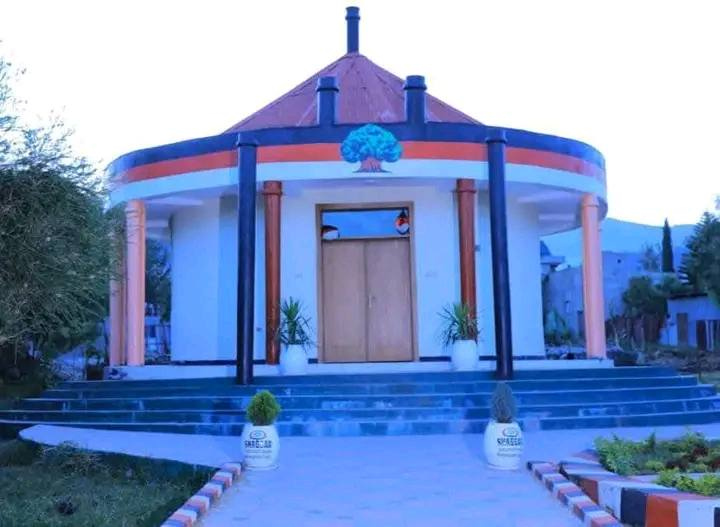
For generations, the Oromo people have relied on an institution that predates modern legal systems—the traditional courts (Manneen Murtii Aadaa)—to resolve disputes, maintain harmony, and preserve the social fabric of their communities.
These customary courts, rooted in the rich cultural heritage and values of the Oromo people, play an indispensable role in maintaining community peace by resolving disputes through frameworks grounded in tradition and cultural wisdom. Whether addressing family conflicts, neighborly disagreements, or broader community tensions, these institutions offer reconciliation and dialogue-based solutions that heal rather than divide.
Justice Rooted in Culture
The Manneen Murtii Aadaa operate on principles fundamentally different from formal court systems. Rather than adversarial proceedings that produce winners and losers, traditional courts emphasize reconciliation, restoration of relationships, and community harmony. The goal is not punishment but healing—not victory but peace.
This approach reflects deep Oromo values embedded in the culture for centuries. The famous Oromo saying “Nageenyi badhaadhummaadha” (Peace is wealth) captures the understanding that without harmony, material prosperity means nothing. Traditional courts exist to protect this most precious wealth.
Efficiency and Accessibility
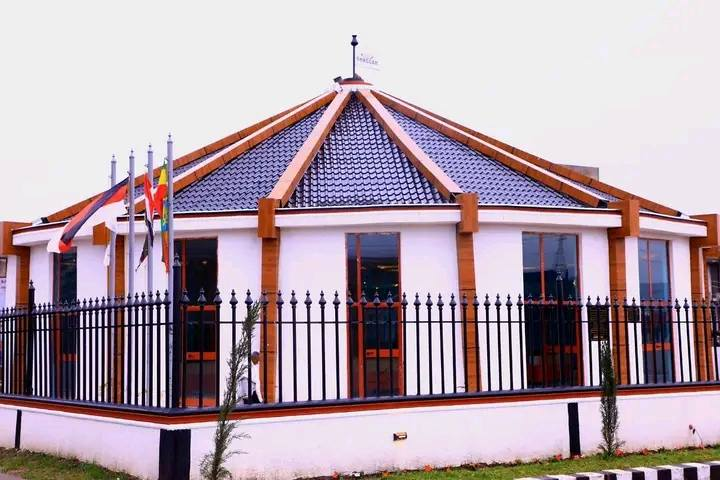
One of the most significant advantages of traditional courts is their accessibility. Community members can bring disputes before elders without the burden of excessive time and cost that often characterizes formal legal proceedings. A matter that might take months or years in the formal court system can often be resolved in days through traditional mechanisms.
This efficiency preserves community relationships that might otherwise be destroyed by prolonged conflict. When neighbors or family members can resolve their differences quickly and return to normal life, the entire community benefits.
The Wisdom of Elders
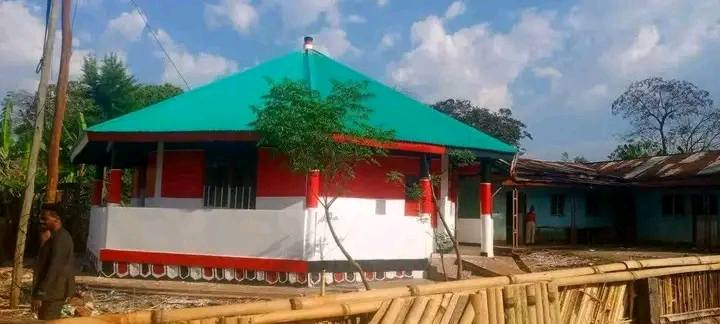
Central to the functioning of traditional courts is the involvement of Jaarsolii Biyyaa—community elders whose wisdom, accumulated over lifetimes, guides the resolution process. These elders carry within them the knowledge of generations, understanding not only the specific dispute before them but the broader context of community relationships and history.
By involving elders, traditional courts ensure that the cultural knowledge and values passed down through generations are preserved and applied. Young people who participate in these processes learn not only about the specific dispute but about the deeper values that hold their community together.
A Bridge Between Past and Future
The continued operation of Manneen Murtii Aadaa represents more than a practical mechanism for dispute resolution—it is a living connection to Oromo heritage. In a world of rapid change and external pressures, these institutions maintain continuity with the wisdom of ancestors while adapting to contemporary needs.
They demonstrate that tradition is not static but dynamic—capable of addressing modern challenges while remaining grounded in enduring values. The elders who preside over these courts carry forward a torch lit by those who came before, ensuring that future generations will inherit not only problems but the tools to solve them.
Strengthening Peace and Unity
Perhaps most importantly, traditional courts actively strengthen peace, consensus, and unity within communities. By resolving disputes through dialogue rather than confrontation, they model the very harmony they seek to create. The process itself—requiring disputing parties to sit together, listen to elders, and work toward mutual understanding—builds the skills and relationships necessary for long-term community cohesion.
When a dispute is resolved through Manneen Murtii Aadaa, the resolution carries moral weight that formal court judgments often lack. Because the community has participated in the process and the elders have spoken, the outcome is accepted not because it is enforced but because it is recognized as just.
A Living Tradition
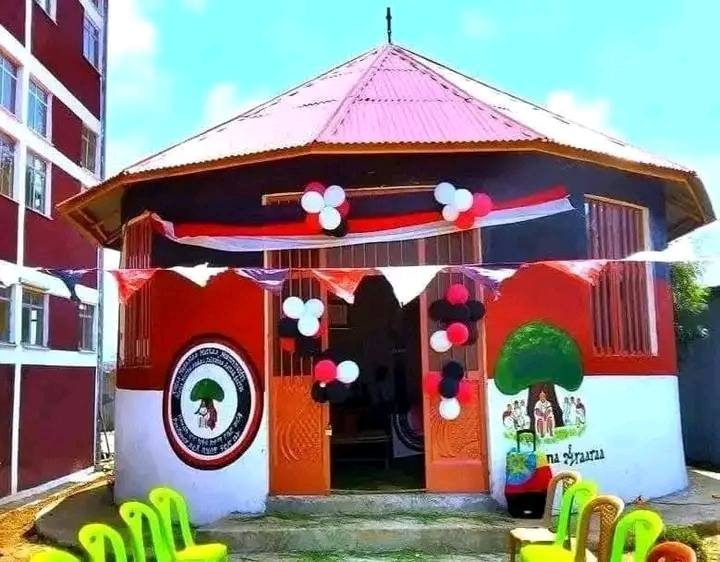
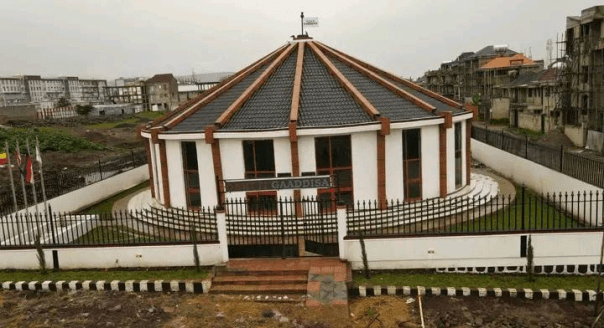
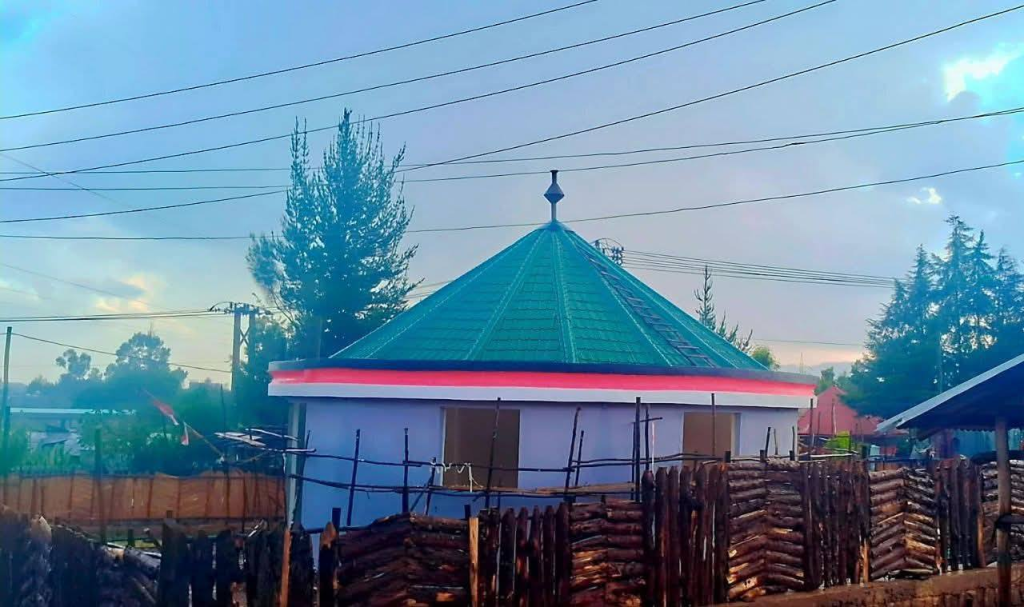
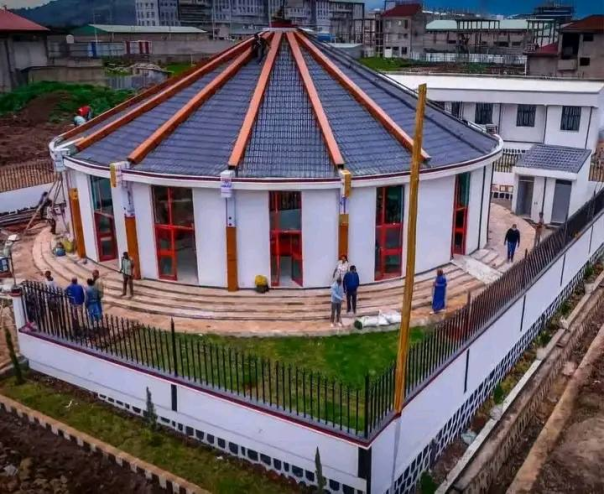
The photographs accompanying this feature offer glimpses into actual traditional court proceedings across Oromia. They show elders gathered under trees, community members seated in circles, the informal but deeply structured processes that have resolved disputes for centuries. These are not museum pieces but living institutions, actively shaping community life today.
Each image captures a moment in the ongoing work of peace—elders listening, disputants speaking, community members observing, and together weaving the fabric of social harmony that makes community life possible.
Conclusion
Manneen Murtii Aadaa represent one of the Oromo people’s most valuable institutions—a culturally grounded system of justice that preserves peace, strengthens unity, and maintains connection to ancestral wisdom. In a world often dominated by impersonal formal systems, these traditional courts offer a model of justice that is close to the people, rooted in community, and focused on healing rather than punishment.
As Oromia continues to navigate the challenges of the present and build toward the future, these institutions remain essential. They remind us that justice is not only about laws and procedures but about relationships and reconciliation—not only about rights but about harmony.
By strengthening Manneen Murtii Aadaa, communities strengthen themselves. By honoring the wisdom of elders, they ensure that future generations will inherit not only problems but the tools to solve them. By resolving disputes through dialogue and consensus, they build the peace that is, as the ancestors knew, the truest wealth.
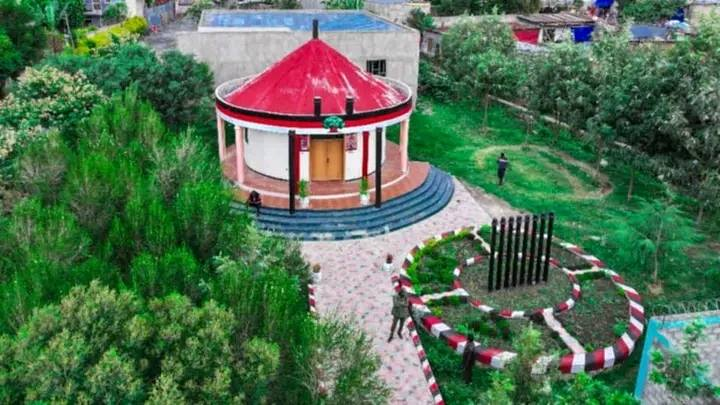
The images above show a selection of traditional court proceedings from various parts of Oromia, capturing the living tradition of community-based justice. 🤝




 Advocacy for Oromia