A Life of Struggle and Sacrifice: Remembering Ruphael Tasammaa (1975-2026)
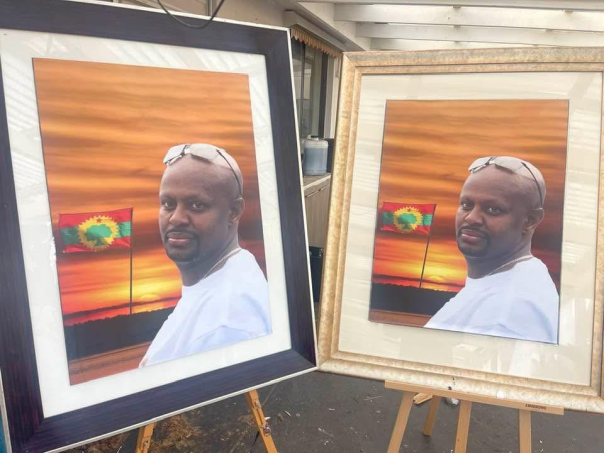
A dedicated fighter for Oromo liberation, Ruphael’s journey took him from the battlefields of Wallagga to exile in Australia, where he continued to serve his people until illness claimed him.
The Oromo community mourns the loss of one of its dedicated sons, Ruphael Tasammaa, who passed away after a battle with illness, leaving behind a legacy of unwavering commitment to the struggle for Oromo liberation. His life story—spanning continents, encompassing both armed resistance and peaceful advocacy, and marked by profound personal sacrifice—embodies the journey of an entire generation of Oromo fighters.
Early Years: Born into Struggle
Ruphael was born in 1975 in Dambi Dollo, a town in Qellem Wallagga. His entry into the world was marked by tragedy: his mother passed away moments after giving birth to him at Dambi Dollo Hospital, never leaving the facility alive. At that critical moment, the hospital’s director—an American named Dr. Dorombos—and his wife, Missis Dorombo, stepped forward to raise Ruphael as their own child.
This act of cultural compassion saved Ruphael’s life and provided him with stability in his earliest years. He began his primary education in Dambi Dollo, laying the foundation for learning that would later serve him in unexpected ways.
When Dr. Dorombos was transferred from Dambi Dollo to Aira Hospital in western Wallagga, young Ruphael moved with his adoptive parents. He completed his primary education in Aira and began his secondary schooling there, absorbing not only academic knowledge but also the values of compassion and service modeled by the American couple who had taken him in.
Answering the Call: Joining the Liberation Struggle
In 1992, at the age of 17, Ruphael made a decision that would shape the rest of his life: he interrupted his secondary education to join the Oromo liberation struggle. This was not a choice made lightly. It meant leaving behind the relative stability of his life with the Dorombos family, abandoning his education, and embracing the uncertainty and danger of armed resistance.
Ruphael became a member of the Oromo Liberation Front (Adda Bilisummaa Oromoo), moving through various regions of western Wallagga and Qellem Wallagga as he participated in the armed struggle. These were years of constant movement, of living in the forest, of facing the enemy directly while carrying the hopes of his people.
Exile and Imprisonment
In 1992, following internal challenges within the OLF that led to its withdrawal from the transitional government, Ruphael found himself hunted by government forces in Qellem Wallagga and western Wallagga. He was forced to flee to Finfinne (Addis Ababa), living as an internally displaced person within his own country.
Despite his efforts to remain hidden, he was eventually captured by government forces and imprisoned at Deppo Prison in the city of Adaama. He spent a significant portion of his life behind bars, experiencing firsthand the brutality of a system determined to crush Oromo resistance.
After his release from prison, Ruphael was forced into exile. He first fled to neighboring Djibouti, then later to Kenya, where he spent several years living as a refugee. These years of exile—separated from his homeland, uncertain of his future, yet never abandoning his commitment to the cause—testified to his resilience.
Building a New Life in Australia
In December 2001, Ruphael was granted refugee status and resettled in Australia. For 25 years, he built a life in his new homeland while never forgetting the struggle he had left behind.
He worked as an Allied Health Assistant in various hospitals across Australia, dedicating 15 of those years to St. Vincent’s Hospital. Through his work, he continued the legacy of service modeled by his adoptive parents—caring for the sick, supporting the vulnerable, contributing to the community that had welcomed him.
In September 2025, illness forced him to stop working. After a lifetime of giving—to the struggle, to his community, to his patients—his body could no longer sustain the demands he placed upon it.
Family and Personal Life
In 2013, Ruphael married and built a life. From this union, he was blessed with twin daughters, Fenet and Fenan, born in 2016. They were the light of his life—the future generation for whom all his sacrifices had meaning.
Though his time with them was cut short, he leaves behind a legacy of courage and commitment that will guide them throughout their lives. They will grow up knowing that their father was a fighter, a survivor, a man who gave everything for his people.
A Lifetime of Contribution
Throughout his entire life, Ruphael’s contributions to the Oromo liberation struggle were immense. Even after leaving the battlefield, even after resettling in Australia, he continued to support the cause with body and soul. Until illness weakened him, he remained actively involved, giving tirelessly of himself for the freedom of his people.
His life exemplified the reality that the struggle for Oromo liberation is not confined to the forests of Wallagga or the prisons of Ethiopia—it extends to every corner of the diaspora, wherever Oromos gather and work for the freedom of their homeland.
Community Mourns
Ruphael’s passing leaves a void in his family, among his relatives and friends, and throughout the Oromo community. Those who knew him remember not only his political commitment but his personal warmth—his willingness to help, his steady presence, his unwavering belief in the cause.
As the community mourns, we pray for strength for his family: his wife, his twin daughters Fenet and Fenan, his relatives, and all who loved him. May Waaqayyo grant them the fortitude to bear this loss and the comfort of knowing that Ruphael lived a life of purpose and meaning.
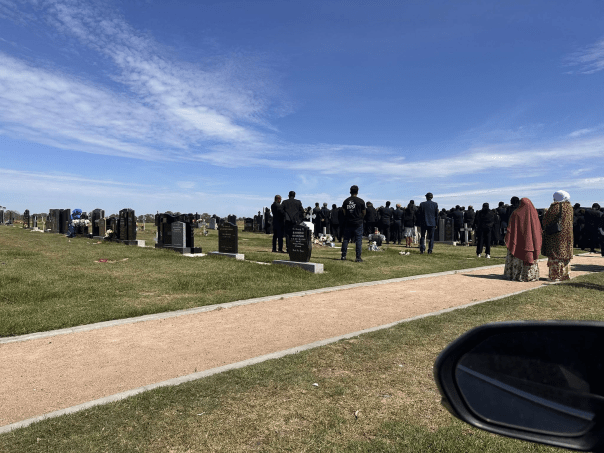
Final Rest
“Lubbuun isaas jannata bara baraa keessa haa bogotu.” — May his soul rest in eternal paradise.
Ruphael Tasammaa’s journey is complete. From his tragic birth in a Dambi Dollo hospital, through years of armed struggle, imprisonment, exile, and finally refuge in Australia, he carried always the flame of Oromo liberation. He gave everything—his youth, his freedom, his comfort, his health—for the cause he believed in.
Now he rests. Now he is free from pain, from struggle, from the weariness of a life fully given. And those who remain—his family, his community, his people—carry forward the struggle he believed in, strengthened by his example, inspired by his sacrifice.
Goota, nagaan boqodhu! Kabajaan si yaadanna!
Hero, rest in peace! We remember you with honor!
The Oromo community extends deepest condolences to the family of Ruphael Tasammaa, particularly his wife and twin daughters Fenet and Fenan. May Waaqayyo grant them strength and surround them with community support in this time of loss.

Posted on March 15, 2026, in Events, Finfinne, Information, News, Oromia, Press Release, Promotion. Bookmark the permalink. Leave a comment.




 Advocacy for Oromia
Leave a comment
Comments 0