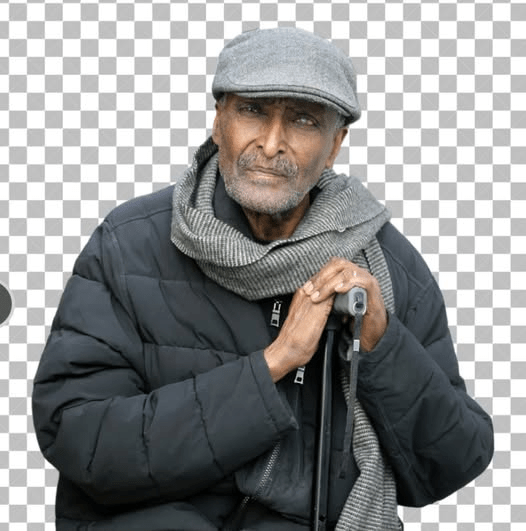
Abarraa Nafaa: The Father of Oromo Language Standardization
Bariisaa Gazette
Through this Iyyaafannoo (Remembrance) page, Bariisaa Gazette presents to its readers the story of individuals who, in their time, performed great and unforgettable services for their country and people.
With this publication, we share a brief interview with a scholar who laid a solid foundation for the development of the Oromo language—particularly its standardization—founded the Oromo Language Standardization Committee, and served in leadership for many years, continuing his work even into retirement. This is his story as told in his own words.
Place of Birth
Abarraa Nafaa was born in 1938 in Qarree Ittisaa, Gindabarat district, West Shewa Zone, Oromia Region. His upbringing was typical of rural children of that era.
When he reached school age, he attended grades 1–6 at Kaachisi Elementary School, grades 7–8 at Ginciit, and grades 9–10 at Amboo. He began his education in 1954.
After completing his secondary education at Ma’araga Hiywot Secondary School, he enrolled at TTI (Technical Teacher Institute) in Harar, where he trained for two years and received his teaching certification in 1964.
He began his teaching career in Sidama region at Kaasaa Barii Elementary School. He was later transferred to Yirgaalam town, where he taught for three years at Adaraash Elementary School. In total, he served as a teacher for seven years.
In 1971, he pursued higher education at Finfinne University in the field of linguistics, graduating with a Bachelor of Arts (BA) in 1974.
Work in Oromo Language Research
In 1975, under the assignment of the time, he was posted to the Academy of Ethiopian Languages at the Ministry of Culture and Information, where he was directly assigned to Oromo language research.
In 1978, seeking to further his education, he received permission to study while working and completed his Master of Arts (MA) in linguistics in 1980.
After the Derg regime took power, scholars working within the Ministry of Culture and Sports were reassigned to various regions based on their language skills and work performance. Abarraa was similarly transferred to the Oromia Bureau of Culture and Sports, where he began conducting research on the Oromo language.
The language research work involved extensive collection of data from across Oromia. They organized the linguistic studies on a house-to-house basis, entered the data into computers, and began publishing. He served as a senior editor and organizer for the published books. Among the works to which he contributed his expertise are:
- Proverbs (Mammaaksa) – Volumes 1–6, published by the Oromia Bureau of Culture and Tourism, for which he served as senior researcher and editor.
- Traditional Songs (Walaloo Sirba Warroommii, Faaruu, Geerarsa Tuulamaa) – Volume 1, published by the Oromia Bureau of Culture and Tourism, for which he served as senior researcher and editor.
- Dur durii – Volumes 1–5, and Hibboo – Volume 1, published by the Oromia Bureau of Culture and Tourism, for which he served as senior researcher and editor.
- Yeroo (Oromo–Oromo Dictionary) – Initially prepared in manuscript form and published, for which he served as senior researcher and editor.
- Amharic–Oromo–English Dictionary – Published by the Oromia Bureau of Culture and Tourism, for which he served as senior researcher and editor.
- Hirkoo (English–Oromo–Amharic Dictionary) – Published by Asteer Naggaa, for which he served as editor.
- Oromo Dictionary – Prepared and published by the Language Academy, for which he served as senior researcher and editor.
- Oromo Grammar (Caasluga Afaan Oromoo) – Volumes 1 and 2, published by the Oromia Bureau of Culture and Tourism, for which he served as senior researcher and editor.
- Wiirtuu – Volumes 1–7, published by the Oromia Bureau of Culture and Tourism, for which he served as senior researcher and editor.
Overall, he worked as a senior editor and organizer, ensuring that Oromo language research was carried out with great attention and dedication until his retirement. He retired from the Oromia Bureau of Culture and Tourism, where he had served in the Oromo language research department.
On the Standardization of Oromo
What does he say about the standardization of the Oromo language?
Abarraa explains:
“There was an institution called the Academy of Ethiopian Languages within the Ministry of Culture and Tourism. Many Oromo youth worked there. At that time, we were also conducting research, so we had knowledge about standardization.
In 1983, when we were told to go serve in our respective regions, I was transferred to Oromia. I was assigned to the language department. From there, believing that the language had now gained an opportunity and must be standardized, we began our work.
We decided that language research should start from the ground up, so I established the Oromo Language Standardization Committee. I was the one who founded that committee.
Members came from various bureaus. There was a representative from Bariisaa Gazette as well. There were also representatives from the Bureaus of Information, Education, and the Office of the Attorney General in Oromia.
Journalists like Huseen Badhaasoo and Bulloo Siibaa were among the committee members. At that time, there was great enthusiasm and dedication.
The Oromo Language Standardization Committee was established in 1983, and its work continued.
We traveled to bureaus and zones to collect data, prepared a project, and received a budget from the Oromia Regional Government to work with. I, in turn, organized the collected data. In this manner, we collected and published around 36,000 proverbs alone. The work was done well.”
On Standardization
Regarding standardization itself, he says:
“We recognized that there were challenges with standardization while I was working at the Ministry of Culture and Information, which motivated us to establish the standardization committee. Standardization means using common terms consistently.
For example, it means using the names of months and days in a uniform way. Even today, some people are careless and do not use them correctly. The names of the days from Wiixata to Jimaata were set by the standardization committee.
However, some people still refer to ‘great Sabbath’ and ‘small Sabbath.’ This is incorrect. The terms ‘great Sabbath’ and ‘small Sabbath’ come from religious influence. The standardization committee standardized them as Sanbata and Dilbata.
The Oromia Regional Council passed a decision on this matter. It changed the calendar to the Ethiopian numbering system. The names of the days and months standardized by the committee were officially ratified by the Oromia Regional Council through a directive.
At that time, there were people who said ‘let it be as it is,’ but we worked through consensus to achieve standardization.
Calling it ‘great Sabbath’ and ‘small Sabbath’ is religious, not originally Oromo. The Oromo tradition is Sanbata and Dilbata. The term Sanbata itself comes from Jewish tradition. Dilbata is Oromo.
We say Sanbata, Dilbata, Wiixata, Kibxata. Days have many names; for Kibxata, there were many options—we selected one and adopted it.
Political parties and the government have now agreed on using standardized terms.
I worked in the Standardization Committee for many years. I worked there from 1983 until I retired. The fact that the Wiirtuu series has been published up to 13 volumes is very encouraging. I have a great thirst for this language.
My work on the language and the results achieved feel to me like a person who was thirsty for water finally quenching their thirst.
What we worked on was standardizing pronunciation, writing, and vocabulary. Through this, we aimed for Oromo people everywhere to use a uniform standard.
For example, the word Wiixata should be recognized universally. Schools, courts, and offices should use it uniformly.
Those who seek to pull this language backward still exist today, so it is necessary to guard it carefully.
Authorities must use standardized terms. Writers and media must do the same.
If this is not done, those who write books must ensure that their works are not undermined. Their books must be written in full compliance with the rules of the Oromo language, verified by the relevant body.
For this reason, I have long called for the establishment of an Oromo Language Academy. Language develops culture, and culture develops language.
This can only be achieved by directly conducting research. Wiirtuu is a reference for Oromo language standardization. Other similar publications should also be printed.
Publications like the weekly Bariisaa Gazette and Kallachaa Oromiyaa should multiply. Without working in this way, the language will neither grow nor be standardized.
Children must learn it from the earliest levels. This effort, which had weakened, must regain its strength.
The language needs support and attention. Like a shepherd watches over livestock, the language must be tended. Now that it has gained momentum, scholars must work with focus.
Since there are those who, by writing the Oromo language incorrectly, seek to corrupt it, make it despised, and cause it to fail, strict control and vigilant care are essential.”
To enrich this article further and to provide this scholar’s story, we extend our deep gratitude to Aadde Dirribee Qana’aa (from the Oromo Research and Study Institute) for her assistance.
Charinnat Hundeessaatiin (By Foundation)
Bariisaa
Bitootessa 6, 2018

Posted on March 22, 2026, in Events, Finfinne, Information, News, Oromia, Press Release, Promotion. Bookmark the permalink. Leave a comment.




 Advocacy for Oromia
Leave a comment
Comments 0