The Martyrs of the Western Front: How April 15 Became Oromia’s Day of Sacrifice
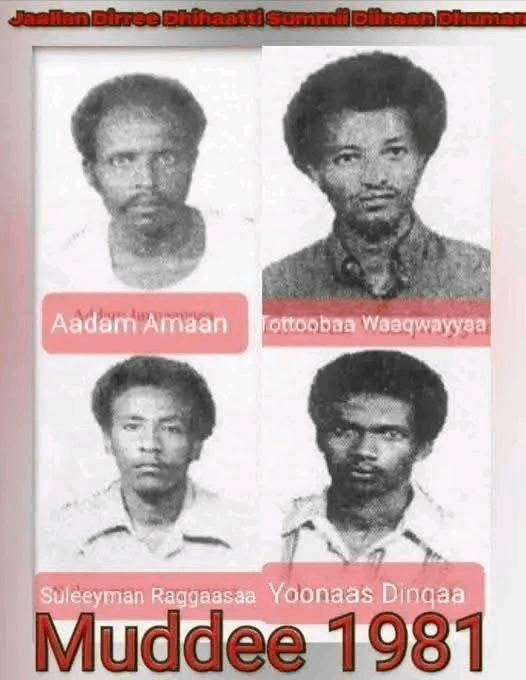
In the dense forests and rugged terrain of western Oromia, a band of liberation fighters once gathered under the cover of darkness. Their mission was audacious. Their fate was sealed. And their memory now echoes across generations every April 15.
The year was 1980. The Ethiopian Derg regime, led by Mengistu Haile Mariam, was at the height of its brutal military rule. Armed resistance had become the only language the regime understood. And the Oromo Liberation Front (ABO) was preparing to expand its armed struggle into a new theater: the Western Front.
A Mission Born in the Shadows
It began with a leadership change. On April 15, 1980, the ABO appointed a new chairman in Shinnigga. One year later, the leadership that would command the Western Front—mirroring that Shinnigga structure—was installed. The goal was clear: launch an armed resistance in the West.
The ABO’s new commanders meticulously planned their next move. They sent 12 batches of fighters to Eritrea for military training. After completing their preparations, 17 fighters were dispatched to the Western Zone to begin operations.
These were not faceless soldiers. They were fathers, brothers, and sons. Their names would eventually be carved into Oromia’s collective memory:
· Daawud Ibsaa — Battalion Commander
· Abbaa Caalaa Lataa — Deputy Battalion Commander
· Jaal Tottoobaa Waaqwayyaa — Squad Leader
· Jaal Birruu Taasisaa (Gabbisaa)
· Jaal Caalaa Ulmaanaa (Kormee Dinqaa)
· Jaal Taarreqanyi Ayyaanaa (Waaqgaarii)
· Jaal Abdallaa Raggaasaa
· Jaal Suleemaan Raggaasaa
· Jaal Waaqoo Guyyoo (Abbaa Gadaa)
· Jaal Abdulra’uuf
· Jaal Miijanaa Yandoo
· Jaal Adam Amaan
· Jaal Saanii Abdullaahi (Kerkedee)
· Jaal Yohaannis Dinqaa (Wayyeessaa)
· Jaal Kabbadaa Fufaa (Gambel)
· Jaal Taaddalaa Makuriyaa (Bayyanaa)
· Jaal Abduqqee (Habbuuqaa)
These 17 commanders were sent to ignite the Western Front resistance. But the Derg regime had no intention of allowing the ABO to take root. A fierce counterinsurgency campaign was already underway, designed to crush the liberation movement at its foundation.
The Work Before the War
Before bullets could fly, the commanders focused on what would make the struggle sustainable: mobilizing communities, building infrastructure, and educating the people. They recruited new members. They strengthened the resistance. They worked in the shadows, knowing that discovery meant death.
It was during this organizing phase that the leadership made a strategic decision. Commander Daawud Ibsaa and his deputy, Abbaa Caalaa Lataa, along with a man named Taaddasaa Shorroo and one other, divided their forces into two groups. One group, loyal to Daawud Ibsaa, headed toward Gidaami. The other, following Abbaa Caalaa Lataa, moved toward Begi.
On December 21, 1981, the two groups agreed to return to their base and reunite. They planned to share intelligence and coordinate their next moves. But the reunion would never happen as intended.
The Poisoned Reunion
The two groups did not return in triumph.
The faction led by Daawud Ibsaa headed toward Gidaami, in the village of Giraayii Sonkaa. On December 23, 1981, they received an order from Nugusee Faantaa, then the security chief of Wallagga Zone, in coordination with Zakariyaas Shorroo, Dirribaa Moggaa, and Hiikaa Masaadii—the administrator of Gidaami district at the time.
The orders were chilling: the fighters were to be poisoned.
But not through open combat. The betrayal came from within. Zakariyaas Shorroo, whose own brother Taaddasaa Shorroo was among the fighters, became the instrument of the regime. He provided the poison that would kill his own kin.
Eight ABO commanders ingested the poison prepared by the Derg regime. Among them were:
· Jaal Daawud Ibsaa
· Jaal Tottoobaa Waaqwayyaa
· Jaal Hinsarmuu
· Jaal Adam Amaan
· Jaal Yohaannis Dinqaa
· Jaal Suleemaan Raggaasaa
· Jaal Shaanqoo
· Jaal Taaddasaa Shorroo
They died in the same place, their bodies falling together. A brother had handed poison to his brother. The regime’s strategy of divide and rule had found its most devastating expression.
A Slow Death in Captivity
Jaal Daawud Ibsaa did not die immediately. Severely weakened by the poison, he was captured alive by Derg forces and taken to Dambi Dollo Hospital. From there, he was transferred to Maikelawi Prison and other detention centers, where he endured a slow, agonizing decline. He eventually suffered in custody—a martyr twice over, first by poison and then by neglect.
The ABO had lost eight of its most promising commanders in a single stroke. The Western Front resistance, still in its infancy, suffered a blow from which it would take years to recover.
Remembering the Fallen
For one year, the surviving ABO leadership grappled with the loss. The struggle continued, but the wound was deep. The Derg regime, along with collaborators like Ziyaad Barree, intensified its campaign. Blood and bone were spilled across Oromia. Heroes were buried in unmarked graves.
Then, in 1984, the remaining ABO leaders convened. They made a decision. Beginning in 1985, April 15—the date of the Shinnigga leadership appointment in 1980—would be permanently commemorated as Oromo Martyrs’ Day. Article 56, subsection 2 of the ABO constitution formally recognized it as one of the organization’s official holidays.
Since 1985, April 15 has been observed in the forests of Oromia and in the diaspora. Inside Oromia, ABO members commemorate the day in secret, risking arrest or death. Outside, in refugee camps and community centers across Europe, North America, and Australia, Oromos gather openly to honor those who fell.
Today: A People’s Memorial
Today, the Oromo people remember April 15 as Guyyaa Gootota Oromoo—Oromo Martyrs’ Day. It is a day to honor not only the 17 commanders of the Western Front but all those who have fallen in the struggle for Oromo liberation.
The names of the Western Front martyrs are recited in poems and songs. Their faces appear on banners at diaspora protests. Their story is taught to Oromo children growing up far from the forests where their fathers died.
“April 15 is the day we remember all the martyrs of the Oromo liberation struggle,” one elder in the Oromo community explains. “The commanders who were poisoned. The fighters who fell in battle. The civilians killed in their villages. We remember them all on this day.”
The Western Front mission of 1980-81 ultimately failed to achieve its immediate military objectives. The resistance there was crushed. The commanders were killed or captured. But the memory of their sacrifice outlived the regime that murdered them.
Mengistu Haile Mariam fled to Zimbabwe in 1991. The Derg is gone. But the names of Daawud Ibsaa, Taaddasaa Shorroo, and their comrades remain. Every April 15, the Oromo people prove that while regimes can poison bodies, they cannot poison history.
—
This feature article is dedicated to the 17 commanders of the Western Front and to all Oromo martyrs who gave their lives for the liberation of their people. April 15 — Guyyaa Gootota Oromoo.

Posted on April 12, 2026, in Aadaa, Events, Finfinne, Information, News, Oromia, Press Release, Promotion. Bookmark the permalink. Leave a comment.




 Advocacy for Oromia
Leave a comment
Comments 0