The Mountain of Guardians: Tulluu Eegduu and the Resurgence of Oromo Sacred Tradition
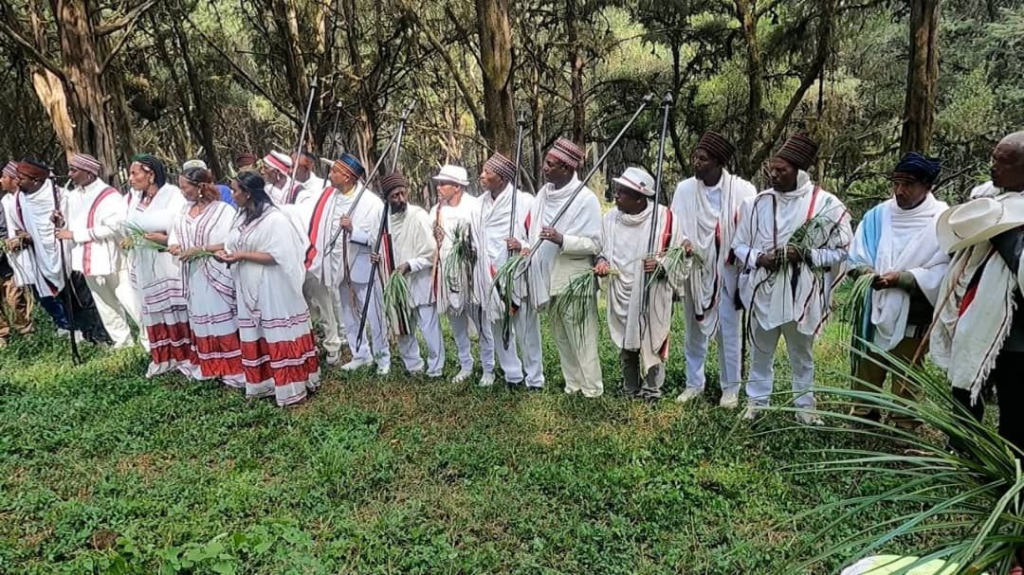
WALMARAA, OROMIA – At dawn, the mountain holds its breath. A thin mist clings to its peculiar flat summit, rising like an earthen vessel turned upside down against the sky. This is Tulluu Eegduu—known to the elders as Tulluu Tuulamaa—and for generations, it has stood as both witness and sanctuary to the spiritual heartbeat of the Oromo people.
To call Tulluu Eegduu merely a mountain would be to call the ocean a puddle. Its shape alone defies expectation. Unlike the conical peaks that punctuate the landscape, this mountain spreads across the horizon with a flattened crown so vast and sheer that no path leads directly to its summit. Only the most determined climbers, equipped with ropes and resolve, can scale its steep flanks.
Those who make the ascent discover a world unto itself. The summit hosts ancient flora—juniper trees bent by centuries of wind, wild olive and eucalyptus standing as silent sentinels—plants so aged that their gnarled branches seem to whisper secrets from another time. Above, the air runs pure and damp, for the sun rarely penetrates this high place. Visitors find themselves standing on a plateau where nothing grows beneath their feet except the earth itself, raw and exposed to the heavens.
The Eight Mountains of Faith
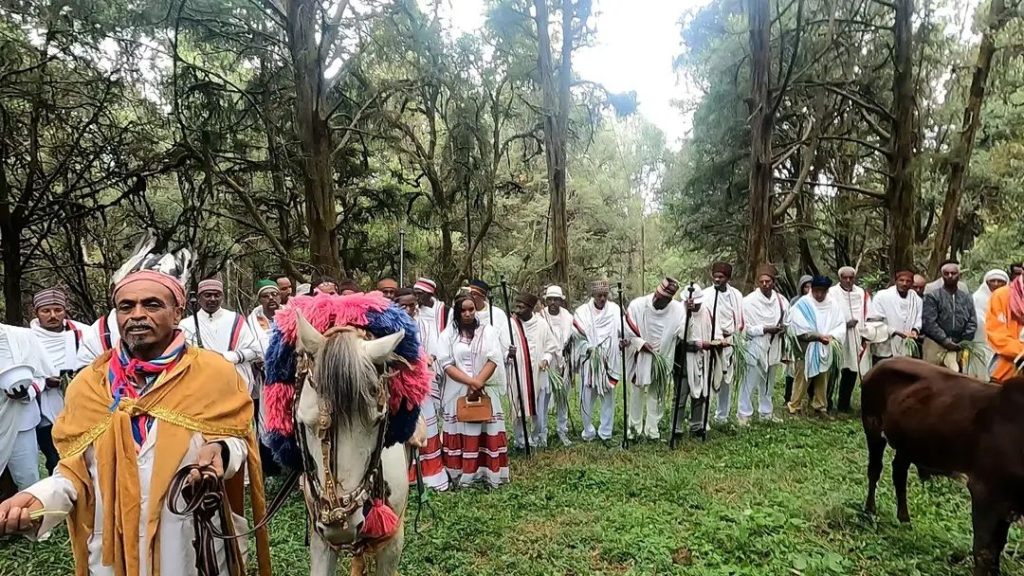
For the Oromo people of Tuulamaa, Tulluu Eegduu belongs to a sacred constellation. Eight mountains—Boosat, Cuqqaalaa, Erar, Barrak, Mogloo (also called Wococaa), Waatoo Dallachaa, Foo’ata Algee, and Eegduu itself—form the spiritual geography of their world. Among these siblings of stone, Eegduu holds a unique position. It is here, during the season of Arfaasaa, that the Tuulamaa Oromo gather for Irreessa—the sacred thanksgiving ceremony—and depart for Muuda, the ritual of anointment that connects the living with the divine and the ancestral.
Yet Tulluu Eegduu is no stranger to turbulent history. Before the expansion of Emperor Menelik in the late 19th century, the mountain’s summit hosted the Qe’ee Ayyaantuu of the Maram clan. According to elders from the Waajuu lineage, this was a place of powerful spiritual authority—a sanctuary where the Ayyaantu, the ritual leaders, communed with Waaqa (God) on behalf of the people. That sanctuary, they say, was destroyed by none other than Empress Zawditu herself, Menelik’s daughter, who brought the mountain’s sacred enclosures crashing down.
Where Roots Run Deep
What truly sets Tulluu Eegduu apart, however, is its claim as the cradle of identity. Elders and Gadaa leaders affirm that within this mountain’s domain—specifically in a place called Malkaa Fuudhaa beneath Eegduu’s slopes—lies the origin point of the Handhuuraa, the foundational root from which both the Maccaa and Tuulamaa Oromo lineages sprouted. This is not merely a mountain. It is a womb of stone, a place where genealogy and geography become one.
This explains its original name: Tulluu Tuulamaa—the Mountain of the Tuulamaa people. Only later did it become known as Tulluu Eegduu, the Mountain of Guardians, for it watched over the very birthplace of a nation.
The Sanctuary That Healed a People
In the cosmology of the eastern Oromo, Tulluu Eegduu served as more than a ritual site. It was a court of last resort, a spiritual emergency room where broken souls came to be mended. When drought scorched the earth and famine followed, when plague swept through villages, when rains failed or children sickened, when the fragile web of safuu—the moral-spiritual order that governs Oromo life—was torn—the people climbed to this mountain.
From Walmaraa they came. From Muloo, Barrak Alaltuu, Aqaaqii Gumbichuu, Sabbataa Awwash, Guullallee, Abbichuu, Galaani, and beyond. They ascended Tulluu Eegduu not for conquest but for healing. They came to make offerings, to beseech Waaqa for mercy, to restore balance to their fractured world. And because the mountain’s summit was flat, they gathered in great numbers, finding not only divine audience but human communion.
The Marketplace in the Sky
In the time of the emperors, this communion evolved. The mountain’s flat crown became a meeting ground for something unexpected: commerce. Traders journeyed from as far as Jimma and Wallaggaa, carrying goods that had traveled from the Arabian Peninsula. They came to exchange Amoole—blocks of salt that served as currency—for other wares. They gathered at a place called Malkaa Fuudhaa, where water flowed and deals were struck.
But these merchants needed shelter, food, drink, and rest. And so the people of the surrounding lands, particularly those from Mana Gasaa—the name given to the temporary dwellings that children or herders occupied during the rainy season—extended their hospitality. “Let us meet at Mana Gasaa,” the traders would say, and the name stuck. Elders still recount that the very word “Mannaagashaa” (መናገሻ), a place of meeting and speech, was born from these gatherings on Tulluu Eegduu’s slopes.
The 22-Year Silence
For twenty-two years, Tulluu Eegduu stood silent.
The Irreessa ceremony, the lifeblood of Oromo spiritual practice, had been suppressed. The mountain that had witnessed countless generations of prayer, healing, and thanksgiving became a place where Oromo voices could no longer rise in collective worship. The flat summit that had once held thousands of worshippers remained empty.
But traditions buried do not die. They wait.
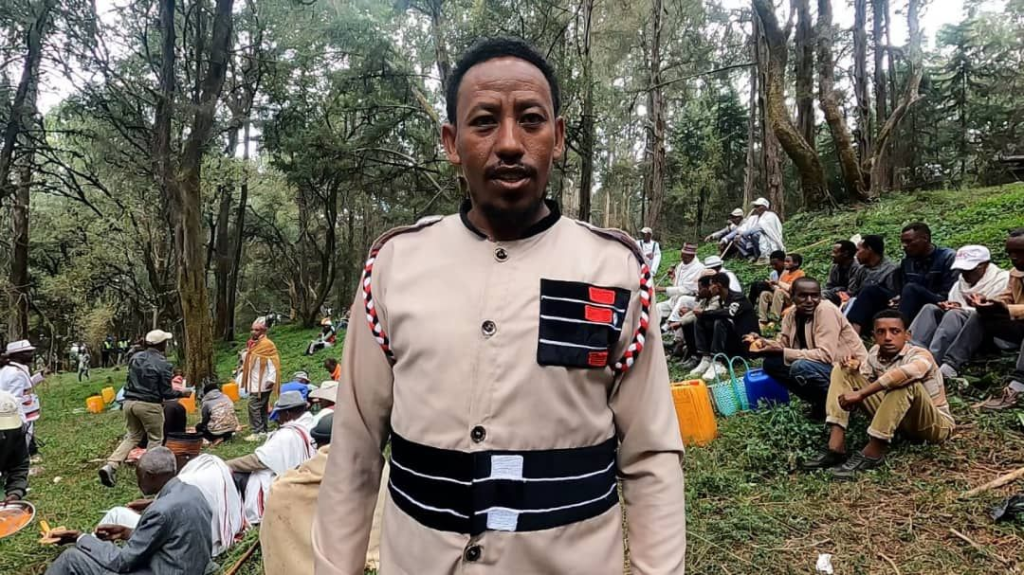
On September 24, 2018 (according to the Ethiopian calendar, though elders mark time differently), the mountain awoke. Under the guidance of Gadaa leaders, local elders, Ayyaantu ritual experts, and the Abbaa Tulluu—the “Father of the Mountain” who serves as its earthly custodian—the Irreessa ceremony returned to Tulluu Eegduu. The Association of Maccaa and Tuulamaa played a crucial role, their members working tirelessly to ensure that the sacred site would reclaim its place in Oromo spiritual life.
On that morning, the sun rose over the mountain’s flat crown for the first time in two decades to find it occupied once again—by worshippers, by drummers, by the faithful who had waited a generation to stand on that summit and lift their voices to Waaqa.
Mysteries Carved in Stone
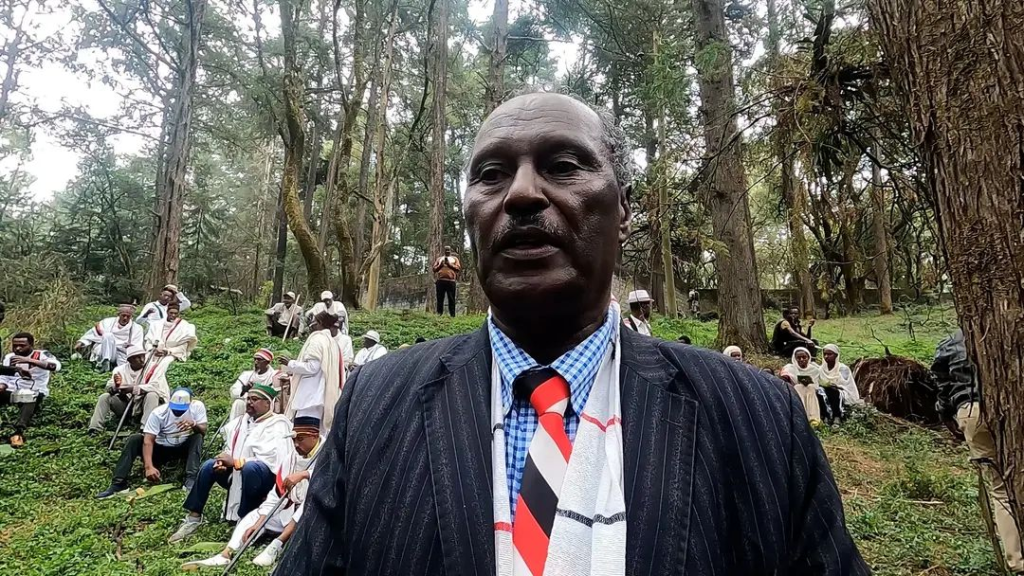
But Tulluu Eegduu does not give up its secrets easily. Scholars, archivists, and the simply curious who climb its heights return with more questions than answers.
The Empress and the Enclave: How exactly did Zawditu destroy the sanctuary on the summit? And what connects her struggle with Lij Iyasu—the deposed emperor who embraced Islam and challenged the Christian establishment—to the shadow of Tulluu Eegduu? Oral traditions hint at connections, but written records remain elusive.
The Sunken House: After Zawditu demolished the Ayyaantu’s sanctuary, she reportedly built a house for herself on the mountain. That house, elders say, was later swallowed by the earth, dragged down into the mountain itself. Was this allegory, or did a structure truly sink into the volcanic soil? When did this happen? No one can say for certain.
The Birthplace Beneath: Repeatedly, those who know—the argaa-dhageettii, the “seers and hearers” who carry Oromo memory—speak of Malkaa Fuudhaa as the precise location where the Handhuuraa Oromo emerged. Is this the literal birthplace of the Maccaa and Tuulamaa nations? Previous studies have neither confirmed nor denied this claim. The earth beneath the mountain may hold answers that archaeology has yet to uncover.
The Gadaami Plateau and the Governor’s Archives: Upon Tulluu Eegduu’s summit stands a plateau called Gadaami. According to the protocols of the Orthodox Christian faith, only those properly authorized may reside there—yet people do live there, within the very ceremonial spaces that once hosted Oromo rituals. More intriguingly, local tradition holds that the administrative records of Habtagoorgis Diinagdee, a powerful governor from a bygone era, remain somewhere on this mountain. What connects this governor to Tulluu Eegduu? And what of his relationship with Tulluu Waatoo Daalachaa, the mountain’s neighbor in the sacred eight? The archives, if they exist, wait in silence.
A Prayer for Return
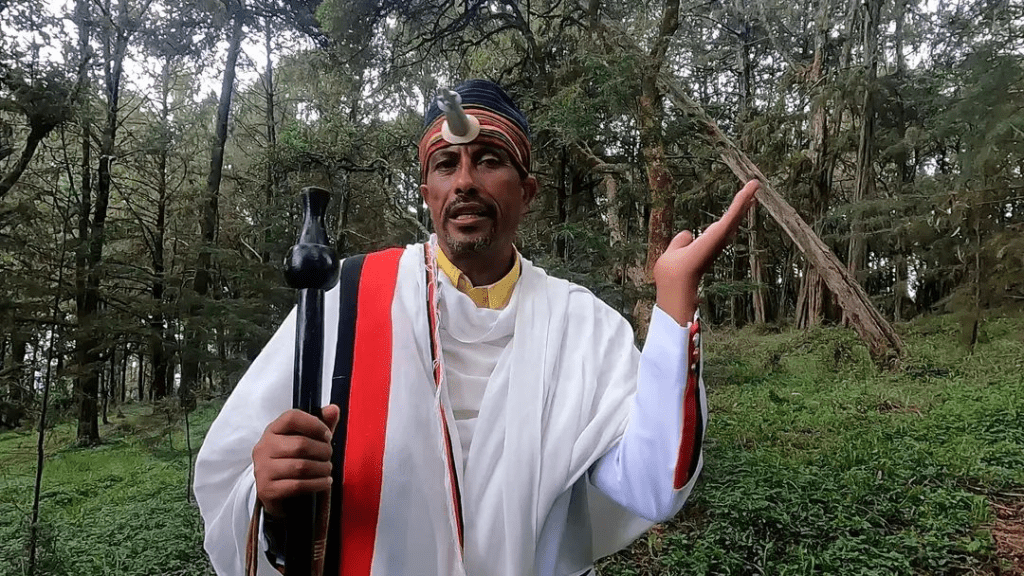
As the sun sets behind Tulluu Eegduu’s flattened crown, casting long shadows across the valleys below, a group of elders gathers at the mountain’s base. They have come to offer evening prayers, to pour libations, to speak the names of ancestors who stood on this same ground centuries ago.
An elder, his white hair catching the last light, raises his hands and speaks a simple blessing: “Nagaa ta’aa. Duudhaan Oromoo bakka isaatti yaa deebi’u.”
Let there be peace. May Oromo tradition return to its rightful place.
The mountain listens. And in the morning, the people will climb again.
For researchers, archivists, and all who preserve the thread of history: Tulluu Eegduu awaits. Its stories are etched not in paper but in stone, in memory, in the wind that moves across its flat summit. The questions are many. The answers lie beneath the surface, waiting for those who would dig—not only into the earth, but into the living tradition that never truly died.

Posted on May 3, 2026, in Aadaa, Events, Finfinne, Information, News, Oromia, Press Release, Promotion. Bookmark the permalink. Leave a comment.




 Advocacy for Oromia
Leave a comment
Comments 0