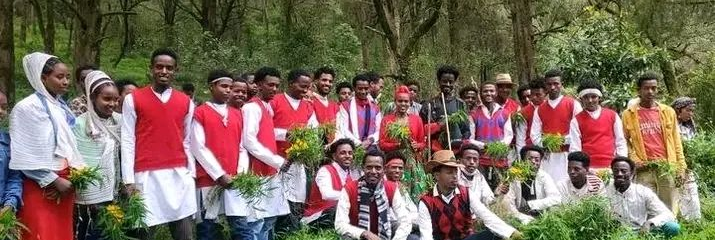

The Enigmatic Kundudo Mountains: Guardians of Ethiopia’s Last Wild Horses
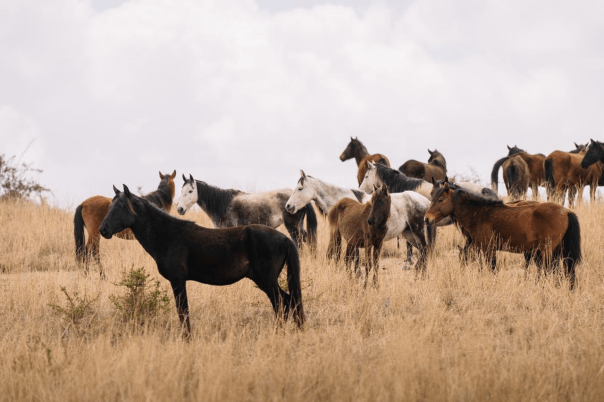
In the rugged highlands of eastern Oromia, a flat-topped mountain harbors one of Africa’s most remarkable treasures—the last remaining feral horse population on the continent.
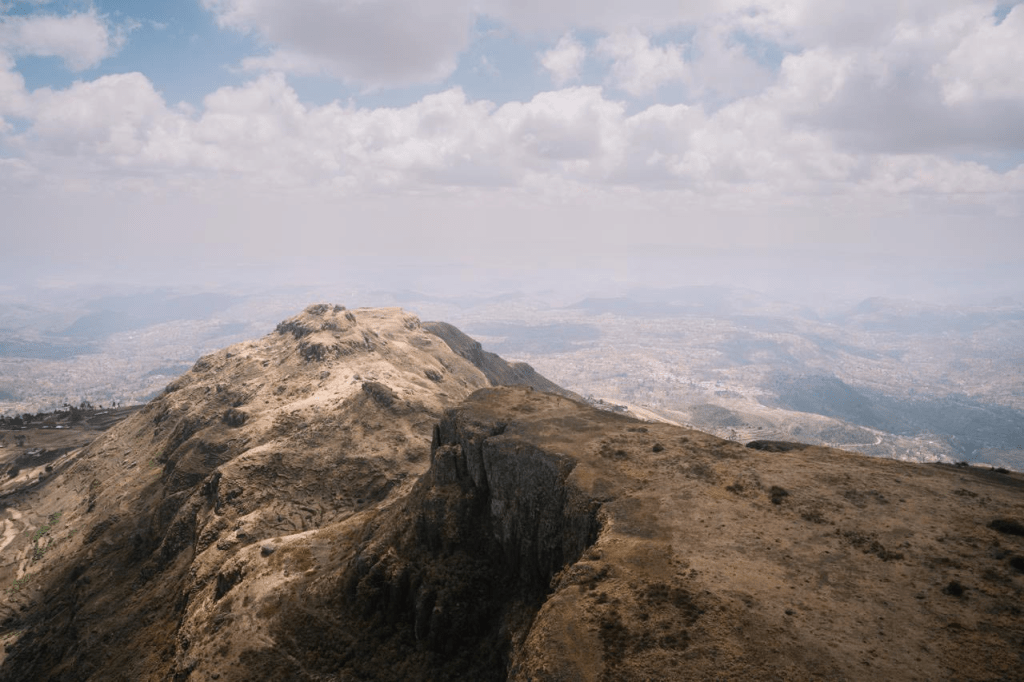
GURSUM DISTRICT, OROMIA — Rising nearly 3,000 meters above the plains of eastern Ethiopia, the Kundudo mountain range stands as a silent sentinel over a landscape rich in history, culture, and natural wonder. Known locally as the “W” mountain for its distinctive shape, this amba—a flat-topped mountain characteristic of the Ethiopian highlands—holds within its embrace a living legacy that has captured the imagination of scientists, conservationists, and travelers alike .
The Mountain Sanctuary
Located in Gursum District, a short distance from the town of Funyan Bira, Kundudo is part of a 13-kilometer range that includes other notable peaks such as Goba and Stinico . Its summit, a flat grassland of approximately 13 hectares, sits at an elevation of nearly 3,000 meters, accessible only by navigating steep cliffs and rugged terrain .
The mountain’s significance extends far beyond its geological features. Beneath its surface lie vast limestone caves, including one discovered in 2009 by Italian and French speleologists that ranks among the five most important caves on the African continent . At the southern end, the Stinico mountain holds ancient rock engravings in small open caves, unknown to the outside world until 2008 .
The Kundudo Horses: A Living Legacy
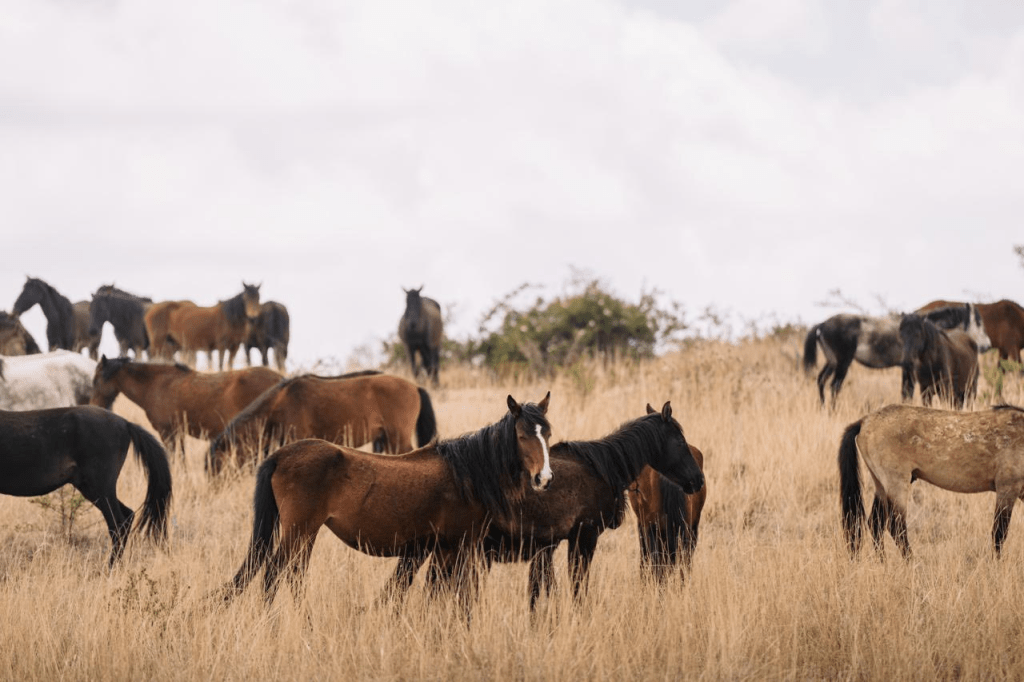
But Kundudo’s most celebrated inhabitants are its wild horses—the only remaining feral horse population in East Africa and one of only two on the entire continent . These magnificent creatures, known simply as the Kundudo horses, have roamed these highlands for centuries, their origins shrouded in mystery and legend.
Origins Shrouded in History
How did horses come to inhabit this remote mountain plateau? The question has sparked considerable scientific curiosity and local lore.
Oral traditions collected from the oldest local inhabitants suggest these horses have been known for over 200 years . One compelling hypothesis traces their ancestry to military mounts left behind during the Ethiopian-Adal War and subsequent Ottoman-Ethiopian conflicts of the 16th century (1528-1560) . According to this theory, a small group of 10 to 15 Abyssinian horses—perhaps separated from their riders during the chaos of battle—found refuge on the mountain’s summit and survived for decades despite the presence of predators like lions and cheetahs .
Genetic studies support this narrative, revealing that Kundudo horses are most closely related to domesticated Abyssinian horses, suggesting they represent a sub-population that returned to the wild in the relatively recent past. Their genetic distance from other Ethiopian horse breeds, combined with low genetic diversity, indicates a long period of isolation and a phenomenon of genetic drift due to the small number of founder individuals.
A Royal Connection
The horses’ historical significance received royal recognition when Emperor Haile Selassie I obtained his first mount from the Kundudo pack over a century ago . According to tradition, the future emperor, then just 10 years old, captured one of these horses with the assistance of his uncle . This connection lends the Kundudo herd the distinction of being the oldest known feral horse population in Africa .
Unique Characteristics and Adaptation
The Kundudo horses have evolved remarkable adaptations to their harsh environment. Their morphology reflects centuries of isolation and natural selection in a challenging habitat.
Physical Appearance
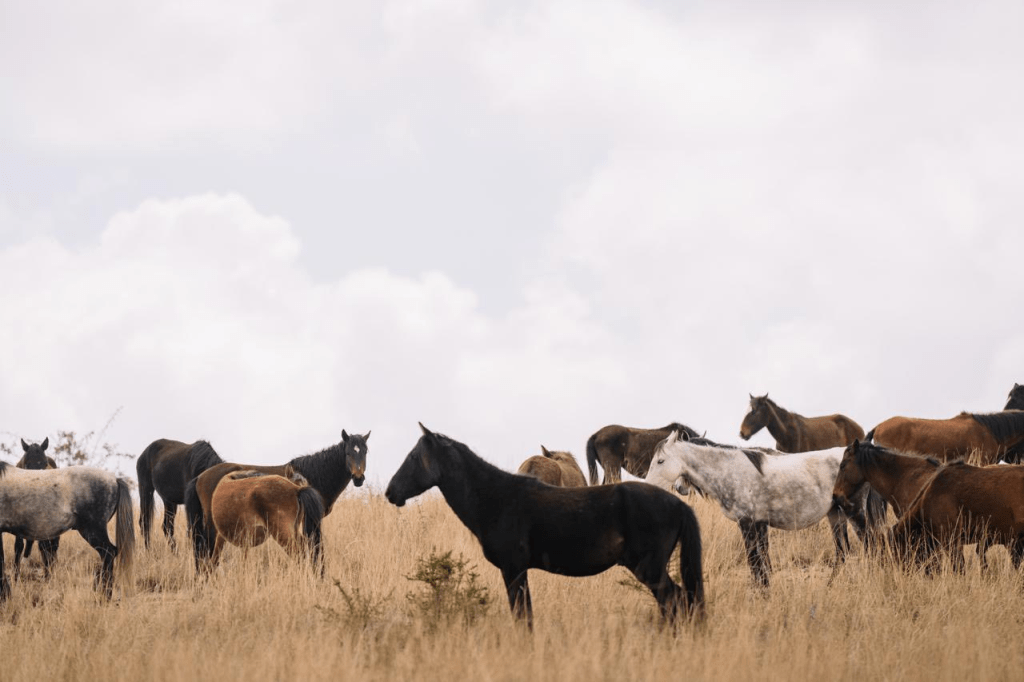
Described by some researchers as having “faulty” morphology with irregular shapes, short backs, plunging toplines, and paunchy bellies, these horses might not conform to idealized breed standards . However, these characteristics represent successful adaptations to their environment. They are generally medium-sized, with males slightly larger than females, displaying a range of coat colors predominantly in shades of brown, gray, and black, with thick, often disheveled manes that add to their wild appearance .
Behavior and Social Structure
Living in bands typically consisting of a dominant stallion, several mares, and their foals, Kundudo horses exhibit complex social behaviors . They are highly territorial, marking their ranges with scent and vocalizations. Their daily routines revolve around grazing on the summit’s 13-hectare grassland, seeking water from a perennial waterhole that never dries even during the hot season, and maintaining constant vigilance against predators such as hyenas, leopards, and jackals .
Perhaps their most striking characteristic is exceptional endurance and agility. These horses navigate steep cliffs and rugged terrain with remarkable ease—a skill honed by generations of evading predators and accessing scarce resources . This agility makes them valuable genetic reservoirs for equine conservation and potential breeding programs.
Conservation: A Story of Struggle and Hope
The survival of the Kundudo horses has been a precarious journey, marked by dramatic population fluctuations and determined conservation efforts.
Rediscovery and Initial Alarm
Rediscovered at the beginning of the 21st century, the horses became the focus of international attention when a team led by Ethiopian researcher Effa Delesa Kefena explored the ecozones of Ethiopian horses . On January 3, 2008, researchers found a single mare, approximately 11 years old, with hooves that had never been groomed and showing no signs of domestication. They nicknamed her “Basra” and took a DNA sample .
The situation was dire. By October 2010, researchers counted only 18 horses in the mountain area . By 2013, a survey by the Ethiopian Biodiversity Institute found just 11 horses remaining, leading to a classification of “critically endangered” . Some sources even suggested the breed was “potentially extinct,” with the 2013 population considered too low to ensure sustainability .
Threats to Survival
The horses face numerous threats, including:
- Habitat degradation due to overgrazing, agricultural expansion, and deforestation
- Climate change altering rainfall patterns and water availability
- Capture and domestication by local farmers, who occasionally tame and sell the docile colts
- Limited genetic diversity due to the small population and consanguinity
- Lack of formal protection and limited awareness about their ecological value
Conservation Efforts
Recognizing the urgency, various organizations and government agencies have initiated conservation programs. Since 2008, six Italian and Italo-British ecological missions have worked to save the herd and offer local communities economic alternatives to activities that damage the area.
The Ethiopian Environment Protection Agency, the Oromia Tourism Commissioner, and the Addis Ababa office of the UNEP have all been involved in monitoring and supporting these efforts. Local interest groups like the Addis Ababa-based GAG have worked to preserve the Kundudo range and promote the Gursum area.
The Ethiopian Biodiversity Institute has implemented conservation procedures, including the freezing of stallion semen to preserve genetic material for future breeding possibilities.
Signs of Recovery
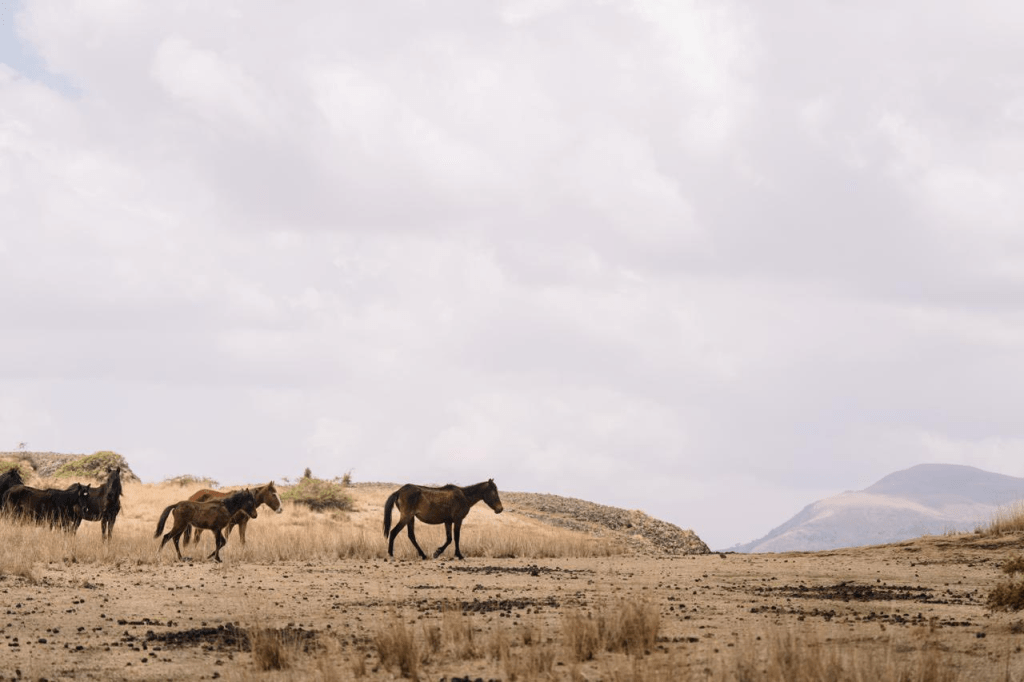
These efforts appear to be bearing fruit. According to recent data from the Oromia Culture and Tourism Bureau, the population of wild horses living in the forest and slopes of Kundudo has now reached approximately 50 individuals . The Wikipedia article on Kundudo horses also reports that by 2022, due to improved awareness, the horses prospered, with a total of 30 feral horses protected by guards on the mountain’s top . The number is expected to continue rising if protection measures are maintained.
Beyond the Horses: Ecological and Cultural Riches
Kundudo’s significance extends beyond its equine inhabitants. The mountain and its surrounding forests harbor a unique wealth of wildlife, including birds of prey, other bird species, mongooses, and monkeys . This biodiversity makes the mountain one of the significant attraction areas in the zone.
The region also holds deep cultural importance. Ancient rock paintings discovered in caves during the 2008 expeditions raise hopes for future tourism development . A shrine and a uniquely designed mosque named after Sheikh Adem Goba stand near the mountain, adding to its cultural tapestry .
A Vision for the Future
Plans are underway to transform the area into an Oromia State Park, recognizing its unique natural and cultural heritage . Conservationists envision developing the site as the endpoint of a tourist route named “the Extended East Route,” linking Harar, the Awash National Park, the Kuni-Muktar Mountain Nyala Sanctuary, and other destinations of cultural, nature, and historic interest in eastern Ethiopia .
Eco-tourism presents a promising avenue for sustainable conservation, allowing local communities to benefit economically while safeguarding their environment. When communities see tangible benefits from preserving these horses, they become active participants in protecting this natural heritage.
Conclusion
The Kundudo mountains and their wild horses represent an extraordinary chapter in Ethiopia’s natural and cultural history. These resilient creatures, descendants of horses that may have carried warriors into battle five centuries ago, continue to roam the high plateau, adapting, surviving, and inspiring all who learn of their story.
Their journey from near-extinction to gradual recovery mirrors the broader challenges of conservation in a rapidly changing world. As guardians of Hararge’s ecological integrity, these horses deserve recognition and protection. By valuing and conserving the Kundudo wild horses, Ethiopia can preserve an extraordinary piece of its natural heritage, ensuring that generations to come will continue to marvel at these majestic creatures roaming freely in the rugged landscapes of Kundudo.
The Kundudo horses stand as living symbols of resilience, adaptation, and the profound connection between culture, history, and nature in the Oromia region. Their survival depends on continued conservation efforts, community engagement, and recognition of their unique value to Ethiopia’s natural heritage.

Oromo Women Celebrate International Women’s Day with Beauty and Strength at ABO Headquarters in Gullallee
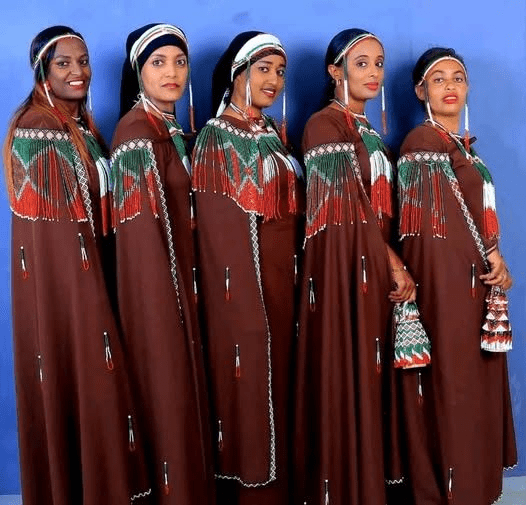
A historic celebration unfolds as Oromo women gather in their cultural attire to honor International Women’s Day, marking a moment that will be recorded in the annals of the struggle.
GULLALLEE, OROMIA — In a powerful display of cultural pride and unwavering determination, Oromo women gathered at the ABO Main Headquarters in Gullallee to celebrate International Women’s Day, adorning themselves in traditional attire that spoke to both their heritage and their resilience.
The celebration was not merely a commemoration—it was a declaration. Dressed in the vibrant colors and intricate patterns of Oromo cultural clothing, the women who gathered represented the heart of the Oromo liberation struggle. Their beauty, both external and internal, reflected the dignity of a people who have refused to be erased.
Beauty as Resistance
In the context of Oromo history, the act of gathering in cultural dress carries profound meaning. For generations, Oromo identity was suppressed, their language marginalized, their traditions denigrated. To stand today, openly and proudly wearing the clothing of their ancestors, is itself an act of resistance.
The women who filled the ABO headquarters in Gullallee demonstrated that the struggle for Oromo liberation is not only fought in the forest or through political organizing—it is also fought through the preservation and celebration of culture. Every traditional garment worn, every Oromo song sung, every dance performed strengthens the cultural foundation upon which the political struggle rests.
A Celebration Rooted in Tradition
The International Women’s Day celebration at the ABO headquarters was distinctively Oromo. While the world marks March 8 as a day to recognize women’s achievements and advocate for gender equality, the women of Gullallee infused the global observance with their own cultural particularity.
They came carrying not only the aspirations of women everywhere but the specific hopes of Oromo women—hopes for a liberated Oromia where their children can grow up speaking Afaan Oromo without shame, where their daughters can wear traditional clothing without fear, where their voices will be heard in the councils of the nation they are building.
A Day Recorded in History
According to organizers, this celebration at the ABO Main Headquarters in Gullallee has been recorded as a unique chapter in the history of the struggle. It will be remembered not only as an International Women’s Day event but as a moment when Oromo women collectively demonstrated their centrality to the liberation movement.
The gathering sent a clear message: the struggle for Oromia’s freedom cannot succeed without the full participation of its women, and those women are ready, willing, and determined to play their part.
Women at the Heart of the Struggle
The celebration in Gullallee reflects a broader recognition within the Oromo liberation movement of women’s indispensable role. From the ancient Siinqee institution—a traditional women’s system of mutual protection and conflict resolution—to the Qarree movement of young women activists today, Oromo women have always been at the forefront of resistance.
Yet their contributions have too often been overlooked in historical accounts. Events like this International Women’s Day celebration serve as correctives—public acknowledgments that the struggle could not continue without the women who fight, organize, endure, and sacrifice alongside their male counterparts.
Looking Forward
As the women of Gullallee dispersed after their celebration, they carried with them more than memories of a pleasant gathering. They carried renewed commitment to the cause, strengthened bonds with one another, and the knowledge that their participation is not merely welcomed but essential.
The celebration at the ABO headquarters will indeed be recorded in history—not as an isolated event but as part of a continuum of Oromo women’s resistance that stretches back generations and will continue until Oromia is free.
The Oromo women who gathered at ABO Main Headquarters in Gullallee on International Women’s Day 2026 have added their names to the long roll of heroines who have sustained the Oromo struggle. Their beauty, their strength, and their determination will not be forgotten.

Ilfinash Qannoo: A Voice That Sustained the Struggle, A Face That Inspires Generations
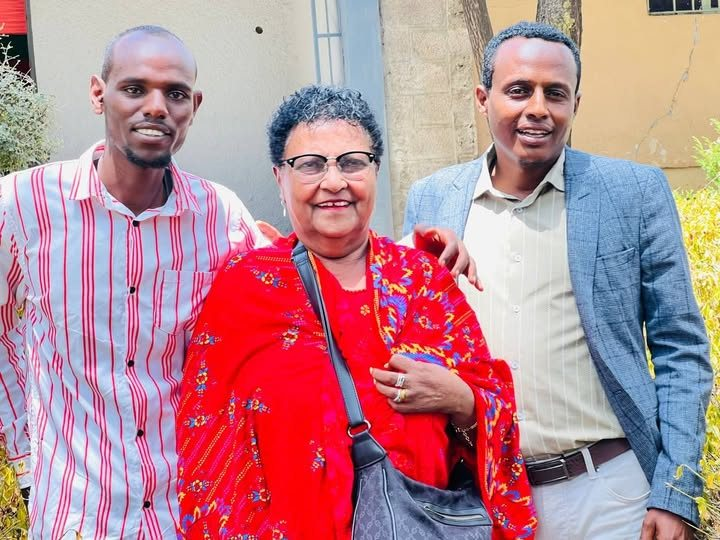
The power of art in times of struggle is immeasurable. It sustains the weary, emboldens the fearful, and etches the faces of heroes into the collective memory of a people. Artist Ilfinash Qannoo embodies this truth.
Just as her voice has supported the national struggle for decades, this image of her now reveals something profound: she has become a lasting legacy and a source of inspiration for today’s generation. She is a symbol of resilience and a heroic figure of unwavering determination.
The Voice That Never Weakened
For years, Ilfinash Qannoo’s voice has been inseparable from the Oromo struggle. Through periods of intense repression, through moments of hope and despair, through the long, grinding years when liberation seemed impossibly distant—her songs have been there.
Her music has not been mere entertainment. It has been sustenance for fighters in the forest, comfort for mothers who lost sons, encouragement for students risking imprisonment, and a thread connecting the diaspora to the homeland. When words failed, when hope flickered, when the cause seemed lost, her voice reminded Oromos why they fight and what they fight for.
This is the power of the artist in a liberation struggle: to articulate what cannot be said in political statements, to reach what cannot be touched by organizational structures, to heal what weapons cannot protect.
The Face That Speaks to Youth
In this photograph, something additional is visible. On the faces of the young people surrounding Ilfinash Qannoo, one reads a clear and undiminished determination. These are not casual admirers posing with a celebrity. These are youth who have learned from the history of those who came before and dedicated themselves to the hope of tomorrow.
Their expressions carry a vision—one that is clear, focused, and unshakeable. They represent a generation that refuses to accept the limitations imposed by oppression. They are the living proof that the struggle did not die with previous generations but was passed like a torch to hands ready to carry it forward.
The Symbol of Endurance
Ilfinash Qannoo has become more than an individual artist. She is now a symbol—a representation of what it means to endure, to persist, to remain faithful to a cause across decades. Her very presence in this photograph, surrounded by young people whose parents may not have been born when her career began, speaks to the continuity of the Oromo struggle.
She has witnessed phases of the movement that today’s youth only read about. She has sung through regimes that came and went, through victories and setbacks, through hope deferred and hope renewed. And still she sings. Still she stands. Still she inspires.
The Legacy Multiplies
What makes this image particularly powerful is the multiplication of legacy it captures. Ilfinash Qannoo’s voice and presence have inspired these young people. But they, in turn, will inspire others. The legacy does not end with her—it branches, grows, and reaches into futures she may never see.
This is the nature of true impact. Not to create followers but to create leaders. Not to build a monument but to plant seeds. Not to be remembered but to ensure that remembering becomes a living practice passed from generation to generation.
The Heroic Determination
Ilfinash Qannoo embodies a particular kind of heroism—not the heroism of the battlefield, though equally essential. Hers is the heroism of remaining creatively alive in conditions designed to crush the spirit. The heroism of continuing to produce beauty when ugliness surrounds. The heroism of giving voice to a people determined to be silenced.
This is gootittii jadbumma—heroic determination. It is the quality that refuses to accept defeat, that finds ways to express when expression is dangerous, that keeps creating even when creation seems futile. It is the quality that liberation movements cannot survive without.
A Vision for Tomorrow
On the faces of the young people in this photograph, we see the future of Oromia. They carry in their eyes the vision of a free homeland. They carry in their hearts the lessons taught by artists like Ilfinash Qannoo. They carry in their hands the responsibility to complete what previous generations began.
The struggle continues. The voice still sings. The faces still shine with determination. And in this image, captured in a single moment, the entire story of the Oromo people’s resilience is told: the elder who never gave up, the youth who will never surrender, and the unbreakable bond between them that ensures the struggle will outlast any oppression.
Ilfinash Qannoo’s legacy is not only in the songs she has sung but in the generations she has inspired. May her voice continue to sustain the struggle, and may the faces of today’s youth one day look back on this moment as the time they received the torch and carried it forward.

“Our Name is ‘Oromo Liberation Front.’ Freedom from Whom?”
A thoughtful examination of the question at the heart of the Oromo struggle—and why it reveals more about the asker than the answer.
The question arrives with predictable regularity, often from those who have never troubled themselves to understand Oromo history, never read a book on Ethiopian politics, never listened to an Oromo voice speak of their own experience. It is posed as a challenge, sometimes as a trap, occasionally as genuine curiosity wrapped in skepticism:
“Our name is ‘Oromo Liberation Front.’ Freedom from whom?”
The question deserves an answer—not because the asker is entitled to one, but because the answer reveals the fundamental injustice that has shaped Oromo existence for over a century.
The Historical Record
Freedom from whom? Let us consult the historical record.
Freedom from the Abyssinian empire that began incorporating Oromo lands through conquest in the late 19th century, imposing Amharic language, Orthodox Christian religion, and a feudal system that reduced Oromo farmers to tenants on their own ancestral lands.
Freedom from the Haile Selassie regime that systematized land alienation, that declared Oromo language and culture backward, that sent Oromo students to prison for speaking their mother tongue, that told an entire people their identity was a shame to be shed.
Freedom from the Derg that massacred thousands of Oromo civilians, that executed General Tadesse Birru—the father of Oromo nationalism—on March 19, 1975, that tortured Oromo intellectuals in Maikelawi prison, that waged war on Oromo peasants who dared to demand recognition.
Freedom from the EPRDF regime that continued the same project under new rhetoric, that created ethnic federalism as a cage rather than a liberation, that responded to peaceful Oromo protests with bullets and mass arrests, that killed hundreds of Oromo youth in the 2016-2018 uprising.
Freedom from the current Prosperity Party government that has overseen the deaths of over 7,500 Oromo civilians according to documented counts, that runs clandestine death squads called Koree Nageenyaa, that arms “counterfeit OLA” forces to commit atrocities that can be blamed on the liberation movement.
The Structural Reality
Freedom from a political system designed explicitly to subordinate Oromo interests to those of a ruling elite that has never, in over a century, permitted an Oromo to lead the country except as a figurehead serving non-Oromo masters.
Freedom from an economic order that extracts Oromo resources—coffee, gold, agricultural wealth—while leaving Oromo communities in poverty.
Freedom from a cultural hierarchy that continues to treat Oromo identity as provincial, Oromo language as less-than, Oromo traditions as primitive survivals to be replaced by “national” culture.
Freedom from a security apparatus that arrests Oromo activists without charge, that tortures Oromo prisoners with impunity, that shoots Oromo protesters as though their lives cost nothing.
The Personal Dimension
Freedom from the specific, intimate violence that Oromos have endured generation after generation:
The father taken away and never seen again. The daughter raped by soldiers. The son shot during a peaceful protest. The grandmother whose land was “redistributed” to settlers. The child forbidden to speak Afaan Oromo at school. The student imprisoned for organizing a cultural event. The journalist tortured for writing the truth. The singer assassinated for giving voice to a people’s pain.
What Liberation Means
So yes: Oromo Liberation Front. Freedom from all of this. Freedom from the political, economic, cultural, and military domination that has defined Oromo existence for over a century.
But the question also carries an implicit assumption worth examining: that the struggle for Oromo liberation is somehow exceptional, somehow unreasonable, somehow suspect. The asker rarely poses similar questions to other movements:
“South African freedom from whom?” From apartheid.
“Palestinian liberation from whom?” From occupation.
“Kurdish freedom from whom?” From denial of nationhood.
“Tibetan independence from whom?” From Chinese domination.
Only when Oromos seek freedom does the question become, in the mouths of some, an accusation.
The Counter-Question
So let us turn the question around: Why does the struggle of 40 million people—Ethiopia’s largest ethnic group—for self-determination strike some as inherently illegitimate?
Why is it that when Oromos demand the right to speak their language, govern their affairs, develop their resources, and live in dignity, they are met with suspicion rather than solidarity?
Why is the Oromo Liberation Front named as it is, while liberation movements everywhere else are understood as natural responses to oppression?
The Answer We Deserve
Perhaps the questioner genuinely does not know. Perhaps they have only ever encountered the official narrative—the one that presents Ethiopia as an eternal, harmonious nation where all peoples live in equal dignity, and any challenge to that narrative is by definition “divisionist” or “terrorist.”
To such a questioner, we offer an invitation: Learn. Read the history written by Oromo scholars, not only by Abyssinian chroniclers. Listen to Oromo voices, not only to government pronouncements. Visit Oromia and speak with farmers, students, mothers. Understand what it means to be a people whose entire existence has been shaped by the denial of the very thing the question assumes they already have: freedom.
The Simple Truth
The Oromo Liberation Front exists because Oromos are not free.
Not free in the fundamental sense that every people deserves: to live on their land without fear, to speak their language without shame, to govern their affairs without external domination, to develop their resources for their own benefit, to pass their identity to their children without apology.
Freedom from whom? From every system, structure, and force that denies Oromos these freedom rights.
The question is not “freedom from whom?” but rather: After all this history, after all this suffering, after all this resistance—how could there not be an Oromo Liberation Front?
The struggle for Oromo liberation continues. And one day, when Oromia is free, the question “freedom from whom?” will have an answer so obvious that no one will need to ask it.

Women’s Journey of Resilience, Excellence, and Transformation: From History to the Cosmos
International Women’s Day is not merely a celebration of motherhood or sisterhood—it is a profound testament to human excellence, resilience, and the power to create change. Across centuries and continents, women have shattered every limitation imposed upon them, rising from the confines of domesticity to become leaders of nations, explorers of space, and architects of economies.
Once told that “their place was only in the home,” women today stand as presidents, astronauts, scientists, and visionaries reshaping the world. Their journey is one of triumph against impossible odds, and their stories illuminate the path for generations to come.
Oprah Winfrey: From Rural Poverty to Global Influence
In the rural Mississippi of the 1950s, a girl named Oprah was born into poverty and endured unspeakable abuse. The statistics said she would become another casualty of circumstance. Instead, Oprah Winfrey transformed her fractures into a bridge to success.
Without changing who she was—without denying her Blackness or her womanhood—she wielded her identity as her greatest weapon. She built a media empire that would make her one of the most influential figures on the planet. Her journey from a victim of horrific violence to a billionaire philanthropist and cultural icon stands as one of history’s most powerful testaments to resilience.
Oprah did not succeed despite her identity; she succeeded because she embraced it fully, proving that the very things society uses to marginalize women can become the foundation of unstoppable power.
Ethiopia’s Heroines: Legacy of Leadership and Courage
Turning to our own history, Ethiopia has produced women whose strength, intelligence, and vision shaped the nation’s destiny.
Empress Taytu Bitul: Diplomat and Strategist
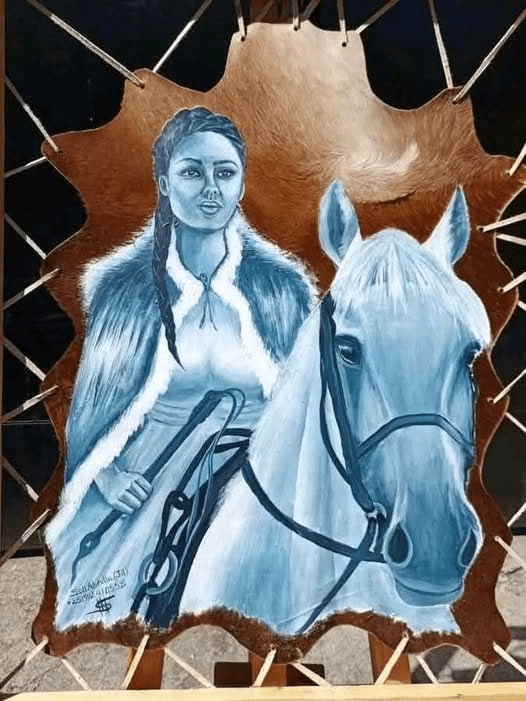
Empress Taytu Bitul was not merely the wife of Emperor Menelik II—she was a leader in her own right, a brilliant diplomat, and a military strategist whose contributions to Ethiopia’s survival cannot be overstated.
At the Battle of Adwa in 1896, where Ethiopian forces defeated Italian colonialism, Taytu’s role was decisive. She commanded her own cavalry unit, fought alongside her husband, and outmaneuvered European diplomats at the negotiating table. When Italian representatives attempted to trick Menelik into signing away Ethiopian sovereignty through linguistic manipulation, it was Taytu who saw through the deception and exposed it.
Her political acumen, her courage on the battlefield, and her unwavering commitment to Ethiopian independence make her one of the most remarkable women in African history. She proved that women’s intelligence and strategic thinking are essential to national survival.
Emahoy Abebech Gobena: Africa’s Mother Teresa
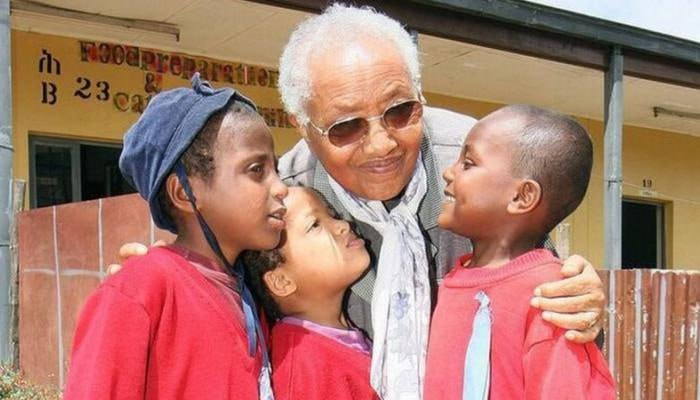
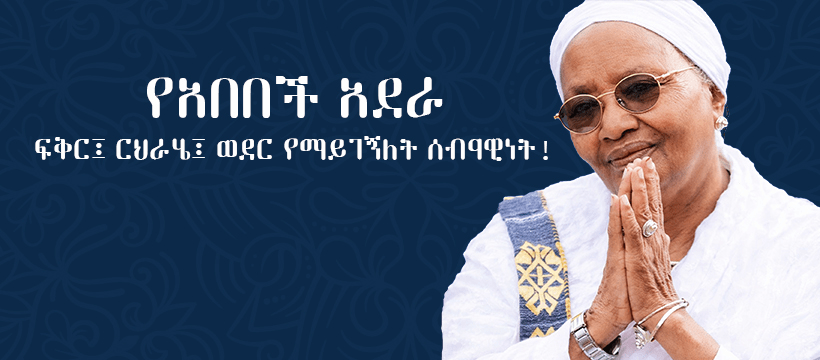
Known as “Africa’s Mother Teresa,” Emahoy Abebech Gobena dedicated her entire life to humanitarian service. Born in 1935, she founded the Abebech Gobena Children’s Care and Development Organization, which has provided shelter, education, and hope to thousands of orphaned children.
Her life was a living sermon on compassion. She did not seek fame or fortune—she sought only to serve. In a world that often measures success by accumulation, Emahoy Abebech measured hers by the lives she touched, the children she saved, and the love she gave freely.
Her legacy reminds us that women’s power is not only expressed in boardrooms or parliaments but in the quiet, relentless work of caring for the most vulnerable. She transformed grief into grace and turned her life into a gift for generations.
Keketch Worede Woldetensae: A 19th Century Revolutionary
In the mid-19th century, long before women’s rights were a global conversation, a woman named Keketch Worede Woldetensae rose to challenge the injustices of her time.
Keketch fought for women’s access to justice and equality in an era when such concepts were barely whispered. She was a revolutionary who refused to accept that women should be silent, that their grievances should be ignored, that their voices should be suppressed.
Her struggle in the 1800s laid groundwork that would take generations to build upon. She may not appear in many history books, but her spirit lives in every woman today who demands to be heard, who insists on justice, who refuses to accept “because you are a woman” as a reason for limitation.
From Earth to the Cosmos
The journey of women from the confines of domestic spaces to the vast expanse of space itself represents the arc of progress. Today, women are astronauts who have walked in space, scientists who have unlocked the mysteries of the universe, and engineers who design the technologies that will take humanity to Mars.
This trajectory—from being told “your place is in the home” to claiming a place among the stars—captures the essence of women’s struggle and triumph. It is not merely about individual achievement but about the collective assertion that women’s minds, ambitions, and contributions belong everywhere that humanity reaches.
The Unfinished Journey
For all the progress celebrated on International Women’s Day, the journey is far from complete. Around the world, women still face violence, discrimination, and barriers to participation. In conflict zones like Oromia and across Ethiopia’s regions, women bear the heaviest burdens of war while receiving the least recognition for their resilience.
The women of Oromia, in particular, continue to fight on multiple fronts: against the violence of armed conflict, against cultural barriers that limit their participation, against a world that often overlooks their sacrifices. From the Siinqee tradition of mutual protection to the Qarree movement of young activists, Oromo women demonstrate daily that resilience is not passive endurance but active resistance.
A Call to Remember and Act
As International Women’s Day 2026 is observed around the world, we are called to do more than celebrate—we are called to remember and to act.
Remember the women who came before: Empress Taytu, who fought at Adwa; Emahoy Abebech, who gave her life to orphans; Keketch, who demanded justice in the 1800s; Oprah, who turned trauma into triumph; and the millions of unnamed women whose quiet courage built the foundation for every achievement.
And act: to ensure that the women of today—in Oromia, in Ethiopia, across Africa and the world—receive the recognition, support, and opportunities they deserve. For when women rise, humanity rises. When women lead, nations prosper. When women are free, the world is transformed.
On this International Women’s Day, we honor the resilience, excellence, and transformative power of women everywhere—from the battlefields of Adwa to the cosmos beyond, from the villages of Oromia to the boardrooms of global corporations. Their journey is our journey. Their triumph is our hope.
Special Report: ABO Women’s and Children’s Affairs Wing (DDD) Celebrates International Women’s Day in Gullallee
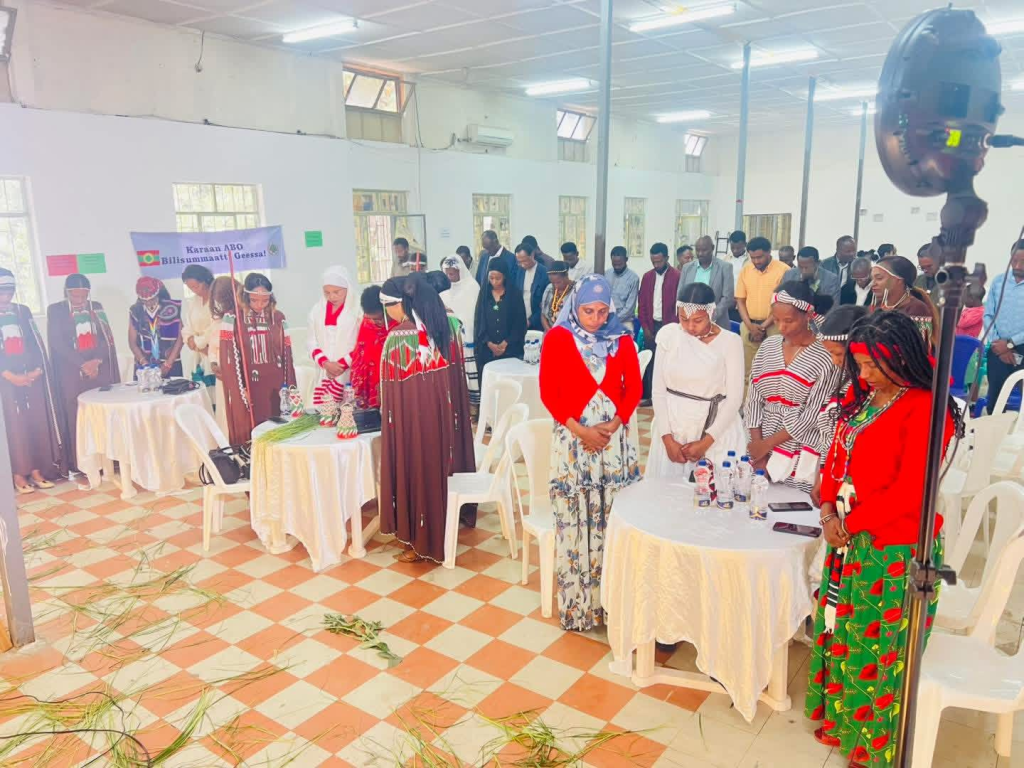
Under the powerful theme “Women’s Participation in Politics is Fundamental to Peace, Justice, Unity, and Nation-Building,” the Women’s Wing honors the indispensable role of women in the Oromo struggle.
GULLALLEE, March 7, 2026 — The Women’s and Children’s Affairs Wing (DDD) of the Oromo Liberation Front (ABO) celebrated International Women’s Day today at the ABO Main Office in Gullallee, gathering under a theme that left no doubt about the centrality of women to the liberation movement.
The event, held on March 7—one day ahead of the global observance—carried the resonant theme: “Women’s Participation in Politics is Fundamental to Peace, Justice, Unity, and Nation-Building.”
A Celebration of Recognition
The gathering in Gullallee brought together women fighters, community members, and leaders to honor not only International Women’s Day but specifically to recognize the contributions of Oromo women to the ongoing struggle for liberation.
The Women’s Wing organized the celebration with deliberate timing—ensuring that the message of women’s indispensable role would echo through the community before the world turned its attention to International Women’s Day on March 8.
The Theme: Participation as Foundation
The chosen theme reflects a profound understanding within the ABO: women are not merely participants in the struggle—they are its foundation. Without their full political participation, peace cannot be lasting, justice cannot be complete, unity cannot be achieved, and the nation cannot be properly built.
This recognition moves beyond rhetoric. It acknowledges that the liberation of Oromia cannot be separated from the liberation of Oromo women, and that any future Oromo state must be built with women’s full and equal participation from the ground up.
Women at the Heart of the Struggle
The celebration in Gullallee comes at a moment when the role of women in the Oromo liberation movement is receiving increasing attention. From the ancient Siinqee institution—a traditional women’s system of mutual protection and conflict resolution—to the Qarree movement of young women activists today, Oromo women have always been at the forefront of resistance.
Yet their contributions have too often been overlooked in historical accounts. Events like this International Women’s Day celebration serve as corrective acts—public acknowledgments that the struggle could not continue without the women who fight, organize, endure, and sacrifice alongside their male counterparts.
A Message to the World
By celebrating International Women’s Day with this particular theme, the Women’s and Children’s Affairs Wing sends a clear message to the international community: any engagement with the Oromo question must take seriously the role and rights of Oromo women. Peace processes that exclude women will fail. Political settlements that ignore gender equality are illegitimate. Nation-building that sidelines half the population builds on sand.
Looking Forward
As the world marks International Women’s Day on March 8, the women of the ABO and the broader Oromo community stand as living proof that the struggle for national liberation and the struggle for women’s liberation are one and the same. Their participation in politics is not a concession to be granted—it is a right to be recognized and a necessity to be embraced.
The celebration in Gullallee on March 7, 2026, will be remembered as a moment when the ABO affirmed, clearly and publicly, that the future Oromia they are fighting to build will be one where women’s voices are heard, their contributions honored, and their leadership embraced.
The Women’s and Children’s Affairs Wing (DDD) of the ABO extends warm International Women’s Day greetings to all Oromo women and to women around the world fighting for justice, equality, and liberation.

Honoring Oromo Women: A Celebration of Strength and Sacrifice
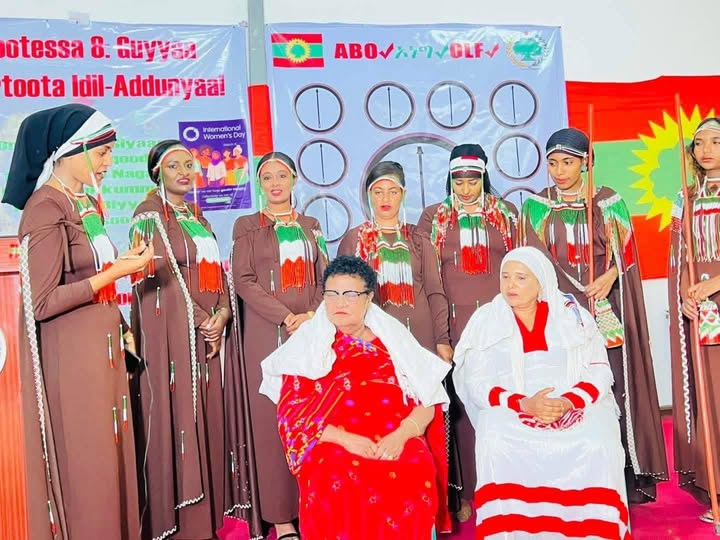
In a ceremony marked by deep respect and gratitude, the Women’s and Children’s Affairs Wing of the Oromo Liberation Army (ABB) in Gullallee honored two remarkable women for their enduring contributions to the Oromo struggle.
GULLALLEE, OROMIA — As the world celebrated International Women’s Day, the Women’s and Children’s Affairs Wing of ABO in Gullallee turned the occasion into a powerful moment of recognition for two women whose artistic and personal sacrifices have left an indelible mark on the Oromo liberation movement.
In a formal ceremony, the Women’s Wing presented a ceremonial shawl (Gaabii) to Artist Ilfineesh Qannoo and Aadde Olaantuu Gammachuu, wife of the late artist Zarihuun Wadaajoo. The gesture was more than symbolic—it was a public acknowledgment of women whose contributions to the struggle have often been carried out away from the spotlight, yet whose impact resonates through generations.
Ilfineesh Qannoo: The Mother of Love and Resistance
Artist Ilfineesh Qannoo, widely known as “Haadha Jaalalaa” (Mother of Love), represents a unique convergence of art and activism in the Oromo experience . Her life and voice have become intertwined with the identity and aspirations of her people, making her far more than an entertainer—she is a symbol of resilience, a living archive of Oromo cultural expression, and a quiet warrior whose medium has always been melody and meaning.
Throughout her decades-long career, Ilfineesh’s songs have carried the deep cultural motifs and subtle yearnings of the Oromo people, serving as a soundtrack to both everyday life and collective struggle . She did not simply perform; she gave voice to history, to joys, to sorrows, and to an enduring hope that has never dimmed despite the challenges faced by her people.
In the words of those who have documented her legacy, Ilfineesh became a “mallattoo cichoominaati”—a symbol of identity and steadfastness . Her music has been a vessel carrying the language, the pain, and the beauty of her community, affirming its existence and its right to be heard. The title “Haadha Jaalalaa” speaks to the nurturing quality of her presence, both personal and public. For her biological family, she has been the center of love and care. For her wider community, she has offered a maternal embrace through her art, providing comfort, strength, and a profound sense of belonging.
One tribute to Ilfineesh captured her essence powerfully: “Her life is a triptych of resistance—the body as battleground and banner, the art as weapon and compass, the bridge between fronts” . She has stood with the Oromo Liberation Army in spirit and solidarity, strengthening their resolve, while also being the soulful voice reaching diaspora halls, university students, and international audiences. She has connected the armed vanguard to the cultural heartland, proving that the struggle is fought with both conviction and culture, in both the forest and the concert hall.
Aadde Olaantuu Gammachuu: Strength Through Sacrifice
The ceremony also honored Aadde Olaantuu Gammachuu, widow of the esteemed artist Zarihuun Wadaajoo. Her recognition speaks to a different but equally vital dimension of the struggle: the quiet, often invisible sacrifice of women who support, sustain, and survive alongside those who take up the public mantle of resistance.
As the wife of Zarihuun Wadaajoo—an artist whose own contributions to Oromo culture and consciousness remain cherished—Aadde Olaantuu has carried the weight of personal loss while continuing to embody the resilience that defines Oromo womanhood. Her presence at the ceremony, honored alongside Ilfineesh Qannoo, served as a reminder that the struggle is not fought by individuals alone, but by families, by partners, by those who endure separation, worry, and grief while their loved ones answer the call of their people.
The Women’s Wing’s decision to honor both women together reflects a profound understanding: the artist who gives voice and the woman who gives strength through her quiet endurance are two sides of the same coin. Both are essential. Both deserve recognition.
The Significance of the Gaabii
The presentation of the Gaabii—a traditional ceremonial shawl—carries deep cultural meaning. In Oromo tradition, draping a respected figure with a shawl is an act of profound honor, a public acknowledgment of dignity, worth, and gratitude. It says: “We see you. We value you. We thank you.”
For the Women’s and Children’s Affairs Wing of ABO in Gullallee to bestow this honor on International Women’s Day amplifies its significance. It declares that the struggle for Oromo liberation cannot be separated from the struggle for women’s recognition, and that the women who have carried the movement—as artists, as mothers, as widows, as quiet pillars of strength—must be honored not in abstract but in tangible, public ways.
Women in the Oromo Struggle
The ceremony in Gullallee reflects a broader recognition of women’s indispensable role in the Oromo liberation movement. From the ancient Siinqee institution—a traditional women’s system of mutual protection and conflict resolution—to the Qarree movement of young women activists today, Oromo women have always been at the forefront of resistance .
Yet their contributions have too often been overlooked, their sacrifices minimized, their names omitted from the roll of honor. Events like this International Women’s Day ceremony serve as corrective acts—small but significant gestures toward setting the historical record straight.
A Call for Continued Recognition
As the Gaabii was draped around Ilfineesh Qannoo and Aadde Olaantuu Gammachuu, the message was clear: this honor is not merely for them, but for all the women whose names may never be recorded but without whom the struggle could not continue.
The Women’s and Children’s Affairs Wing of ABO in Gullallee has set an example that deserves emulation across Oromia and the diaspora. By taking the time to identify, honor, and thank the women who have given so much, they remind us all that gratitude is not merely a feeling but an action—and that honoring those who came before is essential work for those who carry the struggle forward.
Ilfineesh Qannoo and Aadde Olaantuu Gammachuu join a growing list of Oromo women being formally recognized for their contributions to the liberation movement. May their examples inspire gratitude and recognition for women everywhere who give, sacrifice, and endure for the sake of their people.

Honoring the Heroes of Oromia: A March Tribute to Those Who Sacrificed for Liberation
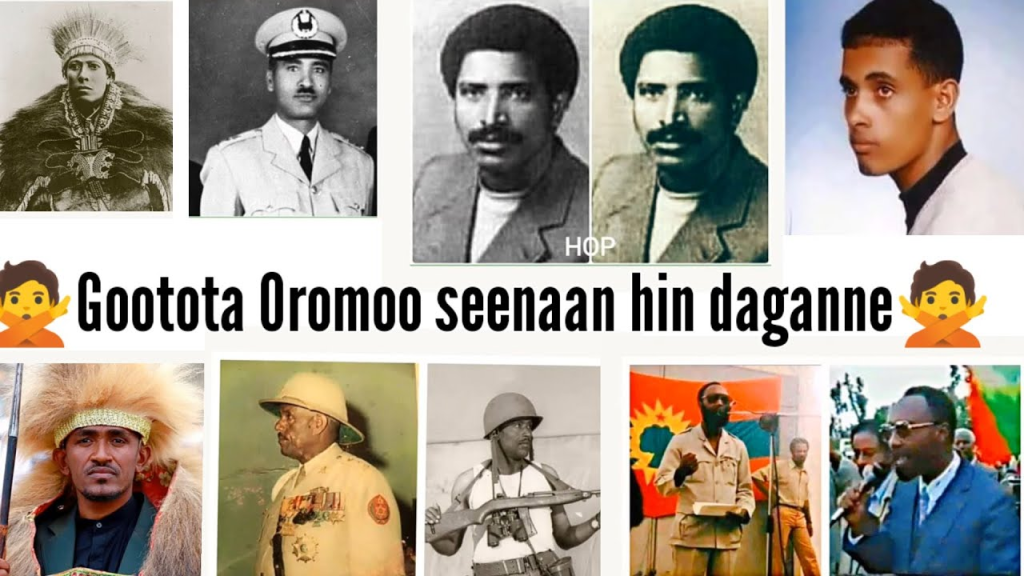
As the month of March unfolds, it carries with it the weight of memory—a time to reflect on the extraordinary sacrifices of Oromo heroes who gave everything for the freedom and dignity of their people.
March holds particular significance in the Oromo liberation struggle. It was in this month, on March 19, 1975, that General Tadesse Birru—the father of modern Oromo nationalism—was executed by the Derg regime alongside fellow commanders Hailu Regassa and other Oromo leaders. Their blood soaked the soil of Addis Ababa, but their legacy seeded the consciousness of generations to come.
General Tadesse Birru: The Father of Oromo Nationalism
Colonel General Tadesse Birru (circa 1920 – March 19, 1975) stands as a colossus in Oromo history—a man whose journey from loyal imperial soldier to revolutionary nationalist embodies the Oromo people’s awakening to self-determination .
Born in Salele, Shewa province, Tadesse’s early life was marked by tragedy. His father, Birru, was killed by poison gas during the Second Italo-Ethiopian War, and his mother died of grief just three months later. Orphaned, young Tadesse joined his uncle as a member of the Arbegnoch—patriots fighting Italian occupation. Captured and sentenced to life in prison with hard labor in Mogadishu, he was freed when the British captured the city in 1940, received military training in Kenya, and returned to Ethiopia in 1941 .
His military career was distinguished. By 1954, he was a lieutenant colonel, later commanding the “Fetno-Derash” (Rapid Force)—Ethiopia’s special forces. In a remarkable historical footnote, it was Tadesse Birru who trained Nelson Mandela in guerrilla warfare and gave the South African anti-apartheid leader his famous lost Liliesleaf pistol .
The turning point came during a meeting with Prime Minister Aklilu Habtewold. Unaware of Tadesse’s Oromo heritage, the prime minister suggested it was unwise to educate or recruit Oromos into the military. This revelation of deep-seated prejudice transformed the general. He joined the Mecha and Tulama Self-Help Association in 1963, a Oromo social movement that his public stature elevated into a pan-Oromo organization advocating for Oromo empowerment through education and self-reliance .
The government responded with brutal repression. The organization was banned, its members arrested, killed, or exiled. Tadesse was placed under house arrest, escaped after three years, and attempted an unsuccessful coup in 1966. Captured and tortured, his death sentence was commuted to life imprisonment. Released but kept under house arrest in Gelemso, he was visited by legendary Oromo leaders including Baro Tumsa, Elemo Qiltu, and Shaykh Bakhri Saphalo .
As the imperial regime weakened in 1974, Tadesse escaped and returned to Addis Ababa. The Derg offered him the Ministry of Interior—he refused twice. When police came to detain him, he fled again and began organizing an armed Oromo rebellion in Shewa, joined by fellow officers including Colonel Haile Regassa. In respect to the defunct Oromo army of Elemo Qiltu, his forces operated under the name of the Oromo Liberation Army (Waraanna Bilisummaa Oromoo) .
Captured along with Hailu Regassa, they were tried, sentenced to life imprisonment, then executed by the Derg on March 19, 1975. The OLA continued to operate and became part of the Oromo Liberation Front in 1976 .
Tadesse’s legacy is immeasurable. His lectures on Oromo identity and nationhood inspired an entire generation, leading to the reaffirmation of Oromo culture, language, and identity. He is rightly considered the father of modern Oromo nationalism .
Jaarraa Abbaa-Gadaa: The Uncompromising Combatant
March 2013 brought another grievous loss. Jaarraa Abbaa-Gadaa, the great national hero of Oromia, passed away in exile on March 3 of that year, still actively engaged in the liberation struggle until his final days .
Known in his youth as Abdulkarim, Jaarraa began his activism organizing secondary school students in Harar, speaking with “touching eloquence” about the trials of the Oromo people under imperial rule and the responsibility of the new generation to organize for national resistance .
He joined the heroic Bale resistance led by Waaqo Guutoo and others, then continued organizing in neighboring Somalia, where he resisted efforts to subordinate Oromo national aspirations to the Greater Somalia project. Finding sanctuary in South Yemen, he played a decisive role in planning a pan-Oromia liberation struggle. His daring 1969 return to Oromia ended in over five years of Somali imprisonment—a setback that only hardened his resolve .
Released in 1975 as Siad Barre prepared for war with Ethiopia, Jaarraa courageously reminded the Somali president that Oromos wished to continue their sacred mission to liberate Oromia. When this proved unacceptable, he secretly slipped back into Oromia, consulted with underground leaders including Baro Tumsa, and successfully reignited the fire of pan-Oromo national liberation .
General Ismail Ahmed of the Somali regime later recalled Jaarraa’s courage in speaking truth to power: “Abdulkarim was courageous, and he loved and respected his people very much” .
The Bale Resistance: Waqo Gutu and Elemo Qiltu
The Bale Revolt of the 1960s produced two other towering figures whose sacrifices in March and beyond shaped Oromo resistance.
Waqo Gutu Usu (1924 – February 3, 2006) was a revolutionary leader of the Bale Revolt, which fought against the feudal system of the Ethiopian Empire. Born to an Oromo father and Somali mother, his rebellion began almost accidentally when a grazing rights conflict was ignored by the central government. After waiting in vain for three months, Waqo “went to Somalia and brought back 42 rifles and two Thompson submachine guns” .
By 1966, about three-fifths of Bale Province was in turmoil. The revolt, running from 1964 to 1970, addressed issues of land, taxation, class, and religion. Waqo surrendered in 1970, but the struggle he ignited continued .
After the Ethiopian revolution, Waqo established the United Oromo People Liberation Front in 1989 and later formed the ULFO in 2000 to unite armed and political groups fighting for Oromo self-determination. He died in a Nairobi hospital on February 3, 2006, survived by 20 sons and 17 daughters. Following the fall of the EPRDF regime in 2018, a statue of Waqo Gutu was erected in Bale .
Elemo Qiltu (Hassen Ibrahim) was another legendary figure who gave his life in the struggle. Visited by General Tadesse Birru during his house arrest, Elemo commanded Oromo forces in the Bale resistance. The Oromo Liberation Army later named its Shewa unit in honor of his defunct army, ensuring his name lived on .
Hachalu Hundessa: The Voice of a Generation
Though June 29, 2020, not March, claims the date of his assassination, no tribute to Oromo heroes would be complete without Hachalu Hundessa—the 34-year-old singer whose murder by gunmen in Addis Ababa sent shockwaves through Oromia and the diaspora .
Hachalu was more than a musician. He was “a voice for the deliberately silenced,” in the words of Amina Dedefo, a young Oromo activist. “A majority of Oromo people don’t have education or access to education. They’re not able to articulate their struggles, but he did it for them through his music” .
His songs like Maalan Jira directly addressed the preservation of Oromo land and culture. His lyrics served as the soundtrack to the Oromo-led social movement that defined Ethiopian politics from 2014 to 2018. Ayantu Ayana, an Oromo historian, likened Hachalu to “a living, breathing historical archive for a group of people whose cultural ways have been continually endangered” .
Hachalu spent five years in prison for his activism as a young man, writing many of his early songs behind bars. His music resonated in “the soul of every Oromo person,” bridging generations in the diaspora and at home. “Hachalu made it cool to be Oromo and to be proud of it,” said Girma Hassen of the Oromo Cultural Institute of Minnesota .
His assassination sparked massive protests and a brutal government crackdown, with Amnesty International reporting at least 5,000 arrests. But his legacy endures. As Abdulrahman Wako, a young Oromo organizer in Minnesota, reflected: “Being Oromo is something I used to run away from. But when I saw Oromo youth peacefully protesting against the Goliath that is the Ethiopian government, I felt closer to what my dad and grandfather had to go through” .
Ancient Heroes: Oromo Commanders at the Battle of Adwa
The tradition of Oromo heroism extends back centuries. At the Battle of Adwa on March 1, 1896—another March date of profound significance—Oromo commanders played decisive roles in securing Ethiopia’s victory over Italian invasion .
Fitawrari Gebeyehu (Abba Gammada) was a top-ranking Oromo commander and hero, known for his bravery and leadership. He led the advance guard and is celebrated for his sacrifice, dying in the heat of battle while charging Italian positions .
Dejazmach Balcha Safo (Abba Nefso) was an influential Oromo general who later became Governor of Sidamo. He led Oromo soldiers and distinguished himself through valiant resistance .
Ras Makonnen Wolde Mikael, though of mixed Oromo and Amhara ancestry, commanded a large contingent of troops and was one of Emperor Menelik II’s most trusted generals .
Fitawrari Tekle and Birru Wolde Gabriel also commanded Oromo troops, contributing to the victory that ensured Ethiopia remained independent .
The Living Legacy
As March 2026 unfolds, the Oromo people carry forward the legacy of these heroes. The struggle they began continues. The torch they lit still burns.
General Tadesse Birru, executed March 19, 1975, taught that Oromo identity was not a source of shame but a wellspring of dignity. Jaarraa Abbaa-Gadaa, who passed March 3, 2013, demonstrated that courage never compromises. Waqo Gutu, who died February 3, 2006, showed that resistance can take many forms. Elemo Qiltu gave his life in the field. Hachalu Hundessa gave his voice, then his blood.
The young Oromo generation, in Minnesota and across the diaspora, has taken up their mantle. As Amina Dedefo said, borrowing Hachalu’s own words: “Waa’ee keenya yoo Otto dhissan silaa nama hin dhiisu”—”Even if we left our struggle, our struggle won’t leave us” .
In this month of memory, we honor:
- General Tadesse Birru – Father of modern Oromo nationalism, executed March 19, 1975
- Jaarraa Abbaa-Gadaa – Uncompromising liberation fighter, died March 3, 2013
- Waqo Gutu – Bale Revolt leader, died February 3, 2006
- Elemo Qiltu – Legendary commander of early Oromo forces
- Hachalu Hundessa – Voice of the Oromo people, assassinated June 29, 2020
- Fitawrari Gebeyehu and the Adwa commanders – Oromo heroes of March 1, 1896
Their sacrifices were not in vain. The Oromo people endure. The struggle continues. And one day, when Oromia is free, their names will be carved not only in memory but in the foundations of a nation they gave everything to build.
Gootota Oromoo, ulfina fi kabajaan isinif haa tahu!
(Heroes of Oromia, honor and respect be upon you!)

Amnesty Report Under Fire: OLA Rejects Sexual Violence Allegations as “Investigative Failure” and “Portrait of Bias”
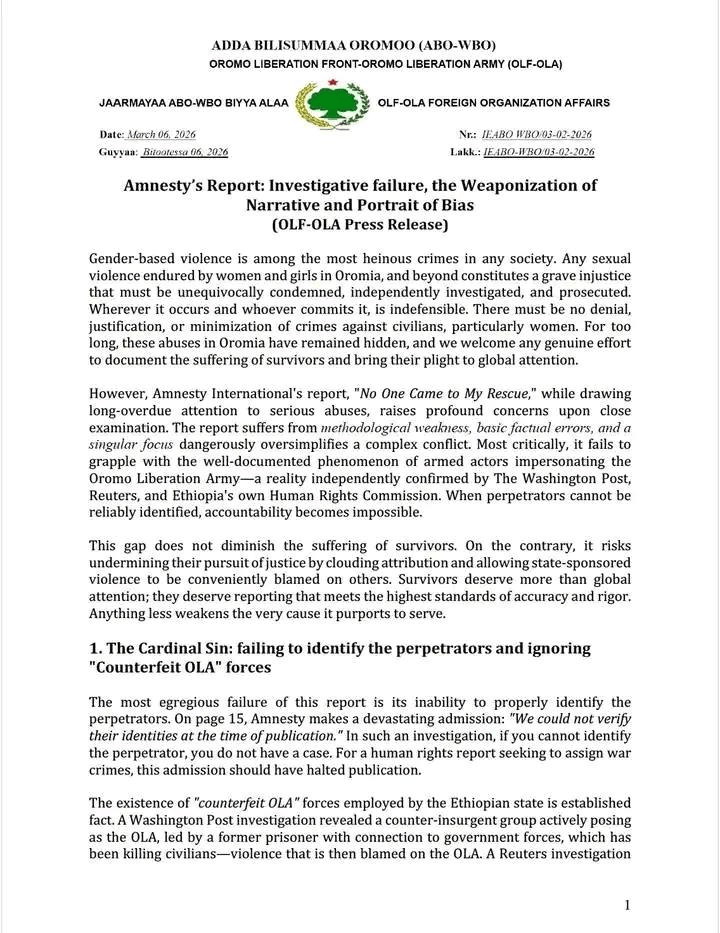
In a blistering 11-page response, the Oromo Liberation Army accuses Amnesty International of ignoring documented evidence of state-sponsored “counterfeit OLA” forces, factual errors about command structures, and selective focus that lets the Ethiopian government “off the hook.”
MARCH 6, 2026 — A day after Amnesty International released its devastating report documenting gang rape, sexual slavery, and mass displacement in western Oromia, the Oromo Liberation Army (OLA) has fired back with a detailed, point-by-point rebuttal accusing the world’s largest grassroots human rights organization of “investigative failure,” “weaponization of narrative,” and “portrait of bias.”
The OLA’s response, issued by its High Command, does not deny that women have suffered sexual violence. “Gender-based violence is among the most heinous crimes in any society,” the statement begins. “Any sexual violence endured by women and girls in Oromia, and beyond constitutes a grave injustice that must be unequivocally condemned, independently investigated, and prosecuted.”
However, the organization argues that Amnesty’s report, titled “No One Came to My Rescue,” is so fundamentally flawed in its methodology, factual accuracy, and attribution that it risks undermining the very justice it purports to serve.
The “Cardinal Sin”: Failure to Identify Perpetrators
The OLA’s most damning critique centers on what it calls the report’s “cardinal sin”: its inability to properly identify the perpetrators of the documented violence.
On page 15 of the Amnesty report, researchers make a striking admission: “We could not verify their identities at the time of publication.”
For the OLA, this admission alone should have halted publication. “In such an investigation, if you cannot identify the perpetrator, you do not have a case,” the response states. “For a human rights report seeking to assign war crimes, this admission should have halted publication.”
The OLA argues that this failure is particularly egregious given the well-documented existence of what it calls “counterfeit OLA” forces—armed actors employed by the Ethiopian state who actively pose as OLA fighters while committing atrocities, which are then blamed on the liberation movement.
The “Counterfeit OLA” Phenomenon: Documented Reality
The OLA’s response cites multiple independent investigations establishing the existence of state-sponsored forces masquerading as OLA fighters.
A Washington Post investigation revealed a counter-insurgent group actively posing as the OLA, led by a former prisoner with connections to government forces. This group has been killing civilians—violence that is then attributed to the OLA in official narratives.
A Reuters investigation uncovered the operations of the Koree Nageenyaa (Security Committee), a clandestine body of senior Oromia officials that has ordered extra-judicial killings and illegal detentions. Crucially, Reuters found that the massacre of the Karrayyuu Abba Gada leaders was orchestrated by these officials, who then instructed the Oromia Communication Bureau to attribute the killings to the OLA.
The OLA points to a telling detail in the Amnesty report itself: survivors say the perpetrators “wanted to be identified and explicitly told victims they were OLA” (p. 15). For the OLA, this is a classic hallmark of a false flag operation.
“Why would actual OLA fighters, operating in their own strongholds, need to announce their identity as they commit crimes, and to villagers who would already know them?” the response asks. “The behaviour described fits the precise profile of agents provocateurs sent by the state to commit atrocities and blame on the OLA.”
The OLA’s accusation is stark: “By utterly ignoring this well-documented reality, Amnesty International is not just making a mistake; they are actively laundering the reputation of a state-sponsored death squad. They are taking the government’s propaganda at face value and presenting it as human rights research.”
The “Draining the Sea” Doctrine: A State Confession Ignored
The OLA response highlights what it considers a staggering omission: the failure to connect documented displacement and home-burning to the explicit, publicized policy of the Ethiopian regime.
Fekadu Tessema, the Oromia Prosperity Party chief until recently, publicly stated: “We have to drain the sea to catch the fishes.”
This is a publicly stated counter-insurgency doctrine that views the civilian population (the sea) as the support base for the OLA (the fish). The mass displacement, the burning of homes, and the terrorization of communities described in the Amnesty report are, the OLA argues, a textbook implementation of this state policy.
“Amnesty’s report, by blaming the OLA for this displacement, has effectively taken the confession of a senior government official and turned it into an indictment of his victims,” the response states.
The report’s legal analysis, which claims “it is reasonable to believe that the armed group’s fighters are using sexual violence to expel a section of the civilian population” (p. 23), is, in the OLA’s view, “rendered absurd by the existence of a documented state policy with the exact same goal.”
Factual Errors: “Shoddy Research” Undermines Credibility
The OLA response catalogs what it describes as basic factual errors that undermine the report’s credibility. These include:
- “The OLA has five main commands” (p. 11) — The OLA states this is FALSE; it has eight commands across Oromia.
- “The Western command is led by Jal Gemechu Aboye” (p. 11) — The OLA states this is FALSE; Gemechu Aboye has never been the Western Commander.
- “The Central Regional Command… is reported to be led by Jal Jiregna” (p. 11) — The OLA states this is FALSE; the central command has never been led by anyone called Jaal Jiregna.
“If Amnesty International cannot accurately report the number of commands or the names of commanders, why should any reader trust their conclusions about specific acts of violence?” the response asks. “This is not a minor oversight; it demonstrates a fundamental lack of understanding of the subject they are investigating and casts yet another doubt on every single ‘finding’ in the report.”
The Selective Lens: Ignoring State Culpability
Perhaps the most substantive critique concerns what the OLA calls the report’s “selective lens”—its focus solely on the OLA while ignoring overwhelming evidence of state-perpetrated violence.
The OLA response cites United Nations data showing that state forces (ENDF, police, and affiliated militias) were responsible for 70% of all human rights violations in Ethiopia in 2023, affecting 7,103 victims. All non-state armed groups accounted for only 22.3%.
The UN also documented that between August and December 2023 alone, 18 drone strikes by the ENDF resulted in 248 civilian deaths and 55 injuries, destroying schools and hospitals.
Other investigations by the UN International Commission of Human Rights Experts on Ethiopia (ICHREE) have consistently indicated the disproportionate role of regime forces in abuses.
“Amnesty International is aware of these figures. They are public,” the OLA response states. “Yet they chose to produce a report that effectively ignores the primary perpetrator of violence in the region. This effectively makes the report a political hit job, not a human rights report. By singling out the OLA, Amnesty, wittingly or otherwise, seem to be providing cover for a state that has raped, killed and displaced far more civilians.”
Methodological Concerns: Remote Research and Unverified Claims
The OLA raises serious concerns about Amnesty’s research methodology. The report acknowledges it was conducted during a government-imposed communications blackout with restricted access (p. 11). Interviews were conducted via “encrypted communication apps” (p. 8).
“In an environment of intense state surveillance and propaganda, where ‘counterfeit OLA’ forces are actively trying to frame the OLA, relying on remote testimony without the ability to forensically verify the scene, the perpetrators, or the chain of command is a recipe for disaster,” the response argues.
“The victims’ trauma is real, but the attribution of that trauma is based on the word of individuals in a war zone who are being terrorized by multiple regime forces, including those pretending to be the OLA. A responsible human rights organization would have paused, acknowledged the ‘unverified’ status of the perpetrators, and investigated the role of state-sponsored imposters. Amnesty did the opposite: they rushed to print a headline that condemns the OLA and exonerates the regime.”
Call for Report Withdrawal and Independent Audit
The OLA’s conclusion is uncompromising:
“Amnesty International’s ‘No One Came to My Rescue’ is a reckless and biased document that fails the standards of investigative rigor. By ignoring the well-documented existence of ‘counterfeit OLA’ forces and the state’s own policy of ‘draining the sea,’ by getting basic facts about the OLA’s command structure wrong, and by ignoring UN data showing that the state is responsible for 70% of all abuses, Amnesty has produced a report that is as flawed as it is dangerous.”
The OLA alleges that the report, “wittingly or unwittingly, provides diplomatic cover for a regime that tortures its citizens, runs secret death squads (Koree Nageenyaa), and kills civilians with drones on daily basis. It denies the OLA, a legitimate armed actor in a non-international armed conflict, as the report itself concludes, the presumption of a fair investigation. And worst of all, it weaponizes the trauma of ten women to serve a political narrative that lets the primary perpetrators of violence in Oromia—the Ethiopian regime and its proxies—off the hook.”
The OLA formally requests that the report be withdrawn and its methodology subjected to an independent audit.
Call for Independent Investigations
The response concludes by reiterating the OLA’s long-standing call for independent investigations into serious crimes previously attributed to it—calls that have largely been dismissed or ignored by the Ethiopian regime and its backers.
The OLA notes that the regime has mounted a sustained diplomatic campaign to terminate the mandate of the International Commission of Human Rights Experts on Ethiopia at the United Nations Human Rights Council, effectively shutting down the body in the midst of its investigative work.
“Against this backdrop, the OLA reiterates its call for comprehensive and genuinely independent investigations, not only into the latest allegations documented in western Oromia, but across all parts of the Oromia region where there is evidence of grave abuses committed,” the statement concludes. “Ensuring justice for survivors requires a process that is independent, transparent, and capable of examining the actions of all actors involved in the conflict. Only through such an approach can accountability be established, disinformation avoided, and the dignity and rights of victims upheld.”
The OLA’s full statement was issued on March 6, 2026. Amnesty International has not yet responded to the OLA’s specific allegations regarding the report’s methodology and factual accuracy.

Navigating Media in Restricted Spaces: The Art of Careful Communication
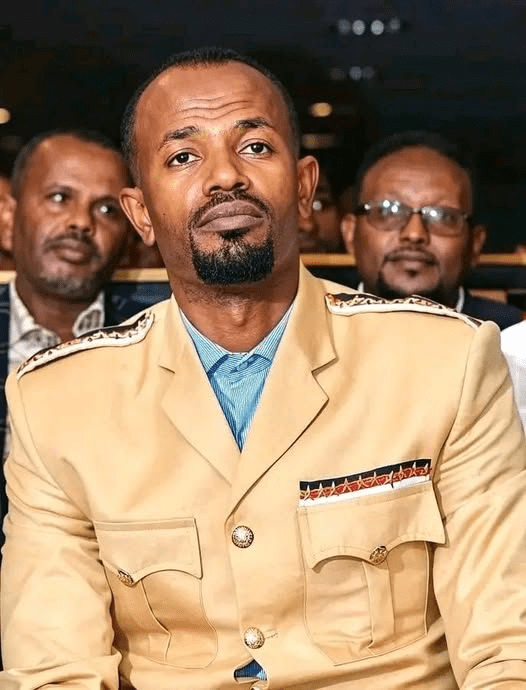
In an era of information saturation, those living under media restrictions face a unique challenge: how to express truth without inviting persecution.
In countries where media freedom does not exist, the act of communication itself becomes a calculated risk. Every word published, every opinion shared, every piece of information disseminated carries potential consequences—not just for the individual, but for their family, their community, and their cause.
The principle is simple but its application requires constant vigilance: in places without free media, nothing is simply as one wishes it to be.
The Landscape of Control
When media is not free, it is not merely absent—it is actively controlled. Information is filtered, shaped, and often fabricated to serve the interests of those in power. Independent journalism is suppressed. Social media is monitored. Private communications are intercepted.
In such environments, citizens learn quickly that open expression carries risks. A post critical of the government can lead to arrest. Sharing a news article from an independent source can invite interrogation. Even private conversations, if overheard by the wrong ears, can have life-altering consequences.
This is not paranoia. It is the lived reality for millions of people across the globe—including, many would argue, in parts of Ethiopia where media freedoms have been severely constrained in recent years.
The Power of Brevity and Clarity
For those who must communicate under such conditions, the counsel is wise: present information briefly and clearly.
Long, elaborate arguments provide more material for those who would twist words. Complex analyses offer more footholds for misinterpretation. The clearer and more concise the message, the harder it is to distort.
This does not mean abandoning truth or avoiding difficult subjects. It means recognizing that in restricted spaces, communication is a strategic act. Every word must earn its place. Every statement must be crafted with awareness of how it might be read—not only by intended audiences but by those who would use it as a weapon.
The Necessity of Self-Censorship
The advice continues: understand that what is not explicitly stated may be subject to distortion.
In free societies, context and implication can be taken for granted. Readers understand nuance. They fill in gaps with shared understanding. But when communication crosses boundaries—whether geographic, political, or ideological—what is left unsaid becomes vulnerable.
Those who monitor communications for signs of dissent are trained to find meaning in omission, to read between lines, to construct narratives from silence. The careful communicator must anticipate this, must consider not only what they say but what others might claim they meant.
Strategic Self-Presentation
The final counsel is perhaps the most important: exercise care in presenting one’s own thoughts and opinions.
This is not about abandoning principles or hiding one’s true beliefs. It is about recognizing that in hostile environments, the manner of expression can be as important as the content. Timing matters. Audience matters. The choice of words—and the choice of which words to leave unspoken—can determine whether a message reaches its intended recipients or lands its sender in prison.
Lessons for Diaspora Communities
For those who have escaped such environments and now live in countries with greater media freedom, the habits of careful communication do not always fade. Many in the diaspora continue to practice the same caution they learned at home—guarding their words, measuring their statements, calculating risks even when risks may no longer exist.
This is both a survival instinct and a connection to those still living under restriction. When diaspora communities communicate with people inside restricted countries, they must remember that their words may be read by more than their intended audience. A supportive message from abroad can become evidence against someone at home.
The Ethical Responsibility
For journalists, human rights advocates, and all who communicate across these boundaries, the lesson is clear: we must exercise care not only in what we say but in how we say it.
We must be brief where brevity protects. We must be clear where clarity defends. We must anticipate distortion and guard against it. And we must never forget that for many of our sources, our readers, our colleagues, the stakes of communication are not abstract—they are matters of life and liberty.
Conclusion
In a world where media freedom remains the exception rather than the rule, the art of careful communication is essential. It is not cowardice to measure one’s words. It is not compromise to consider consequences. It is wisdom—the hard-won wisdom of those who have learned that in places without free media, nothing is simply as one wishes it to be.
The goal remains truth. The commitment remains justice. But the path must be walked with eyes open, with steps measured, and with constant awareness of those who would use our words against us and against those we seek to serve.
This commentary is offered in solidarity with journalists, activists, and ordinary citizens around the world who continue to speak truth under conditions of media restriction. Their courage inspires us; their safety concerns us; their voices must be amplified—carefully, clearly, and with constant attention to the consequences.

Amnesty Report Documents Sexual Violence in Oromia, But Critics Question Omissions
A new investigation from Amnesty International accuses OLA fighters of gang rape and sexual slavery, yet some argue the report fails to adequately address abuses committed by government forces.
NAIROBI/ADDIS ABABA — A highly anticipated report released yesterday by Amnesty International has documented horrific accounts of sexual violence, summary killings, and displacement in Ethiopia’s Oromia region—abuses the organization says may amount to war crimes. However, the findings have already drawn sharp criticism from some quarters, with detractors alleging the report is “filled with lies” and fails to properly investigate atrocities committed by government forces.
What the Amnesty Report Found
Titled “No One Came to My Rescue: Gang Rape, Sexual Slavery, and Mass Displacement of Women in Oromia, Ethiopia,” the briefing documents 10 cases of sexual violence in the Sayo and Anfillo districts of Kellem Wallaga zone—areas described as strongholds of the Oromo Liberation Army (OLA).
According to the report, nine of the survivors said they were raped or otherwise abused by OLA fighters, while one survivor reported sexual violence by both OLA fighters and a soldier from the Ethiopian National Defense Force (ENDF). Amnesty said five of the cases involved survivors who endured both gang rape and sexual slavery, sometimes over periods lasting days or weeks.
Seven of the survivors were under the age of 18 at the time of the assaults, Amnesty said, adding that three of them were 17 at the time they were interviewed by researchers. Two survivors became pregnant as a result of the assaults, one of whom was still pregnant during the interview.
The organization documented harrowing testimony from survivors. One mother told Amnesty: “For three weeks, 15 men raped my child and me. They took turns.” The mother and daughter were held for three weeks, “their hands tied to a tree where they were raped by multiple men from the OLA,” the report said .
“These May Amount to War Crimes”
Amnesty concluded that the conflict between the OLA and Ethiopian government forces—including the ENDF, Oromia Special Police, Oromia regional police, and local militias—meets the threshold of a non-international armed conflict under international law, governed by the rules of international humanitarian law including the Geneva Conventions.
“These repeated abuses are not only horrific but may amount to war crimes,” said Tigere Chagutah, Amnesty’s regional director for east and southern Africa.
The organization said several survivors reported being targeted because their male relatives were members of local government militias. Amnesty also documented cases in which survivors were forced to flee their homes after the attacks, fearing further violence from OLA fighters.
“Nine of the survivors are displaced from their homes after they were subjected to sexual violence,” the report said, noting that many feared fighters would return to rape them again or kill them. Amnesty added that fighters also burned homes in some cases, which it said contributed to the forced displacement of civilians.
Communication Blackout Enabled Abuses
The report raised concerns about limited documentation of abuses in Oromia, citing a year-long communications blackout in 2019 and subsequent restrictions on communications and access to conflict-affected areas by international and regional rights monitors. It also referenced what it described as increasing pressure on journalists and human rights defenders.
“These cowardly acts were partly enabled by a communication blackout that shut out the rest of world to the sustained atrocities against civilians,” Chagutah said.
Criticism: A One-Sided Narrative?
Despite the gravity of the findings, the report has already faced significant criticism from those who argue it presents an incomplete picture of the conflict. Detractors contend that the report is “filled with lies” and fails to properly investigate and expose abuses currently being committed by government forces.
The criticism centers on the disproportionate focus on OLA-perpetrated violence. Of the 10 documented cases, only one mentions abuses by government forces—and that single case involved violence by both an ENDF soldier and OLA fighters . Critics argue that government forces, including the ENDF, Oromia Special Police, and regional police, have been implicated in widespread abuses that deserve equal scrutiny.
This critique aligns with findings from other human rights organizations. The Oromia Support Group (OSG), in a comprehensive report submitted to the 61st session of the UN Human Rights Council just days before Amnesty’s release, documented a starkly different picture of the conflict. According to OSG, the organization has now recorded 7,511 Oromo civilian deaths under Prime Minister Abiy Ahmed’s rule, with most victims being young people from the Qeerroo generation.
OSG’s Report 72 documents horrific accounts of sexual violence perpetrated by government soldiers, stating that “children, prepubescent girls and young boys, and mothers of families have been cruelly raped. The rape and killing of teenage girls and girls aged as young as ten years are documented”.
The OSG report also details deliberate shooting of infants and children under ten years old by national defense forces, “for frivolous reasons”.
Broader Pattern of Violence
The Ethiopian Human Rights Commission (EHRC) has independently confirmed ongoing violence in Oromia. In a statement released just days before the Amnesty report, EHRC documented that since October 2025, renewed attacks by armed groups in multiple districts of Arsi Zone—including Shirka, Guna, Merti, Aseko, and Onkolo Wabe—have resulted in loss of lives, bodily injuries, and destruction of property, as well as the displacement of residents due to security concerns.
EHRC further confirmed that attacks perpetrated on February 26, 2026 in Jawi Kebele of Shirka District and Geba Kebele of Robe District resulted in killings, bodily injuries, abduction, and displacement of an as-yet-undetermined number of individuals.
EHRC Chief Commissioner Berhanu Adello stated that these attacks are making it “difficult for residents to exercise their right to life and carry out their daily activities in peace and security”.
OLA Responds to Allegations
In response to the Amnesty report, OLA leader Kumsa Diriba (also known as Jaal Marroo) rejected accusations that his fighters target civilians. “Our war is not against the people,” he told The Associated Press. “It is against the brutal regime that has occupied and oppressed the nation for generations”.
He added: “We are fighting to correct a system that treats the Oromo as subjects, rather than citizens. Our goal is to establish a democratic, inclusive political order based on the will of the people”.
International Response
Amnesty called on the OLA to immediately end attacks on civilians, publicly acknowledge abuses committed by its fighters, and cooperate with independent investigations. It also urged the Ethiopian government to conduct credible investigations into conflict-related sexual violence by all parties and to allow greater access to the region for human rights monitors, including UN investigators.
The organization further called on international mediators—including the Intergovernmental Authority on Development (IGAD) and the governments of Kenya, Norway, and the United States—to ensure that accountability for human rights violations is addressed in any peace negotiations between the parties to the conflict.
The Challenge of Documentation
All parties acknowledge the immense difficulty of documenting abuses in Oromia. The region has faced severe restrictions on communications and access, hampering the work of human rights organizations. Amnesty itself noted these challenges in its report.
The Oromia Support Group similarly highlighted that “poor access and communication continue to hinder data collection, especially from Guji and Borana zones”.
These access restrictions mean that any single report—whether focused on OLA abuses or government abuses—inevitably presents an incomplete picture of the conflict’s full human toll.
Conclusion: A Conflict in Need of Comprehensive Truth
The Amnesty International report represents a significant contribution to documenting the suffering of civilians caught in the Oromia conflict. The testimonies of survivors—particularly the seven minors who endured gang rape and sexual slavery—demand accountability and justice.
However, the criticism that the report fails to adequately address government-perpetrated abuses raises legitimate questions about the comprehensiveness of the investigation. The documentation by OSG and others of widespread abuses by government forces, including sexual violence, extrajudicial killings, and forced displacement, suggests that any complete accounting of the conflict must examine all parties equally.
As Ethiopia’s multifaceted conflicts continue to claim civilian lives, the challenge for the international community remains: how to piece together a complete picture of atrocities from fragments of testimony, restricted access, and competing narratives. The truth, as always, is likely more complex than any single report can capture.
Amnesty International’s full report, “No One Came to My Rescue: Gang Rape, Sexual Slavery, and Mass Displacement of Women in Oromia, Ethiopia,” is available on their official website. The Oromia Support Group’s Report 72 has been submitted to the 61st session of the UN Human Rights Council.

Oromo Women: Fighting for Equality and Justice on International Women’s Day
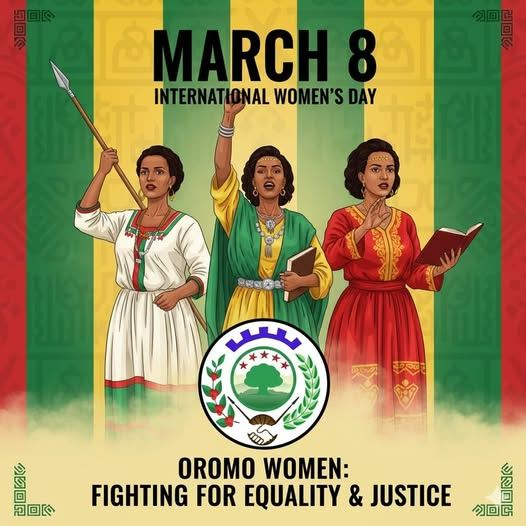
As the world marks International Women’s Day on March 8, the spotlight turns to the remarkable women of Oromia—custodians of culture, leaders of resistance, and unwavering advocates for justice who have fought for generations against the double oppression of gender discrimination and systemic marginalization.
For Oromo women, the struggle for equality and justice is not a recent phenomenon. It is woven into the fabric of their history, expressed through ancient traditions like the Siinqee institution, carried forward through decades of political imprisonment and torture, and articulated today by activists who refuse to be silenced.
The Siinqee Tradition: Ancient Feminism
At the heart of Oromo women’s empowerment lies the Siinqee—a traditional women’s institution that has functioned for centuries as both a symbol of unity and a practical tool for conflict resolution and rights protection .
The Siinqee is a ritual stick given to Oromo women by their mothers on their wedding day. Its meaning is profound: once a woman holds this stick, she commands respect from everyone in the community. If she places herself between two people fighting, all parties must fall silent and cease their conflict .
Dagnu Rabo, a 52-year-old tailor from Etaya in the Arsi region and a Haadha Siinqee (traditional women’s leader), describes her role: “I make it clear to them that everyone has the right to express their opinion, but no one may physically harm anyone else.” Her daily work involves mediating between couples, protecting women from violent husbands, and resolving community disputes .
When a woman is attacked or abused, other women rush to her aid. Wearing distinctive brown cloaks and colorful beaded necklaces, holding their Siinqee sticks aloft, they surround the victim, singing and chanting to draw attention to the perpetrator’s crime until the village elders intervene .
This institution was recognized by UNESCO in 2016 as part of the Gadaa system’s inscription on the Representative List of the Intangible Cultural Heritage of Humanity. Yet for Oromo women, it has never been merely a cultural artifact—it remains a living, breathing mechanism of justice .
Voices of Resistance: Martha Kuwee Kumsa
Perhaps no figure better embodies the courage of Oromo women than Professor Martha Kuwee Kumsa, a siinqee feminist and scholar who survived nearly a decade of imprisonment and torture for her journalistic activities promoting Oromo women’s rights .
Born in Dembidolo in Oromia around 1955, Kumsa’s middle name is that of an Oromo heroine—a name she would prove worthy of. After the 1974 Ethiopian Revolution closed universities, she trained as a journalist and began writing columns calling for Oromo women to defy existing power structures and reclaim their culture .
In 1980, plainclothes security officers detained her. She described arriving at the prison to find people on the floor, “bleeding from their mouths, [with] disfigured [faces] and pus ooz[ing] from wounds,” and an “overpowering stench.” She was tortured by foot whipping nine times during her first year of detention, then moved to another prison where she would remain for nine years—never charged, never tried .
Organizations including PEN America campaigned for her release. She received the 1989 PEN/Barbara Goldsmith Freedom to Write Award while still imprisoned. On September 10, 1989, she was released without warning in a mass amnesty .
Seven months later, fearing recapture, Kumsa escaped to Kenya with her children, walking two weeks through the forest. She eventually made her way to Canada, where she earned bachelor’s, master’s, and doctoral degrees and became a full professor at Wilfrid Laurier University, all while continuing her human rights advocacy .
In 2020, Kumsa co-authored a Washington Post piece criticizing media misrepresentation of Oromo protests following the killing of singer Hachalu Hundessa. She documented 9,000 arrests of Oromos and described a “wave of repression” targeting Oromo journalists and activists .
Dinknesh Deressa Kitila: Organizing for Change
Another towering figure is Dinknesh Deressa Kitila, founder of the International Oromo Women’s Organization. Her activism was born from childhood experience: during elementary school student council elections, a boy was preferred over her despite her having the highest grades. That moment of discrimination lit a fire that has never extinguished .
Deressa’s analysis of Oromo women’s situation is stark: “The state of oppression is very deep in general but Oromo women face even greater difficulty. Abyssinians treat Oromo women poorly. If a woman proposes a constructive idea, it doesn’t get proper attention as women are discriminated against up to a level where they are not considered as human beings” .
For Deressa, self-determination is not abstract but deeply personal: “a process by which one can take control of her/his whole life, decide freely what is good for her/him or not, what is important to her/him.” She emphasizes that organization is vital—that being organized is essential for anyone seeking to stand for peace and especially for women’s rights .
She has consistently called upon the international community to act: “The international community and humanitarian organisations have to take appropriate action to stop the Ethiopian government’s brutality against the Oromos” .
The Qarree Movement: Young Women Rising
In recent years, Oromo women have played a central role in the Qarree movement—the women’s counterpart to the better-known Qeerroo youth movement. These young Oromo women have been at the forefront of protests, organizing demonstrations, mobilizing communities through social media, and demanding both national liberation and gender equality .
Martha Kuwee Kumsa has defended these young activists against what she sees as media misrepresentation. She criticizes those who “categorically associate” the Qeerroo and Qarree with violence, arguing instead that they represent peaceful protest movements that helped overthrow the authoritarian EPRDF regime .
Multidimensional Contributions
The role of Oromo women in their society extends far beyond political activism. They are:
- Custodians of culture: Passing down traditions, songs, and stories to future generations; preserving the Afaan Oromo language; maintaining cultural practices like Irreechaa
- Economic backbones: Actively involved in farming, cultivating essential crops, and demonstrating entrepreneurial spirit that contributes significantly to local economies
- Peace brokers: Frequently involved in conflict resolution, using wisdom and insight to promote peace and harmony within communities
- Political participants: Increasingly taking on roles in organizations like the Oromo Federalist Congress (OFC) and advocating for women’s representation in decision-making processes
The Ateetee Tradition: Sung Justice
Among the Arsi Oromo, women have developed a unique form of dispute resolution called ateetee—a sung ritual process through which women protect, promote, and claim their rights. When an offense occurs, women travel to the offender’s house singing insults, then continue singing outside until a reconciliation ceremony is held. At the ceremony, they receive a cow as compensation and conclude by blessing the offender .
This tradition, documented in depth by ethnomusicologist Leila Qashu, demonstrates how music enables women to exercise power in a male-dominated society. It represents what scholars call “vernacular feminism”—a form of women’s empowerment rooted in indigenous culture rather than imported from external sources .
Ongoing Challenges
Despite their immense contributions, Oromo women face significant challenges:
- Gender-based violence: Both from state security forces and within their own communities
- Cultural barriers: Traditional gender roles can limit participation in leadership and decision-making
- Lack of recognition: Contributions are often overlooked or undervalued in both national and international narratives
- Double oppression: As Oromos facing systemic marginalization and as women facing gender discrimination
Conclusion: The Path Forward
As International Women’s Day 2026 is observed under the global theme “Rights. Justice. Action. For ALL Women and Girls,” Oromo women stand as living proof that empowerment is not a gift to be granted but a right to be claimed—and reclaimed, generation after generation, through courage, organization, and unwavering commitment to justice.
From the ancient Siinqee tradition to modern advocacy at the United Nations, Oromo women have fought for equality and justice on every front. They have endured imprisonment, torture, and exile. They have preserved culture while demanding change. They have led protests and raised children, documented atrocities and built organizations, spoken truth to power and sung justice into being.
Their struggle is not separate from the broader Oromo quest for self-determination—it is integral to it. As Dinknesh Deressa reminds us, true liberation requires women’s full participation and recognition. And as Martha Kuwee Kumsa’s life demonstrates, Oromo women will continue to fight until that liberation is achieved, no matter the cost.
On this International Women’s Day, the world would do well to listen to their voices, honor their sacrifices, and support their ongoing struggle for equality and justice. For in the words of the Oromo women themselves: when women participate fully, peace becomes lasting, justice becomes real, and the homeland becomes whole.
The International Oromo Women’s Association continues to advocate for Oromo women’s rights globally. For more information or to support their work, visit their official channels.

The Revolutionary Seed: Remembering Ethiopia’s “Children of the Mountain” and Their Lost Legacy
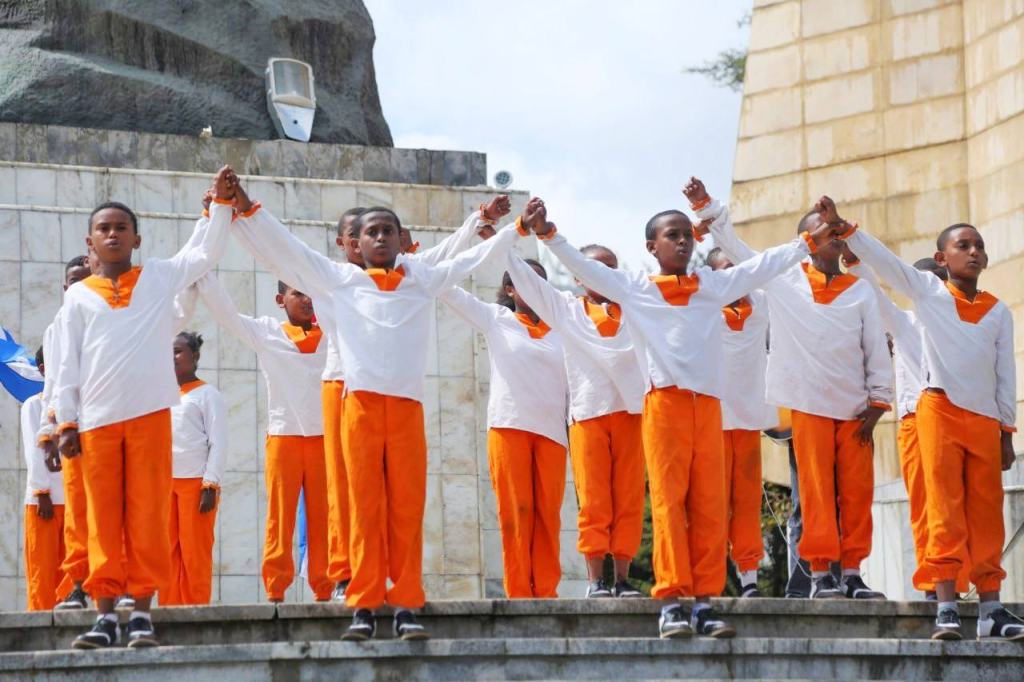
In the 1970s, a unique orphanage called “The Mountain of Revolutionary Ethiopia’s Children” was established to raise the sons and daughters of fallen soldiers. Its choir became legendary—then history forgot them.
The year was 1973 (Ethiopian Calendar), or 1980/81 in the Gregorian calendar. The country was engulfed in war on multiple fronts—fighting internal and external forces that claimed the lives of countless Ethiopian soldiers. Men fell on battlefields across the nation, leaving behind children with no guardians, no caregivers, no one to raise them.
The streets began to fill with orphans.
The Derg government, concerned by the growing number of abandoned children, took action. By special order of the country’s then-president, Mengistu Haile Mariam, an institution was established to shelter, educate, and raise these children. It was called “The Mountain of Revolutionary Ethiopia’s Children”—YeAbyotawi Ethiopia Children’s Amba.
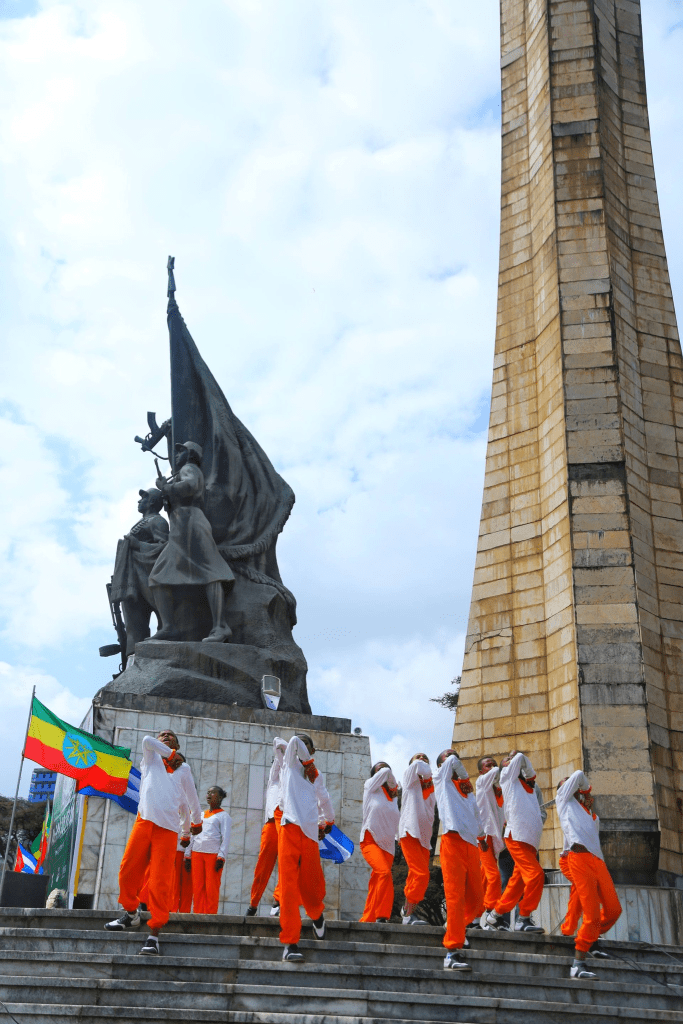
A City on a Hill
Located in what was then called Shoa Province, in the region of Lakes and Butajira, within the Alaba Kulito woreda, the Amba sat in an area known as Alage. It was here that children who had lost their parents to war, natural disasters, and other calamities found a new home.
The institution was divided into five “villages” or compounds: Seble Abiyot, Meskerem Two Ogaden, Zeray Deres, and Mengistu Haile Mariam—five communities that together formed a small city of children.
The Amba took in children of all ages, from newborns to adolescents. They were housed, fed, clothed, and educated within the institution’s walls. The mission was clear: raise these children with dignity, provide them education and moral guidance, and prepare them to re-enter society as whole human beings.
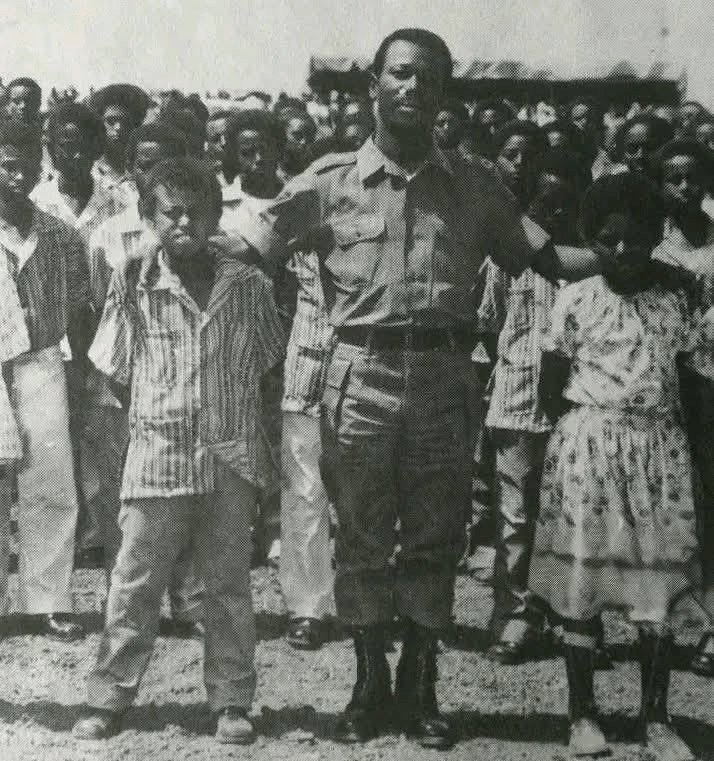
Growing Up on the Mountain
Former children of the Amba remember that when a child turned 18—or completed 12th grade—they would bid farewell to the institution that had raised them. But before departure, they received special counseling designed to ensure they left with strong moral character and, crucially, without the stigma of having grown up in an orphanage. The goal was integration, not isolation.
Those who excelled academically had paths forward. Some entered Ethiopia’s institutions of higher learning. Others were sent abroad—most often to Cuba or Russia—to continue their education. For children who had lost everything, the Amba offered not just survival but opportunity.
“Father” Departs, Shadows Fall
In 1983 (Ethiopian Calendar), disaster struck—not of the natural variety. President Mengistu Haile Mariam, whom all the children called “Our Father,” fled the country. For the children and staff of the Amba, his departure cast a long shadow. The man who had ordered their rescue, who had been the patron of their mountain, was gone.
What followed was a period of uncertainty. The institution continued, but the symbolic and practical support it had enjoyed evaporated with the regime that created it.
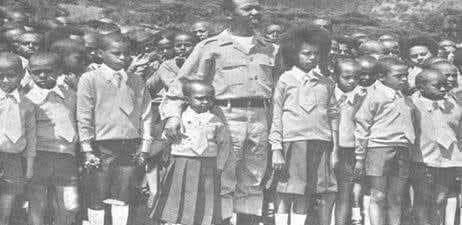
The Choir That Captured a Nation
But the Children of the Amba were known for something beyond their orphanage: their music. Under the tutelage of the renowned poet and artist Alemtsahay Wedajo, the children received artistic training that would make them famous across Ethiopia.
Gathered into a performance group called YeJegna Fire—”The Seed of Heroes”—the children regularly presented musical and artistic programs for audiences. Their choir performances were deeply moving, laden with messages about sacrifice, heroism, and national pride.
Among their most beloved works were songs that became anthems for a generation: “Tsehayé” (My Sun), “Yejegna Lij Jegna” (A Hero’s Child is a Hero), and “Ergibitu Hijji” (The Dove Hijji). These songs were not mere entertainment; they were the voice of children who had lost everything yet found purpose in serving their nation through art.
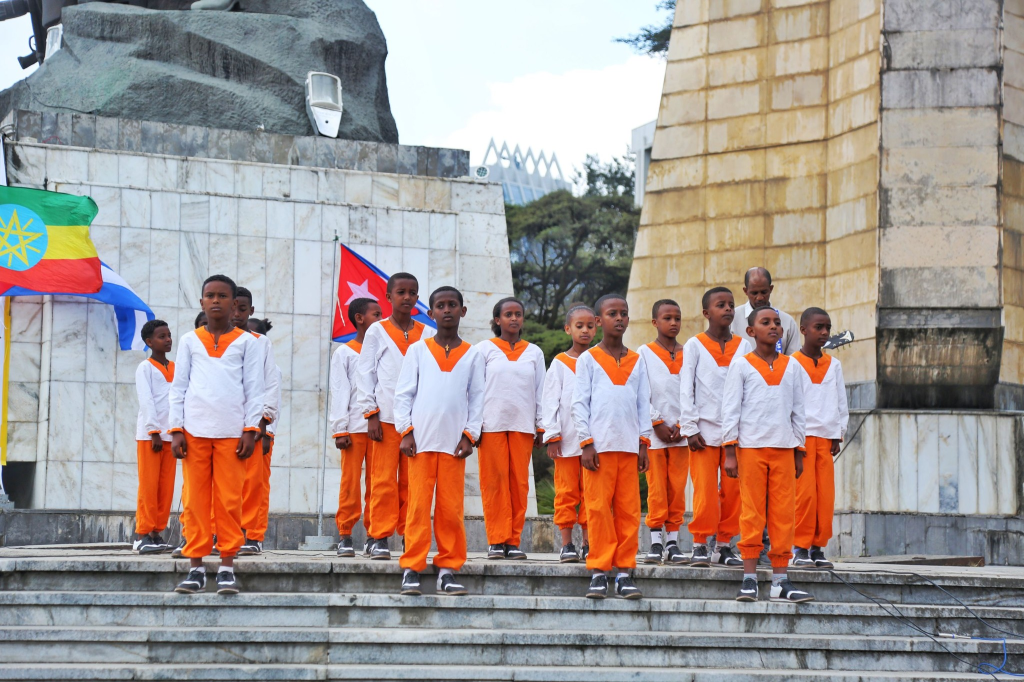
The Soundtrack of an Era
In the late 1970s and early 1980s (Ethiopian Calendar), these songs were everywhere. Young people across Ethiopia knew them by heart, singing them as if they were folk songs passed down through generations. Ethiopia Radio and Television broadcast them repeatedly. To hear a YeJegna Fire performance on the airwaves was not a novelty—it was a regular part of the cultural landscape.
The children’s choir had achieved something remarkable: they had transcended their origins to become a beloved national institution.
Erased by History
Then came 1991. The Derg fell. The transitional government that followed had no interest in preserving the cultural legacy of the fallen regime. The songs of YeJegna Fire were silenced. The children of the Amba scattered. Their music became, as one observer put it, “history, then forgotten.”
For decades, these recordings sat in archives, unheard by new generations. The voices of those orphaned children, raised up by a revolutionary government and trained by one of Ethiopia’s great artists, faded into silence.
A Flicker of Return
Recently, however, word has spread that a CD has been published containing some of these long-lost recordings. For those who grew up with these songs, it is a chance to hear their childhood again. For younger Ethiopians, it is an opportunity to discover a piece of their national heritage that was deliberately buried.
The songs of YeJegna Fire are more than propaganda artifacts. They are the voices of real children—orphans of war who found shelter, education, and purpose in a state-run institution. Their music carries the hopes, dreams, and resilience of a generation that history tried to forget.
The Mountain’s Legacy
Today, the Alage area where the Amba once stood continues its educational legacy in different form. The Alage Agricultural College, established in its own time, sits in the same region. But the children’s mountain—the YeAbyotawi Ethiopia Children’s Amba—exists now only in memory and in the fading recordings of a choir that once captivated a nation.
For the children who grew up there, now in their 50s and 60s, the Amba remains an indelible part of their identity. They were the seeds of heroes, planted on a mountain, scattered by history’s winds, but never entirely lost.
As Ethiopia continues to grapple with its complex political inheritance, stories like that of the Children of the Amba remind us that behind every regime, every ideology, every political transition, there are human beings—children who grew up, loved, lost, and longed for the homes they once knew.
The songs are returning. The children are now elders. And the mountain, though silent now, still echoes with the voices of those who once called it home.
This feature is part of the #Karamara48 and #Karamara_EthiopianVictoryDay series, commemorating Ethiopia’s complex and layered history.

“Women Build Both Home and Homeland”: The Indispensable Role of Oromo Women in Nation-Building
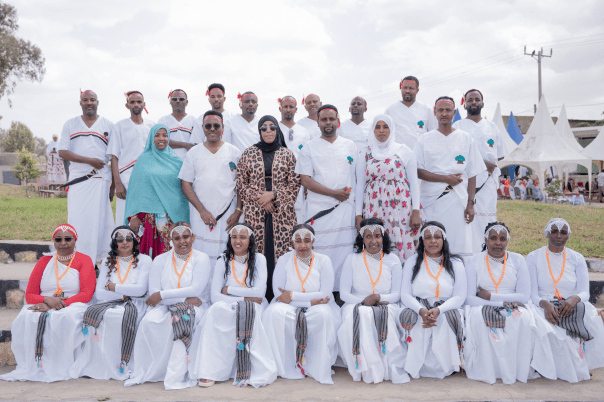
As International Women’s Day 2026 is celebrated globally, the women of Oromia stand as pillars of family, community, and liberation—their contributions finally receiving the recognition they deserve.
FINFINNEE, March 7, 2026 — As the world prepares to mark International Women’s Day on March 8, 2026, the spotlight turns to the indispensable role women play in every facet of society—from the daily rhythms of family life to the grand architecture of nation-building.
This year’s global theme, “Rights. Justice. Action. For ALL Women and Girls,” calls for translating commitments into concrete change: eliminating harmful practices, dismantling barriers to equality, and amplifying women’s voices on the world stage. Complementing this is the global campaign “Give to Gain,” which emphasizes that supporting and empowering women—individually, collectively, and nationally—is not charity but strategy. When women are empowered to contribute their full strength, participation, and potential, they become transformative forces in social and political change.
For Oromo women, this message resonates with particular urgency and pride.
From Home-Building to Homeland-Building
In Oromo society, the proverb holds true: a home without a woman is a deserted place. Women are mothers, sisters, wives, and daughters—each role carrying profound dignity and responsibility. But their contribution extends far beyond the domestic sphere.
The Women’s and Children’s Affairs Wing of the Oromo Liberation Army (DDD-ABO) has issued a powerful statement on the eve of International Women’s Day, affirming that Oromo women play a visible and undeniable role in both building families and building the nation.
“Women in Oromo society occupy a position of great honor and respect,” the statement reads. “From constructing homes to constructing the homeland, their contribution is clear and unmistakable. A home without a woman is an abandoned place.”
Women in the Liberation Struggle
The history of the Oromo liberation struggle is written in the blood and sacrifice of women. Despite facing double oppression—both as Oromos under a repressive system and as women in a patriarchal world—they have never been subjugated or silenced.
Throughout decades of struggle, Oromo women have shouldered immense burdens. They have been fighters on the front lines, organizers in the shadows, and the backbone of communities under siege. Foreign oppression and gender-based violence have sought to break them, but have only forged them stronger.
Their participation in the broader national movement has been unwavering, their commitment absolute. They have proven that the liberation of Oromia cannot be achieved without the liberation of Oromo women.
Political Participation: The Key to Lasting Peace
This year’s theme from the DDD-ABO carries a powerful message: “Women’s participation in politics is fundamental to peace, justice, unity, and nation-building.”
The statement emphasizes that when women are involved in governance and political decision-making, the outcomes are transformative. Their participation ensures lasting peace, upholds justice, strengthens national unity, and builds a proper foundation for the state.
“Women’s involvement in government and political decision-making demonstrates that they play a crucial role in achieving sustainable peace, ensuring justice is upheld, strengthening national unity, and building the nation properly,” the statement declares.
This vision aligns with the ABO’s commitment to establishing a peaceful and lawful government. The organization has put forward its symbol, Horooroo, as the choice before the people in the upcoming electoral contest.
Horooroo: A Symbol of Peace and Identity
The ABO’s electoral symbol, Horooroo, represents peace, reconciliation, justice, and the broad identity of the Oromo people. It embodies the right to self-determination and stands for democracy, justice, equality, and lasting peace.
As Oromia approaches its 7th round of elections in 2026, the ABO is contesting under this symbol, offering a vision of a lawful, people-centered government—government by the people, for the people. The DDD-ABO statement makes clear that this vision cannot be realized without the full participation and empowerment of women.
“To achieve this goal,” the statement affirms, “we must work together in unity. We must choose the ABO’s ‘Horooroo’ symbol in this 7th round of elections to build a lawful and just government that includes and empowers women to bring about real change.”
A Call to Action
As International Women’s Day 2026 is celebrated, the message from Oromo women is clear: their role in building both home and homeland is indispensable. Understanding this, ensuring their participation across all sectors—political, economic, and social—is not optional but essential for achieving lasting peace, restoring justice, reclaiming national truth, mending national unity, and building a democratic state.
The DDD-ABO concludes its statement with a rallying cry that echoes across Oromia:
“Victory to the Broad Public!
Women’s and Children’s Affairs Wing (DDD) ABO
March 7, 2026
Finfinnee”
The Road Ahead
This International Women’s Day, as the world reflects on the progress made and the journey still ahead, Oromo women stand as living proof that empowerment is not a gift to be granted but a right to be recognized. They have always built—homes, communities, movements, and a nation. The task now is to ensure they have their rightful place at every table where decisions about their future are made.
For in the words of the DDD-ABO, when women participate fully, peace becomes lasting, justice becomes real, and the homeland becomes whole.
International Women’s Day 2026 is being observed globally on March 8 under the theme “Rights. Justice. Action. For ALL Women and Girls.”

Oromia Support Group Submits Damning Report to UN Human Rights Council, Documents Over 7,500 Civilian Deaths
The 61st session of the UN Human Rights Council receives evidence of widespread abuses, forced conscription, and the catastrophic entanglement of Ethiopia in Sudan’s civil war.
GENEVA — The Oromia Support Group (OSG) has submitted a comprehensive report to the current 61st session of the United Nations Human Rights Council, documenting a grim catalogue of human rights abuses against Oromo civilians under the rule of Prime Minister Abiy Ahmed.
Report 72, now being distributed as widely as possible by the UK-based human rights organization, includes not only the organization’s formal submission to the UNHRC but also reveals Ethiopia’s deepening involvement in Sudan’s civil war—supporting the genocidal Rapid Support Forces (RSF) from a new base inside Ethiopia, funded and equipped by the United Arab Emirates.
“Please find attached Report 72 from the Oromia Support Group and please distribute it as far and wide as possible,” the organization urged in its statement accompanying the release.
A Bloody Toll: 7,511 Civilians Killed
According to OSG, the organization has now documented 7,511 Oromo civilian deaths under Abiy Ahmed’s rule—a staggering figure that represents only a fraction of the true toll. Most of the victims are young people, the Qeerroo generation, whose peaceful pro-democracy demonstrations in 2018 opened the political space that allowed Abiy Ahmed to seize power.
“Prime Minister Abiy Ahmed stated in government meetings in early 2019 that his top priority was the extermination of Qeerroo members because they were the greatest obstacle to his power,” the report reveals.
Since the beginning of 2025 alone, OSG has recorded 1,244 civilian killings—a dramatic escalation in violence that spans all zones of Oromia Region and the Oromia Special Zone in Amhara Region. Killings and destruction of property have been particularly egregious in Wallega zones, with increasing frequency in the latter half of 2025 in Arsi and West Arsi zones. Poor access and communication continue to hinder data collection, especially from Guji and Borana zones.
“Bullet Food”: Oromo Youth Forced into Sudan Conflict
One of the most alarming revelations in Report 72 concerns Ethiopia’s involvement in Sudan’s civil war. According to OSG, the Ethiopian government has established a base near Asosa to support the genocidal Rapid Support Forces, funded and equipped by the United Arab Emirates.
“Forcibly conscripted destitute Oromo youth are already ‘bullet food’ in this war and scores of thousands will follow,” the report warns.
The organization describes this development as a “catastrophic decision” that invites proxy wars to be fought by regional powers on Ethiopian territory, with Oromo youth paying the ultimate price.
A Government That Does Not Represent Its People
OSG’s submission challenges the characterization of Ethiopia’s government as an “Oromo government,” noting that although many individuals in government are Oromo, “the abuses against Oromo are as severe and widespread as those against any of the country’s other peoples.”
The Prosperity Party government, the report argues, “does not represent the interests of any of the peoples of Ethiopia.”
Economic Mismanagement and Militia Terror
Behind the facade of modernization and development projects lies a different reality, according to OSG. The report describes how poorly paid and poorly trained local militias engage in looting and extortion of spurious and arbitrary taxes from rural and urban populations already unable to sustain themselves economically or access adequate health care or education.
A “dog-eat-dog situation has developed whereby militia members depend for their and their families’ survival on looting and extortion from people with nothing left to give,” the report states.
Reasons given for extortion include financing local administrative buildings, “health insurance,” arming and feeding federal and local security forces, bribes for the release of prisoners and victims of forced conscription, and licenses for businesses and vehicles.
Military Tactics: Drones, Artillery, and Burning Villages
National defense forces continue to use drones and heavy artillery in attacks on defenceless villagers, killing people and livestock. In areas where the Oromo Liberation Army (OLA) is active, villages are burnt “to drain the ocean to kill the fish”—a military tactic that punishes entire communities for the actions of a few.
Villagers are threatened at gunpoint to indicate the homes of parents or other relatives of OLA members, which are then systematically destroyed.
Young men and respected community members without any connection to OLA have been killed in their homes, on the streets, in churches, and on their way to and from markets. Many have been taken from police custody or from detention in military camps and summarily executed, sometimes in public in order to terrorize the population.
Sexual Violence and Crimes Against Children
The report documents horrific accounts of sexual violence perpetrated by government soldiers. Children, prepubescent girls and young boys, and mothers of families have been cruelly raped. The rape and killing of teenage girls and girls aged as young as ten years are documented.
Deliberate shooting of infants and children under ten years old by national defense forces, for frivolous reasons, has also been recorded.
Forced Displacement: Modernization as a Weapon
Hundreds of thousands of villagers have been displaced due to the destruction of their homes and farms. Added to these are those displaced by “modernization projects,” where even moderately sized conurbations such as Dembi Dollo in Qellem Wallega have been subjected to “corridor projects”—private houses and business properties bulldozed without consultation or compensation.
Large-scale developments including the Gadaa Special Economic Zone project and the $12.5 billion Bishoftu “Mega” Airport in Aabbuu Seeraa, Bishoftu, are displacing tens of thousands with no consultation and hardly any compensation. The report warns that these projects appear designed to completely divide Oromia Region into two, destined to bring millions of people from other regions into a narrow strip of land in southern East Showa.
The Destruction of the Karrayyu and Gadaa Heritage
The Karrayyu pastoralists in East Showa—one of the major remaining centers practicing the Gadaa system of social, spiritual and democratic governance, acknowledged as UNESCO World Heritage—have been “almost completely destroyed” since fourteen of their leaders were killed on the orders of Oromia Region authorities in December 2021.
“The long-term livelihood of Oromo and the traditional heritage, deeply attached to their land, is being destroyed,” OSG states.
Inter-Ethnic Conflict: Deliberately Fomented
The report alleges that division and hatred between Oromo and Amhara peoples has been deliberately fomented by the government. Clandestine federal forces, masquerading as Fano Amhara fighters and as OLA fighters, have been established in at least Showa and Wallega zones, where they have been responsible for massacres and numerous smaller scale killings with the sole purpose of spreading discord and hostility.
In one chilling example, federal forces wearing wigs of braided hair and loudly calling to each other “Jaal” (comrade in Afaan Oromoo) terrorized villagers in Dandi district, West Showa in September 2025, going from house to house at night, raping and looting.
Innocent teenagers have been beaten and imprisoned, dressed in military uniforms and paraded on media as if they were OLA fighters.
Religious Persecution
The report documents persecution on religious grounds. Oromo priests within the Ethiopian Orthodox Tewahedo Church have been detained and killed. Followers of the traditional Oromo religion, Waaqeffannaa, have been killed and driven out of areas, and their worship halls (galma) burned down.
Regional Attacks Unopposed
National and regional governments have not opposed the killings of civilians and destruction of their property by Somali Region forces (Liyyu) in West Bale, East and West Hararge and South Borana zones of Oromia Region.
Desperate Refugees Face Hostility at Every Turn
Refugees fleeing to Djibouti and Somaliland in desperate attempts to seek illegal work in Saudi Arabia face abuse and extortion on their journeys and at their destinations. The report describes refugees being treated with hostility and disdain in Egypt, Libya, Tunisia, Djibouti, Somaliland, Somalia and Yemen.
Thousands are detained in life-threatening conditions or subject to slavery in Libya. Unknown numbers die in deserts between Ethiopia and the Red Sea or Mediterranean Sea and by drowning in those seas. Those who survive dangerous journeys to Europe are met with hostility, disbelief and discrimination.
Individuals Who Speak Truth Hounded Out
The report notes that individuals who have risked their lives to investigate and publish human rights abuses and the dire economic and health crises in rural areas have been hounded out of Ethiopia, and family members have been detained.
OSG’s Call: Distribute Widely
The Oromia Support Group concludes its report with a call for the widest possible distribution of its findings, urging recipients to share Report 72 “as far and wide as possible.”
The submission to the 61st session of the UN Human Rights Council represents a continued effort to bring international attention to the ongoing crisis in Oromia and to hold the Ethiopian government accountable for what OSG describes as systematic human rights abuses against the Oromo people.
For further information:
Dr. Trevor Trueman
+44 (0)7852 448337
osg@talktalk.net
This report includes information contained in Reports 69-72 from the Oromia Support Group (OSG).
Dhangalaasii Festival: A Celebration of Oromo Culture and Gratitude

Celebrating Dhangalaasii: The Oromo Thanksgiving Festival Arrives
A time of gratitude, community, and renewal as the Oromo people observe their ancient tradition of giving thanks
As the rains grace the land and the promise of abundance fills the air, the Oromo community prepares to celebrate one of its most cherished cultural observances: the Dhangalaasii festival.
We have reached this blessed occasion together. We give thanks for having been brought to this day.
A Festival of Gratitude
As is well known, the Waaqeffannaa faith—the traditional Oromo religion centered on the worship of Waaqa (God)—is fundamentally a religion of gratitude. Like our ancestors before us, we honor the divine by observing sacred times with reverence and celebration.
It is from this deep well of tradition that the DhangaaSii festival emerges—a time when the Oromo people collectively express thanks for the rains, for the fertility of the land, for the health of their cattle, and for the blessings of community and continuity.
An Invitation to Celebration
This year’s Dhangalaasii festival will be observed at our community hall on March 12, 2018 (March 21, 2026). We extend a warm invitation to all to join us in celebrating this sacred occasion together.
The festival represents more than a mere gathering. It is a reaffirmation of Oromo identity, a connection to the spiritual practices of our ancestors, and a moment of collective gratitude that transcends individual concerns.
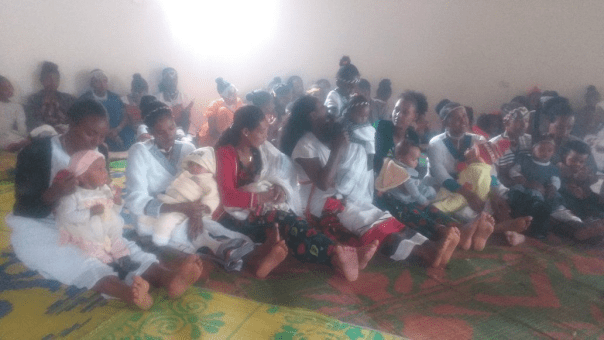
Blessings for the Season
As we gather to observe Dhangalaasii, we share the traditional blessings that have echoed across Oromo lands for generations:
“Barri roobaa nagaadha” — May the rainy season bring peace.
“Gadaan quufaa gabbina” — May the generation be satisfied and prosper.
These words carry the hopes of a people whose relationship with the land has always been central to their identity. The rains bring not only physical nourishment but spiritual renewal. The prosperity of the generation ensures that traditions will be passed to those who come after.
Gratitude as Resistance
For a people who have endured displacement, cultural suppression, and the many violences of colonialism and state oppression, the act of gathering to observe traditional festivals is itself a form of cultural resistance. To give thanks in the language of one’s ancestors, according to the customs of one’s people, is to assert that Oromo identity survives and thrives.
Dhangalaasii reminds the Oromo people—whether in the homeland or scattered across the diaspora—that gratitude is not dependent on circumstances. It is an orientation of the heart, a recognition that life itself is a gift, and that community is the vessel through which that gift is shared.
Joining Together
As the date approaches, organizers prepare the space, the food, the rituals that will mark the occasion. But the most important preparation is the gathering itself—the coming together of community, the sharing of blessings, the collective turning toward Waaqa with hearts full of thanks.
We look forward to celebrating with you all. May this Dhangalaasii bring peace, prosperity, and renewed connection to all who observe it.
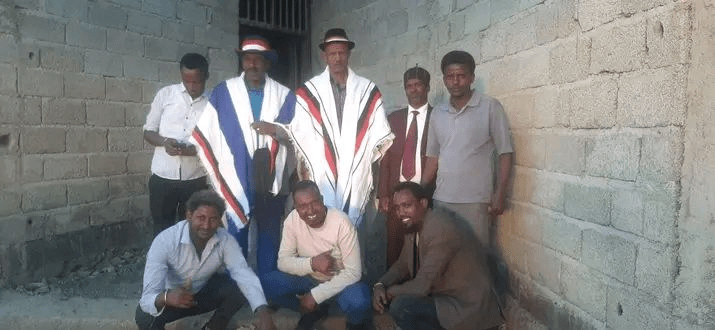
Event Details:
What: Dhangalaasii Thanksgiving Festival
When: July 12, 2018 (March 21, 2026)
Where: Our Community Hall
All are welcome. Join us in giving thanks.
Oromtittii Day 2026: Honoring Oromo Women
What a great way to recognize, uplift, and celebrate the strength, resilience, and contributions of Oromo women!
Oromtittii Day! 

 March 28th, 2026
 1:00 PM
 See venue details below
The Oromian Women Association, Advocacy for Oromia, and the Oromo Community in Australia are coming together to celebrate and honour Oromo women in the community.
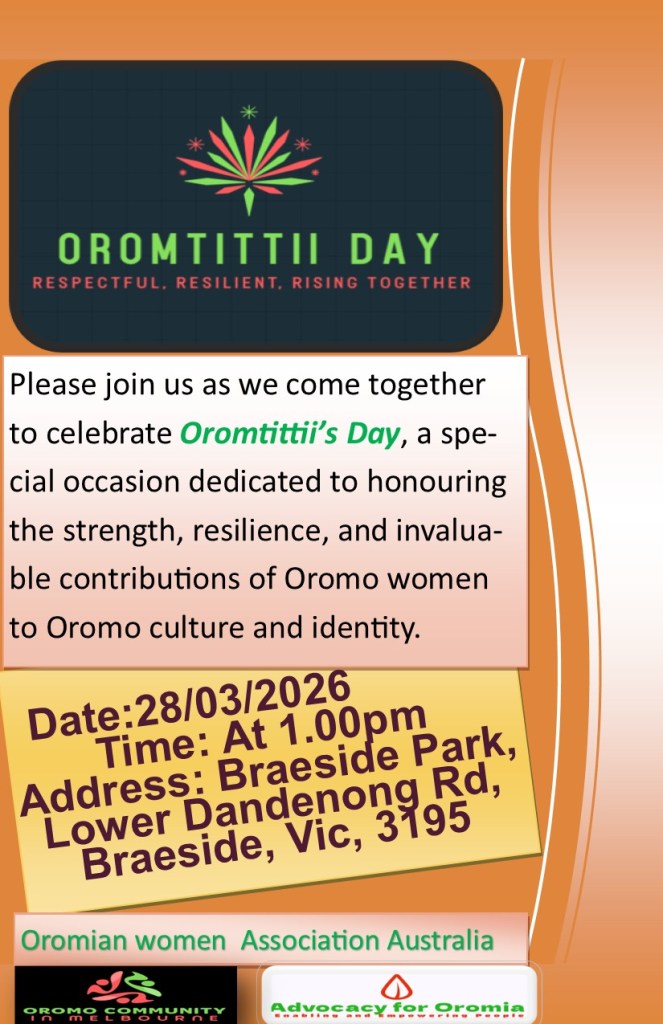

Breaking Bread After Sunset: Dandenong’s Ramadan Night Market Unites Melbourne
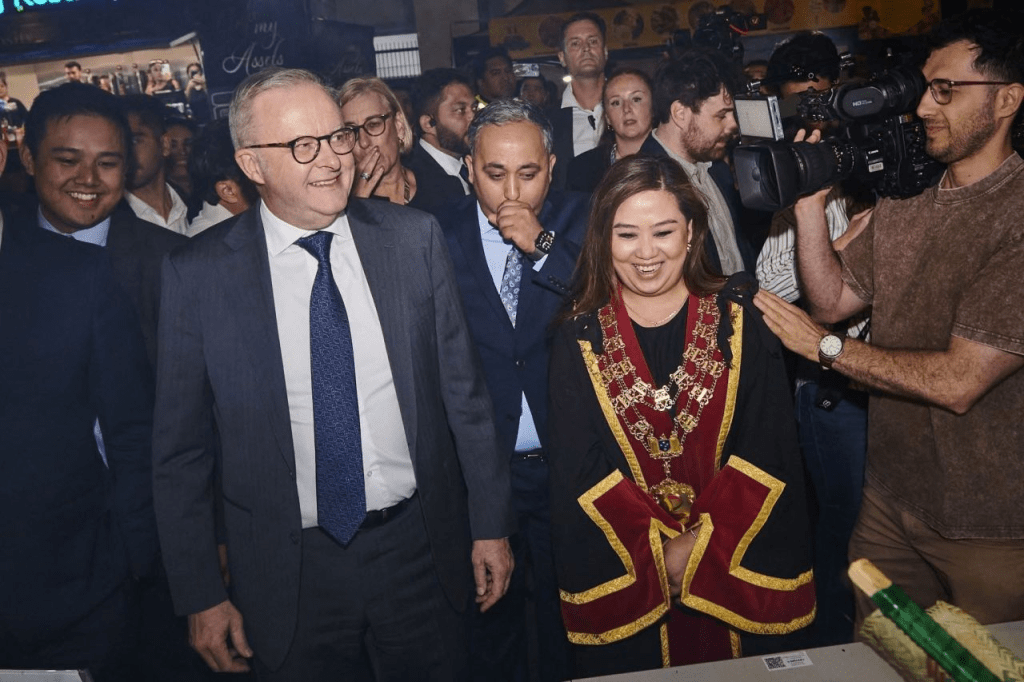
The aroma of sizzling kebabs, sweet kunafa, and fresh samosas fills the cool evening air as thousands break their fast together at one of Australia’s largest night markets.
DANDENONG — As the sun sets over Melbourne’s south-east, the bustling aisles of Dandenong Market transform. The call to prayer fades, and the sound of communal chatter, laughter, and the sizzle of street food takes over. The Dandenong Ramadan night market is back for its second year, and it is drawing massive crowds eager to share in the spirit of the holy month.
Running every Thursday to Sunday from 7 pm until late throughout Ramadan, the event has quickly established itself as a cornerstone of community life in the region.
A Prime Ministerial Seal of Approval
The significance of the market was underscored this week when Prime Minister Anthony Albanese officially helped launch the 2026 season. His presence highlighted the event’s growing stature as not just a local gathering, but a symbol of Australia’s multicultural fabric.
The Prime Minister toured the stalls, sampling the mouth-watering offerings and speaking with vendors and families who travel from across Melbourne to experience the market. For many, it was a powerful moment of recognition for the Muslim community and the broader cultural diversity of the area.
A Feast for the Senses
With over 50 food and craft stalls, the market is a sensory overload in the best possible way. After a long day of fasting, attendees are greeted with an endless array of options: from traditional Middle Eastern and South Asian dishes to modern fusion creations that reflect Australia’s contemporary palate.
The air is thick with the scent of grilled meats, spiced lentils, and fragrant rice. Long queues form at popular stalls selling fresh juice, dates, and the ever-popular sweet treats like baklava and halo-halo. It is a place where culinary traditions are shared and celebrated.
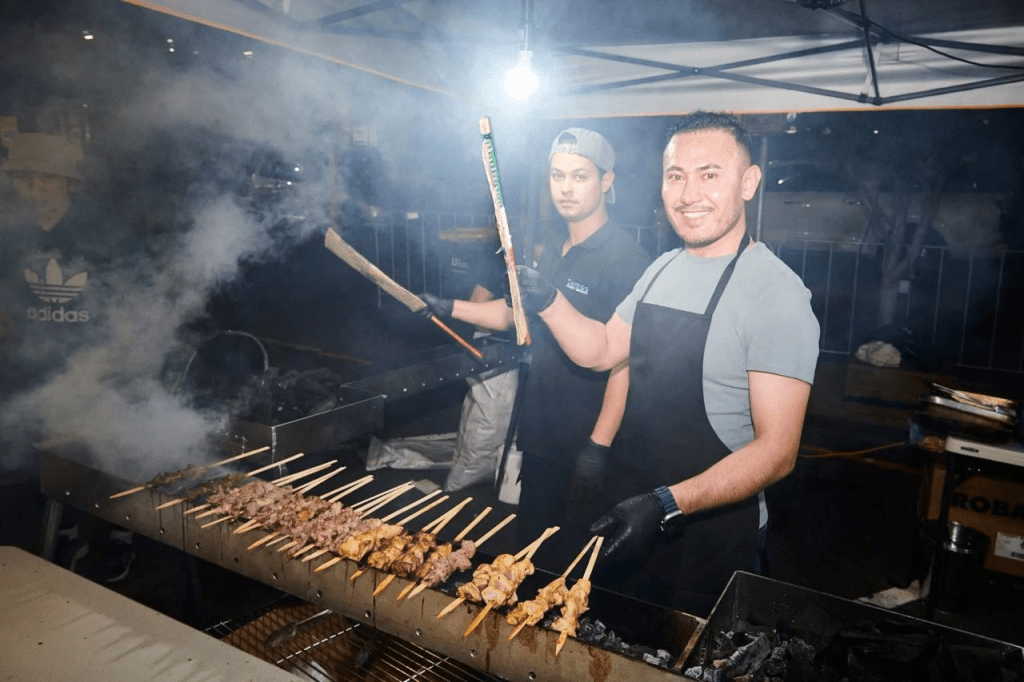
More Than Just a Meal
But for the thousands who attend, the Dandenong market offers more than just food. It is a vital community hub during a month focused on reflection, charity, and togetherness.
Families spread out on shared tables, neighbours reunite, and children run between the stalls, their faces lit by fairy lights. For new migrants, it’s a taste of home. For long-time Australians, it’s an invitation to connect and understand. The market embodies the essence of Ramadan: community, gratitude, and generosity.
As the nights grow longer, the Dandenong Ramadan night market stands as a shining example of how sharing a meal can build bridges, strengthen communities, and create a spirit of unity that lasts well beyond the holy month.
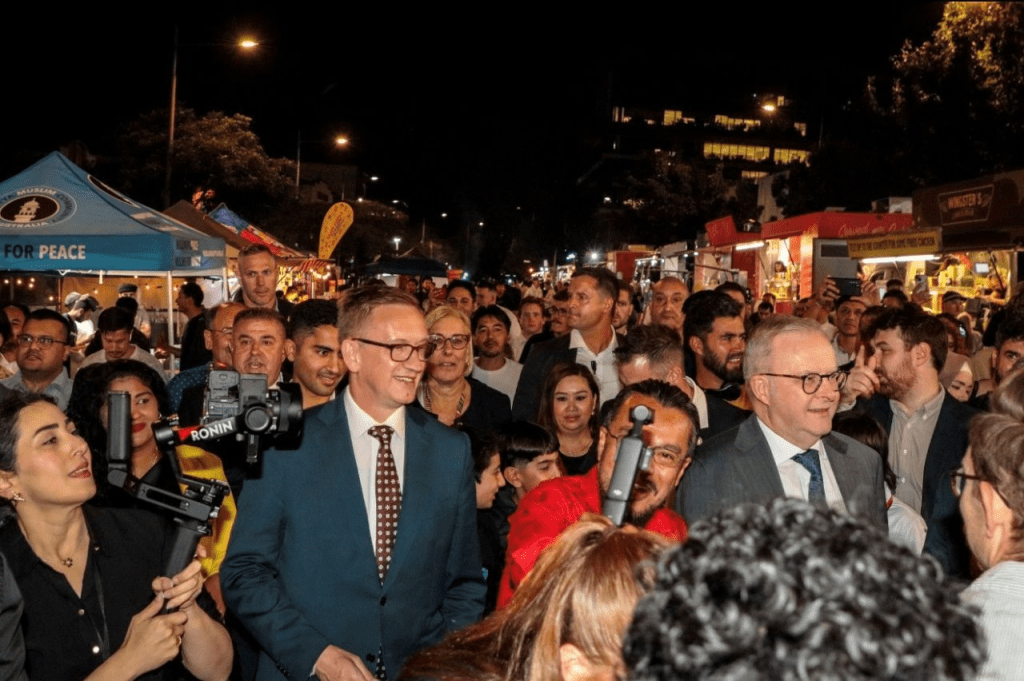

Legacy of Abba Boru: Oromo Freedom Fighter and Humanitarian
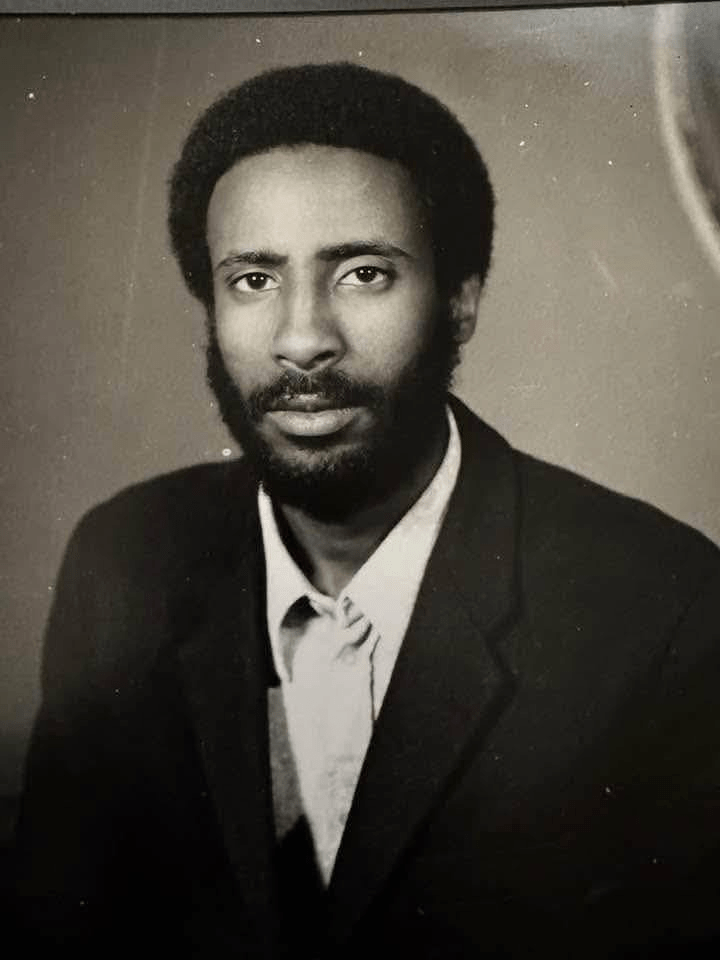
A Hero’s Farewell: Oromo Liberation Veteran Abba Boru Dhaddacha Qamphare Passes Away
FINFINNE – The Oromo people have lost one of their most dedicated and resilient sons. Abba Boru Dhaddacha Qamphare, a renowned scholar, a steadfast freedom fighter, a development expert, and a humanitarian, passed away on Muddee 15, 2025. His life was a profound testament to unwavering service to his people and an unyielding commitment to justice.
Born on Amajjii 19, 1952, to his father Dhaddacha Qamphare Jaldessaa Iyyaa and mother Qabbalee Waariyoo Guyyoo, Abba Boru’s journey was one of intellect and courage. He pursued his primary education at the Mission School in Nagellee Boorana and continued his secondary studies in Yirgalem. A man fortified by knowledge, he graduated with a law degree from Finfinne University. His quest for learning then took him to the United Kingdom, where he earned a Master’s degree from the University of Sussex, focusing on development economics. He was in the midst of pursuing his PhD there when duty called him back to the struggle.
Abba Boru’s life was defined by sacrifice. Twice, he put his people’s calling above his own academic ambitions, interrupting his studies to participate directly in the Oromo liberation movement, enduring immense hardship in the process.
His involvement in the struggle was deep and multifaceted. While pursuing his first degree, he joined the fight to secure the borders of Oromia in the Boorana region. Later, following the collapse of the Derg regime in 1991, he once again set aside his PhD studies to play a pivotal role in the political transformations and the ongoing Oromo struggle.
Abba Boru was a contemporary and comrade of legendary Oromo figures such as Baaroo Tumsa, Galaasaa Dilboo, Leencoo Lata, Dhaddacha Gololcha, and Dheressaa Qiixee. His work was instrumental in entrenching the Oromo struggle in the Boorana and Gujii regions. He worked alongside leaders like Colonel Salasaa Jaaloo, Boruu Diinee, and Saaraa Jarsoo to build upon the movement’s foundations. He was also a key figure, alongside activists like Godaanaa Tunii Khanoo and Shalaaqaa Jataanii Alii, in fostering political and economic development awareness.
In the wake of the assassination of Shalaaqaa Jataanii Alii, Abba Boru stepped into a senior leadership role in the region, working tirelessly to strengthen the unity of the Oromo people across the Ethiopian and Kenyan borders. Even after the Oromo Liberation Front (OLF) withdrew from the transitional government, he continued to lead the national struggle from Kenya alongside Dr. Diimaa Naggahoo.
Beyond his political activism, Abba Boru was a dedicated development expert and humanitarian. His expertise was prominently featured in the ‘Southern Rangeland Project,’ where he focused on creating economic opportunities for pastoralist communities. He also served with distinction at the Norwegian Church Aid (NCA), rising to the position of national coordinator. In this capacity, he worked to bring the socio-economic challenges of southern Ethiopia’s pastoralists to the world’s attention, advocating for comprehensive and inclusive development.
Abba Boru Dhaddacha Qamphare will be remembered as a pure-hearted leader, an intellectual, and a compassionate human being. His life was a continuous struggle for the rights of the voiceless, a manifestation of developmental change, and a model of true human service.
Though the hero is gone, his legacy is etched in the history he helped shape. His story will bear witness for generations to come, inspiring a future built on justice, dignity, and compassion for the vulnerable, including the orphans he helped raise.
Rest in power, Abba Boru. Your struggle is our foundation. Your memory is eternal.
Nagaan boqodhi.

Historic Oromo Reunion: Lenco Lata and Hassan Ali Meet Again
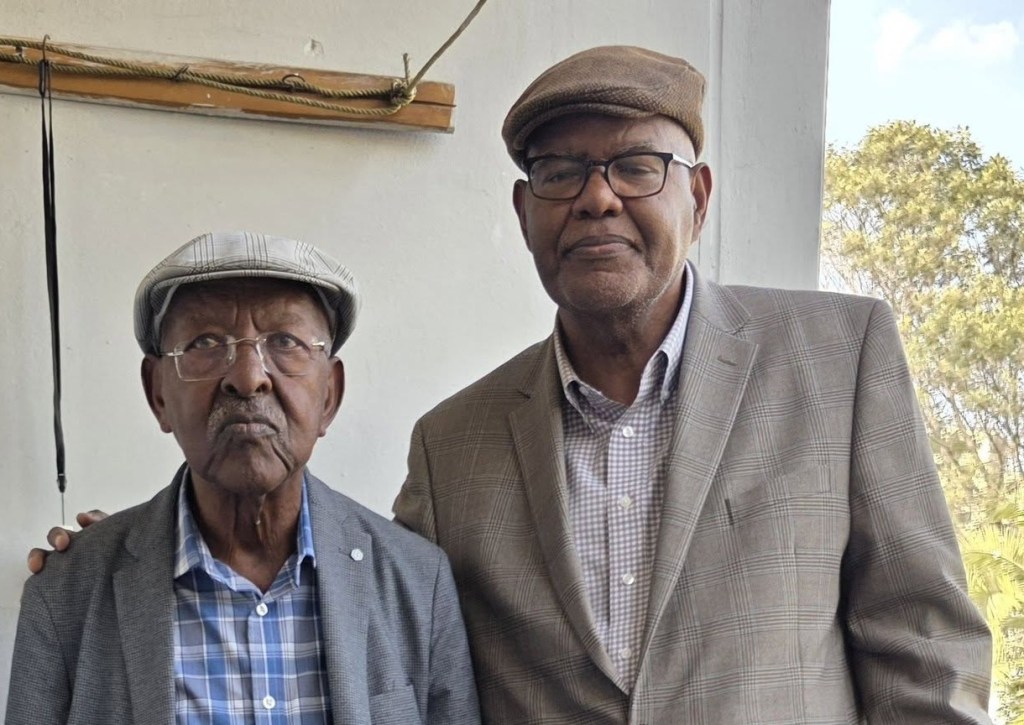
Echoes of the Struggle: A Historic Reunion in the Heart of Oromia
There are moments in the life of a nation that transcend politics and policy, touching the very soul of a people’s journey. Today, in the bustling heart of Finfinnee, we witness one such moment. It is a scene heavy with history, a living tapestry woven from threads of sacrifice, exile, and the unyielding dream of self-determination.
Before us stand two elders, not merely as men, but as monuments. Mr. Lenco Lata and Mr. Hassan Ali. Their handshake is more than a greeting; it is the meeting of two rivers that carved the landscape of the modern Oromo struggle. To look at them is to look into the past and see the foundations of the present.
Mr. Lenco Lata, a veteran of the ABO struggle, carries the weight of the armed resistance on his shoulders. His story is one written in the shadows, in the trenches of conviction, where the fight for Oromia was not a political slogan but a daily, dangerous reality. He belongs to a generation that believed the cause was worth their very breath.
Beside him stands Mr. Hassan Ali, a figure of foundational governance. As the first president of the Oromia Regional State, he was tasked with the monumental challenge of translating decades of resistance into the framework of administration. He stood at the vanguard of a new, hopeful, and uncertain chapter, attempting to give structural form to the very cause for which Mr. Lata and his comrades fought.
Though their paths diverged—one in the trenches of guerrilla warfare, the other in the halls of nascent governance—their fates were tragically united. For their unwavering dedication to the Oromo cause, both were branded as threats. Both were forced to drink from the bitter cup of exile, expelled from the very land they dreamed of liberating and building. They became custodors of the Oromo dream from distant shores, watching, waiting, and hoping for the day they could walk the soil of Oromia as free men.
That day is today.
Their meeting in Finfinnee is not a simple reunion of old colleagues. It is a historic memory being made tangible. It is the closing of a painful loop and the affirmation that their sacrifices were not in vain. The city that once felt the absence of their voices now bears witness to their presence.
As they sit together, the ghosts of fallen comrades, the pain of years in exile, and the joy of return all linger in the air. They represent a bridge between the Oromia that was fought for in the wilderness and the Oromia that continues to be built today. In seeing them together, we are reminded that the journey is long, the price has been high, but the spirit—the indomitable spirit of Oromia—remains unbroken. This is more than a photograph; it is a page of history, written in resilience, sealed with sacrifice, and now, finally, framed in the dignity of homecoming.

የኦሮሞ ብሔር ባሕልና ታሪክ: የትውልድ መታወቂያ
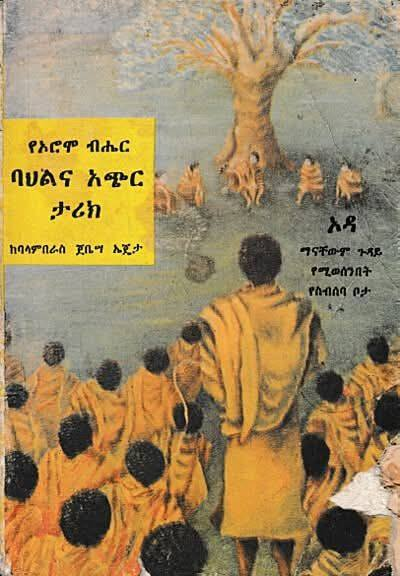
የኦሮሞ ብሔር ባሕልና አጭር ታሪክ፡ የትውልድ መታወቂያን የሚያጎለብት ታሪካዊ ሰነድ
የካቲት ፲፱ ቀን ፳፻፲፰ ዓ.ም. (አዲስ አበባ) – ባላምባራስ ጀቤሳ ኤጄታ የተባሉ ደራሲ ያዘጋጀው “የኦሮሞ ብሔር ባሕልና አጭር ታሪክ” የተሰኘ መጽሐፍ የኦሮሞን ሕዝብ ታሪክ፣ ባሕልና ማኅበራዊ መዋቅር በጥልቀት የሚዳስስ ምሁራዊ ጥናት መሆኑ ተገለጸ።
በሃያ አምስት ምዕራፎች የተዋቀረው ይህ መጽሐፍ የኦሮሞን ሕዝብ አመጣጥ ከኩሽ ቤተሰቦች ጋር በማያያዝ፣ የገዳ ሥርዓትን እንደ ጥንታዊ ዲሞክራሲያዊ የማስተዳደሪያ ዘዴ በማቅረብ የሕዝቡን የፖለቲካ ብስለት ያሳያል።
የመጽሐፉ ይዘትና አደረጃጀት
መጽሐፉ በጭብጥ እና በታሪካዊ ቅደም ተከተል የተዋቀረ ሲሆን፣ ከጥንታዊ የዘር ሐረጋት ጀምሮ እስከ ዘመናዊው ማኅበራዊ ኑሮ ድረስ ያለውን የኦሮሞ ሕዝብ ጉዞ ይቃኛል። ደራሲው መረጃዎቻቸውን ያሰባሰቡት ከአረጋውያን የቃል ትውፊት፣ ከቀደሙ የታሪክ ሰነዶች እና ከጥንታዊ የዘር ሐረግ ቆጠራዎች ነው።
በመጽሐፉ ውስጥ የተካተቱት የዘር ሐረግ ሥንጠረዦች፣ የፎቶግራፍ ማስረጃዎች እና የቋንቋ ትንተናዎች ለደራሲው መከራከሪያ እንደ ዋቢ ቀርበዋል።
ዋና ዋና ጽንሰ ሐሳቦች
መጽሐፉ በርካታ ቁልፍ የኦሮሞ ባሕልና ታሪክ ነጥቦችን ያነሳል። ከእነዚህ ውስጥ ዋነኞቹ፦
- የገዳ ሥርዓት ለአለም ዲሞክራሲ አርአያ ሊሆን የሚችል ጥንታዊ ሥርዓት መሆኑ
- ‘ሳፉ’ (Saffu) የተሰኘው የሞራልና የሥነ ምግባር ሚዛን ጠባቂ ጽንሰ ሐሳብ
- የኦሮሞ ሕዝብ የዘር ሐረግ ክፍፍል (ቦራና እና ባረንቱ) እና የእርስ በእርስ ትስስራቸው
- የሴቶች መብት በ’ሲቄ’ (Siqqee) ሥርዓት አማካኝነት መከበሩ
- ባሕላዊ የግጭት አፈታት ስልቶች (እንደ ጉማ) ለማኅበራዊ ሰላም ያላቸው ሚና
የገጸ ባህሪያት ዝርዝር
መጽሐፉ በኦሮሞ ማኅበረሰብ ውስጥ ያሉ ቁልፍ የሥልጣን እና የሃላፊነት ቦታዎችን በዝርዝር ያብራራል።
አባ ገዳ (Abba Gada) ለስምንት ዓመታት የሚመረጥ የሥርዓቱ የበላይ መሪ ሲሆን፣ የሕዝቡን መንፈሳዊ እና ዓለማዊ ሕይወት ይመራል።
ቃሉ (Qaallu) በዋቄፈና እምነት መሠረት በፈጣሪ እና በሰው መካከል እንደ አማላጅ የሚታይ መንፈሳዊ አባት ነው።
ሃዩ (Hayyu) በባሕላዊ የሕግ ሥርዓት ውስጥ የዳኝነት እና የሕግ ትርጓሜ ሥራዎችን የሚሠራ ሊቅ ነው።
የማይረሳ ትዕይንት፡ የቡታ በዓል
በመጽሐፉ ውስጥ አስገራሚ ሆኖ የተገለጸው ትዕይንት የ’ቡታ’ (Butta) በዓል እና የሥልጣን ሽግግር ሥነ ሥርዓት ነው። ይህ ትዕይንት በየስምንት ዓመቱ አንድ የገዳ እርከን (Luba) ሥልጣኑን ለሚቀጥለው እርከን የሚያስረክብበት ታላቅ ክንውን ነው።
በመጽሐፉ አገላለጽ፣ ይህ ሥነ ሥርዓት የሕዝቡ አንድነት፣ ዲሞክራሲያዊ ባህል እና የሕግ የበላይነት የሚነጸባረቅበት ነው። አሮጌው መሪ ‘ቦኩ’ (Boku) የተሰኘውን የሥልጣን ምልክት ለአዲሱ መሪ ሲያስረክብ፣ በመላው ኦሮሚያ የሚገኙ ተወካዮች በታላቅ አክብሮት እና በዝማሬ የታጀበ በዓል ያከብራሉ።
ደራሲው እንደሚገልጹት፣ ይህ ትዕይንት ደም ሳይፈስ፣ በምርጫ እና በስምምነት ሥልጣን እንዴት እንደሚሸጋገር የሚያሳይ የኦሮሞ ሕዝብ የፖለቲካ ብስለት ማሳያ ነው። በበዓሉ ላይ የሚታረደው በሬ እና የሚረጨው ደም የማኅበረሰቡን አዲስ ጅማሬ እና የታሪክ ምዕራፍ ተምሳሌት እንደሆነ ይገልጻሉ።
ጥቅሶች እና አባባሎች
መጽሐፉ ጥቂት ያልሆኑ ጥቅሶችን እና አባባሎችን ይዟል። ከነሱም ውስጥ፦
“ባሕል የአንድ ሕዝብ ማንነት መገለጫና የኑሮው መመሪያ ነው።” የሚለው በመግቢያ ክፍል ላይ የተጠቀሰ ሲሆን፣ የባሕልን አስፈላጊነት ያሳያል።
“የገዳ ሥርዓት ለኦሮሞ ሕዝብ የዲሞክራሲ ምንጭ ብቻ ሳይሆን የሰላምና የእድገት መሠረት ነው።” የሚለው ደግሞ ስለ ገዳ ሥርዓት ጠቀሜታ በሚያብራራው ምዕራፍ ውስጥ ተካቷል።
“ሳፉ ማለት በፈጣሪና በፍጥረት፣ በሰውና በሰው መካከል ያለውን ክብርና ድንበር ጠባቂ ሕግ ነው።” የሚለው ስለ ሥነ ምግባር እና ባሕላዊ እሴቶች በሚተነተንበት ክፍል ተካትቷል።
አጠቃላይ ትረካ
መጽሐፉ ሰፊና ጥልቅ የሆነ የኦሮሞን ሕዝብ ታሪክ ያቀርባል። በመጀመሪያዎቹ ምዕራፎች ደራሲው የኦሮሞን ሕዝብ አመጣጥ እና የዘር ሐረግ በጥልቀት ይተነትናሉ። ኦሮሞ የኩሽ ቤተሰብ አካል መሆኑንና በጥንታዊው የኢትዮጵያ ታሪክ ውስጥ የነበረውን ጉልህ ስፍራ ያስረዳሉ።
በተለይም ‘ቦራና’ እና ‘ባረንቱ’ የተባሉትን ሁለት ዋና ዋና ቅርንጫፎች እና የእነሱን ንዑስ ጎሳዎች በዝርዝር በምስል እና በሥንጠረዥ አስደግፈው ያሳያሉ።
ቀጥሎም መጽሐፉ ወደ ኦሮሞ ሕዝብ ዋና የፖለቲካ እና የማኅበራዊ መዋቅር – ገዳ ሥርዓት – ይገባል። ገዳ ሥርዓት እንዴት እንደሚዋቀር፣ አምስቱ የገዳ ፓርቲዎች በየስምንት ዓመቱ እንዴት እንደሚፈራረቁ በሰፊው ያብራራል።
ከፖለቲካው ጎን ለጎን፣ መጽሐፉ የኦሮሞን ባሕላዊ ሃይማኖት ‘ዋቄፈናን’ ይቃኛል። የአንድ አምላክ (ዋቃ) እምነት፣ የፍጥረት ጽንሰ ሐሳብ እና በማኅበረሰቡ ውስጥ ያለውን መንፈሳዊ ትስስር ይተነትናል።
ተዛማጅ መጻሕፍት
መጽሐፉ ከሌሎች ታዋቂ የኦሮሞ ታሪክ ጥናቶች ጋር ተመሳሳይነት አለው። በተለይም የሞሐመድ ሐሰን “The Oromo of Ethiopia: A History 1570-1860” እና የአስማሮም ለገሠ “Gada: Three Approaches to the Study of African Society” የተሰኙት መጻሕፍት ከዚህ መጽሐፍ ጋር ተመሳሳይ ምልከታ እንዳላቸው ተጠቅሷል።
ገምጋሚ አስተያየት
መጽሐፉን የገመገሙት እጹብ ዓበበ እንዳሉት፣ ይህ መጽሐፍ የኦሮሞን ሕዝብ ማንነት፣ ጥበብ እና ታሪካዊ ታላቅነት ለትውልድ ለማስተላለፍ የተጻፈ ትልቅ የታሪክ ሰነድ ነው።
“ይህ መጽሐፍ የኦሮሞን ሕዝብ ባሕልና ታሪክ በጥልቀት ለማወቅ ለሚፈልጉ ተመራማሪዎች፣ ተማሪዎች እና አጠቃላይ አንባቢዎች ጠቃሚ የሆነ የመረጃ ምንጭ ነው” ሲሉ አስተያየታቸውን ሰጥተዋል።
መጽሐፉ በመላው ኢትዮጵያ በሚገኙ የመጽሐፍ መደብሮች እንደሚገኝና በቅርቡ ዲጂታል እትም ለመልቀቅ መታቀዱን ከደራሲው ተረድተናል።

Reclaiming National Interest and Media Ethics
The Paradox of Protection: How ‘National Interest’ and ‘Media Ethics’ Became Tools to Suppress Independent Journalism
February 27, 2026 – When governments move to shut down independent media outlets, the justifications often sound reasonable, even noble. “National security,” we are told, requires certain information to remain undisclosed. “Social harmony” demands that divisive voices be quieted. “Media ethics” must be enforced against those who would spread misinformation. “National interest” trumps individual rights.
These phrases roll easily off official tongues. They appear in legislation, in court rulings, in press statements announcing closures or arrests. They are designed to reassure: this is not about silencing dissent; this is about protecting something greater.
But across the globe, from Ethiopia to Egypt, from Hungary to the Philippines, these same phrases have been deployed in ways that systematically undermine the very institutions democracy requires. What emerges is a paradox: the language of protection becomes the instrument of suppression, and the promised safeguards for society become mechanisms for entrenching power.
The Language of Legitimacy
The terms “national interest” and “media ethics” carry genuine weight. Nations do have legitimate security concerns that may require some information to be protected. Journalists do have ethical obligations to verify information, correct errors, and avoid causing harm.
But these concepts are also inherently flexible—and that flexibility makes them dangerous tools in the hands of those who would control information.
“National interest” has no fixed definition. It can mean protecting troops in wartime. It can also mean hiding corruption, embarrassing diplomatic cables, or evidence that development funds have been stolen. The same phrase covers both legitimate secrecy and illegitimate cover-up.
“Media ethics” similarly spans a vast territory. It can mean refusing to publish unverified allegations. It can also mean refusing to publish anything critical of those in power. When the government becomes the arbiter of journalistic ethics, ethics quickly become whatever the government wants them to be.
“The problem is not the concepts themselves,” explains media law scholar Dr. Tsegaye Berhanu. “The problem is who gets to define them. When the state is both the subject of journalistic scrutiny and the judge of whether that scrutiny is ‘ethical,’ you have created a system where accountability becomes impossible.”
The Ethiopian Context: A Case Study in Linguistic Capture
Ethiopia’s recent history illustrates how the language of protection can be repurposed for suppression. Since the onset of conflict in various regions, authorities have increasingly invoked national security concerns to justify restrictions on reporting.
In Oromia, where conflict between government forces and the Oromo Liberation Army continues, independent access is severely limited. Journalists attempting to report on human rights abuses or humanitarian conditions face accusations of undermining national unity or supporting terrorist groups.
The 2020 state of emergency legislation granted broad powers to restrict “any information that could disturb the public peace” or “incite violence.” While these goals are legitimate, the definitions are expansive enough to encompass almost any critical reporting.
“The government has effectively made itself the sole judge of what constitutes responsible journalism,” says a veteran Ethiopian journalist who requested anonymity. “If you report government abuses, you’re ‘inciting violence.’ If you report opposition abuses, you’re ‘supporting terrorists.’ There is no space left for simply reporting facts.”
The result, human rights organizations warn, is that Ethiopia’s media space has contracted dramatically. Outlets have been shuttered. Journalists have fled into exile or ceased reporting on sensitive topics. The information vacuum is filled by rumor and diaspora-based outlets operating beyond any regulatory framework.
The Slippery Slope: From Regulation to Suppression
The journey from legitimate media regulation to systematic suppression rarely happens overnight. It follows a predictable pattern:
Step One: Establish the Framework – A government passes laws allowing action against media that threatens national security or violates ethical standards. These laws often appear reasonable and may even be drafted with input from media professionals.
Step Two: Expand the Definitions – Gradually, the interpretation of key terms expands. “National security” comes to include economic reports that might deter investment. “Incitement” comes to include criticism of government policy. “Ethical violations” come to include failure to present the government’s perspective.
Step Three: Selectively Enforce – The laws are applied primarily to opposition or critical media, while government-friendly outlets enjoy immunity. This creates the appearance of even-handed regulation while effectively silencing dissent.
Step Four: Create Self-Censorship – Journalists, observing what happens to colleagues who cross invisible lines, begin censoring themselves. The government need not close every outlet; it need only demonstrate that crossing certain boundaries carries consequences.
“Self-censorship is the most efficient form of suppression,” notes media ethics researcher Hanna Mekonnen. “It requires no ongoing enforcement, no public relations pushback. Journalists simply internalize the boundaries and police themselves. The government gets exactly what it wants—a compliant press—without having to do anything.”
The Ethics Paradox: Who Guards the Guardians?
Perhaps the most insidious aspect of using “media ethics” as a suppression tool is that it reverses the proper relationship between press and power.
In democratic theory, the press serves as a watchdog on power—the “fourth estate” that holds government accountable. Media ethics are professional standards that journalists voluntarily adopt to ensure they perform this function responsibly. Ethics are supposed to guide journalists in serving the public interest, not to serve as a leash held by those in power.
When government becomes the enforcer of media ethics, this relationship is inverted. The watchdog is muzzled in the name of responsible behavior. Those who should be scrutinized become the scrutineers.
“Imagine if corporations were allowed to define what constitutes fair business reporting,” says Tadesse Desta, a media lawyer. “Or if politicians could decide what counts as unbiased political coverage. That’s exactly what happens when government enforces ‘media ethics’—the subjects of journalism become the judges of journalism.”
The National Interest Fallacy: Short-Term Silence, Long-Term Danger
The invocation of “national interest” to justify media suppression rests on a fundamental fallacy: that hiding problems makes them go away.
In reality, suppressing information about national challenges does not protect national interest—it undermines it. A nation that does not know about corruption cannot address it. A government that does not hear about policy failures cannot correct them. A society that cannot discuss its divisions cannot heal them.
“When you silence reporting on ethnic tensions, you don’t eliminate those tensions,” says conflict resolution specialist Worku Aberra. “You just ensure that no one sees them building until they explode. The ‘national interest’ argument gets it exactly backwards: transparency is in the national interest. Secrecy serves only those who benefit from the status quo.”
This dynamic plays out repeatedly in conflict settings. In Ethiopia’s Oromia region, restricted reporting means that early warning signs of violence go undetected. Humanitarian needs remain invisible. Opportunities for intervention are missed. The “national interest” justification for media restrictions becomes self-defeating as conflict deepens and spreads.
The International Dimension: Learning from Others
Ethiopia is far from alone in facing these dynamics. Across Africa and beyond, governments have refined the art of using protective language to justify suppressive action.
In Tanzania, the 2016 Media Services Act expanded government power to sanction journalists for “undermining public confidence” in state institutions—a phrase capacious enough to cover almost any criticism. In Uganda, repeated internet shutdowns during elections are justified as necessary for national security, though critics note they primarily serve to block opposition organizing.
In Hungary, media legislation framed as promoting “professional standards” has resulted in a media landscape heavily tilted toward government-friendly outlets. In the Philippines, the closure of ABS-CBN, the nation’s largest media network, was justified on technical licensing grounds but widely seen as retaliation for critical coverage.
Each case has unique features, but the pattern is consistent: language that sounds protective is deployed to achieve suppressive ends.
The Way Forward: Reclaiming the Concepts
If the language of “national interest” and “media ethics” has been captured by those who would suppress independent journalism, what is to be done? The answer is not to abandon these concepts—they remain important—but to reclaim them.
For national interest: The concept must be narrowly defined and subject to independent oversight. Secrecy should be the exception, not the rule, and decisions about what constitutes a genuine national security threat should not rest exclusively with those who might benefit from concealment.
For media ethics: Professional standards should be developed and enforced by journalists themselves, through independent press councils and voluntary associations. When governments involve themselves in ethical enforcement, the conflict of interest is simply too great.
For the public: Media literacy and support for independent journalism are essential. A public that understands the value of a free press is less likely to accept its suppression in the name of security or ethics.
Conclusion: The Light That Protects
There is a reason authoritarian regimes always move against independent media first. There is a reason democratic transitions always prioritize press freedom. Journalism is not merely one institution among many—it is the institution that makes all others accountable.
When independent media is suppressed in the name of national interest, the nation’s interests are not protected. They are betrayed. When independent media is suppressed in the name of media ethics, ethics are not served. They are subverted.
The only genuine protection for national interest and media ethics is a free press that can speak truth to power, expose wrongdoing, and facilitate the public debate on which democracy depends. Any framework that suppresses independent journalism in the name of protecting these values has misunderstood them entirely—or never intended to protect them at all.
As the Ethiopian journalist who fled into exile observed: “They tell you they are closing the newspapers to protect the country. But a country that cannot hear itself think is a country that cannot save itself. The silence they create is not peace. It is just the quiet before the next storm.”

The Hidden Dangers of Media Silence in Society
When the Press Goes Silent: How Shutting Down Independent Media Fuels the “Secret Voice” Debate
February 26, 2026 – When authorities shut down independent media outlets, block websites, or jail critical journalists, they often cite noble justifications: preserving national unity, preventing misinformation, or maintaining public order. But evidence from countries across the political spectrum suggests that muzzling the press does not eliminate dissent—it simply drives it underground, where it transforms into something far less accountable and often more volatile: the “secret voice” debate.
This phenomenon—the migration of political discourse from public forums to private, unregulated spaces—is reshaping how information spreads in societies where media freedom is constrained. And it carries profound implications for governance, social cohesion, and conflict prevention.
The Hydra Effect: Silencing One Voice Creates Many
When independent media is shut down, the logic appears simple: remove the platform, remove the problem. But communication theorists compare this approach to the Hydra of Greek mythology—cut off one head, and multiple grow in its place.
“Suppressing official media outlets doesn’t suppress the human desire to discuss, question, and organize,” explains Dr. Meseret Taye, a political communication researcher based in Addis Ababa. “It simply pushes those discussions into spaces that authorities cannot monitor or moderate. You lose the ability to even know what people are thinking, let alone address their concerns.”
This “secret voice” debate takes many forms:
Encrypted messaging apps become the new public square. In countries with restricted media, platforms like Telegram, Signal, and WhatsApp have become primary channels for news dissemination and political organization. These spaces are largely invisible to regulators and impossible to moderate consistently.
Word-of-mouth networks revive ancient patterns of information sharing. In Ethiopia’s Oromia region, where media access is restricted and conflict continues, residents report relying on trusted personal networks for information about security conditions, movement restrictions, and political developments.
Diaspora-based media fills the vacuum. Outlets operating from Europe, North America, or neighboring countries broadcast back into their homelands, often with perspectives sharply critical of authorities—and with limited accountability for accuracy.
Art and culture become coded political expression. Music, poetry, and theater in local languages increasingly carry layered meanings accessible to local audiences but difficult for censors to police.
The Accountability Deficit
Perhaps the most significant consequence of driving debate underground is the complete loss of accountability for what is said.
Professional journalism, despite its flaws, operates within ethical frameworks. Journalists are trained to verify sources, seek multiple perspectives, and correct errors. Media outlets have legal identities that can be held responsible for defamation or incitement.
The “secret voice” debate has none of these safeguards.
“When debate goes underground, rumor becomes indistinguishable from fact,” says Tadesse Desta, a media lawyer who has represented journalists in several African countries. “Anyone with a smartphone can broadcast anything—accurate reporting, deliberate disinformation, or incitement to violence—with zero accountability. The public has no way to verify what they’re hearing, and authorities have no way to address legitimate grievances because they can’t even see them clearly.”
This dynamic creates a perfect storm for conflict escalation. Without reliable information, populations become susceptible to conspiracy theories. Without public platforms for grievance articulation, frustrations accumulate without resolution. Without professional journalism to fact-check claims, misinformation spreads unchecked through private channels.
Ethiopia’s Hidden Information War
Ethiopia offers a contemporary case study in how restricted media environments fuel secret debates. In Oromia, where ongoing conflict between government forces and the Oromo Liberation Army has claimed countless civilian lives, independent reporting is severely constrained. International journalists face access restrictions, and local journalists operate under constant threat.
The result, according to residents and researchers, is an information vacuum filled by competing narratives flowing through unofficial channels.
“We have no reliable way to know what is happening even in neighboring districts,” says an Oromia resident who requested anonymity for security reasons. “Information comes through phone calls from relatives, messages from friends, occasional posts on social media that may or may not be true. Everyone is guessing, and fear spreads faster than facts.”
Human rights organizations warn that this information blackout obscures the scale of violations. Getu Saketa Roro, co-founder of the Human Rights League of the Horn of Africa, notes that “the human rights situation—as well as the overall humanitarian crisis in Oromia—is underreported.”
What reporting does emerge often comes from diaspora-based outlets or international organizations with limited on-the-ground access, creating further information gaps and contested narratives.
The Technology Dimension
Digital technology has fundamentally altered the dynamics of information control. Twenty years ago, shutting down newspapers and radio stations could effectively silence national debate. Today, ubiquitous smartphones and cheap mobile data mean that information—and misinformation—flows through channels no government can fully control.
Governments have attempted various responses: shutting down internet access entirely during political crises, blocking specific apps, monitoring social media, prosecuting online speakers. But these measures are blunt instruments that often backfire.
“When you try to block digital communication entirely, you harm every aspect of society—business, education, health care, family connections,” notes technology policy researcher Hanna Gebreselassie. “And you still don’t stop the information flow. People find ways around blocks. They use VPNs. They share via closed groups. They pass messages through trusted contacts. The debate continues, just beyond your view.”
The economic costs are substantial as well. The Internet Society estimates that internet shutdowns cost countries billions in lost economic activity, damaged investment climate, and reduced innovation.
From Secret Debate to Public Action
The most dangerous aspect of the “secret voice” debate is its potential to suddenly erupt into public action—often catching authorities completely by surprise.
History offers numerous examples. The Arab Spring uprisings were organized largely through social media and private channels after years of restricted public discourse. The 2019 Sudanese revolution that ousted Omar al-Bashir built momentum through informal networks when formal opposition was impossible. In Ethiopia itself, the 2015-2018 Oromo protests that reshaped national politics spread through songs, social media, and word-of-mouth after traditional organizing channels were blocked.
“When debate is forced underground, you lose all the early warning signs that might allow intervention before crisis,” says conflict resolution specialist Worku Aberra. “Professional journalists report on emerging tensions; they interview people, document grievances, provide an outlet for frustration. Without that, you have no idea how angry people are until they’re in the streets. And by then, it’s usually too late for dialogue.”
The Illusion of Control
For authorities considering media restrictions, the appeal is understandable: a quieter public sphere feels more stable, more controllable. But this stability is an illusion—a calm surface hiding turbulent depths.
The secret voice debate continues regardless of press restrictions. It simply operates beyond the reach of accountability, beyond the view of policymakers, beyond the influence of those who might address legitimate grievances before they explode.
When independent media is shut down, authorities don’t eliminate criticism. They eliminate their ability to hear it, understand it, and respond to it constructively. They trade noisy democracy for silent danger—and history suggests this is no trade at all.
As one veteran journalist put it: “You can silence the microphone, but you cannot silence the conversation. It just moves to places you cannot hear—until suddenly it’s too loud to ignore.”

Scholars Convene Under ‘Mother Oromia’ Banner, Urge Action on Political Crisis
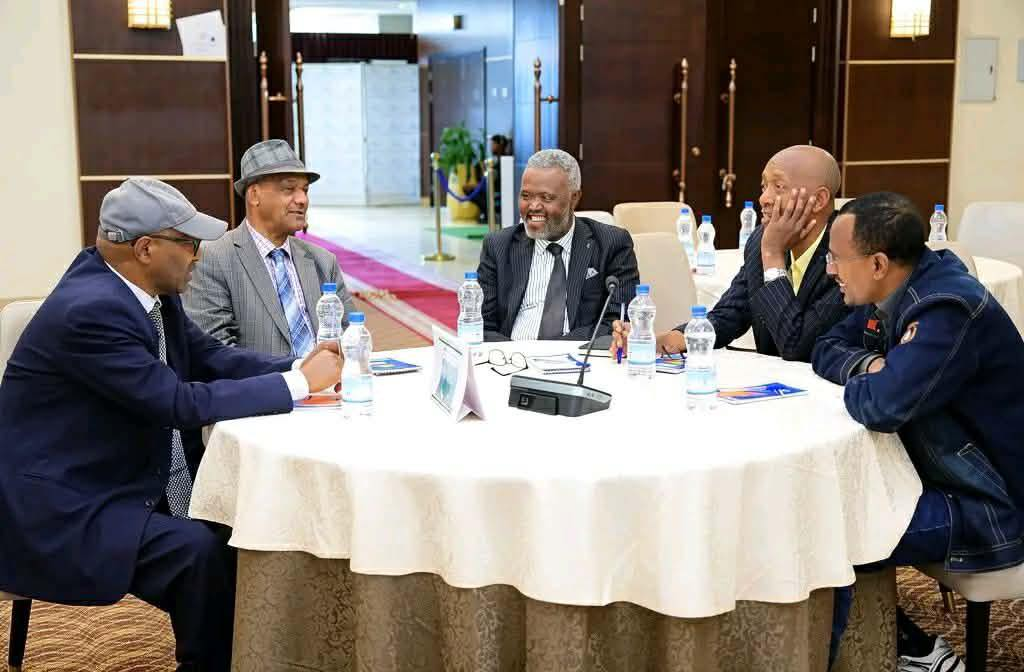
February 26, 2026 (Addis Ababa) – In a significant gathering of Oromo intellectuals and civic leaders, a five-day conference convened under the symbolic call “Harmeen Oromiyaa waamti” (“Mother Oromia summons you”) has concluded with urgent appeals for political accountability and truth-based dialogue to address the region’s deepening challenges.
The meeting brought together scholars and thought leaders for intensive deliberations on the political crisis affecting Oromia and its implications for Ethiopia as a whole. Participants engaged in what they described as “in-depth, truth-based discussions” regarding Oromo political challenges, outlining potential solutions they believe would benefit the broader population.
Kedir Bullo, one of the participants, reflected on the gathering’s significance in an interview following the conference. “When the call went out that ‘Mother Oromia summons you,’ this is how we responded,” Bullo said. “We convened to hold in-depth, truth-based discussions regarding Oromo political challenges, and we outlined solutions that would benefit our people.”
However, Bullo expressed uncertainty about whether the recommendations would translate into meaningful action. “I do not know what the politicians have done [with these recommendations],” he stated, highlighting a recurring gap between intellectual deliberation and political implementation that has frustrated many civic initiatives in the country.
The scholar emphasized the personal significance of participation. “Personally, I feel a sense of honor to have fulfilled my civic duty by spending five days with these scholars, discussing matters concerning both our people and the country with a deep sense of solidarity,” Bullo said.
Context of Crisis
The gathering occurs against a backdrop of escalating warnings about Ethiopia’s trajectory. Just days before the conference, the Oromo Liberation Front (OLF) issued a stark statement warning that “gathering clouds of war” continue to hang over Ethiopia, with persistent conflict in Oromia and other regions remaining a major source of security, social, and economic challenges .
According to the OLF statement, political differences remain unresolved, and longstanding conflicts have turned Oromia into what it described as a “recurring arena of war and exploitation” despite the region’s natural wealth, while many residents continue to face economic hardship .
The urgency of these warnings was amplified by a coalition of twenty international and regional human rights and humanitarian organizations, which warned on February 20 that Ethiopia stands “on the brink” of renewed large-scale conflict. The groups cited ongoing fighting between federal forces and the Oromo Liberation Army (OLA), with reports of extrajudicial killings, mass arrests, property destruction, forced conscription, and collective punishment of civilians .
The Human Cost of Insecurity
The conflict’s toll on ordinary citizens has been devastating. A recent investigation by the Associated Press documented widespread abuses in Oromia, where civilians find themselves caught between government forces and armed opposition groups .
Ayantu Bulcha, speaking to AP from Addis Ababa, described how soldiers came to her family’s home in Oromia in early December. Her cousin was shot outside the property, she said, and soldiers took her father and uncle to a nearby field where they were also killed. They had been accused of fighting alongside the OLA—allegations she denies .
Lensa Hordofa, a civil servant from Oromia’s Shewa region, told AP her family faces constant harassment and extortion from armed men, including demands for food and supplies. Her uncle was recently detained and released only after payment of a ransom equivalent to $650. “Movement from place to place has become increasingly restricted,” she said. “It’s almost impossible to travel” .
Media Access Restricted
The conflict has remained largely hidden from public view due to restricted access. Ethiopia limits access to Oromia for journalists and rights groups, meaning the full scope of the humanitarian crisis remains underreported .
Getu Saketa Roro, co-founder of the Human Rights League of the Horn of Africa, noted that “the human rights situation—as well as the overall humanitarian crisis in Oromia—is underreported” .
This information blackout echoes warnings from human rights organizations that shrinking civic space and restrictions on independent reporting are obscuring the scale of violations and weakening early warning and prevention efforts .
Failed Peace Efforts
The call for dialogue from the scholars’ conference comes amid recent failures in formal peace negotiations. The Ethiopian government announced on February 18 that talks with the Oromo Liberation Army had ended without agreement. It was the second time Prime Minister Abiy Ahmed’s government and the OLA had sat down this year aiming to end a five-year insurgency in the restive Oromia region .
National security adviser Redwan Hussein posted on social media: “Due to the intransigence of the other party the talks have come to an end without an agreement. The obstructive approach and unrealistic demands of the other party are the principal reasons why these talks could not succeed” .
The OLA offered a different perspective, stating it had tried “to negotiate a space for a meaningful change in the governance of the Oromia region” during the talks in Dar es Salaam. Spokesman Odaa Tarbii said in a statement: “True to form, the Ethiopian government was only interested in co-optation of the leadership of the OLA rather than beginning to address the fundamental problems that underlie the county’s seemingly insurmountable security and political challenges” .
Economic Paradox
The conflict’s persistence stands in stark contrast to Oromia’s economic potential. The region is central to Ethiopia’s coffee industry, which continues to post strong results nationally. Official data shows Ethiopia earned 1.6 billion dollars from coffee exports in the first five months of the 2025/26 fiscal year, with plans to generate more than 3 billion dollars by exporting about 600,000 tons of coffee during the full year .
Major coffee-producing areas include Jimma, Illubabor, Guji, West Wollega and East Wollega in Oromia—many of which have been affected by insecurity. In Bale Zone, where coffee is grown on more than 68,000 hectares, officials report harvests reaching 93 percent of targets despite challenges .
Yet the benefits of this economic activity have not translated into stability or widespread prosperity. The OLF statement emphasized that despite the region’s natural wealth, many residents continue to face economic hardship .
The Scholar’s Appeal
Against this complex backdrop, the gathering of scholars under the “Mother Oromia” banner represents what participants view as a civic intervention—an attempt to inject intellectual rigor and truth-based analysis into a political environment often characterized by polarization and mutual recrimination.
Bullo’s personal reflection on fulfilling his “civic duty” speaks to a broader sense of responsibility among Oromo intellectuals who see themselves as bridges between grassroots concerns and political decision-makers. The five days of discussion, grounded in what participants describe as commitment to truth and solidarity, produced what they believe are viable solutions.
Whether these solutions will reach political actors—and whether those actors will act upon them—remains an open question. As Bullo noted with evident frustration: “I do not know what the politicians have done [with these recommendations].”
The conference’s conclusion coincides with growing international alarm about Ethiopia’s trajectory. The February 20 letter from human rights organizations warned that “space for de-escalation is rapidly shrinking” and called for sustained international attention, inclusive political solutions, and expanded independent human rights monitoring .
For the scholars who gathered under Mother Oromia’s summons, the path forward requires bridging the gap between intellectual deliberation and political action—ensuring that truth-based analysis does not remain confined to conference halls but translates into the inclusive dialogue and accountability that Ethiopia’s complex crisis demands.
The Silenced Warning Light: Why Muzzling the Media Muzzles Progress

The Silenced Warning Light: Why Muzzling the Media Muzzles Progress
Throughout history, regimes seeking to consolidate power have often reached for the same, seemingly simple tool: the silencing of independent voices. The logic appears seductive—if critical reports are the problem, then removing the reports will remove the problem. Shut down the newspapers, block the websites, jail the journalists, and what’s left? Peace. Or so the theory goes.
But history and political science offer a stark rebuttal. Shutting down independent media does not bring peace, nor does it pave the way for development. It does the opposite. It trades the noisy but necessary process of democracy for a fragile, false tranquility, all while systematically dismantling the very institutions required for a nation to thrive.
This isn’t a matter of opinion; it is a matter of mechanics. To understand why, one must look at the three fundamental roles a free press plays: as a release valve for conflict, as a watchdog for development, and as a bridge to an informed citizenry.
The Mirage of “Silent” Peace
When independent media is shuttered, it creates an illusion of stability. The protests are no longer reported; the opposition voices are no longer broadcast. But this is suppression, not resolution. The underlying grievances of a society—corruption, inequality, ethnic tensions, political marginalization—do not evaporate when they are not mentioned in the news. They simply go underground.
Like steam building in a sealed boiler, these frustrations fester. Without a public, peaceful outlet for discussion and debate, anger accumulates. It has nowhere to go but to explode. The absence of open criticism does not prevent conflict; it prevents the early detection of it. Independent journalists are the first responders of civic society; they spot the small fires of communal strife or the slow leak of government failure before they ignite into a full-blown crisis. By blinding itself to these warnings, a government does not prevent the fire—it just ensures it will be surprised when the house burns down. True peace is not the absence of noise; it is the presence of justice, and justice cannot be served in a silent room.
Building on a Foundation of Sand
Development is often measured in concrete: miles of road built, tons of steel delivered, number of schools constructed. But sustainable development is not just about pouring concrete; it is about building a resilient society. A free press is the quality control inspector for that entire process.
Consider the massive flows of international aid and government revenue meant for public works. Without journalists acting as watchdogs, these funds are a siren song for corruption. Who is watching to ensure the new hospital actually receives its medicine supplies? Who is checking that the bridge was built with proper materials? When the press is muzzled, accountability dies. Corruption thrives in the dark, siphoning off the resources meant to lift people out of poverty, leaving behind shoddy infrastructure and failed public services.
Furthermore, a nation’s leadership cannot make informed decisions if they are trapped in an echo chamber. If the media only offers flattery, policymakers become detached from reality. They never learn that their agricultural program is failing farmers, or that their new tax is crushing small businesses. They make policy based on fantasy, not fact. This leads to stagnation, not development.
This stagnation extends to the population itself. A country’s greatest resource is the ingenuity of its people. A free press exposes citizens to new ideas, diverse perspectives, and rigorous debate. It fosters the critical thinking skills necessary for an innovative, modern workforce. In a closed information space, citizens are rendered passive, their potential untapped. The result is a nation that cannot innovate, cannot adapt, and cannot compete.
The Erosion of Trust and the Rise of the Rumor Mill
Finally, silencing the press robs citizens of their role in the national project. A functioning society requires participants, not just subjects. People cannot make wise decisions about their health, their finances, or their leaders if they are fed a diet of pure propaganda. An informed citizenry is the bedrock of a stable society.
When the state becomes the sole source of truth, trust inevitably erodes. People are not fools; they know when they are being fed a narrative that doesn’t match their reality. This creates a cynical, disengaged public. And in the vacuum left by the absence of trusted, professional journalism, something dangerous always rushes in: rumors, conspiracy theories, and disinformation spread through unofficial channels. These unverified whispers are far more destabilizing and harder to control than any newspaper article ever was.
In the end, we can visualize the nation as a complex, high-performance machine. Independent media is its diagnostic system—the dashboard lights and sensors that tell the driver when the engine is overheating or the oil is low. Shutting down the media is the equivalent of taking a hammer to the “check engine” light.
For a moment, there is silence. The driver enjoys the quiet. But the engine is still overheating. By silencing the warning system, the driver guarantees a catastrophic failure down the road. The machine will not run smoothly, and it certainly will not reach its destination.
If a nation truly seeks peace, it must be willing to hear the voices of its people. If it truly seeks development, it must be willing to shine a light on its flaws. A free and independent press is not a nuisance to be managed; it is the cornerstone upon which both peace and prosperity are built. History has taught us this lesson repeatedly. The only question that remains is whether we are willing to learn it.

The Unbreakable Spirit of Siinqee: Who Is Martha Kuwee Kumsa?

By Dhabessa Wakjira
There is a Oromo saying: “Kuwee jechuun mootii kannisaa ti” — Kuwee means a queen who bends but does not break. Few individuals embody this proverb as profoundly as Martha Kuwee Kumsa, an Oromo scholar, survivor, and siinqee feminist whose life story reads not merely as a biography but as an epic of resistance, resilience, and intellectual defiance.
Born around 1955 in Dembidolo, in the Oromia Region of Ethiopia, Martha Kuwee Kumsa carries a name that predestines her for greatness. Her middle name honors an Oromo heroine, and her life’s trajectory would come to mirror the strength of those ancestral women who fought for their people’s dignity. Today, she stands as a full professor at Wilfrid Laurier University in Canada, but the path to that ivory tower was paved with the stones of imprisonment, torture, and exile.
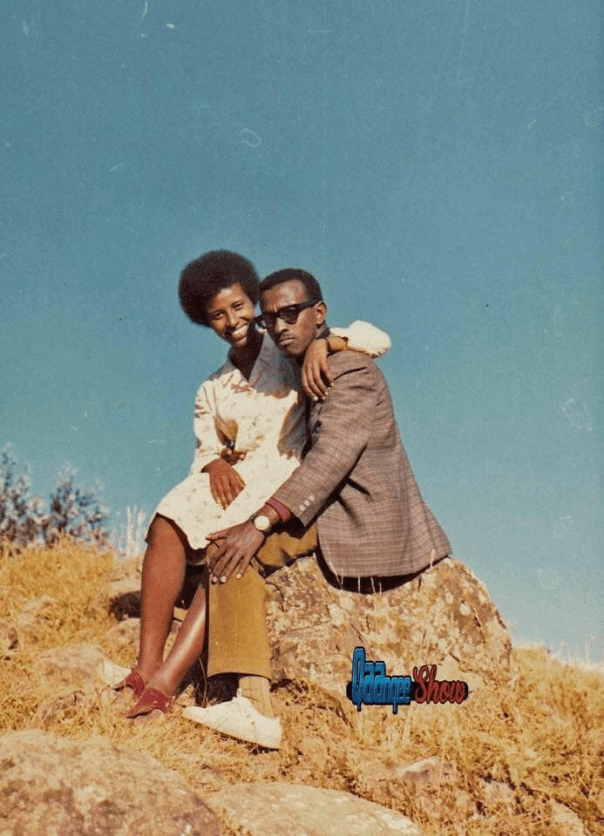
The Revolutionary’s Crucible
When a young Martha moved to Addis Ababa with dreams of becoming an engineer, she could not have anticipated how the 1974 Ethiopian Revolution would reroute her destiny. As universities shuttered, she found her voice not in engineering formulas but in the power of the written word. She trained as a journalist and married Leenco Lata, a chemical engineer who would become a founder of the Oromo Liberation Front.
The Red Terror that followed was Ethiopia’s bloodiest chapter, and it consumed Martha’s world. Her husband was detained four times in six months. The first three times, he returned bearing the scars of torture. The fourth time, he vanished into the maw of the Derg regime’s secret prisons.
What follows in Martha’s story is almost unbearable to contemplate. A young mother, pregnant with her third child, she spent a year turning over dead bodies in the streets of Addis Ababa, searching for her husband’s face among the massacred. She named her baby Goli — meaning “terror” in Oromo — a haunting testament to the moment of his birth. For an entire year, she did not know whether her husband was alive or dead. (He had, in fact, escaped Ethiopia, but this knowledge would not reach her for another decade.)
The Prison Years: Ten Years Without Charge
In January 1980, Martha herself was seized by plainclothes security forces. The scene that greeted her at the prison would scar her memory forever: bodies bleeding from mouths, faces disfigured by torture, wounds oozing pus, and a stench so overpowering it seemed to suffocate hope itself.
She was tortured ten times in that first year alone. The foot whipping — a technique designed to inflict maximum pain while leaving victims alive — became her introduction to the Derg’s hospitality. Yet, remarkably, she was never charged with any crime. Her only offense, as Amnesty International and PEN America would later affirm, was her journalism and her advocacy for Oromo women’s rights.
For ten years, Martha Kuwee Kumsa existed in a legal limbo — detained without charge, without trial, without any of the protections that international law supposedly guarantees. But prisons, as it turns out, cannot contain a mind determined to be free. She learned French and Tigrinya from fellow prisoners. She taught biology, geography, and mathematics to other detainees and even to the children of her captors. In one breathtaking act of maternal ingenuity, she faked a dental emergency to secure a brief meeting with her own children.
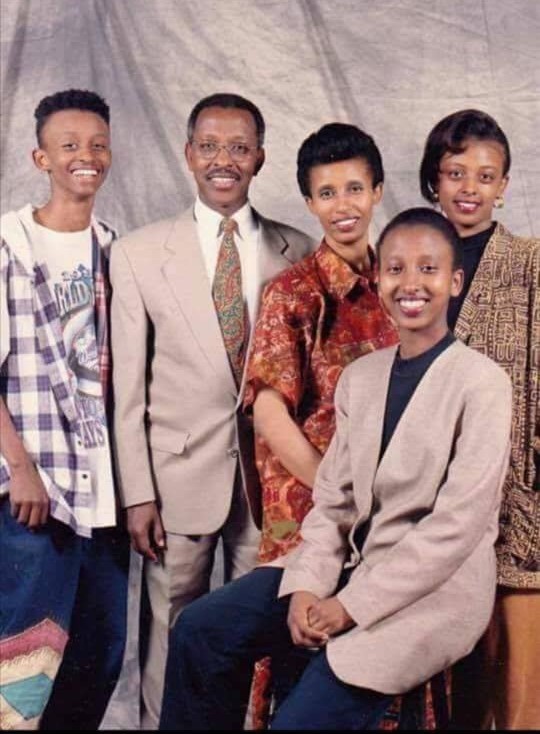
The Liberation of Voice
When Martha was finally released on September 10, 1989, as part of a mass prisoner amnesty, she emerged into a world that had moved on without her. Her children had grown. Her husband, unknown to her, was alive and working in opposition politics. The resistance asked her to join training camps; the government tried to conscript her. Seven months later, she made the impossible choice: walking with her children for two weeks through forests to reach Kenya and, eventually, Canada.
It was in Kenya, just before boarding a flight to a new life, that the phone rang. After eleven years of silence, her husband’s voice came through the receiver. He had survived. He had helped negotiate the EPRDF’s transition to power. He would meet her in Kenya, and then, two days later, she and the children would fly to Canada alone. The family would not be fully reunited until 1996, and even then, political asylum laws would eventually separate them again when Leenco’s armed opposition past made him ineligible for Canadian citizenship.
The Scholar-Activist
In Canada, Martha rebuilt herself from the ground up. She earned a bachelor’s degree in social work from York University (1996), a master’s from the University of Toronto (1997), and a PhD from the University of Toronto (2004). She began teaching at Wilfrid Laurier University in 2002 and rose to the rank of full professor.
Her scholarship focuses on Oromo culture, cultural identity, and the adaptation of immigrants — subjects she does not study from a distance but lives in her very bones. But Martha has never been content to remain in the ivory tower. She has remained active with PEN Canada and Amnesty International, speaking worldwide about human rights and freedom of speech.
Siinqee Feminism and the Defense of Youth
Martha’s activism is rooted in siinqee feminism — an Oromo philosophy of womanhood and solidarity that predates Western feminist thought. Siinqee is not merely an intellectual framework; it is a lived practice of mutual protection among Oromo women, a covenant of resistance against all forms of oppression.
This philosophical grounding explains her passionate defense of the Qeerroo and Qarree — the young Oromo activists who led peaceful, grassroots movements that helped overthrow the EPRDF. When pan-Ethiopian feminist Sehin Teferra categorically associated the Qeerroo with violence, Martha pushed back fiercely. Such generalizations, she argued, erase the diversity among young activists and criminalize legitimate protest.
In November 2020, following the assassination of singer Hachalu Hundessa and the subsequent riots, Martha co-authored a piece in The Washington Post that accused Ethiopian federal authorities of orchestrating a wave of repression against Oromos. She documented 9,000 arrests, the raiding of Oromo media offices, and internet shutdowns that created a media monopoly for state-aligned Amharic outlets. She called it “Orwellian misinformation” — a deliberate narrative that painted Oromo victims as perpetrators.
The Queen Who Did Not Break
Today, Martha Kuwee Kumsa lives in Waterloo, Ontario, though her heart remains tethered to Oromia. She has received the 1989 PEN/Barbara Goldsmith Freedom to Write Award, even before her release from prison. She has been honored by Amnesty International. But perhaps her greatest achievement is simpler and more profound: she survived.
She survived the Red Terror. She survived ten years in prison without charge. She survived torture. She survived exile. She survived the separation from her husband and the challenges of raising children in a foreign land while rebuilding a life from nothing. And through it all, she never stopped writing, never stopped advocating, never stopped believing in the power of Oromo women to defy systems of power and reclaim their culture.
Kuwee jechuun mootii kannisaa ti. Kuwee means a queen who bends but does not break. Martha Kuwee Kumsa has been bent by history — bent by dictatorship, by imprisonment, by exile, by loss. But she has never broken. She stands today as a living testament to the unbreakable spirit of siinqee feminism and the enduring power of the human voice when it refuses to be silenced.
In an era when Oromo rights remain contested, when misinformation spreads faster than truth, when young activists are labeled terrorists for demanding justice, Martha’s voice matters more than ever. She reminds us that journalism is not a career but a calling. That feminism is not a Western import but an ancient Oromo practice. That freedom is not granted but claimed.
And that queens, when they refuse to break, can change the world.
And so we ask again: Who is Martha Kuwee Kumsa?
She is the woman who turned over dead bodies searching for her husband.
She is the woman who named her baby Terror and raised him anyway.
She is the woman who taught mathematics in a torture prison.
She is the woman who walked through a forest to freedom.
She is the woman who built a PhD from the ashes of a decade stolen by the state.
She is the woman who refuses to let Oromo youth be slandered as terrorists.
She is the woman who embodies siinqee feminism in every cell of her being.
She is the queen who bends but does not break.
Kuwee jechuun mootii kannisaa ti.
And her name is Martha.
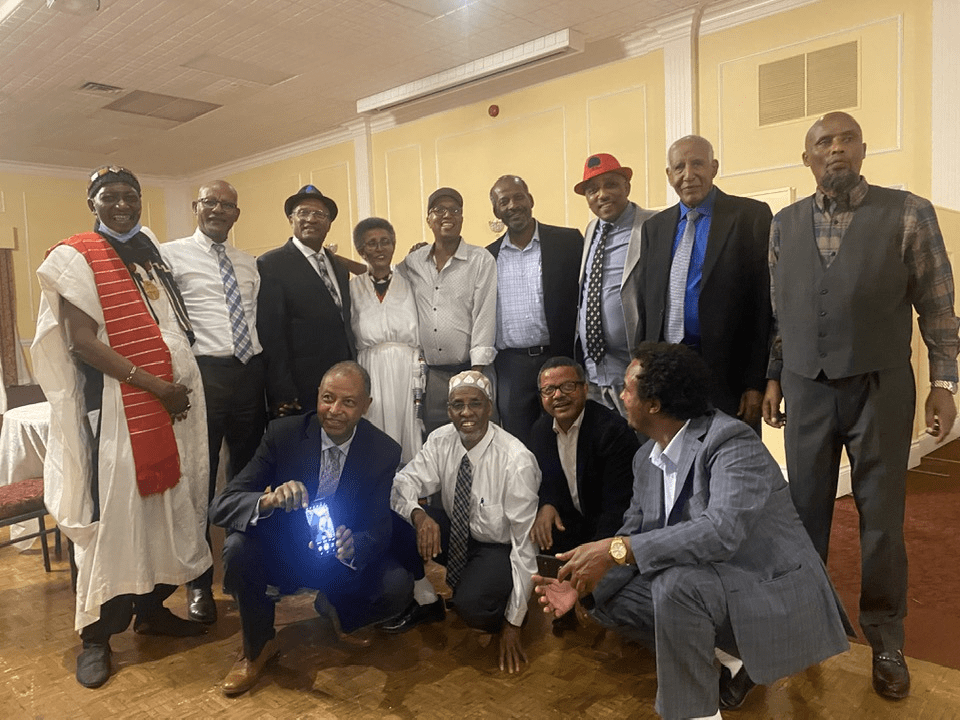
This feature commentary is based on biographical sources including PEN America, Amnesty International, and Martha Kuwee Kumsa’s own writings.
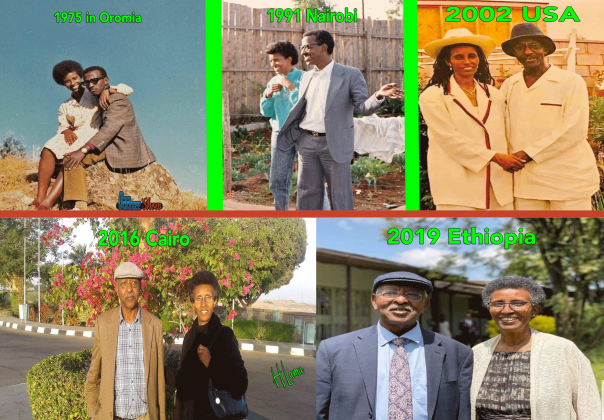

CPJ Denounces Government Crackdown on Addis Standard’s Press Freedom

Ethiopia Revokes Addis Standard’s License Amid Escalating Crackdown on Independent Media
CPJ condemns “retaliation” as authorities silence one of country’s few independent voices ahead of June elections
NAIROBI, February 24, 2026 — The Committee to Protect Journalists (CPJ) has called on Ethiopian authorities to immediately restore the registration of independent outlet Addis Standard after the Ethiopian Media Authority (EMA) revoked its online media registration certificate effective February 24, in the latest blow to press freedom in Africa’s second most populous nation .
“This is not regulation — it is retaliation,” said CPJ Africa Director Angela Quintal. “By weaponizing vague ‘national interest’ and ‘media ethics’ provisions, the Ethiopian Media Authority is silencing independent journalism. Revoking Addis Standard’s license is part of a deliberate campaign to dismantle critical reporting in Ethiopia. Authorities must immediately reinstate the outlet’s registration and end their escalating assault on the press” .
Government Allegations and Outlet’s Response
In a February 24 statement posted on Facebook, the EMA accused Addis Standard of “repeatedly disseminating reports that compromise media ethics, violate Ethiopian laws, and endanger the national interests of the country and its people” . The authority claimed it had issued multiple warnings and that the outlet had failed to take corrective measures before canceling its registration under Ethiopia’s Media Proclamation .
However, Addis Standard Editor-in-Chief Yonas Kedir firmly rejected the decision, stating that the outlet had never received any formal notice of violations from the EMA. He described the claim of “repeated notices” as factually incorrect and said the publisher, JAKENN Publishing PLC, is reviewing legal options to ensure due process is upheld .
The EMA’s statement did not specify which reports or actions formed the basis of the decision . The authority claimed the alleged violations were confirmed through its regulatory oversight activities and were the subject of numerous complaints and tips submitted by members of the public .
A Pattern of Escalating Repression
The move comes amid a widening crackdown on independent media as Ethiopia approaches legislative elections scheduled for early June 2026 . Recent actions against journalists include:
- On February 19, an Agence France-Presse journalist was blocked from traveling to Tigray .
- Authorities declined to renew the accreditation of three Reuters journalists based in Addis Ababa and withdrew the agency’s credentials to cover the African Union Summit, days after Reuters published an investigative report alleging Ethiopia hosts a training camp for Sudan’s Rapid Support Forces .
- In January, the EMA revoked Wazema Radio’s license over alleged reporting irregularities; the station has continued publishing content from abroad .
- In October 2025, the authority suspended the licenses of Deutsche Welle’s local correspondents, two of whom remain permanently barred .
- Four journalists imprisoned for nearly three years now face terrorism charges and potential death sentences, though executions remain rare .
Addis Standard’s History of Government Targeting
Addis Standard, established in 2011 as a monthly magazine and published in Afaan Oromo, Amharic, and English, has faced repeated government harassment over the years . The outlet is one of Ethiopia’s few independent media platforms, with nearly one million followers on X .
The latest revocation is not the first time authorities have moved against the outlet:
In April 2025, Ethiopian police raided the Addis Standard office and the home of one of its senior staff members, briefly detaining three managers for several hours and confiscating multiple electronic devices, including laptops, phones, hard drives, and CPUs. The Committee to Protect Journalists expressed “grave concerns about potential misuse of sensitive data” following the raids .
During the Tigray war in June 2021, Ethiopia’s media regulator suspended Addis Standard, accusing it of advancing the agenda of what it described as a “terrorist group”—an apparent reference to the Tigray People’s Liberation Front (TPLF). At the time, CPJ criticized the move, noting that “for years, Addis Standard has been an important source of critical reporting and commentary on Ethiopia” .
In November 2020, police arrested Medihane Ekubamichael, then product editor at Addis Standard, accusing him of attempting to “dismantle the constitution through violence” .
A Deteriorating Media Landscape
Ethiopia now ranks 145th out of 180 countries in the 2025 Reporters Without Borders (RSF) World Press Freedom Index . According to RSF, the media landscape under Prime Minister Abiy Ahmed, who came to power in 2018, remains “highly polarised and marked by a culture of opinion at the expense of fact-checking” .
The latest actions have raised serious concerns among press freedom advocates about the operating environment for independent journalism ahead of the June elections, as candidate registration and campaign activities are currently underway .
Addis Standard has reported extensively on unrest in Amhara, where rebels have battled federal forces for several years, as well as tensions in Tigray, where a fragile calm risks sliding back into conflict . The outlet’s critical political reporting made it a target, and the latest revocation effectively bars it from operating legally in Ethiopia .
International Condemnation
The CPJ’s condemnation follows similar expressions of concern from diplomatic missions and press freedom organizations. In a joint statement on World Press Freedom Day 2025, 14 diplomatic missions in Addis Ababa warned of a shrinking media and civic space, stressing that a free, pluralistic press is indispensable to democracy and social cohesion, particularly ahead of national elections.
CPJ’s email requests for comment to the Ethiopian Media Authority did not immediately receive a response .
As one observer noted, the revocation of Addis Standard’s license represents not an isolated incident but part of “a troubling pattern of repressive regulatory action against international and independent press” in Ethiopia . With elections approaching and civic space contracting, the future for independent journalism in Ethiopia appears increasingly precarious.
Founded in 2011, Addis Standard is known for critical political reporting, and the latest revocation effectively bars it from operating legally in Ethiopia.

Oromo Students in Sweden Celebrate International Mother Language Day with Pride and Purpose
Bromangymnasiet hosts celebration highlighting the importance of preserving and strengthening mother tongues, especially for communities whose linguistic rights have been denied
BRO, Sweden — Students and educators at Bromangymnasiet, a secondary school in Sweden, joined the global community in celebrating International Mother Language Day on February 21, recognizing the vital importance of linguistic diversity and the right to learn, write, and speak in one’s mother tongue .
The day, proclaimed by UNESCO in 1999 and observed annually on February 21, holds particular significance for communities whose languages have been marginalized, suppressed, or denied official recognition. For Oromo students at Bromangymnasiet and across the diaspora, the celebration represents both a affirmation of identity and a reminder of ongoing struggles for linguistic rights .
What Is Mother Language?
Mother language—the language a child first learns from their mother and father at birth, the language of their earliest thoughts and expressions—carries profound significance beyond mere communication. It is the medium through which identity is formed, culture is transmitted, and history is preserved .
For communities whose right to use their mother tongue has been violated—who have been denied education in their language, prohibited from publishing in it, or shamed for speaking it—Mother Language Day carries additional weight. It is both celebration and commemoration: celebration of linguistic diversity, commemoration of struggles to preserve languages against overwhelming pressure .
Language Expresses Identity, Culture, and History
As the students at Bromangymnasiet emphasized during their celebration, language is far more than a tool for communication. It is the vessel that carries a people’s identity, their culture, and their history across generations .
When a language dies, something irreplaceable is lost—not just words and grammar, but ways of seeing the world, relationships with nature, forms of humor, styles of prayer, patterns of storytelling, and connections to ancestors. Each language encodes unique knowledge and perspectives that cannot be fully translated into any other tongue .
For Oromo students celebrating in Sweden, this understanding is particularly acute. Many were born in or have grown up in diaspora, navigating between the Oromo language of their homes and communities and the Swedish language of their education and broader society. Maintaining Oromo language proficiency requires conscious effort, community support, and institutional recognition—none of which can be taken for granted.
The Global Context: Languages Under Threat
International Mother Language Day emerges from recognition of a global crisis in linguistic diversity. According to UNESCO estimates:
- More than 40% of the world’s 7,000 languages are currently at risk of disappearing
- A language dies approximately every two weeks
- 40% of the global population lacks access to education in a language they speak or understand
- Indigenous languages are disappearing at alarming rates, taking with them unique knowledge systems and cultural heritage
February 21 was chosen as International Mother Language Day to commemorate the 1952 Bengali Language Movement in Bangladesh, when students in Dhaka were killed by police while demonstrating for recognition of their mother tongue, Bengali. The day thus carries from its origins a connection to struggle—to the understanding that linguistic rights are not given but demanded, and that people have died defending their right to speak their own languages.
Oromo Language: A History of Suppression and Resilience
For Oromo people, the struggle for linguistic rights has been central to the broader struggle for recognition and self-determination. Under successive Ethiopian regimes, the use of Afaan Oromo was severely restricted:
- Education in Afaan Oromo was prohibited for decades
- Publishing in the language was suppressed
- Public use of Afaan Oromo was discouraged and sometimes punished
- Oromo children were educated in Amharic, a language many did not understand
- The Latin script (Qubee) for writing Afaan Oromo was banned, with the Ethiopic script imposed
Despite these pressures, Oromo language survived and has undergone remarkable revitalization since the 1991 change of government. The adoption of Qubee (Latin script) has facilitated writing and publishing. Afaan Oromo is now used in education, media, and government in Oromia. Oromo literature, music, and journalism have flourished.
Yet challenges remain. Within Ethiopia, the status and development of Afaan Oromo continues to be contested. In diaspora, parents struggle to pass the language to children growing up in English, Swedish, or other dominant languages. The work of strengthening Oromo language is ongoing.
Strengthen Our Language and Our Script!
The celebration at Bromangymnasiet carried a clear and powerful message: “Strengthen our language and our script! May Afaan Oromo grow!”
This call encompasses several dimensions:
For Oromo youth in diaspora: It means actively using Afaan Oromo at home, seeking out Oromo-language media, participating in community events where Oromo is spoken, and taking pride in linguistic heritage.
For parents and families: It means speaking Oromo to children from birth, creating environments where Oromo is valued and used, and transmitting not just language but the culture and history it carries.
For communities: It means establishing and supporting Oromo language programs, creating opportunities for youth to use the language, and celebrating linguistic achievements.
For educators and institutions: It means recognizing Oromo language as worthy of study and support, providing resources for Oromo language learning, and respecting students’ linguistic identities.
For advocates: It means continuing to press for full recognition and development of Afaan Oromo in Ethiopia and supporting Oromo language initiatives globally.
Celebration at Bromangymnasiet
The International Mother Language Day celebration at Bromangymnasiet brought together Oromo students and educators to honor their language and reflect on its significance. Activities likely included:
- Readings of Oromo poetry and literature
- Performances of Oromo music
- Discussions about the history and importance of Afaan Oromo
- Presentations on Oromo culture and traditions
- Reflections on the challenges and joys of maintaining Oromo language in diaspora
For students growing up between cultures, such celebrations serve multiple purposes: they affirm that Oromo language matters, that their heritage is worthy of recognition, and that they are part of a global Oromo community that spans continents.
The Universal Message
While the Bromangymnasiet celebration focused particularly on Afaan Oromo, the universal message of International Mother Language Day resonates across all linguistic communities:
- Every language deserves respect and recognition
- Every child deserves education in a language they understand
- Linguistic diversity enriches humanity
- Languages carry knowledge and perspectives that benefit everyone
- The loss of any language diminishes us all
As one student participant reflected: “When we celebrate Mother Language Day, we celebrate not just our own language but the principle that all languages matter. We stand with every community fighting to preserve its mother tongue—whether in Ethiopia, Sweden, or anywhere in the world.”
Looking Forward
The celebration at Bromangymnasiet represents both an ending and a beginning: the end of another year’s observation, and the beginning of renewed commitment to strengthening Afaan Oromo for the year ahead.
For Oromo students in Sweden, the work continues—learning, speaking, reading, and writing in their mother tongue; passing it to younger siblings and future children; advocating for its recognition and support; and ensuring that Afaan Oromo not only survives but thrives in diaspora as well as in the homeland.
As the students themselves declared: “Afaan keenya fi Qubee keenya jabeessaa! Afaan Oromoo haa guddatu!” —”Strengthen our language and our script! May Afaan Oromo grow!”
International Mother Language Day: February 21—celebrating linguistic diversity, honoring struggles for linguistic rights, and committing to strengthen every mother tongue.

Ethiopia Revokes Addis Standard’s License in Latest Blow to Independent Media
Authorities silence critical voice as crackdown on press freedom intensifies ahead of June elections
ADDIS ABABA — The Ethiopian Media Authority (EMA) has revoked the online media registration certificate of Addis Standard, one of the country’s most respected independent news outlets, effective February 24, 2026, in a move that press freedom advocates condemn as part of a widening crackdown on independent journalism.
The decision strips Addis Standard of its legal recognition to operate in Ethiopia, citing alleged “repeated violations of media ethics, national laws, and the country’s national interests,” though the Authority’s statement did not specify which reports or actions formed the basis of the decision.
A History of Targeting Independent Media
Addis Standard, established in 2011 as a monthly magazine and published in Afaan Oromo, Amharic, and English, has faced repeated government harassment over the years. The outlet discontinued its print edition in October 2016 in response to censorship, continuing online only, before resuming monthly print editions in 2018.
The latest revocation follows a pattern of escalating pressure on independent media:
- April 2025: Ethiopian police raided Addis Standard’s office and the home of a senior staff member, detaining three managers for several hours and confiscating laptops, phones, and data storage equipment. The Committee to Protect Journalists (CPJ) expressed “grave concerns about potential misuse of sensitive data” following the raids.
- June 2021: During the Tigray war, the EMA suspended Addis Standard, accusing it of advancing the agenda of what it described as a “terrorist group”. CPJ condemned the move, noting that Addis Standard “has been an important source of critical reporting and commentary on Ethiopia”.
- November 2020: Police arrested Medihane Ekubamichael, then product editor at Addis Standard, accusing him of attempting to “dismantle the constitution through violence”.
Editor-in-Chief Rejects Allegations
Responding to the EMA’s announcement, Yonas Kedir, Editor-in-Chief of Addis Standard publications, categorically rejected the Authority’s claims, stating the outlet had never received any formal notices of violations.
“The claim that Addis Standard received repeated notices is factually incorrect. At no point has the Ethiopian Media Authority formally notified Addis Standard newsroom of any prior violations or enforcement actions,” he said.
The publisher, JAKENN Publishing PLC, is reviewing legal options to protect its rights and ensure due process is upheld.
Broader Crackdown on Press Freedom
Addis Standard’s license revocation is not an isolated incident but part of a broader pattern of repression against independent media in Ethiopia, particularly as the country approaches national elections scheduled for June 2026.
Recent actions against media outlets include:
- Wazema Radio (January 2026): The EMA compelled Wazema Media to surrender its operating license, accusing the outlet of reporting contrary to “national interest” and lacking balance. The station has continued publishing content from abroad.
- Reuters (February 2026): The government declined to renew accreditation for three Addis Ababa-based Reuters journalists and withdrew the outlet’s accreditation to cover the African Union Summit, days after Reuters published an investigative report alleging Ethiopia hosts a training camp for Sudan’s Rapid Support Forces (RSF).
- Deutsche Welle (October 2025): The EMA suspended several correspondents working for Deutsche Welle. While most were later reinstated in December, two remain permanently suspended.
- Tesfalem Waldyes (June 2025-present): The founder of Ethiopia Insider remains detained despite a court ordering his release and bail being posted, in what CPJ calls “the Ethiopian government’s disregard for judicial processes and press freedom”.
From Hope to Retrenchment
The crackdown represents a dramatic reversal from the promise of Prime Minister Abiy Ahmed’s early years in power. In May 2019, addressing UNESCO’s World Press Freedom Day in Addis Ababa, Abiy declared a decisive break with Ethiopia’s repressive past, stating: “A democratic Ethiopia cannot be materialized if individuals are imprisoned for generating and sharing their ideas responsibly”.
His government opened more than 200 blocked websites, freed imprisoned journalists, allowed exiled media to return, and initiated reforms of laws long criticized for stifling expression.
Nearly seven years later, that horizon has receded. Ethiopia now ranks 145th out of 180 countries in the 2025 Reporters Without Borders World Press Freedom Index, falling for the first time into the “very serious” category. The Committee to Protect Journalists counts 12 journalists behind bars in Ethiopia, putting it among the worst countries in Africa for jailing journalists.

Legal Architecture of Control
The legal framework governing media has shifted away from the reform spirit of 2019. Amendments to the Media Proclamation in 2025 shifted critical oversight powers from the legislature to the executive, weakening the EMA’s independence in practice.
Meanwhile, the Hate Speech and Disinformation Prevention Proclamation (1185/2020) remain dangerously vague, with undefined terms such as “falsehood,” “hate,” and “national interest” deployed to enable selective enforcement. It is within this legal gray zone that outlets like Addis Standard and Wazema become most vulnerable—not through transparent judicial processes, but through administrative decree.
The Ethiopian Human Rights Commission (EHRC), a state-appointed constitutional body, has formally recommended further revisions to media laws, citing persistent structural flaws.
Election Concerns
The crackdown comes at a particularly sensitive time, as Ethiopia prepares for national elections in June 2026. Candidate registration and campaign activities are currently underway, raising concerns among media observers about the operating environment for independent journalism.
The National Election Board of Ethiopia (NEBE) now requires media organizations to sign a mandatory oath as a condition for accreditation, attaching legal liability for alleged “misinformation” directly to editorial leadership. Critics argue this transforms accreditation into a loyalty test, institutionalizing self-censorship and recasting election coverage from a public duty into a controlled privilege.
As one Addis Standard editorial noted: “Journalism ethics cannot be governed through compulsory oaths; they must be safeguarded through independence, due process, and constitutional protection”.
International Condemnation
International press freedom organizations have condemned Ethiopia’s escalating repression of independent media. Muthoki Mumo, CPJ’s Africa Program Coordinator, called the revocation of Reuters’ credentials “the latest in a troubling pattern of repressive regulatory action against international and independent press in Ethiopia”.
On World Press Freedom Day in 2025, 14 diplomatic missions in Addis Ababa issued a joint statement warning of a shrinking media and civic space, stressing that a free, pluralistic press is indispensable to democracy and social cohesion, particularly ahead of national elections.
The Stakes for Oromo Media and Voices
For Oromo media and those covering Oromo issues, the crackdown carries particular significance. Independent media have been essential platforms for amplifying Oromo voices, documenting human rights abuses, and providing counter-narratives to state-controlled discourse.
Addis Standard’s publication in Afaan Oromo, alongside Amharic and English, made it accessible to Oromo readers seeking news and analysis in their mother tongue. Its silencing represents another closure of space for Oromo expression and information access.
Looking Forward
As Addis Standard reviews its legal options and considers next steps, the broader question remains whether Ethiopia will reverse course on press freedom or continue its trajectory toward increasing repression.
The contradiction is stark: international partners, from Germany and the European Union to multiple diplomatic missions, warn that peace, partnership, and credible elections cannot endure without an open media environment. Yet domestically, legal ambiguity, bureaucratic obstruction, and administrative punishment steadily entrench the opposite trajectory.
For independent media operating in Ethiopia, the message from authorities is increasingly clear: critical journalism will not be tolerated. And for the Ethiopian people, access to information—essential for informed citizenship and meaningful democratic participation—grows ever more constrained.
As one Addis Standard editorial concluded: “Press freedom is not ornamental. It is central to transparency, accountability, and democratic legitimacy. Treating it as a privilege to be withdrawn in the name of ‘national interest’ undermines not only journalists, but the credibility of the political order itself” .
Media is independent. It works to bring out the truth of the people that has been suppressed. The Ethiopian government is silencing the voice of the people, especially when the suppressed truth of oppressed nations is heard—this threatens independent media freedom. It is a major problem for the political and media space when the government intensifies its pressure.

The Importance of Having Heroines and Heroes: Modeling Our Legendary Oromo Leaders
How Oromo traditions of celebrating excellence, bravery, and patriotism shape the struggle for liberation
OROMIA — In every society, heroines and heroes serve as living repositories of collective memory, embodiments of cherished values, and beacons guiding future generations. For the Oromo people, the celebration of heroic figures is not merely a cultural practice but an essential component of maintaining identity, transmitting values, and sustaining the centuries-long struggle for justice and self-determination .
Within the framework of the Gadaa system—one of the world’s oldest indigenous democratic governance structures—the recognition and celebration of excellence has always been central to social and political life. Bravery on the battlefield, patriotism in the face of external threat, deep knowledge of Oromo culture and tradition, and expertise in leadership, organization, and governance were all qualities that earned individuals lasting honor and remembrance .
Recognizing and Celebrating Achievement
The Gadaa system, which UNESCO has recognized as Intangible Cultural Heritage of Humanity, is built upon principles of merit, accountability, and service. Within this framework, those who demonstrated exceptional qualities received public recognition and were elevated as models for others to emulate .
Qualities honored in Gadaa tradition include:
- Bravery (Goromsa): Courage in defending the community and standing for justice
- Patriotism (Biyyummaa): Unwavering commitment to the Oromo people and their land
- Cultural knowledge (Aadaa beekumsa): Deep understanding of Oromo traditions, laws, and history
- Leadership expertise (Hoogganummaa): Skill in guiding communities, resolving disputes, and making wise decisions
- Organizational ability (Qindeeffama): Talent for mobilizing people and resources effectively
- Warfare knowledge (Waraana beekumsa): Strategic and tactical wisdom in defending the nation
These qualities were not abstract ideals but observable characteristics that individuals demonstrated through their actions and service. Communities paid attention, remembered, and passed down stories of exemplary figures from generation to generation.
Rejecting the Leadership of Collaborators
Just as Gadaa tradition celebrates those who uphold its principles, it also provides mechanisms for identifying and rejecting leaders who betray the people’s trust. Central to this is the understanding that not all who seek power deserve to hold it—especially those who have rejected the fundamental principles of Gadaa, Saffu, and social justice .
Saffu, a core Oromo philosophical concept, encompasses the moral order, the proper relationship between humans and the divine, and the ethical framework that governs Oromo society. Leaders who violate Saffu—who place their interests above the community’s, who collaborate with oppressors, who abandon the struggle for justice—forfeit their right to lead, regardless of any formal position they may hold .
The rejection of such leaders is not merely a political act but a moral and spiritual one. It affirms that leadership is not about personal ambition but about service to the people and fidelity to the values that sustain Oromo society. Those who collaborate with systems of domination, who benefit from Oromo oppression while claiming to represent Oromo interests, are recognized for what they are—and rejected accordingly.
Promoting Liberation Knowledge
A crucial dimension of honoring heroines and heroes involves actively promoting what might be called “liberation knowledge” —the wisdom, strategies, and understanding necessary for achieving and maintaining freedom. This requires simultaneously challenging what could be termed “knowledge of domination” —the narratives, ideologies, and assumptions that sustain oppressive systems .
Liberation knowledge includes:
- Understanding Oromo history from Oromo perspectives, not through the lens of conquerors
- Preserving and transmitting Gadaa principles and practices
- Documenting the sacrifices and strategies of past freedom fighters
- Developing political consciousness and critical analysis of power
- Building organizational skills and strategic thinking
Knowledge of domination manifests as:
- Narratives that deny or minimize Oromo suffering and struggle
- Ideologies that justify Oromo subordination within Ethiopian state structures
- Educational systems that erase or distort Oromo contributions
- Media that portrays Oromo resistance as “terrorism” or “instability”
- Historical accounts written by conquerors rather than the conquered
By actively promoting liberation knowledge and challenging dominating narratives, Oromos honor their heroines and heroes not through passive remembrance but through active continuation of their work. Every Oromo child who learns their true history, every activist who understands the strategies of past struggles, every leader who studies the principles of Gadaa—all are participating in the transmission of liberation knowledge that heroines and heroes died to preserve.
Modeling Our Legendary Oromo Leaders
The call to “model our legendary Oromo leaders” is an invitation to active emulation, not passive admiration. It recognizes that heroines and heroes are not meant to be merely remembered but to be imitated—their qualities studied, their strategies understood, their sacrifices honored through similar commitment in our own contexts .
What does it mean to model legendary Oromo leaders?
For activists today: It means studying how past leaders organized communities, built consciousness, and sustained struggle across generations. It means understanding that liberation is a marathon, not a sprint, and that each generation contributes its chapter to an ongoing story.
For community members: It means embodying the values that heroines and heroes exemplified—courage in speaking truth, commitment to justice, generosity toward fellow Oromos, and unwavering fidelity to the cause.
For young people: It means learning the names and stories of those who came before, understanding that freedom was not given but won through sacrifice, and preparing to take up the struggle in forms suited to their time.
For leaders: It means measuring their performance against the standards of Gadaa—justice, service, accountability, wisdom—and recognizing that true leadership is demonstrated through benefit to the people, not accumulation of personal power.
Heroines: The Often-Unsung Pillars
While much attention focuses on male heroes—partly because historical records have often been kept by men—Oromo tradition also celebrates heroines whose contributions have been equally essential to the survival and flourishing of the Oromo nation .
Within the Siinqee tradition, Oromo women have maintained their own institutions of solidarity, mutual protection, and collective action. Women leaders have organized resistance, preserved culture, sustained families through war and displacement, and transmitted Oromo values to children under the most difficult conditions.
Heroines like those who fed and sheltered liberation fighters, who carried weapons and messages across enemy lines, who organized protests and documented abuses, who raised children to know and love their Oromo identity—these women deserve recognition alongside more publicly celebrated figures. Modeling legendary Oromo leaders means honoring and emulating them as well.
The Struggle Continues
The importance of having heroines and heroes ultimately lies in the future, not the past. Heroines and heroes are not museum pieces to be admired from a distance but living presences whose example continues to shape the struggle. Their stories remind us that others have faced challenges as great as or greater than our own—and have overcome through courage, commitment, and faith.
When we model legendary Oromo leaders, we:
- Connect ourselves to a centuries-old tradition of resistance
- Draw strength from those who persevered through worse conditions
- Learn from their successes and their failures
- Transmit to the next generation a usable past
- Affirm that the struggle for Oromo freedom is not a recent invention but an ancestral obligation
Conclusion: Living Legacy
The heroines and heroes of Oromo history are not dead. They live in the songs of protest, in the prayers whispered in churches and mosques, in the dreams of children who grow up knowing their names, in the courage of activists who face down armed security forces, in the determination of elders who continue to teach Gadaa to new generations.
Modeling our legendary Oromo leaders means recognizing that we are not starting from scratch. We stand on the shoulders of giants—women and men who gave everything so that we might live in dignity and freedom. Our task is not to worship them from afar but to continue what they began, to carry forward the struggle in forms suited to our time, and to ensure that future generations will have their own heroines and heroes to model.
As one Oromo elder put it: “Our heroes are still alive, for they live in the hearts and minds of the Oromo people. They live with us in our homes, workplaces, schools, churches, and mosques. When we remember them, when we tell their stories, when we embody their values—they live.”
May we be worthy of those who came before. May we model their courage, their wisdom, and their commitment. May we ensure that the legacy of Oromo heroines and heroes continues through us and through all who come after.
Injifannoon Ummata Oromoo! (Victory to the Oromo People!)

Bokkuu Becomes Oromo Liberation Front (ABO) Official Symbol for 7th Round Elections
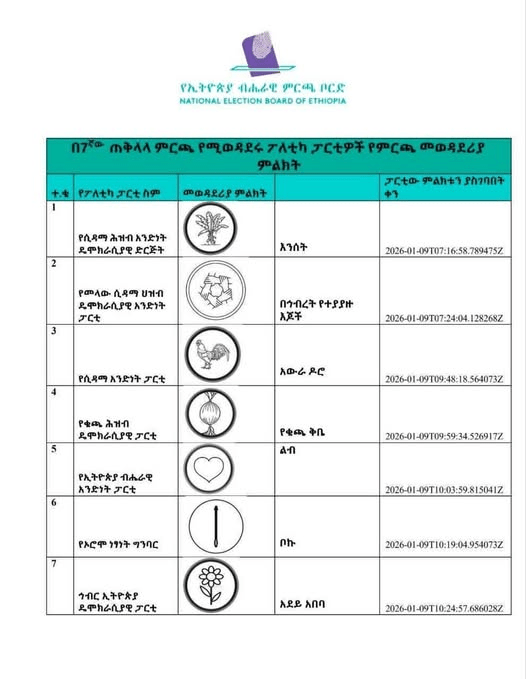
Ancient Gadaa symbol of justice, unity, and Oromo sovereignty to lead ABO’s historic electoral participation
FINFINNE — The Oromo Liberation Front (ABO) has officially adopted the Bokkuu as its electoral symbol for the upcoming 7th round national elections, marking a historic moment in the organization’s decades-long struggle for Oromo rights and self-determination.
On February 21, 2026, the National Election Board of Ethiopia (NEBE) formally approved and announced the Bokkuu as the registered symbol under which ABO will contest the elections.
The Bokkuu is far more than a mere electoral logo—it is a sacred cultural symbol representing the authority, sovereignty, and democratic traditions of the Oromo people. Within the Gadaa system, one of the world’s oldest indigenous democratic governance structures, the Bokkuu serves as the ultimate symbol of justice, legitimate governance, and national unity.
A Symbol Rooted in Thousands of Years of Oromo Democracy
In Oromo culture and the Gadaa system, the Bokkuu holds profound significance:
- Symbol of legitimate authority: The Bokkuu is the scepter carried by elected Gadaa leaders, representing their mandate to govern with justice and wisdom
- Emblem of justice: It signifies fair and impartial rule, reminding leaders that their authority derives from the people’s consent
- Marker of unity: The Bokkuu represents the unity of the Oromo nation, transcending clan, regional, and religious divisions
- Sacred object: It is treated with deep reverence, often consecrated through ceremonies that invoke divine blessing upon the leader and the people
- Democratic mandate: The transfer of the Bokkuu from one Gadaa class to another every eight years symbolizes peaceful, regular leadership transition—a tradition of democratic governance millennia old
By choosing the Bokkuu as its electoral symbol, ABO is not merely selecting a logo—it is grounding its political project in the deepest traditions of Oromo civilization and asserting continuity between ancient Oromo democracy and contemporary struggles for self-determination.
From Armed Struggle to Peaceful Electoral Politics
ABO’s participation in the 2026 elections represents a significant evolution in the organization’s long history. Since its founding, ABO has been at the forefront of the Oromo liberation struggle, employing various methods—including armed resistance—in the face of successive Ethiopian regimes that denied Oromo rights.
Following the political changes of 2018, ABO leadership returned to the country with a commitment to pursuing the Oromo cause through peaceful, legal, and democratic means. However, the organization faced numerous obstacles that prevented its participation in the 6th round elections.
Now, after overcoming these challenges and completing extensive preparations, ABO has announced its readiness to participate in the 2026 elections for the first time in its history. The adoption of the Bokkuu as its electoral symbol formalizes this commitment and signals to Oromo voters the organization’s dedication to achieving their aspirations through the ballot box.
Sacrifice and Commitment: The Foundation of Participation
In announcing the approved symbol, ABO emphasized that its electoral participation is built upon enormous sacrifice—not only from its members and supporters but from the entire Oromo people. This sacrifice, rooted in unwavering commitment and dedication to ABO’s goals, has brought the organization to this historic moment.
The decision to participate electorally does not represent an abandonment of the struggle but rather its continuation through different means. ABO frames its electoral engagement as the peaceful, legal, and democratic dimension of a broader struggle for Oromo rights, dignity, and self-determination.
The Bokkuu: A Symbol for All Oromos
ABO has clarified that the symbol approved for the elections is specifically the Bokkuu—a variation that carries the same profound cultural significance while serving as a recognizable electoral emblem.
For Oromo voters, the Bokkuu on the ballot will represent:
- A connection to their ancestral democratic traditions
- A commitment to justice and fair governance
- The unity of the Oromo nation across all divisions
- The legitimate aspiration for self-determination
- The sacrifices of generations who fought for Oromo rights
As one ABO representative noted: “When Oromo voters see the Bokkuu on their ballot, they will know they are not merely casting a vote—they are reclaiming their heritage, honoring their martyrs, and building their future.”
Historic Context: First Electoral Participation
This election marks ABO’s first formal participation in a national electoral process since its founding. For an organization that has existed for decades, much of that time as an armed liberation movement operating in clandestinity or exile, this transition to electoral politics represents a profound strategic shift.
The decision to participate reflects both changed circumstances within Ethiopia and ABO’s assessment that peaceful, democratic struggle can now advance the Oromo cause in ways that were previously impossible. It also reflects the organization’s confidence that Oromo voters will embrace the Bokkuu as their symbol and ABO as their political home.
Challenges Ahead
Despite the historic nature of this participation, ABO faces significant challenges in the electoral arena. The political landscape remains complex, with multiple actors competing for Oromo votes and various forces potentially opposing ABO’s rise. Questions about electoral fairness, access to media, campaign freedoms, and the treatment of opposition parties remain unresolved.
ABO leaders acknowledge these challenges but express confidence that the Oromo people’s support will carry them forward. As one senior figure stated during recent consultations: “If we are people of truth, our people will never abandon us under any circumstances.”
A Call to the Oromo People
With the Bokkuu now officially registered and approved, ABO calls upon the Oromo people to:
- Recognize the Bokkuu as their symbol of hope and liberation
- Support ABO’s electoral campaign through active participation
- Exercise their democratic rights by voting on election day
- Protect the integrity of the electoral process
- Continue the struggle through peaceful, legal means
The message is clear: the Bokkuu has returned. The symbol of ancient Oromo democracy will now carry the aspirations of the Oromo people into the 21st-century political arena.
Conclusion: History in the Making
The approval of the Bokkuu as ABO’s electoral symbol marks a moment of profound historical significance. For the first time, an organization carrying the banner of Oromo liberation will compete in national elections under a symbol that embodies millennia of Oromo democratic tradition.
As Oromo voters prepare to go to the polls, they will find the Bokkuu waiting for them—a reminder of who they are, where they come from, and what they deserve. In that symbol, they will see not merely a political party’s logo but the face of their ancestors, the voice of their martyrs, and the hope of their children.
Bokkuu ABO — The symbol of Oromo justice, unity, and liberation.
Injifannoon Ummata Oromoo! (Victory to the Oromo People!)

Oromo Liberation Front Consults Members on Current Situation and 7th Round Elections
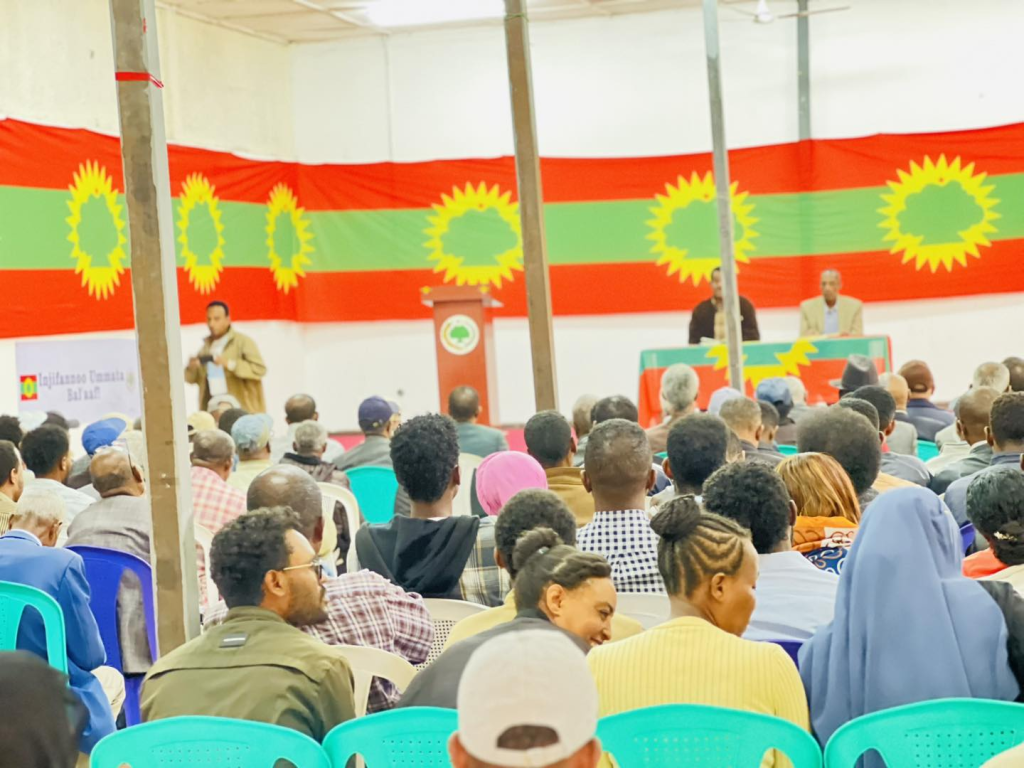
Leadership emphasizes unity, grassroots organizing, and unwavering commitment to the Oromo cause
FINFINNE, Gullallee — The Oromo Liberation Front (ABO) convened a significant consultative meeting with its members on February 21, 2026, at its headquarters in Gullallee to discuss the current political situation and the upcoming 7th round elections. The gathering brought together Qondaaltota (junior leaders), Dabballoota (cadres), and general membership for extensive deliberations on the path forward.
The meeting was led by senior OLF leader Jaal Abdii Raggaasaa and GS-ABO member Jaal Gammachiis Tolasa, who guided discussions on the organization’s electoral strategy, organizational strengthening, and continued commitment to the Oromo people’s aspirations.
Building Oromia: A Task Without Geographic Boundaries
Addressing members, Jaal Abdii Raggaasaa emphasized that the work of building Oromia and the Oromo nation extends beyond Ethiopia’s borders. He noted that OLF has been engaged in building Oromo consciousness and organization both inside Oromia and throughout the diaspora—wherever Oromos reside.
“Our foundational organizing must begin at the grassroots level, starting from the village,” Abdii stated, emphasizing that organic community-based organizing remains essential to lasting political change.
He stressed that the Oromo people, having been organized and mobilized, must now struggle for their rights with even greater unity than before—rallying under the banner of their organization to achieve their aspirations.
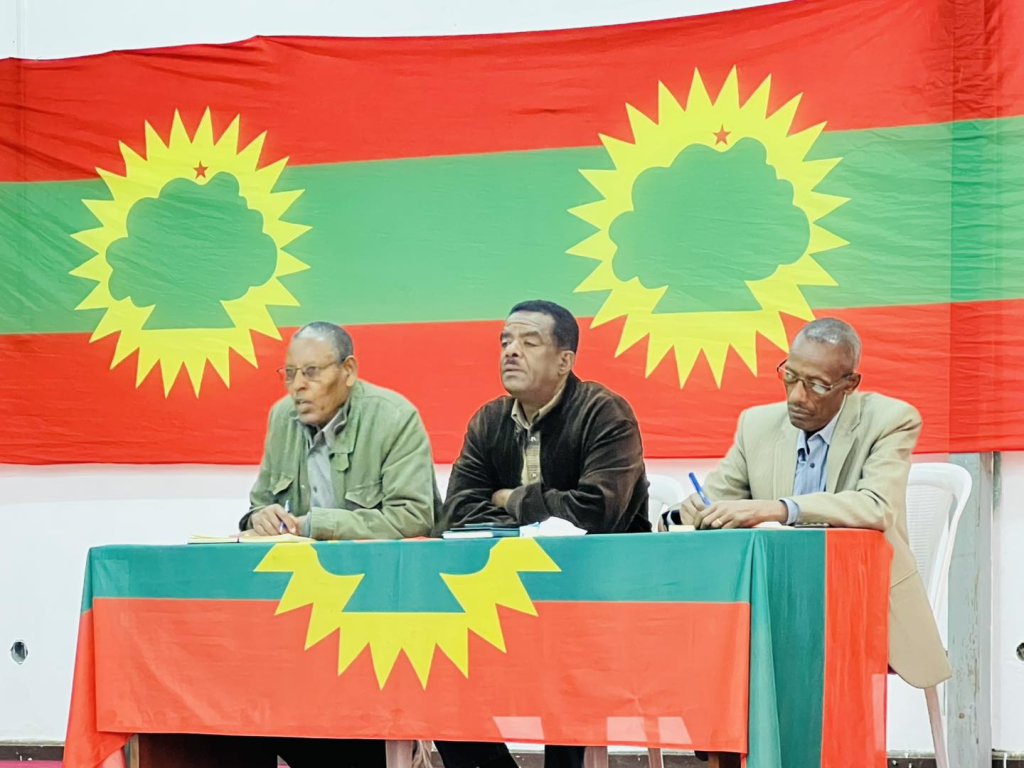
The Nature of Struggle: Strength Through Commitment
Reflecting on the inevitable fluctuations of liberation movements, Abdii acknowledged that any organization engaged in struggle experiences periods of strength and periods of weakness. However, he emphasized that these fluctuations are ultimately determined by the commitment and determination of the organization’s members.
“Some individuals enter the organization (Irbuu) but then exploit it—seeking personal benefit rather than serving the people’s cause. When such people exist, it is they themselves who suffer the consequences, not ABO and not others,” he explained.
Abdii further noted that throughout ABO’s history, the organization has built individuals, educated them about its goals and vision, and brought them into the struggle. Even among those who entered the organization and then exploited it, he observed that none have succeeded—only those who remained committed have prevailed.
“For those who adopt ABO’s goals and vision and then exploit the organization—the struggle of ABO is a struggle of blood and bone. Even God will hold them accountable. They will not succeed.”
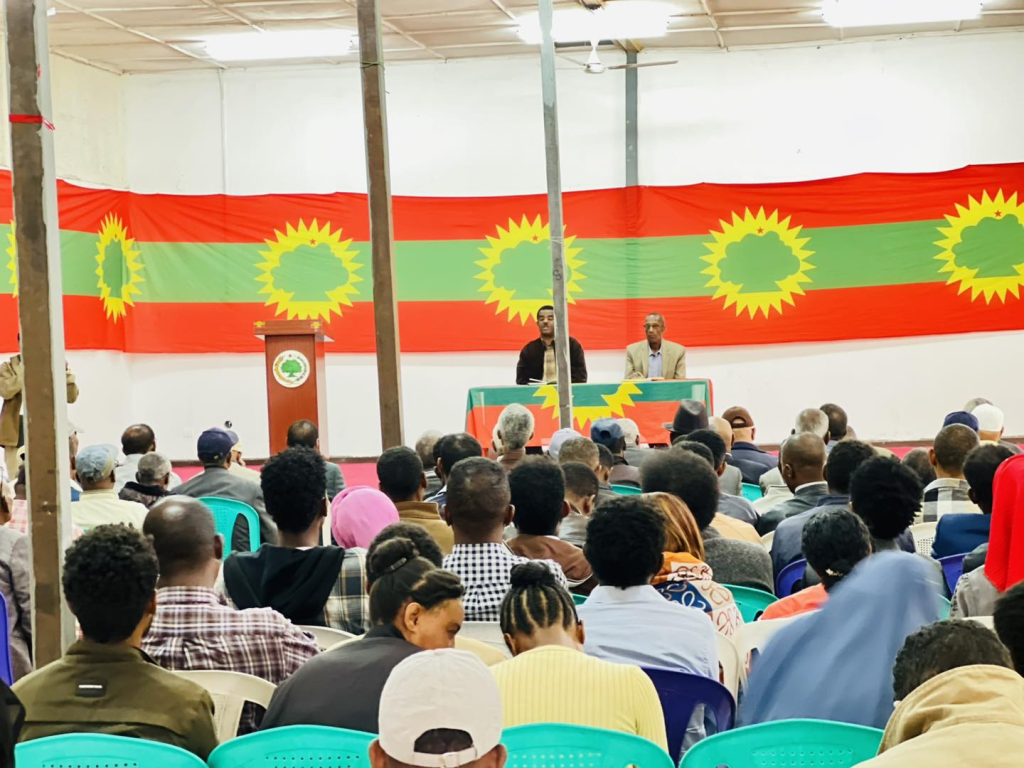
Integrity and Moral Responsibility
The senior leader emphasized that all members must uphold the moral integrity of the organization, carrying forward its goals and vision in a manner that builds the Oromo people and the nation .
“If we are people of truth, our people will never abandon us under any circumstances,” Abdii declared. “But if we are people of falsehood, even if we hold something, we will lose it. Therefore, if we do not believe in truth, we should abandon the struggle—but we must not build the people with lies.”
He stressed that when ABO struggles with pure truth on its side, its victory will be immense and far-reaching. “When we march with truth, when we struggle for justice, we not only build the people easily—we also build ourselves within the structures of government. Therefore, let us speak only truth to our people.”
Seizing the Moment: The 7th Round Elections
Participants in the meeting shared perspectives on the upcoming elections, emphasizing that this is an opportunity that must be seized. Members stressed that supporting ABO through these challenging times and utilizing available opportunities is not merely a matter of preference but an obligation for all members. Therefore, everyone must work diligently for the upcoming 7th round elections .
OLF: The Center of Oromo Peace
Jaal Yaasoo Kabbabaa Hordofa, another OLF official, emphasized that “OLF is the center of Oromo peace,” and that the Oromo people must strengthen their resolve.
Regarding electoral participation, Yaasoo noted that if any organization has enabled Oromo participation in elections, and if OLF participates this year, it will mark the first and largest chapter in Oromo electoral history. Therefore, the Oromo people must seize this opportunity, exercise their rights, and fulfill their responsibilities.
Reflecting on the nature of the struggle, Yaasoo added: “In the struggle ABO is waging, even if we face extinction—if we are reduced to just one person—we must speak as ABO. We must not hide ourselves. We may face extinction, but we must not retreat into silence.”
A Legacy of Sacrifice, A Future of Commitment
Jaal Keeriyaa Ibraahim echoed these sentiments, emphasizing that an organization that has reached this point through enormous sacrifice cannot now retreat into silence. Regarding the upcoming 7th round elections, she called on members to dedicate themselves fully and work without hesitation .
“OLF’s struggle has always been a struggle of self-reliance,” Keeriyaa emphasized. “As long as the Oromo people exist, our organization need not struggle. Just as it has relied on itself in the past and trusted its people, today it relies on our people. Therefore, we members must work diligently to strengthen it.”
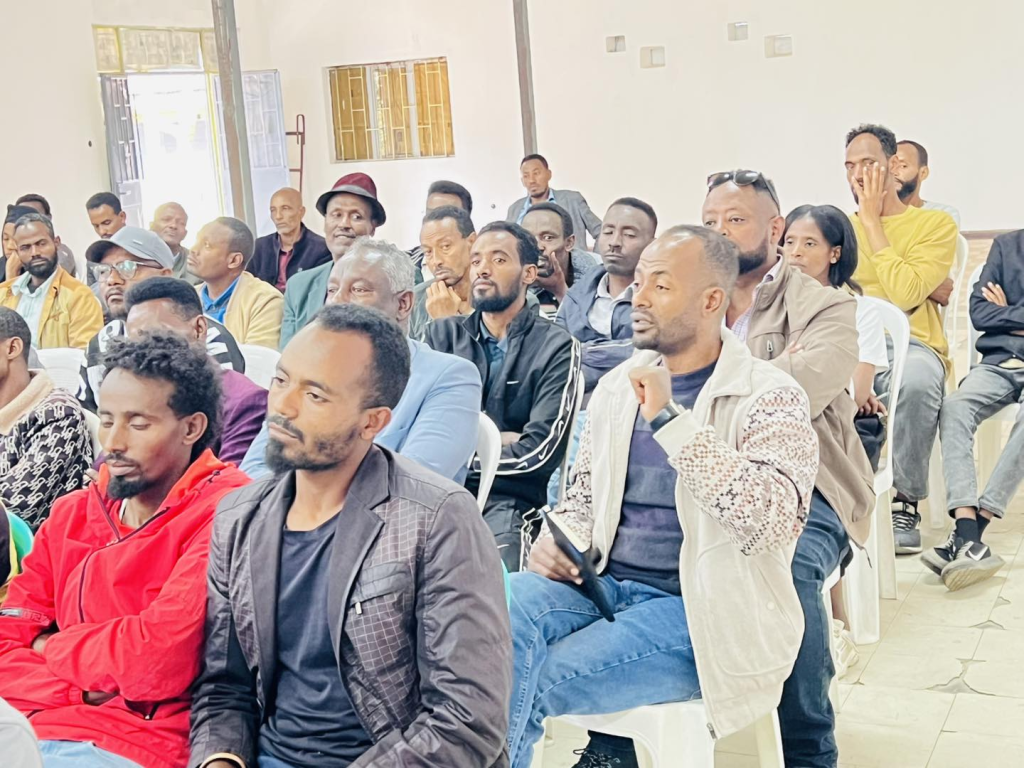
Conclusion: The Work Continues
The consultative meeting at Gullallee reaffirmed OLF’s commitment to the Oromo people’s struggle for self-determination, dignity, and democratic rights. With the 7th round elections approaching, the organization is mobilizing its members and supporters to participate actively while maintaining the integrity and moral clarity that have defined its decades-long struggle.
As members departed the headquarters, the message was clear: OLF remains the center of Oromo peace, the voice of Oromo aspiration, and the organizational home for those committed to the liberation struggle. The work continues—with truth as its foundation, sacrifice as its currency, and victory as its destiny.
ABO haa waaru! (Long live OLF!)
Injifannoon Ummata Oromoo! (Victory to the Oromo people!)

The Backbone of the Struggle: Oromo Women’s Indispensable Role in the Oromo Liberation Front (OLF/ABO)
For decades, Oromo women have served as pillars of the liberation movement, from the battlefield to political organizing, paying the ultimate price for freedom
OROMIA/INTERNATIONAL — For generations, the Oromo people’s struggle for self-determination has been sustained by the courage, sacrifice, and unwavering commitment of its women. Within the Oromo Liberation Front (ABO), Oromo women have stood as “utubaa cimaa” —strong pillars—whose contributions have shaped every facet of the liberation movement .
From the armed struggle to political organizing, from those imprisoned and killed to those who preserved culture and identity, Oromo women have paid an enormous sacrifice. Their role has been not merely supportive but foundational—the very backbone upon which the struggle has been built .
Here are the key dimensions of Oromo women’s indispensable role within the Oromo Liberation Front .
1. Logistics and Combat Support: The Hidden Pillars
Long before they were visible as fighters, Oromo women served as the silent infrastructure of the liberation struggle. Operating in conditions of extreme danger, they undertook critical logistics and support roles that made armed resistance possible .
Women served as:
- Providers and nurturers for liberation fighters (WBO), ensuring they were fed, clothed, and cared for while operating in the bush
- Harborers and protectors, hiding freedom fighters in their homes at tremendous personal risk
- Couriers and intelligence operatives, transporting weapons, supplies, and vital information across enemy lines
- Lookouts and early warning systems, alerting fighters to approaching government forces
These roles carried immense danger. Women caught supporting the liberation struggle faced torture, imprisonment, rape, and death. Yet they continued, understanding that their courage sustained the fighters who carried the armed struggle forward .
2. Armed Struggle and Military Leadership
As the liberation movement evolved, Oromo women moved from support roles to direct participation in armed combat. Many women joined the guerrilla forces (WBO), serving as fighters and commanders who stood shoulder to shoulder with their male counterparts .
In the armed struggle, women:
- Received military training and participated in combat operations
- Served as unit leaders and commanders, directing operations
- Endured the same harsh conditions, long marches, and constant danger as male fighters
- Inspired their communities through visible courage and sacrifice
The presence of women fighters challenged not only the oppressive Ethiopian state but also traditional gender norms within Oromo society itself. By taking up arms for their people’s freedom, Oromo women demonstrated that liberation could not be achieved without them—and that their place in the struggle was not peripheral but central .
3. Political Organizing and Unity Building
Beyond the battlefield, Oromo women played crucial roles in building and sustaining the political infrastructure of the liberation movement. They understood that military struggle alone could not achieve liberation—that political consciousness, organization, and unity were equally essential .
Women’s political contributions included:
- Membership organizing, recruiting new supporters and expanding the movement’s reach
- Mass mobilization, inspiring communities to support the liberation cause
- Unity building, bridging divisions and fostering solidarity across clans, regions, and religious communities
- Political education, teaching Oromo history, language, and political consciousness
These organizing efforts often took place under constant surveillance and threat. Women organizers risked arrest, torture, and death simply for gathering people to discuss Oromo rights. Yet they persisted, building the political foundation upon which the armed struggle depended .
4. The Qeerroo and Popular Resistance: Leading the Peaceful Uprising
In more recent years, Oromo women have been at the forefront of the Qeerroo Bilisummaa Oromoo (Oromo Youth Liberation Movement) and the peaceful resistance that shook Ethiopia beginning in 2014. The struggle against land grabbing, political marginalization, and cultural suppression saw Oromo women emerge as visible and courageous leaders .
In this phase, women:
- Led and participated in mass protests demanding equality and justice
- Organized resistance networks using traditional social structures and modern technology
- Faced security forces with extraordinary courage, often at the front lines of demonstrations
- Sustained the movement through years of brutal crackdowns
The 2014-2018 protests that ultimately reshaped Ethiopian politics were sustained in significant part by Oromo women’s courage and determination. They marched, they organized, they documented abuses, and they refused to be silenced—even as bullets flew and tear gas filled the streets .
5. Sacrifice and Resilience: Surviving Imprisonment, Torture, and Loss
The price Oromo women have paid for their commitment to liberation is incalculable. Countless women have endured:
- Imprisonment for their political activities, often under brutal conditions
- Torture designed to break their spirit and force betrayal of comrades
- Rape used systematically as a weapon of war and intimidation
- Displacement from their homes and communities
- Loss of husbands, children, parents, and siblings killed in the struggle
- Witnessing the destruction of their communities and the suffering of their people
Yet remarkably, women emerged from these horrors not broken but strengthened in their resolve. Their resilience—the ability to endure unspeakable suffering and continue the struggle—has inspired generations and demonstrated that the Oromo people cannot be crushed .
As one veteran woman fighter reflected: “They took everything from us—our homes, our families, our bodies. But they could not take our commitment to freedom. That remained. That will always remain.”
6. Guardians of Culture and Identity: The Siinqee Tradition
Perhaps uniquely, Oromo women’s contribution to the liberation struggle has included the preservation and deployment of specifically female cultural traditions. Central to this is the Siinqee system—a traditional institution of women’s solidarity, mutual protection, and collective action that predates the modern liberation movement by centuries .
Through Siinqee, Oromo women have:
- Preserved cultural practices and knowledge passed down through generations
- Created spaces for women’s political organizing outside male-dominated structures
- Deployed traditional forms of protest and pressure that carry deep cultural authority
- Maintained Oromo identity and values even under conditions of extreme repression
- Passed Oromo language, history, and traditions to children when formal education was denied
The Siinqee tradition has proven remarkably adaptable, serving as both a cultural anchor and a tool for contemporary political organizing. It represents the deep roots of Oromo women’s resistance—roots that extend far beyond the modern liberation movement into the very foundations of Oromo society .
The Legacy Continues
Oromo women were the backbone of the Oromo liberation struggle. They remain so today. From the battlefields of the armed struggle to the streets of mass protests, from prison cells to political organizing meetings, from refugee camps to diaspora advocacy networks—Oromo women continue to carry the struggle forward .
Their contributions have not always received the recognition they deserve. Histories written by men sometimes minimize or overlook women’s roles. The sacrifices of women fighters and organizers have been less documented than those of their male counterparts. But the truth remains: without Oromo women, there would be no Oromo liberation movement.
As the Oromo people continue their journey toward self-determination and dignity, they do so standing on the shoulders of the women who came before—women who fed fighters, carried weapons, organized communities, endured torture, preserved culture, and refused to give up hope.
Honoring the Fallen, Supporting the Living
Among the countless Oromo women who have given their lives for freedom, many names are known—and many more are known only to those who loved them. Women fighters killed in combat. Women activists tortured to death in prisons. Women organizers disappeared and never found. Women refugees who died in exile, far from the homeland they loved.
The Oromo Liberation Front affirms its commitment to honoring these fallen heroines and supporting the women who continue the struggle today. Their sacrifices must never be forgotten. Their contributions must never be minimized. Their courage must continue to inspire.
ABO recognizes that without Oromo women, there is no liberation. Without Oromo women, there is no future. Without Oromo women, Oromia cannot be free.
May the struggle continue. May the women who carry it be honored. May Oromia be free.
This feature is dedicated to the countless Oromo women—known and unknown, living and departed—whose courage, sacrifice, and unwavering commitment have sustained the Oromo liberation struggle across generations. You are the backbone. You are the heart. You are the reason freedom remains alive.

Dabballee: The First Grade of the Gadaa System, Where Oromo Leadership Begins
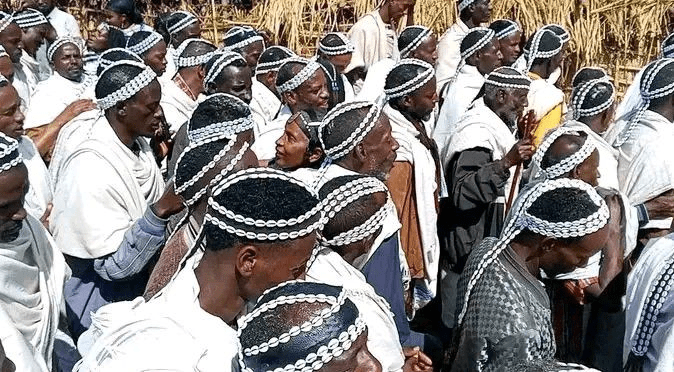
Understanding the foundational stage of one of the world’s oldest democratic governance systems
OROMIA, Ethiopia — In the rich tapestry of Oromo governance and culture, the Gadaa system stands as a remarkable indigenous democratic institution that has regulated the political, social, and religious life of the Oromo people for centuries. Recognized by UNESCO as Intangible Cultural Heritage of Humanity, this sophisticated system operates on an eight-year cycle, with leadership roles rotating among five distinct parties or grades .
At the very foundation of this system lies the first grade: Dabballee. The name itself carries profound meaning—it is the stage at which the journey toward leadership, responsibility, and community service begins .
Understanding Gadaa: A Brief Overview
Before exploring Dabballee, it is essential to understand the broader Gadaa system. This indigenous institution divides society into five age-based classes (known as Gogessa or Shanacha), each progressing through various grades over their lifetime. Leadership positions rotate every eight years between these classes, ensuring no single group holds power permanently and that governance remains participatory and accountable .
The system encompasses not only political leadership but also social organization, legal frameworks, cultural practices, and religious ceremonies. It is, in essence, the comprehensive framework through which Oromo society has traditionally organized itself .
Dabballee: The Foundational Grade
Dabballee represents the first grade in the Gadaa ladder, typically encompassing boys from birth until approximately eight years of age . During this stage, children are initiated into the Gadaa system through ceremonies that mark their formal entry into the Oromo social structure.
Key characteristics of the Dabballee grade:
- Age range: Typically from birth to approximately 8 years of age
- Status: Initiates who have entered the Gadaa system but have not yet assumed responsibilities
- Symbolic significance: Represents purity, potential, and the future of the Oromo nation
- Cultural education: Children in this grade begin learning Oromo traditions, language, and values
Ceremonies and Traditions
The entry into Dabballee is marked by important ceremonies that vary somewhat across different Oromo communities but share core elements. These rituals typically involve:
- The blessing of children by elders (Hayyoota)
- The symbolic marking of the child’s entry into the Gadaa structure
- Community gatherings that reinforce collective responsibility for raising the next generation
- Prayers for the children’s health, wisdom, and future contributions to the Oromo people
Elders play a crucial role in these ceremonies, passing on blessings and wisdom to the youngest members of the community. The involvement of elders underscores the intergenerational nature of the Gadaa system—knowledge and tradition flow from those who have completed the cycle to those just beginning their journey.
The Journey Through Gadaa Grades
From Dabballee, individuals progress through subsequent grades as they age, each with distinct responsibilities and privileges:
| Grade | Approximate Age | Role and Responsibilities |
|---|---|---|
| Dabballee | 0-8 years | Initial entry into system; cultural learning |
| Follee/Gamme | 8-16 years | Continued education; assisting elders |
| Qoondala | 16-24 years | Junior warriors; community service |
| Kuusaa | 24-32 years | Senior warriors; beginning of leadership training |
| Raaba Doorii | 32-40 years | Junior leadership; council participation |
| Gadaa | 40-48 years | Supreme leadership; governing the nation |
| Yuba I-III | 48-72+ years | Advisory roles; blessing and guiding |
Each stage builds upon the one before, with Dabballee providing the essential foundation upon which all later development rests.
Cultural Significance
The Dabballee grade embodies several core Oromo values:
Continuity: By initiating children into the system from birth, Oromo society ensures that each new generation inherits the cultural and political traditions of those who came before. Dabballee represents the unbroken chain linking ancestors to descendants.
Collective responsibility: The community’s role in raising and initiating children reflects the Oromo principle that children belong not only to their biological parents but to the entire community. The proverb “Ijoolleen keenya ijoolluma keenya” (Children are our children) captures this ethos.
Potential and promise: Dabballee children represent the future of the Oromo nation. The community invests in them, blesses them, and hopes that they will grow to lead with wisdom and integrity.
Equality: All Oromo children, regardless of family background, enter the Gadaa system through Dabballee. This foundational equality reflects the democratic principles that characterize the system at all levels.
Contemporary Relevance
While the full Gadaa system operates most comprehensively in certain Oromo communities, particularly among the Borana and Guji, its principles and grades—including Dabballee—continue to shape Oromo identity and values even among those living in urban areas or diaspora .
For Oromos worldwide, understanding grades like Dabballee provides connection to cultural roots and a framework for thinking about human development, leadership, and community responsibility. The system’s emphasis on age-based progression and regular leadership rotation offers insights that remain relevant for contemporary governance discussions.
Dabballee and Oromo Identity
The first grade of the Gadaa system holds special significance for Oromo identity formation. It is at this stage that children first learn who they are as Oromos—their language, their history, their responsibilities to community, and their place within a vast social structure that spans generations.
For Oromo communities in the diaspora, maintaining awareness of the Dabballee grade and its meaning helps preserve cultural continuity across geographic distance. Parents who may never have participated in formal Gadaa ceremonies themselves still invoke its principles and values in raising their children.
A UNESCO-Recognized Heritage
UNESCO’s 2016 inscription of the Gadaa system on the Representative List of the Intangible Cultural Heritage of Humanity brought international attention to this remarkable indigenous institution . The recognition highlighted not only the system’s sophistication but also its continuing relevance for contemporary discussions about democratic governance, intergenerational equity, and cultural preservation.
Within this recognized heritage, Dabballee holds a special place as the entry point—the grade through which every Oromo who participates in the system must pass, and the stage at which the values and traditions of Gadaa are first instilled.
Conclusion
Dabballee, the first grade of the Gadaa system, represents far more than an age category. It embodies the Oromo people’s commitment to raising children with intention, their belief in the potential of each new generation, and their understanding that leadership is not born but developed over time through careful preparation and community support.
As the Oromo people continue to navigate the challenges of the 21st century—in Ethiopia and across the global diaspora—the wisdom embedded in the Gadaa system, beginning with Dabballee, offers guidance. It reminds us that strong communities invest in their youngest members, that leadership requires lifelong preparation, and that the future depends on how we raise and honor our children today.
Dabballee—where the journey begins, and where the future of Oromia takes its first steps.

Honoring Community Support: Guji Attire Gifted in Southern Oromia
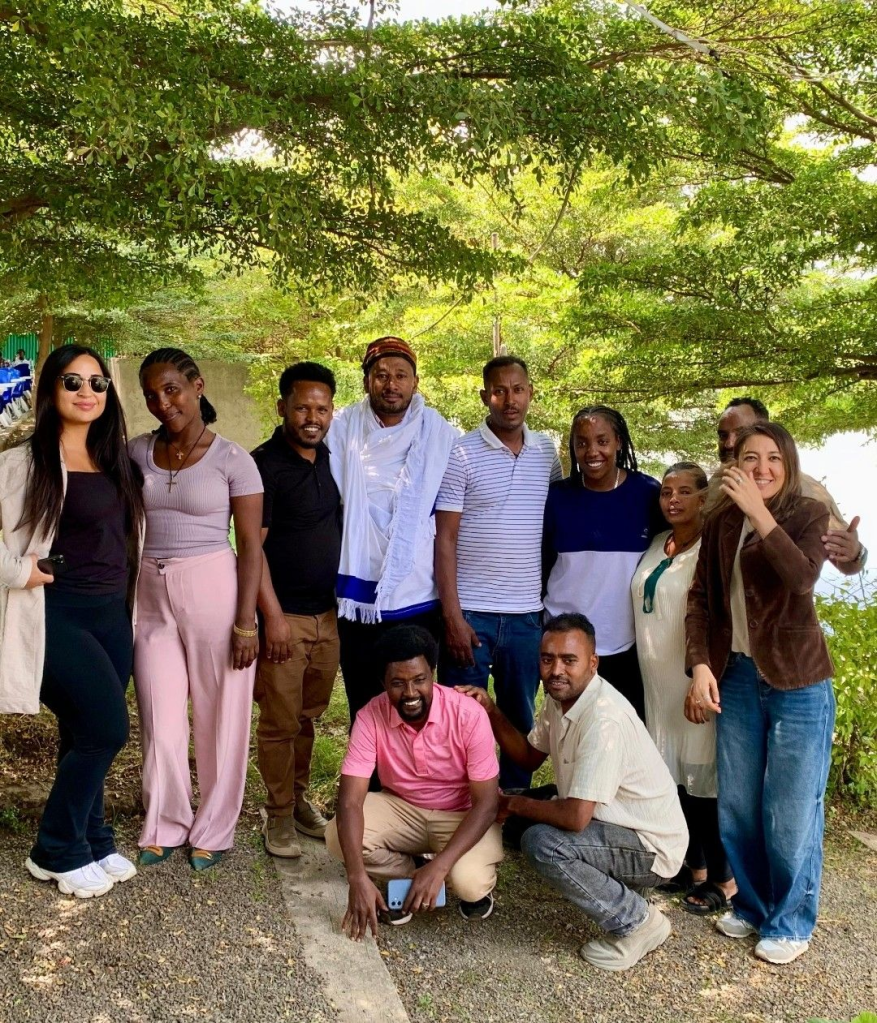
Recognition reflects deep appreciation for meaningful contributions to community development and cultural preservation
SOUTHERN OROMIA — In a heartfelt testament to the power of dedicated support, an individual whose contributions have significantly advanced operations in Southern Oromia has been honored with the prestigious gift of traditional Guji cultural clothing—a mark of outstanding respect and recognition from the local community .
Over the past six months, this meaningful supporter has played a vital role in various initiatives across Southern Oromia, earning not only the gratitude but also the deep admiration of those whose lives have been touched by their efforts. The recognition ceremony, marked by the presentation of exquisite Guji cultural attire, symbolized the community’s acknowledgment of contributions that go beyond material assistance to embrace genuine partnership and respect.
A Legacy of Cultural Appreciation
The Guji people, part of the larger Oromo nation, have a rich cultural heritage expressed through distinctive traditional clothing, ceremonies, and social structures. The presentation of Guji cultural clothes to a non-Guji or diaspora supporter represents far more than a ceremonial gesture—it signifies full acceptance, deep gratitude, and the honoring of someone who has demonstrated unwavering commitment to the community’s wellbeing .
Traditional Guji attire is characterized by vibrant colors, intricate patterns, and symbolic elements that carry deep cultural meaning. The clothing is typically reserved for elders, leaders, and those who have earned the community’s highest respect through years of service or exceptional contribution. Bestowing such attire upon a supporter reflects the community’s judgment that this individual has earned a place of honor within their social fabric.
Six Months of Meaningful Support
The achievements recognized span a six-month period during which the supporter contributed significantly to Southern Oromia operations. While specific operational details may remain confidential due to the sensitive nature of work in the region, the impact has been substantial enough to warrant this extraordinary recognition.
Community members and colleagues describe the supporter’s approach as characterized by:
- Genuine partnership: Working alongside local communities rather than imposing external solutions
- Cultural respect: Taking time to understand and honor local traditions and values
- Sustainable impact: Focusing on initiatives that create lasting benefits rather than temporary relief
- Humility: Approaching support as a learning opportunity and privilege rather than charity
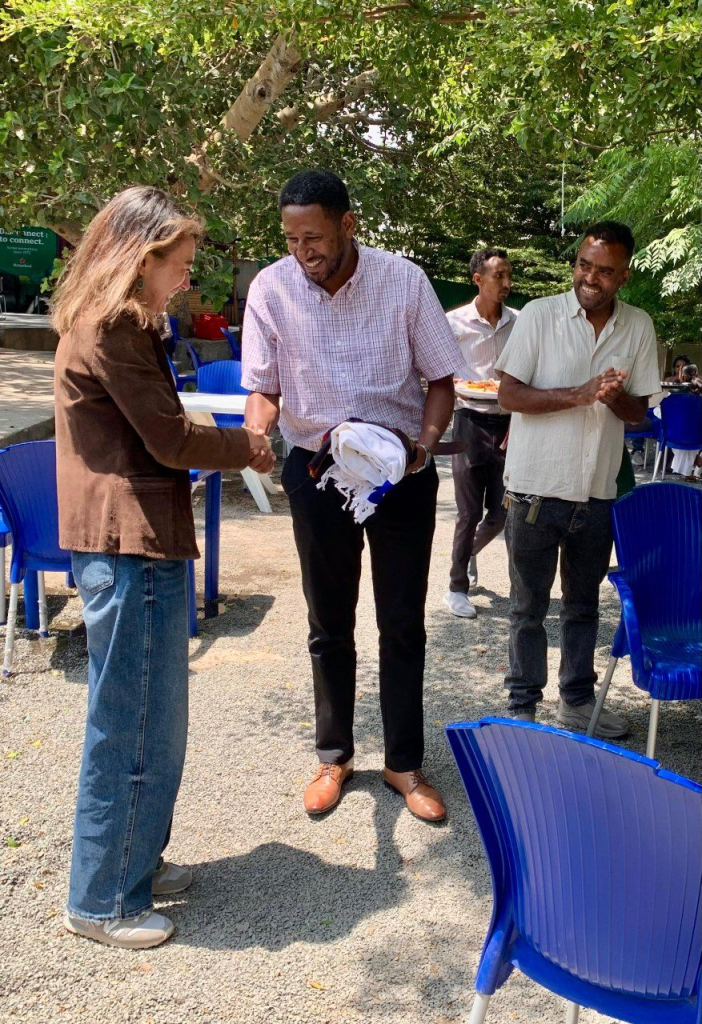
One local elder noted: “This is not someone who came to teach us or to save us. This is someone who came to walk with us, to learn from us, and to help us achieve what we already knew we needed. That is why we honor them today.”
The Significance of Cultural Recognition
In Oromo and particularly Guji tradition, clothing carries profound symbolic weight. The act of presenting traditional attire to an outsider or returnee represents a form of adoption—a declaration that this person is no longer a visitor or supporter but has become part of the community in a deep and lasting way .
For the recipient, wearing the Guji cultural clothes represents both an honor and a responsibility. It signifies that they are now expected to continue their support with even greater commitment, to serve as an ambassador for Guji and Oromo culture, and to maintain the relationships they have built over these six months.
Outstanding Respect: What It Means
The phrase “outstanding respect” in the recognition is not casual language. In Oromo society, respect (kabaja) is carefully calibrated and deliberately expressed. Outstanding respect—the kind that warrants ceremonial recognition and the gift of cultural clothing—is reserved for those who have demonstrated exceptional character, commitment, and contribution .
For this supporter, the respect shown reflects multiple dimensions of their engagement:
- Respect for the people: Treating community members with dignity and genuine care
- Respect for culture: Approaching traditions with humility and willingness to learn
- Respect for struggle: Understanding and honoring the historical and ongoing challenges facing the Oromo people
- Respect for partnership: Working as an equal rather than a savior
Community Response
The recognition ceremony drew community members from across Southern Oromia, including elders, local leaders, youth representatives, and women’s group organizers. Many spoke of the supporter’s willingness to listen, to learn, and to adapt their support based on community feedback.
One community member shared: “We have seen many people come to help. Some bring money and leave. Some bring ideas and tell us what to do. This one brought themselves—their time, their attention, their heart. They asked us what we needed and then helped us get it. That is why we honor them today.”
Another added: “The clothes we gave are not just cloth. They are our history, our identity, our love. When we put these clothes on someone, we are saying: you are one of us now. You belong to us, and we belong to you.”
Looking Forward
As this supporter enters the next phase of their engagement with Southern Oromia, they do so carrying both the honor of recognition and the responsibility it entails. The Guji cultural clothes they received are not merely a reward for past achievement but a call to continued commitment.
For the broader community, this recognition serves as a model of what meaningful partnership can look like: rooted in respect, sustained over time, and focused on genuine collaboration rather than top-down assistance.
A Message to Supporters Everywhere
The story of this recognition carries a message for all who seek to support communities in need: that the most meaningful contributions are those made with humility, cultural respect, and genuine partnership. It reminds us that communities are not merely recipients of aid but active agents in their own development, and that those who approach them as equals will find themselves welcomed not just as supporters but as family.
As one elder concluded: “May this story encourage others to come to us the same way—with open hearts, willing ears, and hands ready to work alongside us. That is how real change happens. That is how we all become family.”
Congratulations to the honored supporter. May your work continue, and may the bonds formed over these six months deepen and flourish in the years ahead.

Harmonizing Oromo Culture and Orthodox Faith During Lent
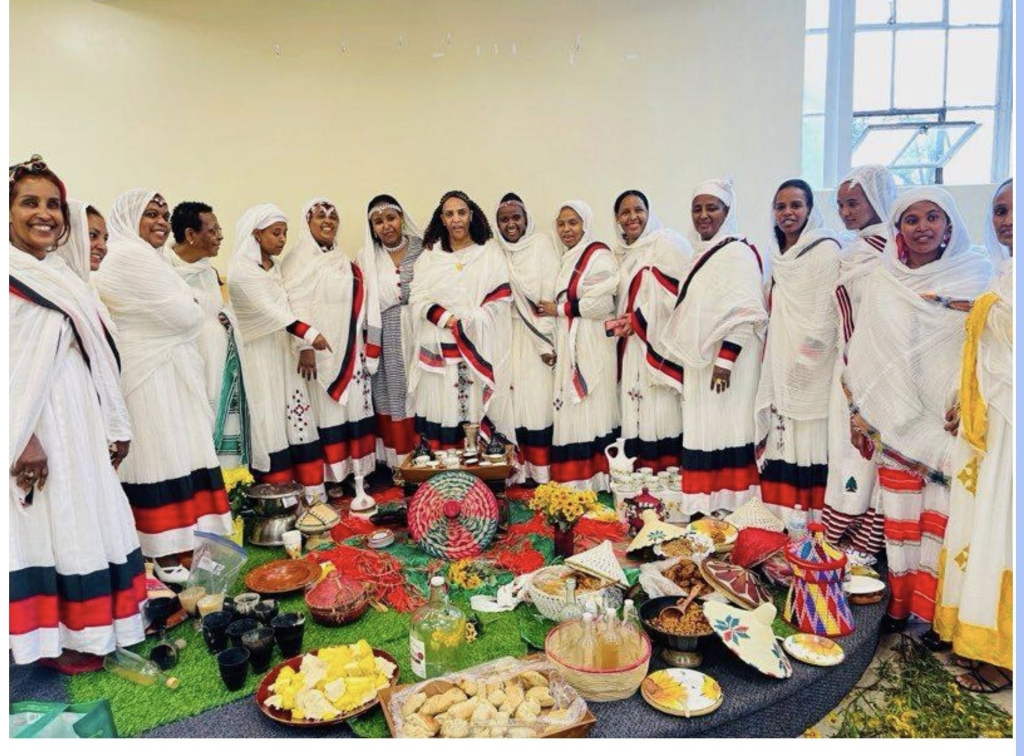
Abba Saamu’eel Jabeessaa emphasizes harmony between culture, identity, and religious observance during Great Lent
UNITED STATES — The Oromo people must live in harmony with their culture, identity, and faith, a prominent priest of the Ethiopian Orthodox Tewahedo Church has declared during a special interview with OMN. Abba Saamu’eel Jabeessaa, a globally recognized spiritual leader, made the remarks while discussing the observance of the Great Lent (Sooma Guddicha) among Orthodox faithful in the United States .
Speaking during an interview with Oromia Media Network (OMN), Abba Saamu’eel addressed the intersection of Oromo cultural identity and Orthodox Christian practice, emphasizing that the two are not mutually exclusive but can—and should—coexist harmoniously .
Observing Great Lent in America
The priest confirmed that followers of the Orthodox faith in the United States are actively observing the Great Lent, a period of fasting, prayer, and spiritual reflection leading to Easter. He noted that the faithful are celebrating the season with unity and devotion .
“When we honor this holy season, we do so by integrating our culture, values, and faith together,” Abba Saamu’eel stated. “The teachings of the church and the cultural identity of the Oromo people are not in opposition. They can walk together” .
Culture and Church Teaching: Finding Common Ground
Addressing questions about the relationship between Oromo cultural traditions and Orthodox Christian teachings, Abba Saamu’eel emphasized that there is no inherent conflict between the two. He noted that Oromo cultural values and church teachings can complement one another when properly understood .
However, he also acknowledged ongoing challenges within the Ethiopian Orthodox Tewahedo Church, particularly regarding the suppression of ethnic identity, culture, and language. He pointed out that some within the church continue to prioritize religious identity over ethnic identity, promoting a model that diminishes the cultural distinctiveness of Ethiopia’s diverse peoples .
“The problem of poor governance within the church—where religious identity is used to suppress the identity of nations and nationalities—must stop,” Abba Saamu’eel declared .
A Call to Good Works During Lent
The priest also used the occasion to remind the faithful of their spiritual obligations during the holy season. He emphasized that Lent is not merely about abstaining from food but about actively doing good works, helping those in need, and turning away from sin .
“During this fasting period, the community must engage in good deeds, support the needy, and pass the time in righteousness,” he urged .
Oromo Identity in the Diaspora
Abba Saamu’eel’s remarks carry particular significance for Oromo Orthodox Christians in the diaspora, who navigate questions of identity, faith, and cultural preservation in multicultural societies like the United States. For many, the challenge is maintaining both Oromo cultural identity and Orthodox Christian faith while living far from their homeland.
His message—that the two can coexist harmoniously—offers reassurance to Oromo faithful seeking to honor both their heritage and their religion without compromising either.
Broader Context: Identity and Faith in the Ethiopian Orthodox Church
The priest’s comments touch on a long-standing tension within the Ethiopian Orthodox Tewahedo Church, which encompasses diverse ethnic communities including Oromo, Amhara, Tigrayan, and many others. Historically, the church has been criticized by some for promoting Amhara cultural dominance and suppressing other ethnic identities .
Abba Saamu’eel’s acknowledgment of this problem—and his call for it to stop—represents a significant intervention from a prominent religious leader. His words suggest growing recognition within church circles that true unity requires respect for diversity, not its erasure .
A Message of Hope and Integration
For Oromo Orthodox Christians observing Great Lent in the United States and around the world, Abba Saamu’eel’s message offers both validation and guidance: validation that their cultural identity matters, and guidance on how to integrate it faithfully with their religious practice.
As one observer noted, the priest’s remarks affirm that “Oromo culture and Orthodox faith are not enemies. They are partners in shaping a people who know who they are and Whose they are.”
Looking Forward
As the Great Lent continues toward its conclusion with Easter celebrations, Abba Saamu’eel’s words will likely resonate throughout Oromo Orthodox communities in the diaspora and beyond. His call for harmony between culture and faith, his acknowledgment of past failures to respect ethnic identity, and his emphasis on good works during the holy season provide a framework for faithful observance that honors both heritage and religion.
In a world where identity questions grow increasingly complex, his message is clear: you do not have to choose between being Oromo and being Orthodox. You can be both—fully, faithfully, and with integrity.

10 Ways to Support Your Colleagues Experiencing Illness

A workplace guide to compassionate support during health challenges
WORKPLACE — Illness comes for all of us eventually—whether our own or someone we love. For the colleague facing a serious diagnosis, undergoing treatment, or caring for a sick family member, the workplace can feel like an additional burden or a lifeline of normalcy and support .
Serious illness disrupts every aspect of life: physical capacity, emotional stability, financial security, and sense of identity. At work, colleagues may worry about job security, struggle with reduced energy, feel isolated from team activities, or fear being seen as a burden .
Yet the workplace also offers unique opportunities for support. Supportive colleagues can provide practical help, emotional connection, and a sense of belonging that counteracts the isolation illness often brings .
Here are ten ways to support colleagues experiencing illness—whether their own or a family member’s.
1. Acknowledge the Situation Early and Honestly
When you learn a colleague is facing illness, the first and most important step is acknowledgment. Silence, even when motivated by fear of intrusion, can feel like abandonment.
How to acknowledge:
- Reach out as soon as you learn of their situation
- Keep it simple and sincere: “I heard about your diagnosis. I’m so sorry you’re going through this.”
- Express care without demanding details: “I’m thinking of you and here to support however I can.”
- If you don’t know details, that’s fine: “I heard you’ve been dealing with some health challenges. I just want you to know I care.”
What to avoid:
- Waiting so long that they wonder why no one said anything
- Pretending you haven’t noticed changes in their appearance or availability
- Overwhelming them with your own emotions or stories about others with similar illnesses
- Demanding information they may not want to share
Early acknowledgment communicates that they’re seen and valued, and that their struggle doesn’t have to be hidden .
2. Ask What They Need—And Mean It
Well-meaning colleagues often say, “Let me know if you need anything,” and ill colleagues rarely do. Specific, repeated offers are more likely to be accepted.
Better ways to ask:
- “I’m going to the grocery store after work—can I pick up a few things for you?”
- “Would it help if I covered the morning meeting for you next week?”
- “I’d like to bring lunch on Thursday. Are there foods you’re able to eat right now?”
- “What’s the hardest part of your day right now? Maybe I could help with that.”
- “I have some time this weekend—would you like company or help with anything around the house?”
What to keep in mind:
- Needs change as illness progresses—check in regularly
- Some days they’ll need practical help; other days just company
- Be specific about what you’re offering so they don’t have to invent tasks
- Follow through reliably if they do accept help
The goal is to reduce their burden of asking while providing meaningful support .
3. Respect Their Privacy and Boundaries
Illness involves intimate details—diagnoses, treatment side effects, emotional struggles—that colleagues may or may not want to share. Respecting boundaries builds trust.
How to respect boundaries:
- Let them control what they share and with whom
- Don’t pressure for medical details or updates
- If they share something, keep it confidential unless they’ve authorized sharing
- Ask “Is it okay if I let others know how you’re doing?” before updating the team
- Accept gracefully if they decline offers of help or prefer not to discuss their situation
Signs you may be overstepping:
- They seem uncomfortable when you ask about their health
- They give vague answers and change the subject
- They’ve asked others not to discuss their situation
- They’ve stopped sharing updates after previous conversations
Trust their lead. Your role is to follow, not direct .
4. Offer Practical Workplace Accommodations
Illness affects work capacity in countless ways: energy fluctuates, concentration wavers, medical appointments disrupt schedules, side effects interfere with functioning. Practical accommodations can make work possible when it might otherwise be impossible.
Workplace adjustments to advocate for:
- Flexible hours to accommodate treatment schedules and energy levels
- Remote work options when attending the office is difficult
- Reduced workload or temporary reassignment of demanding projects
- Permission to rest during the day if needed
- Extended deadlines for non-urgent work
- Private space for medication, rest, or emotional moments
- Understanding around memory lapses or concentration difficulties
How colleagues can help:
- Offer to cover tasks during treatment periods
- Check in about workload: “Would it help if I took over that report for you?”
- Advocate with managers for reasonable accommodations
- Don’t keep score about who’s doing what—illness is temporary
When workplaces accommodate illness, they retain valuable employees and demonstrate that people matter more than productivity .
5. Maintain Connection and Inclusion
Illness is isolating. Medical appointments replace social activities. Energy for connection dwindles. Colleagues, unsure what to say, may unintentionally withdraw. Maintaining connection—on the ill person’s terms—counters this isolation.
Ways to maintain connection:
- Continue including them in team communications and social invitations
- Send occasional check-ins that require no response: “Thinking of you today.”
- Visit if they’re open to it and it’s safe (ask first, respect if they decline)
- Remember that connection can take many forms—text, call, card, brief visit
- When they’re on leave, keep them loosely connected to workplace news if they want
During treatment absence:
- Send occasional updates about work (only if they want them)
- Share funny stories or positive team news
- Let them know they’re missed
- Don’t pressure them to respond or engage
For caregivers supporting ill family members, similar principles apply—they need connection too, though their situation differs .
6. Be Patient with Fluctuations and Limitations
Illness rarely follows a predictable path. Good days and bad days alternate. Energy that seems fine one day may disappear the next. Patience through these fluctuations is essential.
What patience looks like:
- Not keeping score: “But you seemed fine yesterday.”
- Understanding that visible improvement doesn’t mean full recovery
- Accepting that they may need to cancel plans or step away suddenly
- Trusting they’re doing their best with what they have each day
- Avoiding comments about their appearance or energy level
What to avoid:
- Impatience with cancelled commitments or reduced availability
- Assumptions about what they “should” be able to do based on appearance
- Comparisons to others with similar conditions
- Pressure to “push through” when they need rest
Patience communicates that you value them as a person, not just for their productivity .
7. Support Them Through Different Phases
Illness has phases—diagnosis, treatment, recovery, possible recurrence, and for some, end of life. Each phase brings different needs and challenges.
Diagnosis phase:
- Shock and information overwhelm are common
- Practical help with understanding options and navigating systems may help
- Emotional support without pressure for decisions
Treatment phase:
- Energy is often lowest; side effects may be challenging
- Practical help with daily tasks matters most
- Flexible work accommodations are essential
- Visits may be welcome or overwhelming—ask
Recovery/remission phase:
- “Getting back to normal” is harder than expected
- Fatigue may persist; cognitive effects may linger
- Fear of recurrence is common
- Support adjusting to post-treatment life helps
Caregiver phase (if supporting ill family member):
- Their own health may suffer from stress and neglect
- Practical help with caregiving tasks can relieve burden
- Emotional support and respite matter enormously
- Workplace flexibility is equally essential
Advanced illness phase:
- Priorities may shift toward comfort and connection
- Practical help with legacy projects, financial matters
- Respect for their choices about work involvement
- Compassionate presence without expectation
Understanding where someone is in their illness journey helps you offer appropriate support .
8. Remember the Caregivers
When a colleague is caring for an ill family member—child, partner, parent—they face their own challenges. Caregivers often neglect their own needs while supporting someone they love.
How caregivers may struggle:
- Exhaustion from physical and emotional demands
- Financial stress from medical costs or reduced work
- Isolation as social life contracts
- Anxiety about their loved one’s condition
- Guilt about any attention to their own needs
- Work disruptions from appointments and emergencies
How to support caregivers:
- Acknowledge their situation: “I know caring for your mother must be so demanding. How are you holding up?”
- Offer practical help that gives them respite: “I could sit with your father for a few hours Saturday so you can have a break.”
- Be understanding about work disruptions
- Include them in social invitations without pressure
- Remember that their loved one’s illness affects them too
Caregivers need support as much as those who are ill—sometimes more, because no one thinks to offer it .
9. Respect Their Identity Beyond Illness
Illness can consume identity. Colleagues can help by remembering and honoring the whole person—not just their patient status.
How to honor whole identity:
- Talk about non-illness topics: work, hobbies, family, current events
- Share normal workplace conversations and humor
- Ask about their interests, not just their health
- Remember their professional contributions and expertise
- Include them in decisions and projects (appropriately)
What to avoid:
- Every conversation starting with “How are you feeling?”
- Treating them as fragile or incapable
- Defining them by their diagnosis
- Excluding them from professional opportunities
People with illness are still people—with personalities, expertise, humor, and dreams. Remembering this preserves dignity .
10. Advocate for Systemic Workplace Support
Individual support matters, but systemic change creates environments where ill employees and caregivers can thrive.
Workplace policies that help:
- Adequate sick leave that doesn’t force choice between health and income
- Family and medical leave for those caring for ill relatives
- Flexible work arrangements as standard options
- Return-to-work programs after extended medical leave
- EAP services with adequate counseling sessions
- Disability accommodations that are easy to access
- Health insurance that provides meaningful coverage
Advocacy actions:
- Learn your workplace’s policies and suggest improvements
- Support colleagues in requesting accommodations
- Challenge cultures that equate presenteeism with commitment
- Encourage leadership to model work-life balance
- Share resources and information with affected colleagues
When workplaces support illness well, everyone benefits—because illness touches everyone eventually .
What to Avoid: Well-Intentioned but Harmful Responses
Avoid minimizing: “At least it’s treatable.” (Dismisses their very real fear and struggle.)
Avoid toxic positivity: “Stay positive! Mind over matter!” (Can feel like pressure to perform cheerfulness.)
Avoid comparing: “My aunt had that and she was fine.” (Every case is different; comparisons help no one.)
Avoid advice-giving: “Have you tried this diet/doctor/supplement?” (Unless you’re their doctor, keep advice to yourself.)
Avoid disappearing: Pulling away because you’re uncomfortable. (They notice, and it hurts.)
Avoid making it about you: “I know exactly how you feel.” (You don’t—even similar illnesses are experienced differently.)
Avoid pity: Pity diminishes; compassion connects. Treat them with the same respect you always have.
Supporting Yourself While Supporting Others
Supporting an ill colleague takes emotional energy. You may confront your own fears about illness, mortality, and loss. You may feel helpless or overwhelmed. These feelings are normal.
Take care of yourself by:
- Setting boundaries that protect your own wellbeing
- Seeking support from others when you need it
- Accepting that you can’t fix everything
- Taking breaks when you need them
- Remembering that your colleague has many supporters; you don’t have to be everything
The Gift of Showing Up
Supporting a colleague through illness is not about having the right words or solving their problems. It’s about showing up—consistently, respectfully, and humanly—and staying present through whatever comes.
As one cancer survivor reflected: “The colleagues who helped most weren’t the ones who said profound things or brought elaborate meals. They were the ones who kept treating me like me—who asked about my treatment but also about my kids, who included me in lunch invitations even when I couldn’t come, who said ‘I’m glad you’re here’ on the days I made it in. They couldn’t cure me, but they made sure I wasn’t alone.”
In showing up for ill colleagues, we do more than support individuals—we build workplaces where humanity comes first, where health challenges are met with compassion rather than silence, and where no one has to face illness alone.
If you’re supporting an ill colleague, remember to care for yourself too. Supporting others through illness takes emotional energy. Reach out to your own supports, set boundaries where needed, and seek guidance when you’re unsure. You matter too.

10 Ways to Support Your Colleagues Experiencing Death and Grief
A workplace guide to compassionate presence during life’s most difficult moments
WORKPLACE — Grief is universal, yet it remains one of the most uncomfortable topics in workplace settings. When a colleague loses a loved one, we want to help but often don’t know how. We fear saying the wrong thing, intruding on private pain, or making things worse. So we say nothing—and our silence, however well-intentioned, can feel like abandonment .
The workplace presents unique challenges for grievers. While home may offer space to fall apart, work demands professionalism, productivity, and emotional regulation. Colleagues who were friends may suddenly seem distant. The expectation to “get back to normal” can feel impossible when normal has been permanently altered .
Yet the workplace also offers unique opportunities for support. For many grievers, work provides structure, purpose, and social connection when everything else feels chaotic. Supportive colleagues can make the difference between isolation and feeling held by community during life’s hardest moments .
Here are ten ways to support colleagues experiencing death and grief—from the immediate aftermath through the long journey of mourning.
1. Acknowledge the Loss Immediately and Sincerely
The worst thing you can do is say nothing. Silence, even when motivated by fear of intrusion, communicates that their loss doesn’t matter or that you don’t care.
What to do:
- Reach out as soon as you learn of the loss
- A simple acknowledgment is enough: “I was so sorry to hear about your mother. I’m thinking of you.”
- Send a card, email, or message—written words can be reread when spoken ones are forgotten
- If you didn’t know the person who died, it’s still appropriate to acknowledge their colleague’s loss
What to say:
- “I’m so sorry for your loss.”
- “I can’t imagine what you’re going through, but I’m here for you.”
- “Your [father/sister/friend] meant so much to you—I know this is devastating.”
- No need for lengthy statements. Sincerity matters more than eloquence.
What to avoid:
- Waiting until they return to work to acknowledge the loss (they’ll wonder why no one reached out)
- Pretending nothing happened
- Overly elaborate expressions that draw attention to your discomfort rather than their pain
Acknowledgment is the foundation upon which all other support is built .
2. Show Up, Even When You Feel Helpless
Many people avoid grievers because they don’t know what to say or do. But presence matters more than words. You don’t need to have the perfect response—you just need to show up.
Ways to show up:
- Attend the funeral or memorial service if appropriate and welcomed
- Send flowers or a donation to a cause meaningful to the deceased or griever
- Bring food to their home (check dietary preferences first)
- Offer to help with practical tasks: walking the dog, picking up children, grocery shopping
- Sit with them in silence if they don’t want to talk
- Send periodic texts that require no response: “Thinking of you today.”
Remember:
- Grief is isolating. Your presence—even clumsy, imperfect presence—reminds them they’re not alone.
- Many people disappear after the funeral. Showing up in the weeks and months after matters even more.
- Small, consistent gestures accumulate into a sense of being held by community .
3. Support Practical Workplace Accommodations
Grief affects concentration, energy, memory, and emotional regulation—all essential for most jobs. Practical workplace accommodations can make the difference between barely surviving and having space to mourn.
Workplace adjustments to advocate for:
- Flexible hours to attend appointments, manage estate matters, or simply rest when grief is overwhelming
- Reduced workload or temporary reassignment of demanding projects
- Permission to work from home on particularly difficult days
- Understanding around memory lapses, difficulty concentrating, or emotional moments
- Extended deadlines where possible
- Privacy when they need to step away
How colleagues can help:
- Offer to cover meetings or tasks without being asked
- Check in about workload: “Would it help if I took over the Johnson project for a few weeks?”
- Don’t keep score about who’s doing what—grief is not a permanent state
- Advocate with managers for reasonable accommodations
The goal is not to coddle but to recognize that grief temporarily disables in ways that require accommodation, just as physical illness would .
4. Listen Without Trying to Fix
Grief cannot be fixed. It must be witnessed. Your role is not to solve their pain but to sit beside them in it.
How to listen:
- Ask open questions: “Would you like to talk about [the person who died]?”
- Follow their lead—some days they’ll want to share memories, other days they’ll want distraction
- Allow silence—grievers often need space to gather themselves
- Resist the urge to offer solutions or silver linings
- Accept expressions of anger, despair, or numbness without trying to talk them out of these feelings
What not to say:
- “They’re in a better place.” (You don’t know what the griever believes.)
- “At least they lived a long life.” (Long doesn’t mean long enough.)
- “Everything happens for a reason.” (This can feel cruel to someone drowning in senseless loss.)
- “You’re so strong.” (This can pressure them to hide their struggles.)
- “Let me know if you need anything.” (Vague offers rarely get taken up—specific offers help more.)
Instead, say: “I’m here to listen however you need. Whatever you’re feeling is okay.”
5. Remember and Acknowledge Significant Dates
Grief doesn’t end after the funeral. It resurfaces on anniversaries, holidays, and ordinary days that suddenly become extraordinary in their absence.
Dates to remember:
- The anniversary of the death
- The deceased’s birthday
- Holidays (first ones without the person are especially hard)
- The griever’s own birthday or other personal milestones
- The anniversary of the funeral or memorial
How to acknowledge:
- Mark your calendar and reach out on or before these dates
- Send a simple message: “Thinking of you today. Remembering your father with you.”
- Offer specific support: “Would you like company on that day, or would you prefer space?”
- Don’t assume they want to be distracted—some want to sit with their grief
- Ask if they’d like to share memories or if they’d rather not talk about it
These small recognitions communicate that you remember what they carry, even when the world has moved on .
6. Respect Individual and Cultural Differences in Grieving
Grief is not one-size-fits-all. Cultural background, religious beliefs, family traditions, and individual personality all shape how people mourn. Support means honoring their way, not imposing yours.
Cultural considerations:
- Different cultures have different mourning periods, rituals, and expectations
- Some cultures emphasize public expression of grief; others value private mourning
- Religious beliefs shape views on death, the afterlife, and appropriate mourning practices
- Funeral and memorial customs vary widely—ask about what to expect if you’re attending
Individual differences:
- Some people want to talk about their loss; others need distraction
- Grief duration varies—there’s no “normal” timeline
- Some return to work quickly; others need extended leave
- Grief may resurface unexpectedly, even years later
How to respect differences:
- Ask: “What would be most helpful to you right now?”
- Follow their lead rather than imposing your assumptions
- Don’t judge their grief expression against your expectations
- Educate yourself about cultural practices if you’re supporting someone from a different background
- When in doubt, ask respectfully: “I want to support you in ways that honor your traditions. Can you help me understand what would be appropriate?”
Support that respects individual and cultural differences is support that truly helps .
7. Maintain Connection Over the Long Term
The first weeks after a death bring an outpouring of support. Cards arrive. Meals appear. Calls come. Then gradually, life returns to normal for everyone except the griever, whose normal has been permanently altered.
Long-term support matters:
- Check in months after the death, not just immediately
- Continue mentioning the person who died—grievers often feel others have forgotten
- Acknowledge that grief changes but doesn’t end
- Be patient with ongoing struggles—grief can affect functioning for years
- Don’t expect them to “be over it” by any particular timeline
Ways to stay connected:
- Periodic messages: “Thinking of you and your mom today.”
- Share memories when they occur to you: “I just heard this song and remembered how much your brother loved it.”
- Include them in social invitations while understanding they may decline
- Remember that grief can be isolating—your ongoing presence counters that
Long-term support communicates that their loss—and they themselves—still matter .
8. Be Patient with Grief’s Unpredictability
Grief is not linear. It doesn’t progress neatly through stages toward resolution. It surges and recedes unpredictably, triggered by songs, smells, dates, or nothing at all.
What unpredictability looks like:
- Good days and terrible days with no apparent pattern
- Sudden tears in meetings or over seemingly trivial things
- Difficulty concentrating even on routine tasks
- Anger or irritability that seems disproportionate
- Withdrawal from social interactions they previously enjoyed
- Moments of joy followed by crashes of guilt about feeling joy
How to respond:
- Don’t take emotional reactions personally
- Offer grace without comment: “Take whatever time you need.”
- Create space for them to step away when overwhelmed
- Don’t track their progress or expect steady improvement
- Trust that they’re doing the best they can with what they have
Patience in the face of grief’s unpredictability is a profound form of support .
9. Offer Specific, Practical Help
“Well-meaning people often say, ‘Let me know if you need anything,’ and grieving people often don’t know what they need or can’t bring themselves to ask,” notes grief expert Megan Devine. Specific offers are easier to accept.
Specific offers that help:
- “I’m going to the grocery store—can I pick up a few things for you?”
- “I can cover your shift on Tuesday if you need the day off.”
- “I’d like to bring dinner on Thursday. Are there foods you especially like or need to avoid?”
- “I have time to review that report for you if you’re struggling to focus.”
- “Would it help if I drove you to the cemetery on the anniversary?”
Practical workplace help:
- Offer to take notes in meetings they need to attend
- Help prioritize their workload when everything feels overwhelming
- Remind them of deadlines they might forget
- Protect them from unnecessary workplace demands or gossip
- Advocate with management for continued accommodations
Specific offers remove the burden of asking while providing tangible support .
10. Advocate for Grief-Inclusive Workplace Policies
Individual support matters, but systemic change creates environments where grievers can mourn without fear of professional consequences.
Workplace policies that support grievers:
- Bereavement leave that acknowledges grief extends beyond immediate funeral arrangements
- Flexible return-to-work options (phased returns, temporary reduced hours)
- Clear protocols for notifying colleagues of a death and appropriate responses
- Training for managers on supporting grieving employees
- Access to EAP counseling beyond the standard few sessions
- Accommodation policies that include grief-related needs
- Culture that doesn’t penalize emotional expression or reduced productivity
Advocacy actions:
- Ask HR about bereavement policies and suggest improvements
- Encourage grief literacy training for managers and teams
- Normalize conversations about loss and mourning
- Support colleagues publicly when they need accommodations
- Challenge workplace cultures that demand stoicism or rapid “getting back to normal”
When workplaces take grief seriously, everyone benefits—because everyone eventually grieves .
What Not to Do: Common Mistakes to Avoid
Don’t avoid them. Your discomfort is not a reason to disappear from someone’s life when they need community most.
Don’t compare griefs. “I know exactly how you feel” isn’t true—even similar losses are experienced differently.
Don’t rush them. “You should be feeling better by now” dismisses their unique timeline.
Don’t take over. Making decisions for them or assuming you know what they need undermines their agency.
Don’t expect them to be the same person. Grief changes people profoundly. The colleague who returns may be different from the one who left.
Don’t stop mentioning the person who died. Grievers often feel others have forgotten. Saying their loved one’s name is a gift.
Understanding Your Role
Supporting a grieving colleague involves holding two truths:
You can help. Your presence, practical assistance, and ongoing acknowledgment can buffer the isolation of grief and provide genuine comfort.
You cannot fix it. Grief is not a problem to solve but a reality to be endured. Your role is not to take away the pain but to sit beside them in it.
The Gift of Showing Up
Ultimately, supporting a grieving colleague comes down to one thing: showing up. Showing up with your imperfect words, your awkward silences, your specific offers of help, and your ongoing presence long after others have moved on.
As one grieving person reflected: “The colleagues who helped most weren’t the ones who said the perfect thing. They were the ones who kept showing up—bringing coffee, sitting with me when I cried, mentioning my daughter’s name when everyone else had stopped. They couldn’t fix my broken heart, but they made sure I wasn’t alone with it.”
In showing up for grieving colleagues, we do more than support individuals—we build workplaces where humanity comes first, where life’s hardest moments are met with compassion rather than silence, and where no one has to mourn alone.
If you’re supporting a grieving colleague, remember to care for yourself too. Witnessing others’ pain takes emotional energy. Reach out to your own supports, set boundaries where needed, and seek guidance when you’re unsure. Supporting others doesn’t mean sacrificing yourself.

10 Ways to Support Your Colleagues Experiencing Suicidal Thoughts
A workplace guide to compassionate intervention, safety, and ongoing support
WORKPLACE — Few conversations feel as daunting as those involving suicide. When a colleague reveals they’re considering ending their life—or when you suspect they might be—fear, uncertainty, and anxiety about saying the wrong thing can paralyze even well-intentioned coworkers. Yet in that moment, your response can make the difference between life and death .
Suicidal thoughts affect people across all demographics, professions, and backgrounds. In any given year, millions of people experience suicidal ideation, and many of them are sitting beside us at work. The workplace, where we spend one-third of our lives, can be either a place of additional isolation or a critical source of connection and support .
Here are ten ways to support colleagues experiencing suicidal thoughts—from recognizing warning signs to providing ongoing support through recovery.
1. Learn to Recognize Warning Signs
Early recognition creates opportunities for early intervention. While not everyone shows warning signs, many people exhibit changes before a suicide attempt. Be attentive to:
Verbal warnings:
- Talking about wanting to die or kill themselves
- Expressing hopelessness about the future
- Saying they have no reason to live
- Talking about being a burden to others
- Mentioning feeling trapped or in unbearable pain
- Saying goodbye to people as if final
Behavioral changes:
- Withdrawal from colleagues and social interactions
- Increased use of alcohol or drugs
- Giving away prized possessions
- Researching suicide methods online
- Sudden calmness after period of depression (may indicate decision made)
- Unexplained anger, irritability, or agitation
Workplace-specific signs:
- Decline in performance or attendance
- Unusual mistakes or difficulty concentrating
- Coming in early/staying late excessively (avoiding home)
- Extreme reactions to criticism or setbacks
These signs don’t definitively indicate suicidal thoughts, but they warrant attention and caring inquiry .
2. Create Safety for Disclosure
People rarely announce suicidal thoughts unprompted. They test waters first—hinting, expressing despair, seeing how others respond. You can create conditions where disclosure feels possible by:
- Building trust through consistent, non-judgmental presence
- Asking directly about wellbeing: “How are you really doing?”
- Normalizing struggles: “Everyone goes through difficult times.”
- Responding calmly when someone shares distress (not panicking or avoiding)
- Maintaining confidentiality scrupulously
- Following up consistently over time
When someone senses you’re safe, they’re more likely to share what they’re actually experiencing .
3. Ask Directly About Suicide
The single most important thing you can do if you’re concerned about someone is ask directly about suicide. This is the most feared question—and the most essential.
How to ask:
- “Sometimes when people feel the way you’re describing, they think about suicide. Are you having thoughts of ending your life?”
- “I care about you, and I’m wondering if you’re having thoughts of suicide.”
- “When you talk about feeling hopeless, I worry. Are you thinking about killing yourself?”
What asking accomplishes:
- It shows you truly see their pain
- It gives permission to speak openly
- It provides relief—carrying suicidal thoughts alone is agonizing
- It helps you understand the level of risk
Common fears addressed:
- “Asking will put the idea in their head.” Research shows asking does not increase suicidal thoughts and often reduces them by demonstrating care.
- “I might be wrong and offend them.” It’s better to risk a moment of awkwardness than to miss an opportunity to save a life.
- “I won’t know what to do if they say yes.” You don’t need all the answers—you just need to stay with them and connect them to help .
4. Listen Without Judgment
If a colleague shares suicidal thoughts with you, how you listen in those first moments matters enormously:
Do:
- Stay calm and present
- Take them seriously—every expression of suicidal thoughts deserves attention
- Thank them for trusting you
- Believe what they’re telling you about their pain
- Allow them to express difficult emotions without trying to fix them
- Validate their feelings: “That sounds unbearably painful. I’m so sorry you’re going through this.”
Don’t:
- Panic, gasp, or show visible shock
- Minimize: “You don’t really mean that.”
- Offer platitudes: “Think of all you have to live for.”
- Argue about whether life is worth living
- Make it about you: “How could you do this to me?”
- Try to solve everything in one conversation
Your presence in this moment—steady, accepting, and caring—is itself powerful intervention .
5. Stay With Them and Ensure Immediate Safety
If a colleague is actively suicidal, their immediate safety is the priority:
Immediate steps:
- Do not leave them alone if they are at imminent risk
- Remove access to means if possible and safe (medications, weapons)
- Stay with them until professional help arrives or they’re connected to support
- Ask: “Do you have a plan? Do you have access to what you would use?”
- Call a crisis line together for guidance
- If risk is imminent, accompany them to emergency services
Escalation resources:
- Call emergency services (000 in Australia, 911 in US, 999 in UK) if life is in immediate danger
- Contact their emergency contact if appropriate and with their knowledge where possible
- Use crisis text lines if speaking feels too hard
Remember: it’s better to overreact to safety than underreact. Brief awkwardness is preferable to funeral arrangements .
6. Connect Them to Professional Help
Your role is not to be the sole support but to bridge them to appropriate professional help:
Workplace resources:
- Employee Assistance Program (EAP) – often provides immediate counseling
- HR – can advise on leave options and accommodations
- Workplace mental health first aiders or wellbeing officers
Community resources:
- Crisis hotlines (available 24/7)
- Mental health services
- Their regular doctor or psychiatrist
- Hospital emergency departments for immediate crisis
How to help:
- Offer to stay with them while they call
- Help research resources if they’re overwhelmed
- Accompany them to appointments if appropriate
- Follow up to ensure they connected with help
Keep crisis numbers accessible:
Australia:
- Lifeline: 13 11 14 (24/7 crisis support)
- Suicide Call Back Service: 1300 659 467
- Beyond Blue: 1300 22 4636
- Emergency: 000
International:
- US National Suicide Prevention Lifeline: 988
- UK Samaritans: 116 123
- International Association for Suicide Prevention: provides global resources
7. Maintain Confidentiality With Clear Boundaries
Confidentiality is crucial—but so is safety. This creates complex territory:
What to keep confidential:
- Personal details they’ve shared
- The content of your conversations
- That they’re struggling (unless safety requires disclosure)
When confidentiality must be breached:
- If they’re at imminent risk of harming themselves
- If they’ve disclosed a specific plan with means and timeline
- If they’re unable or unwilling to keep themselves safe
How to breach respectfully:
- Be transparent: “I’m concerned about your safety, and I need to bring someone else in to help. I won’t keep this secret because I care about you too much to risk your life.”
- Involve them where possible: “Would you prefer we call your therapist together, or would you rather I speak with HR first?”
- Tell them who you’re telling and why
Safety trumps confidentiality when life is at stake .
8. Support Their Return and Ongoing Recovery
Suicidal crises don’t resolve overnight. Recovery takes time, and workplace support through this process matters enormously:
During leave (if they take time off):
- Send occasional, low-pressure check-ins: “Thinking of you. No need to reply.”
- Ensure they know they’re missed and valued
- Respect their need for space while maintaining connection
- Coordinate with HR about appropriate contact during leave
Upon return:
- Welcome them back warmly without making a fuss
- Don’t expect them to be “fixed” or completely recovered
- Allow them to ease back into full responsibilities
- Check in regularly about how they’re managing
- Maintain confidentiality about their absence
Ongoing:
- Continue regular, caring check-ins
- Notice if they seem to be declining again
- Remember significant dates (anniversary of crisis, etc.)
- Maintain the same warmth and inclusion you always have
Long-term support matters as much as crisis intervention .
9. Take Care of Yourself
Supporting someone through suicidal crisis is emotionally demanding. You cannot pour from an empty cup:
What you need:
- Your own support system—people you can talk to (without breaching confidentiality)
- Supervision or guidance if you’re in a support role
- Boundaries—you can support without becoming responsible for someone’s life
- Recognition of your limits—you’re a colleague, not a therapist
- Time to process your own feelings
Signs you need support:
- Difficulty sleeping or intrusive thoughts about the situation
- Feeling responsible for the outcome
- Exhaustion or burnout
- Your own mental health suffering
Resources for supporters:
- StandBy Support After Suicide (for those affected by suicide)
- Your own EAP or counseling
- Peer support groups
- Supervision if in formal support role
Supporting someone through suicidal crisis is noble work—but it takes a toll. Honor that by caring for yourself .
10. Advocate for Systemic Workplace Suicide Prevention
Individual support matters, but systemic change creates environments where fewer people reach crisis:
Workplace prevention strategies:
- Regular mental health training for all staff
- Suicide prevention training for managers and HR
- Clear policies supporting mental health leave and accommodations
- Accessible EAP services with crisis support
- Mental health first aiders in every department
- Cultures where vulnerability is met with support, not punishment
- Workload management that prevents chronic stress
- Leadership modeling of help-seeking behavior
Advocacy actions:
- Ask HR about suicide prevention training
- Suggest including crisis resources in induction materials
- Normalize conversations about mental health
- Support colleague wellbeing initiatives
- Share resources (appropriately) in team communications
When workplaces take suicide prevention seriously, they save lives—often before anyone reaches crisis .
What to Avoid: Potentially Harmful Responses
Even with good intentions, certain responses can cause harm:
- Arguing: “You have so much to live for!” (dismisses their pain)
- Shaming: “How could you even think that?” (increases isolation)
- Bargaining: “Promise me you won’t do anything.” (may drive disclosure underground)
- Over-functioning: Trying to be their only support
- Avoiding: Pulling away because you’re uncomfortable
- Gossiping: Discussing with other colleagues
- Over-spiritualizing: “Just pray about it.” (may feel dismissive)
- Minimizing: “It’s not that bad.” (invalidates their experience)
When unsure, return to presence: “I’m here. I care. We’ll get through this together.”
Understanding Your Role and Limits
Supporting a colleague with suicidal thoughts involves holding two truths simultaneously:
You matter. Your presence, care, and willingness to ask hard questions can save a life. Never underestimate the power of one person who truly sees another.
You are not responsible for their life. You can support, connect, and care—but you cannot control outcomes. If the worst happens despite your best efforts, that is not your failure. Suicide is complex, and even professionals lose people they’ve worked with for years.
The Power of Connection
At its core, suicide is about pain so overwhelming that death seems the only escape. Connection—feeling seen, valued, and not alone—is the most powerful antidote.
By showing up for colleagues in their darkest moments, you offer something irreplaceable: evidence that they matter, that someone sees their pain and isn’t running away, that they’re not alone in a universe that feels unbearably lonely.
One conversation can change everything. One person asking “Are you thinking about suicide?” can open a door to help. One colleague saying “I’m here, I care, let’s get through this together” can tip the balance from despair toward hope.
If you’re supporting someone through suicidal crisis, remember: you don’t need all the answers. You just need to stay present, connect them to help, and remind them—through words and presence—that their life matters.
If you’re reading this and struggling with suicidal thoughts yourself: Please reach out. Call a crisis line, tell someone you trust, go to an emergency room. The pain you’re feeling is real, and so is the possibility of things getting better. You deserve support, and people want to help. You are not alone.

Bariisaa Newspaper Editorial Team Honors Founding Member Mr. Leencoo Lataa
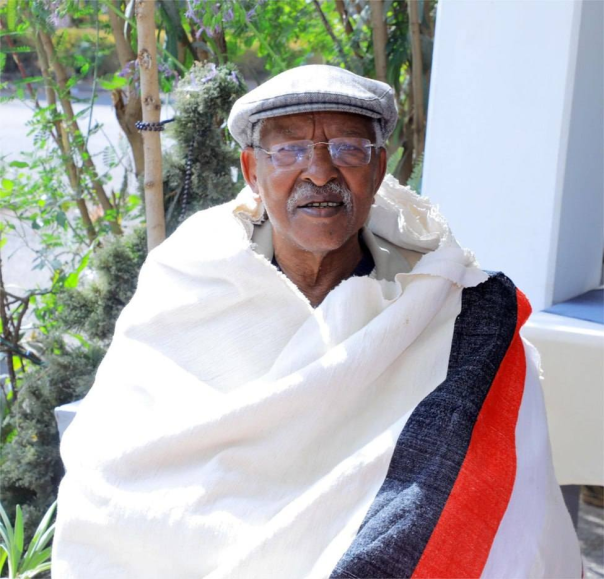
Veteran journalist and founding figure celebrated as Oromo-language publication marks 49th anniversary
FINFINNE — The editorial team of Bariisaa Newspaper has paid tribute to Mr. Leencoo Lataa, one of the founding members of the historic Oromo-language publication, honoring his contributions as the newspaper commemorates 49 years since its establishment .
Mr. Leencoo Lataa stands among the pioneering figures who laid the foundation for what would become one of the most enduring and significant Oromo-language media outlets. Bariisaa Newspaper, which began as a privately initiated publication before transitioning to state ownership and now publishes weekly, has reached this milestone through the dedication of its founders and the generations of journalists who followed .
A Journey Through History
In an interview conducted this past Monday, marking the 49th anniversary of the newspaper’s founding, Mr. Leencoo Lataa shared extensive reflections on the establishment of Bariisaa and the challenges it has overcome to reach its current position .
The veteran journalist provided a comprehensive account of the newspaper’s founding era, detailing the vision that animated its creators and the obstacles they faced in bringing Oromo-language journalism to life. His testimony offers valuable historical insight into a period when establishing a newspaper in Afaan Oromo represented both a cultural assertion and a political statement.
Editorial Team’s Tribute
Following the interview, the Bariisaa Editorial Team honored Mr. Leencoo Lataa with a ceremonial covering of a bullukkoo—a traditional Oromo garment symbolizing respect and honor. The gesture acknowledged his foundational role in creating the newspaper that has served as a vital source of information and cultural preservation for nearly five decades .
The editorial team expressed gratitude for Mr. Leencoo’s lifelong commitment to Oromo journalism and his role in establishing an institution that has educated, informed, and connected Oromo readers across generations.
A Call to Future Generations
In his remarks, Mr. Leencoo Lataa expressed appreciation for the recognition and urged the current generation to further develop the newspaper and pass it on to future generations . His call reflects the intergenerational responsibility that has characterized Bariisaa’s journey—each generation building on the work of those who came before, preserving and advancing the legacy.
The veteran journalist’s appeal resonates particularly as Bariisaa approaches its golden jubilee next year. The challenge of maintaining relevance in a rapidly evolving media landscape, while staying true to the founding vision of serving Oromo readers in their mother tongue, falls to the current editorial team and the journalists who will follow.
Significance of the Recognition
The bullukkoo covering ceremony carries deep cultural significance within Oromo tradition. The garment, traditionally worn by elders and respected figures, symbolizes wisdom, authority, and the honor due to those who have served their community. By bestowing this honor upon Mr. Leencoo Lataa, the editorial team affirmed his place among the elders whose guidance and example continue to illuminate the path forward.
For the journalists and staff of Bariisaa, the ceremony also served as an opportunity to connect with the living history of their institution. In an era when media organizations often struggle to maintain institutional memory, such moments of recognition help preserve the stories and values that define Bariisaa’s identity.
Forty-Nine Years of Service
Bariisaa Newspaper’s 49-year journey spans multiple political eras, technological transformations, and shifts in the media landscape. From its origins as a privately founded publication to its current status as a weekly state-owned newspaper, it has consistently provided Oromo-language content to readers hungry for information in their mother tongue.
Throughout these decades, Bariisaa has chronicled the Oromo experience, documented cultural and political developments, and provided a platform for Oromo voices. It has trained generations of Oromo journalists, contributed to the development of written Afaan Oromo, and maintained a presence in the lives of Oromo readers both within Ethiopia and across the diaspora.
Preserving the Legacy
The interview with Mr. Leencoo Lataa, conducted by journalist Natsaannat Taaddasaa and published in the special edition of Bariisaa Newspaper dated February 7, 2018 (Ethiopian calendar), represents an important contribution to the historical record .
As Ethiopia’s media landscape continues to evolve and as Oromo journalism faces new challenges and opportunities, the testimony of founding figures like Mr. Leencoo Lataa provides essential perspective. Their experiences, insights, and wisdom can help guide current practitioners as they navigate the complexities of contemporary journalism while remaining faithful to the values that animated Bariisaa’s founders.
Looking Forward
With its 50th anniversary on the horizon, Bariisaa Newspaper stands at a threshold. The coming year offers an opportunity for reflection on nearly half a century of service, for celebration of achievements, and for renewed commitment to the mission that has sustained the publication through changing times.
Mr. Leencoo Lataa’s call to “further develop the newspaper and pass it on to future generations” encapsulates the challenge ahead. How can Bariisaa honor its legacy while adapting to new realities? How can it reach younger readers who consume media differently than their parents and grandparents? How can it maintain relevance in an age of social media and instant digital access?
These are the questions that the current editorial team, and those who follow, must answer. But they do so standing on the foundation laid by Mr. Leencoo Lataa and his fellow founders—a foundation strong enough to support nearly five decades of continuous publication and sturdy enough to bear the weight of future aspirations.
Gratitude and Commitment
As Bariisaa Newspaper celebrates its 49th anniversary and honors one of its founding figures, the editorial team expresses both gratitude for the past and commitment to the future. Gratitude for visionaries like Mr. Leencoo Lataa, who believed that Oromo readers deserved a newspaper in their own language and worked to make that belief reality. Commitment to carrying forward that vision, adapting as necessary but never losing sight of the fundamental purpose: serving the Oromo people with information, analysis, and cultural content that affirms their identity and supports their aspirations.
The bullukkoo that now covers Mr. Leencoo Lataa symbolizes not only honor for one man but continuity across generations. It represents the mantle passed from founders to successors, the responsibility to preserve and advance, and the enduring connection between past, present, and future.
As one era of Bariisaa’s history is honored, the next chapter begins.
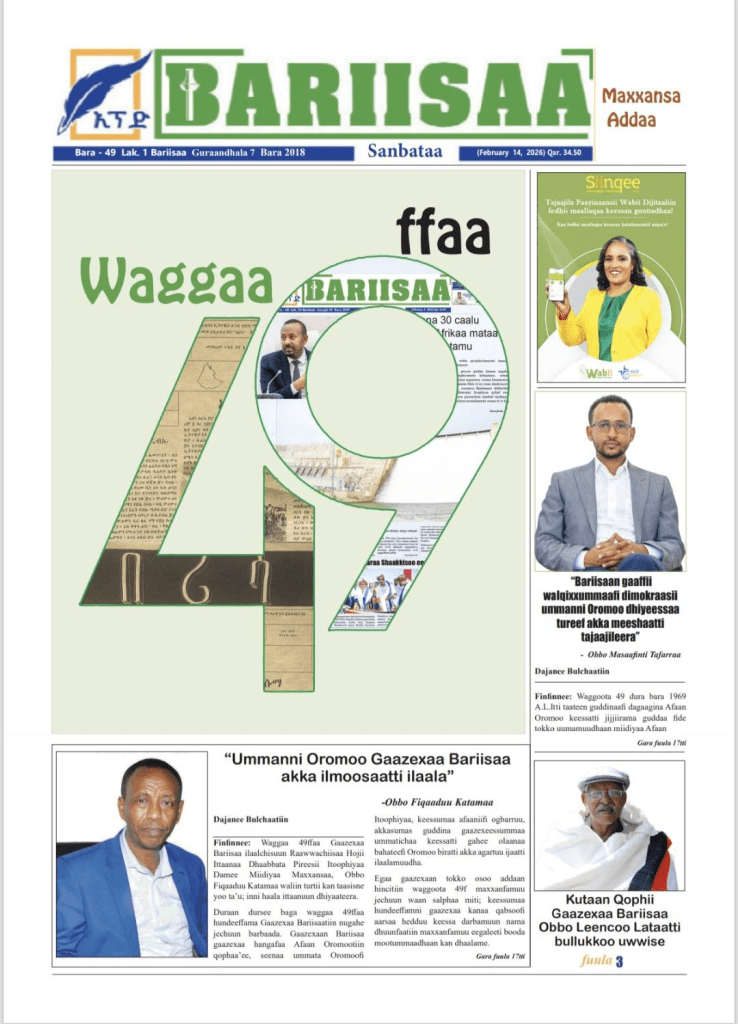

Oromo Mourns the Loss of Veteran Artist and Freedom Fighter Abdulhakim “Abdiyuun” Habib
A towering figure of Oromo art and struggle passes, leaving a legacy of resistance through music
GLOBAL — The Oromo community is in mourning following the passing of veteran artist and dedicated freedom fighter Abdulhakim “Abdiyuun” Habib, a prominent singer, composer, and cultural icon whose life was devoted to the advancement of Oromo art and the struggle for Oromo liberation. His death has left a profound void in the hearts of those who knew him and the countless fans whose lives were touched by his music and activism .
The Oromo Liberation Front (ABO) issued a statement expressing deep sorrow: “We express our immense grief at the passing of the senior freedom fighter and singer Artist Abdiyuun Habib. He has rested in death” .
Early Life and Formation
Artist Abdiyuun Habib was born in 1956 in the historic eastern Oromia city of Dire Dawa, in the Lagaharre neighborhood, to his father Habib Usmaan and mother Raaziyaa Mummad . He grew up in Dire Dawa, a cosmopolitan city known for its cultural diversity and rich artistic traditions, which would profoundly influence his development as an artist.
For his formal education, Abdiyuun attended the Islamic religious school known as Madrasa Jadiida in the Laga-Harree neighborhood, where he studied up to the eighth grade . This early exposure to education and religious learning provided a foundation for the intellectual depth that would later characterize his artistic work.
A Life Dedicated to Oromo Art
From early in his life, Abdiyuun collaborated with numerous renowned artists from the eastern region, working both individually and in groups to advance Afaan Oromo and Oromo art . His contributions spanned multiple genres—he was a singer, a composer, and a performer whose work earned him a prominent place in the history of Oromo art .
Abdiyuun produced beautiful and meaningful cassette recordings throughout his career. Among his most beloved works were collaborations with other artists, producing music that resonated deeply with Oromo audiences. One of his famous songs, “Abbaan Fardaa nii Boonaa” (The Horseman Boasts), remains cherished by fans for its artistic beauty and cultural significance .
Artist and Freedom Fighter
Between 1991 and 1993, Abdiyuun became a member of the HAWWISOO CAFFEE GADAA (the cultural troupe of the Oromo Liberation Front) in Dadar, where he played a significant role in awakening and mobilizing the masses through art, encouraging them to support the Oromo liberation struggle . His work during this period exemplified the Oromo tradition of art as a weapon in the fight for freedom.
When the Oromo Liberation Front withdrew from the transitional government, Abdiyuun and other artists continued as members of the WBO cultural troupe, entering the battlefield and participating directly in the armed struggle while fulfilling their duties as fighters . The ABO sent members of the cultural troupe to Djibouti to rescue them from enemy persecution.
In 1995, when the Djibouti government changed its position toward the organization, it forced the cultural troupe and other members to leave the country. Unable to return to the battlefield with his comrades, Abdiyuun remained in Djibouti . Despite the difficulties of exile, his history, his art, and the struggle he waged for his people will be remembered by all generations.
A Legacy of Resistance
Abdiyuun Habib’s life exemplified the inseparable connection between Oromo cultural expression and political struggle. Like his contemporaries—artists such as Nuhoo Goobanaa, Elemo Ali, and others—he understood that art was not merely entertainment but a vital medium for preserving Oromo identity, raising political consciousness, and mobilizing resistance against oppression.
His work with the HAWWISOO cultural troupes represented the institutionalization of this vision, bringing artistic expression directly into the service of the liberation movement. The songs created during this period—including those from the cassette he produced with fellow artists—continue to resonate with Oromos who remember the struggle and inspire younger generations discovering his work.
Community Mourning
Following news of his passing, tributes have poured in from across the Oromo community, both within Oromia and throughout the diaspora. Fans, fellow artists, and activists have shared memories of how Abdiyuun’s music touched their lives and inspired their commitment to Oromo causes.
The ABO statement expressed the collective grief: “Artist Abdiyuun, a senior freedom fighter and singer, a hero of Art and the star of the Caffee Gadaa cultural troupe, has passed away while fighting for Oromo and Oromia. We once again express the deep sorrow we feel at losing him” .
Condolences
The Oromo Liberation Front extended its condolences to all those affected by this loss: “We wish paradise for our beloved brother, and patience and strength for the family, relatives, and the entire Oromo people” .
As the Oromo community mourns this profound loss, they also celebrate a life lived in faithful service to the people and the cause. Abdiyuun Habib’s music will continue to inspire future generations, his voice echoing across time as a testament to the power of art in the struggle for justice and freedom.
Injifannoon Ummata Oromoof! (Victory to the Oromo People!)
Qabsaawaan Ni Kufa Qabsoon Itti Fufa! (The freedom fighter never dies, the struggle continues!)
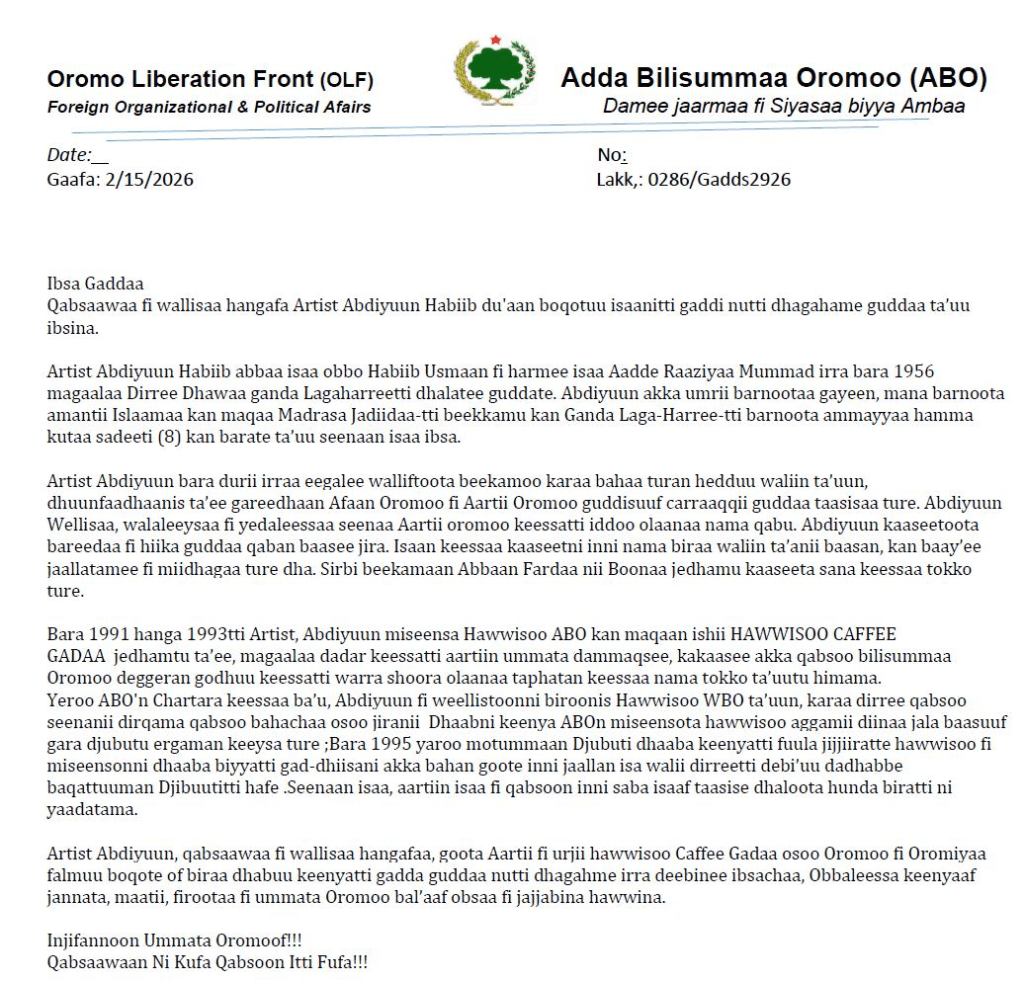

AMES Australia Welcomes the Year of the Horse with Vibrant Lunar New Year Celebrations
Organization connects with diverse communities at Springvale festival, celebrating cultural traditions across Asia
SPRINGVALE, Melbourne — AMES Australia joined communities across Victoria in welcoming the Year of the Horse over the weekend, participating in a lively Lunar New Year festival in Springvale that brought together thousands celebrating one of the most significant cultural occasions on the Asian calendar.
The event, marked by vibrant decorations, traditional performances, and community gatherings, saw AMES Australia team members engaging directly with local community members, sharing information about services and celebrating alongside families from diverse cultural backgrounds.
A Celebration of Many Names and Traditions
Lunar New Year is known by different names across the many cultures that observe it—Chinese New Year, Tết in Vietnam, Seollal in Korea, and various other designations across Asia and among diaspora communities worldwide. Each tradition brings its own customs, foods, and rituals, while sharing common themes of family reunion, renewal, and hope for prosperity in the year ahead.
The Year of the Horse, the seventh animal in the 12-year zodiac cycle, symbolizes energy, strength, and perseverance. Those born in Horse years are traditionally associated with traits including independence, intelligence, and a free-spirited nature. The horse’s symbolism of forward movement and progress resonates across cultures celebrating the new year.
AMES Australia’s Community Engagement
AMES Australia’s participation in the Springvale festival reflects the organization’s ongoing commitment to connecting with and supporting culturally diverse communities across Victoria. The festival provided an opportunity for AMES staff to meet community members in a celebratory setting, building relationships and sharing information about the organization’s services.
“We loved being part of such a joyful event,” an AMES Australia representative shared following the festival. The organization extended a warm thank you to everyone who stopped by to chat with their team during the celebrations.
Springvale: A Hub of Cultural Diversity
Springvale, located in Melbourne’s southeast, is one of Victoria’s most culturally diverse suburbs, with significant populations of Chinese, Vietnamese, Cambodian, and other Asian communities. The suburb’s Lunar New Year festival has grown into one of Melbourne’s premier multicultural events, drawing visitors from across the city to experience traditional performances, food stalls, and community activities.
The festival’s location in Springvale reflects the broader demographic landscape of Victoria, where Asian communities have become an integral part of the state’s multicultural identity. For many families, events like the Springvale festival provide an opportunity to maintain cultural traditions while sharing them with the broader Australian community.
AMES Australia’s Role in Multicultural Victoria
AMES Australia has long played a vital role in supporting migrants, refugees, and asylum seekers as they build new lives in Victoria. The organization provides a range of services including settlement support, English language education, employment assistance, and pathways to further education and training.
Participation in community events like the Lunar New Year festival represents an extension of AMES Australia’s mission—meeting people where they are, building trust within communities, and ensuring that newcomers and established communities alike can access the support they need to thrive in their new homeland.
The Symbolism of the Horse
The Year of the Horse arrives with particular resonance for many in attendance. In Chinese astrology, the horse represents freedom, enthusiasm, and determination—qualities that resonate with the journeys of migrants and refugees who have traveled great distances to build new lives in Australia.
For AMES Australia clients and staff alike, the horse’s symbolism of forward movement and progress aligns with the organization’s work supporting people as they move forward in their Australian journeys—learning language, finding employment, building connections, and creating futures.
Gratitude and Connection
The festival provided not only celebration but genuine connection between AMES Australia and the communities they serve. Conversations at the AMES stall ranged from inquiries about services to shared wishes for prosperity in the new year—each interaction strengthening the bonds between organization and community.
“Thank you to everyone who stopped by to chat with us,” AMES Australia expressed following the event, capturing the spirit of mutual appreciation that characterized the day.
Looking Forward
As the Year of the Horse begins, AMES Australia looks forward to continuing its work supporting Victoria’s culturally diverse communities. The organization’s presence at community celebrations like the Springvale Lunar New Year festival demonstrates a commitment to being present, accessible, and engaged with the people they serve.
For the thousands who attended the festival, the event marked both celebration of tradition and hope for the year ahead. For AMES Australia, it represented another opportunity to demonstrate that the organization stands with Victoria’s diverse communities—not only in times of need, but in times of joy and celebration as well.
Happy Year of the Horse! 🐎🧧✨

Nuhoo Goobanaa (1939-2022): The Legendary Oromo Artist Whose Voice Became a Weapon of Liberation
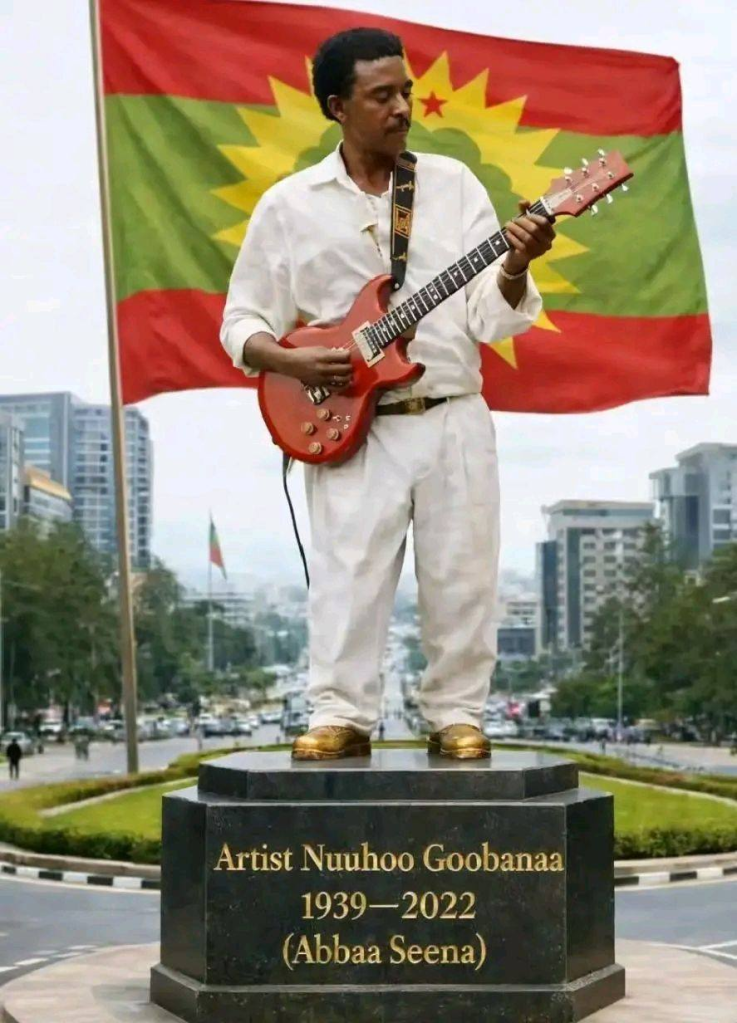
A towering figure of Oromo music and resistance, remembered for his timeless call for unity and freedom
OROMIA — Nuhoo Goobanaa, one of the most iconic and beloved figures in Oromo music and the struggle for cultural and political recognition, left an indelible mark on generations of Oromos through his powerful voice, poetic lyrics, and unwavering commitment to his people’s liberation. Born in 1938 in the historic eastern Oromia city of Dire Dawa to his father Muhaammad Goobanaa and mother Faaxumaa Adam, Nuhoo would grow to become the “virtuoso of revolutionary songs” whose influence transcended borders, languages, and generations.
Early Years: Awakening to Injustice
Nuhoo Goobanaa was born in Laga Mixe, East Hararghe Zone, but grew up in Dire Dawa, where his family moved when he was five years old. From an early age, his natural inclination for singing and art was evident. He began testing his vocals at Madrasa (Quran school) by adding lyrics and changing the rhythms to Manzuma (Islamic chants)—a creative impulse that occasionally landed him in trouble with his teachers. As a youth, he absorbed the rich musical environment of Dire Dawa, mimicking Hindi, Harari, and Sudanese songs that were abundant in the cosmopolitan city.
The trajectory of his life changed dramatically through his encounters with discrimination against the Oromo during the Haile Selassie era. As a teenager in the 1960s, Nuhoo would occasionally skip school to work as an interpreter at the local court in Dire Dawa. This experience exposed him directly to the injustices of the system: three judges presiding in Amharic, a language the majority Oromo population did not speak. The experience led him to profound questions that would shape his life’s work: “Who are the three panel of judges who spoke Amharic? Why didn’t they speak the language of the majority Oromo? Who are we [the Oromo]? Why are the Oromo treated differently?”.
Rather than accepting these injustices as inevitable, Nuhoo embarked on a transformative musical journey of self-discovery and political awakening. He dedicated his life to raising consciousness among his people, becoming one of the most beloved household names in Oromia.
The Birth of an Artist-Activist
In the early 1960s, as a teen, Nuhoo applied to join a newly formed Oromo music band called Biiftuu Ganamaa (The Morning Sun). At 14, he was deemed too young and denied membership. Undeterred, he signed on as a volunteer poet, staying up late at night writing lyrics until he earned his place in the band. “I used to write poems in Amharic and contribute to the band,” he recalled in a 2012 interview.
His formal entry into music came in 1960 when he joined the World of Music within the government structure, eventually becoming a voice alongside intellectuals and national figures. But Nuhoo was never merely an entertainer—he was an artist who carried a weapon, singing revolutionary songs day and night to support the Oromo liberation struggle.
Exile and the Spreading of the Message
Following the breakup of the Afran Qalloo band around 1968, Nuhoo fled to Djibouti as a refugee. It was there that he learned to play the guitar in just one month. “Art was already in me,” he recalled. “In Djibouti, I recorded two albums”. For Djibouti’s Independence Day celebrations in 1969, he performed musical works in Afaan Oromo, Somali, and Arabic.
His journey of exile took him across continents. He traveled to Yemen, Saudi Arabia, and Egypt, living in these countries for many years. In Saudi Arabia, he recorded and released his first through fourth albums, working alongside fellow artists including Elemo Ali, Jamal Ibro, and Aziz, producing music from their homes. During the 1980s, he lived as a refugee in Djibouti, Saudi Arabia, and Canada, never ceasing to create music that empowered his people.
In 1978, he and fellow Oromo artists made their way to Canada, where they continued producing revolutionary songs celebrating unity, love of country, and the struggle for liberation. His long-time friend and fellow musician Elemo Ali recalled of their time together in Saudi Arabia: “Back then, Nuho was doing songs to empower his people. His music was easily memorable”.
A Polyglot Voice for the Oromo
Nuhoo’s artistic reach extended far beyond Afaan Oromo. He recorded and performed in numerous languages, including English, Somali, Tigrinya, and notably Arabic making him the only Oromo artist to write and perform a full song in Arabic, symbolizing the deep connection between the Oromo and Sudanese peoples during a critical historical period. Another friend, Abdo Alisho, spoke of the power of his songs: “They made you love your country. Nuho lived for his people”.
The Return Home and Continued Struggle
When political changes came to Ethiopia in 1991, Nuhoo returned to Finfinne along with the Oromo Liberation Front and other organizations that had been in exile, establishing the transitional government. Together with fellow artists, he produced revolutionary and solidarity music at the OLF office and Lideta Hall at Finfinne University. Following the OLF’s withdrawal from the transitional government, Nuhoo returned to Canada.
But the dream of seeing a liberated Oromia kept calling him back. Though he had a comfortable life in Canada, it was not enough to satisfy his longing. He left Canada to live for several years in Yemen and Kenya, though life there proved difficult, and he faced various pressures from government authorities. In 2002, he made the decision to return from Kenya to his homeland, living in the Oromia he loved until his passing.
Musical Legacy: Tokkummaa and Beyond
Nuhoo Goobanaa’s songs spanned every conceivable aspect of Oromo life: the indignities of exile, the ups and downs of the Oromo struggle, the Oromo flag song (anthem), his beloved Oromia, yearning for home and return, Finfinne, the Gulalle of the early 1990s, love, family, marriage, cultural clashes among the Oromo diaspora, and his own winding life journey . By his own account, he wrote and produced an estimated 380 memorable songs across 38 albums.
His timeless classic “Tokkummaa” (Unity) is widely regarded as akin to an Oromo national anthem, serving as a powerful intergenerational call for transcendent unity of purpose. The song’s refrain—”Tokkummaa, Tokkummaa, Yaa Ilmaan Oromoo Tokkummaa” (Unity, Unity, O Children of Oromo, Unity)—became a rallying cry that resonated across generations.
Other seminal works include:
- “Yaa Rabbi” (Oh God), a spiritual invocation that became another fulcrum for Oromo unity
- “Isin Waamti Harmeen” and “Lallabanee” or “Nu Dirmadha” —desperate calls to action, reproaching and exhorting Oromo intellectuals and personalities to return to Oromia and confront injustice
- “Alaabaa Oromiyaa” —a concise homily on the aims and aspirations of the Oromo movement for self-determination
- “Dhufaan Jiraa” —a soulful and nostalgic yearning for home and belonging
- “Geerarsa” —a robust and searing criticism of dysfunction and failure in Oromo leadership
- “O Galaana Qonnaan Bulaa” and “Alaabaa” , songs whose lyrics became part of the cultural fabric of the struggle
One of his most famous lyrical passages decried division and appealed to Oromummaa as a unifying creed:
“Shan, kudha shan, shantam taatanii, Gargar facaatanii, Bineensa beelaweef hiraata taatanii” (Five, fifteen, fifty, you allowed yourselves to be divided and thus became prey for the hungry beast).
Influence on a New Generation
Nuhoo’s influence extended directly to the next generation of Oromo artists, most notably Hachalu Hundessa, whose songs became anthems in the wave of protests that reshaped Ethiopian politics in the late 2010s. After being partially paralyzed, frequent visits from younger prodigies like Hachalu lifted his spirits. At every opportunity, in speech and gesture, Nuhoo had one request of the Oromo: “Tokkummaa jabeessaa” (Strengthen your unity).
During and in the immediate aftermath of the Oromo protests, Nuhoo saw his dream partially fulfilled and marveled at the state of the Oromo struggle. His songs had laid the foundation for contemporary protest music in Oromia, inspiring, exhorting, and arousing fellow musicians and Oromos to do what was necessary for liberation.
Final Years: A Community’s Love
Nuhoo’s last decade was marked by profound struggle. Around 2007/08, he suffered a stroke that partially paralyzed him and affected his powerful voice. From approximately 2013 onward, he was unable to continue performing. His yearning to live and work among his people was thwarted by deteriorating health.
The Oromo community, both at home and in the diaspora, rallied around their beloved artist. When fans realized the seriousness of his situation, multiple global fundraisers were organized for his medical treatment. In 2013, through the initiative of community members, a campaign called “Let’s Buy Nuhoo a House” succeeded in purchasing a home for him in Adama, east of the capital. The GoFundMe campaign organized for his support emphasized: “It is the responsibility of the entire community that lived off of his lyrics and his strong words to support him in his time of need”.
Despite these efforts, Nuhoo never fully regained his roaring voice, strength, or towering presence . Speaking to the BBC from his hospital bed two years before his death, his message to fans remained consistent: “Keep your unity strong” .
Passing and Funeral
Nuhoo Goobanaa passed away on Tuesday, January 18, 2022, at the age of 74, after a long illness. He died in Adama, in the house that fans had helped purchase for him.
However, the Oromo biography provided for this feature notes that the artist passed away on October 25, 2023 (G.C.) in Oslo, Norway, while undergoing medical treatment. According to this account, cancer was discovered in addition to the stroke that had afflicted him, and despite receiving treatment, his body resisted healing. Following his death, his body was transported back to his homeland (Oromia), and a funeral ceremony was conducted with great honor in Finfinne.
A Legacy That Endures
Nuhoo Goobanaa was more than a musician—he was a “pioneering singer-songwriter and guitarist whose name is near synonymous with Tokkummaa”. He embodied Oromummaa and lived a selfless life of service and struggle. As one tribute noted: “Nuho dedicated his life to promoting the virtues of Tokkummaa and Oromummaa. He leaves behind a momentous legacy that will inspire current and future generations”.
Dr. Awol Kassim Allo, in a comprehensive tribute, wrote: “Nuho’s songs are healing and transformative, expanding our sensibilities and teaching us to pay attention not just to the large-scale system of oppression he witnessed in the courts as an interpreter but also to the everyday, the familiar, the emotional, and intimate aspects of our lives”.
The Oromia Tourism Commission, in its memorial statement, expressed: “The Oromia Tourism Commission expresses its deep sorrow at the death of the hero Artist Nuhoo Goobanaa. May God grant him paradise. We wish strength to his family, relatives, fans, and the entire Oromo people”.
Fana Broadcasting Corporate, in its announcement of his passing, noted: “In addition to Nuhoo’s struggle for the development of Oromo art and language, the work he contributed to the Oromo political struggle holds a significant place in the history of the people’s struggle. Nuhoo understood the divisive politics and factionalism within the Oromo struggle and sang as an artist for Oromo unity”.
A Photograph as Memory
The photograph accompanying this feature captures Artist Nuhoo Goobanaa in 1991 at Gulallee prison, during a moment of singing—a poignant image preserved as a memory of him, combined with the legacy that lives on in our hearts.
Conclusion
Nuhoo Goobanaa’s life was a testament to the power of art as a weapon in the struggle for justice, dignity, and self-determination. From the courts of Dire Dawa where he first witnessed injustice, to the refugee camps of Djibouti where he learned to play guitar, to the stages of Canada, Europe, and the Middle East where his voice thundered for Oromo liberation, he never wavered in his commitment.
His songs remain—hundreds of them—carrying forward his message of unity, his critique of division, his love for his people, and his unwavering hope for Oromo liberation. As the Oromo people continue their journey, Nuhoo Goobanaa’s voice echoes across generations, still calling them to unity, still reminding them of who they are, still urging them forward.
“Nuti lallabna nuti qabsaa’ota…” (We proclaim, we are struggle participants…)
Rest in power, Nuhoo Goobanaa. Your voice never dies.

Oromo Liberation Front Warns: “The Cloud of War Drifting Across the Country and the Danger It Brings to Oromia Is Severe and Heinous”
OLF calls for united stand against cross-border incursions and lasting peaceful solution to Ethiopia’s conflicts
(February 17, 2026, FINFINNE) — The Oromo Liberation Front (OLF/ABO) has issued a stark warning about the escalating security situation in Ethiopia and the severe danger posed to Oromia by ongoing conflicts. In a statement released on February 17, 2026, the organization characterized the recurring “cloud of war drifting across the country” as an increasingly grave threat to the Oromo people and their homeland.
“The security situation in our country has been concerning for decades,” the statement reads. “Oromia has for generations been transformed from a land where peace, stability, and promising development should prevail into a battlefield of war interests and political machinations”.
Decades of Unresolved Conflict
According to the ABO statement, the persistent cloud of war that continues to drift across the country has its roots in decades of unresolved political, military, economic, and social problems. The unceasing conflicts emanating from within the country have continued for generations and show no signs of abating.
Specifically, the organization points to conflicts over land grabbing and resource exploitation in Oromia, as well as territorial expansion by Abyssinian and colonial systems, as ongoing drivers of violence that have continued without interruption.
“The struggle of Oromo people and Oromia residents has been unceasing,” the statement notes. “Although the war devastating Oromia sometimes retreats, because the desire and ambition to plunder Oromia have not stopped, the dream of yesterday and today continues to attack Oromia, and efforts to forcefully seize it have not ceased”.
The Post-1991 Context
The statement particularly emphasizes the severe and heinous harm inflicted upon Oromo people and Oromia residents since the 1991 Charter period. The ABO describes being pushed out of the transitional government through tactical political maneuvering by forces competing for influence, leaving Oromia as a battlefield of looting and exploitation.
As a result, the organization asserts, Oromo people and Oromia residents have been impoverished while outsiders have prospered in their land. Oromia—blessed and fertile—has become a land where its own residents are impoverished while others thrive.
Escalating Violence in Recent Years
In the past eight years specifically, the ABO reports that in addition to the ongoing conflict throughout Oromia, armed incursions by irregular forces crossing Oromia’s borders have further disturbed the peace of Oromia residents.
“Oromia’s borders have been breached, many areas have been left without Oromia administration, land and property owners have been forcibly displaced from their lands, Oromo property has been forcibly looted, innocent people have lost their lives unnecessarily, and the peaceful existence of Oromia residents has been prevented”.
The statement details the multifaceted damage caused by cross-border armed incursions:
- Displacement of peaceful residents from their lands and properties
- Economic deterioration through looting and destruction
- Weakening of social trust and community cohesion
- Proliferation of divisive ideologies and deepening fragmentation
- Absence of effective governance and public administration
- Complete erosion of public trust in government
Call for Comprehensive Peaceful Solution
To mitigate the damage and losses caused by war, the OLF/ABO has consistently advocated for comprehensive peaceful solutions. The organization reiterates its call for:
- Genuine and inclusive political dialogue conducted by the government with all relevant parties
- Proper respect for democratic rights and human rights
- Resolution of regional boundaries through law, dialogue, and lasting agreement rather than force
- Public and international community participation in matters of national peace and security
“These are not merely desirable but essential,” the statement emphasizes.
Regional Context and Urgent Threat
The OLF warns that given the instability, conflicts, and humanitarian crises affecting the Horn of Africa region, combined with the dangers of ongoing war and absence of political solutions, Oromia risks continuing as a battlefield of war interests and political machinations.
“The Oromo people and Oromia residents must not accept this,” the organization declares. “To prevent the evil and heinous consequences of border violations into Oromia, standing united—beyond political and other differences—is the duty imposed by the future situation we face”.
A Call for Unity
The statement concludes with a powerful appeal for Oromo unity in defense of their homeland:
“Therefore, we urge that the Oromo people and Oromia residents, both within and outside, stand together to protect their land and borders from the drifting cloud of war that crosses boundaries and enters their territory—uniting beyond political and other differences—and recognize that collaboration is a national duty”.
The ABO also calls upon social and political actors in the country who genuinely seek peaceful solutions, as well as human rights organizations, the international community, diplomats, and various embassies in the country, to prioritize lasting peace and stability as a matter of collective concern.
Renewed Commitment
“The Oromo Liberation Front reaffirms that it will continue to fulfill its responsibility to protect the peace of Oromia, united with its people”.
The statement is signed and dated February 17, 2026, in Finfinne, carrying the organization’s motto: “Victory to the Masses!”
This report is based on an official statement issued by the Oromo Liberation Front (ABO) on February 17, 2026, addressing the security situation in Oromia and calling for peaceful resolution of conflicts and united defense of Oromia’s territorial integrity.

Bicultural Educators Strengthen Skills to Combat Elder Abuse in Victoria’s Diverse Communities
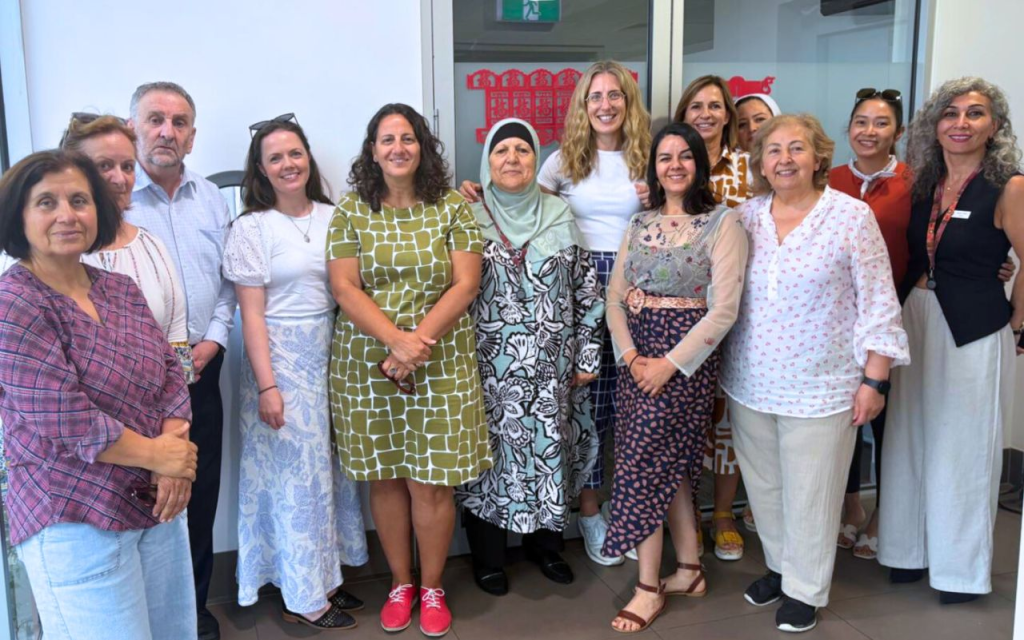
Refresher training brings together multilingual educators to promote respectful relationships and raise awareness using trusted, in-language information
MELBOURNE, Australia — The Ethnic Communities’ Council of Victoria (ECCV) has convened a vital refresher training session for Bicultural Educators working to prevent elder abuse across Victoria’s culturally diverse communities. The session, held last week as part of ECCV’s Elder Abuse Prevention program, equipped multilingual community educators with updated knowledge and resources to continue their essential work protecting older community members .
Seven Bicultural Educators attended the training, representing a remarkable cross-section of Victoria’s linguistic diversity. Languages covered by the attending educators included Dari, Hazaragi, Urdu, Serbian, Persian, Turkish, Spanish, Vietnamese, Greek, and Italian—reflecting the program’s reach into communities spanning Eastern Europe, the Middle East, Asia, and Latin America .
A Trusted Approach to a Sensitive Issue
The Elder Abuse Prevention program supports community members who speak English and another language to raise awareness about elder abuse and promote respectful relationships in their communities. The program’s effectiveness rests on a simple but powerful insight: information about sensitive family matters is most effectively communicated by trusted voices within communities, using languages that older people understand fully .
Elder abuse—which can take forms including financial exploitation, psychological manipulation, physical harm, and neglect—often goes unreported in culturally diverse communities due to language barriers, isolation, cultural norms around family privacy, and lack of awareness about available support services. Bicultural Educators bridge these gaps by bringing information directly to communities in ways that respect cultural contexts while clearly communicating rights and resources.
Expert Facilitation and Guest Presentations
The refresher session was delivered by Hayat Doughan from ECCV and Gary Ferguson from Seniors Rights Victoria, combining ECCV’s community expertise with Seniors Rights Victoria’s specialized knowledge of legal and advocacy supports for older people experiencing abuse .
A guest presentation from ECCV’s Nikolaus Rittinghausen addressed the new aged care reforms, ensuring that Bicultural Educators can help older community members navigate the evolving aged care landscape. As Australia’s aged care system undergoes significant changes, access to clear, in-language information about rights, services, and how to access support becomes increasingly critical for older people from migrant and refugee backgrounds .
Government Partnership
The session also included attendance from staff at the Victorian Department of Families, Fairness & Housing, demonstrating the Victorian government’s commitment to supporting community-led approaches to elder abuse prevention. This partnership between government and community organizations recognizes that effective responses to elder abuse must be co-designed with the communities most affected .
The Department’s involvement also ensures that Bicultural Educators’ on-the-ground insights about challenges facing diverse communities can inform policy development and service design at the state level.
Building Capacity Across Communities
ECCV continues to support Bicultural Educators to work with seniors’ organizations and community groups across Victoria, helping older people and families stay informed and safe. The refresher training represents an ongoing investment in the skills and knowledge of these essential community connectors .
For the educators themselves, the training provides opportunity to share experiences with peers working in different communities, learn about new developments in policy and practice, and refresh their understanding of elder abuse dynamics and intervention strategies. This peer learning dimension strengthens the network of educators across Victoria, creating a community of practice that supports individual educators in their demanding roles.
Addressing a Growing Concern
Elder abuse is a significant and growing concern in Australia, with research suggesting that between 2% and 14% of older people experience abuse in any given year. For older people from culturally and linguistically diverse backgrounds, additional barriers—including language, migration status, financial dependence on family members, and cultural expectations about family care—can increase vulnerability and complicate help-seeking .
The Bicultural Educator model directly addresses these barriers by meeting communities where they are, using languages they understand, and working through trusted relationships. Rather than expecting older people to navigate complex service systems designed for English-speaking Australians, the program brings information and support directly into community spaces.
Community-Led Prevention
The emphasis on promoting “respectful relationships” reflects an understanding that preventing elder abuse requires more than crisis intervention—it requires shifting community norms and expectations about how older people should be treated. Bicultural Educators are positioned to influence these norms from within, drawing on cultural values of respect for elders while challenging practices that cross into abuse .
This preventive approach aligns with public health models that emphasize primary prevention—stopping problems before they start—as the most effective long-term strategy for addressing complex social issues. By building awareness of what constitutes abuse, rights of older people, and available supports, Bicultural Educators help communities develop the knowledge and language to address elder abuse before it escalates.
Languages of Reach
The ten languages represented at the refresher training illustrate the program’s remarkable reach:
- Dari and Hazaragi, spoken by Afghanistan’s diverse communities
- Urdu, widely spoken in Pakistan and parts of India
- Serbian, serving communities from the former Yugoslavia
- Persian, connecting with Iranian communities
- Turkish, serving Victoria’s long-established Turkish community
- Spanish, reaching communities from Latin America and Spain
- Vietnamese, supporting one of Victoria’s largest migrant communities
- Greek, serving generations of Greek Australians
- Italian, connecting with Italian-Australian communities across generations
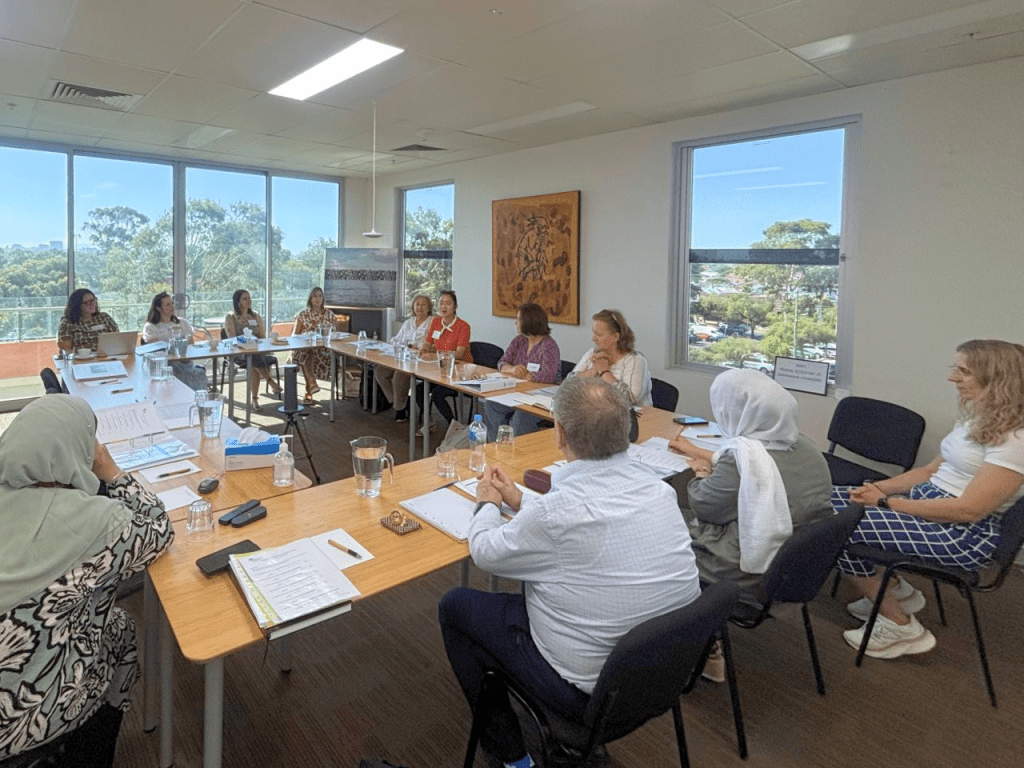
Each language represents not merely a mode of communication but a gateway to communities whose older members might otherwise remain isolated from information about their rights and available supports.
Continuing Commitment
ECCV’s ongoing support for Bicultural Educators reflects a long-term commitment to elder abuse prevention that extends well beyond individual training sessions. The organization works continuously to connect educators with seniors’ organizations and community groups, ensuring that their expertise reaches those who need it most .
The program also contributes to broader advocacy efforts, with insights from Bicultural Educators informing ECCV’s policy work on aged care, elder abuse prevention, and the needs of older people from migrant and refugee backgrounds. This two-way flow—from communities to policymakers via educators—ensures that systemic advocacy remains grounded in lived experience.
How to Learn More
ECCV encourages community members, seniors’ organizations, and anyone concerned about elder abuse to learn more about the organization’s work in this critical area. Detailed information about the Elder Abuse Prevention program, including resources and contact information, is available through ECCV’s website .
For Bicultural Educators interested in participating in the program, or for community organizations seeking to connect with educators serving specific language communities, ECCV welcomes inquiries about how the program can support diverse communities across Victoria.
The refresher training session concluded with renewed commitment from all participants to continue this essential work—ensuring that older Victorians from all backgrounds can age with dignity, respect, and safety, supported by communities that understand and value them.

InTouch Unveils Evolved Brand Identity: A Future Beyond Violence
For forty years, the organization has walked alongside women, children, and communities with courage, care, and deep cultural understanding
MELBOURNE, Australia — After four decades of dedicated service supporting migrant and refugee women experiencing family violence, intouch has unveiled a refreshed brand identity that signals both continuity and evolution. The organization, which has grown exponentially in both reach and complexity since its founding, announced the transformation as a clearer expression of who they have always been—and who they are becoming .
“Today, we are proud to share our evolved brand identity,” the organization announced. “This evolution is not a departure from who we are, but a clearer expression of it. It reflects our growth, our leadership, and our commitment to ensuring the way we communicate truly aligns with the strength, dignity and purpose that define our work” .
Four Decades of Culturally Safe Support
For forty years, intouch has walked alongside women, children and communities with courage, care and deep cultural understanding. What began as a grassroots response to the specific needs of migrant and refugee women experiencing family violence has grown into a nationally recognized leader in culturally safe family violence support .
The organization’s longevity speaks to both the enduring need for its services and the effectiveness of its approach. By centering cultural understanding as essential to effective support, intouch has developed expertise that generic family violence services cannot replicate. Their work acknowledges that safety cannot be separated from cultural identity—that true support must honor who women are, where they come from, and what they need.
Growth and Responsibility
As the organization’s work has grown in reach and complexity, so too has its responsibility—to the people they support, the partners who trust them, and the future they are helping to shape. This evolution reflects a mature organization stepping fully into its leadership role within the family violence sector .
The refreshed identity positions intouch to meet contemporary challenges with renewed clarity and purpose. Family violence does not stand still, and neither can the organizations dedicated to ending it. By evolving how they communicate and present themselves, intouch ensures they remain relevant and accessible to those who need them most.
A Clearer Expression of Purpose
The evolution represents not a departure from the organization’s core identity but a more precise articulation of it. Every element of the refreshed brand has been designed to communicate the strength, dignity and purpose that have always characterized intouch’s work .
This clarity extends to the organization’s fundamental purpose, now stated with renewed conviction:
“To champion culturally safe family violence support for anyone who needs it, anywhere they need it.”
This purpose statement encompasses both the “what” and the “how” of intouch’s work—the commitment to supporting all who need help, regardless of location or circumstance, and the distinctive approach of ensuring that support is culturally safe. For migrant and refugee women, cultural safety is not a luxury or an add-on; it is essential to effective intervention and genuine healing.
Strengthening Advocacy and Connection
The refreshed identity strengthens how intouch shows up, advocates, and connects with the communities they serve. In a crowded field of service providers, clear communication about what makes intouch distinctive helps ensure that those who need their specific expertise can find them .
For partners and funders, the evolved identity signals an organization confident in its leadership role and clear about its contribution to the broader effort to end family violence. For the women and children intouch supports, it promises continuity of the culturally safe care they have always received, delivered with renewed clarity and purpose.
Honoring Those Who Shaped the Organization
The evolution honours the community, staff, partners and supporters who have shaped intouch over four decades. No organization reaches forty years without the dedication of countless individuals whose contributions, large and small, built the foundation upon which today’s work stands .
By evolving thoughtfully—building on what has always been true while adapting to meet present and future needs—intouch ensures that the legacy of those who came before continues to inform and inspire the work going forward. The refreshed identity carries forward the values and commitments that have always defined the organization, expressed for a new era.
Equipped for the Future
The evolution ensures intouch is equipped to continue this vital work with clarity, courage and care into the future. The challenges ahead—changing demographics, evolving forms of family violence, shifting policy landscapes—require an organization that is both grounded in experience and adaptable to change .
With refreshed tools for communication and advocacy, intouch stands ready to meet these challenges. The clarity of purpose that emerges from this process will guide decision-making and priority-setting for years to come, ensuring that resources are directed where they can have the greatest impact.
The Work Continues
“This evolution honours the community, staff, partners and supporters who have shaped intouch over four decades,” the organization stated. “It ensures we are equipped to continue this vital work with clarity, courage and care into the future” .
The announcement carries a message of both continuity and recommitment:
“The work continues. The commitment deepens. The future is beyond violence.”
This framing positions the brand evolution not as an endpoint but as a milestone on an ongoing journey. The work of ending family violence is generational; forty years represents a significant chapter, but the story continues. With deepened commitment and renewed clarity, intouch presses forward toward the future they are helping to create.
A Vision of What’s Possible
The tagline “A future beyond violence” encapsulates both hope and determination. It acknowledges that such a future is possible—that family violence is not inevitable but can be prevented and ultimately ended. At the same time, it recognizes that achieving this future requires sustained effort, cultural competence, and unwavering commitment .
For the migrant and refugee women intouch supports, a future beyond violence is not abstract—it is the concrete goal of every intervention, every safety plan, every supportive conversation. The organization’s evolved identity keeps this vision front and center, reminding all who encounter it of what they are working toward.
Looking Forward
As intouch enters its fifth decade with refreshed identity and renewed purpose, the organization looks forward to continuing its essential work. The challenges remain significant: family violence affects migrant and refugee women at disproportionate rates, and barriers to support—language, culture, immigration status, isolation—can seem insurmountable.
But intouch has forty years of evidence that these barriers can be overcome with the right approach. Culturally safe support works. Women and children can and do find safety and healing. And with each life transformed, the vision of a future beyond violence comes closer to reality.
The evolved brand identity announced today serves as both celebration of what has been achieved and commitment to what remains to be done. For intouch, for the communities they serve, and for all who share their vision, the work continues—toward a future beyond violence.

Ethiopia to Mandate Premarital Training Certificate for Couples Seeking Marriage
Ministry announces new regulation to combat skyrocketing divorce rates through mandatory education and certification
ADDIS ABABA — In a landmark initiative aimed at reversing Ethiopia’s rising divorce rates, the Ministry of Women and Social Affairs has announced plans to implement mandatory premarital training certification for all individuals seeking to enter into marriage. The new regulation would prohibit anyone without the required certificate from legally marrying .
The innovative approach, slated to take effect next year, represents a significant intervention in Ethiopia’s social policy landscape, targeting what officials identify as a primary cause of marital breakdown: lack of awareness and understanding about the realities of married life .
Alarming Statistics Drive Policy Response
The announcement follows concerning data released by the Addis Ababa City Civil Registration and Residence Service Agency, which revealed that divorce rates have increased by 54 percent compared to previous years. With over 20 million families currently in Ethiopia, the stability of the family unit has emerged as a pressing national concern demanding urgent attention .
Mr. Tesfaye Robele, Chief Executive for Elderly and Family Affairs at the Ministry of Women and Social Affairs, confirmed that preparations are underway to implement the system in the coming year. Speaking to Sheger Radio, officials outlined the ministry’s comprehensive approach to addressing what they describe as a crisis in Ethiopian family life .
“We have prepared training manuals to address this problem,” Mr. Tesfaye stated. “The primary cause for many marital breakdowns is the lack of awareness and understanding about what marriage truly entails” .
Collaborative Development with Religious and Community Leaders
Recognizing that marriage in Ethiopia is deeply intertwined with religious and cultural traditions, the ministry is pursuing a collaborative approach to implementation. Officials emphasize that the new system will be developed in consultation with religious institutions and community elders, ensuring respect for diverse cultural and faith-based marriage traditions .
“We are working in consultation with religious institutions and elders,” Mr. Tesfaye confirmed, highlighting the ministry’s commitment to creating a system that honors Ethiopia’s rich diversity of marriage practices while establishing consistent standards for preparation .
This collaborative framework acknowledges that marriage ceremonies in Ethiopia are performed through various institutions—religious bodies, civil authorities, and traditional community structures—all of which will need to participate in implementing the new requirements.
Comprehensive Strategy Beyond Certification
The premarital certification requirement represents just one component of a broader strategy to strengthen Ethiopian families. The ministry also announced the establishment of a joint forum bringing together various institutions working on family issues .
According to Mr. Tesfaye, this forum aims to identify and address gaps in family management practices while providing recommendations and guidance to the government on necessary actions to support family stability. The initiative reflects a holistic understanding that healthy marriages require ongoing support, not merely preparation before the wedding .
“We must begin the journey toward national change starting from the family,” the official emphasized, highlighting the fundamental role that stable households play in broader societal development . This perspective positions family stability as not merely a private concern but a public good essential to national progress.
Training Curriculum and Implementation
Ministry officials indicate that training manuals have already been prepared for the program. While specific curriculum details are still being finalized in consultation with religious and community leaders, the training is expected to cover fundamental aspects of marriage including communication skills, conflict resolution, financial management, and realistic expectations about married life .
The duration of required training and specific certification mechanisms remain under development, with implementation details to be announced following the consultation period. The goal of launching within the next year provides a clear timeline for completing these preparations .
Addressing a Growing Social Challenge
Ethiopia’s divorce rate increase of 54 percent reflects broader social transformations affecting families across the nation. Urbanization, changing gender roles, economic pressures, and evolving social expectations have all contributed to shifting dynamics in marital relationships .
The ministry’s initiative recognizes that many couples enter marriage with romanticized expectations rather than practical understanding of the commitment involved. By requiring structured preparation, officials hope to reduce the likelihood of marriage breakdown stemming from preventable misunderstandings or mismatched expectations.
Religious and Cultural Considerations
The collaborative approach with religious institutions acknowledges the complex landscape of marriage in Ethiopia, where religious ceremonies carry legal weight and traditional marriages performed by community elders remain common. Any successful intervention must work within these existing structures rather than attempting to supersede them.
Ethiopia’s religious diversity—encompassing Orthodox Christianity, Islam, Protestant Christianity, and traditional belief systems—means that marriage preparation will need to accommodate varied perspectives while maintaining consistent core content about marriage fundamentals.
Potential Impact and Challenges
If successfully implemented, the mandatory premarital training requirement would position Ethiopia among a growing number of countries recognizing the value of marriage preparation. Research in other contexts has suggested that well-designed premarital education can reduce divorce rates by helping couples develop realistic expectations and essential relationship skills.
However, implementation challenges remain significant. Ensuring accessibility of training across Ethiopia’s diverse regions, managing costs for prospective couples, and maintaining consistent quality while respecting local traditions will require careful planning and adequate resources.
The ministry’s emphasis on collaboration with existing institutions—religious bodies, community elders, and family service organizations—suggests an awareness that successful implementation depends on building upon established community structures rather than creating parallel systems.
Broader Social Implications
The initiative reflects growing recognition in Ethiopia that family stability has cascading effects on broader social outcomes. Children from stable households generally show better educational and health outcomes, while family breakdown can contribute to economic hardship and social challenges .
By intervening at the point of marriage, the ministry aims to prevent problems before they develop rather than responding after families have already fractured. This preventive approach aligns with public health models that emphasize early intervention and education as cost-effective strategies for addressing social challenges.
Looking Forward
As Ethiopia prepares to launch this innovative program, attention will focus on the consultation process with religious and community leaders, the development of culturally appropriate training materials, and the establishment of certification mechanisms that are accessible to all Ethiopians regardless of location or economic circumstance.
The coming year will see these elements take shape, with ministry officials working to transform policy announcement into operational reality. If successful, Ethiopia’s experiment in mandatory marriage preparation could offer lessons for other nations grappling with similar challenges of family stability in rapidly changing societies.
For Ethiopian couples planning to marry in the coming years, the new requirement will add an additional step to the marriage process—one that officials hope will prove invaluable in building the foundation for lasting, healthy unions. As Mr. Tesfaye emphasized, the ultimate goal extends beyond certification to the creation of stable families capable of contributing to national development and social wellbeing .

The TPLF: A Brutal Force That Should Never Have Been Given a Single Day’s Opportunity as an Organization
Oromo voices reflect on three decades of suffering under Tigrayan-led rule
FINFINNE — In a powerful and searing social media commentary that has resonated across Oromo networks, a voice identified as Abba Ebba has articulated the deep historical wounds and enduring grievances of the Oromo people against the Tigray People’s Liberation Front (TPLF), describing the organization as a “brutal force” that should never have been legitimized .
The statement, shared under the hashtag #Abba_Ebba, offers a raw and unflinching examination of the TPLF’s three-decade rule over Ethiopia and its specific impact on the Oromo people—a period the author describes as inflicting wounds “far worse than a hundred years of Abyssinian elite oppression” .
Thirty Years of Suffering
According to the commentary, the TPLF, operating under the banner of the Ethiopian People’s Revolutionary Democratic Front (EPRDF), controlled Oromia for thirty years, threatening the region from end to end in the name of supporting the Oromo Liberation Front (OLF) while actually enveloping the land in flames of gunfire .
The author describes how the TPLF blocked Oromos from the center, drove them from their country, killed children, and placed mothers upon the corpses of their own offspring in acts of unspeakable cruelty . This “collection of beasts,” as the author characterizes the TPLF, is portrayed as having committed atrocities that have left permanent scars on the Oromo collective consciousness .
“More than a hundred years of oppression by Abyssinian elites, the TPLF targeted the Oromo people for thirty years with historically unforgivable atrocities, using every means available,” the statement reads. “The wound of conscience they inflicted upon us is still unhealed, a scar not yet dried—we carry this unhealed wound with us” .
A Legacy That Lives With Generations
The commentary emphasizes that these historical wounds are not merely past events but living realities carried by the Oromo people. “Generations will not forget—it lives with us, an unerasable historical scar” .
The author draws a powerful analogy: “Yesterday, a snake bit us. Before the pain subsided, because of the foolishness of one and the childishness of another, we let it escape. That same snake, growing fat and multiplying, has returned today to bite us again, to bring us to death” .
Allowing this to happen, the author argues, is worse than foolishness—it is a failure to think of the coming generation. Collaborating with such forces, treating the snake as if it were a towel to be wrapped around one’s neck, represents a profound betrayal of the future .
The Quest for Freedom and Justice
The commentary gives voice to the Oromo people’s longstanding aspirations: “The Oromo people who say ‘I long for freedom, justice has been denied me, I hunger for democracy’—here they are, for nearly 70 years falling and rising in their struggle for freedom” .
Unlike others, the author asserts, Oromos have never sought scraps from anyone’s table. Yet Abyssinian elites have consistently declared, “We are like water and oil with Oromos!” while simultaneously claiming to have created a hybrid “mule” called Ethiopia through fusion with Oromos .
The author questions how, when the constitution grants special rights to Oromos even in Finfinne, there are those who would tear up the document, asking what remains for Oromos. “When will we stand up for ourselves, to protect our borders, to secure our constitutional rights—whose permission do we need to seek?” .
Today, the author notes, people say of Oromos, “They are children of the moment.” But what need has the Oromo of Abyssinian political maneuvering and crumbs?
The Folly of Sacrificing Justice for Peace
The commentary critiques those who urged compromise: “Yesterday, for the sake of peace, we abandoned justice! We forgave what you did publicly! There is no peace without justice” .
Those who stole wealth, whether collectively or individually, who used power to destroy lives, burn forests, displace people, commit inhuman acts in any form—the author insists they must not escape accountability .
Questions are raised about political transitions: “What and who is bringing the transition? From where to where?” The author suggests that those who mocked others for not understanding politics are now seeing the consequences .
What once appeared to some as downhill before them now seems as distant as the sky, transformed into an uphill struggle. “Are you truly not angered as you watch?” the author asks, suggesting that deep regret, not indifference, is the appropriate response .
Historical Memory: The Western Oromo Confederation of 1936
The commentary invokes a crucial but often overlooked chapter of Oromo history: the Western Oromo Confederation of 1936. Before the TPLF was even created, Oromos sent a delegation to the United Nations seeking to govern themselves through confederation .
This historical episode, disrupted by Italy’s five-year colonization of Abyssinia, demonstrates the long-standing Oromo pursuit of self-determination, predating the TPLF’s emergence by decades .
The author cites scholarly work by Ezekiel Gebissa on “The Italian Invasion, the Ethiopian Empire, and Oromo Nationalism: The Significance of the Western Oromo Confederation of 1936,” pointing to a tradition of Oromo political organizing that Abyssinian and Tigrayan narratives have systematically obscured .
Cultural Appropriation: The Heritage of “Weyane”
The commentary also raises questions of cultural appropriation, asking whether the TPLF has forgotten that “Weyane”—the traditional struggle strategy from which the organization derives its name—is actually Oromo heritage from Raya and Rayuma .
This observation, the author explains, is offered to counter any suggestion that Tigrayan or Amhara elites taught Oromos about freedom struggle. The historical record, including scholarship on “Peasant Resistance in Ethiopia: the Case of Weyane” published in the Journal of African History, demonstrates that Oromo traditions of resistance long preceded TPLF organizing .
The Complexity of Recognition
The author acknowledges that the situation is complex—like makeup applied and removed, artificial people appearing before cameras, living under disguise. But the weight of the matter, they emphasize, concerns the supremacy of the people, the formation of the nation, the debt owed to fathers, mothers, and faith .
“Knowledge means grasping the trunk of the tree, not hanging on its branches—hold the branches and you will fall” .
A Warning Unheeded?
The commentary concludes with a stark image: “O TPLF! The one who never says ‘enough’ will spit and continue. ‘Emboor! Emboor!’ (Get away! Get away!) they say to those who hold back and separate—now the flood has reached the neck, asking ‘What has brought my situation?'”
This metaphorical warning suggests that those who ignored calls for restraint and justice now find themselves overwhelmed by consequences of their own making .
Historical Context
The TPLF led the armed struggle that overthrew the Derg regime in 1991 and subsequently dominated Ethiopian politics for nearly three decades until Prime Minister Abiy Ahmed came to power in 2018. During their rule, the TPLF was the dominant force within the EPRDF coalition, controlling the levers of state power and directing security forces that, according to numerous human rights reports, committed widespread abuses against civilians in Oromia and other regions .
The period from 1991 to 2018 saw repeated military campaigns in Oromia, mass arrests of Oromo activists and politicians, and systematic suppression of Oromo political expression. The International Criminal Court’s Office of the Prosecutor noted in 2019 that it had received information regarding alleged crimes against humanity in Ethiopia dating back to 2015, including in Oromia .
Contemporary Relevance
The commentary appears against the backdrop of ongoing tensions in Ethiopia’s post-2018 political transition. While the TPLF was removed from federal power, it retained control over Tigray regional state until the recent Tigray War (2020-2022) dramatically altered the political landscape .
For Oromos, the question of accountability for past abuses remains unresolved. Many Oromo activists and politicians have called for justice for victims of TPLF-era atrocities, even as they navigate complex relationships with other political forces in contemporary Ethiopia .
A Voice for the Unhealed Wound
Abba Ebba’s commentary gives voice to what it describes as an “unhealed wound” in Oromo collective memory—the accumulated trauma of three decades of TPLF rule that compounded more than a century of Abyssinian domination .
The response to the post, shared widely across Oromo social media networks, suggests that these sentiments resonate deeply within the Oromo community. The demand for justice, the insistence on historical memory, and the refusal to accept narratives that minimize Oromo suffering emerge as consistent themes .
As Ethiopia navigates an uncertain political future, with ongoing conflicts in multiple regions and unresolved questions about the country’s constitutional order, voices like Abba Ebba’s serve as reminders that for many Oromos, the past is not past—it is a living wound that demands acknowledgment and, ultimately, healing through justice .
Whether such justice will be achieved, and what form it might take, remains one of the most pressing and unresolved questions in Ethiopian politics. For the Oromo people, as the commentary makes clear, the struggle continues—not only for freedom and democracy in the future but for acknowledgment and accountability for the crimes of the past.

Celebrating 49 Years of Bariisaa: A Voice for Oromo Equality
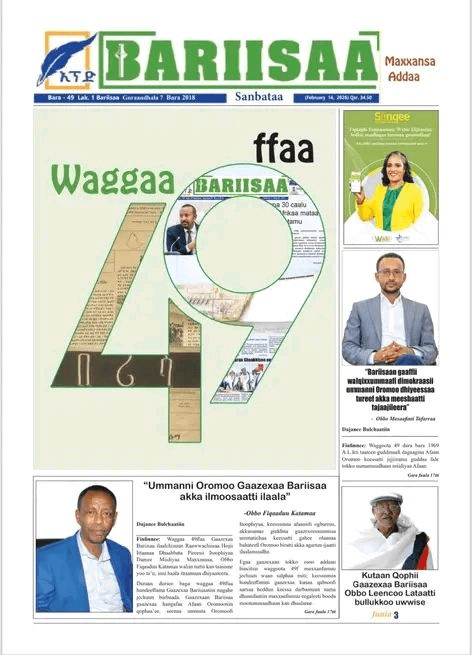
“Bariisaa Served as a Tool for the Oromo People’s Quest for Equality and Democracy”
– Mr. Masafinti Tafarraa
Oromo-language newspaper marks 49 years of serving as a beacon of information, identity, and struggle
FINFINNE — Forty-nine years ago, in 1969 E.C. (1976/77 G.C.), a transformative development in the growth and flourishing of the Afaan Oromo language occurred that would fundamentally reshape the landscape of Oromo media and lay the foundation for where Oromo-language outlets stand today: the establishment of Bariisaa Newspaper .
In an era before the proliferation of science and technology, when broadcast media could be counted on one’s fingers and the internet had not yet become the domain of a generation, the Oromo people’s love, effort, and desire for information and knowledge could only be satisfied through written word. It was in this context that the demand for and acceptance of newspapers was immense .
Bariisaa Newspaper, carried forward by scholars and heroes who toiled from afar and succeeded, passing from generation to generation through the接力 of struggle against tyranny, has now marked 49 years of existence .
Today marks the anniversary of Bariisaa Newspaper’s founding—for the Oromo people, a day when the dawn of information and knowledge shone brightly, just as the name “Bariisaa” (Dawn) suggests the morning star appears .
A Tool for the People’s Struggle
In an interview commemorating the anniversary, Mr. Masafinti Tafarraa, Executive Officer of the Ethiopian Press Agency, shared reflections on the newspaper’s historic role .
According to Mr. Masafinti, from its inception through half a century of service, Bariisaa Newspaper has undertaken and achieved great work for the freedom, equality, and democracy of the Oromo people .
Crucially, he noted that Bariisaa was established precisely at a time when the Oromo people’s demand for equality and democracy was being raised. In this context, the newspaper served as a vital medium of communication for the people’s aspirations .
Following that period and continuing after the people’s demands were reiterated, Bariisaa never halted its mission but persevered and has arrived at today’s milestone .
The founders of the newspaper were themselves participants in the struggle for the people’s equality movement at that time and played significant roles. Through their involvement, the newspaper became intertwined with the contemporaneous struggle being waged .
A Legacy of Forty-Nine Years
For nearly five decades, Bariisaa has chronicled the Oromo experience, documenting both the ordinary and extraordinary moments of Oromo life while serving as a platform for intellectual and political discourse. The publication has weathered changing political climates, technological revolutions, and shifts in the media landscape while maintaining its commitment to providing information in Afaan Oromo.
The newspaper’s endurance through nearly half a century reflects both the dedication of those who have sustained it and the persistent hunger for Oromo-language media among its readership. From its early days when written word was the primary means of mass communication to the contemporary era of digital media, Bariisaa has adapted while maintaining its core mission.
The Founders’ Vision
The founders of Bariisaa were not merely journalists but activists who understood the power of the written word in advancing the cause of equality. By establishing a newspaper in Afaan Oromo at a time when the language itself was marginalized, they made a profound statement about Oromo identity and the right to information in one’s mother tongue.
Their vision extended beyond simple news reporting to encompass the broader struggle for recognition and rights. The newspaper became both a record of that struggle and a participant in it, documenting abuses while articulating aspirations.
From Print to Digital: Evolution of a Legacy
As Bariisaa celebrates 49 years, it does so in a media environment dramatically transformed from its founding era. The broadcast media that were once scarce are now abundant, and the internet that was unknown to the generation of the 1970s has become ubiquitous.
Yet the fundamental need that Bariisaa addresses—the desire of Oromo people to receive information and analysis in their own language, reflecting their own perspective—remains unchanged. The newspaper has evolved alongside technology, with many readers now accessing content digitally while others continue to value the tangible experience of print.
Cultural and Linguistic Significance
Beyond its journalistic function, Bariisaa has played an important role in the development and standardization of written Afaan Oromo. At a time when the language was primarily oral in many contexts, the newspaper provided a model for written expression and helped establish conventions that would influence subsequent Oromo-language publishing.
For generations of Oromo readers, Bariisaa has been a window onto their world and beyond—a source of news, analysis, and cultural content that affirmed the value and vitality of their language. The newspaper has helped maintain and strengthen Oromo identity, particularly among diaspora communities separated from their homeland.
Forty-Nine Years of Service
The 49th anniversary represents a significant milestone, approaching the half-century mark that will be celebrated next year. For an independent publication to endure for nearly five decades in challenging political environments is a testament to the commitment of its staff, the loyalty of its readers, and the enduring need it fulfills.
Mr. Masafinti Tafarraa’s acknowledgment of Bariisaa’s role as a “tool” for the Oromo people’s quest for equality and democracy captures the publication’s essential character. It has never been merely a commercial enterprise or a neutral conveyor of information, but rather an institution deeply engaged with the aspirations of the people it serves.
Looking to the Future
As Bariisaa approaches its golden jubilee, questions of sustainability, adaptation, and continued relevance arise. The media landscape continues to evolve rapidly, with social media and digital platforms reshaping how people consume information. Younger generations, in particular, may engage with news differently than their parents and grandparents.
Yet the need that Bariisaa addresses—for information in Afaan Oromo that speaks to Oromo concerns from an Oromo perspective—remains as pressing as ever. The newspaper that has survived and thrived for 49 years has demonstrated remarkable adaptability, and there is every reason to believe it will continue to find ways to serve its readership.
A Dawn That Continues to Shine
The name Bariisaa—Dawn—carries with it the promise of new beginnings and the light that follows darkness. For forty-nine years, the newspaper has lived up to its name, bringing the light of information and knowledge to successive generations of Oromo readers.
As Mr. Masafinti Tafarraa’s reflections make clear, Bariisaa’s significance extends beyond its role as a news outlet. It stands as a testament to the power of the written word in struggles for justice, a record of a people’s journey through nearly five decades of change, and a continuing voice for equality, democracy, and the rights of the Oromo people.
The 49th anniversary of Bariisaa Newspaper is not merely a celebration of longevity but a recognition of enduring purpose—a purpose rooted in the struggles of the past and reaching toward the dawn of a future where the aspirations that gave birth to the publication may finally be realized.




 Advocacy for Oromia