Author Archives: advocacy4oromia
South Africa: sanctuary at a price
(Summary report of Oromia Support Group Report 49) Fifty-eight Oromo and two Ogadeni refugees from Ethiopia were interviewed in Johannesburg, Alexandra township and Randfontein, in Guateng province, and in Kinross and Evander, Mpumalanga province, in October and November 2012. The refugees reported serious abuse in Ethiopia and hazardous journeys to South Africa.
The 60 interviewees corroborated previous reports of extraordinarily high rates of torture in places of detention in Ethiopia. 26 (43%) had been tortured-58% of the men and 26% of the women. Of the 38 who had been detained, 68% reported being tortured. All had been severely beaten. 76% of detained men and 54% of detained women were tortured.
Reported conditions of detention in Ethiopia were atrocious. Torture was routinely practised in military camps, prisons, police st ations and unofficial places of detention. Methods included arm-tying (falantis), severe enough to cause nerve damage; flaying of the soles of the feet (bastinado); mock execution; whipping; immersion of the head in water and other forms of asphyxiation; walking and running on gravel, barefoot or on knees; suspension by the wrists or ankles; stress positions; sleep deprivation by flooding cells; drenching and other exposure to cold; electrocution; suspension of weights from genitalia; and castration.
Previous reports of high mortality rates among detainees in military camps, especially Hamaresa in E. Hararge, were corroborated by former detainees. In addition to the many who were killed or died in detention, the interviewees reported 91 killings of family and friends. These included 21 summary executions, some of which were public. Interviewees also reported 18 disappearances, ten of close relatives.
Only two of 13 women former detainees were raped in custody, considerably less than the 50% in previous reports, but this probably reflects the small size of the sampled population. Another interviewee was raped in her home by a government official and then in Kakuma camp, Kenya, by an Ethiopian security agent. Three interviewees reported rape of others in Ethiopia, including the multiple gang-rape of a 14 year-old in the Ogaden, who was strangled to death after ten days by the soldiers who raped her.
Although almost all of the abuses were justified by state actors on the basis of victims’ involvement with the Oromo Liberation Front, only half of the interviewees had ever had any personal or family association with the organisation.
Only three were themselves involved after the OLF left government in 1992.
Travellers to South Africa were at risk of abuse,including rape, by people-smugglers. Several deaths were witnessed during dangerous and harsh journeys lasting up to 12 months, during which migrants were often short of food and water. Detention in unsanitary, severely overcrowded conditions, especially in Zambia, Tanzania and Malawi, for up to five months, was experienced by 18 interviewees (21 episodes). Deportation and attempted deportation was reported by four.
Making a living in South Africa, although legal, is difficult and dangerous. The majority of interviewees work or have worked in township tuckshops, which are frequently subject to armed robbery and xenophobic attacks. At least five Oromo died in tuckshop attacks in 2012 alone. On average, each tuckshop is robbed every 5-6 months. Several organised racist attacks against tuckshops were reported and xenophobic threats, direct and via distributed leaflets, were recorded.
Violence and robbery on the street is common. One young woman was raped on her way to work one Sunday morning, in central Johannesburg, a few days before interview.
The South African government appears unenthusiastic in tackling xenophobic violence and, at best, ambivalent in honouring its responsibilities to refugees, according to international law and its own constitution. It has failed to address the ubiquitous high level of violence.
Xenophobia is fuelled by local leaders and politicians in order to bolster their popularity and power.
The refugee determination process is thoroughly corrupted and meaningless. Refugee status is virtually sold as a commodity.
Whereas refugees are able to make a living in South Africa better than elsewhere on the continent, this is at a price. The violence which is characteristic of everyday life in the country is particularly likely to impact on the poor and the immigrant.
A vibrant civil society stands in bright contrast to the ANC government and is a hopeful sign that prosperity and tolerance may eventually prevail in South Africa.
South Africa: sanctuary at a price
Your message has been sent
Egyptians attack Oromo refugees as the Nile crisis deepens
(A4O, June 7, 2013) Many Oromo refugees in Cairo were beaten, denied police services, and subsequently charged extra for medical care on the evening of Thursday 6th June 2013 in retaliation for Ethiopia’s diversion of the Nile River, according to locals.
“Our friend was beaten seriously by a group of Egyptian youth and he was nearly killed,” wrote Abdulkadir Noor Gumi, a Cairo-based community activist, in an appeal letter sent to media outlets. “He was beaten by chain, metal, and stick…he had a head injury and other injuries on his body.”
Thursday’s attack in Cairo on an unnamed Oromo national, the second incident in the last week, underscores the grave threat facing Ethiopian refugees living in Egypt. Many of these refugees left Ethiopia fleeing repression and fear persecution if they return home. Several hundred UNHCR-recognized Oromo and other refugees of Ethiopian origin reside in Egypt, according to community estimates. Activists report the situation remains tense and have urged all persons of Ethiopian and Oromo origin to stay in their houses until the situation stabilizes, if ever.
Following Thursday’s incident, Egyptian police refused to take down the report of what transpired saying that the attack was deserved.
“The policeman who was writing the report aimed [a gun] at me…saying that we deserved to be killed,” said Gumi in an email recounting his traumatic experience.
Their troubles did not end there.
“After that we were referred to a hospital to do some check up for our injured friend,” Gumi continued. “In the hospital, we found the same issue, we are asked our nationality for record, we were told that ‘you are going to divert our Nile and you have to pay more for hospital.’”
Even after paying double the amount of normal fees for seeing a doctor, according to Gumi’s report, other patients in waiting room told them, “you deserve[d] it,” after learning their nationality.
The Oromo Community in Cairo is holding a peaceful demonstration in front of UNHCR and is asking all concerned individuals to reach out to Egyptian authorities on their behalf.
Here is an appeal letter sent to media outlets: https://advocacy4oromia.org/media/press-release/an-appeal-letter-from-cairo-based-oromo-community/
Oromia Support Group Australia asks for quick intervention
(Advocacy4Oromia, 2 June 2013) — OSG Australia says troubled relations between Ethiopia’s government and the Oromo people constitute a serious obstacle in the country’s path to stability and prosperity.
According to OSG Australia statement, the Ethiopian government’s recent history has been plagued by ethnic conflict and protracted conflicts with government forces, particularly in Oromia and neighboring regions.
Although it has recently started getting some Oromo media attention, for the past 3 years the ongoing invisible war carried out on Oromo, in the Aniya area, massively affected the local people.
By prompts of the Ethiopian government authorities continuing an irritating war launched by Benishangul-Gumuz armed group on Oromo civilians in East Wollega zone that displaced hundreds from their life now counting its half a decade.
The continuing killings of hundreds of Oromo civilians in Eastern Oromia the heavily armed forces labelled Ogaden Special Police and backed by Ethiopian government invaded the area and continuing killings of hundreds of Oromo innocent civilians.
In 2011-2012 the massacre of hundreds of Oromo people, in Moyale Southern Oromia, by the Ethiopian military forces is evidence that shows the brutality of the government.
For more information:OSGA Statment – 1st June 2013
Discovering Oromo Culture: A Journey Beyond Borders
“No man is an island” is what I associate with Oromo culture. Oromo?! From where?! Oromia! Where?! It’s when I met Dhabesa, a journalist, from Oromia who is now living in Melbourne that I got to understand more about a not-so known country. Dhabesa and the Oromo community which he works with have the great ambition create the internationally recognized state of Oromia. According to Dhabesa, Oromia is a country located on the current Ethiopian territory but in search of government.
Now, why does Oromo culture make me think of this quote from a British metaphysical poet? When Dhabesa confides in me, he shares amazing principles of his culture that are far from the preconceived African-backward ideas and close to our new Western aspirations for a more harmonious world. In their religion “Waaqeffannaa”, Oromo people live in harmony with nature. At a child’s birth, a seed is planted in the ground, at death, a tree is put in earth. Any living beings are respected and balance between human beings and nature is fundamental.
In Waaqeffannaa there is only one God “Waaqaa” and other creatures including human beings who are connected to their mighty God through spiritual powers. As a young European woman I got particularly interested by the Oromo “Siinque”, a women’s organisation excluding men which has both religious and political functions. Their customary right allows them to carry out legal actions against perpetrators of women’s rights.
As surprising as it can be, Oromo and American people celebrate Thanksgiving. Now I imagine you raising eyebrows… Really?! How possible?! Unlike the Americans “Irreechaa” (Thanksgiving) is a non-religious celebration to promote a sense of belonging and cultural identity. Most of the Oromo festivals revolve around the survival of their identity despite the oppressive Ethiopian government. Oromo people represent about 40% of the Ethiopian population but for years they have been governed by a sheer minority (3%). In other words, a majority became a minority.
What is it like to fight for your ideas? In 2004 Dhabesa was at that time studying a Bachelor in Foreign Languages and Literature when he was arrested in his graduation year. He was sentenced to three years in prison and at his liberation, the recurring threats of reincarceration persisted. Persecuted, he fled to a Kenyan refugee camp and waited for a safer place. Luckily, the UNHCR sent him and his young children to Australia in 2009 as he recalls the exact arrival date. Today, not only is he dedicated to build a strong and united Oromo community in Australia but he also fights for his wife to join the rest of the family here.
He is still part of the world of journalism by contributing to the news on the radio and by compulsively reading them. But today he also aims to finish his studies in social services to eventually get a PhD in Social Science. “To work with the community, I want to empower myself and invest in knowledge”he asserts. Community development is at Dhabesa’s heart but he also shares his concerns to see members of the Oromo community being psychologically and emotionally weakened by the difference of environment. Back at home, “you are a majority and we are culturally and linguistically connected to each other. It’s easier to find support”.
Understanding the difficulty in transiting from one habitat to another, Dhabesa puts his energy to orientating Oromo families and filling out the emotional gap. “Link up with your nearest community or anybody to get the chance to ask what to do to move forward. Don’t focus on one option and always look at all the possible options” he advised.
Source: http://farfromafrica.wordpress.com/2013/05/22/no-man-is-an-island-in-oromia/
Oromo Girls Grace
Oromo girls are one of the most beautiful girls in the world. Over the years Oromo artists had done a great job of describing this extra ordinary beauty of Oromo girls with their extra-ordinary voice, talent and amazing words. This particular artist is describing how beautiful and respected Oromo girls are.
Multiculturalism, Languages and Public Media
By Melese Diribsa*
The principal task of public broadcasting includes radio, television and other electronic media outlets is public service. Public broadcasters receive funding from sundry sources including license fees, individual contributions, public financing and commercial financing. Historically, in many countries with the extraordinary exception of the US, public broadcasting was once the only form or the paramount form of broadcasting, notwithstanding the number of countries with only public broadcasting declined substantially since the latter part of the 20th century, whilst public broadcasting is principal yet especially in the developing countries.
Public broadcasting is imperative institution that as dole out different purposes in various societies. In its idyllic form, public broadcasting outfit for the diverse needs of audiences. Public broadcasting is instigated on the principle of access of information. In many burgeoning countries public broadcasting is perceived as indispensable for development and the striving for democracy. Thus, public media is the way to augment the citizen access to information, freedom of expression, the progress of public fizz in which the citizens will slot in freely in participatory communication to empower themselves.
In broadcasting the commencement and intrinsic is about the target audience, that of audience you are looking for to reach including the audience you already have and the audience you should have. In many countries broadcasting media are predominantly public media principally in multicultural, multilingual and diversified society to address the heterogeneous society by means of different languages. As many countries’ experience confirms us public state media utilize the giant languages (those have immense number of speaker) to address the diversified society in the territory and further than. Let us glimpse some countries’ experience as follows then after pass through my country Ethiopia’s practice in facet.
South Africa is one of the interesting cases because it is pursuing a premeditated policy of using public broadcasting to develop and promote its official languages as well as to maximize the target audience. In South Africa there are 11 official languages. South African’s buoyant loom to the use of public broadcasting to prop up and utilize languages in the country is endorsed by two mechanisms: constitutional recognition of 11 official languages and the existence of policy skeleton that mandate the South African Broadcasting Corporation (SABC which is like state public media) in its charter to reflect all 11 official languages in its programming in an equitable manner. The exposure of 11 official languages in South Africa is based on the principle that they are spoken by a majority of South Africans. The South African Broadcasting Corporation (SABC) utilizes these languages to address the target audience in the country.
In Canada the Canadian Broadcasting Corporation (CBC) is the leading public broadcaster. The Broadcasting Act of 1991 consent the CBC to broadcast in English and French. However, the CBC runs a service that delivers native languages programmes to peoples in the far North. Apart from the CBC and other public broadcasters, the Aboriginal People’s Television (APTN) also provides services in Indigenous languages.
Let’s gape out of public broadcasting in to international broadcasting service British Broadcasting Corporation (BBC). BBC is the world’s largest international broadcaster, broadcasting news, speech, discussions in 28 languages to many parts of the world. The BBC was reported to have reached more than 188 million people a weak on average. Hence why both international and public broadcasting media are using different languages? Many scholars and media professionals avow that media make use of different main languages either international or inland could maximize audience and take advantage to reach in the society especially in multicultural society including those have different languages.
I hope so you have been acquired a petite know-how about Canadian Broadcasting Corporation (CBC), South African Broadcasting Corporation (SABC) as well as about British Broadcasting Corporation medium re languages. Now traverse in to Ethiopian issue:
In Ethiopia the past regimes had been tried to inflict all nations, nationalities and peoples those have their own language, culture, custom, traditional and history, to accept one language policy. They had been endeavored to assimilate forcefully as well as systematically to make Ethiopia the melting pot of dozen nations, nationalities and peoples with one culture and language. Lucky for the Ethiopian nations, nationalities and peoples; untoward for outrageous past regimes and their team up the nightmare to build one cultural society by means of assimilation has been failed. On 21st August, 1995 the FDRE constitution that extol the nations, nationalities and people’s rights comes in to force. According to FDRE constitution article 8 no.1 all sovereign power resides in the nations, nationalities and peoples of Ethiopia. Article 39 of the constitution has also granted the nations, nationalities and peoples of Ethiopia the right to speak, to write and to develop its own language, to express, to develop and to promote its culture and to preserve its history. The constitution article 5 foremost and lastly divulged the multilingualism as all Ethiopian languages shall enjoy equal state recognition as national and official language while Ahmaric shall be the working language of the Federal government, despite individuals misunderstood as that of only Amharic language the national language. Again article 29 number 3 (b) of the FDRE constitution gives the nations, nationalities and peoples to right of access to information of public interest.
With these opportunities in Ethiopia many languages are rejuvenated from the edge of tyrannically oppressed. Many of them are booming and flourishing just unexpectedly. A part from this, despite all nations and nationalities’ languages in Ethiopia are officially recognized as working language, many of them still oral and striving to have their own script.
When we come to media on the local and regional levels the major languages in Ethiopia have access to work in. Many media Organizations in Ethiopia have working in different languages to address their diverse target audience. The access to media has huge opportunity to flourish languages. Besides the utilization of different languages (especially major languages) on media is so far ease to deliver the indispensable information for the multitude population as well as it has immense impact to whip up the populace for development as Ethiopian media are following the developmental media philosophy. Different regional public media, local FMs and community radios are broadcasting in diverse languages in deliberation of deliver the crucial information for multicultural society of Ethiopia. From my point of view using various languages are so indispensable to convey information for the people with the language they well know to understand and express about their feeling either about development, democracy, social issues or economic matter and so forth. But what I petrified is most of the regional and local media as well as community radio’s spotlight is almost local issue. There is no propensity to deliver national and international information. This could create the information gap among the people. Even they don’t know what ongoing in other regional states where development is so chain and assisted with exchange of experiences. Vis-à-vis daily updated information yet they are far from the federal government activities too.
You might be asking me that what about the state media role concerning delivering the vital information about the federal government activities and regional issues to the mass population. Yeah the solitary state media in Ethiopia Ethiopian Radio and Television Agency (ERTA) is striving to deliver information and news for the people. But what I worried is ‘how many of Ethiopians well understand the information that only disseminated in Amharic language?’ For instance, how many of rural dwellers in Oromia, Somali, Afar, Southern Nations, Nationalities and Peoples as well as other regions can communicate in Amharic? ERTA gives full emphasize for Amharic language as the key instrument to reach the society, by discarding even the other major languages in the country. Why is the ERTA abandoning even the major languages in the country?
What is the concept of target audience for the ERTA context especially where the media organization following the developmental media philosophy that gives primary attention for the public participatory approach? Look again ERTA has the vision to be the leading media in east Africa. But how can it overcome the competition with other giant media? In my view ERTA should have to be analyzing the following consecutive questions to rectify the sticky situation? Could be effective by using merely Amharic language which is working language for federal government and well familiar with Ahmara region and towns out of the region excluding most rural area of other Ethiopian regions and no trans-boarder for the neighboring countries? Or Besides Amharic language is that better to utilize the other major languages in the territory and trans-boarder languages? For instance take it Somali Language, if the media organization is make use of efficiently the language, it could be deliver its’ coverage up to Indian Ocean’s edge. The same for Tigrigna language, if ERTA utilize it, the possibility to be influential beyond the territory up to read sea is so high. Afar language could be merging the country with Djibouti. These languages have millions of native speakers in their mother land and beyond the Ethiopian territory. Let’s see the other major language Oromo language, to give you some clue about Oromo Language also known as Afaan Oromoo, is an Afro-Asiatic language. It is the most widely spoken language in the family’s Cushitic branch. Oromo language is spoken as a first language by nearly 40 million Oromo and neighboring peoples in Ethiopia and parts of northern Kenya. About 95 percent of Oromo language speakers live in Ethiopia, mainly in Oromia Region. In Somalia, there are also some speakers of the language. In Kenya, the Ethnologue also lists 322,000 speakers of Oromo languages. Within Ethiopia, Oromo language is the second most widely spoken language. Within Africa, Oromo language is the language with the fourth most native speakers, after Arabic, Swahili and Hausa. Besides first language speakers, a number of members of other ethnicities who are in contact with the Oromos speak it as a second language. So that if you utilize Oromo language, you can merely reach nearly 40 million people at least.
But why state media reluctant to use this opportunities? Why won’t to use efficiently the major languages? Is there something conspiracy or panic behind!!!? I summoned up that one opposition party once upon a time when it disclosed its manifesto to the people said that ‘if it controlled the power, it would be employ Oromo language as the federal government working language besides to Amharic’ as familiar in different Federal countries. So is that afraid of it trying to push Oromo language from the state media? That is why I suspected that if plot behind. Again the other question is if it supposed to everybody in Ethiopia could communicate in Amharic language and pushing Oromo language from state media, why the state media on the television live address on the special occasions such as opening of Parliament; Nations, Nationalities and Peoples Day and so forth use Oromo language? Is that for political gain in favor of the government or to deliver the crucial information for the native Oromo language speakers? Everybody is whispering but nobody (including those have a principal responsibility to do so) wants to confront directly to rectify this unfairness.
*The author is journalist and a blogger who studied journalism and federal studies.
UNSETTLING PATTERNS OF GENOCIDAL MASSACRES AGAINST OROMO IN OROMIA, ETHIOPIA
Framing: What We Are Told Is Not What It Is
Tigire ruling elites often misleadingly frame genocidal massacres against Oromo in various parts of Oromia as “inter-communal violence, ethnic conflict, border conflict or water conflict” in order to absolve themselves from responsibility and possible future indictment in local and international courts.
For at least two decades, genocidal massacres against Oromo have been framed that way in order to cover-up the deliberate effort by TPLF elites to either reduce Oromo by attrition to a minority population or to destroy them fully so that Tigireans can take over Oromia and its resources. That is their long-term plan.
Aslii Oromo, an exiled Oromo political prisoner and torture survivor, cited the late Ethiopian Prime Minster Meles Zanawi ( from Tigray) who said, “We [TPLF or Tigrean elites] will reduce the number of Oromos from 40 million to 4000 without the knowledge of the world.” Yet, many, including some well-meaning Oromos, have hesitated calling widespread massacres against Oromo a “genocide”, and comfortably stayed on the human rights violations side of a much protracted problem.
Ethnic Tigire elites declared their intent of destroying the Oromo partially or fully and have acted on their declarations. Where they did not declare these intents, they can be inferred from the actions of singling out and massacring and displacing Oromo en masse or selling their lands to land grabbers by the millions of hectares. Even an airhead would understand that no one group will massacre other groups just out of love or to do them some favor by killing them off of their land. Calling massacres against Oromo “genocide” has been avoided mainly because some people make false strategic calculations and believe that it is enough for the Oromo to claim human rights abuses instead of claiming genocide too. Human rights violations are indicators. There are some who see the talk of genocide as an inflation or overstatement. But, connecting evidence on the ground can show us that massacres in Oromia are indeed conspicuous acts of genocide.
Let’s just go beyond routine condemnation press releases, which echo the official framing of such massacres as “border conflicts or ethnic clashes etc”, and come to grips with the reality–genocide. The methods are multi-pronged: direct massacre, displacement, landgrab, spread of lethal infectious diseases, starving, withholding services, destroying crops to just list a few. In the process, it becomes important to see these massacres as part of an ongoign genocide, “the deliberate and systematic destruction, in whole or in part, of an ethnic,racial, religious, or national group”
With absolute military, economic and diplomatic powers, Tigirean elites have ever been emboldened to destroy the Oromo nationality and its material, cultural and intellectual properties. They are accountable to no one–not to their laws, not to international law and not to moral principles. TPLF elites’ arrogance is becoming limitless, soaring. While they engage in genocidal activities in Oromia, the international community has afforded them the complete silence they so want. However, the human and material destruction caused by Tigire elites in Oromia is no short of the Syrian crisis or Darfur, but Western cameras are not focused on Ethiopia as its has been considered a regional counter-terrorism linchpin even now when Somalia is on the path of stability and reconstruction.
Reductionist may say, “oh yea, ethnic clashes have been going on between Oromo and others for decades, so what is the big deal about what is happening now?”
As stressed earlier, these are not just ethnic clashes between equally armed or unarmed groups trying to settle their differences violently. To understand what is going on, we have to make the links between the different events of massacres in Oromia. Briefly comparing the recent genocide hotspots in eastern Oromia, southern Oromia and western Oromia will offer a much needed deep perspective.
Patterns of Genocide
1. The Case of Massacre and Displacement in Eastern Oromia
The mass atrocities against Oromo in Eastern Oromia (Qumbi county) started in 2011 when TPLF elites provided advice to armed bands of Ogaden militants to lay claim to six districts that traditionally belonged to Oromia region. Land claims are TPLF incentives to another group to get the group to indirectly commit genocide on their behalf. Who does the planning of the genocide–TPLF elites–are more important than the agents on the ground hired to do the depraved job of massacring and looting. This violence has been intensifying over the last six months. The Human Rights League of the Horn of Africa describes the massacre and the displacement in the following terms:
….this government-backed violence that has been going on in the name of border dispute around the Anniya, Jarso and Miyesso districts between the Oromia and Ogaden regional states has already resulted in the death and/or disappearance of 37 Oromo nationals and the displacement of about 20,000 others. Around 700 different types of cattle and other valuable possessions are also reported to have been looted. The reports indicate that the violence has been backed by two types of armed forces (the Federal Liyou/Special Police and the Ogaden Militia) from the Ogadenis side, while on the side of the Oromos, even those who demonstrated the intentions of defending themselves in the same manner were disarmed, dispossessed and detained.
2. The Case of Massacre and Displacement in Borana, Moyale
BBC reported in July 2012 that scores of unarmed Oromos were massacred and over 20,000 were displaced by the same force from the neighboring Ogaden region. Like the Eastern Hararge massacre, the Moyale massacre was a result of cross- border raid into Oromia from the neighboring Somali region. This group was also heavily armed with military convoys, trucks, AK47s, machine guns, and other kinds of heavy weapons that only a group armed by the Ethiopian government can afford to have. Tigrean leaders have provided Oromo lands as incentives upon a successful completion of massacre in this area as well. The Oromo got displaced and the land was occupied by the armed settlers from a neighboring region. The attackers fulfilled their short-term goals of sharing the spoils of genocide, while their TPLF elites master-minding this massacre have made progress toward their goal of destroying the Oromo nation. TPLF elites do not care because the violence against Oromo does not affect their co-ethnics in Tigray region who are far removed from the actions. We are talking about the distance between Mekele and Moyale here (951 miles or 1530kms). Tigreans are sheltered from the kind of genocidal violence their elites unleash on Oromos everyday.
3. The Case of Eastern Wallega
The massacre in eastern Wallega (western Oromia) began in 2008 and went on for over 5 years. This also shares the features of the two other massacres and massive displacements. The only difference is the difference of another neighboring group from Benishangul Gumuz that Ethiopia trained and supplied to do the same job of perpetrating genocidal violence on behalf of Tigire elites. These elites are capable of extremely evil schemes that no rational person can contemplate. The same applies here—they don’t care because the violence doesn’t affect their Tigrean co-ethnics who live removed far from the actions–we are talking about a distance between Nekemete and Mekele (675.5 miles or 1087km).
Oromia Support Group describes eastern Wallega massacre in the following way:
….the slaughter of defenceless Oromo by Benishangul Gumuz militia in the Didessa and Hanger valleys, Eastern Wallega, from 17-19 May.Well-trained and armed by the government with AK47s and heavier machine guns, Gumuz militias attacked unarmed Oromo villagers as they slept, slaughtering men, women, children and babies, cutting throats, dismembering bodies and casting body parts aside – limbs, breasts and genitals.
The cases above, among others, show us how the ruling Tigrean elites are aggressively hiring, training and supplying Oromo neighbors to perpetrate genocide on their behalf foolishly thinking that that would absolve them from responsibility. The arrogance of Tigrean power in Ethiopia is growing by the day. It’s an unrestrained power of a hate-intoxicated minority elites who would stop at nothing short of wiping out Oromos slowly as their leaders have claimed or implied in the past. The misrepresentation of these massacres and displacements targeting the Oromo are promoted by both TPLF elites as well as the international media that relies on Tigirean sources for their news reporting and opinions.
The Desire for the World to Know
An elderly survivor from east Oromia said:
The elderly survivor was very smart to observe that recording/filming events of massacres can help publicize the ongoing genocide against the Oromo people. The lack of cameras and inexpensive mobile phones also reflects badly on Oromo leaders who have failed to listen and continue to only issue dry press releases from the convenience of their desktop computers using word processors. If we can’t get cameras in and get pictures and videos of many state-backed massacres out of Oromia, at minimum, what is the point of the Oromo national struggle?
Source: http://oromopress.blogspot.com.au/2013/05/patterns-genocidal-massacres-against.html
Oromia Mass Media Under Arrest
As the world marks the UNESCO-adopted World Press Freedom Day today, May 3, 2013, activists of press freedom in the Horn of Africa highlight how the increasingly oppressive and draconian press laws in Ethiopia have led not only to the imprisonments and exiling of scores of Oromo journalists, but also to the wiping out of the Afan Oromo mass media serving the Oromo people in the Horn of African region.
The Oromo people make up the largest nation in the Horn of Africa, and their language, Afan Oromo, is the third largest language with most speakers in Africa. Despite this, there is no independent Afan Oromo media outlet operating in Oromia, the homeland of the Oromo, due to the hostile policies of the Ethiopian government towards Afan Oromo mass media, in addition to the already repressive media laws that have made independent journalism a risky career choice.
Journalists – Extinct in Oromia
Over the last two decades, countless Oromo journalists have been harassed, imprisoned and/or exiled by the TPLF-led Ethiopian regime, and even those Oromo journalists in the state-owned media outlets have not been spared from these human rights violations. To name a few of the imprisoned and/or exiled journalists: Lelisa Wodajo, Dhabesa Wakjira and Shiferraw Insermu of the state-owned ETV; Eyob Bayisa and Israel Seboka of Seife-Nebelbal newspaper; Tesfaye Deressa, Solomon Nemera and Garoma Bekele of Urjii newspaper; and Nuhamin Bikila of ETV, and later VOA.
Mass Media – Extinct in Oromia
The last surviving Afan Oromo independent newspapers, Jimma Times/Yeroo and Urjii, have been closed down for more than five years, with no sign of another publication replacing them. And, the Afan Oromo shortwave radios, such as VOA and SBO – which are broadcast to Oromia from outside, are under constant threat of jamming by the Ethiopian regime. What’s more, Diaspora-based Oromo news and opinion websites are blocked in Oromia, and Internet surfing is highly monitored as a recent report by Citizen Lab revealed.
In short, it’s not just journalists in prison or in exile, the mass media are under arrest in Oromia. It needs intervention from all sectors of the Oromo society to end this era of darkness in Oromia.
Source: http://gadaa.com/oduu/19866/2013/05/03/oromia-mass-media-under-arrest-world-press-freedom-day/
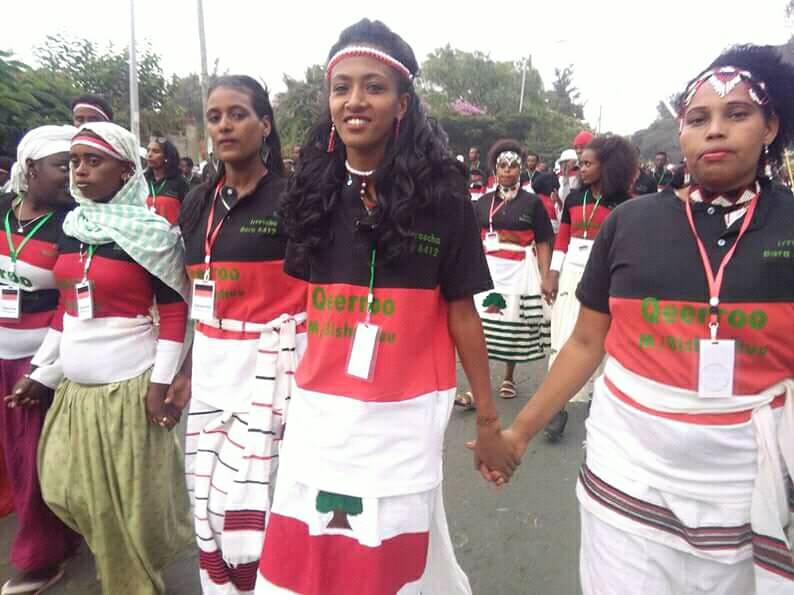
Qeerroo in Oromia honours Jirenya Ragassa
(Qeerroo, 29 April 2012) – Student Jirenya Ragassa was one of the peaceful demonstrators who were convinced to speak out against injustice and to work for democracy and rule of law, in a country where unspeakable mess is going on by an organized gang and self appointed “Government of Ethiopia”.
It is a conviction of tyrants that crushing dissents is the only way to move forwards. They don’t have the courage to face the bitter truth and brave hearts of their own citizens. By so doing, they exacerbate the already complex and unbearable situation and push the matter further to the brink. By killing one, they will help the birth of thousands and millions of Jirenya, who are ready to fight to the end for the right and dignity of their people and their land.
That is exactly what is happening right at the hero memorial held for Jirenya in different part of Wollega. They have vowed to keep their promise to each other and to the soul of Jirenya, that his sacrifice will inspire their life and their struggle until they achieve their goal. Students and fellow Oromo’s in Haroo, Limmuu, Diggaa, Saasiggaa, Eebantuu, Kiiramuu, Dhukkee, Dongoroo, Amuruu, Jaartee and other places have held a candle light ceremony in his remembrance, chanting and vowing to keep the cause going.
Jirenya has lived an exemplary life and had paid the biggest sacrifice for the cause of his people. He preferred to die on his feet than to live on his knees, leaving the rest of the job behind for us.
Let’s move the barrier, let’s make the monster in 4 kilo and his brutality only a matter history. Let us act NOW!!!
–Qeerroo