Author Archives: advocacy4oromia

Honoring Jaal Dhugaasaa: A Symbol of Oromo Liberation

FEATURE NEWS: A Salute to the Steadfast – Honoring Veteran Oromo Freedom Fighter Jaal Dhugaasaa Bakakkoo on Oromo Liberation Army Day
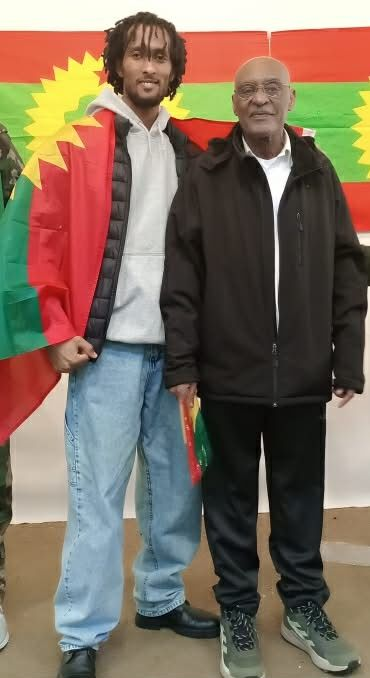
In a moment that bridged generations of struggle, the presence of revered Oromo elder and veteran freedom fighter Jaal Dhugaasaa Bakakkoo became the defining symbol of this year’s Oromo Liberation Army (OLA) Day commemorations.
Attendees at the ceremony were deeply moved as the elder, a foundational figure from the very inception of the Oromo Liberation Struggle, was honored. His physical presence served as a powerful, living connection to the movement’s roots and sacrifices.
“To see with my own eyes pioneers of the Oromo struggle like Jaal Dhugaasaa, who were among the first to take up the mantle of our liberation, has filled me with immense honor,” shared one emotional attendee. “It is a profound blessing.”
The honor was made tangible with the presentation of a symbolic Alaabaa Oromoo—a ceremonial scarf of love and respect in the Oromo flag’s colors of red, green, and red. “Receiving this Alaabaa Oromoo from his hands filled me with great joy,” the recipient added. “My heartfelt thanks. You have set a supreme example for us.”
The celebration was not just a political remembrance but a heartfelt communal wish for the elder’s wellbeing. Attendees expressed their prayers for his long life, continued health, and prosperity, alongside the hope that he remains with his people for years to come. “May you live a long, healthy, and fulfilled life among your people,” was the collective sentiment, acknowledging his irreplaceable role as a living archive of the struggle’s history and values.
Jaal Dhugaasaa Bakakkoo is widely recognized as a senior figure within the Oromo Liberation Front (OLF) and a former executive member of its armed wing, the OLA (WBO). His life’s journey maps the evolution of the modern Oromo quest for self-determination, making his participation in contemporary commemorations a potent act of continuity.
The event underscored a central theme resonating across the diaspora this year: the unbroken chain of commitment. Honoring figures like Jaal Dhugaasaa reinforces the understanding that today’s political space and determination are built upon the sacrifices of yesterday’s pioneers. It served as both a thanksgiving to the past and a solemn passing of responsibility to ensure the “support and sustenance for the freedom struggle continues to receive continuity.”
As one participant powerfully noted, the very act of organizing such gatherings is a declaration: “By doing this, saying ‘we are here!’ is a duty that must continue.” The presence of Jaal Dhugaasaa Bakakkoo at its center was a vivid reminder of where “here” began, and why the journey must persist.

Dawn Ceremony Marks New Era for Oromo Governance

Feature News: Dawn Reclamation – Oromo Gadaa Assembly Ushers in New Era at Historic Tarree Leedii Site
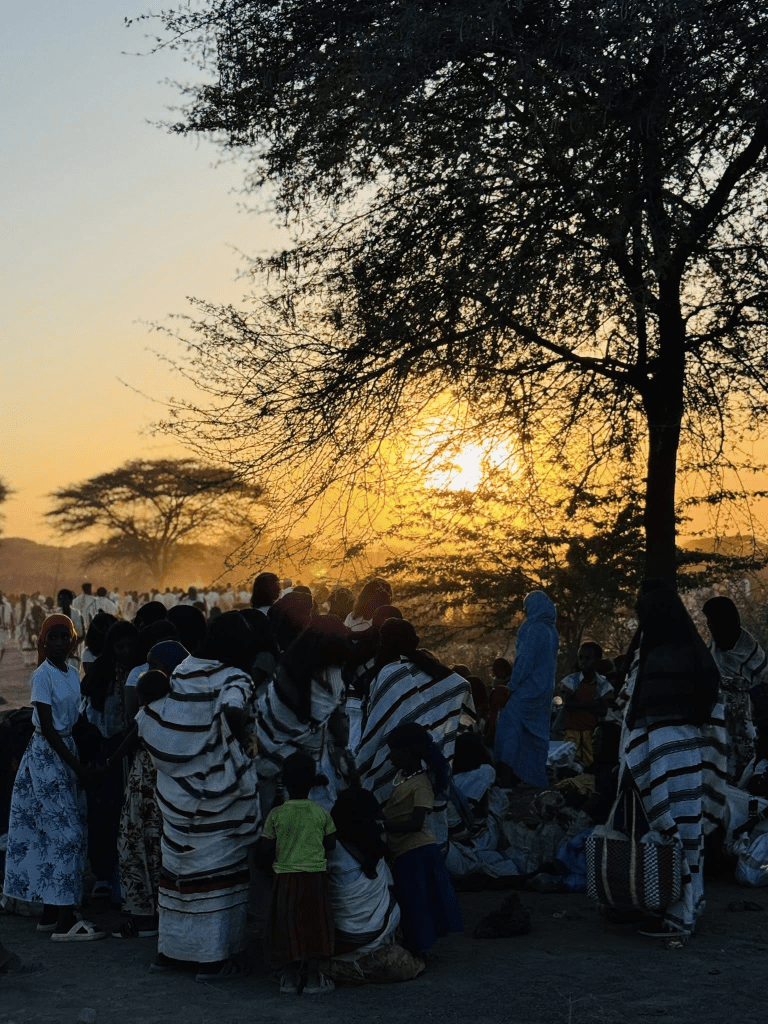
FANTAALLEE, SHAWA BAHAA, OROMIA – In a powerful act of cultural restoration and communal resolve, the Oromo Gadaa system of the Karrayyuu region has formally reinstated its traditional assembly, the Sirna Goobaa, at the sacred grounds of Ardaa Jilaa, Tarree Leedii. This landmark gathering, conducted at dawn on Saturday according to sacred custom, marks not just a meeting, but the revival of an ancient democratic and spiritual heartbeat in Eastern Shawa.
The ceremony, led by Abbaa Gadaas, elders, and community representatives, began in the pre-dawn hours, adhering strictly to the profound rituals and aesthetics of Oromo tradition. Participants gathered under the ancient trees of Ardaa Jilaa, a site long held as a seat of ancestral wisdom and collective decision-making, to reignite the principles of the Sirna Goobaa—the assembly of law, justice, and social order.
“This is not a symbolic gesture; it is a homecoming,” declared one senior elder, his voice echoing in the crisp morning air. “We are reclaiming our space, our process, and our responsibility to govern ourselves according to the laws of our forefathers and the balance of nature. The Goobaa is where our society heals, deliberates, and progresses.”
The choice of location and time is deeply significant. Tarree Leedii is historically a cornerstone of socio-political life for the Karrayyuu. By convening at dawn (ganamaa), the assembly honors the Oromo cosmological view that links the freshness of the morning with clarity, purity, and the blessing of Waaqaa (the Supreme Creator). The meticulous observance of rituals involving sacred items, chants (weeduu), and the pouring of libations underscores a commitment to authenticity and spiritual sanction.
Community members, young and old, observed in reverent silence as the protocols unfolded. For many youth, it was a first-time witnessing of the full, unbroken ceremony. “To see our governance system in action, here on this land, is transformative,” said a young university student in attendance. “It connects the history we read about directly to our future. It shows our systems are alive.”
The reinstatement of the Sirna Goobaa at Ardaa Jilaa sends a resonant message beyond the borders of Fantuallee District. It represents a grassroots-driven renaissance of indigenous Oromo governance, asserting its relevance and authority in contemporary community life. It serves as a forum to address local disputes, environmental concerns, and social cohesion through the framework of Gadaa principles—Mooraa (council), Raqaa (law), and Seera (covenant).
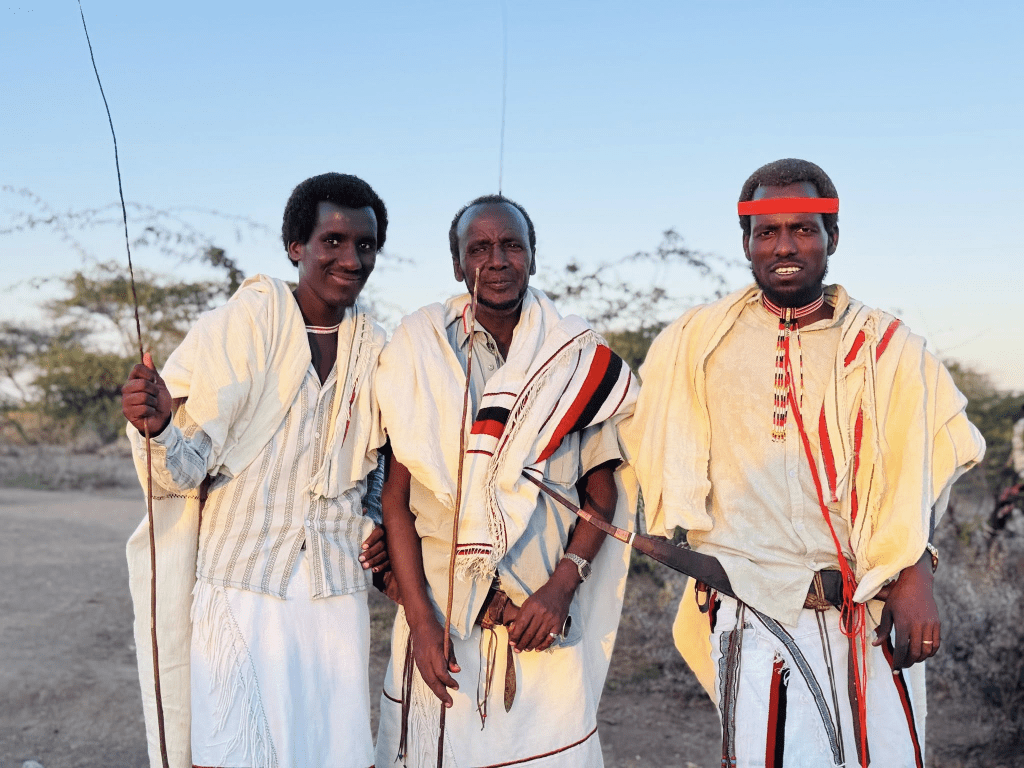
Analysts view this move as part of a broader movement across Oromia where communities are actively revitalizing Gadaa and Waaqeffannaa institutions as pillars of cultural identity and self-determination. The successful convening at Tarree Leedii demonstrates local agency and the enduring power of these systems to mobilize and inspire.
As the sun rose over the assembly, illuminating the faces of the gathered, the event concluded with a collective affirmation for peace, justice, and unity. The revival of the Sirna Goobaa at this historic site is a dawn in every sense—a new beginning for community-led governance, a reconnection with ancestral wisdom, and a bold statement that the Gadaa of the Karrayyuu is once again in session, ready to guide its people forward.


Honoring Oromo Warriors: Cairo’s Annual OLA Day

In Cairo, a Distant Diaspora Keeps the Flame Alive: Commemorating the Oromo Liberation Struggle
CAIRO – In a gathering marked by solemn reflection and resilient spirit, the Oromo community in Cairo recently commemorated Oromo Liberation Army (OLA) Day on April 1, 2026. The event was more than a calendar observance; it was a powerful act of collective memory, a reaffirmation of identity, and a declaration of unwavering commitment to a cause that spans decades and continents.
The atmosphere was charged with the weight of history. As noted by Mr. Nasralla Abdu, Chairman of the Association, the day serves a dual purpose: to honor the souls of fallen freedom fighters and to fortify the resolve of those who continue the struggle. This is not mere ritual; it is the lifeblood of a diaspora movement, a vital mechanism to ensure that distance does not dilute purpose nor time erode sacrifice.
The historical anchor of the commemoration, as recounted, is crucial. The reference to the OLA’s reconstitution in 1980, following the severe challenges of the late 1970s, transforms April 1st from a simple date into a symbol of regeneration and stubborn endurance. It marks a moment when the struggle, against formidable odds, chose to persist. Celebrating this anniversary yearly, as the chairman explained, is to ritually reaffirm that same choice to persist, generation after generation.
The testimonies from attendees cut to the heart of the matter. For them, this was an “anniversary of covenant”—a renewal of the sacred promise to the struggle—and a moment of remembrance for those who paid the “ultimate price.” This language transcends politics; it enters the realm of collective oath and sacred duty. Furthermore, their powerful statement linking the ongoing sacrifice of Oromo people inside the homeland—for their identity, culture, history, and land—to the diaspora’s obligation to “stand in solidarity and fight for our people’s rights” creates a potent bridge. It connects the internal resistance with external advocacy, framing a unified struggle on two fronts.
This event in Cairo is a microcosm of a global phenomenon. It demonstrates how diasporas function as custodians of history and amplifiers of voice when direct expression at home is constrained. The careful observance in Egypt underscores that the Oromo quest for recognition, justice, and self-determination is not confined by geography. It is nurtured in community halls abroad as much as it is in the hearts of people within Oromia.
Ultimately, the commemoration was a tapestry woven with threads of grief, pride, and ironclad resolution. It acknowledged a painful past of loss and “severe circumstances,” celebrated the resilience that emerged from it, and boldly projected that spirit into an uncertain future. As long as such gatherings occur—where names are remembered, covenants renewed, and solidarity declared—the narrative of the Oromo struggle remains alive, authored not just by fighters on the ground but by communities in exile holding vigil for the dawn they believe must come.

Celebrating Oromo New Year 6420: A Cultural Legacy

Feature News: Celebrating Heritage and Harmony – Waaqeffannaa Faithful Usher in Oromo New Year 6420 at Walisoo Liiban Temple
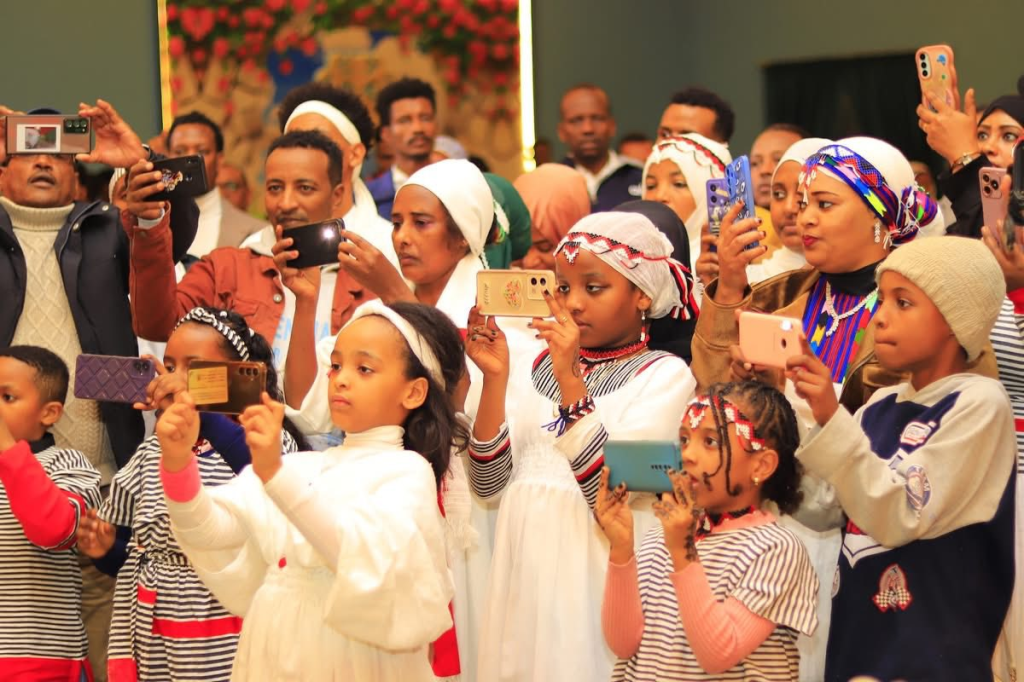
WALISOO LIIBAN, OROMIA – In a profound celebration of cultural rebirth and spiritual unity, the Waaqeffannaa faithful gathered at the sacred Galma Amantaa (House of Worship) here on Thursday to solemnly and joyfully observe the Oromo New Year, Birboo, marking the dawn of the year 6420.
The ceremony was far more than a ritual; it was a powerful reaffirmation of an ancient identity, a prayer for peace, and a community’s declaration of continuity. Under the sacred Ficus tree (Odaa) that stands as a central pillar of the Galma, elders, families, and youth came together in a vibrant display of thanksgiving (Galata) to Waaqaa (the Supreme Creator) and reverence for nature and ancestry.
The air was thick with the fragrance of burning incense (qumbii) and the sound of traditional hymns (weeduu) as the Qalluu (spiritual leader) guided the congregation through prayers for blessing, prosperity, and, above all, peace for the coming year. The central message of the celebration, as echoed by the organizers, was a heartfelt benediction for the entire Oromo nation: “May this New Year bring you peace, love, and unity!” (Barri kun kan nagaa, jaalalaafi tokkummaa isiniif haa ta’u!).
This public and dignified observance of Birboo carries deep significance in the contemporary context of Oromia. As Ethiopia’s largest ethnic group navigates complex social and political landscapes, the celebration at Walisoo Liiban served as a potent symbol of cultural resilience.
“Observing Birboo at our Galma is not just about marking a calendar,” explained an elder attending the ceremony. “It is about remembering who we are. It is about connecting our past to our future, grounding ourselves in the values of balance, respect for all creation, and community that Waaqeffannaa teaches. In praying for peace, we are actively willing it into being for our people.”
The sight of children learning the rituals and youths actively participating underscored a vital theme: the intergenerational transmission of indigenous knowledge and spirituality. The celebration was a living classroom, ensuring that the philosophy of Safuu (moral and ethical order) and the connection to the Oromo calendar, based on sophisticated astronomical observation, are not relegated to history books but remain a vibrant part of community life.
The event concluded with a communal meal, sharing of blessings, and a collective sense of renewal. As the sun set on the first day of 6420, the message from the Galma Amantaa at Walisoo Liiban was clear and resonant. It was a declaration that the Oromo spirit, guided by its ancient covenant with Waaqaa and nature, remains unbroken, steadfastly hoping for and working towards a year—and a future—defined by nagaa (peace), jaalala (love), and tokkummaa (unity).


Resilience and Celebration: Oromo New Year Events Worldwide

Feature Commentary: The Unbroken Circle — How Oromo New Year Gatherings Forged a Global Covenant
As the world celebrated the turning of another calendar year, scattered communities across the globe engaged in a different kind of reckoning. From the quiet halls of Victoria, Canada, to the solitary open office in Gullalle, Oromia, and across the digital squares of a global Zoom call, the Oromo people marked the dawn of 2026 not with fleeting resolutions, but with a profound, collective covenant.
What emerged from these simultaneous gatherings—Amajjii (Oromo New Year) fused with the commemoration of the Oromo Liberation Army (OLA)—was not merely a series of cultural events. It was the clear, unified heartbeat of a movement at a critical inflection point, revealing a sophisticated national narrative being woven across continents.
The Dual Flame: Culture and Resistance
The first striking feature is the intentional fusion of the sacred and the strategic. This is no coincidence. The Eebba (invocation) of elders in Minneapolis, the shared meals in Victoria, and the celebration of Ayyaana Amajjii online are acts of cultural sustenance. They root a people in an identity that predates the current conflict. But this cultural flame is deliberately kept in the same hearth as the martial memory of the OLA. The message is unambiguous: to be Oromo is to cherish their heritage and to acknowledge the armed struggle undertaken in its defense. This duality—the cultural citizen and the resistance fighter—forms the inseparable core of the modern Oromo political identity.
From Vigil to Vanguard: The Diaspora’s Vital Role
The events in Victoria, Toronto, Minneapolis, and Edmonton powerfully redefine the role of a diaspora. This is not a community looking wistfully homeward. It is an active, organized, and indispensable limb of the body politic. When an elder in Victoria prays, “God bless our sons who sacrificed for us,” the grief is intimate and immediate. When the Edmonton chapter is honored for ensuring the “continuity” of support, it is framed as a duty, a logistical and moral lifeline.
The diaspora’s gatherings are described as declarations: “ni jirra!” — “we are here!” This presence is more than symbolic; it is the foundation for institutional strength (jabeenya jaarmiyaa), a theme hammered home in Toronto and Edmonton. In the movement’s calculus, a robust community hall abroad is as strategically vital as a forest clearing in Oromia.
The Strategic Pivot: From Resistance to Responsibility
The most significant revelation comes from the heart of the struggle itself—the Gullalle office. The address by Jaal Jabeessaa Gabbisaa there was not just a speech; it was a strategic state-of-the-union. His declaration that the OLF is transitioning from “resistance” to “elections” is a monumental shift. It signals an evolution from a movement seeking to challenge a state to one preparing to administer one.
This pivot reframes the entire struggle. The goal is no longer just recognition or even victory in a conflict, but the establishment of a democratic standard “for the world.” It is an audacious claim that immediately raises the stakes, transforming the narrative from one of victimhood to one of future governance. The admission of challenges in campaigning in certain regions underscores this new, sober, political realism.
The Unbroken Chain: Seed, Sphinx, and Succession
Amidst this strategic planning, the gatherings were anchored by powerful, human symbols of continuity. The frail but fiery activist Ilfinesh Qannoo, carried to the Gullalle stage, became the living soul of the struggle. Her proverb, “Ilkaan socho’e buqqa’uun isaa hin oolamu” (A seed that moves does not rot), provided the perfect metaphor. The Oromo movement, she argued, is that moving seed—its perpetual motion, its constant struggle, is what prevents its dream from decay.
This connects directly to the intergenerational charge that echoed in every location, from the global Zoom call to the local chapter halls. The youth are not an audience; they are, as Dr. Daggafaa Abdiisaa stated, the “beloved children of the fallen heroes” upon whom the “duty” now rests. The movement is consciously passing the torch, framing the next generation as the rightful heirs and executors of a will written in sacrifice.
Conclusion: The Virtual Hearth and the Perpetual Motion
Together, these scattered celebrations formed a single, coherent Chaffe—a traditional assembly for the digital age. The virtual Zoom hearth, the solitary Gullalle office, the prayerful halls in North America—all were nodes in a network of unwavering resolve.
They balanced the sorrow of memory with the rigor of strategy. They honored sacrifices not with passive remembrance, but with a pledge to build a future where such sacrifices cease. They announced a movement in motion, guided by the wisdom of elders, fueled by diaspora resolve, executed by a preparing youth, and strategically pivoting toward the responsibilities of a political future.
The Oromo New Year 2026, therefore, was more than a celebration. It was a global statement of perpetual motion. The seed is moving. The covenant is renewed. And the message, from every corner of the world, is one of unbroken and determined continuity.


Oromo Diaspora’s New Year Affirmation: ‘We Are Here!’
Feature Commentary: “Ni Jirra!” – The New Year’s Covenant in Edmonton
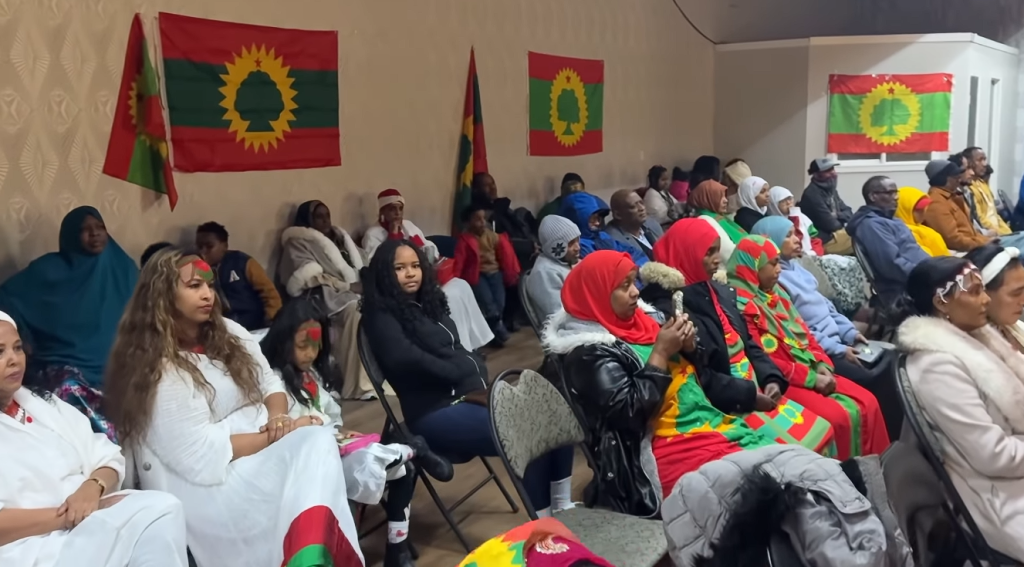
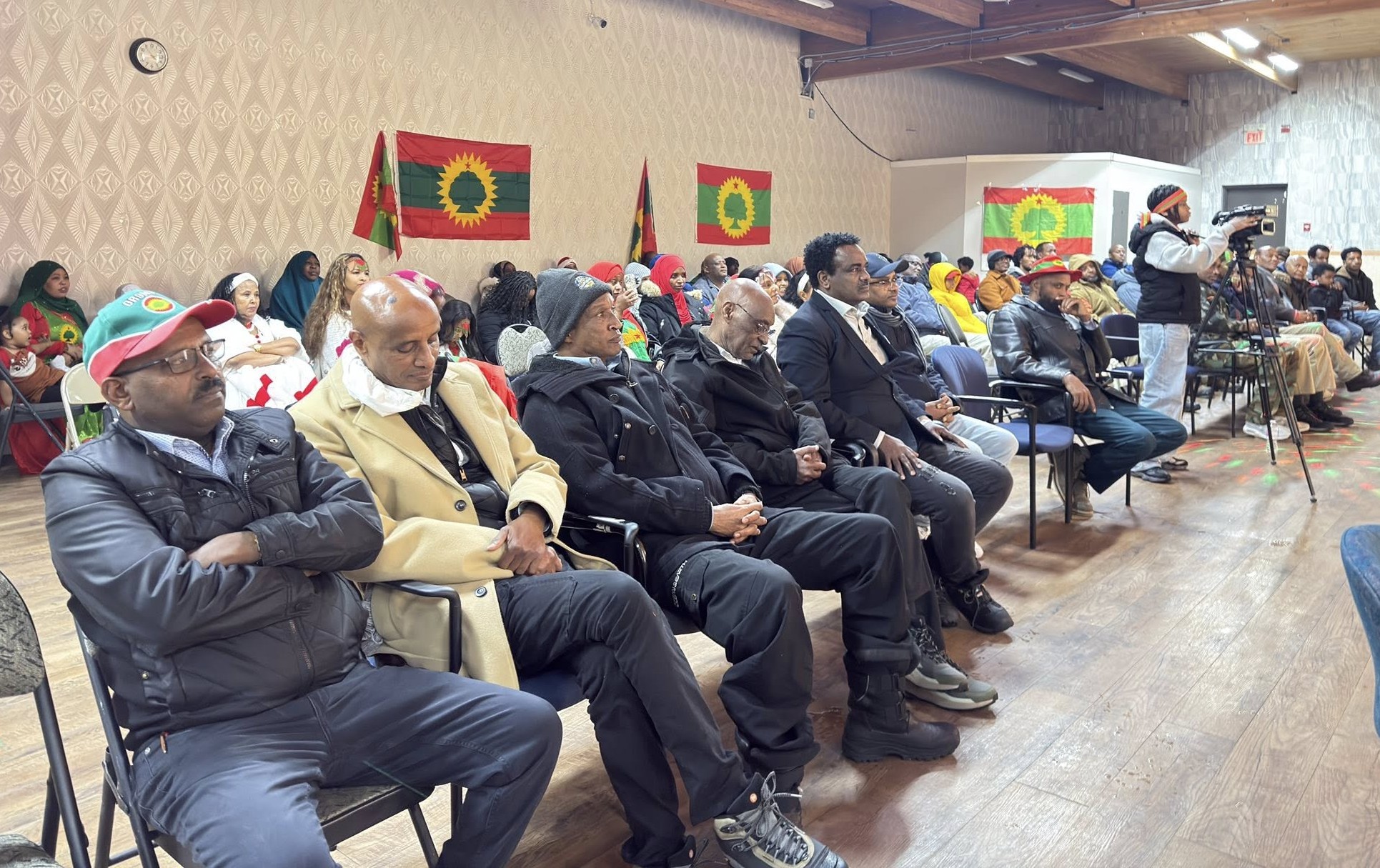
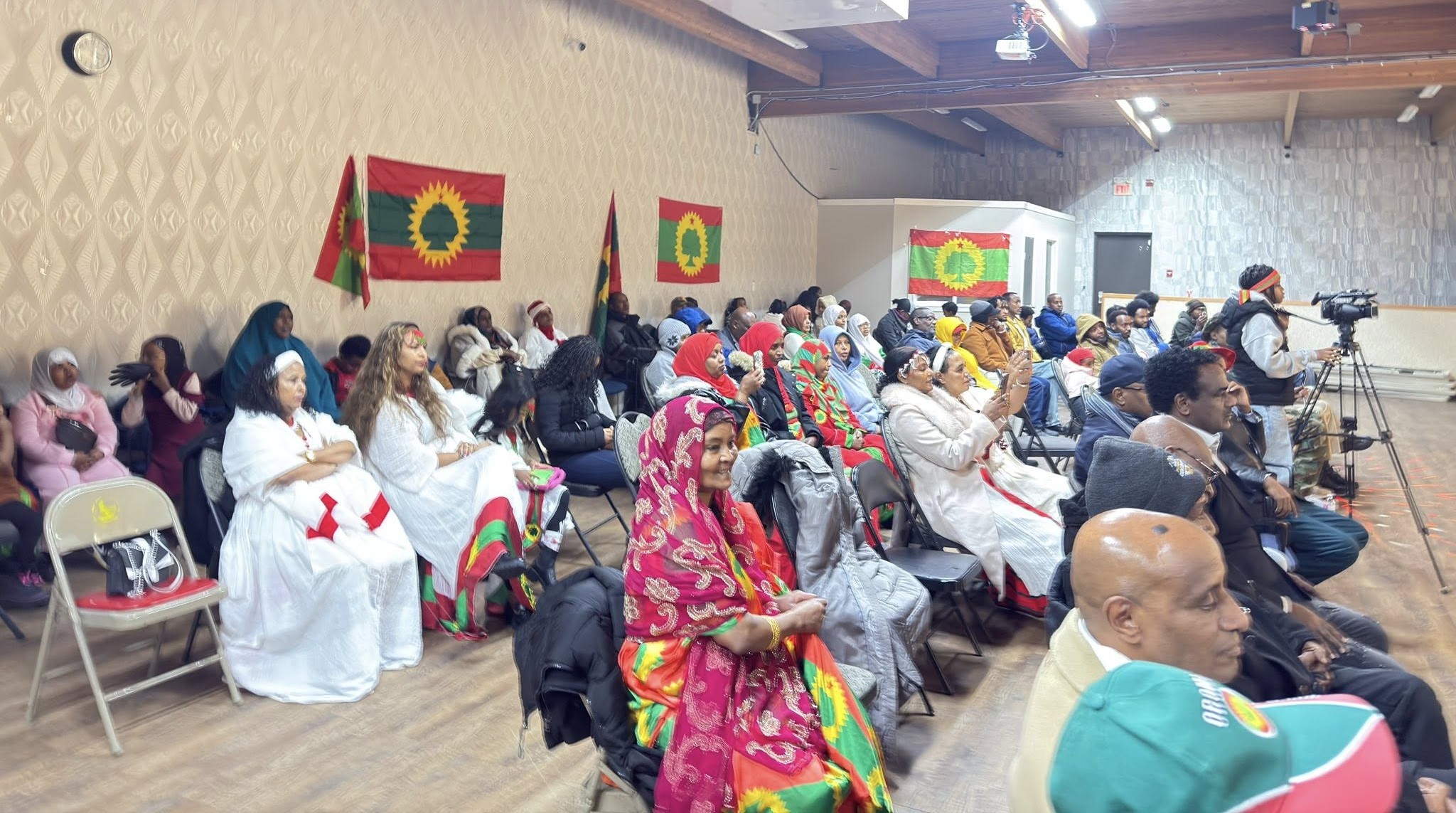
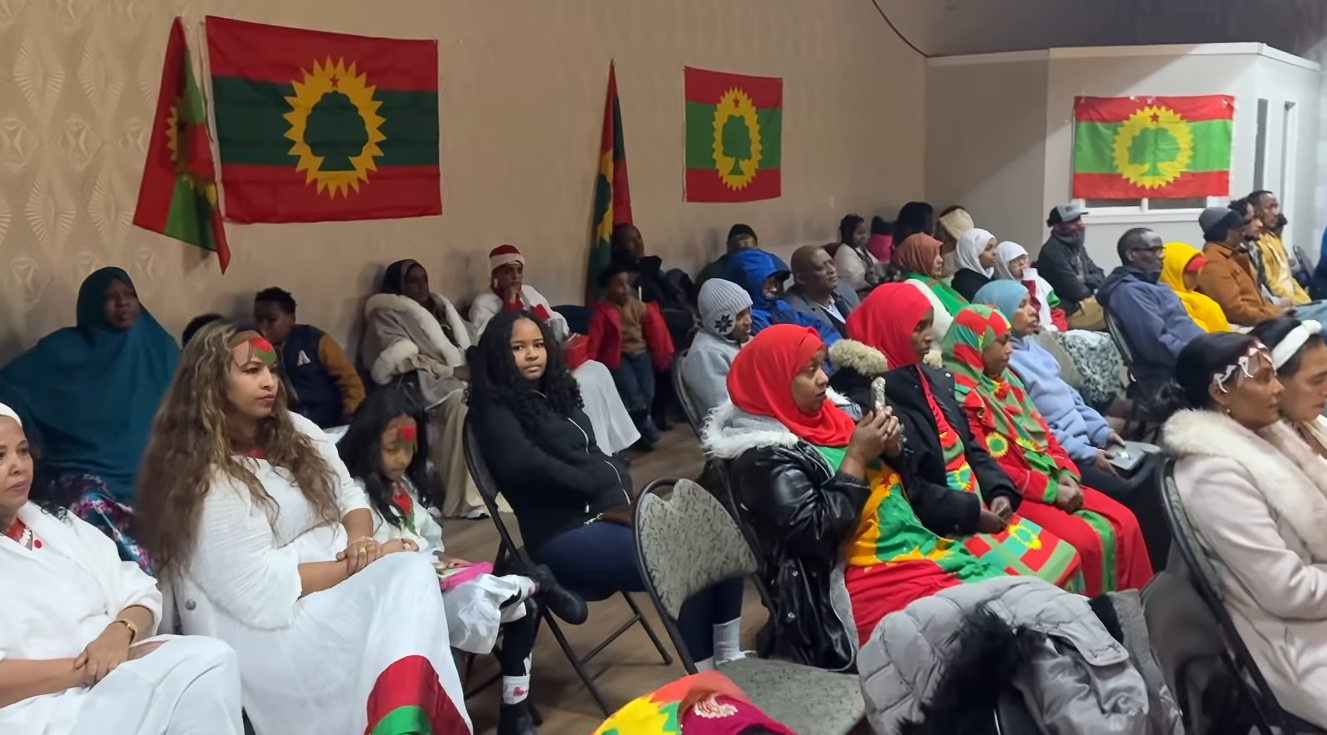
EDMONTON, ALBERTA — In a community hall thousands of miles from the Oromian highlands, a simple, powerful declaration resonated among the gathered Oromo diaspora this past week: “Ni jirra!” “We are here!”
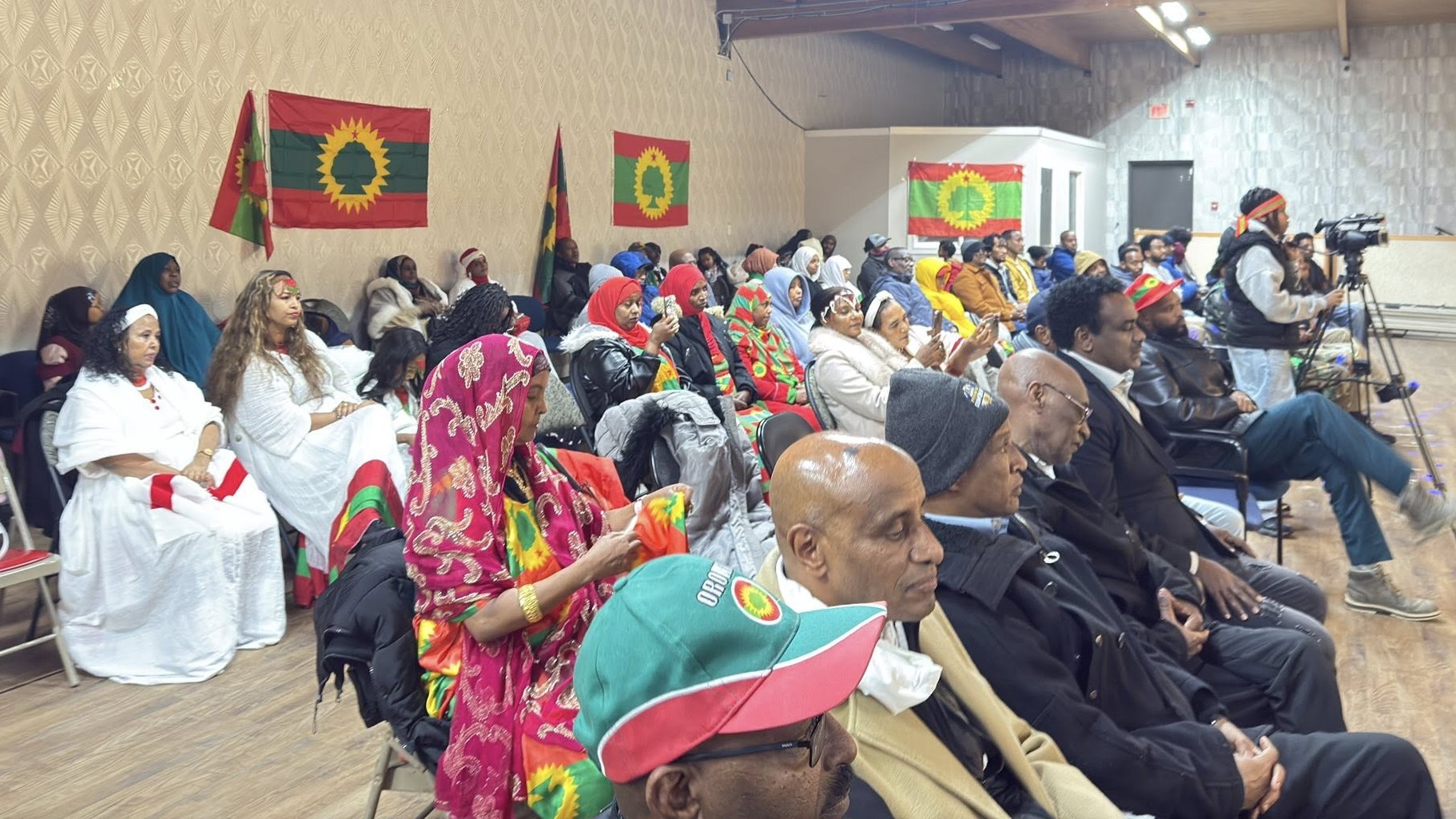
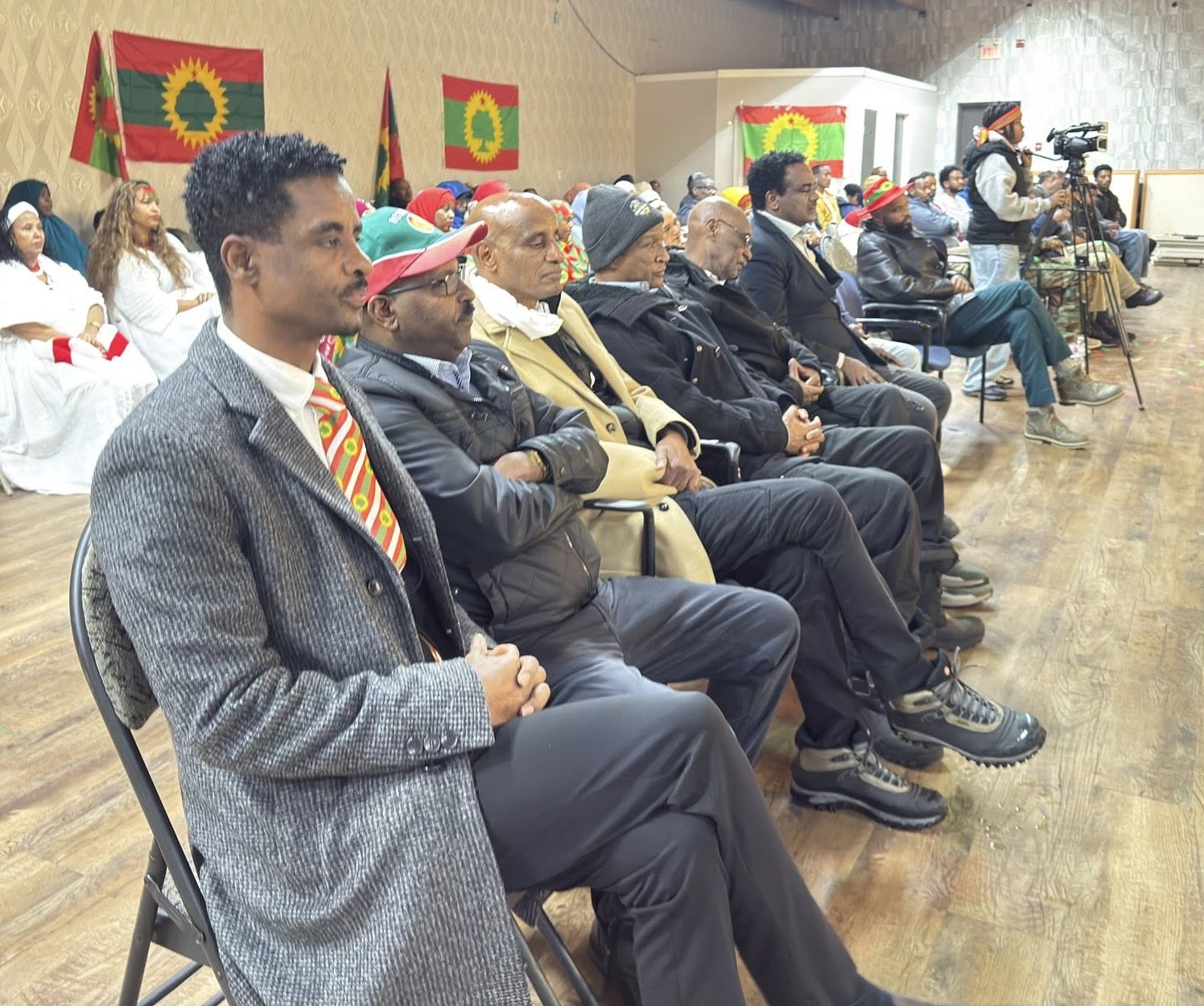
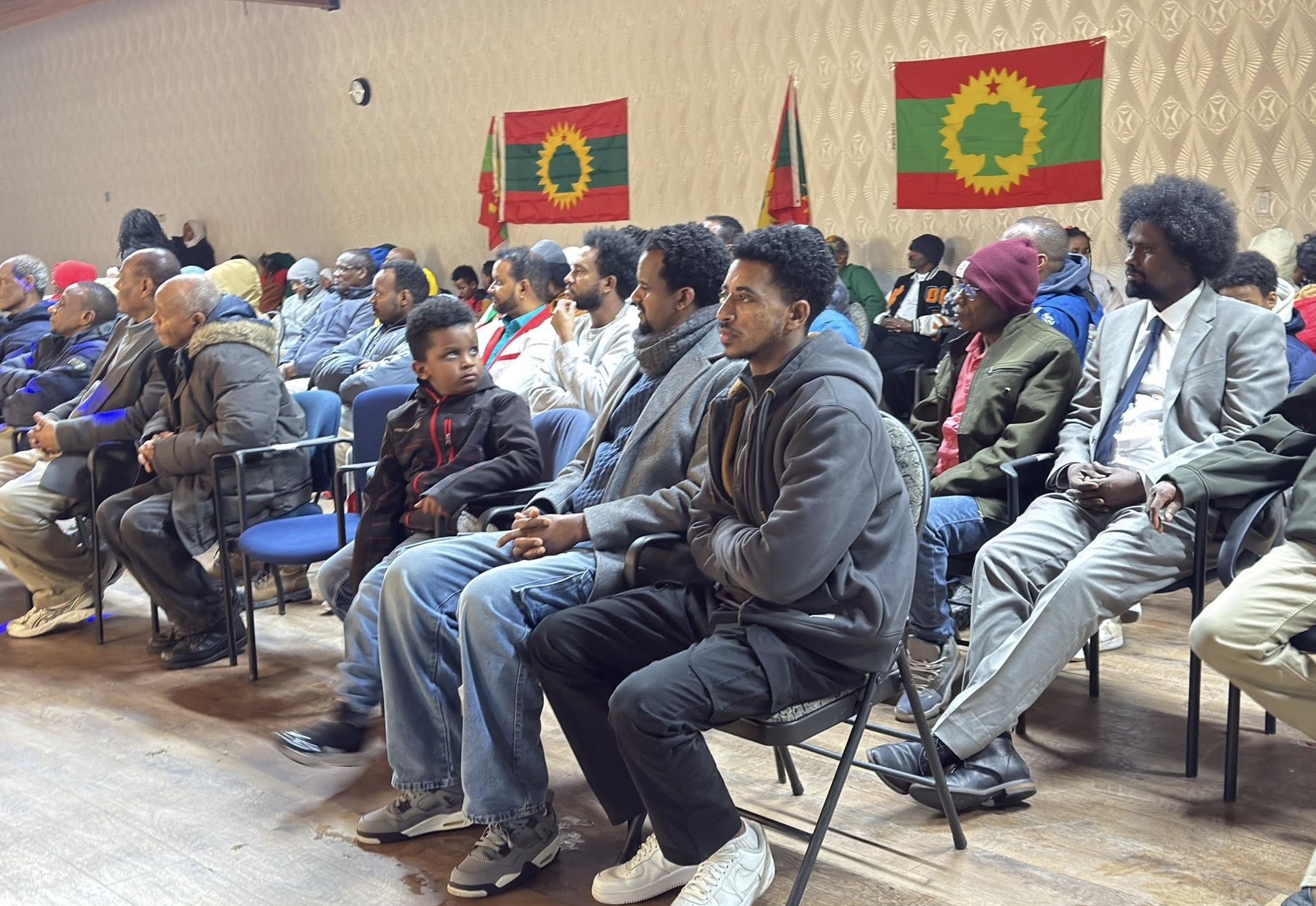
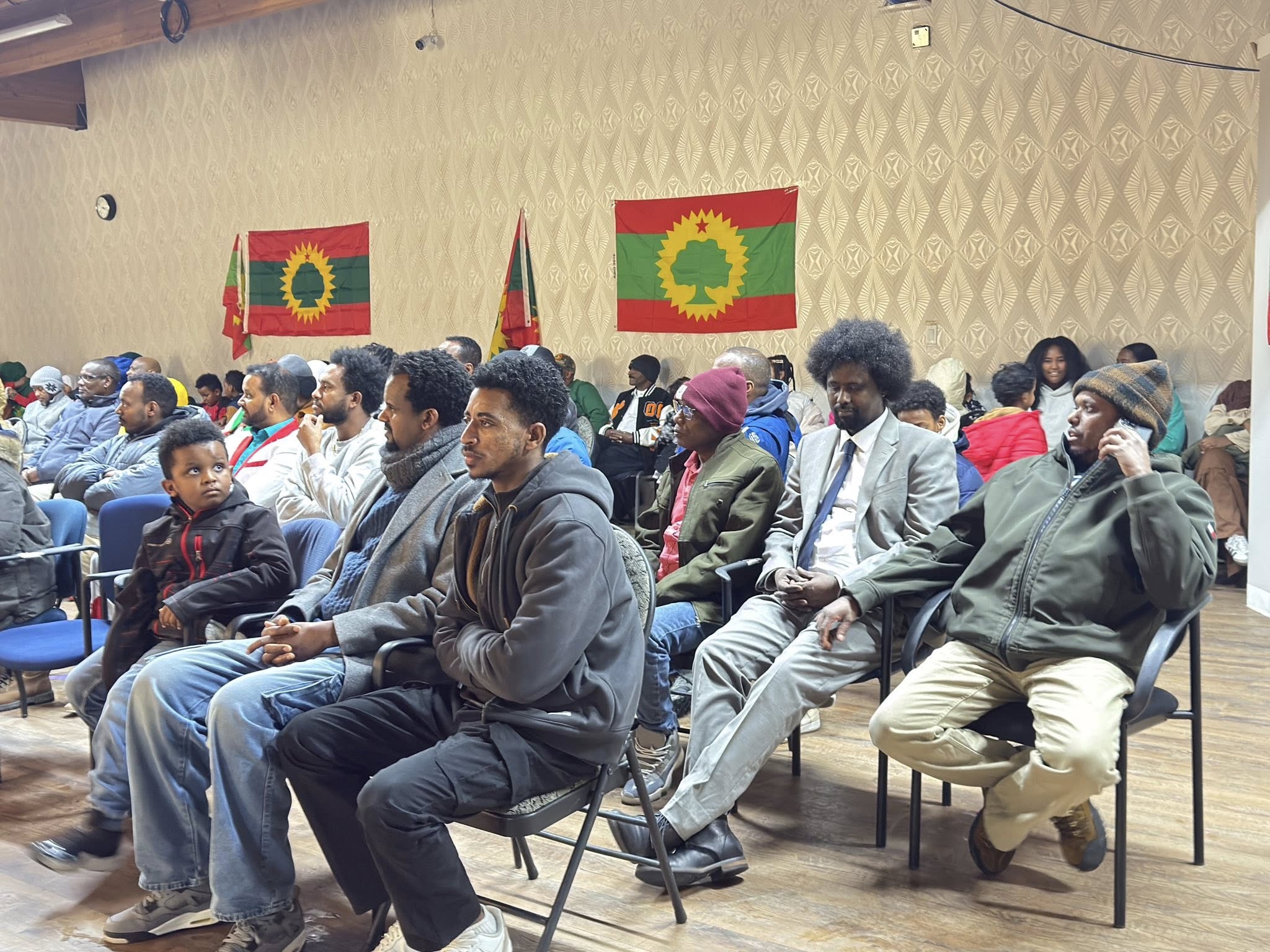
The occasion was the celebration of the Oromo New Year, Amajjii 1, 2026, and World Brotherhood Day (WBO), organized by the Oromo Liberation Front (OLF) chapter in Edmonton. But this was far more than a cultural festival. It was a strategic affirmation, a renewal of vows, and a conscious act of political endurance in the long winter of exile.
The ceremony’s significance was amplified by the distinguished presence of Jaal Dhugaasaa Bakakkoo, a senior OLF leader and a foundational figure in the WBO movement. His attendance was not merely ceremonial; it was a symbolic bridging of generations and geographies. It connected the grassroots organizational work in the diaspora directly to the historical leadership of the struggle, reminding attendees that their gatherings in Edmonton are not isolated events, but nodes in a global network of resistance.
The core of the event, however, transcended any single individual. As the commentary notes, the celebration focused intensely on “jabeenya jaarmiyaa”—the strength of the institution. This is a critical, mature evolution in diaspora political consciousness. The discussions and shared reflections (yaada ijaaraa waliif qooduu) were not just about grievances or nostalgia, but about organizational resilience, strategic continuity, and the mechanisms required to sustain a liberation movement across decades and continents.
The meticulous preparation of the program itself was framed as a direct, tangible contribution to the struggle. Organizers were thanked explicitly for ensuring that “deeggarsii fi tumsi qabsoo bilisummaa akka itti fufiinsa argatu”—that “support and sustenance for the freedom struggle continues to receive continuity.” Every detail, from the logistics to the speeches, was thus imbued with political purpose. It transformed community work from social activity into a vital supply line for a distant war of liberation.
This context makes the attendees’ declaration—“Qophii akkanaa qopheessuun ‘ni jirra!’ jechuun hojii boonsaa fi itti fufuu qabuu dha”—so profoundly meaningful. They stated: “By organizing such programs, saying ‘we are here!’ is a duty and a task that must continue.”
Here, “Ni jirra!” operates on three levels:
- Existential: We, as a people and a national project, persist. We have not been erased.
- Geopolitical: We are present and active in this Canadian city, maintaining our identity and mission.
- Institutional: The OLF, as the vehicle of our aspirations, is alive, functioning, and organizing here.
In the vastness of the Canadian prairie, this declaration is a defiant act of presence. It counters the forces of assimilation, the fatigue of a long struggle, and the sheer physical distance from the homeland. The Edmonton celebration demonstrated that for the Oromo diaspora, cultural preservation and political mobilization are inseparable. Celebrating Amajjii is an act of memory; organizing it under the OLF banner is an act of future-making.
The message from Edmonton is clear: The new year is not just a change in calendar, but a renewal of contract. The diaspora’s role is not passive waiting, but active institutional maintenance. Their prayer is not just for a good year, but for a stronger organization. Their declaration, “We are here,” is the essential, unwavering foundation upon which the dream of “being there”—in a free Oromia—ultimately depends.

Amajjii 2026: A Turning Point for OLF and Oromo Identity

Feature Commentary: Amajjii 2026 at OLF HQ – A Ceremony of History, Resolve, and the “Moving Seed”
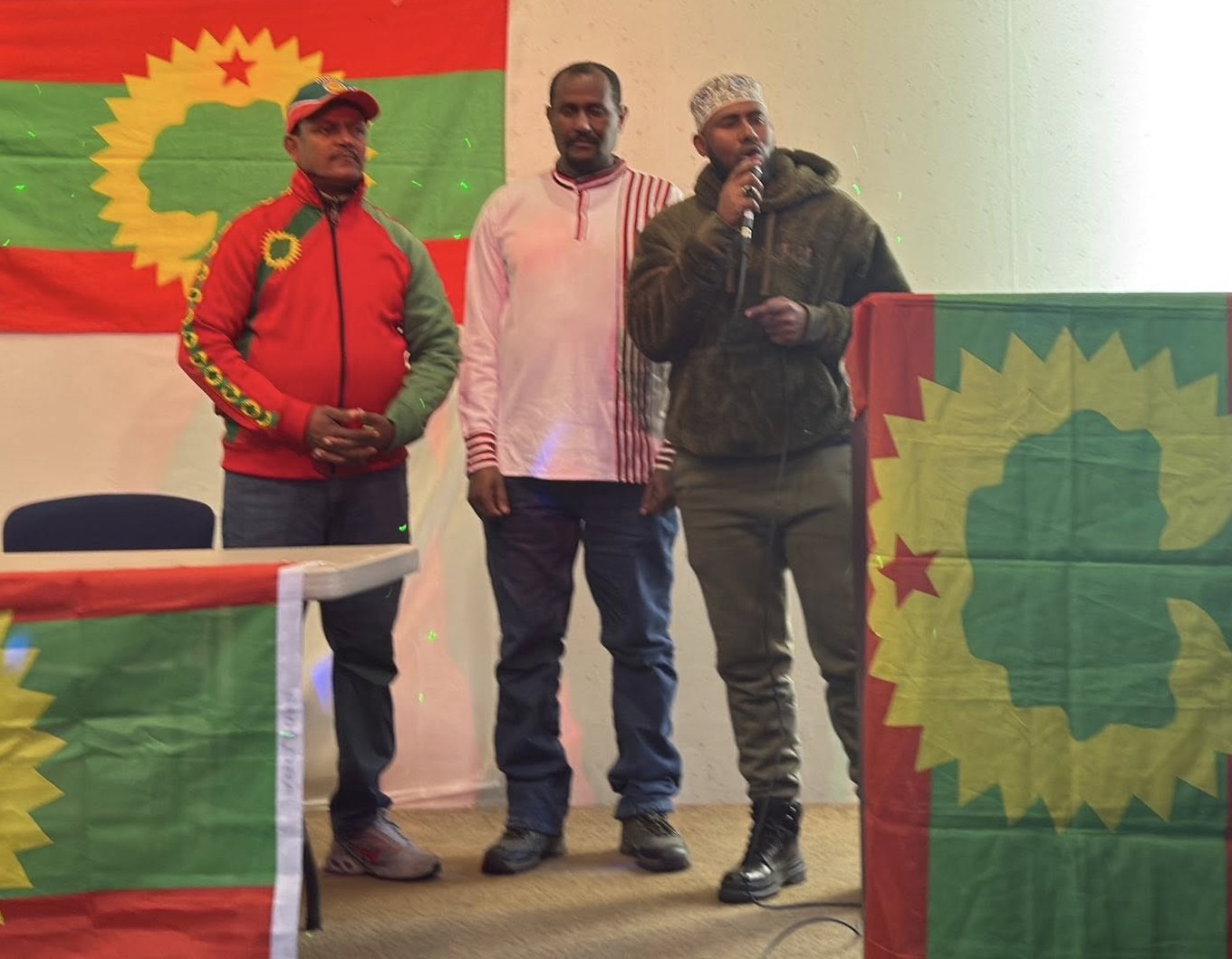
(SBO, Amajjii 3, 2026)-The celebration of Amajjii (Oromo New Year) and History Makers’ Day at the headquarters of the Oromo Liberation Front (OLF) on Amajjii 3, 2026, was more than a ritual. It was a multidimensional gathering—part solemn remembrance, part strategic council, and part generational baton-passing—that laid bare the soul of a movement at a critical juncture.
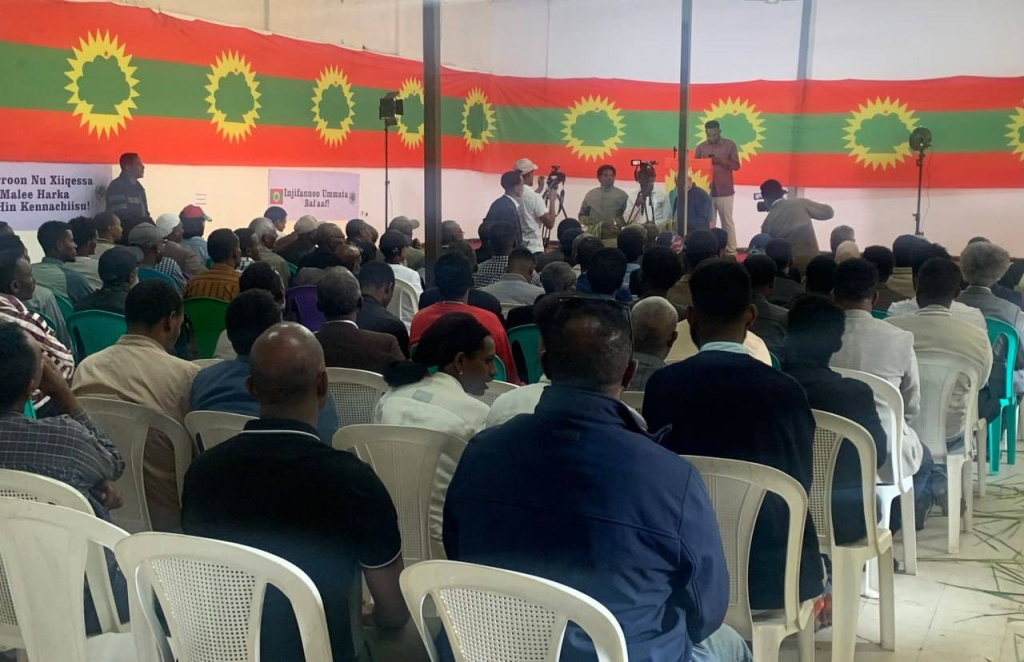
Held at the OLF’s Gullalle office, the ceremony brought together leaders, officials, members, and supporters. It began, as Oromo tradition dictates, with the Eebba of the elders, a spiritual invocation that roots contemporary struggle in ancient covenant. This set the tone: the day was to be a bridge between timeless cultural identity and urgent modern politics.
The core of the event was a powerful narrative arc, presented by key OLF figures. Jaal Kennasaa Ayyaanaa framed the day, connecting the act of commemoration to the tangible outcomes of the struggle. But the strategic heart of the discourse came from Jaal Jabeessaa Gabbisaa of the National Council (Shanee Gumii). His address was a stark, clear-eyed audit of the OLF’s journey.
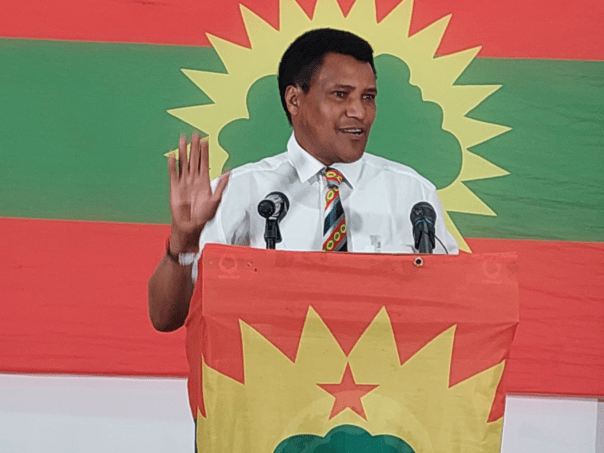
Jaal Jabeessaa declared a pivotal transition: the OLF has moved from a phase of “resistance” to one of “elections.” This is not merely rhetorical. It signifies a strategic evolution from opposing a state to preparing to administer one. He acknowledged the immense difficulties—the “severe and grueling conditions”—under which the OLF is preparing for the “7th round of elections,” a task requiring immense internal fortification (danqaa fi danqaraan). The goal, he stated, is to conduct an election that is not only fair but a “standard” and “example” for the world. This is an ambitious reframing of the Oromo quest from a struggle for recognition to one setting a global benchmark in democratic practice.
He candidly addressed challenges, noting difficulties in campaigning in regions like Amhara, Benishangul-Gumuz, and Harar due to insecurity, while asserting preparedness elsewhere. This admission of uneven political terrain was a mark of sober realism, not weakness.
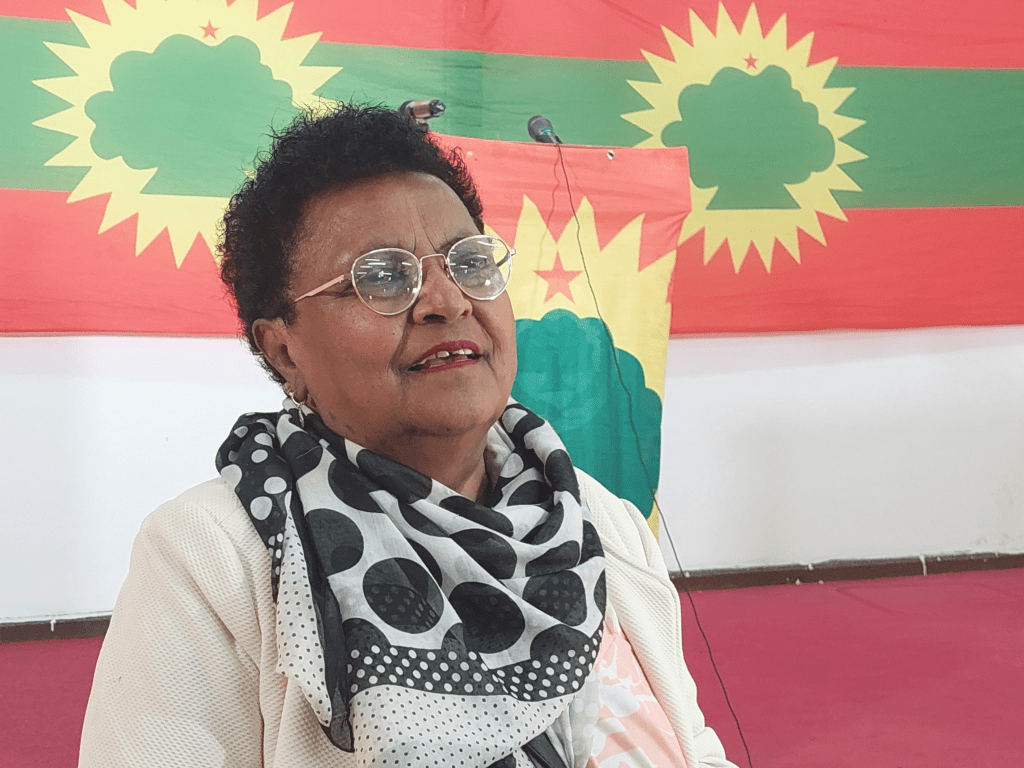
The ceremony’s most profound moment, however, was human, not strategic. The presence of Jaal Ilfinesh Qannoo, the revered activist and poet, now frail and carried to the event, served as the gathering’s moral and emotional compass. Her voice, quoting the proverb “Ilkaan socho’e buqqa’uun isaa hin oolamu” (A seed that moves does not rot), electrified the room. She transformed the metaphor: the OLF and its supporters are the “moving seed,” their constant struggle preventing the dream from decaying. Her declaration—“The OLF is a sphinx; no one can defeat it”—was a spiritual charge to the youth to prepare for the final sacrifices needed for victory. In her, the audience saw the living cost of the past and the unwavering faith required for the future.
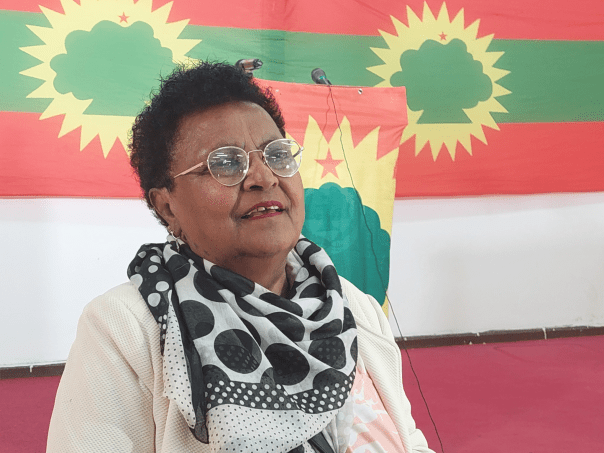
This intergenerational dialogue was emphasized by Jaal Alamaayyoo Diroo, who noted, “The OLF is forged; it has become strong because it resisted oppression.” His message reinforced that the movement’s strength lies in its tested resilience, and the only path forward is mutual self-construction (of ijaaruu fi wal ijaaruu).
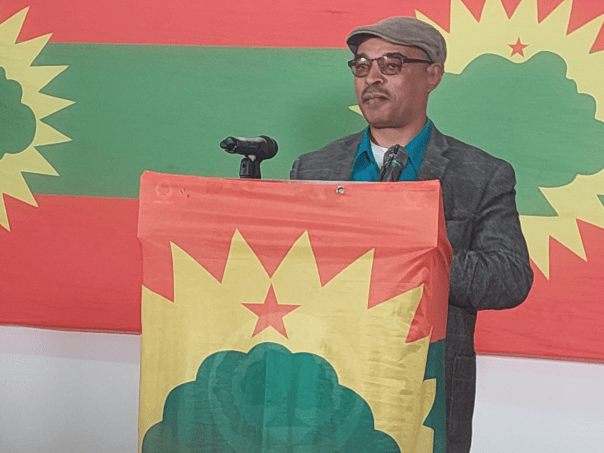
In closing, Jaal Amaan Filee tied the threads together, thanking organizers and issuing a call for broader support, emphasizing that the responsibility to sustain the movement lies with every Oromo, at home and abroad.
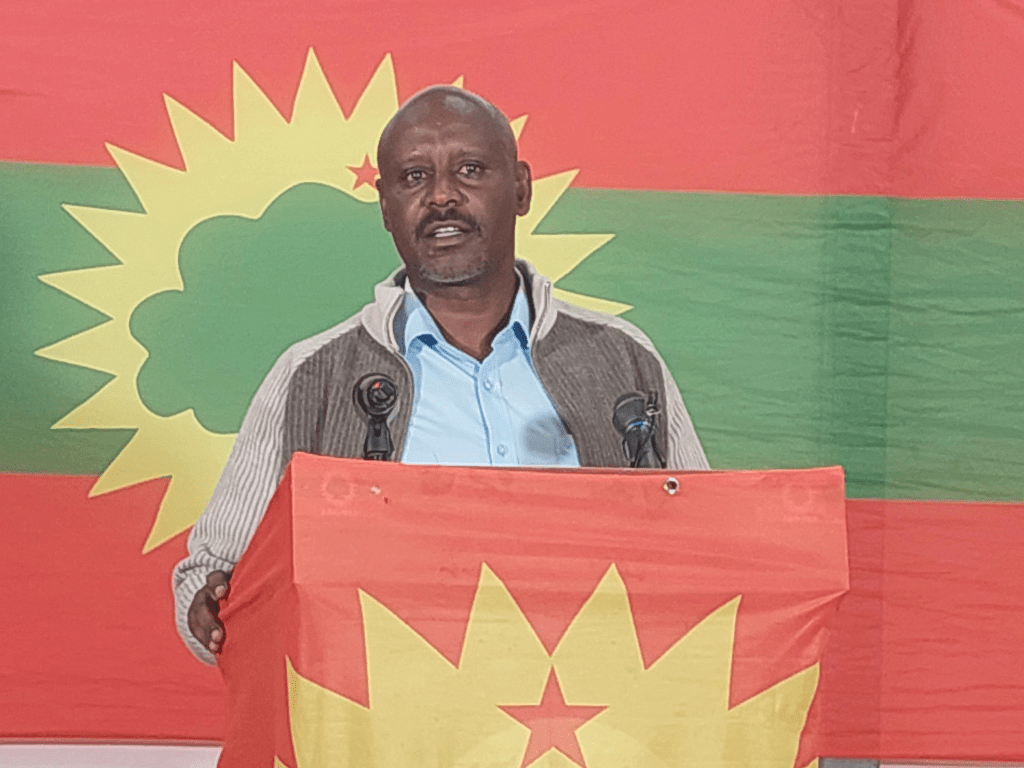
The Amajjii 2026 ceremony at the OLF HQ was, therefore, a masterful orchestration of symbolism and strategy. It honored history not as a distant memory but as an active, guiding force. It audited the present with unflinching honesty, announcing a new, electoral phase of the struggle. And most importantly, it connected these strands through the powerful imagery of the “moving seed” and the living embodiment of sacrifice in Ilfinesh Qannoo.
The message was clear: the Oromo movement is in motion, transitioning from resistance to governance, fortified by its history, steeled by its struggles, and propelled by an unbreakable spirit that refuses to let the seed of freedom rot. The new year’s celebration was, in essence, a recommitment to that perpetual motion.
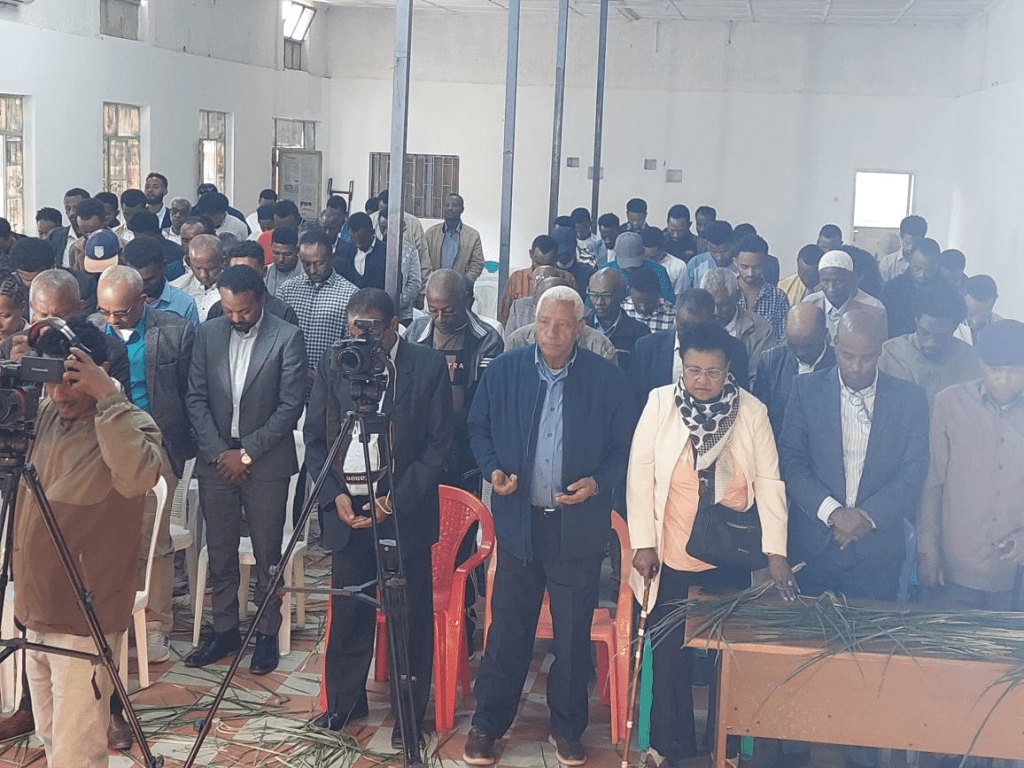

Ilfinash Qannoo: A Living Symbol of Oromo Resilience
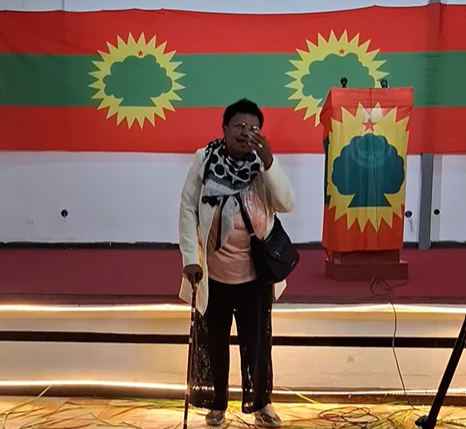
News Feature: The Unbroken Flame – Ilfinash Qannoo Embodies a Lifetime of Struggle and Steadfastness
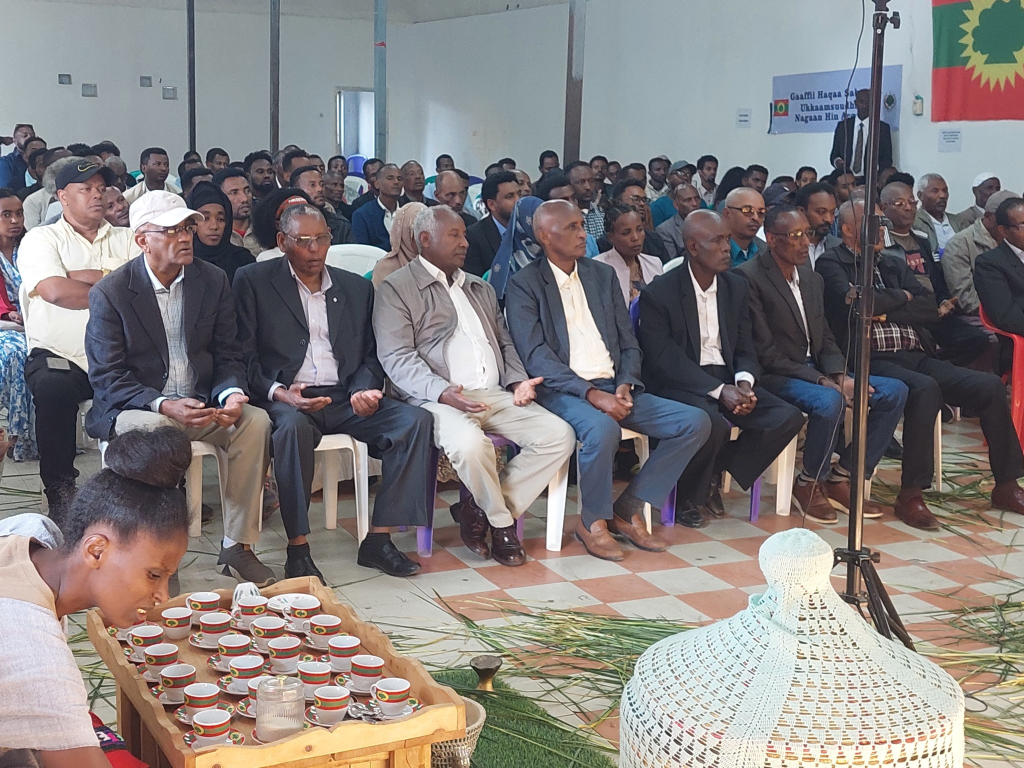
GULLALLE, OROMIA – In the bustling activity of the Oromo Liberation Front (OLF) headquarters this Amajji 1 celebration, one figure sits with a quiet, palpable gravity. Ilfinash Qannoo, her body bearing the weight of years and the toll of relentless struggle, is a living archive of the Oromo quest for freedom. Too weak to stand, too ill to move independently, she is carried to gatherings, not as an invalid, but as a revered ember of the movement’s enduring fire.
Her presence is a testament, not to frailty, but to an indomitable will. It is the final, physical testament of a life offered completely—uleetti rarraatee—stretched across the altar of the Oromo struggle. Her commitment, born of a profound and unwavering love for the cause, saw her pour her energy into every space she could reach, for as long as she could manage, until her very body could no longer sustain the pace of the fight.
Today, on Oromo World Brotherhood Day (WBO), surrounded by a new generation of activists and leaders at the OLF Gullalle office, Ilfinash Qannoo’s role has transformed from frontline mobilizer to living monument and moral compass. Her journey is a bridge connecting the sacrifices of the past to the responsibilities of the present.
“A Seed That Moves Does Not Rot; The Dead Do Not Rise, So Do Not Fear Them.”
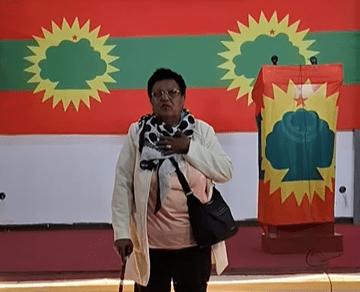
This powerful Oromo proverb, evoked by those who know her story, encapsulates her legacy. Ilfinash Qannoo was never static. She was a “seed” that moved—organizing, advocating, supporting—ensuring the ideas of liberation never stagnated or “rotted” in passivity. Her life’s work was to keep the movement in motion.
Now, her physical stillness speaks volumes. It forces a confrontation with the cost of the struggle and the solemn duty of those who remain. “Do not fear the dead,” the proverb advises, urging the living to act with the courage of those who can no longer stand. In her silent, observant presence, she embodies this charge, a silent reminder that the true threat is not the fallen, but the inaction of those who inherit their dreams.
Her life has been one of radical interdependence—naamaan deeggaramtee—leaning on and being leaned upon by the community she helped build. From providing shelter and intelligence in perilous times to offering counsel and moral support, her strength was always relational, woven into the fabric of the collective struggle.
As officials and well-wishers approach her chair on this day of celebration, they do not offer pity. They offer kabaja—deep respect. They bend to whisper words of gratitude, to seek a silent blessing from her weary eyes. The whispers that surround her are not about illness, but about endurance; not about an ending, but about a transcendent persistence.
“Ulfaadhu, umurii dheeradhu jenna!” – “Be strong, may you have long life!” is the fervent wish expressed for her. It is a wish for the longevity of the spirit she represents: the spirit of self-sacrifice, unconditional love for the cause, and an resilience that refuses to be extinguished.
Ilfinash Qannoo, in her dignified fragility, is more than an individual. She is a symbol. She represents every parent who lost a child, every activist who endured prison, every anonymous supporter who carried the movement forward in shadows. On this Amajji 1, as the Oromo people worldwide celebrate their brotherhood and identity, the image of Ilfinash Qannoo, carried to the heart of the movement’s headquarters, serves as the most profound reminder: that the journey is long, the cost is high, and the flame, once lit by love, must be tended by every generation.
Her silent message echoes in the hall: The seed must keep moving. Do not let it rot. And do not fear—build the future with the courage her life has demanded.

Tribute to Bernadette Hailé Fida: Remembering a Family Pillar
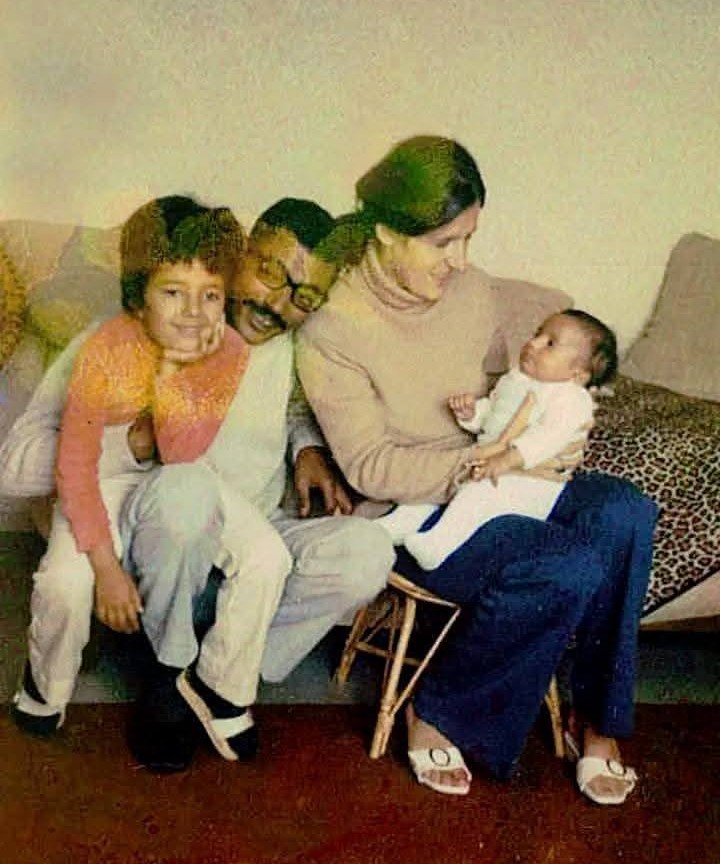
Breaking: A Pillar of Education and Family, Dr. Hailé Fida’s Wife, Passes Away
ADDIS ABABA — With profound sadness, we report the passing of Bernadette Hailé Fida, the beloved wife of the renowned Ethiopian scholar, linguist, and politician, Dr. Hailé Fida. Mrs. Hailé Fida, a French national and cherished mother to their children Sara and Yodit, departed this world after a period of illness. The news of her transition was shared by family, sending waves of grief through their wide circle of loved ones, colleagues, and the communities touched by the family’s legacy.
Bernadette Hailé Fida was more than the spouse of a prominent figure; she was the steadfast anchor of her family, providing unwavering support throughout Dr. Hailé Fida’s significant academic and political journey. Her life was one of quiet strength, cultural bridge-building, and deep devotion to her children and grandchildren.
Dr. Hailé Fida, a monumental intellectual force, is celebrated for his pivotal role in the development of Qubee, the Latin-based Oromo alphabet, and for his extensive scholarly contributions to Oromo language, history, and literature. Behind this public legacy stood a private partnership of mutual support, of which Bernadette was an integral part.
Her passing leaves a deep void in the hearts of her family. The announcement, accompanied by a prayer—“May the Creator grant comfort to their children, their family, and their friends”—reflects the profound sorrow of this moment. The family is currently observing a period of private mourning.
As condolences begin to pour in from across Ethiopia and abroad, many remember Bernadette Hailé Fida for her grace, her resilience in navigating life between two cultures, and her role in nurturing a family dedicated to education and Ethiopian heritage.
We join the nation in offering our deepest sympathies to Dr. Hailé Fida, their children Sara and Yodit, and the entire family. May her soul find eternal peace, and may her loved ones find solace in their cherished memories and the outpouring of love and support.
Rest in Peace, Bernadette Hailé Fida. 🙏

Dhibaayyuu: The Boorana Oromo’s Spiritual Covenant in Sacred Forests

Feature News: Amidst Sacred Forests, the ‘Dhibaayyuu’ Ceremony Echoes a Profound Spiritual Pact
TULA MEELBANA, OROMIA – In the hallowed shadows of the ancient Gaad’a trees and the sacred groves known as Eela, the Boorana Oromo community has concluded the profound spiritual ceremony of Dhibaayyuu—a powerful covenant of prayer and divine communion.
The ceremony, recently held in the Tula Meelbana district, is the apex of the Eebbaa, the Boorana’s intricate traditional prayer system. It is not a public festival but a solemn, collective vow where the community gathers in a sacred pact with Waaqa (God), seeking blessings, offering gratitude, and reaffirming their place in the cosmic order.
Unlike more widely known Oromo celebrations, Dhibaayyuu is characterized by its deep solemnity and structured, multi-generational participation. The recent observance saw the community assemble not in one location, but across the network of specific, consecrated Eela (sacred forests) that serve as their altars under the open sky.
A Prayer Across Five Sacred Groves
In a powerful display of unity and precise tradition, the people divided their supplications among five revered Eela:
- Eela Dhaayee
- Eela Noonichaa
- Eela Arusicha
- Eela Dubbannaa
- Eela Torbaan-Godoo
Each Eela carries its own historical and spiritual significance, with specific clans and Hayyus (spiritual fathers) responsible for leading the rituals at each site. The simultaneous prayers across these groves created a spiritual resonance believed to amplify the community’s collective voice to Waaqa.
“The Dhibaayyuu is our most serious conversation with Waaqa,” explained an elder, Hayyuu Gammachis Guyo. “It is when we, as a whole people—elders, adults, and youth—stand before the Creator in our most sacred spaces. We pray for peace, for rain, for the health of our livestock and children, and for the protection of our land and culture. It is the renewal of our covenant.”
A Ritual of Purification and Unity
The ceremony involves ritual purification, the sacrifice of livestock in accordance with strict tradition, and the chanting of ancient Eebbaa prayers that have been passed down orally for countless generations. The air is thick with the scent of burning unsuu (incense) and the murmur of earnest prayer.
In a world of rapid change, the completion of the Dhibaayyuu at Tula Meelbana stands as a monumental act of cultural resilience. It demonstrates the enduring strength of the Boorana’s indigenous governance system, the Gadaa, of which this prayer system is a spiritual cornerstone. The meticulous observance of the ritual in its designated sacred forests is a quiet but potent assertion of spiritual sovereignty and connection to the land.
“This is our identity in action,” said a community participant, Dhadacha Wario. “While others may build temples, our temples are these living forests. Our Dhibaayyuu shows that our law, our faith, and our environment are one. We have kept this covenant for generations, and by the grace of Waaqa, we will keep it for generations to come.”
The successful conclusion of the Dhibaayyuu serves as a powerful testament to the living, breathing depth of Oromo spirituality—a system not of rigid dogma, but of a living, ecological, and communal relationship with the divine, faithfully preserved in the sacred groves of Oromia.




 Advocacy for Oromia