Author Archives: advocacy4oromia

The Voice That Refused to Be Silenced: Minnesota Oromo Community Mourns Iconic Artist Ilfinash Qannoo

A tribute to a pioneering artist whose music and courage shaped Oromo identity across generations and continents
MINNEAPOLIS, Minnesota – September 6, 2026
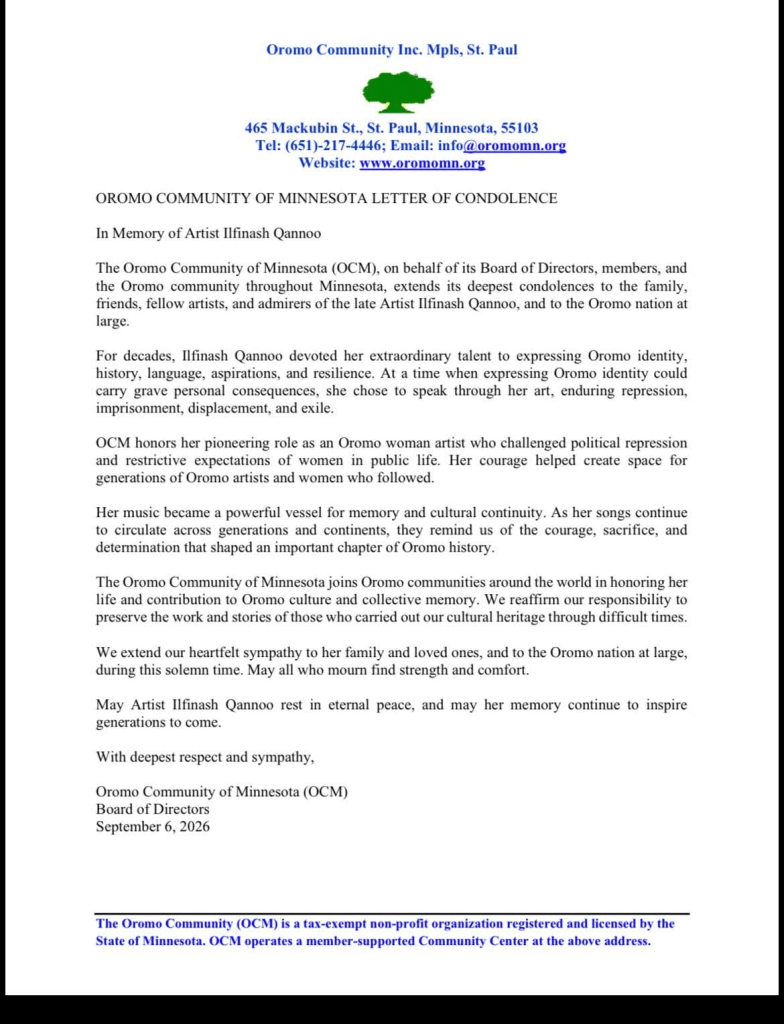
The Oromo Community of Minnesota (OCM), one of the largest Oromo diaspora organizations in the United States, has issued a formal letter of condolence honoring the life and legacy of Artist Ilfinash Qannoo, whose passing marks the end of an era for Oromo arts and cultural expression.
In a statement released today, the organization paid tribute to an artist who, for decades, transformed personal sacrifice into an enduring cultural treasure, becoming a symbol of resistance, resilience, and identity for Oromo people worldwide.
A Life Dedicated to Cultural Preservation
Ilfinash Qannoo was more than a musician or performer. She was a cultural archivist, a linguistic guardian, and a fearless voice who understood that art could carry the weight of an entire people’s history. Through her extraordinary talent, she devoted her life to expressing Oromo identity, history, language, aspirations, and resilience—often at great personal cost.
The OCM statement emphasized that during decades when openly expressing Oromo identity could carry grave personal consequences, Ilfinash chose to speak through her art. She endured repression, imprisonment, displacement, and exile, yet her creative spirit remained unbroken. Her music and performances became acts of quiet defiance in the face of political oppression, preserving the Oromo language and traditions at a time when they were systematically marginalized.
A Pioneer for Oromo Women in Public Life
Perhaps one of her most significant legacies was her role as a trailblazer for Oromo women. At a time when restrictive expectations limited women’s participation in public life, Ilfinash challenged both political repression and social conventions.
The OCM honored her as a “pioneering role as an Oromo woman artist who challenged political repression and restrictive expectations of women in public life.” Her courage helped create space for generations of Oromo artists and women who followed, proving that creative expression and political consciousness could go hand in hand.
“Her courage helped create space for generations of Oromo artists and women who followed,” the OCM board wrote, acknowledging that her influence extended far beyond music into the very fabric of Oromo social and political life.
Music as Memory and Resistance
Ilfinash’s music became a powerful vessel for memory and cultural continuity. Her songs, which continue to circulate across generations and continents, have served as an informal archive of Oromo history, preserving stories, struggles, and triumphs that might otherwise have been lost.
The OCM statement noted that her music “reminds us of the courage, sacrifice, and determination that shaped an important chapter of Oromo history.” For Oromo communities scattered across the globe—from the Horn of Africa to the diaspora centers of North America, Europe, and Australia—her voice became a thread connecting them to their homeland and heritage.
A Global Mourning
The Minnesota Oromo community, which numbers in the thousands, joins Oromo communities around the world in mourning this profound loss. The OCM pledged to continue preserving her work and the stories of those “who carried our cultural heritage through difficult times.”
“We reaffirm our responsibility to preserve the work and stories of those who carried our cultural heritage through difficult times,” the statement reads, acknowledging that the preservation of Oromo culture rests on the shoulders of those who, like Ilfinash, sacrificed their safety and comfort for the sake of collective memory.
Calls for Celebration Amid Grief
The OCM’s formal letter follows a growing chorus within the Oromo diaspora and homeland alike, urging that Ilfinash’s life be celebrated as much as her death is mourned. Many have echoed sentiments expressed in recent weeks that her legacy is one of joy, defiance, and triumph—not merely sorrow.
“May Artist Ilfinash Qannoo rest in eternal peace, and may her memory continue to inspire generations to come,” the OCM concluded in their letter, striking a tone of solemn respect mixed with hope for the future.
A Legacy That Endures
Ilfinash Qannoo’s death represents a significant loss for the Oromo cultural landscape. Yet her life’s work ensures that her voice will continue to resonate through the generations she inspired and the communities she helped to empower.
As the Oromo diaspora reflects on her contributions, her songs will undoubtedly continue to play in homes, community gatherings, and cultural events—each note carrying the defiance, resilience, and pride of a people whose identity she devoted her life to preserving.
The Oromo Community of Minnesota’s full letter of condolence can be accessed through the organization’s official channels. The Oromo community across Minnesota and beyond extends its deepest sympathy to her family, friends, fellow artists, admirers, and the Oromo nation at large.
With deepest respect and sympathy,
Oromo Community of Minnesota (OCM)
Board of Directors
September 6, 2026
#IlfinashQannoo #OromoArt #CulturalResilience #OromoDiaspora #MinnesotaOromo #LegacyOfResistance

Eulogy: Ilfinesh Qannoo (1962-2026): A Voice That Has Nurtured Generations
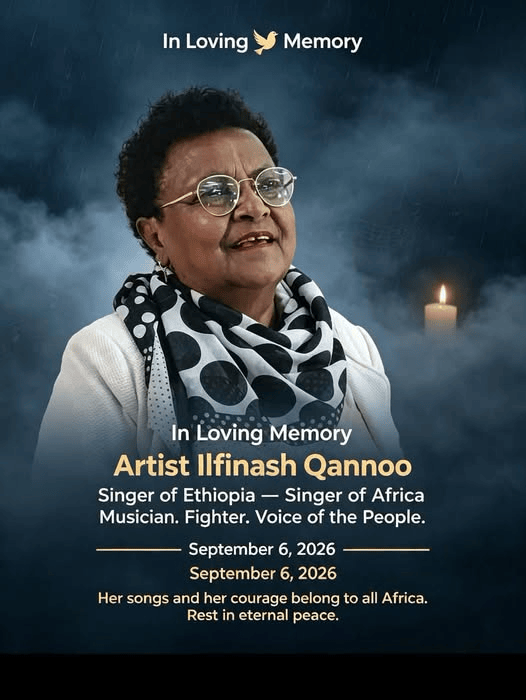
By Dhabessa Wakjira
We gather today with heavy hearts to mourn the passing of Ilfinash Qannoo, and yet, even in our grief, we find ourselves compelled to celebrate a life so extraordinary that mourning alone cannot contain it. Ilfinash Qannoo was not simply a singer. She was one of the most iconic, courageous, and influential Oromo women of her generation—a woman whose life was woven inseparably into the story of her people’s long struggle for dignity, identity, justice, and self-determination.
To speak of Ilfinash is to speak of commitment that never wavered, sacrifice that was never counted as loss, courage that never asked permission, and a devotion to the Oromo cause that outlasted every hardship placed before it. Hers was a life of artistic achievement, yes, but far more than that, it was a life offered, again and again, in service of something larger than herself.
The First Note of a Lifelong Song
From the moment she first stepped forward as a member of Wollega Kinet Guad, Ilfinash set out on a path from which she would never truly depart. That early beginning was not a stepping stone toward personal fame; it was the first note of a lifelong song dedicated to her people. From those early days until her final ones, her commitment to the Oromo cause never dimmed, never bent, and never went silent. Through her music, her voice, her courage, and the example of her own life, she awakened, inspired, and nurtured generation after generation of Oromo youth.
We must remember the times in which she sang. There were years when simply expressing Oromo identity, Oromo aspiration, Oromo pride required extraordinary courage—when a melody could be an act of defiance, and a lyric could carry the weight of a people’s unspoken longing. In those years, Ilfinash did not shrink from the risk. She took the gift she had been given—her voice—and turned it into an instrument of inspiration and resistance. She sang not because it was safe, but because it was necessary.
More Than an Artist
It would be a disservice to Ilfinash Qannoo’s memory to say only that she sang songs. She did something far greater: she gave voice to the hopes, the pain, the aspirations, the courage, and the unbending determination of an entire people. When her voice rose, it did not simply fill a room or a stage; it entered the hearts of Oromo youth across generations, and in doing so, it steadied them. It reminded them who they were. It gave them the strength to stand for their identity, their dignity, and their future, even when standing was costly.
In this way, she became something more than an artist. She became a symbol, a living demonstration that a single life, fully given, could serve a cause greater than itself. She poured out her talent, her energy, her courage, her voice, and ultimately her life for the Oromo people, one of the great nations of the Horn of Africa. In doing so, she showed us all that an artist can be far more than an entertainer. An artist can be a teacher. An artist can be an inspiration. An artist can become the guardian of a people’s collective struggle, and the voice through which a people’s aspirations are carried forward.
The Song That Echoes Through Generations
Among the many songs she gave to her people, one holds a place apart in the hearts of generations of Oromo people: “WBO Koo Maaloo Ree.” Its melody has traveled from parent to child, from one generation to the next, carrying memories of struggle, sacrifice, hope, and unshaken determination. It is no longer simply a song. It has become part of the emotional and historical memory of a people, woven into their story so deeply that it will continue to echo in the hearts of Oromo people yet to be born.
Unwavering Conviction
Perhaps the greatest lesson of Ilfinash Qannoo’s life was her firm and unwavering stand on the Oromo cause. She did not abandon her convictions when times grew difficult. She did not retreat when retreat would have been easier, safer, more comfortable. Her courage and her steadfastness stand today as an example for generations still to come, and they teach us something essential: that genuine commitment is not proven in moments of comfort, but in moments of difficulty and uncertainty. It is easy to declare loyalty when nothing is being asked of you. Ilfinash showed us what it means to hold to your convictions when everything is being asked of you.
A Bond Forged in Ambo
Ilfinash’s connection to Oromo youth was profound, and it was personal. She did not stand apart from them, observing from a distance; she stood among them, encouraged them, and shared directly in their hopes and in their struggles. Her time alongside Oromo youth in the forests and surrounding areas of Ambo forged a bond of deep mutual respect and affection, one that shaped the rest of her life. The love and the respect that the people of Ambo gave her in return were immense, and that relationship became one of the most meaningful of her entire life.
So deep was her attachment to Ambo and its people that she is remembered for a wish that reveals the depth of her heart: that if she should die, she wished to be laid to rest in Ambo, or, if that could not be, then even beneath the ice of Norway. These are not the words of someone who loved a place casually. They are the words of a woman whose experiences, whose memories, and whose sense of belonging were bound up entirely with the people who had walked beside her.
A Legacy That Will Never Die
Today, as we mourn Ilfinash Qannoo, we are also called to celebrate an extraordinary life fully lived. We mourn the loss of a great artist. But we remember, and will go on remembering, a woman whose legacy reaches far beyond music alone. We remember a courageous Oromo woman who used her voice when silence would have been easier. We remember a woman who remained committed when retreat was possible. We remember a woman who inspired generations, not only through the songs she sang, but through the example of the life she lived.
Her physical voice has now gone silent. But the voice she gave to her people—the voice of hope, of resistance, of identity, of belonging—will never disappear. Her songs will continue to be sung, in homes, at gatherings, in the quiet moments when a people needs reminding of who they are. Her courage will continue to inspire those who face their own difficult and uncertain times. Her commitment will continue to be remembered as a standard against which devotion to a cause is measured. And her name will remain written into the history and the collective memory of the Oromo people, for as long as that memory is kept.
—
Ilfinash Qannoo has departed from us. But her legacy remains.
She sang for her people. She stood with her people. She gave her voice to her people.
And her voice will live on with her people, from generation to generation.
Her voice will never die. Her legacy will never be forgotten.
Rest in peace, Ilfinash Qannoo.
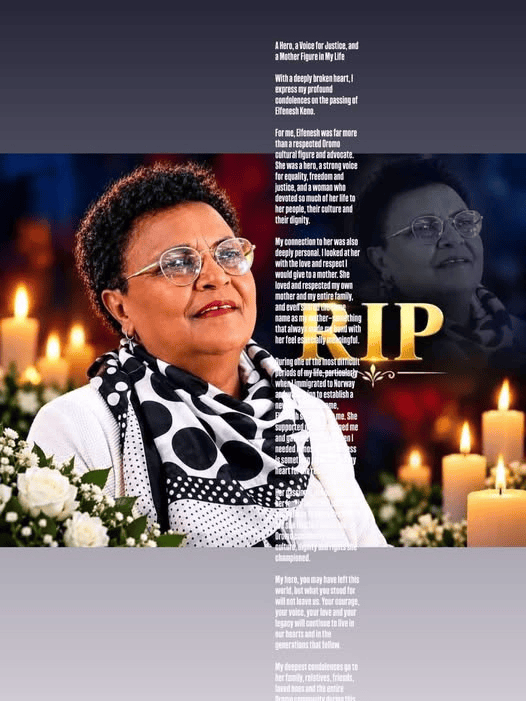

A Nation Mourns: The Passing of a Giant—Adde Ilfinesh Qannoo (1962-2026)
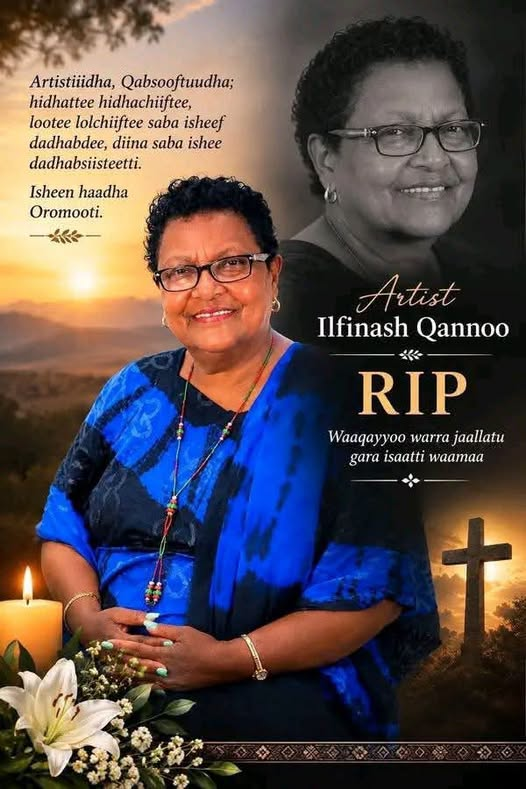
A Voice of Freedom Falls Silent, But Her Legacy Echoes Eternally
Finfinne, Oromia — Our nation lost a giant today. Adde Ilfinesh Qannoo, the renowned artist whose voice became the heartbeat of a people’s struggle, has passed from this world, leaving behind a legacy etched in the soul of the Oromo nation. Her departure marks the end of an era, but her spirit, her music, and her unyielding commitment to the Qabsoo Bilisummaa Oromoo (Oromo Liberation Struggle) will resonate for generations to come.
An Indelible Mark on History
Ilfinesh Qannoo was more than an artist; she was a monument to resilience, a symbol of identity, and a mother to a movement. Through her music, she gave voice to the joys, sorrows, and aspirations of her people, becoming a living archive of their history. Her songs, imbued with the deep cultural motifs of the Oromo, served as both a comfort and a call to action, reminding her listeners of their dignity, their heritage, and their unalienable right to freedom.
Her contributions to the Qabsoo Bilisummaa Oromoo were not merely artistic but deeply personal and sacrificial. She understood that the struggle for liberation was fought not only in the forests and on the battlefields but also in the hearts and minds of the people. Through her music, she fortified the spirit of the movement, offering hope in moments of despair and courage in the face of oppression.
A Faithful and Loyal Contributor
Throughout her life, Ilfinesh Qannoo remained steadfast in her dedication to the Oromo cause. She was a loyal contributor to the liberation struggle, using her platform to amplify the voices of the marginalized and to challenge the systems of injustice that sought to silence her people. Her courage in the face of censorship, persecution, and hardship stands as a testament to her character and her unwavering commitment to justice.
Even when her body grew frail and her steps grew slow, her spirit remained an unyielding force. Her presence at gatherings of the Oromo Liberation Front (OLF) and other movement events was a source of inspiration and moral clarity. She was the living embodiment of the Oromo proverb “Ilkaan socho’e buqqa’uun isaa hin oolamu”—a seed that moves does not rot. She was that moving seed, ensuring that the dream of liberation never decayed.
A Legacy That Lives Forever
Though her physical journey has ended, the essence of Ilfinesh Qannoo—her music, her symbolism, her love—is a permanent inheritance for the Oromo people. Her life continues to resonate, to inspire, and to fortify those who hold her memory dear. She may have left this world, but her voice remains, echoing in the songs that will be sung, the stories that will be told, and the hearts that will never forget.
Her legacy exists at a powerful intersection: the intimate space of a family mourning a beloved matriarch, and the public sphere honoring an artist who channeled a people’s soul. As flowers are laid and her songs are played anew, the Oromo nation is not just saying goodbye. They are affirming that the struggle she gave voice to continues, the identity she symbolized remains unbroken, and the love she embodied is eternal.
A Message of Condolence from Advocacy for Oromia (A4O)
The Advocacy for Oromia (A4O) joins the global Oromo community in mourning this profound loss. In a statement released today, the organization extended its heartfelt condolences to Ilfinesh Qannoo’s family and the entire Oromo nation:
“Our nation lost a giant today. Adde Ilfineesh Qannoo, a renowned artist and loyal contributor to the Qabsoo Bilisummaa Oromoo, has left an indelible mark on our people and our history. Her legacy will live on forever. The Advocacy for Oromia (A4O) extends its sincere condolences to her family and the entire Oromo nation. May she rest in peace, and may her memory continue to inspire us all.”
An Eternal Prayer
And so, we offer our unending prayer: that Adde Ilfinesh Qannoo’s soul finds the eternal comfort and peace it so deeply deserves. May her spirit rest gently, knowing that her life was a masterpiece of love, labor, and liberation. For her family, her friends, and her people, we wish the warmth of her memory, the strength of her example, and the profound solace that comes from knowing her legacy is in the most capable hands: the hands of a people who will never forget.
Rest in peace, Adde Ilfinesh Qannoo. Your struggle is over, but your victory is assured in the hearts of those you loved and who loved you in return.
—
“A name is above the grave, and your name, Ilfinesh Qannoo, is etched in gold in the annals of Oromo history.”
—
This tribute is offered by Advocacy for Oromia (A4O) and the global Oromo community in loving memory of Adde Ilfinesh Qannoo.

Oromo Literacy Day: Celebrating the Power of Stories Held in Oromia
By Maatii Sabaa
—
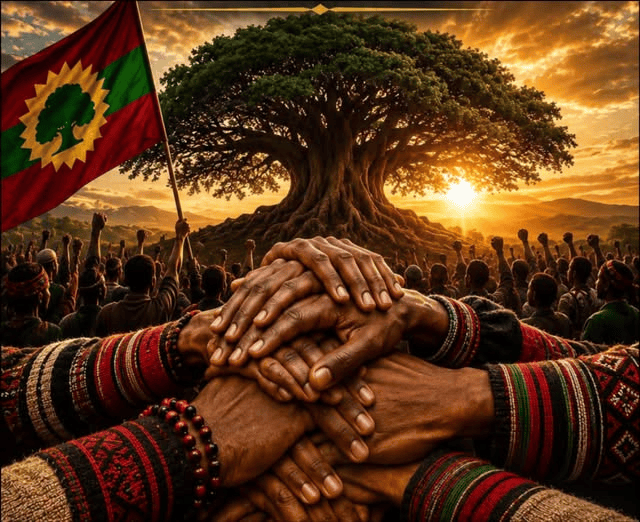
Every year, Oromo Literacy Day is more than a date on a calendar—it’s a living tribute to the resilience of a people and their language. It celebrates Afaan Oromoo, a language that carries the weight of history, the songs of ancestors, and the dreams of a nation. But how did the Oromo people arrive at this moment, where their stories can finally be written, read, and shared with the world? The answer lies in a long and courageous journey toward literacy.
A Written History of Resistance and Revival
The story of Oromo literacy is one of relentless struggle. The Oromo people have long possessed a rich oral tradition, but for much of Ethiopia’s modern history, their language was marginalized. It was a household language—spoken, sung, and whispered—but rarely seen on paper . The first major push to change this came in the late 19th and early 20th centuries.
A pivotal figure was Onesimos Nasib, an Oromo freed from slavery who trained as a teacher in Sweden. Upon his return, he and his colleague Aster Ganno worked with an almost missionary zeal to promote literacy in Afaan Oromoo. Onesimos created the Oromo Reader, a book filled with stories that were “short and funny” and designed to be both accessible and engaging. His aim was not just religious instruction but to cultivate a love for reading itself . He would famously ask young people he met, “Can you read and write?” and persuade them of its immense value .
However, their work met fierce opposition from the imperial government. In the mid-1940s, the Haile Selassie regime placed a total ban on Oromo literature . The language was effectively erased from public life, becoming a symbol of defiance.
The Quest for the Perfect Script
The suppression only intensified the desire for a written Oromo. The question of how to write the language became a central point of debate. Early works, like those of Onesimos, used the Ge’ez alphabet. But many activists and intellectuals believed this script was inadequate for Oromo sounds, failing to represent vowel length and consonant gemination—features that change a word’s meaning .
In the 1960s, the movement for a new script gained momentum. At Addis Ababa University, Oromo students began printing the first newspaper in Afaan Oromoo, Kana Beektaa? (“Do you know this?”), in 1968. The paper was a bold act of cultural preservation, collecting “Oromo songs, proverbs, war and grievance chants, Oromo prophecies, nuptials, baby lullabies, and others” . This was more than journalism—it was a declaration of identity. The paper was short-lived, forced to cease publication in 1971 .
Simultaneously, Oromo students in Europe were rigorously debating the script question. In 1968, a study group led by figures like Haile Fidaa concluded that a modified Latin alphabet was the most practical and linguistically sound choice for Oromo . This decision was not just technical; it was a political act of resistance, rejecting a script associated with the establishment.
A New Dawn: The Adoption of Qubee
After years of struggle, the fall of the military Derg regime in 1991 brought a turning point. The new Ethiopian constitution granted greater autonomy to regional states. Oromo was finally made the official language of the Oromia Regional State .
The Latin-based alphabet, known as Qubee, was officially adopted for writing Oromo . This was a victory decades in the making. The script’s simplicity and adaptability to modern technology made it a practical choice for a language finally stepping into the digital age. As one study noted, Qubee “enabled the language to grow faster as the script can be learned easily” .
However, the adoption was not without controversy. For some, the Ethiopic script held deep cultural significance, and the switch to a Latin alphabet was seen as an emotional and political break . Yet for the majority, Qubee represented liberation.
The Stories That Endure
The adoption of Qubee unlocked a literary explosion. Oromo youth and intellectuals began producing “newspapers, magazines, novels, translations and plays that describe their nation and their state in Afaan Oromoo” . Stories once confined to memory were now printed, preserved, and shared.
The journey has also involved recovering alternative scripts. A fascinating chapter is the story of Sheek Bakrii Saphaloo, a scholar who created a unique indigenous Oromo script. He developed an abugida, a writing system where each base glyph has multiple vocalic components, making it distinct from both the Ge’ez and Latin alphabets . This script has been used for over 70 years and is now being considered for digital preservation and inclusion in Unicode, highlighting the deep connection between literacy and cultural identity .
Why Oromo Literacy Day Matters
Oromo Literacy Day is a celebration of this entire journey. It honors the tenacity of Onesimos Nasib, the courage of student activists, and the vision of scholars who fought to give their language a written form. It is a day to recognize that literacy is not just about reading and writing; it is about power, identity, and survival.
The stories held in Oromia are now written down for the world to see. This day celebrates their liberation and their enduring power.
—
“The stories, with the exception of a couple of martyr stories, are short and funny, and the subjects vary in order to attract.” — Onesimos Nasib on the Oromo Reader
—
 Maatii Sabaa is a writer and advocate of the Oromo stories.

The Vanished Voice: Remembering Ob Dabbasaa Guyyoo and the Unfinished Work of Cultural Custodians
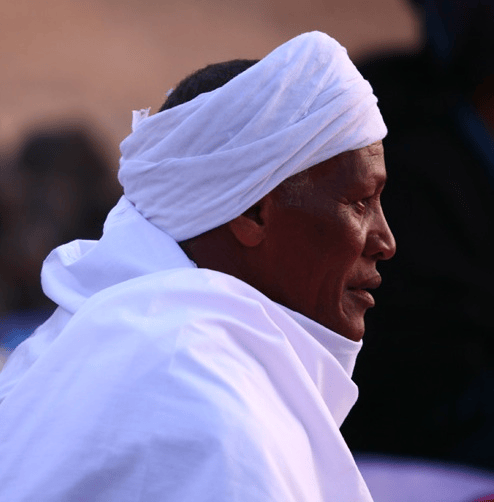
On the 27th of September in the year 2015, a quiet tragedy unfolded in the bustling streets of Nairobi. Ob Dabbasaa Guyyoo, an elder in his late seventies, disappeared. He was not a politician, nor a celebrity. He was something rarer and perhaps more precious: a living archive, a walking library of Oromo knowledge, a custodian of Gadaa—the indigenous democratic system that has governed Oromo society for centuries.
The United Nations (UN) has declared the 30th of Hagayya (August) as the International Day of the Victims of Enforced Disappearances. It is a day to remember those who have been forcibly taken, their fates unknown, their families left in a purgatory of uncertainty. For the family and students of Ob Dabbasaa Guyyoo, the 27th of Fulbaana is their personal day of reckoning.
The Life Before the Silence
To understand the weight of this loss, one must understand the life that was lived. Ob Dabbasaa Guyyoo’s world was not shaped by textbooks or university lectures. It was shaped by the Gadaa system, an ancient Oromo institution that governs everything from politics to social conduct, from justice to spirituality. He grew up in its embrace, was nurtured by its principles, and graduated into its senior councils.
But Ob Dabbasaa did not keep this knowledge for himself. He was a teacher, an arsaa-dhageettii—one who uses his eyes and ears to interpret the world and pass it on to others. His mission was profound and urgent: to teach the Oromo people that they possess a civilization of their own. He traveled through villages, and across borders into neighboring countries, preaching a message of cultural pride and historical awareness.
His teaching was a quiet resistance against the forces of erasure. He did not teach with a rod or a weapon; he taught with stories, with proverbs, and with the weight of lived experience. He reminded his people, whether they were Muslim, Christian, or followers of the indigenous Waaqeffannaa faith, that their identity was a gift, not a curse.
A Philosophy of Transmission
There is a profound Oromo philosophy that underpinned his work: a person who does not know their own history is like someone who cannot cross a river without clinging to another. They are dependent, lost, and vulnerable.
Ob Dabbasaa dedicated his life to ensuring that the Oromo would cross that river on their own strength. He took the abstract knowledge of the elders—the norms, the laws, the spiritual ties—and translated it into a curriculum for the youth. He educated and blessed countless students, sowing seeds of self-awareness across the land.
He understood that identity is not inherited automatically; it must be taught, discussed, and practiced. A person must learn who they are, and having learned, they must teach others. It is a duty, an unbroken chain. For as long as he was free, Ob Dabbasaa held that chain steady.
The Day the Chain Broke
On that fateful day in Fulbaana, the chain broke.
While traveling in Nairobi, Ob Dabbasaa Guyyoo vanished. The circumstances remain shrouded in the same ambiguity that haunts so many disappearances across the region. His family suspects the hand of the state, alleging that the authorities know his whereabouts. They live in the cruel limbo of enforced disappearance, clinging to hope while bracing for grief.
He was a man who had already known displacement. In the 1970s, as a refugee fleeing political turmoil in Ethiopia, he had crossed into Kenya, settling in the Machakos and Mlolongo areas with his family. He built a life there, far from his ancestral lands, yet he carried his homeland in his mind and heart. He was already a survivor of one kind of exile; now he has become a victim of another.
Why His Story Matters Now
In an age of information overload, where attention is fleeting, the story of Ob Dabbasaa Guyyoo might seem like a relic of a specific ethnic struggle. But it is not.
His story is a universal lesson about the power of cultural custodians. Every community, from the highlands of Oromia to the islands of the Pacific, relies on individuals who bridge the gap between the ancestors and the youth. When those individuals are silenced, a vital frequency is lost.
The UN’s call for the protection of human rights must include the protection of indigenous knowledge. It is not just a matter of political justice; it is a matter of cultural survival. The Oromo people have a saying: “Jiraachuun seenaa qabaachuudha”—To exist is to have a history.
Today, the whereabouts of Ob Dabbasaa Guyyoo remain unknown. His voice is silent. But the wisdom he imparted lingers in the minds of his students, in the stories told at the Gadaa centers, and in the prayers of his family.
The hope is that his fate will not remain hidden forever. The hope is that the UN’s resolutions against forced disappearances will transform from ink on paper into living justice. And the hope is that the work he started—the work of cultural reclamation—will continue, louder and more determined than before.
Because as long as one Oromo remembers the lessons of the elders, the chain of knowledge is not entirely broken. It is merely waiting for the next voice to pick it up.

A Defining Moment: Oromo Scholars Worldwide Called to Shape the Future of Their Academic Legacy
By Dhabessa Wakjira
Global – A clarion call is echoing across continents, from the bustling streets of Minneapolis to the academic halls of Europe, from the research centers of Australia to the universities of East Africa. It is a call for unity, for intellectual firepower, and for the collective reclamation of a people’s narrative.
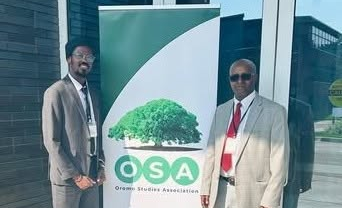
The Oromo Studies Association (OSA) – the premier academic institution dedicated to the rigorous study and preservation of Oromo history, culture, and identity – has entered a historic new phase. And it is extending an urgent invitation to Oromo intellectuals, professionals, creatives, and visionaries around the globe: Your moment has arrived.
In an exclusive appeal, the President of OSA has issued a stirring call to action, urging the global Oromo diaspora to lend their minds, their skills, and their ambition to what he describes as a “defining moment” for the Association and for the Oromo people at large.
Bridging Generations, Building a Legacy
At the heart of this appeal lies a profound understanding of time and tradition. The OSA, guided by the democratic and intergenerational principles of the ancient Gadaa system, has just completed its first Gadaa cycle – a remarkable milestone in its institutional journey. Now, as it steps into its second cycle, the Association stands at a crossroads of immense potential.
“This is not merely a transition on paper,” the President stated in his message. “It is a historic milestone. We are moving from one era of scholarship into another, and we must carry with us the wisdom of our elders while embracing the energy and innovation of our youth.”
The vision is clear: to create a seamless bridge between the giants who laid the foundation of Oromo studies and the rising generation of thinkers who will carry that torch forward. The goal is to ensure that Oromo scholarship is not only preserved but also reimagined for a rapidly changing world.
More Than Scholarship: A Mission of Correction and Justice
The work of the OSA, however, extends far beyond the quiet confines of academic journals. It is a mission deeply rooted in the lived realities of the Oromo people. For decades, Oromo history and identity have been subject to distortion, erasure, and misrepresentation. The OSA has positioned itself as the vanguard of evidence-based scholarship, a bulwark against the tides of misinformation.
“In a world where narratives are often weaponized, our commitment is to intellectual tenacity and factual rigor,” the President emphasized. “We are not just studying history; we are correcting it. We are using scholarship as a tool for truth, for justice, and for the affirmation of Oromo human rights.”
The invitation is therefore a call to arms – but an intellectual one. The OSA is seeking more than just members; it is seeking partners in the pursuit of truth. It is calling on Oromo lawyers, historians, data scientists, economists, artists, and engineers to bring their professional expertise to bear on the challenges facing their people.
A Global Network of Excellence
The OSA’s ambition is as vast as the diaspora itself. By inviting Oromo elites from every corner of the world to participate, the Association is striving to create a decentralized, powerful network of intellectual excellence. The goal is to ensure that Oromo scholarship is not confined to a single geography but is enriched by the diverse experiences of a global community.
The President’s message underscores the importance of collective strength: “Your participation will strengthen our collective voice, enrich our scholarship, and ensure that OSA continues to serve as a beacon of Oromo knowledge, culture, and academic excellence.”
Whether it is a tenured professor in a Western university, a young entrepreneur in Nairobi, or a community organizer in the Horn of Africa, the OSA is opening its doors to all who are committed to advancing Oromo studies and the well-being of the Oromo people.
An Invitation for the Future
As the Association embarks on this new chapter, the call is clear: the time for passive observation is over. The OSA is not merely an institution to be admired from afar; it is a living, breathing movement that requires the active participation of every Oromo who dreams of a future where their identity is celebrated, their history is honored, and their potential is unleashed.
“This is a defining moment,” the President reiterated. “We invite you not just to join, but to lead, to innovate, and to build. Together, we can shape the next chapter of Oromo scholarship and ensure that our legacy endures for generations to come.”
For the Oromo people scattered across the globe, the message resonates with profound urgency and hope. The work of building a people’s academic legacy is arduous, but the invitation stands: the table is set, the mission is clear, and the world is waiting.
—
How to Get Involved:
The Oromo Studies Association welcomes scholars, professionals, and all individuals dedicated to Oromo scholarship and human rights. To learn more about membership, upcoming events, and contribution opportunities, visit the official OSA channels or reach out to your local chapter.
—
This is a featured opinion piece based on the official communication from the Oromo Studies Association.

THE RAINS HAVE CEASED, THE FLOWERS BLOOM: CELEBRATING IRREECHAA, THE OROMO THANKSGIVING
By Dhabessa Wakjira
In the highlands of Ethiopia, where the skies weep for months on end and the earth turns to mud, there comes a sacred morning when the clouds finally part. The sun, a golden orb of promise, kisses the damp grass, and a new season is born. This is the moment of Birraa—the spring—and for the Oromo people, it is a time to pause, breathe, and pour out their hearts in gratitude.
This is the spirit of Irreechaa, a festival that transcends mere celebration. It is the Oromo Thanksgiving, a profound spiritual and cultural touchstone that marks the end of the punishing rainy season and the beginning of a season of renewal, peace, and hope.
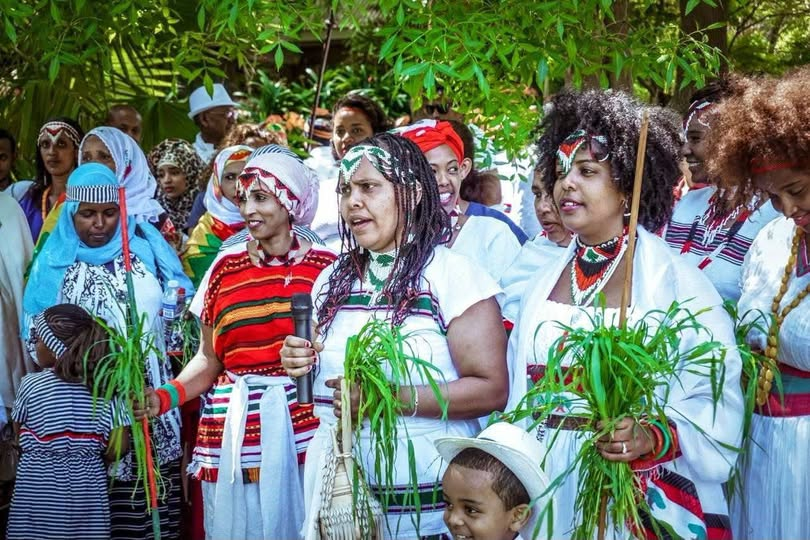
Held annually at the end of September or the beginning of October, Irreechaa is not a quiet affair of private reflection. It is a magnificent, vibrant explosion of life. Thousands, dressed in dazzling traditional attire, converge on sacred rivers, lakes, and hilltops. The air hums with the rhythm of drums, the melodic chants of elders, and the joyous ululations of the crowd. In their hands, they hold the symbols of the season: lush green grass and delicate yellow daisies, emblems of fertility, flourishing life, and the promise of a bountiful year.
The Heart of the Festival: Giving Thanks to Waaqa
At its core, Irreechaa is a dialogue with the divine. The Oromo people lift their prayers to Waaqa (God), offering thanks not for material wealth alone, but for the bedrock of their existence: a good harvest that fills the granaries, the health of their precious livestock, and the most precious gift of all—peace. It is a recognition that survival through the harsh, dark months was not by human effort alone, but by divine mercy.
“We come to the water to wash away our sorrows and our grudges,” explains an elder during a recent ceremony at Lake Hora Arsadi, near Addis Ababa. “The rain has stopped. Now, we cleanse our hearts and start anew.”
A Living Testament to the Gadaa System
Irreechaa is more than a religious observance; it is the vibrant pulse of the Gadaa System, the ancient, indigenous democratic governance structure of the Oromo people. Inscribed by UNESCO as an Intangible Cultural Heritage of Humanity, the Gadaa System organizes society into generations, guiding leadership, law, and morality. Irreechaa serves as a unifying moment for this system, reinforcing the social contracts and spiritual values that hold the community together.
Reconciliation and Unity
In a world often fractured by division, Irreechaa stands as a powerful advocate for unity. The festival is a designated time for reconciliation. It is a communal balm where feuds are set aside, misunderstandings are forgiven, and the bonds of kinship are strengthened. The shared experience of prayer and dance melts away social barriers, weaving a tapestry of harmony that includes not just the Oromo, but neighboring communities as well.
A Cultural Showcase
To witness Irreechaa is to witness the soul of Oromo culture. The hills become a runway of breathtaking fashion, with men and women adorned in intricately woven garments and vibrant beadwork. The music is hypnotic, with traditional songs that speak of heroism, love, and history. The dances are energetic, a physical manifestation of joy and liberation.
As the sun sets on the celebration, the green grass is often placed upon the heads of participants as a blessing, a final act of connection to the earth and the creator. The festival concludes, but its spirit lingers—a reminder that every ending is a new beginning, and that gratitude is the foundation upon which communities are built.
Irreechaa is not just a festival. It is a declaration: We have survived. We are thankful. We are one.
—
Key Aspects of Irreechaa at a Glance:
· Thanksgiving: Central purpose is to thank Waaqa (God) for blessings over the past year.
· End of Winter: Celebrates the conclusion of the rainy season and the dawn of spring (Birraa).
· Sacred Sites: Observed at rivers (Malkaa), lakes, and hilltops (Tulu).
· Symbols of Life: Participants carry wet grass and daisy flowers to represent fertility and flourishing.
· Cultural Expression: A vibrant display of traditional costumes, music, chants, and dances.
· Unity & Peace: A time for community bonding, spiritual reflection, and reconciliation.
· Gadaa System: An integral ritual within the traditional Oromo governance and social structure.

Oromo Literacy Day: Celebrating the Power of Stories Held in Oromia
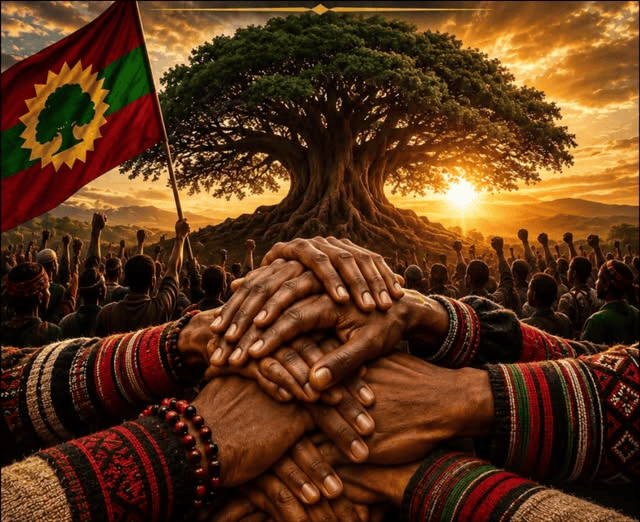
By Maatii Sabaa
—
Every year, Oromo Literacy Day is more than a date on a calendar—it’s a living tribute to the resilience of a people and their language. It celebrates Afaan Oromoo, a language that carries the weight of history, the songs of ancestors, and the dreams of a nation. But how did the Oromo people arrive at this moment, where their stories can finally be written, read, and shared with the world? The answer lies in a long and courageous journey toward literacy.
A Written History of Resistance and Revival
The story of Oromo literacy is one of relentless struggle. The Oromo people have long possessed a rich oral tradition, but for much of Ethiopia’s modern history, their language was marginalized. It was a household language—spoken, sung, and whispered—but rarely seen on paper . The first major push to change this came in the late 19th and early 20th centuries.
A pivotal figure was Onesimos Nasib, an Oromo freed from slavery who trained as a teacher in Sweden. Upon his return, he and his colleague Aster Ganno worked with an almost missionary zeal to promote literacy in Afaan Oromoo. Onesimos created the Oromo Reader, a book filled with stories that were “short and funny” and designed to be both accessible and engaging. His aim was not just religious instruction but to cultivate a love for reading itself . He would famously ask young people he met, “Can you read and write?” and persuade them of its immense value .
However, their work met fierce opposition from the imperial government. In the mid-1940s, the Haile Selassie regime placed a total ban on Oromo literature . The language was effectively erased from public life, becoming a symbol of defiance.
The Quest for the Perfect Script
The suppression only intensified the desire for a written Oromo. The question of how to write the language became a central point of debate. Early works, like those of Onesimos, used the Ge’ez alphabet. But many activists and intellectuals believed this script was inadequate for Oromo sounds, failing to represent vowel length and consonant gemination—features that change a word’s meaning .
In the 1960s, the movement for a new script gained momentum. At Addis Ababa University, Oromo students began printing the first newspaper in Afaan Oromoo, Kana Beektaa? (“Do you know this?”), in 1968. The paper was a bold act of cultural preservation, collecting “Oromo songs, proverbs, war and grievance chants, Oromo prophecies, nuptials, baby lullabies, and others” . This was more than journalism—it was a declaration of identity. The paper was short-lived, forced to cease publication in 1971 .
Simultaneously, Oromo students in Europe were rigorously debating the script question. In 1968, a study group led by figures like Haile Fidaa concluded that a modified Latin alphabet was the most practical and linguistically sound choice for Oromo . This decision was not just technical; it was a political act of resistance, rejecting a script associated with the establishment.
A New Dawn: The Adoption of Qubee
After years of struggle, the fall of the military Derg regime in 1991 brought a turning point. The new Ethiopian constitution granted greater autonomy to regional states. Oromo was finally made the official language of the Oromia Regional State .
The Latin-based alphabet, known as Qubee, was officially adopted for writing Oromo . This was a victory decades in the making. The script’s simplicity and adaptability to modern technology made it a practical choice for a language finally stepping into the digital age. As one study noted, Qubee “enabled the language to grow faster as the script can be learned easily” .
However, the adoption was not without controversy. For some, the Ethiopic script held deep cultural significance, and the switch to a Latin alphabet was seen as an emotional and political break . Yet for the majority, Qubee represented liberation.
The Stories That Endure
The adoption of Qubee unlocked a literary explosion. Oromo youth and intellectuals began producing “newspapers, magazines, novels, translations and plays that describe their nation and their state in Afaan Oromoo” . Stories once confined to memory were now printed, preserved, and shared.
The journey has also involved recovering alternative scripts. A fascinating chapter is the story of Sheek Bakrii Saphaloo, a scholar who created a unique indigenous Oromo script. He developed an abugida, a writing system where each base glyph has multiple vocalic components, making it distinct from both the Ge’ez and Latin alphabets . This script has been used for over 70 years and is now being considered for digital preservation and inclusion in Unicode, highlighting the deep connection between literacy and cultural identity .
Why Oromo Literacy Day Matters
Oromo Literacy Day is a celebration of this entire journey. It honors the tenacity of Onesimos Nasib, the courage of student activists, and the vision of scholars who fought to give their language a written form. It is a day to recognize that literacy is not just about reading and writing; it is about power, identity, and survival.
The stories held in Oromia are now written down for the world to see. This day celebrates their liberation and their enduring power.
—
“The stories, with the exception of a couple of martyr stories, are short and funny, and the subjects vary in order to attract.” — Onesimos Nasib on the Oromo Reader
—
Maatii Sabaa is a writer and advocate of the Oromo stories.

BEYOND THE RITUAL: A PLEA FOR UNITY AT THE HEART OF OROMIA’S SACRED DIALOGUE
By Daandii Ragabaa
—
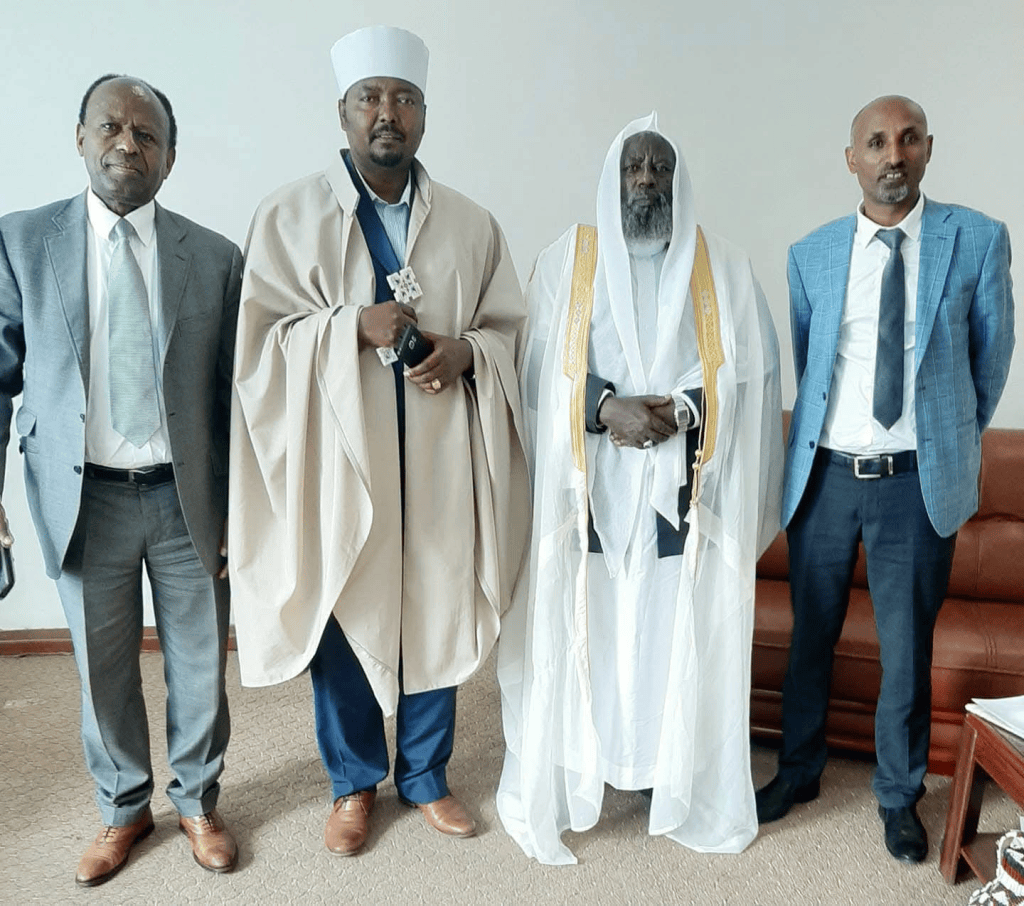
In the bustling city of Finfinne, where the hum of modernity often drowns out the whispers of ancient tradition, a different kind of gathering recently took place—one that carried the weight of history and the fragile hope of a shared future. It was not a political rally, nor a commercial event. It was a meeting of faiths, a rare and courageous roundtable where religious leaders from the three spiritual pillars of Oromo society—Waaqeffanna, Christianity, and Islam—sat together not as rivals, but as brothers.
This landmark dialogue, initiated under the momentum of the Waaqeffanna community, was spearheaded by prominent figures, including Obbo Asnake Irko, a respected elder and representative of the Waaqeffanna faith. But the true architect of this historic convergence, as acknowledged by all present, was Qesiis Balay Mekonnen, whose dedication to securing media coverage and a neutral venue ensured that the voices of faith would not be whispered in shadows, but broadcast to the world.
The meeting was not about theological supremacy. It was about survival—the survival of culture, language, and mutual respect in a land where faith has too often been used as a wedge rather than a bridge.
—
The Four Pillars of the Finfinne Accord
After hours of intense and heartfelt deliberation, the religious leaders reached a series of groundbreaking agreements that could reshape the spiritual landscape of Oromia. At the heart of these resolutions lay four core principles:
1. Mutual Respect for All Faiths
The leaders unanimously affirmed that no religion—whether indigenous Waaqeffanna, Orthodox or Protestant Christianity, or Islam—holds a monopoly on truth or dignity. They pledged to honor each tradition’s sacred practices, recognizing that the Creator, however named, desires reverence and love among His people.
2. Culture and Language as Unifying Tools
In a powerful declaration, the group committed to using the Oromo language and cultural heritage as vehicles for unity, not division. They agreed that songs, proverbs, and artistic expressions from all faiths could be shared to enrich the collective identity of the Oromo people, rather than to compete or exclude.
3. Standing Together in Times of Crisis
“Yoo rakkoon jiraate waliin dhaabbannee hiikuu”—”If trouble arises, we will stand together to resolve it.” This pledge was perhaps the most poignant. The leaders vowed that no community would face marginalization, violence, or discrimination alone. They would act as a unified bloc to mediate, protect, and advocate for justice, regardless of which faith was affected.
4. Defending the Oromo People from Religious Exploitation
In a bold stance against instrumentalization, the leaders condemned any attempt to use religious identity to sow discord or to harm the Oromo nation. They agreed to collectively denounce and counter any rhetoric or action that weaponizes faith against Oromo unity.
5. A Shared Vision for Irreechaa and Other Cultural Festivals
The dialogue also addressed the growing misunderstandings surrounding Oromo cultural celebrations, particularly Irreechaa. The leaders resolved to engage in ongoing consultations to ensure that these festivals are understood in their proper context—as expressions of thanksgiving and communal identity—and are respected by all faith communities.
—
A Word of Gratitude
In his closing remarks, Obbo Asnake Irko expressed deep appreciation for the spirit of openness shown by his fellow religious leaders. Yet, he reserved his most heartfelt thanks for Qesiis Balay Mekonnen, whose tireless efforts in organizing the venue and mobilizing media attention made the dialogue possible. “Without his vision,” Obbo Asnake stated, “this table would remain empty.”
The participants included:
1. Qees Dr. Bantii U. Teessoo – representing the Protestant Christian community
2. Qesiis Balay Mekonnen – representing the Orthodox Christian tradition
3. Sheek Hajjii – representing the Islamic faith
4. Obbo Asnake Irko – representing the Waaqeffanna tradition
—
What This Means for Tomorrow
This gathering in Finfinne is more than a news item. It is a testament to the maturity of Oromo society—a society that refuses to let religious difference become a source of conflict. In a region often scarred by sectarian strife, these leaders have lit a small but steady flame. They have shown that the green grass of Irreechaa, the cross of Christianity, and the crescent of Islam can coexist, not in uneasy tolerance, but in active solidarity.
The road ahead is long. Old suspicions do not vanish overnight. But as Obbo Asnake Irko reminded the gathering: “Our ancestors worshipped on the same hills, drank from the same rivers, and prayed to the same Creator under different names. Let us not be the generation that forgets that truth.”
As the media cameras packed up and the leaders departed with handshakes and embraces, one thing was clear—the spirit of Irreechaa, the spirit of thanksgiving and reconciliation, had found a new home. Not just on the lakeshores, but in the hearts of those who dare to listen.
—
IN SUMMARY:
Key Agreement Significance
Mutual respect for all faiths Ends religious hierarchy and promotes equality
Use Oromo culture and language for unity Strengthens identity without exclusion
Joint crisis resolution Creates a safety net for all communities
Defend Oromo people from religious abuse Prevents faith from being used as a weapon
Consult on Irreechaa and cultural events Fosters understanding and reduces misconceptions
This is not just a religious accord. It is a covenant of civilization—a promise that in Oromia, faith will build bridges, not burn them.

The Three Pillars of Tuulamaa: Unraveling the Genealogy of an Oromo Nation
In the vast tapestry of Oromo history, few lineages carry the weight and significance of the Tuulamaa. As one of the major branches descending from the legendary Booranaa, the Tuulamaa Oromo represent a people whose ancestral roots run deep into the soil of eastern Africa, their branches spreading across generations, their leaves whispering the stories of a civilization that has thrived for centuries.
The Tuulamaa are not merely a name in the annals of history; they are a living, breathing community whose identity is encoded in the very structure of their genealogy. At the heart of this identity lies a simple yet profound framework: “Sadeen Tuulamaa” — the Three Tuulamaa.
The Sacred Three: Daaccii, Bachoo, and Jiillee
Just as the ancient world recognized the power of three—past, present, future; birth, life, death—the Tuulamaa trace their origins through three primary branches that form the foundation of their entire social and political structure:
BOORANAA │ ▼TUULAMAA │ ┌─────────────┼─────────────┐ │ │ │ DAACCII BACHOO JIILLEE
These three names are not simply labels; they are the pillars upon which the identity of the Tuulamaa people rests. Each branch carries its own distinct history, its own sub-clans, and its own contributions to the collective story of the Oromo nation.
Daaccii: The House of Many Branches
The Daaccii stands as the first and most expansive pillar of the Tuulamaa. Within its embrace, three major lineages emerge, each with its own constellation of sub-clans:
Galaan — The Six
The “Jahan Galaan,” or the Six Galaan, represents the intricate web of relationships that bind the Tuulamaa people. These six houses are:
- Jiddaa
- Liiban
- Abbuu
- Adaa
- Warra Jaarsoo
- Gadullaa
Each of these names carries the weight of history, representing families that have contributed to the economic, political, and cultural life of the Tuulamaa for generations.
Oboo — The Seven
The “Torban Oboo,” or the Seven Oboo, represents another crucial dimension of the Daaccii lineage:
- Gumbichuu
- Gullallee
- Oborrii
- Yaayyaa
- Eekkaa
- Diigaluu
- Gamuu
Historical studies have particularly highlighted Gullallee, Yaayyaa, and Gumbichuu as prominent Oboo descendants, their names echoing through the corridors of Oromo oral tradition.
Sooddoo — The Three
The “Sadeen Sooddoo,” or the Three Sooddoo, completes the Daaccii trilogy:
- Odituu
- Liiban
- Tum’ee
This tripartite structure reflects the Oromo love for order and categorization, a system that has enabled these communities to maintain their identity across centuries.
Bachoo: The Six Houses
The second pillar, Bachoo, embodies the concept of “Jahan Bachoo” — the Six Bachoo. This branch of the Tuulamaa lineage comprises:
- Iluu
- Mettaa
- Uruu
- Garasuu
- Waajituu
- Keekuu
These six houses represent a significant portion of the Tuulamaa population, their members scattered across the Oromo territories yet united by the common thread of shared ancestry. The consistency with which these names appear across various studies—from Haramaya University to contemporary Gadaa structures—testifies to the enduring nature of this genealogical framework.
Jiillee: The Third Pillar
The Jiillee branch, as the third pillar of the Sadeen Tuulamaa, presents a fascinating complexity. Unlike the clearly defined structures of Daaccii and Bachoo, Jiillee exhibits a more intricate pattern that has been documented by Haramaya University research.
The Jiillee-6 structure comprises:
- Goona (with 12 sub-clans)
- Guusa (with 5 sub-clans)
- Looyyaa (with 3 sub-clans)
- Siibaa (with 5 sub-clans)
- Gindoo (with 7 sub-clans)
- Warree (with 3 sub-clans)
The numbers accompanying each name represent the documented sub-divisions, highlighting the remarkable complexity of this genealogical system. This intricate structure demonstrates that for the Oromo, identity is not a simple matter of one name but a layered reality that encompasses multiple levels of belonging.
The Architecture of Society: Gosa → Mana → Balbala
Beyond the broad branches of genealogy, the Tuulamaa social structure follows a remarkably organized pattern. The hierarchy moves from:
- Gosa (the clan) at the broadest level
- Mana (the house or family) at the intermediate level
- Balbala (the door or household branch) at the most specific level
This tripartite structure reflects a society that values both collective identity and individual family ties. It is a system that has enabled the Tuulamaa to maintain social cohesion while allowing for the organic growth and diversification that comes with generations of expansion.
A Living Tradition
The genealogy of the Tuulamaa is not a relic of the past confined to dusty academic texts. As recent as 2026, reports and studies continue to reference Daaccii, Bachoo, and Jiillee as the “Ilmaan Tuulamaa Sadeen” — the Three Children of Tuulamaa. This ongoing recognition within the Gadaa structure demonstrates that these ancient lineages continue to shape contemporary Oromo identity.
In the modern context, the Tuulamaa genealogy serves as:
- A source of identity — connecting individuals to their ancestral heritage
- A framework for social organization — providing structure for community relations
- A foundation for governance — informing the Gadaa system that continues to play a role in Oromo society
- A bridge to the past — maintaining the continuity of Oromo culture across generations
The Deeper Meaning
The Tuulamaa genealogical structure is more than a list of names. It is a testament to the Oromo people’s sophisticated understanding of social organization, their commitment to preserving their heritage, and their ability to maintain cultural continuity across centuries of change.
Each name—from Daaccii to Jiillee, from Jiddaa to Tum’ee—represents not just a line of descent but a community of people with shared values, shared history, and shared destiny. The genealogy tells the story of migrations, of settlements, of alliances and divisions. It speaks of families that grew into clans, of clans that became nations.
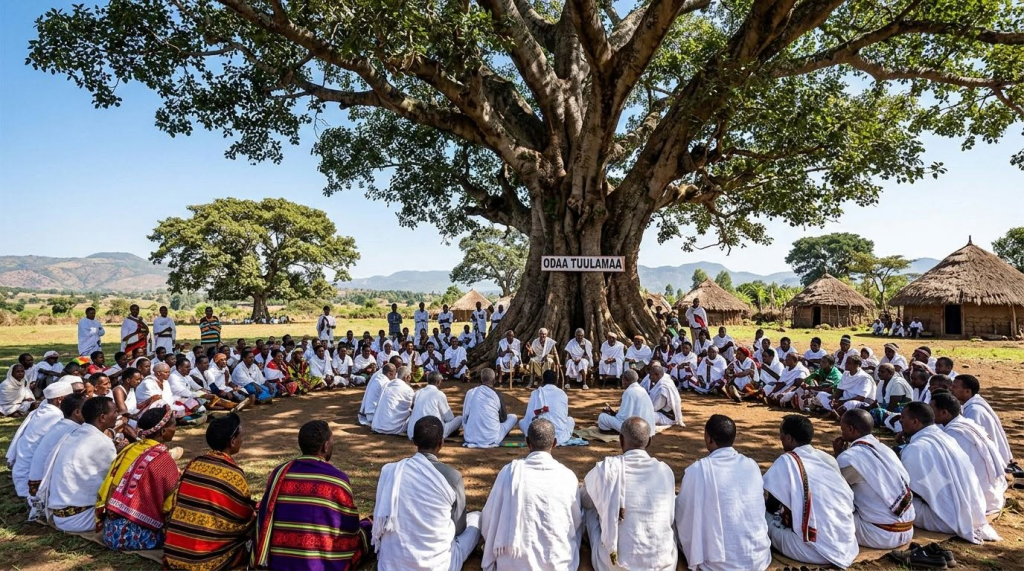
In the shade of the Odaa tree, where Oromo elders have gathered for generations, these names are spoken with reverence. They are the vocabulary of identity, the grammar of belonging, the poetry of a people who have known that knowing who you are is the first step toward knowing where you are going.
A Call to Remember
As the Tuulamaa Oromo navigate the complexities of the modern world, their ancient genealogy remains a compass—a reminder of the roots that sustain them, the branches that connect them, and the tree of life that continues to grow.
For the Daaccii, the Bachoo, and the Jiillee, the story is still being written. New generations will add their names to the great genealogical tree, but they will never forget that they are branches of a mighty trunk: Tuulamaa, child of Booranaa, heir to a civilization that has weathered the storms of history and emerged still standing, still proud, still Oromo.
Sources and Further Reading:
- Haramaya University Studies on Tuulamaa Genealogy
- Gadaa Tuulamaa Structures (2026 AMN Reports)
- Oromo Oral Tradition
- Historical Research on Booranaa Lineages
“The tree that knows its roots can withstand any storm.” — Oromo Proverb
#Tuulamaa #Daaccii #Bachoo #Jiillee #Oromoo #Booranaa #Gadaa #OromoHistory #OromoGenealogy





 Advocacy for Oromia