Author Archives: advocacy4oromia

The Unseen Work and the Unyielding Bloom: How the Oromo Struggle Flourishes Beyond the Enemy’s Gaze

By Daandii Ragabaa
While the enemies of Oromia may have closed their eyes and convinced themselves that the OLF/ABO had faded into irrelevance, the ground beneath their feet has been shifting all along. The struggle for Oromo liberation has never been a spectacle performed for the approval of adversaries; it is a quiet, relentless tide that reshapes the landscape even when the world is not watching. Today, as the movement reflects on its journey, one truth stands undeniable: the work has continued, the fruits have multiplied, and the foundation of Oromo nationhood has never been stronger.
The Myth of Stagnation
There is a dangerous assumption that silence equals surrender. For years, the detractors of Oromo freedom have pointed to periods of tactical recalibration and claimed that the cause was dead. They were wrong. As the reflection reminds us, “Diinonni Oromoo otuu hin beekiin hojiilee ABO hojjataa ture”—the enemies were unaware of the work being done. The OLF/ABO did not vanish; it adapted. It built. It planted seeds that are now breaking through the concrete of oppression.
The struggle is not a straight line; it is a winding river that carves canyons over time. There have been moments of setback, times when the fighters themselves stumbled into unfamiliar terrain. “Yeroo garii qabsaa’oti waan muuxannoo itti hin qabneef danqamuun ifaa dha.” To be hindered, to face the unknown, is a natural and illuminating part of any liberation journey. But the reflection makes a critical distinction: “Danqamuun garuu qabsoo irraa yeroof duubatti deebi’uu malee qabsoo dhiisuu jechuu miti.”
Setbacks are not stop signs; they are detours. Retreating for a moment to assess, regroup, and strike with greater intelligence is not defeat—it is the hallmark of a movement that intends to win, not just to survive.
The Tangible Fruits of an Unyielding Will
While critics focused on imagined weaknesses, the Oromo struggle was quietly accumulating victories that cannot be erased. The reflection catalogs these achievements with a quiet, earned pride:
Oromia has risen. No longer can the oppressor pretend that Oromia is an abstraction. It is a recognized entity, a homeland with a name that commands respect and a history that demands justice. “Oromiyaan bobaa diinaa jalaa bahee beekamee jira.” The nation has emerged from under the shadow of denial into the light of international and domestic recognition.
The language has taken its rightful place. Afaan Oromoo, once relegated to the margins of private life, now stands tall as a language of instruction and government work. “Afaan Oromoo afaan barnootaa fi hojii mootummaa ta’eera.” This is not a small concession; it is a revolutionary shift. When a people’s tongue becomes the language of the classroom and the office, the soul of that people is officially acknowledged.
The script lives. “Qubeen Afaan Oromoo kan Afaan Oromoo ittiin barsiisan ta’eera.” The Oromo alphabet—once banned, once erased—is now actively used to teach children the beauty of their own heritage. Alphabetization is liberation. To read in one’s mother tongue is to reclaim the mind from colonial subjugation.
The flag waves undefeated. “Alaabaan Oromoo mallattoo diddaa fi bilisummaa qabsoo Oromoo ta’ee beekamee jira.” The Oromo flag is no longer a secret symbol of insurgency; it is a recognized emblem of resistance and freedom. It flies at gatherings, in diaspora halls, and in the hearts of millions. It is the colors of a nation that refuses to be renamed.
The Bloom of the Seed
The reflection speaks of a beautiful and profound transformation: “Akkanaan sanyiin bilisummaa facaafamee daraaree hundee sabboonummaa Oromoo fi Oromummaa ta’aa jira.”
The seeds of freedom, scattered across the difficult soil of the struggle, are now blossoming. They are taking root in the very foundations of Oromo identity and nationhood. This is not a fleeting victory; it is a generational shift. The Oromo people are witnessing the flowering of what their ancestors sacrificed for. The identity is no longer just a memory—it is a living, breathing reality that grows stronger with each passing day.
The Sacred Duty of Continuation
Yet, the reflection is not a song of complacency. It carries a sobering and determined promise: “Kun haga hireen murteeffannaa ummata Oromoo dhugoomutti jabaatee kan itti fufu ta’a.”
This journey will continue—vigorously, unapologetically, and with increasing momentum—until the fundamental rights of the Oromo people are fully realized. Until self-determination is not a demand but a fact. Until the land of Oromia is governed by the will of its own children.
The current chapter of the struggle is not an anomaly; it is the direct product of that unyielding resolve. “Waanti amna qabsoo keessatti argaa jirrus dhugaadhuma kana.” What we see today is the pure, unadulterated truth of a people who refused to kneel.
A Legacy of Resistance, A Future of Justice
“Qabsoon Bilisummaa fi haqa Oromoo kabachiisuuf yoomiyyuu jabatee itti fufa; hireen murteeffannaa ummata Oromoof godhamus kan wareegama keenyaan dhugoomuu dha.”
The struggle to honor the freedom and justice of Oromia will continue with unwavering strength—forever and always. The rights that the Oromo people are fighting for are not gifts to be begged for; they are inherent truths to be realized. And the fulfillment of those rights is not merely a political ambition; it is a sacred trust, a responsibility that falls upon the shoulders of every Oromo, whether in the homeland or in the far reaches of the diaspora.
The enemies may have looked away. They may have assumed the work had stopped. But the Oromo people are digging deeper than ever, planting seeds that will outlast the oppressors, and building a nation that will stand for millennia.
The unseen work is now visible. The planted seeds are blooming. And the struggle, tested by fire and tempered by patience, marches ever forward—determined, consistent, and invincible.
IUOf!
The Political Boat Called “Tsimdo”: Where Are the Far-Right and Far-Left Extremists Steering It?

In the strange theater of modern politics, strange bedfellows emerge—temporary alliances born not of shared vision but of shared hatred
By Ibsaa Nagawoo
In the annals of modern political history, few phenomena are as remarkable—and as dangerous—as the spectacle of ideological opposites joining forces against a common enemy. The far-right and far-left, whose philosophies on economics, governance, and the role of the state stand in irreconcilable opposition, sometimes find themselves on the same side of a political struggle. Their alliance, however, is not built on shared principles or a common vision for the future. It is built on a single, fragile foundation: shared enmity.
This is the political boat called “Tsimdo” (or Cimdii)—a vessel that carries strange passengers, navigates treacherous waters, and ultimately leads nowhere good for anyone aboard.
The Strange Alliance
“One of the surprising phenomena in modern world politics is the emergence of forces that fundamentally oppose each other in their political philosophy, economic policies, and views on the role of government, yet temporarily unite against a common enemy.”
This is not a new phenomenon, but it is one that has become increasingly visible in recent years. The left and right, traditionally locked in ideological struggle, discover that their hatred for a particular leader, government, or political direction outweighs their differences. They form a temporary alliance—an “unholy coalition” that promises to overthrow the common enemy but offers no coherent vision for what should come after.
“However, such alliances are often short-lived because they are based not on shared vision and common political principles, but on shared animosity.”
This is the fatal flaw of these coalitions. They are unions of convenience, not conviction. They can tear down, but they cannot build. They can oppose, but they cannot propose. They can unite in hatred, but they cannot govern in peace.
Ethiopia’s Own Experience
“Both world history and Ethiopia’s political history provide many examples that confirm this.”
In recent years, Ethiopia has witnessed this phenomenon in stark relief. The conflict between the federal government and the TPLF, and the alliances that formed around it, created some of the most improbable political marriages in the country’s history.
“In Ethiopia, this trend has been clearly seen in recent years. One can observe and analyze the strange political alliances formed during the TPLF provocation, the war between the Federal Government of Ethiopia and the TPLF, and the resulting unconventional political marriages.”
Groups that had spent decades opposing each other—ideologically, politically, and sometimes militarily—found themselves on the same side of a conflict. The shared goal of removing the TPLF from power created a temporary unity that papered over fundamental disagreements about Ethiopia’s political future.
The Unholy Alliance Against Oromo Gains
“The far-right and far-left extremist forces that shed crocodile tears in the name of the Oromo people, the Amhara, the Tigray, and the Ethiopian people—no matter how strong their unholy alliance becomes—the Oromo people will not easily surrender the political, economic, and legal rights they have won through long struggle and years of sacrifice.”
This is the central warning of the reflection: the Oromo people, who have fought for generations to secure their rights, are not about to hand them over to an alliance of convenience—whether that alliance claims to speak for the Oromo or not.
“The matter has become one of survival. And the victory achieved is not something that can be stolen through temporary political pressure or false propaganda.”
The Oromo struggle is not a passing phase or a fleeting moment of political mobilization. It is a deep, sustained, and principled movement that has survived decades of repression, co-optation, and marginalization. It will not be undone by an alliance whose only common ground is opposition to Oromo self-determination.
The Blindness of Some Oromo
“As the struggle of the Oromo people within Ethiopia has been strengthening and registering some victories, some Oromo individuals and groups who could not see—or refused to believe—that organized anti-Oromo sentiment had been building for a long time, have failed to understand that the exaggerated political hatred, character assassination, and coordinated propaganda campaign against the reformist Prime Minister Dr. Abiy Ahmed is ultimately not just about Dr. Abiy but about the Oromo as a whole.”
This is a painful truth that some Oromo have been reluctant to face. The campaign against Prime Minister Abiy Ahmed is not merely a personal vendetta against one individual. It is an attack on Oromo leadership, Oromo gains, and Oromo aspirations. The fact that some Oromo have joined in this campaign, or remained silent in the face of it, is a betrayal of the Oromo cause.
“Only they themselves can answer why this happened.”
The reflection leaves this question hanging in the air, inviting self-examination. Why have some Oromo joined forces with those who fundamentally oppose Oromo rights? Why have some remained silent when anti-Oromo rhetoric has reached dangerous levels? Why have some failed to see that the attack on one Oromo leader is an attack on all Oromo?
The Washington Statement and Its Aftermath
“There is one thing we all cannot forget. The statement by the international Fano ‘intellectuals’ that was read in Washington contained dangerous rhetoric: ‘We will return the Gallas to Madagascar.’ This is still being echoed by Mahayimannu Fano. This hate speech did not remain merely words—many believe it has found expression in acts of violence against innocent Oromo in various places, especially today in East Wollega and Dera.”
This is a chilling reminder of the stakes involved. The anti-Oromo rhetoric that has been circulating is not harmless—it has real-world consequences. Innocent Oromo people have been targeted, attacked, and killed. The words of hate have become acts of violence.
“The sad part is that some forces who call themselves ‘freedom fighters’ have silently covered up or overlooked this issue. This silence itself carries a major political message.”
The silence of those who claim to fight for freedom is deafening. When the self-proclaimed champions of liberation refuse to condemn violence against Oromo, they reveal their true priorities. Their silence is not neutrality—it is complicity.
The Poisoned Boat
“Some Oromo politicians and activists, having lost their own political direction, have found themselves unwittingly in the same political boat (Tsimbo) as Amhara extremist unitarist far-right extremists. Since this act conflicts with the common interest and political will of the Oromo people, it should be remembered as a political lesson and historical warning for generations.”
This is perhaps the most pointed criticism in the reflection: some Oromo have lost their way. They have abandoned the principles of Oromo liberation and joined forces with those who have historically opposed—and continue to oppose—Oromo rights.
“Any individual or political organization that organizes in the name of Oromo must distance itself from political ideologies, philosophies, and economic policies that divide the Oromo people. Any idea presented as a ‘political reality’ that weakens Oromo unity, if it conflicts with the interests of Oromia, Ethiopia, and the Oromo nation, should not be accepted.”
This is a clear call to Oromo political actors: know who you are, know what you stand for, and know who your true allies and enemies are. The lines must be drawn clearly. There is no room for ambiguity when the survival of the Oromo people is at stake.
A Call to Abandon the Boat
“Therefore, if you find yourself in this propaganda of organized anti-Oromo hatred, you should distance yourself from this destructive political boat (Tsimbo). This boat does not benefit the Oromo people—it represents hatred, division, and destructive ideologies. It is not too late to distance yourself from this extremist political direction; the beneficial thing is to stop it.”
This is a call to choose. A call to abandon the alliance of hatred and return to the principles of justice, self-determination, and unity. A call to recognize that the path of extremism leads nowhere good.
“It is not too late to distance yourself from this extremist political direction; the beneficial thing is to stop it.”
There is still time to turn back. There is still time to choose the path of dialogue, mutual respect, and peaceful political competition. There is still time to build rather than destroy.
The Role of External Forces
“Finally, this extremist political and war ‘Tsimbo’ is not just an internal problem—it can also be a tool for the interests and proxy wars of external forces, and it is targeted as such. Therefore, it does not bring lasting benefit to the Oromo, the Amhara, the Tigray, or other nations and nationalities, nor to the Ethiopian people in general.”
The reflection recognizes that the forces driving the “Tsimbo” are not purely domestic. External actors have their own interests in Ethiopia’s political landscape. They seek to exploit divisions, weaken the country, and advance their own agendas. The Tsimbo serves their purposes, not the purposes of the Ethiopian people.
“Therefore, I believe that abandoning this politics of hatred, division, and extremism and returning to dialogue, trust, and peaceful political competition is the beneficial path for everyone.”
This is a vision of hope: a return to politics as a means of resolving differences, not a weapon for destroying enemies. A return to the belief that dialogue and trust are possible. A return to the conviction that Ethiopia’s future will be built, not destroyed.
The Way Forward
“Ethiopia’s future destiny will not be found in an alliance based on hatred. The country’s lasting peace, stability, and democratic progress can only be ensured when they are based on constitutional supremacy, the rule of law, mutual respect, genuine democratic dialogue, and a shared national vision.”
This is the heart of the message: the future belongs not to those who hate, but to those who build. Not to those who divide, but to those who unite. Not to those who destroy, but to those who create.
“One truth, however, is clear: an alliance based on hatred may change a government, but it cannot build a country.”
This is a profound insight. The Tsimbo may succeed in its immediate objective—the removal of a particular leader or the overthrow of a particular government. But what then? What vision does it offer for the future? What principles will guide it? What foundation will it build upon?
The answer is: none. An alliance based solely on hatred can only destroy; it cannot create. It can tear down; it cannot build. It can oppose; it cannot govern.
Conclusion: A Choice to Make
The political boat called Tsimbo is a dangerous vessel. It carries those who have lost their way, those who have confused hatred for principle, those who have abandoned the struggle for justice in favor of the easier path of revenge.
But there is another path. The path of dialogue, trust, and peaceful political competition. The path that builds rather than destroys. The path that unites rather than divides. The path that leads to lasting peace, stability, and democracy.
The choice is clear. The time for choosing is now.
“An alliance based on hatred may change a government, but it cannot build a country.”
Let us choose to build. Let us choose to unite. Let us choose the path of peace, justice, and shared national vision.
May we all make the right choice.
====
*The above feature article is based on the reflection of Ibsaa Nagawoo

Building a Nation: The Long Walk to Freedom and Unity

By Dhabessa Wakjira
—
Nation-building is no simple task. It is a long, arduous journey that demands relentless commitment, profound sacrifice, and an unyielding spirit. To build a nation is to weave knowledge, courage, and resilience into an unbreakable fabric—a shield strong enough to stand firm against any enemy. It is to reject the chains of servitude, to organize with urgency, and to play one’s part in the collective march toward liberation. No nation that has endured the crushing weight of subjugation has ever emerged free without a determined struggle.
This truth resonates deeply in the heart of Oromia.
The Anatomy of Struggle
Throughout history, the path to freedom has been paved with the blood, sweat, and tears of those who refused to bow. Nation-building is not merely about constructing roads, schools, or hospitals—though these are vital—it is about constructing a collective identity, a shared purpose, and an unwavering belief in the possibility of a better tomorrow. It demands the fusion of knowledge and courage, transforming passive hope into active resistance against all forces that seek to diminish a people’s dignity.
Every nation that has broken free from the shackles of oppression has done so through a conscious, deliberate, and sustained struggle. There are no shortcuts. There are no handouts. Freedom, history teaches us, is never given—it is taken. It is earned through the willingness to pay the full price of liberation, to endure hardship, and to press forward even when the odds seem insurmountable.
The Call to Unity
Oromia belongs to all Oromo people—this is an undeniable truth. But belonging alone is not enough. To truly claim what is rightfully theirs, the Oromo people must stand united. Division is the weapon of the oppressor; unity is the shield of the oppressed. When hands are joined in common purpose, no force can break the spirit of a people determined to be free.
The struggle for liberation is not a spectator sport. It demands active participation from every son and daughter of Oromia. It requires setting aside differences, overcoming internal conflicts, and rallying around a singular vision: a free, prosperous, and dignified Oromia where every citizen can thrive.
The Price of Freedom
There is no free nation that has not paid the ultimate price. Liberation comes at a cost, and that cost must be borne collectively. It is not enough to hope for freedom; one must be prepared to fight for it. The struggle is not for the faint of heart, nor is it for those who seek comfort in the status quo. It is for the brave, the determined, and the unwavering.
The road ahead is long and fraught with challenges. There will be setbacks, disappointments, and moments of doubt. But history shows that those who persist, those who refuse to give up in the face of adversity, are the ones who ultimately triumph. The Oromo people have everything to gain and nothing to lose by standing together in this fight.
The Final Victory
Unity is not just a strategy—it is the very soul of the struggle. When the Oromo people stand together, hand in hand, shoulder to shoulder, they become an unstoppable force. Their collective strength lies not in weapons or wealth, but in their shared determination to overcome.
The struggle is long, and the challenges are immense. But the spirit of the Oromo people is indomitable. With unity as their foundation, courage as their guide, and the dream of freedom as their destination, they will prevail.
Oromiyaan ni bilisooma!

Why Oromia Needs Oromo Truth-Telling
A nation cannot move forward while refusing to honestly face its past. The wounds of history will not heal until they are acknowledged, understood, and addressed.
There is a profound truth that echoes across cultures and continents, through generations and civilizations: a society that refuses to confront its past is condemned to repeat its mistakes. The wounds left unacknowledged do not heal—they fester. The stories left untold do not disappear—they haunt. The injustices left unaddressed do not fade—they endure.
For Oromia, the need for truth-telling is not a luxury. It is a necessity. It is the foundation upon which a just and equitable future must be built.
The Great Silence
Many Oromians were never taught the full history of colonisation.
This is not an accident. It is a deliberate choice—a systematic erasure designed to serve the interests of those who benefit from the continued subjugation of the Oromo people.
Generations of Oromo children have grown up learning history through the lens of the colonizer. They have been taught to celebrate conquerors while mourning the victims. They have learned the names of emperors and generals while remaining ignorant of the heroes who resisted. They have memorized the dates of battles while never understanding the human cost of those wars.
The history of colonisation is not a distant, academic subject. It is the story of how Oromia became what it is today. It is the story of how our grandparents’ grandparents lost their land, their freedom, and their way of life. It is the story of how the very fabric of our society was torn apart and rewoven according to the designs of others.
The Unlearned Lessons
The gaps in Oromo historical education are vast and consequential. Consider what has been left untaught:
Frontier Violence: The wars of conquest that swept through Oromia in the late 19th century were not gentle expansions—they were brutal campaigns of subjugation, marked by massacre, displacement, and destruction on an unimaginable scale. The stories of villages burned, families torn apart, and communities annihilated have been systematically silenced.
Stolen Land and Culture: The land of Oromia did not come to its current configuration through peaceful negotiation. It was taken—through force, through deception, through the imposition of alien legal systems that recognized neither the land rights nor the humanity of the Oromo people. Along with the land, the culture was attacked—the language forbidden, the traditions suppressed, the identity denied.
The Colonisation: Oromo colonisation is a unique and often misunderstood phenomenon. It was not a conquest from across the sea, but from within the continent—an African empire building itself upon the subjugation of other African peoples. This internal colonisation has been particularly insidious, as it has been denied, minimized, and even celebrated as “national unity.”
The Marginalised Generations: Not all Oromo experienced colonisation in the same way. Some were displaced; others were co-opted. Some were killed; others were enslaved. But generations of Oromo have lived under the shadow of this system—their opportunities limited, their voices silenced, their potential unrealized.
The Laws That Controlled Oromo Lives: The legal and administrative structures of colonisation were not neutral instruments—they were tools of control. From the forced labor systems to the land tenure regimes, from the restrictions on movement to the prohibitions on cultural expression, the laws of the Ethiopian Empire were designed to maintain Oromo subjugation.
The Past Is Not Past
Those events are not disconnected from the present. Their impacts can still be seen in families, communities, and institutions today.
The colonisation of Oromia is not a chapter of history that ended with independence or the signing of a treaty. Its effects continue to ripple through time, shaping the lives of Oromo people in ways both obvious and subtle.
In Families: The trauma of colonisation has been passed down through generations. The loss of land, the separation of families, the suppression of culture—these experiences have created patterns of pain that continue to manifest in family dysfunction, mental health challenges, and the intergenerational transmission of trauma.
In Communities: The divisions created by colonisation persist in the social fabric of Oromo communities. The legacy of divide-and-rule policies, of co-opting some Oromo against others, of creating hierarchies that served the colonizer—these continue to affect how Oromo relate to each other.
In Institutions: The colonial structures that were imposed on Oromia have not disappeared. They have been transformed, repurposed, and rebranded, but they remain—the legal systems, the administrative frameworks, the educational institutions, the economic structures. They continue to reflect the priorities and power dynamics of their colonial origins.
The Power of Truth-Telling
Oromo Truth-telling creates a shared understanding of how Oromia became the country it is.
Truth-telling is not about assigning blame or dwelling on grievances. It is about creating a common foundation of understanding upon which a just future can be built. It is about giving the Oromo people the tools they need to understand their own history and to chart their own destiny.
It allows Oromo voices to be heard instead of having our history explained for us.
For too long, the story of Oromia has been told by others—by conquerors who justified their actions, by governments that denied their crimes, by academics who studied Oromo from a comfortable distance. Oromo truth-telling reclaims the narrative. It gives Oromo people the opportunity to tell their own story, in their own words, from their own perspective.
This is not an act of aggression—it is an act of liberation.
From Understanding to Action
It is not about living in the past. It is about understanding the past so Oromia can build a fairer future.
Truth-telling is not about dwelling on grievances or nurturing resentments. It is about clearing the ground upon which a new society can be built. Just as a building cannot be constructed on a foundation of lies, a just society cannot be built on a denial of history.
To build a fairer future, Oromia must first understand:
- How the land was taken
- How the people were divided
- How the culture was suppressed
- How the institutions were designed
- How the wounds were inflicted
Only with this understanding can the work of healing truly begin. Only with this knowledge can the cycle of injustice be broken.
The Moral Imperative
You cannot heal what you refuse to acknowledge.
This is perhaps the most profound truth of all. Denial is not healing—it is a form of imprisonment. By refusing to acknowledge the past, we remain trapped in its patterns. By denying the wounds, we prevent their treatment. By silencing the stories, we perpetuate the suffering.
For Oromia, the refusal to acknowledge the history of colonisation has come at a tremendous cost. It has allowed the perpetrators to avoid accountability. It has denied the victims the recognition they deserve. It has prevented the healing that is possible only when the truth is spoken.
The moral imperative is clear: the truth must be told.
The Process of Truth-Telling
What would Oromo truth-telling look like? It would be:
Comprehensive: It would address the full scope of Oromo experience—the wars of conquest, the land dispossession, the cultural suppression, the legal discrimination, the economic exploitation.
Inclusive: It would center Oromo voices and perspectives, particularly those of the marginalized and the vulnerable. It would create space for all Oromo to share their experiences and their wisdom.
Courageous: It would face the difficult truths—the collaboration of some Oromo with the colonizer, the divisions that were created and exploited, the internal conflicts that weakened the resistance.
Forward-looking: It would be oriented toward building a better future—one that learns from the past without being imprisoned by it, one that acknowledges the wounds while working toward healing, one that seeks justice without perpetuating cycles of revenge.
Truthful: It would be honest about what happened and what continues to happen. It would not sanitize, minimize, or deny.
The Role of Oromo Journalism
The work of Oromo truth-telling has been carried forward by Oromo journalists, writers, and historians. From the early pioneers who risked imprisonment to publish in Afaan Oromo to the modern scholars who document the full scope of Oromo history, Oromo truth-tellers have kept the story alive.
Bariisaa, Yeroo, the Voice of Oromo Liberation—these and countless other Oromo media have been instruments of truth-telling, shining light into the darkness of suppression, giving voice to the voiceless, and preserving the memory of the Oromo people.
Oromo journalism is not just about reporting the news—it is about telling the truth. It is about documenting the history that others would erase, speaking the words that others would silence, and bearing witness to the experiences that others would deny.
The Healing Power of Truth
Truth-telling is not an end in itself—it is a beginning. It is the necessary first step on the long road to healing.
When Oromo history is finally told—in all its complexity and pain—it will not be an act of revenge. It will be an act of liberation. It will free the Oromo people from the burden of carrying a history they do not understand. It will free future generations from the weight of secrets and lies. It will create the conditions for genuine healing, reconciliation, and justice.
Truth-telling is not about keeping wounds open—it is about allowing them to heal properly. It is not about dwelling in the past—it is about building a future that is not haunted by it.
A Call to the Oromo People
The call to truth-telling is not a call to despair—it is a call to courage. It is a call to face the difficult truths of our history so that we can build a better future for our children and grandchildren.
It is a call to:
- Learn the history that was denied to us
- Speak the truth that was silenced
- Listen to the voices that were marginalized
- Remember the stories that were forgotten
- Heal the wounds that were ignored
- Build the future that is our birthright
The truth may be painful, but it is also liberating. The truth may be difficult, but it is also healing. The truth may be resisted, but it is also inevitable.
A Call to the International Community
The truth-telling imperative extends beyond Oromia. The international community has a role to play in supporting Oromo truth-telling, in recognizing the history of colonisation, and in working toward justice.
This is not about intervening in domestic affairs—it is about upholding universal principles of human rights, dignity, and justice. It is about recognizing that the past has not passed, that the impacts of colonisation continue to be felt, and that justice cannot be achieved without truth.
For Oromia to heal, the truth must be told. For Oromia to move forward, the past must be acknowledged. For Oromia to be free, the history of colonisation must be understood.
Conclusion: The Unfinished Work
The work of Oromo truth-telling is unfinished. It has been carried forward by generations of courageous individuals who refused to be silenced, who risked everything to tell the truth, who believed that justice would ultimately prevail.
We who stand today are the inheritors of that legacy. We are the ones who must complete the work. We are the ones who must tell the truth.
For the children who will grow up knowing their history—not the version sanitized by colonizers, but the full, complex, painful, and beautiful truth. For the communities that will finally understand how they were divided and how they can be healed. For the institutions that can be reformed and rebuilt on a foundation of justice. For the future that can be fairer and more equitable than the past.
You cannot heal what you refuse to acknowledge.
Let us acknowledge. Let us understand. Let us heal. Let us build.
“Oromo Truth-telling creates a shared understanding of how Oromia became the country it is. It allows Oromo voices to be heard instead of having our history explained for us. It is not about living in the past. It is about understanding the past so Oromia can build a fairer future.”
The work continues. The truth will be told. And Oromia will be free.

Carrying the Torch: 50 Years of the Oromo Freedom Struggle
Reflecting on half a century of resistance, resilience, and the unbreakable spirit of a people
—
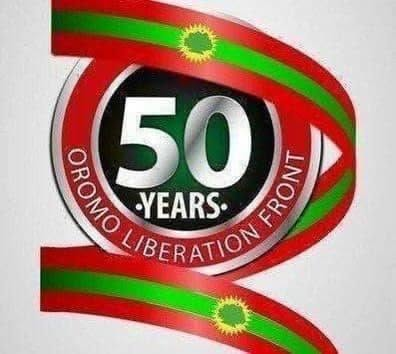
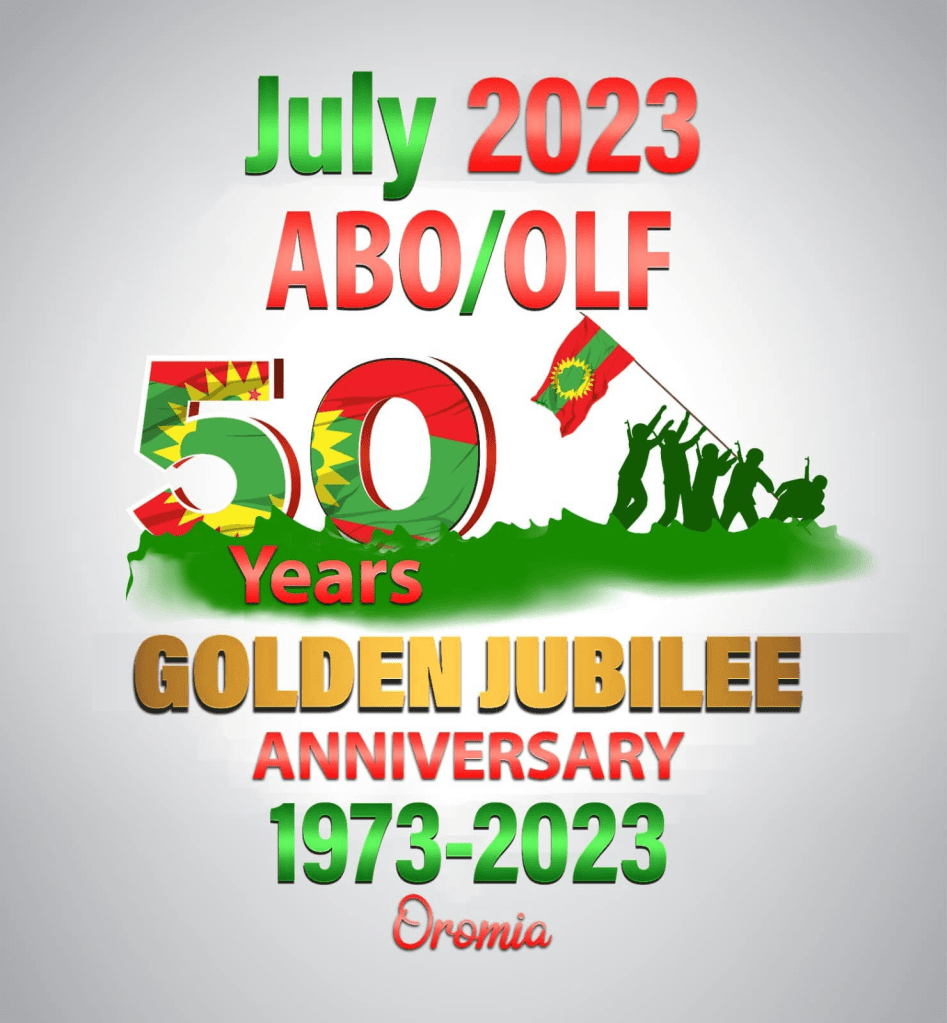
On a quiet day in 2023, as the world continues to spin through its cycles of change and upheaval, the Oromo people pause to mark a profound milestone. Fifty years have passed since the Oromo Liberation Struggle formally began its modern political and armed phase. The commemoration, held under the theme “50 Years of Oromo Freedom Struggle,” is not merely a glance backward at the pages of history. It is a declaration—a powerful affirmation that the strength of the past must be carried forward into the future.
As the saying goes, “Kunis waan nu ibsuu fi nu boonsu tokko akka baatee jiru mirkaneessa” —this confirms that there is something that defines us and makes us proud. Indeed, there is.
—
A People of Ancient Heritage
To understand the significance of this fifty-year mark, one must first appreciate the depth from which the Oromo struggle springs. The Oromo are not a recent invention of political convenience; they are the custodians of one of the oldest and most sophisticated cultural civilizations in the world.
The Gadaa system, a traditional democratic governance structure that has guided Oromo society for centuries, stands as a testament to their organizational genius. Long before modern democracies adopted the principles of checks and balances, term limits, and participatory governance, the Oromo had perfected these ideals through Gadaa. Every eight years, power would transfer peacefully from one generation to the next—a cycle of leadership renewal that ensured accountability and collective decision-making.
Then there is Waaqeffannaa, the indigenous Oromo belief system that reveres a single supreme being, Waaqa (God), and emphasizes harmony with nature, truth, and justice. The annual Irreecha festival, celebrated at sacred lakes and hilltops, is not merely a cultural event but a spiritual renewal—a thanksgiving for life, health, and the blessings of creation. Millions gather to raise their hands in prayer, adorned in traditional attire, singing songs that have echoed across the ages.
This is the Oromo identity: ancient, proud, and resilient. A civilization that has survived empires, invasions, and attempts at erasure. It is this identity that the freedom struggle seeks to protect and restore.
—
The Unfinished Story
The Oromo freedom struggle, as formally recognized in its modern phase over the past fifty years, is not a story of violence for its own sake. It is a story of a people demanding what is rightfully theirs: recognition, dignity, self-determination, and a place at the table of nations.
The archives of this struggle are filled with names that will never be forgotten. Some are written in blood, others in ink, but all are etched in the collective memory of the Oromo people. This struggle has chronicled a history of heroism that refuses to conclude—a narrative that continues to unfold with each passing year.
What makes this struggle unique is its deeply rooted cultural foundation. The Oromo are not fighting to create something new; they are fighting to reclaim something old. They are fighting to ensure that the Gadaa principles of justice, the Waaqeffannaa values of truth, and the Irreecha spirit of thanksgiving are not confined to textbooks or tourist brochures but are lived realities for future generations.
“Qabsoon Bilisummaa Oromoo seenaa boonsaa himamee hin dhumne galmeessee jira” —The Oromo liberation struggle has recorded a history of heroism that has not yet concluded. Indeed, it is a living document, written anew with every act of courage, every song of resistance, and every child raised to know their heritage.
—
A Story for All Generations
Perhaps the most beautiful aspect of this commemoration is its recognition that the struggle transcends any single generation. It is a legacy passed down from grandparents to parents, from parents to children. It is a story that is sung in lullabies, debated in classrooms, and whispered in prayers.
“Kun barayyuu dhalootaan kan leellifamuu fi faarfamuu dha” —This is a story that will be praised and sung by future generations. It is not a chapter to be closed but an anthem to be repeated, a lesson to be taught, and a flame to be kept alive.
The young Oromo today carry the weight of this legacy, but they also carry the hope. They are the ones who will take the baton from the veterans of the struggle and run the next lap. They are the ones who will ensure that the dream of a free, dignified, and prosperous Oromia becomes more than a slogan—it becomes reality.
—
Looking Ahead with Strength
As the Oromo people mark fifty years, they do so with a clear-eyed understanding of the road ahead. Challenges remain immense. The struggle is far from over. But the very act of commemorating half a century is itself an act of defiance—a declaration that the Oromo are still standing, still resisting, and still believing.
The world has witnessed the resilience of the Oromo. From the highlands to the lowlands, from the cities to the countryside, the spirit of Oromia remains indomitable. The freedom struggle is not merely a political movement; it is a cultural renaissance, a spiritual awakening, and a moral imperative.
—
Conclusion
Fifty years. It is a number that carries weight—the weight of sacrifice, the weight of hope, and the weight of an unfinished journey. The Oromo freedom struggle has been a long and arduous road, paved with both tears and triumphs. But as the Oromo gather to reflect on this milestone, they do not do so with bitterness or despair. They do so with the quiet confidence of a people who know who they are and what they deserve.
The theme “50 Years of Oromo Freedom Struggle” is not just about honouring the past. It is about carrying that strength forward, about ensuring that the next fifty years will be marked by even greater progress and eventual victory. It is about making sure that the Gadaa, the Waaqeffannaa, and the Irreecha remain not just memories but living traditions that guide the Oromo into a brighter tomorrow.
The Oromo story is one of the great epics of human history—a story of endurance, culture, and the unquenchable thirst for freedom. And as long as there are Oromo to tell it, sing it, and live it, that story will never end. It will be praised and sung by future generations, as it deserves to be.
—
“Qabsoon keenya bilisummaa fi mirga namaa kan mata keenyaati. Kun hidhannoo keenyatti amanuufi dhaloota dabarsuuti.”
“Our struggle is for freedom and human rights. This is our commitment to the future and to the generations to come.”

The Weight of Struggle: Why We Must Honor, Not Diminish, the Oromo Journey

Those who have walked the long road—through displacement, persecution, and sacrifice—deserve our deepest respect, not our casual dismissal
There is a dangerous tendency in our time—a habit of diminishing the sacrifices of those who came before us. It is easy to dismiss the struggles of others when we have not walked in their shoes, easy to minimize their pain when we have not felt its weight, easy to judge their choices when we have not faced their impossible dilemmas.
The reflection before us offers a powerful corrective to this tendency. It calls us to recognize the immense journey that the Oromo people have traveled—the trials they have endured, the sacrifices they have made, and the dignity they have maintained despite everything.
A People on the Move
“Nama Oromoo bu’aa bahii hedduu keessa darbuun har’a gahe, xiqqeessuu fi salphisuun faayidaan argamu hin jiru; jiraatus yoo nutti hafe wayya.”
The Oromo person who has passed through many trials to reach today—there is no benefit in belittling or diminishing them. Even if something remains, it would be better if it were left to us.
This statement is a profound meditation on the relationship between generations. It recognizes that the Oromo people have endured extraordinary hardships—centuries of colonization, decades of cultural suppression, generations of displacement, and waves of brutal repression.
The Oromo who stand before us today are the products of that struggle. They carry the scars of battles fought long before we were born. They speak with voices that have known silence, cry with eyes that have seen too much, and hope with hearts that have been broken and rebuilt countless times.
To diminish them is to diminish ourselves. To belittle their achievements is to belittle the very foundation upon which we stand.
The Journey of Exile
“Oromoon hedduun imala godaansaa keessatti gidiraa hedduu keessa darban.”
Many Oromo have passed through great difficulties during their journey of displacement. The Oromo diaspora is not a story of voluntary migration—it is a story of flight, of seeking refuge from persecution, of leaving everything behind to preserve life itself.
The Oromo exile began long before the modern era. Generations of Oromo have been forced to flee their homeland—escaping war, famine, political repression, and the systematic destruction of their communities. They have crossed borders, oceans, and continents in search of safety.
This is not a journey of choice. It is a journey of survival. And every Oromo who has made this journey carries with them the weight of what they have lost and the hope of what they might yet find.
Trials by Fire
“Biyya baqannaa keessatti qormaata hedduuf saaxilanii darban.”
In the lands of refuge, they have faced countless trials. The experience of exile is not a simple escape from danger—it is an entry into new forms of struggle. Oromo refugees and migrants have faced xenophobia, discrimination, economic exploitation, cultural isolation, and the constant anxiety of uncertain legal status.
They have had to rebuild their lives from nothing—learning new languages, adapting to new cultures, accepting menial jobs that their education and skills should have surpassed. They have been separated from families, disconnected from communities, and forced to navigate systems that were never designed for them.
And yet they have persisted. They have built new communities in foreign lands. They have preserved their language, their culture, and their identity against all odds. They have sent remittances home to support the struggle. They have educated their children, established organizations, and kept the flame of Oromo identity burning bright.
The Danger of Diminishment
“Qormaata isaan mudatee fi keessa darban kan akka tasaa ykn beekaa nu harka gale baafnee ittiin isaan salphisuu fi xiqqeessuuf yaaluun akka naamusa hojiittis akka safuu hojiittis fudhatama hin qabu.”
To try to belittle and diminish the trials they have endured and passed through—by claiming that we have miraculously or knowingly achieved what they could not—is unacceptable as a matter of both professional ethics and moral decency.
The reflection speaks directly to a troubling phenomenon: the tendency of some to dismiss the struggles of earlier generations, to claim that they somehow would have done better, or to minimize the sacrifices that made current achievements possible.
This is not merely disrespectful—it is historically and morally wrong.
Those who walked the path before us faced challenges we cannot fully comprehend. They operated under conditions we have never experienced. They made choices with limited information and in impossible circumstances. Their achievements, whatever their limitations, are the foundation upon which our current position is built.
The Ethics of Respect
The reflection argues that belittling the struggles of others is unacceptable for two reasons:
First, as a matter of professional ethics—”naamusa hojii” —there is a standard of conduct that requires us to respect the work of those who came before. In any field, to dismiss the contributions of predecessors is to reject the very tradition that made our own work possible.
Second, as a matter of moral decency—”safuu hojii” —there is a basic human obligation to honor the sacrifices of others. To diminish someone’s suffering is a form of violence. To deny someone’s struggle is a form of erasure.
Those who have sacrificed for the Oromo cause deserve our gratitude, not our judgment. They deserve our respect, not our condescension. They deserve to be honored, not diminished.
Lessons for the Current Generation
The reflection offers several important lessons for those of us who inherit the legacy of the Oromo struggle:
1. Recognition: We must recognize that our current position—whatever it may be—is built upon the foundations laid by others. We did not create Oromo identity; we inherited it. We did not invent the Oromo struggle; we continue it.
2. Humility: We must approach the achievements of earlier generations with humility. We may have advantages they did not—better technology, more resources, greater international awareness—but we also face challenges they did not. Neither generation is superior; each has played its part.
3. Gratitude: We must be grateful for the sacrifices of those who came before. Every Oromo who can read and write in Afaan Oromo today owes a debt to those who risked imprisonment to publish in the language. Every Oromo who can express pride in their identity owes a debt to those who were tortured for doing the same.
4. Continuity: We must understand that we are part of a continuing story. The Oromo struggle did not begin with us, and it will not end with us. Our role is to carry forward the legacy, to build upon the foundations, and to pass on something better to those who will come after.
The Unfinished Journey
“Nama Oromoo bu’aa bahii hedduu keessa darbuun har’a gahe…”
The Oromo person who has passed through many trials to reach today—this is not a description of a completed journey. It is a description of a journey still underway.
The Oromo people are still struggling. They are still fighting for recognition, for rights, for self-determination. They are still facing oppression, discrimination, and violence. The fact that some have found refuge in other countries does not mean the struggle is over. The fact that some have achieved success in exile does not mean the homeland is free.
Each generation has its role to play. Each generation faces its own challenges. And each generation must honor the sacrifices of those who made its own achievements possible.
The Weight of Legacy
The reflection calls us to consider the weight of what we have inherited. The Oromo people have a long and painful history—a history of colonization, suppression, exile, and struggle. But it is also a history of resilience, resistance, cultural preservation, and hope.
When we diminish the struggles of those who came before, we diminish the entire Oromo story. When we belittle their achievements, we belittle the foundation upon which our own identity is built.
Instead, we should approach the Oromo journey with reverence—understanding that every scar tells a story, every sacrifice has meaning, and every achievement is a victory against overwhelming odds.
The Call to Unity
At its heart, this reflection is a call to unity—a call to recognize that we are all part of the same story, that we are all connected by the same struggle, that we all owe a debt to those who came before.
To dismiss the struggles of earlier generations is to divide the Oromo community. It is to create false hierarchies between generations. It is to claim that some are more authentic, more committed, or more deserving than others.
This is a dangerous path. It leads to fragmentation, resentment, and the weakening of the collective struggle. It serves only the interests of the oppressor, who benefits when the oppressed are divided.
Conclusion
“Nama Oromoo bu’aa bahii hedduu keessa darbuun har’a gahe, xiqqeessuu fi salphisuun faayidaan argamu hin jiru; jiraatus yoo nutti hafe wayya.”
The Oromo person who has passed through many trials to reach today—there is no benefit in belittling or diminishing them. Even if something remains, it would be better if it were left to us.
This is a statement of respect. It is a statement of gratitude. It is a statement of continuity.
We who inherit the Oromo legacy must approach it with humility. We must recognize that we stand on the shoulders of giants—of those who preserved the language when it was forbidden, who kept the culture alive when it was suppressed, who fought for justice when it was dangerous, and who maintained hope when all seemed lost.
Let us honor their sacrifices. Let us build upon their foundations. Let us continue their struggle. And let us never forget that we are part of a long and noble tradition—a tradition of resilience, resistance, and the unwavering pursuit of freedom.
“Nama Oromoo bu’aa bahii hedduu keessa darbuun har’a gahe…”
The Oromo person who has passed through many trials to reach today…
May we always honor that journey. May we always respect that struggle. And may we always remember that we are the inheritors of a legacy that demands our deepest gratitude and our most dedicated service.
The journey continues. The struggle endures. And the story of the Oromo people will be told with the dignity it deserves.

The Oromo Question: Beyond the Tongue and Into the Hands

By Daandii Ragabaa
There is a moment in the life of every nation when words are no longer enough. When the poetry of identity must translate into the prose of action. When the comfort of speaking like a people must give way to the discipline of living like that people.
The Oromo nation stands at that crossroads today.
A sharp and unsettling observation cuts through the community: “Amma illee namoonni hedduun akka Oromootti dubbatan, malee akka Oromootti hojjataa hin jiran. Namoota akka Oromootti yaadanii, akka Oromootti hojjatan hedduu nu barbaachisa. Waan Oromoof furmaata fidu hojjadha; Oromoo ta’a!”
Translated, it reads: “Even now, many people speak like Oromos, but they do not act like Oromos. We need many people who think like Oromos and act like Oromos. Do what brings a solution to Oromos; be Oromo!”
This is not a statement of despair. It is a declaration of accountability. It is the sound of a people waking from the dream of rhetoric and stepping into the reality of responsibility.
The Crisis of Performance
There is a dangerous phenomenon that plagues nations in struggle: the widening chasm between speech and action. It is easy to speak the language of resistance. It is fashionable to adopt the symbols of identity. It is comfortable to gather in crowds and chant the slogans of liberation.
But speaking like an Oromo is not the same as being an Oromo.
To speak like an Oromo is to know the words. To be an Oromo is to embody the values. To speak like an Oromo is to recite the grievances. To be an Oromo is to engineer the solutions.
The observation rings true across the Oromo world—from the villages of Wallo to the streets of Minneapolis, from the universities of Adama to the refugee camps of Kenya. There is no shortage of Oromo voices. There is a shortage of Oromo hands. There is no shortage of Oromo critics. There is a shortage of Oromo builders.
The Anatomy of Authentic Oromo Action
What does it mean to act like an Oromo? The answer lies not in grand gestures, but in the quiet architecture of daily life.
1. The Economics of Liberation
An Oromo who acts like an Oromo does not just lament economic marginalization—they build alternatives. They support Oromo-owned businesses. They create cooperative financial institutions. They invest in Oromo education. They understand that economic dependency is the leash of oppression, and they work tirelessly to break it.
2. The Politics of Organization
An Oromo who acts like an Oromo does not just attend rallies—they organize communities. They build institutions that outlast individuals. They develop systems of governance that reflect the principles of the Gadaa—consensus, accountability, and the rotation of power. They move from protest to program.
3. The Culture of Excellence
An Oromo who acts like an Oromo does not just celebrate Oromo culture—they excel in their chosen field. They become the finest doctors, engineers, lawyers, teachers, artists, and entrepreneurs. They understand that mediocrity is not a mark of authenticity; excellence is. They know that the world respects competence, and they refuse to give the world any reason to dismiss them.
4. The Discipline of Unity
An Oromo who acts like an Oromo does not just talk about unity—they practice it. They subordinate personal ambition to collective good. They reject the divisive whispers of clan, region, and religion. They recognize that the enemy’s greatest weapon is fragmentation, and they refuse to hand them that weapon.
Thinking Like an Oromo: The Intellectual Foundation
But action without thought is blind. The call is not just for action, but for Oromo thought—a philosophy that guides the hand.
To think like an Oromo is to recognize that the struggle is not a sprint but a marathon. It is to understand that liberation is not a single event but a process. It is to reject the false binary of “either/or” and embrace the Oromo genius of “both/and”—both culture and modernity, both tradition and innovation, both resistance and construction.
To think like an Oromo is to root oneself in the history of the ancestors while planting seeds for generations yet unborn. It is to understand that the Gadaa system was not just a political structure but a way of knowing—a methodology for solving problems, managing resources, and building consensus.
To think like an Oromo is to know that the enemy is not just outside the community but can also reside within. It is to be vigilant against the internal forces of corruption, greed, and short-term thinking that have crippled so many liberation movements.
The Urgent Need: Builders Over Talkers
The statement is clear: “Namoota akka Oromootti yaadanii, akka Oromootti hojjatan hedduu nu barbaachisa.” — “We need many people who think like Oromos and act like Oromos.”
This is not a call for blind nationalism. It is a call for strategic nationalism. It is a recognition that the Oromo nation has been blessed with orators but cursed with a shortage of engineers. We have been rich in poets but poor in planners. We have been abundant in critics but scarce in builders.
The time has come to recalibrate. The Oromo people do not need more voices—they need more hands. They do not need more slogans—they need more systems. They do not need more promises—they need more proof.
The Call to Action
The final charge is both a command and an invitation: “Waan Oromoof furmaata fidu hojjadha; Oromoo ta’a!” — “Do what brings a solution to Oromos; be Oromo!”
This is the ultimate definition of Oromo identity. It is not found in bloodline alone. It is not found in language alone. It is found in the relentless pursuit of solutions. It is found in the refusal to accept the status quo. It is found in the determination to build a future worthy of the ancestors and deserving of the children.
To be Oromo is to solve problems. To be Oromo is to build institutions. To be Oromo is to live the values of Gadaa—justice, peace, and collective well-being. To be Oromo is to act like an Oromo, not just speak like one.
The Unfinished Revolution
The Oromo nation stands at a pivotal moment in its history. The opportunities are immense. The challenges are immense. And the need for authentic, thinking, acting Oromos has never been greater.
The tongue is a gift. But the hand is a choice. The voice is a blessing. But the action is a legacy.
Let us not be a people of words alone. Let us be a people of works. Let us not be a nation of spectators. Let us be a nation of participants. Let us not wait for solutions to come from elsewhere. Let us be the solution.
“Namni of hin beekne, nama hin beeku” — “He who does not know himself, cannot know others.”
And those who know themselves—truly know themselves—do not just speak their identity. They live it. They build it. They become it.
Oromoo ta’aa! Be Oromo—not in word only, but in deed. Not in tongue only, but in truth.
—
The ink of identity is washed away by time. But the architecture of action stands forever.

The Blueprint of Victory: Why Oromo Success Demands Rejecting the Counsel of the Defeated

By Daandii Ragabaa
There is an old, unspoken rule in the theater of struggle: survivors write the history, but losers write the excuses. In the Oromo context, where the collective quest for self-determination, economic freedom, and cultural preservation is a daily examination of resilience, one question haunts the community: Who are we listening to?
A sobering observation often echoes through the chambers of Oromo intellectual discourse:
“Oromoonni hedduu gorsa qajeelaa argataa hin jiran. Namni qormaata darbuu barbaadu, nama qormaata kufe irraa gorsa fudhachuu hin qabu. Namoonni hedduun namoota qormaata qabsoo kufan irraa gorsa fudhatu; sun ta’uu hin qabu.”
Translated, it reads: “Many Oromo do not have proper guidance. Whoever wants to pass the test must stop taking advice from those who failed it. [Yet] many people do not take advice from those who failed the struggle.”
At first glance, the final sentence seems contradictory—if they don’t take advice from failures, why do they lack proper guidance? The answer lies in a painful paradox: the public square is dominated by the loud, defeated voices, while the silent, victorious architects remain obscured. This is the critical juncture where the Oromo struggle must evolve—from a theater of sympathy to a laboratory of strategic success.
The Danger of the Familiar Echo
Human psychology is wired for comfort. We gravitate toward those who validate our pain. When a community has faced systemic marginalization, it is easy to find solace in the company of those who share tales of bureaucratic stonewalling, economic collapse, or political betrayal.
But here lies the trap. The advice of a person who has never built a business, never negotiated a diplomatic win, or never successfully organized a self-sustaining institution is not just useless—it is parasitic.
The philosophy embedded in this Oromo axiom demands a radical break. The qormaata (exam) is not merely a classroom test; it is the existential evaluation of a nation. Are we passing the test of economic independence? Are we passing the test of educational excellence? Are we passing the test of diplomatic recognition? If the answer is no, we must scrutinize the source of our daily counsel.
Why the “Defeated” Cannot Guide the Victorious
To understand why one must stop taking advice from those who failed, we must define “failure” in the context of struggle. It is not the noble failure of a soldier who falls on the battlefield fighting an invincible force. It is the ideological failure of those who succumb to defeatism before the battle begins. It is the failure of those who normalize mediocrity, who preach that the system is “too big to beat,” and who mistake loud lamentation for meaningful action.
A student preparing for a rigorous medical entrance exam would never hire a tutor who failed the same exam five times. Why? Because failure does not produce the methodology of success. It produces the psychology of survival. The person who passed knows the shortcuts, the mindset shifts, and the precise sacrifices required. The person who failed knows only the pitfalls—and misery loves company.
The Silent Crisis of Mentorship
The axiom notes that many Oromo do not have proper guidance. This is the root catastrophe. In the diaspora and at home, the community is saturated with “critics” but starved of “architects.” We have an abundance of orators who can deconstruct oppression flawlessly, yet a scarcity of engineers who can construct the alternative.
Why do many avoid taking advice from those who did fail? Because those who failed are often the loudest. They dominate social media, they command the narrative of grievance, and they offer the easiest emotional catharsis. Meanwhile, those who have successfully passed the “exam”—the Oromo entrepreneurs running thriving global enterprises, the scholars published in top-tier journals, the diplomats navigating international corridors—are often too busy building to correct the noise.
The Paradigm Shift: Seek the Blueprint
The call here is not to abandon empathy, but to elevate strategy. If you are a young Oromo activist, do not ask the career protester how to build a political party; ask the person who actually registered a party and sustained it. If you are a student, do not ask the perpetual job-seeker for career advice; ask the professional who climbed the corporate ladder or built their own firm.
Empowerment theory, as discussed in previous discourses, argues that power is generated through competence. To break the cycle of collective stagnation, the Oromo must institutionalize a culture of Gorsa Qajeelaa—correct and proven guidance.
A Call for Discernment
The road to Bilisummaa (Freedom) is paved with strategic decisions, not emotional impulses. The “exam” we face is unforgiving. It does not award points for noble intentions; it awards results for precise actions.
It is time to adjust the volume dial. Turn down the noise of perpetual defeatism. Seek out the quiet victors in your midst. Ask them: “How did you pass?” And when they answer, take notes.
Because in the final tally of history, we are not judged by how eloquently we complained, but by how decisively we conquered. And we conquer by learning from the winners, not the defeated.

From Supplication to Power: The Unfinished Revolution of Empowerment

By Dhabessa Wakjira
There is a moment in every struggle, a tipping point that shifts the narrative from one of passive suffering to one of active agency. For many across the globe—from the rural villages of Oromia to the urban sprawls of the diaspora—that moment is captured in a powerful, defiant axiom:
“Waan nu godhan otuu hin taane, waan barbaadnu himachuu fi dhaadhessuu qabna. Kun empowerment theory dha.”
Translated from the Afaan Oromo, it means: “We are not what they make us; we have the power to ask for and get what we want. This is empowerment theory.”
This is not merely a statement; it is a declaration of intellectual and political sovereignty. It is the sound of a people moving from the margins to the center of their own destiny, guided by the principles of a theory that has reshaped social work, psychology, and community development worldwide.
The Core of the Theory: Rejecting the Script
At its heart, the statement dismantles the foundational myth of the “victim.” Empowerment theory, as pioneered by scholars like Julian Rappaport and Barbara Solomon, posits that problems are not located within individuals, but within the power structures that surround them.
The phrase “waan nu godhan”—”what they make us”—is a stark acknowledgment of systemic oppression. It names the elephant in the room: the historical, economic, and social forces that attempt to define a person’s limits based on ethnicity, gender, or class. To reject that label is the first act of liberation.
The theory argues that true change cannot be granted from the top down; it must be built from the bottom up. It shifts the focus from “fixing” people to providing them with the tools, resources, and confidence to navigate and challenge the systems that marginalize them.
The Art of Asking and Achieving: Himachuu fi Dhaadhessuu
The second part of the statement—“waan barbaadnu himachuu fi dhaadhessuu qabna” (we can ask for and get what we want)—is the action phase. In the context of empowerment, “asking” is not a sign of weakness. It is the strategic articulation of need. It is the demand for a seat at the table, the request for equity, and the negotiation for justice.
However, the theory recognizes that “asking” is not enough. The subsequent element—dhaadhessuu (achieving)—requires capacity building. It involves:
· Access to Information: Knowing your rights, understanding the bureaucracy, and demystifying the systems of power.
· Critical Awareness: The “conscientization” process described by Paulo Freire, where people analyze their social reality to understand the root causes of their oppression.
· Collective Action: Recognizing that individual empowerment is fragile, but community empowerment is resilient.
A Global Context, A Local Identity
While empowerment theory is a global framework, its application is deeply personal. For the Oromo people, a nation with a rich heritage but a history of political marginalization, this statement is a codified resilience.
It is the local farmer using modern agricultural techniques to break the cycle of dependency. It is the youth in the diaspora reclaiming their language and history. It is the mother organizing a cooperative to provide for her children, not through charity, but through enterprise.
Dr. Kene Gemechu, a sociologist specializing in Horn of Africa studies, notes, “This isn’t just about economic upliftment. It’s psychological decolonization. When you say, ‘I am not what you made me,’ you are reclaiming the narrative. Empowerment theory gives the vocabulary to that experience, validating that the struggle for agency is as important as the struggle for food.”
The Path Forward: From Theory to Praxis
The beauty of empowerment theory is that it is inherently a practice. It manifests in various forms:
· In Education: Curricula that reflect the culture and history of the students, rather than a foreign narrative.
· In Economics: Microfinance initiatives and cooperative models that give communities control over their capital.
· In Governance: Participatory budgeting and community policing that treat citizens as partners, not subjects.
The challenge, however, is systemic backlash. Empowerment is disruptive. It challenges those who benefit from the status quo. The struggle of dhaadhessuu (achievement) is often met with resistance, requiring an even greater resolve from the community.
Conclusion: The Loudest Voice
In the end, the theory has a simple, yet profound, conclusion: power is not a finite resource to be hoarded; it is an infinite resource to be generated.
The statement “waan nu godhan otuu hin taane” is a shield against despair. It is the refusal to internalize the lie of inferiority. And the call to “waan barbaadnu himachuu fi dhaadhessuu” is the sword of agency.
This is the essence of empowerment. It is not about asking for permission; it is about declaring your existence. It is the understanding that the voice of the people is louder than the silence of oppression.
As the Oromo proverb goes, “Namni of hin beekne, nama hin beeku”—”He who does not know himself, cannot know others.”
And those who know themselves, know their power. They know that they are not what they are made to be, but what they dare to become.
The Tree We Plant Today: A Reflection on Legacy, Life, and Political Leadership

In the heart of Finfinne, a simple act of planting carries profound lessons for governance, sustainability, and the future of generations yet unborn
Finfinne, Oromia — In the bustling streets of Shaggar, in the Sabbata district of the capital city, a quiet but powerful act is taking place. A sapling has been planted. To the casual observer, it may seem like a modest gesture—a tree among thousands, a green shoot in a city of concrete and noise. But to those who understand the deeper meaning of such acts, this planting represents something far more significant: a statement about the relationship between governance, nature, and the future.
The tree that stands today in Sabbata is not merely a decorative addition to the urban landscape. It is a living testament to the interconnectedness of all life—human and non-human, present and future, local and global. It is a reminder that the decisions we make today, the systems we build, and the values we uphold will echo through generations.
The Many Gifts of the Tree
As we reflect on the planting of this tree, we are reminded of the countless benefits that trees and vegetation provide—benefits that sustain not only human life but the entire web of existence:
~> Ecological Balance: Trees maintain the natural equilibrium of our environment, regulating temperatures, purifying air, and supporting biodiversity. They are the lungs of our planet, breathing life into the atmosphere.
~> Water Management: Trees absorb and hold rainfall, preventing flooding, replenishing groundwater, and ensuring that our rivers and springs continue to flow. In a world of increasing climate uncertainty, this function has never been more critical.
~> Soil Conservation: The roots of trees bind the soil, preventing erosion and landslides. They protect the land from being washed away by heavy rains, preserving the fertility of our agricultural lands.
~> Sustenance: Trees provide food—fruits, nuts, and leaves that nourish both humans and animals. In rural areas especially, the tree is a source of sustenance and survival, a gift that keeps giving across seasons and years.
~> Shelter: Trees offer shade and protection, cooling our homes and communities. They are the silent guardians that shield us from the harshness of the sun and the elements.
~> Building Materials: From the timber that builds our homes to the branches that create our tools, trees provide the raw materials for our shelter and sustenance.
~> Medicine: The majority of medicines in our pharmacies trace their origins to plants. Trees heal us, offering remedies that have been discovered and refined over centuries of human wisdom.
~> Paper and Knowledge: The very pages on which we write our history, our knowledge, and our dreams come from trees. Without them, our civilization would lack the means to record and transmit its wisdom.
~> And so much more: The list of benefits is almost endless. Trees purify our air, beautify our surroundings, provide habitats for countless species, and offer spiritual and cultural significance to communities around the world.
In short, the life of a tree is inseparable from human life. To protect trees is to protect ourselves. To plant trees is to invest in our collective future.

The Duty of Care
“Biqiltuu dhaabuun, dhaabanii immoo kunuunsuun akka guddatu taasisuun dirqama ta’a.”
Planting a tree is not enough. We must nurture it, water it, protect it from harm, and ensure that it grows to maturity. The act of planting is the beginning, not the end, of our responsibility.
This simple truth carries profound implications for how we approach governance and leadership. Just as a sapling requires care and attention to flourish, so too do our institutions, our communities, and our nations.
“Biqiltuun dhaabatee guddate tokko dhaloota har’aa qofa fayyada osoo hin taane, dhaloota boruufis wabii ta’a.”
A tree that is planted and successfully grown benefits not only the present generation but becomes a witness and a resource for those yet to come. It is a legacy—a gift from the past to the future, a bridge between generations.
This is the true measure of leadership: not what we consume or accumulate, but what we create and leave behind. Not what we take from the world, but what we give back. Not how we serve ourselves, but how we serve those who will come after us.
Political Systems and the Tree
“Sirni ykn paartiin siyaasaa har’a jiru boru itti fufuufi dhiisuun waan yeroon murteessuudha.”
The political systems and parties of today face a choice: to endure or to pass away. Time will decide their fate, as it decides all things. But the tree—the tree is different.
“Garuu biqiltuun sirna ykn paartii siyaasaa waliin jijjiirama osoo hin taane, dhaloota irraa dhalootaatti darbaa deema.”
Unlike political systems that rise and fall, that change with the whims of leaders and the tides of history, the tree transcends political transformation. It passes from generation to generation, a constant in a world of change.
This is a humbling observation for those of us engaged in political struggle. Our systems, our parties, our ideologies—they are temporary. The tree, when planted with care, can outlive us all. It will stand witness to the rise and fall of regimes, the birth and death of leaders, the changing fortunes of nations.
“Kanaafuu biqiltuu dhaabuu qofa osoo hin taane, kunuunsanii guddisuun dirqama ta’a.”
Therefore, it is not enough to plant—we must nurture. It is not enough to establish—we must sustain. It is not enough to begin—we must complete.

A Call to Action
“Nutis biqiltuu har’a dhaabne kunuunsinee akka guddatu haa taasisnu; ni taasisnas!”
We who plant today must also commit to tending. We who envision a better tomorrow must also labor to bring it into being. We who hope for a future must also build the foundations upon which that future can stand.
This is the message of the tree in Sabbata. It is a call to responsibility. It is a challenge to think beyond ourselves, beyond our immediate needs and desires, beyond the narrow horizons of our own lifetimes.
The tree that stands in Shaggar today is a symbol of what is possible when we act with foresight, when we care for the environment, when we prioritize the needs of future generations. It is a model for how we should approach governance, development, and leadership.
The Broader Significance
In a world facing unprecedented environmental challenges—climate change, deforestation, desertification, biodiversity loss—the planting and nurturing of trees is more than a symbolic act. It is a practical necessity. It is a matter of survival.
As we reflect on the tree in Sabbata, we are reminded of the urgency of our environmental responsibilities. The Earth does not belong to us alone; it belongs to all living beings, present and future. Our stewardship of the planet will be judged not by what we accumulate but by what we preserve.
“Biqiltuun faayidaan inni qabu jiruufi jireenya dhala nama dabalatee, kan uumama hundaa waliin wal-qabata.”
The tree connects us to the web of life—to the soil, the water, the air, the animals, the insects, and the countless other beings that share our world. To care for the tree is to care for all of life. To neglect the tree is to neglect ourselves.
A Legacy for Generations
The planting of a tree is an act of hope. It declares that we believe in tomorrow, that we trust in the future, that we have faith in the generations yet to come.
“Biqiltuun dhaabatee guddate tokko dhaloota har’aa qofa fayyada osoo hin taane, dhaloota boruufis wabii ta’a.”
When we plant a tree, we are not just planting a plant. We are planting a legacy. We are creating a witness to our existence, a gift to those who will follow, a statement that we cared about something beyond ourselves.
This is what leadership should be—not the pursuit of power for its own sake, but the cultivation of a better world for those who will inherit it. Not the accumulation of wealth and status, but the investment in sustainability and justice.
Conclusion: The Tree and the Future
As we conclude this reflection, let us return to the image of the tree in Shaggar, in Sabbata, standing tall and green in the heart of the capital. It is a reminder that the greatest acts of leadership are often the quietest—the simple decision to plant, to nurture, to care.
The tree asks nothing of us but our attention and our labor. It gives everything: oxygen, shade, food, shelter, medicine, beauty. It connects us to each other and to the world around us. It bridges the past and the future, carrying forward the hopes and dreams of those who came before.
“Nutis biqiltuu har’a dhaabne kunuunsinee akka guddatu haa taasisnu; ni taasisnas!”
Let us commit to nurturing the trees we plant today. Let us commit to building a future that honors the interconnectedness of all life. Let us commit to leaving a legacy of sustainability, justice, and hope for the generations yet to come.
In the end, the true measure of our leadership will not be found in the statues we erect or the names we inscribe on buildings. It will be found in the trees we plant and nurture, in the lives we touch and uplift, in the world we leave behind for those who will inherit it.
Plant a tree. Nurture it. Watch it grow. And know that you have done something that matters—something that will outlast you, something that will benefit generations yet unborn.
The tree in Shaggar is not just a tree. It is a prophecy. It is a promise. It is a prayer.
May we all have the wisdom to plant, the patience to nurture, and the vision to see the forest in every single seed.





 Advocacy for Oromia