Author Archives: advocacy4oromia

African Migrants Across South Africa Sound Alarm Over Escalating Violence, Economic Sabotage, and Systematic Intimidation

The Oromo and broader African diaspora face mounting threats from anti-migrant movements as ‘March 1 March’ and ‘Operation Dudula’ intensify nationwide
SOUTH AFRICA — Beneath the bustling streets of Johannesburg’s inner city, where the rhythms of pan-African commerce once thrived, a palpable fear now settles like an unwelcome fog. Across the nation, from the Cape Flats to the townships of Durban, African migrants who sought refuge and opportunity in the Rainbow Nation are now sounding an urgent alarm—their lives, their livelihoods, and their basic human dignity hang in the balance.
The crisis, while not new, has reached a critical precipice. African migrants, including thousands of Oromo refugees who fled political persecution in Ethiopia and other regions of the Horn of Africa, report being systematically targeted by organized anti-migrant movements. The groups operating under the banners of “March 1 March” and “Operation Dudula” have orchestrated campaigns that victims describe as coordinated efforts to economically cripple and physically intimidate foreign nationals.
‘We Came Seeking Safety’
For many Oromo migrants, the journey to South Africa began as a desperate flight from violence in their homeland. “I left Oromiya with nothing but the clothes on my back,” says Bontu, a mother of three who now runs a small tailoring business in Cape Town. “I came here believing in Ubuntu, the spirit of African unity. Now I lock my door and pray my children return from school alive.”
Bontu’s story is echoed across the country. Migrants who fled political instability, ethnic conflict, and economic collapse have found themselves facing a new nightmare—xenophobic violence that South African authorities have been slow to address.
Documentation of Widespread Violence
Representatives from affected communities have compiled extensive video evidence and firsthand testimonies documenting the severity of the crisis. The footage reveals disturbing scenes of organized brutality:
Economic Warfare and Property Destruction: In coordinated operations that appear strategically planned, businesses owned by African migrants have been systematically looted and destroyed. In Tembisa, Soweto, and other townships, foreign-owned shops have been reduced to smoldering shells. Vehicles have been set ablaze in broad daylight as onlookers record the destruction on their phones.
Organized Mob Violence: Victims describe targeted mass beatings and physical harassment. “They came in groups, armed with pangas and iron bars,” recounts Tadesse, an Oromo shopkeeper in Pretoria. “They didn’t ask for money. They wanted to destroy everything. They told us to ‘go back home.'”
Administrative Blockades and Intimidation: Even routine bureaucratic processes have become battlegrounds. Migrants report being subjected to threats and deliberate delays when attempting to renew residency permits or legal documentation—an essential process for maintaining lawful status in the country.
The Psychological Toll
Perhaps most devastating is the invisible wound—the psychological trauma inflicted upon entire communities. Parents across the nation have stopped sending their children to schools, fearing they may not return. Families remain confined to their homes, living in what victims describe as “continuous high anxiety.”
“My daughter asks why we can’t go to the park anymore,” says Bontu. “How do I explain to a seven-year-old that her skin, her language, her origins make her a target in a country that was supposed to welcome us all?”
Children who once dreamed of becoming doctors and teachers now live with nightmares of masked men breaking down their doors.
Operation Dudula: A Movement Under Scrutiny
Operation Dudula, which translates to “force” or “push back” in isiZulu, has positioned itself as a grassroots movement addressing legitimate concerns about unemployment and housing shortages in South African communities. However, critics argue the movement has crossed into dangerous territory by targeting vulnerable migrant populations rather than advocating for systemic solutions to the country’s deep-seated socioeconomic challenges.
March 1 March, another anti-migrant initiative, has similarly been linked to escalating tensions and violence against foreign nationals.
Both groups have denied accusations of xenophobia, maintaining they are addressing the strain that undocumented migration places on local resources. Yet the victims’ testimonies paint a different picture—one of organized intimidation targeting law-abiding residents who have contributed to their communities for years or even decades.
A Call to Action
Spokespersons from affected communities are distributing their documented evidence to international media outlets, civil society organizations, and human rights watchdogs. Their plea is clear: the South African government, law enforcement agencies, and the international community must act immediately to:
- Protect Vulnerable Populations: Deploy law enforcement to prevent further attacks and ensure perpetrators face consequences
- Uphold the Rule of Law: Ensure all residents, regardless of nationality, have equal access to legal protections and administrative services
- Address the Root Causes: Develop comprehensive strategies to address unemployment and service delivery challenges without scapegoating foreign nationals
- Promote Social Cohesion: Invest in community dialogue and education programs that counter xenophobic narratives
The Broader Context
South Africa has a complex history with migration. As the continent’s most industrialized economy, it has long attracted workers and entrepreneurs from across Africa. Yet recurring waves of xenophobic violence—in 2008, 2015, 2019, and now ongoing—have tarnished the nation’s reputation and contradicted its constitutional commitment to human dignity.
The Oromo diaspora, numbering in the thousands, represents a particularly vulnerable population. Having fled political persecution and ethnic conflict, many lack the robust social networks that might offer protection. They arrived with skills, determination, and hope—qualities that have enriched South African communities when given the opportunity.
An African Tragedy
As the sun sets over the continent, the irony is not lost on those caught in this crisis. African refugees who fled conflict zones, seeking safety within their own continent, now face violence from the very communities they sought to join.
“The dream of a united Africa feels very far away,” reflects Tadesse. “But I still believe. We must not let the actions of some destroy the vision of all. Our children deserve to inherit a continent of solidarity, not suspicion.”
The international community and African Union have mechanisms to address such crises—protocols on the protection of refugees, conventions on human rights, frameworks for continental solidarity. What remains to be seen is whether these instruments will translate into meaningful action before more lives are destroyed.
The Way Forward
South African civil society organizations have called for urgent dialogue between migrant communities, government representatives, and local leaders. Some municipalities have begun establishing community forums to address tensions constructively.
Human rights lawyers are preparing legal challenges against the most egregious violations, while grassroots peacebuilding initiatives work to rebuild trust between South African residents and their migrant neighbors.
Yet time is of the essence. The violence continues, the fear deepens, and the economic damage mounts. For every day that passes without meaningful intervention, more families are displaced, more livelihoods destroyed, and more children grow up in a world where “foreigner” has become synonymous with “target.”
A Shared Humanity
As one Oromo elder noted during a community meeting in Johannesburg, “We have forgotten that we are all African. The borders that divide us were drawn by colonial powers who wished to keep us fighting each other. Our strength lies in remembering our shared humanity.”
The crisis facing African migrants in South Africa is not merely a matter of domestic policy—it is a test of the continent’s commitment to the principles of pan-African unity and solidarity. How South Africa responds to this moment will send a message far beyond its borders.
In the meantime, families continue to lock their doors, children remain home from school, and communities pray for a dawn that brings not fear, but hope.

The Unwritten Code: Why Word Order Holds the Key to Oromo Identity

By Dhabessa Wakjira
In a world increasingly dominated by linguistic homogenization, the quiet persistence of grammatical structure might seem like an esoteric concern for academics and purists. But in Ethiopia, a battle for cultural identity is being waged not on battlefields, but in the subtle ordering of nouns and adjectives. For the Oromo people, the rule “maqaa dursee, ibsituu gala”—placing the noun before the adjective—is not merely a stylistic quirk. It is a declaration of intellectual sovereignty.
A Language’s Silent Logic
Consider the geography of the Oromo homeland. We speak of Oromiyaa Lixaa (Western Oromia), Oromiyaa Bahaa (Eastern Oromia), Oromiyaa Kibba Bahaa (Southeastern Oromia), and Oromiyaa Giddugalaa (Central Oromia). The pattern is unmistakable: the subject—the nation itself—comes first. Its attributes, its regions, its descriptions follow. This is the bedrock of Afaan Oromo syntax.
Yet, this natural rhythm is under siege. The dominant linguistic forces in the region—Amharic and English—operate on an inverse logic. In English, one says “Western Oromia” (adjective + noun). In Amharic, the structure is Mirab Oromiyaa (Adjective + Noun). When speakers of these languages apply their grammatical framework to Oromo, the result is a linguistic Frankenstein: Lixaa Oromiyaa instead of Oromiyaa Lixaa.
Beyond Grammar: A Question of Respect
For Habtamu Boru, a linguist at Addis Ababa University, this is more than a grammatical faux pas. “Language is the blueprint of thought,” he argues. “When you alter the word order of a language, you are not just making a grammatical error; you are attempting to rewrite its cognitive DNA. The Oromo mind identifies the entity first—the nation, the person, the object—and then considers its qualities. To reverse that is to impose a foreign way of seeing the world.”
This becomes glaringly evident when we look at proper naming conventions. The historically and linguistically correct forms are:
· Arsii Bahaa (Eastern Arsi)
· Gujii Lixaa (Western Guji)
· Harargee Bahaa (Eastern Hararghe)
· Shawaa Lixaa (Western Shewa)
· Wallaggaa Bahaa (Eastern Wallagga)
When these are inverted—Bahaa Arsi or Lixaa Gujii—they cease to be authentic Oromo expressions. They become colonial imitations, betraying the speaker’s unfamiliarity with the soul of the language.
Why It Matters in 2026
As of 2026, Afaan Oromo is one of the most spoken languages in the Horn of Africa, with tens of millions of speakers. It is the working language of the Oromia Regional State and is increasingly used in education and media. Yet, the infiltration of foreign syntactic structures poses a silent threat.
The danger is insidious. Children learning Afaan Oromo in urban centers often adopt the adjective-first structure, mistaking it for modernization or fluency. The media, swayed by translation conventions from English and Amharic news sources, increasingly broadcast geographic and descriptive phrases that violate the core rule.
A Call to Linguistic Arms
The call to “Hordofuun Barbaachisaa Dha” (It is necessary to follow) is not about rigid prescriptivism. It is about preservation. It is a plea to remember that language is not a mechanical tool for communication; it is a vessel for history, for worldview, for dignity.
When we say Biyya Keenya (Our Country) and not Keenya Biyya, we affirm that the country belongs to us, not the description to the country. When we say Namuma Gaarii (A Good Person) and not Gaarii Namuma, we affirm that the person precedes their qualities.
As the Oromo proverb goes, “Afaan namatti haasa’uu akka ofii isaati”—speak to people in their own language. And to speak to the Oromo truly is to place their noun before the adjective.
The Path Forward
The solution lies in vigilance. Parents must correct their children. Educators must emphasize this rule alongside vocabulary. Media houses must hire competent editors who understand the structural integrity of Afaan Oromo. Most importantly, non-native speakers must recognize that adopting this rule is a gesture of respect, an acknowledgment that they are engaging with a culture that has its own logic, its own beauty, and its own way of ordering the world.
The rule is simple: Maqaa dursee, ibsituu gala. The noun first, the adjective follows. It is the key to a grammar, but it is also the key to a culture.
It is time to unlock it.

THE GENERATION OF THE BOOK: How the Keepers of Knowledge Forged a Living Purpose for Their Nation

They did not pick up arms alone; they picked up pens, manuscripts, and the dusty archives of memory—and in doing so, they gave their people a future worth fighting for.
—
By Our Staff Writer
There is a generation that walks among us—unassuming, often overlooked, yet carrying the weight of centuries upon their shoulders. They are not soldiers in the conventional sense. They do not stand on barricades with rifles. Their weapons are older, sharper, and far more enduring: books, scrolls, oral epics, and the sacred duty of remembrance.
This is the generation that read the book of knowledge not for personal glory, not for academic titles, but for their nation and their country. They understood that a people who forget their past are a people condemned to wander in the darkness of others’ narratives. So they opened their eyes, their ears, and their hearts to the whispers of their ancestors, and they transcribed those whispers into a living, breathing blueprint for the future.
They have set a Living Purpose—a compass not carved in stone, but etched into the very soul of the Oromo nation.
—
The Archive of Silence No More
For decades, the history of Oromia was a forbidden text. Colonial anthropologists wrote of the Oromo as a “stateless” people, a footnote to Ethiopian imperial narratives. State-sponsored textbooks erased the Gadaa system, reducing a 500-year-old democracy to a “primitive” custom. The language itself was relegated to the shadows, its beautiful rhythms and proverbs deemed too dangerous for the public sphere.
Then came the generation of the book.
They began in secret—under the flickering light of kerosene lamps, in the basements of diaspora homes, in the prayerful silence of elders’ huts. They transcribed oral histories that had survived the swords of conquerors. They translated ancient poems and legal codes. They documented the names of heroes whose graves had been deliberately unmarked. They studied the sciences of agriculture, linguistics, law, and political theory, not as abstract disciplines, but as tools for liberation.
This was not merely academic curiosity. It was archaeology of the soul. Every recovered manuscript, every restored lineage, every corrected historical distortion was a brick laid in the foundation of a nation that had been told it had no foundation at all.
—
The Book as the Blueprint
But this generation did not stop at remembrance. They were forward-looking—future-casting visionaries who understood that the past, no matter how glorious, is only the starting line.
They read, yes. But they also interpreted. They asked: What does the Gadaa system teach us about governance today? How can the Oromo philosophy of Nagaa (peace) inform conflict resolution in a fractured region? What economic models are sustainable for the pastoralists of the Borana and the farmers of Arsi? How can the Oromo diaspora, scattered across the globe, remain connected to the homeland without losing their hard-won international solidarity?
The generation of the book synthesized these questions into a Living Purpose—a dynamic, evolving vision that adapts to changing circumstances while remaining rooted in eternal values. They did not propose a rigid ideology, but a method: a way of being Oromo that is simultaneously ancient and modern, particular and universal, rooted and reaching.
This purpose is not a document gathering dust on a shelf. It is a living will, passed from elder to youth, from rural village to urban university, from the highlands to the diaspora. It grows, it breathes, it argues with itself—and in that self-critique, it becomes stronger.
—
The Pedagogy of the Rising Sun
How do you teach a nation to read its own future?
The generation of the book understood that literacy is not merely the ability to decode letters; it is the capacity to decode power. They established schools where none existed—underground classrooms beneath the shade of the Odaa tree, where children learned their mother tongue while the state listened for whispers of sedition. They published pamphlets, newsletters, and eventually, fully-fledged books that laid bare the mechanisms of their oppression and the pathways to their emancipation.
They also taught critical reading. They encouraged their students to question, to cross-reference, to recognize bias in official narratives. They did not want obedient subjects; they wanted sovereign minds—citizens capable of discerning truth from propaganda, justice from ritualized injustice.
In this way, the book became a liberation pedagogy. Every page read, every footnote examined, every historical contradiction exposed, was an act of resistance more potent than any weapon. Because an army can be defeated; a regime can fall; but a generation that knows how to think? That is a force no tyranny can suppress.
—
The Living Purpose in Action
Today, we see the fruits of that labor.
In the global forums of human rights advocacy, Oromo intellectuals cite their own traditions of democratic governance to challenge international observers. In the digital corridors of social media, a new generation of Oromo writers, poets, and meme-makers use their ancestors’ wit to dismantle contemporary prejudice. In the universities of the diaspora, students majoring in Oromo studies reclaim a heritage that was once “impractical” and “irrelevant” to Western academia.
The Living Purpose is materialized in the Oromo flag—that trinity of black, red, and white—which is not just a piece of cloth, but a summary of the book they read: black for the land, red for the sacrifice, white for the dawn to come. It is manifested in the Irreechaa festival, where thousands gather to give thanks, not as a ritualistic relic, but as a vibrant, contemporary expression of ecological spirituality.
And it is embodied in the quiet dignity of an Oromo mother who, despite the threat of arrest, teaches her child to say, “Ani Oromoo”—I am Oromo—with the same natural, unbreakable pride with which she breathes.
—
The Unfinished Chapter
Yet, the book is not complete. This generation knows that their task is not finished. The Living Purpose is not a destination; it is an open road.
There are still histories to recover, languages to revive, and systems to redesign. There are still young minds, especially in rural communities, who lack access to the very books that could set them free. There are still regimes that burn libraries and persecute poets, believing that if they destroy the words, they destroy the nation.
But they have already lost. Because the generation of the book has ensured that the words live within the people. No fire can burn a book that has been committed to memory. No censorship can silence a story that is carried on the tongue and passed through the blood.
—
A Final Leaf
As the sun descends over the Oromo homeland, casting its long shadows across the Rift Valley, one can almost hear the turning of pages—the rustle of a billion hopes, inscribed not in ink, but in action.
The generation that read for their nation has set a purpose that will outlive them. They have planted a forest of knowledge, and though they may not sit in its final shade, they have ensured that their children, and their children’s children, will.
They read the book. They understood the mission. And they passed it on—not as a relic, but as a flame.
The pages turn. The purpose lives. And the nation, at last, begins to write its own destiny.


The Personal Cost: What Participation Really Means in the Oromo Struggle

By Daandii Ragabaa
Participation in the Oromo struggle is not a badge of honor to be worn lightly. It carries real costs: the risk of imprisonment, the loss of employment, the strain on family relationships, the psychological toll of witnessing injustice and state violence. To enter this path without understanding these burdens is not bravery—it is recklessness.
For many young Oromos, the call to action feels almost magnetic. It pulses through social media feeds, echoes in university lecture halls, and reverberates in the whispers of elders who remember previous struggles. The desire for bilisummaa—freedom—burns bright, and rightfully so. But brightness can blind, and passion untempered by preparation can lead to devastation.
The Weight of Knowledge
The informed participant calculates these costs soberly. They do not romanticize martyrdom but prepare for the possibility of sacrifice. This is a critical distinction: one can be willing to sacrifice without seeking suffering. The romanticized image of the revolutionary—defiant, fearless, untouchable—is a dangerous fiction that has shattered too many young lives.
Consider the family left behind when a participant is detained. The mother who cannot sleep. The children who grow up without a parent’s presence. The spouse who must navigate a sudden single-income household. These are not abstractions; they are the daily realities of thousands of Oromo families across Ethiopia and the diaspora.
Building the Foundation
The wise participant builds support networks before they are needed. They identify trusted friends who can act as emergency contacts. They establish communication protocols. They ensure their family understands—to the extent possible—the risks involved. They plan for the psychological and material consequences of their involvement.
This planning is not cowardice. It is the opposite. It is the recognition that the struggle is a marathon, not a sprint. That sustainability matters. That burning out in the first mile serves no one.
Mental health preparation is particularly crucial. Witnessing state violence—whether in person or through graphic videos shared online—leaves scars. The constant hypervigilance, the grief for fallen comrades, the anger that simmers just beneath the surface—these accumulate. Participants who ignore their psychological well-being often find themselves unable to continue when their community needs them most.
The Material Realities
Loss of employment is not a theoretical risk. In Ethiopia, known activists have been dismissed from government positions, blacklisted from private sector jobs, and denied educational opportunities. In the diaspora, there are subtler forms of economic retaliation: lost contracts, strained business relationships, sudden “restructuring” at workplaces.
Financial planning, therefore, becomes an act of resistance. Saving emergency funds. Maintaining skills that remain marketable regardless of political climate. Diversifying income sources. These are not signs of divided loyalty but of strategic thinking.
A Call to Maturity
This is not a counsel of fear but of maturity. The struggle is too important to be undertaken by those who have not counted the cost. Freedom is not won through impulse but through sustained, strategic, and sober effort.
The Oromo people have endured too much to have their liberation squandered by recklessness. Every arrest, every career lost, every family torn apart—these are not abstract statistics. They are the flesh and blood of the movement. To treat them carelessly is to dishonor their sacrifice.
So before you post that video, before you attend that protest, before you speak those words that cannot be unsaid—pause. Count the cost. Build your support. Prepare your mind. Strengthen your body. And then, with clear eyes and a full heart, decide.
Because the most powerful participants in any struggle are not the ones who act without thinking—they are the ones who think deeply, prepare thoroughly, and then act with unwavering commitment.
That is what participation really means.
If you or someone you know is struggling with the psychological toll of involvement in political activism, please reach out to trusted community supports or mental health professionals. Your wellbeing matters—to your family, your community, and the struggle itself.


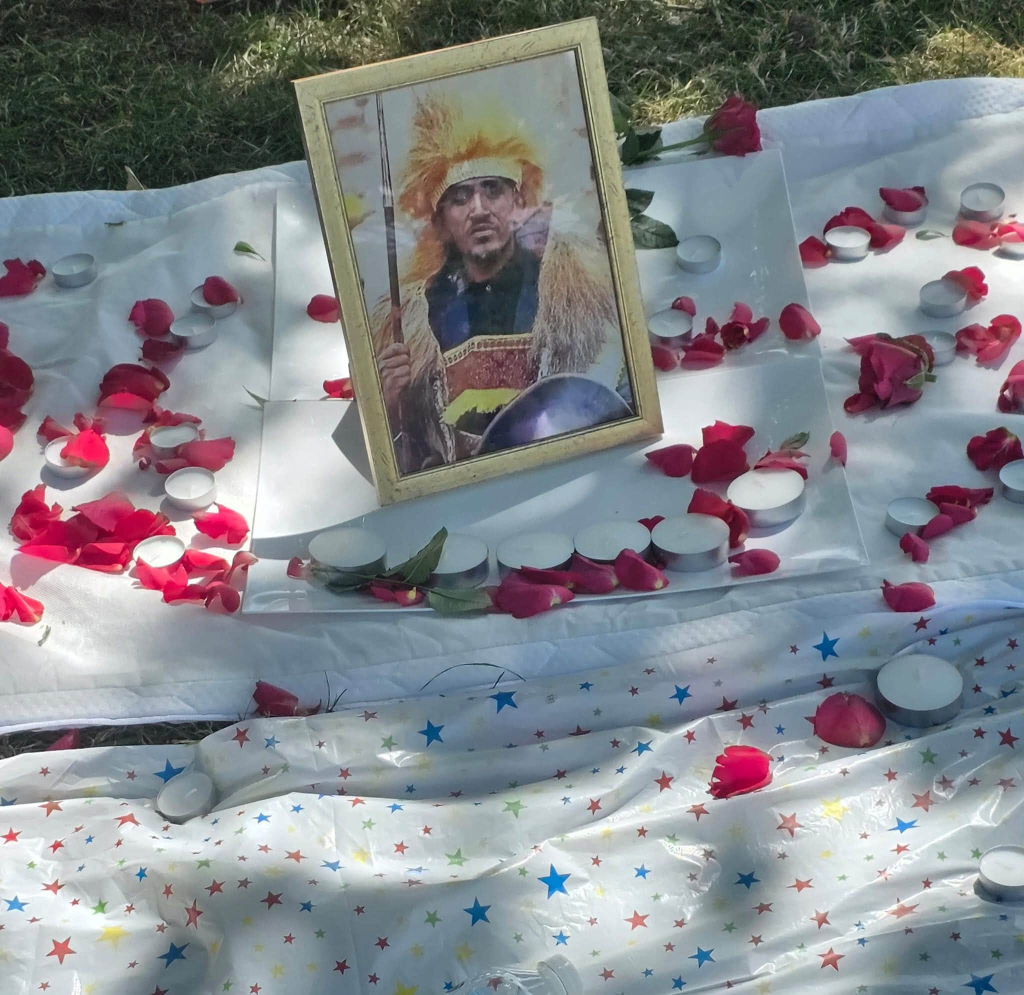
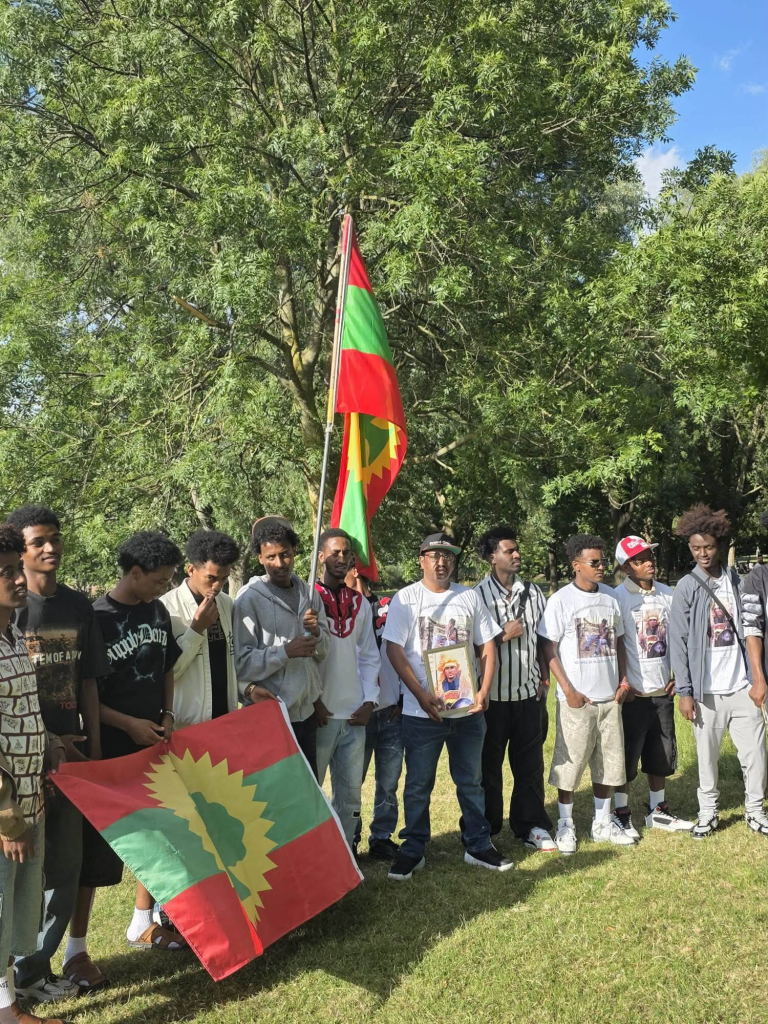
The Oromo People of the UK Establish a Lasting Legacy: The Haacaaluu Hundeessaa Foundation

By Maatii Sabaa
In the heart of the United Kingdom, far from the highlands of Oromia, a profound act of remembrance is taking shape. The Oromo community in England, in collaboration with the global Oromo diaspora, has initiated a project that transforms grief into action and memory into a living legacy: the Haacaaluu Hundeessaa Foundation.
Six years after the iconic artist and activist was assassinated in Addis Ababa, his voice refuses to fade. In the UK, members of the diaspora have taken upon themselves the sacred duty of ensuring that his sacrifice was not in vain, carrying forward his mission of cultural preservation, justice, and empowerment.
A Voice Silenced, A Movement Strengthened
Haacaaluu Hundeessaa was more than a musician. His 2015 single Maalan Jira (What Existence Is Mine) became the rallying anthem of the Oromo protests that fundamentally altered Ethiopia’s political landscape . His lyrics captured the pain of displacement, the humiliation of marginalization, and the unyielding pride of a people refusing to disappear .
Born in 1986 in Ambo, Haacaaluu’s path to becoming a cultural icon was forged in hardship. At just 17 years old, he was arrested for his political activities and imprisoned for five years without charge. It was in that incarceration that he shaped his identity and composed most of the songs that would define his career .
His assassination on June 29, 2020, sent shockwaves through the Oromo nation and Ethiopia as a whole, described by one commentator as “a spear through the heart of the Oromo nation” . The grief was so intense it triggered major protests that led to the loss of hundreds of lives. Yet from this tragedy emerged a renewed commitment to Haacaaluu’s vision.

Building the Foundation
The Haacaaluu Hundeessaa Foundation in the UK represents a concrete effort to honor the artist’s legacy through structured, sustainable action. This initiative builds upon similar efforts already underway in Ethiopia—most notably at Jimma University, which established a foundation in his name in 2020 .
Jimma University’s President, Dr. Jemal Abafita, articulated the vision when the foundation was first announced: “Haacaaluu is physically gone from us, but his works remain with us, and his legacy must grow stronger. As an institution of higher learning, we must emerge from this deep grief by remembering his name, making his sacrifice meaningful, and ensuring he occupies a great place in history” .
The UK-based foundation extends this mission to the diaspora, recognizing that the preservation of Oromo culture and the pursuit of justice require both local and international effort.
More Than Remembrance
The Oromo community in the UK has long been active in cultural preservation. Registered charities like the Oromo Community in Brighton & Hove work year-round to provide education in the Oromo language, history, and culture for children, ensuring that the next generation maintains its connection to its heritage .
The Haacaaluu Foundation amplifies these efforts. Its scope—as envisioned by its Ethiopian counterpart—embraces national and international partnership, with a focus on incubating youth talent and sustainably supporting educational initiatives. For the diaspora community, this means creating pathways for young Oromos in the UK to learn their language, understand their history, and engage with the struggle for justice in a meaningful way.
The Digital Bridge
One of the most powerful aspects of Haacaaluu’s legacy preservation has been the digitalization and global distribution of his music. A collaborative effort led by his childhood friend Olii Taammiraat, an ICT expert, ensured that Haacaaluu’s songs were made available on over 150 music platforms worldwide, including iTunes, Amazon Music, Apple Music, and Spotify .
This achievement was remarkable: for seven consecutive days, Haacaaluu’s music topped international charts—a first for any Ethiopian artist . As Olii explained to the BBC, “Haacaaluu was not just a musician; he was the voice of the people. His songs carry history, our wounds, and our hopes. When we lost him, it felt like that voice was stolen from us. We could not let that happen” .
The foundation builds on this work, ensuring that Haacaaluu’s music continues to reach new audiences and inspire new generations.
A Call to the Diaspora
For the Oromo diaspora in the UK, the establishment of the Haacaaluu Hundeessaa Foundation represents a call to action. As community elders in diaspora commemorations have declared, “Haacaaluu gave us a mandate. His blood and his art demand a response from the Oromo people. We must respond to his sacrifice by vigorously demanding our inalienable rights” .
The foundation provides a structured vehicle for that response—a way to channel grief into action, memory into mission, and cultural pride into political advocacy. The Oromo community in the UK, like their counterparts in New Zealand, Nairobi, and across the world, are proving that while the man may be gone, the movement he inspired is more alive than ever .
Conclusion
The Haacaaluu Hundeessaa Foundation, as envisioned by the Oromo people of England and their partners, is a testament to the enduring power of art and the unbreakable spirit of a people. It is not merely a monument to a fallen hero but a living institution dedicated to the values he embodied: cultural pride, justice, and the relentless pursuit of freedom.
As Haacaaluu’s widow powerfully stated at his funeral, “Haacaaluu is not dead. He will remain in my heart and the hearts of millions of Oromo people forever” . In the United Kingdom, that promise is being kept—not through words alone, but through the concrete, sustainable work of a foundation built in his name.
The struggle continues. And with it, Haacaaluu’s voice—carried by the Oromo people of the UK and the global diaspora—refuses to be silenced.
For more information about the Haacaaluu Hundeessaa Foundation and ways to support its work, contact the Oromo Community in Brighton & Hove at 42 Manor Way, Brighton, BN2 5EF.

The Unconquerable Equal: What an Ancient Oromo Proverb Teaches Us About Power and Humanity
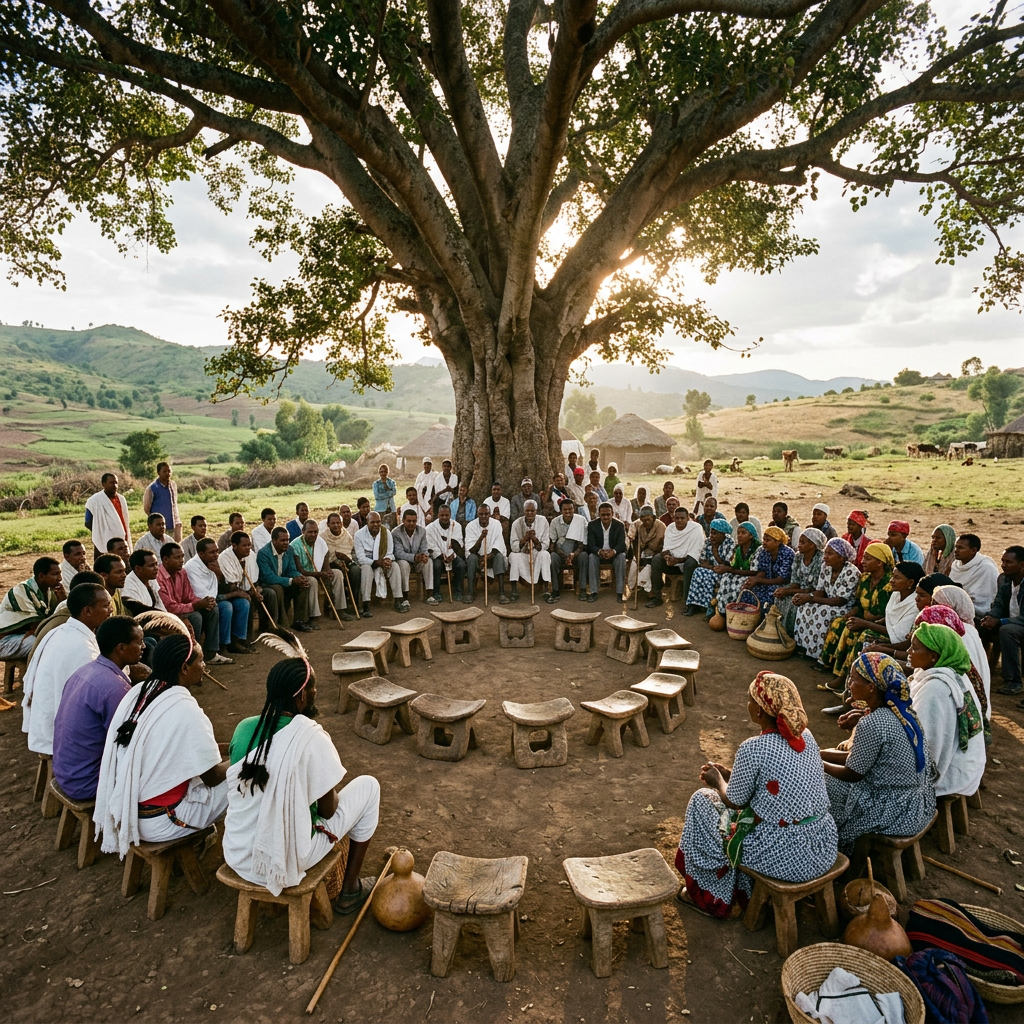
In the quiet rhythms of Oromo tradition, nestled within the democratic folds of the Gadaa system, lies a proverb of profound audacity:
“Akka sirna Gadaatti namni kamuu namummaan nama kaan hin caalu; namni hundi walqixxee dha.”
Translated, it declares: “In the Gadaa system, no one is superior to another by virtue of humanity; all people are equal.”
To the modern ear, it might sound like a simple platitude, a nod to a universal truth we all claim to hold. But to understand this saying is to discover a revolutionary blueprint for society that challenges the very foundations of power as we know it.
The Wellspring of Equality
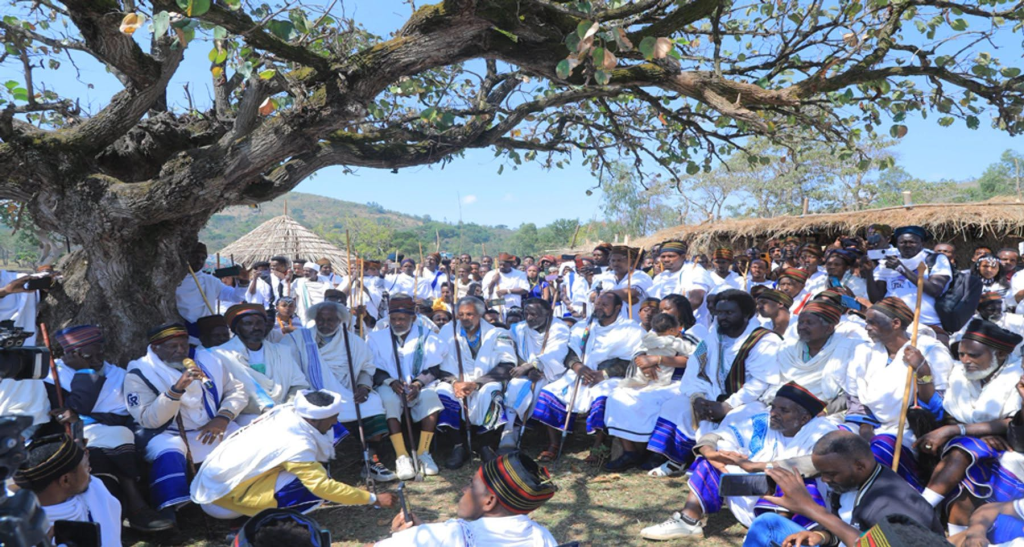
The Gadaa system is not merely a historical relic; it is a living, breathing indigenous democratic practice of the Oromo people. For centuries, it has served as a socio-political and religious framework, organizing society not by brute force, inherited status, or accumulated wealth, but by age and demonstrated wisdom.
Every eight years, power transfers peacefully from one generation to the next. This is not a coup, not an election marred by mudslinging, but a ceremony. It is a ritualized passing of the baton that ensures no single individual, family, or clan can amass permanent control.
It is from this system that the proverb springs. It declares a foundational truth: your humanity is your only title. Not your lineage, not your cattle, not your military might. Your namummaa—your essential humanness—is the only metric that truly matters.
Beyond Hierarchy: The Oromo Challenge
In a world obsessed with hierarchies—the CEO above the intern, the president above the citizen, the celebrity above the fan—this Oromo worldview is a radical act of defiance. It suggests that all constructed pecking orders are fragile illusions.
The proverb is a shield against arrogance and a sword against oppression. If a leader believes themselves inherently superior, they have already violated the Gadaa principle. The system demands that leaders, the Abba Gadaa, are not tyrants but servants of the collective will. Their authority is functional, not intrinsic. It is a role, not a birthright.
This is where the proverb resonates deeply with modern democratic ideals. It prefigures the Enlightenment concept of equality by centuries. It echoes the words of revolutionaries and civil rights leaders who insisted that the color of skin, the gender of the body, or the nation of one’s birth do not define the worth of the soul.
The Unseen Thread of Connection
But perhaps the most profound implication of “all people are equal” is not political, but spiritual and social. It binds the community together with a thread of mutual responsibility.
If we are all equal, then the welfare of my neighbor is as important as my own. My success is not a victory over another, but a contribution to the collective whole. This is the bedrock of Gadaa governance—a system that relies on consensus, dialogue, and a shared sense of duty. It fosters a society where status is earned through service and character, not through aggression or accumulation.
A Lost Compass for a Troubled World
As we navigate the 21st century—beset by inequality, systemic injustice, and the cult of personality—the wisdom of the Oromo ancestors offers a compass. The proverb “Akka sirna Gadaatti…” is a challenge to the status quo.
It calls us to look beyond the titles on our business cards and the zeros in our bank accounts. It urges us to see the sacred, unassailable equality in the eyes of every stranger we meet.
Because in the end, the Gadaa system reminds us of a simple truth we so often forget: before we are kings, laborers, rich, or poor, we are simply human. And in that shared humanity, we are all—always and forever—equal.

INVESTIGATIVE REPORT: SYSTEMATIC PERSECUTION OF OROMO PEOPLE IN ETHIOPIA

By an Investigative Reporter in Finfinne
Executive Summary
This report documents systematic human rights violations against Oromo people across Ethiopia’s Oromia region, based on extensive testimonies, government reports, and international documentation. The evidence reveals a pattern of state-sponsored persecution targeting Oromo individuals based on their ethnic identity and perceived political affiliations, creating conditions that meet international definitions of persecution under refugee and asylum law.
The Scale of the Crisis
In Oromia, harm and brutality targeting Oromo children based on their identity and political perceptions are widespread and escalating. Oromo children living in areas where the Oromo Liberation Army (OLA) operates—including Western Oromia, Wellegga, Shambu, West Shewa, North Shewa, Karrayyoo, Guji, Arsi, and Eastern Oromia—face multifaceted forms of persecution.
The Ethiopian Human Rights Commission (EHRC), in its 2025 annual report covering June 2024 to June 2025, documented extensive violations of fundamental rights across Oromia, including extrajudicial killings, abductions, physical harm, and widespread destruction of property. Both government forces and the OLA have been implicated in these abuses.
Testimony: The Reality of Persecution
A young man from the Shambu area, who requested anonymity due to fear for his safety, described his ordeal to this reporter. While traveling from Shambu to Finfinne (Addis Ababa), he was stopped by security forces who demanded he present his identity documents.
“When they saw my ID showing Shambu, they arrested me. During detention, I endured severe beatings and torture. They accused me of coming to Finfinne to join the insurgency, despite my insistence that as an Oromo, I had no connection to armed groups. After two months of detention, they released me with a warning. Since then, I have been unable to freely move or speak about my origins. My family continues to be harassed by militia demanding to know my whereabouts and threatening to involve the WBO [an armed group].”
This account mirrors the experience of Mr. W, another Oromo asylum seeker who was arrested in June 2020 following protests after the killing of Oromo singer and civil rights activist Hachalu Hundessa. Soldiers interrogated him about being Oromo and accused him of being part of the Oromo Liberation Army (OLA) or Oromo Liberation Front (OLF)—groups he had never been involved with. He was jailed for three months, and after his release, soldiers monitored and chased him. In January 2021, he was jailed again for a month on similar accusations, with police interrogating and beating him daily. In 2023, the government jailed his parents and threatened to kill them unless he returned. His parents told him to flee.
The Koree Nageenyaa: A Secret Network of Persecution
A Reuters investigation uncovered the operations of the Koree Nageenyaa—or Security Committee—a clandestine group of senior officials in Oromia that has ordered extra-judicial killings and illegal detentions as part of efforts to crush the insurgency. Human rights sources indicate that this committee specifically targets young Oromo with modern hairstyles or appearances that allegedly signal opposition sympathies. Female Oromo face particular vulnerability to sexual violence by security forces. Young people have also reported being asked for bribes by security forces; those unable to pay face immediate detention.
Official Documentation of Systematic Abuses
The EHRC 2025 Report
The Ethiopian Human Rights Commission’s 2025 annual report documented:
- Extrajudicial killings across multiple zones in Oromia
- Abductions and arbitrary detentions
- Physical harm and torture
- Widespread destruction of property
- Both government forces and the OLA implicated in abuses
United Nations Documentation
The UN Office for the Coordination of Humanitarian Affairs (UNOCHA) reported that conflict-related displacement persists in Oromia, with nearly 220,000 people displaced along the Oromia-Somali border. In July 2025, renewed inter-communal violence erupted along the Oromia–Somali border, displacing over 288,000 people.
Humanitarian Assessment
UNOCHA’s assessment found that in Oromia Region alone, an estimated 151,972 people are displaced across multiple districts. Displaced families are sheltering in makeshift shelters made of plastic sheets, clothing, and sticks, offering little protection from the elements. Women, children, the elderly, and persons with disabilities face heightened vulnerabilities, including fear of retaliation, gender-based violence, and psychological trauma.
Legal Framework for Persecution Claims
Under international law, as defined by the 1951 Refugee Convention and its 1967 Protocol, persecution is defined as the act of harassing or oppressing a person or a group of people, especially because of their identity. Persecution includes unfair or abusive treatment toward a person or group based on race, religion, ethnicity, political opinion, or membership in a particular social group.
For an asylum claim, the following elements must be meticulously documented:
- Dates and locations of incidents
- Types of abuse suffered
- Names of perpetrators (if known)
- Medical records documenting injuries
- Witness statements
- Evidence of state involvement or failure to protect
Past persecution and fear of future persecution by government actors on account of political opinion and race form the core of the case.
Critical Findings for Asylum Assessment
Political Opinion
Many Oromo asylum seekers are targeted not because of what they have done, but because of what they are perceived to believe. Simply being Oromo can be enough to attract suspicion. Political engagement—whether real or imagined—significantly increases the risk.
The European Union Agency for Asylum (EUAA) has documented cases where Oromo individuals faced persecution due to their political opinions. Even Oromo individuals who have never been involved with opposition groups can be targeted. Mr. W was arrested and beaten despite having no connection to the OLA or OLF. His only “crime” was being Oromo and being present at a protest.
Place of Origin and Residence
European courts have recognized that “the risk of persecution due to affiliation with OLA applied throughout Oromia, even in areas where there is no active armed conflict.” This is a critical point: an Oromo person cannot simply move to a “safer” part of Oromia and escape persecution. The threat follows them.
Risk of Persecution upon Return
For many Oromo asylum seekers, return to Ethiopia would expose them to:
- Continued targeting by security forces
- Inter-communal violence in their home areas
- The risk of being forcibly conscripted or accused of supporting armed groups
- The inability to relocate safely within Oromia
The Human Rights Situation: A Critical Assessment
The human rights situation in Oromia is described as “critical.” The Ethiopian government has intensified its crackdown on independent media and civil society ahead of elections slated for 2026. Security forces have arbitrarily detained healthcare workers, and humanitarian needs remain acute. The government restricts access to Oromia for journalists and rights groups, meaning much of the conflict and its human toll remains hidden from the world.
“Unfortunately, the human rights situation—as well as the overall humanitarian crisis in Oromia—is underreported,” said Getu Saketa Roro, co-founder of the Human Rights League of the Horn of Africa.
The Oromo Liberation Army (OLA) has called for independent investigations into what it describes as “systematic terror, state-orchestrated brutality, and entrenched impunity.”
Conclusion
The documentation and testimony gathered in this investigation establish a consistent pattern of persecution against Oromo people in Ethiopia based on their ethnic identity and perceived political opinions. This persecution is perpetrated by state actors, including security forces and the clandestine Koree Nageenyaa, and has created a situation where Oromo individuals face well-founded fear of persecution throughout the Oromia region.
The legal and humanitarian frameworks, including the 1951 Refugee Convention, the Ethiopian Human Rights Commission’s findings, and documentation by United Nations agencies, support the conclusion that Oromo asylum seekers from Ethiopia have legitimate claims based on a well-founded fear of persecution on account of their race, ethnicity, and political opinion.
This report is based on on-the-ground investigation, interviews with survivors, analysis of official government and UN reports, and review of international legal frameworks. Some names have been withheld to protect individuals who remain in danger.
The Enduring Wisdom of Gumaa: How an Indigenous Justice System Heals Communities and Prevents Revenge
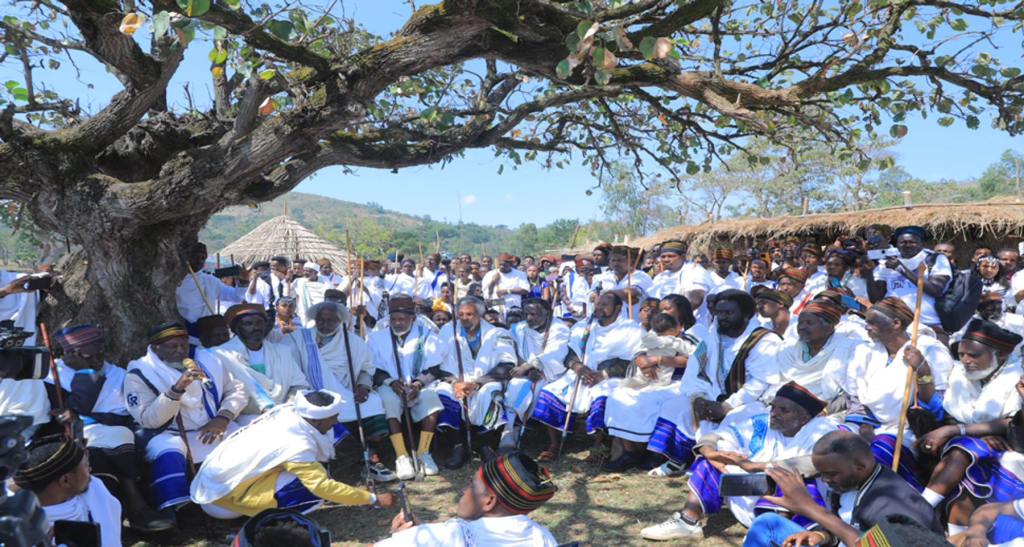
For centuries, the Oromo people of Ethiopia have practised a unique system of restorative justice that focuses not on punishment, but on healing the social fabric. Known as “Gumaa,” this indigenous institution offers profound lessons for modern conflict resolution.
Across the diverse landscapes of Ethiopia, communities have long relied on traditional systems to resolve disputes and maintain social harmony. Among the most sophisticated of these is Gumaa, the Oromo institution for settling blood feuds. In a world where modern legal systems often leave victims feeling unheard and communities fractured, Gumaa stands as a powerful alternative—one that prioritises healing over punishment and peace over retribution.
“Gumaa is one of the multitude of Oromo indigenous institutions that has exclusively been used to settle blood feuds of various types” . As researcher Tamene Keneni explains, the term Gumaa carries multiple meanings, but at its core, it refers to the institution of settling blood feuds through compensation, cleansing rituals, and reconciliation .
Beyond Punishment: The Philosophy of Gumaa
The philosophy underpinning Gumaa is rooted in two fundamental Oromo values: Nagaa (peace) and Safuu (moral order). For the Oromo, peace is not merely the absence of conflict, but an essential key to an orderly universe and societal wellbeing that humans must actively pursue . This is reflected in daily greetings, songs, prayers, and proverbs—a recognition that peace is central to life itself.
Unlike the modern judicial system, which tends to focus on punishing the offender, Gumaa aims to restore relationships that have been ruptured by wrongdoing. As one study notes, the practice “prioritises restorative justice over retributive justice, targeting restoring the ruptured relations between the parties in dispute to maintain social order and peace rather than punishing the offender and compensating the victim” .
When a homicide occurs, both the clan of the killer and the clan of the victim take responsibility for resolving the dispute. The process involves neutral elders who serve as mediators, guiding the conflicting parties through a journey of acknowledgment, compensation, and ultimately, reconciliation .
The Ritual Journey: From Blood Feud to Brotherhood
The Gumaa process is far more than a simple transaction. It involves a series of deeply meaningful rituals designed to heal emotional wounds and prevent the cycle of revenge from continuing into the next generation.
The reconciliation process typically begins with the offender’s supplication or payment of Shimoto to the victim’s family . This is followed by elaborate purification ceremonies, including the slaughter of cattle, handwashing rituals, and oaths that carry profound spiritual significance . These rituals are not merely symbolic—they serve a psychological function, helping both parties to process grief, anger, and the desire for vengeance.
As Tamene Keneni describes, the Gumaa ritual includes cleansing ceremonies that allow the slayer to be reintegrated into the community . This is a crucial element of the system: the goal is not to permanently alienate the offender, but to bring them back into the fold, ensuring that the community remains whole.
The outcome can be transformative. In some cases, former enemies are united through marriage, turning hostility into kinship . This remarkable capacity to convert conflict into connection is what makes Gumaa so unique.
Lessons for the World: What Gumaa Teaches Us
The Gumaa system offers several valuable lessons for modern conflict resolution:
1. Justice Must Heal, Not Just Punish
Modern legal systems often leave communities fractured even after a verdict is delivered. Gumaa demonstrates that justice can also be about healing—acknowledging the pain of the victim’s family, giving them a voice, and ensuring that the offender takes genuine responsibility .
2. Community Involvement Strengthens Outcomes
In the Gumaa system, the entire community plays a role in resolving disputes. Elders, clan leaders, and even ordinary members are involved in the process, ensuring that the outcome is accepted and respected by all. This collective ownership makes the peace more sustainable .
3. Ritual and Symbolism Matter
The rituals of Gumaa—the handwashing, the oaths, the shared meals—help to create a sense of closure and renewal. They provide a tangible way for people to move forward, leaving behind the weight of the past .
4. Forgiveness Is a Choice Worth Making
The Oromo believe that forgiveness (oofuu or yaa hafuu) is a higher value than revenge . This is not naivety—it is a recognition that the alternative, endless cycles of vengeance, only brings more suffering.
A Call for Recognition and Integration
Despite its effectiveness, Gumaa faces significant challenges. Lack of awareness, limited documentation, and competition from the state justice system have contributed to its decline . Yet there is growing recognition that these indigenous institutions have immense value.
The Ethiopian Constitution, under Article 78(5), allows for the recognition of customary and religious courts, suggesting a pathway for integration . Scholars have called for the official recognition and revitalisation of Gumaa, arguing that it could complement the formal legal system, reduce court workloads, and offer a more accessible form of justice for rural communities .
As one researcher notes, Gumaa is “time effective, prevents revenge and financial saving” . Its ability to address deep-seated grievances at the community level could be a powerful tool for peacebuilding in Ethiopia and beyond.
A Tradition Worth Preserving
In a country that has experienced decades of political turmoil and ethnic conflict, the wisdom of Gumaa is more relevant than ever. It offers a proven, locally rooted approach to reconciliation—one that does not require expensive legal fees, lengthy court processes, or foreign intervention.
Gumaa reminds us that justice is not just about laws and punishment. It is about people, relationships, and the shared desire to live in peace. It is a testament to the resilience of indigenous knowledge and its capacity to address some of the most complex challenges of human existence.
“The ultimate goal of any type of nagaa is communal well-being in an orderly universe” . In a world that often seems fragmented, the Oromo people’s ancient wisdom offers a path toward wholeness.
The Gumaa system stands as a vital example of how indigenous knowledge can illuminate the path to a more just and peaceful future—one community at a time.

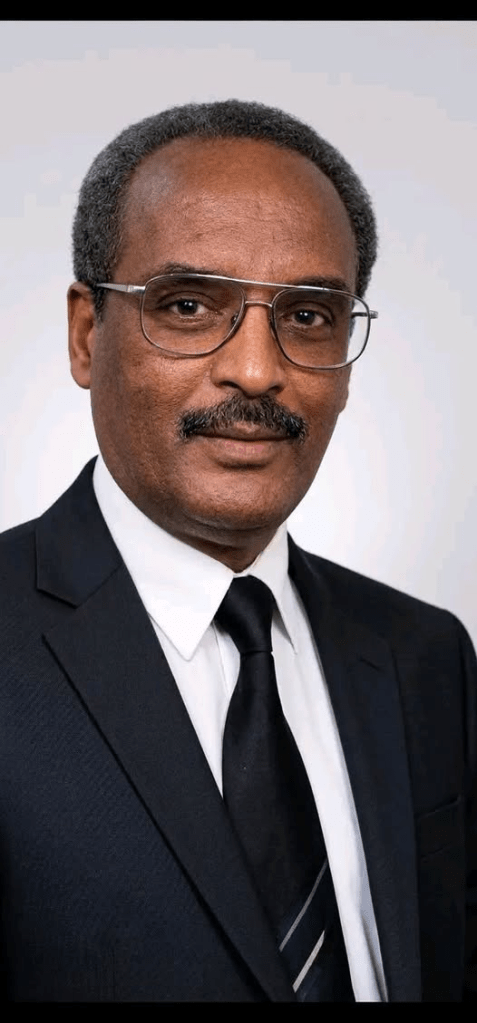
A Life of Faith and Legacy: Honouring Luba Shamsuddiin Abdoo
“Qulqulloonni ajaja Rabbii eegan, kanneen Yesuusii fiis amanamoo tahanii obsaan sabatan, kanaan beekaman.”
“Blessed are those who keep God’s commands, who are faithful to Jesus and patiently endure.”
A Farewell to a Spiritual Father
On a somber yet hopeful day, the Oromo Christian community and beyond came together to honour the passing of a remarkable servant of God—Luba Shamsuddiin Abdoo. His funeral service, held at Fairview Baptist Church in Calgary, Canada, was a testament to a life well-lived, a legacy of faith, and a homecoming to eternal rest.
The Oromo Bible Society (OBiS) expressed profound gratitude for the life and work of this dedicated servant. In their reflection, they wrote:
“Hojii Hiikkaa Macaafa Qulqulluu keessatti, hojii seena qabeessi isin hojjettan jiraataadha. Waldaan Macaafa Qulqulluu Oromoo galata guddaa isiniif qaba.”
“In the work of translating the Holy Scripture, you have done a historic work. The Oromo Bible Society has great gratitude for you.”
A Life of Service to the Word of God
Luba Shamsuddiin Abdoo was not just a translator—he was a bridge between the sacred text and the Oromo people. His work in Bible translation ensured that generations of Oromo Christians would have access to the Word of God in their own language, a gift that transcends time and geography.
The Oromo Bible Society honoured his contribution, remembering him as one of the key figures in the historic work of bringing the Scriptures to the Oromo people. In a message shared by HW Abdusalaam Ruduwaan, a close colleague, the depth of Luba Shamsuddiin’s impact is evident:
“Abbaa keenya nagayaan gara boqonnaa keetti gali.”
“Our father, rest in peace.”
A Legacy of Faith and Endurance
The life of Luba Shamsuddiin Abdoo was marked by faithfulness, perseverance, and unwavering commitment to his calling. His family, colleagues, and community remember him as a man who lived by the principles he preached.
As the scripture chosen for his farewell reminds us:
“Asii achi warri kan Gooftaa tahanoi du’an, eeybifamoo dha jedhii tii katabi! sagalee jettu takkaan samii keeysaa dhagaye. Ruuhal Qudusiis, ‘Eeyye, hojii isaanii isaan duukaa waan deemtuuf jecha, dadhabbii isaanii irraa haara ni galfatu’ jedha.” (Mul 14:12-13)
“Then I heard a voice from heaven say, ‘Write this: Blessed are the dead who die in the Lord from now on.’ ‘Yes,’ says the Spirit, ‘they will rest from their labour, for their deeds will follow them.'”
These words capture the essence of Luba Shamsuddiin’s journey—a life of labour for the Kingdom, now at rest, with his deeds following him as a testimony to his faithfulness.
A Father’s Legacy
To his children, Luba Shamsuddiin Abdoo was more than a spiritual leader—he was a father, a mentor, and an example of unwavering faith. In a heartfelt tribute, one of his children expressed:
“Baabaa kiyya nagayaan boqadhu, bara jireenya kiyyaa hundumaa sin dagadhu, ati fakkeenya anaaf hin darbine, mallattoo cichoomaa fi mullata guddaa naaf taatee jirta, bara jireenya kiyyaa hundumaa sin irraanfadhu.”
“My father, rest in peace. I will never forget you all the days of my life. You have been an example for me that will not pass away—a sign of perseverance and great vision. I will never forget you all the days of my life.”
His children—Beeftu Abdo, Gorsitu Shamsudin Abdo, Ibsitu Shamsudin, Rebu Abdo, John Esaias, and others—carry forward the legacy of faith he instilled in them. The family was encouraged to remain strong in the Lord:
“Jajjabina Ruuhal Qus kennuu fi ayyaana Gooftaatiin jajjabaadhaa.”
“Be strengthened by the Spirit’s grace and the Lord’s blessing.”
A Call to Continue the Journey
As the Oromo Bible Society and the wider community mourn his loss, they also celebrate his life. The work he started—the translation of the Holy Scriptures, the teaching of God’s Word, and the building of faith—continues through those he inspired.
His close colleague, Evangelist Abduselam Redwan, reflected on the unfinished work:
“Akkuma hujiiwwan kanaan duraa akkuma fixnee ummataan geenye hujiiwwan hafanii fi imaanaa si fi Gooftaarraa taateen nutti darbite hundumaas niin xumura, kaayyoo fi mullata ati jiraatteef suniis niin humna Gooftaatiin niin milkeeysa.”
“Just as we have completed the works before us and reached the people, we will finish the remaining works, and the faith that you have passed on to us—we will complete it by the grace of God. The purpose and vision you lived for will be fulfilled by the power of the Lord.”
Honouring His Memory
The words of Hebrews 13:7 were a guiding verse for Luba Shamsuddiin’s life and a call for those who follow:
“Warra hooggantoota, kanneen Qoowlii Rabbii isin barsiisaa turan yaadadhaa! Haala jireenya isaanii laalaa, amantii isaanii duukaa bu’aa!”
“Remember your leaders, who spoke the word of God to you. Consider the outcome of their way of life and imitate their faith!”
A Final Prayer
As the Oromo community in Canada, Ethiopia, and around the world mourns the loss of Luba Shamsuddiin Abdoo, they take comfort in the promise of eternal rest. His work, his faith, and his legacy live on in the hearts of those he touched.
“Abbaa keenya nagayaan gara boqonnaa keetti gali.”
“Our father, rest in peace.”
Luba Shamsuddiin Abdoo — A servant of God, a translator of Scripture, a father of faith, a legacy of love.
“Father, thank you for your life. We will continue your journey. We will keep the faith.”

A Night of Gratitude: Celebrating the Legacy of Oromo Parents
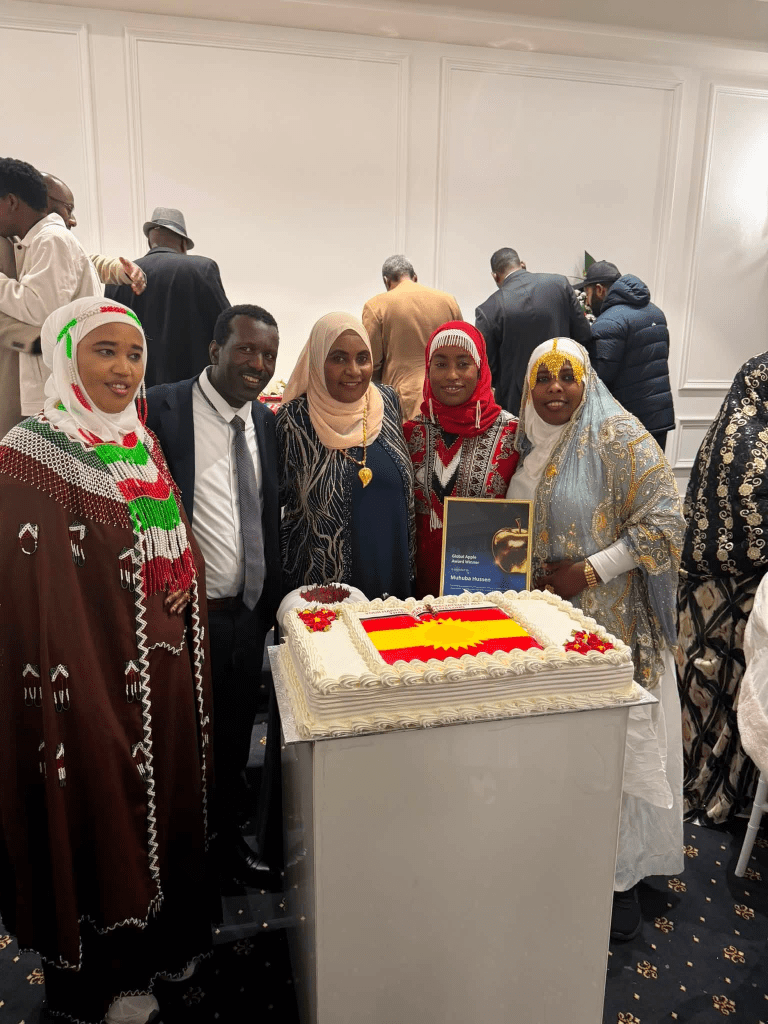
“Galgala haadhaa Abbaa kiyya, galgala ajaa’iba…”
“Thank you, my mother and father, thank you for this amazing evening…”
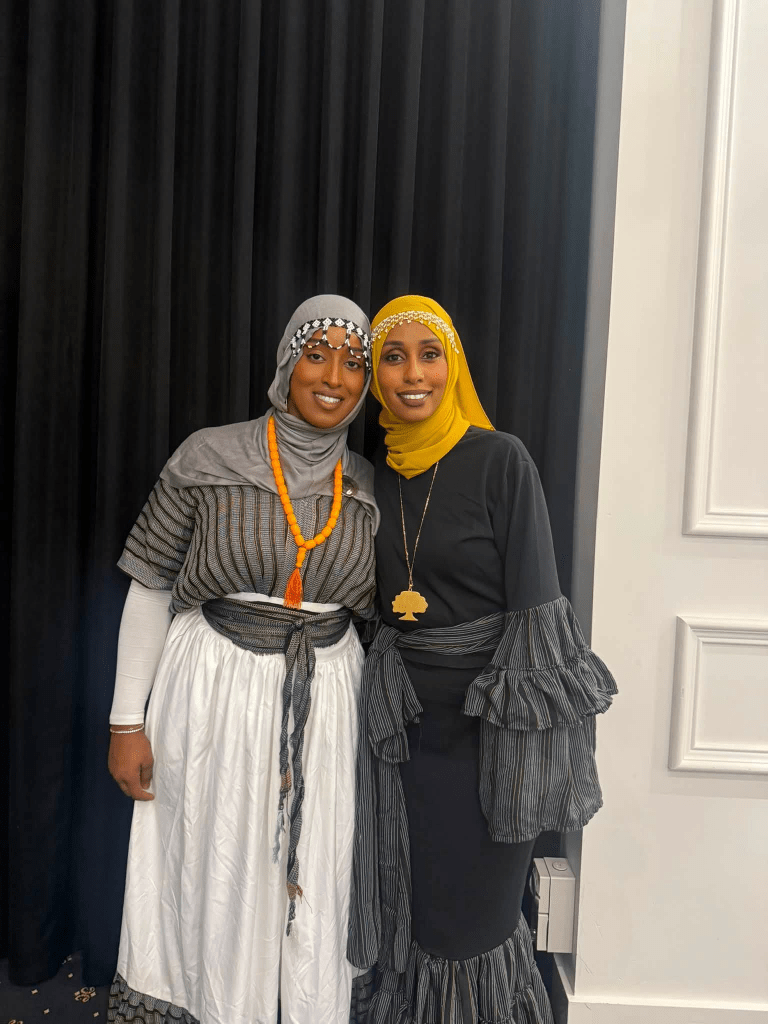
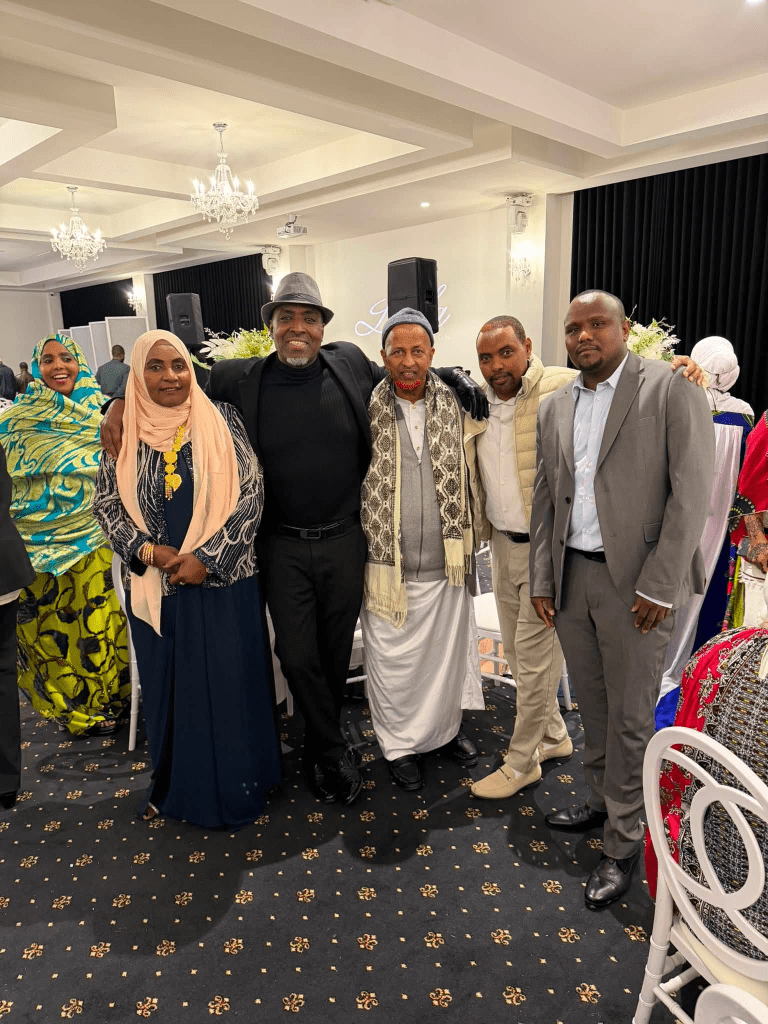
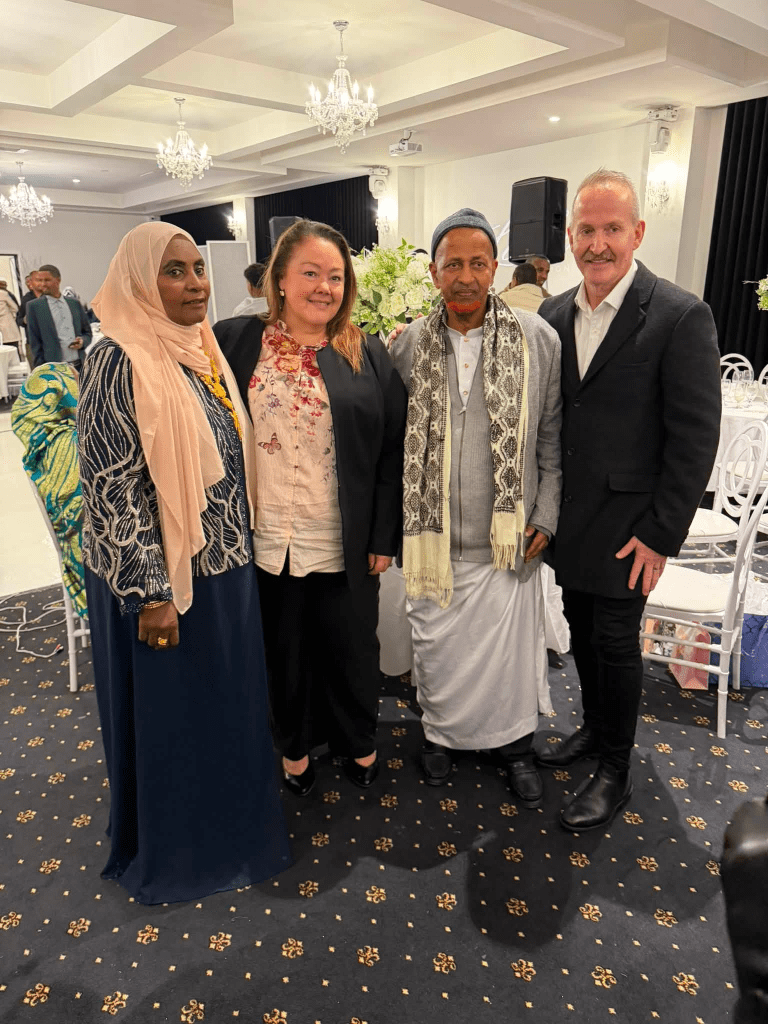
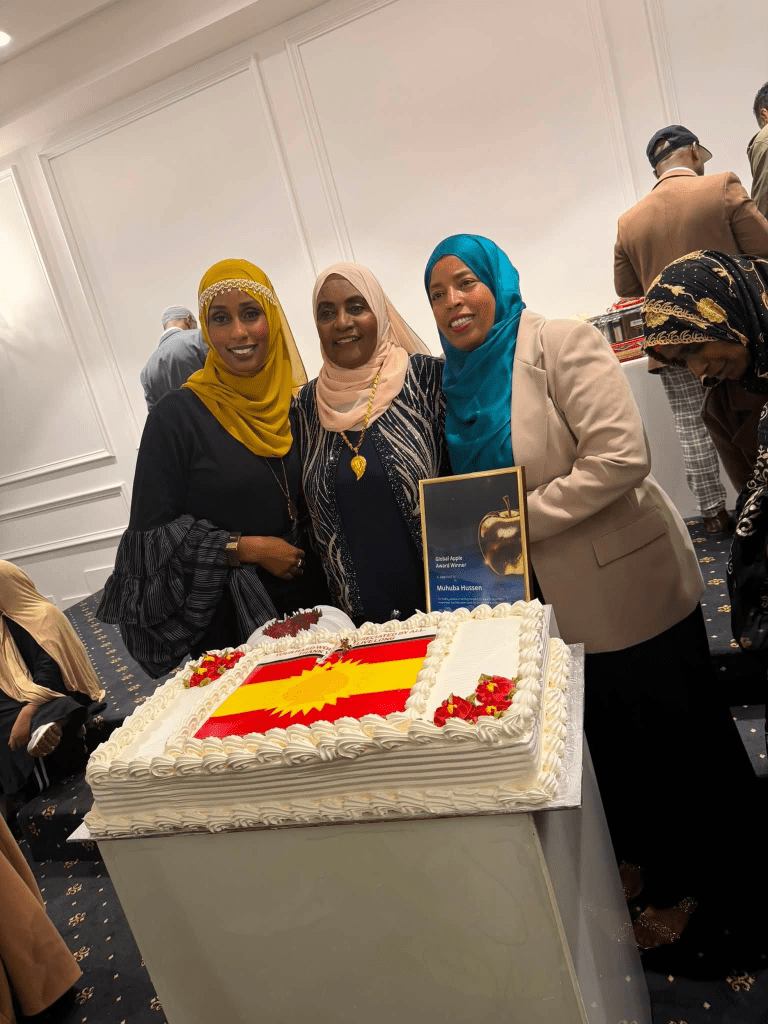
On a night that will be remembered for years to come, the Oromo community came together to honour the pillars of their families—the parents who sacrificed everything to give their children a future. The event, a celebration of resilience, love, and heritage, was a testament to the enduring spirit of a people who have carried their culture across oceans and generations.
A Celebration of Sacrifice and Love
In every culture, parents are the unsung heroes—the ones who work tirelessly, often in obscurity, to build a foundation for their children. For the Oromo community, this truth is magnified by the weight of displacement, the pain of exile, and the determination to preserve identity in a foreign land.
The recent celebration in honour of Oromo parents was more than a social gathering. It was a recognition of the countless nights of worry, the endless hours of labour, and the unshakeable faith that parents have placed in their children. It was a moment to pause, to reflect, and to say: “Galatoomaa”—Thank you.
As Aisha Oromia Ali, expressed in a heartfelt reflection:
“A night celebrating my parents, thank you to the organising committee, family, friends and our community for being a part of this memorable event and special thanks to ShaboMedia Oromiya for capturing the memories. Very proud of you all.”
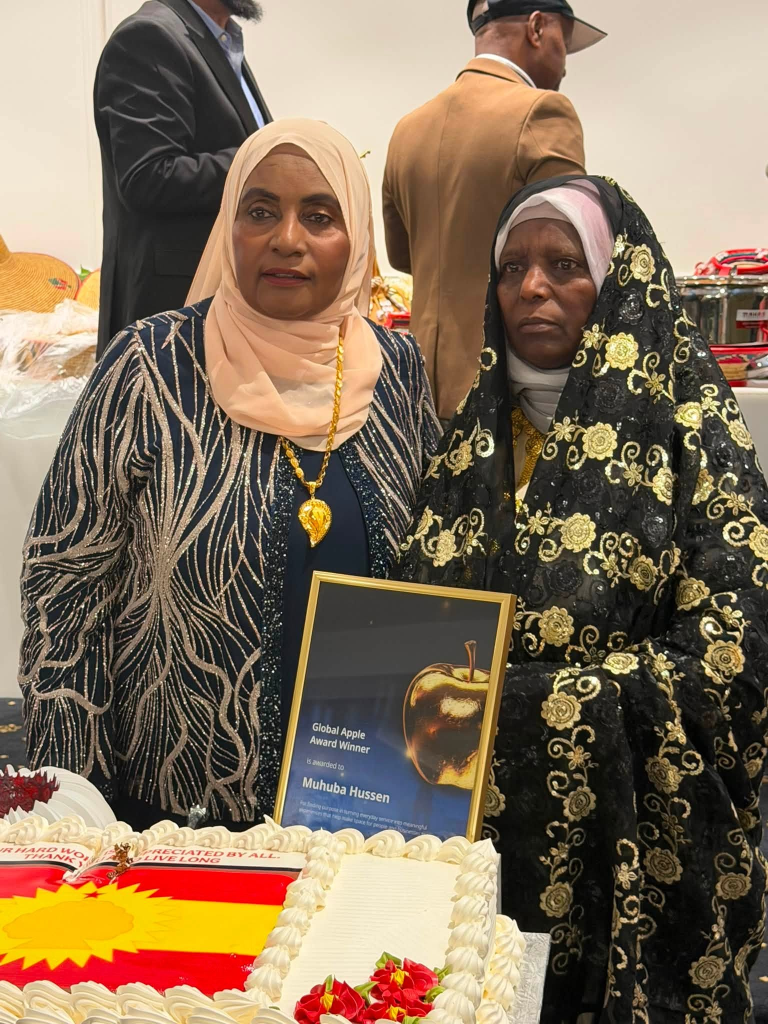
The Organising Committee: Architects of Memory
Behind every great event is a team of dedicated individuals who work tirelessly to bring a vision to life. The organising committee of this celebration poured their hearts into creating an evening that would honour the past while inspiring the future. From coordinating logistics to curating a program that reflected the richness of Oromo culture, their efforts did not go unnoticed.
As one attendee, Aisha’s gratitude extended to them:
“Warri koree, maatiifii hiriyoota akkasumas hawaasa bal’aa kan qooda baataniin galata gurguddaa hammana hin ja’amne qabadan, wayyoomaa.”
“The committee, family, and friends, and the wider community who participated—you have our deepest gratitude, which will never be forgotten.”
Their work ensured that the evening was not just an event, but a meaningful experience—a bridge between generations, a celebration of identity, and a reaffirmation of community bonds.
ShaboMedia Oromiya: Preserving the Moments
In the age of digital memory, the role of media in preserving cultural moments cannot be overstated. ShaboMedia Oromiya, the official media partner for the event, captured the essence of the evening with professionalism and heart. Their cameras documented the smiles, the tears, the embraces, and the speeches—creating a visual legacy that will be cherished for generations.
Aisha acknowledged their contribution with warmth:
“Shabboo media iilleen galata addaa qaban.”
“ShaboMedia also deserves special thanks.”
Through their lens, the celebration was immortalised—ensuring that the memories of this night will be shared with those who could not attend and with future generations who will look back and see the love and pride of their ancestors.

The Power of Community
At its heart, the evening was a celebration of community—of the bonds that tie the Oromo people together, no matter where they are in the world. In a diaspora scattered across continents, events like these serve as anchors, reminding everyone of who they are and where they come from.
The attendance of family, friends, and community members reflected the collective commitment to preserving Oromo culture and honouring the sacrifices of the past. The support of the wider community was deeply appreciated:
“…kan qooda baataniin galata gurguddaa hammana hin ja’amne qabadan…”
“…you who participated, you have our deepest gratitude, which will never be forgotten.”
A Message to Parents: Your Legacy Lives On
For the parents who were honoured that night, the message was clear: We see you. We appreciate you. We will carry your legacy forward.
The title of the celebration, “Galgala haadhaa Abbaa kiyya” (Thank you, my mother and father), is more than a phrase—it is a declaration of love, respect, and commitment. It acknowledges the sleepless nights, the sacrifices made, and the dreams that parents hold for their children.
For Oromo parents, many of whom have endured displacement, exile, and the challenges of rebuilding their lives in a new land, this recognition is deeply meaningful. It is a reminder that their efforts have not been in vain—that their children see them, honour them, and will continue the traditions they have passed down.
Looking Forward: Continuing the Legacy
While the evening was a celebration, it was also a call to action. It reminded the younger generation of their responsibility to carry forward the culture, language, and values of their parents. It encouraged them to build bridges between generations, to preserve the stories of their ancestors, and to ensure that the sacrifices of the past are never forgotten.
As the night came to a close, the sense of gratitude and unity lingered in the air. The words of Aisha resonated deeply:
“Very proud of you all.”
Conclusion: A Night to Remember
The celebration of Oromo parents was more than an event—it was a testament to the resilience of a people, the love of a community, and the enduring power of gratitude. It was a night of laughter, tears, and reflection—a night that honoured the past while inspiring the future.
To the organising committee, to ShaboMedia Oromiya, to the parents, and to the community: thank you. Your efforts created a memory that will last a lifetime, a memory that will be passed down through generations.
“Galatoomaa haadhaa Abbaa kiyya…”
“Thank you, my mother and father…”
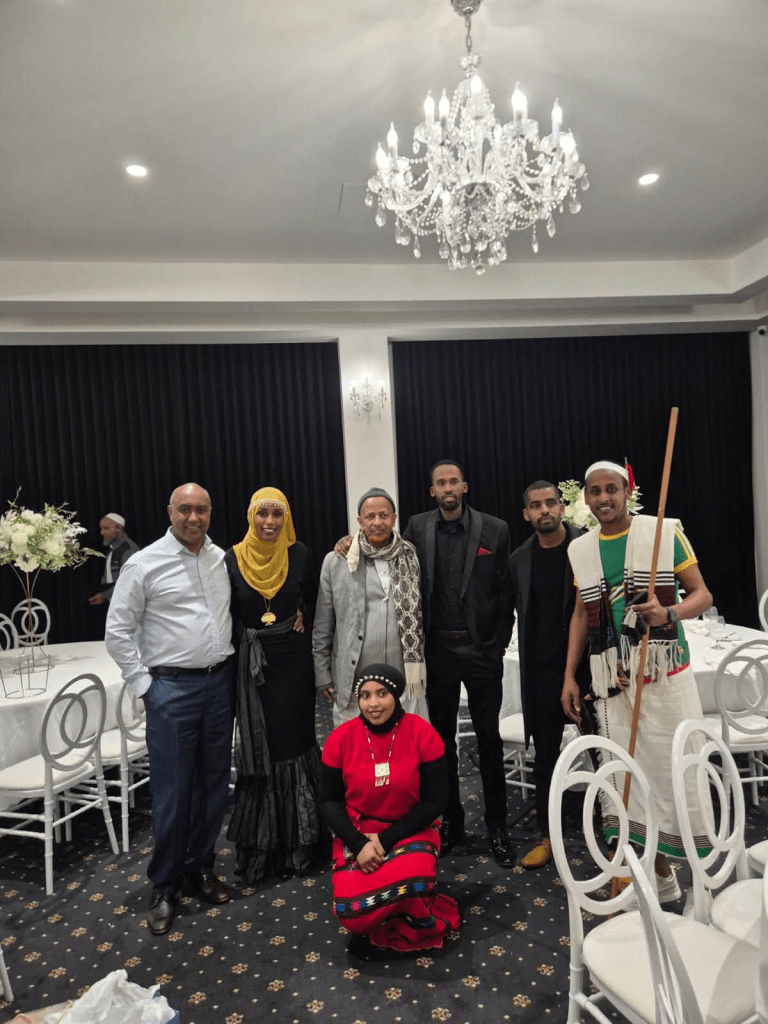
May the legacy of Oromo parents continue to inspire and guide the community for generations to come.





 Advocacy for Oromia