Author Archives: advocacy4oromia

Irreecha Hora Hadiyyaa Celebrated with Traditional Zeal, Affirming Oromo Culture and Unity
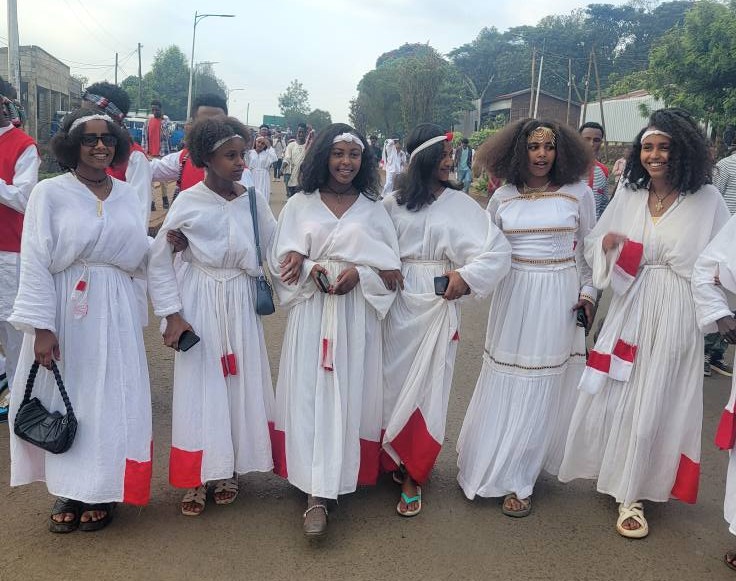
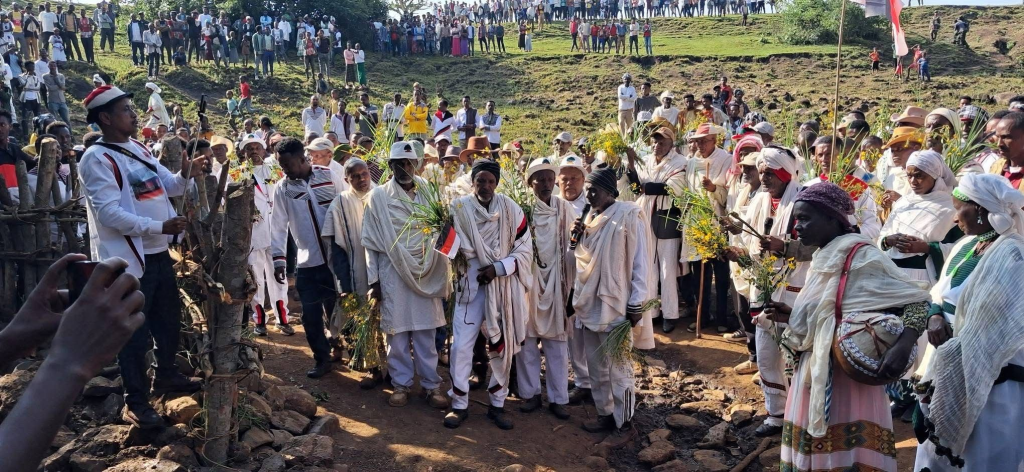
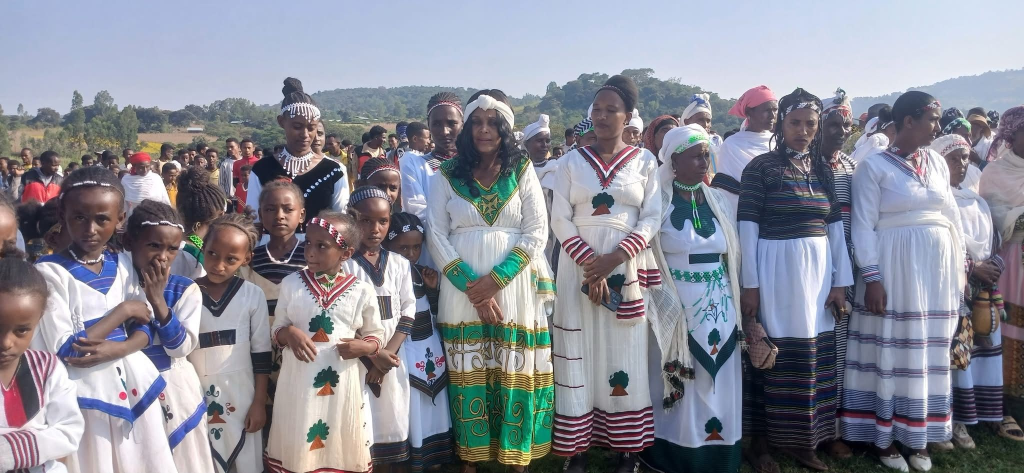
[Nagamte, Oromia] – The Irreecha Hora Hadiyyaa festival was celebrated today with great reverence and colorful ceremony, upholding its central role in Oromo cultural and spiritual life.
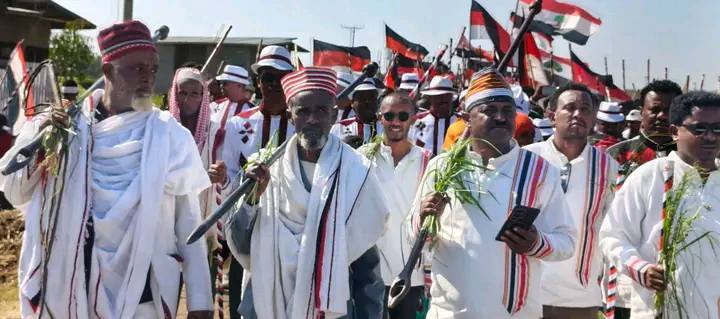
The event was marked by a vibrant display of community spirit, as diverse social groups adorned in traditional Oromo attire participated in remarkable numbers. The gathering embodied the festival’s core purpose: to give thanks, pray for prosperity, and strengthen social bonds.
During the ceremony, participants holding fresh grass made a symbolic journey to the river. There, they offered thanks to Waaqa (God) for the blessings of the new spring and for guiding them through the past rainy season. The festival serves as a collective prayer for peace, unity, and prosperity for the nation and society.
As the Gadaa leaders explained, Irreecha is a profound symbol of love and reconciliation, a time to mend the fabric of community life. It is a celebration that powerfully affirms Oromo identity, reinforces humanity and social ties, and expresses a shared hope for a bright and peaceful future.
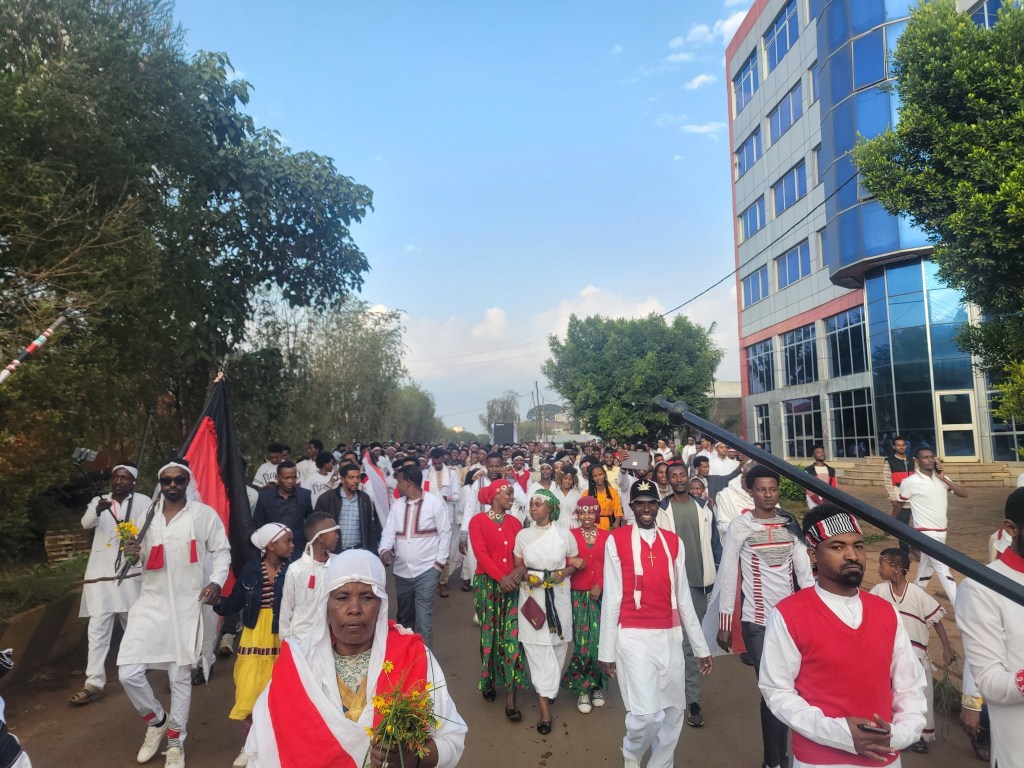

Why Sadaasa 9 (November 9) holds a place of supreme importance in the history of the Oromo struggle for freedom?
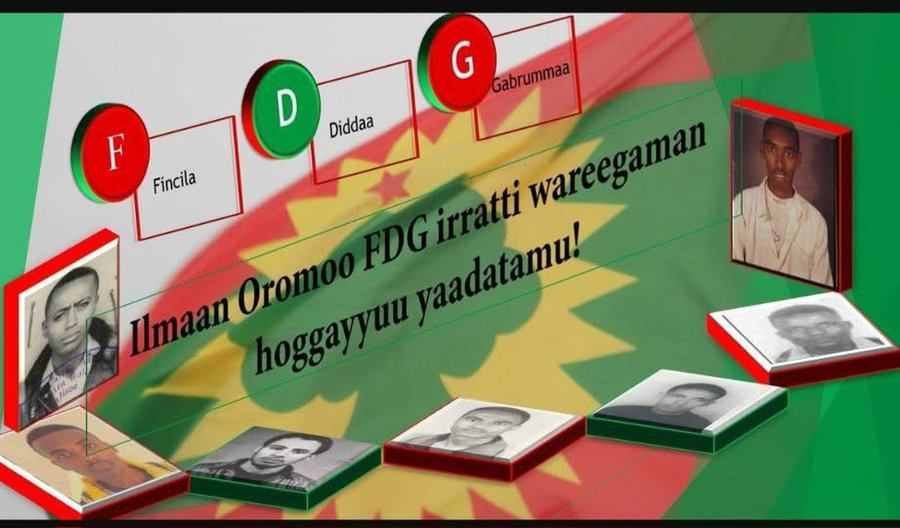
Sadaasa 9 (November 9) holds a place of supreme importance in the modern Oromo struggle for freedom because it marks the beginning of a watershed protest movement that fundamentally transformed the nature of the resistance against the Ethiopian government.
Here is a detailed breakdown of why this date is so significant and is commemorated annually.
1. The Trigger: The “Master Plan” for Addis Ababa
The immediate catalyst was the **2006 Master Plan**, a massive urban expansion scheme by the government that aimed to annex large swathes of Oromia farmland surrounding the capital, Finfinne (Addis Ababa). For the Oromo people, this was not merely a municipal boundary adjustment; it was an **existential threat**. It meant:
* Mass Dispossession: The forced eviction of Oromo farmers from their ancestral land with little to no compensation.
* Cultural Erasure: The further erosion of Oromo identity, sovereignty, and their historical connection to Finfinne.
* Economic Marginalization: The loss of livelihood for millions, turning self-sufficient farmers into a displaced underclass.
The Master Plan was seen as the ultimate symbol of garbummaa (systemic exploitation, subjugation, and denial of Oromo rights) under the Ethiopian state.
2. The Outbreak of the Oromo Protests (Fincila Diddaa Garbummaa – FDG)
In response to this plan, widespread protests erupted spontaneously, primarily led by **Oromo youth (the Qeerroo)**. While discontent had been simmering for decades, **Sadaasa 9, 2015**, marks a pivotal moment when these protests exploded into a coordinated, mass movement.
The protests that began on and around this date were characterized by:
* Mass Mobilization: It was not led by a single political party but was a genuine grassroots uprising involving students, farmers, professionals, and elders across virtually all of Oromia.
* Strategic Non-Violence: Initially, the protests were largely peaceful, involving marches, sit-ins, and the symbolic raising of the Oromo flag.
* A Clear, Unified Message: The protests unified various Oromo grievances—political marginalization, economic exploitation, cultural suppression—under the central demand to cancel the Master Plan and secure Oromo self-rule.
3. The Government’s Brutal Crackdown and Martyrdom
The Ethiopian government’s response was swift and extremely violent. Security forces used live ammunition, mass arrests, torture, and intimidation to crush the protests.
This crackdown had a profound effect:
* Creation of Martyrs: Hundreds, and eventually thousands, of unarmed protesters were killed. Sadaasa 9 became a day to remember these wareegamtoota (martyrs) who gave their lives for the cause.
* International Spotlight: The brutal suppression drew unprecedented international attention from human rights organizations like Amnesty International and Human Rights Watch, global media, and diplomats, putting the Ethiopian government under intense scrutiny.
* Radicalization of the Movement: The violence convinced many Oromos that peaceful protest was futile, further cementing their resolve and transforming the **Qeerroo** into a formidable, disciplined force for change.
4. A Historic Turning Point
The protests that began on Sadaasa 9, 2015, ignited a fire that could not be extinguished. They:
* Shattered the Climate of Fear: For the first time in a generation, the Oromo public massively and openly defied the state.
* Forged a New Generation of Leaders: The **Qeerroo** movement demonstrated immense organizational skill and strategic patience.
* Laid the Groundwork for Political Change: The sustained pressure from these protests over the next three years critically weakened the ruling party and was the primary force that led to the resignation of Prime Minister Hailemariam Desalegn and the rise of Abiy Ahmed in 2018. The **Master Plan was officially canceled** in January 2016 as a direct result of the protests.
—
Summary: Why Sadaasa 9 is Commemorated
In essence, Sadaasa 9 is commemorated because it marks the birth of the Oromo Protest Movement—a decisive, transformative moment in the struggle.
* It is a Day of Remembrance: To honor the courage and sacrifice of the wareegamtootaa (martyrs) who were killed.
* It is a Day of Resistance: It symbolizes the collective rejection of garbummaa and the reclaiming of Oromo identity and agency.
* It is a Day of Resilience: It celebrates the power of a united people to challenge a repressive state and force historic political concessions.
* It is a Foundational Date for Modern Oromo Nationalism: For the Oromo youth and the diaspora, it represents their “1776” or “Sharpeville”—a defining date where their generation took center stage in the fight for their people’s future.
Therefore, Sadaasa 9 is not just a date on the calendar; it is a powerful symbol of sacrifice, unity, and the unyielding pursuit of freedom in the face of overwhelming odds.

Irreecha: A Celebration of Thanksgiving and National Aspiration
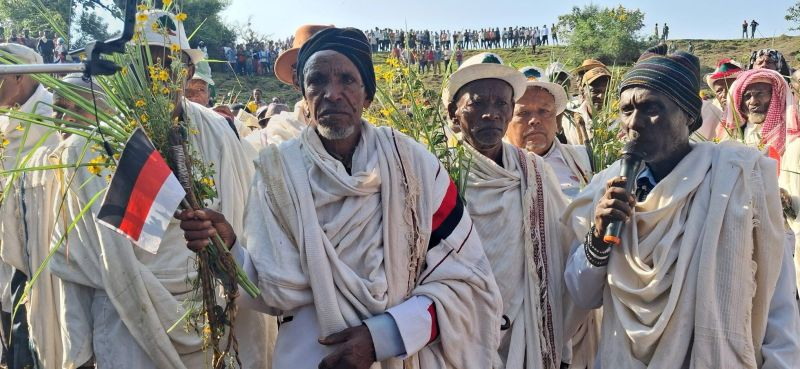
In 2025, the Irreecha festival was celebrated with great warmth and magnificence in Iluu Hagaloo Hora Haleeluut, Waamaa district of the East Wollega Zone, Oromia.
Irreecha is more than a festival; it is a profound cultural cornerstone of the Oromo people, born from the Gadaa system. It strengthens the bond between past and present generations and, crucially, fosters brotherhood and unity among the diverse nations and nationalities of our country.
Irreecha: A symbol of hope, a festival of forgiveness and reconciliation. During Irreecha, the Oromo people gather, holding fresh grass, and journey to the river. They give thanks to Waaqa (God) for guiding them through the harsh winter and into the promising spring. It is a moment to pray for peace, prosperity, unity, and love for our nation and society, showcasing the greatness and virtuous name of the Oromo people to the world.
This grand festival stands as a powerful example for the world. It is a celebration that affirms Oromo identity and culture, strengthens unity and brotherhood, reinforces social bonds, and serves as a collective prayer for national peace and an expression of hope for a bright future.
Therefore, national development must be rooted in more than just knowledge, capability, specialized skills, wealth, and strong military power. It is essential to nurture, develop, and proudly transmit our rich culture, history, language, and national identity from generation to generation, presenting them as a solid foundation to the global community.
We must harness the global recognition of Irreecha—this festival of peace, love, unity, beauty, mutual respect, and inclusivity—for the benefit of our national economy. In doing so, we solidify the foundation of our country’s development.
The Oromo of Kenya: A Community Preserves its History and Prophecy of Unity
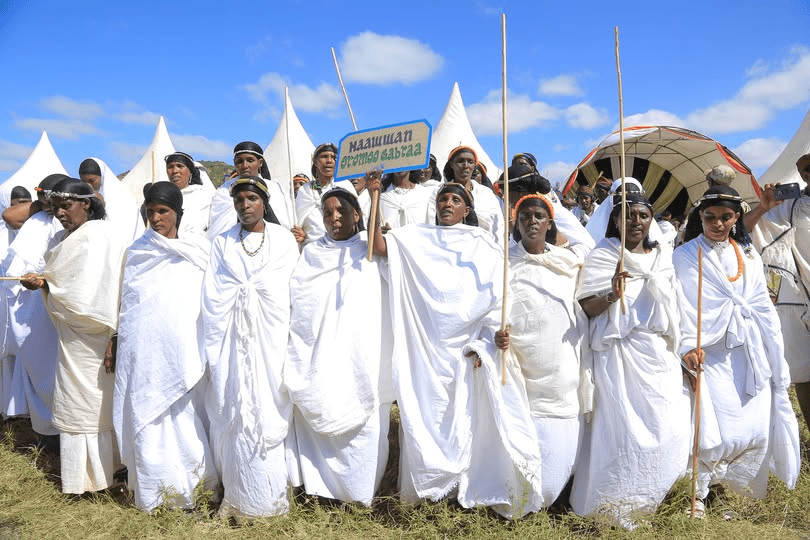
In Kenya’s Tana River County, a community of Oromo people upholds the traditions of their ancestors. While the Oromo are one of the largest ethnic groups in Ethiopia, this community’s presence in Kenya is the result of a centuries-old migration, a story kept alive by their elders.
To understand their origins, we spoke with Haji Kulisa Bona, an elder and representative of the community. He shared the oral history of how his people journeyed from their ancestral homeland.
The Great Migration and a Change of Name
Haji Kulisa explains that their ancestors migrated from a place in Ethiopia known as “Tula Saglan” or “Megga.” As he states, “We are Ethiopians whose history here began 523 years ago. We came from Mega, passed through Moyal, and finally settled where we live now.”
This journey was not taken lightly. According to tradition, the community’s wise leaders, the Abba Geda, initially opposed the migration. A pivotal moment came when a scholar named ‘Kotte Golo Wata’ was sent to a group known as the Warda, who had already left. His mission was to convince them to return.
The Warda’s response was definitive. Haji Kulisa recounts, “They refused, saying, ‘Even if you stay with us for seven days, we will not come back. We are Oromo, from you, and we are Oromo.'” It was after this separation that the name “Oromo” was fully embraced, replacing their previous identifier, “Warda.”
The Parting of Brothers and a Prophecy
The separation was formalized in a poignant ceremony. Haji Kulisa describes the words of the wise men: “We are born as brothers. We cannot be parted by force. Let us live apart, but let us not hate each other. Instead, let us visit and know one another’s situation.”
A prophecy was made at this parting 512 years ago: two children, a red Warda boy and a black Borana boy, would one day be the key to reuniting the divided people.
Two Migratory Paths
The migrants then split into two main groups:
· The Anna Akkar group, led by Lemmeeso, attempted to reach the “sea of Salalu” (likely Sudan) but were thwarted by floods. They eventually settled in areas of Kenya like Mandera County and Wajir.
· The Anna Bakke group successfully crossed the Salalu sea and settled in what is now Jubaland, Somalia.
Haji Kulisa notes that these groups faced subsequent pressures, including conflicts with other tribes like the Jarrol, which led to further dispersal and the loss of some traditional practices like the Gada system.
The Fulfillment of the Prophecy and a Hope for Unity
Today, it has been 523 years since the initial migration, and over 200,000 Oromos live in Tana River County. Haji Kulisa believes the ancient prophecy is coming true.
He reveals that a decade ago, he traveled to Borana in Ethiopia and met with the community there, fulfilling the prophecy of the two “children” reconnecting. “They said the day of Oromo unity is coming soon,” Haji Kulisa states.
Expressing the community’s deepest wish, he concludes: “We have been separated before. Now we know each other. We want the Oromo people to come together, to know one another, and not to fight. The day for the Oromos to unite has come.”
Irreecha: The Foundation of Oromo Nationalism
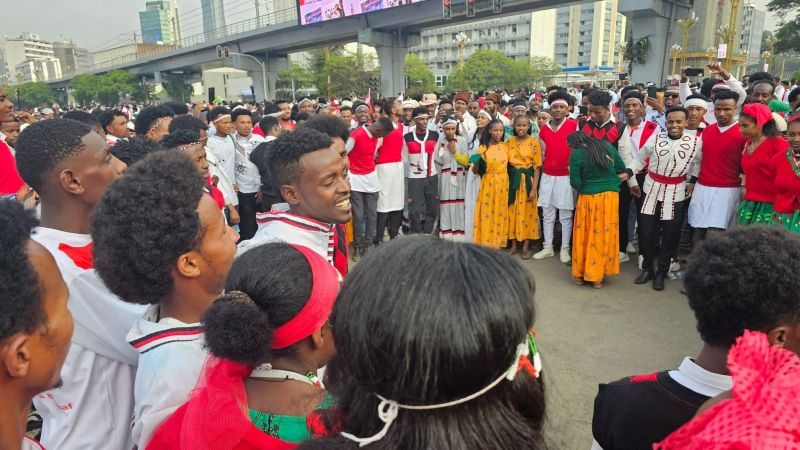
The Irreecha festival stands as a powerful foundation of Oromo nationalism. It is a vibrant testament to the Oromo people’s enduring commitment to preserving their identity, language, and culture against all odds. This commitment fuels a continuous struggle to reclaim and restore their dignity, a cause for which they are willing to make any sacrifice.
Among these celebrations, Irreecha Hora Finfinnee holds particular significance as a massive and profound demonstration of cultural pride.
The success of this cultural revival has been supported by the current government’s policy of cultural reform. This enabling environment has allowed the Oromo people, through events like Irreecha, to showcase their heritage and contribute to their collective social and cultural development.
During Irreecha, especially at the Malka site, the spirit of Oromo nationalism is palpable. Participants adorn themselves in traditional clothing and jewelry, creating a stunning visual representation of their culture. The sense of unity is boundless, as millions gather at Malka for a shared purpose.
This immense gathering does more than unite the Oromo people; it also creates a captivating spectacle for the wider world. The powerful display of unity and the convergence of diverse nations and nationalities have made Irreecha a significant attraction, drawing fascinated visitors from across the globe.
Significance of the Gaammee Gurguddaa in Oromo Culture
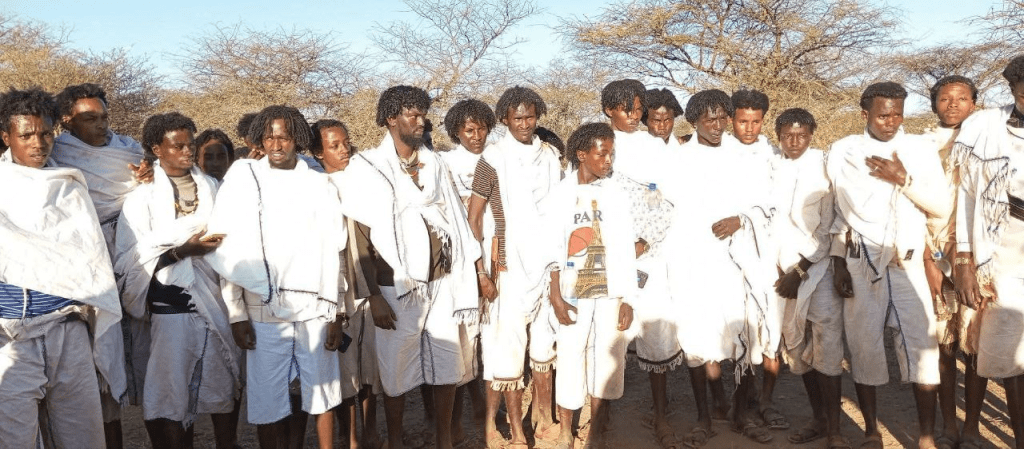
Borana Gaammee Gurguddaa Gather in Gayo Village for Traditional Rite of Passage
The Gadaa system, the foundation of Oromo culture, traditions, and governance, guides every Oromo child through distinct stages of development. This long-term process, known as Gadaa, is dedicated to acquiring, nurturing, and preparing successive generations for leadership.
A significant transition within the Borana Gadaa system is the progression from the Gaammee Gurguddaa stage to the Kuusaa. Before this advancement, children in the Gaammee Gurguddaa grade from various regions convene in a ceremony known as Walargii.
Bonayaa Diidoo, leader of the traditional Sona group at the Oromia Bureau of Culture and Tourism, explained to Fana Digital that Borana children of this age group, including those from Kenya, gather at Gumii Gaayyoo with their fathers’ support.
The primary purpose of the Walargii is for the Gaammee Gurguddaa of the same gogeessaa to meet, learn from one another, and build relationships. A further objective is to instill respect for the people’s laws, customs, and ethics, thereby strengthening communal unity. This gathering occurs once every eight years.
During the three-to-four-day ceremony, the community hosts and feeds the Gaammee Gurguddaa from the moment they begin their journey. At the Gayo Gumii, the Abbootii Gadaa and Abbootii Seeraa formally identify the children as being in the same leadership cohort and introduce them. The meeting takes place at the ancestral home of the former Abba Gadaa Guyyoo Gobba, where a ritual blessing is performed.
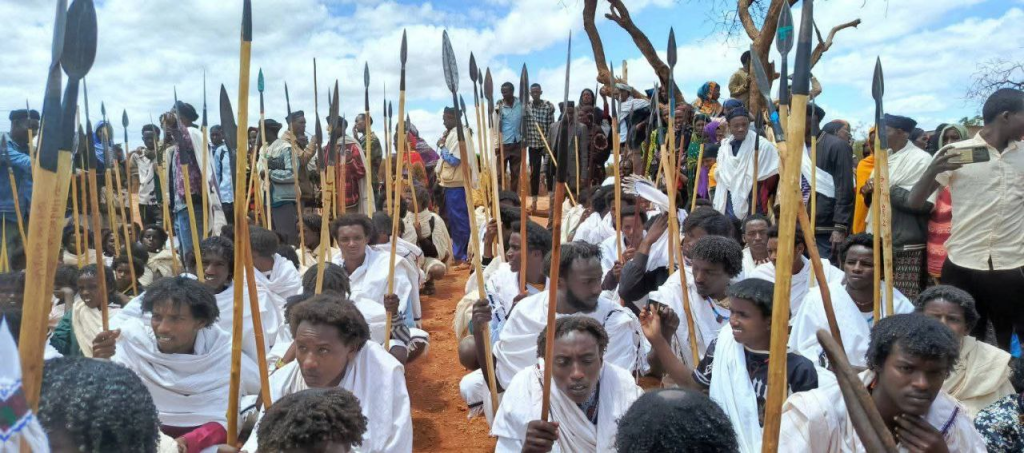
The Walargii ceremony serves as the first chapter in a major program, culminating in a second stage known as the “Feeding Ceremony” approximately ten months later.
For about five months following the Walargii, the Gaammee Gurguddaa undergo intensive training, refusing to return home. They immerse themselves in the people’s customs, traditions, and ethics. During this period, they sustain themselves solely on the meat and blood of animals, do not enter houses, and abstain from washing their bodies or clothes. They go barefoot, enduring these challenges to practice the rigors of traditional life.
When the time arrives according to the traditional calendar, the Gaammee Gurguddaa reunite with the Abbootii Gadaa, Luboota, and jaarrolee for the grand “Feeding” ceremony. While a feast is central to the event, it is also a forum for significant challenges and evaluations.
The trainees compete and are rigorously assessed on their physical strength, understanding of Gadaa rule, and public speaking skills. The most successful individual among the Gaammee Gurguddaa is selected by the elders and the public to be groomed as a future Adula Council Scholar. They are blessed and gains recognition throughout the tribe, and when he comes of age, he will become a Gadaa leader and receive the baallii (sceptre).
Recently, the Gaammee Gurguddaa of Borana Gayo convened for their Walargii in the Dhas District of the Eastern Borana Zone.
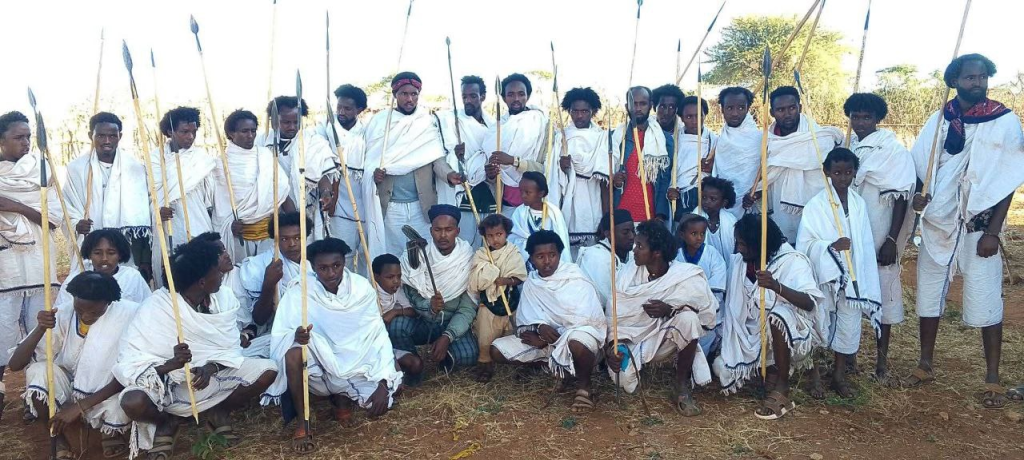
Honoring Oromo Traditions at the 2025 Irreecha Festival
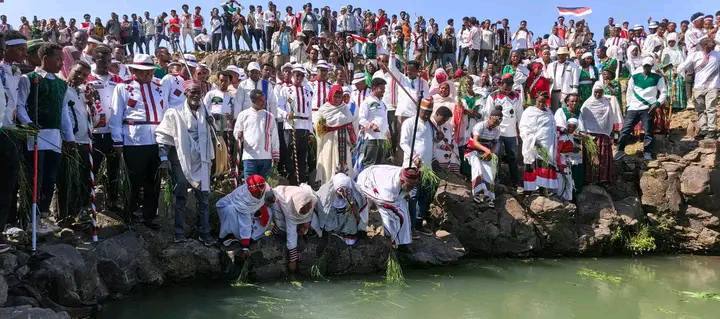
November 2, 2015 – The 2025 Irreecha festival was celebrated at the historic site of Malka Alaltuu.
This follows last year’s celebration, which was held in the village of Kabii Goloolcha within the Darraa district.
The event was honored by the presence of distinguished guests, including the Governor of Darra District, Mr. Masfin Taayyee, and the Head of the District’s Prosperity Party Office, Mr. Masfin Yeshaanaw.
The festival at Malka Alaltuu was conducted in a manner faithful to Oromo tradition and ethics.
The ceremony was held in the presence of Abbootii Gada, Siinqee mothers, and the wider community, who gathered to observe this important cultural celebration.

Commissioner Lelise Dhugaa: A Catalyst for Oromia’s Tourism
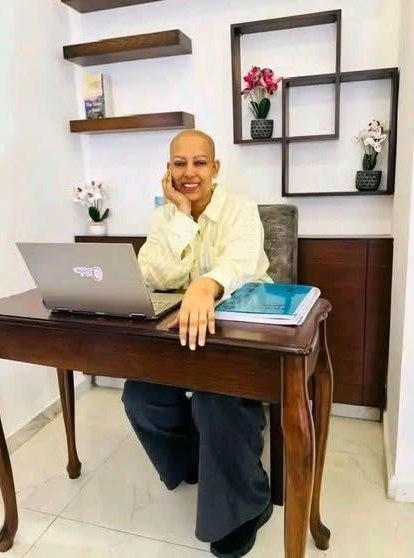
Commissioner Lelise Dhugaa is more than a leader; she is a transformative force. Her legacy in establishing and advancing Oromia’s tourism sector is a testament to her vision, intellect, and unwavering dedication.
Her Key Achievements Include:
- Founding a New Sector: She was the first to prepare and submit the proposal for the establishment of the Oromia Tourism Commission. Her idea was not only accepted but successfully realized.
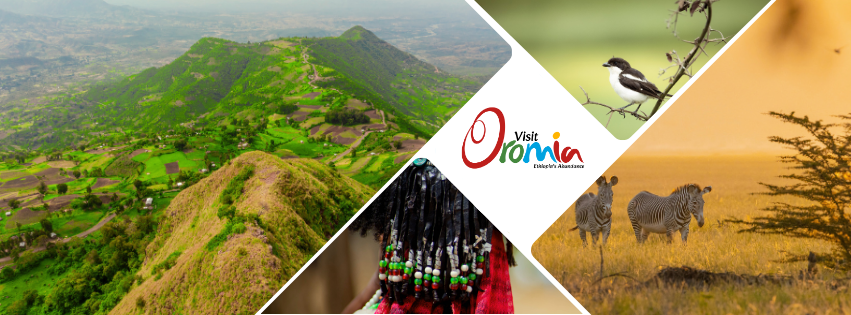
- Launching “Visit Oromia”: Under the new commission, she launched the “Visit Oromia” initiative. This platform brought unprecedented attention to natural wonders like the mountains of Bale, Salale, Arsi, and Iluu Abbaa Boor, as well as the Suba Forest.
- Unifying Professionals: She successfully mobilized a wide range of experienced professionals—including cameramen, media experts, artists, and models—from both public and private sectors to collectively promote Oromia.
- Creating a Cultural Symbol: She institutionalized “Oromia Tourism Week” to precede the annual festival, featuring panel discussions and promotional events. This initiative created new opportunities, encouraging Oromo girls to develop skills in beauty and modeling through a celebrated annual competition that promoted Oromia’s culture.
- Promoting Hidden Gems: Countless previously unknown natural and artificial parks across Oromia were identified and promoted to a wider audience.
- Recognizing Contributors: She ensured that the camera professionals, park guards, tour guides, drivers, and artists who played a crucial role in showcasing Oromia’s image and beauty were recognized and celebrated, setting a precedent for future generations.
- Elevating Oromia Globally: Through her work, the God-given heritage, tourist attractions, culture, and identity of the Oromo people have gained recognition on the world stage. The resulting tourism income has directly benefited our region.
- Driving Development: Her office identified, researched, and promoted hidden tourist attractions, linking tourism directly to infrastructure development.
- Securing UNESCO Recognition: She played a major, indispensable role in the UNESCO listings for the Bale Mountains, Irreecha, and the Gada System over the past five to six years.
Commissioner Lelise is not only a skilled leader but also a woman of profound wisdom. Academically, she is a formidable intellectual. In a country where establishing a new commission is a monumental challenge, she not only created a new sector but achieved 101% success.
Overall, Commissioner Lelise Dhugaa has firmly established Oromia as a center of tourism. She successfully redirected tourist traffic that once flocked only to the north, ensuring our region received its rightful share of attention. For this, this generation praises and thanks her.
She is a strong woman whose discipline and honor reflect the dignity of all Oromo mothers. Though I do not know her personally, she carries the grace and strength of my own mother—a person whom Allah has adorned with every virtue.
I was profoundly shocked to learn of her illness. Mom… we need you. You are more valuable to Oromo and Oromia than gold. We pray for your swift and complete recovery, so you may finish the vital work you have started. May no evil befall you. May God restore you to perfect health.
For further info visit: https://www.facebook.com/visitoromia

Tribute to Mr. Nagaasaa Ayyaanaa: A Legacy of Oromo Pride
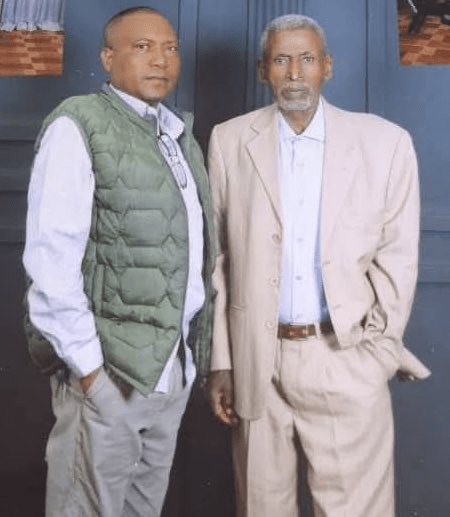
It is in the blood of this family to fight. Born of fighters, they were raised for the struggle. They have chosen a path of self-sacrifice, dedicating their lives to the cause of Oromo glory and accepting personal hardship for the freedom of their people. Their sole purpose is to keep Oromia and the Oromo spirit alive. And while all things must begin, a legacy such as this never loses its power.
In this spirit, we share a brief tribute to Mr. Nagaasaa Ayyaanaa, the brother of the late #Kennasaa_Ayyaanaa, who passed away this week.
Mr. Nagaasaa Ayyaanaa was born in 1949 to Ayyaanaa Alabee Sekkaa and Dammee Bookaa Nadhii. In a household that raised both strong men and cattle, he was one of fifteen children. He was a man deeply rooted in Oromo culture and morals, a respected nationalist beloved by his community.
He was also the brother of Jaal Kennasaa Ayyaanaa. Because of this, and due to his own association with ABO leadership, Nagaasaa was imprisoned and tortured. His brother, Jaal Kennasaa, himself a monumental figure in the Oromo liberation struggle led by the ABO, endured immense adversity, great sacrifice, and severe torture in prison, which has left his health in a deeply worrying state to this day.
May Mr. Nagaasaa rest in peace, his grave filled with honey. We extend our deepest condolences to Jaal Kennasaa and the entire Ayyaanaa family.
Position Statement of the Oromo Liberation Front (OLF)
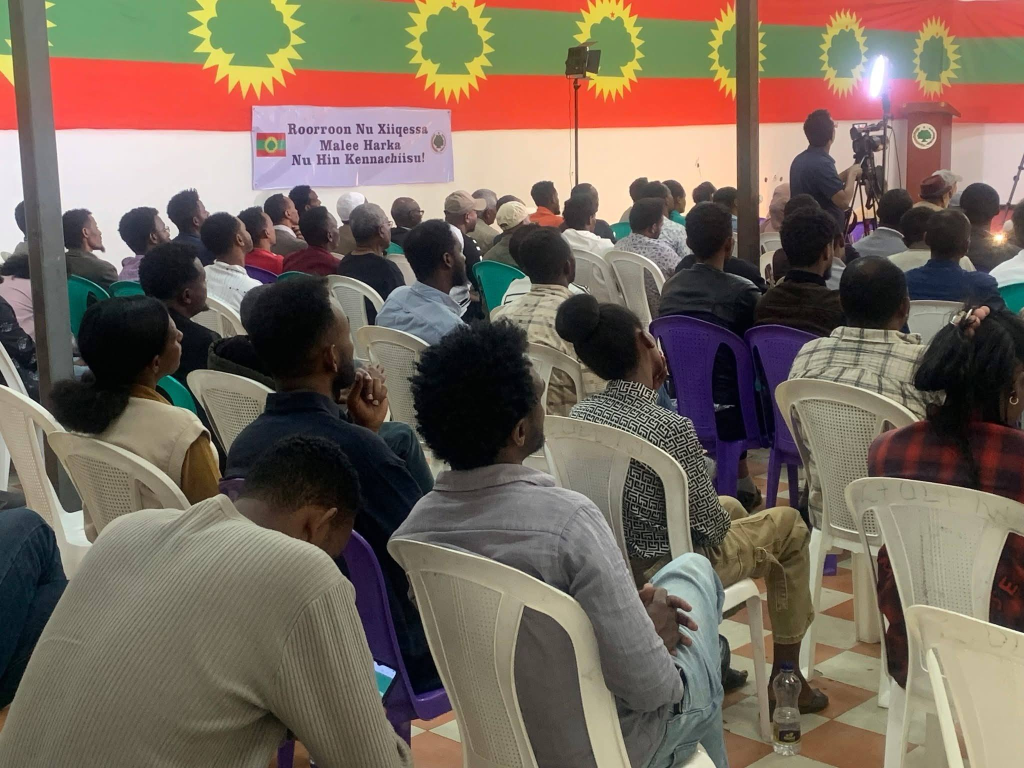
We, the members of the Oromo Liberation Front (OLF), convened in a two-day meeting on October 25 and November 1, 2025, at our headquarters in Gullalle.
Our deliberations have produced this five-point position statement concerning the past, present, and future of our party, the critical situation in Ethiopia, and ongoing developments in the African region and the world at large.
1) The Imperative for Peace and Justice
The pursuit of peace for the Oromo people is paramount. We unequivocally condemn the crimes against humanity perpetrated against the Oromo in recent years. We hold the government responsible for a systematic campaign of torture, employing tactics such as extrajudicial killings, forced displacement—notably through the Somali Special Forces in the East—and persecution under various pretexts across the nation.
The Oromo people possess an inalienable right to human rights and self-determination, equal to all peoples of the world. We therefore demand the establishment of an independent international body to investigate the wave of killings committed against the Oromo people over the past seven years, which continues unabated, including the assassination of our comrade, Jaal Battee Urgeessaa.
2) The Inviolability of Oromia’s Borders
The land of Oromia is the ancestral homeland of the Oromo people, whose presence spans centuries. All violations of Oromia’s established borders must cease immediately. The territorial integrity of Oromia is non-negotiable and must be respected unconditionally.
3) The Demand for Political Freedom
The current regime has deliberately closed the political arena and obstructed the lawful activities of the Oromo Liberation Front. This repression has perpetuated the subjugation of our people and illegally prevented our party from engaging with its constituents.
We demand the immediate and unconditional reopening of all OLF offices nationwide. Our party must be guaranteed the freedom to operate, to communicate its political program openly, and to dialogue directly with the people. OLF leadership must be free to travel, to conduct public forums, and to educate without hindrance. We further call for an end to the arbitrary arrests of our members and supporters, and for the immediate restoration of fundamental freedoms for media and civil society organizations.
4) The Sacred Unity of the Oromo People
We condemn in the strongest terms any and all attempts to fragment the Oromo people for transient political advantage. The unity of the Oromo is sacrosanct, forged by the ultimate sacrifice of our Shinigga heroes. It is a legacy built with their blood and bones, and it will not be weakened, bargained away, or destroyed.
5) A Renewed Vow and Final Resolution
In conclusion, and to fully achieve the aims and objectives of our struggle, we solemnly renew our vows to the Oromo cause. We reaffirm our acceptance of the duty before us and declare this position statement to be our final and resolute decision.
Victory to the Masses!
Members of the Oromo Liberation Front (OLF)
November 1, 2025
Finfinnee




 Advocacy for Oromia