Author Archives: advocacy4oromia

Finding Strength and Support: A Guide to Mental Health Services for Oromo Families in Victoria
By Daandii Oromia
MELBOURNE, VICTORIA – For many in the Oromo community, the journey to Australia has been marked by resilience, hope, and the promise of a safer future. Yet, this path often carries invisible burdens. The trauma of displacement, the challenges of resettlement, and the weight of cultural expectations can all take a profound toll on mental health and wellbeing .
In Victoria, help is available. While many from migrant and refugee backgrounds face barriers in accessing services, a growing number of organisations and programs are working to provide culturally safe, accessible, and understanding support for Oromo families .
The Hidden Struggles: Why Mental Health Matters
Mental health challenges—depression, anxiety, trauma, and isolation—are often worsened by the experience of migration . For many Oromo families, these struggles are compounded by language barriers, the pressure to appear strong, and the stigma that can surround mental health in many cultures .
Research confirms that people from Culturally and Linguistically Diverse (CALD) backgrounds face significant barriers in accessing mental health care. These include stigma, mental health illiteracy, distrust of mainstream services, and a lack of familiarity with the system . Speaking about mental health is not always common practice in many communities, which makes culturally appropriate support all the more vital .
Where to Start: Community Organisations That Understand You
The Oromo community in Victoria is fortunate to have dedicated organisations that understand your culture, language, and the unique challenges you face.
Advocacy for Oromia
Based in Melbourne, Advocacy for Oromia has been at the forefront of mental health support for the Oromo community for over a decade . Their Mental Health Program focuses on improving mental health literacy, building protective factors, and reducing stigma . They organise culturally adapted conversations during Oromo Coffee Drinking ceremonies (Caffee), a familiar cultural practice that helps make mental health discussions more approachable . They also provide information sessions, radio programs, and community education .
From 2017 to 2018 alone, their community education programs supported 600 Oromos to address depression, anxiety, low self-confidence, and isolation, including perinatal mental health issues .
- Contact: 247-251 Flinders Lane, Melbourne VIC 3000 | http://www.advocacy4oromia.org .
The Oromo Association in Victoria Australia (OAVA)
Established in 2002, OAVA is a non-political, community-focused organisation dedicated to supporting Oromo refugees and migrants . They offer a range of vital services, including:
- Settlement assistance for new arrivals
- Access to healthcare and mental health support
- Counselling to address the trauma of displacement
- Job training and employment support, which helps build independence and reduces stress
The Australian Oromo Community Association in Victoria Inc.
This community hub in Melbourne provides a wide range of services, including counselling, family support, and community outreach programmes . They collaborate with local organisations to deliver workshops on mental health, nutrition, and financial literacy .
The Power of Community Connection
One of the most effective forms of mental health support is simply coming together . In February 2025, the Federation of Oromo Civic Organizations in Australia and the Oromo Seniors Welfare and Benevolent Association held a dinner event in Melbourne that brought together seniors, youth, and families .
The benefits of such gatherings are profound:
- Reducing isolation, especially for seniors who may feel lonely in the diaspora
- Cultural affirmation that boosts self-esteem and mental wellbeing
- Open dialogue about community challenges and resources
- Intergenerational connection that allows elders to share cultural knowledge
Broader Support: Services for CALD Communities
Beyond community-specific organisations, Victoria has a growing network of services for culturally diverse communities.
Mental Health and Wellbeing Hubs
Funded by the Victorian Government, these hubs act as a ‘front door’ to the mental health system, providing free, short-term psychosocial support without a waitlist . They are delivered in locations including Abbotsford, Coburg North, Footscray, and Werribee . Staff work with interpreters to support service users who do not speak English as their first language .
Contact: 1300 286 463 to access a Hub .
Mental Health and Wellbeing Locals
Also funded by the Victorian Government, these Locals make it easier for people aged 26 and over to get free, voluntary mental health care closer to home . You do not need a referral or a Medicare card. The Dandenong team collectively speaks more than 40 languages, and bicultural workers have been a great success in overcoming mental health stigma in their communities . Top nationalities among service users include Afghanistan, India, Sri Lanka, Pakistan, and Sudan .
Contact: 1800 332 501 to find your nearest Local .
Afri-Aus Care
Based in Springvale South, Afri-Aus Care was founded in 2015 to provide culturally appropriate support to African Australian and CALD communities . They offer psychosocial assessment, casework, counselling, and mental health support . In 2024, they received a $235,000 grant from the Victorian Government to run a specialist mental health program focusing on removing stigma and cultural taboos .
The Diverse Communities Mental Health and Wellbeing Grants Program
The Victorian Government has invested $4.2 million in supporting diverse communities’ mental health . This program recognises that Victorians from diverse backgrounds often face greater mental health challenges and difficulty accessing inclusive, culturally safe services .
Organisations benefiting from this funding include the Ethnic Communities Council of Victoria, Muslim Mental Health Professionals, and the Victorian Refugee Health Network .
Practical Steps for Oromo Families
If you or a family member is struggling, here is a path forward:
- Start with your community organisation: Reach out to Advocacy for Oromia, OAVA, or the Australian Oromo Community Association .
- Attend community events: Gatherings like the Federation of Oromo Civic Organizations events are more than social—they are lifelines that can connect you with resources .
- Access mainstream mental health services: Contact a Mental Health and Wellbeing Hub or Local for free, no-waitlist support .
- Call a crisis line if needed: National helplines like Lifeline (13 11 14) and Beyond Blue (1300 22 4636) offer confidential support. Ask for an interpreter if needed .
Breaking the Silence
Mental health challenges are not a sign of weakness. They are a human experience—one that can be addressed with the right support .
As Selba Gondoza Luka, founder of Afri-Aus Care, discovered, helping others can also be a path to healing. “When I started the organisation, I had depression and anxiety. But then I started helping others and I saw the healing. It was a speedy recovery,” she said .
You are not alone. There is support, there is understanding, and there is a community ready to help.
Key Contacts
| Service | Contact | Description |
|---|---|---|
| Advocacy for Oromia | http://www.advocacy4oromia.org | Community education, mental health support for Oromo families |
| The Oromo Association in Victoria (OAVA) | Established 2002 | Counselling, settlement support, mental health services |
| Afri-Aus Care | Springvale South | Culturally appropriate mental health support |
| Mental Health and Wellbeing Hubs | 1300 286 463 | Free, no-waitlist mental health support |
| Mental Health and Wellbeing Locals | 1800 332 501 | Free, no referral needed; Dandenong speaks 40+ languages |
| Lifeline (crisis support) | 13 11 14 | 24-hour crisis support, ask for an interpreter |
| Beyond Blue | 1300 22 4636 | Mental health support and resources |
Sources: Advocacy for Oromia, The Oromo Association in Victoria, Mind Australia, National Institutes of Health.
Disclaimer: This article provides a general guide only. Readers should seek professional advice for their own particular situations.

Finding Safety and Strength: A Guide to Family Violence Support for Oromo Families in Victoria

By Dhabessa Wakjira
MELBOURNE, VICTORIA – Family violence is never acceptable. For Oromo families in Victoria, the experience of family violence can be compounded by cultural expectations, visa insecurity, language barriers, and isolation from support networks. But help is available, and it is culturally safe.
Victoria has invested more than $4 billion to prevent and respond to family violence, and a significant part of this investment focuses on making services accessible to multicultural communities. This guide provides a starting point for Oromo families seeking safety, support, and healing.
What Is Family Violence?
Family violence is more than physical abuse. It includes:
- Emotional abuse: constant criticism, humiliation, or control
- Financial abuse: controlling access to money, preventing you from working
- Social isolation: stopping you from seeing family or friends
- Coercive control: threats, intimidation, and manipulation
- Sexual violence: any unwanted sexual activity
- Threats to children: using children to control you
For Oromo families, violence can also be linked to cultural expectations, dowry-related disputes, forced marriage, or visa insecurity.
First Steps to Safety
If you are in immediate danger, call 000 immediately. Victoria Police are trained to respond to family violence and can help you leave a dangerous situation safely.
For confidential advice and support 24 hours a day, 7 days a week:
| Service | Contact | Description |
|---|---|---|
| 1800 RESPECT | 1800 737 732 | National helpline for sexual assault and family violence |
| Safe Steps | 1800 015 188 | Victoria’s 24/7 family violence crisis support line |
| Men’s Referral Service | 1300 766 491 | Support for men who want to stop using violence |
The Orange Door: Your Single Entry Point
In Victoria, The Orange Door is the main entry point for family violence support. It brings together multiple services in one place—specialist family violence services, child wellbeing services, and men’s services—to provide coordinated help.
What The Orange Door offers:
- A single point of contact for family violence support
- Risk assessment and safety planning
- Connection to counselling, financial help, and housing support
- Culturally safe services with interpreters available
- Help for everyone—regardless of gender, ethnicity, or background
Contact The Orange Door:
- Phone: 1300 271 045 (9am–5pm, Monday–Friday)
- Online: http://www.orangedoor.vic.gov.au
- In-person: Visit a hub near you
Clients from diverse communities are offered a safe service where their cultural and religious preferences are respected, including the option to work with a female worker if required.
Culturally Specific Support for Oromo and Multicultural Communities
Advocacy for Oromia (A4O)
Based in Melbourne, Advocacy for Oromia has been supporting the Oromo community since 2010. Their work includes:
- Community education about respectful relationships and gender equality
- Information sessions on family violence prevention
- Collaboration with Victoria Police and organisations like Wayss to provide community-based support
In 2019, Advocacy for Oromia organised the first Oromo Interfaith Forum in Melbourne, bringing together Christian, Muslim, and Waaqeffannaa religious leaders to speak about respectful relationships between husbands and wives.
Contact Advocacy for Oromia:
- Phone: 0432 057 473
- Email: info@advocacy4oromia.org
- Address: 39 Clow St, Dandenong VIC 3175; 247-251 Flinders Lane, Melbourne VIC 3000
InTouch Multicultural Centre Against Family Violence
InTouch is a specialist organisation dedicated to supporting migrant and refugee women experiencing family violence. They provide:
- Culturally appropriate counselling and case management
- Flexible support packages for CALD women across Victoria
- Help navigating visa and legal issues linked to family violence
- Advocacy for women facing dowry-related abuse, forced marriage, or visa insecurity
Contact InTouch: 03 9413 6500
Wellsprings for Women
Based in Dandenong, Wellsprings for Women is a grassroots organisation supporting women from migrant, refugee, and asylum seeker backgrounds through trauma-informed programs. Their services include family violence casework, emergency accommodation, food and clothing, transport assistance, and home safety measures for women escaping violence.
Practical and Financial Support
Flexible Support Packages
Victim survivors from CALD communities can access Flexible Support Packages through organisations like InTouch. These packages provide practical help to:
- Establish safety and long-term stability
- Cover counselling, wellbeing costs, education, and employment-related costs
- Address housing, transport, and other material needs
Family Violence Financial Counselling
Free and confidential financial counselling is available to help people experiencing family violence manage debt, access support payments, navigate housing issues, and plan for financial independence.
Legal Assistance
The Strengthening Legal Pathways for CALD Women project provides free community legal education on family violence and other legal issues, covering family law, family violence, police powers, tenancy, and more.
Community organisations can request free online or in-person information sessions by contacting pclc@pclc.org.au.
Support for Men
Family violence affects everyone, and support is available for men who are experiencing violence and for men who want to stop using violence.
For men experiencing family violence:
- Victims of Crime Helpline: 1800 819 817 (8am–11pm, 7 days a week)
For men who want to change their behaviour:
- Men’s Referral Service: 1300 766 491 (8am–9pm Monday–Friday, 9am–6pm weekends)
The Victorian Government is also delivering culturally-tailored men’s programs that take a holistic approach, with a focus on healing alongside accountability.
Education and Community Programs
Victoria has invested in community education to prevent family violence and empower multicultural communities. The award-winning Respectful Relationships course—delivered in partnership with Melbourne Polytechnic and Whittlesea Community Connections—has shown strong results:
- 93% of students reported greater confidence in understanding family violence
- 85% recognised that women and children are most affected by family violence
- 57% said they now knew where to access support services
Resources in Your Language
The MARAM family violence framework fact sheets have been translated into six commonly used languages, including Oromo, to support people from diverse communities. These resources explain family violence support in everyday language.
Quick Reference: Emergency and Support Contacts
| Service | Contact |
|---|---|
| Emergency (Police, Ambulance, Fire) | 000 |
| 1800 RESPECT | 1800 737 732 (24/7) |
| Safe Steps (Victoria) | 1800 015 188 (24/7) |
| The Orange Door | 1300 271 045 (9am–5pm weekdays) |
| Men’s Referral Service | 1300 766 491 |
| InTouch Multicultural Centre | 03 9413 6500 |
| Advocacy for Oromia | 0432 057 473 |
| Victims of Crime Helpline | 1800 819 817 |
| Child Protection Emergency | 13 12 78 |
Sources: Advocacy for Oromia, InTouch Multicultural Centre, Victorian Government, Wellsprings for Women.
If you are not sure where to start, call The Orange Door or contact Advocacy for Oromia. They can help you navigate the system, in your language, and with respect for who you are.
#Oromo #FamilyViolence #Victoria #SupportServices #SafetyFirst #CommunitySupport

Building a New Life: A Guide to Support for Oromo Asylum Seekers in Victoria
By Dhabessa Wakjira
MELBOURNE, VICTORIA – The decision to leave one’s homeland is never easy. For many Oromo people, it has meant fleeing persecution, violence, and the impossible choice between staying and surviving . Arriving in Australia as an asylum seeker brings a new set of challenges—unfamiliar systems, language barriers, and the uncertainty of your legal status .
But you are not alone.
In Victoria, a range of services are specifically designed to support asylum seekers. From community organisations that speak your language to government programs that offer training and legal assistance, help is available at every step of your journey .
The First Step: Connecting with Your Community
For Oromo asylum seekers, the most important first step is often connecting with community organisations that understand your culture, language, and lived experience .
The Oromo Community in Melbourne Inc. (OCM)
Established specifically to support the Oromo diaspora in Victoria, OCM provides refugee settlement support—assisting new Oromo refugees with housing, healthcare, and employment . They work in partnership with organisations like the Migrant Resource Centre and the Department of Immigration to address the unique challenges Oromo refugees face .
For many, OCM is the first point of contact. It offers a safe space to celebrate Oromo culture, history, and language without fear of persecution .
Advocacy for Oromia Association (A4O)
Since 2014, A4O has been dedicated to supporting and empowering disadvantaged Oromo individuals and families in Victoria . Their mission is to ensure that the voices of the Oromo community are heard by relevant authorities .
What A4O offers :
- Free, independent advocacy to help you resolve issues related to housing, healthcare, employment, and legal matters
- Settlement assistance including orientation programs and access to essential services
- Culturally sensitive support designed to help refugees integrate into Australian society
- Information about your civil and human rights
The Australian Oromo Community Association in Victoria (AOCAV)
Established in 1984, AOCAV is another key non-profit organisation dedicated to supporting, uniting, and empowering Oromo people residing in Australia . It provides vital resources and support for new arrivals, assisting them with settlement, education, and employment to ensure a smooth transition into Australian society . AOCAV also advocates for the rights and interests of the Oromo community at local, state, and national levels, serving as a bridge between the Oromo community and the wider Australian community .
Legal Assistance: Navigating the Visa Process
For asylum seekers, legal status is often the most pressing concern. Victoria offers a comprehensive network of legal support.
Victoria Legal Aid (VLA)
VLA provides free legal assistance for asylum seekers, including representation before the Administrative Review Tribunal (ART) for protection visa appeals . The new ART—established in October 2024—has replaced the former Immigration Assessment Authority and now gives all asylum seekers the right to a full merits review of their cases .
Key support from VLA :
- Legal representation for protection visa appeals
- Assistance with judicial review in Federal courts
- Trauma-informed legal services that understand the experiences of asylum seekers
Data shows that asylum seekers who are legally represented are seven times more likely to receive a positive outcome at the Tribunal . In 90 per cent of VLA’s protection visa matters, they saw positive outcomes including decisions being overturned .
Contact VLA :
- Legal Help phoneline: 1300 792 387 (Monday to Friday, 8 am–6 pm)
- Protection visa assistance email: PVAssistance@vla.vic.gov.au
- You can ask for an interpreter
Refugee Legal
Refugee Legal is a community legal centre that has specialised in refugee and immigration law for over 28 years . They provide free legal advice and representation to asylum seekers, refugees, and disadvantaged migrants in the community and in immigration detention . They assisted more than 12,500 people last year alone .
Status Resolution Support Services (SRSS)
The SRSS program provides support to people living in Australia while their protection visa application is being processed . This includes financial assistance and support services through providers like Settlement Services International (SSI) and Life Without Barriers .
Healthcare: Accessing Medical Support
Accessing healthcare as an asylum seeker can be complex, but Victoria has specialised services to meet your needs.
Refugee Health Services
- The Royal Melbourne Hospital – Refugee Health: Provides specialist care for adult immigrants and refugees, including those who are not eligible for Medicare
- Monash Health – Refugee Health and Wellbeing: Provides comprehensive primary care together with tertiary services including infectious diseases, paediatrics, and psychiatry
- The Royal Children’s Hospital – Immigrant Health Service: Offers free specialist care for children and young people who arrived as refugees, including those without Medicare
The Asylum Seeker Resource Centre (ASRC) – Health Service
The ASRC offers casework, counselling, and general access to wider support programs . It is one of the most comprehensive support organisations for asylum seekers in Victoria .
Specialised Mental Health Support
Foundation House provides specialised counselling for torture and trauma, including individual and family support, group programs, and complementary therapies . They operate across six metro sites and in partnership with agencies in regional Victoria . The Victorian Government continues to support Foundation House to deliver these trauma-informed programs .
Education and Training: Building Skills for the Future
Victoria offers subsidised training programs for asylum seekers to help them build new careers and contribute to their new communities .
Asylum Seeker VET Program
The Victorian Government has invested $3 million to extend the Asylum Seeker VET program, which provides access to vocational training for refugees and asylum seekers .
Popular courses include :
- Childcare
- Community and disability services
- Nursing and allied health
Since 2024, more than 950 asylum seekers have been supported to study at TAFE through this program . The program is delivered in partnership with the Asylum Seeker Resource Centre (ASRC), which provides wraparound support and follow-up services .
Reconnect Program
The Reconnect program supports people who are not engaged in education, employment, or training—including asylum seekers . With $48 million in funding extended for another four years, the program provides one-on-one wraparound support including :
- Counselling and mentoring
- Housing support
- Education opportunities
- Health and wellbeing services
- Foundation and employability skills
Since 2016, the program has helped thousands of people move into further study, training, or employment .
AMES Australia
AMES Australia provides settlement services to refugees, including meeting new arrivals at the airport, providing safe and secure accommodation, and offering English and vocational courses . In the 2024-25 financial year, AMES helped more than 1,500 migrants and refugees find sustainable employment and supported more than 200 refugees to start their own businesses .
Government Support and Commitment
Victoria welcomes between 4,000 and 6,000 refugees every year . The Victorian Government has committed over $20 million in programs through the 2025–26 budget to support refugee communities . This includes $3.6 million over two years to support regional organisations to deliver settlement supports and $7.6 million to protect vulnerable workers, along with over $56 million through the education portfolio for English as an additional language classes .
Practical Steps for Oromo Asylum Seekers in Victoria
- Reach out to your community – Contact OCM, A4O, or AOCAV. They understand your culture and can guide you through your first steps.
- Seek legal advice – Contact Victoria Legal Aid or Refugee Legal if your protection visa has been refused or you need legal representation.
- Access healthcare – Visit one of Victoria’s specialised refugee health services, including The Royal Melbourne Hospital – Refugee Health or the ASRC Health Service.
- Explore education and training – Ask about the Asylum Seeker VET program or AMES Australia courses to build skills and start a career in Victoria.
- Consider mental health support – Foundation House provides specialised counselling for torture and trauma, free of charge.
Key Contacts
| Service | Contact |
|---|---|
| Advocacy for Oromia (A4O) | info@advocacy4oromia.org |
| Victoria Legal Aid | 1300 792 387 |
| Refugee Legal | http://www.refugeelegal.org.au |
| Asylum Seeker Resource Centre (ASRC) | http://www.asrc.org.au |
| Foundation House (Mental Health) | Specialised torture and trauma counselling |
| The Royal Melbourne Hospital – Refugee Health | Specialist care for adult asylum seekers |
Sources: Advocacy for Oromia, Victoria Legal Aid, Refugee Legal, Asylum Seeker Resource Centre, Foundation House, AMES Australia, Parliament of Victoria.
Disclaimer: This article provides a general guide only. Readers should not act on the basis of any material without getting legal advice about their own particular situations .
#Oromo #AsylumSeekers #Victoria #RefugeeSupport #SettlementServices #CommunitySupport

Navigating the Path to Healing: A Guide to Drug and Alcohol Support for Oromos in Victoria
By Dhabessa Wakjira
MELBOURNE, VICTORIA – For members of the Oromo community in Victoria, the journey of settlement in a new country is often marked by resilience, hope, and hard work. However, it can also come with unique challenges that may, for some, lead to problematic alcohol and other drug (AOD) use. The transition to a new culture, coupled with experiences of trauma, grief, and social isolation, can create significant vulnerability .
The good news is that help is available. While accessing support can be daunting due to language barriers, cultural stigma, and a system that hasn’t always felt welcoming, a growing network of services is working to become more accessible and culturally safe for Victoria’s diverse communities. This guide provides a starting point for Oromo families seeking help.
Why Accessing Help Can Be Harder
Acknowledging the barriers is the first step to overcoming them. Members of migrant and refugee communities, including Oromos, are significantly underrepresented in AOD services. In Victoria, 95% of those seeking help speak English as their first language, indicating that the system often does not feel accessible to those who don’t .
Common obstacles include :
- Stigma and Shame: In many communities, substance use is seen as a sign of weakness that damages family reputation, making it difficult to seek help openly.
- Language Barriers: There are limited AOD resources available in languages other than English.
- Cultural Disconnection: Services can feel too “Angiocentric” and may not cater to cultural practices and norms.
- Fear and Distrust: Concerns about confidentiality and fear of authorities can prevent people from coming forward.
Where to Start: Immediate and Confidential Support
If you or someone you care about needs help right now, these services are confidential, available 24/7, and free. They are the best first point of contact .
- DirectLine is a 24-hour telephone service providing immediate, confidential counselling, information, and referral to treatment services. You can call 1800 888 236 at any time and ask for an interpreter .
- Counselling Online offers free, confidential, professional online counselling about alcohol or drug-related issues, available 24/7 .
Finding Culturally Appropriate Support
The Victorian Government requires all funded AOD services to provide a culturally safe environment . While culturally tailored services are still limited, some dedicated programs exist.
- Muslim Youth, Adult & Families (MYAF) Program
This federally-funded program is specifically designed to support individuals and families from the Islamic community . It is based in Glenroy and offers:- AOD counselling (face-to-face, telephone, and outreach)
- Assessment and referral to withdrawal and rehabilitation programs
- Family support workers providing practical help and education
- Youth AOD outreach for young people aged 15–24
- Male and female specific support groups
- Step Thru Care (STC)
This is a new integrated Mental Health and AOD support service being delivered across western Victoria. It is designed to be accessible to priority groups, including people from Culturally and Linguistically Diverse (CALD) backgrounds . The program does not require a Mental Health Care Treatment Plan to access support .
Practical Steps Forward
If you know someone struggling with alcohol or drugs, here is a path forward :
- Start with DirectLine: Call 1800 888 236. It is confidential, available 24/7, and they can connect you with services in your area. You can ask for an interpreter.
- Reach out to Community Organisations: Contact the Australian Oromo Community Association in Victoria Inc. or the Advocacy for Oromia Association. They may be able to connect you with culturally appropriate support or advocate on your behalf .
- Consider Step Thru Care if you are in western Victoria. This service does not require a referral .
- If you are from the Islamic community, contact MYAF for tailored counselling in a culturally safe environment .
- Seek mental health support if needed. Alcohol and drug issues are often linked to trauma. Organisations like Foundation House provide specialised counselling for torture and trauma .
A Statewide Commitment to Change
On a broader scale, the Victorian Government has committed to a $95 million Statewide Action Plan and launched the Victorian Alcohol and Other Drugs Strategy 2025-35 . This ten-year plan aims to build a more compassionate, coordinated, and connected system with a health-led approach . Key priorities include making services easier to access, strengthening harm reduction, and ensuring culturally safe care .
This commitment is leading to practical changes, such as funding for community health services to expand pharmacotherapy (medication-assisted treatment) for opioid dependence, making it available to an additional 1,500 Victorians . It also focuses on improving coordination across mental health, housing, and justice services to provide holistic support .
Remember: You Are Not Alone
The Victorian AOD system supports around 40,000 people each year . Substance use is a health issue, and seeking help is a sign of strength, not weakness . With the support available, healing is possible.

The Silence That Betrays: Why Speaking Out Is the First Step Toward Justice

Remaining silent in the face of oppression does not keep the peace—it perpetuates the harm.
There is a moment that comes to every society, every community, every workplace, every family. It is the moment when something unjust happens, and we are faced with a choice: speak or stay silent.
All too often, we choose silence. We tell ourselves it is not our place. We fear the consequences. We hope someone else will step forward. We convince ourselves that if we just keep our heads down, the storm will pass.
But the storm never passes. It only grows.
“Remaining silent like sheep is the source of our problems.”
These words cut to the heart of a painful truth. Silence—passive, obedient, fearful silence—is not neutrality. It is complicity. And it has allowed countless injustices to flourish unchecked.
The High Cost of Silence
History is written in the blood of those who were silenced and those who chose silence.
When neighbours turned a blind eye to persecution, whole communities were destroyed. When colleagues remained quiet about harassment, victims suffered in isolation. When citizens refused to speak against corruption, entire nations were plundered.
Silence does not protect the vulnerable—it abandons them.
Consider the workplace where bullying is dismissed as “personality clashes.” The employee who is unfairly passed over for promotion but fears speaking up. The team that knows about unethical practices but says nothing because “it’s not my problem.”
Each silence is a brick in the wall of injustice. And brick by brick, we build a prison for ourselves and for others.
When Falsehoods Become Weapons
“Failing to respond to those who are oppressing people with falsehoods is turning many just people into victims.”
Oppression rarely announces itself with a bang. It creeps in quietly, disguised as convenience, tradition, or even common sense. And it is almost always accompanied by lies.
The lie that “they are not like us.”
The lie that “they deserved it.”
The lie that “there is nothing we can do.”
The lie that “this is just how things are.”
Falsehoods are the fuel of oppression. They dehumanise the victim and numb the conscience of the bystander. When we fail to challenge these falsehoods, we allow them to take root and grow. We allow the oppressor to rewrite reality—and in doing so, we become accomplices to the very injustice we claim to abhor.
Every time we remain silent when a lie is told, we give it power. Every time we look away when an innocent person is attacked, we become part of the attack.
The Courage to Speak
Speaking out is never easy. It requires courage, conviction, and a willingness to pay a price.
Those who speak truth to power are often punished. They are called troublemakers, agitators, or traitors. They lose friends, jobs, and sometimes their freedom. The path of the whistleblower, the activist, the truth-teller is never smooth.
But the alternative is worse.
For every person who speaks out, there are countless others who draw strength from their example. One voice can break the spell of silence. One act of courage can inspire a movement. One truth, spoken clearly and without apology, can shatter a system of lies.
What Speaking Out Looks Like
Speaking out does not always mean standing on a podium or leading a protest. It can take many forms:
- In the workplace: Refusing to participate in unethical practices and reporting misconduct through proper channels.
- In the community: Challenging discriminatory remarks and standing up for those who are marginalised.
- In the family: Breaking cycles of abuse or silence and creating space for honest conversations.
- In daily life: Refusing to laugh at hurtful jokes, questioning assumptions, and refusing to accept injustice as normal.
Small acts of courage, multiplied across thousands of people, can change the world.
A Biblical Warning and a Moral Call
The metaphor of sheep is a powerful one. Sheep are gentle, but they are also passive. They follow without questioning. They are led to slaughter without resistance.
But we are not sheep. We are human beings, endowed with reason, conscience, and the capacity for moral choice. We have a responsibility—to ourselves, to each other, and to future generations—to use our voices for good.
The prophet Isaiah spoke of a time when “the people shall be oppressed, every one by another, and every one by his neighbour.” The remedy, then as now, is not silence. It is the courage to speak truth, to defend the vulnerable, and to refuse to bow to injustice.
The Ripple Effect of Speaking Out
When one person speaks out, something remarkable happens. Others who were silent find their voice. Those who were isolated find solidarity. Those who were afraid find courage.
The civil rights movement was built on the voices of those who refused to stay silent. The fight for women’s suffrage, for LGBTQ+ rights, for environmental justice, for freedom from tyranny—all of it began with someone saying, “No more.”
Each of us has a sphere of influence—our family, our workplace, our community, our nation. Within that sphere, our voice matters. What we say—or don’t say—shapes the world around us.
Breaking the Silence
If you have been silent, it is not too late to speak. If you have looked away, it is not too late to turn back. If you have ignored injustice, it is not too late to act.
Start small. Speak up for a colleague who is being treated unfairly. Challenge a friend who makes a racist remark. Report misconduct at work. Support a cause that defends the vulnerable. Write a letter, make a call, sign a petition.
And when you feel the weight of fear pressing down on you, remember this: the cost of silence is always greater than the cost of speaking out.
A Call to Action
“Remaining silent like sheep is the source of our problems. Failing to respond to those who are oppressing people with falsehoods is turning many just people into victims.”
These are not just words—they are a warning and a call. A warning that passivity has consequences. A call to rise, to speak, and to act.
The world does not change by accident. It changes because ordinary people refuse to accept the unacceptable. It changes because someone, somewhere, decides that silence is no longer an option.
Will you be that someone?
In the end, the question is not whether you speak. The question is whether you can live with yourself if you don’t.
Take a stand. Break the silence. Be the voice that others need to hear.

When Home Doesn’t Feel Like Home: The Quiet Struggle of Multicultural Seniors
For many older Australians from multicultural backgrounds, the decision to seek aged care isn’t about pride—it’s about feeling understood.
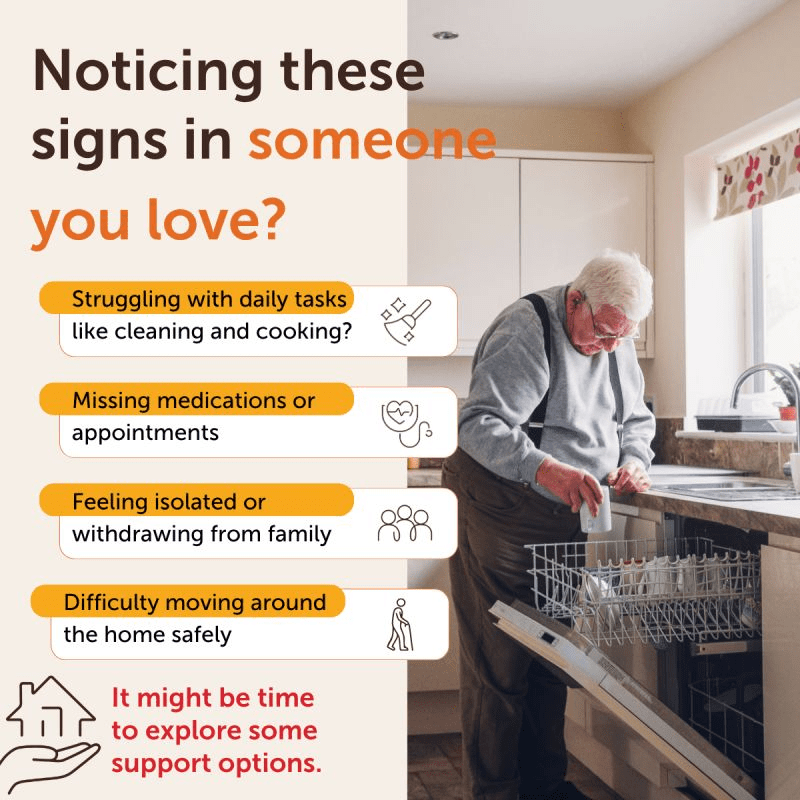
Elena* came to Australia from Greece in the 1960s. Now in her eighties, she lives alone in the Melbourne suburb where she raised her children. Her daughter Maria visits weekly, bringing groceries and checking that her mother has taken her medication. Lately, Maria has noticed changes—a forgotten appointment, a bruise from a fall that Elena dismisses as nothing.
When Maria suggested aged care support, Elena’s response was immediate: “I don’t need strangers coming into my home.”
It’s a familiar story. Many older Australians from multicultural backgrounds don’t access aged care support—not because it isn’t available, but because it doesn’t feel made for them. The system can seem foreign, the forms overwhelming, and the idea of a stranger providing personal care feels deeply uncomfortable when culture dictates that family should be the ones to help.
A Gradual Shift Families Struggle to Name
Families supporting older loved ones often describe the same experience: a gradual shift they weren’t sure how to name. A parent becoming more forgetful. A decline in mobility that makes stairs dangerous. A growing isolation as friends move away or pass on.
“For a long time, we just thought Mum was getting older,” says Maria. “It was only when the doctor pointed out the signs that we realised she needed more help than we could give her.”
But even then, the question remained: where to start?
The Support at Home Program: Meeting People Before Things Become Urgent
The Australian Government’s Support at Home program is designed to meet people at that moment—before things become urgent. Launched on 1 November 2025 as part of the new Aged Care Act 2024, the program replaces the former Home Care Package program with a simplified system that makes it easier for older Australians to get help to live safely and independently at home .
Support can include:
- Personal care such as showering, dressing, and grooming
- Domestic assistance including cleaning, laundry, and gardening
- Transport to shopping, banking, and medical appointments
- Allied health services like physiotherapy and podiatry
- Assistive technology and home modifications for safer living
- Social support to reduce isolation and maintain community connections
But for multicultural communities, accessing these services often means navigating more than just paperwork—it means finding someone who speaks their language and respects their culture.
The AMCS Difference: Care That Feels Like Home
This is where the Australian Multicultural Community Services (AMCS) steps in. For over 40 years, AMCS has been providing culturally appropriate care to seniors from diverse backgrounds across Melbourne and Geelong .
Founded in 1983 as the Australian Polish Community Services by visionary leaders who saw an urgent need for support services, the organisation has evolved significantly . It changed its name to Australian Multicultural Community Services in 2009, extending its reach to all multicultural communities .
Today, AMCS employs staff from more than 50 countries of origin who speak over 45 languages . This linguistic and cultural diversity is not incidental—it’s fundamental to how they deliver care.
“As a multicultural organisation, we understand that culture is more than just the language we speak,” says Maryanne Tadic, CEO of AMCS. “It’s in our rituals, our gestures, our celebrations, our food and shared experiences” .
Finding the Words: Breaking Down Language Barriers
For many families, the first barrier is language. Government resources like My Aged Care are available, but navigating the system can be daunting, especially when English isn’t your first language .
AMCS helps bridge this gap. Their staff guide families through the process from start to finish—identifying needs, understanding assessments, and making referrals . As one client shared:
“Amazing support for my mother and myself as a carer. With the help of the program, we were able to access the support we required, and we were not even aware that it was available. It really made a difference to us.”
More Than Just Services: Building Community
Beyond practical support, AMCS also addresses a less visible but equally important need: social connection.
Through group social support programs, community outings, and cultural celebrations, seniors have the opportunity to connect with others who share their background . For many, this is as valuable as the practical care they receive.
The organisation’s new Millenium House Community Centre, a $7 million renovation of a former Polish community centre in Melbourne’s west, will serve as a multicultural hub and events venue, continuing the legacy of community connection .
For those living with dementia, AMCS also provides free Multicultural Dementia Care and Support Centres in Melbourne and Geelong, offering culturally targeted activities, peer support, and wellbeing checks .
Starting the Conversation
If you’re working with families navigating these challenges, or if you know someone who could benefit, the first step is often the hardest. But it can be as simple as a phone call.
AMCS welcomes conversations with families and community members. Their team can help identify needs, explain the Support at Home program, and connect people with services that respect their language, culture, and personal preferences.
Call (03) 9689 9170 or visit http://www.amcservices.org.au
It’s never too early to start the conversation. Because for the Elena’s of our community, home should always feel like home.
*Name changed for privacy.
This story is published in partnership with the Australian Multicultural Community Services, a not-for-profit organisation dedicated to supporting older Australians from multicultural backgrounds to live independently at home.

Maaramee Harqaa: The Voice of Resistance, The Soul of Oromia
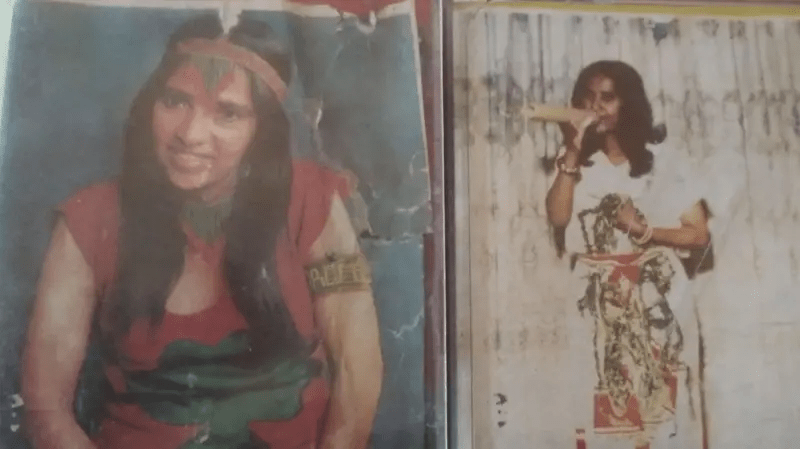
By Zelalem Tadesse Duressa
Senior Broadcast Journalist, Nairobi, BBC Afaan Oromoo
“Fo’ii loli… goonni haa baruudu…”
(“Fight, fight… let the cowards learn…”)
When Maaramee Harqaa sang these words, she wasn’t just performing—she was summoning a people to awakening. Her voice, sharp as a blade yet tender as a mother’s embrace, cut through the silence of oppression and gave language to a generation’s longing for freedom.
The Songstress Who Became a Symbol
To the Oromo people, Maaramee Harqaa Kaasaa is not merely a singer or a teacher. She is memory incarnate—a woman whose life became inextricably woven into the fabric of Oromo resistance. Those who knew her speak of her with a reverence reserved for ancestors: “Bilisummaan tola hin dhufu” (Freedom does not come for free)—one of her most famous refrains—remains etched in the collective consciousness of a people who have long known the weight of subjugation.
But who was Maaramee Harqaa, truly?
Roots in Wallagga
Born in the late 1950s in Qeejjoo, a village in Gobbuu Sayyoo district, eastern Wallagga, Maaramee entered the world as the daughter of Harqaa Kaasaa and Geexee Baloo. She was the only daughter among five brothers—a position that might have made her soft, but instead forged in her an unyielding spirit.
From childhood, those around her recognized something extraordinary. According to Baqqalaa Warquu, author of “The History of Oromo Women Fighters,” Maaramee was “a truth-teller who could not tolerate injustice, who could not be silent in the face of wrongdoing.” She was, in every sense, faaya Oromoo—the pride and ornament of her people.
Her education began at the first-grade level in Baakkoo, continued in Amboo, and culminated at Dabra Birhaan Teachers’ Training Institute (TTI). Upon completing her training, she returned to Amboo and the surrounding Awwaaro area, where she devoted herself to teaching.
The Teacher Who Became a Revolutionary
But Maaramee was never merely a teacher. Even as she stood before her students, she was organizing, mobilizing, and awakening. During the Derg regime, she became a member of the ABO (Adeemsa Bilisummaa Oromoo—the Oromo Liberation Front’s predecessor organization). Her classroom became a site of consciousness-raising; her lessons extended beyond textbooks into the realm of political awakening.
“She was particularly active in the struggle to teach the Oromo alphabet (qubee),” writes Baqqalaa. “She called countless young women into the field of education, transforming them from passive subjects into active agents of change.”
Alongside other iconic Oromo women fighters like Ilfinash Qannoo and Angaatuu Baalchaa, Maaramee immersed herself in the cultural and political resistance of her people. Through poetry, song, and unwavering activism, she became a pillar of the movement.
Exile and Resilience
When the Oromo Liberation Front withdrew from the transitional government in 1984, pressure mounted on Maaramee. The authorities intensified their surveillance, and she was forced to flee to Finfinne (Addis Ababa). Even there, however, she found no peace—the regime continued its pursuit.
Eventually, she left formal teaching and joined the Oromo Relief Association (ORA), a humanitarian organization that allowed her to continue serving her people while navigating the treacherous political landscape.
Love and Loss
It was during her years of struggle that Maaramee met Jifaara Qarneessaa—a man described as strong, historically conscious, and deeply moved by her passion and courage. Their union produced two children: Leellisee Jifaaraa and Gammachuu Jifaaraa.
But the revolution demanded its sacrifices. After her husband’s death, Maaramee was urged by a prominent woman from a fighting family to continue the struggle—to not retreat into private grief but to channel her sorrow into the collective cause. She listened.
When asked why her people suffered—“Maaf lafasaa dhaba? Maaf namasaa dhaba? Maaf gootasaa dhaba?” (Why do they have no land? Why do they have no dignity? Why do they have no strength?)—she found her answer in the faces of her children, her students, and her people. She rose, hardened, and fought with renewed vigor.
The Poet of Resistance
Maaramee’s literary legacy is profound. She became one of the first Oromo women to write extensively in the Oromo language (qubee), composing songs not only for herself but for other artists as well. Her songwriting bore the fingerprints of a scholar, a patriot, and a mother all at once.
Among her most famous lyrical moments is this haunting stanza:
Biyyoo biyya lafaa eenyut sirratti hafaa?
Du’a biyya lafaa eenyu irraa hafaa?
(Oh earth, who will remain upon you?
Who will remain after death upon this land?)
She sang these words for her deceased husband but they echoed far beyond personal grief. They became an anthem for a dispossessed nation.
Another powerful line from her recordings reveals her defiance in the face of mortality:
“Jabaatanii dhukkubaa fi du’arraa wal hin hanbifannu,
Dabareen kiyya na gahee hanga sibira gahuttii, nagaatti…”
(Let us not abandon one another to illness and death,
My beloved, stand by me until the end, in peace…)
Gundoo Booree: A Cultural Monument
Perhaps no contribution captures Maaramee’s genius better than her work on Gundoo Booree. This traditional Oromo song, deeply embedded in the culture of the Maccaa Oromo, particularly among the sons of Jaawwii, is performed during weddings and celebrations.
The song’s lyrics—playfully provocative, filled with mock rivalry and affection—became a vehicle for Maaramee to document and preserve Oromo cultural identity:
“Fuutuu… eenyu isheen dhuftee fuutu…”
(Come… who comes to take you?)
Young women, holding enamel cups, would sing this to challenge their male counterparts, their voices dripping with both pride and mockery. The playful confrontation masked deeper cultural commentary—about dignity, about possession, about who holds power in the dance of life.
When a young man fails to properly present the traditional cup, the women sing:
“Gundoo Booree… Dhiistee galta mooree?
Gundoo dhiigaa… Gurroo dhiiraa dhiistee galta mooree?”
(Gundoo Booree… Did you leave and come back?
Gundoo of blood… Did you leave the man’s son and return?)
Maaramee elevated this cultural treasure into written form, preserving it for posterity in her book, where it stood alongside histories, political commentaries, and explorations of Oromo ethics and customs.
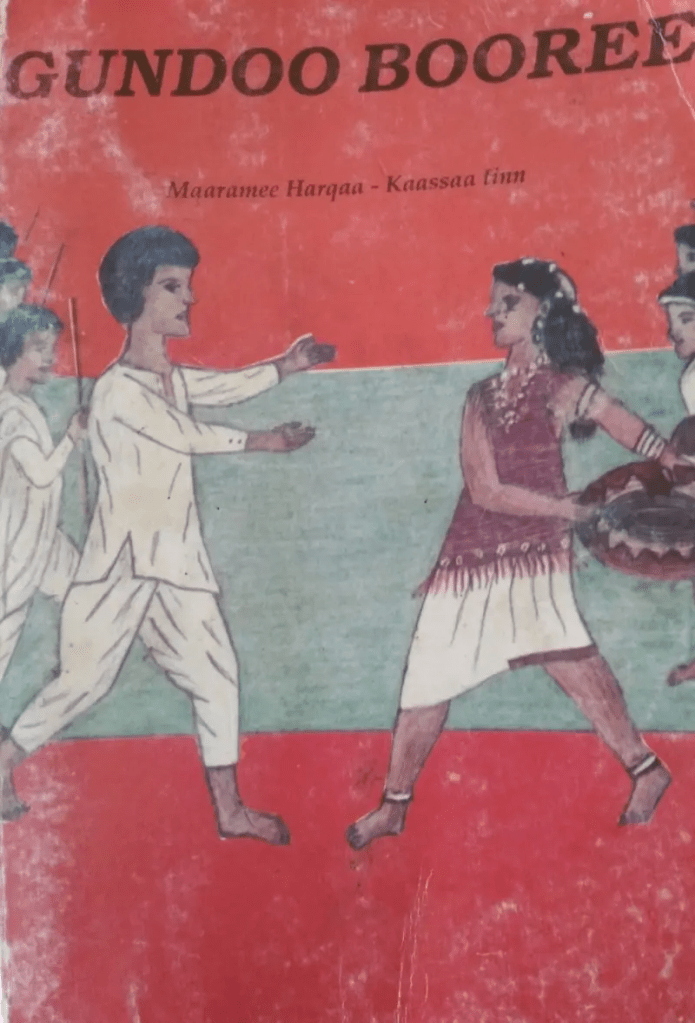
Discography: The Voice in Four Albums
Maaramee Harqaa released four albums during her lifetime, each a testament to her range as an artist and her depth as a thinker.
Her first album, released in 1997 E.C. (2005 G.C.) under Zeddi Music Studio, contained ten tracks, including:
- Boonaa warraa
- Fandishee Alaa’ee
- Asham Baabee
- Ishoo loli yaa durbee
- Hin booyin golloo
- Qarree durbaa baali hin haadu
- Bilisummaan tola hin dhufu (Freedom does not come free)
- Harcumme yaa looyye
- Si hin waamne yaa seesaa
- Yaa Sharrittii koo
Her second album, released in 2000 E.C. (2008 G.C.) under Kiilolee Music Studio, also featured ten tracks:
- Finfinnee
- Kuufama kee yaa garaa
- Geerarsa
- Faaruu Oromiyaa
- Ongololi
- Falmadhu addooyyee
- Yoona malee yoomiree
These songs remain alive in the hearts of Oromos across the diaspora, in refugee camps, in cities, and in the rural highlands where her voice still echoes.
The Price of Freedom
Maaramee’s life was not one of comfort. She was arrested, tortured, and forced to witness the suffering of her people firsthand. Yet she never wavered.
In 1995, after years of tireless struggle, illness finally claimed her. Surrounded by her memories and the songs she had composed, she departed this world—but not before securing her place in the eternal choir of Oromo resistance.
A Legacy Honored
In 2022, the Oromia Writers’ Association posthumously awarded Maaramee Harqaa the prestigious Gaaddisaa literary award. Though she was no longer physically present, the honor acknowledged what her people had always known:
Maaramee Harqaa was more than a singer. She was more than a teacher. She was a revolutionary, a cultural ambassador, and a mother to a nation.
The Land Remembers
Today, when Oromos gather at weddings and sing Gundoo Booree, when they murmur the lyrics of Bilisummaan tola hin dhufu, when they remember the price their ancestors paid, they are also remembering Maaramee.
Her voice—sharp with defiance, tender with love, and eternal in its call for justice—remains a compass for a people still navigating the storm toward freedom.
“Biyyoo biyya lafaa eenyut sirratti hafaa?”
Maaramee, the land remembers. The people remember. And as long as Oromo lips sing and Oromo hearts hope, your name will never fade.
Zelalem Tadesse Duressa is a Senior Broadcast Journalist based in Nairobi, BBC Afaan Oromoo, covering the Horn of Africa region.

The Lioness Queen of Africa: Reclaiming the Legacy of Aayyo Guddittii
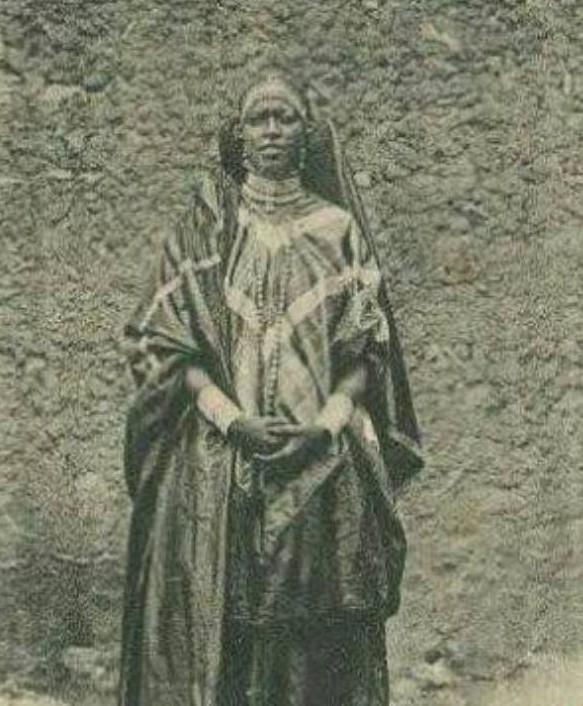
She was called the “Lioness Queen of Africa” by the world, a figure of such power that she reshaped the political landscape of the Horn of Africa. To the Oromo people, she is known as Aayyo Guddittii Gaadi’aa—Grandmother of Wisdom, the Great Queen. To the dominant Ethiopian historical narrative, she is Yodit Gudit—a destroyer of churches and a rebellious woman. But who was she, and why is her story so contested?
A Figure Shrouded in Mystery
The personage known by multiple names—Gudit, Yodit, Isato, Aayyo Guddittii, Akoo Manooyee—is one of the most fascinating and controversial figures in Ethiopian history. If she is the same as Māsobā Wārq, the daughter of the last Aksumite king Dil Na’ad, she ruled in the 10th century and is said to have been responsible for laying waste to the Kingdom of Aksum and its countryside .
According to Oromo oral tradition, Aayyo Guddittii was not a destroyer but a liberator. She was born into the Bareentu branch of the Oromo, in the area of Asaboot (Ashaboo) in Hararge . The name “Asaboot” itself comes from the Arabic Aṣ-ṣaḥābah (“The Companions”), referring to companions of the Prophet Muhammad, and the town still exists today in the West Hararghe Zone of the Oromia Region . Her people were from the Azabo (Asabo) clan, a Cushitic Oromo group, known for their resistance and warrior traditions.
The Habesha (Amhara and Tigrayan) chronicles tell a different story. They describe Gudit as a rebellious woman—even a prostitute—who raised an army, invaded Aksum, and burned its palace and churches . She is portrayed as a monstrous figure, a “female gud or monster” . Her deeds are still cursed in the northern Ethiopian countryside. To this day, when stories are told of her violent misdeeds, they are recounted among peasants in the northern Ethiopian countryside .
But is this portrayal history—or propaganda?
The Rise of the Queen
In the 9th century, she mobilized an army, destroyed the ancient Kingdom of Aksum, and took power. She ruled for 40 years over a vast territory that included northern Ethiopia, ruling over both Oromo and Habesha subjects . This was a time when Aksum, once one of the four great civilizations of the world alongside Rome, Persia, India, and China, was in decline .
The reasons for her rise are disputed. One legend says she was stripped of her title as princess and became a prostitute to survive. After a priest stole a sacred artifact on her behalf, she was blamed and exiled. She married Prince Zenobis and together they invaded Aksum, where she destroyed the palace and churches . Another legend claims she was the granddaughter of Aksumite Emperor Wuden Asferé and that her motherland was Hahaylé in Tigré .
But Oromo tradition offers a different interpretation: she was a unifier, a leader who rose to challenge an oppressive empire and liberated her people. As one Oromo source puts it, “Oromo calls her the father of imperialism. Habesha said Yodit Gudi Abba Ire Wareertu and still cursing her” .
The Zagwe Dynasty: An Oromo Legacy
After her death, power passed to a dynasty that Oromo tradition calls Hidda-Zagwe—the Zagwe Dynasty. This dynasty ruled for 333 years, with 11 kings, and is recognized for building the famous rock-hewn churches of Lalibela .
The name “Zagwe” itself is contested. In Oromo, it is connected to Haagahu—a name derived from an Oromo tribe from the Gojjam region. The Habesha narrative has transformed this into “Agaw” or “Z-Agaw,” obscuring the Oromo origins of these rulers . The dynasty’s capital was Roha, later renamed Eddeessaa, and eventually Lalibela—a name that in Oromo means “Laali balaa” or “look at danger/see the threat,” referring to the defensive architecture of the churches .
The most famous of the Zagwe kings was Laalibala (Lalibela), who commissioned the eleven magnificent rock-hewn churches. According to both tradition and archaeological evidence, these churches were carved in the 12th and 13th centuries, in the mountainous region of Lasta in northern Ethiopia . The Zagwe dynasty is credited with preserving and spreading Orthodox Christianity, particularly into the southern regions of Gojjam and Shewa .
The 11 churches, including the iconic Church of Saint George (Biete Giorgis), were carved from a single block of stone. According to the Acts of Lalibela, the king built them in the likeness of what he had seen in a vision, with the help of both men and angels . The site became a major pilgrimage destination—a “New Jerusalem” for Ethiopian Christians .
The Erasure of Oromo History
The Zagwe dynasty’s rule ended in 1270 when the so-called “Solomonic Dynasty” was restored, claiming descent from King Solomon and the Queen of Sheba. The new rulers launched a campaign of propaganda warfare against the Zagwe, labeling them as “alien and impious groups of adventurers” . The Kebrā Nāgäst (Glory of Kings) was used as a political gospel to delegitimize the Zagwe and justify Solomonic rule .
This anti-Zagwe propaganda deliberately obscured what is perhaps the richest and most artistic period of Ethiopian civilization since the conversion of Ezana . The Zagwe kings, who were of Agaw/Oromo heritage, had “preserved their linguistic identity and used Agaw outside the church,” making them linguistically different from the Amhara and Tigray elites—and thus easy to dismiss as “foreign” .
The obscurity of this period has been “further aggravated by both subjective and objective factors”—including “deliberate and concerted intrigue of the Solomonic elite and the clergy” .
Reclaiming the Legacy
Today, Oromo scholars and advocates are working to restore the true history of Aayyo Guddittii and the Zagwe dynasty. They argue that the deliberate distortion of this history has served to:
- Erase Oromo contributions to Ethiopian civilization, including the construction of the Lalibela churches and the spread of Christianity .
- Suppress Oromo identity by claiming that Oromo history begins only in the 16th century—a claim that is thoroughly debunked by linguistics and archaeology .
- Justify the dominance of Amhara and Tigrayan political elites over Oromo and other Cushitic peoples .
The Zagwe period, as one scholar notes, “laid the foundation for a multi-national unitary state.” They preserved “incalculable material and spiritual wealth from devastation” and initiated commercial and cultural links with other countries . Their “contribution to the survival and consolidation of Christianity is hardly acknowledged” .
The Story That Will Not Be Silenced
Aayyo Guddittii—whether called Gudit, Yodit, or the Lioness Queen of Africa—represents a powerful symbol of Oromo resistance. She challenges the dominant narrative that has portrayed Oromo people as latecomers to Ethiopian history, as “invaders” from the south.
The sources cited in this account, including the book “Eenyummaan Dhokate” (Hidden Identity) and “Bultoo Hubachiisaa” (The Informer) by Bulto Hubechi, argue that the Oromo people have been in the Horn of Africa for millennia, that they are central to the Christian heritage of Ethiopia, and that their history has been systematically stolen and distorted .
May the story of Aayyo Guddittii, the Lioness Queen, continue to inspire generations of Oromo people to reclaim their heritage, their history, and their identity. The truth, once buried, will always find a way to the surface.

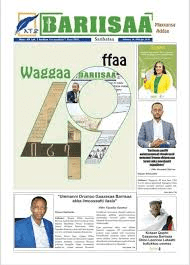
“Bariisaa Newspaper is the Heart of the Oromo Struggle” – Father of Bariisaa
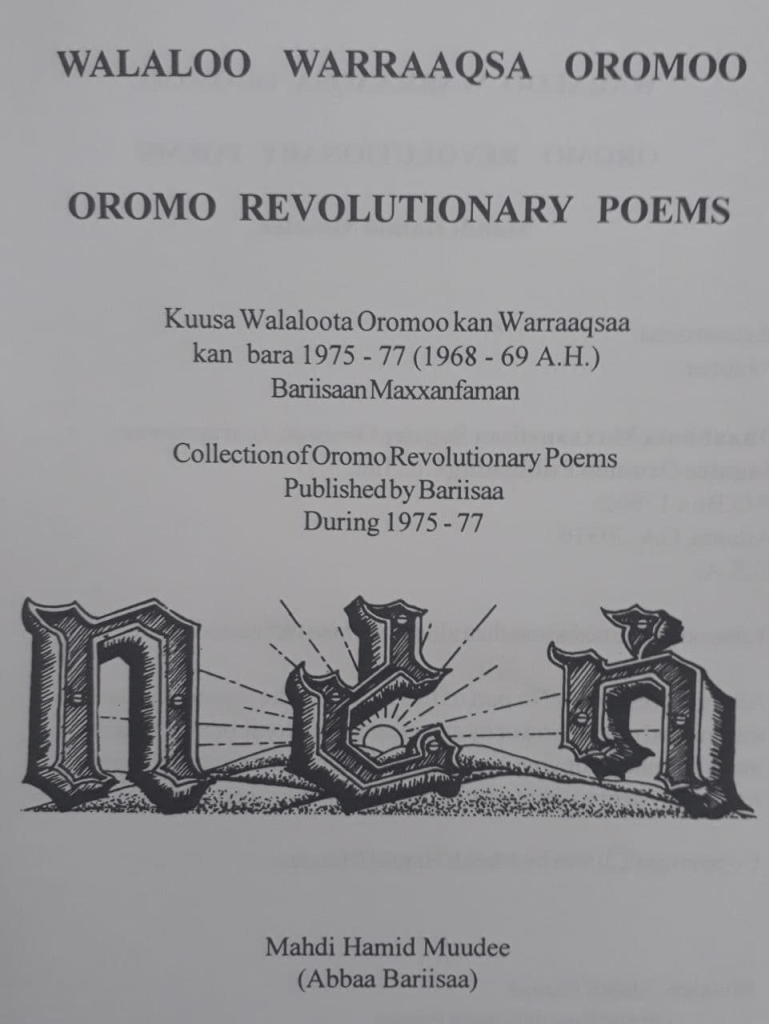
In the annals of Oromo media history, few names shine as brightly as that of Dr. Mahadii Hamid Mudee—known to millions simply as “Abbaa Bariisaa” (Father of Bariisaa). He is the founder of Bariisaa newspaper, a publication that became the heartbeat of Oromo cultural and political awakening.
For decades, Bariisaa has played an extraordinary role in elevating Oromo culture, language, and history. It has championed the rights of the Oromo people, defended their dignity, and brought their struggles into the light. Dr. Mahadii Hamid Mudee stands as a towering figure in this legacy—a scholar, activist, and journalist who dedicated his life to the Oromo cause without seeking personal gain.
The following is an exclusive interview with the man himself.
Bariisaa: Dr., let’s get acquainted. When and where were you born?
Abbaa Bariisaa: My birth name is Mahadii Hamid Mudee. Later, I became known as “Abbaa Bariisaa.” Some also call me “Abbaa Dikshinarii” (Father of the Dictionary). You may call me Dr. Mahadii or Abbaa Bariisaa.
I was born in 1942 in Eastern Oromia, West Hararge Zone, in the town of Chiro. My father is Obbo Hamid Mudee, and my mother is Aadde Hamiida Ahmad.
Bariisaa: Where did you complete your primary, secondary, and higher education?
Abbaa Bariisaa: Before joining modern schools, I studied at an Islamic religious school. I then entered the formal education system starting from Grade 3. I completed my primary and secondary education at “Dajjaazmaach Waldagabir” School in Chiro town.
At that time, students could skip grades based on performance—from first to third, then to the next level. I completed both primary and secondary school in just six years. For my higher education, I studied at Addis Ababa University for three years.
During my third year studying Physics at the university, I was assigned for practical training to North Gojjam Zone in Amhara Region, at “Negus Taklahaymanot” Secondary School in Dabra Maarkos.
The school refused to rent me a room because of my religion—I am Muslim. I spent three months living in a hotel while teaching. Because of this, I decided to leave the position. But they transferred my Physics colleague to Bahir Dar and sent me there instead.
At Bahir Dar, there were many students, and I taught double sessions—morning and afternoon. In the evenings, with no other work, I began preparing textbooks in Afaan Oromoo for the children. I taught there for two and a half years until the revolution of 1966 (Ethiopian calendar) erupted.
Bariisaa: How did you start preparing Bariisaa newspaper?
Abbaa Bariisaa: At that time, there were many newspapers in various languages—but none in Afaan Oromoo. The question “Why isn’t there a newspaper in Oromo?” constantly occupied my mind. From this reflection came the desire to start an Oromo-language newspaper.
Initially, I thought preparing and publishing a newspaper in Oromo would be simple. But when I got down to work, I realized it was extremely difficult. In 1964, I approached Dr. Tasefaye Gabre’igzii, then Minister of Information, and asked for permission to publish a newspaper in Oromo. He responded with anger: “How dare you come to my office asking to publish a newspaper in Oromo? Get out!” He kicked me out of his office. I left, burning with anger.
In 1966, Ahaduu Saaburee became Minister of Information. I approached him again. He didn’t refuse me as harshly as Dr. Tasefaye, but he also didn’t give me permission.
Then, in September 1966 (Ethiopian calendar), Haile Selassie was overthrown and the Derg came to power.
In 1967, Kumalaa Girmaay Yilmaa became Minister of Information. I went to him and requested permission to publish an Oromo newspaper. Unlike those who had insulted me, Kumalaa Girmaay listened. He said to me: “You have asked for two impossible things. First, a private individual cannot publish a newspaper. Second, publishing a newspaper in Oromo is not allowed. If you had asked to publish in another language, I would have given you permission today. I cannot authorize an Oromo newspaper, but you can try asking other officials.”
Bariisaa: How did you finally get permission?
Abbaa Bariisaa: At that time, I knew people like Luba Gudina Tumsa, his brother Baaroo Tumsa, and Obbo Leencoo Lataa. We discussed the matter and decided to approach someone who supported the Oromo cause—Colonel Takkaa Tulluu, an Oromo official in the Derg government.
Together with Baaroo Tumsa and Leencoo Lataa, we went to Colonel Takkaa. He asked what we wanted. We said, “We have come to request permission to publish a newspaper in Oromo.” He asked, “Why didn’t you ask the Minister of Information?” We explained that we had asked but were refused. Colonel Takkaa said, “I will ask on your behalf.” We replied, “If you can’t get full authorization, at least ask for permission for just one day.”
Because it was the first anniversary of the Derg’s coming to power—September 2, 1968—they granted us permission to publish Bariisaa in Oromo for just one day. But we decided to seize the opportunity: “We will publish if we live; if we die, we die.” We declared that Bariisaa would be published every two weeks, and if it was stopped, we would challenge the government. And so, the first issue of Bariisaa was published in Oromo.
Bariisaa: How did you distribute the first issue?
Abbaa Bariisaa: For the first issue, we printed 20,000 copies. We donated 1,000 to the Kibur Zabanya (Imperial Guard), 1,000 to the Fourth Army Division in Finfinne near Laga Harre, 1,000 to the police, 1,000 to the Air Force in Bishooftu, and 1,000 to the Navy and Oromo farmers. The remaining copies were sold at 10 cents each.
Bariisaa: What happened after that?
Abbaa Bariisaa: When we went to the Ministry of Information to ask for permission for the second issue, they arrested us. They said, “We only authorized one issue, but you told the public it would be published every two weeks—you are inciting the people against the government.” They threw us in the “Maakelaawi” prison. But I was released soon after.
Bariisaa: How long was Bariisaa suspended, and how did it resume?
Abbaa Bariisaa: Bariisaa was suspended for five months. Then, an opportunity arose. Colonel Asraat Dastaa was the Deputy Minister of Information responsible for Public Relations. When he went abroad for training, a man named Irreessaa Fissahaa Gadaa was acting in his position.
We approached him and asked for permission to publish Bariisaa. He said, “I can’t authorize what the colonel refused. When he returns, I don’t know what will happen—you could be arrested again. But I have an idea. Go to someone more powerful than me, someone Colonel Asraat fears, and get authorization from him.” He suggested Mangistuu Hayilamaariyam (the former president of Ethiopia). We went to him, and he gave us permission.
With the authorization of Colonel Mangistu, Bariisaa resumed publication every week. When Colonel Asraat returned from abroad and heard that Bariisaa had been authorized, he said, “What kind of world is this? I leave the country for a few days, and this happens!”
Bariisaa: What were the challenges under the Derg?
Abbaa Bariisaa: They constantly looked for ways to destroy us. Bariisaa was building Oromo unity, promoting Oromo language, culture, and history, and defending Oromo rights—so it was hated by the regime.
In 1969, we organized an Oromo Cultural Exhibition in Finfinne at the “Biheraawwii Tiyaatir” Hall. The goal was to raise funds for Bariisaa. People came from all over Oromia in the tens of thousands. But the authorities said, “Everything you do must be under the name of the Ministry of Culture.” In December 1969, the government shut down Bariisaa. The closure was even announced on the radio.
Bariisaa: What was the difference between Bariisaa under private ownership and after it was taken over by the government?
Abbaa Bariisaa: In the private era, everyone worked without pay. Lammeessaa Boruu, a father of a family, earned 100 birr per month; Immiruu Angoosee earned 70 birr. Ibraahiim Hajii Alii worked for two years without any salary. I also worked without pay. We worked because of our deep commitment to the Oromo cause.
The Oromo people themselves were our reporters and sources of information. We focused on what the people wanted to hear, learn, and benefit from.
After the government took over, the content shifted. Most of what was published reflected the government’s message to the people, rather than the people’s message to the government. Our sources of information shifted from the people to the regime. Reporting Oromo issues to the government became secondary to conveying government wishes to the people.
The government allocated 500,000 birr per year and a vehicle to the newspaper. Reporters like Caalchisaa Ciibsaa, Waaqgaarii Gunjoo, Mahaammad Hasan, Bulloo Siibaa, Ibiraahiim Hajii, and Kuwee Kumsaafaa were hired with salaries. Two proofreaders and a “free-lancer” were also paid. I was paid 800 birr as chief editor.
Bariisaa: When did you stop working on the newspaper?
Abbaa Bariisaa: After the government took over, I realized I could no longer work with the freedom I needed. The political situation was difficult, so I decided to step away. I trained my successors over three months, rotating them weekly until they could manage the newspaper independently.
Bariisaa: What contribution did Bariisaa make to the Oromo people?
Abbaa Bariisaa: Bariisaa is the heart of the Oromo struggle. It strengthened Oromo unity and promoted Oromo language, culture, history, and identity. It focused on Oromo rights and benefits—which is why it was hated and called “ABO newspaper” (referring to the Oromo Liberation Front). Bariisaa was never separate from Oromo politics. The newspaper’s workers were deeply committed to the Oromo cause; many were imprisoned and some were killed.
Bariisaa: How did you get the name “Abbaa Bariisaa”?
Abbaa Bariisaa: From the founding of the newspaper until I stepped down, I was the chief editor. Because of this, the name “Abbaa Bariisaa” and “Abbaa Dikshinarii” was given to me, both at home and abroad.
Bariisaa: What did you do after leaving Bariisaa?
Abbaa Bariisaa: I was working with the “Guddinni Gamtaa” (Joint Committee) at the time. The government sent me to Harar to stabilize the political situation in Eastern Ethiopia. I was assigned to coordinate Radio Harar, the Ethiopian News Service, and military training. But when I went to Harar, I found Oromo children imprisoned for political reasons. I managed to have them released, and then I went to Saudi Arabia.
As a member of the OLF, I worked to organize the Oromo community in Saudi Arabia and raise funds for the cause. I told them that Oromos should not live as slaves in their own land. I built relationships with foreign governments to raise awareness about the Oromo issue. I stayed in Saudi Arabia for four and a half years, then moved to America.
Bariisaa: Did you face personal difficulties while working on Bariisaa?
Abbaa Bariisaa: Yes, I faced many pressures. But I never stepped back from speaking the truth or doing my work. I wasn’t afraid of being killed or losing my job. However, I did face a time when I could no longer return to my home. I left my house and stayed with relatives, friends, or wherever I could find shelter.
After I left the country, my mother was taken to a police station at 6:00 PM and interrogated. They beat her and demanded to know where I was. The harm my mother suffered because of me was terrible. She was forced to leave her home, and she never knew where I was. My colleagues also suffered greatly.
Bariisaa: What did you feel when you saw Bariisaa 42 years later upon your return from America?
Abbaa Bariisaa: I felt both joy and sorrow. I was overjoyed to see that the newspaper had not died or disappeared. But it saddened me that the circulation had dropped from 20,000 to 10,000. For a population of 50 million Oromos, printing only 10,000 copies is not enough. This requires serious thought and action.
Bariisaa: What would you like to see for Bariisaa’s future?
Abbaa Bariisaa: I want to see the circulation exceed one million, published daily. I want Facebook followers to number in the millions. I want distribution to reach all corners of Ethiopia and beyond. I want the newspaper to reach every school in Oromia, and I want it available in public libraries so everyone can read it.
Bariisaa: What kind of content would make Bariisaa more beloved among the Oromo people?
Abbaa Bariisaa: What determines whether Bariisaa is loved or not is its content. You must work within your limits. Don’t rely on lies or flattering the government to gain popularity—earn it through truth.
If the newspaper presents what is right, true, and just, it will be beloved. Speaking truth and justice won’t even cause problems with the government. Content that highlights Oromo culture, language, history, and development—that protects Oromo rights, promotes their interests, and brings solutions to Oromo problems based on verified truth—that is what will make Bariisaa truly beloved.
Bariisaa: What did you do about the Oromo cause while in America?
Abbaa Bariisaa: People do two things: one is what they do for a living, and the other is what their conscience tells them. Working for the Oromo cause is what my conscience demands. I worked without pay before, and I continue to do so. What I have earned is not measured in dollars, but in service to the Oromo people.
In America, I wrote and published ten books. I prepared a dictionary (known as “Dikshinarii Hamiid Mudee”). I also worked for 21 years to make Oromo a technological language, preparing software and manual guides.
Bariisaa: How do you view the changes happening in Ethiopia today?
Abbaa Bariisaa: If I speak truthfully, the changes are very encouraging. The country has made great strides and is emerging from darkness. The respect for human rights fills me with great joy.
However, I also have great concern. I am deeply grateful to those who sacrificed to make these changes possible. The reason I can return to my country is because of these changes. I pray that the progress continues.
Bariisaa: How do you see today’s media in Ethiopia?
Abbaa Bariisaa: Some private media, driven by hate politics, are working not to build the country but to destroy it. This concerns me greatly. Both government and private media should work based on truth and justice, with a unified voice. Their information should be based on verified facts and reality. Repeating lies to corrupt people’s minds must stop. Media that works for truth should stand firm against false media and publish what is real and just.
It would be good to have a Media Council to oversee and regulate all media. Such a council should expose, control, and correct media that spread lies—independent of government influence. The government should support the establishment of such a council.
If media outlets spread unverified information—whether true or false—they can cause division and destruction. They should be careful. Media that refutes falsehoods with truth should be encouraged. Journalism that pits one group against another with misinformation must end.
Bariisaa: How do you want to support Bariisaa in the future?
Abbaa Bariisaa: Until the Oromo issue finds a solution, I will not rest. Oromo nationalism still lives within me. I will never step back from working for Bariisaa and for the Oromo people. I will work to make the newspaper known internationally. I also want to use my knowledge and resources to help in Ethiopia.
Interview conducted by Natsaannat Taaddasaa
Bariisaa Newspaper, June 20, 2011

The History of Oromo Writing and the Role of Dr. Sheikh Mohammed Rashaad
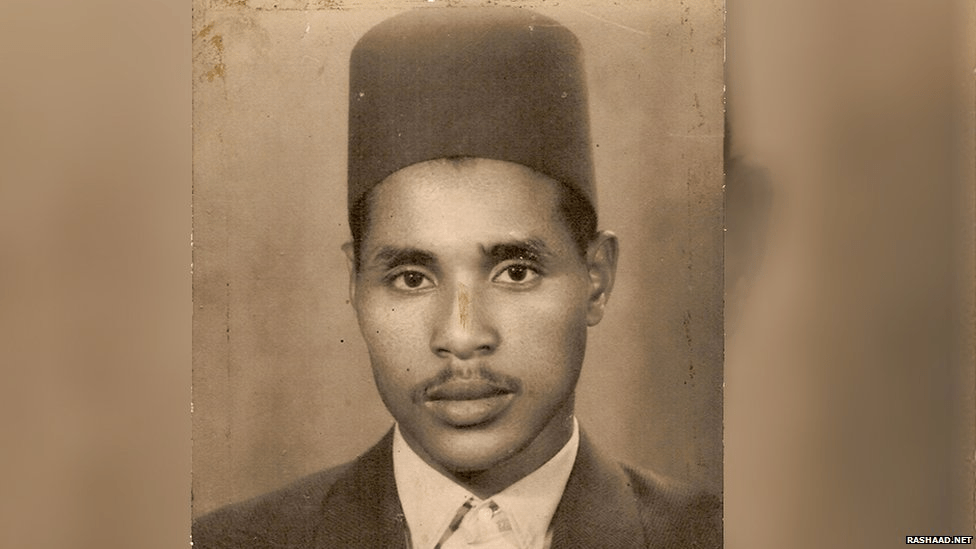
Language is a tool of communication and a symbol of identity. But for the Oromo people, their language remained largely oral for centuries—confined to the spoken word while the world around them moved forward in ink. The story of how Afaan Oromoo finally found its written form is a story of struggle, sacrifice, and one man’s relentless vision.
A Language Without Letters
The Oromo language, spoken by tens of millions across the Horn of Africa, was for a long time a language of the spoken word alone. Unlike many of its neighbors, Afaan Oromoo lacked an indigenous writing system that could accurately capture its unique sounds and grammatical structure.
Efforts to write Oromo began in the 19th century. The first known written Oromo texts were religious manuscripts from the Rayya area, produced during the time of the sheikhs of Anniyya and Danniya. These were handwritten poetry collections, hymns to God and His Prophet, penned with a reed pen using the Arabic script.
But the Arabic script was never a perfect fit for Oromo. Arabic has only a limited set of vowels and consonant distinctions. Oromo, by contrast, has ten vowels and a richer set of consonants. Six Oromo phonemes—c, ch, dh, g, ny, and ph—had no direct equivalents in Arabic writing. Scholars had to adapt, improvise, and sometimes simply make do with imperfect approximations.
Three Scripts, Three Attempts
The Ethiopian Script (Ge’ez/Amharic)
In 1886, an Oromo man named Onisimos Nasiib (Abbaa Gammachiis) translated the Bible into Oromo and had it published in Asmara, Eritrea. He used the Ge’ez script—the same writing system used for Amharic and Tigrinya. This script, however, was designed for languages with seven vowels, not ten. It could not adequately represent Oromo sounds, and the translation, while groundbreaking, was limited by the tools at hand.
The Italian Contribution
After the Italian occupation of Ethiopia in 1935, the Italian linguist Martino Mario Moreno conducted systematic research on the Oromo language. In 1939, he published Grammatica teorico-pratica della lingua galla (Theoretical-Practical Grammar of the Galla Language) in Milan, using a Latin-based alphabet. His work was the first to accurately describe the phonology, morphology, and syntax of Oromo in a scientific way.
“The period of Moreno can be called the ‘Moreno Era’—a time when the science of linguistics began to properly understand the language”.
Moreno’s alphabet represented a significant step forward:
‘ A B C Č D Ḑ0 E F G H I J K L M N Ñ O H Q R S Ṧ T Ṭ U W Y Z
The Sheikh Bakri Script
Meanwhile, within Oromo society, a different approach was emerging. Sheikh Bakri Sapalo (born Abubakar Garad Usman, 1895-1980), an Oromo scholar and religious teacher, invented an entirely new writing system for Oromo in 1956. His script was designed from the ground up to capture Oromo sounds accurately.
Sheikh Bakri had studied under several distinguished Islamic teachers and became renowned for his poetry. Under Haile Selassie’s regime, however, Oromo language was banned in education, conversation, and administrative matters. Sheikh Bakri’s script was developed in secrecy, perhaps to avoid detection by authorities who would have opposed Oromo writing in any form.
His most important work was Shalda, a twenty-page pamphlet that purported to be religious instruction but was actually a veiled account of Oromo suffering under Haile Selassie. It became the first and last major work in his alphabet. In 1965, Sheikh Bakri was placed under house arrest. In 1978, he fled to a refugee camp in Somalia, where he died without ever seeing his script widely adopted.
Dr. Sheikh Mohammed Rashaad: The Man Who Completed the Mission
A Journey Begins on Foot
Born in 1934 in Eastern Oromia, in a village called Laga Arba, Sheikh Mohammed Rashaad Abdullee grew up under the harsh realities of colonial settler rule. As a young man, he was severely chastised by one of the settlers. With no one to defend him, his young mind resolved on a radical course: he would go overseas to acquire skills and weapons for his people’s emancipation.
At the age of 15, in 1949, he left Ethiopia on foot. He traveled through Djibouti, Yemen, and Saudi Arabia, performing Hajj in 1950. From there, he continued to Syria, where he spent five years at the Fatul Islam school in Damascus, eventually earning the title of Mufti.
In 1956, he entered Al-Azhar University in Cairo, a center of learning and liberation movements across Africa. There, surrounded by students from across the continent, his Oromo consciousness deepened.
“When he entered Al-Azhar University in 1956, all nations began to showcase their languages, cultures, and identities. He saw histories of different countries beautifully written and thought, ‘We also have a history to tell, a language to speak, a script to write with'”.
The Mogadishu Years: Radio and Rebellion
After graduating with top honors in 1962, receiving an award from Egyptian President Gamal Abdel Nasser, Sheikh Rashaad was sent by Al-Azhar to Somalia. There, he was hired by the Somali government as a linguistic expert. This gave him a new opportunity to study Oromo language using available Somali sources.
In Mogadishu, he joined forces with other Oromo refugees and intellectuals, including the journalist Ayub Abubakar. Together, they started the first Oromo-language radio broadcast from Mogadishu in 1965. The program began at 15 minutes, grew to 30, and eventually to a full hour.
“The broadcast shook the Haile Selassie regime in Ethiopia, which dispatched agents to assassinate and put a stop to their work. Haile Selassie’s agents eventually assassinated Ayub but were apprehended in Mogadisho before they could similarly murder Sheikh Rashad”.
The Birth of Qubee
It was during this period that Sheikh Rashaad discovered the suitability of the Latin script for writing Oromo. His comparative studies of Oromo and Somali led him to develop the modern Oromo alphabet.
In 1969, he prepared a manuscript titled “Fura Afaan Oromoo” (The Key to Oromo), which was handwritten and circulated among Oromo communities. Two years later, in 1971, it was published—the first complete Oromo-language reader in the modern Latin alphabet.
The book faced immediate challenges. In Somalia, the regime tried to impose the label “Somali-Abbo” on Oromos and recalled his book to redo the cover. But in haste, they left the inside page intact, which still read “Fura Afaan Oromoo”—exposing the plot. In Ethiopia, his writings were strictly forbidden; anyone found with them would face severe punishment.
Exile and Lifelong Work
Under pressure from both sides, Sheikh Rashaad relocated to Saudi Arabia, where he continued his scholarly work. Over the following decades, he produced an extraordinary body of work:
- The first Quran translation in Afaan Oromoo
- Translation of over 40 Hadith books from Arabic to Oromo
- The first Somali-Oromo dictionary
- The first Arabic-Oromo dictionary
- Numerous articles on Islam with particular emphasis on Eastern Africa
- Hajj and Umra guidance for Oromo pilgrims
- Collections of Oromo traditional songs (miriysaa, dhiichisa, geerarsa)
- Children’s stories in Oromo
- History of the Prophet Muhammad in Oromo
- History of Islam in Oromo
“He spent over 15 years conducting research on the Oromo and Somali languages, which later became the focus of his thesis for a PhD in linguistic studies, which he received from the UK”.
Recognition and Final Years
In recognition of his lifelong contribution, the Oromo Studies Association bestowed on him its Lifetime Achievement Award in 2009. In 2010, the Oromiyaa Radio and Television (ORTO) recognized him for his contribution to the development of the Oromo alphabet.
In 2009, he returned to his homeland, settling in Adama, central Oromia. But his final years were not peaceful. When the Ethiopian regime tried to impose a particular interpretation of Islam on the faithful, Sheikh Rashaad objected. For his conviction, he was evicted from his home and forced to relocate to Dire Dawa.
Fiercely independent and unquestionably loyal to his people, Dr. Sheikh Mohammed Rashaad passed away with dignity on May 25, 2013, at the age of 79.
The Legacy
Sheikh Rashaad was not alone. He worked alongside others who contributed to the development of Oromo writing. Haylee Fidaa and Abdullaahi Yuusuf, Oromo students in Europe, adopted the Moreno alphabet with modifications and published two important books in 1973-74: Hirmaata Dubbii Afaan Oromoo (an Oromo grammar) and Bara Birraan Barihe (a drama about the suffering under the Neftenya system).
But it was Sheikh Rashaad who provided the definitive, scientifically-based alphabet that would eventually be adopted for all Oromo writing—from educational materials to official government communications to the translations that would bring the world’s knowledge into the Oromo language.
“His contribution in informing and educating the masses and in strengthening Oromo nationalism, despite serious threats and challenges, is immense. His works will live with the Oromo people forever and continue to inspire millions”.
Today, when millions of Oromo children learn to read and write in their own language, when Oromo scholars publish research in international journals, when the Bible and the Quran are read in Oromo by millions, the foundation they are building on—the alphabet they are using—is the one that Sheikh Mohammed Rashaad developed, refined, and fought to protect.
He ranks among the patriotic Oromo religious scholars from both Muslim and Christian traditions who, despite persecution from successive regimes, paid heavy sacrifices for their people. Among them are the Reverend Gudina Tumsa, who gave his life for the cause; Sheikh Bakri Saphalo, who died in a refugee camp; and the great Abbaa Gammachis, who endured humiliation and subjugation. They remain giant role models who will continue to inspire future generations—shining forever like lighthouses in a free Oromia.
May the angels welcome this man who made written Oromo language accessible to millions—a renewer of his time, a truly great man.





 Advocacy for Oromia