Author Archives: advocacy4oromia

Under the Odaa Tree: The Living Legacy of the Ituu Oromo
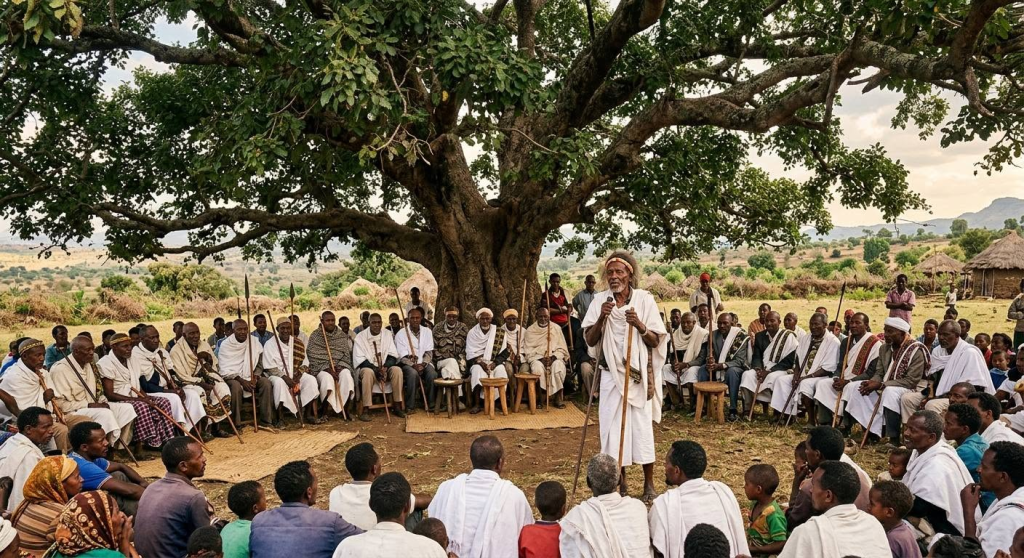
In the highlands of eastern Oromia, the roots of the Odaa tree (sycamore fig) stretch deep into the earth, just as the traditions of the Oromo people extend into the fabric of history. Among the most storied branches of the Oromo nation is the Ituu, a community whose identity is woven from the threads of ancient lineage, a sophisticated socio-political system, and a resilient spirit of justice. To understand the Ituu is to journey into the heart of the Oromo civilization, where the past is not merely remembered but lived.
The Ancestral Tree: From Murawwaa to Ituu
The Ituu are not a people without a past; they are a clear and significant branch on the vast Oromo genealogical tree. According to both oral tradition and contemporary scholarship, the lineage flows from Oromoo to Bareentuu (or Bareentuma), then to Murawwaa, and from Murawwaa springs the Ituu. A 2026 study by Jimma University confirms this ancestral link, placing Ituu firmly within the Murawwaa Barentuu family.
The Ituu themselves are divided into two primary clans, forming the backbone of their social structure:
- Galaan, with sub-clans such as Baabboo, Gaadullaa, and Elelle.
- Kurraa (Kuraa), with sub-clans such as Baayee, Addaayyo, Arroojjii, and Waayyee.
This is just one layer of a complex organizational system. Under the Gulantaa Odaa or Tumaa Heeraa (customary law), the Ituu are further organized into two major houses: Mana-Ituu (the House of Ituu) and Mana-Baabboo (the House of Baabboo). This dual structure underscores that for the Ituu, identity is a multi-faceted concept, governed by both bloodline and law.
Gadaa: The Soul of Oromo Governance
For the Ituu, as for all Oromo, the Gadaa system is the lifeblood of their society. It is far more than a political structure; it is a comprehensive philosophy that governs every aspect of life. It provides a framework for:
- Political Leadership: A system of elected officials with fixed terms, ensuring a democratic transfer of power.
- Justice (Heera): A legal system that predates modern courts, offering a way to resolve disputes and maintain order.
- Peace (Araara): A defined process for reconciliation and conflict resolution.
- Social Organization: A structure that defines the roles and responsibilities of individuals within the community.
- Spiritual Life: A connection to the divine and the natural world through rituals.
Odaa Bultum: The Parliament of the People
Central to the Ituu and wider Barentuu Oromo history is Odaa Bultum. This site in Hararghe served as a colossal Gadaa assembly center, a place where the community would gather to make laws, elect leaders, and settle disputes. It was the “parliament” under the shade of the Odaa tree, where the echoes of debate and the spirit of democracy were cultivated for generations.
Here, the voices of the people were heard through the Caffee (assembly), and the foundation of their society—Heera (law)—was debated and set. It was a place where the spiritual and the political converged to build a cohesive society.
Gumaa: A Path from Bloodshed to Brotherhood
Perhaps the most profound expression of Ituu culture is the institution of Gumaa. Often translated simply as “blood compensation,” Gumaa is actually a complex, restorative justice system. A 2026 Jimma University study highlights its true purpose: it is not solely about retribution but about reconciliation.
Gumaa is a process that transforms conflict, seeking to stop the cycle of violence and reintegrate offenders back into the community. It is a testament to the Ituu belief that even in the face of grave wrongs, the ultimate goal is peace and social harmony. The system includes specific legal frameworks such as Heera Diinoo, Heera Amboo, and Heera Danuu.
The Rituals and the Voices of the People
The cultural life of the Ituu is rich with ceremony. The Korbeessaa–Goromtii ritual, for instance, involved the sacrifice of goats to invoke peace, seek victory in conflict, and predict social and natural outcomes. It was a way of seeking divine guidance for the community’s journey.
Importantly, the Ituu social structure also features a powerful institution for women: Siiqqee. This is not merely a tradition but a social force that gave women a formal voice in matters of justice, peace, and reconciliation. It stands as a powerful testament to the Oromo society’s recognition of the vital role of women in maintaining social order and integrity.
A Living Tradition
Today, the Ituu Oromo stand at a crossroads of history. Their traditional systems—the Gadaa, the Heera, and the Gumaa—are not relics of a bygone era. They are living institutions that continue to provide a framework for justice and identity in a rapidly changing world. The genealogy from Murawwaa to Ituu is not just a list of names but a testament to a civilization that built a sophisticated society rooted in democracy, justice, and a profound respect for community.
The story of the Ituu is a story of resilience—a reminder that the roots of the Odaa tree, and the culture it represents, are deep and enduring.
Sources:
- Boru Musa Burka & Jira Mekonnen Choroke, “Gumaa beyond Compensation,” Gadaa Journal, 2026.
- Boru Musa Burqa & Dejene Gemechu Chala, “Korbeessaa-Goromtii Ritual,” Gadaa Journal, 2022.
- Admasu Feleke & Deressa Debu, “Oromo Historical Heritage: Historical Significance of Odaa Bultum Gadaa Assembly,” Jimma University.

A New Chapter in Storytelling: African Australians Take the Mic
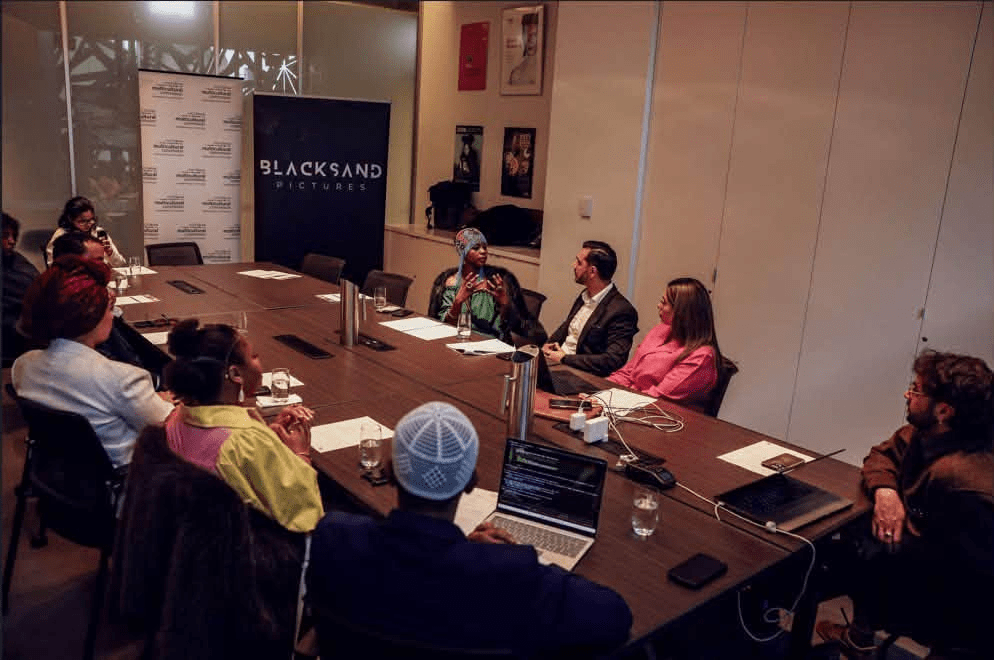
(ONA, 1 September 2026)-In a powerful step towards reshaping Australia’s cultural landscape, the Victorian Multicultural Commission, in partnership with Blacksand Pictures, recently hosted a community consultation with Victoria’s African Australian community. The focus? Media representation, authentic storytelling, and the urgent need for African Australians to control their own narratives.
The message was clear: the time for passive representation is over. Australian media must create meaningful opportunities for African Australians to tell their own stories, in their own voices. This isn’t just about checking diversity boxes—it’s about building a media landscape where lived experiences are portrayed with depth, nuance, and authenticity .
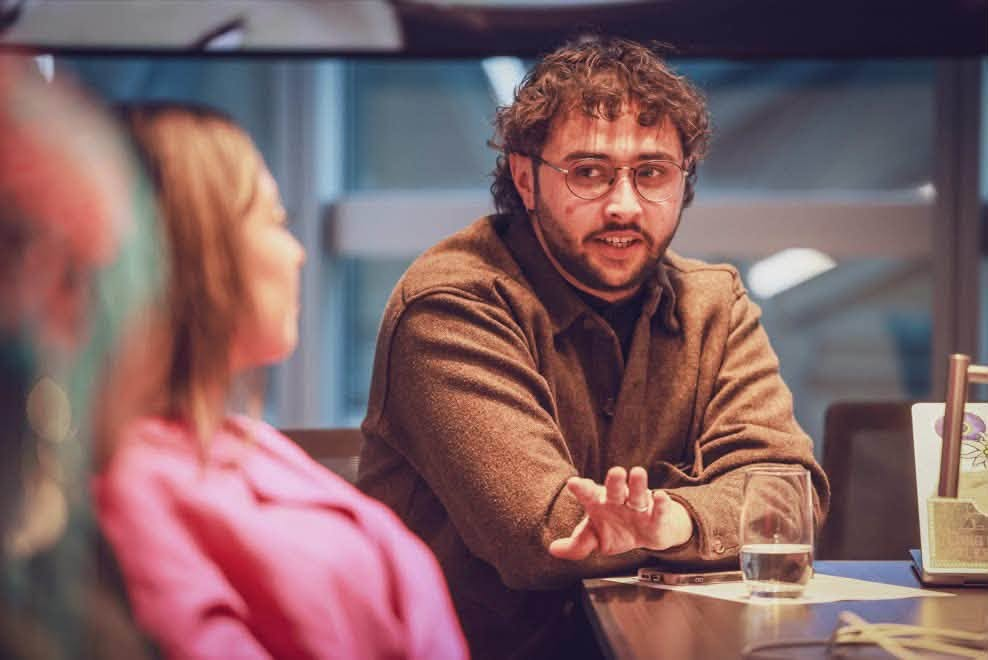
This need for self-representation is not new. Mimo Mukii, an emerging producer and filmmaker, began their filmmaking journey researching the necessity of African Australian self-representation in media. As Mukii observes, “It is getting better. But there are still barriers for people to get into the industry. Big companies, broadcasters, governments, whatever—taking a risk on emerging storytellers is—I think—what’s going to change that” .
The community consultation set the stage for exactly that kind of risk-taking.
A Feast of Stories
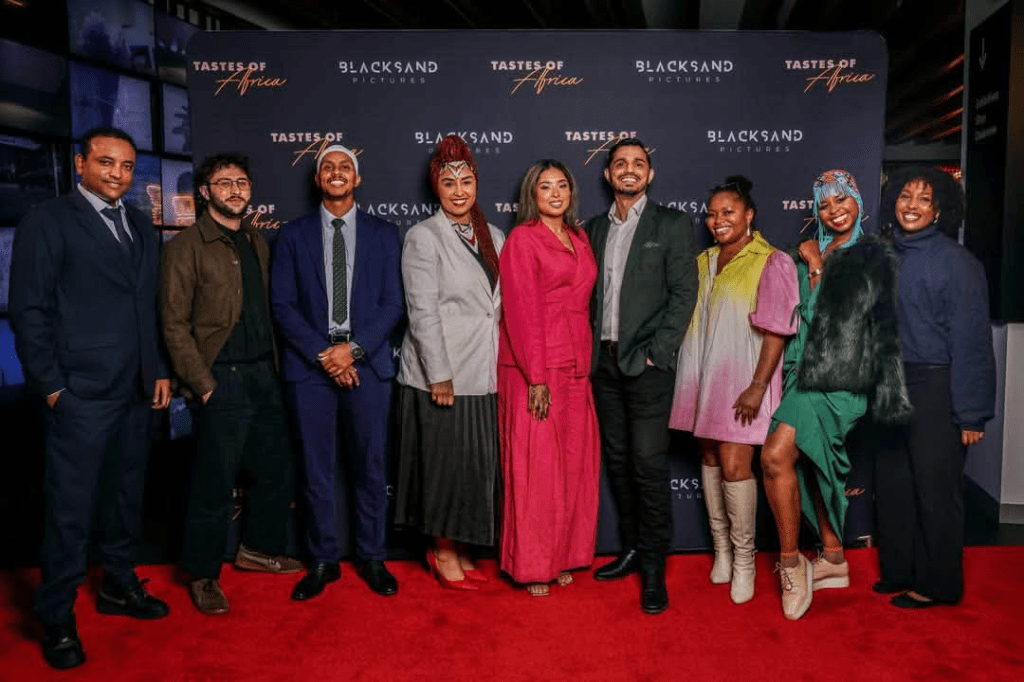
Following the discussion, attendees were treated to the premiere of Tastes of Africa, a three-part documentary series that celebrates the rich cultural heritage of African cuisine and its diaspora in Melbourne.
Produced by Blacksand Pictures’ Kauthar Abdulalim and written and directed by Rendah Haj, the series takes viewers on a sensory journey through Melbourne’s kitchens, community cook-ups, and hidden eateries . Hosted by Zambian-born filmmaker, historian, and author Santilla Chingaipe—recognised by the United Nations as one of the most influential people of African descent in the world in 2019—the series weaves together observational documentary and intimate first-person narration .
Viewers are guided by the traditional wisdom of African aunties, while also seeing younger African Australians boldly reinterpreting recipes for a new generation. As Kauthar Abdulalim explains, “Tastes of Africa reflects the kind of storytelling Blacksand Pictures is committed to culturally grounded, audience-facing, and globally resonant. This series celebrates African Australian communities with intimacy and joy, while creating space for stories that have long been underrepresented in Australia’s factual landscape”.
Supported by principal production funding from Screen Australia, in association with VicScreen, the series marks a significant investment in African Australian storytelling. Distribution partner African Australian will make the series available to audiences on YouTube, with plans for an international screening tour across Africa later in the year.

Building Momentum
The community consultation and Tastes of Africa premiere are part of a broader movement to amplify African Australian voices. Initiatives like the African Australian Creative Media Grants, administered by Ubuntu Project, provide $10,000 grants to support platform development and content creation by African Australian creatives. These grants are helping to build a sustainable storytelling ecosystem, enabling individuals and organisations to create, distribute, and market their work.
As African Professionals of Australia noted upon being named among grant recipients, this support is “critical” for “amplifying the voices, stories, and innovation of African Australians across media and the arts”.
What’s Next
A summary report from the community consultation, prepared by @cinespace_inc, will be released soon. In the meantime, audiences can watch the first episode of Tastes of Africa on YouTube now by following @blacksandpictures and @africanaustralian.
As Mimo Mukii reflects, creating authentic representation requires institutional support and a willingness to take risks on emerging storytellers. With projects like Tastes of Africa and growing community-led initiatives, Victoria is proving that when African Australians tell their own stories, everyone benefits. The future of Australian storytelling is more diverse, more authentic, and more delicious than ever.
—
Stay tuned: Follow @cinespace_inc for the upcoming summary report from the community consultation. Watch Tastes of Africa on YouTube via @blacksandpictures and @africanaustralian.

The Pillar of Borana: A Tribute to Abbaa Gadaa Liiban Jaldeessaa (1967-2026)
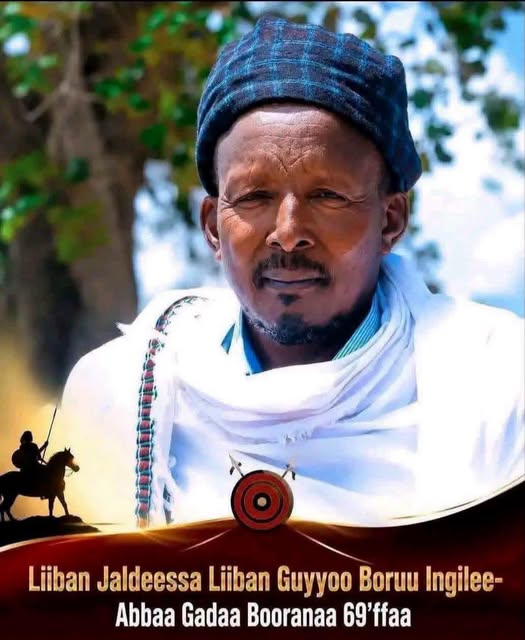
In the vast, sun-scorched plains of Borana, where the acacia trees stand as silent witnesses to centuries of tradition, a giant once walked among the people. He was not a king in the Western sense, nor a politician in the modern mold. He was an Abbaa Gadaa—a father, a judge, a living constitution for the Oromo people. His name was Liiban Jaldeessaa, and his life, from 1968 to 2026, was a testament to the enduring power of indigenous governance.
His story is not merely a biography; it is the history of a people’s resilience, a chronicle of justice, and a powerful reminder that true leadership is often found not in grand palaces, but in the dusty meeting grounds and under the shade of sacred trees.
A Son of the Soil: The Early Years
Born in 1967 to Jaldeessa Liiban and Tarrii Jaldeessa, in the Bur Busa area of Dheeda Booranaa, Liiban was a child of the Gadaa system from his first breath. He was the eldest of six siblings and would grow to be the father of fifty children—a patriarch in every sense of the word. Even in his youth, he was marked by a profound sense of duty. He was a “Tikaa,” a guardian of the cattle camps, learning the sacred responsibility of protecting the community’s lifeblood. He immersed himself in the traditions of his people, taking part in every rite of passage: from the Gammee (councils) to the Kuusa-Raabaa (age-grade gatherings), proving his dedication and worth at every step.
As a young man, Liiban distinguished himself through his unwavering commitment. He excelled in the crucial, often overlooked tasks of community life—the “hard work” that keeps society functioning. He was a man who understood the ancient ways, taking part in night-long vigils and traditional song and dance ceremonies (Olka Sirbuu) held at sacred sites like Dambii Dhedheertuu, Afuuraa, Areeroo, and Haroo Diimtuu. He earned a reputation for being tireless and principled, famously ensuring a great water reservoir (Gooroo) was properly filled, demonstrating his devotion to the community’s well-being even before he took on the highest office.
The Gauntlet of Leadership: A Gadaa in Action
In 1991, at a critical juncture for the Borana people, Liiban Jaldeessaa received the ultimate call to leadership. He took the Gooroo Gadoomaa—the sacred ceremonial staff—from the 68th Abbaa Gadaa, Boruu Madhaa. This was not a time of peace, but a time demanding strength, wisdom, and a firm hand.
His tenure as Abbaa Gadaa was defined by decisive action and a tireless defense of tradition and justice:
· Restoring Tradition: The great Gumii assembly of the Oromo, a cornerstone of democratic governance, had weakened and fractured. Liiban, understanding its vital importance, re-established the Gumii Dibbee Eldalloo, breathing new life into the ancient institution and ensuring the voice of the people could once again be heard.
· Uncompromising Justice: When elders attempted to use their authority to pass a decree without consulting the people, Liiban stood firm. His principle was clear: “An Abbaa Gadaa has no power to create a law by himself; the law is made by the Gumii.” He scrupulously upheld the rule of law, ensuring that power was accountable to the community.
· Protecting the Land: He was a fierce and unyielding defender of Oromo territory. At a time of great fear and uncertainty, he famously declared: “Fear should not cause the heartland of Oromo to be lost; fear should not cause the land of Oromo to be diminished.” He led land border expeditions (Lallaba) to assert territorial claims, confronting regional and federal authorities to protect the integrity of his people’s ancestral lands.
· The Ethiopian Renaissance Dam: When the issue of the Grand Ethiopian Renaissance Dam (GERD) arose, Gadaa Liiban gave a striking directive on how the Borana people should contribute to the national project. He proclaimed, “We will not support it with money from our pockets, but we will contribute with our hands and our labor,” reflecting a pragmatic and dignified approach to national duty.
· Diplomacy and Peacebuilding: He was a bridge-builder, working tirelessly with the Kenyan and Somali governments, and numerous NGOs to maintain peace and security in the volatile borderlands. He believed in the unity of all people, transcending clan, religion, and nation.
The Enduring Legacy: The “Dhaamsa” of a Great Man
On August 29, 2026, at the age of 59, Abbaa Gadaa Liiban Jaldeessaa passed away while receiving treatment in a Korean hospital. His death was a profound loss, a “Rifuu” (sorrow) felt from the savannahs of Ethiopia to the grasslands of Kenya.
But an Abbaa Gadaa does not simply die; he leaves a legacy—a Dhaamsa. This is not just a will, but a final message, a solemn charge to his people.
His legacy is twofold:
1. The Rifuu (The Sorrow and the Shield): He left behind a legacy of protection and strength. His memory is a shield, a “Jabaa Fulaa” (strong face) and a “Waardiyaa” (shield) that guards the community against its enemies and against division. The sorrow for his loss is immense, but it is a sorrow that binds the people together.
2. The Dhaamsa (The Final Charge): His final message is a call to action. It is a warning that the path he paved, the justice he upheld, and the unity he fostered must not be abandoned. His “Dhaamsa” is a reminder that the work of the Gadaa is never finished. It is a call to the community to remain steadfast, to support one another, and to continue the struggle for their rights and identity.
A Star That Still Guides
Abbaa Gadaa Liiban Jaldeessaa was more than a leader; he was the embodiment of the Gadaa system’s greatest ideals: justice, resilience, and unwavering dedication to the people. He was a “Fiixee Seeraa” (the pinnacle of the law), a “Tissaa Gooroo Gadaa” (the guardian of the Gadaa’s sacred staff), a man whose name will forever be etched in the annals of Borana history.
He passed into the next world, but for the Oromo people, he remains a star. His life is a lesson that the most profound leadership is born not of ambition, but of service. His legacy is a testament that a people’s strength lies not in their weapons, but in their traditions, their unity, and their unwavering commitment to justice.
As the Oromo people honor his memory, they are called to embody his final message: to be strong, to be united, and to ensure that the spirit of Gadaa Liiban Jaldeessaa lives on in every generation. He was a son of the soil, a pillar of his community, and a beacon of hope for all who believe in the power of indigenous wisdom.

Toki Be’a: The Dawro Nation’s Ancient Festival of Reconciliation, Forgiveness, and Hope
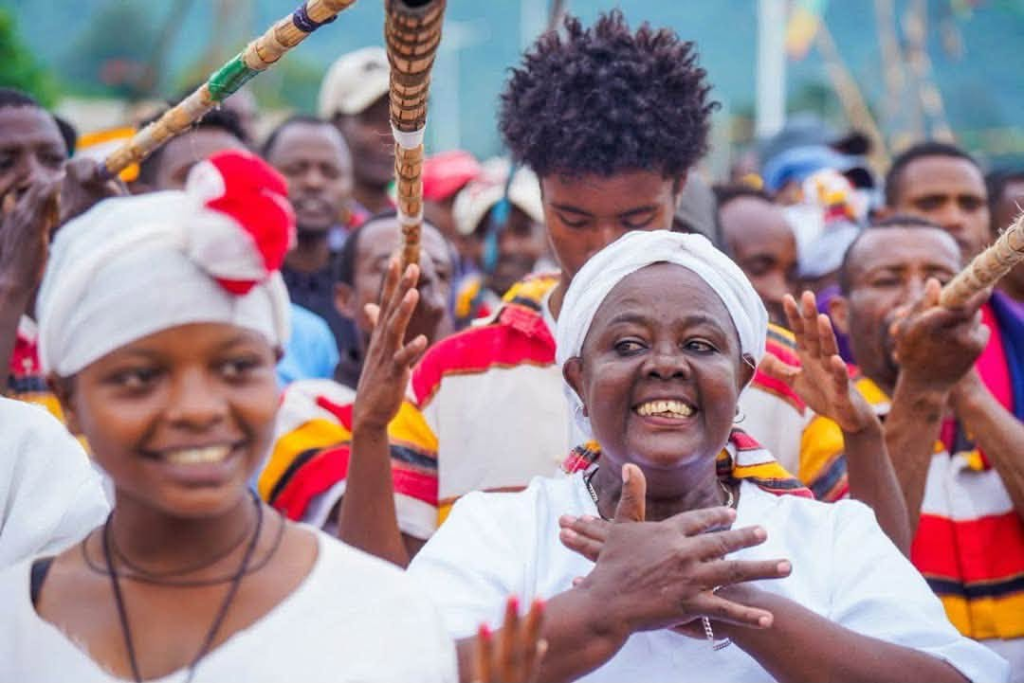
In the southwest of Ethiopia, as the rainy season draws to a close and the constellations begin their silent, celestial dance, a profound transformation occurs. The land, once drenched and dark, prepares for a new dawn. This is the season of renewal, a time when the Dawro people, keepers of an ancient and vibrant heritage, celebrate their most sacred tradition: Toki Be’a.
More than just a new year’s celebration, Toki Be’a is a profound cultural institution—a time for mending broken bonds, offering forgiveness, and embracing a future filled with hope. It is a festival that harmoniously weaves together spirituality, community, and the natural world.
A People of the Stars: The Calendar of the Ancestors
The Dawro nation is a community with a unique history, possessing its own indigenous governance system, complete with a “Kati” (a traditional king or chief) and a distinct calendar. This ancient calendar is not a rigid, mathematically fixed system. Instead, it is a living wisdom passed down through generations.
The date of Toki Be’a is not arbitrarily chosen. It is determined by the “cultural fathers”—wise elders who are master observers of the natural world. They meticulously study the movements of the stars, the moon, and the sun. They read the changing weather patterns and note the subtle transformations in local plant life. This profound understanding of astronomy and ecology allows them to pinpoint the exact day when the old season ends and the new one begins. It is a testament to a sophisticated indigenous knowledge system that has sustained the community for centuries.
When the final harvest is gathered and the fields lie fallow, the community knows it is time to give thanks to their Creator and prepare for the festival.
The Heart of the Festival: Reconciliation and Renewal
The true beauty of Toki Be’a lies in its powerful social values. It is, first and foremost, a festival of peace.
In the days leading up to the celebration, a remarkable process unfolds. Deep-seated grievances, old quarrels, and misunderstandings that have divided families, neighbors, and clans are brought before community elders. In a spirit of justice and compassion, these elders facilitate a process of reconciliation. Grudges are released, apologies are offered, and forgiveness is granted. It is a time when long-estranged family members are reunited at a shared table, and the community is knit back together as one.
This makes Toki Be’a a deeply emotional and transformative experience. It is a time when the weight of the past is lifted, and the community collectively chooses to move forward in unity and hope.
A Feast for All: Culture, Charity, and Nature’s Care
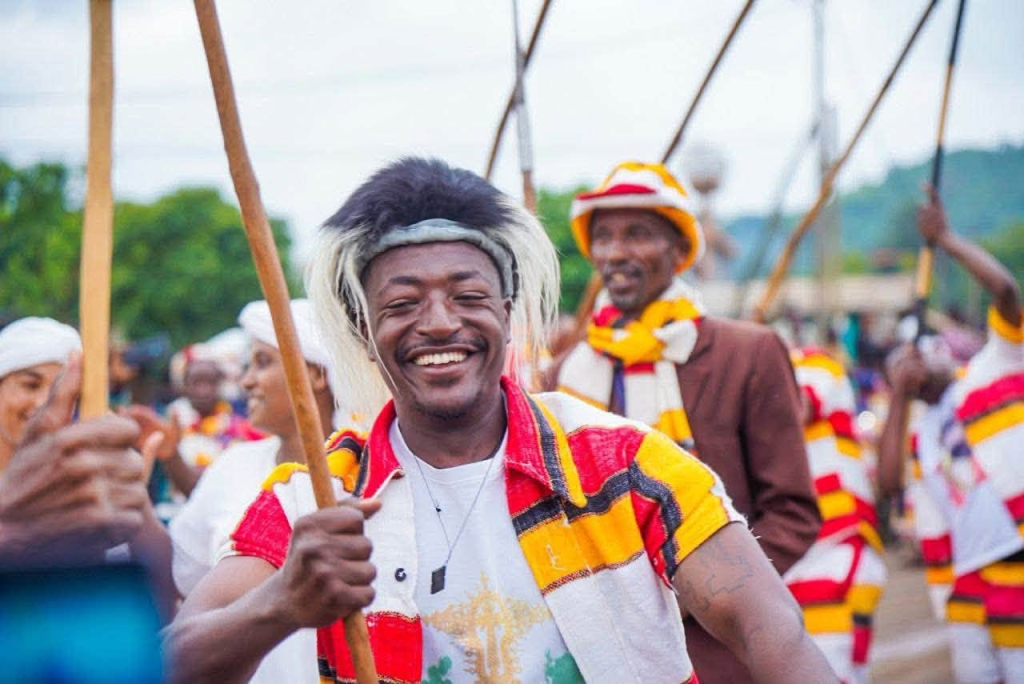
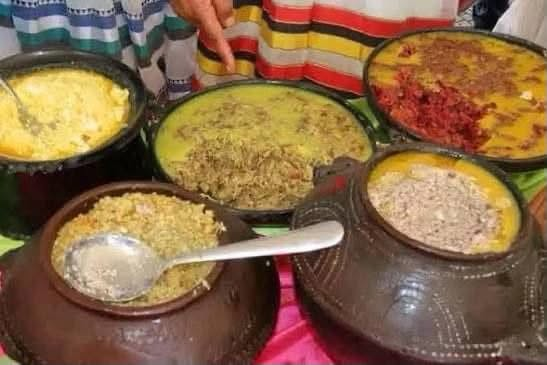
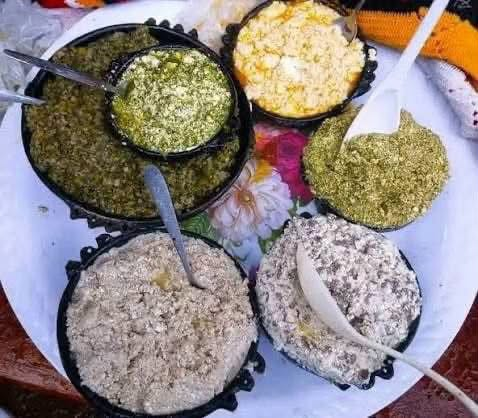
The celebration itself is a vibrant spectacle of Dawro culture. The air fills with the aroma of traditional feasts prepared with bula (false banana), qocho, and butter. People adorn themselves in their most beautiful cotton garments, complemented by intricate hand and neck ornaments. The occasion is brought to life with special Toki Be’a songs, whose melodies have been passed down through the ages, carrying the stories and wisdom of the ancestors.
The spirit of generosity is central to the celebration. Those who have are expected to share with those who have not, reinforcing the community’s strong social bonds.
What makes Toki Be’a truly unique is its deep respect for all living things. On the day of the festival, the community extends its care to animals. Domestic animals are given special, nourishing feed to ensure they are full and content. This act symbolizes the interconnectedness of human well-being with the health of the natural world.
A Beacon for the Future
Toki Be’a is a magnificent testament to the rich cultural tapestry of Ethiopia. It represents a powerful, indigenous model of conflict resolution, social cohesion, and environmental stewardship.
Beyond its profound cultural and spiritual significance, the festival holds immense potential for cultural tourism. It has the power to attract visitors from around the world, eager to witness its unique ceremonies and learn from its ancient wisdom. Moreover, the seasonal gathering stimulates local trade and agricultural activity, providing an economic boost to the community.
In essence, Toki Be’a is the Dawro people’s magnificent connection between humanity, nature, and the cosmos. As the stars align and a new season begins, this ancient festival reminds the world that true renewal comes not just from the changing of the seasons, but from the strength of our communities, the depth of our forgiveness, and the power of our shared hope.
—
About the Author: This article is adapted from a feature by Sisay Debebe, highlighting the invaluable cultural heritage of Ethiopia’s Dawro nation.

The Name and the Narrative: Reclaiming Oromo Identity Beyond “Habesha”
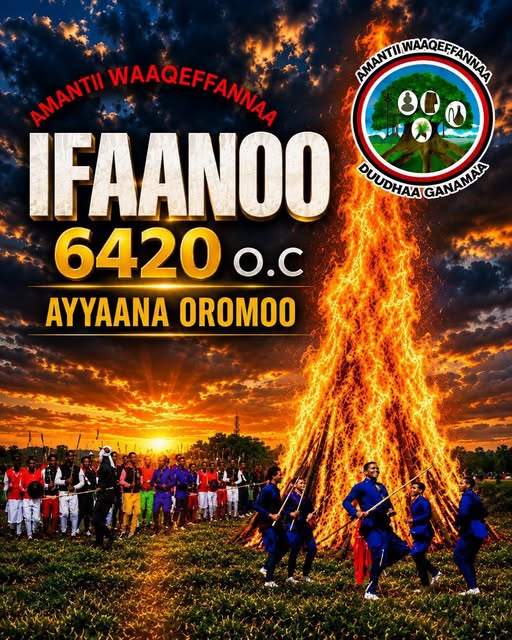
In the complex tapestry of the Horn of Africa, few threads are as deeply woven—or as fiercely contested—as the question of identity. For centuries, labels have been applied, histories have been written, and narratives have been constructed, often by those in power. But what happens when a people rise to say, “That name is not ours”?
A powerful statement from within the Oromo community cuts to the very heart of this question: “Habashaan jecha eenyummaa Oromoo ibsuu miti. Oromoon Habashaa miti.” This translates to: “‘Habesha’ does not express Oromo identity. An Oromo is not Habesha.” This is not a simple rejection of a label; it is a profound declaration of a distinct historical narrative, a reclamation of selfhood, and a bold assertion of a people’s independent journey through time and across the land they call home.
The Power of a Name
The term “Habesha” has historically served as a broad, unifying identifier for the peoples of the Ethiopian highlands, often associated with the ancient Aksumite civilization, the Orthodox Christian faith, and Semitic languages. For many, it is a term of pride, symbolizing a shared, ancient heritage.
However, for the Oromo people—the largest ethnic group in Ethiopia—this label often feels foreign and exclusionary. The assertion “Oromoon Habashaa miti” directly challenges the notion that “Habesha” is an all-encompassing term for all Ethiopians. Instead, it argues that the term is culturally and historically specific to a particular group and that it has been inaccurately and unfairly imposed upon the Oromo nation.
This rejection is a vital act of self-affirmation. It is a declaration that Oromo identity, with its own ancient traditions, its own language (Afaan Oromo), and its own sophisticated governance system (the Gadaa system), is independent and deserving of recognition on its own terms. It is a way of saying, “We are not a footnote in someone else’s history; we have our own story to tell.”
A Shared Journey: Revisiting the Origins
The second part of the statement offers a specific historical perspective on this shared geography: “Habashaan jecha Yaman irraa warra Abyssinia ofiin jedhan waliin gara biyya Oromoo-Oromiyaatti dhufee dha.” (“Habesha came to the land of Oromo-Oromia from Yemen together with those who call themselves Abyssinian.”)
This presents a powerful and deliberate counternarrative to the dominant historical accounts of the region. By asserting that both the ancestors of the “Abyssinians” and the Oromo people migrated into the region from a shared origin, this perspective challenges the traditional narrative that often places one group as indigenous and the other as later arrivals.
This framing redefines the historical relationship between the two communities. It moves the Oromo from a position of being perceived as “others” or “newcomers” in their own homeland to being co-architects of the region’s history. It suggests a shared, albeit not necessarily harmonious, arrival and cohabitation, thereby establishing an equal and ancient claim to the land of Oromia. This is a crucial point, as it aims to dismantle historical hierarchies and assert that the Oromo are not intruders but are, in fact, foundational to the region’s story.
The Land of Oromia: More Than a Place
This assertion of identity is intrinsically tied to a specific territory: Oromia. This vast and diverse region, stretching from the highlands to the lowlands, is the historic and ancestral homeland of the Oromo people. By connecting the narrative of arrival directly to “the land of Oromo-Oromia,” the statement anchors Oromo identity in a tangible, sacred geography.
It is a powerful reminder that identity is not an abstract concept; it is rooted in the mountains, rivers, and plains where a people’s history was lived and written. For the Oromo, the struggle for identity is inseparable from the struggle for their cultural, political, and territorial rights within Oromia. Declaring that the “Habesha” came to their land, and not the other way around, is a profound reclamation of both history and territory.
A Continuing Dialogue
The statement provided is a potent contribution to an ongoing and essential conversation about identity, history, and power in the Horn of Africa. It challenges the monolithic narratives that have often dominated the national discourse and demands a more inclusive, accurate, and multi-vocal understanding of the past.
For the Oromo people, the declaration “Oromoon Habashaa miti” is not an act of division, but one of definition. It is a call to be seen, understood, and respected on their own terms. It opens a vital dialogue about how history is written, who gets to write it, and how we can build a future that honors the full and complex story of all the peoples in the region. The debate over identity is far from settled, but it is a debate that is crucial for any nation seeking to forge a just and inclusive future.

A Giant Returns to the Soil: Abbaa Gadaa Liiban Jaldessa Laid to Rest in Areero (1967-2026)
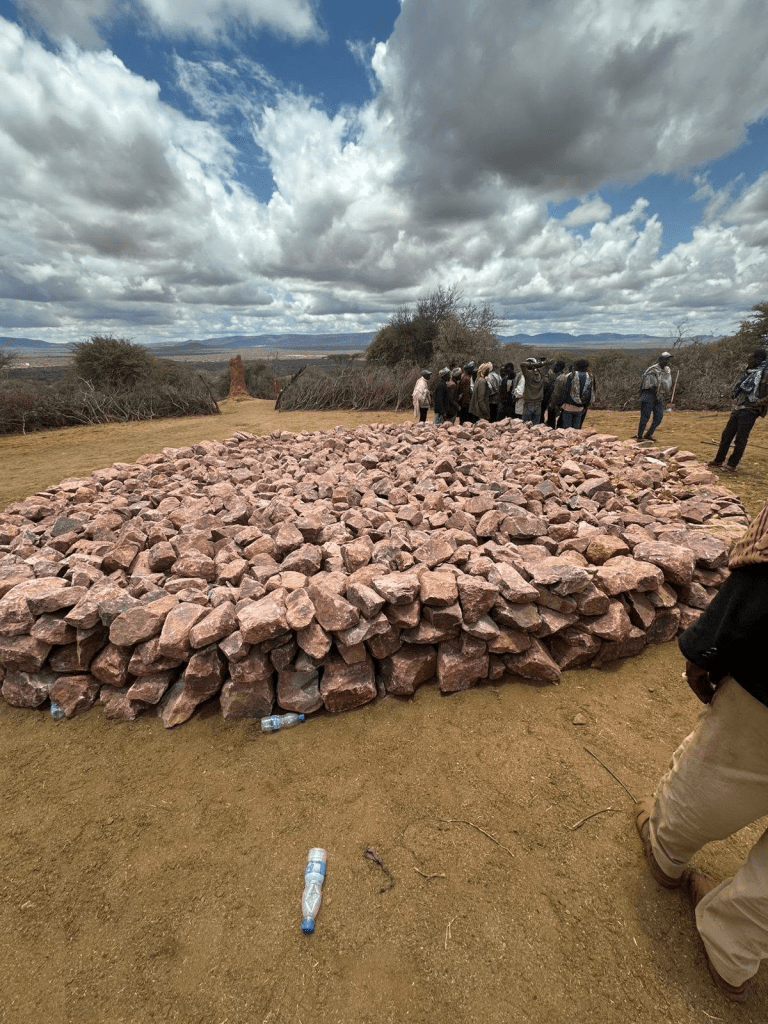
The plains of Areero, under the vast and unyielding sky of Borana, fell silent. The echoes of cattle bells and the murmur of the wind through ancient acacia trees seemed to pause, as a community—and indeed, a nation—gathered to bid farewell to one of its greatest sons. Abbaa Gadaa Liiban Jaldessa, the 69th custodian of the sacred Gadaa staff and a revered guardian of Oromo law, was laid to rest in his homeland on a somber day that marked the end of an era.
At the age of 59, the leader whose life was a testament to the enduring strength of indigenous governance passed away on December 29, 2026, while receiving medical treatment in Addis Ababa. His death sent a wave of profound grief—a Rifuu—from the highlands of Ethiopia to the savannahs of Kenya, a sorrow felt by all who knew the weight of his wisdom and the depth of his commitment.
A Life of Service to the Gadaa
Liiban Jaldessa was more than a leader; he was the embodiment of the Gadaa system’s highest ideals. As the 69th Abbaa Gadaa, he was a living constitution, a judge, a father, and a protector of the Borana people. His life was dedicated to the preservation and advancement of the ancient Oromo governance system, which for centuries has stood as one of the world’s most sophisticated indigenous democracies.
Gadaa elders and scholars who paid tribute to him spoke of a man of unwavering principle. He was described as a “pillar of the community,” a leader whose influence extended far beyond the ceremonial. His tenure was marked by a fierce dedication to justice, the protection of Oromia’s historic boundaries, and the strengthening of the social fabric that binds Oromo communities across the borders of Ethiopia and Kenya.
Reviving the Ancient Assembly
Among his most significant achievements was the revival of the Dibbee Eeldalloo Assembly, a crucial Gadaa institution that had lain dormant for several generations. This assembly is not merely a meeting; it is the heart of Oromo democracy, where elders and community members gather to deliberate on matters of law, peace, and the future of the people.
By breathing new life into this ancient forum, Abbaa Gadaa Liiban ensured that the voice of the people would continue to be heard. He re-established a critical channel for justice and reconciliation, reaffirming that true governance is not imposed from above but emerges from the collective wisdom of the community. This act alone cemented his legacy as a unifier and a visionary.
A Leader for All
The attendance at his funeral was a powerful testament to the reach of his influence. Gadaa leaders from across the region stood alongside government officials, and a vast sea of public mourners from both Ethiopia and Kenya came to pay their final respects.
A notable presence was that of Marsabit Governor Mohamed Mohamud Ali, whose attendance underscored the cross-border significance of Abbaa Gadaa Liiban’s work. Governor Ali honored the leader’s immense contributions to fostering peaceful and cooperative relations between communities living on either side of the national border. He called on all who were present to uphold Liiban’s legacy of unity, emphasizing that the bonds he forged should be sustained and strengthened for generations to come.
This intergovernmental and cross-border presence highlighted a profound truth: Abbaa Gadaa Liiban was not just a leader of the Borana, but a symbol of peace and cooperation for the entire region.
A Legacy Etched in the Land
Abbaa Gadaa Liiban Jaldessa left behind a large and proud family—50 children, 13 sons and 37 daughters—who carry his name and his spirit into the future. But his true legacy is woven into the very fabric of the Oromo nation.
He was a man who stood firm in the face of challenges, who walked the length of disputed borders to assert his people’s claims, and who worked tirelessly to ensure that the “Habesha” label would not diminish the proud, independent identity of his people. He believed in the Gadaa’s power to resolve conflict, its wisdom to guide the community, and its resilience to survive through the ages.
As the earth of Areero received his body, the community received his spirit. His final message, his Dhaamsa, is a call to action: to remain united, to uphold the law, and to continue the struggle for justice and recognition.
The Farewell of a Nation
The burial ceremony in Areero was more than a funeral; it was a declaration. It was a declaration that the Gadaa system lives on, that its leaders are honored, and that its traditions will not fade into history. It was a declaration that the Oromo people, from the plains of Borana to the hills of Kenya, stand together.
In the words of the elders who mourned him, “Mataan Dhalootaa Lafa Ga’e Du’aan Lafa Hinhanqatu”—”The head of a generation that has touched the ground does not leave the ground empty.” Abbaa Gadaa Liiban Jaldessa touched the ground with his life, and his legacy will continue to grow from the soil of his homeland.
The son of Borana has returned to his ancestors. But for his people, he is not gone. He has become a star in their sky, a voice in their council, and a timeless guide for the path ahead.

UNDERSTANDING THE TRAUMA TREE
Why Addressing Symptoms Alone Isn’t Enough
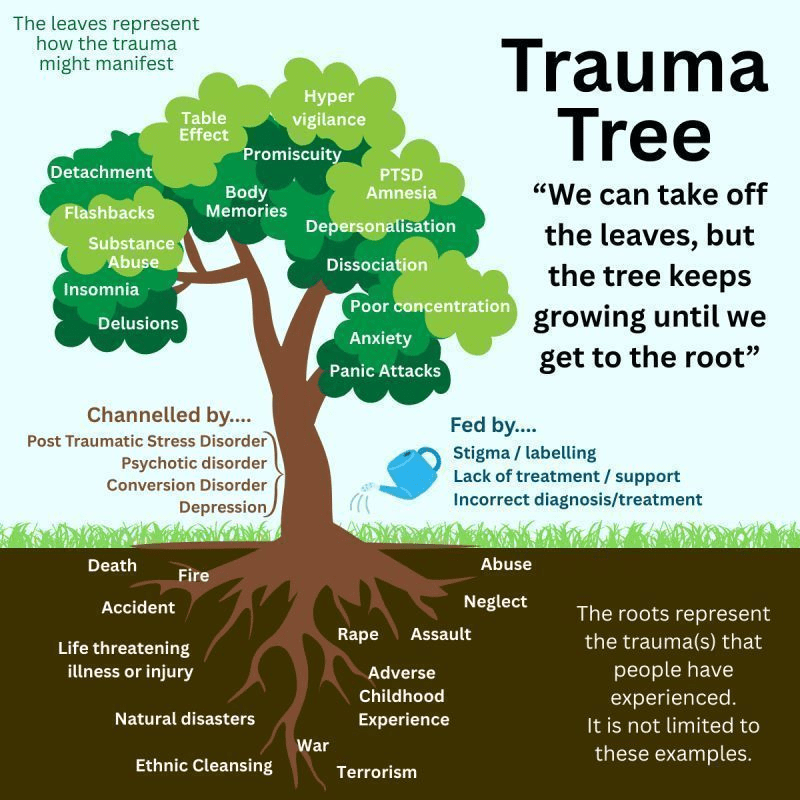
🌳 “We can take off the leaves, but the tree keeps growing until we get to the root.”
This powerful metaphor reveals a truth that modern mental health care is only beginning to fully embrace: that true healing from trauma requires more than just managing symptoms. It demands that we dig deeper—right down to the roots.
The numbers tell a sobering story. Research shows that 70% of individuals experience trauma at some point in their lives. Yet for far too many, the path to recovery remains frustratingly elusive. Why? Because we have been treating the leaves while ignoring the roots.
THE LEAVES – HOW TRAUMA MANIFESTS
Trauma does not announce itself with a single, obvious signal. Instead, it manifests in a tangled canopy of symptoms that can be as bewildering as they are debilitating.
Hypervigilance and anxiety – The body remains on high alert, scanning for danger even in the safest environments. The nervous system, once triggered, struggles to return to calm.
Flashbacks and nightmares – The past refuses to stay in the past. Traumatic memories intrude without warning, forcing the individual to relive moments of terror again and again.
Panic attacks and dissociation – The mind and body disconnect. Some feel as though they are watching themselves from outside their own body. Others experience overwhelming waves of terror that seem to come from nowhere.
Depression and emotional numbing – Feeling nothing becomes a defence mechanism. The heart hardens to protect itself, but in doing so, it also loses the capacity for joy, connection, and hope.
Substance abuse and insomnia – Sleep becomes a battleground. Substances offer a temporary escape, but they also deepen the wound, creating a cycle of dependency that further obscures the underlying pain.
These are the leaves. They are visible. They are painful. And they demand attention.
But treating symptoms alone leads to temporary relief—not true healing. The leaves may be trimmed, but the tree continues to grow, fed by hidden forces beneath the surface.
WHAT FEEDS THE TREE – BARRIERS TO HEALING
If the leaves are symptoms, what nourishes the tree and keeps it alive? What prevents healing from taking root?
Stigma and labelling – Society often reduces trauma survivors to their symptoms. “You’re just anxious.” “You’re depressed.” “You need to get over it.” These labels, however well-intentioned, can become self-fulfilling prophecies. They define the person by their struggle rather than their resilience.
Lack of trauma-informed treatment – Many therapeutic approaches still focus on managing behaviour rather than understanding its origins. Without a framework that acknowledges the pervasive impact of trauma, treatment can feel like rearranging deck chairs on the Titanic.
Misdiagnosis and limited support – Trauma symptoms often mimic other conditions. Depression, anxiety disorders, and even ADHD can be misdiagnosed when the root cause—trauma—remains unidentified. Limited access to appropriate mental health services compounds the problem, leaving many to navigate their recovery alone.
These are the soil conditions that allow the trauma tree to thrive. Change the soil, and you change the tree.
THE ROOTS – ORIGINAL TRAUMA
To truly heal, we must go where the pain began.
Childhood abuse and neglect – The earliest wounds often cut the deepest. When a child’s developing brain is exposed to chronic stress or betrayal, it shapes the architecture of their nervous system, setting patterns that persist into adulthood.
Accidents and medical trauma – A single moment can change everything. Car crashes, serious injuries, and terrifying medical procedures can leave lasting psychological scars that are often overlooked.
War, terrorism, and violence – For survivors of conflict, the trauma is not a single event but a sustained assault on the sense of safety and humanity. The effects ripple across generations.
Natural disasters and grief – Loss on a massive scale, whether through earthquake, flood, or pandemic, shatters the illusion that we are safe in our world. Grief becomes complicated when it is intertwined with collective trauma.
Systemic oppression and discrimination – For marginalised communities, trauma is not an isolated experience but a chronic reality. Racism, sexism, homophobia, and other forms of oppression create ongoing wounds that demand healing at both the individual and societal levels.
These are the roots. They are deep. They are tangled. And they are often hidden from view.
But evidence shows trauma-informed interventions address both the symptoms AND the root causes, leading to real recovery and improved wellbeing for those struggling with PTSD, anxiety, and depression.
THE PATH TO ROOT-LEVEL HEALING
True healing requires a shift in perspective. It means moving from “What is wrong with you?” to “What happened to you?” It means recognising that symptoms are not weaknesses but adaptations—the mind’s way of protecting itself from overwhelming pain.
Trauma-informed care offers a different approach. It asks:
- Safety first – Healing cannot begin without a sense of physical and emotional safety.
- Choice and control – Trauma strips away agency. Recovery restores it.
- Collaboration – Healer and client walk together, not as expert and patient, but as partners.
- Trustworthiness – Transparency and consistency rebuild the trust that trauma shattered.
- Empowerment – The goal is not to fix the person but to help them reclaim their strength.
READY TO FINALLY ADDRESS TRAUMA AT THE ROOTS?
The journey to healing is not easy. It is not linear. But it is possible.
For those ready to begin, the “You Are Not Broken” Trauma Healing Workbook for Beginners offers a gentle, evidence-based guide to genuine emotional healing. Designed by trauma therapists, this workbook provides:
- Practical exercises for understanding trauma responses
- Grounding techniques for managing symptoms
- Guided reflections to explore the roots of pain
- A compassionate framework for self-discovery and recovery
The leaves can be trimmed. The soil can be nourished. The roots can be healed.
Start your journey today.
#TraumaHealing #TraumaInformedCare #MentalHealthRecovery #PTSD #EmotionalHealing
Image Credit – Unknown
📖 Featured Article
Understanding the Trauma Tree: A Clinical Perspective
The metaphor of the trauma tree is more than poetic imagery—it is grounded in neuroscience and clinical practice. When trauma occurs, it impacts the brain’s fear circuitry, particularly the amygdala, hippocampus, and prefrontal cortex. The “leaves” we see—hypervigilance, flashbacks, dissociation—are direct expressions of this rewired nervous system.
Treating only these symptoms without addressing the underlying trauma is like repeatedly taking painkillers for a broken leg. The pain may temporarily subside, but the bone remains unhealed.
Trauma-informed therapy, by contrast, works to rewire the brain’s response to threat. Through approaches such as EMDR, somatic experiencing, and cognitive processing therapy, individuals can process traumatic memories, integrate them into their life story, and reduce their power over the present moment.
The “roots” of trauma often lie in attachment wounds—relationships that should have been safe but were instead a source of danger. Healing these roots involves rebuilding the capacity for trust, connection, and self-compassion.
Remember: You are not broken. You are wounded. And wounds, with the right care, can heal.
This article is part of a series on trauma-informed mental health care. For more resources, follow our page and join the conversation on trauma recovery, resilience, and healing.

Candlelight vigil for Nepal flood victims
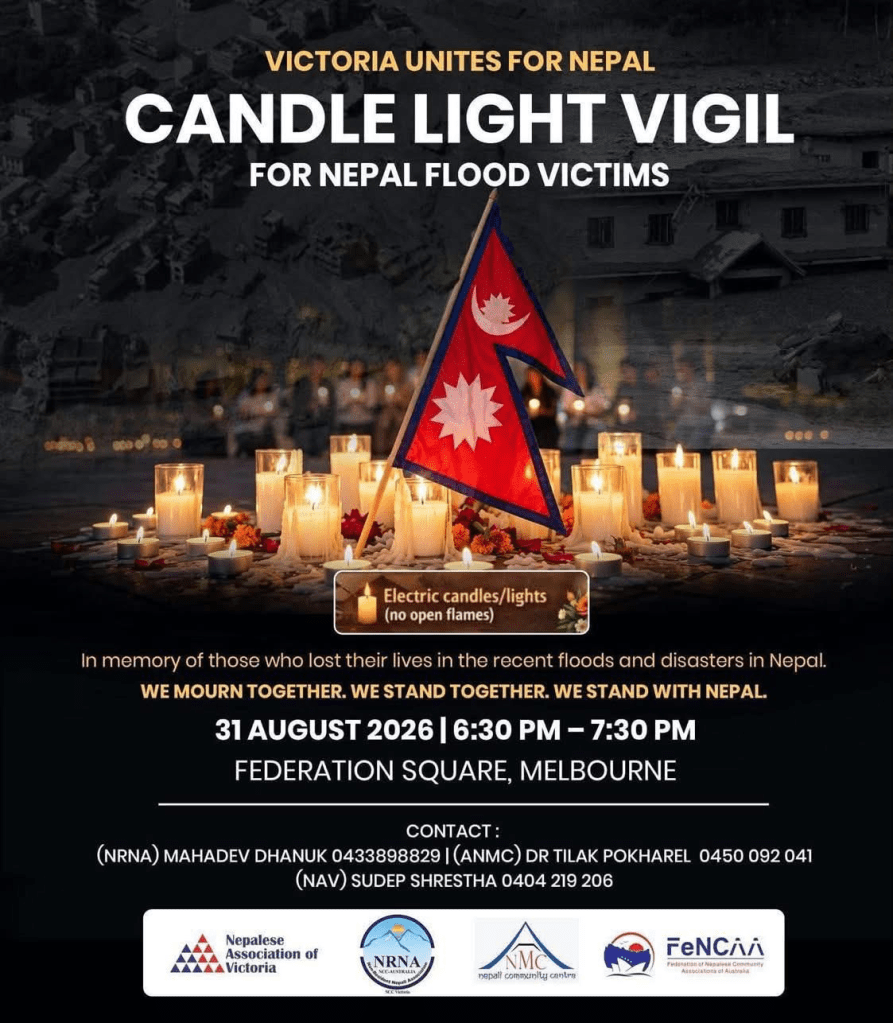
VICTORIA UNITES FOR NEPAL
Candlelight vigil for Nepal flood victims
(ONA, 31 August 2026)-Melbourne will tonight open its heart to the people of Nepal as the city hosts a candlelight vigil at Federation Square, honouring the hundreds of lives lost in the catastrophic floods that have devastated the Himalayan nation.
The vigil, organised with the support of the Victorian Multicultural Commission, will see Victorians of all backgrounds gather to remember those who have perished, pray for the missing, and stand in solidarity with the grieving Nepali community.
“WE MOURN TOGETHER. WE STAND TOGETHER.”
The recent flooding in Nepal and surrounding regions has unleashed an unimaginable tragedy. Flash floods and landslides tore through the Bhotekoshi and Trishuli river basins, sweeping away entire communities along the Nepal-China border . The death toll continues to mount—now exceeding 547 confirmed fatalities—with more than 1,473 injured and over 900 still unaccounted for .
For Victoria’s growing Nepali community, this is not a distant disaster. It is personal. It is family. It is home.
A COMMUNITY IN MOURNING
The Victorian Multicultural Commission, standing in solidarity with Victoria’s Nepali community and the people of Nepal, has encouraged all Victorians to join tonight’s vigil.
“Let’s work together, let’s pray together, and let’s go through this pain together,” said Dr Tilak Pokhrel, president of the Australian Nepalese Multicultural Centre, in a heartfelt appeal to the community .
For many in the diaspora, the anguish is compounded by the agonising wait for news. Community members are checking the news every hour, desperately hoping for word from missing relatives and friends . The Australian government has confirmed that 39 Australians remain unaccounted for, including trekkers and tourists caught in remote valleys .
THE TRAGEDY UNFOLDS
The scale of the disaster is staggering. Many of the missing were on a pilgrimage to Mount Kailash in Tibet—a sacred site for Hindus, Buddhists, and followers of other faiths—when the flash floods struck without warning . Survivors have described walls of black water, 60 to 70 feet high, rushing toward them like a tsunami .
One Indian-American couple who narrowly escaped described watching the water approach their tour bus—”It was not water, it looked like a forest fire,” they recalled. They jumped from the bus moments before it was swept away, spending the night in a goat shed before being rescued by helicopter the next day .
Rescue operations continue, with emergency services working tirelessly in extremely difficult conditions. The Caritas Nepal relief organisation has reported that many main bridges and roads have been destroyed, making access to survivors extraordinarily challenging . Even relief teams have been ordered to retreat to safety as the threat of further flash floods persists .
GLOBAL OUTPOURING OF SOLIDARITY
The tragedy has touched hearts around the world. From candlelight vigils in Boston to prayer gatherings in India’s border towns, communities everywhere are standing with Nepal .
Here in Melbourne, tonight’s vigil at Federation Square will be a powerful testament to that global solidarity. Members of the public are invited to gather from 6:30pm to 7:30pm, bringing candles and open hearts to remember those lost and pray for those affected .
“TOGETHER WE ARE STRONGER”
The emotional toll on the diaspora is immeasurable. “We can’t go through this alone,” said Aloonee Adhikari, a Nepali community member in the United States. “When we get to get together like this, it gives us a sense of empowerment that at least we can sit there and pray for them, even if we’re not there” .
Her words resonate across oceans. Tonight, they will echo in Melbourne.
As the Victorian Multicultural Commission reminds us: We mourn together. We stand together.
EVENT DETAILS
Date: Monday 31 August 2026
Time: 6:30pm–7:30pm
Venue: Federation Square, Melbourne
The vigil is a chance for all Victorians—regardless of background or faith—to show the Nepali community they are not alone. It is a moment to transform grief into action, compassion into solidarity.
In the words of one community leader: “One candle, one community, one Nepal. For those we lost, for those who are suffering, for those who are still hoping—together we are stronger, for Nepal and for humanity” .
Come. Light a candle. Stand with Nepal.

The Borana Gadaa System Loses a Distinguished Leader: Former Abbaa Gadaa Liban Jaldesa Passes
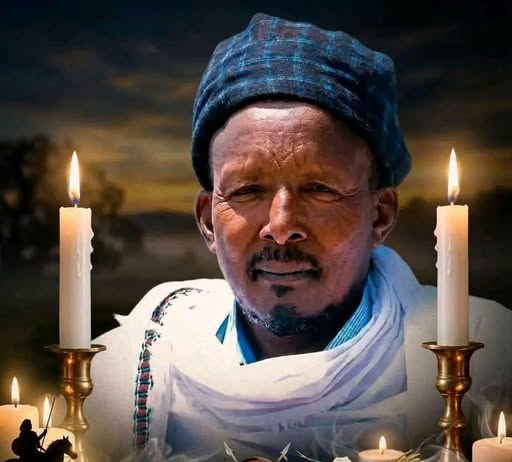
A Legacy of Cultural Stewardship and Resilience Leaves a Lasting Mark
By Daandii Ragabaa
(ONA, Finfinne, 29 August 2026) – The Oromo nation and the Borana community are mourning the loss of a respected cultural leader. Liban Jaldesa, who served as the 69th Abbaa Gadaa of the Borana from 2002 to 2009, has passed away, leaving behind a profound legacy of service to his community.
His tenure marked a significant period in the history of the Borana Oromo, where he played a pivotal role in strengthening the Gadaa institution and promoting the laws, culture, and traditions of his people . The Gadaa system, which he represented, is a sophisticated and indigenous framework of governance recognized by UNESCO as an intangible cultural heritage of humanity. It is a system that embeds a deeply egalitarian social fabric, where democratic power is transferred from one class to another every eight years .
The Weight of the Bullukoo: Leadership in a Time of Challenge
The role of an Abbaa Gadaa is one of profound responsibility. An Abbaa Gadaa is not merely a political figure but the custodian of the community’s soul, tradition, and future. The Gadaa system regulates social, political, economic, and religious life, and the leader is expected to be a competent orator, deeply skilled in the laws and customs of his people .
During his tenure, Liban Jaldesa was a steady hand during a period of immense challenge. The Borana, a predominantly pastoralist community inhabiting southern Ethiopia and northern Kenya, faced acute pressures including changing weather patterns and rising resource scarcity .
As an elder and oral historian once noted about the Gadaa leadership: “The system strictly interrogates a candidate’s lineage and ancestral record. It examines whether the past Gadaa terms of your family brought prosperity, timely rains, abundance, sovereignty, and peace.” Liban Jaldesa carried this weight of expectation, navigating his community through the complexities of a changing world while striving to uphold the sacred principles of Gadaa.
A Living Democracy: The Gadaa Tradition
The Gadaa system he served is a testament to the Oromo people’s ancient commitment to democratic governance. It organizes society into age grades, with each grade moving through a life cycle—from Dabballee (childhood) to Gammee (youth), and ultimately to leadership roles like Kuusa and Gadaa .
To select the Abbaa Gadaa, an extensive evaluation and vetting process called the “Baannattoo” system is conducted, functioning as a traditional electoral campaign for public servants . The son of a previous Abbaa Gadaa would convene his peers for the Wal-argii (Grand Gathering) to build peer acquaintance and deliberate on traditional matters before a new leader could be invested .
As a leader during such a time, Liban Jaldesa’s role was central to this process of cultural transmission and societal continuity.
A Nation Mourns, a Legacy Endures
The passing of Liban Jaldesa is a profound loss. His leadership is described as an enduring part of Borana history and cultural heritage . His wisdom and service are expected to continue inspiring future generations.
His death marks the end of an era, but the principles of the Gadaa system—democracy, community, and resilience—that he represented continue to guide the struggle and shape the future of the Oromo people.
The Oromian News Agency joins the Borana Oromo community in expressing our deepest condolences. We honour his memory and the immense contribution he made to preserving the cultural identity of his people.
Waaqni Ekeraa isaa nagaan haa qubachiisu! May God rest his soul in eternal peace.

A Cry for Justice: The Unfolding Crisis in Oromia
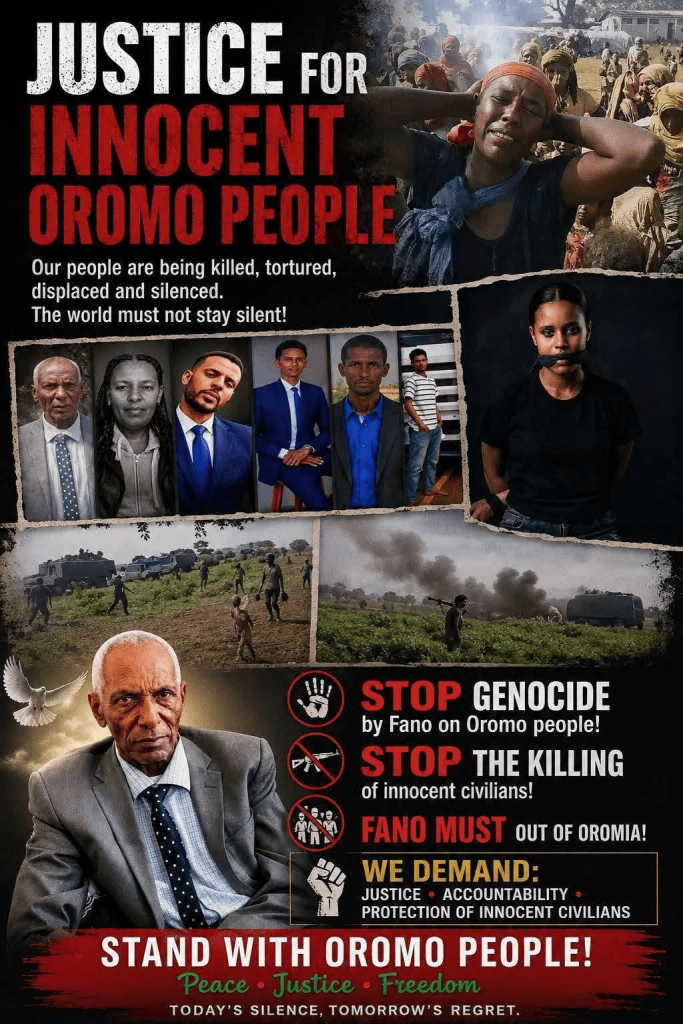
As violence escalates in Ethiopia’s most populous region, a growing chorus of voices is demanding accountability, protection, and peace for the Oromo people.
The plea is urgent and uncompromising: “Stop the killing of Oromo civilians! Stop violence against the Oromo people! Fano must leave Oromia!” These calls reflect a deep-seated crisis that has gripped the Oromia region, where civilians find themselves caught in the crossfire of multiple armed conflicts.
The Human Toll of Conflict
Recent reports paint a harrowing picture of the violence unfolding across Oromia. The Ethiopian Human Rights Commission (EHRC) has documented atrocities including killings, bodily injuries, abductions, displacement, and destruction of property in the Arsi Zone of Oromia . The violence is not isolated—it reflects a broader pattern of human rights abuses across multiple regions, including Amhara and Tigray .
In one particularly devastating incident, armed men killed more than 20 civilians in Oromia. Local civil servants reported that Fano militants attacked civilians “with swords and guns” in the Nono district, approximately 110 kilometers southwest of Addis Ababa, resulting in 25 deaths including women and children, with four more later dying in hospital . A regional security official confirmed that Fano militants had been active in the region for four years, “taking advantage of opportunist moments to launch attacks against civilians and loot property”.
The Humanitarian Crisis
The violence has created a severe humanitarian crisis. The United Nations reports that 3.2 million children are out of school due to the conflict . Hospitals and clinics have been attacked—in 2023, the International Committee of the Red Cross reported that “almost all” of 42 health posts in Oromia’s Beji area had been looted or destroyed . Aid organizations have struggled to distribute supplies, leading to severe malnutrition .
Civilians describe a terrifying reality. One woman from Oromia’s Shewa region told of her family facing constant harassment and extortion from armed groups, with her uncle detained until a 100,000 Ethiopian birr ransom was paid . A coffee farmer from Wollega has been unable to return home for three years due to the security situation, with his harvest stolen by armed fighters .
A Call for Justice and Peace
The demands for justice and protection are clear. As one civil servant noted, the situation “has worsened in recent years” . The Red Cross has warned that the current clashes have “devastating consequences” for civilians, particularly in remote areas, noting that “Oromia doesn’t make the headlines, yet civilians continue to be deeply affected by violence” .
The call for Fano to leave Oromia reflects the reality that multiple armed groups are active in the region, each contributing to the suffering of civilians. For the Oromo people, the demand is simple but profound: protection, justice, and accountability for those who have committed atrocities.
Without decisive action, the cycle of impunity and violence will continue to erode Ethiopia’s stability and legitimacy . The international community, regional bodies, and Ethiopian authorities face a critical choice: allow the violence to continue, or take meaningful steps to protect civilians and bring perpetrators to justice.





 Advocacy for Oromia