Author Archives: advocacy4oromia

Why the Borana people of Kenya and Ethiopia name their children 2 or 3 years after birth

By Global News 

Borana Tribe Mother Carrying Her Baby, Yabelo, Ethiopia

By THEODORA AIDOO |

The naming ceremony of a new baby is one of the most important rites of passage in life.

In traditional African society, the naming ceremony announces the birth of a newborn, introduces the child to his or her extended family and the larger community, and above all, it confers on the child a name.

The name given to a baby can have an enduring influence on their personality and upbringing. Usually, the circumstances surrounding the birth of an African child coupled with several factors influence the names parents choose for their children.

PAY ATTENTION: Do you have a life-changing story you would like us to publish on this popular website? Share it with us (SUBMIT YOUR STORY)

African names reveal a lot of information about a baby ranging from emotions, events surrounding the birth, culture, order of birth, day of birth, faith, time of the day or season and ancestry.

ALSO READ:  ECOWAS single currency threat to the West —Sierra Leonean envoy

Naming ceremonies are practised by many countries in Africa with methods differing over cultures and religions. The timing at which a name is assigned can vary from some days to months after birth.

In some rare cases, as in the case of the Borana people, it takes years to name a baby.

The Borana Oromo are currently located in Ethiopia and Kenya, with a few in Somalia. Pic credit: South World

The Borana Oromo are currently located in Ethiopia and Kenya, with a few in Somalia. They are also called the Boran, a subethnic section of the Oromo people who live in southern Ethiopia (Oromia) and northern Kenya.

They speak a dialect of the Oromo language that is distinct enough. The Borana people are notable for their historic Gadaa political system and they follow their traditional religions – Christianity and Islam, according to accounts.

Unlike the other African countries, when a baby is born in the Borana community, a name is not instantly given to the child until the child turns 2 or 3-years. They give the child a name in a special ceremony two or three years after the child has been born.

This means that naming ceremonies only happen occasionally among the Boranas. There are specific names for specific children; some names are said to be preserved for firstborns only.

A Kenyan elder, Kosi Billingaa, in an interview with BBC, revealed that until the children are named, they are called random names.

Quite a number of people would be wondering why it takes such a long time to name a child and why the names of the babies are not determined before they are born.

But what makes this interesting is that Africa is home to many unique people and culture. According to Billingaa, their naming culture was inherited from their forefathers.

Another interesting twist is that when the time is nigh for the naming ceremony, which involves a gathering of community members, parents who are unable to hold the ceremony probably due to financial constraints can seek help from relatives.

The actual day of the naming ceremony is determined by the elders and the festivities, which include blessing, singing, dancing and eating, could last for three days.

The Borana are one of the resulting groups of Oromo migrants who were reported to have left the southern highlands of Ethiopia in the 1500s. The Oromo had migrated east but were pushed back by the Somali leading to greater southern expansion.

There are almost 4 million Borana people mostly living in Ethiopia, according to reports.

The Ethnologue reports that ethnic Oromo in Ethiopia number about 30,000, making the cluster as a whole the largest cultural-ethnic block.  These various Oromo groups speak several languages that are not mutually intelligible.

“Eight days before the ceremony, a large hut, the Galma, is built and the child’s father invites the family’s numerous relatives to the naming ceremony. Each guest to the event brings an Oodha full of curdled milk as a gift and that is why the ceremony takes place after the heavy spring rains have greened up pastures that provide abundant forage for cows,” a report on SouthWorld explaining the details of the naming festivities said.

The Galma hut. Pic Credit: southworld.net

“The arrival of the guests from the nearby villages indicates that the party is about to start. Seven people, the Torban, help the baby’s father throughout the event,” the report added.

It further said that “two sticks, five twigs (one of which is bigger than the others), and a big branch are placed in a row before the entrance of the cow fence. One of the sticks, the Wades, is for the baby’s father; the other, the Danis, is for the baby.”

“Two of the twigs, the Ootti, are placed above the door of the Galma; the others, including the largest one, are put on the wall at the bottom of the hut. The branch, called Gulanta, is located in the center of the place.”

The following video has more:

BBC News Africa

@BBCAfrica

“We don’t name children just after they are born. We wait.”

The Borana people of Ethiopia & Kenya can wait up to three years after their children are born to name them. It all revolves around this traditional ceremony…

Embedded video

498 people are talking about this

Read the Original Article on Face2FaceAfrica.com

Oromia’s spring festival in capital after 150 years

Ethiopia‘s Oromo community is celebrating its annual spring season festival of Irreecha.

But for the first time in 150 years, the celebration is being held in the capital, a city many Oromo leaders argue is part of their territory.

The move has raised concerns of reigniting ethnic tensions.

Al Jazeera’s Robyn Kriel reports from Addis Ababa.

The last few years of Irreecha celebrations, held outside Addis Ababa, have been marred by protests following a stampede at the festival in 2016 where the government says 50 people were killed.

Oromia’s capital hosts Oromo cultural event

Oromia has celebrated the grand Irreecha festival with more than ten million people attending, making it one of the biggest outdoor cultural events in Africa.

The celebration of the Oromo people, which is UNESCO registered Gadaa system of the Oromo, is an event of peace, love and unity.

As CGTN’S GIRUM CHALA reports, this years Irreechaa festival is unique.


Irreechaa Devoted to Cultivate Peace

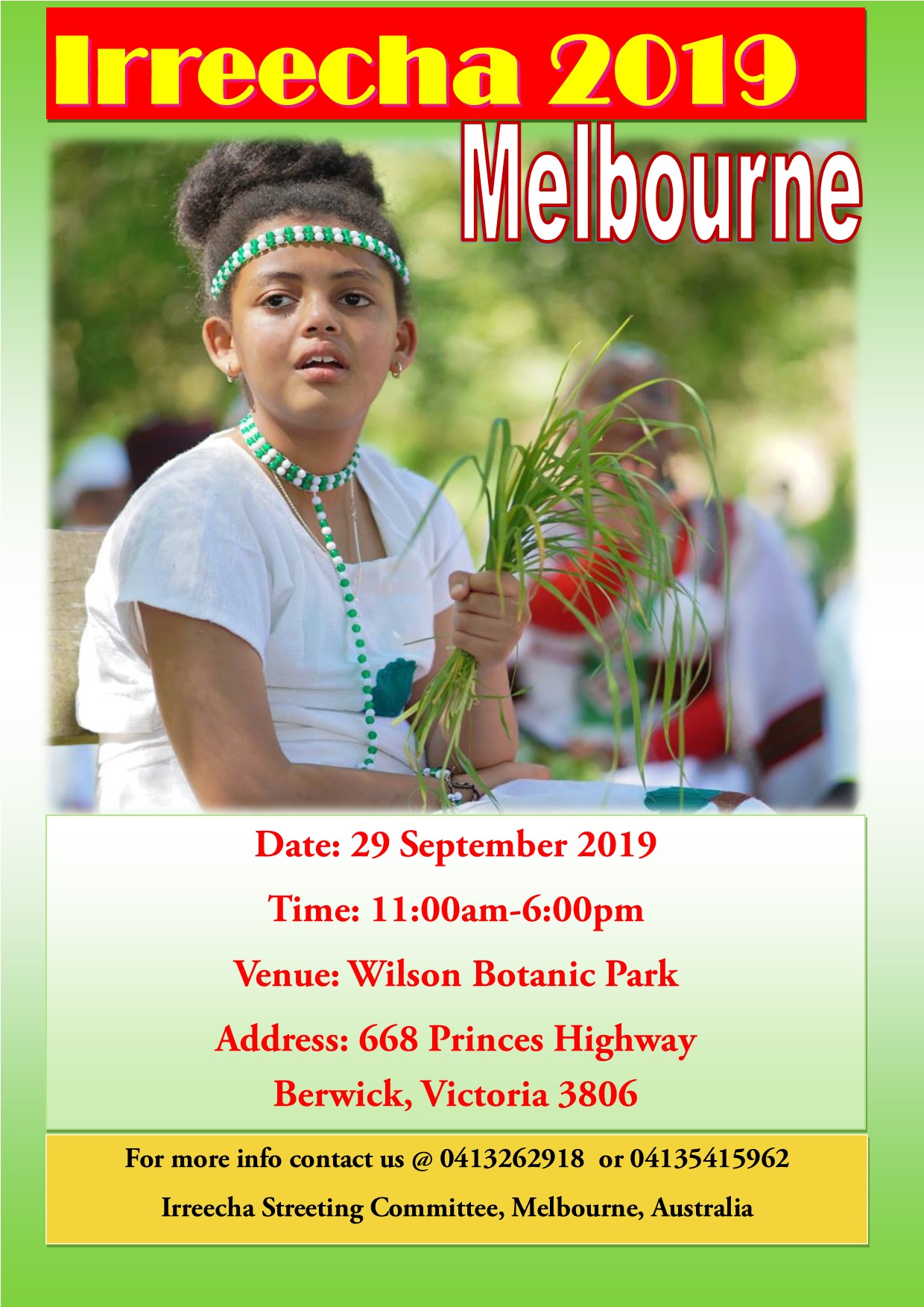
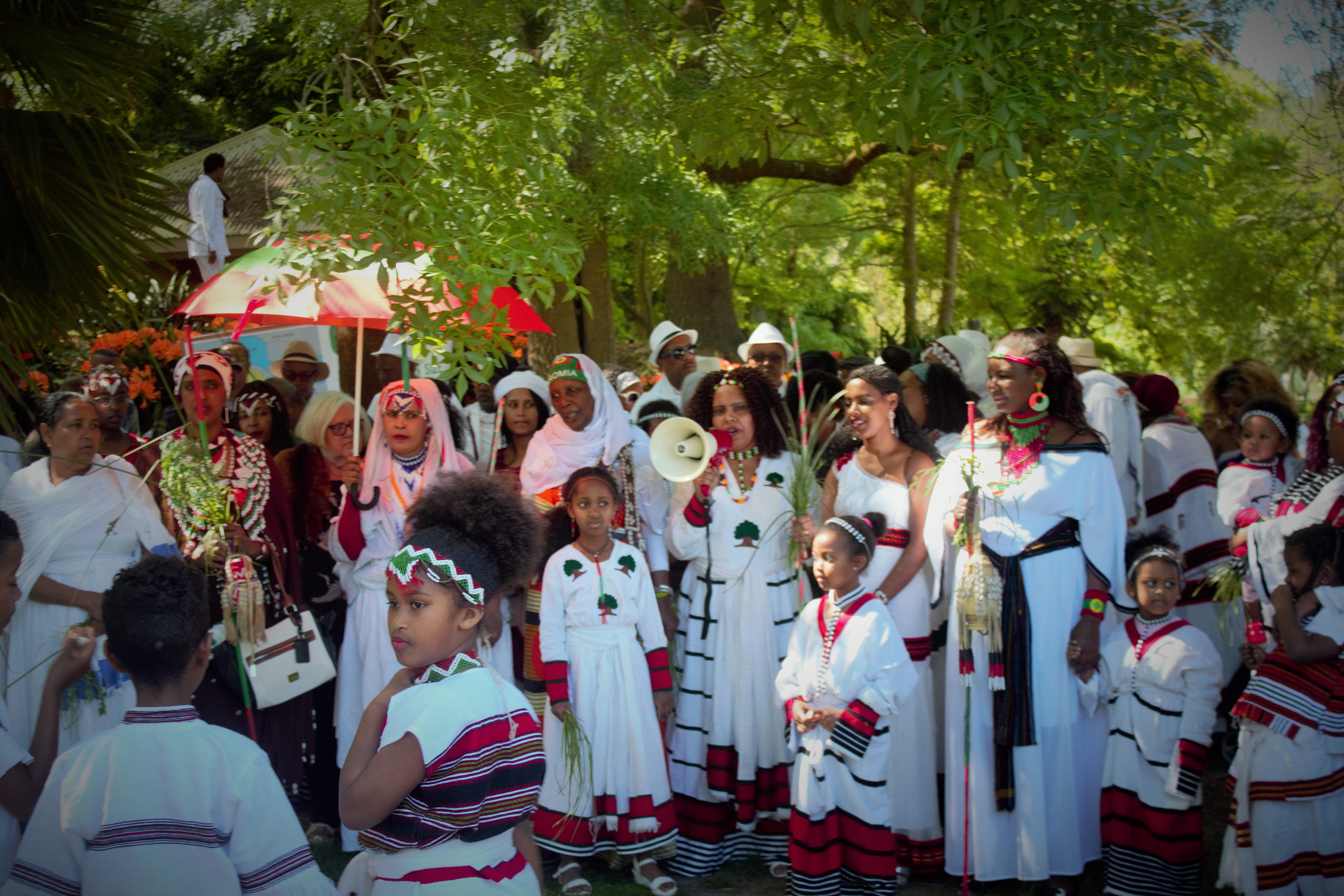
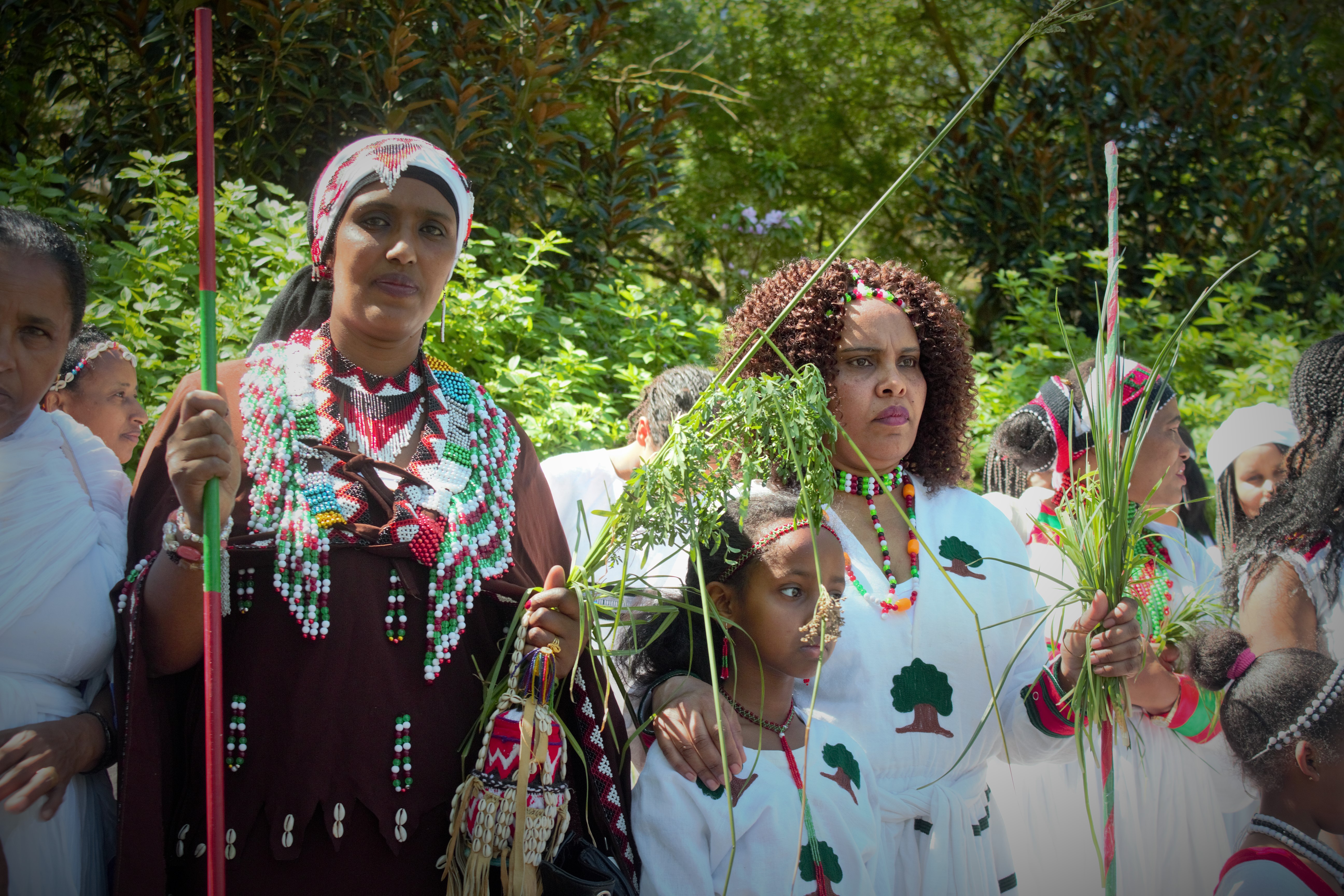
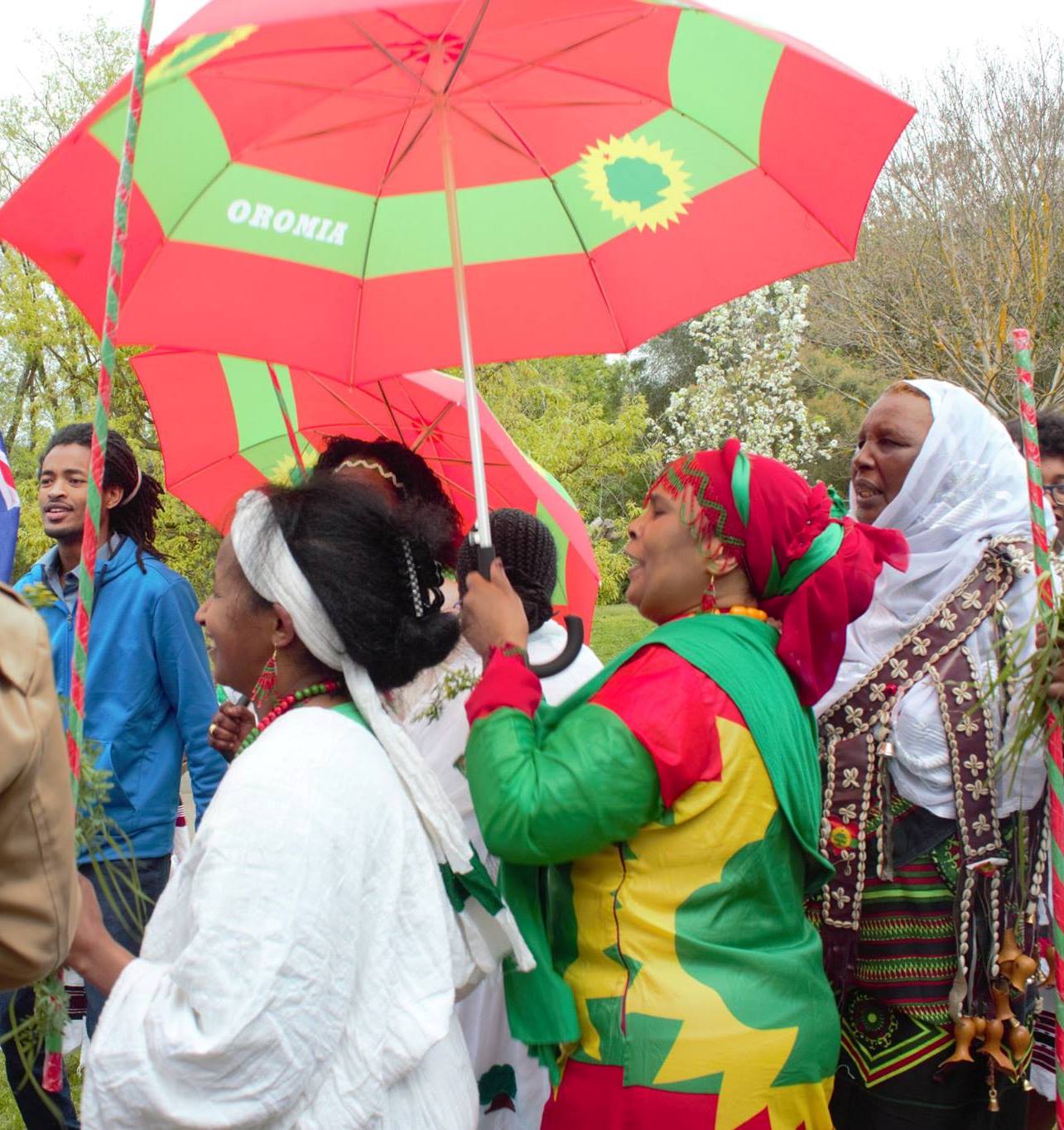
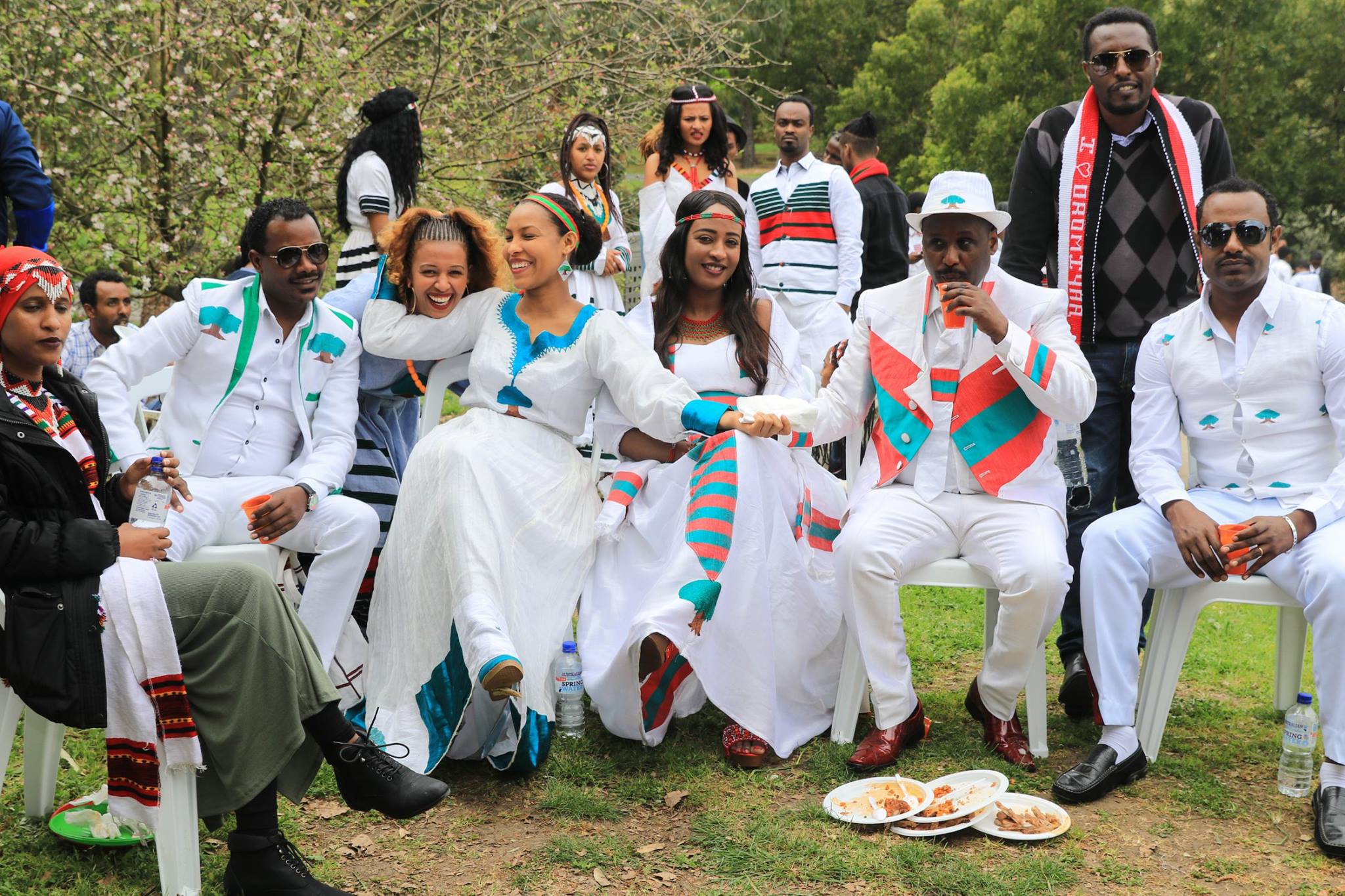
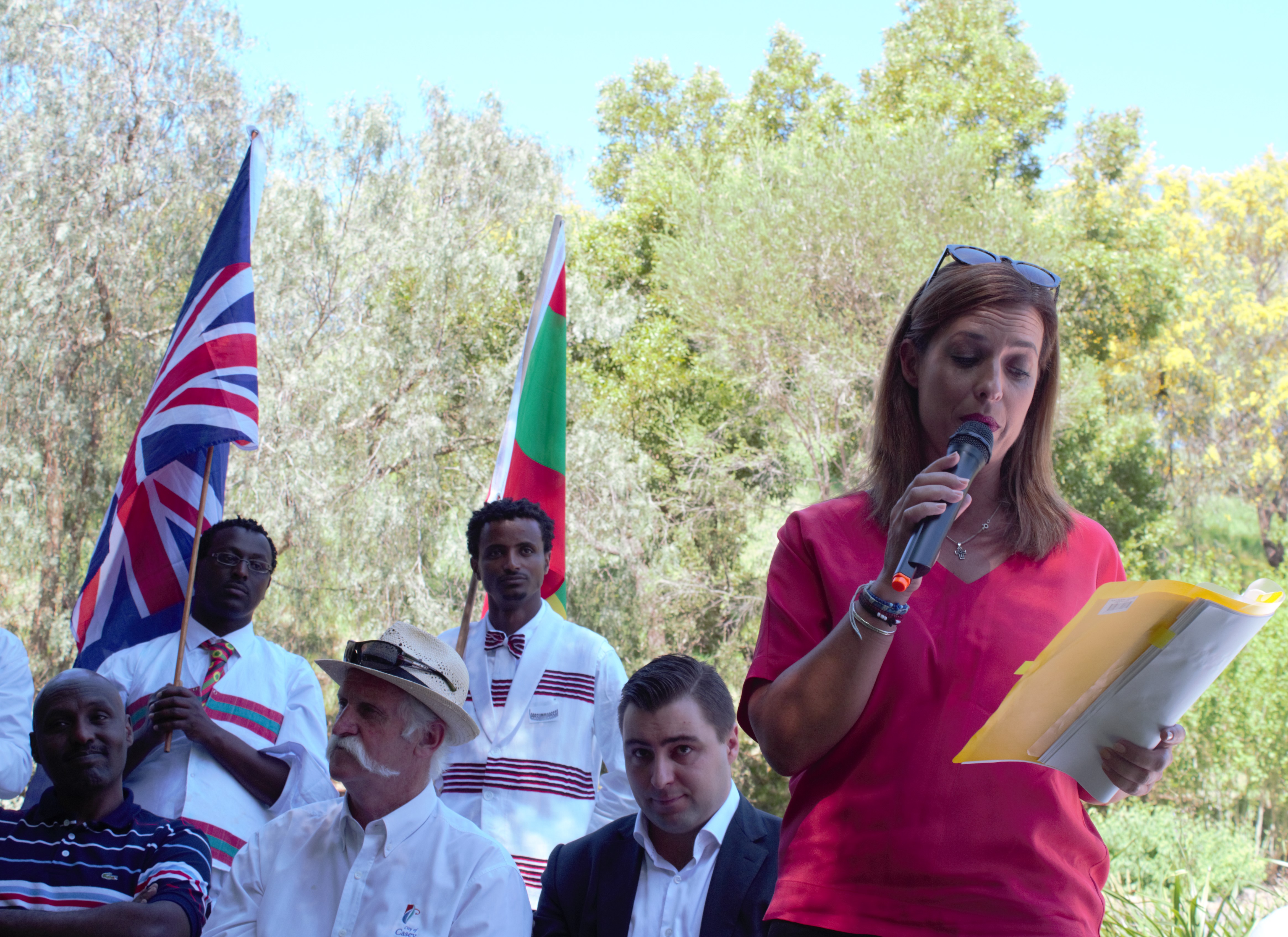
(Advocacy4oromia, Melbourne, 4 October 2019) — The Oromo Irreecha Birraa celebration held on 29 September 2019 for the 15th time in Melbourne, Victoria, Australia at Berwick Botanic Park.

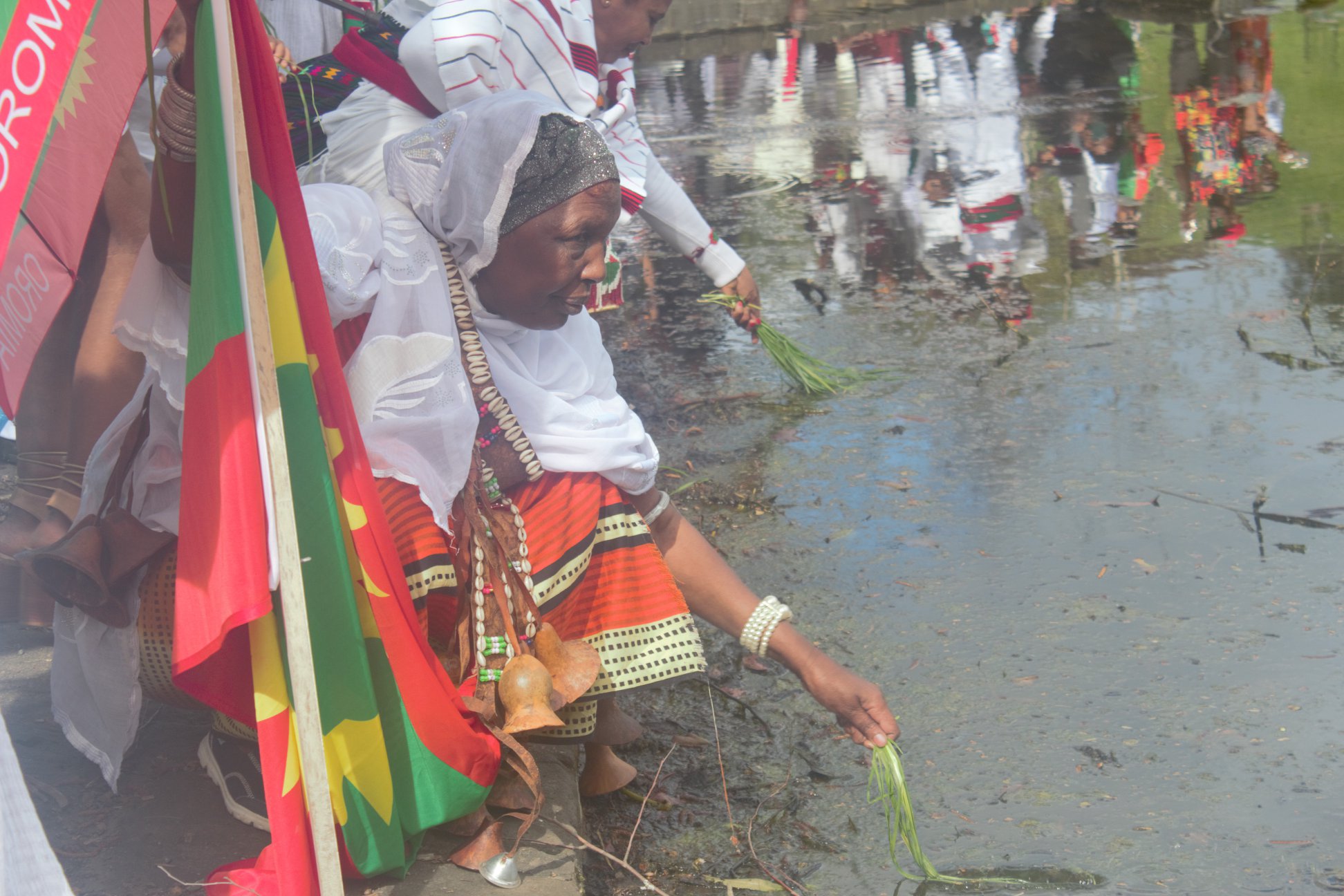
The ceremony was celebrated at Berwick Botanic Park to praise Waaqa (God) for peace, health, fertility and abundance they were given with regards to the people, livestock, harvest and the entire Oromo land.

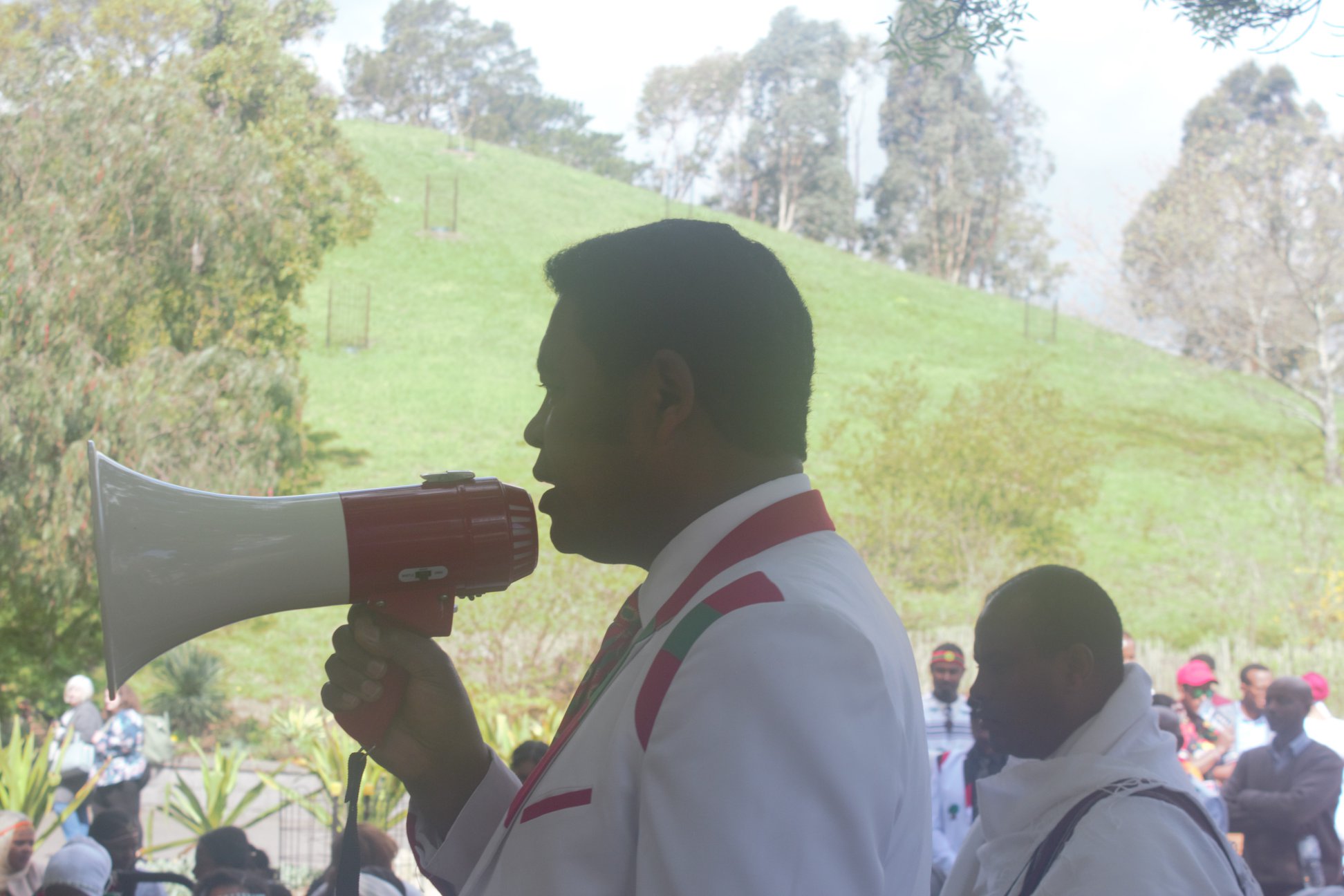
Head of the Irreechaa Committee, Ob Abdeta Homa said the celebration is to strengthen and promote Oromo culture, particularly the Irreechaa celebration in Melbourne.

Ob Abdeta Homa, Head of the Irreechaa Committee at Irreechaa 2019

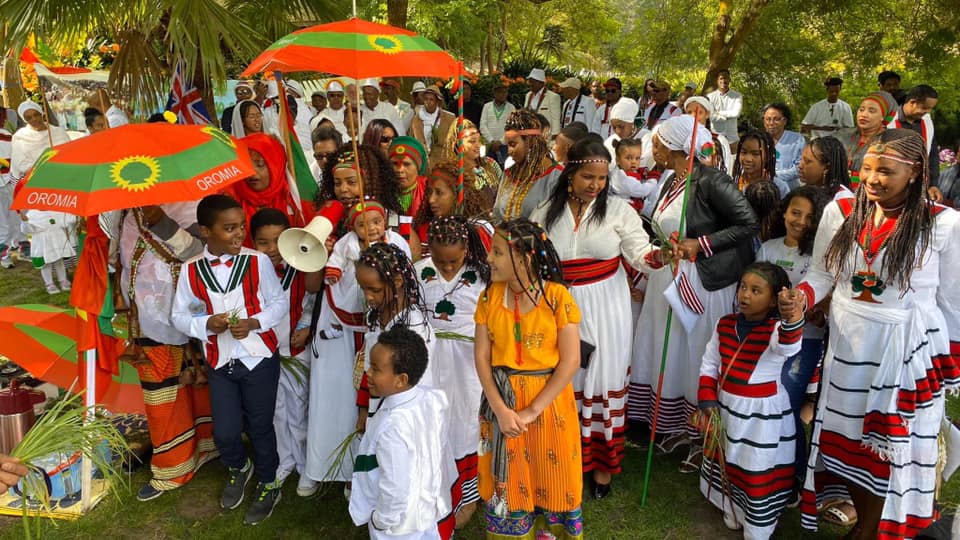
According to the organisers the festival was designed to provide a better understanding of Oromo peace, freedom, dignity, culture, history and humanity, to pave the way for promotion of the Oromo culture, history, lifestyle and practice.

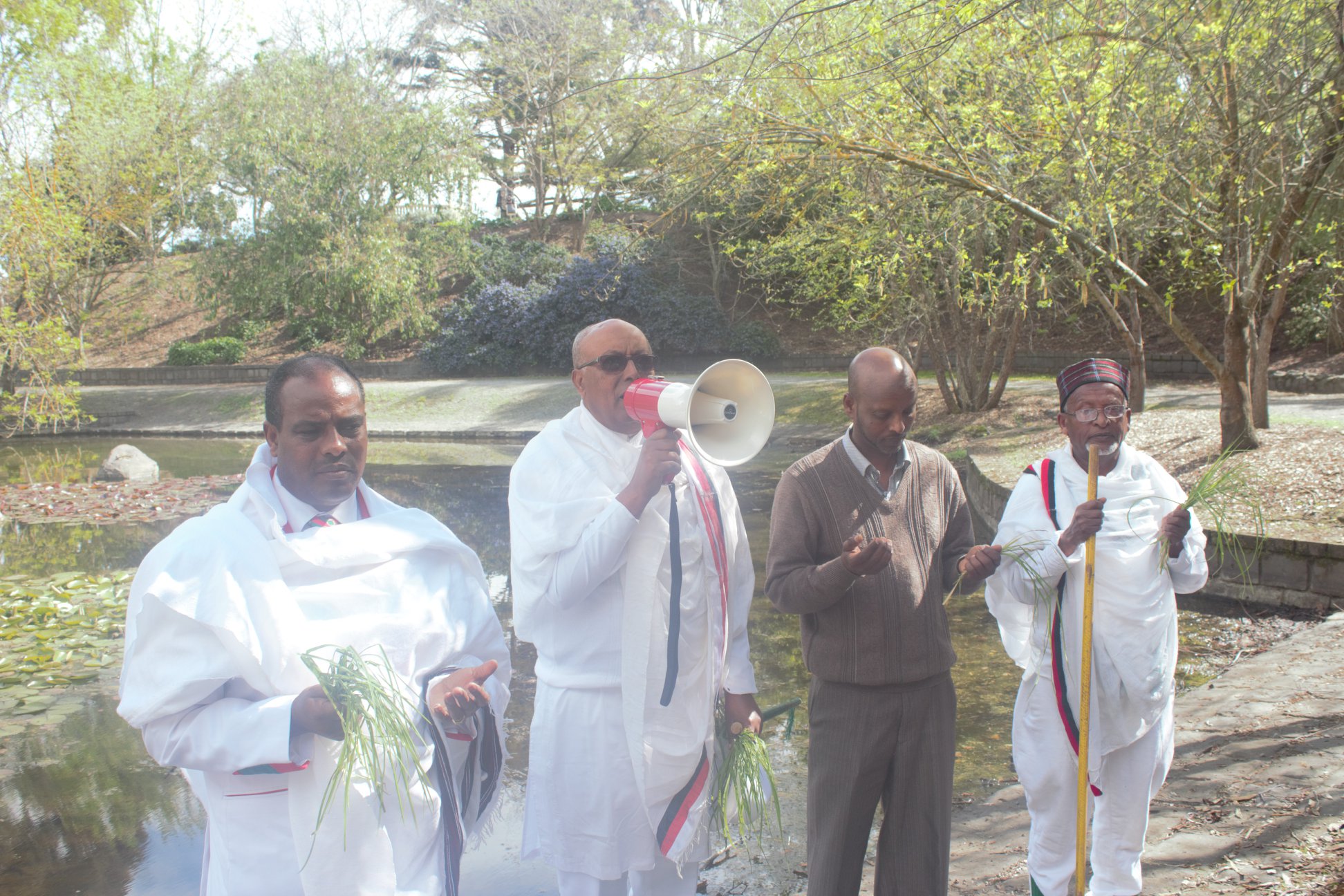
Oromo elders’ blessings at Irreechaa 2019, Melbourne

The ceremony honoured the Oromo elders’ blessings and wisdom, and eventually helped to preserve the Oromo heritage and strengthen the Oromo Peace and the progress of humanity. It is also committed to provide care and respect for mother earth.

Irreechaa is the annual Oromo people Thanksgiving Day that is celebrated every year in Birraa near the river bank or water and tree.

Irreechaa is celebrated every year in the end of September or beginning of October in various part of the globe where the Oromo community resides.

The celebration in Melbourne was held in the context of the country while cultural values of the Irreechaa celebration are maintained.

According to Irreechaa committee member Danye Dafarsha Irreechaa is a sign of reciprocating Waaqa in the form of providing praise for what they got in the past, and is also a forum of prayer for the future.

“Irreechaa is the celebration of peace, unity and cooperation where the celebrants carrying bunch of straw and daisies in their hands praising, blessing and praying Waaqa in their songs. It is very important for our community as it brings the community together and helps to connect and share experiences in their day to day life.”

After many years’ unseen events, the first national Irreechaa Festival was held in 1991 in Oromia, East Africa and later became an annual event, which now runs for five weeks, and is one of the most pleasant reminders in Oromia that spring has definitely sprung!

Ob Danye Dafarsha, Irreechaa committee member, Melbourne

“Here in Australia, Melbourne, we continue this fabulous event every year for more than fifteen years.

“The celebrations are unique in that the Melbourne celebration has come again and that contributes to the development of Oromummaa in the Diaspora,” Ob Danye said.

Currently, Irreechaa has got publicity among the non-Oromos (Ethiopians and non-Ethiopians alike) to the extent that Finfinnee City Administration recognized the celebration for the first time and granted Oromo the whole support for the ritual.

In the traditional religion of the Oromos, the spirit is the power through which Waaqaa  (The Almighty God) governs all over the world. Thus, Oromos believe that every creation of Waaqaa has its own spirit.

Moving Forward: Cultivate Peace

This year’s Oromian Irreechaa Festival is going to be bigger and better than ever, with a whole theme park devoted to Oromian Peace where everyone’s contribution is valued in peace building process and implementation.

The theme of this year national Thanksgiving Day is “Moving Forward: Cultivate Peace” in which it aims to celebrate Irreechaa festivals as a medium for bringing all Oromias together to cultivate and promote peace in our daily practice where the members are willing to work together to find the solution that meets the needs of Oromo people.

The theme also aims to create public awareness where Oromo cultural and religious issues will be discussed, to provide a better understanding of Oromo peace, culture and history, to pave the way for promotion of the Oromo peace, culture, history and lifestyle and to celebrate  Oromo Irreechaa.

What is Irreechaa?

Traditionally, the Oromo practiced Irreechaa (Thanksgiving) ritual as a thanksgiving celebration twice a year (in autumn and spring) to praise Waaqa (God) for peace, health, fertility and abundance they were given with regards to the people, livestock, harvest and the entire Oromo land.

Irreechaa is celebrated as a sign of reciprocating Waaqa in the form of providing praise for what they got in the past, and is also a forum of prayer for the future. In such rituals, the Oromo gather in places with symbolic meanings such as hilltops, river side and shades of big sacred trees.  These physical landscapes are chosen for their representations in Oromo worldviews, for example, green is symbolized with fertility, peace, abundance and rain.

Irreechaa is not only practiced among the Oromo in Oromia. As hundreds of the Oromo are in exile for different reasons, their culture, religion, language and identity also exiled with them. Because Irreechaa has a cultural ambiance in connecting the people to Oromo land and the creator, Waaqa, it still remained as strong element of connection between the Oromo in diaspora and home – Oromia.

In the past ten years or so, the Oromo across different parts of the world (from Toronto to Melborne and Bergen to Johannesburg) have come together and celebrated Irreechaa as a common icon of their identity. If anything could be mentioned in bridging the differences (political and religious) within Oromo in the diaspora, Irreechaa has become the major binding force not as a mere cultural or religious practice but for its conjoint constitution of culture and identity.

Unresolved Oromo Issues

For over six thousand years, the Oromo people maintained a unique national identity distinct from the national identity of Abyssinia. In 1900, the Abyssinian rulers invaded the land of Oromo people and embarked on a policy of occupation and oppression that seriously threatens the continued survival of the unique cultural and religious identity of the Oromo people. We are extremely concerned about the human rights abuses in Oromia. Tragically, a world that condemns dictators has largely ignored Abyssinia’s occupation of Oromo land.

The human cost to the Oromo people has been of tragic proportions. Hundreds of thousands of Oromo’s were killed outright or died as the result of aggression, torture or starvation. Over 8,000 sacred places and centre of Gadaas were destroyed. The repression of the Oromo people in their own land continues to this day and compounds the illegitimacy of the Abyssinian rule.

The Oromo people have demonstrated repeatedly against the Abyssinian occupation. Their struggle is manly nonviolent and worthy of our special attention. We continue to advocate for the cause of Oromo people and for peace, tolerance, human rights, non-violence, and equality throughout the region. As our freedom fighters say, for the peace and harmony to truly turn to Oromian, our stolen natural rights must be respected.

Our Theme: Cultivate Peace!!

The theme of this year Irreechaa celebration is simple: Cultivate Peace!! As Oromo, while we continue to advocate for the cause of Oromo people, we will work to build peace in Oromia through celebrations .

We can still overcome our multi-faces obstacles as fast as we holding our glory history and culture to ensure the survival of identity.  No matter where you live, you can begin to develop the art of peace building based on your own experiences and expertise. Here are some framed habits that will help us to learn how to cultivate peace in Oromia:

Habit #1 – Be Calm and Centered

At your deepest level, peace is the natural state of the mind. Not being peaceful happens in so many small ways, when you are worried, restless, distracted, uneasy, or dissatisfied. Begin being mindful of those signals from your inner world. When you feel them, take a moment to return to your calm space. You can pause and take a few deep breaths or meditate. Either works well. This is about learning how to act upon early signals that peace is not there inside.

Habit #2 – Conscious Participation

To create peace consciousness, stay out of conversations that include gossip, blame, backbiting, and discussions of how terrible the world is. I don’t mean for you to be Pollyanna and act as if everything is perfect, but I suggest focusing on NOT participating (feeding the fire) when you can feel that a situation is turning toward anger, resentment, envy, and hostility in any form.

Habit #3 – Don’t Take Sides

Peace consciousness wants peace to be equally shared by everyone. This isn’t possible if you take sides, judge against others, or indulge in us-versus-them thinking. Be aware of everyone’s right to have it. When you find yourself reacting with a knee-jerk response against a certain person, group, faith, ethnicity, or belief system, remind yourself that you can hold a different viewpoint while still wishing peace for all concerned.

Habit #4 – The Intention of Peace

Be in the intention and show up as your best Self. Anytime I witness or confront a situation I set the intention of a peaceful resolution to be found for everyone. You can sit quietly at times and set the intention to let your heart go out to those not at peace.

Habit #5 – Connect

When you get together with others with the intention of peace, the consciousness grows for everyone. Start finding ways to commune with others who want it. This could be singing with others, sitting with a friend, or discussing the topic with a sympathetic person. You could join a group that helps prevent violence. The key is to feel the warmth of sharing it with others.

Habit #6 – Be of Service

It does little good to be at peace passively in isolation. Let yourself experience the kindness, good will, and compassion you can bring to a troubled situation. It could be helping in a community project, volunteering to spend time with the elderly, or leading a book club. Your aim is to give and receive at the level of peace that benefits everyone.

Habit #7 – The Peace of the Soul

From the Soul’s perspective, there is only pure Being. Take time to meditate on compassion, reverence for life and unity. You can imagine seeing a light expanding from your heart in all directions. Let simply being here be enough. Realize deeply that you are an indispensable part of the journey.

እሬቻ የምስጋና ክብረ በአል ቀን! 

Yoseph Mulugeta Baba Ph.D., Onkololeesa 3, 2019

An Irreecha gathering in 1903 at Lake Hora Bishoftu.

እሬቻ በኦሮሞ ሕዝብ ዘንድ እንደ ቅዱስ በዓል ይከበራል። እሬቻ በዓል ለዋቃ ጉራቻ ምስጋና የሚሰጥበት ቀን ነው። የመልካም ነገሮች ሁሉ ምንጭ ዋቃዮ ነው። ሕዝቡ ለዚህ መልካም ስጦታ ከልብ የመነጨ ምስጋና ለአምላኩ የሚያቀርብበትና  “የዋቃዮ ስጦታ ተመልሶ ለዋቃዮ የምሰጥበት ቅዱስ በአል ነው” ብለው ከልቡ ያምንበታል። ስለዚህ እሬቻ ማለት “ስጦታ” ማለት ነው።

በኦሮሞ ሕዝብ ዘንድ ለምለም ሣር የሰላምና የብልጽግና ምልክት በመሆኑ፣ በእሬቻ በዓል ላይ የሚሳተፈው እያንዳንዱ ግለሰብ፣ ይህንን ለምለም ሣር በሁለት እጆቹ በመያዝ አምላኩን ያመሰግናል። ከሁሉም በላይ ክረምቱን ከበረዶ፣ ከከባድ ነፋስ፣ ከጎርፍና ከውርጭ የታደጋቸውን ታላቅና ቅዱስ አምላካቸውን አንድ ላይ ሆኖ ያመሰግናሉ። መኸሩንና አስመራውን ደግሞ እንድባርክላቸው ወደ ፈጣሪ ይጸልያሉ። ስለዚህ የእሬቻ በዓል ከጨለማ ወደ ብርሃን ላሻገረ አምላክ የሚሰጥ የክብር ዋጋ ነው።

ሀገር በቀል የሆኑ የእምነት በዓላትን የመገንዘብና የማብራራት ችግር ያለባቸው ኢትዮሮፒያንስ (Westernized Ethiopians) ግን፣ የእሬቻ በዓልን በተሳሳተ መንገድ ሲረዱና ሲተረጉሙ ይታያሉ። ለምሳሌ፤- በበዓሉ ላይ የሚደረገውን የአምልኮ ሥነ-ሥርዓት  በመመልከት፣ ሕዝቡ ዋቃዮን ሳይሆን ውሃውን አልያም ሰይጣንን “እንደሚያመልክ” አድርገው ይረዳሉ። ኦድላይ ሶቴቪንስን “በአቶሚክ ቦንብ ውስጥ ሰይጣን የለም፣ በሰዎች ልቦና እንጂ” እንዳለ ሁሉ፣ ሰይጣን በእነዚህ ሰዎች አይምሮ ውስጥ እንጂ በውሃ ውስጥ አይኖርም። ሰይጣን ዳክዬ ወይም ጉማሬ አይደለም—ካልጠፋ ቦታ ውሃ ወስጥ አሁን ምን ይሰራል! ባይሆን የሰይጣን ትክክለኛ አድራሻና ማደሪያ የሰው ልቦና ነው—ስለዚህ፣ኢትዮሮፒያንስ ሰይጣንን ልቦናቸው ውስጥ ይፈልጉት!

በተቃራኒው ውሃ የሕይወት ምልክት ነው። ለዚህም ነው ውሃና ልምላሜ እንደ ዋቃዮ ስጦታ የሚታዩት። ያለ ውሃ ሕይወት ቀጣይነት የለውም። ውሃ ዋቃዮ ለፈጠራቸዉ ልጆቹ የሰጠ ፀጋ ነው። ድሪቢ ደምሴ ቦኩ እንዳለው፤ “ኦሮሞ፣ ወንዝ፣ ጫካና ተራራ ይወዳል፤የተፈጠረበትና ፍቅር ያገኘበት ስለሆነ በየዓመቱ ለምለም ሣርና የፀደይ አበባ ይዞ ለእሬቻ ወንዝ ውሃ ዳርቻ በመሄድ፤ ተራራ ላይ በመውጣት፤ ለፈጣሪው ምስጋና ያቀርባል። በጤና፣ በሰላም፣ ለሰውና ለከብት እርባታ እንዲሰጠውም ይጸልያል።”

በሌላ በኩል #እሬቻ  ሃይማኖታዊ ክብረ በአል እንጂ ሃይማኖት አይደለም። ለምሳሌ፡- ፋሲካ፣ አረፋ፣ ጥምቀት፣ ገና ወዘተ ሃይማኖታዊ በዓሎች ናቸው እንጂ በራሳቸው ሃይማኖት አይደሉም፡፡ የኦሮሞ ሀገር በቀል ሃይማኖት #ዋቄፋና ተብሎ ይጠራል። Waaqa ማለት እግዚአብሔር ማለት ሲሆን፣ Faana ማለት ደግሞ መከተል ማለት ነው። ትርጉሙም ፈጣሪን/እግዚአብሔርን መከተል ማለት ነው።

ለኦሮሞ ሕዝብ  ዋቃ የሁሉ ነገር አስገኝ፣ የማይጠፋ፣ ማይለወጥ፣ ቋሚና ዘለዓለማዊ ነው።  ነው። የሁሉም ነገር ምንጭ ዋቃ ነው። ዋቃ ምሉዕ በኩለሄ (omniscient)፣ ሁሉን ቻይ (ominipresent)፣ ዘላለማዊ (eternal)፣ ፍጹም (absoulute)፣ እና ገደብ የሌለው (infinite) ነው። ዋቃ ፍጹም አንድ ነው።  ሀገር-በቀሉ የኦሮሞ ሥነ-እውቀት ዋቃን የሚገልጽበት መንገድ ጥንቃቄ የተሞላበት ነው። በማንኛውም ጊዜና ቦታ ዋቃ የሚለው ቃል ሲጻፍም ሆነ ሲነገር ‹‹ጉራቻ›› የሚለውን ቅጽል አስከትሎ ነው። ቀጥተኛ ትርጉሙም ‹‹ጥቁር›› ማለት ሲሆን በኦሮሞ ንጽረተ-ዓለም ጥቁርነት የልዕልና ምልክት ብቻ ሳይሆን፣ የዋቃን ቀዳማዊነት (Originality) የሚገልጽ ነው። ጥቁርነት የዋቃ ምንነት በሰው አህምሮ ሊደረስበት የማይቻል እጅግ ፍጹም ምስጢር መሆኑን የሚገልጽ ጽንሰሐሳብ ነው።

እንግዲህ እሬቻ የሰላምና የእርቅ ጊዜንም ስለምያስታውሰን ይህንን በዓል ስናከብር:-

(1ኛ) ለሀገራችንም ዋቃዮ አንድነት፣ ፍቅርና ሠላም እንድያመጣ እንጸልያለን። በተለይ ለሆዳቸው ሳይሆን ለህሊናቸው ብቻ ሲሉ ሕዝባቸውን በቅንነት የሚያገለግሉ ግለሰቦችን ዋቃዮ ሀብታቸውንና ልጆቻቸውን እንድባርክላቸው ወደ ዋቃዮ ጉራቻ እንጸልያልን፤

(2ኛ) በተቃራኒው በሕዝብ ስም የሚነግዱ ሆዳሞች፣ ወንጀለኞች፣ ነፍስ ገዳዮች፣ ሌቦች፣ አጨበርባሪዎች፣ አስመሳዎች…ወዘተ ዋቃዮ የሕዝቡን ለቅሶ ሰምቶ በታላቅ ክንዱ ወደ ፍርድ እንዲያመጣልን  ለምለም ሣር በሁለት እጆቻችን በመያዝ ዋቃዮን እንማጸናለን።

(3ኛ) ስለ ድሆች አሰቃቅ ሁኔታ ሳይሆን፣ ስለ “ፔንሲዮን”ና “ዶላሪዝም” አብዝቶ የሚያስቡ የመንግስት ባለስልጣናትና የሃይማኖት አባቶች እንደ አሸን ፈልተዋልና፣ ዋቃዮ የ“ሳፉና ሳፌፋና” ምስጥር እንድገልጥላቸው ለምለም ሣር በሁለት እጆቻችን ይዘን ወደ እርሱ እንፀልያልን፤

(4ኛ) ስለ አይምሮው ሳይሆን፣ ስለ አለባበሱና ሆዱ ብቻ ብዙ የሚጨነቅ ወጣት ትውልድ ተፈጥረዋልና፣ ዋቃዮ ጉራቻ ‹ልብስ› ሳይሆን ‹ልብ›፣ ‹ጋቢና› ሳይሆን ‹ልቦና›፣ ‹ፎቅ› ሳይሆን ‹ሐቅ›፣ ‹ድራፍት› ሳይሆን ‹ድፍረት› እንድሰጣቸው ለምለም ሣር በሁለት እጆቻችን ይዘን ወደ እርሱ እንፀልያልን!

የእሬቻ ቅዱስ በዓል ጸሎትን አንድ ላይ እንጸልያልን፡

ሀዬ! ሀዬ! ሀዬ!
ሀዬ! የእውነትና የሰላም አምላክ!
ሀዬ! ጥቁሩና ሆደ ሰፊው ቻይ አምላክ!
በሰላም ያሳደርከን በሰላም አውለን!
ከስህተትና ከክፉ ነገሮች ጠብቀን!
ለምድራችን ሰላም ስጥ!
ለወንዞቻችን ሰላም ስጥ!
ከጎረቤቶቻችን ጋር ሰላም ስጠን!
ለሰውም ለእንስሳቱም ሰላም ስጥ!
ከገዳ ባህላችን ከዋቄፋና እምነታችን ጋር አኑርልን!
አንድነታችንን አጠንክርልን!
ትናንሾቻችንን አኑርልን!
ጤነኛና ብልህ ልጆች ስጠን!
ወላድ በጤና ትገላገል!
የወለደችውን አሳድግላት!
ሕጻን በእናቱ እቅፍ ይደግ!
ለወላድ ጤናና ዕድሜ ስጣት!
ላልተማረው እውቀት ስጥልን!
ኦ አምላክ አደራጀን!
አደራጅተህ አታፍርሰን!
ተክለህ አትንቀልን!
ፈጥረህ አትዘንጋን!
ክፉውን ያዝልን!
ከወንጀልና ከወንጀለኛ አርቀን!
ምቀኛና ቀናተኛውን ያዝልን!
ከመጥፎ አየር ጠብቀን!
ንጽሕ ዝናብ አዘንብልን!
ያላንተ ዝናብ የእናት ጡት ወተት አይሰጥምና!
ያላንተ ዝናብ የላም ጡት ወተት አይሰጥምና!
ያለንተ ዝናብ መልካው ውሃ አይሰጥምና!
ያላንተ ዝናብ ምድሩ ቡቃያ አይሰጥምና!
ከእርግማን ሁሉ አርቀን!
በአባቱ ከተረገመ አርቀን!
በእናቷ ከተረገመች አርቀን!
እውነትን ትቶ ከሚዋሽ አርቀን!
ከረሀብ ሰውረን!
ከበሽታ ሰውረን!
ከጦርነት ሰውረን!
ልጄ እያሉ አልቅሶ ከመቅበር ሰውረን!
በጥቁር ፀጉር ከመሞት ሰውረን!
በነጭ ፀጉር ከመደህየት ሰውረን!
አርሶ ምርት ከማጣት ሰውረን!
ከሌላ ሰው ጦስ ሰውረን!
ከከፉ ነገር ሁሉ ሰውረን!
ገዳው የሰላም፣ የልምላሜና የድል ነው!
ሀዬ! ሀዬ! ሀዬ!

Athletes united, but rival fans show Ethiopia’s divides

By JAMES ELLINGWORTH, AP SPORTS WRITERDOHA, Qatar — Oct 2, 2019, 9:27 AM ET

The Ethiopian supporters are the loudest in the stadium at the track world championships — because they’re trying to drown each other out.

As Ethiopian runners clean up on the track and celebrate together, the fans are divided into two rival political camps.

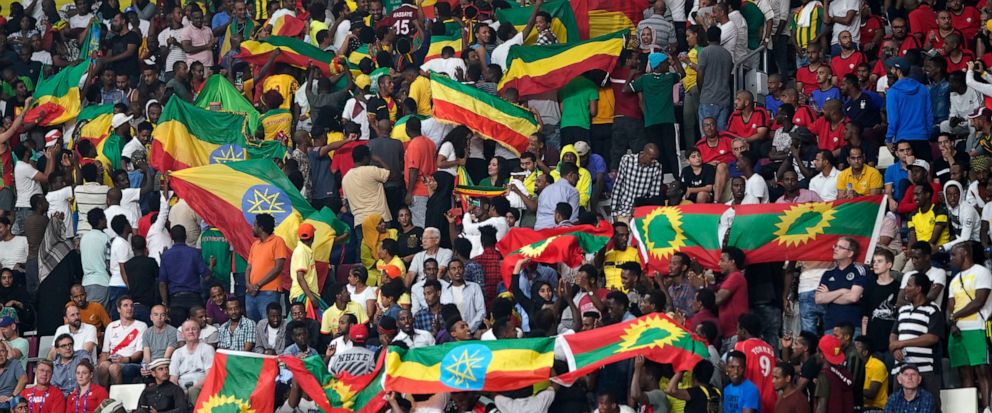
One group displays pictures of past monarchs like Emperor Haile Selassie and flies an older version of the national flag, one which some Ethiopians consider less inclusive. The other fans champion a long-marginalized ethnic group, which produces many of the nation’s great distance runners.

Around 100 fans from the Oromo ethnic group, many of them migrant workers living in Qatar, fly the flag of the once-banned Oromia Liberation Front at every distance race at the championships.

The world champion in the 5,000 meters, Muktar Edris, seemed to endorse them Monday when he picked up and wore an OLF flag thrown to him by fans after winning gold. That had disappeared when Edris arrived to speak with reporters, draped once again in the Ethiopian national flag.

A team official refused to translate a question from The Associated Press to Edris about the OLF flag, saying: “Athletes only represent their country, not a political party.”

The divisions between fans were starker in the women’s 10,000 on Saturday, when Sifan Hassan won gold for the Netherlands. She was born in Ethiopia’s Oromia region but left as a teenage refugee before eventually gaining a Dutch passport. The OLF-supporting fans backed her, but others were left cold by an athlete not wearing Ethiopia’s uniform.

At one stage, a group with the national flag moved down to the front of the stand to cheer Ethiopia’s runners, antagonizing the nearby OLF supporters. Qatari police moved in to keep the groups separate as they called to each other.

The Oromo are the largest of Ethiopia’s numerous ethnic groups, but have historically had little influence in the ruling classes, though the reformist Prime Minister Abiy Ahmed is Oromo.

In recent months, several parts of Ethiopia have experienced deadly unrest fueled by ethnic tensions and disputes over resources. In the past week, Ethiopian officials disclosed more than 1,100 people were killed in the unrest that is putting a strain on the reforms the new prime minister is taking in the East African nation.

The OLF previously waged guerrilla war against the Ethiopian state and remains controversial after its official return to the country last year by invitation of the new Ethiopian government. OLF members kept their arms and some have allegedly continued to commit violent acts amid a split between the group’s political and military wings.

The OLF says its members were not treated well after their return home last year and the government is still harassing their members.

In the Khalifa International Stadium, some Oromo fans were resentful of the group waving old-style national flags, accusing them of ties to the Ethiopian embassy and of wanting a return to the monarchy, which Ethiopia abolished 45 years ago.

“This is Oromia,” said Kemal Ketubo, in the crowd with the OLF flags. “We are supporting our team, the national team of our people.” Gesturing to the group with Ethiopian national flags, he said “they want the 18th century, like it was before.”

Fans waving Ethiopian flags dismissed the division. Zerhuan Lanta said the championships should be a moment of unity for Ethiopia, where distance running is by far the most popular sport.

“Every moment, you have to watch,” said Lanta. The divisions among the fans were just “a political issue,” he added.

———

Associated Press writer Elias Meseret in Addis Ababa, Ethiopia, contributed to this report.

Source: https://abcnews.go.com/Sports/wireStory/athletes-united-rival-fans-show-ethiopias-divides-66002725?cid=share_facebook_widget&fbclid=IwAR2B3d5uIuhrR0d4QbONOMjWqZZbZAfhDSDpHfcGeVf3S_MeTJd2JFkQVvs

Gooliin Maatii Keessaa maal?

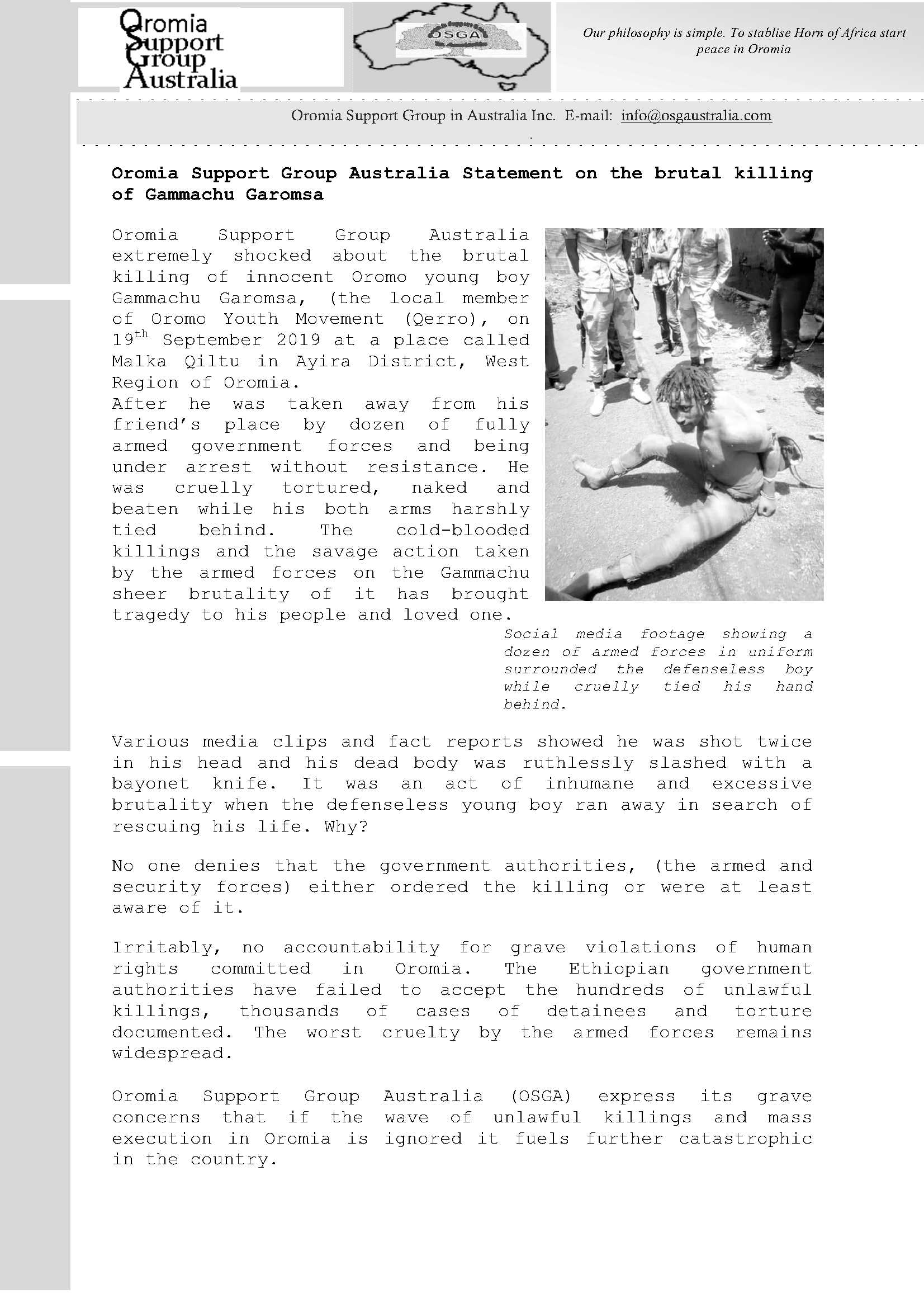
OSG Australia Statement on the brutal killing of Gammachu Garomsa


For the PDF format: Brutal killing and its irrevrsible heartbeaking

Citizenship versus Identity: the current political discourse in Ethiopia

By Alemayehu Biru (PhD), September 26, 2019

This topic bears a very common binary way of putting complex sociopolitical issues by politicians and, at times, even by scholars, as if those binary concepts are as distinct entities as orange and banana.

This is expressed in its most rudimentary form in the current Ethiopian political discourse. Raise any kind of sociopolitical issue, you are prone to be categorized either as citizenship or identity politics promoter. The binary choices are considered to be the only two alternatives in representing political interests or ideologies of the country; And they are often presented not just as two different concepts but rather as antonyms. We are told, those who are pro citizenship are more of a political, rational and universal perspective, while those with identity politics are more of a primordial, particularistic and emotionally charged perspective. Such categorization makes no exception: It applies almost to all positions in respect to every specific policy issues such as education, economy, environment, election, democracy or any other roadmap issues that are related to the future political course the country ought to follow. Such a very general but ironically a narrow categorization has been pronounced even by the regime whose coming into being was justified by its opening-up of the political space. Opening up the political space while narrowing down the horizons of political thought itself! A very interesting paradox!

This article aims at examining whether this binary way of understanding is, theoretically, tenable and, practically, be helpful in resolving the major political issues of the country. Let me embark on the issue at once, without much methodological pedantry, by asking: Can the so called “Citizenship Politics” be exclusive to that of Identity? In order to provide answer to the question, we need to know what citizenship is in the first place.

Citizenship as Membership

I don’t think there is a single conception of citizenship as such. Leaving aside the historical disparities, there are different conceptions by different political thoughts such as liberals, social democrats, socialists or republicans. For liberals citizenship is a membership to a given political community whose primary responsibility is to fairly distribute, secure and protect the basic liberties of each member. Republicans see it as a membership to a political community that should have a practical expression in collectively participating in the decision-making-process and the corollary sense of patriotism based on a historically established public moral virtues. Social democrats and socialists give much emphasis to equality, welfare and solidarity as the most binding elements of citizenship.

Whatever differences these conceptions may mean, there is one common understanding among all of them: citizenship as membership to a political community.

Membership is not however a wholesale affair. As much as it designates inclusiveness to those it is conferred upon, it also implies exclusivity to those not. The best example to mention here is the conception of the Ancient Greek, generally, much eulogized to be the source of modern understanding of citizenship and democracy.

In ancient democracy, citizenship means membership to the free male inhabitants of the city states. The adjective free immediately implies the unfree, the slaves, who were mostly war prisoners, as much as the adjective male outrightly disqualifies the female. Citizenship is valued for the privileges it bestows upon some in exclusion of others. In other words, what makes one appreciate or enjoy the value of citizenship lies more in its exclusivity than in its inclusivity, in its negativity than in its positivity. A citizen is one who is not a slave or a female. A citizen is defined by what he is not. This is because the talk about citizenship makes little or no sense, if all human beings in that community are equally citizens.

As the saying goes “freedom for the pike is death for the minnows”, the privilege of the citizens can only feed itself on the inhibition of the non-citizens.  All those rights of citizenship – be it property right, social, legal or political rights, can only be realized by and through those who are deprived of those very rights. The liberty to be a proprietor, a politician, an artist or a philosopher presuppose in practice, as Aristotle honestly remarked, the existence of physical laborers for them to have the necessary leisure time to exercise their privileged activity. The liberty to be a slave master presuppose the existence of slaves and the necessary jurisdiction and theoretical justification for the relationship. The concept citizenship was conjoined therefore with membership to each city-state as defined and justified in its legal, political and philosophical system.

As long as this membership is in respect to individual-state relationship, not in respect to ethnic or religious identities, one may argue that the Ancient Greek conception of citizenship is purely political. But this is a very superficial understanding as the issue of ethnic or cultural diversity was not at all an issue in ancient Greek city states. All city states were culturally, linguistically and even ethnically homogeneous. Besides this fact, there is nothing political, for example, about the natural identity of a female-exclusion except, on the contrary, that ascriptive identity is politicized in order to justify male domination. What is political about the alien who became a slave because he was conquered, if it is not the otherness in him be politicized in order to justify social stratification, political domination and thereby economic exploitation? Because each city state was considered to be a sovereign political entity albeit parallel to the nation-states of the modern time, political membership was eventually determined by identity (by gender identity or the city state to which one belongs). Therefore, the interplay between political and identity based membership in defining citizenship is already apparent in Greek democracy itself. It came to be even more apparent in the Eras of the Roman Empire and the subsequent aristocratic European colonial empires.

Citizenship as Kinship

Under the Roman Empire and all the subsequent empires, social stratification and the corresponding privileges have been diversified with more hierarchical membership to the state. Though that hierarchy has been changing with the ever expansion of the empire, there were generally four kinds of membership to the Roman Empire: proper citizens of Rome who were called civesLatins, the surrounding Latin language speaking people (who had some abrogated rights with the possibility of promotion to cives), the so called peregrines, the alien or outlandish, and finally the slaves, the conquered, devoid of any human rights whatsoever. The qualification for citizenship emanated not merely from residence membership to Rome but rather from the status of parents. It was to be inherited by birth. Therefore, simple membership must be determined by kinship.

In order to control and verify citizenship as a kinship, the Roman Empire is known for its creation of what we know today in the Western world as a three-part name – whereby the last one should bear the name of the tribe from which the individual under discussion descended all through generations. The tria nomina, as it was called, was a sign of Roman citizenship, legally prohibited for others to adopt it, in order to protect and preserve the purity of the Roman citizenship.

This tradition has descended to the later emerging feudal systems to the point the concept citizenship be identified only with the aristocratic class by reducing all others to mere subjects. Later on, even the aristocratic class came to be denied that status with the ascendance of absolute monarchy to the point the very purpose of State and politics itself became nothing but to full fil the Will of God in and through the Emperor. Since the Emperor was constitutionally above the law, there was no any sort of right or liberty of any one that could be taken for granted. Even members of the ruling class were not all citizens as long as their liberties and rights are ultimately dependent on the Will of the Emperor – not on the law of the state. The law itself is an institutionalized expression of the Emperor’s Will, which was tantamount to the Will of God as the Emperor was proclaimed to be an elect of God Himself. So there was no basis of the concept citizenship under the system of empires, which were basically territorial states rather than nation-states.

Ethiopian Political Orthodoxy

There is no a more perfect example in the modern time than the Ethiopian Empire in demonstrating the alienation of the entire political community itself to the status of subject,  not to speak of the mass of peoples.

I don’t really know the etymological root of the Amharic word zega or zeginet, equivalent of the concept citizen and citizenship, respectively. But we all know for sure that the concept must be alien to Ethiopia since there have never been citizens in the entire history of the country to this date. A minister or a senate dignitary in the parliament oaths and presents himself as a personal servant of the Emperor, never of the Nation-State. This tradition has continued to be practiced even after the abolition of the monarchy under the personal dictatorship of Mengistu and Meles Zenawi. Loyalty to the leader is the most important measure for public office. Government and heads of government are the only sovereign entities.

Even the concept state is missing in Ethiopian vocabulary in the sense that the modern world understands state as an organized political community based on the will of its people. The Amharic word for government is Mengist, but it also means state. It appears therefore that government and state are conceptually interchangeable as they have been in political practice. Mengist in Ethiopia is apriori to society and state both in its practical importance and logical primacy. In other words, Mengist has always been the raison d’etre for the existence of state and society, not vice versa. This is true not more about Ethiopian political history than it is about its present political condition.

In Ethiopia, citizenship has never been a reality so far in which ever form it may be. However, it became everything all of a sudden in the current Ethiopian political discourse, particularly, for those political forces who consider themselves unitarist as opposed to those federalists. The reason is obvious. The unitarists consider the issue of citizenship as uniting, but not clear as to how it can be uniting without appealing to the issues of identity which much of the largest political community consider of the essence in defining the very concept of citizenship itself. In order for the concept of citizenship to be uniting, universal and political, as the unitarists often claim it to be, it needs at least, conceptually, to be inclusive of what it considers to be particular, primordial and sentimental. Otherwise, the concept citizenship would turn out to be a universalized particularity, to the best, or an empty abstract concept which has no political relevance whatsoever.

The issue at hand is not whether the question of citizenship should occupy a central importance in the future Ethiopian politics but, rather, whether it should be all inclusive or not. All federalist forces recognize its importance but not as a means of self-negation. They conceptualize citizenship as membership to a political community in which different interests are considered to be independent agents in determining the very nature and form of that political community. That means citizenship for them is more of a substantive right than being merely a procedural one. It must include among others the right to make the political community itself, not just the right to maintain it as unitarists consider it to be. According to the unitarists, citizenship right in Ethiopia would be achieved, if fair and free election takes place without much structural change. According to the federalists, however, citizenship cannot be achieved short of making a socio-political contract that guarantees the sovereignty of the peoples as it is the case with all modern democratic societies. Citizenship should be understood as authorship.

Citizenship as Authorship

It was only in 18th century pioneered by the Enlightenment movement that nation-state started to emerge as a reaction to the extremely suffocating empires. Nationalism became the new galvanizing ideology that gave birth to democracy and nation-states. As Habermas correctly put it “The nation-State and democracy are twins born out of the French Revolution. From a cultural point of view, both have been growing in the shadow of nationalism”. Freedom of the individual from the tyranny of the state and society, on the one hand, and freedom of nations from the yoke of empires, on the other, are considered to be necessary corollaries.  Thus a new conception of citizenship as authorship.

Since the French Revolution, democratic nation-states started to understand themselves as associations of free and equal citizens. Membership to a political community depends on the principle of voluntarism as it has been articulated in socio-political contract theories by the great minds – ranging from Thomas Hobbes, John Locke through the Frenchman Jean-Jacques Rousseau to the contemporary American political philosopher, John Rawls. They all underlined in their theories that no state or political authority should any longer be justified by appealing to Nature or God. Because all human beings are by nature rational and therefore free and equal, they are autonomous agents whose will and only will matters in the creation and maintenance of a political community. The social agreement made among its inhabitants is the only source of legitimacy both for its coming into being and further maintenance. All the institutions such as state and government emerged thereof are only instruments of that popular covenant and, therefore, means never ends in themselves. Peoples’ sovereignty is sacrosanct. It is precisely this sovereignty which is the bedrock of citizenship. Citizenship is not just a set of rights that enable citizens only to elect their government every four or five years but essentially authorship to the very law that creates and governs a political community. Freedom and authority are no longer contradictory in this case since people should abide only to their own will.

Those great contractarian theorists assumed ethnic and cultural homogeneity for their theories to be true. Nation-State was both their premise and objective. In case assimilation is successful, as it was with France, the nation-state is the premise from which the contract should proceed. If a nation failed to be a state as it is the case with pre-Bismarck Germany, the contract theory provided the rational to create it. And in empire states like Austro-Hungary, the contract theory has justified their disintegration and encouraged, instead, the emergence of new nation-states as natural course of socio-political development.

Alternatively, it also envisioned federal system as a means to coup-up with the new reality in those empires like Great Britain, Spain, Belgium etc. so that group identities be preserved, protected and promoted within the larger political union. Multicultural citizenship is taken, in this last case, as a mediating concept between the universal values of freedom of the individual, on the one hand, and freedom of cultural, linguistic or ethnic communities, on the other. Self-determination (voluntarism) both at the level of individuals and communities became the key to understand what modern citizenship should be. This has become an international norm particularly in post 2nd World War and even more so in post “Cold War”. With the ever globalization of democracy as a World order, it became imperative to recognize collective identities such as race, ethnic, culture, gender etc. Ironic as it may sound, globalization must be conjoined with pluralism – as the coming into being of the European Union became the main reason to thematize pluralism as the most important concept of political philosophy in our time.

Liberalism, communitarianism & Pluralism

In the last three decades, there have been a steadily growing interest in the issue of group diversity by political philosophers. Tension between globalism and nationalism, mass immigration and the rise of minority rights, ethnic conflicts and breakup of nations in  Eastern Europe, increasing integration of the European Union conjoined with the persistence of sense of distinctness among members, ever rising strive of gender, sexual orientation, environmental movement etc. are some of the major practical reasons for this. Explaining the issue of how right claims of those diverse forms of group identities be related or connected to the established liberal-democratic principles of freedom is the major theoretical issue of our time. Basically, liberalism and communitarianism are the two contending school of thoughts in that regard – theoretically initiated by an American philosopher John Rawls in his monumental work A Theory of Justice. The third line of thinking I termed above as pluralism is a dialectical outgrowth of the debate between the two.

Liberals are generally well known for their individualism.  As they are here represented by John Rawls, the individual, as free and rational being, is said to be autonomous by his/her nature. The practical implication is that liberty of the individual must be protected not only from political authority but also from the cultural one – as social norms and traditions have been oppressive to the development of human rationality.  Not only state is oppressive but also customs and cultural values. Therefore, individual liberty and freedom should be seen in contradistinction to any particular collective identity. As John Rawls aptly puts it, the priority of individual liberty is uncompromising “that even the welfare of society as a whole cannot override.” As the self is prior to its ends, individual right should be pursued independent of any conception of good. According to Rawls, the essence of citizenship lies in the liberty of the individual to formrevise and change social conceptions of the good – not in sharing definite moral values or some distant collective or national goals. Otherwise, he argues, the whole idea of social contract does make little or no sense. The social contract should serve not to come up with a pre-shared conception of Social-Good but rather to make possible a difference-blind social arrangement that can promote the right of each contracting parties to form, revise, change or pursue her/his conception of good.

For such a neutral standpoint be achieved, Rawls assumed a hypothetical society he called the Original Position. He further assumed what he calls “the veil of ignorance” in representing the contracting individuals’ ignorance about their conception of the Good or social identity prior to the agreement.  Both assumptions are justified by the need to achieve an impartial state of mind of the contracting parties in order to arrive at a neutral principles of social arrangement. It is based on these two important assumptions that Rawls later arrived on his famous two principles of justice.

The reaction to Rawls’ work was so immense that it awakened political philosophy from its long time slumber. His critics can generally be classified into two schools of thought, namely, communitarianism and pluralism. Both critics refuse to accept Rawls’ individualism. They consider his conception of individual autonomy as utopian to the best and tricky and manipulative to the worst. According to them, real individuals are not “unencumbered selves” as the priority of right to social good, the self to its ends or the assumption of the veil of ignorance under the original position suggest. In actual life, our identity is a given one, not even a matter of choice. It is often what Martin Heidegger calls “thrownness”. In real life, we all are with dense identity, as bearers of particular social role, as someone’s son or daughter, a member of this clan or that tribe, this or that nation, whose native language is this or that etc.

Although both streams of critics concede to the liberal’s main thesis that individuals are indeed the only living social agents, they simultaneously claim that collective identities are not less real than the individuals themselves. This is because, they argue, individuals are not born and raised in void. Family, neighboring and local communities, stories, tales and languages, schools and childhood memories etc. are all constitutive of the very agency of the individual. Individuals become agents only as social beings. The fact that their agency itself presuppose society as a field of self-realization shows that the rationality and freedom of the individual is anchored in being social by nature. Individual human beings are embodiments of their natural and social environment as much as they are rational agents in adopting to or changing those environments. Therefore, collective identities are real and objective as forms of social relations if not as entities.

For communitarians, particularly, those social relations are stable as a cultural or moral mark of the group under discussion. They are comprehensive and historical by their nature to be constitutive, in the strongest sense of the term, of its individual members. In this sense, communitarianism clearly stands in a diametrically opposite direction to liberalism. It postulates the primacy of community over the individual, the importance of particularism over universalism. It tends to classify and rank collective identities according to certain established meritocratic values. Communitarianism appears therefore to be a modern version of republicanism in its conception of citizenship too. Sharing a virtuous moral life, forging collective responsibility and common goals are the mark. Difference is seen as a social challenge, not as an opportunity. Here depart the pluralists.

Unlike communitarians, the pluralists value group identity not just for its own sake but, rather, for the practical relevance it has in determining the life of the individual. Its version of communitarianism is, therefore, not primordial or essentialist.  Collective identities are fluid social relations – not given and static as communitarians assume. Group identities can be better understood, according to pluralists, as dialectical phenomena – relational and changing.

We always talk of group identity visa-vice another group. Their relation is often marked by conflict and hierarchy. Institutionalized oppression and domination are the major forms of socio-political relations in determining group identities. The strength of self-awareness as a group hinges most of the time on the strength and intensity of domination-relation perpetuated by another group. This is not because groups have their own sense of rivalry by nature, but essentially because the position of the group has a direct effect on the individual members of the groups.

The opportunities and challenges of the individual agency would ultimately be determined by the position of the group to which the individual belongs or associated. A group identity can be an enabling or disabling to the individual agency depending on the power-position of the group to which one belongs. The distribution of opportunities and challenges is therefore predetermined in a multi-cultural state. This means the individual in its relation to the state is mediated through group identity to which the individual belongs (be it race, cultural, ethnic, gender or even sexual orientation).  Therefore, citizenship cannot be conceptualized as a simple unilinear individual-state relationship without considering that mediation.

Instituting equal citizenship requires, first of all, the recognition of difference as a fact of life in general. It requires the recognition of those collective identities as political agents – in order to enable individual members can redress their disadvantaged standing vis-vice the state. For example, recognizing the Oromo language as a state language would enable an individual Oromo, who is not in good command of Amharic, to have equal access to public office or public hearing. Here we need to emphasize that the recognition of the collective identity, in our case the Oromo language, should not be made for its own sake or for the value one may attach to it. It is rather for its mediating role in enabling or empowering the individual to have equal opportunity, by removing the unjustly created institutional obstacle. There can be no reason consequently to consider that such recognition is not consistent with universal values of democracy which puts individual agency at the center of its conception of citizenship. There is no theoretical inconsistency between federalism as a multi-cultural conception of citizenship and that of the liberal conception based on universal freedom. Pluralism in this sense is a splendid synthesis of the two extreme doctrines, individualism and communitarianism.

This brings me back to reconsider the Ethiopian political discourse in the light of this lately developed conception of “multicultural citizenship”.

Indifference to Difference

I assume there is no question or debate about the multiethnic or multicultural nature of Ethiopia. Ethiopia is a self-declared empire just four decades ago and, a multi- nations-state since the monarchy was abolished in 1974. It was only in the last 25 years that those multi-nations and nationalities were acknowledged as political entities to govern themselves and take part in the affairs of the federal. This is just to mention the official policy of the ruling EPRDF regime as articulated in the constitution, not to imply anything further. Ethiopia is also one of the most backward countries in its overall economic development and therefore with little or no liberal or republican democratic tradition.

Given these facts, it is simply perplexing to continuously hear an ever increasing louder voice by those unitarist forces and the new government in charge of the “transition” about the citizenship politics as a magical remedy to all problems of the country in the way it reminds us of scientific socialism and revolutionary democracy during Mengistu and Meles Zenawi, respectively. More perplexing is the fact their conception of citizenship often contrasted to federalism.

In a country where inequality and, as a result, a long standing conflict alongside ethnic, cultural or religious identities have had deeper root, I hope they are not imagining that Rawls’ veil of ignorance is at its magical function in letting those living people abandon their collective identity for the difference-blind-principle to rule. There is a common man temptation to consider blindness to difference as impartiality or neutrality, though. But blindness to an existing difference is to ignore the difference so that it should further be perpetuated unnoticed. Particularly differences as a result of past inequalities and domination-relation, as it has  been the case with Ethiopian polity, need full attention – not just blatant indifference called difference-blind-principle. How indifference to difference can result in principles of justice that promote equal citizenship in the first place?

Indifference to difference is not an innocent standpoint as it appears to be. It is rather an active coverup in diffusing strives of those marginalized or dominated identities. It is an ideological maneuver in maintaining the already existing overall structure by means of reducing all group identities to what is common to all, namely, the individual. But then they portray the individual after their own image as a yardstick for all individuals so that the larger unity continue to be reproduced in the old way. It goes on camouflaging the particular for the universal. Liberal individualism is just a recipe to forced assimilation as communitarianism is to segregation. Both consider difference as otherness but, differently. Liberalism wants to do away with it through assimilation. Communitarianism wants to essentialize difference so that hierarchical social form of organization be maintained.

The Ethiopian state have attempted so far both ways: exclusion and assimilation by the Monarchy and the Dergue, respectively. But both failed; and they failed devastatingly in the way they can never resuscitate again. It is absolutely beyond the scope of this paper to explain why. But it may suffice here to echo the famous statement: “an empire dies of indigestion”. The indigestion is even more likely when the minority tries to swallow the majority as it has been the case with Ethiopia. Ethiopia has died as an empire, already, long time ago. It only continued to persist as a state. It may has been deformed or disfigured for some of us who remained nostalgic of her past but, still persisting. Another trial to swallow the different, the otherness, may even result in a very risky business of getting her chocked up for ever.

Therefore, compromise on middle ground should be a categorical imperative for co-existence of diversity in unity and vice versa. The middle ground is to adopt a dual system of rights: liberal universal rights which are the same for all and specific empowering rights to group identities. The middle ground is a position that forwards an ideal of deliberative or “talk centric” democracy alternatively to “vote centric” or just liberal democracy that depoliticizes public life in general. That is precisely what I tried to term so long as a pluralist conception of citizenship as opposed to the monolithic one proposed by those who call themselves “unitarists” – while continue assuming speaking Amharic language, dancing eskista, adhering to a Coptic Church, adoring Menelik II, promoting the legendary tale of Queen Sheba and the Jewish descent of the Ethiopian dynasty etc. as a measure of a true Ethiopian citizen, Ethiopiawinet.

The author can be reached at alemayehubiru@gmail.com

Irreechaa Celebration to be Held in Melbourne, Australia

By Maatii Sabaa

(Melbourne, Irreechaa, September 20, 2019)-The Oromia Irreechaa Organising Committee in Victoria is preparing to celebrate Irreechaa in Melbourne on 29th September.

Head of the Committee, Ob Abdeta Homa said the celebration is to strengthen and promote and Oromo culture, particularly the Irreechaa celebration in Melbourne.

Irreechaa is the annual Oromo people Thanksgiving Day that is celebrated every year in Birraa near the river bank or water and tree.

Irreechaa is celebrated every year in the end of September or beginning of October in various part of the globe where the Oromo community resides.

The celebration in Melbourne will be held in the context of the country while cultural values of the Irreechaa celebration are maintained.

The Irreechaa would be celebrated by all Oromos regardless of difference in religion, region and gender to celebrate and promote the identity of the Oromo people.

Irreechaa is the celebration of peace, unity and cooperation where the celebrants carrying bunch of straw and daisies in their hands praising, blessing and praying Waaqa in their songs.

The Irreechaa festival is celebrated every year at the beginning of Birraa (Spring), new season after the dark and rainy winter season.

The Oromo people celebrate Irreechaa not only to thank Waaqaa (God) but also to welcome the new season of plentiful harvests after the dark and rainy winter season associated with nature and creature.

Irreechaa in Exile

Irreechaa is not only practiced among the Oromo in Oromia. As hundreds of the Oromo are in exile for different reasons, their culture, religion, language and identity also exiled with them. Thus, Irreecha is celebrated in Oromia and around the world where diaspora Oromos live especially, Kenya, Uganda, Eritrea, Australia, South Africa, Europe and North America.

“Because Irreechaa has a cultural ambiance in connecting the people to Oromo land and the creator, Waaqa, it still remained as strong element of connection between the Oromo in diaspora and home – Oromia,” Ob Abdeta said.

In the past ten years or so, the Oromo across different parts of the world (from Toronto to Melborne and Bergen to Johannesburg) have come together and celebrated Irreechaa as a common icon of their identity.

If anything could be mentioned in bridging the differences (political and religious) within Oromo in the diaspora, Irreechaa has become the major binding force not as a mere cultural or religious practice but for its conjoint constitution of culture and identity.

Currently, Irreechaa has got publicity among the non-Oromos (Ethiopians and non-Ethiopians alike) to the extent that city administrations in different countries recognized the celebration and granted the Oromo with the spaces for the ritual.

Irreechaa brings people closer

On Irreechaa festivals, friends, family, and relatives gather together and celebrate with joy and happiness. Irreechaa festivals bring people closer to each other and make social bonds.

Moreover, the Oromo people celebrate this auspicious event to mark the end of rainy season, known as Ganna, was established by Oromo forefathers, in the time of Gadaa Melbaa in Mormor, Oromia.

The auspicious day on which this last Mormor Day of Gadaa Belbaa – the Dark Time of starvation and hunger- was established on the 1st Sunday of last week of September or the 1st Sunday of the 1st week of October according to the Gadaa lunar calendar has been designated as National Thanksgiving Day by modern-day Oromo people.

Irreechaa celebrations as a means of promoting Oromummaa

According to the Irreechaa Organising Committee, all Oromos in Victoria are expected to take part in the celebration.

“What a wonderful time we had on a cooler than typical spring day in 2019 enjoying all that the Irreechaa Festival presented, Ob Abdeta Homa added.

After many years’ unseen events, the first national Irreechaa Festival was held in 1991 in Oromia, East Africa and later became an annual event, which now runs for five weeks, and is one of the most pleasant reminders in Oromia that spring has definitely sprung!

“Here in Australia, Melbourne, we continue this fabulous event every year since 2009.

“The celebrations are unique in that the Melbourne celebration has come again and that contributes to the development of Oromummaa in the Diaspora,” Ob Abdeta said.

In the traditional religion of the Oromos, the spirit is the power through which Waaqaa  (The Almighty God) governs all over the world. Thus, Oromos believe that every creation of Waaqaa has its own spirit.

Thanks to God for all the blessing

This festival is a spectacular show of cultural, historical and natural beautification in their full glory at the height of the season. It has spawned somewhat of a science of knowing just when the blooms will peak at blooms and decline, depending on the wind, rain, and sunshine they get.

Now it is the beginning of 2019 Irreechaa celebrations, the premier holiday of the Oromo people marks the end of the dark-rainy season and the beginning of a blossom harvest season.

It is in Oromo tradition to gather at the river banks and lakes shores to give thanks to the almighty Waaqaa for all the blessings throughout past years and ask for Araaraa (Reconciliation), Nagaa (Peace), Walooma (Harmony) and Finnaa (Holistic Development) for the past, the present and the future.

“The event is very important for our community as it brings the community together and helps to connect and share experiences in their day to day life.”

“Together, we can make our destiny better everywhere.”