Author Archives: advocacy4oromia

A Generation Passing: On the Legacies of Tussoo and Legesse

By Alemayehu Diro
Commentary
When two intellectual pillars of a people fall within a span of two months, it is not merely a moment for mourning. It is a historical event, a closing of a distinct chapter, and a profound test of a community’s capacity to be its own custodian. The passing of Professors Hamdeessaa Tussoo and Asmarom Leggesse represents precisely such a rupture. Their collective departure compels a reckoning not just with what has been lost, but with the monumental, unfinished work they have bequeathed.
These were scholars whose lives formed a powerful dialectic. Professor Tussoo, a foundational pillar of the Oromo Studies Association, wielded the scalpel of political science and history. His works—The Survival of Oromo Nationalism, The Oromo Problem and U.S. Foreign Policy—were acts of intellectual demystification, systematically dissecting the structures of domination and articulating the “Oromo question” on a global stage. His was the scholarship of confrontation, dismantling the “mythical Ethiopia” brick by academic brick.
Professor Legesse, in contrast, wielded the archeologist’s brush and the anthropologist’s deep gaze. His seminal works, Gadaa: Three Approaches to the Study of African Society and Oromo Democracy, were acts of majestic reconstruction. He did not just study an indigenous system; he resurrected its sophisticated architecture for the world, proving that democracy, checks and balances, and rule of law were not Western imports but African traditions practiced for centuries. His was the scholarship of reclamation, restoring a pillar of cultural and philosophical identity.
Together, they formed a complete intellectual front: one deconstructing the prison, the other rebuilding the home. Their shared mission was to arm the Oromo people with the two most powerful weapons against erasure: a true history of their oppression and a true understanding of their innate capacity for self-governance.
The personal recollection of Professor Legesse in forums like the GPAAC meetings is illuminating. His insistence on discussing Gadaa even while representing Eritrean civil society was not mere academic interest; it was a lifelong vocation. His profound insight—that Oromo unity (tokkummaa) is not an abstract goal but a lived reality woven through the exogamous fabric of their social life—reveals the depth of his understanding. He saw the political in the cultural, the unity in the everyday, long before it became a slogan.
This is why his unfinished agenda, shared in private conversation, is not a personal footnote but a collective mandate. His five visionary projects—from translating Oromo Democracy into Afaan Oromoo to developing a Gadaa-based educational curriculum—are not merely items on a to-do list. They are the blueprint for the next phase of intellectual sovereignty. They represent the critical work of moving from explaining a system to institutionalizing its wisdom for future generations.
Herein lies the true challenge and the call to action. The passing of this generation of intellectual giants—Tussoo, Legesse, and before them, figures like Sesay Ibsaa—creates a daunting vacuum. But it also presents a clear, urgent charge. Their legacies are not passive monuments to be admired; they are active toolkits to be used. The responsibility now falls squarely upon institutions like the Oromo Studies Association, universities within Oromia, and a new generation of scholars to pick up the threads of these unfinished projects.
To honor Professor Tussoo is to continue the rigorous, unflinching analysis of power structures. To honor Professor Legesse is to build the educational systems and cultural institutions that can breathe continuous life into the Gadaa philosophy. Their work was, in essence, a single project: the restoration of Oromo agency in history and in the future.
Their physical voices are silent, but their scholarship shouts. The question now is who will answer. The highest tribute to these “giant scholars” will not be found in eulogies alone, but in the determined, collaborative effort to complete the monumental tasks they envisioned. To ensure their history remains dignified, their memory indestructible, and their contributions timeless, the work must continue. Bol’a isaanii daadhiin haa guutu—may the earth rest lightly upon them. But may their unfinished work weigh heavily upon us, guiding our hands and sharpening our minds in the struggle they so brilliantly illuminated.

Revealed: Internal Talks on War Crimes by Ethiopian and Eritrean Leaders
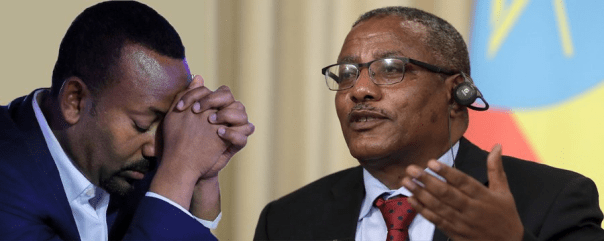
Internal Communication Reveals Ethiopian and Eritrean Leaders’ Concerns Over War Crimes Accountability
5 February 2026 – Internal communications from the early stages of the Tigray War, revealed in former Ethiopian official Gedu Andargachew’s open letter, show that the leadership of Ethiopia and Eritrea privately expressed concern over potential legal consequences for alleged human rights violations, while publicly denying them.
According to the letter, in January 2021, Prime Minister Abiy Ahmed tasked Gedu with delivering a message to Eritrean President Isaias Afwerki. The message included a warning that “supporters of the TPLF and foreign forces who do not want good relations between Ethiopia and Eritrea have launched a widespread defamation campaign through various international organizations and media regarding human rights violations.”
The message, as conveyed by Gedu, stated that this issue “could expose us to serious accountability if left to fester, so we must exercise shared caution.”
President Isaias Afwerki’s reported response, as detailed in the letter, was one of alignment and caution. He allegedly agreed that “all possible caution should be taken” and that both sides should issue instructions to their respective structures. He then reportedly added, “Beyond that, there is still much work to be done based on the agreement that Isaias and I have reached.”
The letter states that Gedu, after receiving these instructions, reported back to PM Abiy that the meeting had been positive and that Isaias emphasized the need for caution regarding human rights allegations.
This private exchange, now made public, stands in stark contrast to the official wartime narratives from both capitals, which largely dismissed reports of atrocities. It reveals that at the highest levels, the potential for “serious accountability” was a recognized risk from the outset of the conflict.
Gedu’s letter presents this communication as evidence that his mission to Asmara was focused on coordinating a political and legal defense, not on addressing the humanitarian situation, stating that “no message whatsoever concerning the suffering of the people of Tigray was conveyed.”
For more detail see the official Amharic letter of Gedu Andargachew
Ethiopian Ex-Foreign Minister’s Open Letter Challenges PM Abiy’s War Accounts
Former Ethiopian Foreign Minister Challenges PM Abiy’s War Narrative in Explosive Open Letter
ADDIS ABABA – 5 FEBRUARY 2026 – In a remarkable and unprecedented public rebuke, Gedu Andargachew, a former high-ranking Ethiopian official, has published a detailed open letter directly contradicting Prime Minister Abiy Ahmed’s account of Eritrea’s role in the Tigray war and alleging the PM displayed open contempt for the Tigrayan people.
The letter, addressed to “His Excellency Prime Minister Abiy Ahmed,” is a point-by-point rebuttal of statements Abiy made in Parliament on February 3, 2026, where the Prime Minister cited Gedu as a witness regarding Ethiopia-Eritrea relations.
Direct Challenge on Eritrea’s Role
Gedu’s most significant claim fundamentally alters the official narrative of the 2020-2022 war. He asserts that the Eritrean army was a consistent, integrated ally of the Ethiopian National Defense Force (ENDF) from the very beginning.
“From the outset of the war in Tigray until it was halted by the Pretoria Agreement, there was hardly a moment when the Eritrean army was not fighting alongside the Ethiopian National Defense Forces,” Gedu writes. He provides a specific military detail, alleging that when Tigrayan forces advanced into the Amhara region in mid-2021, “the Eritrean army operated as far as the vicinity of Debre Tabor.”
He states the two armies functioned as “a single force” and only ceased joint operations after the Pretoria ceasefire was announced, directly challenging narratives that sought to minimize or obscure the extent of Eritrean involvement.
Allegations of Moral Failure and Deflection
The letter accuses PM Abiy of avoiding responsibility for the war’s catastrophic human toll. “After such widespread destruction, I expected that you would seek forgiveness from both the people of Tigray and the people of Ethiopia,” Gedu states. Instead, he claims the Prime Minister engages in “distorted” storytelling to “deflect responsibility.”
Gedu links the Tigray conflict to ongoing crises in Amhara, Oromia, Benishangul, and Gambella, arguing they are “primarily the result of your weak governance and the mistaken belief that political survival requires perpetual conflict.”
Explosive Claim of Abiy’s Contempt for Tigrayans
The letter’s most incendiary passage recounts a private meeting Gedu says occurred after the capture of Mekelle in late 2020. After Gedu advised establishing civilian rule to avoid fueling resentment, he claims Abiy summoned him and expressed a radically different view.
Gedu quotes the Prime Minister as allegedly saying:
“Gedu, do not think the Tigrayans can recover from this defeat and rise again. We have crushed them so they will not rise… Who are the people of Tigray above? We have broken them so they will not rise again. We will break them even further. The Tigray we once knew will never return.”
Gedu presents this as evidence of Abiy’s “true attitude toward the people of Tigray.”
Denying a Secret Humanitarian Mission
Gedu forcefully denies Abiy’s parliamentary claim that he was sent to Eritrea as a special envoy concerning atrocities in Tigray. He clarifies he resigned as Foreign Minister “within days of the outbreak of the war.”
He confirms a single trip to Asmara in early January 2021 but describes a mission with three military-focused objectives: congratulating President Isaias Afwerki on joint operations, thanking Eritrea for hosting the shattered Northern Command, and coordinating a response to mounting international “human rights violations” allegations.
Critically, Gedu claims that when he suggested asking Eritrea to withdraw its forces—as the international community demanded—Abiy explicitly forbade it. “You explicitly instructed me not to raise this issue under any circumstances,” he writes. He states unequivocally that “no message whatsoever concerning the suffering of the people of Tigray was conveyed.”
A Call for Historical Truth
Presented as a necessary act of conscience, Gedu’s letter concludes, “This is the truth as I know it.” It stands as a direct challenge from within the former political establishment to the Prime Minister’s version of history, demanding a reckoning with the war’s conduct and moral consequences that, the author implies, has yet to occur.
The Prime Minister’s office has not issued an immediate public response to the allegations.
For more detail see the official Amharic letter of Gedu Andargachew
For more information see the English copy of the letter of Gedu Andargachew
Gedu Andargachew: To Abiy Ahmed: Regarding Statements Made in Parliament

Press Release
February 5, 2026
To: His Excellency Prime Minister Abiy Ahmed
From: Gedu Andargachew
Subject: Regarding Statements Made in Parliament Referencing My Name Your Excellency,
On February 3, 2026, during the address you delivered before Parliament, you spoke about the causes of the disagreement between Ethiopia and Eritrea and, in doing so, cited my name as a witness. I became aware of this through a video clip that was recorded and shared with me.
As you yourself noted in that speech, such matters should be properly documented for the historical record. For this reason, and without adding to or subtracting from the facts, your remarks compel me, in good conscience, to clarify the truth as I know it.
1. From my side, I had no intention of offering public commentary on matters related to Eritrea–Ethiopia relations. I hold the view that the history between these two sister countries has been marked by deep bitterness and therefore requires exceptional care and responsibility. For this reason, I had decided to remain silent about what I know.
From the outset of the war in Tigray until it was halted by the Pretoria Agreement, there was hardly a moment when the Eritrean army was not fighting alongside the Ethiopian National Defense Forces. Moreover, when Tigrayan forces advanced into the Amhara region in the summer of 2021, the Eritrean army operated as far as the vicinity of Debre Tabor.
The Ethiopian National Defense Forces and the Eritrean army ceased joint military operations only after the ceasefire announced under the Pretoria Agreement. Until then, they functioned effectively as a single force. If any distinction existed, it was that during the lull following the second phase of the war, after Tigrayan forces withdrew from the Amhara region, Eritrean commanders were not included when Ethiopian commanders were highly promoted.
2. After such widespread destruction, I expected that you would seek forgiveness from both the people of Tigray and the people of Ethiopia. Instead, when I observed the issue being presented in a distorted manner, I chose to respond only to the specific matter you raised.
The devastation inflicted during the war in Tigray by all parties involved, was so severe that it has left the people of Tigray struggling to survive. Attempting to absolve oneself by assigning responsibility exclusively to one party does not remove legal, political, or moral accountability. On the contrary, it prevents the country from learning the necessary lessons to avoid similar tragedies in the future.
In truth, during that war, the people of Tigray had no government or political force that stood firmly by their side. The limited support they received came from a small number of Ethiopian political figures, international organizations, and certain foreign governments. This is an uncomfortable but accurate account of our recent national history.
3. Had you sought to repair your severely damaged relationship with the people of Tigray, I would have been among those who welcomed such an effort. Instead, you showed no sign of remorse for past mistakes and attempted to deflect responsibility for the massive loss of life, destruction of property, social fragmentation, and the country’s existential crisis by shifting blame to others.
This deeply alarmed me. It appears that you are attempting to manufacture a new crisis at a time when the country is already overwhelmed by instability. While you and your administration bear primary responsibility for the disasters suffered by our people, you consistently attribute these failures to external conspiracies.
The war in Tigray, the atrocities being committed against the Amhara people, the protracted war in Oromia, the violence in Benishangul, the recent conflict in Gambella, and numerous other crises across the country are, in my view, primarily the result of your weak governance and the mistaken belief that political survival requires perpetual conflict.
4. With this context in mind, I now address the specific claim you made in Parliament concerning my alleged role as your envoy to Eritrea.
Your assertion that I was serving as Minister of Foreign Affairs after the outbreak of the war in Tigray, and that I was sent to Eritrea as your messenger regarding crimes committed against the people of Tigray, is entirely false. It is a complete fabrication. I stepped down from my position as Minister of Foreign Affairs within days of the outbreak of the war, something you could not have forgotten.
Unless this misrepresentation is intended to manufacture justification for future harm to the country and its people, my tenure as Foreign Minister and my later trip to Eritrea are entirely unrelated.
5. You further called upon me to serve as a witness to support your claim that you sent me to Eritrea with a message stating, “Do not harm my people,” in reference to the suffering of civilians in Tigray. In this matter, too, you have committed a serious error.
Because the truth as I know it is fundamentally different, I cannot serve as a credible witness for such a claim. If you seek a witness whose testimony contradicts the facts, you would need to look elsewhere.
If I were to speak honestly about your true attitude toward the people of Tigray, it would differ greatly from what you have stated publicly. One of the issues that most angered you during the war was the mere act of raising concerns about abuses committed against the people of Tigray.
I recall, from my own experience, a meeting of the Executive Committee convened to celebrate what was described as the defeat of the TPLF within three weeks and the capture of Mekelle. An assessment was presented stating that the people of Tigray had largely remained neutral, viewing both the attack on the Northern Command and the military response as equally problematic.
Based on this assessment, I cautioned that efforts must be made to calm the population, prevent lawlessness, restrain victorious forces from abusing civilians, rapidly establish civilian administration, and allow the region to be governed by its own people. Otherwise, I warned, mistreatment would only revive support for the TPLF.
Although you appeared to accept this view during the meeting, you later summoned me privately and expressed a very different perspective. You stated:
“Gedu, do not think the Tigrayans can recover from this defeat and rise again. We have crushed them so they will not rise. People keep saying ‘the people of Tigray, the people of Tigray.’ Who are the people of Tigray above? We have broken them so they will not rise again. We will break them even further. The Tigray we once knew will never return.”
Subsequently, when international pressure mounted to negotiate with the Tigrayan forces, you publicly stated that the strategy was to gradually render Tigray ineffective. In my view, this accurately reflects your true attitude toward the people of Tigray.
6. The only element of your parliamentary remarks that contains a partial truth concerns my trip to Eritrea. Although I cannot recall the exact date, in early January 2021 you sent me, accompanied by a Foreign Ministry official, to deliver a message to President Isaias Afwerki. I arrived in Asmara the following day and returned shortly thereafter.
The message consisted of three points:
1. Conveying congratulations to President Isaias on the joint success of the coordinated military operation against the TPLF.
2. Expressing gratitude to the Eritrean government and people for receiving members of the Northern Command and providing support that enabled their recovery and counteroffensive.
3. Warning that supporters of the TPLF and foreign actors opposed to Eritrea–Ethiopia relations were conducting a widespread campaign accusing both of us of human rights violations, which could expose us to serious accountability, and that we should remain vigilant and take coordinated action.
After receiving these instructions, I raised one question: given that we had publicly declared the war over and the international community was demanding the withdrawal of Eritrean forces from Ethiopia/ Tigray, why not we formally request such a withdrawal?
You explicitly instructed me not to raise this issue under any circumstances. I complied and carried out the mission. No message whatsoever concerning the suffering of the people of Tigray was conveyed. At the time, your sole concern was the potential consequences of human rights allegations, not the suffering of civilians at all.
Upon arrival in Asmara, we met President Isaias and delivered the message. There was no disagreement regarding its contents. When the issue of human rights allegations was raised, President Isaias responded that both sides should exercise caution and issue appropriate instructions, adding that there remained further work to be done based on his prior agreement with you.
I have no knowledge of the details of any such agreement. After concluding the discussion, we returned to Addis Ababa. The following day, I called and reported to you that the meeting had been positive and that President Isaias had emphasized caution regarding human rights allegations. That concluded our exchange.
This is the truth as I know it.
Respectfully,
Gedu Andargachew

Oromo Federal Congress Pays Tribute to Professor Legesse

Oromo Federal Congress Honors Professor Asmarom Legesse: “The Star of Your Scholarship Will Not Fade”
(Finfinnee, Oromia – February 5, 2026). – The Oromo Federal Congress (OFC) has issued a powerful and culturally resonant statement mourning the passing of Professor Asmarom Legesse, hailing him not merely as a distinguished scholar but as a “hero of great intellect” whose life’s work was a “sacrificial investment” in Africa’s intellectual reawakening.
The statement, rich with tributes to his scholarly legacy, positions Professor Legesse’s work as a defiant act of intellectual reclamation. It asserts that at a time when African political systems were “dismissed as relics” by Western scholars, Professor Legesse “provided scientific evidence” to prove the Oromo people possessed a sophisticated system of “negotiation, equality, and democracy” long embedded in human history.
The OFC specifically highlighted the professor’s foundational texts, “Gadaa: Three Approaches to the Study of African Society” and “Oromo Democracy,” praising them for doing more than recording history. These works, the statement says, “restored the dignity” of the Oromo people and irrefutably proved that democracy was not a “foreign concept imported to African countries” but a lived reality for the Oromo for centuries.
The Congress emphasized the practical impact of his research, crediting it with playing a “leading role” in the successful inscription of the Gadaa System as a UNESCO World Intangible Cultural Heritage. Furthermore, his work ensured the Gadaa system was recognized globally as a “source of world democracy.” For the KFO and the Oromo people, the statement notes, his research formed a “great foundation for the development of our culture and unity.”
Looking toward the future, the OFC underscored the enduring relevance of his scholarship. By studying the checks and balances and peaceful transfer of power within Gadaa, Professor Legesse provided the current generation with “a great tool of knowledge” to build their identity and governance upon. His work, the statement declared, has provided “indisputable evidence” for the Oromo struggle for self-determination and democratic rights.
The tribute concluded with a poetic and culturally profound farewell, stating: “Although his body has departed from us, his soul will not die; his light will remain in the orbit of the Gadaa star forever. Professor Asmarom Legesse, may the earth rest lightly upon you.”
###
About the Oromo Federal Congress (OFC):
The Oromo Federal Congress is a political organization advocating for the rights and self-determination of the Oromo people within a federal Ethiopian framework. Its statement reflects the deep intersection of academic scholarship, cultural identity, and political aspiration in the Oromo national movement.
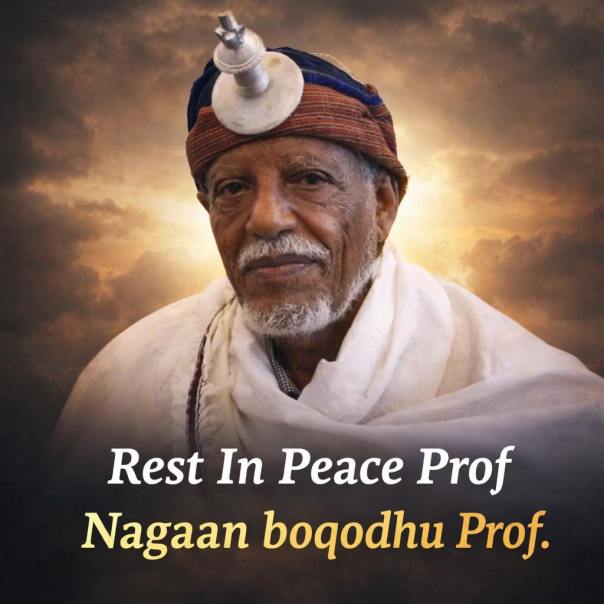

Gadaa Bank Honors Professor Asmarom Legesse’s Legacy

Gadaa Bank Mourns the Loss of a Guiding Intellectual: Professor Asmarom Legesse
(Finfinnee, Oromia – 5 February 2026) The Board of Directors, Management, and Staff of Gadaa Bank have announced their profound sorrow at the passing of Professor Asmarom Legesse, the eminent scholar and preeminent global authority on the Oromo Gadaa system. In an official statement of condolence, the institution extended its deepest sympathies to his family, relatives, and the entire community, wishing them strength and solace.
The bank’s statement carries a unique and symbolic significance. As a financial institution that bears the name “Gadaa,” its tribute to the scholar who dedicated his life to studying, documenting, and elevating this indigenous democratic system represents more than a standard corporate condolence. It is a poignant acknowledgment of the intellectual and cultural foundations that underpin its very identity.
Professor Asmarom Legesse’s pioneering scholarship, particularly his seminal texts “Gada: Three Approaches to the Study of African Society” (1973) and “Oromo Democracy: An Indigenous African Political System” (2000), is credited with transforming global understanding of the Gadaa system. His work meticulously detailed its sophisticated architecture—built on principles of rotational leadership, term limits, checks and balances, and public accountability—revealing it as a self-originating model of African democracy. His efforts were instrumental in UNESCO’s 2016 inscription of the Gadaa system as an Intangible Cultural Heritage of Humanity.
The tribute from Gadaa Bank underscores the professor’s dual legacy: as a towering academic figure and as a cultural pillar whose work provides a source of pride and a framework for modern institutions. While the bank’s core operations are financial, its namesake connects it to a heritage of governance, social order, and communal responsibility—principles that Professor Legesse spent a lifetime elucidating for the world.
In expressing grief, the institution implicitly honors the connection between contemporary enterprise and ancestral wisdom. The statement serves as a powerful reminder of how indigenous knowledge, once brought to light and validated by scholars of Professor Legesse’s caliber, can resonate across all sectors of society, inspiring identity and purpose.
###
About Gadaa Bank:
Gadaa Bank is a private financial institution in Ethiopia, committed to providing inclusive banking services. Its name honors the enduring legacy of the Gadaa system, reflecting values of governance, fairness, and community development.

Borana University Remembers Professor Legesse: Indigenous Knowledge Advocate
Borana University Mourns a Beacon of Indigenous Knowledge: Professor Asmarom Legesse
(Yabelo, Oromia – February 5, 2026) Borana University, an institution deeply embedded in the cultural landscape it studies, today announced its profound sorrow at the passing of Professor Asmarom Legesse, the preeminent anthropologist whose lifelong scholarship fundamentally defined and defended the indigenous democratic traditions of the Oromo people. The University’s tribute honors the scholar not only as an academic giant but as a “goota” (hero) for the Oromo people and for Africa.
In an official statement, the University highlighted Professor Legesse’s “lifelong dedication to understanding the complexities of Ethiopian society—especially the Gadaa system,” crediting him with leaving “an indelible mark on both the academic and cultural landscapes.” This acknowledgment carries special weight from an institution situated in the heart of the Borana community, whose traditions formed the bedrock of the professor’s most celebrated work.
The tribute detailed the pillars of his academic journey: a Harvard education, esteemed faculty positions at Boston University, Northwestern University, and Swarthmore College, and the groundbreaking field research that led to his seminal texts. His 1973 work, “Gada: Three Approaches to the Study of African Society,” was cited as revolutionary for revealing “the innovative solutions indigenous societies developed to tackle the challenges of governance.”
It was his 2000 magnum opus, however, that solidified his legacy as the definitive voice on the subject. In “Oromo Democracy: An Indigenous African Political System,” Professor Legesse meticulously documented a system characterized by eight-year term limits for all leaders, a sophisticated separation of powers, and the Gumi assembly for public review—a structure that presented a centuries-old model of participatory democracy. “His insights challenged prevalent misconceptions about African governance,” the University noted, “showcasing the rich traditions and political innovations of the Oromo community.”
For his unparalleled contributions, he was awarded an honorary Doctor of Letters from Addis Ababa University in 2018.
Perhaps the most powerful element of the University’s statement was its framing of his legacy beyond academia. By “intertwining the mechanics of the Gadaa system with the broader narrative of Oromo history and cosmology,” Professor Legesse was credited with fostering “a profound understanding of Oromo cultural identity.” It is for this work of preservation, interpretation, and transmission that he is declared “a hero—a goota—to the Oromo people and to Africa as a whole.”
Looking forward, Borana University management has called upon its students and faculty to honor his memory through “ongoing research and discourse on indigenous governance systems,” ensuring his foundational work continues to inspire new generations of scholars.
The entire university community extended its deepest condolences to Professor Legesse’s family, friends, and loved ones, mourning the loss of a true champion of Oromo culture and a guiding light in the study of African democracy.
About Borana University:
Located in Yabelo, Borana Zone, Oromia, Borana University is a public university committed to academic excellence, research, and community service, with a focus on promoting and preserving the rich cultural and environmental heritage of the region and beyond.

A Scholar Immortal: Prof. Asmerom Legesse’s Legacy Lives in the Hearts of a Nation
5 February 2026 – Across the globe, from the halls of academia to the living rooms of the diaspora, the Oromo community is united in a chorus of grief and profound gratitude. The passing of Professor Asmerom Legesse at the age of 94 is not merely the loss of a preeminent scholar; it is, as countless tributes attest, the departure of a cherished friend, a fearless intellectual warrior, and an adopted son whose life’s work became the definitive voice for Oromo history and democratic heritage.
The outpouring of personal reflections paints a vivid portrait of a man whose impact was both global and deeply intimate. Olaansaa Waaqumaa recalls a brief conversation seven years ago, where the professor’s conviction was unwavering. “Yes! It is absolutely possible,” he declared when asked if the Gadaa system could serve as a modern administrative framework. “The scholars and new generation must take this mantle, think critically about it, and bridge it with modern governance,” he advised, passing the torch to future generations.
This personal mentorship extended through his work. Scholar Luba Cheru notes how Professor Legesse’s 1973 seminal text, Gada: Three Approaches to the Study of African Society, became an indispensable guide for her own decade-long research on the Irreecha festival. She reflects, “I never met him in person, but his work filled my mind.”
Ituu T. Soorii frames his legacy as an act of courageous resistance against historical erasure. “When the Ethiopian empire tried to erase Oromo existence, Professor Asmarom rose with courage to proclaim the undeniable truth,” they write, adding a poignant vision: “One day, in a free Oromiyaa, his statues will rise—not out of charity, but out of eternal gratitude.” Similarly, Habtamu Tesfaye Gemechu had earlier praised him as the scholar who shattered the conspiracy to obscure Oromo history, “revealing the naked truth of the Oromo to the world.”
Echoing this sentiment, Dejene Bikila calls him a “monumental figure” who served as a “bridge connecting the ancient wisdom of the Oromo people to the modern world.” This notion of the professor as a bridge is powerfully affirmed by Yadesa Bojia, who poses a defining question: “Did you ever meet an anthropologist… whose integrity was so deeply shaped by the culture and heritage he studied that the people he wrote about came to see him as one of their own? That is the story of Professor Asmerom Legesse.”
Formal institutions have also affirmed his unparalleled role. The Oromo Studies Association (OSA), which hosted him as a keynote speaker, stated his work “fundamentally reshaped the global understanding of African democracy.” Advocacy for Oromia and The Oromia Culture and Tourism Bureau hailed him as a “steadfast guardian” of Oromo culture, whose research was vital for UNESCO’s 2016 inscription of the Gadaa system as Intangible Cultural Heritage.
Binimos Shemalis reiterates that his “groundbreaking and foundational work… moved [Oromo studies] beyond colonial-era misrepresentations.” Scholar Tokuma Chala Sarbesa details how his book Oromo Democracy: An Indigenous African Political System proved the Gadaa system was a sophisticated framework of law, power, and public participation, providing a “strong foundation for the Oromo people’s struggle for identity, freedom, and democracy.”
The most recent and significant political tribute came from Shimelis Abdisa, President of the Oromia Regional State, who stated, “The loss of a scholar like Prof. Asmarom Legesse is a great damage to our people. His voice has been a lasting institution among our people.” He affirmed that the professor’s seminal work proved democratic governance originated within the Oromo people long before it was sought from elsewhere.
Amidst the grief, voices like Leencoo Miidhaqsaa Badhaadhaa offer a philosophical perspective, noting the professor lived a full 94 years and achieved greatness in life. “He died a good death,” they write, suggesting the community should honor him not just with sorrow, but by learning from and adopting his teachings.
As Seenaa G-D Jimjimo eloquently summarizes, “His scholarship leaves behind not just a legacy for one community, but a gift to humanity.” While the physical presence of this “real giant,” as Anwar Kelil calls him, is gone, the consensus is clear: the intellectual and moral bridge he built is unshakable. His legacy, as Barii Milkeessaa simply states, ensures that while “the world has lost a great scholar… the Oromo people have lost a great sibling.”
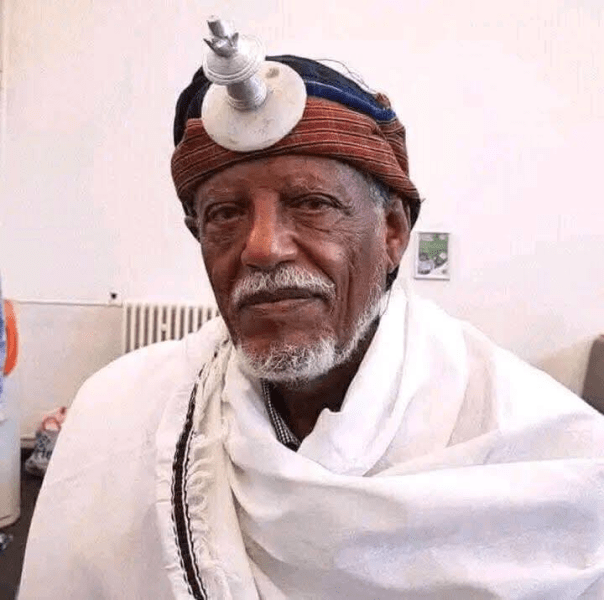
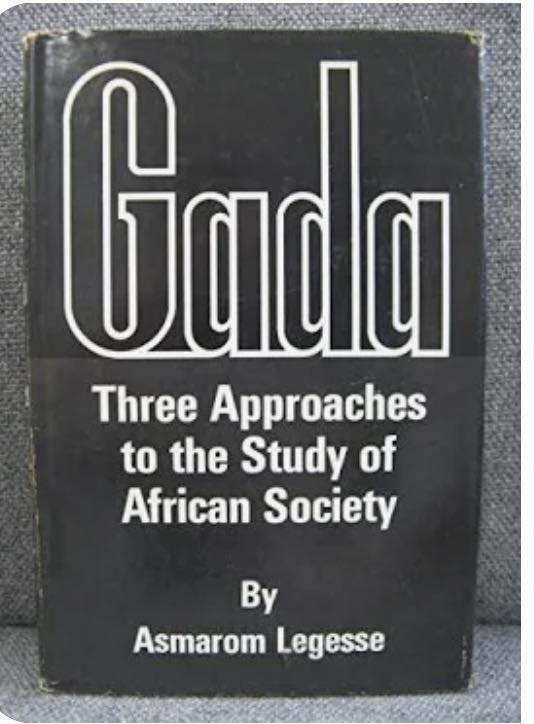
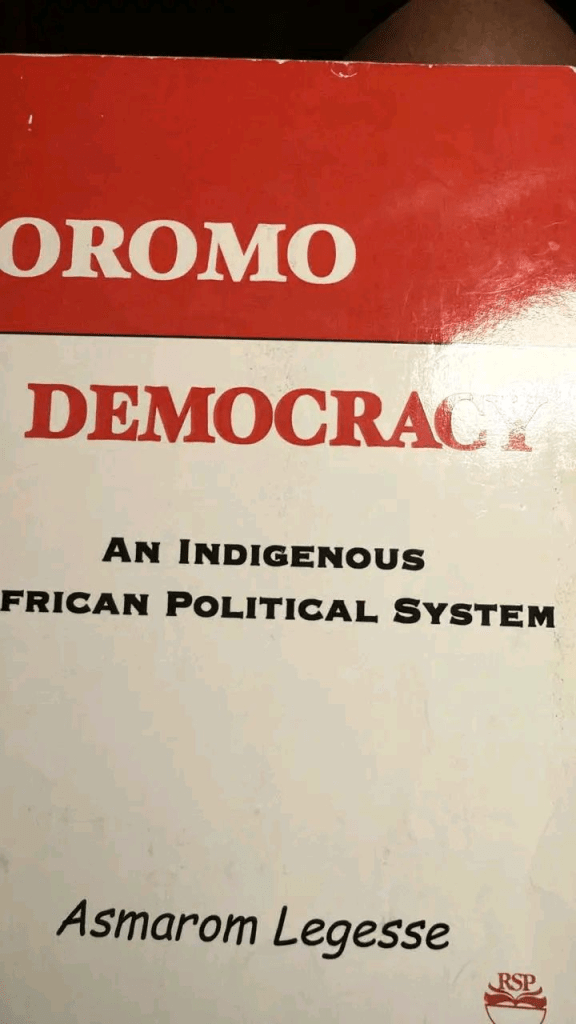

Oromo Liberation Front Honors Professor Asmerom Legesse’s Contributions
Oromo Liberation Front Mourns the Passing of Intellectual Pillar, Professor Asmerom Legesse
Finfinnee, March 4, 2026 – The Oromo Liberation Front (OLF) has issued a formal statement of profound grief, marking the passing of Professor Asmerom Legesse, whom it hailed as a “great historian” and an “intellectual pillar of the Oromo struggle.” In a detailed tribute released today, the OLF emphasized that the death of the 95-year-old scholar, a global authority on the Oromo Gadaa system, represents not just an academic loss but the departure of a “true sibling” to the Oromo people.
Born in Asmara, Eritrea, in 1931, Professor Legesse was celebrated by the OLF for a lifetime of work that went far beyond scholarship. The statement described his research as an “act of cultural reclamation” that systematically documented and presented the Gadaa system to the world, revealing it as a sophisticated African democratic tradition. His work, the OLF noted, provided irrefutable proof that principles such as “equality, rotational leadership, checks and balances, and the supremacy of law” were not foreign imports but deeply embedded practices of the Oromo people.
The OLF’s tribute positioned Professor Legesse’s academic contributions within the broader context of Oromo political identity and resistance. It credited him with restoring dignity to a history that had been “marginalized and distorted” and for providing the intellectual foundation that allowed the Gadaa system to gain global recognition, including its inscription by UNESCO as an Intangible Cultural Heritage of Humanity.
The statement poignantly noted that the scholar, while Eritrean by birth, became “Oromo by choice,” a sentiment that reflected his deep solidarity and lifelong engagement with the Oromo community. His extensive fieldwork, particularly with the Borana Oromo, was highlighted as a bridge that connected ancestral wisdom to contemporary understanding.
“While his voice is now silent, his work and his history will live on for generations,” the OLF statement read, affirming that Professor Legesse’s legacy is an “indelible part of Oromo history” that will continue to guide future generations toward truth and knowledge.
The OLF extended its deepest condolences to his family, relatives, friends, and the entire Oromo nation. It called upon the global Oromo diaspora and communities everywhere to participate, as circumstances allow, in memorial ceremonies honoring the scholar, stating that such acts of remembrance are a fitting way to “demonstrate gratitude for the great service this scholar rendered to our people’s struggle.”
The funeral service for Professor Asmerom Legesse is scheduled for February 7, 2026.
About the Oromo Liberation Front (OLF):
The Oromo Liberation Front is a political organization founded in 1973, advocating for the right to self-determination of the Oromo people. It has been a central institution in the modern Oromo national movement, seeking to address historical and political grievances through the establishment of an independent or autonomously democratic Oromia.

Remembering Professor Asmerom Legesse: A Legacy of Oromo Democracy
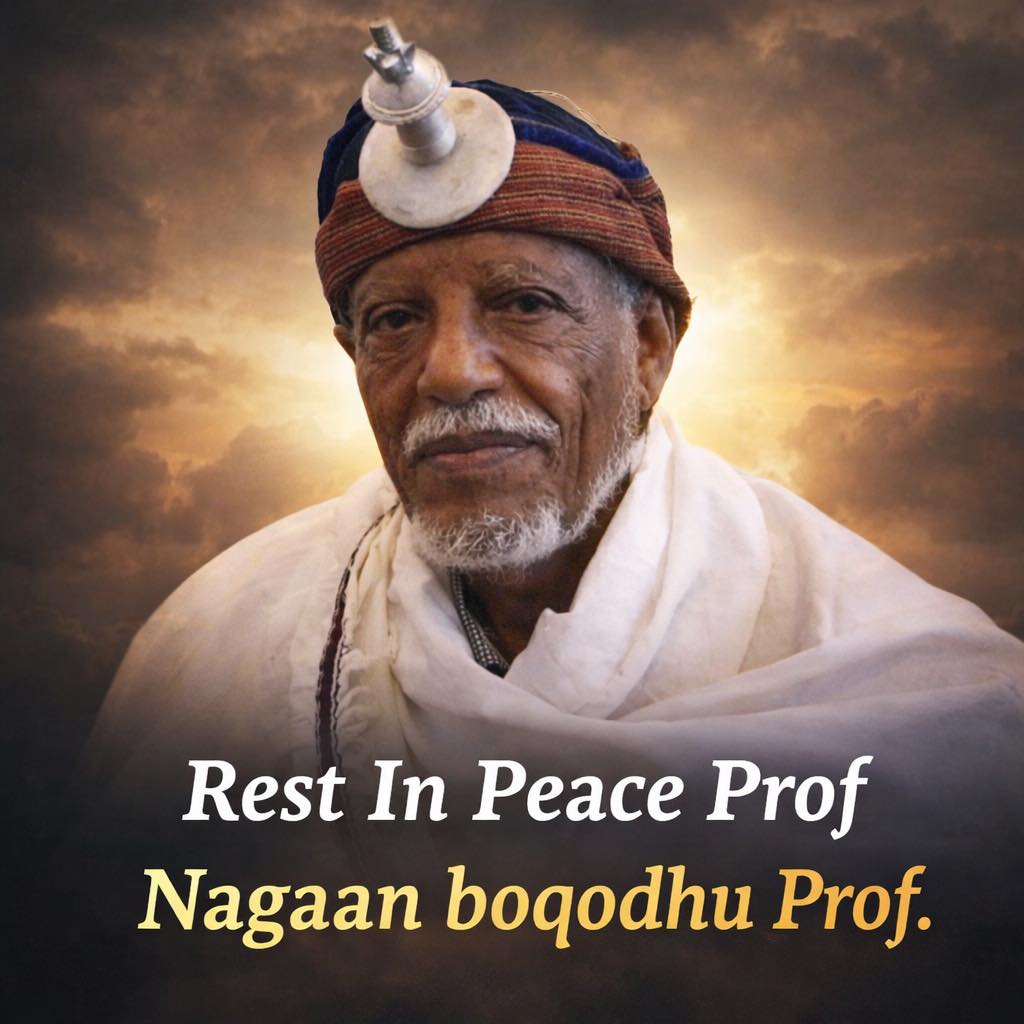
A World Mourns an Intellectual Giant: Tributes Pour In for Professor Asmerom Legesse, Scholar of Oromo Democracy
[Global] – February 2026 – The passing of Professor Asmerom Legesse has triggered a profound wave of mourning across academic, cultural, and political spheres, uniting voices from the Oromo diaspora to global institutions in tribute to the man who single-handedly brought the sophisticated Oromo Gadaa system to the world’s attention. Recognized as the preeminent global authority on the subject, his death at the age of 89 is being hailed as an irreplaceable loss to indigenous knowledge and the study of African democracy.
Condolence statements from major Oromo organizations, scholars, and advocates paint a consistent portrait of Professor Legesse: not merely an academic, but a bridge-builder, a truth-teller, and a steadfast guardian of a cultural heritage long marginalized. His life’s work is credited with fundamentally reshaping global understanding of the Oromo people and providing the intellectual foundation for their cultural and political identity.
Scholars and Intellectuals Honor a Pioneer
Prominent Oromo scholar Prof. Asfaw Beyene remembered him as a “sincere friend of the Oromo people,” whose life was “defined by wisdom, integrity, and an unwavering commitment to revealing truths long ignored by entrenched systems.” This sentiment was echoed by commentator Habtamu Tesfaye Gemechu, who stated Legesse was the scholar who “shattered the conspiracy” of Ethiopian rulers and intellectuals to obscure Oromo history, “revealing the naked truth of the Oromo to the world.”
Jawar Mohammed emphasized the practical depth of Legesse’s scholarship, noting his “decades of dedicated field research” and “deep engagement with Borana-Oromo communities” which helped “bridge the transmission of Gadaa knowledge from our ancestors to the present generation.”
Institutional Tributes Highlight Global Impact
Major Oromo institutions have issued formal statements underscoring the monumental scale of his contribution. The Oromo Studies Association (OSA), which honored him with a Lifetime Achievement Award, stated his “groundbreaking work fundamentally reshaped the global understanding of African democracy,” providing the academic backbone for UNESCO’s 2016 recognition of Gadaa as an Intangible Cultural Heritage of Humanity.
Advocacy for Oromia hailed him as a “preeminent global ambassador” for Gadaa, whose work performed a “vital act of cultural reclamation and global education.” Similarly, The Oromia Culture and Tourism Bureau praised his “indispensable role in safeguarding the philosophical foundations and moral values that define Oromo identity.”
A Legacy of Pride and Empowerment
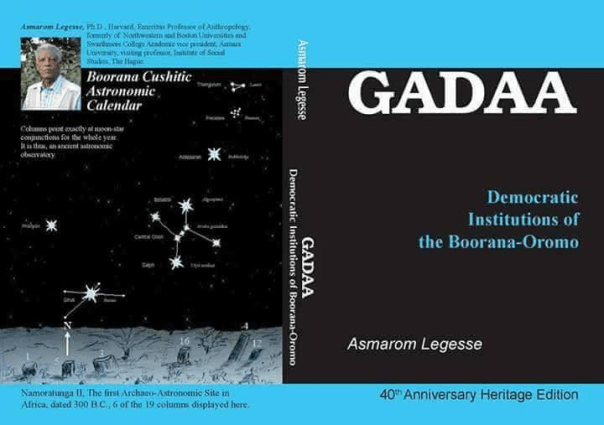
For the broader Oromo community, his passing is deeply personal. Activist Bilisummaa A. Qubee captured this sentiment, stating, “Prof. Asmarom Legesse has a great legacy of making Oromo identity known at a global level for us! His history lives with the Oromo!” This reflects the prevailing view that his rigorous scholarship—epitomized by definitive texts like Gada: Three Approaches to the Study of African Society and Oromo Democracy: An Indigenous African Political System—did more than analyze; it restored dignity and provided a source of immense pride.
As tributes continue to pour in, the consensus is clear: while Professor Asmerom Legesse’s voice is silent, his foundational work ensures that the Gadaa system—a complex indigenous framework of democracy, justice, and social order—will remain a lasting part of humanity’s intellectual heritage, inspiring generations to come.




 Advocacy for Oromia