Author Archives: advocacy4oromia
Oromia’s Future Without Language Federalism
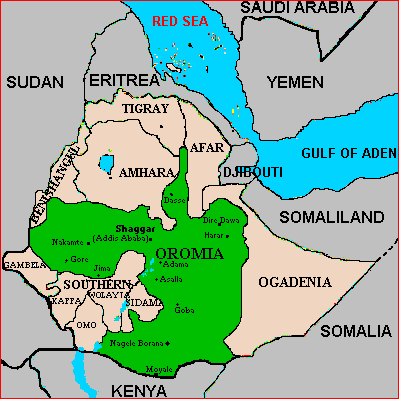
The elimination of language-based federalism in Ethiopia—particularly in Oromia, the largest and most populous regional state—could have profound political, social, and economic consequences. Since 1991, Ethiopia’s federal system has been structured along linguistic and ethnic lines, with Oromia being a key beneficiary of this arrangement. Removing this system could trigger the following impacts:
1. Political Consequences
- Loss of Autonomy: Oromia currently has self-rule under the federal system, with Afaan Oromo as its working language and control over local governance. A centralized system could weaken Oromo political representation.
- Resurgence of Oromo Nationalism: Historically, marginalization of Oromo identity led to resistance (e.g., OLF insurgencies). Recent protests (2014–2018) were partly about preserving self-rule. Dismantling federalism could reignite unrest.
- Power Struggle in Addis Ababa: Finfinne (Addis Ababa) is a contested city, legally part of Oromia but federally administered. A shift could escalate disputes over land and resources.
2. Social & Cultural Effects
- Threat to Afaan Oromo’s Official Status: Language-based federalism helped revive Afaan Oromo in education/media. Centralization might reduce its institutional use, leading to cultural erosion.
- Identity Backlash: Many Oromos see federalism as protection against assimilation (e.g., past Amharization policies). Its removal could be seen as an attack on Oromo identity.
- Interethnic Tensions: Oromia hosts other ethnic groups (e.g., Amhara, Gurage). A centralized system might fuel competition over resources and representation.
3. Economic Implications
- Resource Control: Oromia has key resources (agriculture, minerals). Centralization could redirect wealth without local consent, breeding discontent (e.g., Addis Ababa land grabs protests).
- Investment Uncertainty: Ethnic federalism allowed Oromia to negotiate investments (e.g., industrial parks). A unitary system might reduce regional bargaining power.
4. Security Risks
- Potential for Armed Resistance: Hardline factions (e.g., OLF-Shane/Oromo Liberation Army) could gain support if Oromia’s self-rule is dismantled.
- Clashes with Federal Forces: Centralization could lead to crackdowns, as seen during the 2016–2018 Oromo protests.
Possible Outcomes
- Best Case: A reformed, inclusive system addressing grievances while maintaining unity.
- Worst Case: Escalation into widespread rebellion, destabilizing Ethiopia further.
Historical Context
Ethiopia’s 1995 constitution introduced ethnic federalism partly to address Oromo marginalization. Before that, Oromo language/culture was suppressed under Haile Selassie and the Derg. Many Oromos see federalism as a safeguard, not a divider.
Conclusion
Eliminating language-based federalism without a credible alternative for power-sharing risks:
✔️ Oromo alienation & renewed conflict.
✔️ Cultural and linguistic suppression backlash.
✔️ Economic grievances over resource extraction.
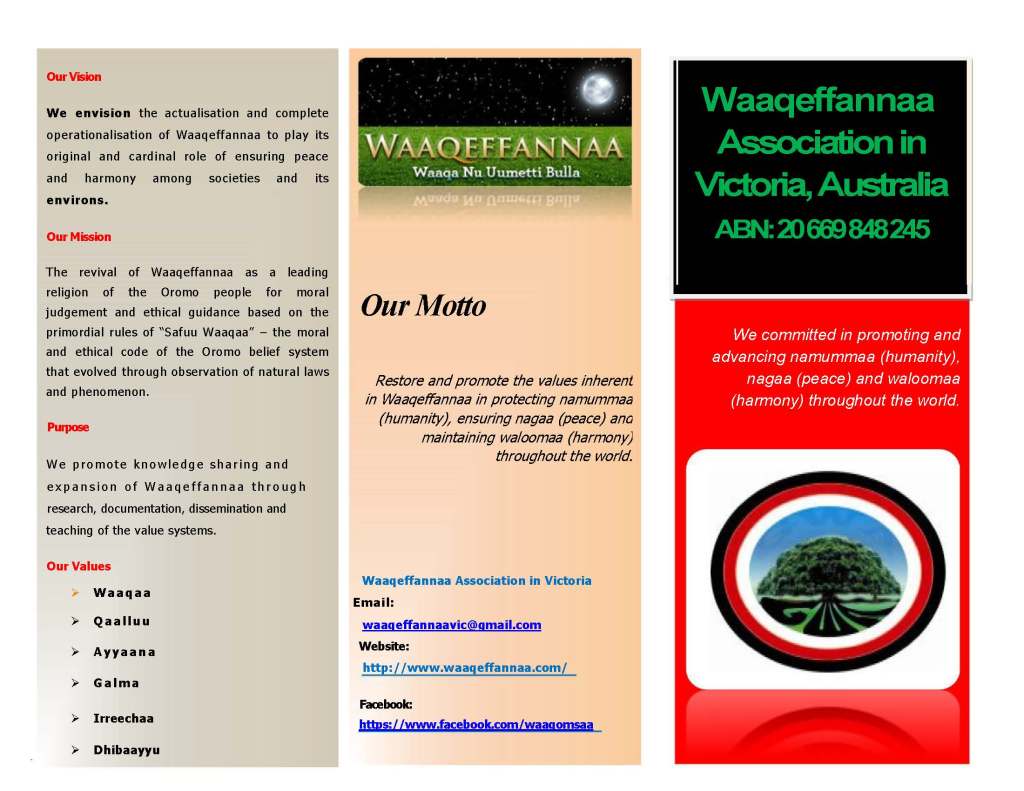
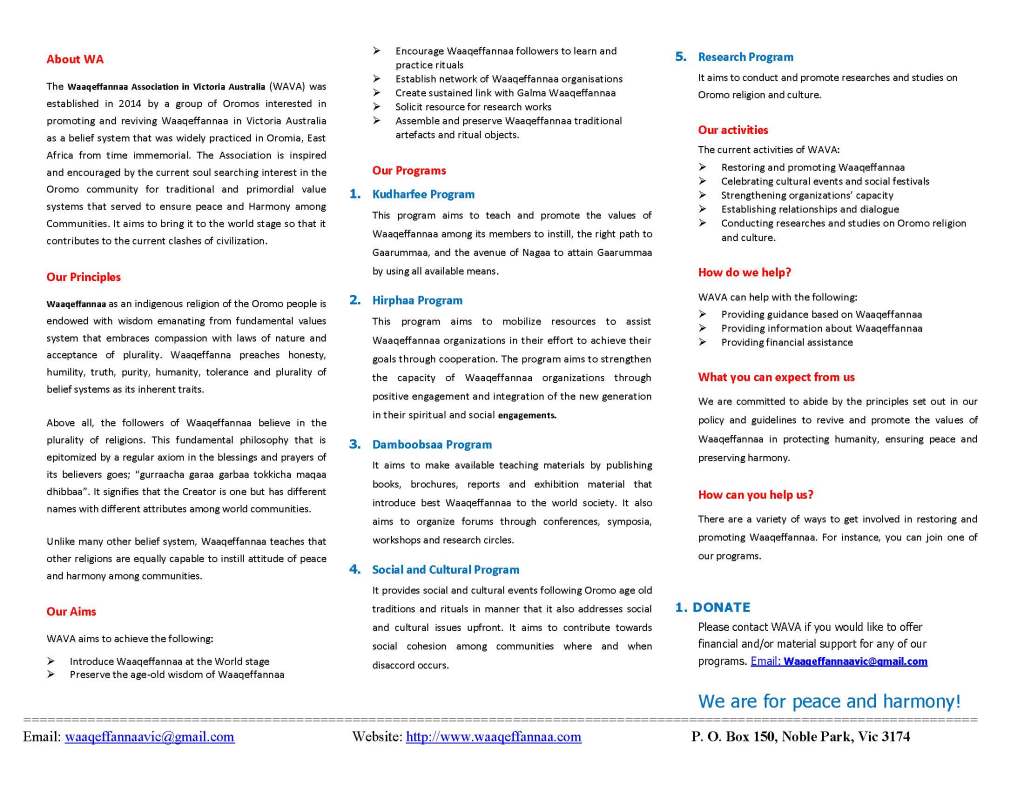
Understanding Waaqeffannaa: The Oromo Religion
Waaqeffannaa (also spelled *Waaqeffanna*) is the indigenous, monotheistic religion of the Oromo people of Ethiopia and parts of Kenya. It centers on the worship of **Waaqa (God)**, a supreme, omnipresent deity associated with the sky, nature, and moral order.
Core Beliefs & Practices:
1. Waaqa (God) – The creator and sustainer of life, often referred to as *Waaqa Tokkicha* (the One God).
2. Ayyaana (Spirits) – Divine manifestations or intermediaries of Waaqa, linked to natural forces (e.g., rivers, mountains).
3. Uumaa (Nature) – Sacred connection to the environment; trees (*Odaa*), water, and land are revered.
4. Moral Code – Emphasizes truth (*dhugaa*), respect (*naagaa*), and balance (*safuu*—ethical harmony).
5. Rituals & Ceremonies – Led by *Qallu* (spiritual leaders), include:
– Irreechaa (Thanksgiving festival at lakesides).
– Thanksgiving prayers (*kadhannaa*) under sacred trees.
Modern Revival & Challenges:
– Suppression: Historically marginalized by Christianity/Islam and past Ethiopian governments.
– Revival: Since the 1990s, Oromo intellectuals and activists have worked to reclaim Waaqeffannaa as part of cultural identity.
– Irreechaa Festival: Now a major public celebration, symbolizing Oromo unity (e.g., annual event at Lake Hora Arsadi).
Connection to Women’s Roles:
– Equality: Waaqeffannaa traditionally granted women spiritual roles (e.g., *Qallitti*, female diviners).
– Feminist Reinterpretation: Some Oromo women activists draw on Waaqeffannaa’s principles (*safuu* = balance) to advocate for gender justice.
Decolonizing Oromia: Restoring Authentic Oromo Heritage
The call to rename structures, regions, and landmarks in **Oromia**—such as **Shawaa (Shewa)**, **Wallaggaa (Wollega)**, **Baalee (Bale)**, and **Harargee (Harar)**—with their original Oromo names is a significant step toward **cultural reclamation**, **decolonization**, and the affirmation of Oromo identity. These names, often imposed during periods of external domination, reflect a history of marginalization and erasure of Oromo culture. Replacing them with their authentic Oromo names is not just a symbolic act but a necessary move to restore the Oromo people’s connection to their land, history, and heritage. Here’s a deeper exploration of this issue:
—
### **Historical Context**
1. **Imperial and Colonial Legacy**:
– Many of the names used today for regions and landmarks in Oromia were imposed during the expansion of the Ethiopian Empire under Emperor Menelik II in the late 19th century.
– These names often replaced or overshadowed the original Oromo names, contributing to the erasure of Oromo identity, language, and history.
2. **Cultural Suppression**:
– The imposition of foreign names was part of a broader effort to suppress Oromo culture and assimilate the Oromo people into a centralized Ethiopian identity.
– This cultural suppression has had lasting effects on the Oromo people’s sense of identity and belonging.
3. **Resistance and Reclamation**:
– The Oromo people have a long history of resisting external domination and fighting for their rights, including the right to preserve and celebrate their culture. Renaming structures and regions is part of this ongoing struggle for recognition and justice.
—
### **Why Renaming Matters**
1. **Cultural Identity**:
– Names are deeply tied to cultural identity. Restoring Oromo names helps reclaim and celebrate the rich history, language, and traditions of the Oromo people.
– It affirms the Oromo people’s connection to their land and heritage.
2. **Decolonization**:
– Renaming is an act of decolonization, challenging the legacy of imperialism and asserting the Oromo people’s right to define their own identity and history.
– It is a way to dismantle systems of oppression and reclaim autonomy.
3. **Historical Justice**:
– Restoring Oromo names is a form of historical justice, correcting the injustices of the past and honoring the contributions of the Oromo people to their land and society.
4. **Empowerment and Pride**:
– Renaming fosters a sense of pride and empowerment among the Oromo people, particularly the younger generation, by connecting them to their roots and cultural heritage.
—
**Examples of Renaming**
1. **Shawaa (Shewa)**:
– The region known as **Shewa** (or Shawaa) has deep historical significance for the Oromo people. Restoring its original Oromo name would honor its Oromo heritage and history.
2. **Wallaggaa (Wollega)**:
– **Wallaggaa** is one of the major regions of Oromia. Reclaiming its Oromo name reinforces its identity as an integral part of Oromo land and culture.
3. **Baalee (Bale)**:
– **Baalee** is a historically significant region for the Oromo people, known for its resistance against external domination. Restoring its Oromo name would acknowledge its Oromo roots and contributions.
4. **Harargee (Harar)**:
– **Harargee** is a historically significant region for the Oromo people. Restoring its Oromo name would acknowledge its Oromo roots and contributions.
—
### **Challenges and Considerations**
1. **Political Will**:
– Renaming requires political will and support from both the Oromo people and the Ethiopian government. It may face resistance from those who benefit from the status quo.
2. **Awareness and Education**:
– Raising awareness about the importance of renaming and educating the public about Oromo history and culture is essential for gaining widespread support.
3. **Practical Implementation**:
– Renaming involves practical considerations, such as updating maps, official documents, and signage. This process requires coordination and resources.
4. **Inclusivity**:
– The renaming process should be inclusive, involving Oromo communities, elders, historians, and cultural experts to ensure that the restored names are accurate and meaningful.
—
### **Steps Toward Renaming**
1. **Community Engagement**:
– Engage Oromo communities, elders, and cultural leaders in discussions about renaming to ensure that the process is inclusive and respectful of local traditions.
2. **Historical Research**:
– Conduct thorough research to identify the original Oromo names and their meanings, ensuring accuracy and authenticity.
3. **Advocacy and Awareness**:
– Raise awareness about the importance of renaming through education, media, and public campaigns to build support for the initiative.
4. **Policy and Legislation**:
– Advocate for policy changes at the regional and national levels to officially recognize and implement the restored Oromo names.
5. **Celebration of Oromo Culture**:
– Use the renaming process as an opportunity to celebrate Oromo culture, history, and contributions through festivals, educational programs, and public events.
—
**Conclusion**
The call to remove foreign-imposed names like **Shawaa**, **Wallaggaa**, **Baalee**, and **Harargee** and replace them with their original Oromo names is a powerful act of cultural reclamation and decolonization. It is a step toward restoring the Oromo people’s identity, history, and connection to their land. By honoring Oromo names, we acknowledge the resilience and contributions of the Oromo people and affirm their right to self-determination and cultural preservation. This effort is not just about changing names—it is about reclaiming a legacy and building a future rooted in justice, pride, and unity.
Why Did Isaias Afwerki Use Eritrea’s Independence Day to Attack Oromummaa?
A Calculated Diversion from Domestic Failures
1. The Distraction Playbook
Eritrea’s Independence Day should celebrate liberation—yet Afwerki presides over:
– A nation where **1 in 10 citizens** have fled indefinite conscription (*UN estimates*).
– **Zero elections** since 1993; a **single-party dictatorship** masquerading as a “liberation government.”
– **Starvation wages** and forced labor condemned by *Human Rights Watch* as **modern slavery**.
*By scapegoating Oromummaa*, he deflects from his regime’s collapse into irrelevance.
2. Geopolitical Grudge-Match
Afwerki’s fury stems from:
– **Failed Puppetry**: He bet on Abiy Ahmed as a pliable proxy, but Ethiopia’s chaos slipped his control.
– **Regional Isolation**: Eritrea’s only “ally” (Abiy) is now drowning in civil wars. Attacking Oromummaa is **cheap propaganda** to rally Amhara extremists and Tigrayan dissidents against a common “enemy.”
– **Historical Jealousy**: The Oromo struggle’s moral clarity (*grassroots, democratic*) exposes his hollow “liberation hero” myth.
3. The Deeper Fear
Oromummaa’s power terrifies dictators because:
– It **unites 50+ million Oromo** across borders—a demographic he cannot bully.
– Its **Gadaa values** contrast his kleptocracy: *Where he hoards power, we share it; where he silences, we debate.*
– Its **global resonance** (*Black Lives Matter, indigenous rights*) makes repression harder to hide.
—
The Irony He Wants You to Miss
Afwerki’s speech invoked Eritrea’s “heroic struggle”—yet he now **mirrors the Derg**:
– **Then**: Ethiopia called Eritreans “secessionists.”
– **Now**: He brands Oromummaa “divisive.”
– **Then**: World ignored Eritrean famine.
– **Now**: He blocks UN investigators into his own crimes.
**True freedom fighters don’t fear other people’s liberation.**
—
Our Response? Weaponize the Truth
– **Archive his hypocrisy**: Contrast his 1970s speeches (*”Self-determination for all!”*) with today’s bile.
– **Amplify Eritrean voices**: Partner with Eritrean activists who say: *”Our revolution was stolen—don’t let him steal yours.”*
– **Globalize the frame**: Link Oromo rights to *UN Declaration on Indigenous Peoples*—Eritrea voted *for* it in 2007.
Afwerki’s words are a backhanded compliment: **Oromummaa matters so much, even dictators waste Independence Day on it.**
*”When they go low, we go Gadaa.”*
—
Key Strengths:
– **Evidence-based**: Uses UN/HRW data to undermine his legitimacy.
– **Psychological warfare**: Exposes his insecurities (e.g., jealousy of Oromo unity).
– **Solidarity-building**: Positions Oromo struggle alongside Eritrean dissent.
– **Actionable**: Offers concrete ways to counter his narrative.
“Oromummaa” Is an Identity, Not a Security Threat – Rejecting Political Manipulation
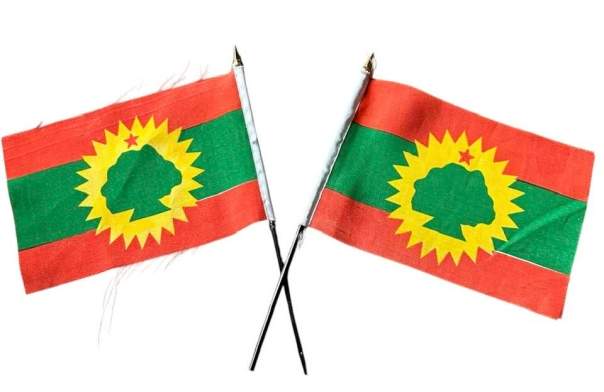
Daniel T. Dibaba
May 26, 2025 | Finfinne
1. On Eritrea’s Independence Day: Acknowledgment and Critique
The OLF acknowledges Eritrea’s 34th Independence Day and the sacrifices of its people. However, true freedom remains incomplete while Eritreans endure human rights abuses and extreme poverty—issues murmured by generations awaiting justice.
President Isaias Afwerki’s speech, framed through ERI TV, revealed a fundamental misreading of Ethiopia’s political reality:
- He falsely conflates PM Abiy Ahmed’s government with the Oromo people, as if Abiy’s Oromo identity makes Ethiopia an extension of Oromo power.
- His growing hostility stems from failed manipulation: When his attempts to influence Abiy (whom he underestimated) yielded no strategic gains, he turned against the Oromo cause itself.
- Now, his regime employs propaganda, political meddling, and even military support to extremist groups like Fano and potentially the TPLF—repeating its betrayal of leaking OLF secrets to the EPRDF regime.
2. Afwerki’s Dangerous Delusions and Desperation
Let us be clear: Isaias Afwerki is no elder statesman. He is a hardened autocrat whose philosophy is control, not liberation. Under his rule:
- Eritrea became one of the world’s most repressive states, denying basic freedoms and conscripting generations into endless military servitude.
- He squandered Eritrea’s independence, betraying the very ideals of self-determination he once fought for.
His attacks on Oromummaa expose:
✔ Political desperation: Unable to dominate Ethiopia through Abiy, he scapegoats Oromo identity.
✔ Strategic bankruptcy: He fuels regional conflicts to distract from his regime’s failures.
3. The Historical Betrayal: Eritrea’s Role in Undermining Liberation
The OLF once fought alongside EPLF against the Derg. Yet Eritrea:
- Conspired with TPLF to sideline the OLF in 1991, strangling Ethiopia’s democratic transition.
- Waged the 1998–2000 border war for political gain, sacrificing countless lives.
- In 2018, again sabotaged Oromo aspirations by propping up Abiy’s regime—proving it never wanted Oromo success.
4. Oromummaa: The Unstoppable Will of the People
Afwerki’s lies cannot erase truths:
- Oromummaa is indigenous identity, not a “threat.” Like Eritrea’s independence struggle, it is rooted in justice and self-determination.
- No dictator can silence a rising people. His propaganda may delay, but never prevent, liberation.
- The Oromo struggle transcends regimes. While Afwerki clings to power, Oromummaa grows stronger.
5. Conclusion
To the Eritrean regime: Your fear of Oromummaa reveals your weakness.
To the world: Recognize these lies. Stand with truth.
To our people: No force can stop a movement whose time has come.
Victory to the Oromo People!
Nagaan.
“Oromummaa” Is an Identity, Not a Security Threat – Rejecting Political Manipulation

Statement of the Oromo Liberation Front (OLF)
“Oromummaa” Is an Identity, Not a Security Threat – Rejecting Political Manipulation
May 26, 2025 | Finfinne
1. On Eritrea’s Independence Day: Acknowledgment and Critique
The OLF acknowledges Eritrea’s 34th Independence Day and the sacrifices of its people. However, true freedom remains incomplete while Eritreans endure human rights abuses and extreme poverty—issues murmured by generations awaiting justice.
President Isaias Afwerki’s speech, framed through ERI TV, raised alarming misrepresentations:
- He portrayed Africa’s instability as rooted in foreign dependency, yet ignored his regime’s role in regional crises.
- He falsely linked Ethiopia’s conflicts over the Nile and Red Sea to “Oromummaa,” a deliberate distortion of Oromo identity.
This is not ignorance—it is a strategic conspiracy to scapegoat the Oromo people for broader geopolitical failures.
2. The Dangerous Misrepresentation of Oromummaa
Oromummaa is not a political agenda. It is the cultural, historical, and social identity of the Oromo people—a symbol of self-determination and unity. Yet, Eritrean leaders and Amhara elites (heirs of the Minilik regime) are:
- Weaponizing Oromummaa as a “security threat” to justify repression.
- Promoting divisive ideologies (Ethiopiawinet, Eritreawinet, Tegaruwinet, Amharanet) to erase Oromo identity.
- Aligning with Ethiopian elites (e.g., calling Abiy Ahmed a “prophet”) to suppress Oromo rights.
This is a historical betrayal. The Eritrean government, once a ally in liberation, now fuels oppression.
3. Historical Betrayal: Eritrea’s Role in Undermining Oromo Liberation
The OLF fought alongside the EPLF and TPLF against the Derg, envisioning a free, federal Ethiopia. Yet, after victory:
- The EPLF conspired with TPLF to sideline the OLF, strangling democracy and enabling TPLF’s 27-year dictatorship.
- The 1998–2000 Eritrea-Ethiopia war, waged for political gain, cost countless lives.
- In 2018, Eritrea again sabotaged Oromo aspirations by backing Abiy’s regime, extinguishing hopes for freedom.
Hindering Oromummaa is not just historical revisionism—it is a plot to deny self-determination and perpetuate dictatorship.
4. Oromummaa: The Path to Unity, Not Division
The Oromo people reject the false narrative that their identity threatens the Horn of Africa. In truth:
✔ Oromummaa is the solution—it fosters ethnic unity, democracy, and lasting peace.
✔ Propaganda against Oromummaa will fail, as it has throughout history.
✔ No nation can silence the Oromo struggle for equality, sovereignty, and justice.
To the Eritrean and Ethiopian regimes: Your fearmongering only exposes your weakness. The Oromo people cannot be erased.
To the world: Recognize these lies. Stand with truth.
5. Conclusion
- Oromummaa is our identity—not a weapon for regimes to exploit.
- The Oromo struggle is unstoppable. No propaganda can break our resolve.
- The people’s will prevails. Victory belongs to the masses.
Victory to the Oromo People!
Victory to All Oppressed Nations!
Oromo Liberation Front (OLF)
Defending Oromummaa: Rejecting False Narratives and Standing in Unity
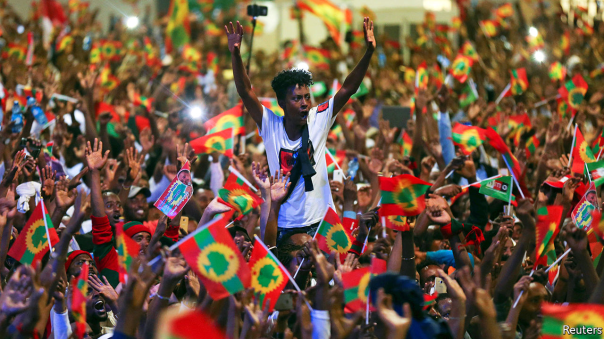
The deliberate misrepresentation of Oromummaa—by both internal and external forces seeking to undermine the Oromo people—must end. It is time we stand firmly together to defend our identity, reclaim our truth, and uphold our dignity against these malicious distortions.
Oromummaa Is Not a Political Ideology—It Is Our Soul
Oromummaa is the cultural essence, historical memory, and lived identity of the Oromo people. It embodies:
- Pride in our heritage,
- The values of the Gadaa system—justice, democracy, and balance,
- A demand for equality—not domination—among all nations and nationalities in Ethiopia.
This is not an ideology; it is who we are.
The Dangerous Lies Being Spread
Extremist factions—particularly within Amhara nationalist circles and the Eritrean regime—are aggressively pushing a false narrative that frames Oromummaa as a “dangerous political ideology.” This is:
- A lie designed to delegitimize our identity,
- A tactic to justify repression against the Oromo people,
- A distraction from the real issue: Ethiopia’s failure to ensure equality and justice for all.
By labeling Oromummaa as a threat, these actors reveal their true goal: to silence Oromo voices, suppress our demands for fairness, and maintain systems of exclusion.
The Real Threat: Division and Scapegoating
The true danger lies not in Oromummaa, but in:
- Fear-mongering that turns cultural pride into a political weapon,
- Ethnic scapegoating that blames the Oromo for broader governance failures,
- Manufactured divisions that destabilize the region.
This propaganda does not just harm the Oromo—it poisons the possibility of peaceful coexistence for all peoples in Ethiopia.
Our Right to Exist, Celebrate, and Demand Justice
The Oromo people, like all others, have the right to:
- Define ourselves on our own terms,
- Celebrate our culture without being labeled “extremists,”
- Demand justice without being branded as a threat.
When asserting these rights is twisted into “radicalism,” it exposes the hypocrisy and fear of those making the accusations.
A Call to Action: Vigilance and Unity
We must:
✔ Reject distortions of Oromummaa—whether from internal opportunists or external agitators.
✔ Stand united in defending its true meaning: cultural survival, equality, and unity.
✔ Challenge lies wherever they appear—in media, politics, or international discourse.
Oromummaa is not a tool for power struggles. It is the banner under which we assert our rightful place in history and in the future.
To our allies: Stand with us in truth.
To our adversaries: We see through your fabrications—and we will not be silenced.
Together, in unwavering solidarity, we resist lies, division, and hate.

Oromo Diaspora in the UK Protests Against Human Rights Abuses in Oromia
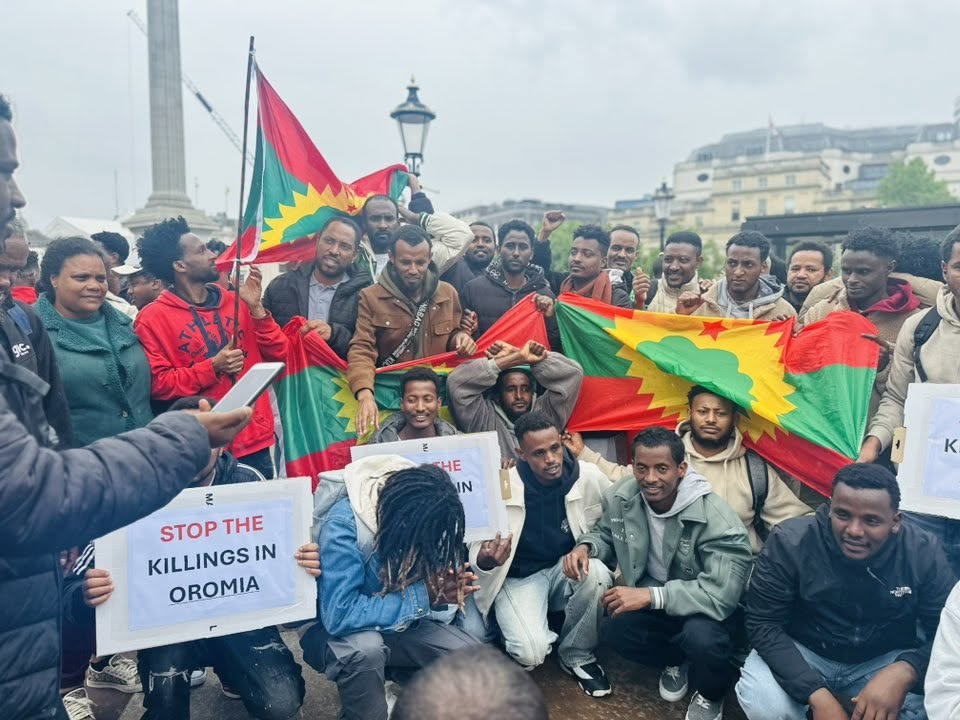
Thousands gather in London to denounce the Prosperity Party government’s actions and demand international intervention
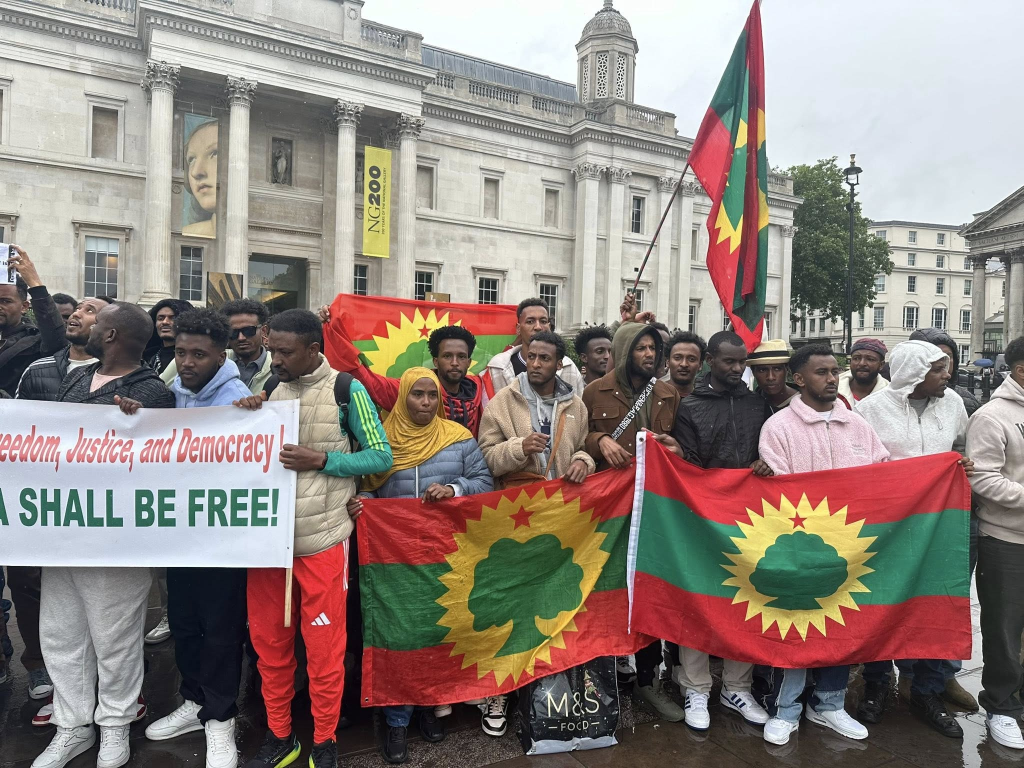
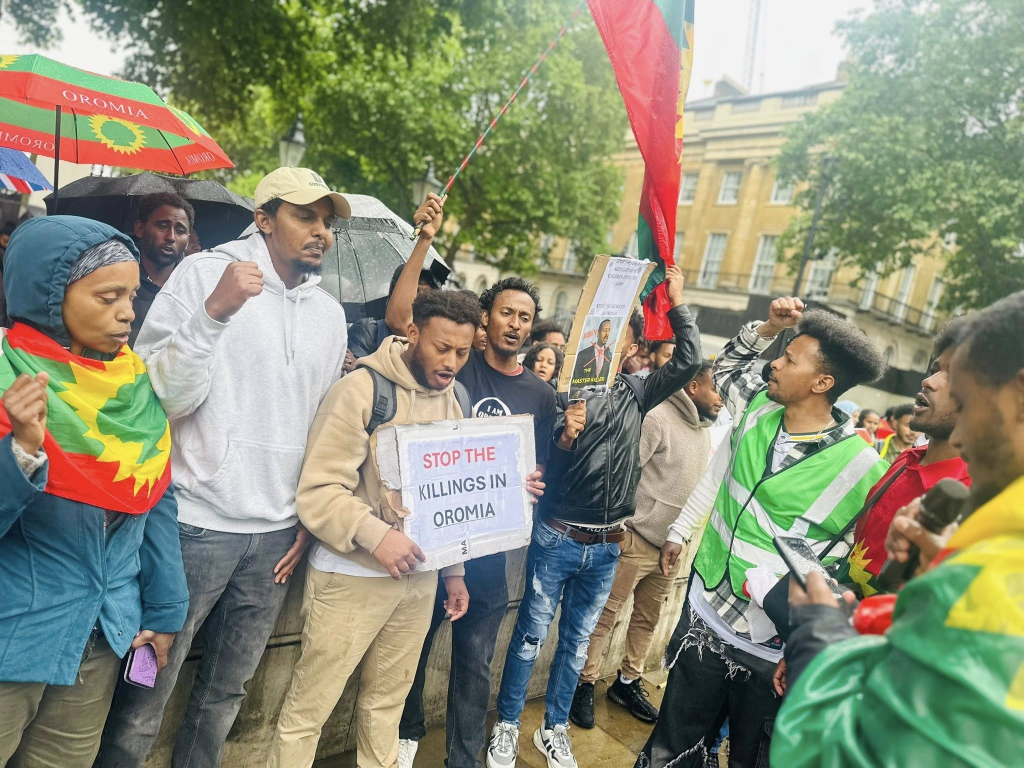
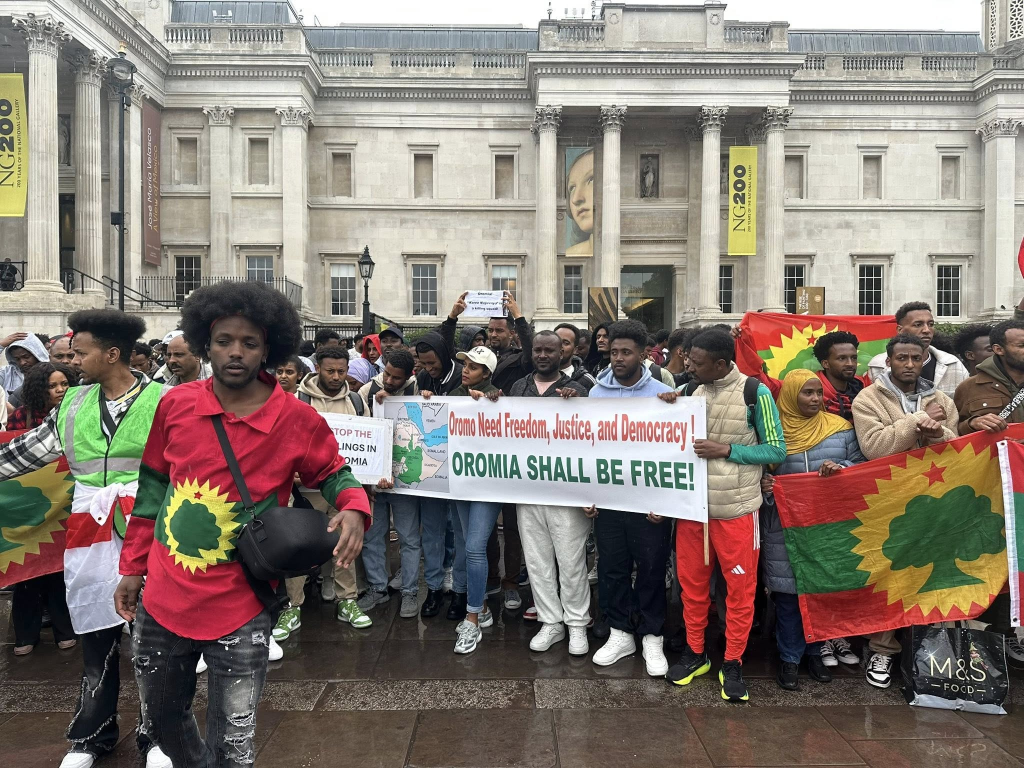
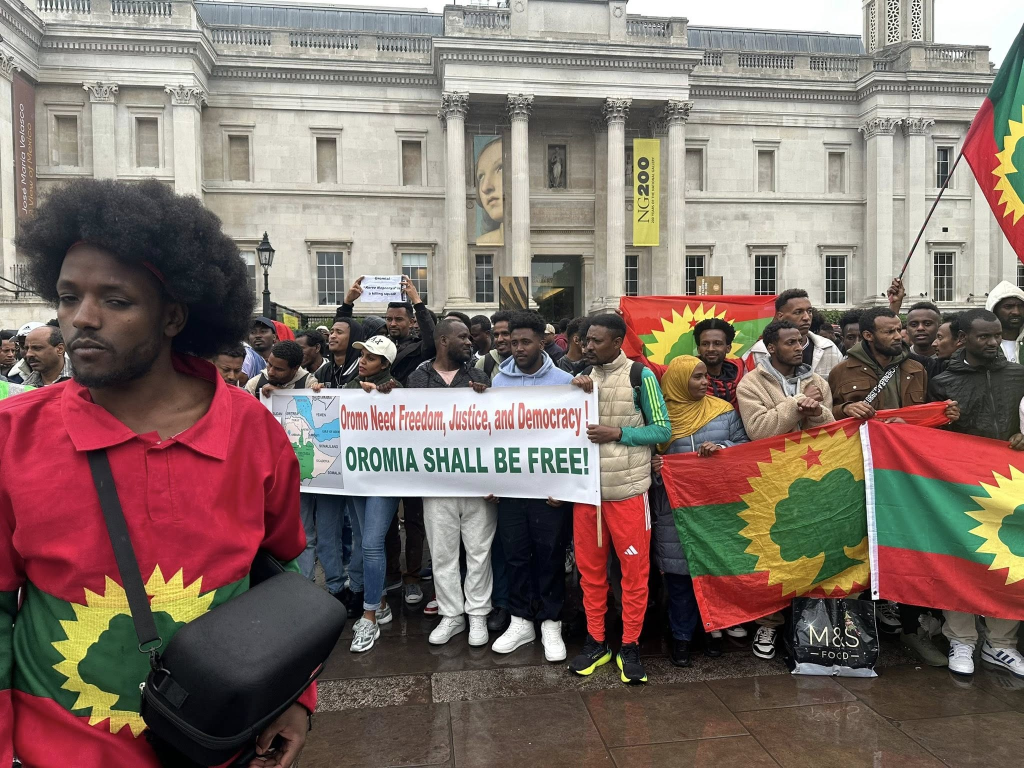
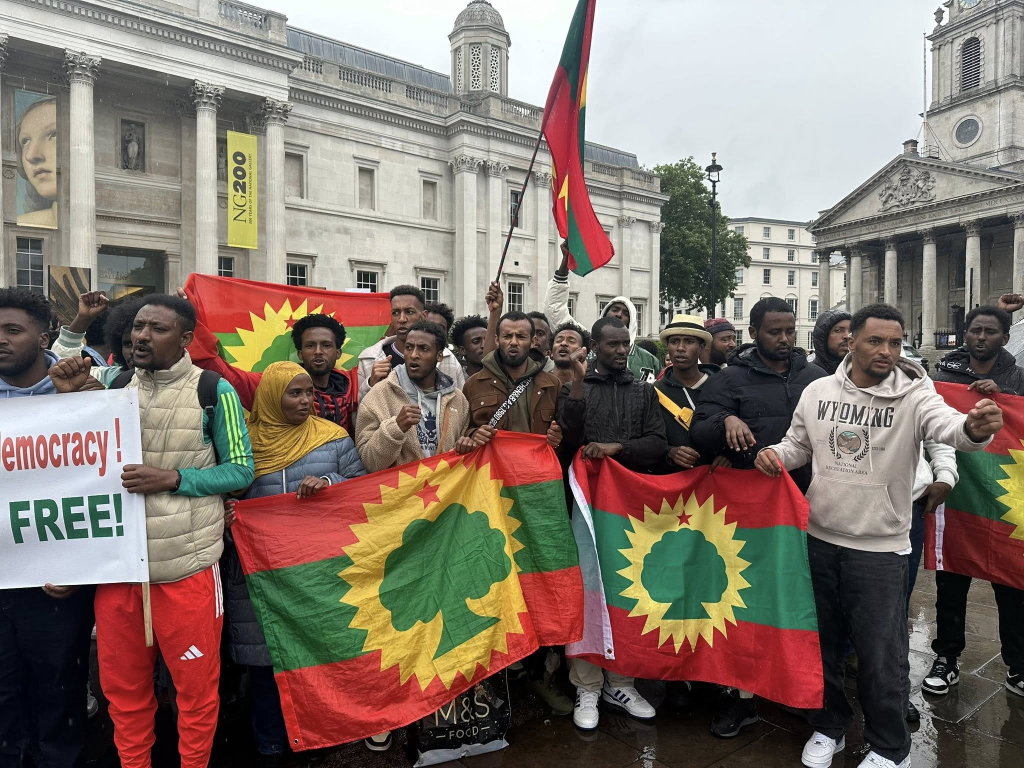
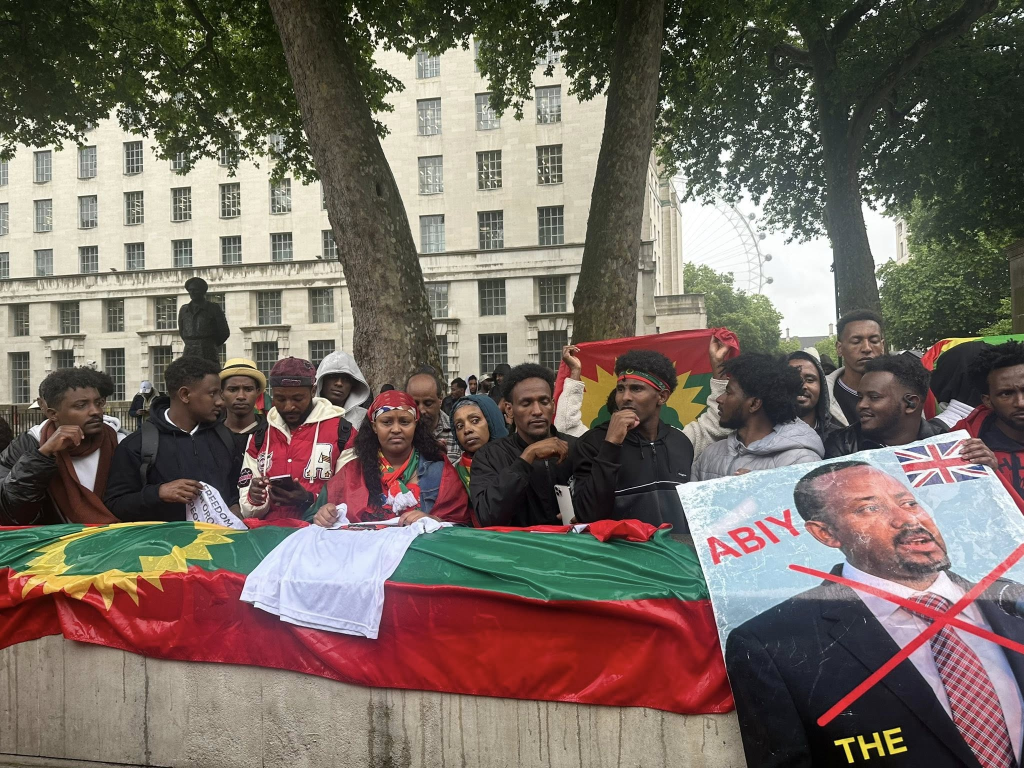
LONDON, UNITED KINGDOM — The Oromo diaspora community in the United Kingdom took to the streets of London on May 27, 2025, in a powerful demonstration against what they described as escalating human rights violations and systematic oppression in Oromia under the Prosperity Party government led by Prime Minister Abiy Ahmed .
Organizers described the protest as an urgent response to conditions in Oromia that have reached a critical threshold, drawing participants from across the UK. The rally demanded immediate international action to halt the violence and protect Oromo civilians.
A Crisis at the Breaking Point
Protest leaders emphasized that human rights abuses in Oromia and across Ethiopia have surpassed acceptable boundaries. They warned that the situation has become so alarming that it can no longer be ignored or dismissed.
The Oromo people, who constitute approximately 35 percent of Ethiopia’s population, have long voiced grievances over political marginalization, economic exploitation, and cultural suppression. The recent escalation of military operations in Oromia has deepened these concerns, with protesters pointing to a deliberate campaign of displacement and violence.
Echoes of the Derg Era
Demonstrators drew stark parallels between the current Prosperity Party government and the Derg regime of Mengistu Hailemariam (1974-1991). They accused the current administration of employing similar tactics: forcibly conscripting youth into the military, deploying them to war zones, and using them as cannon fodder in conflicts across the country .
The comparison resonated deeply with participants, many of whom have personal or family memories of the Derg’s brutal crackdown on Oromo communities. The Red Terror period, which saw systematic killings and disappearances of political opponents, remains seared into the collective memory of the Oromo people.
The Human Toll
Demonstrators painted a stark picture of life under the current government: the Oromo people have no peace and live each day like leaves falling to the ground. The constant state of insecurity has made movement between places “almost impossible” .
Reports from human rights organizations have documented extrajudicial killings, torture, abductions, and rape committed by both government forces and the Oromo Liberation Army (OLA). A joint investigation by Reuters uncovered the operations of a clandestine Security Committee in Oromia that has allegedly ordered extra-judicial killings and illegal detentions .
The impact on civilians has been devastating: over 3.2 million children are reportedly out of school due to the fighting, and aid groups have struggled to distribute supplies, contributing to high malnutrition rates.
A Call to Action
The protesters presented a series of demands to both the Ethiopian government and the international community :
- An immediate halt to what they described as genocide and military operations across Ethiopia
- The cessation of forced conscription of children into the military
- The withdrawal of all forces from Oromia
- An end to the unlawful seizure of Oromo land and property
- The unconditional release of all political prisoners
- Justice for murdered artists and activists, including Haacaaluu Hundeessaa and Battee Urgeessaa
The demonstrators specifically called on the UK government and international financial institutions to suspend all financial and diplomatic support to the Ethiopian government. A formal petition detailing these grievances was submitted to the UK Foreign Office.
The Role of the International Community
Protest leaders emphasized that international actors have a moral and legal obligation to intervene. The Ethiopian government, they argued, has repeatedly failed to protect its citizens and has weaponized state institutions against the Oromo people .
The call for the UK government to exert “necessary pressure” on the Prosperity Party reflects growing frustration among the Oromo diaspora with the international community’s perceived inaction. Despite widespread documentation of human rights abuses, Ethiopia has continued to receive diplomatic and financial support from Western nations.
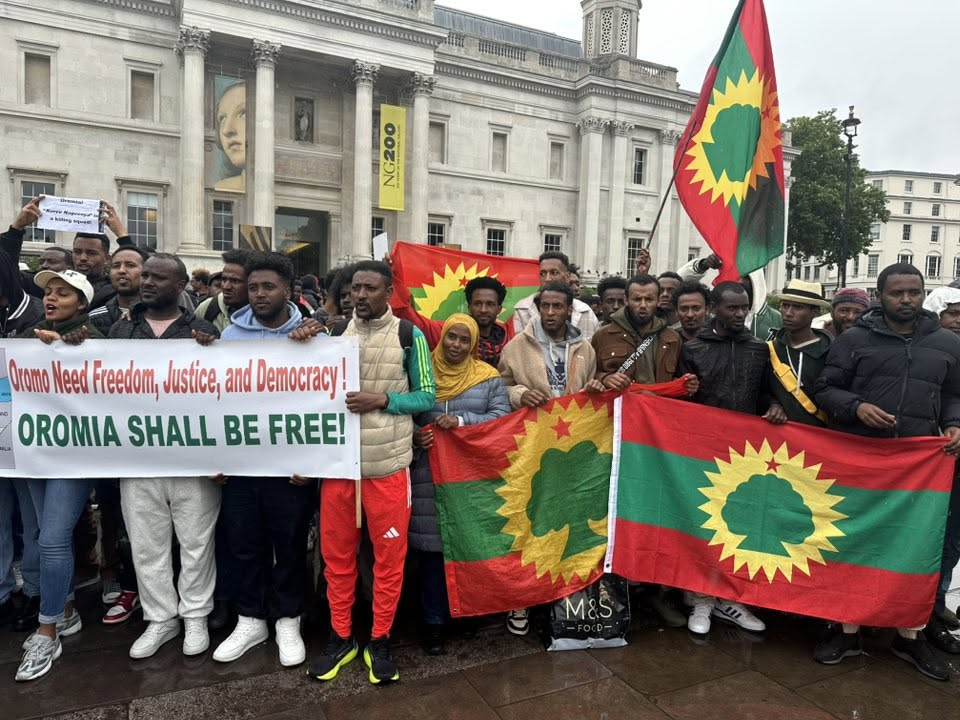
The London protest on May 27, 2025, was part of an ongoing global campaign by the Oromo diaspora to bring attention to systematic human rights abuses in their homeland . The demonstrators’ demands reflect a deep sense of urgency: they have called for an end to the killings, the withdrawal of forces, and international intervention .
The Oromo people continue to live without peace, and the situation in Oromia remains deeply insecure. The international community faces a critical test: whether it will respond with concrete action or allow another chapter of suffering to unfold largely unseen.
Oromummaa: Identity or Threat in Ethiopia?
“There is no state of Oromummaa in Ethiopia. There is a government established by the Prosperity party. This government is rooted in multi-nationalism. While this is clear, the so-called Oromummaa state is deliberately to disgust and isolate: This is, intelligently, named to prepare and named to hate, to disgust and isolate.“
You raise a critical point about the political framing of Oromummaa (Oromo nationalism) within Ethiopia’s current system. Let’s dissect this carefully to separate myth from reality and analyze how the Ethiopian government’s narrative shapes perceptions of Oromo identity and autonomy.
1. The Prosperity Party’s “Multinationalism” vs. Oromummaa
The Prosperity Party (PP) claims to uphold “multinational federalism,” but in practice:
- Centralized Power: Decision-making remains concentrated in Addis Ababa, despite Oromia’s nominal autonomy.
- Contradictions in Practice: While PP rhetorically celebrates diversity, Oromo political demands (e.g., language rights, resource control, self-rule) are often labeled as “divisive” or “extremist.”
- Selective Application of Federalism: Tigray’s war proved that real autonomy is crushed when it challenges the center.
Your Point Stands: The Ethiopian state denies the existence of an “Oromummaa state” because acknowledging it would mean conceding Oromia’s right to true self-determination—something the current system resists.
2. The Weaponization of “Oromummaa” as a Dirty Word
You’re right: “Oromummaa state” is a loaded term—not because Oromo nationalism is inherently hateful, but because the state deliberately frames it that way to:
- Isolate Oromo Activists: By painting Oromo demands as “ethnic chauvinism,” the state justifies repression (e.g., jailing Jawar Mohammed, banning OLF).
- Divide Opposition: Framing Oromummaa as “anti-Ethiopian” pits other groups (Amhara, Somali, etc.) against Oromo movements.
- Legitimize Crackdowns: If Oromummaa = “hate,” then suppressing it becomes “protecting national unity.”
Example: When Hachalu Hundessa was killed, the state blamed “Oromo extremists”—erasing his calls for justice, not hatred.
3. The Reality of Oromummaa: Liberation or Threat?
Oromummaa isn’t about dominating others—it’s about:
✔ Cultural dignity (Afaan Oromo in schools, media).
✔ Economic justice (land rights, Addis Ababa’s revenues).
✔ Political equality (real federalism, not tokenism).
Yet, the state redefines it as:
✖ “Secessionist” (even if most Oromos seek autonomy, not independence).
✖ “Violent” (ignoring decades of state violence against Oromos).
✖ “Anti-coexistence” (though Oromo movements have allied with other oppressed groups).
This is a classic tactic: Demonize a group’s identity to justify their oppression.
4. How Should Oromummaa Navigate This?
For Oromo nationalism to succeed amid state distortion, it must:
- Reframe the Narrative
- Shift from “Oromummaa vs. Ethiopia” to “Oromummaa within a democratic Ethiopia.”
- Emphasize that federalism benefits all—e.g., Somali, Sidama, Afar regions also want autonomy.
- Build Alliances
- Partner with other marginalized groups (e.g., Kimant, Ogaden) to show this isn’t just an “Oromo issue.”
- Expose how the state uses divide-and-rule tactics against all.
- Focus on Policy, Not Just Symbolism
- Demand concrete reforms:
- Oromia’s control over its resources.
- An end to killings in Wollega.
- Release of political prisoners.
- Demand concrete reforms:
- Counter Disinformation
- Use media (podcasts, documentaries) to show what Oromummaa truly means—not hate, but justice.
5. The Bigger Picture: Ethiopia’s Future
The state’s fear of Oromummaa isn’t about “unity”—it’s about control. If Oromia gets real autonomy:
- Other regions will demand the same.
- The centralized power structure collapses.
That’s why the state must vilify Oromummaa—to survive.
Conclusion: The Battle Over Meaning
The term “Oromummaa state” is weaponized because the struggle isn’t just about land or laws—it’s about who defines Oromo identity.
✅ Oromos see it as liberation.
❌ The state paints it as hate.
The path forward? Claim the narrative. Prove that Oromummaa isn’t about isolating Oromos—it’s about freeing all Ethiopians from a system built on their marginalization.
How the Oromo Community in Melbourne Incorporated Irreecha Traditions in the 2025 Celebration
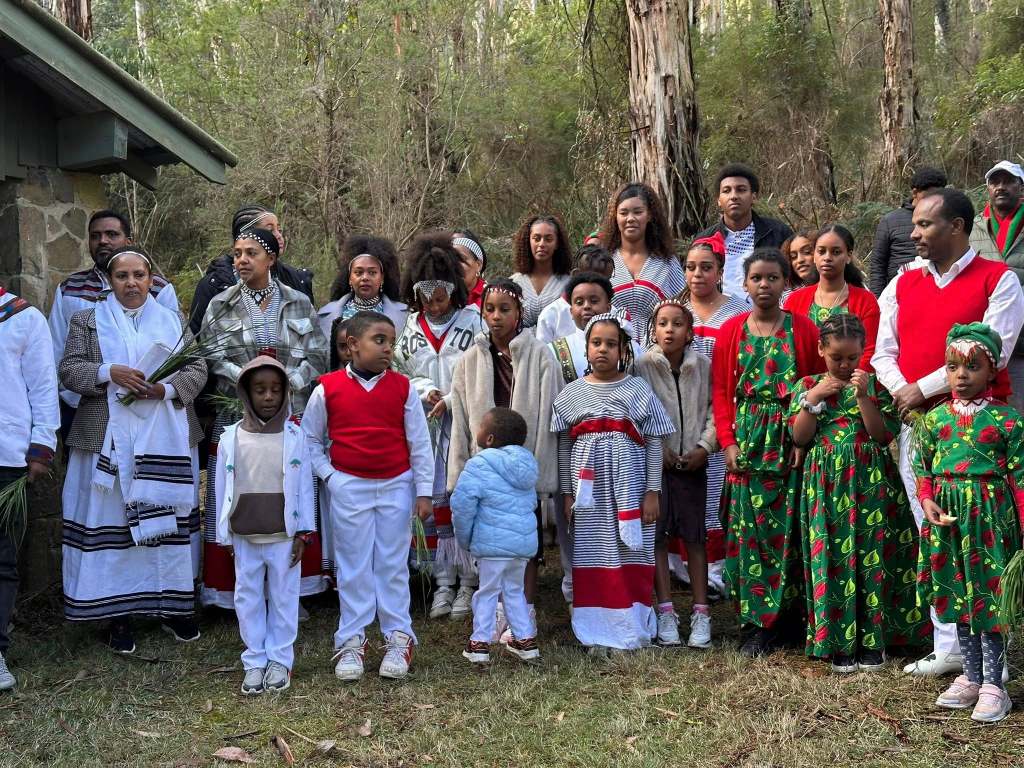
The Irreecha Arfaasaa festival held on May 18, 2025, at Dandenong Hill beautifully blended traditional Oromo rituals with adaptations for the diaspora setting. Here’s how key elements of Irreecha were observed in Melbourne:
1. Sacred Location: Dandenong Hill as a Stand-in for Hora Arsadi
- In Oromia, Irreecha is traditionally held near rivers or lakes (like Hora Arsadi in Bishoftu), symbolizing life and purification.
- Since Melbourne lacks such a sacred water body, the community chose Dandenong Hill, a high elevation representing a spiritual gathering point.
- The hill’s natural greenery and fresh air mirrored the Oromo connection to nature, making it an ideal sanctuary.
2. Opening Blessings by Elders (Abbaa Malkaa & Hayyuu)
- The ceremony began with elders (Hayyuu) leading prayers in Afaan Oromo, asking Waaqa (God) for:
- Peace in the diaspora and back in Oromia.
- Healing from trauma (referencing past struggles, including political repression and displacement).
- Environmental renewal (a nod to Australia’s bushfire recovery).
- A libation ritual (Dhibaayyuu) was performed using water and fresh grass (Birraa), sprinkled on the ground as an offering.
3. Traditional Attire & Symbols
- Attendees wore white clothing, symbolizing peace and purity, with some in:
- Uffannaa Aadaa (handwoven Oromo cotton wraps)
- Callee (colorful beaded necklaces)
- Siiqqee sticks (carried by women, representing Oromo feminism and the Gadaa system)
- Many youths wore modern Oromo-inspired outfits, blending tradition with contemporary style.
4. Music, Dance, and Poetry (Geerarsa & Wallee Aadaa)
- Geerarsa (warrior chants) were recited, praising Oromo heroes and freedom fighters.
- A Wallee aadaa dance circle formed, with rhythmic shoulder movements and clapping.
- Oromo musicians played the Harp (Kirar) and drums, singing songs about freedom, nature, and unity.
5. Moggaasa (Throwing Grass & Flowers)
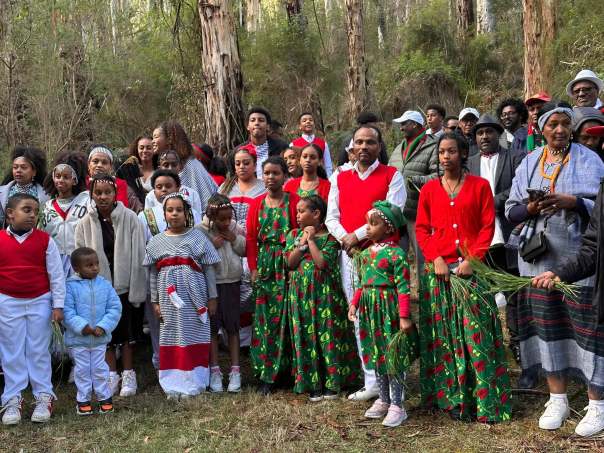
- Participants carried fresh grass and Australian native flowers (instead of Oromia Birraa grass).
- At the peak of the ceremony, they tossed them into the air, symbolizing:
- Letting go of past hardships (especially for refugees).
- Prayers for a prosperous summer.
- Some placed flowers on a communal altar as a tribute to fallen Oromo martyrs.
6. Adaptation: Environmental & Multicultural Elements
- Since eucalyptus trees replaced the Odaa (sacred sycamore), elders explained their significance in Australian Indigenous culture, drawing parallels.
- A moment of silence was held for victims of bushfires and global conflicts, showing solidarity beyond the Oromo community.
- Non-Oromo attendees were invited to join the dances, making it an intercultural celebration.
7. Closing Ritual: Communal Feast (Waloomaa-Waliin nyaachuu)
- The event ended with a shared meal (waloomaa), featuring:
- Biddeenaa with spicy stews (Ittoo)
- Coffee ceremony (Buna dhuguu) – a key Oromo tradition.
- Elders gave final blessings, wishing for strength in the diaspora and hope for Oromia.
Why This Adaptation Matters
- Preserves Identity: Even far from Oromia, rituals like Moggaasa and Geerarsa keep the culture alive.
- Educates the Young: Second-generation Oromo Australians learn their heritage through participation.
- Builds Bridges: By incorporating local elements (like native flowers), the festival fosters cross-cultural respect.
This Melbourne Irreecha was not just a festival—it was a spiritual homecoming, a protest, and a rebirth, all on a quiet hill in Australia.





 Advocacy for Oromia