Author Archives: advocacy4oromia

Oromo Scholar proposes the foundation of a national council of Oromia

(Advocacy4Oromia, 27 January 2016) Distinguished Oromo scholar, Asefa T Dibaba, proposes the foundation of a national council of Oromia for Tracing a Roadmap for Oromo Struggle.

maxresdefaultAccording to Dr Asafa T Dibaba, the best revenge is not revenge, but to move on justly and happily and let  Waaqa (God) do the rest! He says “in the Past, the oldest we were to be wise but the weakest to change our Fate.”

He has a seed of thought about Founding of OROMIA NATIONAL COUNCIL that would be “a first step toward transforming the long protracted Oromo national (liberation) struggle from stagnation to a more dynamic, inclusive, and active political force.”

“This urgent need for an inclusive national dialogue among the Oromo is compelling at least for two reasons: first, our struggle for democratic right has been slowed down by the Ethiopian regime which seeks to assert and maintain its power indefinitely using lethal force; second, instead of cooperation and forming organizational alliance among Oromo political elites, the struggle has been hindered and reduced to clashes of interest over power and suffered lack of ideological clarity and organizational discipline, i.e., transparency and dynamism, among others.

“Hence, there are two main aims for the present project: first, it is believed to create and increase awareness within areas that are regarded as important to revitalize the Oromo national struggle for democratic rights. Second, it is hoped to encourage collaboration in the Oromo general public, between individuals, and among organizations that have had, to the present, no need to accomplish tasks and solve problems collaboratively.

“As the project will evolve into practice, it is expected that possibilities and hindrances will become more obvious, and they necessitate careful handling of differences, issues, and attitudes using democratic principles.”

Your point of argument is appreciated whether you stand in favour of the idea or not. “Not just Thumb Up or Down but I expect WHY in your comments and suggestions.”

Here below is his today’s message from his facebook timeline.

====================================================
FOUNDING A NATIONAL COUNCIL OF OROMIA

(Tracing a Roadmap for Oromo Struggle)

the best revenge is not revenge, but
to move on justly and happily and let
Waaqa (God) do the rest!

Hi folks!

During the last three weeks you wondered what I was/am up to. I understand that your concern was sincere and genuine. Then I said,
Oromo, in the Past, the oldest we were to be wise but the weakest to change our Fate. In the Present and Future, the youngest we shall ever be to be free and to live by our Freedom! Patience to wait and courage to encounter the unexpected are the two most intriguing lessons in Our life. And, My People, this is true no better moment in Our life than the present.

Twenty-five years ago, in Khartoum, I met with someone from ORA and he asked me how long it would take for the Oromo to be free. . I said, maybe ten or twenty years. And he asked me why. I said, our people do not know yet FREEDOM FROM WHAT and FREEDOM TO WHAT. He was mad at me.

After 25 years, now I have developed personally and professionally–I have a PhD (should that matter) and my people too have a PHD but in Poverty, Hunger, and curable Disease (malaria, malnutrition, etc). The difference is, I mastered the Theory and they did the Practice! And our leaders, whom I came to idolize in my early adolescence, now tell us that they were hand in gloves (communicating on regular basis) with the late Ethiopian Prime Minister until he was removed from power by natural death. Communicate what, and in whose favor?

Now, last week I shared my views about “Where are we now,” and “where to”” with two young Oromo scholars. I shared with them a seed of thought about the crucial need for FOUNDING NATIONAL COUNCIL OF OROMIA. And I heard someone last night on OMN sharing the same concern. This is it! I said–sharing the same common vision.

I am working on the project and I wanted to wait until I separate the wheat from the chaff but roughly here it is in a nutshell:

The Founding of OROMIA NATIONAL COUNCIL, I strongly believe, IS a first step toward transforming the long protracted Oromo national (liberation) struggle from stagnation to a more dynamic, inclusive, and active political force. This urgent need for an inclusive national dialogue among the Oromo, both in the Diaspora and back home (Oromia), is compelling at least for two reasons: first, our struggle for democratic right has been slowed down by the Ethiopian regime which seeks to assert and maintain its power indefinitely using lethal force; second, instead of cooperation and forming organizational alliance among Oromo political elites, the leaders put the national struggle in trap and reduced it to clashes of interest over power and, consequently, it suffered the lack of ideological clarity and organizational discipline, i.e., transparency and dynamism, among others.

Hence, there are two main aims for the present project: first, it is believed to create and increase awareness within areas that are regarded as important to revitalize the Oromo national struggle for democratic rights. Second, it is hoped to initiate national consensus and to encourage collaboration in the Oromo general public, as among individuals and organizations that have had, to the present, no need to accomplish tasks and solve problems collaboratively. As the project will evolve into practice, it is expected that possibilities and hindrances will become more obvious, and they necessitate careful handling of differences, issues, and attitudes using democratic principles.

At the moment, Qeerroo, the Revolutionary Oromo Youth League, and the Peasants seem to have taken back their fate in their hand during this historical move which I call AUTUMN REVOLUTION. But my worry is this: IF YOUTH KNEW, IF AGE COULD. Utuu Ijoolleen beetti ta’ee, Utuu Jaarsi danda’ee! dha. Oromo intellectuals and our political elites should narrow their differences, come together and work to bridge the gap and map out the future!

Never too late!

NOTE:
Not just Thumb Up or Down but I expect WHY in your comments and suggestions. Thanks

Abba Ebba.
Indiana University

Ethiopia’s Invisible Crisis

Protests broke out in Ethiopia in November, and the government is continuing its massive crackdown.
Hailemariam_Desalegn_and_Barack_Obama_in_2013

Ethiopian Prime Minister Hailemariam Desalegn confers with President Barack Obama

“Badessa” was a third-year engineering student in western Ethiopia in April 2014 when he and most of his classmates joined a protest over the potential displacement of ethnic Oromo farmers like his family because of the government’s plan to expand the capital, Addis Ababa, into the farmland.

The night of the first protests he was arrested and taken to an unmarked detention center. Each night he heard his fellow students screaming in agony as one by one they were tortured by interrogators. “I still hear the screams,” he told me later. Eventually his turn came to be interrogated. “What kind of country is it when I voice concern that my family could lose their farm for a government project and I am arrested, tortured, and now living as a refugee?”

Since mid-November, large-scale protests have again swept through Oromia, Ethiopia’s largest region, and the response from security forces has again been brutal. They have killed countless students and farmers, and arrested opposition politicians and countless others. On January 12, the government announced it was cancelling the master plan, but that hasn’t stopped the protests and the resultant crackdown.

Although the protest was initially about the potential for displacement, it has become about so much more. Despite being the biggest ethnic group in Ethiopia, Oromos have often felt marginalized by successive governments and feel unable to voice concerns over government policy. Oromos who express dissent are often arrested and tortured or otherwise mistreated in detention, accused of belonging to the Oromo Liberation Front (OLF), a group that has long been mostly inactive and that the government designated a terrorist organization.

The government is doing all it can to make sure that the news of these protests doesn’t circulate within the country or reach the rest of the world. Ethiopia’s allies, including governments in the region and the African Union, have largely stood by as Ethiopia has steadily strangled the ability of ordinary Ethiopians to access information and peacefully express their views, whether in print or in public demonstrations. But they should be worried about what is happening in Oromia right now, as Ethiopia — Africa’s second most-populous country and a key security ally of the US — grapples with this escalating crisis.

This may prove to be the biggest political event to hit Ethiopia since the controversial 2005 elections resulted in a crackdown on protesters in which security forces killed almost 200 people and arrested tens of thousands .

Although the government focuses its efforts on economic development and on promoting a narrative of economic success, for many farmers in Oromia and elsewhere economic development comes at a devastating cost. As one Oromo student told me “All we hear about is development. The new foreign-owned farms and roads is what the world knows, but that just benefits the government. For us [Oromos] it means we lose our land and then we can’t sustain ourselves anymore.”

It has become almost impossible for journalists and human rights monitors to get information about what is happening, especially in smaller towns and rural areas outside Addis Ababa.

Ethiopia is one of the most restrictive environments for independent investigation, reporting, and access to information, earning the country a top-10 spot in the global ranking of jailers of journalists. For the past decade, the government has limited access to information by regularly threatening, imprisoning, and prosecuting individual activists, bloggers, and journalists and sending a clear public message that the media must self-censor and that dissent or criticism of government policy will not be tolerated.

Independent media have dwindled—more than 70 journalists have fled the country since 2010 and five of the last independent publications closed down before the May elections. Meanwhile the state-run media parrot the government line, in this case claiming that the Oromo protesters are linked to “terrorist groups” and “anti-peace elements” who are “aiming to create havoc and chaos.”

Very few international journalists are based in Ethiopia. Those who have attempted to cover events on the ground since the protests began have braved threats and arrest, but these are a few lone voices.

Given restrictions on local and international media, you might think that ordinary citizens, local activists, and nongovernmental organizations would fill the gaps and document the events in Oromia. But Ethiopia’s human rights activists and independent groups have been crushed by draconian legislation and threats, and even ordinary people are often terrified to speak out. People who dare to speak to international media outlets or independent groups have been arrested. The government taps phone lines and uses European-made spyware to target journalists and opposition members outside the country.

Since the protests began, the restrictions have become even harsher. Authorities have arrested people, including health workers, for posting photos and videos or messages of support on social media. The state-run telecom network has also been cut in some areas, making it much more difficult to get information out from hotspots.

Radio and satellite television outlets based outside Ethiopia, including some diaspora stations, play a key role disseminating information about the protests within Oromia, as they also did in 2014 during the last round of protests. Last year numerous people were arrested in Oromia during the protests merely for watching the diaspora-run Oromia Media Network (OMN).

The government has frequently jammed foreign stations in the past, violating international regulations in the process. When the government is unable to jam it puts pressure on the satellite companies themselves. Throughout the protests government agents have reportedly been destroying satellite dishes.

Yet despite the clear efforts to muzzle voices, information is coming out. Some protesters are losing their fear of expressing dissent and are speaking openly about the challenges they are facing. Social media plays a key role in disseminating information as people share photos and videos of rallies, of bloodied protesters, and of expressions of peaceful resistance in the face of security forces using excessive force.

In the coming days and weeks Ethiopia’s friends and partners should condemn the use of excessive force by security forces that is causing tragic and unnecessary deaths. But they should also be clear that Ethiopia needs to ensure access to information and stop disrupting telecommunications and targeting social media users. The world needs to know what is happening in Oromia—and Ethiopians have a right to know what is happening in their country.

Felix Horne is the Ethiopia researcher at Human Rights Watch.

Source: http://fpif.org/ethiopias-invisible-crisis/

EU Parliament to Vote on the Situation in Ethiopia

(Advocacy 4Oromia) The European Parliament today tabled an urgent motion to vote for a resolution on the situation in Ethiopia on cases of breaches of human rights, democracy and the rule of law pursuant to Rule 135 of the Rules of Procedure.

eu-parliament-vote

European Parliament tabled a motion for a resolution and will debate on the deteriorating human right situation in Ethiopia

The motion that was authored by more than 65 members of parliament is expected to be debated soon by the entire European Parliament before a vote that calls for a strong condemnation against the Ethiopian government for use of excessive forces against peaceful protesters, human rights violations and abuses including arbitrary arrest and illegal detention and torture.

It also calls for an immediate release of all jailed students, farmers, opposition politicians, academics, bloggers and journalists for exercising their right to peaceful assembly and freedom of expression.

The motion calls for Ethiopian government to respect the Universal Declaration of Human Rights and the African UnionCharter of Human and People’s Rights, including the right to peaceful assembly, freedom of expression and association.

It also strongly urges the Ethiopian government to invite the UN Special Rapporteur on the rights of freedom of association and peaceful assembly and other UN human rights experts to visit Ethiopia to report on the situation.

The motion stresses that any financial support to Ethiopia from the EU should be measured attending to the country’s human rights record and the degree of which the Ethiopia government promotes reforms towardsdemocratization and to effectively monitor EU development assistance is not contributing to human rights violations in Ethiopia, particularly programs linked to displacement of farmers and pastoralists.

The adoption would likely be viewed as a signal that the EU will take the Ethiopian government accountable for its flagrant human rights violations on its citizens.

Here below is the full text of the motion on the Situation in Ethiopia: http://www.tesfanews.net/eu-parliament-ethiopia-motion.pdf

Source: http://www.tesfanews.net/european-parliament-motion-on-ethiopia/


The Special Interest: the Affirmation of Denial

Source: The Special Interest: the Affirmation of Denial

Gadamoji Cultural Festival, December 31st 2015, Marsabit.

Culture is a way of life. A myriad of cultures and languages converged at Marsabit’s Kubi Gadamoji cultural site. The theme of the day was ‘ promoting peace and harmony through culture’. The event brought together all the tribes from Marsabit County, who listened to my speech as one.


A Tale of Two Grooms

by

tell

Sunday, January 10, 2016 was ordinary Sunday in Ethiopia. Most are resting from a long work week, visiting families, catching up with friends. For some, since this was a wedding season, they are preparing to attend wedding of family or friend. This same Sunday two grooms are preparing to wed their loved ones, hundreds of miles apart.

The first groom was Abel Tesfaye, he was preparing to merry his lover, Dr. Sosina HaileMariam at the Apostolic Church of Ethiopia in the capitol Addis Ababa. This wedding was all over the news since it was the first official wedding that will take place in the National Palace of Ethiopia. Since his soon to be wife was the daughter of the Prime Minster of Ethiopia Haile Mariam Desalegn and w/o Roman Tesfaye. I am sure the wedding was special to the PM and his family since there is nothing more important and moving than giving the hand of his daughter in marriage. The videos that was released from the church was very nice and moving. Congratulation is in order to the Prime Minster and his family. I am sure Groom number one, Abel Tesfaye, will continue to live happily ever after with his beloved wife Dr. Sosina HaileMariam. With God’s will they will have kids and make the PM a proud Grand father.

The second Groom was teacher Fitsum Abate of Gurissa, Illibabour at Oromia region. He was preparing to merry his lover Frehiwot Belete. According to the reports from different media outlets, the night before, Ethiopian Security forces show up in his place and knock on his door. He opened the door only to be met with a barrage of bullets which hit him in his head. The day that was suppose to be the happiest of his life, Fitsum spend the night in Metu hospital in life support. The day of his wedding he was taken to the capital to get a better treatment and as the reports show he is in critical condition at Tikur Anbessa Hospital.

Here is where the story meets. In early December, a protest started in a city of Ginchi, because of the government’s plan of expanding Addis Ababa’s territory into Oromia administered areas. In the effort to stop a private company’s bulldozers from destroying a Chilimo forest, residents of Ginchi started protesting and the government starting shooting innocent protesters. Most young students and some children laid dead in the streets. The protest erupted throughout Oromia and in an effort to squash the movement the Government set up command posts and dispatched a brutal Agazi brigade which escalates the number of dead quickly. As of today, 140 plus dead, 2000 plus injured and 35000 imprisoned.

At this point, the father of bride number one, the Prime Minster gave a TV interview and we all hoped for a comment of reason to stop the senseless killing and move the country to healthier atmosphere and we were shocked and disappointed to hear his angry comments and his regrets for the destruction of property before life. He said “For the people that involved in the protest in destruction of property, we will take action against them without any mercy”.  Most of us know really well what comments like this mean. The mass arrest of protesters and opposition political leaders like Bekele Gerba continued and the number of dead escalated right away. The PM’s comment meant the green light to hunt and kill what the government believes to be anti-government without any do-process. It meant a green light to harass one in his or her home and shoot them. It meant a green light to shoot groom number two, teacher Fitsum Abate just because the security forces suspected him or not. Don’t hold your breath to see if justice will be served for Fitsum, it is not. He just end up being another person without a voice in his own country.

From the wedding video of the PM’s daughter, I can’t help it but see the emotions of the Prime Minster while he was reading the scripture. He was wiping his eyes with emotions of happiness and I hope he know there are thousands of other parents wiping their eyes too but only in misery and sadness. I hope he knows he and his administrations actions unleashed misery on thousands of families and the only way they remember their kids is by small plot in a nameless graveyard due to the bullets of blood hungry butchers. I hope every time he cherish his family, he remembers, those mothers and fathers and their pain.

The story of the two grooms is a perfect face of today’s Ethiopia. The land of so many struggling families and few completely out-of-touch supporters. The land of the exiled, tortured, imprisoned masses and few greedy millionaires that can loot, steal, lie and prosper without consquences. The land of tens of millions starving and few living in their villas crying foul. 

This is the end of the tale of the two grooms and I hope we will have a country where the two grooms live happily ever after. Hope both families cry the tear of joy and be able to hug their kids and grand kids. I hope we will have a country where the rule of law prevails. I hope and pray!

Source:http://yadesabojia.com/2016/01/13/a-tale-of-two-grooms/

William Davison’s Witness from Southwest and West Shewa zones of Oromia

11039049_10153223048180792_7060139454322974595_nI was in Southwest and West Shewa zones of Oromia for two days last week. I drove the Addis-Woliso-Wenchi-Ambo-Addis loop that I last did on a tourist jaunt with my parents in early 2014. I intend to document the more interesting parts of what I found in a couple of pieces next week, so I’m not going to go into details here. Suffice to say there was considerable anger at the killing of unarmed Oromo protesters, fear over an ongoing extensive crackdown, and general dissatisfaction with an unresponsive government over poor public services and corruption.
The protests seemed to be focused on east Oromia last week. All we saw was a group of mostly teenagers running up and down Ambo town centre chanting at about 5pm on Christmas afternoon. They seemed to be generating quite a lot of excitement among onlookers, and I think the group had grown to over 100 by the time I last saw them. They were quickly tailed by a pick-up of armed Oromia regional forces, and then it started raining, so I think they gave up. The response of the authorities was to immediately dispatch a pick-up of Federal Police in riot gear and an EDF armored personnel carrier to patrol the same stretch of road. There were also dozens of Federal Police dotted along the side of the road. It was a way heavier security presence than we’d seen in Woliso, or any of the smaller towns.
We didn’t get detained over the two days and were only prevented from reporting by a pot-bellied kebele official in Dima next to Sebeta on our very first stop. It seemed like he’d been tipped off about our presence and so sidled over, pen in pocket, phone in hand, ignored the ferenjis, and started discussing the situation with out translator. I don’t think he looked at me once and definitely didn’t address me directly or engage in a conversation. I guess I saw him as a useful metaphor for a government that’s not very good at listening. His position seemed to be the usual claptrap about us needing specific permissions wherever we want to report, and the local authorities needing to be informed about our arrival as they are responsible for our security. (My stock response to that one these days is that, as I’m an adult, I’m responsible for my security – it doesn’t impress anyone.) The chap wanted us to stick around and presumably get acquainted with the local police commander, but we jumped in the car and drove off instead.

Source: https://www.facebook.com/william.davison.33?fref=nf&pnref=story

Oromo protest in Melbourne

Monday, January 4, 2016

Melbourne’s Oromo community rallied on January 3 as part of a world-wide action in solidarity with the Oromo student protesters currently leading the ‪#‎OromoProtests‬ movement in Oromia, Ethiopia.

The Oromo people are an ethnic group inhabiting Ethiopia, northern Kenya, and parts of Somalia. Oromia is Ethiopia’s largest region, surrounding Addis Ababa. With around 25 million members, they constitute the single largest ethnicity in Ethiopia with about 35% of Ethiopia’s population according to the 2007 census.

The protesters in Oromia say they fear cultural persecution and the loss of their land if the Ethiopian government’s so-called “master plan” to integrate parts of Oromia into Addis Ababa go ahead. They also call for the Oromo people’s right to self-development, self-determination and to publicly protest.

For well over a month, peaceful protesters have been met with government-directed military forces that are killing, beating and arresting primary school, high school, and university students for protesting.

The #OromoProtests movement has brought attention to the many illegalities and crimes against humanity the Ethiopian government has committed. In the face of extreme violence, mass arrests and a rising death toll, the protests continue and the protesters remain unarmed, peaceful and persistent.

The BBC reported on December 28 that at least five people had been killed in clashes in Oromia region in recent weeks and two journalists have been arrested.

The Guardian reported on December 11 that at least 10 students are believed to have been killed and hundreds injured during protests against the Ethiopian government’s plans to expand the capital city into surrounding farmland.

By January 4 #OromoProtests was reporting that the death toll had reached 124 as disturbing reports of soldiers using hand grenades against the protesters emerged.

Rights groups say the Oromo have been systematically marginalised and persecuted for the last 24 years. Some estimates put the number of Oromo political prisoners in Ethiopia as high as 20,000 as of March 2014.

For campaign updates visit their website.

PHOTOS BY ALI BAKHTIARVANDI

Tsegaye R Ararssa spoke at the Melbourne rally.

My name is Tsegaye Ararssa. I am an Oromo from Ethiopia. I come from Addis Ababa, and I intimately know the area that is directly affected by the Master Plan.

I am also one of the keen observers of the tragic events that are unfolding in our homeland today.

I am here as a concerned citizen who would like to join a chorus of voices that protest the ill-designed Master Plan, to denounce the killings and violent repressions being meted out by the regime, and to deplore the situation in which our people languish as we speak.

I am here to help us raise our voices as we tell stories of horror, stories of an impending humanitarian crisis in the Horn of Africa.

I would like to begin by saying ‘thank you’ to the organizers. What you have done today goes a long way as an expression of solidarity to the Oromo youth and farmers who are risking their lives, limbs, personal liberty, means of livelihood, etc, just so they can protest this deadly Master Plan.

What you have done today is significant in resisting the general land grab in Ethiopia.

It is immense in its impact in the effort towards arresting the humanitarian crisis facing the civilian Oromo population; and towards exposing the barbaric and atrocious acts of repression, killing, maiming, torture, rape and persecution of civilians as terrorists.

What you have done goes a long way to contest, resist and protest a wider practice of dispossession, displacement, and consequent homelessness/placelessness, and loss of identity, culture, and language.

What you have done today stands out as a noble act of resisting injustice in all its forms, to negate the Ethiopian state’s practice of cultural dehumanisation, military subjugation, and political domination.

What you have done today is an important act to raise your voice against a massive act of state terrorism.

What you have done today goes a long way in exposing the state practice of political deception that fakes development for an outright plunder through dispossession.

This protest is an expression of solidarity with the Oromo protests at home and among the Oromo diaspora across the globe.

Ours is a voice of sympathy, because theirs is a voice of justice which we also take as our own.

Our protest is a demand for the respect for the human dignity of the Oromo person. It is a demand for equality and non-discrimination. It is a demand for social justice — housing, livelihood, health, employable labor, land and general human security.

It is a demand for a peaceful existence in one’s place of birth. It is a demand for the ecological integrity of one’s natural environment.

Above all, it is a demand for voice, a demand for a hearing. A demand to be taken seriously as a people.

For far too long, the Oromo have been silenced. For far too long, our image has been invisible. Our voice has been inaudible. Our perspective has been rendered unpalatable. Our message has been rendered unsayable.

For far too long, our cry has been a cry for help as in a scream in a dream.

This protest is a protest to say HEAR US. LISTEN TO US. SEE US. DON’T SEE THROUGH US. WE ARE HERE. AND WE AREN’T GOING ANYWHERE. THE LAND HAS A PEOPLE. THE LAND HAS A STORY. AND IT HAS A LIFE. IT IS NOT AN EMPTY SPACE. IT IS NOT TERRA NULLIS.

As a voice of justice, this is part of a global cry for justice only manifested as a local instance. This is the voice of humanity seeking a different — and a better — way of living this life.

Our protest is a challenge to the politics of deception, misinformation and brutal repression.

Our voice is the voice of the human cry expressed in all the international human rights instruments such as the Universal Declaration of Human Rights, the International Covenant on Civil and Political Rights and the International Covenant on Economic, Social, and Cultural Rights, and all other moral and legal codes of universal human aspirations.

Our voice is a voice calling for the respect of the constitution of the land. It is not an onerous demand at all. Ours is a critical voice of loyalty, a voice calling for constitutional fidelity. Ours is a demand for modest and honest politics grounded in the rule of law.

Ours is a voice of civilisation in the face of state barbarity. A voice of peace and legality in the face of state-sponsored terror, chaos and anarchy.

Ours is a voice calling for the fulfilment of the dreams of the ages, the aspiration for democracy in the Ethiopia yet to come. It is also a quest for self-determination in Ethiopia and beyond.

Most of all, ours is a voice of remembrance, a voice of remembering the dead and the disappeared. It is a voice of remembering them, bringing them back to live on, and to live with us.

We stand in solidarity with the Oromo protest as a voice of memory, a s a voice of a witness who has seen it all and has survived — if only to tell the story of horror.

As we tell these stories, we would also like to make a call to several fellow travellers of this humanist journey.

Ethiopians

We call upon all other peoples from Ethiopia to join the Oromo protests to help raise our voices against a shared experience of brutal repression by the State. We note the suffering of the peoples of Gambella, Afar, Benishangul-Gumuz, SNNPRS, and Amhara who had to sustain similar dispossession of land and displacement therefrom. We note all the unnecessary suffering created by the barbaric regime in Ethiopia today. We note the misery of the people of Qemant that resulted from misrecognition and is manipulated by the regime to spread hostility with the Amhara. We note the concerns of the people living in the Ethio-Sudanese border whose land is alleged to be gratuitously given over to the Sudanese government.

The Ethiopian Government

We reiterate our call to the government to:
a. Scrap the Master Plan;
b. Rescind the Caffee Law on Urban development in Oromia;
c. Stop all other forms of land grab — such as the ones done through the creation of Industrial Zones, recreation parks, Investment Places, etc;
d. Stop killing Oromo protesters;
e. Withdraw the armed forces from Oromia which the latter have occupied without a Federal intervention Order or declaration of emergency and an appropriate legal response thereof;
f. Restore displaced families to their land; compensate those who are displaced; provide replacement housing and means of livelihood that have so far been dislocated;
g. Stop the political and military acts of state terror applied to the civilian population of Oromia;
h. Release all the people arrested arbitrarily in the course of the protest now and in 2014;
i. Release all Oromo prisoners of conscience such as Bekele Gerba; leaders of the OFC; Yonatan Tesfaye Regassa; and thousands of others;
j. Call an emergency parliamentary meeting and establish an impartial, neutral (or, if that is impossible, all-inclusive) Commission of Inquiry to investigate the killings, injuries, mass arrests, disappearances, tortures and all forms of atrocities;
k. Take political responsibility for the crisis and the lawless acts of state terror; Deplore the situation; express sympathy for the victims; apologize to the public; and ensure that perpetrators are brought to justice as appropriate;
l. Dismiss the Caffee Oromia immediately and organize a snap election in Oromia so that a government with a genuine democratic mandate is put in place;
m. Dismantle these illegal and unconstitutional bodies chaired by the Prime Minister such as the Command Post and the Joint Counter-terror Task Force;
n. Renounce the de facto war declared on the Oromo people;
o. Stop repressing the general Ethiopian public who express concerns over the anguish of the Oromo and all the other peoples of Ethiopia who are daily suffering from the brutal acts of state terror.

We call upon the government of Ethiopia to heed its own constitution and the provisions of international human rights instruments it has long ratified. We believe that doing this is in the interest of the regime itself, and with this protest we send our final appeal to the conscience, if any, of its officials.

Australians

We call on the Australian public to heed to the unfolding misery in the Horn of Africa country.

We call on the government, its institutions of foreign policy, its institutions of human rights, and its civic organisations to engage with the regime in Ethiopia and put pressure on it to stop its acts of state terror, to renounce its land grab policies, and to start listening to the voice of the people. We call on Australia not only to demand Ethiopia to stop the ongoing atrocities but also to stop providing any support to it, be it diplomatic, financial, or otherwise.

The International Community

We call on the International Community and its institutions to take a heed to the plight of the Oromo people in Ethiopia and to take prompt and effective measures to arrest the mass atrocities unfolding in Ethiopia. We call on the international community to act morally, justly, and effectively before things degenerate into another genocidal scourge that happens right before our eyes.

We call upon everyone to stand in solidarity with Oromo protests and call for a stop to the murder of children and students in the name of eradicating “terrorists.”

As we do, we keep marching. We keep protesting. We keep resisting state violence. We resist a century old colonial violence that is being re-enacted in the form of the Master Plan.

We will keep saying No to the Master Plan. We say NO to injustice. We say NO to massive violations of human rights. We say NO to mass murder. We say NO to genocide. We say NO to Displacement. We say NO to continued and expanded state violence against the Oromo and all other oppressed peoples of Ethiopia. We say NO to arbitrary state demonization of the Oromo as “terrorists”.

We are Oromos seeking land justice; we are not terrorists. We are a voice of justice. We are a voice of remembrance. We are a voice of memory. We are a voice of human solidarity.

Source: https://www.greenleft.org.au/node/60830
E-press Release: The Intimidation by the Government Continues

Dear All,

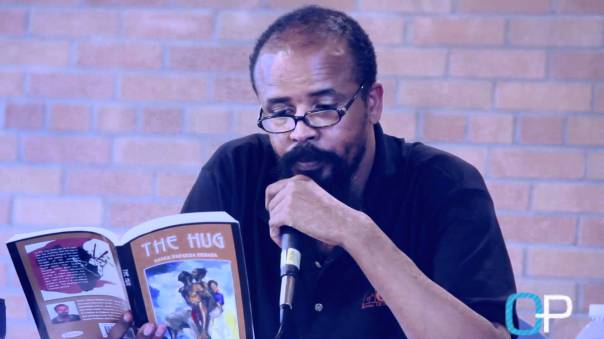
Bekele Nega (General Secretary, Oromo Federalist Congress (OFC)

Bekele Nega (General Secretary, Oromo Federalist Congress (OFC)

This morning, on my way to work, 4 men in civilian clothes greeted me by my name; identified themselves as ‘police’ and asked me to get in a car parked next to where they stopped me. When I refused, they grabbed me by my arms left and right; forced me into the backseat of their car and started driving. Once the car started moving, they started to hit me: the two guys in my left and right continued to punch me while the one sitting in the front-seat kept touching my face with his gun.
While they were hitting me, they kept saying that they were doing this because I was talking to the media despite their warnings not to do so. After they stopped the beating, they took away my phone at gun point and threatened that I do as they say or they would come for me and my family. They told me that not only mine but also my family’s lives were in danger: “If you step out of your house or talk to any media, you will take responsibility for what may happen to you or your children” (“ከዛሬ ጀምሮ ከቤትህ ብትወጣ ወይ ሚዲያ ብታናግር በአንተም ሆነ በቤተሰቦችህ ላይ ለሚሆነው ነገር ሃላፊነቱ ያንተ ነው”). Before they let me go, they also made it clear that they would resort to killing if I don’t do as they say “we no longer have a place to keep you, if you don’t do as you’re told killing you or paralyzing you is what is left to do.” (“ከእንግዲህ ወዲህ እናንተን የምናስርበት ቦታ የለንም:: ወይ እንገድልሃለን ወይ በመኪና ገጭተን ፓራላይዝ እናደርግሃለን ”)

The Ethiopian government has turned deaf ears to the many peaceful pleas to stop the violent crackdown all over Oromia, and continues to intimidate, arrest and kill citizens with no accountability. More than 4,000 of our party’s members including Bekele Gerba, Dejene Tafa, Addisu Bulala, and Desta Dinka are currently imprisoned incommunicado. It is my hope that the government and those who are silently watching understand that arresting and killing of innocent individuals has never silenced Oromos and will never be a solution to a legitimate demand of millions, and move quickly to rectify this situation. Until then, I, as an individual and member of OFC, will continue to peacefully voice the concerns of the Oromo people, because the peaceful struggle for the freedom and dignity of our people is a cause that millions of Oromos including me are prepared to sacrifice our lives for.

Regards,
Bekele Nega
General Secretary, Oromo Federalist Congress (OFC)

Ethiopia Censors Satellite TV Channels as Oromo Student Protests Draw Global Media Attention

Protesters in the Ethiopia’s capital Addis Ababa demand TPLF  stop killing Oromo students. Photo by Gadaa via Flickr (CC BY-ND 2.0)

Protesters in the Ethiopia’s capital Addis Ababa demand TPLF stop killing Oromo students. Photo be Gadaa via Flickr (CC BY-ND 2.0)

The Ethiopian government is reportedly undertaking a massive clampdown on dissenting citizen voices in relation with the ongoing Oromo student protests in Oromia, Ethiopia’s largest administrative region.

The regional political party known as the Oromo Federalist Congress reports that upwards of 80 people have been killed over the past four weeks by government forces. The government has yet to release its own updated numbers, but said on December 15 that five people had died.

Alongside increasing tensions around protests, security forces have arrested two opposition politicians, two journalists, and summoned five bloggers — all members of the Zone9 collective, who were acquitted of baseless terrorism charges just two months ago — to appear in court on December 30.

The government has also reinforced censorship campaigns against US-based Ethiopian satellite TV channels as well as protest songs that were produced in solidarity with Oromo protesters.

Torture marks on musician Hawi Tezera after she was arrested for supporting Oromo student protesters with music. Photo shared on Facebook by Jawar Mohammed.

Torture marks on musician Hawi Tezera after she was arrested for supporting Oromo student protesters with music. Photo shared on Facebook by Jawar Mohammed.

Protesters of the “Master Plan” to expand the capital city, Addis Ababa, into Oromia fear that the proposed development will displace large numbers of farmers mostly belonging to the Oromo ethnic group. Since demonstrations across the region began, the Ethiopian government has tried hard to stifle any kind of information about the outcry.

However, photos, videos and audio materials captured on mobile phones of the protests and of police brutality have made their way out of the country and are widely shared on the US-based satellite TV channels ESAT and Oromia Media Network (OMN).

These two channels reach tens of millions of Ethiopians who don’t have access to the Internet but who do have satellite dishes and depend on the two channels for news, analysis and views about the protest in Amharic and Afan Oromo, two of Ethiopia’s major languages.

Executives from the satellite channels report that Ethiopian authorities attempted to prohibit their broadcasting services. Jawar Mohammed, executive director of OMN, wrote on his Facebook page:

Notice: OMN is NOT back on satellite yet. It was NOT jammed either. Transmission was discontinued by the service provider under duress. The satellite we were on Eutelsat 8WB is still not jammable. Stay tune for details as soon as piece it together.And the promise remains the same; OMN will be back on air very soon one way or another!

Meanwhile, ESAT posted the following on their website:

The management of the Ethiopian Satellite Television and Radio (ESAT) said the regime in Ethiopia has jammed one of its two satellites, Eutelsat E8WB @ 8West starting the morning of Saturday December 19, 2015. .This latest move by the regime came at a time when ESAT has been widely covering the growing protest against the tyrannical regime in Ethiopia. Ethiopians rely on ESAT for news and information about their country. The regime, known for muzzling press freedom and one of the top jailers of journalists in the world, is spending millions of dollars on jamming equipment to deny people access to information.

Citizen reports on Facebook indicate that Ethiopian authorities have started to frantically send security forces around to remove satellite dish receivers from the rooftops of residents particularly in Oromia region.

Photo taken from Facebook page of Getachew Shiferaw

Photo taken from Facebook page of Getachew Shiferaw

Getachew Shiferaw, editor-in-chief of the online newspaper Negere Ethiopia, wasarrested. Two days earlier, he had shared a photo showing satellite dish receivers on rooftops (above) with the following note on Facebook:

They [Ethiopian government] are wrong if they think all these satellite dish receivers are set up to watch their tired propaganda.

Again, Jawar Mohammed wrote on his Facebook page:

The War on Satellite Dishes Continue. If the regime thinks it can cut our audience off from receiving OMN news and programs, they are too dumb to understand what we are made off. Just as we beat them time and again during their 10 jamming in the last 18 months, we will beat them again by staying several steps a head of them. Even if they take down every dish in the country, we will still find a way to reach our audience. Time for them to give up and face up to the truth!

Both ESAT and OMN say that in the past, they have moved their signals to other satellites that are harder for the Ethiopian government to jam. They both frequently notify their audiences in Ethiopia and advise them to re-position their dishes accordingly.

The Ethiopian authorities see these channels as mouthpieces of outlawed oppositions groups engaged in destabilizing the country. Although the government usually denies jamming satellites services, media outlets such as France24, Deutsche Welle and BBC have all condemned Ethiopian authorities for interfering with their broadcasting abilities.

Ethiopian authorities’ satellite jamming is similar to Internet censorship, whereby the government blocks access to websites, blogs and online radios, which are mostly set up by journalists and activists living in exile. Ethiopia tops the list of countries forcing journalists to flee into exile for fear of persecution.

Source: https://globalvoices.org/2015/12/29/ethiopia-censors-satellite-tv-channels-as-student-protests-draw-global-media-attention/