Culture is the mirror of a community’s identity, the bridge connecting generations, and the living witness to history. The Oromo people possess a wealth of indigenous values and traditional systems passed down through generations. Among these, the Goobee and Shinooyyee traditional games hold a unique place and message within the Gada system, celebrating the end of the rainy season and the arrival of spring.
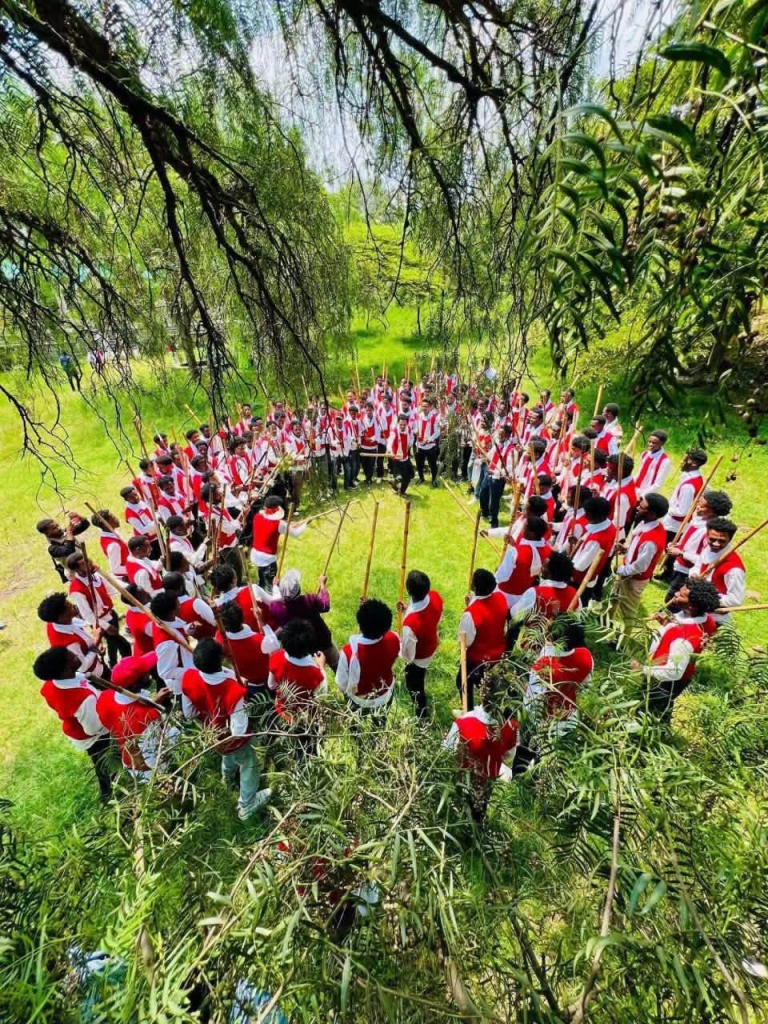
As the Oromo calendar transitions from the rainy season—a time of reflection—to the spring season, a symbol of hope and renewal, various thanksgiving ceremonies and traditional games are performed. One such celebration is the Goobee and Shinooyyee festival, a vibrant cultural practice observed by young men (Qero) and women (Qaree) as they dress in traditional attire and joyfully play together.
Goobee: A Festival of Light and Freedom for Young Men
Goobee is a festival for young men welcoming the light of spring with joy and hope. It is a time for them to declare their freedom and independence. The festival marks a significant milestone in the lives of young Oromo men, allowing them to express their identity and embrace their role in the community.
The rituals of Goobee are deeply symbolic. Young men gather in groups, dressed in their finest traditional attire, and participate in games and dances that celebrate the arrival of the new season. The festival is a declaration of readiness—a statement that they are prepared to take on the responsibilities of adulthood and contribute to the well-being of their community.
Shinooyyee: A Festival of Freedom and Identity for Young Women
Shinooyyee is a festival of freedom and identity for young Oromo girls. It marks the transition of young women from childhood to a stage of greater social recognition, providing a unique opportunity for them to express themselves freely.
During Shinooyyee, girls gather with friends to style their hair and dress in their finest ornaments, chanting and dancing with unparalleled freedom. They collect fragrant grass and give it to their neighbours as a symbol of abundance and blessing, receiving food and butter in return. The festival serves as a critical space for social bonding, strengthening relationships among girls and providing them with a sense of community and mutual support.
The significance of Shinooyyee extends beyond individual celebration. It is a collective affirmation of the value and dignity of young women, reinforcing their place within the broader Oromo society. The festival instils pride, confidence, and a deep sense of belonging.
The Prelude to Irreechaa
These festivals are the prelude to Irreechaa, the grand Oromo thanksgiving celebration. The celebration begins in late August and continues for weeks as youth in villages and towns unite in joy and unity. Goobee and Shinooyyee are not merely games—they are profound cultural events that reflect the beauty of nature, the honour of youth, and the resilience of a people.
The Gadaa system, of which these festivals are a core component, has selected eight high-level mountains where offering thanks to God is performed. The festivals embody the principles of peace, unity, and harmonious coexistence that are central to the Gadaa system.
A Symbol of Cultural Revival
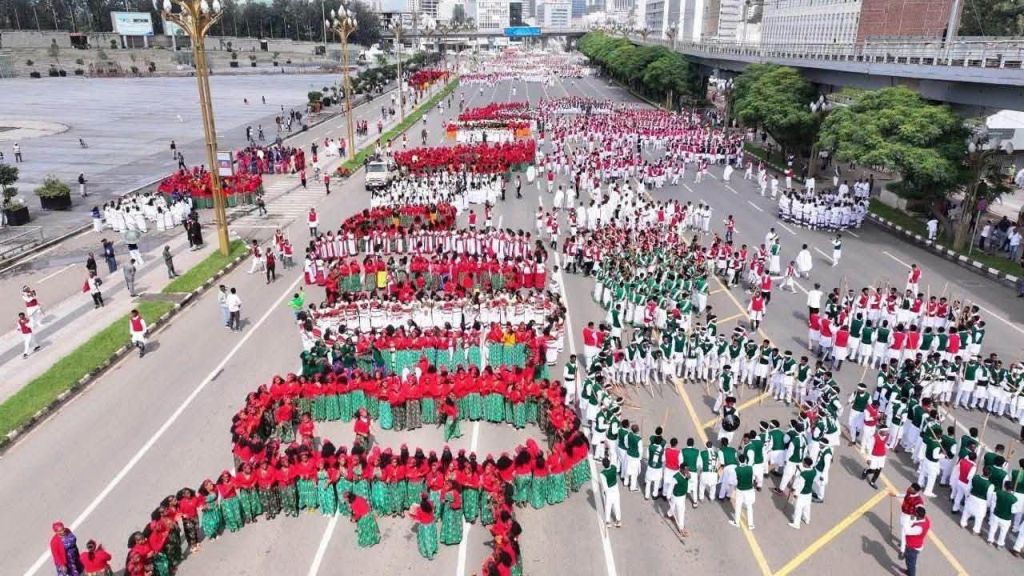
Goobee and Shinooyyee are powerful symbols of Oromo identity and cultural revival. In recent years, the festivals have been revived and celebrated with remarkable enthusiasm in Finfinnee and throughout Oromia. They are organised with the support of cultural institutions and government bodies, underscoring the commitment to preserving and promoting the culture of the Oromo people.
As part of the Gadaa system, a UNESCO-recognised intangible cultural heritage, these festivals are significant in maintaining social cohesion and transmitting cultural values. They ensure that the wisdom of the ancestors continues to guide future generations.
Tourism and Economic Potential
Beyond cultural preservation, Goobee and Shinooyyee hold significant potential for the tourism sector. By promoting these vibrant traditions, Oromia can attract visitors seeking authentic cultural experiences. The festivals showcase the region’s beauty and the rich heritage of the Oromo people, contributing to sustainable development and economic growth.
The traditional clothing, music, dances, and rituals associated with Goobee and Shinooyyee offer a compelling attraction for tourists interested in cultural tourism. The economic benefits of such tourism can support local communities and incentivise further cultural preservation efforts.
A Symbol of Freedom and Self-Determination
The revival of these festivals represents the restoration of a lost cultural heritage. For years, these practices were suppressed under past regimes, but now they serve as a symbol of freedom and self-determination for the Oromo people. They are celebrated alongside other Oromo festivals, such as Irreechaa, which have become powerful symbols of peace, unity, and national cohesion.
Celebrating Goobee and Shinooyyee is itself an act of resistance—a declaration that the Oromo people will not be erased, that their culture will not be forgotten, and that their traditions will continue to thrive.
Conclusion: An Act of Future-Building
Preserving these cultural treasures is not just a matter of nostalgia; it is an act of future-building. By safeguarding and promoting Goobee and Shinooyyee, the community ensures that its children inherit a rich cultural legacy that strengthens the fabric of society and fosters a spirit of unity.
It is a collective responsibility to cherish, pass on, and promote these living resources as expressions of Oromo identity, values, and cultural beauty.
Culture is the mirror of a community’s identity, the bridge connecting generations, and the living witness to history. The Oromo people possess a wealth of indigenous values and traditional systems passed down through generations. Among these, the Goobee and Shinooyyee traditional games hold a unique place and message within the Gada system, celebrating the end of the rainy season and the arrival of spring.
As the Oromo calendar transitions from the rainy season—a time of reflection—to the spring season, a symbol of hope and renewal, various thanksgiving ceremonies and traditional games are performed. One such celebration is the Goobee and Shinooyyee festival, a vibrant cultural practice observed by young men (Qero) and women (Qaree) as they dress in traditional attire and joyfully play together.
Goobee is a festival for young men welcoming the light of spring with joy and hope . It is a time for them to declare their freedom and independence. Shinooyyee is a festival of freedom and identity for young Oromo girls. It marks the transition of young women from childhood to a stage of greater social recognition, providing a unique opportunity for them to express themselves freely .
During Shinooyyee, girls gather with friends to style their hair and dress in their finest ornaments, chanting and dancing with unparalleled freedom . They collect fragrant grass and give it to their neighbors as a symbol of abundance and blessing, receiving food and butter in return . The festival serves as a critical space for social bonding, strengthening relationships among girls and providing them with a sense of community and mutual support.
These festivals are the prelude to Irreecha, the grand Oromo thanksgiving celebration . The celebration begins in late August and continues for weeks as youth in villages and towns unite in joy and unity. Goobee and Shinooyyee are not merely games—they are profound cultural events that reflect the beauty of nature, the honor of youth, and the resilience of a people.
Goobee and Shinooyyee are powerful symbols of Oromo identity and cultural revival. In recent years, the festivals have been revived and celebrated with remarkable enthusiasm in Finfinnee and throughout Oromia. They are organized with the support of cultural institutions and government bodies, underscoring the government’s commitment to preserving and promoting the culture of the Oromo people. As part of the Gada system, a UNESCO-recognized intangible cultural heritage, these festivals are significant in maintaining social cohesion and transmitting cultural values.
Beyond cultural preservation, Goobee and Shinooyyee hold significant potential for the tourism sector. By promoting these vibrant traditions, Oromia can attract visitors seeking authentic cultural experiences. The festivals showcase the region’s beauty and the rich heritage of the Oromo people, contributing to sustainable development and economic growth.
The revival of these festivals represents the restoration of a lost cultural heritage. For years, these practices were suppressed under past regimes, but now they serve as a symbol of freedom and self-determination for the Oromo people . They are celebrated alongside other Oromo festivals, such as Irreecha, which have become powerful symbols of peace, unity, and national cohesion .
Preserving these cultural treasures is not just a matter of nostalgia; it is an act of future-building. By safeguarding and promoting Goobee and Shinooyyee, the community ensures that its children inherit a rich cultural legacy that strengthens the fabric of society and fosters a spirit of unity. It is a collective responsibility to cherish, pass on, and promote these living resources as expressions of Oromo identity, values, and cultural beauty.
How Oromo Cultural Festivals Can Mitigate Conflict and Build Social Cohesion
By Dhabessa Wakjira
In a world where youth are increasingly drawn to divisive ideologies, political extremism, and social unrest, the Oromo people possess a powerful alternative: their own rich cultural traditions. The festivals of Shinooyee and Goobee—celebrations of the Oromo new year and the transition from winter to spring—are not merely cultural events. They are mechanisms for peacebuilding, social cohesion, and the redirection of youth energy toward constructive ends.
This article argues that Shinooyee and Goobee have significant preventive benefits. When young people invest their time, knowledge, skills, and resources in promoting Oromo culture, they not only ensure the growth of their traditions but also contribute to a reduction in conflict and violence. By focusing on cultural development, youth can build peace rather than division.
Argument 1: Cultural Engagement as a Preventative Measure
Proposition: Youth participation in Shinooyee and Goobee celebrations reduces the likelihood of conflict and violence.
Supporting Points:
1. Redirecting Youth Energy Toward Constructive Ends
Young people possess immense energy, creativity, and passion. When these qualities are channelled into political extremism or ethnic rivalry, the result is often violence and instability. However, when youth are engaged in cultural activities—learning traditional songs, preparing for festivals, and preserving Oromo heritage—that same energy is redirected toward positive community building.
Shinooyee and Goobeyyee provide structured, meaningful activities that require collaboration, discipline, and commitment. Young people who are actively preparing for these festivals have less time and inclination for destructive behaviour. The festivals create “prosocial bonds that reduce isolation and renew civic agency” .
2. Fostering Intergenerational Connection
Shinooyee and Goobee bring together elders and youth, creating opportunities for the transmission of cultural knowledge, values, and wisdom. This intergenerational connection is essential for building understanding and respect across age groups.
When youth learn from elders—about history, culture, and the principles of the Gadaa system—they gain perspective on the struggles and triumphs of their people. This perspective reduces the likelihood of impulsive or radical behaviour, as youth see themselves as part of a larger historical narrative.
3. Promoting Peace and Reconciliation Values
Both Shinooyee and Goobee are rooted in the values of peace, reconciliation, and unity. The Gadaa system, of which these festivals are a part, “symbolises peace, unity, and harmonious coexistence among people”.
Before participating in these celebrations, individuals are expected to resolve conflicts and seek forgiveness. This practice teaches youth that peace is not abstract—it requires active effort and accountability. By internalising these values, young people become peacebuilders rather than conflict participants.
Argument 2: Economic and Social Benefits of Cultural Investment
Proposition: Investing youth resources in Shinooyee and Goobee generates positive economic and social returns.
Supporting Points:
1. Building Local Economies
Shinooyee and Goobee are economic drivers. The demand for traditional clothing, food, and crafts creates employment opportunities for artisans, tailors, and small businesses. By investing in these festivals, youth contribute to the economic vitality of their communities.
The Irreechaa Expo, for example, has become a platform for over 250 trade associations, providing economic opportunities and promoting cultural tourism. Similar economic benefits can be realised through the investment of youth resources in Shinooyee and Goobee.
2. Strengthening Social Networks
The festivals foster social networks that serve as safety nets in times of crisis. When youth participate in Shinooyee and Goobee, they build relationships with peers and elders across communities. These relationships can be drawn upon during times of hardship, reducing reliance on divisive or violent alternatives.
As one scholar observed, Irreechaa “brings people closer to each other and strengthens social bonds”. The same applies to Shinooyee and Goobee.
3. Preserving Cultural Heritage
By investing their resources in cultural promotion, youth ensure that Oromo traditions are not lost to modernity. This preservation is not merely nostalgic—it is a form of resistance against cultural erasure and a foundation for collective identity.
When youth understand their culture, they are less likely to adopt extremist ideologies that reject or denigrate their heritage. Instead, they become ambassadors of their culture, promoting understanding and respect across communities.
Argument 3: The Preventive Impact on Conflict
Proposition: Widespread investment in Shinooyee and Goobee can prevent the escalation of conflict.
Supporting Points:
1. Building Bridges Across Communities
Shinooyee and Goobee are not exclusive festivals. Members of various ethnic groups—Kembata, Kebena, Burji, Dawro, and Sidama—have described these celebrations as platforms for cultural exchange and multinational unity. When youth from diverse backgrounds participate together, they build relationships that transcend ethnic divisions.
2. Creating Alternative Narratives
Conflict often arises from narratives of grievance, victimhood, and enmity. Cultural festivals offer alternative narratives of resilience, gratitude, and common humanity. By promoting these narratives, youth challenge the divisive rhetoric that fuels conflict.
3. Demonstrating the Benefits of Peace
Shinooyee and Goobee are celebrations of hope and renewal. They demonstrate that peace is not only possible but desirable—that communities can thrive when they come together in celebration rather than conflict. By participating in these festivals, youth experience the tangible benefits of peace.
Rebuttal: Addressing Potential Counterarguments
Counterargument:“Culture is not a substitute for political change. Focusing on festivals distracts from the real issues facing the Oromo people.”
Rebuttal: Cultural engagement is not a substitute for political action—it is a complement to it. When youth are disconnected from their culture, they are more vulnerable to radicalisation and division. Cultural festivals like Shinooyee and Goobee provide the foundation of identity and community that makes political action more effective and principled.
Counterargument:“Investment in culture is a luxury we cannot afford when we face urgent political and economic challenges.”
Rebuttal: Culture is not a luxury—it is a necessity. The loss of culture is itself a form of oppression, and its preservation is a form of resistance. Moreover, cultural festivals generate economic benefits that address urgent needs. The Irreechaa Expo, for example, has become a platform for economic growth and community development .
Counterargument:“Celebrating culture does nothing to stop violence.”
Rebuttal: Cultural celebration does not stop violence on its own—but it creates the conditions in which violence is less likely. Communities that are culturally connected, socially cohesive, and economically vibrant are more resilient to conflict. Shinooyee and Goobee contribute to these conditions.
Conclusion: A Path to Peace Through Culture
Shinooyee and Goobee are not merely festivals—they are investments in peace. When young people invest their time, knowledge, skills, and resources in promoting Oromo culture, they are not only preserving their heritage—they are building a future of peace and stability.
By engaging in these traditions, youth become peacebuilders, cultural ambassadors, and community leaders. They create alternatives to violence and division, demonstrating that the path to a better future lies not in conflict but in cooperation, not in extremism but in cultural pride.
As the Oromo proverb says: “A person without culture is like a tree without roots.” By investing in Shinooyee and Goobee, youth are planting the roots of peace for generations to come.
This feature article is dedicated to Oromo youth everywhere who are working to preserve and promote their culture as a foundation for peace and unity.
An Ancient Ritual of Illumination and Reaffirmation of Faith
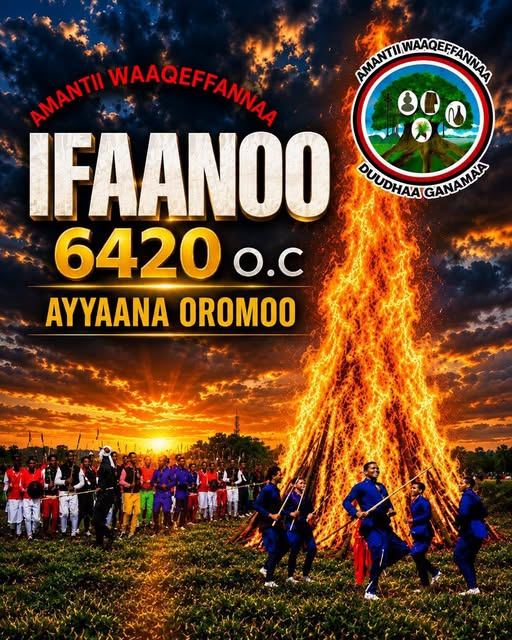
In the rich tapestry of Oromo cultural and religious traditions, few ceremonies carry the luminous symbolism of Ifaanoo—a sacred celebration of light, spiritual renewal, and the reaffirmation of community bonds. Rooted in the ancient Waaqeffannaa faith system, this profound ritual embodies the Oromo people’s deep connection to creation, their Creator, and one another.
The Symbolism of Light in Oromo Spirituality
The term Ifaanoo derives from ifaa, meaning “light” in Afaan Oromoo. In the traditional Oromo worldview, light represents not only physical illumination but also spiritual clarity, moral purity, and the presence of divine blessing. Just as light dispels darkness, the Ifaanoo ceremony symbolises the dispelling of ignorance, conflict, and spiritual obscurity from the community.
The concept of light appears throughout Oromo religious practice. The rituals of Ulaa bahuu, Ifa bahuu, and Dhugaa bahuu are among the major components of ceremonies undertaken in the indigenous religion, where the entire family of followers is required to visit the shrine centre to receive blessing, good fortune, and reconciliation with Waaqaa (God) . These “emergence” rituals are deeply connected to the symbolism of coming into the light—emerging from darkness into divine presence.
The Ifaanoo Ceremony
Ifaanoo is closely tied to the Oromo calendar and the Gadaa system—the democratic social and political institution that organised Oromo life for centuries and is recognised by UNESCO as an Intangible Cultural Heritage of Humanity . The festival is fundamentally a ritual of gratitude to Waaqa (God) for life, health, and the bounty of the land .
In the Waaqeffannaa faith, followers celebrate various Ayyannota (ceremonies) to offer thanksgiving . Scholars have noted that the indigenous practices of the Oromo are believed to have been intact for centuries, involving the blessing and reconciliation of entire families . While the specific rituals of Ifaanoo vary by region, they share common elements:
Gathering at sacred sites — often at shrines or natural locations deemed spiritually significant
Light rituals — the symbolic use of fire, candles, or the rising sun to represent divine presence
Blessings by elders — led by the Abba Gadaa or spiritual leaders who offer prayers for the coming season
Communal singing and dancing — traditional songs and ululations that express joy and gratitude
Offerings to Waaqa — gifts of dadhii (honey beer), dufo (bread), and other symbolic items
Reconciliation — resolving conflicts before participating, reinforcing that one cannot give thanks while holding a grudge
A Social Bond Across Communities
The ceremony is profoundly social. Irreechaa—a related celebration—has been described as “a social bond within Oromo people that brings them closer to each other” . Ifaanoo similarly serves as a gathering point, bringing Oromo people from different areas together regardless of their religious background .
In diaspora communities, ceremonies like Ifaanoo and Irreechaa take on added significance. In Bergen, Norway, the festival has been celebrated as the only place in Europe where the event takes place, with participants travelling from across European countries, emphasising how religious celebrations offer opportunities for families and friends to reaffirm relations through face-to-face interaction .
Renewal of Faith and Unity
At its core, Ifaanoo is a reaffirmation of faith in Waaqa and a renewal of the community’s covenant with the divine. It embodies the principle that light represents not only spiritual clarity but also the ongoing presence of Waaqa in the lives of the faithful.
The blessing, which is a central part of Waaqeffannaa ceremonies, is described as a time when “the entire family members of followers of the religion and all their living animals are required to visit the shrine center to have blessing, good fortune and reconciliation with Waaqaa (God)”. This is a holistic act, covering all aspects of life—from the spiritual to the physical to the economic.
Ifaanoo also embodies the values of unity. Like Irreechaa, which “is now observed by the majority of Oromos, regardless of their religion” , Ifaanoo brings together followers of Waaqeffannaa, Muslims, and Christians who come together and celebrate with joy . It is a symbol of cultural identity and social cohesion.
A Living Tradition
Ifaanoo remains a living tradition, celebrated in Oromia and diaspora communities worldwide. It is a powerful expression of Oromo identity and resilience—a declaration that the light of tradition continues to shine brightly despite the challenges of modernity.
As the Oromo people continue to preserve and celebrate their heritage, ceremonies like Ifaanoo ensure that the light of their culture, faith, and unity will illuminate the path for future generations.
Understanding the Origins of One of Africa’s Oldest Calendrical Systems
By Maatii Sabaa
In March 2026, when most of the world marked the beginning of a new year according to the Gregorian calendar, the Oromo people—across Oromia and the global diaspora—celebrated the arrival of a different milestone: the Oromo New Year, 6420. For many outside the Oromo community, this number raises a fundamental question: Where does the year 6420 come from?
The Oromo Calendar: A 2,300-Year-Old Legacy
The Oromo calendar is one of Africa’s oldest indigenous calendrical systems. It is believed to have been developed by the Oromo people around 300 BC. This places its origins at approximately 2,300 years ago—a period when the Oromo were already sophisticated observers of the cosmos.
Known as the Borana calendar or the Dhaha/Henni calendar, it is a lunar-stellar calendar system. This means it relies on astronomical observations—specifically, the phases of the moon in conjunction with the rising and setting of seven particular stars or constellations.
The calendar’s sophistication lies in its integration of astronomy with daily life. It consists of 12 months and 354 days in a year, based on the lunar cycle. It has no weeks, but rather a name for each day of the month. The first day of the Oromo year begins in the month of Bitootessaa (March), when the constellation Triangulum is in conjunction with the new moon.
The Significance of the Number 6420
The year 6420 is reached by counting forward from the calendar’s inception around 300 BC. While the exact starting point is a subject of ongoing scholarly discussion, the calendar’s antiquity is well-established.
For the Oromo people, the calendar is more than just a way to count time—it is a cornerstone of their identity and cultural continuity. As one elder explained at the Walisoo Liiban celebration of the 6420 New Year:
“Observing Birboo at our Galma is not just about marking a calendar. It is about remembering who we are. It is about connecting our past to our future, grounding ourselves in the values of balance, respect for all creation, and community that Waaqeffannaa teaches”.
The calendar is tied to the traditional Oromo religion, Waaqeffannaa, and is used to schedule the Gadaa system of elections and power transfer. The Gadaa system, recognised by UNESCO as an Intangible Cultural Heritage of Humanity, is itself deeply connected to the calendar.
Archaeological and Astronomical Evidence
The Oromo calendar’s origins are not merely a matter of oral tradition. The Namoratunga archaeological site near Lake Turkana, Kenya, has been central to understanding its antiquity. Some scholars have argued that the site, dating to around 300 BC, contains evidence of an early Cushitic calendar that shares astronomical alignments with the Oromo calendar. The site’s basalt pillars are aligned with seven star groups that correspond to the Borana star groups still used in the Oromo calendar today.
However, it should be noted that the relationship between Namoratunga and the Oromo calendar has been debated. Astronomer and archaeologist Clive Ruggles, after re-examining the site, concluded there is no direct relationship. Nevertheless, the broader scholarly consensus acknowledges the calendar’s ancient roots and its continuity into the present day.
A Living Calendar in the Modern World
Today, the Oromo calendar remains a living tradition. In January 2026, Waaqeffannaa faithful gathered at the Galma Amantaa (House of Worship) in Walisoo Liiban, Oromia, to observe the Oromo New Year, Birboo, marking the year 6420. The celebration, which included prayers for peace (nagaa), love (jaalala), and unity (tokkummaa), was described as “a powerful reaffirmation of an ancient identity” and “a community’s declaration of continuity”.
The calendar’s months and day names, with their astronomical origins, are still used by Oromo communities in both Ethiopia and Kenya. The Ayyaantu—Oromo time-experts with knowledge about stars—continue to track time astronomically, preserving a tradition that has survived for millennia.
Conclusion: A Calendar of Identity and Continuity
The Oromo calendar, with its year 6420, is a testament to the ancient astronomical knowledge of the Oromo people and their enduring cultural identity. Its development around 300 BC and its continued use today represent one of the longest continuous calendrical traditions in the world. For the Oromo people, the calendar is not just a way to count years—it is a declaration of continuity, a connection to ancestors, and a guide for the future.
As the Oromo New Year 6420 was celebrated, the message was clear: “May this New Year bring you peace, love, and unity”.
This feature article is dedicated to the custodians of the Oromo calendar and to all those working to preserve and promote Oromo cultural heritage.
At the Think Social Cohesion National Summit, Perry Outlines a Roadmap for Government Action Through Listening, Thinking, and Acting
By Dhabessa Wakjira
In a powerful keynote address at the Think Social Cohesion National Summit in Parramatta, Victorian Multicultural Commission (VMC) Chairperson Louise Perry laid out a clear and compelling vision for how governments can build the institutional architecture necessary for lasting social cohesion.
Speaking to 160 leaders from government, community organisations, settlement agencies, and academia, Perry distilled her message into three essential steps: Listen, Think, Act . This framework, she argued, offers a practical pathway for governments to engage meaningfully with diverse communities and translate dialogue into tangible outcomes.
“The VMC was pleased and proud to partner with Mortgage Stress Victoria to deliver a community information session in Melbourne, last night,” the Commission noted in a recent social media post, highlighting one such instance of this framework in action.
The Summit: Converting Discussion into Commitment
Convened by SydWest Multicultural Services, Settlement Services International (SSI), and the Settlement Council of Australia (SCOA), the summit was designed not as a traditional conference, but as a “working room, built to act rather than to talk” . The event was structured to ensure that participants did not simply listen to speakers but actively shaped the conversation through real-time contributions, with more than 300 live inputs synthesised and fed back into the discussion .
The summit culminated in an emerging Social Cohesion Roadmap, identifying five interconnected priorities: clear rights and responsibilities, broader community reach, economic participation, accountability for commitments, and a renewed national narrative recognising multiculturalism as a defining strength.
The “Listen, Think, Act” Framework
1. Listen: Active and Deep Engagement
Perry urged governments to “listen actively and deeply to communities,” moving beyond token consultation to genuine engagement that builds trust and understanding . The summit itself embodied this principle, with organisers committing to provide every delegate with a report within 28 days outlining what had changed because of their participation .
2. Think: Connecting Ideas for Cohesion
The second step, “Think,” involves reflecting on what governments have heard and “how different ideas fit together” to address complex challenges . This requires moving beyond siloed thinking and recognising that issues of cohesion, belonging, and participation are interconnected.
3. Act: Building and Uplifting Others
The final step is to “act by building and uplifting others across sectors and borders to achieve outcomes” . This demands collaboration across government, community organisations, and private sectors, as well as a commitment to accountability.
A Landmark Moment for Victorian Multiculturalism
Perry’s address carried particular weight as she announced that the Multicultural Victoria Bill had entered the Victorian Parliament that very afternoon, establishing a new statutory body to lead the state’s multicultural and multifaith portfolio . This legislative milestone will provide a permanent institutional framework for the work of building social cohesion.
A National Call to Action
The summit concluded with a specific national proposal from former Tasmanian Premier and Australian Multicultural Council Chair Peter Gutwein, who called on the federal parliament to “debate and pass a motion” formally declaring Australia a multicultural country .
The summit participants demonstrated that Australia does not lack ideas on social cohesion—it lacks a shared framework for acting on them. Perry’s “Listen, Think, Act” framework offers one such framework, providing governments with a clear roadmap for building the institutional architecture necessary to create a more cohesive, inclusive, and united Australia.
For many migrants and refugees, owning a home represents far more than a financial asset. It is security, stability, and tangible proof that a new life can be built from the ground up. It is the Great Australian Dream .
Yet for many, that dream has become a source of deep anxiety. The burden of mortgage repayments, rising interest rates, and the escalating cost of living have turned homeownership into a heavy burden of stress.
Last night, in a show of community solidarity, the Victorian Multicultural Commission (VMC) partnered with Mortgage Stress Victoria (MSV) to deliver a vital community information session in Melbourne. The event was a lifeline for migrant communities who often bear the brunt of financial hardship in silence.
A Collaborative Effort for a Pressing Crisis
Financial stress rarely exists in isolation . It is a relentless intruder that seeps into every aspect of life, affecting health, relationships, employment, and a family’s sense of security . For migrant and refugee communities, the challenges are compounded. Language barriers, unfamiliarity with financial systems, cultural expectations, or simply not knowing where to turn can make that first step towards seeking help nearly impossible.
The event—attended by Parliamentary Secretary for Multicultural Affairs Iwan Walters MP, representatives from both the VMC and MSV, and almost 150 community leaders—affirmed a crucial message: help is available, and issues can be tackled before problems become crises .
What Mortgage Stress Victoria Offers
Mortgage Stress Victoria stands as a beacon of hope. As the only specialist service in Australia providing free, integrated legal, financial counselling, and social work support for homeowners at risk of losing their homes, MSV is uniquely placed to intervene at critical moments .
Their work is a testament to the power of a holistic approach. As MSV articulates, “Our structure recognises that mortgage stress is complex, with many different causes and consequences” . By tackling the root causes—which often include family violence, job loss, and systemic barriers—MSV helps clients navigate the pressures contributing to their mortgage and achieve lasting financial and housing security .
The Power of Community Engagement
The success of the partnership between the VMC and MSV lies in its culturally accessible approach. Bringing trusted information directly into communities, through community leaders and familiar faces, is more than just good engagement—it is prevention.
When community leaders understand the signs of mortgage stress and where to direct families for help, they can intervene before a financial problem becomes a full-blown crisis. As one attendee noted, “The best time for support is before financial stress becomes financial crisis” .
A Shared Commitment to Prevention
The Victorian Multicultural Commission’s commitment to this issue is resolute. Recognising that financial stability is central to successful settlement and community cohesion, the VMC is ensuring that vital information reaches those who need it most. The event was a clear demonstration that by working together—across government, community organisations, and multicultural leaders—we can build a safety net that prevents the loss of homes and the fracturing of families.
Congratulations to everyone involved in creating that bridge between communities and the help available to them. Initiatives like this matter, because they ensure that for many Victorians, the dream of a secure home remains a reality.
Catholic Missionary Records from 1868 Confirm the Oromo Identity of Finfinne and Birbirsa
By Negash Qemant
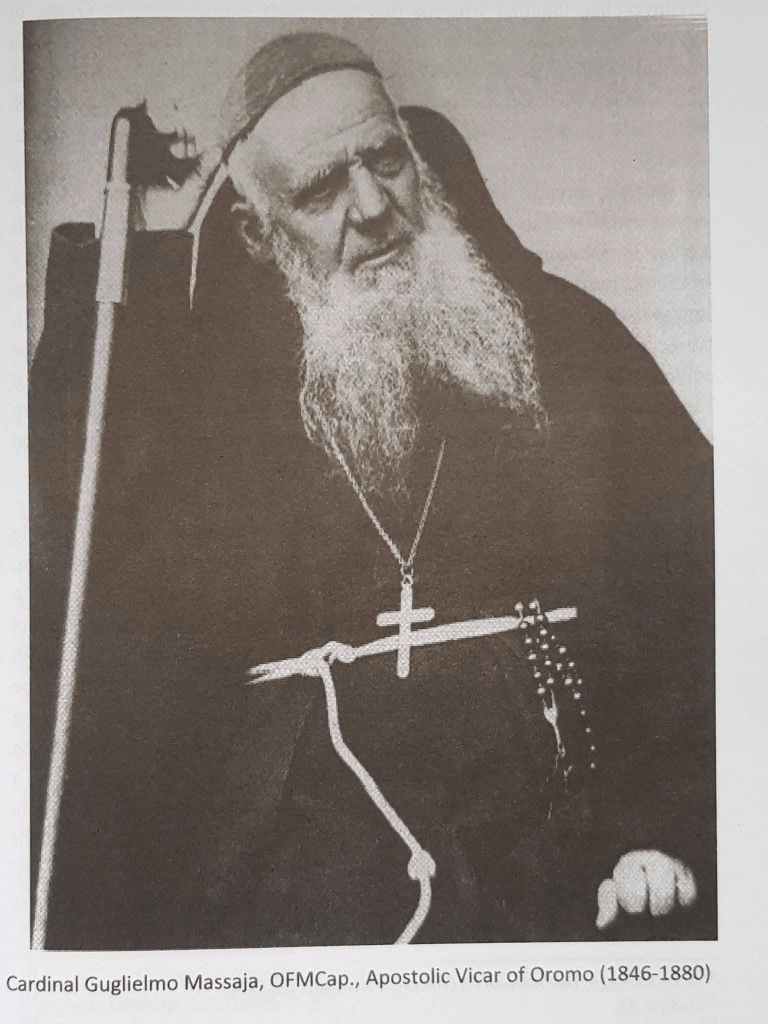
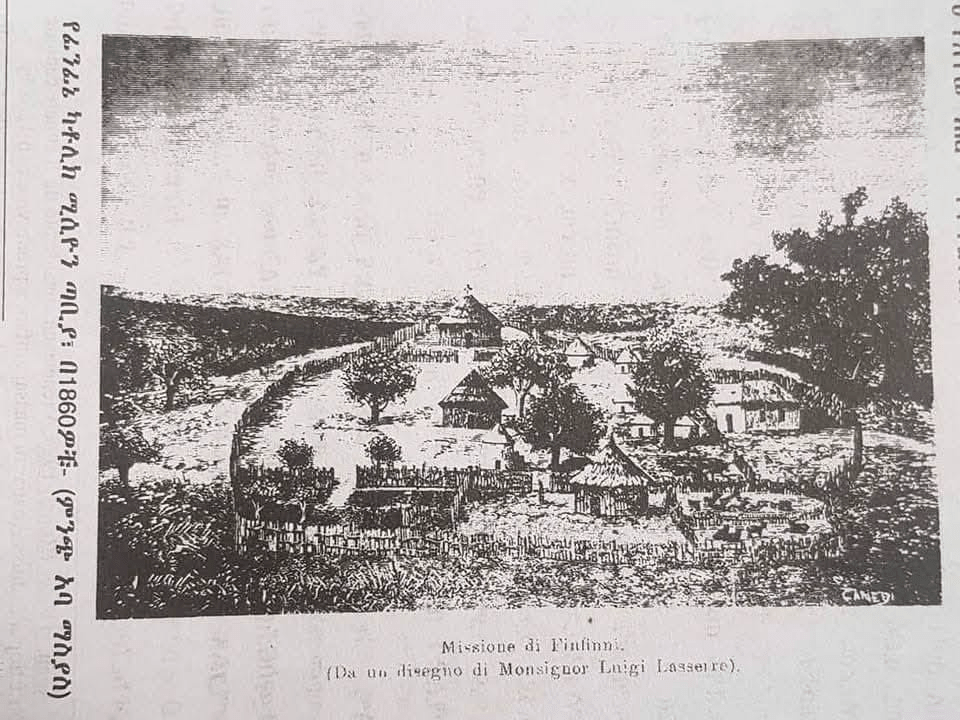
In the archives of Catholic missionary history lies a remarkable document that provides irrefutable evidence of Oromo presence in what is now Addis Ababa. The “Missione di Finfinni” —a drawing and written account by Monsignor Luigi Lasserre from 1868—offers a vivid snapshot of the area known as Finfinne and Birbirsa (the present-day Piassa and St. George’s area) long before the establishment of the imperial capital.
This historical record, preserved by Dr. Abba Antonios Alberto, OFM Cap, in his writings (pages 110-111), confirms that the area was not an empty wilderness awaiting colonisation, but a vibrant Oromo landscape with established communities, trade routes, and cultural significance.
The Foundation of Finfinni and Birbirsa (1868)
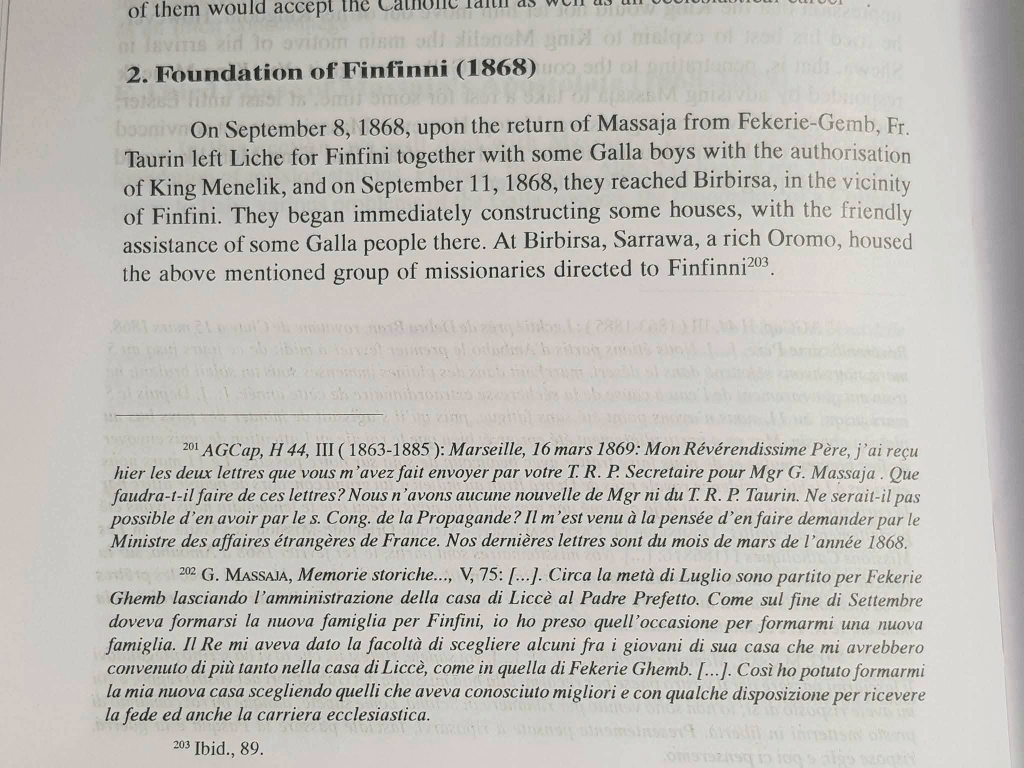
According to the missionary records, the Catholic mission at Finfinne was established in September 1868. The account states:
“On September 8, 1868, upon the return of Massaja from Fekerie Gemb, Francisco Taurin left Liche for Finfinne together with some Oromo boys with the authorisation of King Menelik. On September 11, 1868, they reached Birbirsa, in the vicinity of Finfini. They began immediately constructing some houses with the friendly assistance of some Oromo people there.”
This passage is significant for several reasons:
The Name “Finfinni”: The missionaries used the name “Finfinni” (Finfinne) to refer to the area. This confirms that the Oromo name was in common use and was recognised by outsiders.
The Name “Birbirsa”: The area now known as Piassa and St. George’s was specifically identified as “Birbirsa.” This Oromo name predates the establishment of Addis Ababa.
Oromo Presence: The missionaries were assisted by “some Oromo people” who helped them construct their buildings. This demonstrates that the area was inhabited by Oromo communities who were active participants in the life of the region.
King Menelik’s Authorisation: The missionaries received authorisation from King Menelik to establish their mission. This indicates that Menelik, at this time, was not yet the undisputed ruler of the area but was engaging with the existing landscape.
The Sarrawa Family: Oromo Hospitality
The missionary records also document the role of an Oromo family in hosting the missionaries:
“At Birbirsa, Sarrawa, a rich Oromo, housed the above-mentioned group of missionaries directed to Finfinni.”
This is a remarkable detail. A wealthy Oromo individual named Sarrawa provided shelter and support to the Catholic missionaries. This act of hospitality is a testament to the generosity and openness of the Oromo people, even towards strangers from distant lands.
The presence of a “rich Oromo” in the area also challenges the narrative that the Oromo people were impoverished nomads. Sarrawa was a person of means who could offer accommodation and support to a group of foreign missionaries. This indicates a level of economic activity and social organisation that contradicts the stereotypes used to justify dispossession.
Finfinne: “At the Center of the Country of Oromo”
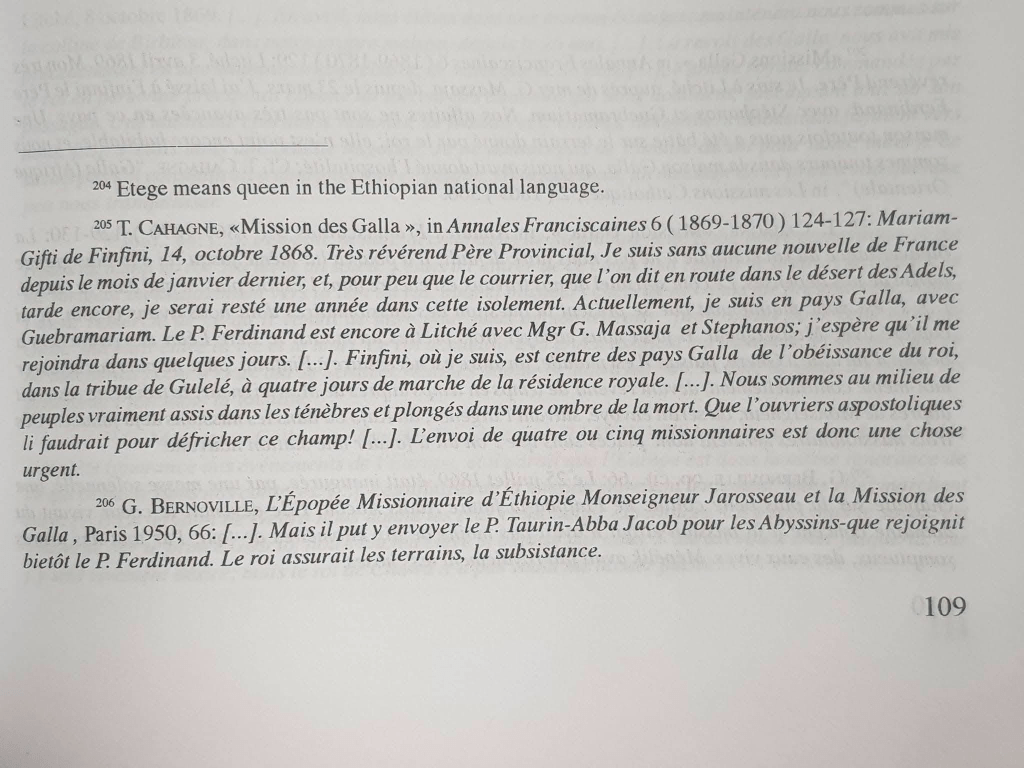
Perhaps the most significant passage in the missionary records is a letter dated October 14, 1868, written by Fr. Taurin from Finfinne. In this letter, addressed to the provisional minister, Fr. Taurin states:
“He was with a certain Gebremariam at Finfinni situated at the center of the country of Oromo with the tribe of Gulele.”
This is a powerful statement. The missionary explicitly identifies Finfinne as being located at the “center of the country of Oromo.” This is not a vague reference—it is a precise geographical and ethnographic observation.
The phrase “center of the country of Oromo” confirms that Finfinne was understood by outsiders as being in the heart of Oromo territory. The mention of the “tribe of Gulele” (the Gulele Oromo) further locates the area within a specific Oromo community.
This evidence is consistent with Oromo oral tradition, which has always maintained that Finfinne is the heart of Oromia—a place of cultural, spiritual, and historical significance to the Oromo people.
The Missionaries and the Oromo Landscape
The missionary accounts also provide insights into the Oromo landscape of the time. The records describe:
Oromo settlements: The area was not empty but inhabited by Oromo communities.
Oromo agriculture: The presence of “rich” Oromo individuals indicates economic activity.
Oromo hospitality: The missionaries received assistance and accommodation from the local Oromo population.
Oromo social organisation: The mention of specific tribes (like Gulele) indicates a structured society.
The missionaries were not arriving in an empty wilderness—they were entering a well-established Oromo landscape with its own social, economic, and political systems.
Implications for the History of Finfinne
The missionary records from 1868 provide crucial historical evidence that challenges the dominant narrative of Finfinne’s origins. They demonstrate that:
The Oromo People Were the Inhabitants: The area was inhabited by Oromo communities, including the Gulele tribe, before the establishment of the imperial capital.
The Land Was Oromo: The missionaries identified Finfinne as being at the “center of the country of Oromo.”
The Oromo Names Were Original: The names “Finfinne” and “Birbirsa” were in use before the area was renamed Addis Ababa.
The Oromo People Were Active Participants: The Oromo people assisted the missionaries, hosted them, and engaged with them as equals.
Oromo Society Was Structured: The presence of “rich” Oromo individuals like Sarrawa indicates economic stratification and social organisation.
Conclusion: A Historical Record That Cannot Be Erased
The Catholic missionary records from 1868 are a powerful testament to the Oromo presence in Finfinne. They provide irrefutable evidence that the area was not an empty wilderness but a vibrant Oromo landscape with established communities, economic activity, and social organisation.
These records confirm what Oromo oral tradition has always maintained: that Finfinne is Oromo land, and that the Oromo people were the original inhabitants of the area now known as Addis Ababa.
As the Oromo people continue to demand recognition and justice, these historical records serve as a powerful reminder that the truth cannot be erased. The documents exist. The names remain in the landscape. The history is there for those who seek it.
The land remembers. The history endures. Finfinne is Oromo.
This feature article is based on the missionary records of Dr. Abba Antonios Alberto, OFM Cap (pages 110-111) and the original documents from the Missione di Finfinni (1868). It is dedicated to all those who seek the truth about Oromo history and the origins of Finfinne.
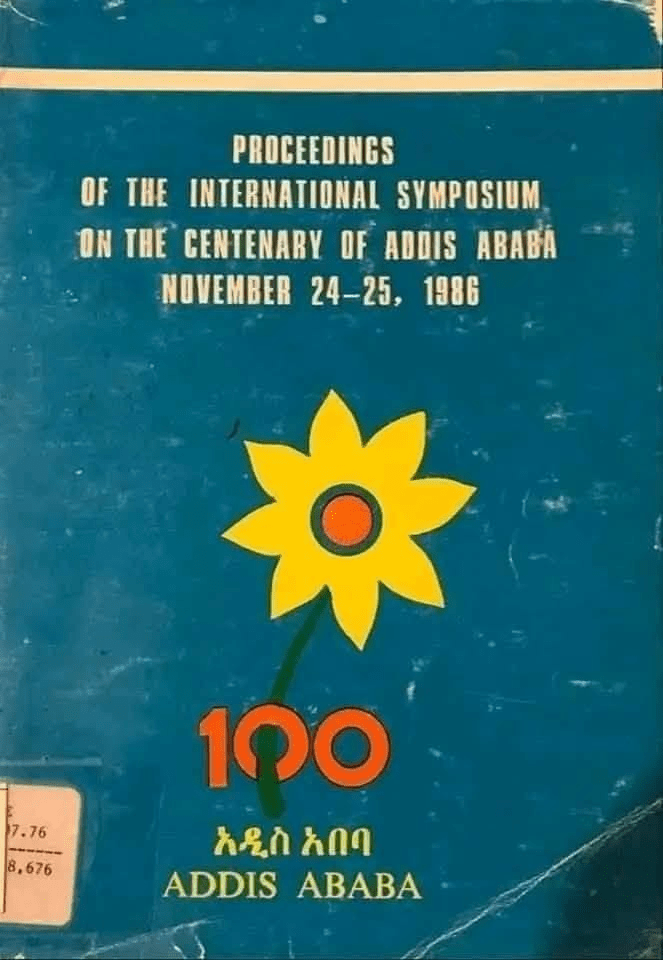
Proceedings of the International Symposium on the Centenary of Addis Ababa (November 24-25, 1986)
By Negash Qemant
In 1986, under the Derg regime, an international symposium was held to mark the centenary of Addis Ababa. The proceedings, published in a historical volume, brought together scholars from various disciplines to examine the history of the city. Among the contributions was a groundbreaking research paper that sheds light on the true origins of Finfinne—the city now known as Addis Ababa.
This paper, presented by scholars of the time, documented the historical reality that the area now occupied by St. George’s Church and the statue of Menelik was once known as Birbirsa. The research paper opens with a striking question:
“Who would imagine that the place where one can see today’s Saint George’s Church and the statue of Menelik was known as Birbirsa?”
The paper continues:
“This paper is about Birbirsa, a place located in Finfinne which later on came to be called Addis Ababa.”
The Name “Finfinne”
The symposium proceedings confirm what Oromo oral tradition has always maintained: the area was originally known as Finfinne—a name derived from the hot mineral springs (finfina) that bubble up from the earth in the area. The proceedings note that the name “Finfinne” was the original designation, and the name “Addis Ababa” was a later imposition.
The research paper documents that the area now known as Piassa, Arat Kilo, and the surroundings of St. George’s Church were once called Birbirsa Goro—an Oromo name. The paper also confirms that the area around the present-day St. George’s Cathedral was known as Birbirsa, an Oromo name that predates the arrival of Menelik and his forces.
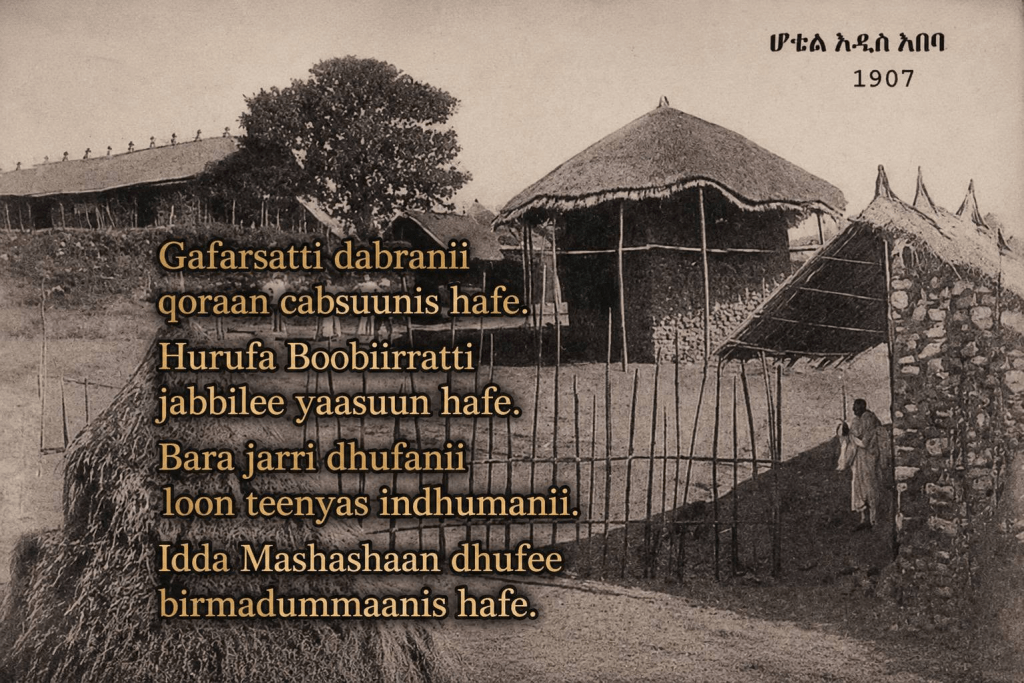
The proceedings document that the area was known by Oromo names: Gafarsa, Hurufa Boombii, Tulluu Daalattii, and others. These names were systematically replaced with new names after the establishment of the city under Menelik.
The Dream of Sahle Selassie
The symposium proceedings also address the well-known story of King Sahle Selassie’s “prophecy” about the site where his descendants would build a city. The proceedings treat this story as a genuine prophecy, which was used to legitimise the establishment of the city.
As the proceedings note, the story goes that King Sahle Selassie, while camping in the area, had a vision that his descendants would build a city on that spot. This “prophecy” was used to create an aura of divine legitimacy around Menelik’s decision to establish the capital.
However, as Blatten Geta Hiruy Wolde Selassie notes in his book The History of Ethiopia from the Queen of Sheba to the Victory of Adwa (p. 87):
“This land, which today is called Addis Ababa and is the capital of Ethiopia, was known as Finfinne at that time. King Sahle Selassie, while on a campaign, pitched his tent at the spot where the palace now stands and is said to have prophesied that his descendants would build a city there.”
The Role of Empress Taytu
The symposium proceedings and other historical sources confirm that it was Empress Taytu who gave the city its new name, Addis Ababa (“New Flower”). According to the account of Dr. Dejazmach Zewde Gebre Selassie, Empress Taytu wrote to Emperor Menelik:
“I have found the place we were looking for, and I have named it Addis Ababa.”
She sent this message to Menelik, who was at a different location at the time. The empress and the emperor, along with their armies, later pitched their tents on the hill known as Tulluu Finfinnee (the hill of Finfinne), where the hot springs (Hora Finfinnee) are located. After this, the emperor ordered that all official correspondence should bear the new name “Addis Ababa.”
However, the symposium proceedings also note that the area was already known as Finfinne and that the local population had long used this name. The renaming was an act of imperial assertion, not a neutral decision.
The Birbirsa Connection: Catholic Missionaries and the Oromo College
The symposium proceedings and Catholic missionary records confirm that Birbirsa Goro was the site of a Catholic mission and an Oromo college established by missionaries. The missionaries had introduced various species of flowers from Europe to the area, planting them in the college compound and surrounding areas. These flowers—not indigenous to the region—impressed Empress Taytu, who saw them when she visited the area.
The Catholic mission records also confirm that after the college was closed, the site was later chosen for the construction of St. George’s Church, which now stands in the heart of the city.
The Erasure of Oromo History
What emerges from these historical documents is a clear pattern: the systematic erasure of Oromo history and identity. The Oromo names—Finfinne, Birbirsa, Gafarsa, Hurufa Boombii, Tulluu Daalattii—were replaced with Amharic names. The story of Sahle Selassie’s “prophecy” was used to create a legitimising narrative that obscured the reality of Oromo dispossession.
The symposium proceedings, while an important historical document, were also a tool of propaganda. The Derg regime, like the imperial regime before it, sought to construct a narrative that legitimised the empire’s expansion. The “prophecy” of Sahle Selassie was treated as a genuine prediction, while the history of the Oromo people in the area was suppressed.
The Oromo Contribution to the City
The historical evidence also confirms that the Oromo people made significant contributions to the establishment and development of the city. The symposium proceedings document the role of Oromo labour in building the city, the supply of food and water by Oromo communities, and the presence of Oromo settlements in the area before the establishment of the capital.
The city’s name—Finfinne—is itself a testament to Oromo presence. The hot springs (finfina) that gave the city its name continue to flow, a reminder of the land’s original identity.
Conclusion: A History That Must Be Reclaimed
The proceedings of the 1986 symposium provide valuable historical evidence that confirms what Oromo oral tradition has always maintained: that Finfinne was originally Oromo land, and that the city was established through dispossession and conquest.
The evidence from the symposium proceedings, combined with the accounts of Blatten Geta Hiruy Wolde Selassie and Dr. Dejazmach Zewde Gebre Selassie, paints a clear picture:
The area was originally known as Finfinne and Birbirsa.
The Oromo people were the original inhabitants of the area.
The city was renamed and its history was systematically rewritten.
The narrative of Sahle Selassie’s “prophecy” was used to legitimise the dispossession.
As the Oromo people continue to demand recognition and justice, this historical evidence serves as a powerful reminder that the truth cannot be erased. The documents exist. The names remain in the landscape. The history is there for those who seek it.
The land remembers. The history endures. Finfinne is Oromo.
This feature article is based on the proceedings of the International Symposium on the Centenary of Addis Ababa (1986) and the historical accounts cited above. It is dedicated to all those who seek the truth about Oromo history and the origins of Finfinne.
A Story of Dispossession, Resilience, and the Unbroken Spirit of Gullallee
By Abdi Milkessa
The history of the Oromo people of Finfinne—the city known internationally as Addis Ababa—is a history of profound sorrow and indomitable resistance. It is a story that moves the heart to tears, sets the teeth on edge, and stirs the soul to action. It is a history that calls upon the Oromo people to reclaim their land, their identity, and their dignity.
As the wise saying goes: “The history of the Oromo Gullallee, like the history of other Oromo communities, grieves you, makes you weep, grinds your teeth in frustration, stirs your heart to action, and makes you proud.”
The Land and Its People
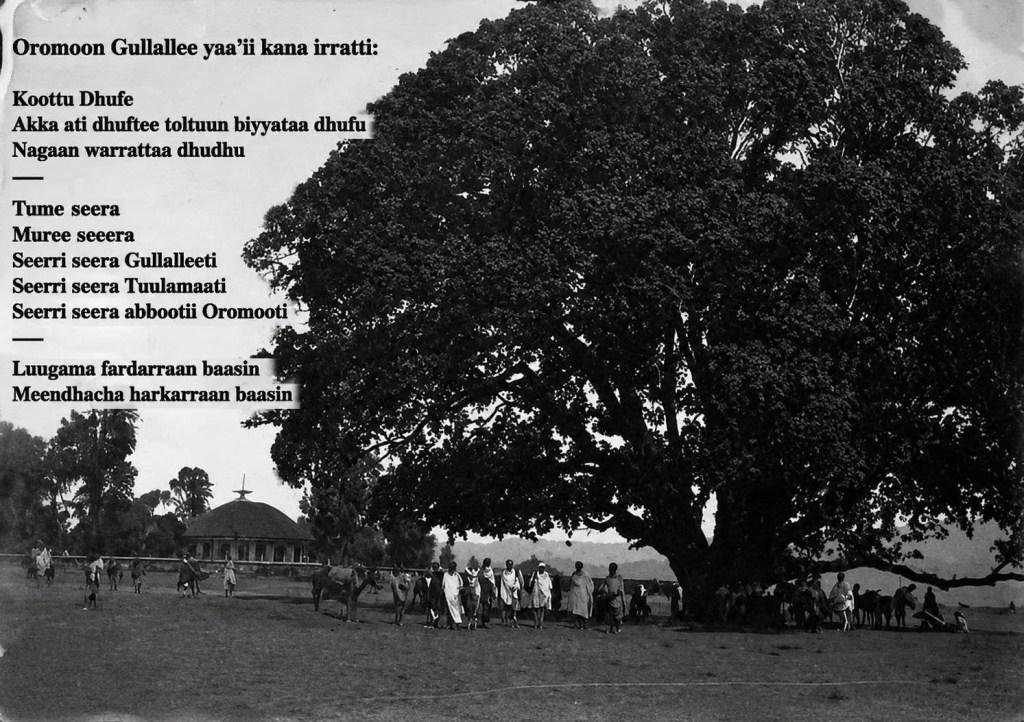
Finfinne was not built on empty land. It was built on the bones and blood of the Oromo people. The area now known as Addis Ababa was once the heartland of the Gullallee Oromo, one of the clans of the greater Tulama Oromo nation. Alongside the Gullallee, other Oromo clans—Eekkaa, Galaan, Meettaa Aabbuu, and Sululta—inhabited the region that surrounded what is now the capital.
The name Finfinne itself is Oromo, derived from the hot mineral springs (finfina) that bubble up from the earth in the area. For centuries, these springs were a source of healing and sustenance for the Oromo people and their cattle.
The land was rich and fertile, a land of pastures, rivers, and hills where the Oromo people lived according to the Gadaa system—a democratic governance structure that regulated every aspect of their lives.
The Arrival of the Colonizers
The arrival of Emperor Menelik II and his armies in the late 19th century marked the beginning of a dark chapter. Menelik, armed with modern European weapons, launched a campaign of conquest against the Oromo, Sidama, Gurage, and other peoples of the south. This was not a peaceful integration—it was colonisation.
The Oromo people of Gullallee were among the first to resist. They stood firm against Menelik’s forces, using their knowledge of the land and guerrilla tactics to defend their homeland. But the disparity in weaponry was overwhelming. The Oromo warriors, armed only with spears and shields, faced muskets and cannons.
One Oromo elder lamented the arrival of the colonisers in a poem:
“No more standing on Intotto, to look down at the pasture below, No more taking cattle to Finfinnee, to water at the mineral spring. No more gathering on Tulluu Daalattii, where the Gullallee assembly used to meet. Since Mashasha came, freedom has vanished.”
The Uprising of 1878
The Gullallee Oromo rose in a major uprising in 1878. They had endured years of oppression—land dispossession, cattle raids, and the subjugation of their women. The final straw came when Menelik’s soldiers began taking Oromo women by force.
According to oral tradition, the Oromo women of Gullallee, tired of being violated by the colonisers, gathered together and devised a plan. They told their husbands:
“We are being forced to sleep with the enemy. If you do not act, we will take matters into our own hands.”
The men, shamed into action, organised a rebellion. The Gullallee warriors launched a coordinated attack against the colonisers, using the cover of darkness and their intimate knowledge of the terrain.
But they were outmatched. Menelik sent a massive army under his nephew, Dajjaach Mashashaa Seifu, to crush the rebellion. The Gullallee were defeated. Thousands were killed, and the survivors were scattered.
The Dispossession Continues
The defeat of the Gullallee uprising was followed by a systematic campaign of ethnic cleansing. The Oromo were driven from the heart of Finfinne—from areas now known as Arat Kilo, Siddist Kilo, Piassa, Mercato, and beyond.
The land was given to Menelik’s generals and loyalists. Oromo farms were confiscated. Oromo cattle were taken. Oromo children were forced into servitude.
The Gullallee were scattered to the winds. Some fled to neighbouring Oromo areas—to Meettaa, Sooddo, Bacho, Ada’a Bargaa, Waliso, and Kuttaaye. Others remained in Finfinne, but their numbers dwindled as they were steadily pushed to the margins.
Even today, the dispossession continues. In the areas of Bole, Garji, Bulbula, Laaftoo, Makkannisa, Kaarra Qoree, Buraayyuu, Askoo, Shoogalee, and Qaallittii, Oromo families are being displaced to make way for new developments.
The Resilience of the Oromo Gullallee
Despite the centuries of oppression, the Oromo Gullallee have not been broken. They have preserved their culture, their language, and their identity against all odds.
Their resilience is captured in the songs they still sing:
“Bole was once a field of wheat and barley, Now it is covered with villas. The cattle that once grazed there are gone, The land has been taken by strangers.”
Another song laments the loss of the land while affirming the unbroken spirit of the people:
“Bole, O water of Bole, The villas have covered the field. Tomorrow we will go to Jimma, This evil time will pass. Stand firm, stand firm, do not give up!”
The Struggle Continues
The history of the Oromo Gullallee is not just a story of the past—it is a story of the present. The Oromo people of Finfinne and its surrounding areas continue to face displacement, marginalisation, and the erasure of their identity.
The current government, under the Prosperity Party, has continued the policies of its predecessors. The Oromo Special Zone surrounding Finfinne has been systematically dismantled. Oromo farmers in areas like Buraayyuu, Garjii, Bole, and Laaftoo have been displaced to make way for the expansion of the capital.
But the Oromo people have not given up. They continue to resist, to organise, and to demand justice.
A Call to Action
The history of the Oromo Gullallee is a call to action for all Oromo people. It is a reminder that the struggle for Finfinne is not just about land—it is about identity, dignity, and justice.
As the late Dr. Makuraa Bulchaa wrote:
“We have been lamenting for too long. Let us leave that behind and move forward—both at home and abroad. Let us organise our people, let us build our institutions, let us strengthen our unity, and let us fight for our freedom.”
The path to liberation is clear: unity, organisation, and determination. The Oromo people must overcome their divisions, strengthen their institutions, and build a coordinated struggle that will leave the colonisers with no option but to retreat.
Conclusion
The history of the Oromo people of Finfinne is a history of suffering, but it is also a history of resilience. From the heroes of Gullallee to the Qeerroo of today, the Oromo people have never ceased to resist.
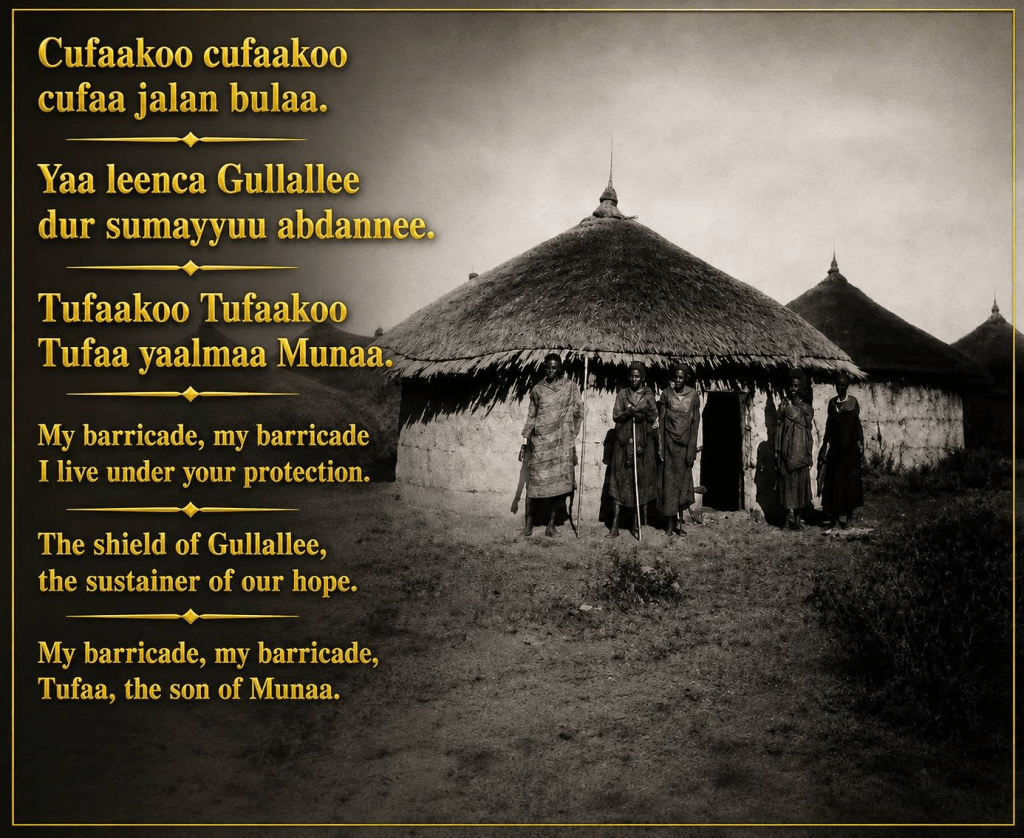
The memory of Tufaa Munaa, Hasanuu Wadaay, and countless other heroes reminds us that the struggle for freedom is a sacred duty. Their sacrifice calls us to action.
Finfinne is not just a city—it is the heart of Oromia. And as long as the Oromo people remember their history, they will never give up the fight to reclaim it.
This feature article is dedicated to the Oromo Gullallee and all the Oromo people who have endured displacement and oppression, and who continue to resist for a free and just Oromia.
Advocacy for Oromia was established in 2010 with the purpose of enabling and empowering Oromo people by providing accurate and timely information that will help to make better choices to create the kind of future in which they wish to live.
It also provides information focus on the major issues facing us in the 21st century and it is going to try and bring a balanced approach with factual information that is positive and solution based.
The website has been in operation for the last nine years with the mission of promoting and advancing causes of Oromo people through advocacy, community education, information service, capacity building, awareness raising and promotion.
The website is also the official site of Advocacy for Oromia Association in Victoria Australia Inc., a non-profit organisation, registered under the Associations Incorporation Reform Act 2012 in Victoria as April 2014.
Our team already had considerable community development experience and expertise. Our various projects helped to develop our confidence and the capacity of our agency. Our team used every gained knowledge, skills and experiences as an opportunity to design and develop new approaches, to documenting progress, supporting positive employment outcomes, liaising with community stakeholders, and conduct evaluation.
Advocacy for Oromia is devoted to establishing Advocacy for Oromia organisation to close the gaps where we can stand for people who are disadvantaged and speaking out on their behalf in a way that represents the best interests of them. We are committed to supporting positive settlement and employment outcomes for Victoria’s Oromo community.
Advocacy for Oromia Office
Addresses:
39 Clow St,
Dandenong VIC 3175
=====================
247-251 Flinders Lane
Melbourne VIC 3000
Activities Address
Springvale Neighbourhood House Inc
Address: 46-50 Queens Ave, Springvale VIC 3171
Postal Address:
P. O. Box 150
Noble Park, Vic 3174
With your support, we can continue to help community build a better future.
Advocacy for Oromia Mental Health Program
The aim of the program is to improving the mental health and well-being of Oromo community in Victoria. It aims to assist those experiencing, mental ill-health, their families and carers of all ages within this community to address the social determinants of mental health for Oromo community. It helps:
Identify and build protective factors,
Reduce stigma and discrimination
Build capacity for self-determination
Better understand mental wellbeing, mental ill-health and the impacts of trauma
The goal of the project is to increase mental health literacy of Oromo community that aims:
To assist people with mental health issues
To increase the capacity of mental health worker
To better understand mental wellbeing
To provide mental health education and information
To address the social and cultural causes of mental health issues
Advocacy for Oromia will organise information session, women performance, radio programs, culturally adopted conversations on Oromo Coffee Drinking ceremony, providing training for mental health guides and forum and producing educational materials on the selected groups and geographical area.
Human Rights Education Program
The Human Rights Education Program is a community based human rights program designed to develop an understanding of everyone’s common responsibility to make human rights a reality in each community.
Human rights can only be achieved through an informed and continued demand by people for their protection. Human rights education promotes values, beliefs and attitudes that encourage all individuals to uphold their own rights and those of others.
The aim of the program is to build an understanding and appreciation for human rights through learning about rights and learning through rights. We aimed at building a universal culture of human rights. Thus, we aimed:
To build an understanding and appreciation for human rights through learning about rights and learning through rights.
To build capacities and sharing good practice in the area of human rights education and training
To develop human rights education and training materials and resources
The goal of the project is to increase human rights literacy of Oromo community that aims:
To better understand human rights
To increase the capacity of human rights worker
To analyse situations in human rights terms
To provide human rights education and information
To develop solidarity
To strategize and implement appropriate responses to injustice.
The ultimate goal of education for human rights is empowerment, giving people the knowledge and skills to take control of their own lives and the decisions that affect them.
Human rights education constitutes an essential contribution to the long-term prevention of human rights abuses and represents an important investment in the endeavour to achieve a just society in which all human rights of all persons are valued and respected.
Advocacy for Oromia will organise information session, performance, radio programs, culturally adopted conversations on Oromo Coffee Drinking ceremony, providing training for Human Rights guides and forum and producing educational materials on the selected groups and geographical area.
Community Safety Program
The program aims to strengthen existing collaborations and identify opportunities for the development of partnerships aimed at community safety and crime prevention activities. This approach seeks to improve the individual and collective quality of life by addressing concerns regarding the wider physical and social environment. Importantly, community safety means addressing fear of crime and perceptions of safety as without this any actions to address the occurrence of crime and anti-social behaviour are of less value.


















 Advocacy for Oromia