Addis Standard – I would like to congratulate you for being a free man at last. But what was it like to be in prison?
Bekele Gerba – Prison is not a place one appreciates to be. But I think it is also the other way of life as an Ethiopian; unfortunately it has become the fate of many of our people. You will find a lot of students, youngsters, brothers and sisters, sons and fathers, husbands and wives. Especially when it comes to the Oromo, they are there in great numbers. Therefore going there or being there was a very good experience by itself because you will understand the agony and the hardship our people are facing at the moment. There are lots of problems there too, from the type of food people eat to the type of bed they sleep on. But there are a lot of things to learn from them so I think for me it has been a place of training.
What was your everyday life like and what was your biggest challenge?
My biggest challenge was the first one year and two months when I was kept in maximum security in Kality prison. The room was very small and the type of people we were with are regarded as deadly criminals in this country; they fight and even the police are scared of them. Sometimes they use drugs and they fight easily with anybody. It is a very difficult place. After being there for a year and two months I was sent to Ziway. Ziway is a place where people who come from the countryside are always kept; people who are economically not well off, mainly people who are allegedly suspected of having links with the Oromo Liberation Front (OLF). And most of them are Oromos there.
There is this popular term that says ‘the prisons in Ethiopia speak Afaan Oromo.’ Is it what you are confirming to me now?
Exactly. If you take away the large number of thieves (the most popular crime there [in Ziway] is theft – and say may be out of 5000 or 6000 prisoners there about 3000 or 4000 thieves) and if you take away those people who are suspected of corruption, very few in number in fact, the rest you can say they are all Afaan Oromo speakers.
How did that make you feel as a politician whose party represents the Oromo and as an Oromo?
 In one way I am very glad to be there because I felt myself sharing the agony of my own people. How am I different from those people? Those people went to prison because they demanded their rights; I was also there because I demanded my rights. In this country I thought that the Oromos are being excluded from the political and from the economic spheres or participation, something I always object. Therefore I am very glad to be there. I remember the first day I went to the court before my arrest just to see how the court was proceeding when about 500 or 600 Oromos were imprisoned and then taken to the court. I went there as a party member to witness and to see what was going on around. I felt very badly because I saw the prosecutors organizing false evidences; they were calling upon people and they were giving them orientations to testify against people whom they didn’t know at all, whom they have never seen before. I was sad and I called some media that day and gave a brief interview. I think it was after the airing of that interview that the government started following me in order to stop what I was doing. But since I was the spokesman of my party that was the job given to me – to give press conferences or sometimes press releases of what was going on around the party and anything related to the Oromo people. But after I went to prison I was relieved because I had to experience the agony of my people; I had to share their pain and I am glad for that.
Going by your own explanation, if living the pain and agony of your fellow countrymen brought you relief, how did that affect your other life that you stood for? You had a family, you had a political life, and you had a career that you had to leave behind.
Like anybody else, like a human being, when you miss your family of course you feel sad. But my family is no different from other peoples’ family. For example there is a family that I know, the husband was in prison and when he was released the wife was taken to prison. Their children are growing up without a father at one time and a mother at another; my children are no better than these. And if only my family, if only a group of people enjoy normal life and the great majority are not doing the same, I think your happiness or your joy cannot be complete. Of course when I first went there I thought my family would be affected very badly but they are very courageous and they were very supportive psychologically. They were very strong and thanks to many Oromos my children did not quit school and my family has not suffered as such economically.
Your daughter Bontu gave an interview to Afuraa Biyyaa radio station once and told the station you were suffering from ill health. Walk me through that. What happened? How did you maintain your health afterwards?
 During the first two three days soon after I was taken to Ma’ekelawi [prison] I started having severe headache and the nurses told me that my blood pressure was high. I had never had that experience before. I was then taken to the Police Hospital and was diagnosed with the same thing; the nurses told me that I looked like a chronic hypertensive patient. I have not had that kind of medical history. Since then until I came out of the prison a few days ago, my blood pressure has been on the rise; I think may be because of the tension, I don’t know. But I am happy that after I was released I am quite okay. I haven’t taken any medication or I have not consulted any physician since my release; I feel I am healthy.
What did help you maintain your everyday sanity when you were there? Was it your interaction with other inmates? Did you have access to books?
The first year was a very difficult time and we have not had enough books and we didn’t know how to smuggle books or any magazines or anything to be read. We have not had any relations with the police; that was a very difficult time until we adjusted ourselves to the prison situations. But later on we started having some books to read that some friends brought for us. We started reading and on a small scale started writing, although it was very difficult to get it out because every three weeks or so the prison police would conduct a search and take away anything that is written; that was the difficult part of it. But after I went to the prison in Ziway I had a chance to meet senior people from the army and from the air force who were accused of staging a coup. Those are people like General Tefera and General Asamenew who were taken to Ziway together. We stayed together and they are very understanding people; they like reading, they like discussions and I enjoyed the discussions. We shared books; we read whatever books we could lay our hands on. That helped me to squeeze through all these bad times.
Moving out of your time in prison, can you tell me what it was like growing up as Bekele Gerba, an Oromo child?
Surprisingly the place I was born and raised is a typical monolingual area. All the people around, all the shop owners or all the government employees and all the school staff speak only one single language, Afaan Oromo. It is a very special place I can say even by Oromia standards. Therefore I didn’t know whether there was any kind of difference between one ethnic group and the other or if there was any kind of oppression elsewhere. But when you go to colleges and universities you will begin to realize there are various ethnic groups and there are various things you will find difficult to tolerate. When I went to the big towns like Addis Abeba and I speak my own language in a taxi or in a bus people turn around and take a look at me; that was when I started to get surprised. And then the consciousness, the social consciousness – not as such political – the reality makes you a bit conscious. However I have not had any bad experience until I graduated from university and went to Wolega again as a high school teacher. And I like speaking languages; I am an outgoing person. I have no problem living with other ethnic group members. But it is later on that I came to understand that there is something wrong going on against the ethnic group I came from.
Is that what drove you to get involved in politics?
Yes. Even in my employment for about 25 years I had never been involved in politics. I was simply an academician and I thought that politics was not a job for everyone. I am a teacher and if I am a good teacher in my profession I thought that will do and that was that. But gradually I found out that my peoples’ grievance is not addressed in a way that it should be. So I thought I could get involved in politics to contribute my share. I don’t know whether I had done anything or had made any change because before I could do anything substantial I was taken to prison. My life experience as a politician is not more than three years.
But within that short period as a politician, I think it was during the 2010 election debate that in a rather succinct argument you spoke about the use and abuse of land distribution and said land was used to advance political causes. What made you take that very strong stand against the ruling party?
You know land is the most important resource in this country, not only in this country but everywhere. It is this resource that everybody who comes to power tries to get control of. If you simply open your eyes and look at what happens around Addis Abeba, then you will see how people are being evicted, and how other people who cannot explain where they get that amount of money from are being catapulted overnight into so much wealth. From my own experience I had a lot of friends who were brought up with me, who had been teachers with me yesterday but who had a lot of money today. That’s okay if it is a legal one.
Realizing that I tried to make a kind of taxonomy, a kind of classification, even though I cannot recall it perfectly now. Accordingly our level of citizenship is divided into various categories. There are people who when they travel around they see a land their eyes fell on and feel like having it and who can have it. Whoever is born and brought there they don’t care. So they can evict everybody and they can sell or hand it over to their friends. I call these people first class citizens. And many of these people are who claim themselves to have liberated us by struggling for 17 years. But what they did not do is liberate these poor farmers; in fact in this regard the Dergue did better for me because it took the land from the landlords and distributed it to the poor farmers, to the tillers. But this time it is the other way round.
And then there are others – regional officials like if you take the Oromia cabinet members, or the SNNPR cabinet members or the Amhara if you like – they can be categorized as second class citizens. They have their power to take any land they wish but there is a power above them. Frankly this power is the power of the TPLF who are the first class citizens. Second class citizens can sell and give but there are others above them who will watch them and who will control them. And then there are the lower hierarchies like the municipalities, for example, or like the Zonal administrators. They have also the same power but above them they know that there are two more hierarchies and may be sometimes they can be accountable. They know that whatever is remaining from the top two, they will get some amount.
And then there are others who do not own anything, who do not own any land but who just look and witness what is going on around, but who are quiet, who are made to become voiceless, who cannot do anything – like the civil servants. And finally the last one is the farmer. He is the farmer who is being looted, who is being evicted, but if at all something happens, like if the country is at war with neighboring countries or with any enemy, these are the people who are called upon to die for this land, a the land for which they don’t have any power on, for the land from which they can be evicted any time. It is the sons and daughters of these people who are going to the warfront and pay with their dear lives. But on the ground they have nothing. For example if you go around Addis Abeba and take a look at someone who is guarding a building and then ask who that man is, he will immediately tell you he was born and brought up there. And he will tell you that it was his land on which that huge building is built. These are mainly Oromos by the way.
 Were you speaking that because the majority of this case is happening in and around lands predominantly belonging to the Oromos or was it because it is a trend that represents the rest of the country?
The pattern is all the same. In the name of investment people are being evicted in the South, in Amhara or even in Tigray regions. What makes Oromia very different is that the land is very close to the center and the investors, these high officials and the government representatives, all these wealthy people want to dwell around it; they want the area very much. The land is very nice, the location is very good, and the weather is good. So everyone puts his eyes on it. Otherwise the trend is all the same everywhere.
But the government argues it is offering compensations…
What does compensation mean? How much money is enough for someone who is evicted forever? Not only him but his children, his grandchildren and the next generation? What makes this very difficult is these people don’t have any profession other than farming. They don’t have any other skill. So how much compensation is enough for these people?
Speaking of which, last year in May a number of University students were killed, imprisoned and have disappeared, I am sure you have heard about it, because they were protesting against the Addis Abeba Master plan, which wanted to include around eight peripheral localities known as the Oromia Region Special Zone. What was your take on that? How did you react when you heard about it?
This is obviously a crime. A massive crime has been committed, and people must be accountable for it. The students did not die in vain for me. They paid sacrifices in order to protect the constitution of this country which says each of the nine regions and the two city administrations has specific boundaries. Addis Abeba has its boundary too. Even though it has not been demarcated on the ground, it was a boundary which is lesser than what it was during the Dergue and greater than what it was during Hailesellasie regime. This was how it was agreed upon during the Transitional Government [24 years ago]. But today the outskirts have turned into Addis Abeba. On daily basis massive farmlands of the farmers are being included into the boundaries of Addis Abeba. So, when I say these students didn’t die in vain, I meant that it was simply to protect the constitution. The Vatican City State is in Rome but the Vatican City state cannot say I have to expand into Rome. That is not possible.
For me the idea is not to expand Addis Abeba as such; it is not to turn it into a beautiful or into a modern city but to change the social structure of Addis Abeba and its vicinity. By doing this what will happen is the language spoken around those areas will change. If you take Dukem, Legatafo, Burayu, Legedadhi or Sululta not long ago, may be some ten years ago, Afaan Oromo used to be the main language. But this doesn’t exist any longer. That is what I call language shift. There is a shift when you change the population, when you change the social structure, then the culture and the language will be destroyed. This is how the Australian Aborigines lost their languages, lost their identity, lost their history, and lost everything. This is how Red Indians in North America lost their identity, lost their language and lost everything. I think for me this is not different. Even though we live in the same country, and we call ourselves Ethiopians – and for me I call myself as an Ethiopian and as an Oromo at the same time – the idea is grave. Javier Perez De Cuellar, the former UN Secretary General in his writing entitled “Our Creative Diversity” wrote: “Put a people in chains, strip them, plug up their mouths, they are still free. Take away their jobs, their passport, the tables they eat on, the bed they sleep in, they are still rich. A people become poor and enslaved when they are robbed of the tongue left to them by their ancestors, they are lost forever.” No one likes to be lost forever.
 But the argument from the ruling party and sympathizers of the plan is that they need to do whatever they are doing because Addis Abeba is also the capital of the federal government, the seat of the AU and of the ECA, you if like. How do you react to that argument?
Why so much focus on developing Addis Abeba only? Why is that? Why not Bahir Dar? Why not Hawassa why not Mekele? Why is the focus on Addis Abeba? And why is Addis Abeba so much concerned about the development of Oromia? When you say it is the capital of the country do you mean it is the seat of the diplomatic community? and the federal government? It is not only because of the diplomats and the civil services in the federal government that Addis Abeba is expanding. It is because of various reasons, one of which is perception – people think they are safe in Addis Abeba than any other cities in the regions. But we can work on that, the government can work on developing other cities. There is no problem in doing that. The other problem is it is not only because Addis Abeba is the capital of the federal government, it is a self-administered, a self-chartered city. It is regarded as having a status of a region. But regions, as I said earlier, have their own borders. That is all. If the constitution is no longer working, then Addis Abeba can expand indefinitely. Otherwise you cannot cut some part of Tigray and hand it over to Amhara and cut some part of Afar and hand it over to the Somali. Constitutionally it has been made impossible. That is it. No single region should be allowed to trespass that. The third is why is Addis Abeba concerned about the plan? Where is the regional government if Addis Abeba is making a plan for Oromia?
Do you think this dilemma traces its root from the very federal system the country says it is following? What, in your opinion, does the federal system currently in use in Ethiopia mean to the ordinary people? Do you think it is losing its relevance beyond being a toll deployed to serve political ends? Or as a famous Oromo legal expert once said, I quote: “beyond dishes, dances and dresses”? What does it represent?
Constitutionally this country is a federal country but as many people think, this is not a gift from the ruling EPRDF. Federalism evolved or it came out of the situation that existed 24 years ago. Twenty four years ago there were about 17 armed groups actively engaged in rebellion, with all their weapons and strongholds. So when the Dergue collapsed there was no way out of the political deadlock except to go for federalism because everyone could have gone home on his own way; the Oromos had the OLF, the Ogadens have the ONLF and so on. So except federalism no other kind of government was possible.
I think it is an argument that Leenco Lataa recently wrote in one of the local newspapers published here. That said how do you evaluate the last 24 years? Has the country lived up to the federalism arrangement? Where did the county perform best, if there is any, and where did it lag behind?
I have not read what Leenco has written. But it is true that federalism was dictated by the situation at the time. But since then what’shappening is its concept and practice is being eroded on a daily basis. If you look at regions I don’t think they are even electing their own rulers. Practically I think the country is as unitary and as centralized as it has been before. There was one big man, the late Prime Minister [Meles Zenawi] who used to appoint regional officials without the consent of the people of the regions, who used to transfer them to the federal government as he likes. That was what was happening and continued to this day. In federalism you plan your own way, levy taxes in your own way, you execute it in your own way; your priority is different from the federal government or other regions. That is not what’s happening now, but if you take Addis Abeba city for example, which is also the seat of the Oromia regional state, in the name of self-administered city its officials singlehandedly decide on the fate of the city and its areas. For them the creation of the Addis Abeba recreational ground in Burayu may be a high priority. But for the Oromia region to which the area belongs to a school of high standard may be its priority. But as things are happening now the federal government plans by itself and executes by its own finance. That is not true federalism.
So you are firmly implying that the federal system the country is following now was dictated by the existing circumstances 24 years ago but fell short of its purpose?
Yes it didn’t serve its purpose. I am saying this because we know so many people who were elected by their constituencies, but who are moved from power by the federal government. To bring another example, in March 2011 about one thousand Oromos were taken to the Ma’ekelawi prison in Addis Abeba but the Oromia regional state didn’t know; they didn’t have any knowledge of the Oromos taken by federal security agents from every corner of Oromia. Here is when one should ask what is this regional government doing? Did the regional government invite the federal government to come and act on its behalf to bring these people to justice? Are they incapable of bringing them to justice in their own region? So what is federalism?
Let’s talk about ethnic federalism. Do you think there is a deliberate misrepresentation and exploitation of what ethnic federalism stands for? An exploitation by the powers that be of deploying the concept as a means to prolong their time in power, and a deliberate attempt by people who advocate for the so called unity using the side effects of ethnic federalism?
People say ethnic federalism doesn’t take us anywhere. But I simply say that the ethnic federalism that came about 24 years ago because of the situation we were in is a necessary evil that we cannot avoid. Because our identity, our language, our culture has been denied for many years before that and it is only through this way that we can promote our language, our culture, and our identity. But it is true that it is a very broad topic but I don’t believe in the idea of the unionists because on party level, for example within Medrek, there were various ethnic based parties like the Arena Tigray. You know if you scratch any party you will find out that the issue of ethnicity is underlined but by the name it implies something else, just like we have the Federal Democratic Republic of Ethiopia. Does it mean it is federal? Does it mean it is democratic? There is nothing in a name. Therefore for me every party in this country is an ethnic based party. I am not saying it’s a bad thing; it becomes bad when one ethnic group becomes a foe to another.
Politically, it becomes bad when it is used as a tool of repression against others; when it is imposed. When somebody imposes his own agenda on another, then the problem comes. If you say don’t speak your language speak only mine then here comes the problem.
But willingly I can learn your language and you can learn mine. For example people complain that we are not able to work in the regions because we don’t know the language. In the first place you are there because you want to sell your knowledge, your skill and your service, is that not? If I went to Tigray to sell my knowledge, my skill or to sell my expertise then I have to interact with the people who want to be served in the language they understand. Nobody is disallowed to work there. But the only thing is serve these people in the language they understand. Otherwise if I am an Oromo and if I want to go to Tigray and ask all the Tigray people to speak Afaan Oromo, I think that is crazy and it should be addressed. This is a situation that often goes wrong. But people love their language very much, they want to promote their culture, they want their identity very much. If there is another mechanism by which this can be addressed, such as by geographic kind of federalism, that is okay.
Does this reinforce your belief in a just ethnic federalism system that this country has to wake up to one day?
Yes and we have to appreciate our diversity. Look, if we are of the same age, wearing the same clothes, of the same height, of the same color, eat the same food, and dance the same way to the same music this world would be nasty, it would be really ugly! Very ugly! We don’t want to turn this earth into hell. We want our diversity. We want other people to sing in their own way, speak in their own language, to wear different kinds of dresses. I think the idea of trying to bring everything into one is not a sane idea.
I would like to ask you the next question as someone who is an Oromo politician. Currently there are at least two predominant Oromo discourses. The first is the discourse for secessionism, although it’s a discourse that looked as if it was losing ground since the split within the former administration of the OLF, many people think it has surfaced again when the “Oromo first” debate came about in the recent past. The second is the Oromo discourse supporting a greater autonomy within the federal government – a better way of federalism that gives the Oromo a greater say in their affairs. For this group secessionism is no longer the call of the day. Where does Bekele Gerba stand? What do you see as a better way forward for the Oromo people?
Well my stand is very clear in this issue. I always say that first the rights of the Oromo should be respected. The Oromos are located in the middle of this country; they have formed this country, they are part of this country, they will remain in this country. You cannot think about Ethiopia without the presence of the Oromos. They have sustained it and they are in the center of this massive land. Therefore I think what is very important is that their rights is respected; there should be no compromise. If so I can boldly say from what I have seen and experienced that the Oromos are not after secession. But the problem is when the situation continues like it is now; when the exploitation, the eviction, the attempt to assimilate, to destroy their language, to destroy their culture, to destroy their identity goes on in such a way I think people may think otherwise. It is true that people who are following this very closely may assume the situation is getting desperate. But for me it’s not that desperate and I still believe that things can be put in the right track, and the wrongs can be righted. If we start righting the wrongs, then I think the question of an independent Oromia or an independent land will not be a very serious issue.
But it is exactly what many Oromos feel is not happening. For them this very grim situation the country keeps on generating has continued. Reports indicate that the exile of the Oromo has continued en mass as we speak; the jailing, the killing, the mysterious disappearance of University students just a year ago didn’t help either. Don’t you think this makes the secessionism discourse to gain momentum? As someone who has been in the center of the politics in the country do you see there is still hope for peaceful struggle for the rights and respect of the Oromo? Is there a room for that? Does the political space allow for that to exist?
 There is a challenge. But I think there is still hope. I always believe that things can change gradually. Because of the culture we were in for hundreds, or may be thousands of years, we used to think changing a government is only possible by violence, or armed struggle. But I think that time has passed now; it is possible to change regimes and to confront governments by peaceful means of struggle. If people are very much committed to peaceful struggle, I think the situation will change and the government must exploit this situation – meaning that, as an opposition,we are very helpful, we can contribute much. Going to the jungle and destroying everything, crashing everything and building it when you come back again as new doesn’t take this country anywhere. And if the current leadership was wise, they could have designed many ways in which armed struggle in the future would not be a possibility. But I don’t think they are smart. The legacy now is that people are still toying with armed struggle. Ten years ago when the opposition, Kinijit, won Addis Abeba and much of the country, things would have changed a lot had they been given what was theirs at that time. People would begin to trust that it is possible to change regimes without war, thorough the ballot box, and the political tradition itself would have been one step forward. But we lost that. We lost that chance because of the power mongering attitude of the ruling EPRDF; we lost that big chance.
But don’t you think the refusal of the opposition to get into the parliament itself has contributed?
But they [the opposition] had pieces of information about Addis Abeba at that time that all the treasury that used to belong to Addis Abeba city administration were handed over to the federal government including transport facilities; the state capital of Oromia was called back again and Oromia was to tax the city. So it was because of what the EPRDF did that the opposition refused to accept the city. I am not saying they did a good job, or the right thing; I think they could have taken the challenge. All I am saying is it was because of what EPRDF did that everything turned into ashes and the possibility of changing regimes and leadership in this country through the ballot box failed.
Ethiopia is about a month away from holding yet another general election. Do you think elections for a country like Ethiopia are a means of sustaining power for those who have it; for the sake of the L word – legitimacy, as many argue? Or do you believe it is a means to change the political order peacefully?
From the experience we have so far I don’t think EPRDF is ready to give power anytime. If you look at what they are doing now in terms of the use of media space, they allocated 500 hours, but they designed it in a way that they can take a bulk or the large share once again. In the last election [in 2010] 10 million ETB was allocated to all the parties out of which 9.5 million went back to the EPRDF and 300, 000 ETB went to EDP. Do you believe if I tell you that we received just 3,600 ETB? That was about 175 Euros. This time they have allocated 30 million ETB and if you ask around you may find out that more than twenty something millions of it went back to the pocket of EPRDF again.
So you are saying holding elections is just another way of legitimizing the time in power?
That is it. It is already a foregone conclusion. For me EPRDF has already won. I think there is very little thing we expect from this election.
So what does it mean to be in an opposition party trying to survive under such circumstances? What makes your party decide to exist all together?
The objective of a political party is not only to seize power. If you can get the wrongs to be corrected by the ruling party that is already something; if you can do it yourself that is even better. But if you cannot do it and someone does it then that is also fine. Therefore we will try to contribute our best in this regard, irrespective of the hard situations we find ourselves in; there is no way out. We don’t want to go to armed struggle; we don’t want to show on television Ethiopians killing Ethiopians for power. So even though pursuing peaceful struggle is very difficult I personally always appreciated the likes of Mahatma Gandhi; I have always appreciated the struggles of people like Martin Luther King and I think we have to continue that way. Rome was not built in one day.
How did your prison experience change your political determination? Did it reshape you in any way? Will you go back practicing politics again?
I think I am stronger than I was when I went to prison; I consider myself more prepared and stronger than before. And I can never be out of politics; I don’t want to be out of politics.
When you were handed the eight year sentence back in 2012, you made a speech that became a symbol of the rally behind the ‘free Bekele Gerba’ campaign. In this speech you said that if you were to ask an apology you would ask it from the “Almighty” and, I quote: “from my people for failing to speak to the depth of their suffering in the interest of the co-existence of people.” Don’t you think it’s exactly this attitude of putting the “interest of the co-existence of people” at the expense of the suffering of others that is sustaining repression in this country? That people like you keep silent for the sake of co-existence?
If you see what is happening in this country by members or group of people coming from certain ethnic groups against other ethnic groups you will be very sad. But these people should live together. This peaceful co-existence can be built if I have some share; if you and the others have some share as well. Personally, for example, I cannot speak everything that I saw of what happened to the Oromos at some point in this prison known as Kilinto; it was really very sad. Well coordinated and against one single ethnic group of prisoners, who are not able to defend themselves – both by the police, by the officials, by fellow prisoners, virtually everybody other than members of that ethnic group. But you don’t speak everything and at the same time you don’t generalize too because if TPLF has done something bad it doesn’t mean the whole Tigraians are like that. At the end these people have to live together. The TPLF may not be there after some point, but these people must continue to live together, so we should not put that kind of animosity among people. So there are times when you don’t speak everything. That was the idea; it is only for peaceful co-existence of these people. I did nothing for my own benefit and I am not scared for my life if I have spoken everything; I have not addressed it very well only because I want these people to co-exist. That is it.
Currently there are many political activists who are behind bars, and as many are exiled. Some of these youngsters are the same people who looked up to you as a role model. What do you say to them? How should they continue to be the voice for those who are rendered voiceless? What advice do you give them because many of them are the same young activists who spoke for you when you couldn’t from your prison cell? What words of wisdom do you share with them?
First I would like to thank everyone who supported me, who supported my family, who demanded my release, and who never forgot the cause for which I was there…I would like to thank them all. But at the same time you know doing politics in Ethiopia is a very difficult task, because the politics is, whether we like it or not, geared in such a way that it is ethnically motivated. Everybody tries to see everything from his ethnic group point of view.
Is that a bad thing?
No, it is not bad. It becomes bad when what you want to achieve is at the expense of other ethnic groups. There should not be any hidden agenda that will exclude the other ethnic groups; whether we like it or not every group, every individual wants his right as we want ours. It is only by self-respect that we can maintain peace and brotherhood in this country. Now you may ask if there is peace in this country. The fact that the guns are silent, the fact that there is no war going on in the country doesn’t necessarily mean that it is as such very peaceful. We are carrying around so many things that can ignite any time. So the young generation must think about its future. This young generation should not listen if they hear these old politicians of the 1960s or 1950s who are old professors and who wrote many things and researched around but who do not contribute to the peaceful co-existence of the people of this country. They are gone, their time is gone and their time is going. But the young generation must think about its own future. And that future should be based on the idea that all should respect one another. We should respect one another. The right of one group or one ethnic group or one community depends also on the right of the other ethnic group. If there is injustice somewhere it will affect justice everywhere. When the Amharas are attacked the Oromos, the Tigraians, the Sidamas, the Somalis and so on must act. That’s what I believe in.
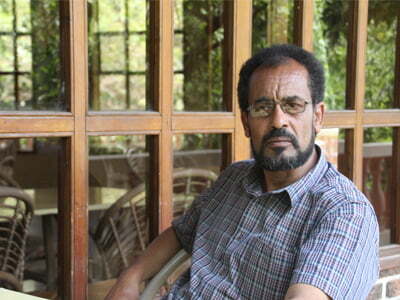
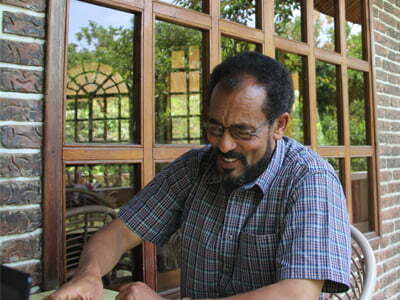
Photo: Addis Standard
Ed’s note: The editor would like to thank the following people for their generous contribution:
- Mohamed Ademo, editor at Opride.com
- Bulcha Demeksa, Senior opposition politician and former member of the parliament
- Dr. Gammachis Kummara, academician
- Kalkidan Yibeltal, deputy editor-in-chief at Addis Standard and
- The families of Bekele Gerba, who, despite having him back from prison just a few days ago, have kindly tolerated the hours he spent during this long interview
Source: http://addisstandard.com/bekele-gerba-speaks/









 Advocacy for Oromia