Category Archives: Information

Ramadan 2026 Begins: A Month of Fasting, Reflection, and Community for Muslims Worldwide
Victorian Multicultural Commission extends warm wishes as holy month commences
MELBOURNE, Australia — This week marks the beginning of Ramadan, the holiest month in the Islamic calendar, observed by Muslims around the world as a sacred period of fasting, prayer, and spiritual reflection. The crescent moon sighting ushers in approximately 30 days of devotion during which the faithful will abstain from food, drink, and other physical needs from dawn until sunset .
Ramadan commemorates the month in which the Quran was first revealed to the Prophet Muhammad, making it a time of heightened religious significance for the global Muslim community. For the world’s approximately 1.8 billion Muslims, the month represents an opportunity for profound spiritual renewal and connection with the divine .
Spiritual Significance and Practice
From first light until sunset, fasting—known as sawm—is practiced to strengthen faith, cultivate self-discipline, and foster empathy, generosity, and care for others . The daily fast serves multiple purposes: it reminds believers of those less fortunate who experience hunger not by choice, teaches patience and humility, and creates space for increased devotion through prayer and Quranic recitation.
Each day’s fast begins with a pre-dawn meal called suhoor and ends with iftar, the evening meal with which Muslims break their fast. Iftar is often a communal affair, bringing families and communities together and extending to neighbors, friends, and those in need. The practice of sharing meals with the less fortunate exemplifies Ramadan’s emphasis on generosity and social responsibility .
Beyond abstaining from physical sustenance, Ramadan calls Muslims to refrain from negative behaviors such as gossip, arguing, and ill feelings, directing focus instead toward spiritual growth, charitable acts, and strengthening community bonds. The month is also a time for personal growth and spiritual renewal, as believers seek to draw closer to God through increased prayer and reflection .
Community and Connection
Ramadan is traditionally a time when community bonds deepen significantly. Mosques fill for nightly Taraweeh prayers, extended congregational prayers offered only during this month. Families and friends gather for iftar meals, and communities organize shared meals for those who may be alone or in need .
The emphasis on generosity finds expression in increased charitable giving, or zakat—one of the five pillars of Islam. Many Muslims choose to pay their annual charity during Ramadan, believing the rewards for good deeds are multiplied during the holy month. Food drives, community iftars, and fundraising for humanitarian causes all see significant increases during Ramadan .
Victorian Multicultural Commission Extends Wishes
In Victoria, Australia, the Victorian Multicultural Commission has recognized the significance of Ramadan and the values it represents, including compassion, devotion, and connection. In a statement marking the beginning of the month, the Commission extended warm wishes to all observing this sacred time .
“We extend our warm wishes to all who are observing this sacred month and hope it brings peace, wellbeing and a strong sense of belonging across Victoria,” the Commission stated .
Victoria is home to a diverse Muslim population representing numerous cultural backgrounds, including significant communities with Turkish, Lebanese, Pakistani, Afghan, Bangladeshi, Somali, and Indonesian heritage, among others. For these communities, Ramadan provides an opportunity to maintain cultural and religious traditions while contributing to Victoria’s multicultural fabric.
Observance Across Australia
Across Australia, approximately 800,000 Muslims will observe Ramadan this year, with significant communities in Melbourne, Sydney, Brisbane, and Perth. Islamic councils and local mosques have announced prayer schedules and iftar programs, many of which welcome non-Muslim neighbors and friends to share in the evening meal as an opportunity for interfaith understanding and community connection .
Major mosques, including Melbourne’s Islamic Council of Victoria and Sydney’s Lakemba Mosque precinct, anticipate thousands of worshippers for nightly prayers and community iftars. Local councils in areas with significant Muslim populations have adjusted services and schedules to accommodate observers.
The Rhythm of Ramadan Days
For those observing, Ramadan transforms daily rhythms. Mornings begin early with suhoor before dawn, followed by morning prayers. The workday continues with fasting, requiring focus and energy management. Afternoon hours can be particularly challenging as energy levels dip, but the approaching sunset brings anticipation of breaking the fast.
At sunset, the adhan—call to prayer—signals time for iftar. Traditionally, dates and water or juice are consumed first, following the example of the Prophet Muhammad, before the main meal. After evening prayers, many Muslims head to mosques for Taraweeh, which can include recitation of significant portions of the Quran.
The final ten days of Ramadan hold special significance, marking the period when the first revelations of the Quran were sent down. During these nights, Muslims increase their devotion, with some engaging in itikaf—spiritual retreat in the mosque—to focus entirely on worship. One of these nights is Laylat al-Qadr, or the Night of Power, described in the Quran as “better than a thousand months.”
Eid al-Fitr: The Celebration Ahead
The conclusion of Ramadan will be marked by Eid al-Fitr, the festival of breaking the fast, expected to fall in late March depending on the lunar sighting. The day begins with a special prayer service followed by celebrations that include feasting, gift-giving, and gatherings with family and friends. Eid is a time of joy and gratitude, marking the successful completion of the month’s spiritual journey .
For businesses, schools, and community organizations across Victoria, awareness of Ramadan and its practices supports inclusion and understanding. Many workplaces accommodate observing employees with flexible hours or designated prayer spaces, recognizing the significance of the month.
A Message of Shared Values
The Victorian Multicultural Commission’s message emphasizing compassion, devotion, and connection highlights how Ramadan’s core values resonate beyond the Muslim community. In an increasingly diverse society, recognition and respect for religious observances strengthen social cohesion and mutual understanding .
As Muslims across Victoria and around the world begin this month of fasting and prayer, the wishes for peace, wellbeing, and belonging extend across communities, reflecting the universal aspirations that Ramadan represents.
Ramadan Mubarak to all observing this holy month.

General Damisse Bulto: The Forgotten Eagle of Ethiopia’s Skies
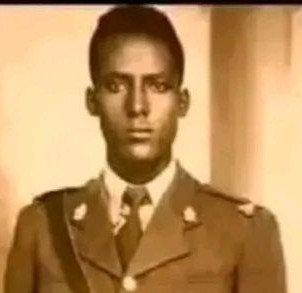
Personal Profile
Who was General Damisse Bulto? 💔
The question lingers, suspended in grief and memory. For those who knew him, he was a son of Ada’a Berga, a herdsman turned warrior, an aviator who painted his nation’s future across African skies. For those who have forgotten—or were never taught—he is a ghost in the military archives, a name erased from official histories, a body moved in secret.
This is his story.
From the Pastoral Plains
General Damisse Bulto Ejersa was born in 1926 in Ada’a Berga District, West Shewa, to his mother Adde Ayyee Jiraannee and his father Mr. Bultoo Ejersa. From childhood, he knew the weight of responsibility. While other boys played, young Damisse tended his family’s cattle, moving through grasslands that would later seem impossibly distant from the jet streams he would one day command.
But the open fields that raised him also gave him his first taste of horizons. A boy who watches the sky from the earth learns to dream of flight.
When he reached the appropriate age, Damissae traveled to Finfinne to study at the Medhanealem School. It was there, in the capital’s classrooms, that a military recruitment announcement changed everything. The Makonnen School was calling for cadets. Without informing his family, the young man enlisted—and stepped onto a path that would define the rest of his life.
The Making of a Makonnen
Three years of intensive training transformed the cattle herder’s son into a disciplined officer. By 1946, as Lieutenant Colonel, he received orders that would carry him far from Ethiopian soil.
The Korean Peninsula was aflame. The Cold War’s first hot conflict had drawn nations from across the globe into its crucible. Ethiopia, under Emperor Haile Selassie, committed troops to the United Nations forces. Among them was Damissae Bultoo—a young commander representing his ancient empire on a distant battlefield.
He served with distinction. He returned alive. He completed his consecration ceremony. And then his nation called again.
Ethiopia had no air force to speak of. The Emperor, modernizing his military, sought to build one from the cockpit up. Damissae was selected for training in Israel, where he learned the arts of aerial warfare from one of the world’s most capable air arms. He returned home a pilot—and soon, commander of the famed “Flying Leopard” squadron.
Wars and Recognitions
The 1950s and 1960s were decades of fire. When Somalia challenged Ethiopia’s territorial integrity, General Damisse took to the skies. In 1955 and again in 1957, he flew combat missions against Somali forces, his Leopards drawing blood across the Ogaden skies.
Emperor Haile Selassie took notice. The young man from Ada’a Berga, who had once watched clouds from cattle pastures, now received medals and commendations from the Lion of Judah himself. He rose through the ranks: Colonel in 1969, Brigadier General in 1972, Major General in 1977.
Each promotion marked not merely personal advancement but the trajectory of a man who had dedicated his entire existence to the defense and dignity of his nation.
The Dream of Oromia
Yet General Damisse’s patriotism was not uncritical. He loved Ethiopia—but he also saw its failures. He served the empire—but he also dreamed of liberation for his own people.
When the Derg seized power, when Mengistu Hailemariam’s Red Terror washed Ethiopian cities in blood, General Damisse made his choice. He would not merely serve. He would resist.
The plan was audacious, befitting an airman accustomed to thinking in three dimensions. On the morning of December 8, 1981, Mengistu was scheduled to depart for East Germany. General Damisse and his co-conspirators intended to shoot down the dictator’s aircraft—or, alternatively, divert it to Eritrea and capture the leader himself. A single blow to decapitate the Derg and open the path for Oromia’s liberation.
But conspiracies breathe thin air in authoritarian states. Fellow air force officers, when approached, hesitated. Some refused outright. The plot faltered, then collapsed. No missile was fired. No aircraft was diverted. No dictator fell.
The dream of an Oromo political order, forged in that moment of daring, remained unrealized.
The Exile and the Grave
What follows is contested, obscured, deliberately forgotten.
What is known: General Damisse was killed. The commander of the Flying Leopards, the veteran of Korea and Ogaden, the man who had received medals from an emperor’s hand, died at the hands of fellow officers—or of the regime they served.
His body was initially interred in Asmara, within the compound of the Catholic Church of St. Isteqs. Eritrea, then still part of Ethiopia, received the fallen general in silence. His grave marked nothing more than a name, a date, a vanished life.
But even the dead are not beyond the reach of politics.
Years later, after Eritrea had separated, after Asmara had become foreign soil, General Damisse’s remains were exhumed. They traveled south, across the border his squadron had once defended, back to the capital city where a cattle herder’s son had first dreamed of flight.
Today, they say, he rests in Finfinne. Within the compound of St. Joseph’s Church. A man displaced even in death, his final resting place known to few, visited by fewer still.
What Remains
General Damisse Bulto left no political testament. No memoirs. No public confessions or private apologies. He left only the record of his service—the medals, the missions, the promotions—and the whispered memory of a plot that failed.
To Ethiopian military history, he is an embarrassment: a decorated commander who turned against the state. To Oromo nationalists, he is a martyr: a patriot who understood that love of nation and love of people could not be separated. To his family, he is simply gone—a father, a grandfather, a name spoken in prayers.
And to the young men and women of Ada’a Berga, who still tend cattle beneath the same skies he once watched, he is a question without answer.
Who was General Damisse Bulto?
The cattle know. The grass knows. The wind that moves across the West Shewa highlands remembers the boy who became an eagle.
But the archives are silent. The grave is quiet. And the dream he died for remains, like his body, displaced—waiting for a nation that has not yet decided whether to claim him.
💔
The author acknowledges the family of General Damisse Bulto and surviving members of the Ethiopian Air Force who provided information for this profile, many of whom spoke on condition of anonymity.

Honoring Oromo Scholars: Asmarom Legesse and Hamdesa Tuso
A Legacy Forged in Scholarship and Struggle: ABO Honors Professors Asmarom and Hamdesa
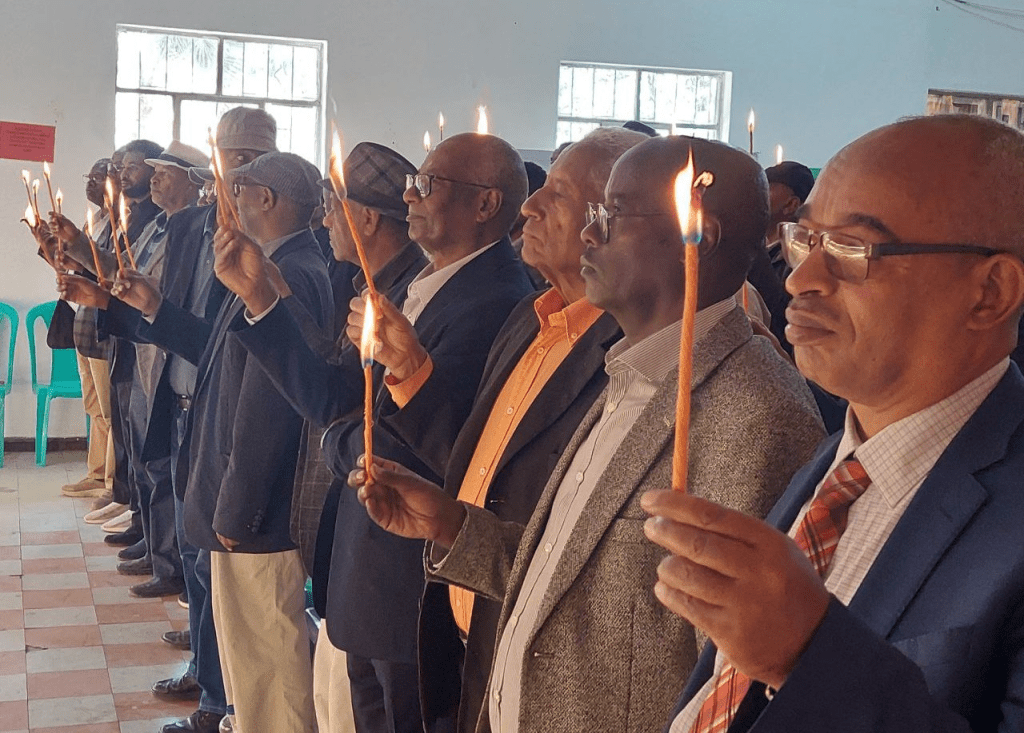
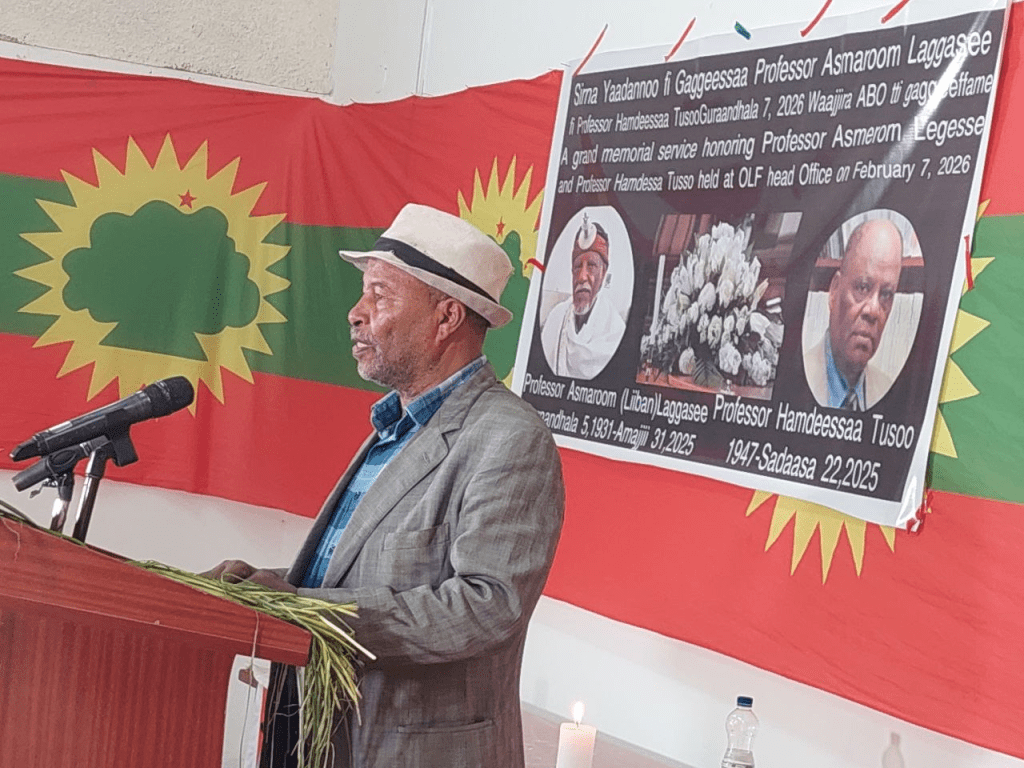
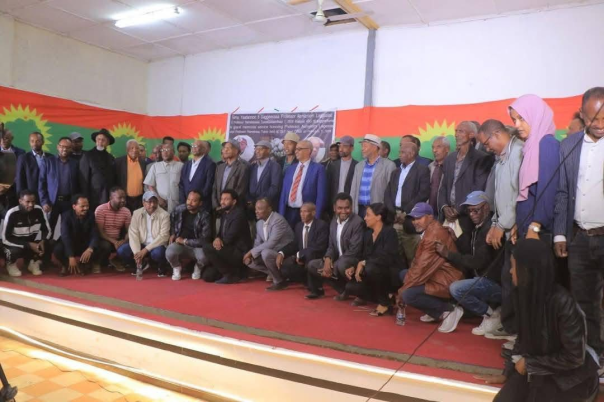
(WAJJJIRA, MUUMMEE GLLALLETTI, FEBRUARY 07, 2026) – Under the solemn banner of memory and celebration, the Oromo Liberation Front (OLF) today convened a ceremony of profound significance at its headquarters. The gathering paid tribute to two intellectual giants who dedicated their lives to the Oromo cause: the late Professor Asmarom Legesse and Professor Hamdesa Tuso.
The event, more than a memorial, served as a powerful reaffirmation of the inseparable bond between academic rigor and the national struggle. It drew a distinguished assembly of Oromo elders (Hayyoota), scholars, OLF leadership—including Chairman Jaal Dawud Ibsa—and numerous members of the community, all united in gratitude and reflection.
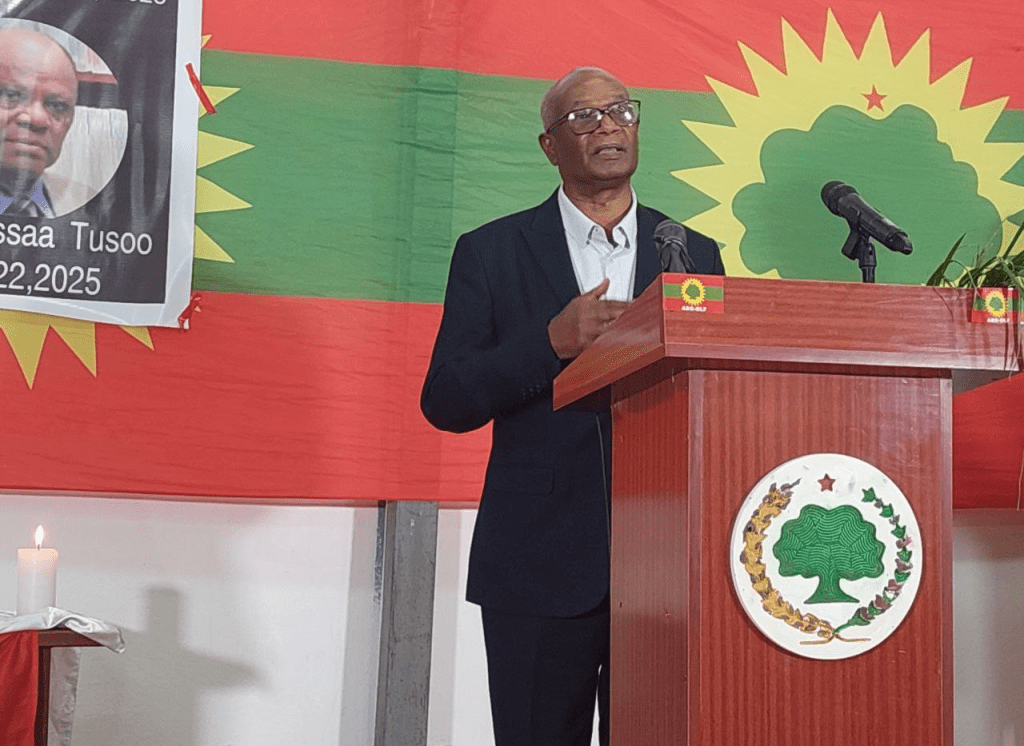
In a poignant address, Chairman Jaal Dawud Ibsa spearheaded the tribute by dismantling what he termed “the great lies of Professor Asmarom Tulu.” This direct refutation underscored the ceremony’s deeper purpose: to reclaim historical truth and honor those whose scholarship authentically served the Oromo people. The chairman and other speakers extended particular gratitude to Eritrean nationals who have steadfastly supported the Oromo liberation struggle through the OLF, singling out Gaaxaseessaa Tesfaayee G/Ab for his exemplary role.
The ceremony highlighted the enduring impact of the two professors. Professor Asmarom Legesse was celebrated for his groundbreaking anthropological research, most notably his seminal work Gada: Three Approaches to the Study of African Society. His scholarship did not merely document Oromo culture; it presented the Gada system to the world as a profound and democratic form of governance, pulling Oromo history from the shadows of a repressive past (bar dukkanaa) into the global light.
“Oromummaa (Oromo national identity) is not just about blood,” one speaker affirmed, echoing the professors’ legacy. “It is a great symbol. During that dark era, rather than simply placating Habasha hegemony, it was Asmarom who made the world accept that the Gada system is a great and democratic governance tradition.”
Professor Hamdesa Tuso, a revered philosopher and peace scholar, was honored for his relentless dedication to framing Oromo liberation within universal principles of justice, human rights, and ethical philosophy. His work provided the intellectual and moral framework that elevated the struggle beyond mere political contestation.
A poignant moment arose with the participation of Obbo Dirribi Damise, former head of the Oromo Broadcasting Service (WMT). His presence symbolized the bridge between scholarly work and public dissemination. Speakers expressed deep gratitude for his role in carrying the professors’ profound knowledge of Oromo affairs to the world, ensuring their insights reached a broad audience.
The gathering was not only a look backward but a call to the future. The elders and leaders issued a clear directive to the younger generation (dhaloota): the monumental work begun by Asmarom and Hamdesa remains unfinished. They must take up the mantle and continue it.
In a powerful closing sentiment, the elders emphasized the collective responsibility to this legacy. “Professor Asmarom has left an unforgettable mark that other Oromos can emulate,” they stated. “We must internalize the mission he started and left for us, and pledge to carry it forward.”
Today’s ceremony in Wajjira solidified a central truth for the Oromo movement: that the pen and the resolve for freedom are allies in the same fight. The legacy of Professors Asmarom Legesse and Hamdesa Tuso stands as a challenging and illuminating torch, guiding the path toward both intellectual sovereignty and national liberation.

Celebrating Shanan: Merging Tradition with Modern Health
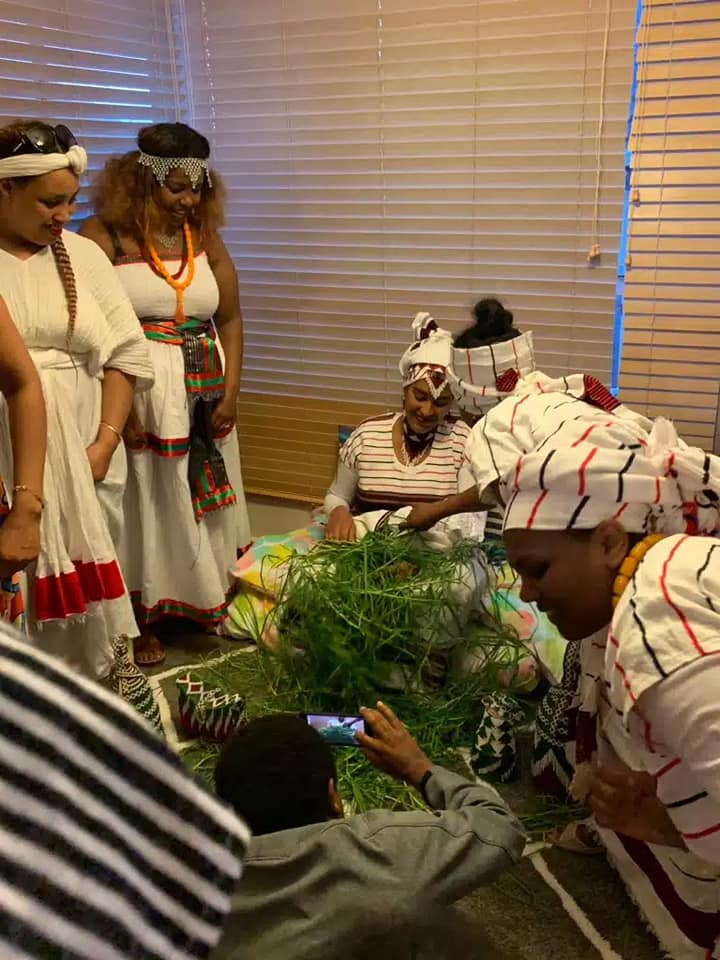
Shanan Nagaa: Protecting the Sacred First Five Days for Oromo Mothers and Newborns
Connect tradition with modern wellness
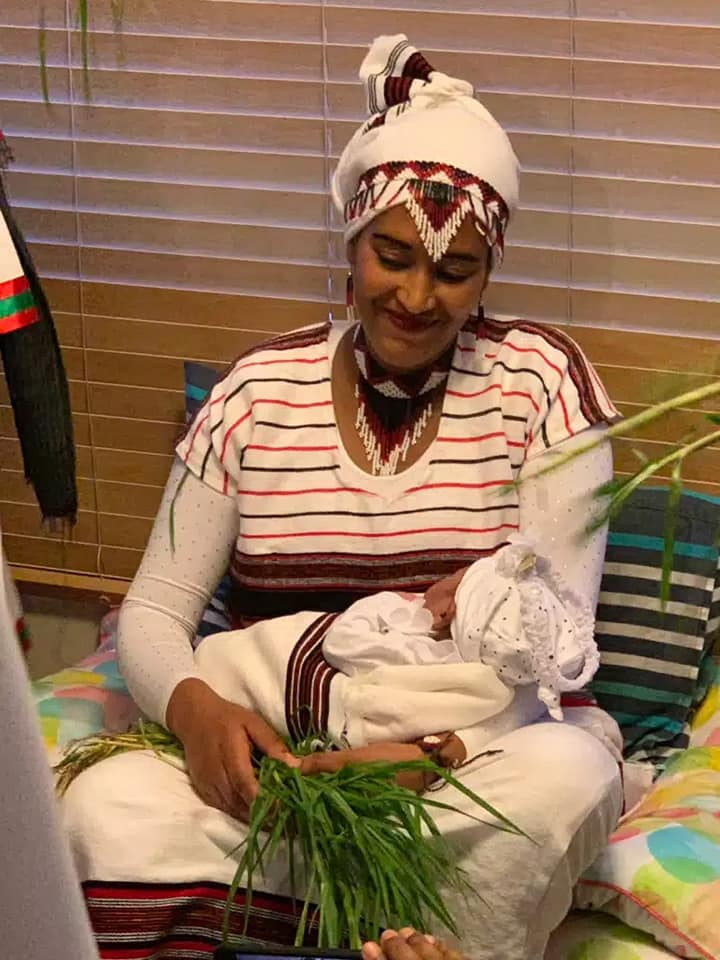
In Oromo culture, the Shanan—the sacred five-day period following childbirth—is a time of profound communal celebration, rest, and ritual welcoming of a new soul into the world. As families prepare for this beautiful tradition, health experts and cultural elders are now collaborating to weave essential health safeguards into these ancient practices, ensuring that the joy of Shanan is protected by modern knowledge of postpartum and newborn care. This is how communities can honor tradition while actively preventing health risks for mothers and infants.”
CULTURAL SIGNIFICANCE: Frame protection as an act of respect
Shanan is not just a celebration; it is a ‘Seera Lubbuu’—a law of life—designed to protect the mother’s ayyaana (spirit) as she transitions and to gently introduce the newborn to the world,” says elder midwife Arfaattuu Worknesh Dejene. “Our ancestors created this container of rest for a reason. Protecting Shanan today means updating the ‘how’ without losing the ‘why’: the wellness of mother and child.
Blending tradition and safety
The elder’s role is to guard the mother’s peace,” explains Arfaattuu Almaz Bekele. “We now add a new duty: to be a health sentinel. If the mother has a fever, or bleeding increases, we don’t just pray—we know the number for the ambulance and have a car ready. Protecting tradition means protecting her life first.
The Peaceful Newborn
We bless the child with gentle touches and soft songs, not with many passing hands,” says grandmother Ayyantu Kadiro Elemo. “We tell visitors: ‘Your blessing is in your prayer from the doorway. The mother’s arms are the child’s first shrine.’ This protects the baby from germs and overstimulation.
PROTECTION AS THE HIGHEST BLESSING
The greatest blessing we can give a new mother and her child during Shanan is not just our presence, but our protection. By wrapping our ancient traditions in a mindful embrace of modern health wisdom, we do not dilute our culture—we fortify it. We ensure that the sacred first five days become a foundation of health, not a memory of risk. In doing so, we honor the deepest Oromo principle of all: that the safety and nagaa of the most vulnerable among us is the true measure of our community’s strength. Baga Shanan Nagaa!—May it be a peaceful, protected Shanan.

Oromo Community Shines at 2025 Bruce Volunteer Awards

(Saturday, November 30, 2025) Oromo Community Advocates Honored with 2025 Bruce Volunteer Awards
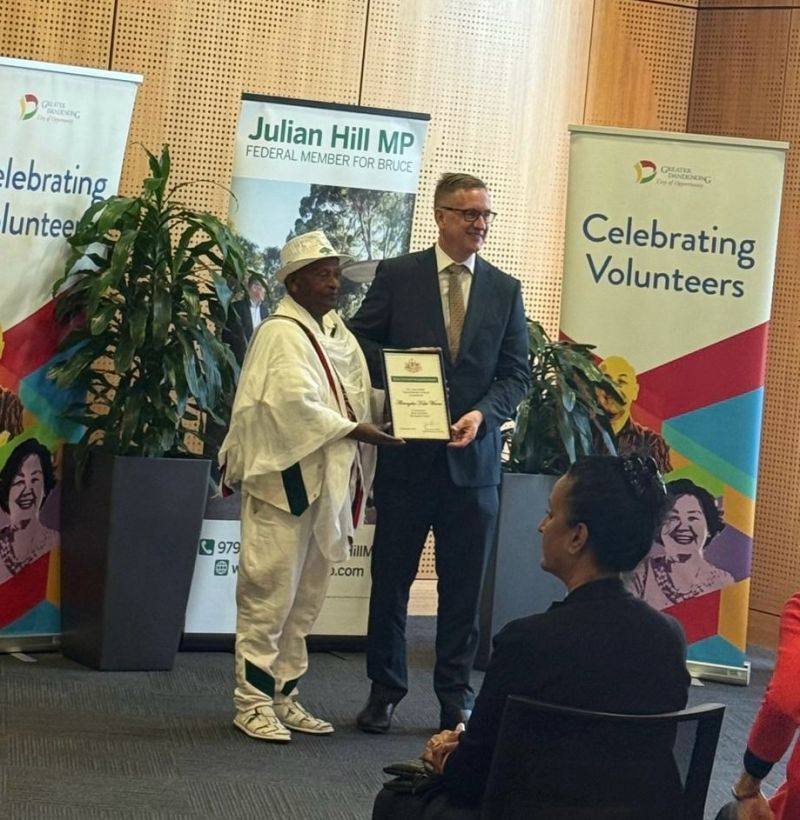
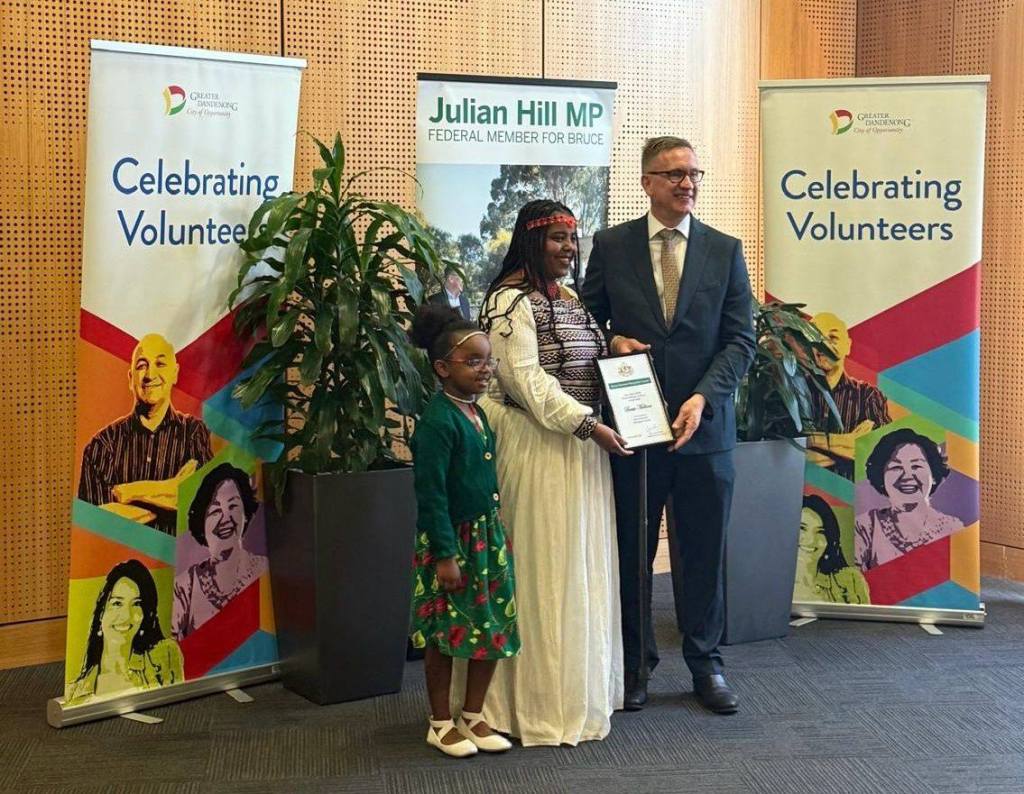
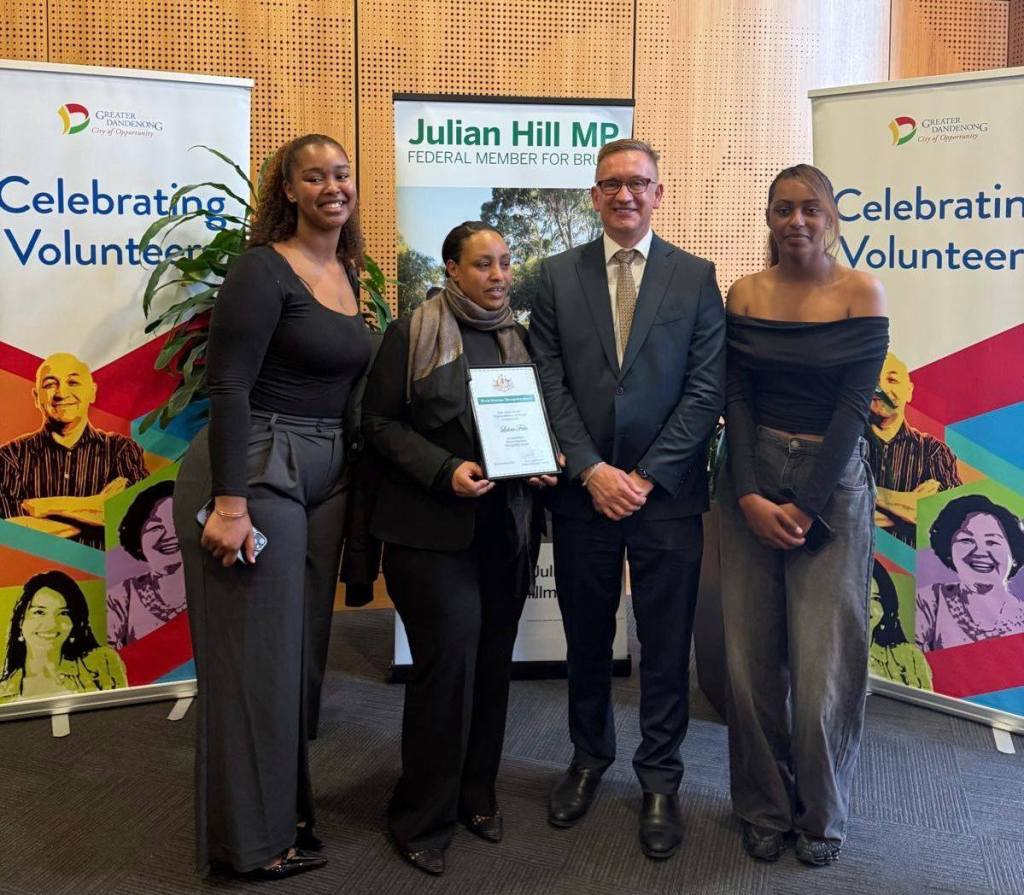
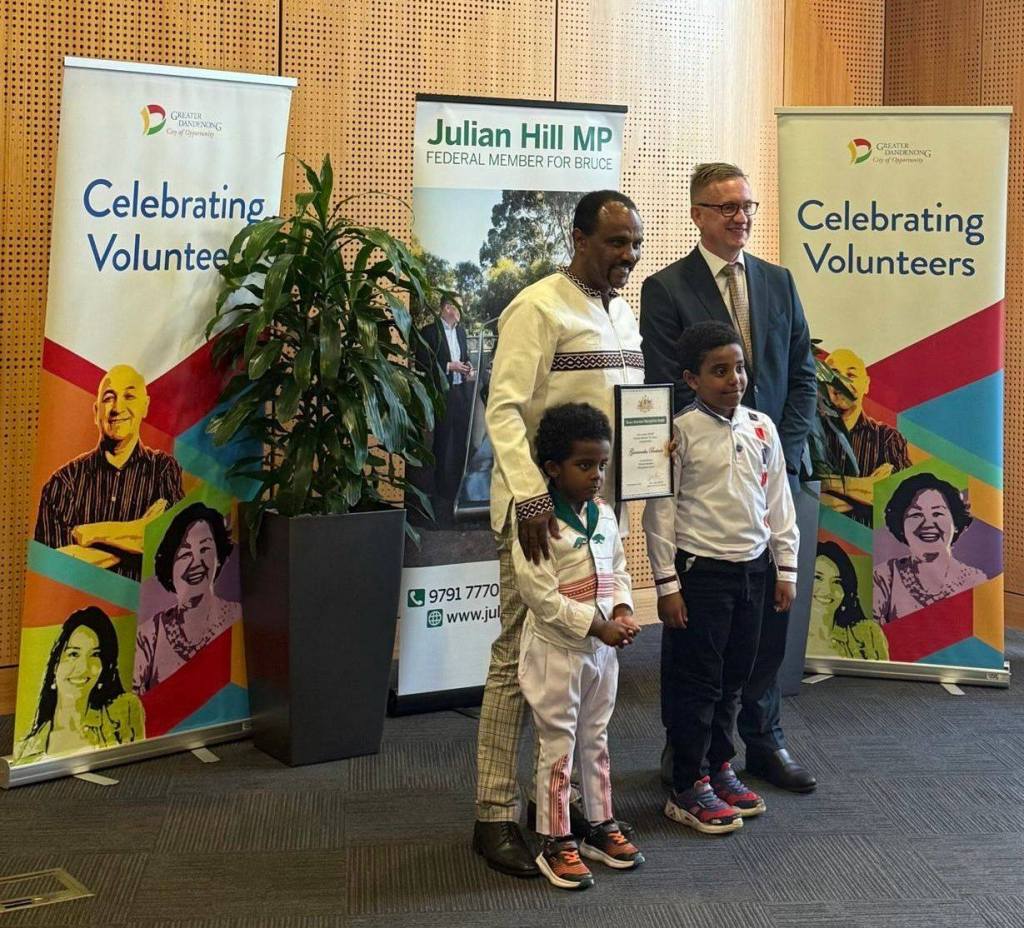
In a celebration of community service, six members of the Oromo community have been recognized with the prestigious 2025 Bruce Volunteer Awards for their dedicated contributions.
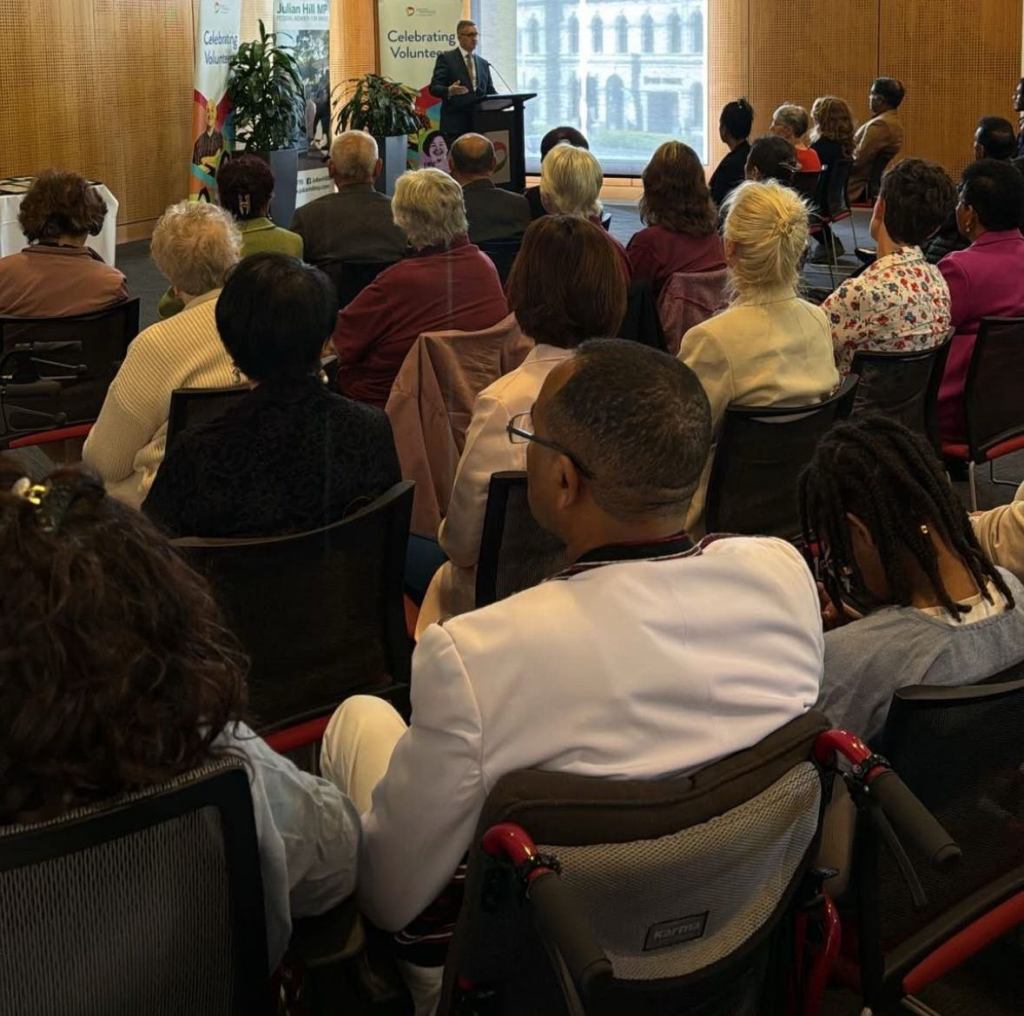
At the ceremony, Julian Hills MP highlighted the deep-rooted tradition of volunteering within Australia’s social fabric. He praised the recipients as individuals who perfectly embody this spirit, generously giving their time and talents to enrich their communities. This year’s cohort of six volunteers was celebrated for their exemplary work and for reflecting a strong commitment to gender equality.
The 2025 Award Recipients are:
1. Alemayehu Kube Warat: A prominent and articulate advocate, Alemayehu works tirelessly to advance the rights, self-determination, and cultural preservation of the Oromo people. Through public speaking and oral campaigns, he raises national and international awareness of historical and ongoing injustices, diligently documenting human rights situations to promote global accountability.
2. Bontu Mulissa: A dedicated and influential figure, Bontu focuses on cultural revitalization and grassroots empowerment. She is instrumental in educating Oromo youth about their heritage—including the Gadaa system, language, and Irreecha festival—and organizes community events that foster dialogue and preserve indigenous knowledge.
3. Darartu Fayissa: Serving as a vital cultural diplomat and educator, Darartu centers her work on preserving Oromo heritage as a form of peaceful resistance and identity affirmation. She organizes community events focused on the Oromo language and traditional practices, ensuring these foundational elements are passed on to the next generation.
4. Gammechu Bedada: A foundational figure in cultural advocacy, Gammechu plays a crucial role on the Irreecha Committee. He dedicates himself to the practical preservation and celebration of Oromo identity, volunteering tirelessly to organize this pivotal cultural ceremony and ensure its authentic transmission to youth.
5. Lelisse Fida: A prominent and strategic advocate, Lelisse focuses on international awareness and human rights documentation. She leverages digital platforms to amplify Oromo voices globally, systematically documents human rights issues, and builds transnational solidarity networks to bring the Oromo struggle to international forums.
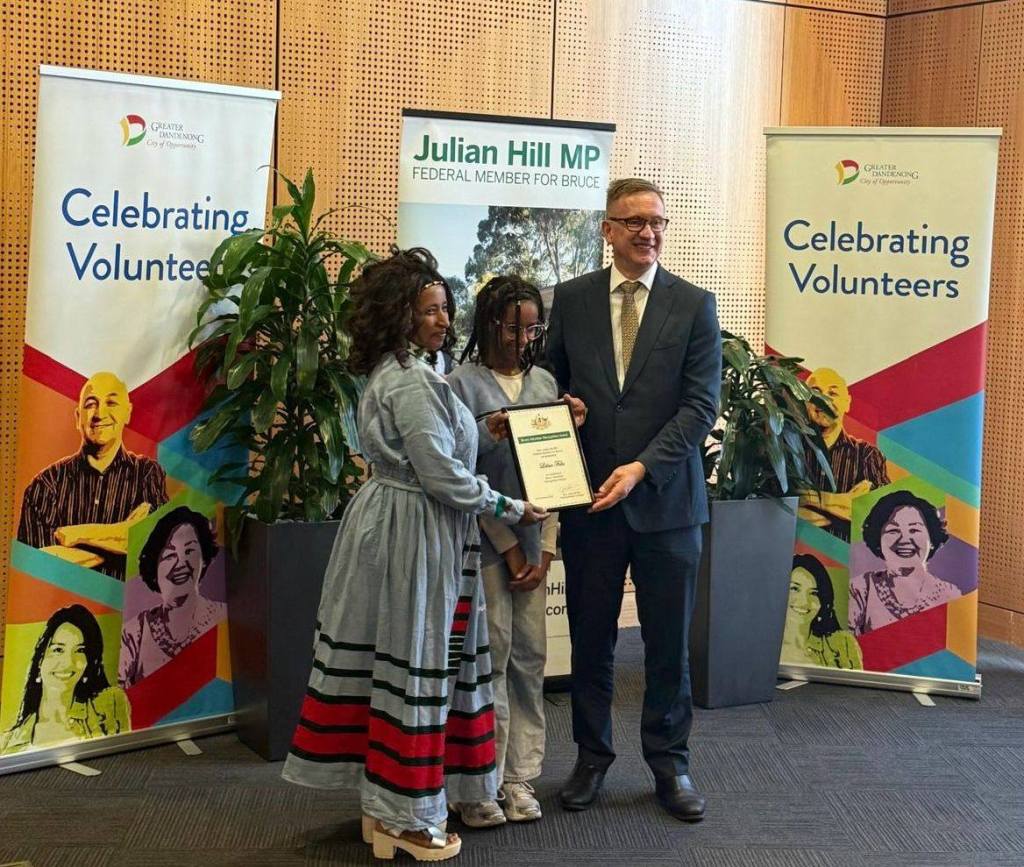
6. Hana Muleta: A formidable and articulate voice, Hana advocates for human rights, political freedom, and cultural preservation. Through strategic digital campaigns, and engagement with international bodies, she amplifies the plight and aspirations of the Oromo people, playing a pivotal role in mobilizing diaspora support.
The Bruce Volunteer Award celebrates individuals who have generously shared their time and expertise over the long term. The unwavering commitment of volunteers like these has been a cornerstone of the Oromo community, fostering its strength, visibility, and enduring pursuit of cultural preservation and liberation.

A Tribute to Professor Mohammed Hassen Ali
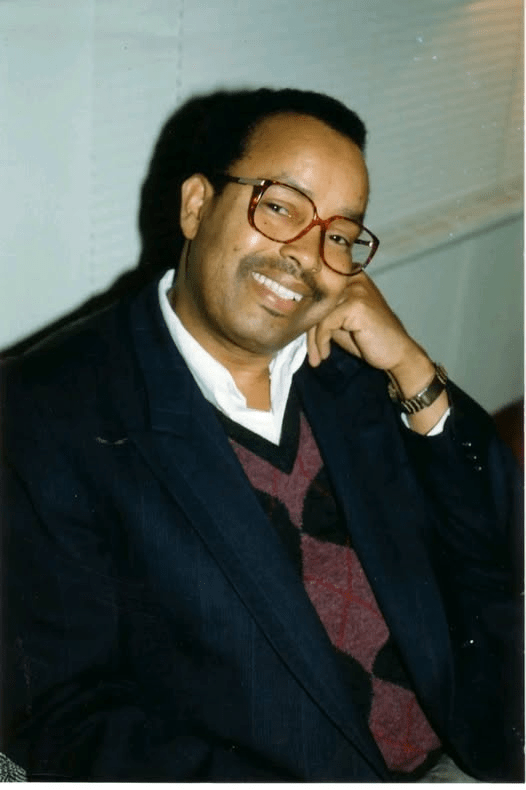
On the eve of Atlanta’s celebration honoring Professor Mohammed Hassen Ali, we are moved to share a few reflections on a man whose contributions to the Oromo nation are nothing short of extraordinary—enduring in their impact and deeply inspiring in their character.
As many of you know, Professor Mohammed stands among a rare few scholars who undertook the courageous and meticulous work of correcting distorted narratives crafted by Abyssinian court historians and state-sponsored academics. At a time when the Oromo story was silenced or twisted, he restored its truth with unwavering discipline and moral clarity. In doing so, he helped reclaim for our people a dignified history—one rigorously documented and grounded in evidence, not propaganda.
For years, we admired his work from afar, learning from his books, relying on his analysis, and drawing inspiration from the courage embedded in his scholarship. Over the past five years, we have been fortunate to know him more personally, and that closeness has only deepened our respect.
Despite his towering intellect and monumental achievements, Professor Mohammed is a man of profound humility—almost embarrassed by praise. He consistently deflects credit, insisting that any accomplishment belongs to the Oromo people and the broader struggle for justice.
At the same time, he is remarkably generous in lifting others up. He offers encouragement and recognition with a sincerity that uplifts everyone around him. His warmth, gentleness, and quiet generosity have endeared him to all who are fortunate enough to cross his path.
His influence extends far beyond the written word. As a founder and early leader of the Oromo Studies Association, he helped create an enduring academic home where Oromo history, culture, and identity could be studied with rigor and dignity. His pivotal role in establishing the Journal of Oromo Studies helped lay the intellectual foundation for the modern Oromo struggle.
In the diaspora, Professor Mohammed has been a steady anchor—providing clarity amid confusion, evidence in the face of disagreement, and truth in moments of denial. His seminal work on Oromo history, from the Gadaa system to conquest-era state formation, has fundamentally shaped how an entire generation understands itself and its place in the Horn of Africa.
Tomorrow, as we gather to honor him, we do more than celebrate a scholar. We pay tribute to a true son of the Oromo nation—a guardian of our historical truth and a model of humility, kindness, and principled devotion.
Professor Mohammed, thank you for restoring to the Oromo people a history rooted in fact, dignity, and justice. Thank you for showing us that liberation is waged not only on battlefields or in political arenas, but also in libraries, archives, and classrooms—through the patient, steadfast work of scholarship.
May your legacy continue to guide Oromo scholars, activists, and generations to come. May your life remind us all that truth, humility, and kindness are, in themselves, revolutionary forces.
Congratulations.

Remembering Obbo Doti Tura: A Hero of the Oromo People

Oboo Doti Tura was a hero of the Oromo people—his story is one of resilience, often untold, unexpressed, and unwritten. He fought alongside General Wako Gutu, Baro Tumsa, and other prominent heroes.
I met him for the first time in Atlanta with his daughter, Berdu, and his grandchildren during the Oromo convention and leadership meeting. I went to him and told him my name and my father’s name. Immediately, everything changed—he began to cry, and I cried with him. He told me about my father, how close they were, and the things they did together during the Arsi Basic School movement. My mood shifted completely. His daughter, Berdu, calmed him down. I wished I could sit by his side and talk with him longer, but unfortunately, I could not.
Obbo Doti was one of the first Oromo businessmen who owned a pharmacy in Finfinne during the Haile Selassie regime. I was told that his pharmacy advertised on the radio between 1960 and 1970. During that time, Oromos were marginalized in many ways, but he stood strong. He was one of our heroes, a man with history, and an advocate for human rights. We have lost a remarkable and permanent figure in our community.
My condolences to the Oromo community in Portland, his friends, and his family.
RIP Obbo Doti Tura.

Inclusive Dialogue: A Path to Stability in Oromia
Dialogue for peace in Oromia is urgently necessary and important now due to the escalation of conflict, human suffering, political fragmentation, and the need for a sustainable solution that addresses the root causes of instability. Inclusive, genuine dialogue is widely regarded by local stakeholders and observers as the only viable path out of the region’s armed stalemate, offering practical hope for peace, stability, and a just social order in Oromia and how it impacts Ethiopia as a whole.
Ongoing Conflict and Humanitarian Crisis
Oromia has experienced years of sustained violence and insecurity, leading to widespread deaths, displacement, and destruction of livelihoods. The continuing armed conflict between government forces and various Oromo groups—including the Oromo Liberation Army (OLA), Oromo Liberation Front (OLF), and others—has created humanitarian emergencies that cannot be solved militarily. Dialogue is the best hope to stop violence, protect civilians, and facilitate humanitarian access.
Failure of Military Solutions
Attempts by both government and rebel groups to win militarily have failed, resulting in a costly stalemate. Neither side is able to impose full control, and the persistence of conflict only prolongs instability and lawlessness. This situation leaves ordinary people vulnerable to violence, displacement, economic hardship, and rights abuses—further underscoring the need for dialogue as the only realistic solution.
Addressing Root Causes for Lasting Peace
Dialogue allows stakeholders to negotiate on the fundamental grievances underlying the conflict, such as political marginalization, land and cultural rights, governance, and access to resources. Unlike purely military approaches or ad-hoc deals, a principled, inclusive dialogue can result in structured frameworks for ceasefire, demobilization, political inclusion, and justice—laying the groundwork for sustainable peace.
Building Oromo Political Unity and Legitimacy
The recent joint call for dialogue from major Oromo political actors (such as the OLF and OFC) signals rare unity and demonstrates political maturity. It strengthens the Oromo bargaining position, fosters legitimacy among communities, and creates credible partners for both national and international peace initiatives. Joint action also reassures the public that elites are willing to move beyond division for the common good.
Centrality to Ethiopia’s Stability and Development
With Oromia being Ethiopia’s most populous and politically strategic region, instability here has direct consequences for the country’s overall peace, governance, and development. Inclusively resolving issues in Oromia through dialogue helps promote national unity, prevent spillover to other regions, and address longstanding injustices that, if left unresolved, threaten wider state collapse or fragmentation.
Responding to Public and International Pressures
There is increasing demand from Oromo communities, civil society, and the international community for dialogue and peace. Public support for dialogue puts pressure on political leaders to prioritize negotiation over violence, further legitimizing peace efforts and expanding opportunities for accountability, truth-telling, and healing.
Conclusion
The necessity for dialogue in Oromia today is dictated by the urgent need to save lives, restore social trust, enable humanitarian relief, and build credible structures for democracy, justice, and lasting peace. Only through principled, inclusive discussions that address core grievances can Oromia—and by extension, Ethiopia—move beyond cyclical violence toward a future of stability and shared development.

Promoting Peace Through Dialogue: OLF and OFC’s Efforts in Oromia
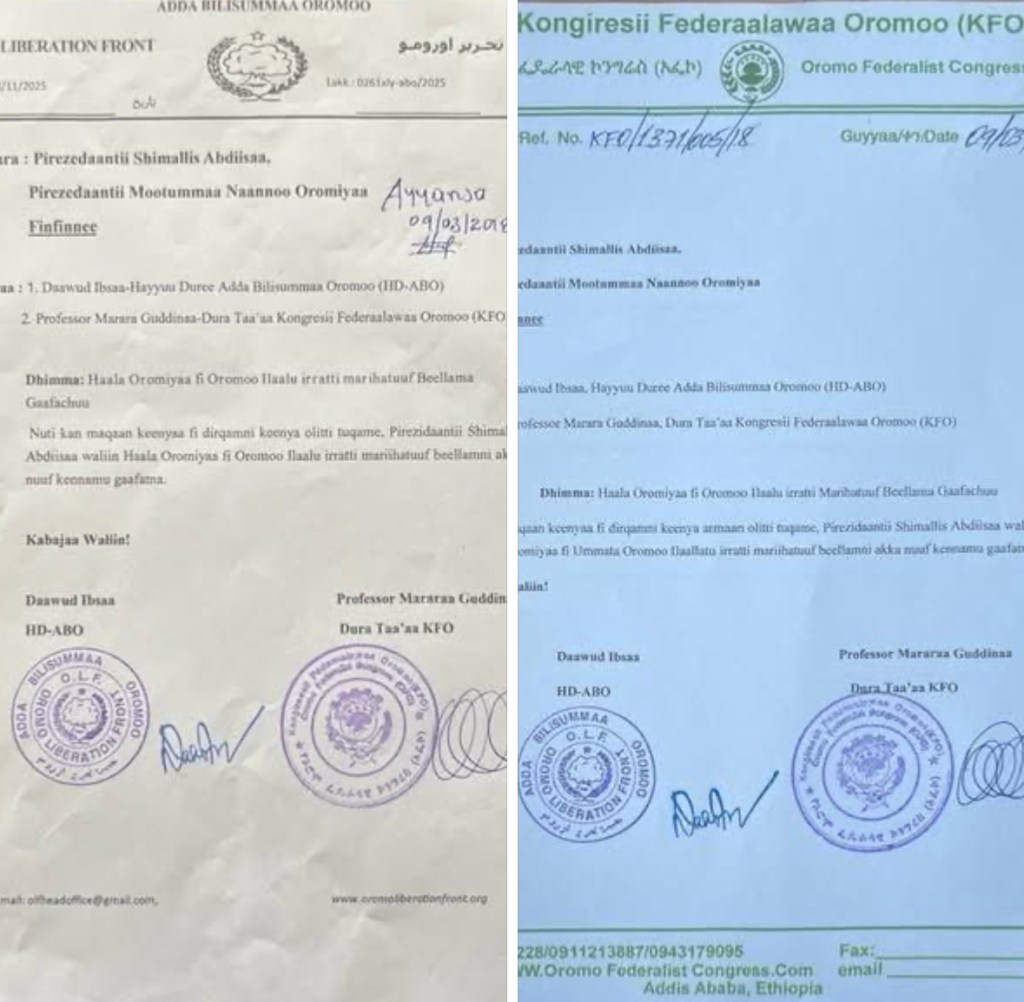
The joint call for dialogue by the OLF and OFC is a commendable and necessary move for peace in Oromia. We believe that inclusive discussion is the only viable solution to the insecurity that has plagued our region. We are hopeful that the Oromia Regional Government will respond positively and collaborate to make these critical talks a success.
Why the joint call for dialogue by the OLF and OFC is a commendable and necessary move for peace in Oromia?
The joint call for dialogue by the ABO (OLF) and KFO (OFC) is commendable and necessary because it signals rare strategic unity among major Oromo forces and opens a realistic path away from a worsening armed stalemate toward an inclusive political process in Oromia. It also answers long‑standing demands from communities and observers that only broad, principled dialogue can address structural grievances, fragmented armed actors, and cycles of repression and revenge.
Overcoming a history of failed peace efforts
Previous attempts to resolve the conflict between the Ethiopian government and Oromo armed actors, including OLF-related factions, failed largely due to the absence of a clear, formal framework, internal divisions, and weak political will on all sides. Jointly calling for dialogue starts to correct these deficits by making a public, political commitment to a negotiated path, rather than ad‑hoc, personality‑driven deals. This shift matters because sustainable peace in Oromia requires transparent agreements, monitoring, and institutions—not informal understandings that quickly unravel.
Building Oromo political unity and legitimacy
The OLF and OFC/ KFO have often represented different strands of Oromo political strategy—armed liberation versus federalist electoral politics—which has historically weakened the Oromo bargaining position and confused the wider public. A common call for dialogue shows a convergence around peaceful, negotiated solutions and reduces the perception that Oromo elites are permanently fragmented and unable to agree on a roadmap. This joint stance increases their legitimacy in the eyes of Oromo communities, other Ethiopian actors, and international partners looking for credible interlocutors for a peace process in Oromia.
Centering inclusive, people‑driven dialogue
Reports indicate the envisioned joint conference aims to involve “all sections of the community” to discuss the current situation with the people, rather than limiting talks to elites. This aligns with OFC/KFO’s broader advocacy for inclusive political dialogue and transition mechanisms in response to nationwide crises. Such an approach is crucial in Oromia, where civilians have borne the brunt of violence and displacement, and where any peace process that excludes victims, elders, women, youth, and local leaders risks reproducing the same injustices that fuelled the conflict.
Creating a framework for demilitarisation and rights
Comparative experience from other peace processes in Ethiopia shows that ceasefires and hostilities agreements need clear, institutional follow‑up—demobilisation, reintegration, restoration of services, and guarantees for rights and political participation. A unified OLF–OFC call for dialogue makes it more feasible to negotiate such concrete arrangements for Oromia: cessation of hostilities, safe humanitarian access, release of political prisoners, and credible pathways to participate in future elections or transitional mechanisms. This is essential if armed actors are to shift from a guerrilla logic to a constitutional, rules‑based political contest.
Opening space for a wider national settlement
Oromia’s instability is central to Ethiopia’s broader crisis, and both domestic and international analyses now stress the need for a comprehensive political dialogue that does not exclude key constituencies like the Oromo. By publicly embracing dialogue together, ABO and KFO signal that Oromo forces are ready to be constructive partners in any wider national process of reform, federal re‑balancing, or transitional justice. In this sense, their joint call is not only a step toward peace in Oromia, but also a necessary building block for any credible, all‑inclusive settlement for Ethiopia as a whole.

Honoring Hussein Badaso: A Pioneer of Afan Oromo Radio
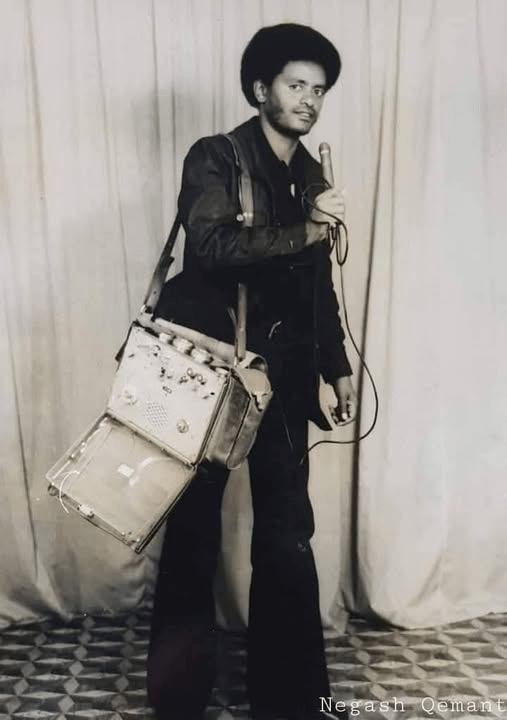
A Tribute to Hussein Badaso: A Pioneer of Afan Oromo Radio and a Guardian of Oromo Heritage
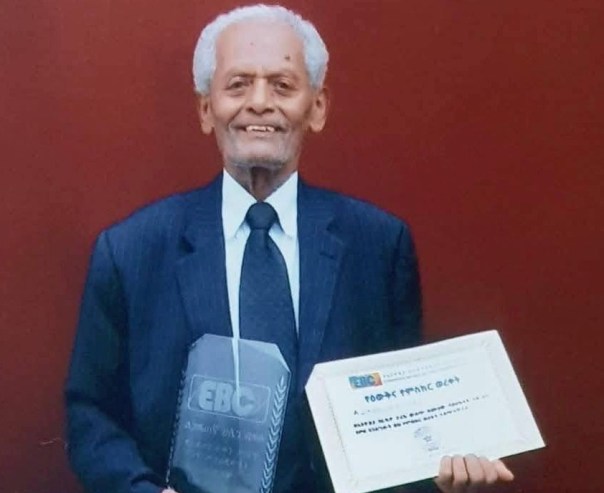
The individual in the photograph is Hussein Badaso, a veteran program journalist for the Afan Oromo service of Ethiopian Radio. His career represents a foundational chapter in Ethiopian broadcasting and the cultural history of the Oromo people.
A Trailblazer in the Face of Adversity
Following the fall of the imperial regime on Meskerem 2, 1967 (Ethiopian Calendar), the Ethiopian Radio Services launched national broadcasts in Afan Oromo for the first time. Hussein Badaso was among the first cohort of university graduates recruited and rapidly trained in journalism to lead this historic initiative.
He served with courage and dedication during an era of widespread ignorance and prejudice against the language, bravely breaking down barriers to ensure Afan Oromo radio programming could begin. Alongside other pioneers like journalist Temesgen Gemeda, he helped shatter the culture of exclusion and narrow-mindedness that had previously dominated the airwaves.
More Than a Journalist: A Scholar and a Mentor
Hussein Badaso is a living archive of Oromo history, culture, identity, and language. He was not only the first journalist to present a full-hour national program in Afan Oromo but also a master teacher of Oromo art, history, philosophy, and culture through the radio.
His contributions extend beyond broadcasting. When mother-tongue education was introduced after the Derg regime took power, he worked alongside Professor Mahdi Hamid Mude, then editor of the “Beresa” newspaper, to develop foundational Afan Oromo curriculum modules. He is also a published author, having written four books to date and currently preparing two more. His research into Oromo folk music, conducted in collaboration with legendary artists like the late Ali Shabo, has been invaluable.
A Legacy of Resilience and an Urgent Call for Support
Despite facing immense political pressure, moral attacks, and professional sidelining for his perceived affiliations and unwavering stance, Hussein Badaso persevered. Today, in his old age, he survives on a meager pension.
The Oromo people, the Oromia Regional Government, philanthropic foundations, and civic organizations have a profound debt of gratitude towards this hero. Failing to honor his monumental contributions while he is still with us would be a historical injustice, akin to erasing a vital chapter of the struggle for justice and freedom.
A Concrete Opportunity to Help
Among his works is the prepared manuscript for “Afaan Oromoo Raadiyorraa, Volume 2,” a continuation of his educational radio programs. Due to a lack of financial support from either individuals or institutions, it remains unpublished. Volume 3 is also in progress.
We have an obligation to support this generation-bridging champion. Let us ensure his knowledge is preserved and shared. We can help by supporting the publication costs of his invaluable books, particularly his Afan Oromo radio educational series.
Let us not just offer words of thanks, but tangible support. Let us help ensure that the light of knowledge he lit continues to shine for future generations.




 Advocacy for Oromia