Category Archives: News

Seenaa Rufaa’el Tasammaa: Dhaloota fi Du’a Isaa
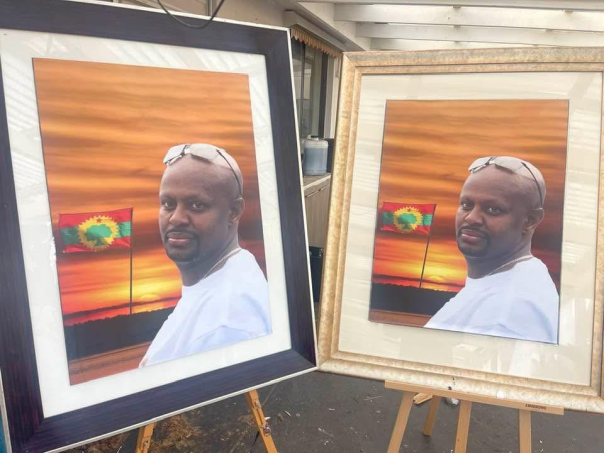
Seenaa Jiruu fi Jireenya Goota Rufaa’el Tasammaa: Dhalootaaf Fakkeenya Ta’uun Kan Jiraatu
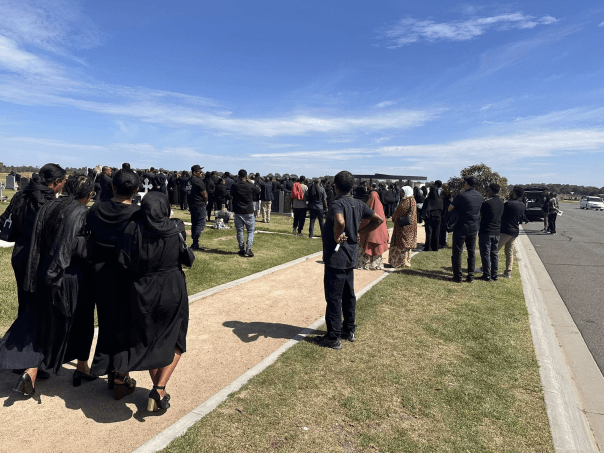
Australia, Bitootessa 15, 2026 — Goota kabajamaan, qabsaa’aan jabaan, fi nama of-kenninsa guddaa qabu Rufaa’el Tasammaa armaan gaddaa Waaqayyooti.Firoonni isaa, hiriyoonni isaa, fi hawaasni Oromoo baay’een isaa bakka tokko walitti qabamanii goota kana kabajaan awwaalan. Sirni awwaala isaa har’a guyyaa Bitootessa 15, 2026 biyya Australia keessatti raawwateera.
Seenaa Jireenya Rufaa’el Tasammaa (1975-2026)
1. Jalqaba Jireenyaa: Dambii Doolloo
Rufaa’el bara 1975 Qellem Wallaggaa, magaalaa Dambii Doolloo keessatti dhalate. Haati Rufaa’el erga isa da’anii booda, hospitaala Dambii Doolloo keessatti utuu hin bahin boqotee. Yeroo sanaan, Dr. Dorombos jedhamu kan USA dhaa fi haati warraa isaa Missis Doromboos Rufaa’elin akka abbaa fi haadhaa isaatiin fudhatanii guddisan. Dr. Dorombos yeroo sana directorii hospitaala sanaa ture.
2. Ijoollummaa fi Barumsa Isaa
Rufaa’el barnoota sadarkaa tokkoffaa achuma magaalaa Dambii Doolloo keessatti barate. Booda Dr. Dorombos Dambii Doolloo irraa gara hospitaala Ayiraa, Lixa Wallagaatti jijjiramaniif, innis isaan waliin godaanee Ayiratti guddate. Barnoota sadarkaa tokkoffaa Ayiratti xumuree, sadarkaa lammaffaa Achumatti eegale.
3. Seenaa Qabsootti Makamuu Isaa
Bara 1992, Rufaa’el umuriin isaa waggoota 17 qofa ta’uu, barumsa isaa sadarkaa lammaffaa addaan kutee, qabsoo bilisummaa Oromootti dabalame. Miseensa Waraana Bilisummaa Oromoo (WBO) ta’uun, Lixa Wallaggaa fi Qellem Wallaggaa naannoolee adda addaa keessa socho’aa ture. Qabsoo keessatti hirmaachuun, of-kenninsa guddaa agarsiise.
4. Rakkina, Baqaatummaa fi Hidhaa
Bara 1992, ABO charteraa keessaa bahee booda, Rufaa’el Qellem Wallaggaa fi Lixa Wallaggaa keessatti diinaan barbaadamaa ture. Kanaafuu, gara Finfinnee (Addis Ababa) godaane, jireenya baqaatummaa biyya isaa keessa jiraachaa ture. Haala kanaan utuu jiruu, diinaan qabamee, mana hidhaa “Deeppoo” jedhamu magaalaa Adaamaatti hidhame. Waggoota muraasa mana hidhaa keessa ture.
5. Godaansa Biyya Alaa
Erga mana hidhaa irraa bahee, biyya irraa baqatee gara Jibuuti, eeggasii gara Keenyaa godaane. Waggoota muraasa biyya Keenyaa keessa jiraatee booda, qubsuma argachuun bara 2001 gara Australiyaa dhufe.
6. Jireenya Australiyaa
Waggaa 25 Australiyaa keessa jiraate keessa, Allied Health Assistant ta’uun hospitaalota adda addaa keessa hojjate. Keessaa waggaa 15 St Vincent Hospital keessatti hojjate. Hanga Fulbaana (September) 2025 hojjachaa ture; sana booda sababa dhukkubaa hojii dhaabe.
7. Gumaacha Qabsoo Bilisummaa Oromoof
Jireenya isaa guutuu keessatti, Rufaa’el qabsoo bilisummaa Oromoof gumaacha guddaa kan godhe yoo ta’u, quamaan isaa fi of-kenniinsa guddaadhaan hanga dhukkubaan dadhabutti hirmaachaa ture. Ofiisaa qusannaa malee, yeroo fi qabeenya isaa qabsoof kenne.
8. Maatii fi Ijoollee Isaa
Rufaa’el bara 2013 keessa warra ijarrate. Gaa’ela sana irraa ijoollee durbaa lakkuu, Feeneet fi Feenaan jedhaman bara 2016 argate. Ijoolleen isaa amma umuriin isaanii waggaa 10.
9. Du’a Isaa
Rufaa’el bara 2026 keessa, dhukkuba dheeraa booda, du’een isaa eebbifame. Duuti isaa hawaasa Oromoo, maatii, firoota, fi hiriyyoota isaa gaddaan godhe. Guyyaa 15 Bitootessa 2026, Australiyaa keessatti awwaalame.
Gadda Olaanaa
Hawaasni Oromoo, adda durummaan Konyaan ABO Victoria, goota isaa kana dhabuu isaatti gadda olaanaa qaba. Rufaa’el qabsaa’aa qabsoo qofa utuu hin taane, namummaa gaarii, jaalala, fi tattaaffii guddaa qabu ture. Namni isa beeku hunduu wantoota gaarii dubbata.
Maatiin isaa, keessumaa ijoolleen isaa Feeneet fi Feenaan, amma gadda keessa jiraachaa jiru. Haati manaa isaa namtiin cimina dhabde. Hawaasni Oromoo isaan biratti dhaabataa jiraachuu isaa hubachiisaa jira.
Ergaa Gadda
“Goota Rufaa’el, ati seenaa kee nuuf dhiiftee deemte. Ati nu hin dagatin; nuus si hin dagannu. Qabsoo kee nu fufna. Nagaan boqoli!”
“Waaqayyo lubbuu kee jannata keessa haa boqochiisu! Maatiin kee, ijoolleen kee Feeneet fi Feenaan, Waaqayyo isaaniif cimina haa kennu!”
Yaadannoowwan
- Bara Dhaloota: 1975
- Bara Du’aa: 2026
- Biyya Dhaloota: Qellem Wallaggaa, Dambii Doolloo
- Guyyaa Awwaalaa: Bitootessa 15, 2026
- Bakka Awwaalaa: Australia
KABAAJAAN SI YAADANNA, GOOTA RUFAA’EL! 🙏🏿✨
NAGAAN BOQOLI! 🕊️
የሕይወት ታሪክ፡ ሩፋኤል ተሠማ (1975-2026)
በኦሮሞ ነፃነት ትግል ውስጥ ሙሉ ሕይወታቸውን ያሳለፈ ታጋይ ማህበረሰቡን ለቋል
የኦሮሞ ማህበረሰብ ከታማኞቹ ልጆቹ አንዱን ሩፋኤል ተሠማን በማጣቱ በሐዘን ተጠምቋል። በሕመም ምክንያት የሞተው ሩፋኤል ለኦሮሞ ነፃነት ትግል ቁርጠኛ ታማኝነት ያሳየ ሲሆን የሕይወቱ ታሪክ—አህጉራትን ያቋረጠ፣ የትጥቅ ትግልንም ሆነ ሰላማዊ ዕርዳታን ያካተተ፣ በጥልቅ የግል መሥዋዕትነት የታጀበ—የአንድ ሙሉ የኦሮሞ ታጋዮች ትውልድ ጉዞን ያንጸባርቃል።
የልጅነት ዘመን፡ በትግል ውስጥ መወለድ
ሩፋኤል በ1975 በቄለም ወለጋ ከተማ ዳምቢ ዶሎ ተወለደ። ወደ ዓለም መምጣቱ በአሳዛኝ ሁኔታ ታጅቦ ነበር፡ እናቱ በዳምቢ ዶሎ ሆስፒታል ከወለደችው በኋላ ከሆስፒታል ሳትወጣ ሞተች። በዚያ ወሳኝ ወቅት፣ የሆስፒታሉ ዳይሬክተር የነበሩት አሜሪካዊው ዶ/ር ዶሮምቦስ እና ባለቤታቸው ሚሲስ ዶሮምቦ ሩፋኤልን እንደ ራሳቸው ልጅ አድርገው አሳደጉት።
ይህ ባሕላዊ ድንበር ያሻገረ የርኅራኄ ተግባር የሩፋኤልን ሕይወት አዳነ እና በሕፃንነቱ መረጋጋትን ሰጠው። የመጀመሪያ ደረጃ ትምህርቱን በዳምቢ ዶሎ ጀመረ፣ ይህም በኋላ ላይ ባልተጠበቀ መልኩ የሚያገለግለውን የትምህርት መሠረት ጥሏል።
ዶ/ር ዶሮምቦስ ከዳምቢ ዶሎ ወደ ምዕራብ ወለጋ አይራ ሆስፒታል ሲዛወሩ፣ ወጣቱ ሩፋኤል ከአሳዳጊ ወላጆቹ ጋር ተንቀሳቀሰ። የመጀመሪያ ደረጃ ትምህርቱን በአይራ አጠናቆ የሁለተኛ ደረጃ ትምህርቱን እዚያው ጀመረ። በዚህ ጊዜ የአካዳሚክ ዕውቀትን ብቻ ሳይሆን የማደጎ ወላጆቹ የሚያሳዩትን የርኅራኄ እና አገልግሎት እሴቶችንም ተቀስፏል።
ጥሪውን መቀበል፡ የነፃነት ትግልን መቀላቀል
በ1992፣ በ17 ዓመቱ፣ ሩፋኤል ቀሪ ሕይወቱን የሚቀርጽ ውሳኔ አደረገ፡ የሁለተኛ ደረጃ ትምህርቱን አቋርጦ የኦሮሞ ነፃነት ትግልን ተቀላቀለ። ይህ በቀላሉ የተወሰነ ምርጫ አልነበረም። ከዶሮምቦስ ቤተሰብ ጋር የነበረውን አንጻራዊ መረጋጋት መተው፣ ትምህርቱን መተው፣ እና የትጥቅ ትግልን እርግጠኛ ያልሆነ አደጋ መቀበልን ያመለክታል።
ሩፋኤል የኦሮሞ ነፃነት ሠራዊት አባል ሆነ፣ በተለያዩ የምዕራብ ወለጋ እና ቄለም ወለጋ አካባቢዎች በመንቀሳቀስ በትጥቅ ትግል ተሳተፈ። እነዚህ ዓመታት የማያቋርጥ እንቅስቃሴ፣ በደን ውስጥ መኖር፣ ጠላትን በቀጥታ መጋፈጥ እና የሕዝቡን ተስፋ መሸከምን ያካተቱ ነበሩ።
ስደት እና እስራት
በ1992፣ ከኦሮሞ ነፃነት ግንባር ከሽግግር መንግሥት መውጣቱን ተከትሎ፣ ሩፋኤል በቄለም ወለጋ እና በምዕራብ ወለጋ በመንግሥት ኃይሎች ዘንድ ተፈላጊ ሆነ። ወደ ፊንፊኔ (አዲስ አበባ) ለመሸሽ ተገደደ፣ በራሱ አገር ውስጥ እንደ ተፈናቃይ እየኖረ።
ለመደበቅ ቢሞክርም፣ በመጨረሻ በመንግሥት ኃይሎች ተይዞ በአዳማ ከተማ ወደሚገኘው ዴፖ እስር ቤት ተጣለ። ከፍተኛ የሕይወት ዘመኑን በእስር ቤት አሳለፈ፣ የኦሮሞን ተቃውሞ ለማፍረስ የቆረጠውን ሥርዓት ጭካኔ በራሱ ተሞክሯል።
ከእስር ቤት ከተለቀቀ በኋላ፣ ሩፋኤል ወደ ስደት ተገደደ። መጀመሪያ ወደ ጎረቤት ጅቡቲ፣ ከዚያም ወደ ኬንያ በመሸሽ በስደት ላይ እያለ በርካታ ዓመታት አሳለፈ። እነዚህ የስደት ዓመታት—ከአገሩ ተለይቶ፣ የወደፊቱ እርግጠኛ ባልሆነበት፣ ነገር ግን ለዓላማው ያለውን ቁርጠኝነት ፈጽሞ ሳይተው—ስለ ጽናቱ ይመሰክራሉ።
በአውስትራሊያ አዲስ ሕይወት መገንባት
በታህሳስ 2001፣ ሩፋኤል የስደተኛነት ደረጃ ተሰጥቶት ወደ አውስትራሊያ ሄደ። ለ25 ዓመታት በአዲሱ አገሩ ሕይወት ሲገነባ የቆየ ሲሆን፣ የተወውን ትግል ግን ፈጽሞ አልረሳውም።
በተለያዩ የአውስትራሊያ ሆስፒታሎች ውስጥ እንደ አሊድ ሄልዝ አሲስታንት (የተባባሪ ጤና ረዳት) ሠርቷል፣ ከእነዚህም ውስጥ 15 ዓመታትን በሴንት ቪንሴንት ሆስፒታል አሳልፏል። በሥራው በኩል፣ በማደጎ ወላጆቹ የተመሠረተውን የአገልግሎት ቅርስ ቀጠለ—ሕመምተኞችን መንከባከብ፣ ተጋላጭ የሆኑትን መርዳት፣ ለተቀበለው ማህበረሰብ አስተዋጽኦ ማድረግ።
በመስከረም 2025፣ በሕመም ምክንያት ሥራውን ማቆም ተገደደ። የሕይወት ዘመኑን በሙሉ ከሰጠ በኋላ—ለትግሉ፣ ለማህበረሰቡ፣ ለሕመምተኞቹ—ሰውነቱ ከእንግዲህ የሚጠይቀውን ፍላጎት መሸከም አልቻለም።
ቤተሰብ እና የግል ሕይወት
በ2013፣ ሩፋኤል አግብቶ ቤተሰብ መሠረተ። ከዚህ ጋብቻ በ2016 የተወለዱትን መንታ ሴት ልጆቹን ፌነት እና ፌናንን አገኘ። እነሱ የሕይወቱ ብርሃን ነበሩ—ሁሉም መሥዋዕቶቹ ትርጉም ያገኙላቸው የወደፊት ትውልድ።
ምንም እንኳን ከእነሱ ጋር ያሳለፈው ጊዜ አጭር ቢሆንም፣ ሕይወቱን በሙሉ ሕይወታቸው የሚመራቸውን የድፍረት እና ቁርጠኝነት ቅርስ ትቷል። አባታቸው ተዋጊ፣ በሕይወት የተረፈ፣ ለሕዝቡ ሁሉንም ነገር የሰጠ ሰው እንደነበር እያወቁ ያድጋሉ።
የሕይወት ዘመን አስተዋጽኦ
በሕይወት ዘመኑ ሁሉ፣ ሩፋኤል ለኦሮሞ ነፃነት ትግል ያበረከተው አስተዋጽኦ ከፍተኛ ነበር። የትጥቅ ትግሉን ከለቀቀ በኋላም ቢሆን፣ በአውስትራሊያ ከተረጋጋ በኋላም ቢሆን፣ ለዓላማው መደገፉን ቀጠለ። በሕመም እስከተዳከመ ድረስ፣ ንቁ ተሳትፎ ማድረጉን ቀጠለ፣ ለሕዝቦቹ ነፃነት ራሱን ሳይቆጥብ ሠርቷል።
ሕይወቱ የሚያሳየው የኦሮሞ ነፃነት ትግል በወለጋ ደን ወይም በኢትዮጵያ እስር ቤቶች ብቻ የተወሰነ አለመሆኑን ነው—ኦሮሞዎች በሚሰበሰቡበት እና ለአገራቸው ነፃነት በሚሠሩበት በየትኛውም የዲያስፖራ ማዕዘን ይደርሳል።
ማህበረሰቡ ማልቀስ
የሩፋኤል ሞት በቤተሰቦቹ፣ በዘመዶቹ፣ በወዳጆቹ እና በመላው የኦሮሞ ማህበረሰብ ዘንድ ክፍተት ፈጥሯል። የሚያውቁት ሁሉ የፖለቲካ ቁርጠኝነቱን ብቻ ሳይሆን የግል ሞቅ ያለ ባህሪውን—ለመርዳት ያለውን ፈቃደኝነት፣ የተረጋጋ መኖሩን፣ ለዓላማው የማይናወጠውን እምነት ያስታውሳሉ።
ማህበረሰቡ በሐዘን ሳለ፣ ለቤተሰቦቹ ጥንካሬን እንመኛለን፡ ለሚስቱ፣ ለመንታ ሴት ልጆቹ ፌነት እና ፌናን፣ ለዘመዶቹ፣ እና ለሚወዱት ሁሉ። ዋቃዮ (እግዚአብሔር) ይህን ኪሳራ ለመሸከም የሚያስችል ጥንካሬን እና ሩፋኤል ዓላማ ያለው ሕይወት እንደኖረ ማወቅ የሚሰጠውን መጽናኛ ይስጣቸው።
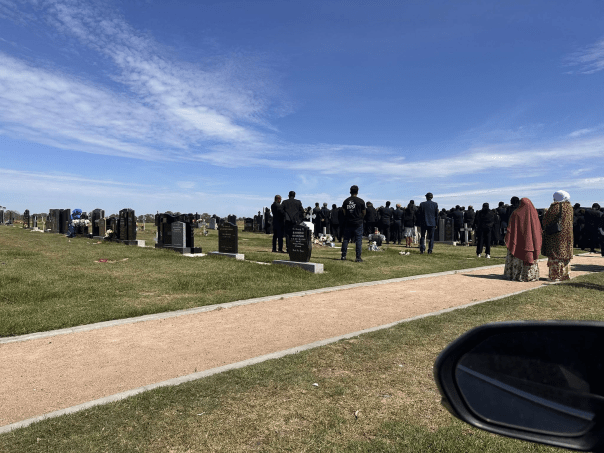
የመጨረሻ ማረፊያ
ነፍሱ በዘላለም ገነት በሰላም ታርፍ።
የሩፋኤል ተሠማ ጉዞ ተጠናቋል። በዳምቢ ዶሎ ሆስፒታል ከተወለደበት አሳዛኝ ሁኔታ ጀምሮ፣ በዓመታት የትጥቅ ትግል፣ እስራት፣ ስደት እና በመጨረሻም በአውስትራሊያ መጠለያ እስከማግኘት ድረስ፣ ሁልጊዜ የኦሮሞ ነፃነትን ችቦ ተሸክሟል። ሁሉንም ነገር ሰጥቷል—ወጣትነቱን፣ ነፃነቱን፣ ምቾቱን፣ ጤንነቱን—ለሚያምንበት ዓላማ።
አሁን አርፏል። አሁን ከሥቃይ፣ ከትግል፣ ከሙሉ በሙሉ ከተሰጠ ሕይወት ድካም ነፃ ነው። እናም እነዚያ የቀሩት—ቤተሰቦቹ፣ ማህበረሰቡ፣ ሕዝቡ—በሩፋኤል ምሳሌ ተጠናክረው፣ በመሥዋዕቱ ተመስጠው፣ ያመነበትን ትግል ወደፊት ይዘውት ይሄዳሉ።
አውስትራሊያ፣ መጋቢት ፲፭ ቀን ፳፻፲፰ ዓ.ም. — የሟቹ ሩፋኤል ተሠማ የቀብር ሥነ ሥርዓት ዛሬ በአውስትራሊያ ተፈጽሟል። ሥነ ሥርዓቱ የተካሄደው ዘመዶች፣ ወዳጆች እና ሰፊው የኦሮሞ ማህበረሰብ በተገኙበት ሲሆን፣ ሁሉም ለዚህ ታማኝ የሕዝቡ ልጅ የመጨረሻ ክብር ለመስጠት ተሰብስበው ነበር።
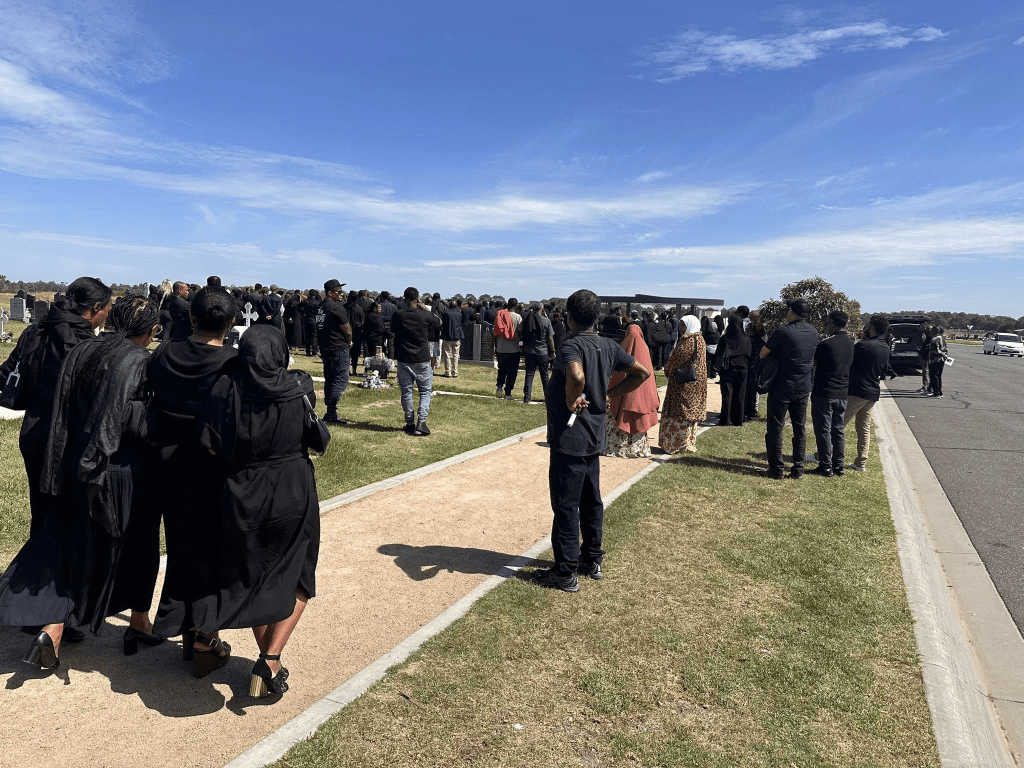
ጀግና፣ በሰላም እረፍ! በክብር እናስታውስሃለን!
የኦሮሞ ማህበረሰብ ለሩፋኤል ተሠማ ቤተሰቦች፣ በተለይም ለሚስቱ እና ለመንታ ሴት ልጆቹ ፌነት እና ፌናን ጥልቅ ሐዘኑን ይገልጻል። ዋቃዮ በዚህ የኪሳራ ወቅት ጥንካሬን ይስጣቸው እና በማህበረሰብ ድጋፍ ይከበቧቸው።

Irreecha Tulluu Cuqqaalaa Celebrated Peacefully: A Festival of Thanksgiving and Unity

Thousands gather at sacred highlands to give thanks to Waaqayyo as the annual Irreecha Arfaasaa festival brings together Oromo communities in a vibrant display of culture, faith, and resilience.
TULLUU CUQQAALAA, OROMIA — The annual Irreecha Arfaasaa celebration at Tulluu Cuqqaalaa has been marked by joyous gatherings, colorful traditional attire, and heartfelt prayers as the Oromo community came together to give thanks to the Creator.
The festival, observed with beauty and reverence in locations where large numbers of people congregated, stands as a testament to the enduring strength of Oromo culture and the unbreakable spirit of a people who continue to celebrate their identity despite challenges.
A Festival of Thanksgiving
Irreecha, the Oromo thanksgiving festival, marks the end of the rainy season and the beginning of the new year. It is a time when the Oromo people gather at bodies of water—lakes, rivers, and springs—to offer gratitude to Waaqayyo (God) for the blessings of creation and to pray for peace, prosperity, and unity in the year ahead.
This year’s celebration at Tulluu Cuqqaalaa carried particular significance. Despite various challenges, the community gathered in large numbers, dressed in traditional attire, carrying green grasses and flowers as symbols of peace and abundance. The atmosphere was one of joy, reverence, and collective affirmation of Oromo identity.
The Beauty of Cultural Observance
The celebration was marked by:
- Traditional Attire: Participants adorned themselves in the vibrant colors and intricate patterns of Oromo cultural clothing, transforming the gathering into a living canvas of heritage.
- Songs and Poetry: The air filled with traditional songs, geerarsa (poetic chants), and prayers that have been passed down through generations.
- Unity Across Differences: Oromos from various regions, backgrounds, and walks of life stood together as equals before their Creator, demonstrating the unifying power of shared culture.
- Blessings and Prayers: Elders offered blessings to the gathered community, praying for peace, fertility, and prosperity in the coming year.
A Prayer for the Future
The celebration concluded with a collective prayer that echoes in the hearts of all who attended: “Galanni kan uumaati, kan bara dhufuutiin nu ha gahe!” — “Thanksgiving belongs to the Creator; may we reach it again in the coming year!”
This prayer reflects the deep Oromo understanding that life itself is a gift, that each year we are granted to celebrate is a blessing, and that hope for the future is inseparable from gratitude for the past.
Significance of Tulluu Cuqqaalaa
Tulluu Cuqqaalaa holds special significance in the Oromo spiritual landscape. The highland setting, closer to the heavens, provides a fitting backdrop for prayers that rise toward Waaqayyo. The cool breeze carries the voices of the faithful, mingling with the rustle of grass and the songs of birds—all of creation joining in the thanksgiving.
For the Oromo people, Tulluu Cuqqaalaa is more than a location—it is a living presence, a witness to generations of prayer, a container of collective memory, and a symbol of the enduring bond between the people and the land that Waaqayyo gave them.

Community Response
The successful celebration has been met with widespread joy and satisfaction across Oromo communities, both in the homeland and throughout the diaspora. Social media has been filled with images and videos from the gathering, with participants expressing their gratitude for the opportunity to celebrate freely and peacefully.
One attendee shared: “Irreecha Tulluu Cuqqaalaa Arfaasaa milkoofnera. Galanni kan uumaati, kan bara dhufuutiin nu ha gahe!” — “We have successfully celebrated the Arfaasaa Irreecha at Tulluu Cuqqaalaa. Thanksgiving belongs to the Creator; may we reach it again in the coming year!”
This sentiment echoes across the community, reflecting the deep joy and spiritual fulfillment that comes from collective celebration of shared identity.
Looking Forward
As the celebration concludes and participants return to their homes and communities, they carry with them the blessings of the sacred site, the strength of the community, and the assurance that Waaqayyo hears their prayers. They carry, too, the knowledge that they are part of something larger than themselves—a people with a history stretching back centuries and a future reaching toward horizons they may not live to see.
The Irreecha Tulluu Cuqqaalaa celebration marks not an end but a continuation. The prayers offered this week will sustain the community through the seasons ahead. The bonds renewed at the sacred site will hold through challenges yet unknown. The identity affirmed in the gathering will be carried back to homes and communities across Oromia and the diaspora.
A Blessing for All
As the Oromo people celebrate Irreecha, they extend their blessings to all humanity. The festival’s core message—gratitude, peace, and unity—transcends cultural boundaries and speaks to universal human aspirations.
May the spirit of Irreecha—of thanksgiving, of hope, of unity—touch all hearts. May the coming year bring peace to Oromia and to the world. And may the Oromo people continue to gather, to celebrate, and to give thanks until the day when all can celebrate freely in a homeland at peace.
Galanni kan uumaati, kan bara dhufuutiin nu ha gahu 🙏✨
Irreecha #TulluuCuqqaalaa #Oromo #Thanksgiving #Culture #Unity #Peace #Waaqayyo #Oromia #IrreechaArfaasaa #Gratitude #Tradition

A Life of Struggle and Sacrifice: Remembering Ruphael Tasammaa (1975-2026)
A dedicated fighter for Oromo liberation, Ruphael’s journey took him from the battlefields of Wallagga to exile in Australia, where he continued to serve his people until illness claimed him.
The Oromo community mourns the loss of one of its dedicated sons, Ruphael Tasammaa, who passed away after a battle with illness, leaving behind a legacy of unwavering commitment to the struggle for Oromo liberation. His life story—spanning continents, encompassing both armed resistance and peaceful advocacy, and marked by profound personal sacrifice—embodies the journey of an entire generation of Oromo fighters.
Early Years: Born into Struggle
Ruphael was born in 1975 in Dambi Dollo, a town in Qellem Wallagga. His entry into the world was marked by tragedy: his mother passed away moments after giving birth to him at Dambi Dollo Hospital, never leaving the facility alive. At that critical moment, the hospital’s director—an American named Dr. Dorombos—and his wife, Missis Dorombo, stepped forward to raise Ruphael as their own child.
This act of cultural compassion saved Ruphael’s life and provided him with stability in his earliest years. He began his primary education in Dambi Dollo, laying the foundation for learning that would later serve him in unexpected ways.
When Dr. Dorombos was transferred from Dambi Dollo to Aira Hospital in western Wallagga, young Ruphael moved with his adoptive parents. He completed his primary education in Aira and began his secondary schooling there, absorbing not only academic knowledge but also the values of compassion and service modeled by the American couple who had taken him in.
Answering the Call: Joining the Liberation Struggle
In 1992, at the age of 17, Ruphael made a decision that would shape the rest of his life: he interrupted his secondary education to join the Oromo liberation struggle. This was not a choice made lightly. It meant leaving behind the relative stability of his life with the Dorombos family, abandoning his education, and embracing the uncertainty and danger of armed resistance.
Ruphael became a member of the Oromo Liberation Front (Adda Bilisummaa Oromoo), moving through various regions of western Wallagga and Qellem Wallagga as he participated in the armed struggle. These were years of constant movement, of living in the forest, of facing the enemy directly while carrying the hopes of his people.
Exile and Imprisonment
In 1992, following internal challenges within the OLF that led to its withdrawal from the transitional government, Ruphael found himself hunted by government forces in Qellem Wallagga and western Wallagga. He was forced to flee to Finfinne (Addis Ababa), living as an internally displaced person within his own country.
Despite his efforts to remain hidden, he was eventually captured by government forces and imprisoned at Deppo Prison in the city of Adaama. He spent a significant portion of his life behind bars, experiencing firsthand the brutality of a system determined to crush Oromo resistance.
After his release from prison, Ruphael was forced into exile. He first fled to neighboring Djibouti, then later to Kenya, where he spent several years living as a refugee. These years of exile—separated from his homeland, uncertain of his future, yet never abandoning his commitment to the cause—testified to his resilience.
Building a New Life in Australia
In December 2001, Ruphael was granted refugee status and resettled in Australia. For 25 years, he built a life in his new homeland while never forgetting the struggle he had left behind.
He worked as an Allied Health Assistant in various hospitals across Australia, dedicating 15 of those years to St. Vincent’s Hospital. Through his work, he continued the legacy of service modeled by his adoptive parents—caring for the sick, supporting the vulnerable, contributing to the community that had welcomed him.
In September 2025, illness forced him to stop working. After a lifetime of giving—to the struggle, to his community, to his patients—his body could no longer sustain the demands he placed upon it.
Family and Personal Life
In 2013, Ruphael married and built a life. From this union, he was blessed with twin daughters, Fenet and Fenan, born in 2016. They were the light of his life—the future generation for whom all his sacrifices had meaning.
Though his time with them was cut short, he leaves behind a legacy of courage and commitment that will guide them throughout their lives. They will grow up knowing that their father was a fighter, a survivor, a man who gave everything for his people.
A Lifetime of Contribution
Throughout his entire life, Ruphael’s contributions to the Oromo liberation struggle were immense. Even after leaving the battlefield, even after resettling in Australia, he continued to support the cause with body and soul. Until illness weakened him, he remained actively involved, giving tirelessly of himself for the freedom of his people.
His life exemplified the reality that the struggle for Oromo liberation is not confined to the forests of Wallagga or the prisons of Ethiopia—it extends to every corner of the diaspora, wherever Oromos gather and work for the freedom of their homeland.
Community Mourns
Ruphael’s passing leaves a void in his family, among his relatives and friends, and throughout the Oromo community. Those who knew him remember not only his political commitment but his personal warmth—his willingness to help, his steady presence, his unwavering belief in the cause.
As the community mourns, we pray for strength for his family: his wife, his twin daughters Fenet and Fenan, his relatives, and all who loved him. May Waaqayyo grant them the fortitude to bear this loss and the comfort of knowing that Ruphael lived a life of purpose and meaning.
Final Rest
“Lubbuun isaas jannata bara baraa keessa haa bogotu.” — May his soul rest in eternal paradise.
Ruphael Tasammaa’s journey is complete. From his tragic birth in a Dambi Dollo hospital, through years of armed struggle, imprisonment, exile, and finally refuge in Australia, he carried always the flame of Oromo liberation. He gave everything—his youth, his freedom, his comfort, his health—for the cause he believed in.
Now he rests. Now he is free from pain, from struggle, from the weariness of a life fully given. And those who remain—his family, his community, his people—carry forward the struggle he believed in, strengthened by his example, inspired by his sacrifice.
Goota, nagaan boqodhu! Kabajaan si yaadanna!
Hero, rest in peace! We remember you with honor!
The Oromo community extends deepest condolences to the family of Ruphael Tasammaa, particularly his wife and twin daughters Fenet and Fenan. May Waaqayyo grant them strength and surround them with community support in this time of loss.

Developing a common narrative: Strategic framework

Developing a common narrative for the Oromo Liberation Front (OLF) is a profoundly complex and sensitive task. It requires navigating a rich but painful history, a diverse and global diaspora, internal political differences, and the ongoing realities inside Oromia and Ethiopia.
Applying the general framework from the previous answer to the specific context of the OLF, the process would need to be deeply participatory, historically conscious, and future-oriented. It’s not about creating propaganda, but about forging a shared story that can unify, guide, and inspire action toward commonly held goals.
Here is a strategic approach tailored for the OLF:
Phase 1: The Foundation – A Deep and Inclusive Listening Tour
The goal here is not to confirm a single party line, but to understand the full, lived experience of the Oromo people and the OLF’s place within that story.
1. Acknowledge the Complexity and Create Safe Spaces:
· The Challenge: The OLF’s narrative is intertwined with decades of armed struggle, political exile, diaspora life, internal divisions, and a peace process. Trust is fractured, both within the organization and between the organization and the broader Oromo community.
· The Approach: The process must be led by or heavily facilitated by individuals or a team that is seen as credible, empathetic, and as neutral as possible regarding current internal factions. This could be a council of elders, respected academics, or a dedicated narrative project team. The absolute priority is creating psychological safety where people can speak honestly about their experiences, including disagreements with OLF policy, without fear.
2. Map and Engage All Constituencies:
A common narrative for the OLF cannot be written in Addis Ababa or Washington, D.C., alone. It must actively seek out the voices of:
· Current Leadership and Cadres: Inside Oromia and in various international offices.
· Former Fighters and Veterans: Those who served in the armed struggle, both those who remain with the OLF and those who have since demobilized or joined other groups.
· The Diaspora: Across the US, Europe, Australia, and the Middle East. This group is diverse in its politics, its connection to the homeland, and its generational experience (e.g., those who fled the Derg vs. those born in the diaspora).
· Civilians and Civil Society Inside Oromia: Farmers, teachers, business owners, artists, religious leaders, and members of professional associations. Their lived reality under various governments is a crucial part of the story.
· Women and Youth: Their perspectives and experiences must be actively and intentionally sought, as they are often marginalized in political narratives.
· Oromos from Different Regions: Acknowledge and explore the regional cultural and historical differences within Oromia itself.
3. Methods for Gathering the Story:
· Oral History Projects: Conduct structured, long-form interviews with elders and veterans to capture the history of the struggle as lived experience.
· Diaspora Town Halls (Physical and Virtual): Host facilitated meetings in major diaspora hubs with a focus on listening, not presenting.
· Anonymous Digital Portals: Create a secure, anonymous way for people inside Oromia to share their stories, hopes, and fears without risking their safety.
· Art and Cultural Gatherings: Sponsor events where poetry (geerarsa), music, and visual art are used to express the current mood and collective memory. This taps into the deep cultural roots of Oromo identity.
4. Identifying Core Themes and Tensions:
After gathering this material, the facilitation team will look for patterns. For the OLF, these might include:
· Recurring Themes: The Quest for Self-Determination, The Pain of Exile, The Pride of Oromo Identity (Safuu), The Memory of Atrocity, The Hope for a Just Future.
· Central Tensions:
· Armed Struggle vs. Political Negotiation: What is the most effective path to liberation? This is a core, persistent debate.
· Unity vs. Political Pluralism: How do you maintain a united front while accommodating different political opinions within the movement?
· The Diaspora vs. The “Homeland”: The experience and priorities of the diaspora can feel very different from those living under the government inside Ethiopia.
· Tradition vs. Modernity: How does the struggle incorporate modern political ideas while remaining rooted in Oromo culture and the Gadaa system?
· The Role of the OLF: Is it a vanguard party, a broad national front, or a future governing body? The organization’s own identity is a key part of the narrative.
Phase 2: The Crafting – Building a Story of Struggle and Hope
5. Finding the Guiding Arc:
A powerful narrative for the OLF must hold its history and its internal tensions in a way that points toward a shared future. A simple “rise and triumph” story will feel inauthentic. More appropriate arcs might be:
· The Long Journey (Safuu): This arc frames the narrative as a centuries-long struggle to maintain Oromo identity, culture, and self-rule (birmadumma). The OLF is a key chapter in this much longer story. This honors the deep history and positions the current struggle as part of an ongoing, righteous journey.
· The Phoenix Rising from the Ashes: This arc acknowledges the devastating defeats, the periods of exile, and the internal fracturing. The story is one of repeated resilience, of rebuilding from near destruction, drawing strength from the enduring Oromo spirit. This allows for honest discussion of failure and pain.
· The Tapestry of the Oromo Nation: This arc explicitly celebrates the diversity within Oromia and the Oromo movement. It frames the different regions, political views, and experiences (exile, urban life, rural life) as different threads that, when woven together, create a stronger, more beautiful whole. This is a direct way to address and reframe internal diversity as a strength, not a weakness.
6. Drafting the Core Narrative (A Starting Point):
Based on the listening and the chosen arc, a drafting team creates a first version. It must be a story, not a political manifesto.
· Beginning (The Source): “For generations, the Oromo people have safeguarded Safuu (our moral code) and nurtured Gadaa (our democratic tradition). But our right to self-determination—to live freely on our own land—has been a constant struggle against forces that sought to divide and dominate us. Our story is one of resilience in the face of that challenge.”
· Middle (The Struggle and Its Crossroads): “In the 20th century, this struggle took new forms. The OLF emerged as an expression of our collective will to resist. This path has been marked by both great sacrifice and profound hope. We have known the pain of exile, the heat of battle, and the difficult work of political organization. There have been moments of fracture and moments of powerful unity. This is not a simple story of heroes and villains, but a complex human story of a people refusing to be silenced. We have debated—and continue to debate—the best path forward, from armed resistance to political dialogue, always anchored by the dream of birmadumma.”
· End (The Unwritten Future – The Call): “Today, the journey continues. We stand at a new crossroads, carrying the weight of our history and the hopes of our children. Our narrative is not yet complete. The next chapter—a chapter of peace, justice, and self-determination—will be written by all of us. It is a call to every Oromo, wherever they may be, to add their voice, their strength, and their vision to this unfinished story. Our unity is not in agreeing on every point, but in our shared commitment to a future where the Oromo people are finally free to tell their own story, on their own land.”
7. The Crucial Co-Creation Loop:
· This draft is then taken back to all the constituencies through a structured, multi-stage feedback process.
· The goal is to refine the language, adjust the emphasis, and ensure the narrative resonates and feels true. This is where the internal tensions are negotiated through dialogue, not suppressed. For example, feedback from different factions might lead to a line that acknowledges “the varied paths we have taken in our pursuit of justice.”
Phase 3: The Living Narrative – Uniting Action and Identity
8. Weaving the Narrative into the Fabric of the Movement:
· Internal Education: The narrative becomes the core of political education for all members and new recruits. It’s the story that explains who they are and why they struggle.
· External Communication: It informs all public messaging, from press releases to social media, providing a consistent and authentic voice.
· Decision-Making Guide: When faced with strategic choices (e.g., entering a peace negotiation, forming an alliance), leaders can ask, “Which choice is most faithful to our common story and moves us toward our shared future?”
· Cultural Production: Encourage artists, musicians, and writers to engage with and reinterpret the narrative, keeping it alive in the culture.
9. Allowing the Narrative to Evolve:
· The story is not static. As the political situation changes, as new generations come of age, and as new chapters are written (e.g., a peace agreement, an election), the narrative must be updated.
· Regular “state of the story” gatherings can be held to ask: “What have we learned? What new stories need to be told? Does our narrative still guide us well?”
For the OLF, developing a common narrative is not just a communications exercise. It is a fundamental act of political and social healing. It is an opportunity to move beyond a fragmented history and build a shared foundation for the future, one that is strong enough to hold the diverse experiences of the Oromo people and clear enough to guide them toward their collective aspirations.

Forging a Common Narrative: A Strategic Path Forward for the Oromo Liberation Front

Developing a common narrative for the Oromo Liberation Front (OLF) is indeed a profoundly complex and sensitive task—perhaps one of the most critical undertakings the movement can pursue at this juncture. It requires navigating a rich but painful history, a diverse and global diaspora, internal political differences, and the ongoing realities inside Oromia and Ethiopia.
The framework outlined below builds upon the strategic approach detailed in your prompt, offering a comprehensive vision for how the OLF can develop a narrative that unifies, guides, and inspires action toward commonly held goals.
Introduction: Why Narrative Matters Now
The Oromo people stand at a crossroads. Decades of struggle have yielded both gains and setbacks. The global attention on Oromia has never been greater, yet the path forward remains contested and unclear. In this moment, a common narrative is not a luxury—it is a necessity.
A shared story serves multiple essential functions:
- It unifies diverse constituencies around a common understanding of who they are and what they seek
- It guides strategic decision-making by providing a framework for evaluating choices
- It inspires continued sacrifice and commitment by connecting daily struggle to a larger purpose
- It communicates to the world the justice of the Oromo cause in terms that resonate across cultures
- It heals the wounds of internal division by acknowledging complexity while affirming shared destiny
The process of developing this narrative is as important as the product. A narrative imposed from above will fail. One co-created through genuine listening and dialogue can transform the movement.
Phase 1: The Foundation — A Deep and Inclusive Listening Tour
The goal here is not to confirm a single party line, but to understand the full, lived experience of the Oromo people and the OLF’s place within that story.
1. Acknowledge the Complexity and Create Safe Spaces
The Challenge: The OLF’s narrative is intertwined with decades of armed struggle, political exile, diaspora life, internal divisions, and a peace process that has generated both hope and disappointment. Trust is fractured—both within the organization and between the organization and the broader Oromo community. Different generations carry different memories. Different regions hold different perspectives. Different political tendencies offer different analyses.
The Approach: The process must be led by or heavily facilitated by individuals or a team that is seen as credible, empathetic, and as neutral as possible regarding current internal factions. This could be a council of respected elders (Jaarsolii), a committee of trusted academics, or a dedicated narrative project team with representation from various constituencies but independence from current leadership structures.
The absolute priority is creating psychological safety—spaces where people can speak honestly about their experiences, including disagreements with OLF policy, disappointments with the movement, and critiques of leadership, without fear of reprisal or marginalization. This requires explicit ground rules, skilled facilitation, and a commitment to confidentiality where requested.
2. Map and Engage All Constituencies
A common narrative for the OLF cannot be written in Addis Ababa, Washington D.C., Minneapolis, or Melbourne alone. It must actively seek out the voices of every segment of the Oromo world:
Current Leadership and Cadres:
- Military commanders operating inside Oromia
- Political leadership in various international offices
- Mid-level organizers and frontline fighters
- Those engaged in clandestine work inside Ethiopia
Former Fighters and Veterans:
- Those who served in the armed struggle from the 1970s through the present
- Veterans who remain with the OLF and those who have since demobilized
- Fighters who joined other organizations or went independent
- Wounded veterans and families of fallen fighters
The Diaspora:
- Major hubs: United States (Minneapolis, Seattle, Washington D.C.), Europe (Germany, UK, Norway, Sweden), Australia (Melbourne), Middle East (UAE, Qatar)
- Different generational cohorts: those who fled the Derg, those who left during the EPRDF years, those born in the diaspora
- Professional associations, student groups, women’s organizations, cultural associations
- Wealthy contributors and grassroots donors
Civilians and Civil Society Inside Oromia:
- Farmers and agricultural workers across different regions
- Urban professionals in Finfinne/Addis Ababa and regional cities
- Teachers, healthcare workers, and civil servants
- Business owners and market vendors
- Religious leaders from all faith communities
- Artists, musicians, poets, and cultural practitioners
- Journalists and human rights defenders
Women and Youth:
- The Qarree movement and young women activists
- The Qeerroo generation that led the 2014-2018 protests
- Elders of the Siinqee tradition
- Women who have experienced gender-based violence in the conflict
- Young professionals navigating identity in urban Ethiopia
- Diaspora youth negotiating dual identities
Regional Diversity:
- Wallaga (with its distinctive history and culture)
- Hararghe (eastern Oromia, with its Islamic traditions)
- Shewa (central Oromia, closest to the seat of power)
- Bale (with its revolutionary history)
- Borana (with its pastoralist traditions and border dynamics)
- Guji, Arsi, Jimma, Illubabor, and all other zones
3. Methods for Gathering the Story
The listening process must employ diverse methods appropriate to different constituencies:
Oral History Projects:
Conduct structured, long-form interviews with elders and veterans to capture the history of the struggle as lived experience. These should be video-recorded where possible, transcribed, and archived for future generations. The goal is not only information gathering but honoring those who carried the struggle.
Diaspora Town Halls:
Host facilitated meetings in major diaspora hubs with a focus on listening, not presenting. Create formats that allow both public sharing and small-group intimacy. Ensure translation where needed. Document themes without attributing individual comments.
Anonymous Digital Portals:
Create secure, encrypted, anonymous ways for people inside Oromia to share their stories, hopes, and fears without risking their safety. This could include voice messaging, written submissions, or secure apps. Publicize these through trusted channels.
Art and Cultural Gatherings:
Sponsor events where poetry (geerarsa, we’llu), music, and visual art are used to express the current mood and collective memory. This taps into the deep cultural roots of Oromo expression and reaches people who may not engage with formal political processes.
Focus Groups by Sector:
Convene small, facilitated discussions with specific groups: women farmers, diaspora youth, former prisoners, internally displaced persons, etc. The homogeneity of these groups allows for deeper sharing on specific experiences.
Written Submissions:
Invite essays, memoirs, and reflections from intellectuals, writers, and ordinary people willing to put their thoughts on paper. Create prompts that guide but do not constrain.
4. Identifying Core Themes and Tensions
After gathering this material, the facilitation team engages in systematic analysis to identify patterns, themes, and tensions. For the OLF, these might include:
Recurring Themes:
- The quest for self-determination (birmadumma) as the organizing principle of the struggle
- The pain of exile and displacement (godaanis)
- The pride of Oromo identity and the importance of Safuu (moral code)
- The memory of specific atrocities and martyrs
- The hope for a just and peaceful future
- The centrality of land (lafa) to Oromo identity
- The importance of language (Afaan Oromoo) as carrier of culture
Central Tensions:
- Armed Struggle vs. Political Negotiation: What is the most effective path to liberation? This is a core, persistent debate that divides generations and regions.
- Unity vs. Political Pluralism: How do you maintain a united front while accommodating different political opinions within the movement? Can there be unity without uniformity?
- The Diaspora vs. The “Homeland”: The experience and priorities of the diaspora—shaped by relative freedom, distance, and different stakes—can feel very different from those living under government inside Ethiopia.
- Tradition vs. Modernity: How does the struggle incorporate modern political ideas while remaining rooted in Oromo culture, the Gadaa system, and traditional values?
- The Role of the OLF: Is it a vanguard party, a broad national front, or a future governing body? The organization’s own identity is a key part of the narrative.
- Regional Differences: How do the experiences and priorities of Oromos from different regions get represented without one dominating?
- Religious Diversity: How does the narrative honor Oromos of all faiths—Muslim, Christian, and followers of Waaqeffannaa—without privileging any?
- Gender: How are women’s experiences, contributions, and aspirations fully integrated, not added as an afterthought?
Phase 2: The Crafting — Building a Story of Struggle and Hope
5. Finding the Guiding Arc
A powerful narrative for the OLF must hold its history and its internal tensions in a way that points toward a shared future. A triumphalist story—a simple “rise and triumph” arc—will feel inauthentic to those who have experienced defeat, disappointment, and internal conflict. More appropriate arcs might include:
The Long Journey (Safuu):
This arc frames the narrative as a centuries-long struggle to maintain Oromo identity, culture, and self-rule. The OLF is a key chapter in this much longer story—neither the beginning nor the end, but a crucial vessel carrying the aspirations of ancestors toward the hopes of descendants. This honors the deep history and positions the current struggle as part of an ongoing, righteous journey that precedes and will outlast any particular organization or leader.
The Phoenix Rising from the Ashes:
This arc acknowledges the devastating defeats, the periods of exile and near-extinction, and the internal fracturing that has marked the movement. The story is one of repeated resilience—of rebuilding from near destruction, drawing strength from the enduring Oromo spirit. This allows for honest discussion of failure and pain while affirming that the struggle itself is the constant.
The Tapestry of the Oromo Nation:
This arc explicitly celebrates the diversity within Oromia and the Oromo movement. It frames the different regions, political views, generations, and experiences (exile, urban life, rural life, armed struggle, civil society) as different threads that, when woven together, create a stronger, more beautiful whole. This is a direct way to address and reframe internal diversity as a strength, not a weakness.
The Unfinished Symphony:
This arc presents the Oromo struggle as a work in progress—a symphony to which each generation adds its movement. The themes are constant—freedom, dignity, self-determination—but the orchestration evolves. This honors the past while explicitly inviting the next generation to contribute their own composition.
6. Drafting the Core Narrative (A Starting Point)
Based on the listening and the chosen arc (or a combination of arcs), a drafting team creates a first version. It must be a story, not a political manifesto. It must speak to the heart as well as the head. Here is an illustrative draft:
Title: The Story We Carry: The Oromo Journey Toward Freedom
Beginning (The Source):
“Before there was an OLF, before there was an Ethiopia, there was Oromia—the land of the Oromo people. For generations beyond counting, our ancestors nurtured Gadaa, the democratic tradition that governed our lives. They lived by Safuu, the moral code that taught respect for creation, for one another, and for the dignity of every person.
This is our inheritance. This is who we are.
But our right to live freely on our own land—to speak our language, to govern ourselves, to develop our resources for our own benefit—has been a constant struggle. We have faced conquest, assimilation, and denial of our very existence as a people. Yet we have never surrendered our identity. We have never stopped being Oromo.”
Middle (The Struggle and Its Crossroads):
“In the 20th century, this ancient struggle took new forms. The Oromo Liberation Front emerged in 1973 as an expression of our collective will to resist—a vessel for the hopes of a people determined to be free.
The path since has been marked by both great sacrifice and profound hope. We have known the heroism of fighters like General Tadesse Birru, executed in 1975, whose final words affirmed his Oromo identity. We have known the pain of exile, as thousands fled to neighboring countries and distant continents. We have known the heat of battle, the long years in the forest, the clandestine work in cities.
We have also known internal division—moments when our unity fractured, when disagreements over strategy became wounds, when the movement struggled to hold together. These are not secrets to be hidden but truths to be acknowledged. A family that has known conflict can still come together. A movement that has known division can still unite.
There have been moments of profound unity as well—the mass protests of 2014-2018, when the Qeerroo and Qarree movements showed the world the power of a new generation; the gatherings of diaspora communities in every corner of the globe; the quiet solidarity of farmers and workers who sustained the struggle through decades of repression.
We have debated—and continue to debate—the best path forward: armed resistance or political negotiation, engagement with the state or refusal to recognize its legitimacy, prioritization of unity or accommodation of diversity. These debates are not signs of weakness but evidence of life. A living movement wrestles with hard questions.”
End (The Unwritten Future – The Call):
“Today, the journey continues. We stand at a new crossroads, carrying the weight of our history and the hopes of our children.
The story of the Oromo people is not yet complete. The next chapter—a chapter of peace, justice, and genuine self-determination—will be written by all of us. It is a call to every Oromo, wherever they may be, to add their voice, their strength, and their vision to this unfinished story.
Our unity is not in agreeing on every point. It is in our shared commitment to a future where the Oromo people are finally free to tell their own story, on their own land, in their own language, according to their own values.
This is the story we carry. This is the future we build. Together.”
7. The Crucial Co-Creation Loop
This draft is not the final product but a starting point for dialogue. It must then be taken back to all the constituencies through a structured, multi-stage feedback process:
Stage 1: Facilitated Small Group Discussions
Share the draft with small, facilitated groups representing different constituencies. Create structured feedback forms that ask specific questions: What resonates? What feels missing? What feels wrong? What would you add or change?
Stage 2: Regional and Diaspora Forums
Hold larger gatherings (physical where possible, virtual where necessary) to present the draft and gather feedback. Use professional facilitation to ensure all voices are heard and to manage disagreements constructively.
Stage 3: Digital Feedback Platforms
Create secure online platforms where individuals can provide feedback anonymously or with attribution. Publish the draft widely and invite written responses.
Stage 4: Synthesis and Revision
The facilitation team analyzes all feedback, identifying areas of consensus, persistent concerns, and suggestions for revision. They produce a revised draft with an accompanying document explaining how feedback was incorporated.
Stage 5: Leadership Endorsement and Community Launch
Present the revised draft to OLF leadership for formal endorsement, then launch the final narrative through a series of community events, publications, and digital campaigns.
Phase 3: The Living Narrative — Uniting Action and Identity
8. Weaving the Narrative into the Fabric of the Movement
A narrative that sits on a shelf serves no purpose. The final phase is about making the narrative live—embedding it in every aspect of the movement’s life.
Internal Education:
The narrative becomes the core of political education for all members and new recruits. It is taught in training sessions, discussed in study groups, and referenced in internal communications. Every member should be able to tell the story in their own words.
External Communication:
The narrative informs all public messaging—press releases, social media, speeches, interviews. It provides a consistent and authentic voice that helps external audiences understand the Oromo cause. Spokespersons are trained to communicate from within the narrative, not just deliver talking points.
Decision-Making Guide:
When faced with strategic choices—entering a peace negotiation, forming an alliance, launching a campaign—leaders can ask: “Which choice is most faithful to our common story and moves us toward our shared future?” The narrative becomes a compass, not a cage.
Cultural Production:
Encourage artists, musicians, poets, and writers to engage with and reinterpret the narrative. Commission works that explore different aspects of the story. Support cultural events that bring the narrative to life through performance and art. The narrative should sing, not just speak.
Healing and Reconciliation:
Use the narrative as a tool for healing internal divisions. Acknowledge past conflicts openly while affirming shared commitment to the future. Create spaces where former adversaries within the movement can tell their stories and find common ground.
9. Allowing the Narrative to Evolve
The story is not static. As the political situation changes, as new generations come of age, and as new chapters are written—a peace agreement, an election, a shift in strategy—the narrative must be updated.
Regular “State of the Story” Gatherings:
Hold periodic gatherings (annually or biennially) to ask: “What have we learned? What new stories need to be told? Does our narrative still guide us well? What needs to evolve?”
Generational Handoff:
Create explicit mechanisms for younger generations to shape the narrative. The story must not become the property of elders alone. Youth councils, student groups, and young professional associations should have formal roles in narrative maintenance.
Crisis Response Protocol:
When unexpected events occur—a massacre, a leadership change, a major political shift—the narrative team should convene to ask: “How does this event fit into our story? Does our narrative help people understand what just happened? Do we need to adjust our framing?”
Conclusion: Narrative as Revolutionary Act
For the OLF, developing a common narrative is not just a communications exercise. It is a fundamental act of political and social healing. It is an opportunity to move beyond a fragmented history and build a shared foundation for the future—one that is strong enough to hold the diverse experiences of the Oromo people and clear enough to guide them toward their collective aspirations.
A successful narrative will:
- Acknowledge complexity without becoming paralyzed by it
- Honor sacrifice without glorifying suffering
- Embrace diversity without losing coherence
- Guide action without rigidly prescribing it
- Inspire hope without promising easy victory
- Build unity without demanding uniformity
The work will not be easy. It will require patience, humility, and genuine commitment to listening across differences. It will require leaders who are willing to be questioned, factions willing to find common ground, and communities willing to trust the process.
But the alternative—continued fragmentation, competing narratives that divide rather than unite, a movement that cannot tell its own story coherently—is not acceptable. The Oromo people deserve better. The struggle deserves better. The future deserves better.
As the Oromo saying goes: “Dubbiin tokko, garaa tokko, yaadni tokko” — “One voice, one heart, one mind.” This is the aspiration. A common narrative is the path.
The journey of a thousand miles begins with a single step. For the OLF, that step is the commitment to listen—deeply, humbly, and courageously—to the full story of the Oromo people. From that listening, a narrative can emerge that is worthy of the struggle and capable of guiding it to its just conclusion.

Building a Common Narrative: Strategic Considerations

The question of how the Oromo Liberation Front (OLF/ABO) can develop a common narrative is both timely and essential. A unified narrative serves as the intellectual and moral foundation upon which political movements build solidarity, communicate their vision, and mobilize support. Drawing on recent discussions within Oromo intellectual and political circles, several key principles and practical steps emerge.
The Imperative of Historical Honesty
A compelling narrative must begin with an honest reckoning with history. As Maatii Sabaa argues in a recent commentary, “speaking our history—the full history of a people’s resistance against successive repressive systems—is not separate from the struggle. It is an essential organ of it” .
The OLF’s journey—from its intellectual germination in the early 1970s, formal establishment in 1973, articulation of its political program in 1976, through decades of immense sacrifice, targeted killings, imprisonment, and exile of its intellectuals and heroes—constitutes “the origin story of a modern political consciousness” . A common narrative must embrace this full history, including internal fractures, political alliances, strategic crossroads, and difficult choices.
The fear that examining complex history might destabilize the movement is misguided. As Sabaa notes, “unity forged in silence is fragile; unity built on a shared, honest understanding is unbreakable”. Today’s generation, which has demonstrated formidable political maturity through movements like the #OromoProtests and Qeerroo mobilization, is capable of engaging with complexity.
Centering the Core Grievance
A common narrative must clearly articulate the fundamental injustice that animates the struggle. Research on the discursive construction of Oromo identity emphasizes how Oromo elites have constructed a narrative around marginalization within the Ethiopian state . This includes:
- Historical conquest and incorporation into the Abyssinian empire
- Systematic cultural suppression, including marginalization of the Oromo language
- Economic exploitation and land alienation
- Political exclusion and denial of self-determination
The narrative must make clear that the OLF’s struggle is a response to these conditions, not their cause.
Unity Through Dialogue
Recent efforts toward political unity offer a model for narrative development. The joint call for dialogue by the OLF and Oromo Federalist Congress (OFC) in late 2025 represented “rare strategic unity among major Oromo forces”. This collaboration signals convergence around peaceful, negotiated solutions and reduces the perception of permanent fragmentation among Oromo political actors.
Such unity strengthens the legitimacy of Oromo political forces “in the eyes of Oromo communities, other Ethiopian actors, and international partners looking for credible interlocutors for a peace process”. A common narrative should build on this foundation of unity, emphasizing shared goals while acknowledging strategic differences.
Inclusive and People-Centered Framing
The envisioned joint conference between OLF and OFC aims to involve “all sections of the community” rather than limiting talks to elites . This principle should guide narrative development as well. A common narrative must:
- Incorporate the voices of victims of violence and displacement
- Include perspectives of elders, women, youth, and local leaders
- Reflect the experiences of diverse Oromo communities across regions
- Address gender dimensions of the struggle, including the Siinqee tradition and women’s contributions
Any peace process or political framework that excludes these voices “risks reproducing the same injustices that fuelled the conflict”.
Addressing Counter-Narratives
A common narrative must also contend with competing narratives that seek to delegitimize the Oromo struggle. Some critics have characterized Oromo nationalism as exclusionary or extremist, drawing comparisons to historical fascism and alleging anti-Semitic discourse targeting Amhara and Tigrayan populations. Such characterizations have been used to frame the OLF as a threat to Ethiopian national unity.
Academic analysis also documents an “institutionally crafted Amhara-domination narrative” that has been deployed by various political actors over time, contributing to inter-ethnic tensions. A thoughtful Oromo narrative must acknowledge these complex dynamics while clearly distinguishing legitimate Oromo grievances from the inflammatory rhetoric attributed to extremist elements.
The response to such counter-narratives should be grounded in facts, historical evidence, and a consistent commitment to human rights and inclusive politics.
Practical Framework for Cooperation
Drawing on analysis of potential OLF-Prosperity Party engagement, several principles apply equally to internal narrative development:
- Dialogue and Negotiation: Open, sincere dialogue within Oromo political forces to address grievances, build trust, and find common ground
- Inclusive Governance: Ensuring that all Oromo voices are represented in developing the common narrative
- Addressing Grievances: Clearly articulating specific concerns such as land rights, cultural recognition, and political representation
- Reconciliation and Justice: Establishing mechanisms to address past injustices and promote healing within the movement
- Public Engagement: Engaging with constituencies to explain the narrative and build support
The Role of Research and Documentation
Academic work on Oromo identity construction provides valuable insights. Research on the discursive construction of Oromo identity demonstrates how Oromo elites have developed a coherent discourse around marginalization, and how this discourse has been taken up in international media coverage of Oromo protests. This suggests that a well-developed narrative can successfully communicate Oromo perspectives to global audiences.
The OLF should continue to support research, documentation, and analysis that strengthens the evidentiary basis for its narrative while ensuring accessibility to diverse audiences.
Conclusion: Narrative as Revolutionary Act
Ultimately, developing a common narrative is itself a revolutionary act. As Sabaa concludes, “The final struggle is not just against a visible enemy; it is against the forgetting, the fear, and the fragmentation of our own story. To remember completely, to analyze courageously, and to speak truthfully is, itself, a revolutionary act”.
A common narrative for the OLF must be:
- Historically honest, embracing both triumphs and challenges
- Clear in its articulation of Oromo grievances and aspirations
- Unified in its message, building on strategic convergence among Oromo forces
- Inclusive of diverse voices, particularly those most affected by conflict
- Resilient against counter-narratives, grounded in evidence and principle
- Forward-looking, offering a vision of a just and peaceful future
The work of narrative development is never complete. It requires ongoing reflection, dialogue, and adaptation as circumstances evolve. But the foundation—honest history, clear principles, and inclusive process—will serve the Oromo people well in their ongoing struggle for self-determination and justice.

Advocacy for Oromia: Mourning Gamo Landslide Victims
PRESS RELEASE
Advocacy for Oromia Expresses Deep Grief Over Fatal Landslide in Gamo Zone
March 13, 2026 – For Immediate Release
The Advocacy for Oromia has expressed its profound sorrow following a devastating landslide in the Gamo Zone of the South Ethiopia Region.
The disaster occurred on the evening of March 10, 2026, in the Laka Kebele of the Gacho Baba district, triggered by heavy rainfall that caused the hillside to collapse onto the community below.
According to reliable sources confirmed by local authorities and humanitarian partners on the ground, the lives of 52 individuals have been confirmed lost in this tragic event. Search and rescue operations continue, with fears that the death toll may rise as teams work to locate missing persons.
Advocacy for Oromia extends its heartfelt condolences to the families of the deceased, their relatives, and the people of the Gamo Zone and the entire South Ethiopia Region. We share in your grief during this devastating time of loss.
Government Response Underway
In the wake of the disaster, high-ranking federal and regional officials have arrived at the scene. They are closely overseeing relief and support efforts and are working to console the affected communities. Emergency response teams have been deployed to provide immediate assistance, including medical aid, shelter, and food supplies to survivors who have lost their homes and livelihoods.
Urgent Call for Precautionary Measures
Given the ongoing rainy season, which heightens the risk of similar incidents across the region’s mountainous terrain, Advocacy for Oromia has urged citizens—particularly those living in mountainous and landslide-prone areas—to heed all precautionary messages and directives with the utmost seriousness.
We call upon relevant authorities to:
- Strengthen early warning systems in high-risk areas
- Conduct public awareness campaigns about landslide safety
- Consider temporary relocation of communities in the most vulnerable areas during the rainy season
- Ensure adequate emergency response resources are prepositioned in disaster-prone zones
A Time for Solidarity
This tragedy reminds us of our shared humanity and the importance of standing together in times of crisis. Advocacy for Oromia stands in solidarity with all Ethiopians mourning this loss, regardless of region or background. When disaster strikes, our common humanity must transcend all boundaries.
Conclusion
Advocacy for Oromia’s statement concluded by wishing the deceased eternal peace and offering strength to the bereaved families. May the souls of those who perished rest in peace, and may their families find the strength and support needed to endure this unimaginable loss.
We urge all who are able to support relief efforts through recognized humanitarian organizations working in the affected area.
#GamoLandslide #SouthEthiopia #HumanitarianAid #AdvocacyForOromia #StandWithGamo #Ethiopia #LandslideRelief
Issued by: Advocacy for Oromia
Date: March 13, 2026
Traditional Courts: The Foundation of Peace and Community Cohesion in Oromia
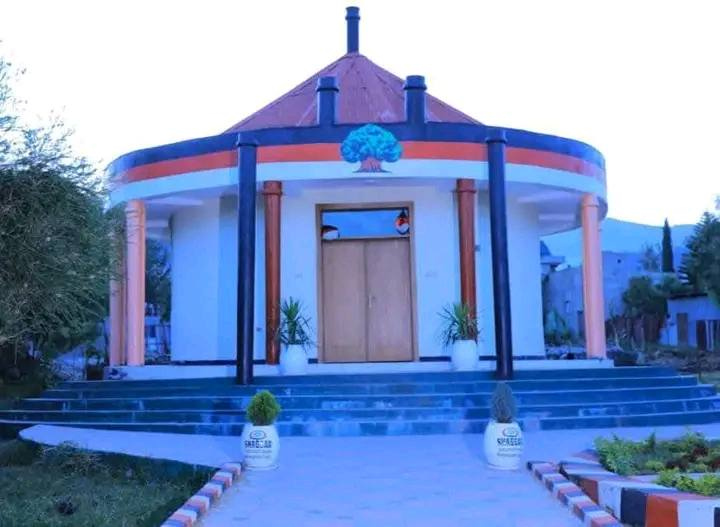
For generations, the Oromo people have relied on an institution that predates modern legal systems—the traditional courts (Manneen Murtii Aadaa)—to resolve disputes, maintain harmony, and preserve the social fabric of their communities.
These customary courts, rooted in the rich cultural heritage and values of the Oromo people, play an indispensable role in maintaining community peace by resolving disputes through frameworks grounded in tradition and cultural wisdom. Whether addressing family conflicts, neighborly disagreements, or broader community tensions, these institutions offer reconciliation and dialogue-based solutions that heal rather than divide.
Justice Rooted in Culture
The Manneen Murtii Aadaa operate on principles fundamentally different from formal court systems. Rather than adversarial proceedings that produce winners and losers, traditional courts emphasize reconciliation, restoration of relationships, and community harmony. The goal is not punishment but healing—not victory but peace.
This approach reflects deep Oromo values embedded in the culture for centuries. The famous Oromo saying “Nageenyi badhaadhummaadha” (Peace is wealth) captures the understanding that without harmony, material prosperity means nothing. Traditional courts exist to protect this most precious wealth.
Efficiency and Accessibility
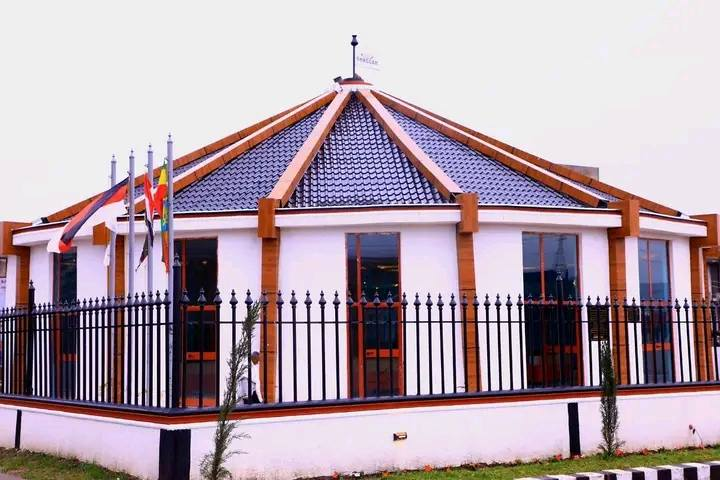
One of the most significant advantages of traditional courts is their accessibility. Community members can bring disputes before elders without the burden of excessive time and cost that often characterizes formal legal proceedings. A matter that might take months or years in the formal court system can often be resolved in days through traditional mechanisms.
This efficiency preserves community relationships that might otherwise be destroyed by prolonged conflict. When neighbors or family members can resolve their differences quickly and return to normal life, the entire community benefits.
The Wisdom of Elders
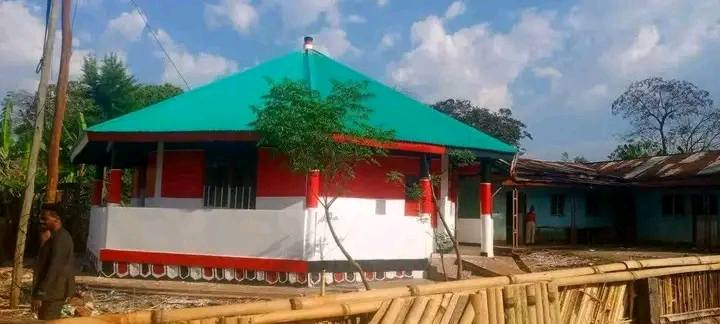
Central to the functioning of traditional courts is the involvement of Jaarsolii Biyyaa—community elders whose wisdom, accumulated over lifetimes, guides the resolution process. These elders carry within them the knowledge of generations, understanding not only the specific dispute before them but the broader context of community relationships and history.
By involving elders, traditional courts ensure that the cultural knowledge and values passed down through generations are preserved and applied. Young people who participate in these processes learn not only about the specific dispute but about the deeper values that hold their community together.
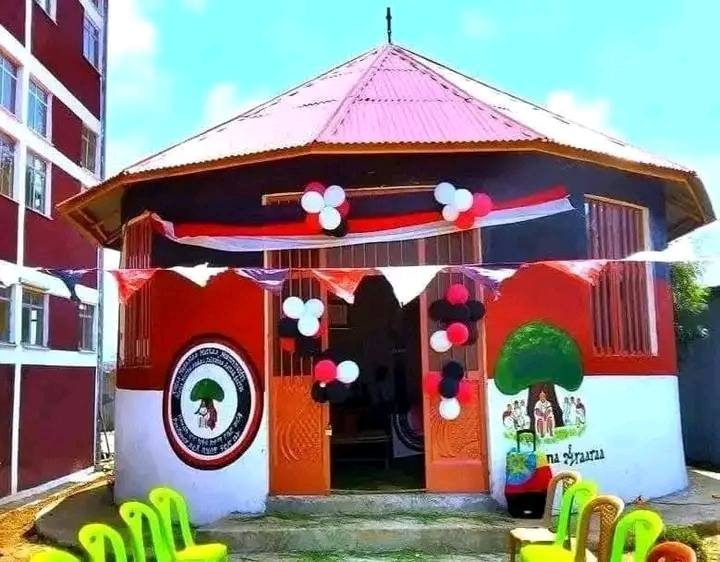
A Bridge Between Past and Future
The continued operation of Manneen Murtii Aadaa represents more than a practical mechanism for dispute resolution—it is a living connection to Oromo heritage. In a world of rapid change and external pressures, these institutions maintain continuity with the wisdom of ancestors while adapting to contemporary needs.
They demonstrate that tradition is not static but dynamic—capable of addressing modern challenges while remaining grounded in enduring values. The elders who preside over these courts carry forward a torch lit by those who came before, ensuring that future generations will inherit not only problems but the tools to solve them.
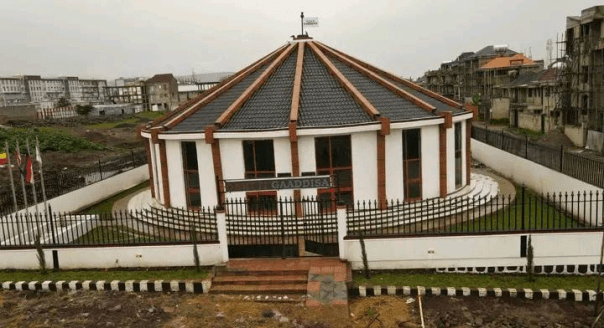
Strengthening Peace and Unity
Perhaps most importantly, traditional courts actively strengthen peace, consensus, and unity within communities. By resolving disputes through dialogue rather than confrontation, they model the very harmony they seek to create. The process itself—requiring disputing parties to sit together, listen to elders, and work toward mutual understanding—builds the skills and relationships necessary for long-term community cohesion.
When a dispute is resolved through Manneen Murtii Aadaa, the resolution carries moral weight that formal court judgments often lack. Because the community has participated in the process and the elders have spoken, the outcome is accepted not because it is enforced but because it is recognized as just.
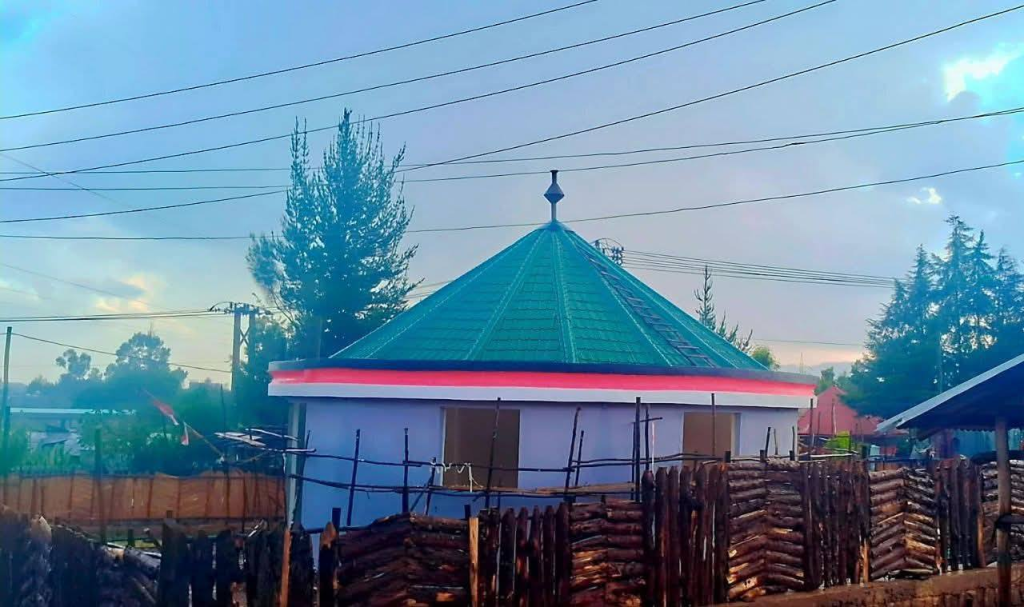
A Living Tradition
The photographs accompanying this feature offer glimpses into actual traditional court proceedings across Oromia. They show elders gathered under trees, community members seated in circles, the informal but deeply structured processes that have resolved disputes for centuries. These are not museum pieces but living institutions, actively shaping community life today.
Each image captures a moment in the ongoing work of peace—elders listening, disputants speaking, community members observing, and together weaving the fabric of social harmony that makes community life possible.
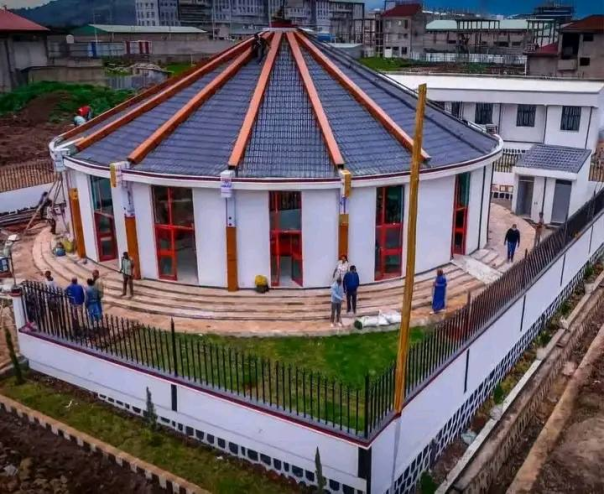
Conclusion
Manneen Murtii Aadaa represent one of the Oromo people’s most valuable institutions—a culturally grounded system of justice that preserves peace, strengthens unity, and maintains connection to ancestral wisdom. In a world often dominated by impersonal formal systems, these traditional courts offer a model of justice that is close to the people, rooted in community, and focused on healing rather than punishment.
As Oromia continues to navigate the challenges of the present and build toward the future, these institutions remain essential. They remind us that justice is not only about laws and procedures but about relationships and reconciliation—not only about rights but about harmony.
By strengthening Manneen Murtii Aadaa, communities strengthen themselves. By honoring the wisdom of elders, they ensure that future generations will inherit not only problems but the tools to solve them. By resolving disputes through dialogue and consensus, they build the peace that is, as the ancestors knew, the truest wealth.
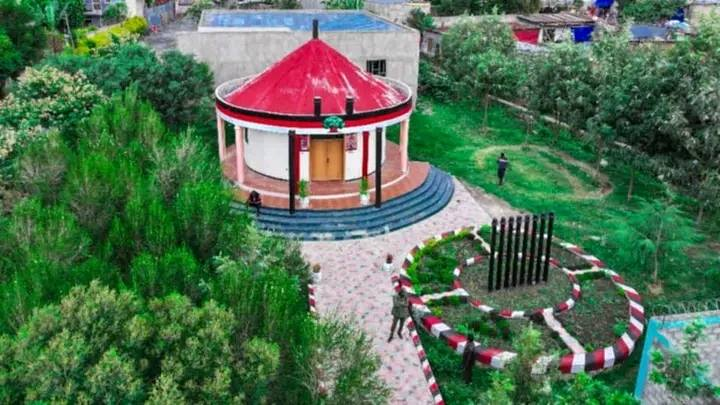
The images above show a selection of traditional court proceedings from various parts of Oromia, capturing the living tradition of community-based justice. 🤝
Oromia #TraditionalJustice #CommunityPeace #EldersWisdom #CulturalHeritage #ManneenMurtiiAadaa #OromoValues #Reconciliation

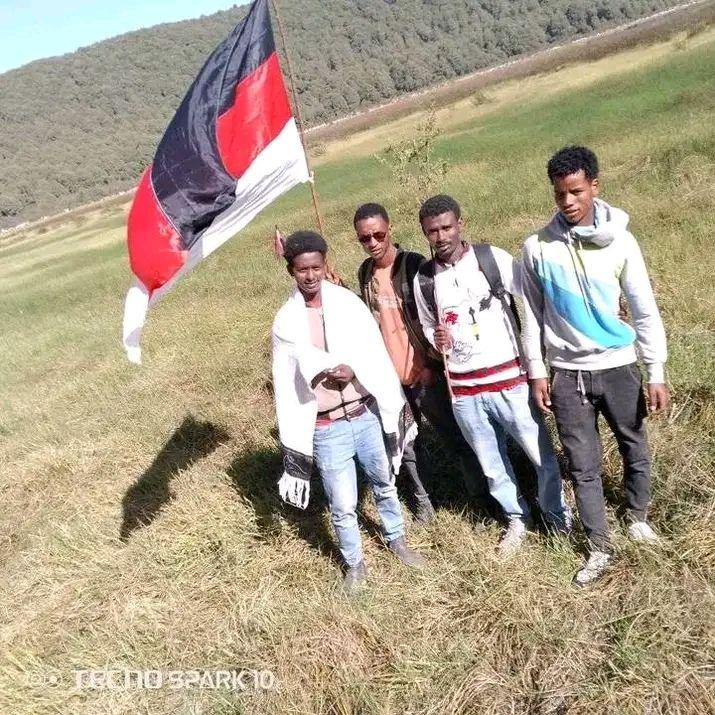
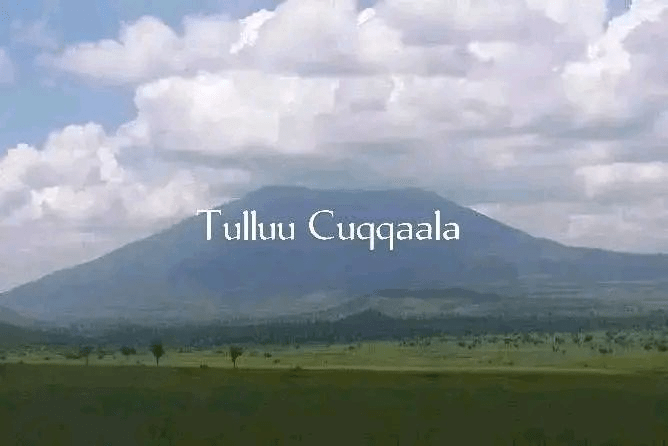
Celebrating Irreecha Afraasaa Tulluu Cuqqaalaa: A Festival of Thanksgiving and Resilience
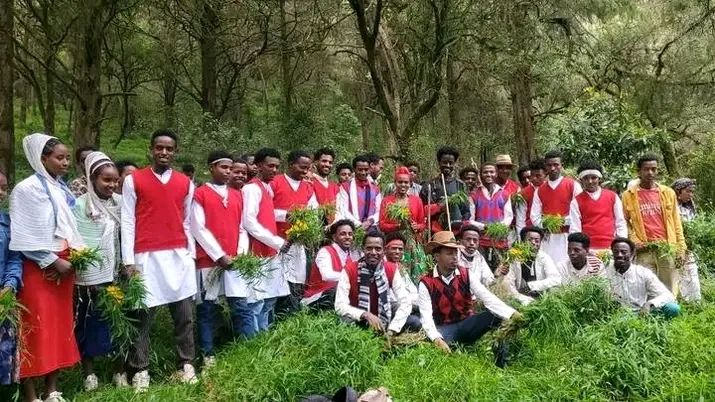
“A generation as strong as iron” — The Oromo community gathers to mark the weekly Tulluu Cuqqee Irreecha celebration with joy, devotion, and unshakeable unity.
As the sun rises over the sacred highlands, the Oromo people come together once again to observe Irreecha Afraasaa Tulluu Cuqqee—a cherished tradition of giving thanks to Waaqayyo (God) for the blessings of creation and the gift of life.
This week’s celebration, marked by the faithful gathered at Tulluu Cuqqee, carries special significance. It is a moment of collective gratitude, of cultural affirmation, and of the unbreakable bonds that tie the Oromo people to their land, their Creator, and one another.
“A Generation as Strong as Iron”
The prayer rises from the hearts of the faithful: “Dhaloota Akka Hadiidaa jabaatu” — “A generation as strong as iron.”
This is not merely a wish but a declaration. It speaks to the resilience that has carried the Oromo people through centuries of challenge, through displacement and oppression, through attempts to erase their identity and silence their voice. The generation that gathers at Tulluu Cuqqee declares: we are iron. We do not break. We endure.
Reaching the Week of Tulluu Cuqqaalaa Irreecha
The greeting echoes across the gathering: “Baga Torbee Irreecha Tulluu Cuqqaalaa geechan” — “Congratulations on reaching the week of Tulluu Cuqqee Irreecha.”
There is profound meaning in this simple greeting. To reach this sacred time is to have been granted life, health, and the opportunity to give thanks. It is to have survived another cycle of seasons, another year’s challenges, another journey through the uncertainties that life presents. Every person gathered at Tulluu Cuqqee is living proof of Waaqayyo’s mercy and protection.
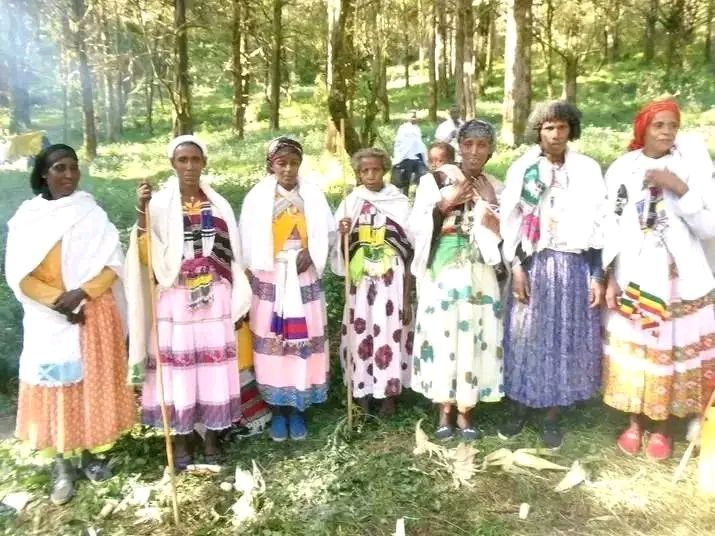
The Call of Cuqqee
The celebration’s spirit is captured in the joyful cry: “Hoo…… cuqqiyoo kootu na mararee jedha dhiichifni achirratti dhiichifamu qabadhu.”
This expression, rich in the poetry of the Oromo language, speaks to the deep emotional connection between the people and their sacred site. Cuqqee—the beloved highland—wraps itself around the hearts of those who gather there. It is not merely a location but a living presence, a witness to generations of prayer, a container of collective memory, and a symbol of the enduring bond between the Oromo people and the land that Waaqayyo gave them.
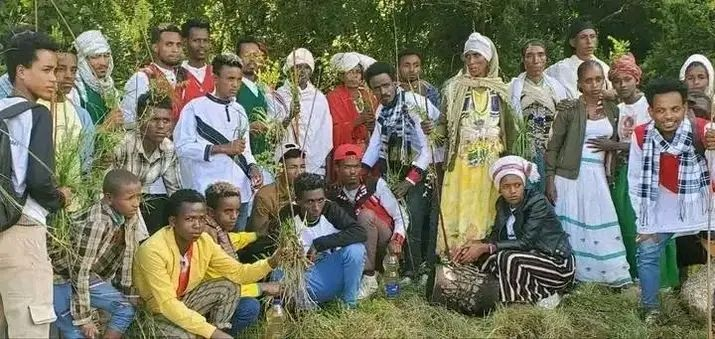
The Significance of Irreecha
Irreecha is far more than a religious observance. It is the Oromo people’s annual thanksgiving festival, marking the end of the rainy season and the beginning of the new year. Celebrated at bodies of water—lakes, rivers, and springs—Irreecha symbolizes the purification of the heart and the renewal of the bond between the Creator and creation.
During Irreecha, the Oromo people offer thanks to Waaqayyo for the blessings of the past year and pray for peace, prosperity, and unity in the year ahead. It is a time when social distinctions fade, when rich and poor, young and old, stand together as equals before their Creator, adorned in traditional attire, carrying green grasses and flowers as symbols of peace and prosperity.
At Tulluu Cuqqee, these traditions take on particular significance. The highland setting, closer to the heavens, provides a fitting backdrop for prayers that rise toward Waaqayyo. The cool breeze carries the voices of the faithful, mingling with the rustle of grass and the songs of birds—all of creation joining in the thanksgiving.
Unity Across Boundaries
Irreecha has always been more than a religious festival—it is a powerful expression of Oromo unity. In a history marked by division and displacement, Irreecha brings the Oromo people together regardless of clan, class, or political affiliation. It reminds them that beneath all differences lies a shared identity, a shared history, and a shared hope.
At Tulluu Cuqqee this week, that unity is on full display. Families have traveled from near and far. Elders sit with youth, sharing wisdom and stories. Women in traditional attire lead songs that have been sung for generations. Children run among the crowds, learning the traditions they will one day pass to their own children.
A Prayer for the Future
As the celebration continues, the prayers of the faithful rise toward Waaqayyo:
For the generation: that it may be as strong as iron, able to bear the weight of struggle and emerge unbroken.
For the people: that they may continue to reach the sacred times, year after year, generation after generation.
For the land: that it may remain a place where Oromo identity can flourish, where children can learn their mother tongue, where traditions can be passed without fear.
For peace: that the conflicts that have brought so much suffering may end, and that the Oromo people may know the blessing of true peace in their homeland.
The Celebration Continues
The Irreecha Afraasaa Tulluu Cuqqee celebration marks not an end but a continuation. The prayers offered this week will sustain the community through the seasons ahead. The bonds renewed at the sacred site will hold through challenges yet unknown. The identity affirmed in the gathering will be carried back to homes and communities across Oromia and the diaspora.
As the faithful depart from Tulluu Cuqqee, they carry with them more than memories. They carry the blessing of the sacred space, the strength of the community, and the assurance that Waaqayyo hears their prayers. They carry, too, the knowledge that they are part of something larger than themselves—a people with a history stretching back centuries and a future reaching toward horizons they may not live to see.
Conclusion
“Dhaloota Akka Hadiidaa jabaatu” — “A generation as strong as iron.”
This is the prayer for the Oromo people. This is the hope that fills Tulluu Cuqqee this week. This is the promise that the faithful make to one another and to the generations yet unborn: we will be iron. We will not break. We will continue to gather, to give thanks, to celebrate our identity, until the day when all Oromos can celebrate freely in a homeland at peace.
Baga Torbee Irreecha Tulluu Cuqqaalaa geechan!
Congratulations on reaching the week of Tulluu Cuqqee Irreecha!
Hoo…… cuqqiyoo kootu na mararee jedha dhiichifni achirratti dhiichifamu qabadhu.
May the beloved highland wrap itself around your heart, and may you receive the blessings poured out upon this sacred place.




 Advocacy for Oromia