Category Archives: Oromia

The Backbone of the Struggle: Oromo Women’s Indispensable Role in the Oromo Liberation Front (OLF/ABO)
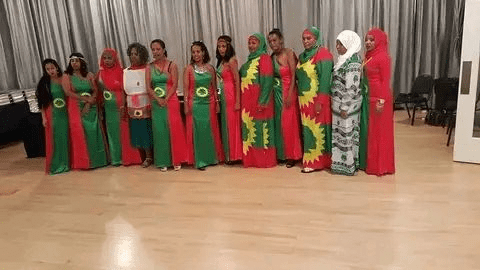
For decades, Oromo women have served as pillars of the liberation movement, from the battlefield to political organizing, paying the ultimate price for freedom
OROMIA/INTERNATIONAL — For generations, the Oromo people’s struggle for self-determination has been sustained by the courage, sacrifice, and unwavering commitment of its women. Within the Oromo Liberation Front (ABO), Oromo women have stood as “utubaa cimaa” —strong pillars—whose contributions have shaped every facet of the liberation movement .
From the armed struggle to political organizing, from those imprisoned and killed to those who preserved culture and identity, Oromo women have paid an enormous sacrifice. Their role has been not merely supportive but foundational—the very backbone upon which the struggle has been built .
Here are the key dimensions of Oromo women’s indispensable role within the Oromo Liberation Front .
1. Logistics and Combat Support: The Hidden Pillars
Long before they were visible as fighters, Oromo women served as the silent infrastructure of the liberation struggle. Operating in conditions of extreme danger, they undertook critical logistics and support roles that made armed resistance possible .
Women served as:
- Providers and nurturers for liberation fighters (WBO), ensuring they were fed, clothed, and cared for while operating in the bush
- Harborers and protectors, hiding freedom fighters in their homes at tremendous personal risk
- Couriers and intelligence operatives, transporting weapons, supplies, and vital information across enemy lines
- Lookouts and early warning systems, alerting fighters to approaching government forces
These roles carried immense danger. Women caught supporting the liberation struggle faced torture, imprisonment, rape, and death. Yet they continued, understanding that their courage sustained the fighters who carried the armed struggle forward .
2. Armed Struggle and Military Leadership
As the liberation movement evolved, Oromo women moved from support roles to direct participation in armed combat. Many women joined the guerrilla forces (WBO), serving as fighters and commanders who stood shoulder to shoulder with their male counterparts .
In the armed struggle, women:
- Received military training and participated in combat operations
- Served as unit leaders and commanders, directing operations
- Endured the same harsh conditions, long marches, and constant danger as male fighters
- Inspired their communities through visible courage and sacrifice
The presence of women fighters challenged not only the oppressive Ethiopian state but also traditional gender norms within Oromo society itself. By taking up arms for their people’s freedom, Oromo women demonstrated that liberation could not be achieved without them—and that their place in the struggle was not peripheral but central .
3. Political Organizing and Unity Building
Beyond the battlefield, Oromo women played crucial roles in building and sustaining the political infrastructure of the liberation movement. They understood that military struggle alone could not achieve liberation—that political consciousness, organization, and unity were equally essential .
Women’s political contributions included:
- Membership organizing, recruiting new supporters and expanding the movement’s reach
- Mass mobilization, inspiring communities to support the liberation cause
- Unity building, bridging divisions and fostering solidarity across clans, regions, and religious communities
- Political education, teaching Oromo history, language, and political consciousness
These organizing efforts often took place under constant surveillance and threat. Women organizers risked arrest, torture, and death simply for gathering people to discuss Oromo rights. Yet they persisted, building the political foundation upon which the armed struggle depended .
4. The Qeerroo and Popular Resistance: Leading the Peaceful Uprising
In more recent years, Oromo women have been at the forefront of the Qeerroo Bilisummaa Oromoo (Oromo Youth Liberation Movement) and the peaceful resistance that shook Ethiopia beginning in 2014. The struggle against land grabbing, political marginalization, and cultural suppression saw Oromo women emerge as visible and courageous leaders .
In this phase, women:
- Led and participated in mass protests demanding equality and justice
- Organized resistance networks using traditional social structures and modern technology
- Faced security forces with extraordinary courage, often at the front lines of demonstrations
- Sustained the movement through years of brutal crackdowns
The 2014-2018 protests that ultimately reshaped Ethiopian politics were sustained in significant part by Oromo women’s courage and determination. They marched, they organized, they documented abuses, and they refused to be silenced—even as bullets flew and tear gas filled the streets .
5. Sacrifice and Resilience: Surviving Imprisonment, Torture, and Loss
The price Oromo women have paid for their commitment to liberation is incalculable. Countless women have endured:
- Imprisonment for their political activities, often under brutal conditions
- Torture designed to break their spirit and force betrayal of comrades
- Rape used systematically as a weapon of war and intimidation
- Displacement from their homes and communities
- Loss of husbands, children, parents, and siblings killed in the struggle
- Witnessing the destruction of their communities and the suffering of their people
Yet remarkably, women emerged from these horrors not broken but strengthened in their resolve. Their resilience—the ability to endure unspeakable suffering and continue the struggle—has inspired generations and demonstrated that the Oromo people cannot be crushed .
As one veteran woman fighter reflected: “They took everything from us—our homes, our families, our bodies. But they could not take our commitment to freedom. That remained. That will always remain.”
6. Guardians of Culture and Identity: The Siinqee Tradition
Perhaps uniquely, Oromo women’s contribution to the liberation struggle has included the preservation and deployment of specifically female cultural traditions. Central to this is the Siinqee system—a traditional institution of women’s solidarity, mutual protection, and collective action that predates the modern liberation movement by centuries .
Through Siinqee, Oromo women have:
- Preserved cultural practices and knowledge passed down through generations
- Created spaces for women’s political organizing outside male-dominated structures
- Deployed traditional forms of protest and pressure that carry deep cultural authority
- Maintained Oromo identity and values even under conditions of extreme repression
- Passed Oromo language, history, and traditions to children when formal education was denied
The Siinqee tradition has proven remarkably adaptable, serving as both a cultural anchor and a tool for contemporary political organizing. It represents the deep roots of Oromo women’s resistance—roots that extend far beyond the modern liberation movement into the very foundations of Oromo society .
The Legacy Continues
Oromo women were the backbone of the Oromo liberation struggle. They remain so today. From the battlefields of the armed struggle to the streets of mass protests, from prison cells to political organizing meetings, from refugee camps to diaspora advocacy networks—Oromo women continue to carry the struggle forward .
Their contributions have not always received the recognition they deserve. Histories written by men sometimes minimize or overlook women’s roles. The sacrifices of women fighters and organizers have been less documented than those of their male counterparts. But the truth remains: without Oromo women, there would be no Oromo liberation movement.
As the Oromo people continue their journey toward self-determination and dignity, they do so standing on the shoulders of the women who came before—women who fed fighters, carried weapons, organized communities, endured torture, preserved culture, and refused to give up hope.
Honoring the Fallen, Supporting the Living
Among the countless Oromo women who have given their lives for freedom, many names are known—and many more are known only to those who loved them. Women fighters killed in combat. Women activists tortured to death in prisons. Women organizers disappeared and never found. Women refugees who died in exile, far from the homeland they loved.
The Oromo Liberation Front affirms its commitment to honoring these fallen heroines and supporting the women who continue the struggle today. Their sacrifices must never be forgotten. Their contributions must never be minimized. Their courage must continue to inspire.
ABO recognizes that without Oromo women, there is no liberation. Without Oromo women, there is no future. Without Oromo women, Oromia cannot be free.
May the struggle continue. May the women who carry it be honored. May Oromia be free.
This feature is dedicated to the countless Oromo women—known and unknown, living and departed—whose courage, sacrifice, and unwavering commitment have sustained the Oromo liberation struggle across generations. You are the backbone. You are the heart. You are the reason freedom remains alive.

Dabballee: The First Grade of the Gadaa System, Where Oromo Leadership Begins
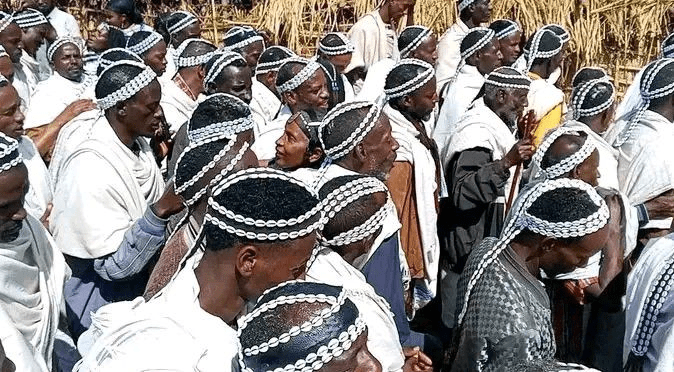
Understanding the foundational stage of one of the world’s oldest democratic governance systems
OROMIA, Ethiopia — In the rich tapestry of Oromo governance and culture, the Gadaa system stands as a remarkable indigenous democratic institution that has regulated the political, social, and religious life of the Oromo people for centuries. Recognized by UNESCO as Intangible Cultural Heritage of Humanity, this sophisticated system operates on an eight-year cycle, with leadership roles rotating among five distinct parties or grades .
At the very foundation of this system lies the first grade: Dabballee. The name itself carries profound meaning—it is the stage at which the journey toward leadership, responsibility, and community service begins .
Understanding Gadaa: A Brief Overview
Before exploring Dabballee, it is essential to understand the broader Gadaa system. This indigenous institution divides society into five age-based classes (known as Gogessa or Shanacha), each progressing through various grades over their lifetime. Leadership positions rotate every eight years between these classes, ensuring no single group holds power permanently and that governance remains participatory and accountable .
The system encompasses not only political leadership but also social organization, legal frameworks, cultural practices, and religious ceremonies. It is, in essence, the comprehensive framework through which Oromo society has traditionally organized itself .
Dabballee: The Foundational Grade
Dabballee represents the first grade in the Gadaa ladder, typically encompassing boys from birth until approximately eight years of age . During this stage, children are initiated into the Gadaa system through ceremonies that mark their formal entry into the Oromo social structure.
Key characteristics of the Dabballee grade:
- Age range: Typically from birth to approximately 8 years of age
- Status: Initiates who have entered the Gadaa system but have not yet assumed responsibilities
- Symbolic significance: Represents purity, potential, and the future of the Oromo nation
- Cultural education: Children in this grade begin learning Oromo traditions, language, and values
Ceremonies and Traditions
The entry into Dabballee is marked by important ceremonies that vary somewhat across different Oromo communities but share core elements. These rituals typically involve:
- The blessing of children by elders (Hayyoota)
- The symbolic marking of the child’s entry into the Gadaa structure
- Community gatherings that reinforce collective responsibility for raising the next generation
- Prayers for the children’s health, wisdom, and future contributions to the Oromo people
Elders play a crucial role in these ceremonies, passing on blessings and wisdom to the youngest members of the community. The involvement of elders underscores the intergenerational nature of the Gadaa system—knowledge and tradition flow from those who have completed the cycle to those just beginning their journey.
The Journey Through Gadaa Grades
From Dabballee, individuals progress through subsequent grades as they age, each with distinct responsibilities and privileges:
| Grade | Approximate Age | Role and Responsibilities |
|---|---|---|
| Dabballee | 0-8 years | Initial entry into system; cultural learning |
| Follee/Gamme | 8-16 years | Continued education; assisting elders |
| Qoondala | 16-24 years | Junior warriors; community service |
| Kuusaa | 24-32 years | Senior warriors; beginning of leadership training |
| Raaba Doorii | 32-40 years | Junior leadership; council participation |
| Gadaa | 40-48 years | Supreme leadership; governing the nation |
| Yuba I-III | 48-72+ years | Advisory roles; blessing and guiding |
Each stage builds upon the one before, with Dabballee providing the essential foundation upon which all later development rests.
Cultural Significance
The Dabballee grade embodies several core Oromo values:
Continuity: By initiating children into the system from birth, Oromo society ensures that each new generation inherits the cultural and political traditions of those who came before. Dabballee represents the unbroken chain linking ancestors to descendants.
Collective responsibility: The community’s role in raising and initiating children reflects the Oromo principle that children belong not only to their biological parents but to the entire community. The proverb “Ijoolleen keenya ijoolluma keenya” (Children are our children) captures this ethos.
Potential and promise: Dabballee children represent the future of the Oromo nation. The community invests in them, blesses them, and hopes that they will grow to lead with wisdom and integrity.
Equality: All Oromo children, regardless of family background, enter the Gadaa system through Dabballee. This foundational equality reflects the democratic principles that characterize the system at all levels.
Contemporary Relevance
While the full Gadaa system operates most comprehensively in certain Oromo communities, particularly among the Borana and Guji, its principles and grades—including Dabballee—continue to shape Oromo identity and values even among those living in urban areas or diaspora .
For Oromos worldwide, understanding grades like Dabballee provides connection to cultural roots and a framework for thinking about human development, leadership, and community responsibility. The system’s emphasis on age-based progression and regular leadership rotation offers insights that remain relevant for contemporary governance discussions.
Dabballee and Oromo Identity
The first grade of the Gadaa system holds special significance for Oromo identity formation. It is at this stage that children first learn who they are as Oromos—their language, their history, their responsibilities to community, and their place within a vast social structure that spans generations.
For Oromo communities in the diaspora, maintaining awareness of the Dabballee grade and its meaning helps preserve cultural continuity across geographic distance. Parents who may never have participated in formal Gadaa ceremonies themselves still invoke its principles and values in raising their children.
A UNESCO-Recognized Heritage
UNESCO’s 2016 inscription of the Gadaa system on the Representative List of the Intangible Cultural Heritage of Humanity brought international attention to this remarkable indigenous institution . The recognition highlighted not only the system’s sophistication but also its continuing relevance for contemporary discussions about democratic governance, intergenerational equity, and cultural preservation.
Within this recognized heritage, Dabballee holds a special place as the entry point—the grade through which every Oromo who participates in the system must pass, and the stage at which the values and traditions of Gadaa are first instilled.
Conclusion
Dabballee, the first grade of the Gadaa system, represents far more than an age category. It embodies the Oromo people’s commitment to raising children with intention, their belief in the potential of each new generation, and their understanding that leadership is not born but developed over time through careful preparation and community support.
As the Oromo people continue to navigate the challenges of the 21st century—in Ethiopia and across the global diaspora—the wisdom embedded in the Gadaa system, beginning with Dabballee, offers guidance. It reminds us that strong communities invest in their youngest members, that leadership requires lifelong preparation, and that the future depends on how we raise and honor our children today.
Dabballee—where the journey begins, and where the future of Oromia takes its first steps.

Bariisaa Newspaper Editorial Team Honors Founding Member Mr. Leencoo Lataa
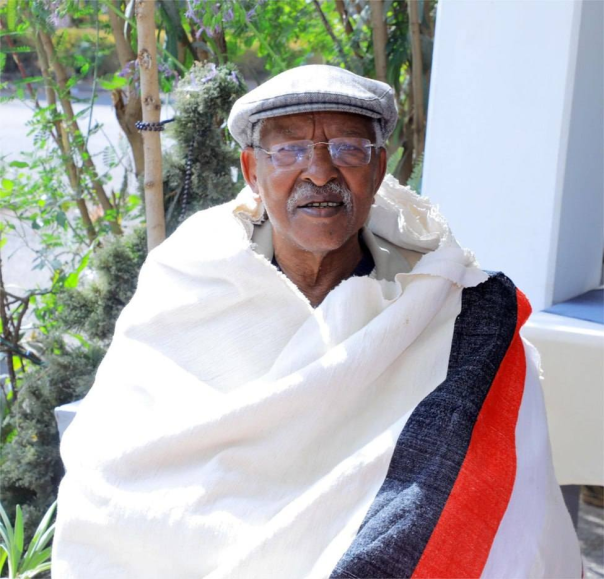
Veteran journalist and founding figure celebrated as Oromo-language publication marks 49th anniversary
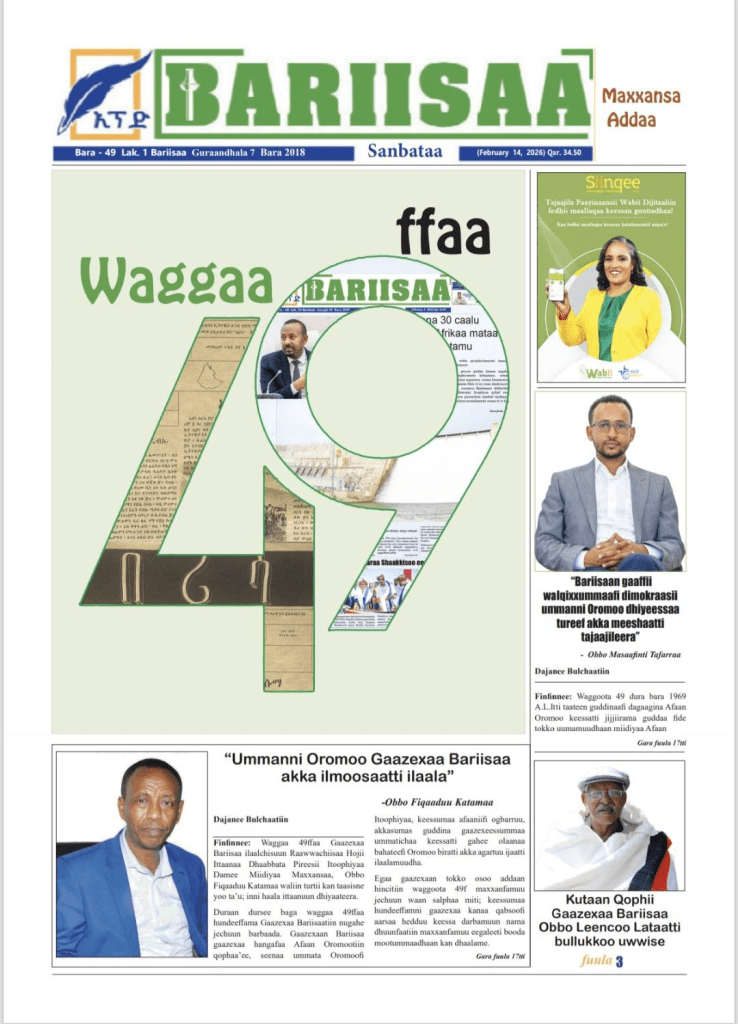
FINFINNE — The editorial team of Bariisaa Newspaper has paid tribute to Mr. Leencoo Lataa, one of the founding members of the historic Oromo-language publication, honoring his contributions as the newspaper commemorates 49 years since its establishment .
Mr. Leencoo Lataa stands among the pioneering figures who laid the foundation for what would become one of the most enduring and significant Oromo-language media outlets. Bariisaa Newspaper, which began as a privately initiated publication before transitioning to state ownership and now publishes weekly, has reached this milestone through the dedication of its founders and the generations of journalists who followed .
A Journey Through History
In an interview conducted this past Monday, marking the 49th anniversary of the newspaper’s founding, Mr. Leencoo Lataa shared extensive reflections on the establishment of Bariisaa and the challenges it has overcome to reach its current position .
The veteran journalist provided a comprehensive account of the newspaper’s founding era, detailing the vision that animated its creators and the obstacles they faced in bringing Oromo-language journalism to life. His testimony offers valuable historical insight into a period when establishing a newspaper in Afaan Oromo represented both a cultural assertion and a political statement.
Editorial Team’s Tribute
Following the interview, the Bariisaa Editorial Team honored Mr. Leencoo Lataa with a ceremonial covering of a bullukkoo—a traditional Oromo garment symbolizing respect and honor. The gesture acknowledged his foundational role in creating the newspaper that has served as a vital source of information and cultural preservation for nearly five decades .
The editorial team expressed gratitude for Mr. Leencoo’s lifelong commitment to Oromo journalism and his role in establishing an institution that has educated, informed, and connected Oromo readers across generations.
A Call to Future Generations
In his remarks, Mr. Leencoo Lataa expressed appreciation for the recognition and urged the current generation to further develop the newspaper and pass it on to future generations . His call reflects the intergenerational responsibility that has characterized Bariisaa’s journey—each generation building on the work of those who came before, preserving and advancing the legacy.
The veteran journalist’s appeal resonates particularly as Bariisaa approaches its golden jubilee next year. The challenge of maintaining relevance in a rapidly evolving media landscape, while staying true to the founding vision of serving Oromo readers in their mother tongue, falls to the current editorial team and the journalists who will follow.
Significance of the Recognition
The bullukkoo covering ceremony carries deep cultural significance within Oromo tradition. The garment, traditionally worn by elders and respected figures, symbolizes wisdom, authority, and the honor due to those who have served their community. By bestowing this honor upon Mr. Leencoo Lataa, the editorial team affirmed his place among the elders whose guidance and example continue to illuminate the path forward.
For the journalists and staff of Bariisaa, the ceremony also served as an opportunity to connect with the living history of their institution. In an era when media organizations often struggle to maintain institutional memory, such moments of recognition help preserve the stories and values that define Bariisaa’s identity.
Forty-Nine Years of Service
Bariisaa Newspaper’s 49-year journey spans multiple political eras, technological transformations, and shifts in the media landscape. From its origins as a privately founded publication to its current status as a weekly state-owned newspaper, it has consistently provided Oromo-language content to readers hungry for information in their mother tongue.
Throughout these decades, Bariisaa has chronicled the Oromo experience, documented cultural and political developments, and provided a platform for Oromo voices. It has trained generations of Oromo journalists, contributed to the development of written Afaan Oromo, and maintained a presence in the lives of Oromo readers both within Ethiopia and across the diaspora.
Preserving the Legacy
The interview with Mr. Leencoo Lataa, conducted by journalist Natsaannat Taaddasaa and published in the special edition of Bariisaa Newspaper dated February 7, 2018 (Ethiopian calendar), represents an important contribution to the historical record .
As Ethiopia’s media landscape continues to evolve and as Oromo journalism faces new challenges and opportunities, the testimony of founding figures like Mr. Leencoo Lataa provides essential perspective. Their experiences, insights, and wisdom can help guide current practitioners as they navigate the complexities of contemporary journalism while remaining faithful to the values that animated Bariisaa’s founders.
Looking Forward
With its 50th anniversary on the horizon, Bariisaa Newspaper stands at a threshold. The coming year offers an opportunity for reflection on nearly half a century of service, for celebration of achievements, and for renewed commitment to the mission that has sustained the publication through changing times.
Mr. Leencoo Lataa’s call to “further develop the newspaper and pass it on to future generations” encapsulates the challenge ahead. How can Bariisaa honor its legacy while adapting to new realities? How can it reach younger readers who consume media differently than their parents and grandparents? How can it maintain relevance in an age of social media and instant digital access?
These are the questions that the current editorial team, and those who follow, must answer. But they do so standing on the foundation laid by Mr. Leencoo Lataa and his fellow founders—a foundation strong enough to support nearly five decades of continuous publication and sturdy enough to bear the weight of future aspirations.
Gratitude and Commitment
As Bariisaa Newspaper celebrates its 49th anniversary and honors one of its founding figures, the editorial team expresses both gratitude for the past and commitment to the future. Gratitude for visionaries like Mr. Leencoo Lataa, who believed that Oromo readers deserved a newspaper in their own language and worked to make that belief reality. Commitment to carrying forward that vision, adapting as necessary but never losing sight of the fundamental purpose: serving the Oromo people with information, analysis, and cultural content that affirms their identity and supports their aspirations.
The bullukkoo that now covers Mr. Leencoo Lataa symbolizes not only honor for one man but continuity across generations. It represents the mantle passed from founders to successors, the responsibility to preserve and advance, and the enduring connection between past, present, and future.
As one era of Bariisaa’s history is honored, the next chapter begins.

Nuhoo Goobanaa (1939-2022): The Legendary Oromo Artist Whose Voice Became a Weapon of Liberation
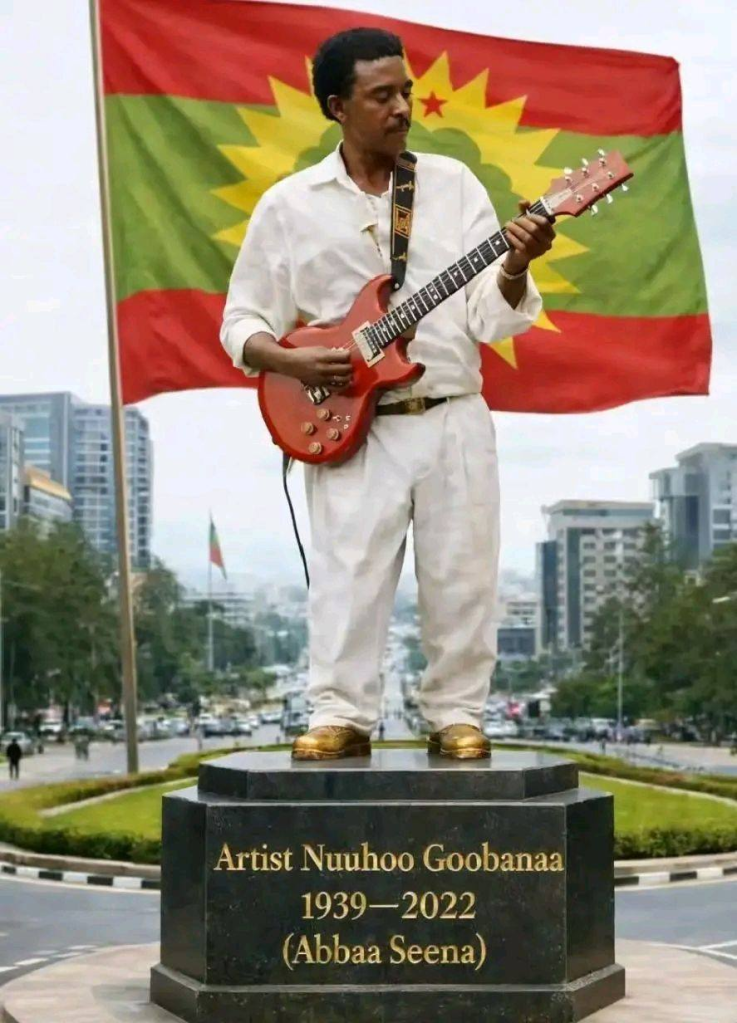
A towering figure of Oromo music and resistance, remembered for his timeless call for unity and freedom
OROMIA — Nuhoo Goobanaa, one of the most iconic and beloved figures in Oromo music and the struggle for cultural and political recognition, left an indelible mark on generations of Oromos through his powerful voice, poetic lyrics, and unwavering commitment to his people’s liberation. Born in 1938 in the historic eastern Oromia city of Dire Dawa to his father Muhaammad Goobanaa and mother Faaxumaa Adam, Nuhoo would grow to become the “virtuoso of revolutionary songs” whose influence transcended borders, languages, and generations.
Early Years: Awakening to Injustice
Nuhoo Goobanaa was born in Laga Mixe, East Hararghe Zone, but grew up in Dire Dawa, where his family moved when he was five years old. From an early age, his natural inclination for singing and art was evident. He began testing his vocals at Madrasa (Quran school) by adding lyrics and changing the rhythms to Manzuma (Islamic chants)—a creative impulse that occasionally landed him in trouble with his teachers. As a youth, he absorbed the rich musical environment of Dire Dawa, mimicking Hindi, Harari, and Sudanese songs that were abundant in the cosmopolitan city.
The trajectory of his life changed dramatically through his encounters with discrimination against the Oromo during the Haile Selassie era. As a teenager in the 1960s, Nuhoo would occasionally skip school to work as an interpreter at the local court in Dire Dawa. This experience exposed him directly to the injustices of the system: three judges presiding in Amharic, a language the majority Oromo population did not speak. The experience led him to profound questions that would shape his life’s work: “Who are the three panel of judges who spoke Amharic? Why didn’t they speak the language of the majority Oromo? Who are we [the Oromo]? Why are the Oromo treated differently?”.
Rather than accepting these injustices as inevitable, Nuhoo embarked on a transformative musical journey of self-discovery and political awakening. He dedicated his life to raising consciousness among his people, becoming one of the most beloved household names in Oromia.
The Birth of an Artist-Activist
In the early 1960s, as a teen, Nuhoo applied to join a newly formed Oromo music band called Biiftuu Ganamaa (The Morning Sun). At 14, he was deemed too young and denied membership. Undeterred, he signed on as a volunteer poet, staying up late at night writing lyrics until he earned his place in the band. “I used to write poems in Amharic and contribute to the band,” he recalled in a 2012 interview.
His formal entry into music came in 1960 when he joined the World of Music within the government structure, eventually becoming a voice alongside intellectuals and national figures. But Nuhoo was never merely an entertainer—he was an artist who carried a weapon, singing revolutionary songs day and night to support the Oromo liberation struggle.
Exile and the Spreading of the Message
Following the breakup of the Afran Qalloo band around 1968, Nuhoo fled to Djibouti as a refugee. It was there that he learned to play the guitar in just one month. “Art was already in me,” he recalled. “In Djibouti, I recorded two albums”. For Djibouti’s Independence Day celebrations in 1969, he performed musical works in Afaan Oromo, Somali, and Arabic.
His journey of exile took him across continents. He traveled to Yemen, Saudi Arabia, and Egypt, living in these countries for many years. In Saudi Arabia, he recorded and released his first through fourth albums, working alongside fellow artists including Elemo Ali, Jamal Ibro, and Aziz, producing music from their homes. During the 1980s, he lived as a refugee in Djibouti, Saudi Arabia, and Canada, never ceasing to create music that empowered his people.
In 1978, he and fellow Oromo artists made their way to Canada, where they continued producing revolutionary songs celebrating unity, love of country, and the struggle for liberation. His long-time friend and fellow musician Elemo Ali recalled of their time together in Saudi Arabia: “Back then, Nuho was doing songs to empower his people. His music was easily memorable”.
A Polyglot Voice for the Oromo
Nuhoo’s artistic reach extended far beyond Afaan Oromo. He recorded and performed in numerous languages, including English, Somali, Tigrinya, and notably Arabic making him the only Oromo artist to write and perform a full song in Arabic, symbolizing the deep connection between the Oromo and Sudanese peoples during a critical historical period. Another friend, Abdo Alisho, spoke of the power of his songs: “They made you love your country. Nuho lived for his people”.
The Return Home and Continued Struggle
When political changes came to Ethiopia in 1991, Nuhoo returned to Finfinne along with the Oromo Liberation Front and other organizations that had been in exile, establishing the transitional government. Together with fellow artists, he produced revolutionary and solidarity music at the OLF office and Lideta Hall at Finfinne University. Following the OLF’s withdrawal from the transitional government, Nuhoo returned to Canada.
But the dream of seeing a liberated Oromia kept calling him back. Though he had a comfortable life in Canada, it was not enough to satisfy his longing. He left Canada to live for several years in Yemen and Kenya, though life there proved difficult, and he faced various pressures from government authorities. In 2002, he made the decision to return from Kenya to his homeland, living in the Oromia he loved until his passing.
Musical Legacy: Tokkummaa and Beyond
Nuhoo Goobanaa’s songs spanned every conceivable aspect of Oromo life: the indignities of exile, the ups and downs of the Oromo struggle, the Oromo flag song (anthem), his beloved Oromia, yearning for home and return, Finfinne, the Gulalle of the early 1990s, love, family, marriage, cultural clashes among the Oromo diaspora, and his own winding life journey . By his own account, he wrote and produced an estimated 380 memorable songs across 38 albums.
His timeless classic “Tokkummaa” (Unity) is widely regarded as akin to an Oromo national anthem, serving as a powerful intergenerational call for transcendent unity of purpose. The song’s refrain—”Tokkummaa, Tokkummaa, Yaa Ilmaan Oromoo Tokkummaa” (Unity, Unity, O Children of Oromo, Unity)—became a rallying cry that resonated across generations.
Other seminal works include:
- “Yaa Rabbi” (Oh God), a spiritual invocation that became another fulcrum for Oromo unity
- “Isin Waamti Harmeen” and “Lallabanee” or “Nu Dirmadha” —desperate calls to action, reproaching and exhorting Oromo intellectuals and personalities to return to Oromia and confront injustice
- “Alaabaa Oromiyaa” —a concise homily on the aims and aspirations of the Oromo movement for self-determination
- “Dhufaan Jiraa” —a soulful and nostalgic yearning for home and belonging
- “Geerarsa” —a robust and searing criticism of dysfunction and failure in Oromo leadership
- “O Galaana Qonnaan Bulaa” and “Alaabaa” , songs whose lyrics became part of the cultural fabric of the struggle
One of his most famous lyrical passages decried division and appealed to Oromummaa as a unifying creed:
“Shan, kudha shan, shantam taatanii, Gargar facaatanii, Bineensa beelaweef hiraata taatanii” (Five, fifteen, fifty, you allowed yourselves to be divided and thus became prey for the hungry beast).
Influence on a New Generation
Nuhoo’s influence extended directly to the next generation of Oromo artists, most notably Hachalu Hundessa, whose songs became anthems in the wave of protests that reshaped Ethiopian politics in the late 2010s. After being partially paralyzed, frequent visits from younger prodigies like Hachalu lifted his spirits. At every opportunity, in speech and gesture, Nuhoo had one request of the Oromo: “Tokkummaa jabeessaa” (Strengthen your unity).
During and in the immediate aftermath of the Oromo protests, Nuhoo saw his dream partially fulfilled and marveled at the state of the Oromo struggle. His songs had laid the foundation for contemporary protest music in Oromia, inspiring, exhorting, and arousing fellow musicians and Oromos to do what was necessary for liberation.
Final Years: A Community’s Love
Nuhoo’s last decade was marked by profound struggle. Around 2007/08, he suffered a stroke that partially paralyzed him and affected his powerful voice. From approximately 2013 onward, he was unable to continue performing. His yearning to live and work among his people was thwarted by deteriorating health.
The Oromo community, both at home and in the diaspora, rallied around their beloved artist. When fans realized the seriousness of his situation, multiple global fundraisers were organized for his medical treatment. In 2013, through the initiative of community members, a campaign called “Let’s Buy Nuhoo a House” succeeded in purchasing a home for him in Adama, east of the capital. The GoFundMe campaign organized for his support emphasized: “It is the responsibility of the entire community that lived off of his lyrics and his strong words to support him in his time of need”.
Despite these efforts, Nuhoo never fully regained his roaring voice, strength, or towering presence . Speaking to the BBC from his hospital bed two years before his death, his message to fans remained consistent: “Keep your unity strong” .
Passing and Funeral
Nuhoo Goobanaa passed away on Tuesday, January 18, 2022, at the age of 74, after a long illness. He died in Adama, in the house that fans had helped purchase for him.
However, the Oromo biography provided for this feature notes that the artist passed away on October 25, 2023 (G.C.) in Oslo, Norway, while undergoing medical treatment. According to this account, cancer was discovered in addition to the stroke that had afflicted him, and despite receiving treatment, his body resisted healing. Following his death, his body was transported back to his homeland (Oromia), and a funeral ceremony was conducted with great honor in Finfinne.
A Legacy That Endures
Nuhoo Goobanaa was more than a musician—he was a “pioneering singer-songwriter and guitarist whose name is near synonymous with Tokkummaa”. He embodied Oromummaa and lived a selfless life of service and struggle. As one tribute noted: “Nuho dedicated his life to promoting the virtues of Tokkummaa and Oromummaa. He leaves behind a momentous legacy that will inspire current and future generations”.
Dr. Awol Kassim Allo, in a comprehensive tribute, wrote: “Nuho’s songs are healing and transformative, expanding our sensibilities and teaching us to pay attention not just to the large-scale system of oppression he witnessed in the courts as an interpreter but also to the everyday, the familiar, the emotional, and intimate aspects of our lives”.
The Oromia Tourism Commission, in its memorial statement, expressed: “The Oromia Tourism Commission expresses its deep sorrow at the death of the hero Artist Nuhoo Goobanaa. May God grant him paradise. We wish strength to his family, relatives, fans, and the entire Oromo people”.
Fana Broadcasting Corporate, in its announcement of his passing, noted: “In addition to Nuhoo’s struggle for the development of Oromo art and language, the work he contributed to the Oromo political struggle holds a significant place in the history of the people’s struggle. Nuhoo understood the divisive politics and factionalism within the Oromo struggle and sang as an artist for Oromo unity”.
A Photograph as Memory
The photograph accompanying this feature captures Artist Nuhoo Goobanaa in 1991 at Gulallee prison, during a moment of singing—a poignant image preserved as a memory of him, combined with the legacy that lives on in our hearts.
Conclusion
Nuhoo Goobanaa’s life was a testament to the power of art as a weapon in the struggle for justice, dignity, and self-determination. From the courts of Dire Dawa where he first witnessed injustice, to the refugee camps of Djibouti where he learned to play guitar, to the stages of Canada, Europe, and the Middle East where his voice thundered for Oromo liberation, he never wavered in his commitment.
His songs remain—hundreds of them—carrying forward his message of unity, his critique of division, his love for his people, and his unwavering hope for Oromo liberation. As the Oromo people continue their journey, Nuhoo Goobanaa’s voice echoes across generations, still calling them to unity, still reminding them of who they are, still urging them forward.
“Nuti lallabna nuti qabsaa’ota…” (We proclaim, we are struggle participants…)
Rest in power, Nuhoo Goobanaa. Your voice never dies.

Oromo Liberation Front Warns: “The Cloud of War Drifting Across the Country and the Danger It Brings to Oromia Is Severe and Heinous”
OLF calls for united stand against cross-border incursions and lasting peaceful solution to Ethiopia’s conflicts
(February 17, 2026, FINFINNE) — The Oromo Liberation Front (OLF/ABO) has issued a stark warning about the escalating security situation in Ethiopia and the severe danger posed to Oromia by ongoing conflicts. In a statement released on February 17, 2026, the organization characterized the recurring “cloud of war drifting across the country” as an increasingly grave threat to the Oromo people and their homeland.
“The security situation in our country has been concerning for decades,” the statement reads. “Oromia has for generations been transformed from a land where peace, stability, and promising development should prevail into a battlefield of war interests and political machinations”.
Decades of Unresolved Conflict
According to the ABO statement, the persistent cloud of war that continues to drift across the country has its roots in decades of unresolved political, military, economic, and social problems. The unceasing conflicts emanating from within the country have continued for generations and show no signs of abating.
Specifically, the organization points to conflicts over land grabbing and resource exploitation in Oromia, as well as territorial expansion by Abyssinian and colonial systems, as ongoing drivers of violence that have continued without interruption.
“The struggle of Oromo people and Oromia residents has been unceasing,” the statement notes. “Although the war devastating Oromia sometimes retreats, because the desire and ambition to plunder Oromia have not stopped, the dream of yesterday and today continues to attack Oromia, and efforts to forcefully seize it have not ceased”.
The Post-1991 Context
The statement particularly emphasizes the severe and heinous harm inflicted upon Oromo people and Oromia residents since the 1991 Charter period. The ABO describes being pushed out of the transitional government through tactical political maneuvering by forces competing for influence, leaving Oromia as a battlefield of looting and exploitation.
As a result, the organization asserts, Oromo people and Oromia residents have been impoverished while outsiders have prospered in their land. Oromia—blessed and fertile—has become a land where its own residents are impoverished while others thrive.
Escalating Violence in Recent Years
In the past eight years specifically, the ABO reports that in addition to the ongoing conflict throughout Oromia, armed incursions by irregular forces crossing Oromia’s borders have further disturbed the peace of Oromia residents.
“Oromia’s borders have been breached, many areas have been left without Oromia administration, land and property owners have been forcibly displaced from their lands, Oromo property has been forcibly looted, innocent people have lost their lives unnecessarily, and the peaceful existence of Oromia residents has been prevented”.
The statement details the multifaceted damage caused by cross-border armed incursions:
- Displacement of peaceful residents from their lands and properties
- Economic deterioration through looting and destruction
- Weakening of social trust and community cohesion
- Proliferation of divisive ideologies and deepening fragmentation
- Absence of effective governance and public administration
- Complete erosion of public trust in government
Call for Comprehensive Peaceful Solution
To mitigate the damage and losses caused by war, the OLF/ABO has consistently advocated for comprehensive peaceful solutions. The organization reiterates its call for:
- Genuine and inclusive political dialogue conducted by the government with all relevant parties
- Proper respect for democratic rights and human rights
- Resolution of regional boundaries through law, dialogue, and lasting agreement rather than force
- Public and international community participation in matters of national peace and security
“These are not merely desirable but essential,” the statement emphasizes.
Regional Context and Urgent Threat
The OLF warns that given the instability, conflicts, and humanitarian crises affecting the Horn of Africa region, combined with the dangers of ongoing war and absence of political solutions, Oromia risks continuing as a battlefield of war interests and political machinations.
“The Oromo people and Oromia residents must not accept this,” the organization declares. “To prevent the evil and heinous consequences of border violations into Oromia, standing united—beyond political and other differences—is the duty imposed by the future situation we face”.
A Call for Unity
The statement concludes with a powerful appeal for Oromo unity in defense of their homeland:
“Therefore, we urge that the Oromo people and Oromia residents, both within and outside, stand together to protect their land and borders from the drifting cloud of war that crosses boundaries and enters their territory—uniting beyond political and other differences—and recognize that collaboration is a national duty”.
The ABO also calls upon social and political actors in the country who genuinely seek peaceful solutions, as well as human rights organizations, the international community, diplomats, and various embassies in the country, to prioritize lasting peace and stability as a matter of collective concern.
Renewed Commitment
“The Oromo Liberation Front reaffirms that it will continue to fulfill its responsibility to protect the peace of Oromia, united with its people”.
The statement is signed and dated February 17, 2026, in Finfinne, carrying the organization’s motto: “Victory to the Masses!”
This report is based on an official statement issued by the Oromo Liberation Front (ABO) on February 17, 2026, addressing the security situation in Oromia and calling for peaceful resolution of conflicts and united defense of Oromia’s territorial integrity.

Ethiopia to Mandate Premarital Training Certificate for Couples Seeking Marriage
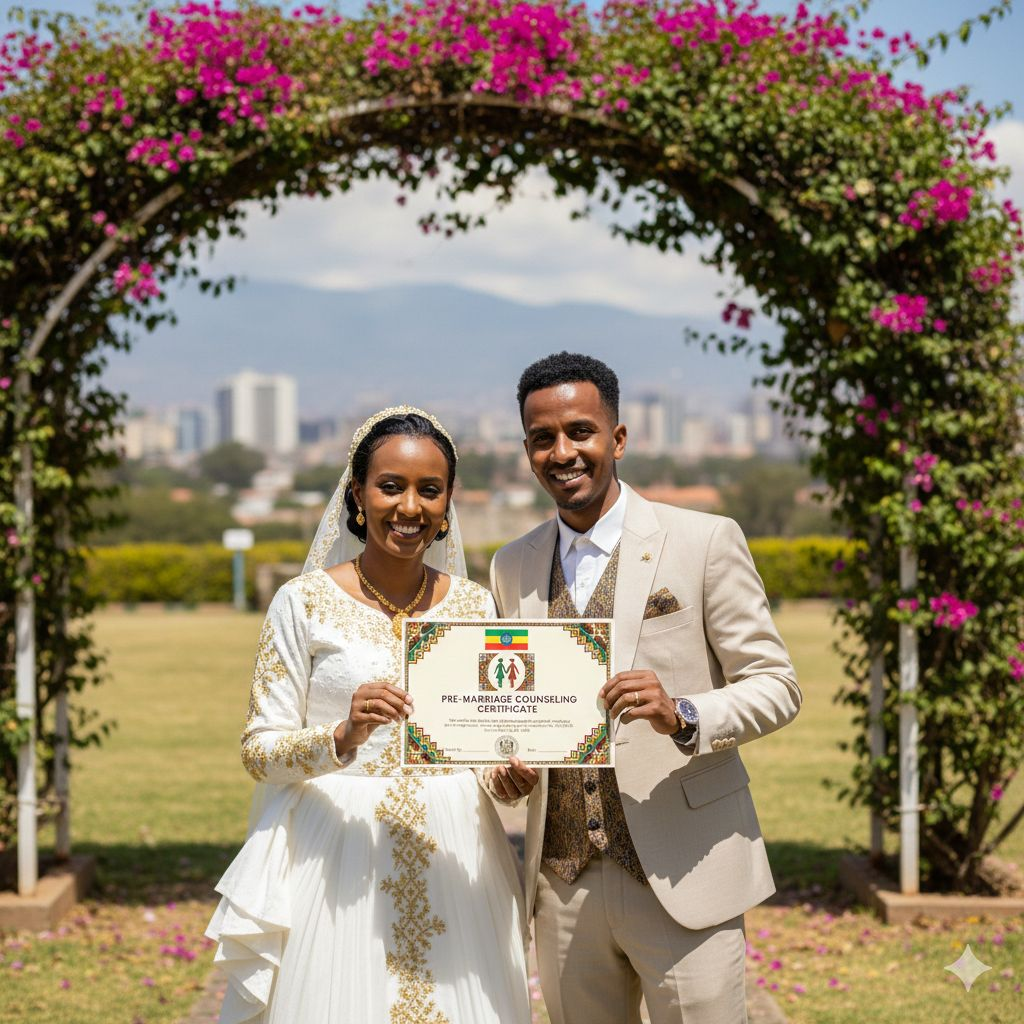
Ministry announces new regulation to combat skyrocketing divorce rates through mandatory education and certification
ADDIS ABABA — In a landmark initiative aimed at reversing Ethiopia’s rising divorce rates, the Ministry of Women and Social Affairs has announced plans to implement mandatory premarital training certification for all individuals seeking to enter into marriage. The new regulation would prohibit anyone without the required certificate from legally marrying .
The innovative approach, slated to take effect next year, represents a significant intervention in Ethiopia’s social policy landscape, targeting what officials identify as a primary cause of marital breakdown: lack of awareness and understanding about the realities of married life .
Alarming Statistics Drive Policy Response
The announcement follows concerning data released by the Addis Ababa City Civil Registration and Residence Service Agency, which revealed that divorce rates have increased by 54 percent compared to previous years. With over 20 million families currently in Ethiopia, the stability of the family unit has emerged as a pressing national concern demanding urgent attention .
Mr. Tesfaye Robele, Chief Executive for Elderly and Family Affairs at the Ministry of Women and Social Affairs, confirmed that preparations are underway to implement the system in the coming year. Speaking to Sheger Radio, officials outlined the ministry’s comprehensive approach to addressing what they describe as a crisis in Ethiopian family life .
“We have prepared training manuals to address this problem,” Mr. Tesfaye stated. “The primary cause for many marital breakdowns is the lack of awareness and understanding about what marriage truly entails” .
Collaborative Development with Religious and Community Leaders
Recognizing that marriage in Ethiopia is deeply intertwined with religious and cultural traditions, the ministry is pursuing a collaborative approach to implementation. Officials emphasize that the new system will be developed in consultation with religious institutions and community elders, ensuring respect for diverse cultural and faith-based marriage traditions .
“We are working in consultation with religious institutions and elders,” Mr. Tesfaye confirmed, highlighting the ministry’s commitment to creating a system that honors Ethiopia’s rich diversity of marriage practices while establishing consistent standards for preparation .
This collaborative framework acknowledges that marriage ceremonies in Ethiopia are performed through various institutions—religious bodies, civil authorities, and traditional community structures—all of which will need to participate in implementing the new requirements.
Comprehensive Strategy Beyond Certification
The premarital certification requirement represents just one component of a broader strategy to strengthen Ethiopian families. The ministry also announced the establishment of a joint forum bringing together various institutions working on family issues .
According to Mr. Tesfaye, this forum aims to identify and address gaps in family management practices while providing recommendations and guidance to the government on necessary actions to support family stability. The initiative reflects a holistic understanding that healthy marriages require ongoing support, not merely preparation before the wedding .
“We must begin the journey toward national change starting from the family,” the official emphasized, highlighting the fundamental role that stable households play in broader societal development . This perspective positions family stability as not merely a private concern but a public good essential to national progress.
Training Curriculum and Implementation
Ministry officials indicate that training manuals have already been prepared for the program. While specific curriculum details are still being finalized in consultation with religious and community leaders, the training is expected to cover fundamental aspects of marriage including communication skills, conflict resolution, financial management, and realistic expectations about married life .
The duration of required training and specific certification mechanisms remain under development, with implementation details to be announced following the consultation period. The goal of launching within the next year provides a clear timeline for completing these preparations .
Addressing a Growing Social Challenge
Ethiopia’s divorce rate increase of 54 percent reflects broader social transformations affecting families across the nation. Urbanization, changing gender roles, economic pressures, and evolving social expectations have all contributed to shifting dynamics in marital relationships .
The ministry’s initiative recognizes that many couples enter marriage with romanticized expectations rather than practical understanding of the commitment involved. By requiring structured preparation, officials hope to reduce the likelihood of marriage breakdown stemming from preventable misunderstandings or mismatched expectations.
Religious and Cultural Considerations
The collaborative approach with religious institutions acknowledges the complex landscape of marriage in Ethiopia, where religious ceremonies carry legal weight and traditional marriages performed by community elders remain common. Any successful intervention must work within these existing structures rather than attempting to supersede them.
Ethiopia’s religious diversity—encompassing Orthodox Christianity, Islam, Protestant Christianity, and traditional belief systems—means that marriage preparation will need to accommodate varied perspectives while maintaining consistent core content about marriage fundamentals.
Potential Impact and Challenges
If successfully implemented, the mandatory premarital training requirement would position Ethiopia among a growing number of countries recognizing the value of marriage preparation. Research in other contexts has suggested that well-designed premarital education can reduce divorce rates by helping couples develop realistic expectations and essential relationship skills.
However, implementation challenges remain significant. Ensuring accessibility of training across Ethiopia’s diverse regions, managing costs for prospective couples, and maintaining consistent quality while respecting local traditions will require careful planning and adequate resources.
The ministry’s emphasis on collaboration with existing institutions—religious bodies, community elders, and family service organizations—suggests an awareness that successful implementation depends on building upon established community structures rather than creating parallel systems.
Broader Social Implications
The initiative reflects growing recognition in Ethiopia that family stability has cascading effects on broader social outcomes. Children from stable households generally show better educational and health outcomes, while family breakdown can contribute to economic hardship and social challenges .
By intervening at the point of marriage, the ministry aims to prevent problems before they develop rather than responding after families have already fractured. This preventive approach aligns with public health models that emphasize early intervention and education as cost-effective strategies for addressing social challenges.
Looking Forward
As Ethiopia prepares to launch this innovative program, attention will focus on the consultation process with religious and community leaders, the development of culturally appropriate training materials, and the establishment of certification mechanisms that are accessible to all Ethiopians regardless of location or economic circumstance.
The coming year will see these elements take shape, with ministry officials working to transform policy announcement into operational reality. If successful, Ethiopia’s experiment in mandatory marriage preparation could offer lessons for other nations grappling with similar challenges of family stability in rapidly changing societies.
For Ethiopian couples planning to marry in the coming years, the new requirement will add an additional step to the marriage process—one that officials hope will prove invaluable in building the foundation for lasting, healthy unions. As Mr. Tesfaye emphasized, the ultimate goal extends beyond certification to the creation of stable families capable of contributing to national development and social wellbeing .

The TPLF: A Brutal Force That Should Never Have Been Given a Single Day’s Opportunity as an Organization
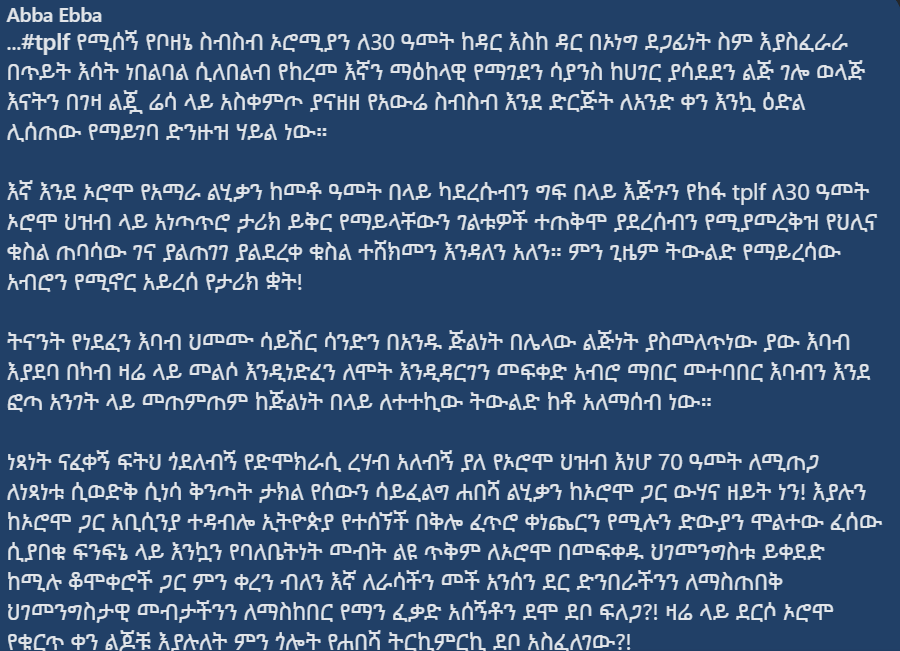
Oromo voices reflect on three decades of suffering under Tigrayan-led rule
FINFINNE — In a powerful and searing social media commentary that has resonated across Oromo networks, a voice identified as Abba Ebba has articulated the deep historical wounds and enduring grievances of the Oromo people against the Tigray People’s Liberation Front (TPLF), describing the organization as a “brutal force” that should never have been legitimized .
The statement, shared under the hashtag #Abba_Ebba, offers a raw and unflinching examination of the TPLF’s three-decade rule over Ethiopia and its specific impact on the Oromo people—a period the author describes as inflicting wounds “far worse than a hundred years of Abyssinian elite oppression” .
Thirty Years of Suffering
According to the commentary, the TPLF, operating under the banner of the Ethiopian People’s Revolutionary Democratic Front (EPRDF), controlled Oromia for thirty years, threatening the region from end to end in the name of supporting the Oromo Liberation Front (OLF) while actually enveloping the land in flames of gunfire .
The author describes how the TPLF blocked Oromos from the center, drove them from their country, killed children, and placed mothers upon the corpses of their own offspring in acts of unspeakable cruelty . This “collection of beasts,” as the author characterizes the TPLF, is portrayed as having committed atrocities that have left permanent scars on the Oromo collective consciousness .
“More than a hundred years of oppression by Abyssinian elites, the TPLF targeted the Oromo people for thirty years with historically unforgivable atrocities, using every means available,” the statement reads. “The wound of conscience they inflicted upon us is still unhealed, a scar not yet dried—we carry this unhealed wound with us” .
A Legacy That Lives With Generations
The commentary emphasizes that these historical wounds are not merely past events but living realities carried by the Oromo people. “Generations will not forget—it lives with us, an unerasable historical scar” .
The author draws a powerful analogy: “Yesterday, a snake bit us. Before the pain subsided, because of the foolishness of one and the childishness of another, we let it escape. That same snake, growing fat and multiplying, has returned today to bite us again, to bring us to death” .
Allowing this to happen, the author argues, is worse than foolishness—it is a failure to think of the coming generation. Collaborating with such forces, treating the snake as if it were a towel to be wrapped around one’s neck, represents a profound betrayal of the future .
The Quest for Freedom and Justice
The commentary gives voice to the Oromo people’s longstanding aspirations: “The Oromo people who say ‘I long for freedom, justice has been denied me, I hunger for democracy’—here they are, for nearly 70 years falling and rising in their struggle for freedom” .
Unlike others, the author asserts, Oromos have never sought scraps from anyone’s table. Yet Abyssinian elites have consistently declared, “We are like water and oil with Oromos!” while simultaneously claiming to have created a hybrid “mule” called Ethiopia through fusion with Oromos .
The author questions how, when the constitution grants special rights to Oromos even in Finfinne, there are those who would tear up the document, asking what remains for Oromos. “When will we stand up for ourselves, to protect our borders, to secure our constitutional rights—whose permission do we need to seek?” .
Today, the author notes, people say of Oromos, “They are children of the moment.” But what need has the Oromo of Abyssinian political maneuvering and crumbs?
The Folly of Sacrificing Justice for Peace
The commentary critiques those who urged compromise: “Yesterday, for the sake of peace, we abandoned justice! We forgave what you did publicly! There is no peace without justice” .
Those who stole wealth, whether collectively or individually, who used power to destroy lives, burn forests, displace people, commit inhuman acts in any form—the author insists they must not escape accountability .
Questions are raised about political transitions: “What and who is bringing the transition? From where to where?” The author suggests that those who mocked others for not understanding politics are now seeing the consequences .
What once appeared to some as downhill before them now seems as distant as the sky, transformed into an uphill struggle. “Are you truly not angered as you watch?” the author asks, suggesting that deep regret, not indifference, is the appropriate response .
Historical Memory: The Western Oromo Confederation of 1936
The commentary invokes a crucial but often overlooked chapter of Oromo history: the Western Oromo Confederation of 1936. Before the TPLF was even created, Oromos sent a delegation to the United Nations seeking to govern themselves through confederation .
This historical episode, disrupted by Italy’s five-year colonization of Abyssinia, demonstrates the long-standing Oromo pursuit of self-determination, predating the TPLF’s emergence by decades .
The author cites scholarly work by Ezekiel Gebissa on “The Italian Invasion, the Ethiopian Empire, and Oromo Nationalism: The Significance of the Western Oromo Confederation of 1936,” pointing to a tradition of Oromo political organizing that Abyssinian and Tigrayan narratives have systematically obscured .
Cultural Appropriation: The Heritage of “Weyane”
The commentary also raises questions of cultural appropriation, asking whether the TPLF has forgotten that “Weyane”—the traditional struggle strategy from which the organization derives its name—is actually Oromo heritage from Raya and Rayuma .
This observation, the author explains, is offered to counter any suggestion that Tigrayan or Amhara elites taught Oromos about freedom struggle. The historical record, including scholarship on “Peasant Resistance in Ethiopia: the Case of Weyane” published in the Journal of African History, demonstrates that Oromo traditions of resistance long preceded TPLF organizing .
The Complexity of Recognition
The author acknowledges that the situation is complex—like makeup applied and removed, artificial people appearing before cameras, living under disguise. But the weight of the matter, they emphasize, concerns the supremacy of the people, the formation of the nation, the debt owed to fathers, mothers, and faith .
“Knowledge means grasping the trunk of the tree, not hanging on its branches—hold the branches and you will fall” .
A Warning Unheeded?
The commentary concludes with a stark image: “O TPLF! The one who never says ‘enough’ will spit and continue. ‘Emboor! Emboor!’ (Get away! Get away!) they say to those who hold back and separate—now the flood has reached the neck, asking ‘What has brought my situation?'”
This metaphorical warning suggests that those who ignored calls for restraint and justice now find themselves overwhelmed by consequences of their own making .
Historical Context
The TPLF led the armed struggle that overthrew the Derg regime in 1991 and subsequently dominated Ethiopian politics for nearly three decades until Prime Minister Abiy Ahmed came to power in 2018. During their rule, the TPLF was the dominant force within the EPRDF coalition, controlling the levers of state power and directing security forces that, according to numerous human rights reports, committed widespread abuses against civilians in Oromia and other regions .
The period from 1991 to 2018 saw repeated military campaigns in Oromia, mass arrests of Oromo activists and politicians, and systematic suppression of Oromo political expression. The International Criminal Court’s Office of the Prosecutor noted in 2019 that it had received information regarding alleged crimes against humanity in Ethiopia dating back to 2015, including in Oromia .
Contemporary Relevance
The commentary appears against the backdrop of ongoing tensions in Ethiopia’s post-2018 political transition. While the TPLF was removed from federal power, it retained control over Tigray regional state until the recent Tigray War (2020-2022) dramatically altered the political landscape .
For Oromos, the question of accountability for past abuses remains unresolved. Many Oromo activists and politicians have called for justice for victims of TPLF-era atrocities, even as they navigate complex relationships with other political forces in contemporary Ethiopia .
A Voice for the Unhealed Wound
Abba Ebba’s commentary gives voice to what it describes as an “unhealed wound” in Oromo collective memory—the accumulated trauma of three decades of TPLF rule that compounded more than a century of Abyssinian domination .
The response to the post, shared widely across Oromo social media networks, suggests that these sentiments resonate deeply within the Oromo community. The demand for justice, the insistence on historical memory, and the refusal to accept narratives that minimize Oromo suffering emerge as consistent themes .
As Ethiopia navigates an uncertain political future, with ongoing conflicts in multiple regions and unresolved questions about the country’s constitutional order, voices like Abba Ebba’s serve as reminders that for many Oromos, the past is not past—it is a living wound that demands acknowledgment and, ultimately, healing through justice .
Whether such justice will be achieved, and what form it might take, remains one of the most pressing and unresolved questions in Ethiopian politics. For the Oromo people, as the commentary makes clear, the struggle continues—not only for freedom and democracy in the future but for acknowledgment and accountability for the crimes of the past.

Celebrating 49 Years of Bariisaa: A Voice for Oromo Equality
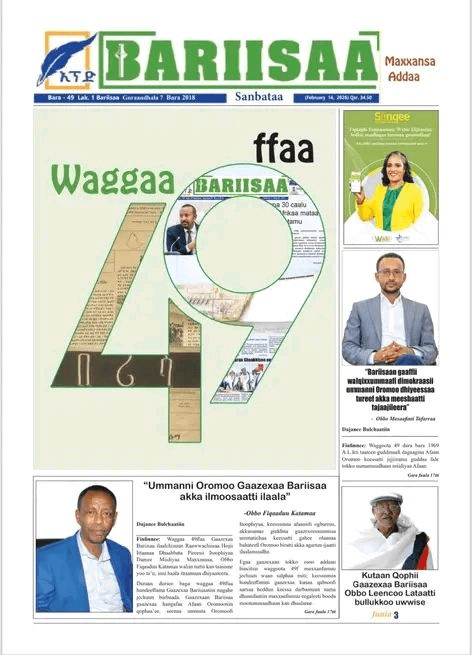
“Bariisaa Served as a Tool for the Oromo People’s Quest for Equality and Democracy”
– Mr. Masafinti Tafarraa
Oromo-language newspaper marks 49 years of serving as a beacon of information, identity, and struggle
FINFINNE — Forty-nine years ago, in 1969 E.C. (1976/77 G.C.), a transformative development in the growth and flourishing of the Afaan Oromo language occurred that would fundamentally reshape the landscape of Oromo media and lay the foundation for where Oromo-language outlets stand today: the establishment of Bariisaa Newspaper .
In an era before the proliferation of science and technology, when broadcast media could be counted on one’s fingers and the internet had not yet become the domain of a generation, the Oromo people’s love, effort, and desire for information and knowledge could only be satisfied through written word. It was in this context that the demand for and acceptance of newspapers was immense .
Bariisaa Newspaper, carried forward by scholars and heroes who toiled from afar and succeeded, passing from generation to generation through the接力 of struggle against tyranny, has now marked 49 years of existence .
Today marks the anniversary of Bariisaa Newspaper’s founding—for the Oromo people, a day when the dawn of information and knowledge shone brightly, just as the name “Bariisaa” (Dawn) suggests the morning star appears .
A Tool for the People’s Struggle
In an interview commemorating the anniversary, Mr. Masafinti Tafarraa, Executive Officer of the Ethiopian Press Agency, shared reflections on the newspaper’s historic role .
According to Mr. Masafinti, from its inception through half a century of service, Bariisaa Newspaper has undertaken and achieved great work for the freedom, equality, and democracy of the Oromo people .
Crucially, he noted that Bariisaa was established precisely at a time when the Oromo people’s demand for equality and democracy was being raised. In this context, the newspaper served as a vital medium of communication for the people’s aspirations .
Following that period and continuing after the people’s demands were reiterated, Bariisaa never halted its mission but persevered and has arrived at today’s milestone .
The founders of the newspaper were themselves participants in the struggle for the people’s equality movement at that time and played significant roles. Through their involvement, the newspaper became intertwined with the contemporaneous struggle being waged .
A Legacy of Forty-Nine Years
For nearly five decades, Bariisaa has chronicled the Oromo experience, documenting both the ordinary and extraordinary moments of Oromo life while serving as a platform for intellectual and political discourse. The publication has weathered changing political climates, technological revolutions, and shifts in the media landscape while maintaining its commitment to providing information in Afaan Oromo.
The newspaper’s endurance through nearly half a century reflects both the dedication of those who have sustained it and the persistent hunger for Oromo-language media among its readership. From its early days when written word was the primary means of mass communication to the contemporary era of digital media, Bariisaa has adapted while maintaining its core mission.
The Founders’ Vision
The founders of Bariisaa were not merely journalists but activists who understood the power of the written word in advancing the cause of equality. By establishing a newspaper in Afaan Oromo at a time when the language itself was marginalized, they made a profound statement about Oromo identity and the right to information in one’s mother tongue.
Their vision extended beyond simple news reporting to encompass the broader struggle for recognition and rights. The newspaper became both a record of that struggle and a participant in it, documenting abuses while articulating aspirations.
From Print to Digital: Evolution of a Legacy
As Bariisaa celebrates 49 years, it does so in a media environment dramatically transformed from its founding era. The broadcast media that were once scarce are now abundant, and the internet that was unknown to the generation of the 1970s has become ubiquitous.
Yet the fundamental need that Bariisaa addresses—the desire of Oromo people to receive information and analysis in their own language, reflecting their own perspective—remains unchanged. The newspaper has evolved alongside technology, with many readers now accessing content digitally while others continue to value the tangible experience of print.
Cultural and Linguistic Significance
Beyond its journalistic function, Bariisaa has played an important role in the development and standardization of written Afaan Oromo. At a time when the language was primarily oral in many contexts, the newspaper provided a model for written expression and helped establish conventions that would influence subsequent Oromo-language publishing.
For generations of Oromo readers, Bariisaa has been a window onto their world and beyond—a source of news, analysis, and cultural content that affirmed the value and vitality of their language. The newspaper has helped maintain and strengthen Oromo identity, particularly among diaspora communities separated from their homeland.
Forty-Nine Years of Service
The 49th anniversary represents a significant milestone, approaching the half-century mark that will be celebrated next year. For an independent publication to endure for nearly five decades in challenging political environments is a testament to the commitment of its staff, the loyalty of its readers, and the enduring need it fulfills.
Mr. Masafinti Tafarraa’s acknowledgment of Bariisaa’s role as a “tool” for the Oromo people’s quest for equality and democracy captures the publication’s essential character. It has never been merely a commercial enterprise or a neutral conveyor of information, but rather an institution deeply engaged with the aspirations of the people it serves.
Looking to the Future
As Bariisaa approaches its golden jubilee, questions of sustainability, adaptation, and continued relevance arise. The media landscape continues to evolve rapidly, with social media and digital platforms reshaping how people consume information. Younger generations, in particular, may engage with news differently than their parents and grandparents.
Yet the need that Bariisaa addresses—for information in Afaan Oromo that speaks to Oromo concerns from an Oromo perspective—remains as pressing as ever. The newspaper that has survived and thrived for 49 years has demonstrated remarkable adaptability, and there is every reason to believe it will continue to find ways to serve its readership.
A Dawn That Continues to Shine
The name Bariisaa—Dawn—carries with it the promise of new beginnings and the light that follows darkness. For forty-nine years, the newspaper has lived up to its name, bringing the light of information and knowledge to successive generations of Oromo readers.
As Mr. Masafinti Tafarraa’s reflections make clear, Bariisaa’s significance extends beyond its role as a news outlet. It stands as a testament to the power of the written word in struggles for justice, a record of a people’s journey through nearly five decades of change, and a continuing voice for equality, democracy, and the rights of the Oromo people.
The 49th anniversary of Bariisaa Newspaper is not merely a celebration of longevity but a recognition of enduring purpose—a purpose rooted in the struggles of the past and reaching toward the dawn of a future where the aspirations that gave birth to the publication may finally be realized.

Dinqinesh Dheressa and Dr. Trevor Trueman: Two Pillars of the Oromo Struggle Forever Remembered with Honor
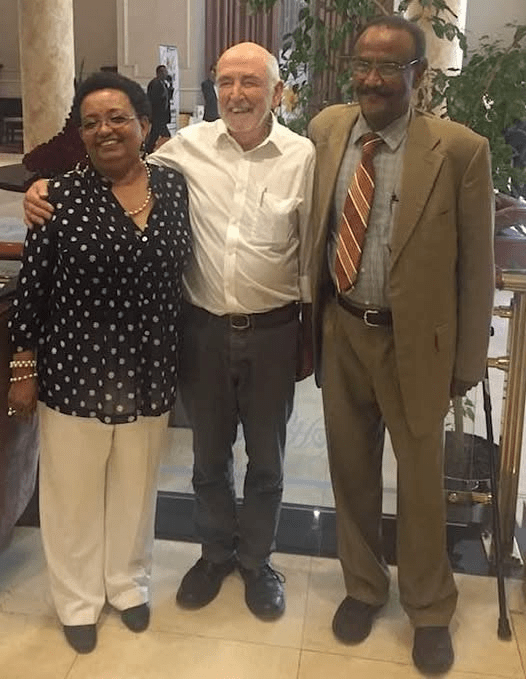
Activist and ally exemplify the international solidarity and unwavering commitment that sustain the movement for Oromo self-determination
GLOBAL — Dinqinesh Dheressa and Dr. Trevor Trueman stand as figures who will forever be remembered with honor in the annals of the Oromo liberation struggle—one a devoted activist who gave voice to Oromo women’s oppression, the other a British physician who became one of the movement’s most effective international advocates.
Their contributions, though arising from vastly different backgrounds, together illustrate the multifaceted nature of the Oromo struggle: a fight carried forward not only by those who bear its identity but also by allies whose solidarity transcends ethnicity and origin. As the Oromo liberation struggle continues “as a shield of humanity strengthening humanity itself,” the legacies of Deressa and Trueman remind us that the quest for freedom draws strength from diverse sources of commitment and courage .
Dinqinesh Dheressa: A Voice for Oromo Women
Dinqinesh Dheressa Kitila is an Oromo woman whose activism emerged from personal experience of discrimination and grew into institutional leadership. As the founder of the International Oromo Women’s Organization, a non-profit registered in the United States, she has dedicated her life to standing against discrimination and bringing social change, with particular emphasis on women’s empowerment.
Born and raised in Oromia, Ethiopia, Dheressa’s commitment to justice was forged in childhood. During elementary school, when she ran for student council president, a boy was preferred over her despite her having the highest grades. This early experience of discrimination motivated her to lead a fight against discrimination against women—a fight she has continued throughout her life.
Dheressa’s analysis of Oromo women’s situation is stark and unflinching. “The state of oppression is very deep in general but Oromo women face even greater difficulty,” she has stated. “Abyssinians treat Oromo women poorly. If a woman proposes a constructive idea, it doesn’t get proper attention as women are discriminated against up to a level where they are not considered as human beings”.
For Dheressa, self-determination is not an abstract political concept but a deeply personal and practical matter. She describes it as “a process by which one can take control of her/his whole life, decide freely what is good for her/him or not, what is important to her/him.” Beyond self-determination, she sees independence as giving people “the power to act freely” .
The key to achieving self-determination, in her view, lies in empowering oppressed people and standing for their rights as human beings. She emphasizes that organization is vital—if one wants to stand for peace and especially for women and their rights, being organized is essential .
Dheressa has also consistently called upon the international community to act. “The international community and humanitarian organisations have to take appropriate action to stop the Ethiopian government’s brutality against the Oromos,” she has urged. Her work with the Unrepresented Nations and Peoples Organization (UNPO) has helped bring Oromo concerns before international audiences, ensuring that the struggle receives attention beyond Ethiopia’s borders.
Dr. Trevor Trueman: The Quiet Ally
If Dheressa represents the voice of Oromo womanhood speaking on behalf of her people, Dr. Trevor Trueman represents something equally: the outsider who becomes an essential insider through decades of faithful service.
Dr. Trueman—affectionately known by the Oromo name Galatoo, meaning “Thank You”—has woven himself so deeply into the narrative of the Oromo struggle that he has become inseparable from it, transcending geography, ethnicity, and origin .
His journey with the Oromo people began not in the halls of advocacy, but in the gritty, desperate reality of survival. In the late 1980s, as a family health physician, he was in Sudan training Oromo health workers in refugee camps. When the Derg fell in 1991, he moved into Wallagga, shifting his focus to training community health workers. This foundation is crucial: his alliance was born not of abstract political theory, but of humanitarian connection—of seeing, firsthand, the people behind the cause. He didn’t arrive as an activist; he became one through service .
It was from this ground-level view that his pivotal role emerged. Starting in 1992, he began the critical, dangerous work of documenting and internationalizing the Ethiopian government’s systematic human rights violations against the Oromo people. While the OLF and others fought on the political and military fronts, Dr. Trueman opened a vital front in the global arena of information. He understood that tyranny thrives in silence and that the world’s conscience must be awakened with evidence. His reports became the credible, external voice that the diaspora and activists within could amplify, forcing the “Oromo question” onto agendas where it was being ignored .
His strategic genius is perhaps best embodied in the Oromia Support Group (OSG) , which he co-founded in 1994. The OSG was not a protest group but a clearinghouse for truth. It methodically gathered testimony, verified atrocities, and funneled this information to UN bodies, foreign governments, NGOs, and media outlets. For decades, when the Ethiopian state dismissed accusations as rebel propaganda, the OSG’s meticulously documented reports stood as unassailable counter-evidence. Dr. Trueman became a bridge of credibility, translating the suffering of a distant people into a language the international system was compelled, at least, to acknowledge .
A recent tribute to Dr. Trueman highlights several profound truths about his work:
- The Outsider as Essential Insider: Dr. Trueman’s identity as a “foreign national” was not a barrier but a unique asset. It lent his documentation a perceived objectivity that was desperately needed to break through global apathy. He wielded his privilege as a tool for the voiceless .
- Advocacy as a Marathon, Not a Sprint: His commitment, spanning from 1988 to the present day, defines “umurii dheeradhaa” —a long life of dedication. While political fortunes and rebel movements evolved, his channel of advocacy remained constant, providing a thread of continuity through decades of struggle .
- The Strategic “Taphat” (Preparation) : The tribute notes he will be remembered for his “shoora taphataniif” —his strategic preparations. His work was the essential groundwork. By ensuring the world could not plead ignorance, he created the political space and pressure that empowered all other facets of the Oromo struggle .
Dr. Trevor Trueman’s legacy is a masterclass in effective international solidarity. He did not seek to lead the Oromo struggle; he sought to amplify it. He did not fight with weapons, but with words, facts, and an unwavering moral compass. In the grand symphony of the Oromo quest for freedom, if some voices are the roaring melodies and others the steady rhythm, Dr. Trueman’s has been the crucial, clear note of the witness—persistent, truthful, and cutting through the noise to make the world listen .
For this, the name Galatoo is not merely a token of thanks, but a title of honor, earned over a lifetime. His work ensures that the crimes committed in darkness are recorded in light, and that the struggle of the Oromo people has, indeed, been given an echo the world cannot un-hear .
The Struggle Continues
The Oromo liberation struggle, which both Dheressa and Trueman have served so faithfully, continues today against a backdrop of ongoing conflict and human rights concerns. Recent reports from Oromia describe a region marked by insecurity, with civilians caught between government forces and insurgent groups.
The Associated Press reported in February 2026 that Oromia remains “very insecure,” with armed banditry, kidnapping, and extortion affecting daily life. Humanitarian access is restricted, and the conflict remains largely underreported due to government restrictions on journalists and rights groups .
It is precisely in such circumstances that the work of advocates like Dheressa and Trueman proves most vital. Their documentation, their amplification of Oromo voices, and their insistence that the world pay attention create the conditions under which accountability becomes possible.
As one tribute to Trueman noted, “His work ensures that the crimes committed in darkness are recorded in light” . Dheressa, through her women’s organization and international advocacy, ensures that the particular suffering of Oromo women—too often ignored in broader narratives—receives the attention it demands.
A Shared Legacy
Dinqinesh Dheressa and Dr. Trevor Trueman represent different faces of the same commitment: Dheressa, the Oromo woman who transformed personal experience of discrimination into lifelong activism for her people; Trueman, the British physician who arrived as a humanitarian worker and became one of the movement’s most effective international advocates.
Both have demonstrated that the struggle for Oromo self-determination is not confined to Oromia’s borders, nor limited to those who share Oromo identity. It is a human rights struggle that calls upon all people of conscience to bear witness and to act.
As the Oromo liberation continues as “a shield of humanity strengthening humanity itself,” the contributions of these two figures will forever be remembered with honor. Their lives demonstrate that the fight for freedom draws strength from many sources—from the mother who organizes women in her community to the physician who documents atrocities for the United Nations. Each, in their own way, has helped ensure that the Oromo struggle for truth, justice, and self-determination continues to resonate across generations and around the world.

Oromo Diaspora Honors Pivotal Figures in Virtual Memorial
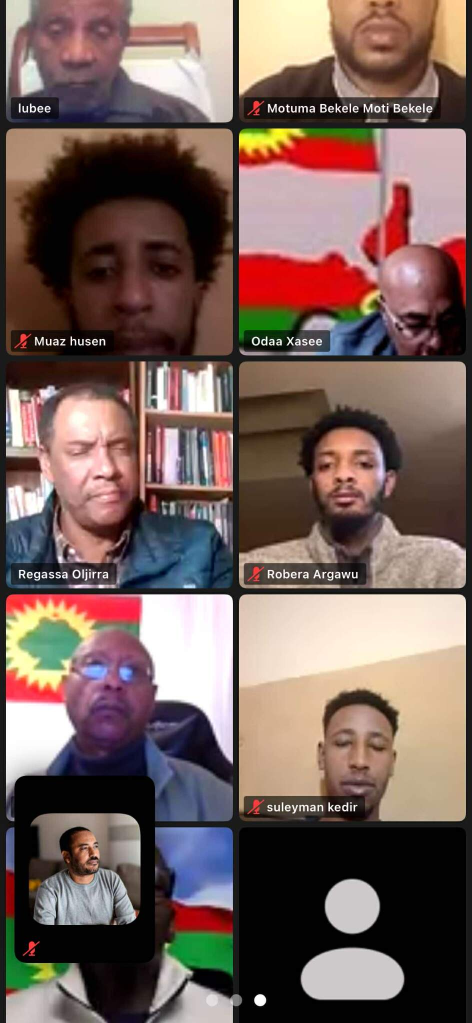
Diaspora gathers online to celebrate “towering figure” of Oromo liberation struggle
WASHINGTON, D.C. — The Oromo Liberation Front (OLF) convened a virtual memorial service Sunday, February 15, 2026, via Zoom to honor the life and legacy of a pivotal figure in the Oromo struggle for self-determination. The event, scheduled for 2:00 PM Eastern Time, brought together members of the Oromo diaspora, elders (Hayyoota), and human rights advocates from across the United States to celebrate a “towering figure” whose contributions to truth, justice, and the Oromo people have left an indelible mark on the movement .
A Moment of Collective Reflection
While the OLF’s announcement referred to the subject as a “towering figure,” Sunday’s service forms part of a broader moment of reflection for the organization, which has recently focused on honoring the intellectual giants who shaped Oromo nationalism. Just days earlier, on February 7, 2026, the OLF held a ceremony at its headquarters in Gullallee, Finfinnee to honor the late Professor Asmarom Legesse and Professor Hamdesa Tuso .
Professor Asmarom Legesse was celebrated during that gathering for his groundbreaking anthropological work, particularly his research on the indigenous Gadaa system, a traditional democratic governance structure. His seminal book, Gada: Three Approaches to the Study of African Society, is credited with bringing Oromo culture and governance to the global academic spotlight . During the February 7 ceremony, OLF Chairman Jaal Dawud Ibsa led tributes that highlighted the power of scholarship in the national struggle, emphasizing the need to “reclaim historical truth” .
Echoes of Recent Commemorations
Sunday’s virtual service in Washington appeared to be a continuation of this season of remembrance, extending honor to another key architect of the movement. Given the context of recent OLF commemorations, the event echoed the sentiments expressed at the February 7 gathering, where leaders praised the “unforgettable mark” left by the movement’s forebears and called upon the younger generation (dhaloota) to carry their unfinished work forward .
The Intellectual Foundations of the Struggle
Scholars note that the OLF, founded in the early 1970s, emerged from clandestine efforts by Oromo nationalists to build a movement that combined armed struggle with a strong intellectual and cultural foundation. Historians point to figures like Baro Tumsa, described in a recent 2024 biography as the “Principal Architect of the Oromo Liberation Front,” who worked to unite nationalists from diverse backgrounds in the face of oppression .
The intellectual tradition honored in these memorials reflects the OLF’s distinctive character as a movement that understood liberation not merely as a military objective but as a project of cultural and historical reclamation. The scholars being remembered devoted their lives to excavating Oromo history, philosophy, and governance traditions that had been suppressed or denied during decades of imperial rule.
A Solemn Duty
The invitation released by the OLF framed the event as an obligation owed to those who sacrificed for the cause. “This is the least we can do for a life so profoundly devoted to truth, justice, and our people,” the statement read .
That sentiment resonated throughout Sunday’s virtual gathering, as participants reflected on the personal and collective debts owed to the generation that built the movement. The Zoom format, necessitated by the geographic dispersal of the Oromo diaspora across North America, nonetheless allowed for meaningful connection and shared remembrance.
Diaspora Engagement
The service drew participants from across the United States, reflecting the strength and commitment of the Oromo diaspora community. Washington D.C. has long been a center of Oromo organizing and advocacy, hosting numerous cultural, political, and commemorative events over the decades. The virtual format expanded access to Oromos unable to travel to the nation’s capital while maintaining the solemnity appropriate to the occasion.
Elders (Hayyoota) played a prominent role in the proceedings, as is traditional in Oromo culture when honoring the departed. Their presence underscored the intergenerational nature of both the struggle itself and the responsibility to transmit its history and values to those who will carry it forward.
Preserving and Transmitting History
Sunday’s memorial service also served an educational function, introducing younger participants to figures whose contributions may not be widely known outside dedicated scholarly or activist circles. The emphasis on the intellectual and cultural foundations of the Oromo struggle provides context for understanding the movement’s character and objectives.
As participants reflected on the “towering figure” being honored, they also considered the broader legacy of Oromo intellectuals and organizers who built the institutions and articulated the vision that sustains the struggle today. The February 7 ceremony honoring Professors Legesse and Tuso, followed by Sunday’s virtual gathering, creates a season of remembrance that reinforces collective memory and identity.
Continuing Resonance
The service served as a poignant reminder of the ongoing resonance of the Oromo liberation struggle and the individuals who laid its intellectual and political groundwork. Even as the movement addresses contemporary challenges, these commemorative moments affirm continuity with the founders and the principles they established.
For the Oromo diaspora, separated by geography but united by commitment to their people’s cause, such gatherings provide opportunities for connection, reflection, and renewed dedication. The Zoom platform, while different from in-person assembly, enabled participation from Oromos who might otherwise be unable to join such commemorations, expanding the circle of remembrance.
Looking Forward
As Sunday’s virtual memorial concluded, participants carried forward not only memories of the individual being honored but also renewed commitment to the values and objectives that defined their life’s work. The call issued at the February 7 ceremony—for the younger generation (dhaloota) to carry forward the unfinished work of the movement’s founders—resonated across both gatherings.
The Oromo struggle continues, shaped by those who built its foundations and sustained by those who carry their legacy. Sunday’s virtual memorial service from Washington D.C. ensured that another “towering figure” received the honor due, while strengthening the connections that bind the Oromo people across continents and generations.
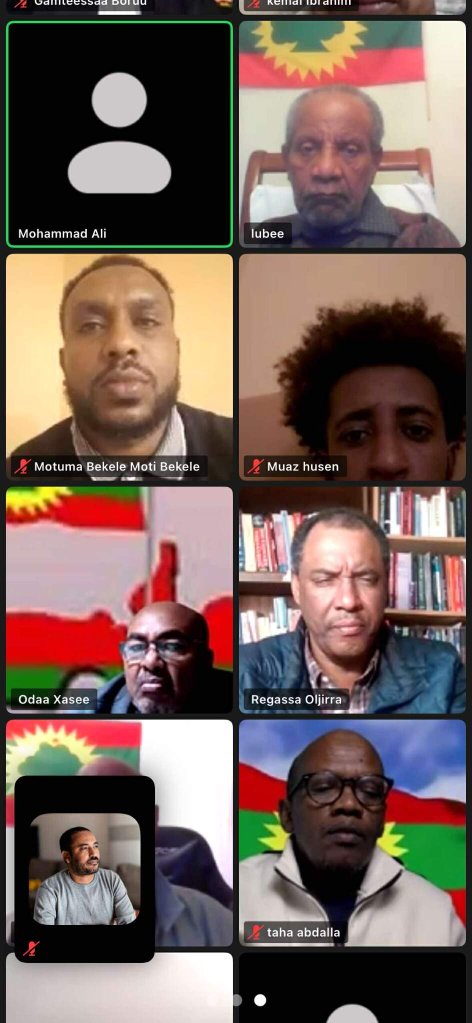




 Advocacy for Oromia