Category Archives: Uncategorized

Oromo Literacy Day: Celebrating the Power of Stories Held in Oromia
By Maatii Sabaa
—
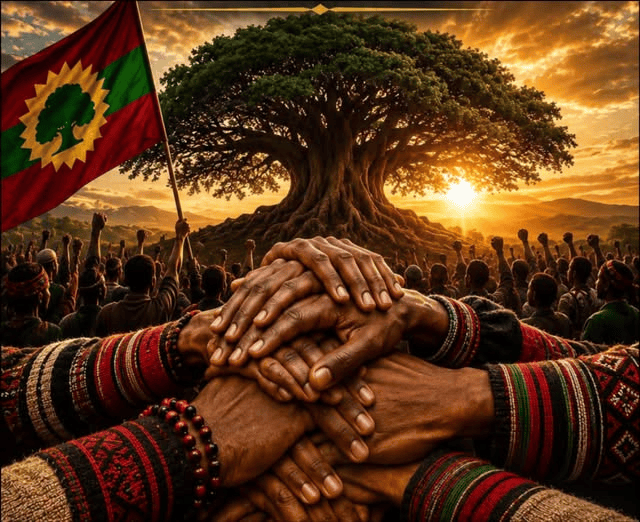
Every year, Oromo Literacy Day is more than a date on a calendar—it’s a living tribute to the resilience of a people and their language. It celebrates Afaan Oromoo, a language that carries the weight of history, the songs of ancestors, and the dreams of a nation. But how did the Oromo people arrive at this moment, where their stories can finally be written, read, and shared with the world? The answer lies in a long and courageous journey toward literacy.
A Written History of Resistance and Revival
The story of Oromo literacy is one of relentless struggle. The Oromo people have long possessed a rich oral tradition, but for much of Ethiopia’s modern history, their language was marginalized. It was a household language—spoken, sung, and whispered—but rarely seen on paper . The first major push to change this came in the late 19th and early 20th centuries.
A pivotal figure was Onesimos Nasib, an Oromo freed from slavery who trained as a teacher in Sweden. Upon his return, he and his colleague Aster Ganno worked with an almost missionary zeal to promote literacy in Afaan Oromoo. Onesimos created the Oromo Reader, a book filled with stories that were “short and funny” and designed to be both accessible and engaging. His aim was not just religious instruction but to cultivate a love for reading itself . He would famously ask young people he met, “Can you read and write?” and persuade them of its immense value .
However, their work met fierce opposition from the imperial government. In the mid-1940s, the Haile Selassie regime placed a total ban on Oromo literature . The language was effectively erased from public life, becoming a symbol of defiance.
The Quest for the Perfect Script
The suppression only intensified the desire for a written Oromo. The question of how to write the language became a central point of debate. Early works, like those of Onesimos, used the Ge’ez alphabet. But many activists and intellectuals believed this script was inadequate for Oromo sounds, failing to represent vowel length and consonant gemination—features that change a word’s meaning .
In the 1960s, the movement for a new script gained momentum. At Addis Ababa University, Oromo students began printing the first newspaper in Afaan Oromoo, Kana Beektaa? (“Do you know this?”), in 1968. The paper was a bold act of cultural preservation, collecting “Oromo songs, proverbs, war and grievance chants, Oromo prophecies, nuptials, baby lullabies, and others” . This was more than journalism—it was a declaration of identity. The paper was short-lived, forced to cease publication in 1971 .
Simultaneously, Oromo students in Europe were rigorously debating the script question. In 1968, a study group led by figures like Haile Fidaa concluded that a modified Latin alphabet was the most practical and linguistically sound choice for Oromo . This decision was not just technical; it was a political act of resistance, rejecting a script associated with the establishment.
A New Dawn: The Adoption of Qubee
After years of struggle, the fall of the military Derg regime in 1991 brought a turning point. The new Ethiopian constitution granted greater autonomy to regional states. Oromo was finally made the official language of the Oromia Regional State .
The Latin-based alphabet, known as Qubee, was officially adopted for writing Oromo . This was a victory decades in the making. The script’s simplicity and adaptability to modern technology made it a practical choice for a language finally stepping into the digital age. As one study noted, Qubee “enabled the language to grow faster as the script can be learned easily” .
However, the adoption was not without controversy. For some, the Ethiopic script held deep cultural significance, and the switch to a Latin alphabet was seen as an emotional and political break . Yet for the majority, Qubee represented liberation.
The Stories That Endure
The adoption of Qubee unlocked a literary explosion. Oromo youth and intellectuals began producing “newspapers, magazines, novels, translations and plays that describe their nation and their state in Afaan Oromoo” . Stories once confined to memory were now printed, preserved, and shared.
The journey has also involved recovering alternative scripts. A fascinating chapter is the story of Sheek Bakrii Saphaloo, a scholar who created a unique indigenous Oromo script. He developed an abugida, a writing system where each base glyph has multiple vocalic components, making it distinct from both the Ge’ez and Latin alphabets . This script has been used for over 70 years and is now being considered for digital preservation and inclusion in Unicode, highlighting the deep connection between literacy and cultural identity .
Why Oromo Literacy Day Matters
Oromo Literacy Day is a celebration of this entire journey. It honors the tenacity of Onesimos Nasib, the courage of student activists, and the vision of scholars who fought to give their language a written form. It is a day to recognize that literacy is not just about reading and writing; it is about power, identity, and survival.
The stories held in Oromia are now written down for the world to see. This day celebrates their liberation and their enduring power.
—
“The stories, with the exception of a couple of martyr stories, are short and funny, and the subjects vary in order to attract.” — Onesimos Nasib on the Oromo Reader
—
 Maatii Sabaa is a writer and advocate of the Oromo stories.

Irreecha: A Day of Thanksgiving and Renewal for the Oromo People

By Dhabessa Wakjira
Introduction: A Celebration Like No Other
As the golden hues of the Ethiopian spring—known as Birraa—begin to blanket the landscape, a profound spiritual and cultural awakening stirs across Oromia. This year, the 2018 Irreecha festival, celebrated on September 24th at Hora Finfinne and September 25th at Hora Arsadee-Bishooftuu, carries a particularly resonant theme: “Irreecha: Olka’iinsa Biyyaatiif” (Irreecha: For the Elevation of the Nation). Following a sacred itinerary, the Council of Oromo Gadaa Elders has announced the events will be observed consecutively, beginning with morning rituals.
This year’s Irreecha stands apart, marking a triumphant return to tradition after a long night of cultural suppression. The proclamation of the Oromo Cultural Renaissance, coinciding with the blessing of the Great Ethiopian Renaissance Dam (GERD), adds a layer of double joy and profound national significance. The very air hums with the promise of renewal.
The Soul of a Nation: Culture as Identity
Culture is the radiant mirror of a people’s soul. It is through their customs, rituals, and traditions that a community reveals its unique character to the world. For the Oromo people, one of the largest nations in the Horn of Africa, culture is not merely a collection of artifacts but the living fabric of daily existence.
The Oromo possess a rich cultural tapestry, interwoven with the rhythms of their environment. Their traditions—from the sacred union of marriage and the art of traditional attire to the intricate wisdom of the Gadaa system—all reflect a deep, symbiotic relationship with the land and the cosmos. Central to this worldview is a profound reverence for Waaqa (God), the Creator.
For centuries, Oromo life was guided by a seamless integration of work, social structure, governance, and spirituality. This harmony was, however, violently disrupted from the era of Emperor Menelik II through the oppressive Derg regime. The Oromo people endured systematic marginalization, their identity and cultural practices suppressed. Their language, customs, and even their names were targets of state-sanctioned denigration.
Yet, like the resilient birbirsaa plant that thrives after the rains, the Oromo spirit endured. The fall of the Derg in 1991 and the subsequent constitutional recognition of the Oromo language and culture heralded a new dawn. A people once forced into the shadows of history could now reclaim their heritage in the full light of day.
Waaqeffanna: The Oromo Spiritual Tradition
At the heart of Oromo identity lies Waaqeffanna, the indigenous belief system. The Oromo have been custodians of a monotheistic faith since time immemorial, believing in a single, omnipotent Waaqa who is the sole Creator of the universe.
Unlike other systems, Waaqeffanna does not worship idols or intermediary deities. It is a direct, personal connection between the worshipper and the Creator. The Oromo believe that Waaqa is the source of all life and power, and that this power manifests through the natural world. The rivers, mountains, trees, and lakes are not gods themselves but sacred creations through which Waaqa’s majesty is revealed.
This philosophy is elegantly expressed through Irreecha, the ultimate act of thanksgiving and spiritual communion. The elders teach that Irreecha is simply “giving thanks to the one God.” It is the pinnacle of Oromo religious and cultural expression, a testament to the enduring faith of a people in the face of adversity.
The Seasons of Life: Why Irreecha is Celebrated
To understand Irreecha, one must understand the Oromo calendar and the life-giving cycle of the seasons. Following the long, harsh rains of the Ganna (winter) season, the landscape transforms. Mighty rivers swell, roads turn to impassable mud, and communities are often separated. Nature, in its raw power, hibernates.
Then comes Birraa, the spring season. The rains recede. The sky clears to a brilliant blue. The mud dries, opening pathways. The once-dormant earth erupts in a spectacular bloom of yellow, white, and purple flowers. The oyiruu (crops) transform from green foliage to golden, life-sustaining grain. This is the season of hope, rebirth, and abundance.
It is in this moment of transition, from the darkness of winter to the light of spring, that the Oromo offer Irreecha. It is a heartfelt “thank you” to Waaqa for guiding them through the difficult months and for bestowing the first fruits of the harvest. It is a powerful acknowledgment of the divine order that governs existence.
“Baga Booqa Birraa geessan!” — “Welcome, the freshness of spring!” is the joyful greeting of the season.
Two Hallowed Places: Irreecha Tulluu and Irreecha Malkaa
The Irreecha rituals are held in two distinct settings, each reflecting a different phase of the spiritual and agricultural cycle.
Irreecha Tulluu (Irreecha of the Mountain)
As the dry season (Bona) takes hold, the land becomes parched, and water sources dwindle. The elderly of the community, acting on ancient knowledge, would gather at a designated highland—a Tulluu—believed to be closer to the divine. Here, they would raise their hands to the sky, beseeching Waaqa for rain. Their prayers, steeped in the wisdom of the Cushitic cosmological tradition, seek to restore the balance of nature and ensure the renewal of life.
Irreecha Malkaa (Irreecha of the River)
This is the main event. Held at the outset of Birraa around mid-September, Irreecha Malkaa is a vibrant, joyous, and public festival. The Oromo gather at the banks of rivers, lakes, or springs—places where the life-giving water is most tangible.
For this occasion, the community dresses in their finest traditional attire. The men wear colorful Wandaboo (shoulder cloths) and carry traditional weapons or staffs, while the women don elegant, flowing gowns and adorn themselves with intricate hairstyles and beaded jewelry, known as Calallee. The youth, particularly the Kormoomsaa (young warriors), move through the crowd, sprinkling people with fresh water, a gesture of cleansing and blessing.
At the appointed time, the Abbaa Gadaa (the Gadaa leader) and elders lead the procession. They carry the sacred Bokkuu (staff of office), Margaa (leaves of peace), and Callacha (ceremonial container). Chanting the sacred mantra “Maareewoo, Maareewoo!”—a powerful invocation of the divine—the throng moves toward the water’s edge.
Water is dipped from the river and touched to the forehead. This act signifies purification and a prayer for longevity and prosperity. The air fills with the sound of devotional songs and prayers.
“Obiin, kunni, malkaa nu gaha, ya Waaqa, nu eebbisi!” (Leader, take us to the river, O God, bless us!)
Irreecha Finfinne and Bishooftuu: The Heartbeat of the Festival
While Irreecha is celebrated across Oromia, the largest and most significant gatherings take place in two locations.
Hora Finfinne (Lake Finfinne), in the heart of the capital, is a site of profound historical significance. For decades, under oppressive regimes, public celebrations were banned. Holding Irreecha in Finfinne is a powerful act of reclaiming space and identity.
Hora Arsadee-Bishooftuu in the city of Bishooftuu is another major center. This location is famed for its beautiful, natural landscape. The specific gathering spot is near a sacred body of water believed to be a site of ancient Oromo worship. The historical figure Harsadi, of the Liiban clan, is associated with this lake.
In recent years, the scale of these gatherings has been staggering. It is estimated that over four million people attend the main Irreecha in Bishooftuu, making it one of the largest annual gatherings of people on the African continent. International media, including the BBC, Al Jazeera, and CNN, have taken note, broadcasting the awe-inspiring images of hundreds of thousands of people dressed in a vibrant sea of colors, moving with purpose and joy.
The day is a total immersion in culture and community. After the prayers and rituals, families and friends return home to share a meal of traditional dishes and freshly brewed Bunaa (coffee). The atmosphere is one of profound peace and unity.
A Culture Reborn
This year’s Irreecha is more than a religious ceremony; it is a powerful statement of cultural resilience. The revival of Irreecha after years of suppression represents a people reconnecting with their spiritual roots, reclaiming their heritage, and looking towards the future with hope.
The Oromo are announcing to the world that their culture, with its deep-rooted values of democracy, community, and spirituality, is not a relic of the past but a vibrant force for the present and future. Irreecha stands as a testament to the enduring spirit of a nation that has overcome immense challenges and continues to celebrate life, faith, and unity with unparalleled passion and dignity.
Deebi’uu: As the sun sets on the banks of Hora Arsadee, the echoes of “Maareewoo” fade into the cool evening air. The Oromo people have once again fulfilled their covenant of thanksgiving, carrying in their hearts the promise of a bright and prosperous future.


A Giant of the Oromo Revolution: Honouring Jaal Fekadu Wakjira
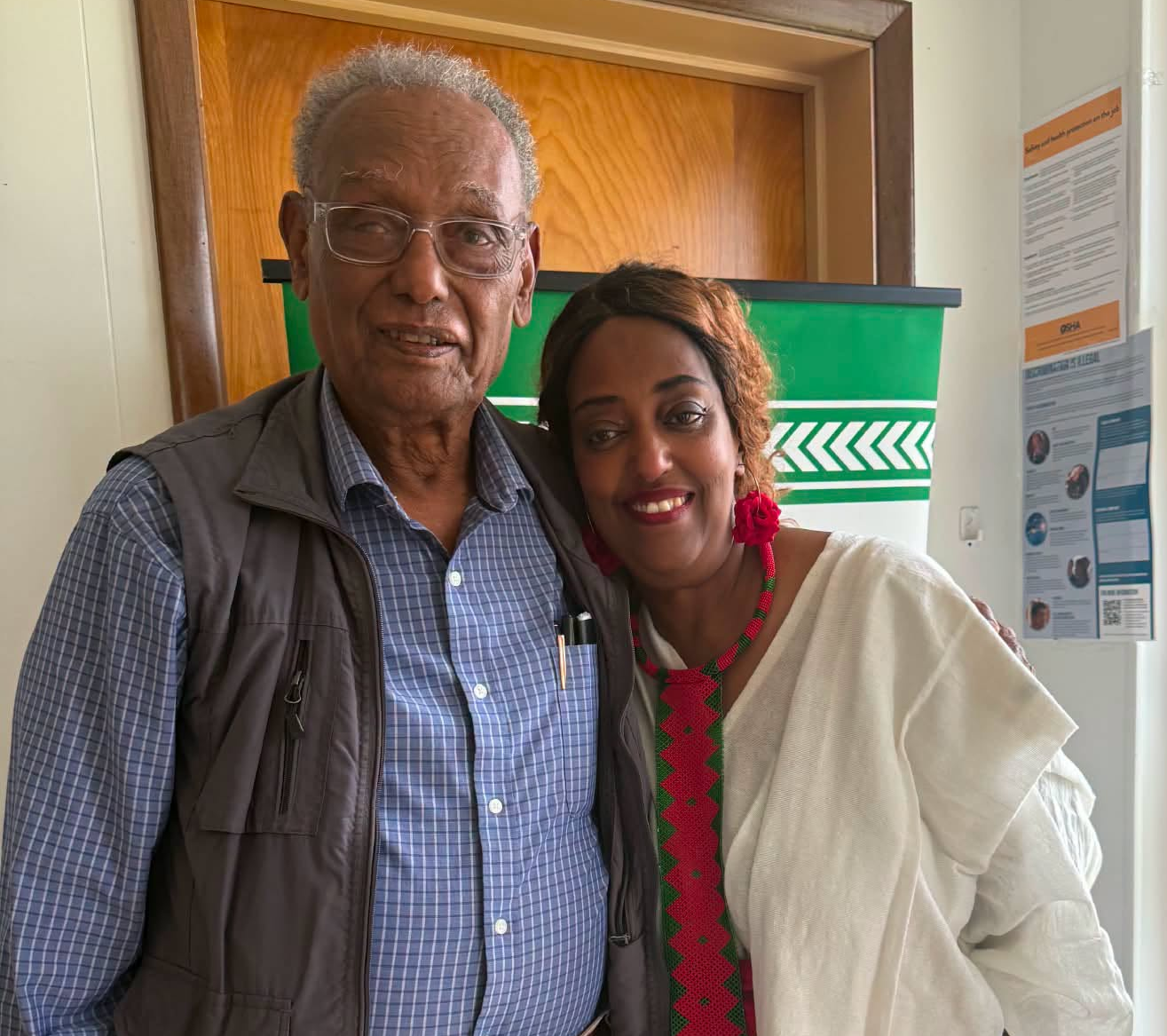
A Tribute to a Veteran Who Carried the Weight of the Struggle Through Sacrifice, Courage, and Unwavering Commitment
By Giiftii Waaqoo
In every liberation movement, there are those who carry the heaviest burdens—the ones who walk through the darkest hours so that others may one day see the light. They are the pillars upon which the struggle is built, the voices that refuse to be silenced, and the hearts that continue to beat for the freedom of their people, even when all seems lost.
Jaal Fekadu Wakjira is one such figure. A true veteran of the Oromo Revolution, his name is etched in the annals of Oromo history as a testament to sacrifice, courage, resilience, and unwavering commitment. His journey is not merely his own—it is the journey of an entire generation that dared to dream of a free Oromia and refused to let that dream die.
The Weight of a Generation
Jaal Fekadu Wakjira belongs to a generation that carried the weight of the Oromo struggle on their shoulders. These were the men and women who, in the face of brutal repression, chose to stand up and say, “Enough is enough.” They were the ones who, when their language was banned, spoke it in whispers. When their culture was suppressed, they celebrated it in secret. When their rights were denied, they demanded them with their lives.
This generation understood that liberation would not come easily. They knew that the road to freedom was paved with sacrifice—that some would fall, some would be imprisoned, some would be exiled, and some would never see the Oromia they dreamed of. Yet they marched forward anyway. They refused to be silenced. They refused to be erased.
Jaal Fekadu Wakjira stood among them. His service to the Oromo cause is not a footnote in history—it is a chapter of profound significance, written in the ink of struggle and the blood of martyrs.
The Foundations of the Struggle
The Oromo struggle for self-determination did not begin yesterday. It has deep roots that stretch back over a century—from the resistance against Menelik’s expansion, to the armed struggle of the Oromo Liberation Front, to the peaceful protests of the Qeerroo movement. Each generation has contributed to the edifice of Oromo identity and national consciousness.
But it was the generation of Jaal Fekadu Wakjira that laid the foundation upon which the current struggle stands. They were the architects of the movement’s organizational structures, the guardians of its history, and the transmitters of its values to the next generation. They ensured that the flame of Oromo nationalism would not be extinguished, even when the forces of repression sought to snuff it out.
Their sacrifices were not in vain. The Oromo people continue to rise. The struggle continues to advance. And the dream of a free Oromia continues to burn brighter with each passing year.
A Legacy of Sacrifice
The legacy of Jaal Fekadu Wakjira is one of sacrifice—a word that carries profound weight in the Oromo liberation movement. Sacrifice means leaving your family behind to join the struggle. Sacrifice means enduring imprisonment and torture without betraying your comrades. Sacrifice means living in exile, far from your homeland, yet never forgetting the people you left behind.
It is this spirit of sacrifice that defines the generation of Oromo veterans. They gave not only their time and energy but, in many cases, their lives. They faced imprisonment, forced displacement, and the constant threat of death with a courage that inspires us still.
As the Oromo saying goes, “Qabsoo baatuu dhiigaatuu” —the struggle is won by those who shed their blood. Jaal Fekadu Wakjira and his generation shed their blood so that future generations might live in dignity and freedom. That is a debt we can never fully repay, but we can honour it by continuing the work they began.
Courage in the Face of Adversity
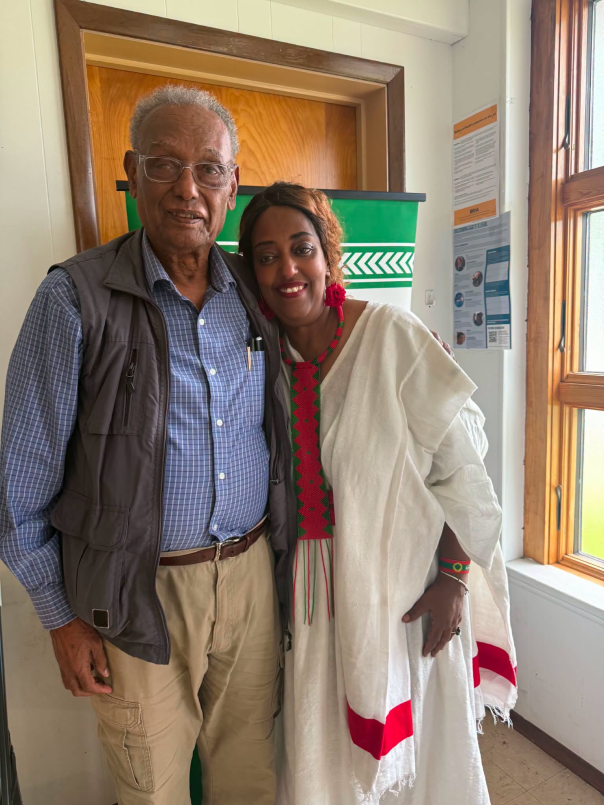
Courage is not the absence of fear—it is the determination to move forward despite it. Jaal Fekadu Wakjira embodied this courage. In the face of a state that sought to crush the Oromo identity, he stood firm. In the face of imprisonment, he refused to break. In the face of exile, he never forgot his homeland.
His courage was not a solitary flame. It was part of a collective fire that burned in the hearts of all those who joined the Oromo struggle. Together, they challenged an oppressive system that had denied the Oromo people their land, their language, and their dignity for generations. And though the struggle continues, their courage has inspired countless others to take up the mantle.
Resilience: The Spirit That Endures
Resilience is the ability to endure hardship and emerge stronger. The Oromo people are among the most resilient in the world. Despite centuries of oppression, they have maintained their language, their culture, and their identity. Despite repeated attempts at assimilation and erasure, they have remained steadfast in their commitment to freedom.
Jaal Fekadu Wakjira embodies this resilience. His life and work are a testament to the unbreakable spirit of the Oromo people. Through every setback, every defeat, and every moment of despair, he has remained committed to the cause. His resilience is a reminder that the Oromo struggle is not a fleeting moment of political unrest—it is a long and determined march toward justice.
Unwavering Commitment: The Call That Never Fades
What does it mean to have unwavering commitment? It means dedicating your life to a cause without expecting recognition or reward. It means continuing to fight, even when the odds are stacked against you. It means never losing sight of the goal, even when the path is shrouded in darkness.
Jaal Fekadu Wakjira’s commitment to the Oromo cause has never wavered. Through decades of struggle, through moments of triumph and moments of defeat, he has remained a steadfast advocate for Oromo liberation. His commitment is a beacon for all who continue to fight for justice, reminding us that the struggle is not a sprint but a marathon—one that requires patience, persistence, and unshakeable faith in the righteousness of the cause.
A History That Must Not Be Forgotten
Jaal Fekadu Wakjira is part of a history that must never be forgotten. It is a history of resistance, of resilience, and of hope. It is a history that belongs not only to the Oromo people but to all those who believe in the cause of justice and human dignity.
The story of the Oromo struggle is one of many chapters, each written by a generation of courageous individuals. Jaal Fekadu Wakjira’s generation laid the foundation, and it is our responsibility to build upon it. We must ensure that future generations know the sacrifices that were made on their behalf and that they understand the importance of continuing the fight.
As the Oromo proverb says, “Kan booda dhufuuf hundumaatu deebisa” —the future belongs to those who remember the past.
A Message of Gratitude
To Jaal Fekadu Wakjira, we say: Galatoomaa. Thank you for your service, your sacrifice, and your unwavering commitment to the Oromo cause. Thank you for the courage you showed in the darkest hours. Thank you for the resilience that inspired so many. Thank you for the foundation you built, upon which we continue to build.
Your generation carried the weight of the struggle so that ours could carry the torch. Your sacrifices became part of our history, and your legacy will live on in the hearts of the Oromo people for generations to come.
Ulfaadha! —You are honoured!
The Legacy Continues
The struggle for Oromo liberation is not yet complete. There is still work to be done, sacrifices to be made, and victories to be won. But the legacy of Jaal Fekadu Wakjira and his generation is a source of strength and inspiration. It reminds us that the fight for freedom is a journey—one that requires courage, resilience, and unwavering commitment.
We who carry the torch today owe it to the veterans of the Oromo struggle to continue the work they began. We must honour their sacrifices by building a future worthy of their dreams. We must ensure that the freedom they fought for is not only achieved but also preserved for future generations.
Conclusion: A Living Legacy
Jaal Fekadu Wakjira is a living legacy of the Oromo Revolution. His name will be remembered alongside the great heroes of the Oromo struggle—those who dared to dream of a free Oromia and refused to let that dream die.
As we honour Jaal Fekadu Wakjira, we honour an entire generation that carried the weight of the Oromo struggle through sacrifice, courage, resilience, and unwavering commitment. We remember their contributions. We celebrate their achievements. And we recommit ourselves to the cause for which they fought.
Injifannoon Ummata Oromoo!
Galatoomaa, Jaal Fekadu Wakjira!
Ulfaadha!
This feature article is dedicated to Jaal Fekadu Wakjira and all the veterans of the Oromo Revolution—past, present, and future—who have given so much for the freedom and dignity of the Oromo people.

Constitutional Legitimacy and Federalism in Ethiopia: A Trap in the Making?
With constitutional amendments on the table and a national dialogue that critics call structurally rigged, Ethiopia stands at a crossroads that could determine the fate of its multinational federation
By Prof Asfaw Beyene
There is absolute consensus among Ethiopians on one fundamental truth: the country is bleeding, and a genuinely inclusive, transparent, and democratic dialogue is the only viable exit from the abyss . However, when the very architecture of a peace-building process is engineered to marginalise the country’s largest demographic constituency and dismantle its constitutional foundations, the process ceases to be a dialogue. It becomes a structural trap .
As the Ethiopian National Dialogue Conference commenced on July 15, 2026, the stakes could not be higher. The federal government is preparing a sweeping constitutional reform package that could redefine Ethiopia’s federal structure, with proposals that include amending Article 39—the constitutional provision that enshrines the right of nations, nationalities, and peoples to self-determination, including secession—and replacing ethnicity-based regional boundaries with geography-based ones .
These are not mere policy adjustments; they are existential threats to the constitutional order that has governed Ethiopia since 1995. As Asfaw Beyene’s analysis argues, the national dialogue may be heading toward a “barred trap” from which there is no easy escape .
The Mathematics of Disenfranchisement
At the heart of the controversy lies the decision-making framework of the National Dialogue Commission. According to the Commission’s documented multi-tier decision-making system, the ultimate power to pass or reject national agendas is vested in a Regional Representatives Assembly composed of 211 members .
Every region and city administration is granted exactly 14 representatives, alongside 15 representatives handpicked by the federal government. The result? Oromia, a region home to an estimated 40 million people—roughly 35% to 40% of the Ethiopian population—is granted the exact same voting power (14 seats) as city administrations like Dire Dawa or Harari, which have populations of approximately 500,000 .
Mathematically, Oromia is granted a mere 6.6% of the voting power in the assembly that will decide the fate of the country. This is not equality; it is the systematic erasure of the Oromo voice .
The Danger of Dismantling Federalism
“The outcome of dismantling federalism can be separation, not unity.”
Many constitutional democracies require broad consensus before fundamental constitutional changes take effect. Some do not allow even supermajority voices for constitutional amendment; they require unanimous vote .
In Germany’s Basic Law, the law that establishes Germany’s federalism cannot be amended at all, even by a unanimous vote. In Canada, unanimous provincial consent is required for certain constitutional amendments under the unanimity formula. These systems protect federalism at such high cost because they are aware the alternative would be separation and independence .
They recognize that constitutions should not be altered solely based on the political preferences of a temporary governing majority because they provoke a counter remedy: secession . Ethiopia’s elections did not provide even a majority vote to the ruling party; elections were not organized in many parts of the country for security reasons .
Article 39: A Constitutional Prerequisite, Not a Mere Provision
Article 39 of the Ethiopian constitution must be understood not merely as a constitutional provision, but as a prerequisite upon which the constitutional order itself rests. Recognition of the right to self-determination, including the possibility of secession under Article 39, establishes the foundational boundaries within which the state exists .
Because this principle defines the relationship between the state, its territory, and the peoples composing it, any amendment that would fundamentally alter or remove this guarantee must logically require unanimous consent of a duly established representative body—not a majority vote .
Article 39 is not, by itself, a sufficient condition to unite a country. But it is a prerequisite that establishes the boundaries and consent-based framework through which the country’s territorial and constitutional existence is maintained. An attempt to remove or fundamentally alter this prerequisite would forfeit the very foundation that gives the constitutional system some legitimacy .
The Eritrean precedent is instructive. When Haile Selassie dismantled Eritrea’s legally mandated autonomy and unilaterally dissolved the Eritrea-Ethiopian Federation, followed by full annexation of Eritrea in 1962, this action prompted an armed national movement, triggering the 30-year Eritrean War of Independence .
The Referendum Question
Where a legally recognized political actor has formally advanced a referendum proposal pursuant to the existing constitutional framework, and where the governing law provides a mechanism for a referendum under applicable circumstances, the constitutional process cannot be circumvented through a preemptive amendment designed to render that referendum unnecessary or ineffective .
Article 39 of the Constitution provides a clear procedure for secession: when a demand for secession has been approved by a two-thirds majority of the members of the Legislative Council of the Nation, Nationality or People concerned; and when the Federal Government has organized a referendum which must take place within three years from the time it received the concerned council’s decision for secession .
The referendum proposal submitted by the OLF for independent Oromia constitutes a pending constitutional process that must be addressed according to the law in force at the time it was initiated. Allowing a subsequent amendment to override, extinguish, or bypass a properly raised referendum petition would undermine constitutional certainty, procedural fairness, and the principle that constitutional change must follow established legal procedures .
The View from the Regions
Regional reactions to the proposed constitutional reforms are mixed. Oromia and Somali regions favor preserving the current model, while Amhara and parts of the Southern Nations, Nationalities, and Peoples’ Region (SNNPR) show growing support for change .
Mulatu Gemechu, vice chairman of the Oromo Federalist Congress (OFC), has argued that the amendment process lacks legitimacy: “One cannot just pop out of a commission and decide to amend [the Constitution]. I was there when it was created. Every element of the Constitution was put in intentionally” .
Dejen Mezgebe, chairman of the Tigray Independence Party, has warned that “this amendment proposal is dangerous, especially for Tigray, which currently has no official or legal representation in federal institutions. Any amendment before Tigray returns to the constitutional order would create a generational crisis” .
Conclusion: A Trap or a Solution?
The constitution amendment is widely seen as a trap to get rid of the Oromo regional state, which is a prerequisite for the secessionist referendum. The Constitution was created through a long, inclusive process of deliberation among all nations and nationalities—a process that reflected the free will of the peoples of Ethiopia . It is impossible to remove the right of secession from the Constitution without violating the foundations of the constitutional order and federalism .
How can the people whose constitutional rights the dialogue is supposed to address be structurally cheated out of their representation? You cannot legally bind a nation to a contract in which its signature was forged .
Instead of ending the tragic wars currently ravaging the country, including the ongoing conflict in Oromia, this manufactured consensus will inevitably exacerbate ethnic polarisation and institutionalise conflict for generations .
“A constitutional amendment cannot be used as a procedural shortcut to defeat a lawful petition or to prevent the electorate from exercising a right that has already been invoked under the existing constitutional order.”

Louise Perry Appointed Interim Chairperson of the Victorian Multicultural Commission

A seasoned leader in human rights and community engagement steps in to guide Victoria’s multicultural sector through a historic transition
MELBOURNE, VICTORIA — As the Victorian Multicultural Commission (VMC) prepares for a significant transformation, Ms Louise Perry has been appointed as interim Chairperson to lead the organisation through a critical transitional period. Her appointment, effective Thursday 16 July, comes as Victoria moves toward the establishment of Multicultural Victoria, a new statutory body that will reshape the state’s approach to multicultural and multifaith affairs .
Perry’s term is interim, extending until Multicultural Victoria is formally established. A Victorian woman of Burmese descent, she brings a wealth of experience spanning journalism, community leadership, international development, human rights, and the Victorian Public Service .
A Career of Service and Advocacy
Louise Perry’s professional journey reflects a deep commitment to social justice and community empowerment. She began her working life as a journalist, developing a keen understanding of storytelling and the power of narrative in shaping public understanding. This foundation led her to leadership roles in community organisations, where she championed the voices of marginalised and underrepresented groups.
Her career later took her into the International Development and Human Rights space, where she worked extensively on issues of justice, equity, and inclusion. This global perspective, combined with her local experience, has equipped her with a nuanced understanding of the challenges and opportunities facing multicultural communities.
Before her appointment to the VMC, Perry served as Deputy Secretary for Fairer Victoria within the Department of Families, Fairness and Housing, where she led landmark work on anti-racism, youth, and gender equality strategies . Her leadership in this role demonstrated her ability to drive systemic change and build partnerships across government and the community sector.
A Vision for Unity and Cohesion
Perry’s appointment comes at a pivotal moment for Victoria’s multicultural and multifaith communities. The transition to Multicultural Victoria represents an opportunity to elevate multicultural affairs across the whole of government, ensuring that diverse voices remain at the centre of policy and service delivery.
“The establishment of Multicultural Victoria presents a unique opportunity for multicultural and multifaith affairs in our state,” Perry said. “I look forward to working with communities, VMC staff and government as we prepare for legislative changes” .
Her leadership is expected to support and uplift Victoria’s multicultural and multifaith communities as champions of unity and cohesion, delivering benefits for all Victorians . The changes she will guide aim to ensure that the new structure is fit for purpose and responsive to the needs of communities .
The Transition to Multicultural Victoria
The establishment of Multicultural Victoria is subject to the passage of legislation . The new body will bring together the functions of the VMC and Multicultural Affairs, creating a unified approach to multicultural policy and community engagement . It will be led by a Multicultural Coordinator General, supported by two Deputy Coordinators General and a Multicultural Community Advisory Group .
The transition reflects a recognition that Victoria’s multicultural communities are not just a part of the state’s identity—they are central to its future. As Perry noted, this is a unique opportunity to strengthen the foundations of multicultural and multifaith affairs.
A Legacy of Leadership
Perry succeeds Vivienne Nguyen AM, who concluded her seven-year tenure as Chairperson on 15 July 2026 . Nguyen’s leadership saw the VMC through the COVID-19 pandemic, flood recovery, and the impacts of international events on multicultural and multifaith communities . Her legacy of community-led engagement and partnership-building has laid the groundwork for the next chapter.
Perry expressed appreciation for Nguyen’s contributions, which she described as “invaluable” and commended the groundwork laid for the future .
Looking Ahead
As Louise Perry steps into her interim role, Victoria’s multicultural and multifaith communities can look forward to a leader with a proven track record of advocacy, collaboration, and systemic change. Her appointment signals continuity and stability during a period of significant transformation.
Applications for leadership positions within Multicultural Victoria—including the Coordinator General, two Deputy Coordinators General, and members of the Multicultural Community Advisory Group—are expected to open shortly. Community members are encouraged to stay informed and participate in shaping the future of multicultural affairs in Victoria.
“The establishment of Multicultural Victoria presents a unique opportunity for multicultural and multifaith affairs in our state. I look forward to working with communities, VMC staff and government as we prepare for legislative changes.”
— Louise Perry, Interim Chairperson, Victorian Multicultural Commission

The Unseen Work and the Unyielding Bloom: How the Oromo Struggle Flourishes Beyond the Enemy’s Gaze

By Daandii Ragabaa
While the enemies of Oromia may have closed their eyes and convinced themselves that the OLF/ABO had faded into irrelevance, the ground beneath their feet has been shifting all along. The struggle for Oromo liberation has never been a spectacle performed for the approval of adversaries; it is a quiet, relentless tide that reshapes the landscape even when the world is not watching. Today, as the movement reflects on its journey, one truth stands undeniable: the work has continued, the fruits have multiplied, and the foundation of Oromo nationhood has never been stronger.
The Myth of Stagnation
There is a dangerous assumption that silence equals surrender. For years, the detractors of Oromo freedom have pointed to periods of tactical recalibration and claimed that the cause was dead. They were wrong. As the reflection reminds us, “Diinonni Oromoo otuu hin beekiin hojiilee ABO hojjataa ture”—the enemies were unaware of the work being done. The OLF/ABO did not vanish; it adapted. It built. It planted seeds that are now breaking through the concrete of oppression.
The struggle is not a straight line; it is a winding river that carves canyons over time. There have been moments of setback, times when the fighters themselves stumbled into unfamiliar terrain. “Yeroo garii qabsaa’oti waan muuxannoo itti hin qabneef danqamuun ifaa dha.” To be hindered, to face the unknown, is a natural and illuminating part of any liberation journey. But the reflection makes a critical distinction: “Danqamuun garuu qabsoo irraa yeroof duubatti deebi’uu malee qabsoo dhiisuu jechuu miti.”
Setbacks are not stop signs; they are detours. Retreating for a moment to assess, regroup, and strike with greater intelligence is not defeat—it is the hallmark of a movement that intends to win, not just to survive.
The Tangible Fruits of an Unyielding Will
While critics focused on imagined weaknesses, the Oromo struggle was quietly accumulating victories that cannot be erased. The reflection catalogs these achievements with a quiet, earned pride:
Oromia has risen. No longer can the oppressor pretend that Oromia is an abstraction. It is a recognized entity, a homeland with a name that commands respect and a history that demands justice. “Oromiyaan bobaa diinaa jalaa bahee beekamee jira.” The nation has emerged from under the shadow of denial into the light of international and domestic recognition.
The language has taken its rightful place. Afaan Oromoo, once relegated to the margins of private life, now stands tall as a language of instruction and government work. “Afaan Oromoo afaan barnootaa fi hojii mootummaa ta’eera.” This is not a small concession; it is a revolutionary shift. When a people’s tongue becomes the language of the classroom and the office, the soul of that people is officially acknowledged.
The script lives. “Qubeen Afaan Oromoo kan Afaan Oromoo ittiin barsiisan ta’eera.” The Oromo alphabet—once banned, once erased—is now actively used to teach children the beauty of their own heritage. Alphabetization is liberation. To read in one’s mother tongue is to reclaim the mind from colonial subjugation.
The flag waves undefeated. “Alaabaan Oromoo mallattoo diddaa fi bilisummaa qabsoo Oromoo ta’ee beekamee jira.” The Oromo flag is no longer a secret symbol of insurgency; it is a recognized emblem of resistance and freedom. It flies at gatherings, in diaspora halls, and in the hearts of millions. It is the colors of a nation that refuses to be renamed.
The Bloom of the Seed
The reflection speaks of a beautiful and profound transformation: “Akkanaan sanyiin bilisummaa facaafamee daraaree hundee sabboonummaa Oromoo fi Oromummaa ta’aa jira.”
The seeds of freedom, scattered across the difficult soil of the struggle, are now blossoming. They are taking root in the very foundations of Oromo identity and nationhood. This is not a fleeting victory; it is a generational shift. The Oromo people are witnessing the flowering of what their ancestors sacrificed for. The identity is no longer just a memory—it is a living, breathing reality that grows stronger with each passing day.
The Sacred Duty of Continuation
Yet, the reflection is not a song of complacency. It carries a sobering and determined promise: “Kun haga hireen murteeffannaa ummata Oromoo dhugoomutti jabaatee kan itti fufu ta’a.”
This journey will continue—vigorously, unapologetically, and with increasing momentum—until the fundamental rights of the Oromo people are fully realized. Until self-determination is not a demand but a fact. Until the land of Oromia is governed by the will of its own children.
The current chapter of the struggle is not an anomaly; it is the direct product of that unyielding resolve. “Waanti amna qabsoo keessatti argaa jirrus dhugaadhuma kana.” What we see today is the pure, unadulterated truth of a people who refused to kneel.
A Legacy of Resistance, A Future of Justice
“Qabsoon Bilisummaa fi haqa Oromoo kabachiisuuf yoomiyyuu jabatee itti fufa; hireen murteeffannaa ummata Oromoof godhamus kan wareegama keenyaan dhugoomuu dha.”
The struggle to honor the freedom and justice of Oromia will continue with unwavering strength—forever and always. The rights that the Oromo people are fighting for are not gifts to be begged for; they are inherent truths to be realized. And the fulfillment of those rights is not merely a political ambition; it is a sacred trust, a responsibility that falls upon the shoulders of every Oromo, whether in the homeland or in the far reaches of the diaspora.
The enemies may have looked away. They may have assumed the work had stopped. But the Oromo people are digging deeper than ever, planting seeds that will outlast the oppressors, and building a nation that will stand for millennia.
The unseen work is now visible. The planted seeds are blooming. And the struggle, tested by fire and tempered by patience, marches ever forward—determined, consistent, and invincible.
IUOf!

The Blueprint of Victory: Why Oromo Success Demands Rejecting the Counsel of the Defeated
By Daandii Ragabaa
There is an old, unspoken rule in the theater of struggle: survivors write the history, but losers write the excuses. In the Oromo context, where the collective quest for self-determination, economic freedom, and cultural preservation is a daily examination of resilience, one question haunts the community: Who are we listening to?
A sobering observation often echoes through the chambers of Oromo intellectual discourse:
“Oromoonni hedduu gorsa qajeelaa argataa hin jiran. Namni qormaata darbuu barbaadu, nama qormaata kufe irraa gorsa fudhachuu hin qabu. Namoonni hedduun namoota qormaata qabsoo kufan irraa gorsa fudhatu; sun ta’uu hin qabu.”
Translated, it reads: “Many Oromo do not have proper guidance. Whoever wants to pass the test must stop taking advice from those who failed it. [Yet] many people do not take advice from those who failed the struggle.”
At first glance, the final sentence seems contradictory—if they don’t take advice from failures, why do they lack proper guidance? The answer lies in a painful paradox: the public square is dominated by the loud, defeated voices, while the silent, victorious architects remain obscured. This is the critical juncture where the Oromo struggle must evolve—from a theater of sympathy to a laboratory of strategic success.
The Danger of the Familiar Echo
Human psychology is wired for comfort. We gravitate toward those who validate our pain. When a community has faced systemic marginalization, it is easy to find solace in the company of those who share tales of bureaucratic stonewalling, economic collapse, or political betrayal.
But here lies the trap. The advice of a person who has never built a business, never negotiated a diplomatic win, or never successfully organized a self-sustaining institution is not just useless—it is parasitic.
The philosophy embedded in this Oromo axiom demands a radical break. The qormaata (exam) is not merely a classroom test; it is the existential evaluation of a nation. Are we passing the test of economic independence? Are we passing the test of educational excellence? Are we passing the test of diplomatic recognition? If the answer is no, we must scrutinize the source of our daily counsel.
Why the “Defeated” Cannot Guide the Victorious
To understand why one must stop taking advice from those who failed, we must define “failure” in the context of struggle. It is not the noble failure of a soldier who falls on the battlefield fighting an invincible force. It is the ideological failure of those who succumb to defeatism before the battle begins. It is the failure of those who normalize mediocrity, who preach that the system is “too big to beat,” and who mistake loud lamentation for meaningful action.
A student preparing for a rigorous medical entrance exam would never hire a tutor who failed the same exam five times. Why? Because failure does not produce the methodology of success. It produces the psychology of survival. The person who passed knows the shortcuts, the mindset shifts, and the precise sacrifices required. The person who failed knows only the pitfalls—and misery loves company.
The Silent Crisis of Mentorship
The axiom notes that many Oromo do not have proper guidance. This is the root catastrophe. In the diaspora and at home, the community is saturated with “critics” but starved of “architects.” We have an abundance of orators who can deconstruct oppression flawlessly, yet a scarcity of engineers who can construct the alternative.
Why do many avoid taking advice from those who did fail? Because those who failed are often the loudest. They dominate social media, they command the narrative of grievance, and they offer the easiest emotional catharsis. Meanwhile, those who have successfully passed the “exam”—the Oromo entrepreneurs running thriving global enterprises, the scholars published in top-tier journals, the diplomats navigating international corridors—are often too busy building to correct the noise.
The Paradigm Shift: Seek the Blueprint
The call here is not to abandon empathy, but to elevate strategy. If you are a young Oromo activist, do not ask the career protester how to build a political party; ask the person who actually registered a party and sustained it. If you are a student, do not ask the perpetual job-seeker for career advice; ask the professional who climbed the corporate ladder or built their own firm.
Empowerment theory, as discussed in previous discourses, argues that power is generated through competence. To break the cycle of collective stagnation, the Oromo must institutionalize a culture of Gorsa Qajeelaa—correct and proven guidance.
A Call for Discernment
The road to Bilisummaa (Freedom) is paved with strategic decisions, not emotional impulses. The “exam” we face is unforgiving. It does not award points for noble intentions; it awards results for precise actions.
It is time to adjust the volume dial. Turn down the noise of perpetual defeatism. Seek out the quiet victors in your midst. Ask them: “How did you pass?” And when they answer, take notes.
Because in the final tally of history, we are not judged by how eloquently we complained, but by how decisively we conquered. And we conquer by learning from the winners, not the defeated.

‘We Are Walking Door to Door’: Anti-Immigrant Vigilantes Escalate Campaign of Intimidation Across South Africa
With tens of thousands repatriated to Zimbabwe and Malawi, a nation confronts the dark tide of xenophobia as weekly marches promise more violence
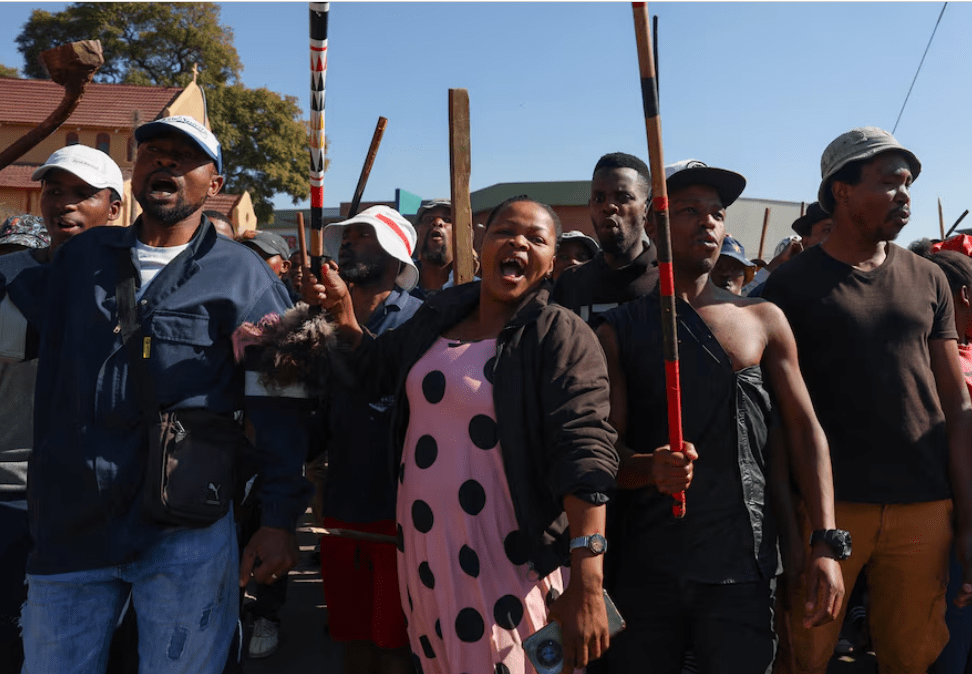
JOHANNESBURG, July 9 — The morning sun rose over Alexandra township, one of Johannesburg’s most densely populated communities, promising another day of uncertainty and fear. By midday, the streets echoed with the sound of splintering wood and desperate pleas as anti-immigrant vigilantes methodically moved from house to house, breaking down doors and dragging terrified residents into the open.
The scenes playing out across Alexandra, Soweto, and Durban represent a dangerous escalation in South Africa’s ongoing xenophobic crisis—one that has already forced tens of thousands of migrants to flee the country they once called home.
‘I Am a ZEP Holder’
Among those apprehended by the marchers was Total Mhlanga, a Zimbabwean national whose hands trembled as he was escorted toward a police van. “I am a ZEP holder,” he insisted, referring to the Zimbabwean Exemption Permit that legally allows tens of thousands of Zimbabweans to live and work in South Africa. His papers, however, seemed to matter little to those who had seized him.
In Alexandra, a Reuters reporter witnessed protesters breaking into homes where they believed undocumented immigrants were hiding. Among those forcibly removed was a woman clutching a small child—both citizens of Malawi, a country now grappling with the mass return of over 38,000 of its nationals who have fled South Africa in recent weeks.
A Zimbabwean mother of three, who asked not to be named for fear of retaliation, described watching from her window as neighbors were dragged from their homes. “I came here legally. My children were born here. This is the only home they know. Now I must decide whether to stay and risk everything or return to a country I left because there was no future there.”
‘Every Thursday Until Our Demands Are Met’
The movement driving this violence has found an unlikely and increasingly vocal leader: former radio presenter Jacinta Ngobese-Zuma. Her group, known as March and March (also referred to as “March 1 March”), has organized nationwide protests that have transitioned from street demonstrations to what community leaders describe as “door-to-door” operations targeting foreign nationals.
“Protests will take place every Thursday until our demands are met,” Ngobese-Zuma declared on June 30, an informal deadline her movement had set for undocumented immigrants to leave South Africa. The promise has become a terrifying reality for migrants across the country.
Her organization has painted undocumented immigrants as the source of South Africa’s deep-seated economic challenges—unemployment, housing shortages, and strained public services—demanding tighter border controls, mass deportation, and the prioritization of South African citizens in schools and healthcare facilities.
A Community Divided
At the march in Alexandra, community leader Bongani Msomi justified the tactics being employed. “We are walking around doing door to door removing foreigners,” he stated matter-of-factly, as behind him, protesters brandished sticks and flags.
Yet not all South Africans support the movement. In the same township, elderly residents watched with concern, some shaking their heads in silent disapproval. A local teacher, who also asked not to be named, expressed anguish over the situation: “We are destroying what Nelson Mandela built. Ubuntu is dead in these streets. These people are not our enemies—they are our neighbors, our customers, our children’s classmates.”
The Government’s Response—and Its Limits
President Cyril Ramaphosa has repeatedly warned against scapegoating immigrants for the country’s problems. His government has issued clear directives that citizens do not have the right to take immigration enforcement into their own hands.
Police have deployed officers to recent marches for safety and have stepped up arrests of undocumented migrants—yet the line between law enforcement and vigilantism has become dangerously blurred. At the scenes of Thursday’s protests, officers stood by as vigilantes dragged people from their homes. A spokesperson for Johannesburg police was not immediately available to explain the actions of officers at the scene.
Human rights organizations have raised urgent concerns about the complicity—or at minimum, inaction—of law enforcement in facilitating these “removals.” “When police receive citizens who have been unlawfully detained and physically removed from their homes, they are not acting as neutral enforcers of the law,” said a legal observer who requested anonymity. “They are, in effect, legitimizing extrajudicial actions.”
A Regional Humanitarian Crisis
The ripple effects of South Africa’s xenophobic violence are being felt across southern Africa. Malawi’s government confirmed Thursday that over 38,000 of its citizens had returned in recent weeks, part of a massive repatriation effort driven by safety concerns. Neighboring Zimbabwe has seen more than 60,000 of its nationals return—a staggering figure that represents not just a humanitarian crisis but an economic shock to both nations.
These returnees are arriving in countries that already struggle with their own economic challenges. Many had been sending remittances home, supporting extended families and local economies. Their forced return is creating new vulnerabilities while straining already limited resources in their countries of origin.
The Human Cost
Behind the statistics lie countless stories of shattered lives. A Malawian shopkeeper in Soweto watched his business—built over fifteen years—looted and destroyed. A Zimbabwean nurse who had served in a public hospital for a decade now sleeps in a shelter, uncertain if she will ever return to work. An Oromo refugee who fled political persecution in Ethiopia now faces violence in the country where he sought sanctuary.
“The pain is not just physical,” says Dr. Thabo Mbeki (not the former president), a community psychologist who has been providing counseling to affected families. “People are experiencing profound trauma. They have lost everything—their homes, their livelihoods, their sense of safety. Children are refusing to eat. Parents cannot sleep. The psychological wounds will last for generations.”
The Economic Fallacy
Economists have pushed back against the narrative that immigrants are the primary cause of South Africa’s economic woes. Studies have shown that immigrants often create jobs through entrepreneurship, fill critical skills gaps, and contribute to the tax base. The country’s unemployment crisis, they argue, has far deeper roots in systemic inequality, inadequate education, and stagnant economic growth.
“To blame immigrants for unemployment is not just inaccurate—it’s dangerous,” says economist Tendai Moyo. “It diverts attention from the real structural reforms that are needed. It gives people a scapegoat instead of solutions.”
A Nation at a Crossroads
South Africa stands at a defining moment. The post-apartheid constitution—one of the most progressive in the world—enshrines human dignity and equality. Yet the country’s actions are betraying these principles.
As Thursday’s marches conclude and communities brace for what next week may bring, a fundamental question remains: Will South Africa find the political will to protect the most vulnerable among its residents, or will it allow xenophobic violence to become normalized?
The international community is watching. The African Union has expressed concern. Human rights organizations have documented abuses. Diplomats from affected countries have raised the issue with their South African counterparts.
But for the families huddled behind locked doors—the legal permit holders who still fear arrest, the children too frightened to attend school, the business owners who have lost everything—the response so far has been insufficient.
A Plea for Humanity
As evening falls over Alexandra, the sound of broken glass crunches underfoot. Women sweep debris from their doorsteps. Men gather in small groups, their voices low with tension. Children peek through curtained windows, their games silenced.
“In a just world, this would not happen,” reflects one elderly South African woman who has lived in the township for seven decades. “We suffered under apartheid. We know what it is to be treated as less than human. How can we do this to others? How have we forgotten so quickly?”
Her question hangs in the air, unanswered.
The marches will continue, the groups have promised. And as long as they do, the fragile thread of pan-African solidarity—the very ideal that South Africa’s liberation struggle championed—grows thinner with each passing Thursday.
Reporting from Johannesburg, Alexandra township, and Soweto. Additional reporting from Lilongwe and Harare.

INVESTIGATIVE REPORT: SYSTEMATIC PERSECUTION OF OROMO PEOPLE IN ETHIOPIA

By an Investigative Reporter in Finfinne
Executive Summary
This report documents systematic human rights violations against Oromo people across Ethiopia’s Oromia region, based on extensive testimonies, government reports, and international documentation. The evidence reveals a pattern of state-sponsored persecution targeting Oromo individuals based on their ethnic identity and perceived political affiliations, creating conditions that meet international definitions of persecution under refugee and asylum law.
The Scale of the Crisis
In Oromia, harm and brutality targeting Oromo children based on their identity and political perceptions are widespread and escalating. Oromo children living in areas where the Oromo Liberation Army (OLA) operates—including Western Oromia, Wellegga, Shambu, West Shewa, North Shewa, Karrayyoo, Guji, Arsi, and Eastern Oromia—face multifaceted forms of persecution.
The Ethiopian Human Rights Commission (EHRC), in its 2025 annual report covering June 2024 to June 2025, documented extensive violations of fundamental rights across Oromia, including extrajudicial killings, abductions, physical harm, and widespread destruction of property. Both government forces and the OLA have been implicated in these abuses.
Testimony: The Reality of Persecution
A young man from the Shambu area, who requested anonymity due to fear for his safety, described his ordeal to this reporter. While traveling from Shambu to Finfinne (Addis Ababa), he was stopped by security forces who demanded he present his identity documents.
“When they saw my ID showing Shambu, they arrested me. During detention, I endured severe beatings and torture. They accused me of coming to Finfinne to join the insurgency, despite my insistence that as an Oromo, I had no connection to armed groups. After two months of detention, they released me with a warning. Since then, I have been unable to freely move or speak about my origins. My family continues to be harassed by militia demanding to know my whereabouts and threatening to involve the WBO [an armed group].”
This account mirrors the experience of Mr. W, another Oromo asylum seeker who was arrested in June 2020 following protests after the killing of Oromo singer and civil rights activist Hachalu Hundessa. Soldiers interrogated him about being Oromo and accused him of being part of the Oromo Liberation Army (OLA) or Oromo Liberation Front (OLF)—groups he had never been involved with. He was jailed for three months, and after his release, soldiers monitored and chased him. In January 2021, he was jailed again for a month on similar accusations, with police interrogating and beating him daily. In 2023, the government jailed his parents and threatened to kill them unless he returned. His parents told him to flee.
The Koree Nageenyaa: A Secret Network of Persecution
A Reuters investigation uncovered the operations of the Koree Nageenyaa—or Security Committee—a clandestine group of senior officials in Oromia that has ordered extra-judicial killings and illegal detentions as part of efforts to crush the insurgency. Human rights sources indicate that this committee specifically targets young Oromo with modern hairstyles or appearances that allegedly signal opposition sympathies. Female Oromo face particular vulnerability to sexual violence by security forces. Young people have also reported being asked for bribes by security forces; those unable to pay face immediate detention.
Official Documentation of Systematic Abuses
The EHRC 2025 Report
The Ethiopian Human Rights Commission’s 2025 annual report documented:
- Extrajudicial killings across multiple zones in Oromia
- Abductions and arbitrary detentions
- Physical harm and torture
- Widespread destruction of property
- Both government forces and the OLA implicated in abuses
United Nations Documentation
The UN Office for the Coordination of Humanitarian Affairs (UNOCHA) reported that conflict-related displacement persists in Oromia, with nearly 220,000 people displaced along the Oromia-Somali border. In July 2025, renewed inter-communal violence erupted along the Oromia–Somali border, displacing over 288,000 people.
Humanitarian Assessment
UNOCHA’s assessment found that in Oromia Region alone, an estimated 151,972 people are displaced across multiple districts. Displaced families are sheltering in makeshift shelters made of plastic sheets, clothing, and sticks, offering little protection from the elements. Women, children, the elderly, and persons with disabilities face heightened vulnerabilities, including fear of retaliation, gender-based violence, and psychological trauma.
Legal Framework for Persecution Claims
Under international law, as defined by the 1951 Refugee Convention and its 1967 Protocol, persecution is defined as the act of harassing or oppressing a person or a group of people, especially because of their identity. Persecution includes unfair or abusive treatment toward a person or group based on race, religion, ethnicity, political opinion, or membership in a particular social group.
For an asylum claim, the following elements must be meticulously documented:
- Dates and locations of incidents
- Types of abuse suffered
- Names of perpetrators (if known)
- Medical records documenting injuries
- Witness statements
- Evidence of state involvement or failure to protect
Past persecution and fear of future persecution by government actors on account of political opinion and race form the core of the case.
Critical Findings for Asylum Assessment
Political Opinion
Many Oromo asylum seekers are targeted not because of what they have done, but because of what they are perceived to believe. Simply being Oromo can be enough to attract suspicion. Political engagement—whether real or imagined—significantly increases the risk.
The European Union Agency for Asylum (EUAA) has documented cases where Oromo individuals faced persecution due to their political opinions. Even Oromo individuals who have never been involved with opposition groups can be targeted. Mr. W was arrested and beaten despite having no connection to the OLA or OLF. His only “crime” was being Oromo and being present at a protest.
Place of Origin and Residence
European courts have recognized that “the risk of persecution due to affiliation with OLA applied throughout Oromia, even in areas where there is no active armed conflict.” This is a critical point: an Oromo person cannot simply move to a “safer” part of Oromia and escape persecution. The threat follows them.
Risk of Persecution upon Return
For many Oromo asylum seekers, return to Ethiopia would expose them to:
- Continued targeting by security forces
- Inter-communal violence in their home areas
- The risk of being forcibly conscripted or accused of supporting armed groups
- The inability to relocate safely within Oromia
The Human Rights Situation: A Critical Assessment
The human rights situation in Oromia is described as “critical.” The Ethiopian government has intensified its crackdown on independent media and civil society ahead of elections slated for 2026. Security forces have arbitrarily detained healthcare workers, and humanitarian needs remain acute. The government restricts access to Oromia for journalists and rights groups, meaning much of the conflict and its human toll remains hidden from the world.
“Unfortunately, the human rights situation—as well as the overall humanitarian crisis in Oromia—is underreported,” said Getu Saketa Roro, co-founder of the Human Rights League of the Horn of Africa.
The Oromo Liberation Army (OLA) has called for independent investigations into what it describes as “systematic terror, state-orchestrated brutality, and entrenched impunity.”
Conclusion
The documentation and testimony gathered in this investigation establish a consistent pattern of persecution against Oromo people in Ethiopia based on their ethnic identity and perceived political opinions. This persecution is perpetrated by state actors, including security forces and the clandestine Koree Nageenyaa, and has created a situation where Oromo individuals face well-founded fear of persecution throughout the Oromia region.
The legal and humanitarian frameworks, including the 1951 Refugee Convention, the Ethiopian Human Rights Commission’s findings, and documentation by United Nations agencies, support the conclusion that Oromo asylum seekers from Ethiopia have legitimate claims based on a well-founded fear of persecution on account of their race, ethnicity, and political opinion.
This report is based on on-the-ground investigation, interviews with survivors, analysis of official government and UN reports, and review of international legal frameworks. Some names have been withheld to protect individuals who remain in danger.

Advocacy for Oromia: Mourning Gamo Landslide Victims
PRESS RELEASE
Advocacy for Oromia Expresses Deep Grief Over Fatal Landslide in Gamo Zone
March 13, 2026 – For Immediate Release
The Advocacy for Oromia has expressed its profound sorrow following a devastating landslide in the Gamo Zone of the South Ethiopia Region.
The disaster occurred on the evening of March 10, 2026, in the Laka Kebele of the Gacho Baba district, triggered by heavy rainfall that caused the hillside to collapse onto the community below.
According to reliable sources confirmed by local authorities and humanitarian partners on the ground, the lives of 52 individuals have been confirmed lost in this tragic event. Search and rescue operations continue, with fears that the death toll may rise as teams work to locate missing persons.
Advocacy for Oromia extends its heartfelt condolences to the families of the deceased, their relatives, and the people of the Gamo Zone and the entire South Ethiopia Region. We share in your grief during this devastating time of loss.
Government Response Underway
In the wake of the disaster, high-ranking federal and regional officials have arrived at the scene. They are closely overseeing relief and support efforts and are working to console the affected communities. Emergency response teams have been deployed to provide immediate assistance, including medical aid, shelter, and food supplies to survivors who have lost their homes and livelihoods.
Urgent Call for Precautionary Measures
Given the ongoing rainy season, which heightens the risk of similar incidents across the region’s mountainous terrain, Advocacy for Oromia has urged citizens—particularly those living in mountainous and landslide-prone areas—to heed all precautionary messages and directives with the utmost seriousness.
We call upon relevant authorities to:
- Strengthen early warning systems in high-risk areas
- Conduct public awareness campaigns about landslide safety
- Consider temporary relocation of communities in the most vulnerable areas during the rainy season
- Ensure adequate emergency response resources are prepositioned in disaster-prone zones
A Time for Solidarity
This tragedy reminds us of our shared humanity and the importance of standing together in times of crisis. Advocacy for Oromia stands in solidarity with all Ethiopians mourning this loss, regardless of region or background. When disaster strikes, our common humanity must transcend all boundaries.
Conclusion
Advocacy for Oromia’s statement concluded by wishing the deceased eternal peace and offering strength to the bereaved families. May the souls of those who perished rest in peace, and may their families find the strength and support needed to endure this unimaginable loss.
We urge all who are able to support relief efforts through recognized humanitarian organizations working in the affected area.
#GamoLandslide #SouthEthiopia #HumanitarianAid #AdvocacyForOromia #StandWithGamo #Ethiopia #LandslideRelief
Issued by: Advocacy for Oromia
Date: March 13, 2026





 Advocacy for Oromia