Category Archives: Uncategorized

The annual Oromo Irreechaa festival is approaching this month.
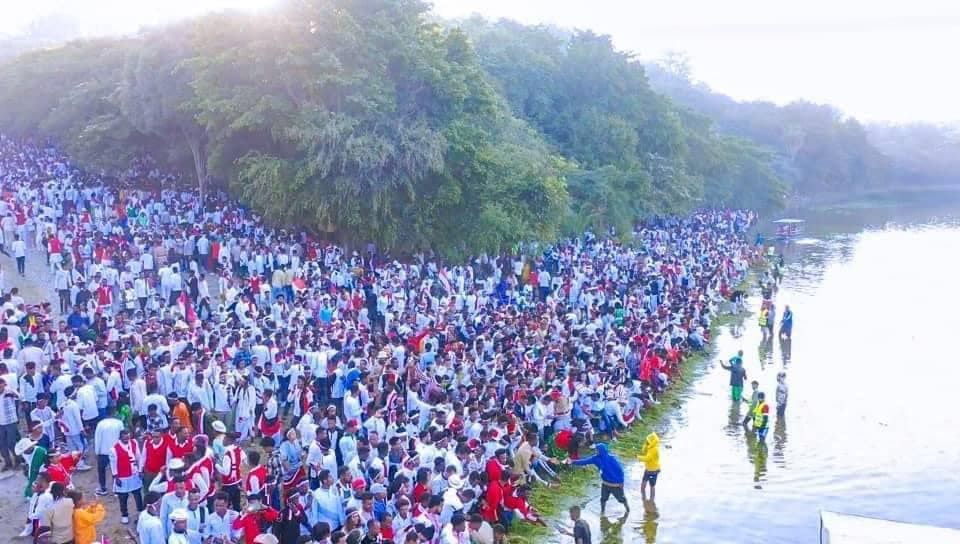
The 2024 Irreecha festival is going to be celebrated in a warm and special atmosphere in Oromia and abroad.
The annual Oromo Irreechaa festival, the Oromo Thanksgiving Day, in Oromia and diaspora is approaching this month. Irreechaa is not merely a festival; it is the vibrant heart of Oromo culture, a celebration that transcends mere tradition to embody the essence of gratitude, unity, and renewal.
As the Oromo people gather each year to honor this grand occasion, they connect deeply with their history and the rhythms of nature, marking a profound celebration of life and harmony.
Irreechaa, the Oromo Thanksgiving Day, is celebrated twice annually: once at the banks of rivers or lakes during Irreecha Malkaa/Birraa in late September, and again on mountain tops or hills during Irreecha Tuulluu/Arfaasaa in autumn. The former, occurring at the close of winter and the dawn of spring, is a tribute to the end of the rainy season and the promise of new beginnings. The latter, celebrated in the dry season, heralds the approach of winter, symbolizing reflection and preparation.
The term "Irreechaa" itself conjures images of verdant green, symbolizing fertility and thriving life, nourished by the blessings of Waaqaa, the Creator. This ancient festival, with roots extending over 6,000 years, was momentarily eclipsed during the late 19th century when the Oromo were integrated into the Abyssinian Empire. However, the spirit of Irreechaa has persisted, thriving in Oromia and among the Oromo diaspora worldwide, from North America to Europe.
Central to the celebration is the belief that every element of creation is imbued with the spirit of Waaqaa. The Oromo consider that the divine essence resides in natural elements such as the sea, great rivers, and mountain peaks. Thus, Irreechaa is celebrated at these sacred places—rivers and mountains—where the Oromo people express their gratitude and seek blessings.
The essence of Irreechaa lies in giving thanks to Waaqaa for guiding the Oromo people through the trials of winter, for the sustenance provided throughout the year, and for the transition to a season of growth and harvest. It is a time to appreciate the divine for the survival of families, the flourishing of crops, and the bounty of the spring season. Beyond gratitude, Irreechaa also serves as a celebration of the forthcoming harvest and a joyous welcome to the new season.
The rainy season, stretching from June to September, is seen as a challenging period marked by floods and isolation. It is during this time that Irreechaa provides a platform for peace, reconciliation, and renewal. The festival is renowned for its emphasis on unity and the restoration of harmony. Elders and Abbaa Gadaas (community leaders) play a crucial role, offering blessings and promoting the values of peace and coexistence.
Irreechaa also serves as a communal stage for significant life events, including naming ceremonies, weddings, and matchmaking. It is a moment when the community comes together to celebrate Oromummaa (Oromoness) and sabboonummaa (nationality), transcending differences in age, sex, religion, or social status. It embodies a collective affirmation of unity, respect, and shared heritage.
The celebration culminates at major sites like Hora Finfinnee and Lake Arsadi, where thousands of Oromos converge. The evening of Irreechaa is a poignant moment of reflection and reconciliation. Elders ask the community whether they are at peace with one another and with Waaqaa. Those with unresolved conflicts are encouraged to seek resolution before the festivities begin, underscoring the festival’s commitment to harmony.
Irreechaa is a powerful expression of Oromo cultural values, a living testament to the strength and unity of the Oromo people. It is a celebration that not only acknowledges the past and the present but also renews the bonds of community and the shared joy of life’s blessings.
Festivals of peace are a wonderful way to understand other cultures, and the values that matter to them.

Want to fight gender inequality? A review of data from 118 counties shows that development aid works
Professor of Economics, University of Minnesota Duluth
Gender inequality isn’t just unfair — it’s also a drag on the world economy. Giving women the same economic opportunities as men would add about US$12 trillion to global gross domestic product by 2025, one analysis found. That’s an 11% boost.
The link between women’s empowerment and economic growth is well established. When women are economically empowered, they invest more in their families, creating a cycle of positive outcomes that spans generations. Women’s participation in the workforce leads to greater productivity and brings diverse perspectives that enhance decision-making and drive innovation.
Recognizing these benefits, governments and nongovernmental organizations have increasingly directed aid — funds provided to developing countries to foster economic growth — toward promoting women’s empowerment.
As an economist who studies development, I wanted to know: Does all that money really make a difference? So, in a recent study, my colleagues and I analyzed the impact of gender-related aid on gender inequality using data from 118 countries over a 13-year period, from 2009 to 2022.
What we found was uplifting: Gender-related aid reduced inequality in most countries we studied.
We looked at two types of gender-related aid. The first is funding for projects that tie gender into larger economic goals. Development experts call this “significant gender-related aid.” There’s also aid funding that narrowly and explicitly targets gender equality. Experts call this “principal gender-related aid.”
We found that the first approach consistently and significantly reduced gender inequality in 115 out of 118 counties we studied. The latter approach had statistically significant effects in 85 countries. It also appeared to be much more effective when paired with the first approach.
Our findings strongly suggest that integrating gender-related aid into broader development efforts is crucial for promoting gender equality. Gender and development are intricately intertwined, a fact often overlooked. Recognizing this connection is crucial for achieving sustainable and inclusive growth.
Women’s empowerment success stories
That might all sound pretty abstract, but our research shows that the world has made progress in real people’s lives over the past decades. Cases from several countries show just how much progress is possible:
Rwanda: Following the 1994 genocide, Rwanda made a concerted effort to rebuild its society with gender equality at its core. Today, women hold 61% of parliamentary seats, the highest percentage in the world. This remarkable achievement is in part a direct result of gender-focused policies and significant investments in women’s political empowerment. Rwanda’s progress illustrates how political will and dedicated gender-related aid can transform a society.
Bangladesh: Despite traditional gender roles, Bangladesh has made significant strides in gender equality, particularly in education and economic participation. Through targeted programs like the Female Secondary School Stipend Program and microfinance initiatives by organizations like the Grameen Bank, Bangladesh has seen substantial improvements in girls’ education and women’s economic empowerment. These initiatives have contributed to a decline in gender disparities and have spurred economic growth.
Ethiopia: In recent decades, Ethiopia has invested heavily in education, particularly for girls. Programs aimed at increasing school enrollment and reducing dropout rates among girls have led to improved literacy rates and better health outcomes. These educational advancements have empowered women economically and socially, reducing gender inequality.
Despite progress made, these achievements aren’t set in stone. Instability can rapidly undo years of progress. Recent policy backsliding in Afghanistan, Brazil and the United States shows the need for vigilance.
Empowering women empowers men, too
Discussions about the importance of reducing gender inequality often revolve around the direct benefits to women and girls. But everyone, including men, stands to win in a more gender-equal society.
First, women’s economic empowerment leads to stronger economies, which benefits everyone. Research shows that gender equality promotes healthier relationships, reduces violence and fosters more cohesive and supportive communities. Similarly, workplaces prioritizing gender equality tend to have better team dynamics, higher employee satisfaction and increased productivity. These are gains for everyone, regardless of gender.
And gender equality has distinct benefits for men. This is because it alleviates the pressures associated with traditional masculinity, which can lead to better mental health. For example, in more gender-equal societies, men report being happier with life and less stressed and depressed.
This shows that the benefits of gender equality aren’t limited to women and girls; they extend to all members of society. Everyone has a stake in helping progress move along.
Research-backed best practices
Governments and aid professionals should follow five steps for success to safeguard the advances made in gender equality and continue progressing:
1. Keep the aid flowing: Continued financial and technical support for gender equality initiatives is vital. Our research suggests policymakers should focus on integrating gender considerations into all development projects.
2. Engage everyone: Involving men and boys in gender equality efforts helps to challenge and change harmful gender norms, fostering a more inclusive society.
3. Tailor strategies: Although aid has an effect across the board, gender equality initiatives must consider each country’s unique sociopolitical and cultural contexts. Tailoring strategies to fit these contexts ensures that interventions are relevant and practical.
4. Strengthen institutions: Effective institutions and governance are crucial for successfully implementing and sustaining gender equality initiatives. Efforts to improve governance and reduce corruption will enhance the impact of aid
5. Promote education: Schools are a powerful tool for promoting gender equality. Investing in educational programs that empower women and girls and raise awareness about gender issues is essential for long-term change.
Gender equality is a cornerstone of a just and prosperous society. The benefits of empowering women extend far beyond the immediate recipients of gender-related aid, fostering economic growth, political stability and social cohesion. Our research shows that efforts to empower women really do pay off — literally and otherwise.

The Music Albums released by Elemoo Ali (1982-1998)
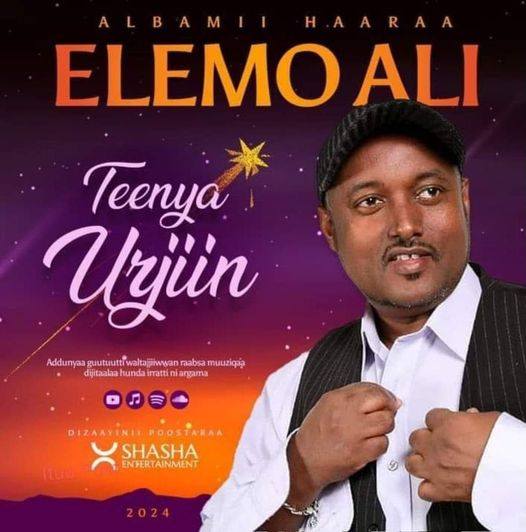
As a long time listener of Elemo Ali’s songs and an ethnographic writer who explores the music of different cultures, I list down the albums released by the artist so far and present my reflections in some of them.
1. His first album was released in Djibouti (circa 1982)-
It was an audio cassette. Elemo used his acoustic guitar ( a.k.a. “box guitar”) for that album.
2. His second album released in Saudi Arabia- 1986.
It was an audio cassette and a female singer called “Shamsi” featured Elemo Ali (she had two solo songs; the rest of the songs were by Elemo) . In the cassette Elemo sung in Harari language too. But what many people remember from that cassette was Elemo’s singing Mahmoud Ahmed’s famous Amharic song called “እንቺ ልቤ እኮ ነው” in Oromo language. The lyrics used by Elemo was very similar to the Amharic one.
3. The album he has done with Nuho Gobana in Saudi Arabia (1987)-
This was also an audio cassette. From that album a single that goes like “Biiftuu tiyya, urjii tiyya, suma bira jira yaadni kiyya” became popular in the media (I repeatedly heard it while Harar Radio Stations Oromo Language Service broadcasted it).
However, people usually confuse this album with the one he released with “Shamsii”. This happened because the music arrangements of the two albums were the very similar.
4. The album he released in Italy in 1988:
Truly speaking, I have no detail information about this album. I heard recently from the words of Elemo when we communicate through telephone that he released an album in Italy while he was living in that country for a short period of time. I will seek additional information on the album and bring to the public.
Elemo Ali produced most of his albums in Canada and a gained popularity there. Here are the list of those albums and my reflection on them.
5. “Jabeessa Aadaa Teenya”-1989:.
According to my evaluation this was Elemo Ali’s finest album of all time and one of the best albums in the history of Oromo Music and art. The rich linguistic treasure seen in the lyrics of the songs, the artist’s ability to sing in different musical scales in addition to the standard pentatonic scale derived from Oromo cultural beats, and Elemo Ali’s emblematic ability to display the vocals in a clear way were the main features that gave the album special color and quality. The most surprising thing was that almost all of the lyrics an the melodies of that album were created by Elemo Ali himself. Of course songs like ” Xiyyaan Nadirtee”, “Yaa jiruu biyya Ormaa”, “Jabeessaa Aadaa Teenyaa”, ” Koottu yaa Boontuu”, “Yaa Urjii Samiidhaa” are unforgettable.
6. “Oromiya”- 1990:
Another critically acclaimed and artistically emboldened album of Elemo Ali. It was a historical album in which Elemo addressed the Oromo people’s quest for freedom and justice in a highly organized and rhythmically synthesized Oromo poetry. This was also one of the best albums seen in the history of Oromo music. From the album ” Yaa Biyya too Gaarii”, “Oromiyaa” and “Carcar Xirroo” were the top ones.
7. ” Guyyaanis Keenya”- 1993:
This was the first album of Elemo Ali produced by a local music shop in our country. In that album Elemo brought many new songs together with certain songs from his earlier cassets (example: “Baadiyyaadha jirtii tanin ani jaallee from his album with Nuho Gobana, and Kottu yaa Boontuu Yaa shaggee tiyya from his album of 1989)
The album was released by Biftu Music Shop of Dire Dawa and became one of the best selling Oromo music albums of 1993 together with Shamsadin Yusuf’s “illii Jannataa” album.
7. “Leelloo Tiyya”: 1998:
Another critically aclaimed album of Elemo Ali which contains songs in multiple beats , the Oromo traditional “ragada” and “Shaggoyee”, the Caribbean “reggae”, the Central African “rumba” and “Afrobeats”, the Sudanese “hageeba” and the Western “pop”, “jazz” and “blues”. The band accompanied him for that album as well had members from many countries, Africans and North Americans.(Continued from above)
From the album the single titled ” Himi naaf Himi” became the most popular.
It was clear that Elemo brought a tradition of using multiple beats from different traditions for his songs in order to introduce the Oromo, Ethiopian and East African music and culture to the global audience.
The album was very fruitful in attaining its goals and introducing Elemo Ali to music fans of different countries. Elemo Ali won Canada’s annual music award for that album.

DAABANAA: Prof Kuwee Kumsaa
Mariin Prof Kuwee Kumsaa waliin taasifame kun kan kutaa duraa ti. Kutaa kana keessatti waa’ee maqaa isaanii, waa’ee muuxannoo hojii isaanii fi mudannoo adeemsa kana keessatti isaan mudate gadfageenyaan kaafnee jirra. Itti dhiyaadhaa!
KUTAA 1FFAA

Remembering Girma Gamada: A Pillar of Oromo Volunteerism
How do we remember Girma Gamada?
Girma Gamada was born and raised in Oromia. When he was young, however, the political situation did not allow him to serve his countrymen. The passion and passion for promoting Oromo and Oromummaa did not disappear from him. Instead, this charity left the country with Girma and became an example of Oromo Volunteerism.
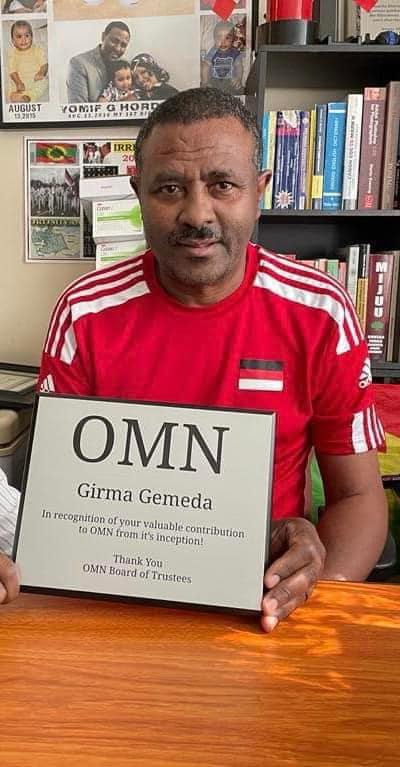
GIRMA GAMADAA: An Example of Oromo Volunteerism
Volunteerism is doing good for the community. This culture is to do work that benefits the community and the country. Everyone has the ability to be kind; but not everyone works beyond their own existence and livelihood for the benefit of other communities. But people who are born with this gift cannot hide themselves. When they get this opportunity, they start doing things that will promote and promote their nation.
We can take Girma Gammada as an example of the people that Oromo had like this, and lost in a short time.
Girma was exiled from Oromia for political reasons and lived in exile in Nairobi, Kenya. He then settled in Toronto, Canada. From then on, he started working to address the shortage of Oromo through advertising and information. In a short time, he promoted Oromo songs in various ways and made various posters.
He also made it known in the community by preparing advertisements for festivals and events.
He was doing advertising for various Oromo associations. He contributed greatly to the recognition and growth of the Waqeffannaa association by preparing many posters. He has been contributing to the international recognition and growth of the Irreecha festival.
He was involved in all Oromo structures such as OMN, sports associations and community building. He has done a basic job to make the history of the Oromo fighters like Jaal Bureyessso known to the Oromo people and follow their fancy.
Jawar Mohammed recalled Girma’s contribution to OMN as highly dedicated. “It is devastating to hear of the passing of Girma Gemda. We have lost a true friend and a selfless servant of our community. Girma was one of the most committed and consistent people I had the privilege to work with for more than a decade. He was with us from day one, through all the ups and downs. May you rest in peace, brother. My heartfelt condolences to his family and the Toronto community.”
Since arriving from Oromia, almost 20 years ago, Girma has been serving customers with his friendly and informative approach to seafood selections.
It is with heavy hearts that we inform you that Girma has been diagnosed with ALS (Amyotrophic Lateral Sclerosis or Lou Gehrig’s disease), a rare and life-altering condition. ALS is a neurological disease that affects the motor neurons; motor neurons are the nerve cells in the brain and spinal cord that control voluntary muscle movement. This diagnosis means that Girma can no longer work and provide for his family as he once did.
It also means he can no longer continue his volunteer work as a graphic designer for the Oromo Community Center or pursue his passion for photography. Girma’s photography skills were evident in his coverage of the Toronto Waterfront Marathon, Afrofest Toronto and African Fashion Week Toronto.
For people like Hawwinee Alamayehu, Girma was a brotherly advisor. “A patriot, a strong professional, a hero of man, for me to lose you from my own good brother is a strong sorrow beyond words.”
Girmaan was an adult who was strong in many ways. Tulluu Liiban testified to the achievements of Girma Gamada who will be well remembered by the community. “Girma Hordofa Gemeda, who has been a shining star in promoting the Oromo cause through his creative works over the past 2 decades, passed away untimely in North America and beyond hoped he would recover from his illness Unfortunately this humble and clean human being is gone capacity He has been rendering his works for free with passion.
” Moreover, Girma has designed promotional pieces including printable materials such as T-Shirts, caps, banners, artifacts, logos etc. He has also contributed to the design and editing of choreographies and photography. Girma has recorded and documented a number of vital events in Oromo, in videos and pictures. He has designed events, stages and presented auction items for free for community fundraisers. His Lega Xaafoo Studio is based in Toronto, Canada. Girma will be greatly missed because of his invaluable contributions and commitment to the Oromo people throughout his life.”
Girma was being treated for a neurological disease. However, he could not be cured by treatment. He passed away on July 4,2024. Girmaan was the father of one child; condolences to his wife and child.
Girmaan is not with us today. His voluntaristic work will live with us forever. People like Birhanu Olana are remembering him as very committed Oromo professional.”Girman was a strong Oromo son. He was a strong cameraman and graphics expert that he was helping us day and night when we were looking for such professionals and he never asked us for payment for his services.”
Maryland County proclaimed OROMO WEEK.
(A4O, 22 July 2023) Maryland County proclaimed the week of July 22nd- 29th, 2023 OROMO WEEK.
The Oromo Sports Federation of North America (OSFNA) Festival will be taking place at Montgomery Blair High School.
Welcome all to the neighborhood for OSFNA Festival of this year’s event in DMV area.

Peace is Precious.
By Dabessa Gemelal

Many of us may not value what we have on our own. This is a common occurrence in our lives. Many things become worthwhile, when we are self-sufficient. When we are very thirsty, the price of water is high; especially when you don’t have it on your hands, it’s even more expensive.
For those of us who live in a peaceful country, peace is not much boasted. But, in those in a war-torn country, the price of peace is expensive; The message delivered at a brief ‘peace journey’ event in Melbourne on 27 May 2023 is also our greatest testimony. During the short peace journey on this day, a great message was conveyed, and the experience gained proved that peace is precious.
Heaven Culture, World Peace, Bring Back the Light (HWPL), the International Youth Peace Group (IPYG) and the International Women Peace Group (IWPG) held to commemorate the 10th Anniversary of the Declaration of World Peace and Peace Walk in Melbourne on Saturday, May 27, 2013, at the King Edward VII Memorial. The participants held various peace signs to express the preciousness of peace and loudly conveyed the importance of peace to the participants and the world.

About 200 people from the multicultural community, leaders, and youth attended the event to create awareness on the importance of peace. The event included speeches by Mr Keith Wolahan, Federal Member for Menzies and Brigadier Bob Slater former AM RFD Lieutenant Colonel from ARA, who shared their messages and hopes for peace. In his speech, he mentions that the military culture of conflict resolution comes at a high cost and heavy sacrifices, and strongly urges the world to practice peaceful ways of resolving conflicts.
Advocacy for Oromia is well aware of the violence being experienced by the Oromo people because of the lack of peace in Oromia. The largest peace-loving Oromo people in East Africa have not been living a peaceful and prosperous life since their peace was disrupted in the late 1880s; their truth was betrayed, and they were subjected to severe oppression and persecution. The people have lost many human lives in the nearly 150-year struggle to regain the violated peace; the brave Oromo have talent; those who had knowledge to develop the country and eradicate poverty were sacrificed prematurely because of the lack of peace; many properties were destroyed. Oromia is still bleeding without returning to the peace it longs for.
The peacekeeping work being done through HWPL also attracted A4O because it is a good and blessed work that the Oromo people want to promote. HWPL aims to achieve a culture of peace in the world and restore peace and light to the global community. The organization aims to organize and conduct peace education, multicultural peace festival and peace trips available. During the year, A4O participated in the organisation’s events: peace education, multicultural peace festival and peace trip and shared from the experience; it is also ensuring that the peacekeeping efforts of the organization are successful and supported, and that the culture of peace is further entrenched.

Peacemaking is vital today for three main reasons. First, conflict and violence cause great harm. Many lives are being threatened by conflict and chaos in the world we are seeing. Second, military responses to political problems alone do not work. Military forces can be deployed to prevent emergencies, but they cannot fundamentally solve political, social and economic problems and sustain peace. In fact, it can sometimes make the job even more complicated. Third, conflict destroys lives; it also hinders growth. Currently, more than 1.5 billion people live in countries affected by violent conflict. Currently, 59.5 million people are forcibly displaced worldwide, of which 19.5 million are refugees, half of them children. This shows that if there is no peace, human life will be in greater danger.
We can save our day many things. However, it is very blessed to spend our days in peacemaking and promoting a culture of peace; it will have many benefits. Without peace, nothing we do will be useful. If we contribute our part to bringing peace wherever we are, if we spend our time working for peace at certain times of the year, the peace we desire and seek will last. Peace is precious; it is necessary to participate in peacebuilding and contribute our part to sustain this precious peace.

Melbourne Oromo community celebrates Irreecha Arfaasaa
(Melbourne, 21 Maya 2023) Melbourne Oromo community celebrates Irreecha Arfaasaa Festival at Dandenong Hill today.

A few minutes of remembrance was held for the victims of the Irreecha Birraa festival in 2016.
On October, 2, 2016 the TPLF regime opened fire indiscriminately on crowds celebrating Irrecha and killing at least 700 people.
In particular, the late Haji Biiftuu Fayyisaa, who passed away yesterday, was also commemorated.
A memorial service was also held for the teachers of Madda Walaabu University who died in a car accident on May 20, 2023.
Oromo fathers, mothers, youths and children dressed in traditional Oromo clothes and holding wet grass also celebrated under a large tree on the hill.
Irreecha is a strong and rich Oromo cultural identity and Oromo wherever they are should strengthen this culture.
The festival started with the blessing of the elders.


Advocacy for Oromia calls on the PP government to release the unjustified arrests and torture of opposition leaders and supporters
(Melbourne, 6 may 2023) Advocacy for Oromia has expressed its wholehearted and positive support for the recent peace talks between the OLA and the Ethiopian government.

A4O added that it wholeheartedly supports the talks and outcomes to bring peace in Tigray.
A4O expressed its wholehearted support to those who contributed to the success of the peacekeeping operation.
A4O said in a statement today that it strongly supports the efforts being made to resolve the current crisis in Amhara region and other regions of Ethiopia through dialogue and stability.
A4O believes that forced factors will not have a convincing advantage. A4O firmly believes that any problem will have convincing benefits if it is resolved through dialogue and agreement.
A4O is willing and able to work and support in teaching and developing the strategies and knowledge, skills and abilities to resolve conflicts and problems peacefully and to work peacefully in all areas where there are security problems.
A4O confirmed that the PP-led government also has support for its efforts to protect national security and unity.
“The country believes that it grows through collective participation,” A4O said, adding that the government should work towards expanding this participation.
A4O called on the opposition to stand by the government by focusing on what they have in common, not what separates them from the government.
A4O calls on the PP government to release the unjustified arrests and torture of opposition leaders and supporters and make more efforts to expand and develop the political platform.
In particular, A4O called for the efforts to establish peace in the country to continue without interruption through peaceful dialogue.
“It is well known that a country without peace cannot develop in any way, and those who care about Ethiopia and care about the country’s development must be determined to work together,” A4O said.
In particular, A4O called for the unconditional release of political prisoners to participate in peacebuilding and development of the country and called for the ongoing reconciliation with the opposition parties to continue in purity.

A4O added that it can do capacity building where knowledge and skills are needed and has programs and arrangements to provide necessary training and education.
In particular, A4O has called on media practitioners to develop and use a media language that promotes social harmony, human dignity and ethnic harmony. A4O added that A4O has the capacity and capacity to contribute this support if needed.
The Oromo community in Victoria has been awarded Certificate.
(Melbourne, 6 May 2023) The Oromo community in Victoria, Australia has been awarded a certificate of appreciation for their contribution to spreading the message of peace around the world.

Members of the community were especially thanked for their participation in the Multicultural Peace Day organized by HWPL this year through the Oromo youth living in Melbourne.
On the Multicultural Peace Day celebration, the Oromo youth and the Oromo community were participated to promote the Oromo culture of peace, Oromo love and respect for human beings and the Oromo struggle to restore peace in Oromia.
Also, the Oromo mothers of Melbourne, Victoria were further appreciated for their support for the promotion of peace in the world by celebrating International Women’s Day this year.
The members of the Oromo community who participated in the peace education and completed the education will also expected to contribute to the development of a culture of peace in the existing social life.
Advocacy for Oromia was awarded certificates for its contribution to the organization of the Oromo community, Oromo mothers and Oromo youth in Victoria.
Advocacy for Oromia would like to thank all the members of the Oromo community for their contribution to the blessed and honorable work of promoting a culture of peace.




 Advocacy for Oromia