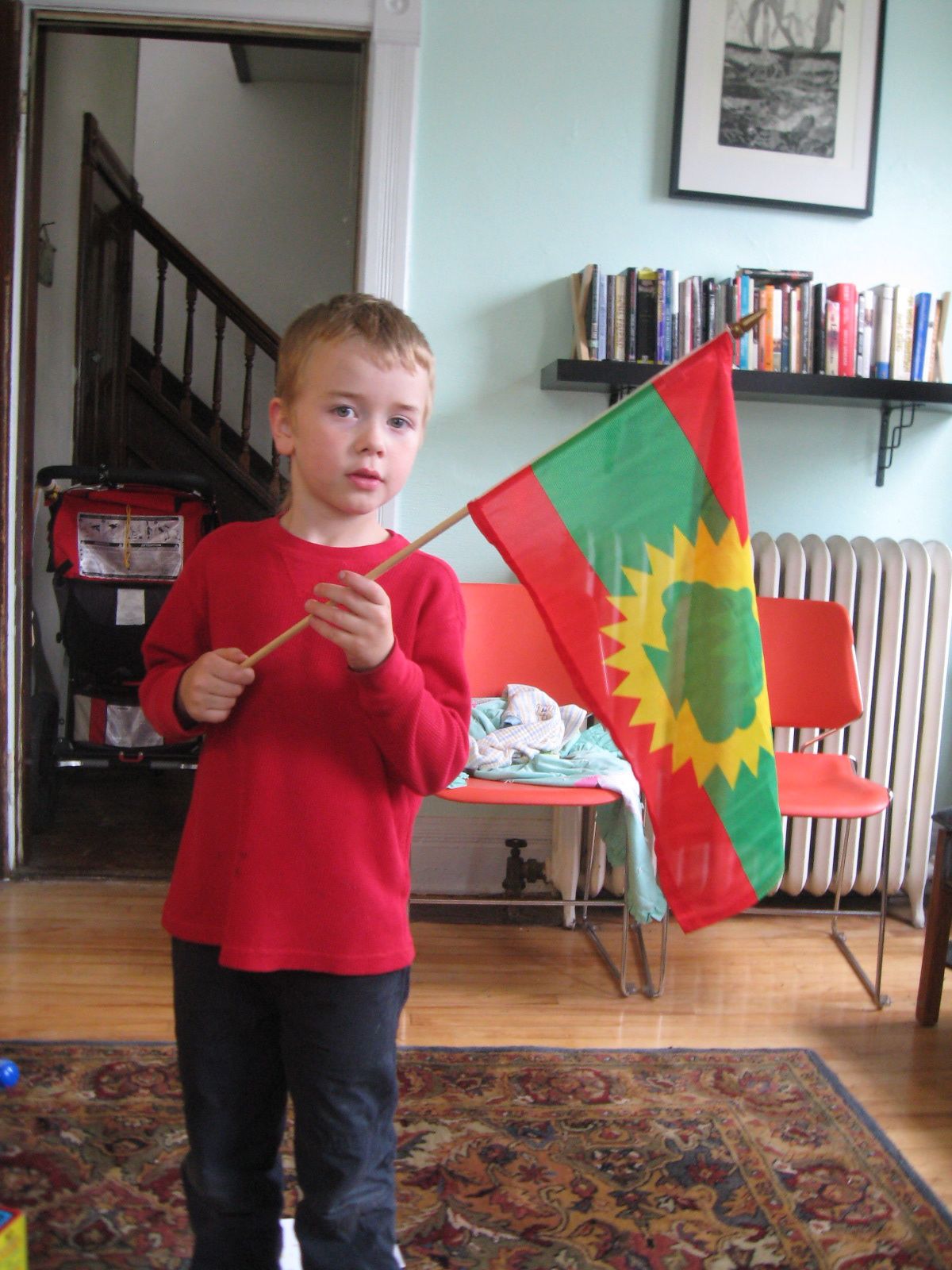
When students in Ethiopia started protesting last month against the Ethiopian Government’s proposal to annex territory from the state of Oromia to facilitate the expansion of the capital city Addis Ababa, diasporans mobilized to show their solidarity. As federal “Agazi” security forces cracked down, opening fire on peaceful protesters, placing students on lock-down in their dormitories, and conducting mass arrests, Oromos around the world staged rallies and hunger strikes to raise international awareness and to call on the governments of the countries where they live to withhold aid and put pressure on the Ethiopian Government to respect human rights.
In the first three posts in this series, I discussed the Oromo diaspora’s mobilization to shed light on the human rights violations on the ground, the sharp criticism the government of Ethiopia faced during the Universal Periodic Review on May 6, and the steps the Oromo diaspora in Minnesota is taking to show solidarity and press for accountability in Ethiopia. This final post tells some of the stories of Oromos in the diaspora who have spoken with friends and family on the ground in Oromia about events over the past three weeks, and also covers the Ethiopian government’s formal response to the UN review and offers some suggestions for next steps.
Not “voiceless,” but deliberately silenced by Ethiopian government
“We need to be a voice for the voiceless” has been a common refrain from the diaspora. But in my view, the students and others who are protesting in Ethiopia are far from voiceless. They have been bravely marching, placing their lives and academic careers on the line, to express their opposition to the government’s “Integrated Development Master Plan for Addis Ababa.” In the words of 2004 Sydney Peace Prize winnerArundhati Roy, “there’s really no such thing as the ‘voiceless.’ There are only the deliberately silenced, or the preferably unheard.”
The government controls the media and telecommunications in Ethiopia, effectively placing a stranglehold on open debate and criticism of the government. Historically, efforts by western media, including CNN, to cover events on the ground in Ethiopia have been stymied. The government’s repression and intimidation also create obstacles for independent journalists trying to cover the story from outside the country. I spoke with one U.S.-based reporter who covers the Horn of Africa, and he explained that when he tried to confirm casualty reports, hospital personnel in Ethiopia refused to speak to him, fearing for their jobs.
 The Oromia Media Network (OMN), a Minnesota-based satellite news network that has been covering the student protests, offering commentary, and dedicating attention to the diaspora response, reported that on May 2, the Ethiopian government blocked access to its website, and on May 13, began jamming OMN’s satellite transmission. Oromos in Ethiopia have turned to the OMN Facebook page, urging, “Please send us a new frequency.”
The Ethiopian government even attempts to silence social media. One Oromo messaged me on Facebook from an internet cafe in Addis Ababa, but he said that he didn’t feel safe going into too much detail, fearing that the government or people in the cafe were monitoring his communications.
He’s not being paranoid, and the OMN experience is nothing new. The government has used its monopoly control over telecommunications to conduct surveillance of regime opponents, as well as to block websites of opposition groups, media sites, and bloggers. Speaking of bloggers critical of the Ethiopian government, since The Advocates for Human Rights launched this blog series on May 5, I’ve been pleased to see a huge spike in visitors from Ethiopia. We’ve had over 700 views from Ethiopia, and so far there’s no sign that the government is blocking access to The Advocates Post. We’ll keep our fingers crossed.
On May 5, I had a conversation with an Oromo in London who had just spoken with his sister, who the day before had fled to Addis Ababa from Madawalabu University in Bale Robe. She reported that the military had started beating students who were demonstrating at the university. She told her brother that students were unable to get the word out because cell phone and internet service had been turned off. She saw forces kill one student, but feared that there were more casualties. She was able to share the news with her brother only because she had fled 430 kilometers (267 miles) to the capital, where the phones hadn’t been shut off.
New reports that Ethiopian government is inciting inter-ethnic violence
I’ve read reports on social media that the Ethiopian government is provoking inter-ethnic violence by spreading false reports of attacks and planned attacks. With no independent media, it’s safe to conclude that

any reports on official media outlets in Ethiopia reflect the government’s efforts to shape perceptions of reality. When a vacuum exists where independent media should be, rumors—some likely fed by the government—can create fear and misunderstanding.
Outside Ethiopia, diasporans are actively combating efforts to divide opposition voices along ethnic lines. At the three-day rally at the Minnesota State Capitol in the United States, flags of the Ogaden ethnic group were proudly displayed beside Oromo flags. One of the chants was “Oromo, Ogaden, united, we’ll never be defeated!” And Oromos in the diaspora are urging their compatriots to target their protests at the Ethiopian Government, rather than at members of particular ethnic groups.
Diaspora ties are a lifeline for getting the word out

The Ethiopian government is incapable of eradicating the close ties between the Oromo diaspora and Oromos in Ethiopia, and those ties have become a lifeline to get the word out. Here’s just some of what I’ve heard:
- One Oromo family living in Minnesota has been sponsoring a student who attends Ambo University, helping his family cover his tuition and fees. On May 1, the Minnesota family received a tragic call. The student had been peacefully protesting with his friends and dormitory roommates when police opened fire, gunning him down. The friends called his family in Oromia to report that he had been killed, and the family called the sponsors in Minnesota to share the sad news. The report from the student’s friends was critical, because the government hadn’t released the young man’s body to his family.
- Another Oromo had spoken with family members who directly witnessed events in Ambo. They reported seeing at least 30 student protesters killed. They also told of many local, Oromo police officers refusing to participate in the violence, and most of those officers were taken to jail en masse. Another Oromo reported a similar situation for Oromo police officers in the town of Nekemte.
- I spoke in person with an Oromo who has a personal connection to Ambo University. He requested that I not share the nature of that connection, for fear that it would place people in danger. A few days after the shootings, he heard from friends in Ambo that people had just discovered three bodies of protesters who had been discarded in the woods adjoining the university.
- I spoke with another Oromo living in the United Kingdom who said he had been following the situation in Oromia closely through social media. He spoke with his family in Bale Robe on May 5, who reported that on May 2, they saw security forces haul away two trucks full of student demonstrators. People in Bale Robe don’t know where the students were taken. And his family also reported that in a village nearby Bale Robe, villagers had risen up because of the crackdown on students, prompting security forces to take over the village on the night of May 1 and beat the villagers. One pupil who fled to Bale Robe had reported what had happened. Another Oromo living in the United States reported that 40 people who were injured at Madawalabu University and in Bale Robe were hospitalized, some in critical condition. He also reported that federal security forces were searching homes in neighboring villages to try to hunt down students who had participated in the protests.
- A Minnesotan Oromo told me that her cousin, an agriculture student at Alemaya University, reported that he was not allowed to leave the dorm to go back to his family. Oromos in Minnesota heard similar reports from students at Haramaya University, who reported that they were being detained in their dormitory rooms and were not allowed to leave. One Oromo reported that on May 7 police forcibly dispersed a protest by high school students in Haramaya and arrested 15 students.
- One Oromo in the diaspora has forwarded me a steady stream of graphic photos of victims, along with photos from protests, notices at universities in Oromia cancelling classes, and a document from the mayor of Addis Ababa cancelling a request for a protest. One notice from the administration at Asella medical school called for an emergency meeting to try to prevent a protest planned by students and staff. He reported that the students and staff rejected the call and decided to go ahead with the protest as planned. In Nagelle, he reports, 47 students were arrested after they asked school administrators for permission to stage protests.
- A college teacher who had previously been jailed for over two years after being swept up in mass arrests reported via email that people in western Oromia had fled to the bush to save their lives. He said that there was a great deal of tension in the capital city as students at Addis Ababa University were gearing up for another round of protests.
- One Oromo in the diaspora reported that 26 students from Addis Ababa University had been confirmed as arrested, and that hundreds of students were leaving campus because of harassment from security forces.
- Another person on the ground sent some encouraging words: “I am hearing [about] the protest going on in Minnesota by [the] Oromo diaspora, it is very energizing. Please help and stand by us. Please don’t be silent in this tough time.”
- One Oromo in the diaspora reported that he had learned from credible sources on the ground that “the crackdown against Oromo students has intensified.” On May 14, three protesters from Wollega University were killed and over 200 wounded by security forces in Nekemte Najjo, in western Oromia. On May 15, 152 protesters were wounded in the western Oromia town of Najjo, and large numbers were injured in the nearby town of Gorii. On May 16, nine students in Adama were expelled for life, and eight more were barred from school for five years. Nine students were detained and their whereabouts was unknown.
- Another Oromo diasporan reported hearing from friends who had fled their universities but were afraid to go home, fearing that the Agazi forces would arrest and torture them. “We are in the forest with no food, no shelter, only suffering. We can’t imagine going home because if we did, we’d die.”
These communications between people on the ground and the diaspora could come at great risk. “Intercepted emails and phone calls have been submitted as evidence in trials under the country’s flawed anti-terrorism law.” This fear is palpable to diasporans who are receiving the news. One of the Oromo diasporans who contacted me cautioned that if I were to use his real name in this blog post, his family back in Ethiopia would “be in big danger within 24 hours.”
Remote monitoring can help manage the overwhelming flow of information
Despite these risks, there has been a steady flow of photos and videos on social mediashowing protest footage, as well as injured protesters, broken-down dormitory room doors, and even graphic images of people who have been killed. Some individuals in the diaspora and diaspora websites have been compiling this information, and the new#OromoProtests website has emerged as both an information portal and a mobilizing tool for diasporans and allies.
But as the U.S.-based reporter I spoke with observed, there is a lot of information in circulation, but it’s hard to “triangulate” it to verify the journalistic “Five Ws.” Late last week, Ethiopian Satellite Television (ESAT) confirmed diaspora reports that federal security forces killed at least three Wollega University student-protesters and have detained hundreds of students.
The Advocates has received several requests for assistance from the Oromo diaspora about how to keep track of information in a systematic way:
We in the diaspora are so overwhelmed with information about arrests, wounding and deaths coming out of Ethiopia. But we do not seem to have institutions that are tracking, documenting, and sharing this information in an appropriate manner. [Do you have] any suggestions for models or examples we can use to set something up just temporarily until we find some more reliable way of managing information?
Remote monitoring is challenging, but critical when human rights violations occur in places like Ethiopia. Our remote monitoring chapter in Paving Pathways for Justice & Accountability: Human Rights Tools for Diaspora Communities, offers some suggestions and resources. And our chapter on additional monitoring tools identifies other tools, like the Ushahidi open-source software, which was first deployed to map and document user-generated reports of violence after the 2007 elections in Kenya.
Grilling at the UN: The Ethiopian Government responds

My second blog post in this series highlighted the May 6 Universal Periodic Review of Ethiopia at the United Nations. Two days later, the UN issued its report of the UPR working group on Ethiopia, which serves as the Government of Ethiopia’s formal response to the review. In the report, the government identifies recommendations it accepts and others it rejects, as well as a few it wants until September 2014 to think about. Here’s how the Ethiopian Government responded to the recommendations I highlighted in that second post:
Accepted recommendations
- Violence and mistreatment by security forces
- Finland: Continue efforts to ensure that clear, independent and effective complaints mechanisms are in place for individuals’ complain[t]s concerning mistreatment by security and law enforcement authorities.
- Rwanda: Intensify efforts to build the capacity of law enforcement authorities on the basic rights of the citizens.
- Forcible resettlement of farmers and pastoralists
- Austria: Equip the national human rights institutions with the necessary resources and capacities to effectively monitor the human rights situation and to independently investigate, provide appeals and redress for alleged human rights violations in relation to the resettlement of communities through the Commune Development Programme.
- Bolivia: Promote and protect the rights of the peasants and other persons working in rural areas.
- Rwanda: Strengthen measures taken at national level to ensure food security in the country.
- Malaysia: Step up efforts to improve health services for all its citizens, especially in the rural areas.
- Thailand: Consider adopting universal health-care coverage to ensure health-care provision for all, with particular attention given to vulnerable groups and those living in rural areas.
- Morocco: Intensify its efforts to make segments of the society benefit from equitable economic growth.
- Ethnic and religious discrimination and persecution
- Armenia: Further promote tolerance and dialogue between different ethnic and religious groups.
- The Holy See: Keep encouraging inter-religious and inter-ethnic dialogue so that Ethiopia’s pluralism of traditions and cultures remains an enriching and valued dimension of the country and continue improving the outreach to all ethnic communities to actively participate in the political process so as to strengthen Ethiopia’s democracy and prevent potential conflicts.
- Bolivia: Continue the actions aimed at the eradication of acts of racism and other forms of discrimination and intolerance.
- Nicaragua: Increase efforts and adopt all the necessary measures for the fight against discrimination in all its forms, particularly against minorities, among them the most vulnerable children and women.
- Burundi: Improve the existing activities and mechanisms to strengthen inter-cultural and inter-religious dialogue.
- Canada: Protect and promote the right of the Ethiopians to practice their religious faith or beliefs, including by enhancing the dialogue between different faith communities to address inter-religious tensions.
- Sudan: Further intensify efforts to ensure equal access to quality education, and expand primary education to children in their mother tongue.
- The Maldives: Continue efforts to strengthen quality of education and access to education and make basic education free for all, especially in rural areas.
- Freedom of expression and association for opposition political parties and human rights defenders
- Japan: Take steps to guarantee the political rights of its people, the freedom of expression, association and assembly, in particular.
- Finland: Take further measures to ensure the safety and freedom of action of human rights defenders.
- Nigeria: Continue to grant all political parties unfettered access to the print and electronic media for fair elections.
- Switzerland: Ensure that the right to participation of all persons promoting and protecting human rights is guaranteed.
- Restrictions on civil society, media; anti-terrorism measures
- Norway: Establish mechanisms for meaningful participation of civil society at the federal and regional level in the process of implementing and monitoring the National Human Rights Action Plan and take concrete measures to ensure that efforts to counter terrorism are carried out in full compliance with the Constitution and international human rights obligations, including respect for fair trial guarantees and freedom of expression.
- Ireland: Review its legislation to ensure that any limitations on the right to freedom of expression, both online and offline, are in full compliance with Article 19 of the ICCPR in particular by providing for a defence of truth to all defamation cases.
- South Korea: Take measures to ensure the increased freedom of expression of journalists and media workers.
- Due process
- Switzerland: Respect the right to a fair trial, notably by ensuring that legal procedures are respected.
- Disappearances, torture in detention facilities
- Bhutan: Further improve the conditions of prisons to make them more conducive to the rehabilitation of inmates as per the comment of the Ethiopian Human Rights Commission.
- Russia: Improve the prison system and the situation of prisoners based on the 2013 report of the Ethiopian Human Rights Commission on the Situation of Human Rights in the country’s prisons.
- Kyrgyzstan: Introduce a definition of torture in its Criminal Code that cover all of the elements contained in article 1 of the Convention against Torture.
- Expand engagement with UN special procedures
- Spain: Accept the outstanding requests for visits from the special procedures and respond to the communications sent by the Office of the High Commissioner for Human Rights which are awaiting replies.
- Hungary: Strengthen its cooperation with UN Human Rights mechanisms, including by permitting visits from mandate holders.
- The Netherlands: Grant full access to Special Rapporteurs and Special Procedures Mandate holders to visit the country, notably the Special Rapporteurs on the Right to Education, the Right to Food and Violence against Women.
Recommendations the government asserts are “already implemented”
- Namibia: Extend free primary education throughout the country.
- Canada: Fully protect members of opposition groups, political activists and journalists who are exercising their rights to freedom of expression, association and peaceful assembly from arbitrary detention.
- France: Take the necessary measures in order for the law on media and access to information to comply with the International Covenant on Civil and Political Rights andprovide the proper framework for appeals within the 2009 anti-terrorist law in order to guarantee the respect for fundamental rights.
- Denmark: Remove any structural and institutional impediments that hinder the implementation of the Freedom of the Mass Media and Access to Information Proclamation.
- Slovakia: Repeal provisions of the legislation that can be used to criminalise the right to freedom of expression.
- Paraguay: Allow independent observers access to places of detention.
Rejected recommendations
- Violence by security forces, torture and disappearances
- Costa Rica: Take urgent measures to investigate the numerous reports of torture and extrajudicial executions committed by the Ethiopian National Defence Forces.
- Tunisia: Authorize the ICRC [International Committee of the Red Cross] to visit all places where persons may be deprived of their liberty.
- Hungary: Ratify OP-CAT and grant ICRC and other independent observers immediate, full and genuine access to all detention facilities.
- France: Ratify the Rome Statute establishing the International Criminal Court as well as the International Convention for the Protection of All Persons from Enforced Disappearance.
- Denmark: Sign and ratify the Optional Protocol to the Convention against Torture.
- Estonia: Ratify the Optional Protocol to the Convention against Torture and other cruel, inhuman or degrading treatment or punishment.
- Paraguay: Ratify the Rome Statute of the International Criminal Court and the Optional Protocol to the Convention against Torture.
- Austria: Improve conditions in detention facilities by training of personnel to investigate and prosecute all alleged cases of torture and to ratify the OP-CAT.
- Ethnic and other discrimination
- Namibia: Further enhance the institutional and financial capacities of the Ethiopia Human Rights Commission to effectively carry out its mandate vis-a-vis the affected communities, especially its working relations with the Oromo, Ogaden, Gambella and the Somali Communities.
- Argentina: Extend measures to combat discrimination to the entire vulnerable population, which is victim of stereotypes and discrimination, particularly discrimination based on sexual orientation, and thus amend the criminalization established in the Criminal Code relating to that sector of the population.
- Anti-Terrorism Proclamation and Charities and Societies Proclamation
- United States: Repeal the Charities and Societies Proclamation in order to promote the development of an independent civil society able to operate freely and conduct a full review of the Anti-Terrorism Proclamation, amending the law as necessary to ensure that it strengthens the rule of law and is applied apolitically and in full compliance with Ethiopia’s international human rights obligations.
- Sweden: Remove vague provisions in the Anti-Terrorism Proclamation that can be used to criminalise the exercise of the right to freedom of expression and association and ensure that criminal prosecutions do not limit the freedom of expression of civil society, opposition politicians and independent media.
- Norway: Amend the Charities and Societies Proclamation to allow civil society to work on human rights issues, including women’s rights, without restrictions related to the origin of funding.
- Ireland: Allow civil society organisations to complement Government programmes in preventing violence and harmful practices against women and girls and also amend the Charities and Societies Proclamation to ensure that restrictions on freedom of association are removed, including restrictions on potential sources of funding for civil society.
- Australia: Amend its Charities and Societies Proclamation to facilitate the effective operation and financing of non-government organizations and narrow the definition of terrorist activity within international practice to exclude journalism.
- France: Contribute to reinforce the role of civil society and suppress the administrative constraints and financial restrictions imposed by the 2009 law.
- The Netherlands: Amend and clearly redefine provisions in the Charities and Societies Proclamation and the Anti-Terrorism Proclamation in order to lift restrictions on the rights of freedom of association and freedom of expression.
- Belgium: Revise the Charities and Societies Proclamation and Anti-Terrorism Proclamation to create a framework conducive to the work of NGOs and other civil society organizations, and ensure the protection of journalists and political opponents from all forms of repression.
- The Czech Republic: Amend the Charities and Societies Proclamation so that all NGOs can operate freely without restrictions stemming from the structure of their funding.
- Austria: Ensure that the provisions of the 2009 Charities and Societies Proclamation are in compliance with international human rights standards, including the freedom of expression and assembly; and revise the 2009 Anti-Terrorism proclamation and the 2008 Mass Media Proclamation bring them in line with international human rights standards.
- Slovenia: Repeal the provisions of the media and anti-terrorism legislation that infringe on the protection accorded to freedom of expression by provisions in Article 29 of its Constitution and on Ethiopia’s human rights obligations.
- Freedom of expression and association, media freedom
- Switzerland: Put an end to the harassment of journalists and release those detained without any valid grounds.
- Hungary: Create a conducive environment for independent civil society to conduct civic and voter education, monitor elections and organise election debates, by lifting all undue restrictions on activities and funding of NGOs.
- Slovakia: Take necessary measures to ensure respect for the right to freedom of association, including by repealing legislative and administrative restrictions on the activities of NGOs.
- The Czech Republic: Immediately release all journalists detained for their professional activities, both those arrested recently and those jailed earlier, such as Mr. Nega and Ms. Alemu; amend the Mass Media Proclamation so that the space for free media is widened, and refrain from invoking the Anti-Terrorism Proclamation to stifle independent journalists; and ensure inclusive campaigning before the 2015 elections and grant all political parties equal access to the media.
- Engagement with UN special procedures
- United States: Permit the UN Special Rapporteur on the Right to Freedom of Peaceful Assembly and of Association to travel to Ethiopia to advise the Government.
- Slovenia: Respond favourably to all outstanding requests for a visit by the special procedures and consider issuing a standing invitation to the special procedures, as recommended previously.
- Montenegro: Strengthen its cooperation with United Nations human rights mechanisms, including by extending a standing invitation to all thematic special procedures.
- Uruguay: Extend an Open Invitation to all the mechanisms and special procedures of the Human Rights Council.
“Pending” recommendations
- Australia: Implement fully its 1995 Constitution, including the freedoms of association, expression and assembly for independent political parties, ethnic and religious groups and non-government organizations.
- Mexico: Monitor the implementation of the anti-terrorism law in order to identify any act of repression which affects freedom of association and expression and possible cases of arbitrary detention. In addition, develop activities necessary to eliminate any excesses by the authorities in its application and eliminate all obstacles to the development of non-governmental organizations, in particular, the financial procedures for those financed with resources from abroad, and promote the participation of civil society in the activities of the State.
- United Kingdom: Take concrete steps to ensure the 2015 national elections are more representative and participative than those in 2010, especially around freedom of assembly and encouraging debate among political parties and invite the UN Special Rapporteur on Torture and other Cruel, Inhumane or Degrading Treatment or Punishment to visit Ethiopia.
- Botswana: Ensure the full independence and impartiality of the judiciary, in conformity with international standards.
- Spain: Issue a permanent open invitation to the special procedures and adopt measures which guarantee the non-occurrence of cases of torture and ill-treatment in places of detention, and among them, establish an independent national preventive mechanism against torture.
You can make a difference
Reports from the diaspora suggest that the situation on the ground in Oromia is going from bad to worse. Students continue their courageous protests, while the Ethiopian Government expands mass arrests and expulsions and reportedly is attempting to incite inter-ethnic conflict. But there are several things the Oromo diaspora and people who want to show solidarity can do to help:
- Educate yourself about the Oromo Protests and the history of human rights violations in Ethiopia. The #OromoProtests website has some great infographics. Read the International Oromo Youth Association’s appeal letter. Watch IOYA President Amane Bedaso’s interview on Sahara TV. One Oromo on the ground sent an email pleading for help: “We are between life and death. Please don’t forget us. We are people of this world. Things are going out of control.” You can spread the word, and help get the hashtag #OromoProtests trending on Twitter.
 If you live in the United States or another country that provides aid to the Government of Ethiopia, write to your elected representatives to inform them about what’s going on, call on your government to condemn the Ethiopian Government’s response to the student protests, and urge them to withhold funds. The #OromoProtests website has somesample letters, and the Advocacychapter of Paving Pathways has more guidance for effective outreach. If Ethiopia rejected your government’s UPR recommendations, be sure to highlight that fact in your advocacy.
- Support efforts to conduct systematic remote monitoring of the situation on the ground in Ethiopia. For starters, offer to assist the International Oromo Youth Association, which has been tracking events closely.
- Support diaspora media organizations like the Oromia Media Network that are working to get the word out. As OMN notes, the Ethiopian Government “has shut down all independent newspapers in [the] Oromo language and those tending to address unique concerns of the Oromo people. As a result, despite being the official language of the Oromia region, not a single independent newspaper is published in Afaan Oromo. Neither are there independently run radio or television stations broadcasting in one of Africa’s most widely spoken languages with over 40 million native speakers.” So getting OMN back on the air in Ethiopia is critical.
- Take advantage of some of the UPR recommendations the Ethiopian Government accepted:
- With support from the diaspora, groups in Ethiopia could press their government to follow through on key recommendations or could show how the Master Plan contradicts those recommendations. See the UN Advocacy chapter in Paving Pathways for more information on UPR follow-up.
 Urge UN special procedures, especially the Special Rapporteur on the Right to Education, to follow up on the Netherlands’ accepted recommendation and conduct a country visit to investigate the government’s response to the student protests in Oromia.
- Urge other UN special procedures that have outstanding requests for country visits to hold the Ethiopian Government to its word. The government accepted Spain’s recommendation to accept all outstanding requests for country visits, which include requests from:
- Special Rapporteur on Freedom of Opinion and Expression (2002, renewed in 2005)
- Working Group on Arbitrary Detention(2005, renewed in 2007, 2009, 2011)
- Special Rapporteur on Torture (2005, renewed in 2007, 2009, 2011, 2013)
- Independent Expert on Foreign Debt(2006, renewed in 2007, 2011)
- Special Rapporteur on Freedom of Religion
- Special Rapporteur on the Right to Food (request for follow up visit)
- Special Rapporteur on Extrajudicial, Summary or Arbitrary Executions (2008)
- Special Rapporteur on Freedom of Association and Assembly
- Lobby your government to press Ethiopia to accept any “pending” UPR recommendations, particularly the United Kingdom’s recommendation to invite the Special Rapporteur on Torture to visit Ethiopia.
- Oromos in the diaspora who are in close contact with family members of students who have been killed, injured, arrested, or disappeared can work with them to submit urgent action letters to UN and African Commission special procedures, as a coalition recently did on behalf of bloggers who have been jailed in Ethiopia. Part D of Chapter 11 in Paving Pathways provides more information on using urgent action letters to raise awareness at the United Nations and regional human rights mechanisms when emergency situations arise.
What will you do to make a difference? Please share your suggestions and requests in the comments!
By Amy Bergquist, staff attorney for the International Justice Program of The Advocates for Human Rights.
This post is the fourth in a four-part series about human rights in Ethiopia. Part 1describes the important role the Oromo diaspora is playing in remotely monitoring recent human rights developments in Ethiopia. Part 2 highlights the May 6 Universal Periodic Review of Ethiopia at the United Nations. Part 3 explores the Oromo diaspora’s strategies for showing solidarity with the Oromo students while pushing for human rights and holding perpetrators accountable for the violence against peaceful demonstrators.
More posts in this series:
Oromo Diaspora Mobilizes to Shine Spotlight on Student Protests in Ethiopia
Ethiopian Government Faces Grilling at UN
“Little Oromia” Unites to Advocate for Justice and Human Rights in Ethiopia
http://theadvocatespost.org/2014/05/20/diaspora-speaks-for-deliberately-silenced-oromos-ethiopian-government-responds-to-un-review/