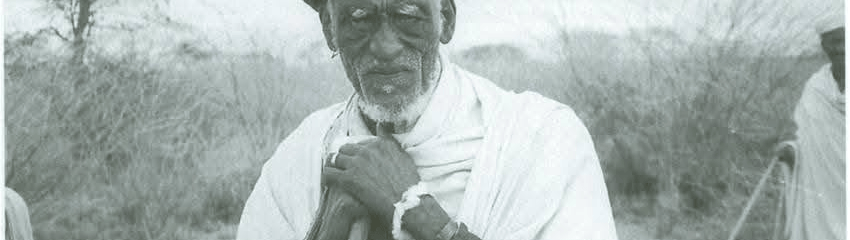

16 Years of Advocacy for Oromia, 16 Years of Impact

Marking a Milestone of Dedication, Resilience and Progress
For 16 years, the cause of Oromia has been carried forward with unwavering commitment — through advocacy, community engagement and a steadfast belief in justice, dignity and development for the Oromo people. Today, we mark 16 years of advocacy and 16 years of impact.
What began as a shared vision among a dedicated few has grown into a sustained movement built on perseverance, solidarity and the collective voice of a community determined to be heard. Over these 16 years, advocacy for Oromia has taken many forms — raising awareness, amplifying community concerns, fostering dialogue, and championing the rights and aspirations of the Oromo people both at home and in the diaspora.
The impact of this work is reflected not only in the milestones achieved, but in the lives touched, the voices empowered and the awareness built across communities. Each year has brought new challenges, and each challenge has been met with renewed resolve. Through it all, the commitment to Oromia’s future has remained constant.
This milestone belongs to everyone who has contributed to the journey — the advocates, the community members, the partners and the supporters who have stood together over the years. Your dedication has made a difference, and your efforts continue to shape a brighter path forward.
As we celebrate 16 years of advocacy and 16 years of impact, we look ahead with hope and determination. The work continues, and so does the vision of a prosperous, peaceful and dignified Oromia.
Here’s to 16 years of dedication — and to the many years of impact still to come.
16 Years of Advocacy for Oromia. 16 Years of Impact.

Celebrating 75 Years of Impact: AMES Australia Honors a Legacy of Building New Lives
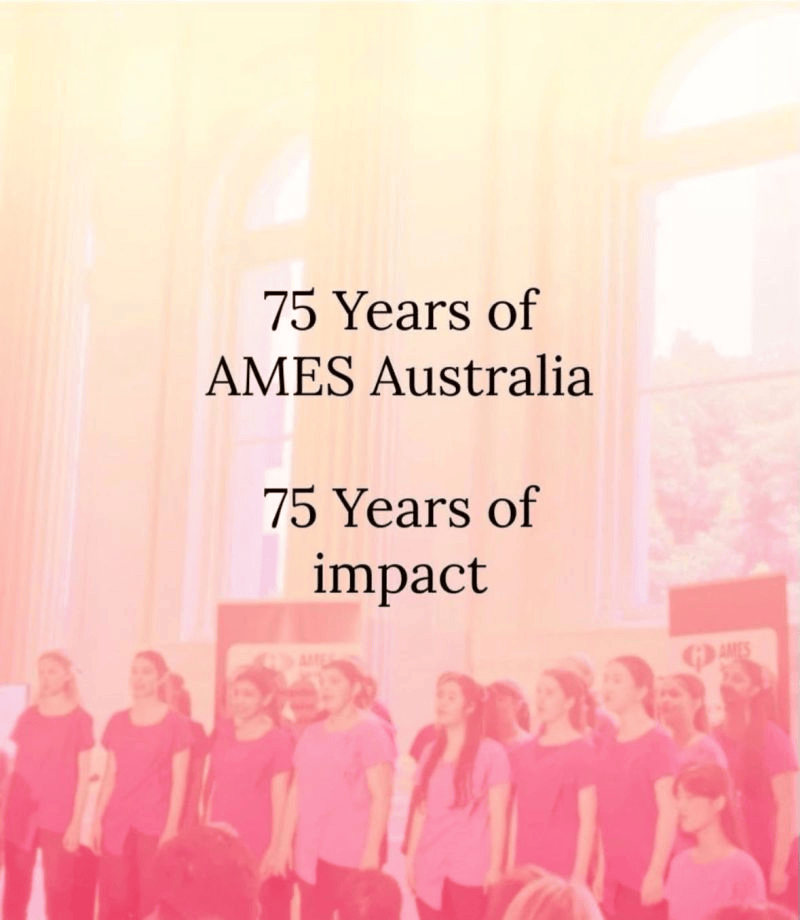
For 75 years, AMES Australia has been a cornerstone of the nation’s multicultural success, and last night, community leaders, politicians, and advocates gathered to celebrate a remarkable milestone.
Under the glowing banner of “75 Years of AMES Australia, 75 Years of impact,” attendees reflected on the transformative power of support, training, and opportunity. The celebration highlighted the absolutely incredible stories and achievements of refugees and migrants who have successfully built their new lives in Australia.
The event underscored why Australia’s multiculturalism remains so successful and vibrant. It is the result of dedicated organizations like AMES providing vital services—from settlement and employment assistance to English language training and ongoing support. These foundational pillars have helped nearly one million clients transition into their new communities and thrive.
The anniversary was a moment to honor the visionaries and hard workers behind the organization’s success. Special congratulations were extended to Melinda Collinson (GAICD), Vanda Fortunato (PhD, FAICD), the current and former AMES Board members and CEOs, and the entire AMES Australia team.
The celebration also brought together notable figures, including Laura Lo Bianco-Smith, Matt Carrick, Lee Tarlamis OAM MP, and Meena Naidu (GAICD), who gathered to recognize the profound #Impact that skills and education (#Skills) have had on the state of Victoria (#Victoria) over the decades.
As AMES Australia marks 75 years of making a difference, the evening served as both a powerful retrospective of past achievements and a hopeful look toward the future, continuing its mission of empowering individuals and strengthening the fabric of Australian society.

Celebrating Our Community This Mashujaa Day
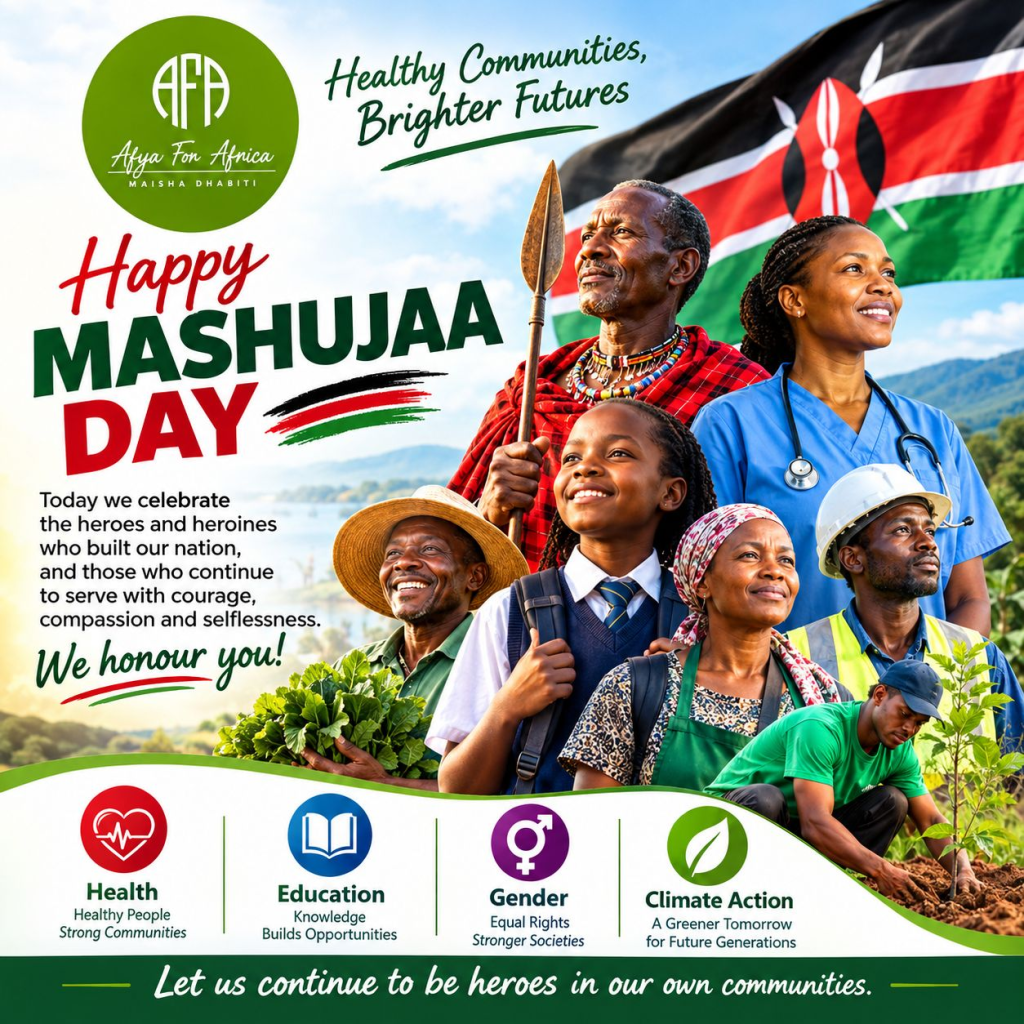
Honouring the Heroes Among Us
Mashujaa Day is a time to reflect on the spirit of heroism that lives within our communities — not only in the historic figures who shaped our nation, but in the everyday people whose quiet dedication, sacrifice and resilience hold us together.
This Mashujaa Day, we celebrate our community and the many heroes who walk among us: the parents working tirelessly for their families, the volunteers who give their time without hesitation, the neighbours who lend a hand in times of need, and the young people striving to build a better future.
Heroism is not always loud. Often, it is found in small acts of kindness, in perseverance through hardship, and in the commitment to lift others as we rise.
Today, we honour every member of our community who contributes to making it stronger, kinder and more united. Your efforts do not go unnoticed, and your spirit inspires us all.
Join us in celebrating our community — because the true heroes of our nation are the people who make it what it is, every single day.
#MashujaaDay #CelebratingOurCommunity #HeroesAmongUs

IYYANNAA MAATII: BARBAACHAA ILMA ISAANII ELIYAAS WADAJOO FIDAA WAGGOTA 30F
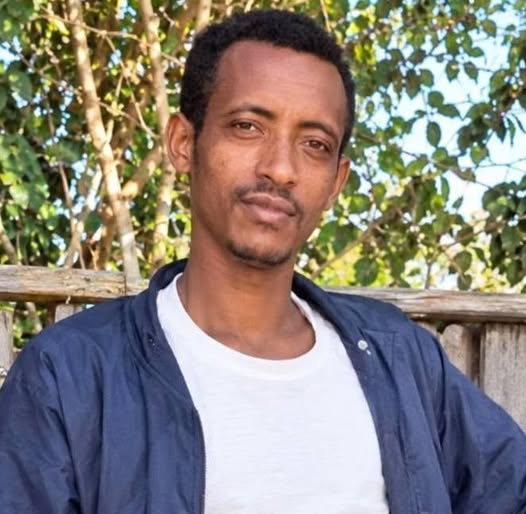
Abdiin Maatii Hin Citu: Barbaachaan Eliyaas Waggoota Soddoma Booddees Itti Fufe
Oromiyaa, Godina Wallaggaa Lixaa, Aanaa Boojjii Coqorsaa, Ganda Fiigaa Koobbaraa 01 keessatti dhalatee guddate Eliyaas Wadajoo Fidaa, maatiin isaa waggoota soddomaa ol erga adda ba’anii abdii isaanii hin kutanne.
Eliyaas barnoota sadarkaa 1ffaa fi giddugaleessaa Mana Barumsaa Fiigaa Koobbaraatti barate; barnoota sadarkaa 2ffaa immoo Boojjii Dirmajiitti xumure. Bakkaa fi bara sirriitti isaa adda baafnee yaadachuu baannus, kolleejjii irraa eebbifamee naannoo sanatti barsiisaa ta’ee hojjechaa ture. Akkasumas hojii daldalaatiin bobba’ee jiraachaa ture.
Yeroo naannoo sanaa irraa fagaatetti dargaggeessa, nama gaa’ila hin qabne ture. Garuu, waggoota gara 30 dura, sababa sirriitti hin beekamneen naannoo dhaloota isaa irraa erga deeme kaasee, hanga har’aatti bakka inni jiru maatiin isaa hin beekan.
IYYANNAA MAATII
Waggoota dheeraaf maatiin Eliyaas isa barbaadaa jiru. Abbaanii fi haati isaa, akkasumas maatiin isaa guutuun, bakka inni jiru, haala jireenyaa isaa fi nageenya isaa beekuu hawwu. Yoomiyyuu abdii osoo hin kutatin, odeeffannoo waa’eesaa kamiyyuu dhaga’uu hawwu. Waaqayyo hin godhin malee yoo rakkoon addaa isa mudatee jiraate illee, maatiin isaa hirmii baafatanii garaa kutachuu barbaadu.
AKKATAA GARGAARSAA
Namooti kabajamoo, ergaa kana dubbisaa jirtan hundi:
- Yoo Eliyaas Wadajoo Fidaa beektan, yookaan waa’ee isaa odeeffannoo qabaattan, maaloo nuuf qoodaa.
- Yoo namoota isa beekan arguu dandeessan, ergaa kana isaan biraan ga’aa.
- Yoo odeeffannoo isaa hin qabne, maaloo ergaa kana SHARE gochuun namoota hedduu bira akka ga’u nu gargaaraa.
Odeeffannoo xiqqoon isin qabdan nama waggoota dheeraaf maatiin isaa barbaadaa jiran kana argamsiisuu danda’a. Ergaan isin qooddan tokko maatii fi ilma isaanii waggoota hedduuf addaan ba’an walitti fiduu keessatti gahee guddaa qabaachuu danda’a.
ELIYAASIIF ERGAA:
Eliyaas, yoo ergaa kana argite, maatiin kee si barbaadaa jiru. Maaloo nageenya kee beeksisi!
ODEEFFANNOOF QUNNAMTII
Namni odeeffannoo waa’ee Eliyaas qabu kamiyyuu, maaloo lakkoofsa bilbilaa armaan gadii irratti nu qunnamaa:
+251 920419911
+251 945322544
+251 932920632
+251 917928869
ERGAA KANA SHARE GODHAA—MAATII WALITTI FIDUU KEESSATTI GARGAARAA
Waaqayyo nama kana haa eegu; maatii isaas haa gammachiisu!
ULFAADHAA!!

Family’s 30-Year Search for Missing Son Eliyaas Wadaajoo Fidaa
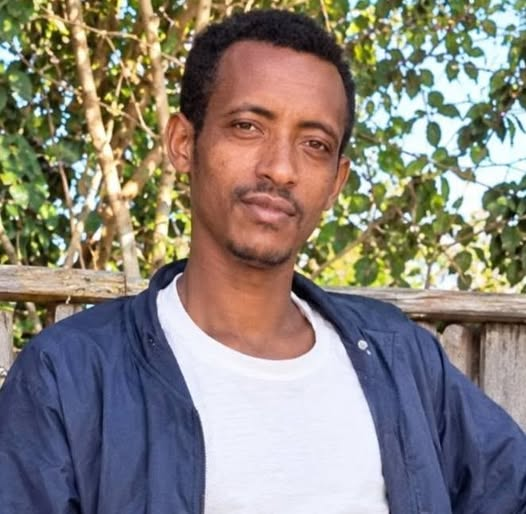
A Family’s Unwavering Hope: The Search for Eliyaas Continues After Three Decades
In the heart of Oromia, in West Wollega Zone, Bojji Chokorsa District, a family continues to hold onto hope after nearly 30 years of separation from their beloved son, Eliyaas Wadaajoo Fidaa.
Born and raised in Fiigaa Kobara Village, Kebele 01, Eliyaas completed his primary and secondary education at Fiigaa Kobara and Bojji Dirmaji schools respectively. Though the exact dates remain unclear, it is known that he graduated from college and worked as a teacher in the area before eventually venturing into business.
At the time he left his home region, Eliyaas was a young, unmarried man. However, for reasons that remain unknown, he departed from his birthplace approximately 30 years ago—and since that day, his family has had no knowledge of his whereabouts.
A Family’s Plea
For decades, Eliyaas’s family has been searching for him. His father and mother, along with his entire family, long to know where he is, how he is living, and whether he is safe. They have never given up hope, holding onto the possibility that they might one day hear news of him. Even if he has faced hardships, his family wants him to know they are waiting to embrace him with open arms.
How You Can Help
This is a heartfelt appeal to all who read this message:
- If you know Eliyaas Wadaajoo Fidaa or have any information about him, please share it with the family.
- If you know people who might recognize him, please pass this message along.
- If you have no information, please SHARE this message to help it reach as many people as possible.
Even the smallest piece of information could reunite a family that has been waiting for decades. One share could play a significant role in bringing together a family and a son who have been separated for far too long.
A Message to Eliyaas
Eliyaas, if you see this message, your family is searching for you. Please let them know you are safe.
Contact Information
Anyone with information about Eliyaas is kindly asked to reach out through the following numbers:
+251 920419911
+251 945322544
+251 932920632
+251 917928869
Share This Message—Help Reunite a Family
May God protect Eliyaas and bring joy to his family.
ULFAADHAA!!

AMES Australia Manager Inducted into Victorian Multicultural Honour Roll
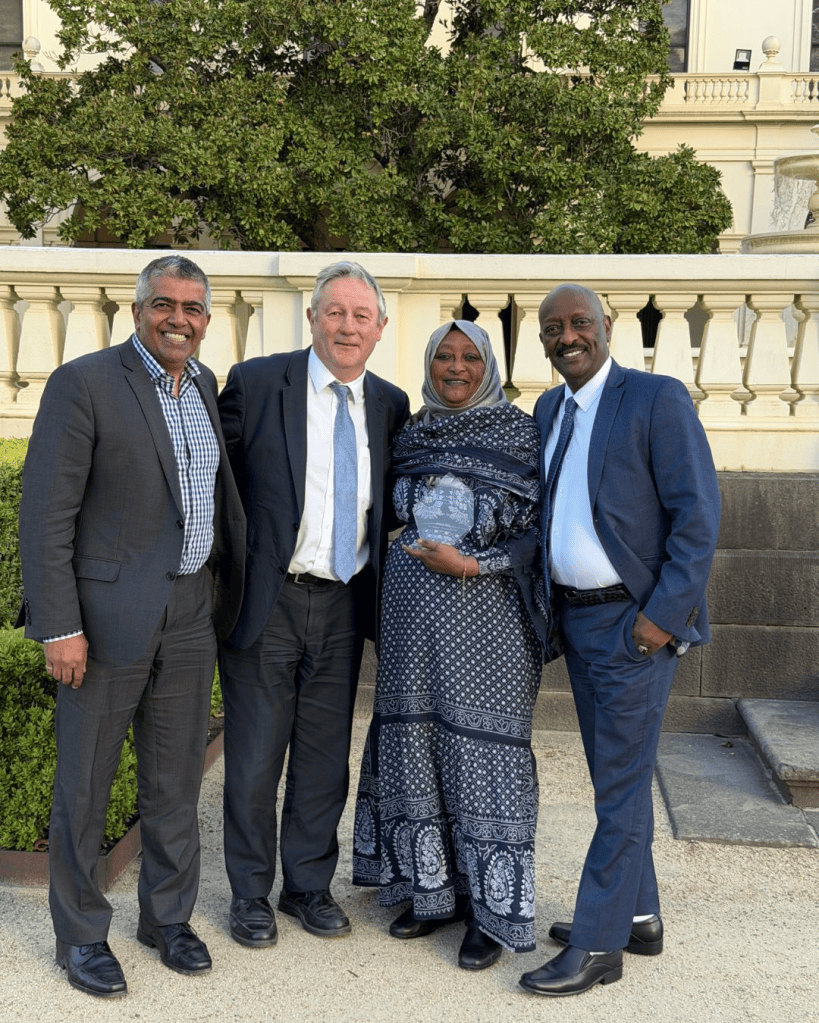
Dr. Melika Sheik-Eldin recognised for more than two decades of advocacy for refugees and multicultural communities
AMES Australia is proud to congratulate Dr. Melika Sheik-Eldin, Manager International and Community Development, on her induction into the Victorian Multicultural Honour Roll.
The honour recognises Dr. Melika’s exceptional and lasting contributions to multiculturalism in Victoria, capping a remarkable period of recognition that follows her recent induction into the Victorian Honour Roll for Women.
The induction took place at the Victorian Multicultural Awards for Excellence 2026 at Government House, where 23 individuals were welcomed into the Honour Roll for their outstanding contributions to multiculturalism across the state.
For more than two decades, Dr. Melika has been a powerful advocate for refugees and multicultural communities across Victoria, drawing on her own lived experience of fleeing conflict and rebuilding her life in Australia. Her work has been defined by a deep commitment to supporting others on similar journeys.
Dr. Melika has worked at AMES Australia for 24 years, focusing primarily on settlement, community development and capacity building programs, as well as community advocacy. Her leadership has helped shape initiatives that empower newcomers to build new lives and fully participate in Australian society.
Reflecting on the recognition, Dr. Melika said the honour belonged not only to her but to the communities she serves.
“This recognition is a reflection of the resilience and strength of the people I have had the privilege to work alongside,” she said. “I am grateful to be able to contribute to a Victoria where everyone, regardless of where they come from, has the opportunity to belong and thrive.”
Dr. Melika was accompanied at the ceremony by her family, as well as AMES Australia Chief of Strategy, Innovation & Partnerships, Praveen Reddy, and Media Manager, Laurie Nowell.
“Melika’s dedication to refugees and multicultural communities is an inspiration to all of us at AMES Australia,” Mr Reddy said. “This honour is thoroughly deserved and reflects the profound impact of her work over more than two decades.”
AMES Australia extends its warmest congratulations to Dr. Melika on another well-deserved honour.
#AMES #AMESAustralia #Award #VictorianMulticulturalHonourRoll
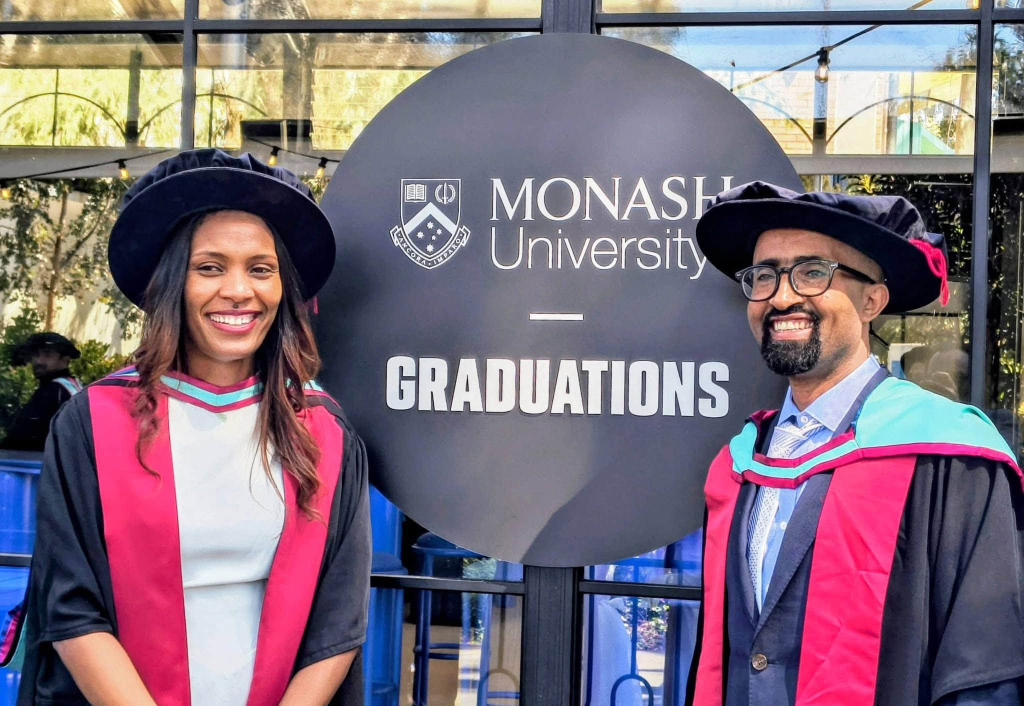
Dr. & Dr.: A Celebration of Love, Perseverance, and Two Doctoral Degrees
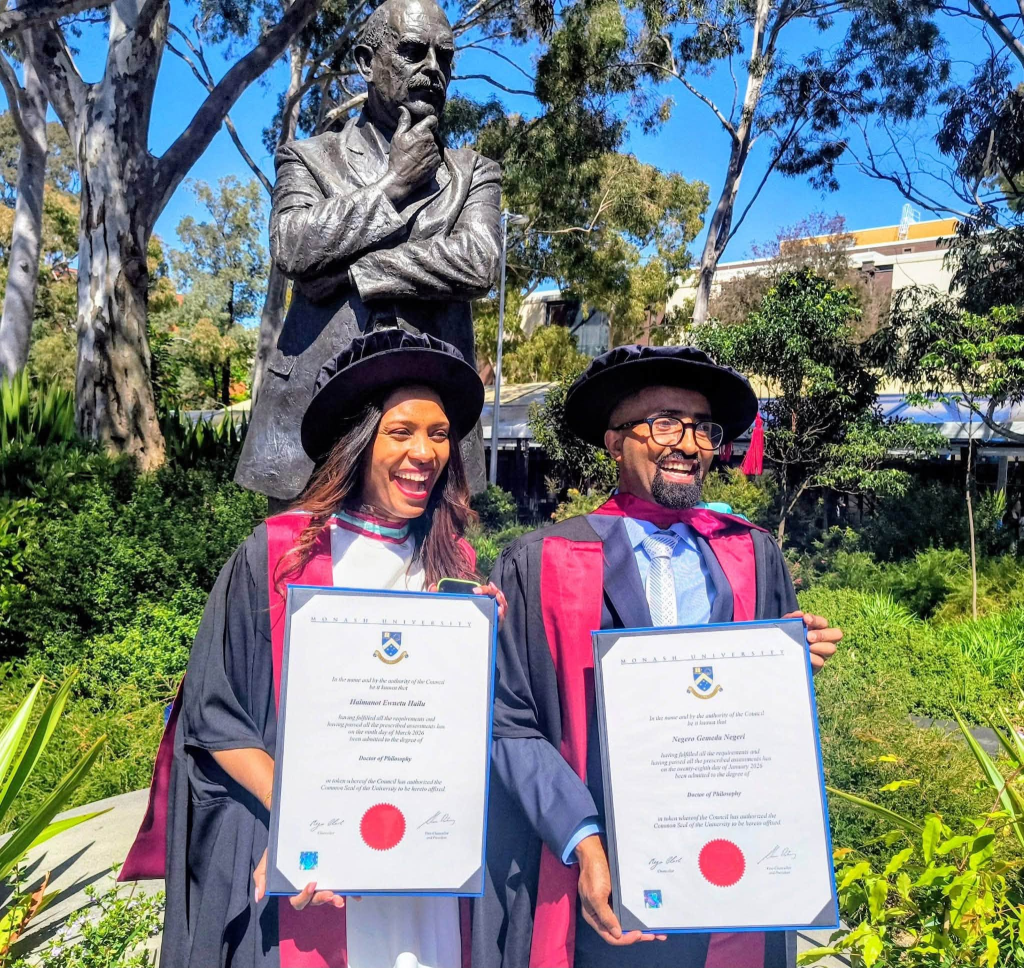
Congratulations to Haimanot Ewnetu and Nege GN Sindibin on an Extraordinary Achievement
There are milestones in life that deserve more than a passing congratulations. There are moments that call for reflection, for celebration, and for acknowledging the sheer weight of what has been accomplished. Today is one of those moments.
Today, Haimanot Ewnetu and Nege GN Sindibin graduate with their PhDs — together.
Not one doctorate. Two. Earned not in isolation, but side by side, through years of shared sacrifice, mutual encouragement, and a partnership strong enough to weather the most demanding academic journey one can undertake.
The Weight of a Doctorate
A PhD is not simply a degree. It is a test of endurance, of intellect, of patience, and of character. It demands years of rigorous research, countless revisions, long nights spent wrestling with questions that refuse easy answers. It asks for sacrifice — time with family, moments of rest, the simple luxury of certainty.
Many begin this journey. Not all finish it.
To complete a PhD is to prove something profound: that you can push the boundaries of human knowledge, that you can persist when the path is unclear, and that you can emerge on the other side not just with a title, but with a transformation.
To complete a PhD while supporting someone else through theirs — to share the burden, to celebrate each other’s wins, to hold each other up when the weight felt unbearable — that is something rarer still.
A Partnership Forged in Perseverance
Haimanot and Nege, you did not simply pursue degrees in parallel. You built something together.
You shared the quiet victories — the accepted paper, the successful defense, the moment a difficult chapter finally made sense. You shared the hard days too — the rejections, the revisions, the moments when the finish line seemed impossibly far away. And through it all, you remained each other’s greatest supporter.
That is what makes today so remarkable. This is not just a celebration of academic achievement. It is a celebration of what two people can accomplish when they refuse to let go of each other’s hands.
Years of hard work. Years of dedication. Years of choosing, again and again, to keep going — together.
And now, here you are. Dr. Haimanot Ewnetu and Dr. Nege GN Sindibin.
A Moment Worth Celebrating
Today, we celebrate not only the degrees you have earned, but the people you have become in the process. We celebrate your brilliance, your resilience, and your unwavering commitment to your goals.
We celebrate the families and friends who stood beside you, the mentors who guided you, and the community that cheered you on.
But most of all, we celebrate you — two extraordinary individuals who proved that the hardest journeys are made easier when walked side by side.
So proud of you both. So happy we could celebrate with you.
Here’s to the years of hard work behind you, the bright future ahead, and the knowledge that you did it — together.
Congratulations, Doctors! 🎓🎉👏
World of Africa: Tens of Thousands Gather in Addis Ababa for Irreecha, Calls for Peace Ring Out
Africa’s largest indigenous thanksgiving festival brings a sea of white and color to the capital, as participants use the ancient celebration to demand an end to Ethiopia’s conflicts.

(WorldOfAfrica, Addis Ababa — October 3, 2026) Tens of thousands of Oromo people flooded the sacred grounds of Hora Finfinnee in Addis Ababa on Saturday morning, transforming the heart of the Ethiopian capital into a spectacular display of culture, tradition, and spiritual devotion.
The annual Irreecha thanksgiving festival, celebrated at the end of the rainy season and the beginning of the harvest, brought together participants from across Oromia, other regions of Ethiopia, and the diaspora. Dressed in vibrant traditional attire, they gathered at the water’s edge to offer prayers of gratitude to Waaqa, the Creator, through singing, dancing, and ancient rituals.
A Sea of Color and Tradition
From the early morning hours, hundreds of thousands of people converged on Hora Finfinnee, filling the celebration grounds with music, blessings, and a powerful sense of cultural pride. The festival’s sea of colors, traditional costumes, and synchronized dances created what observers described as a spectacular cultural scene in the heart of Addis Ababa.
Abbaa Gadaas — traditional Oromo leaders — elders, youth, and guests from diverse backgrounds joined the celebration, showcasing the richness and diversity of Oromo cultural heritage. The festival also reflects the enduring values of the Gadaa system, the traditional Oromo governance structure recognized by UNESCO as an Intangible Cultural Heritage of Humanity.
Participants carried fresh green grass and yellow Adey Abeba flowers to the water, dipping them into the sacred waters and sprinkling them as blessings for the land, cattle, and people — symbols of fertility, renewal, and hope.
Calls for Peace Amid Ongoing Conflict
But this year’s celebration carried a weightier message. As the festival unfolded, participants and elders used the occasion to call for an end to the conflicts plaguing various parts of Ethiopia.
The gathering took place amid reports that federal forces had entered Mekelle, the capital of the northern Tigray region, escalating fears of renewed conflict.
“Even though peace has been disturbed in the past years, the Oromo are now celebrating Irreecha beautifully, but there are wars in various places,” said student Simert Ababa. “I say that needs to be stabilised as much as possible, and this government has a role in that. Children should not miss their education, mothers should not be harmed, children should not be harmed.”
Bilise Mohammed, another student, echoed the sentiment: “For those in the north, create an agreement so the war stops. To the government and to those who are fighting, peace comes first. The people are the ones that are dying, this won’t take you anywhere.”
Oromo elders at the festival urged those involved in the conflict to resolve their differences through dialogue, warning that internal divisions could leave Ethiopia vulnerable to external threats. Police maintained a visible presence at Meskel Square and the festival grounds to ensure security.
A Festival Beyond Celebration
Irreecha is far more than a cultural gathering. For the Oromo people — Ethiopia’s largest ethnic group — it is a spiritual cornerstone, a time of gratitude, reconciliation, and community renewal. The festival marks the transition from Ganna, the dark rainy season, to Birraa, the bright spring season.
Prime Minister Abiy Ahmed, in his Irreecha message, drew a direct parallel between the natural seasons and Ethiopia’s political journey. He described how the Oromo people gather at the river for traditional thanksgiving rituals — fathers reciting “Marehoo” and mothers reciting “Araaroo” — offering gratitude to the Creator.
The Prime Minister also used the occasion to call for national unity and reconciliation, citing an Oromo proverb: “The house where one sleeps is better than the one where one merely spends the evening.” He reaffirmed his government’s commitment to peace and urged armed groups to choose dialogue over prolonged conflict.
A Celebration That Continues to Grow
What began as a traditional thanksgiving ceremony has become one of the largest cultural gatherings in Africa, drawing millions to sacred sites across Oromia and capturing growing international attention.
The return of Irreechaa to Hora Finfinnee — the original sacred site in the heart of Addis Ababa — is seen as a historic reclamation of cultural space. For decades, public celebrations were suppressed, and the Oromo people were denied the right to gather at their sacred sites.
As the sun set over the capital and the crowds began their journey home, the spirit of Irreechaa lingered. The green grass may wither, but the blessings sought and the bonds forged will endure until the waters rise again next year.
Irreecha for National Consensus! Irreecha for Peace and Unity!
For World of Africa, I’m Eric Njoka, Addis Ababa.

Irreechaa 2026: “For National Consensus” — A Festival Beyond Celebration
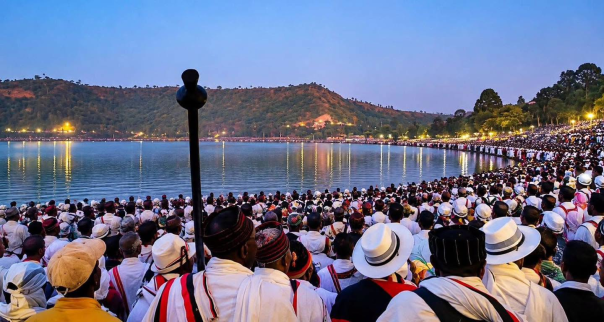
The ancient Oromo thanksgiving festival has become the unlikely centerpiece of Ethiopia’s most ambitious political project: building a nation where dialogue replaces division, and where the discipline of reconciliation practiced at the water’s edge becomes the model for governance itself.
FINFINNE — The theme says it all: “Irreechaa: For National Consensus!”
As hundreds of thousands gathered at Hora Finfinnee in Addis Ababa this weekend, dressed in white and carrying fresh green grass and yellow Adey Abeba flowers, the traditional rituals of thanksgiving took on a meaning that extends far beyond the Oromo community. In a nation that has spent years navigating deep political and ethnic divisions, the 2026 Irreechaa has become a powerful symbol of a broader national journey — one that seeks to transform conflict into consensus, and grievance into gratitude.
A Festival With a Mission
The Irreechaa Forum, held annually in Addis Ababa ahead of the main celebrations, set the tone for this year’s observance. Under the theme “Irreechaa: For National Consensus,” the forum highlighted the festival’s values of unity, togetherness, forgiveness, and reconciliation — and explicitly connected these values to the national conversation about Ethiopia’s future.
Addis Ababa Mayor Adanech Abiebie, speaking at the forum, emphasized that Irreechaa “promotes unity, togetherness, forgiveness, and reconciliation, and carries great value for national understanding”. The mayor’s words were not merely ceremonial. They reflected a deliberate effort to position Irreechaa not just as a cultural celebration for the Oromo people, but as a national resource — a living tradition whose spiritual disciplines might offer a model for how Ethiopians can learn to live together again.
The 2026 celebrations, held on October 3 and 4, brought together Abbaa Gadaas (traditional Oromo leaders), Haadha Sinqees (women entrusted with moral order), elders, youth, and guests from across Ethiopia and beyond. At Hora Finfinnee in the heart of the capital and Hora Arsadi in Bishoftu, the sea of white garments and the sound of traditional chants created what one observer described as a “spectacle of color, culture, and togetherness”.
The Prerequisite of Peace
What makes Irreechaa unusual — and what makes its 2026 theme so resonant — is that reconciliation is not merely a value the festival celebrates. It is a requirement for participation.
Before attending Irreechaa, participants are expected to reconcile with themselves and with others, setting aside grudges, anger, and resentment. The festival’s essence as a gathering of peace and reconciliation depends on this prior work of the spirit. You cannot approach the sacred waters carrying a grievance. You cannot give thanks while your heart remains at war.
This discipline — the deliberate, conscious setting aside of conflict before approaching the sacred — is precisely what Ethiopia’s National Dialogue process has sought to institutionalize at the national level. And the timing of this year’s Irreechaa is no coincidence.
A National Dialogue Concludes, a Festival Begins
Just weeks before millions gathered at Hora Finfinnee, Ethiopia reached a historic milestone: the conclusion of its National Dialogue Conference in Addis Ababa.
The dialogue, which formally opened on July 15, 2026, brought together more than 4,000 delegates from across the country — representatives of civil society, religious groups, youth, women, and historically marginalized communities. Over 46 days of deliberations, participants undertook extensive discussions on foundational pillars of state-building, national identity, social cohesion, and the structure and form of government.
The National Dialogue Commission had spent years conducting grassroots consultations, engaging Ethiopians at home and abroad, and identifying eight core agenda pillars that reflected priorities raised during these discussions. The process was built on a deliberate departure from past political gatherings dominated by urban elites — a grassroots approach that sought to give voice to communities that had long been excluded from national conversations.
At the closing ceremony, former Nigerian President Olusegun Obasanjo delivered a keynote address in which he described Ethiopia’s national dialogue as “a historic achievement and an example for the rest of Africa.” He stressed that peace must be “comprehensive, inclusive, and complete” if it is to be sustainable, and expressed confidence that a “peaceful, secure, stable, predictable, and united Ethiopia” could double its GDP within seven years and emerge as Africa’s largest economy.
The message was clear: Ethiopia has chosen dialogue over division, consensus over conflict. And now, Irreechaa 2026 arrives to reinforce that choice.
The Prime Minister’s Message
Prime Minister Abiy Ahmed, in his Irreechaa message, drew explicit parallels between the festival’s spiritual disciplines and the nation’s political journey.
Speaking under the theme “Irreechaa is Peace! Gada is Civilization! Ethiopia’s Civilization is Inevitable!”, the Prime Minister congratulated citizens on “safely passing through the difficult rainy season and entering a period of hope.” He described how, as the winter darkness clears, the Oromo people gather at the river for traditional thanksgiving rituals — fathers reciting “Marehoo” and mothers reciting “Araaroo” — offering gratitude to the Creator.
But Abiy went further. He drew a direct comparison between the heavy rains, floods, and restricted movement of the winter season and Ethiopia’s “long-standing economic, political, and administrative struggles.” Just as the rains must eventually end and the sun must eventually return, so too must Ethiopia’s period of difficulty give way to a season of renewal.
The Prime Minister also cited an Oromo proverb — “the house where one sleeps is better than the one where one merely spends the evening” — in a call for armed groups to choose stability over uncertainty and peace over prolonged conflict. He reaffirmed the government’s commitment to peace and national consensus, urging all Ethiopians to “embrace the core values of Irreechaa — peace, reconciliation, forgiveness, and brotherhood — with the aim of strengthening unity and advancing the nation’s path toward lasting prosperity”.
The Symbolism of Water and Grass
At the heart of Irreechaa are materials that carry profound meaning: water, grass, and flowers.
Participants arrive carrying fresh green grass and bright yellow Adey Abeba, the seasonal flower associated with the Ethiopian spring. They dip the grass into the sacred waters, sprinkle droplets over themselves and others, and place grass and flowers along the shoreline. Over the course of the celebration, thousands of individual offerings gather along the water’s edge, forming a temporary green-and-yellow border that transforms the landscape.
As one participant, Guddissa Geda, who traveled from Sululta to celebrate at Hora Finfinnee, explained: “The movement of grass to water creates a connection between community practice and the landscape, embodying reconciliation, love, unity, and the relationship between people and nature”.
This ritual act — the dipping of grass into water — is not decorative. It is the physical embodiment of the festival’s spiritual logic. Water is the source of purity and the foundation of creation in Oromo cosmology. Grass is the symbol of fertility and renewal. To dip the grass into the water is to enact, in miniature, the reconciliation between the human and the divine, between the community and the earth, between the past and the future.
At a moment when Ethiopia seeks to reconcile its own divisions, the symbolism is unmistakable.
The Gadaa System and National Renewal
Irreechaa is inseparable from the Gadaa system, the traditional Oromo socio-political system recognized by UNESCO as an Intangible Cultural Heritage of Humanity. The Gadaa system organizes society by age grades, each with defined responsibilities and transition periods, and encompasses customary law, environmental knowledge, and mechanisms for conflict resolution.
Prime Minister Abiy’s Irreechaa message emphasized the importance of the Gadaa system to Ethiopia’s national renewal. He cited “the restoration and institutionalization of Hora Finfinnee Irreechaa to its river site and the grand gatherings at Hora Harsadi in Bishoftu” as proof that “long-standing cultural questions regarding language and heritage have been fully answered”.
The return of Irreechaa to Hora Finfinnee — the sacred site in the heart of Addis Ababa from which the capital takes its Oromo name — is itself a powerful act of reclamation. For decades, public celebrations of Irreechaa at this site were suppressed. The Oromo people were denied the right to gather at their own sacred waters. The restoration of the festival to its ancestral site is, in the words of one analysis, “a powerful reclamation of space, identity, and dignity”.
But the Gadaa system offers more than historical symbolism. Its principles — Safuu (moral order), customary courts, community service, and environmental stewardship — represent an indigenous Ethiopian framework for governance and social organization that predates modern political structures. As Ethiopia seeks to build a system that draws on its own traditions while meeting contemporary challenges, the Gadaa system offers a model that is both authentically Ethiopian and profoundly relevant.
The Youth and the Future
One of the most striking features of this year’s Irreechaa was the prominent role of young people — not merely as participants but as organizers, protectors, and transmitters of tradition.
Nega Wodajo, deputy commissioner of the Oromia Tourism Bureau, explained that preparations for Irreechaa begin well before the main celebration days, with young people taking part in cultural performances, community projects, and activities marking the transition into the New Year. “The youth are taking responsibility by protecting their environment, promoting their culture and creating good relations among themselves,” Nega said. “The country belongs to the youth”.
This participation is not incidental. It is the mechanism by which tradition survives. Irreechaa is transmitted through participation — through the physical act of dipping grass into water, through the sound of chants rising at sunrise, through the experience of standing in a sea of white garments at the water’s edge. Young people who participate in Irreechaa today will carry its values into the future.
And those values — reconciliation, gratitude, unity, peace — are precisely what Ethiopia needs as it seeks to build a nation where consensus replaces conflict.
A Festival That Belongs to All
While deeply rooted in Oromo tradition, Irreechaa has increasingly become a national celebration embraced by Ethiopians of all backgrounds. This year’s gathering at Hora Finfinnee drew participants from across the country — from Oromia, from other regions, from the diaspora, and from the international community.
The festival has also attracted growing international attention. Visitors from across the globe come to witness its authenticity, the beauty of its traditions, and the collective joy of its people. Alongside iconic Ethiopian treasures such as Timket and Lalibela’s rock-hewn churches, Irreechaa showcases Ethiopia’s unique blend of cultural richness and natural wonder, offering the world an inspiring vision of harmony, heritage, and hope.
In a world that so often profits from division, Irreechaa offers a different model: a celebration that brings people together not despite their differences but because of the shared humanity that lies beneath them.
The Consensus That Begins at the Water
As the 2026 Irreechaa celebrations concluded peacefully at Hora Finfinnee, Mayor Adanech Abiebie offered a closing message that captured the spirit of the occasion: “Irreecha for National Consensus! Irreecha for Peace and Unity!”
The theme of this year’s festival is not just a slogan. It is a charge — a call to action that extends far beyond the shores of sacred waters.
The National Dialogue has concluded. Its recommendations have been presented. The hard work of implementation lies ahead. But the spiritual foundation for that work has been laid — not in conference halls or parliamentary chambers, but at the water’s edge, where millions of Ethiopians have practiced, for thousands of years, the disciplines of reconciliation, gratitude, and unity.
Irreechaa teaches that consensus is not merely a political outcome. It is a spiritual discipline. It is the deliberate act of setting aside grievance, of choosing relationship over righteousness, of approaching the sacred with open hands and a reconciled heart.
If Ethiopia can carry that discipline from the water’s edge into its institutions, its communities, and its politics, then the theme of Irreechaa 2026 will have been more than words.
It will have been a prophecy fulfilled.
Baga Irreechaa nagaan geessan.
May the Irreechaa arrive in peace. May the consensus it inspires endure.

Irreechaa: The Festival That Believes in the Beauty of the Human Soul
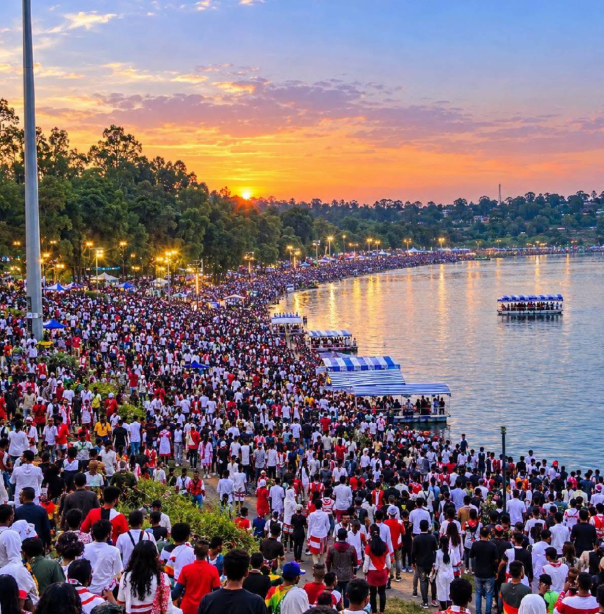
Every year, millions gather at the water’s edge to give thanks, seek forgiveness, and welcome a season of light. But the deeper story of Irreechaa is not only about a harvest or a river — it is about what humanity can become.
A Morning at the River
As the first light of Birraa — the Ethiopian spring — spills across the horizon, the banks of the Bishoftu lakes and the Awash River begin to fill. Elders in white näts’äla wraps arrive carrying bundles of fresh grass and yellow adey abeba flowers. Mothers lead daughters by the hand. Young men sing songs their grandfathers sang before them. The air smells of rain, wet earth, and gratitude.
This is Irreechaa, the great Thanksgiving festival of the Oromo people, celebrated at the end of the rainy season and the beginning of the harvest. To outsiders, it can look like a single day of celebration. To those who carry it in their blood, it is a whole philosophy of life — a yearly reminder of what it means to be human.
And at the heart of that philosophy lies a striking conviction: that the human soul is meant to be beautiful, and that beauty is not a luxury — it is a duty.
Thanksgiving as a Way of Seeing
Irreechaa begins with galata — thanksgiving. But this is not the polite gratitude of a hurried prayer. It is gratitude as a lens through which the entire world is viewed.
The Oromo elders say that the person who cannot give thanks cannot truly see. When you thank the earth for its harvest, you begin to notice the earth. When you thank the rain for falling, you begin to honor the rain. Thanksgiving, in this tradition, is the first act of a beautiful soul — the recognition that life is a gift received, not a possession earned.
At Irreechaa, gratitude is offered for the harvest, for health, for children, for peace, for the return of the rains. But it is also offered for things unseen: for forgiveness granted, for conflicts resolved, for another year of life. In a world addicted to complaint, Irreechaa stands as a radical act of remembering the good.
The Work of Restoration and Forgiveness
But Irreechaa is not naive. Its joy is not the joy of those who pretend nothing is broken. It is the joy of those who have done the harder work first.
Before the celebration comes reconciliation. In the weeks leading up to Irreechaa, families settle disputes. Neighbors ask forgiveness. Debts of the heart are repaid. The festival cannot be entered with a grudge in the chest; tradition holds that the one who carries bitterness to the riverbank carries it alone.
This is where Irreechaa’s belief in beautiful souls becomes most demanding. A beautiful soul is not a flawless soul — it is a soul willing to be restored. Forgiveness here flows in two directions: the courage to ask, and the generosity to grant. Restoration is not merely the repair of what was broken; it is the creation of something stronger than what existed before.
In a time when division is profitable and resentment is addictive, Irreechaa whispers another way: you do not have to stay wounded.
Love, Harmony, and the Living World
Standing at the water’s edge, the Oromo faithful do not see nature as a backdrop. They see a relative.
The river is not a resource; it is a mother. The tree is not timber; it is a witness. The land is not property; it is an ancestor. This is why Irreechaa is celebrated near water — because water is the clearest sign of life’s interdependence. What happens to the river happens to the people.
This harmony with nature is not sentimentality. It is a moral claim: you cannot love people while abusing the world they live in. The same soul that forgives a neighbor must also protect the forest. The same heart that gives thanks for the harvest must refuse to poison the soil that produced it.
Irreechaa thus offers a vision of humanity that is ecological at its core — not because it is fashionable, but because it is ancient. To respect nature is to respect the Creator, the ancestors, and the children not yet born. It is to understand that renewal and regeneration are not just human projects; they are the rhythm of the whole living world.
Remembering the Ancestors
No Irreechaa is complete without remembrance.
Elders speak the names of those who have passed. Libations are poured. The generations stand together in one long chain, and the living are reminded that they did not invent themselves. They are the continuation of a story.
Remembering ancestors is not nostalgia. It is accountability. It asks: What did they hand to us, and what will we hand forward? A beautiful soul, in this tradition, is one that knows it is a link, not an island.
This remembrance also gives Irreechaa its famous hope: the bright season over the dark. The rainy months of scarcity and confinement give way to harvest, color, and gathering. Darkness is not denied — it is acknowledged, survived, and then overcome. Every year, the festival reenacts the truth that winter does not have the final word.
Renewal and the Regeneration of Humanity
At its deepest level, Irreechaa is about renewal — not just of the fields, but of the person.
The waters of the lake are a symbol of cleansing. The green grass is a symbol of new life. The yellow flower that blooms at the season’s turn is a symbol of hope that appears precisely when the old season ends. The festival asks each participant: What in you needs to be renewed this year?
And the answer it offers is a whole program for the human family: a kind heart, a good spirit, right relationships with people and with nature, respect for life, love as practice, harmony as goal. These are not abstract virtues. They are the daily disciplines of a soul that has decided to be beautiful.
The regeneration of humanity, Irreechaa insists, does not begin in parliaments or palaces. It begins in the heart that chooses gratitude over greed, forgiveness over revenge, and harmony over domination.
A Festival That Believes in Us
In the end, Irreechaa is not merely a celebration of a harvest. It is a declaration of faith in the human soul.
It believes that people can be kind. It believes that old wounds can heal. It believes that the earth can be honored and the ancestors remembered. It believes that light follows dark, that love is stronger than hatred, and that a good spirit is not a weakness but the highest form of strength.
To stand at the river at Irreechaa is to be told, by a tradition older than any empire: You were made for beauty. Live like it.
And perhaps that is the festival’s greatest gift to a fractured world — not just a day of thanksgiving, but a lifelong invitation to become the beautiful soul that Irreechaa has always believed we could be.
Happy Irreechaa! May your season be bright.






