
Irreechaa: The Festival That Renews Humanity, Reconciles Creation, and Reclaims Time Itself
In the Oromo language, nineteen sacred phrases capture the full magnitude of Irreechaa — a celebration that is not merely cultural but cosmic, not merely annual but eternal, not merely human but divine.
Beneath the sycamores, beside the sacred waters, a people gather to become whole — and to remind the universe what wholeness means.
A Litany of Renewal
There are sentences that function as scripture. The Oromo people have such a sentence about Irreechaa:
“Irreechaan humneessaa namummaa, lachiisaa namummaa, marabeessaa namummaa, nageessaa namummaa, araarsaa namummaa, waloomsaa uumaa-uumamaa, sirna galateeffannaa, yaadannoo uumamaa, hulluuqoo hameenyaa, mallattoo ulfoo, yeroo dhiifamaa, ce’umsaa baraa, damboobsaa namummaa, fooyyessaa namummaa, fufsiisaa namummaa, fineessaa namummaa, guutessaa namummaa, kadhannaa gaarummaa, fi haaromsaa namummaa ti.”
This is not a description. It is a declaration. It is the Oromo people’s theological testimony about what Irreechaa is — not what it symbolizes, not what it represents, but what it accomplishes in the world.
Nineteen phrases. Nineteen dimensions of one reality. Nineteen ways of saying: Irreechaa renews humanity, reconciles creation, and reclaims time itself.
Part One: The Renewal of Humanity
The first five phrases focus on the human person — what Irreechaa does to the individual soul.
Humneessaa Namummaa — The Empowerment of Humanity
Irreechaan humneessaa namummaa. Irreechaa is the empowering of humanity.
Before the festival, participants are asked to reconcile. They set aside grudges. They release resentment. This is not weakness — it is the most difficult form of strength. To forgive is to be liberated from the prison of grievance.
The person who has made peace is not just morally superior. They are empowered. They have reclaimed energy that was being spent on resentment. They stand at the water’s edge lighter, freer, more capable of gratitude.
This is the first renewal: the empowerment that comes from letting go.
Lachiisaa Namummaa — The Reconciliation of Humanity
Irreechaan lachiisaa namummaa. Irreechaa is the reconciling of humanity.
This is Irreechaa’s beating heart. Without araara — reconciliation — the festival cannot proceed. The tradition is explicit: you cannot participate while holding a grudge. The water will not receive your thanks if your heart is still at war.
In a world that profits from division, this requirement is revolutionary. Irreechaa says: Before you celebrate, reconcile. Before you give thanks, make peace. Before you approach the sacred, heal the human relationships that have been broken.
The Oromo do not pretend that reconciliation is easy. They simply insist that the work of peace must be done — deliberately, consciously, before the community gathers.
Marabeessaa Namummaa — The Unification of Humanity
Irreechaan marabeessaa namummaa. Irreechaa is the unifying of humanity.
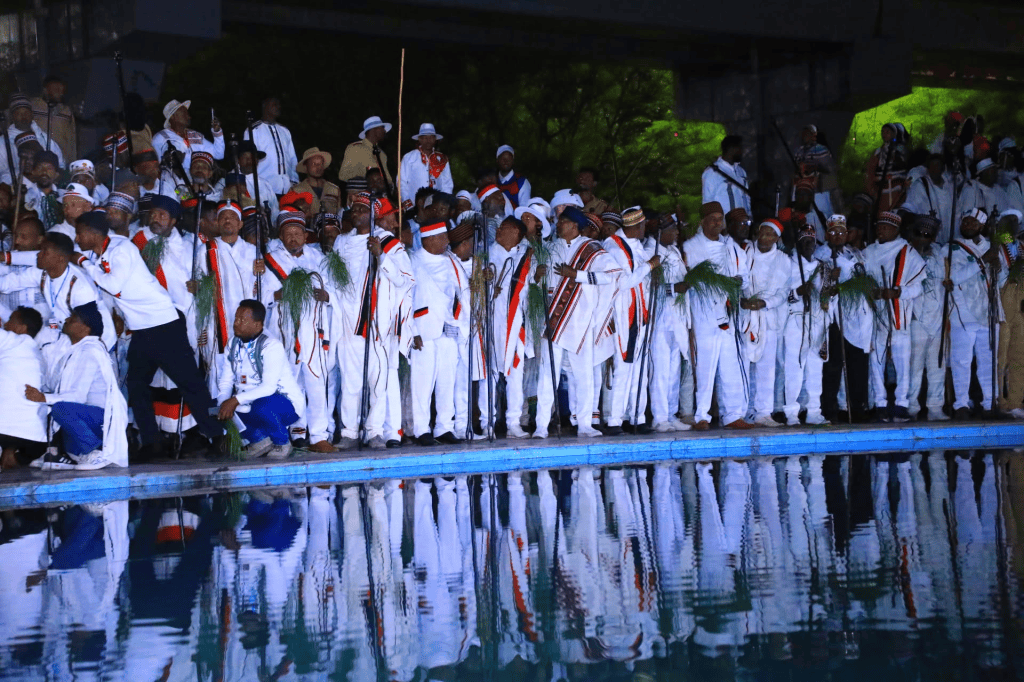
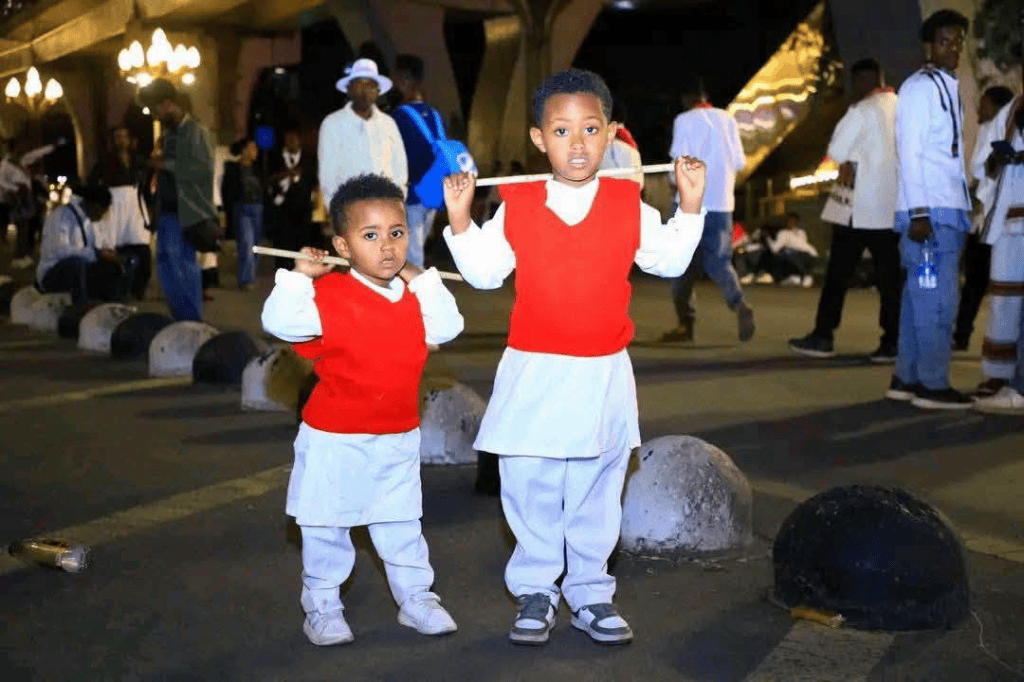
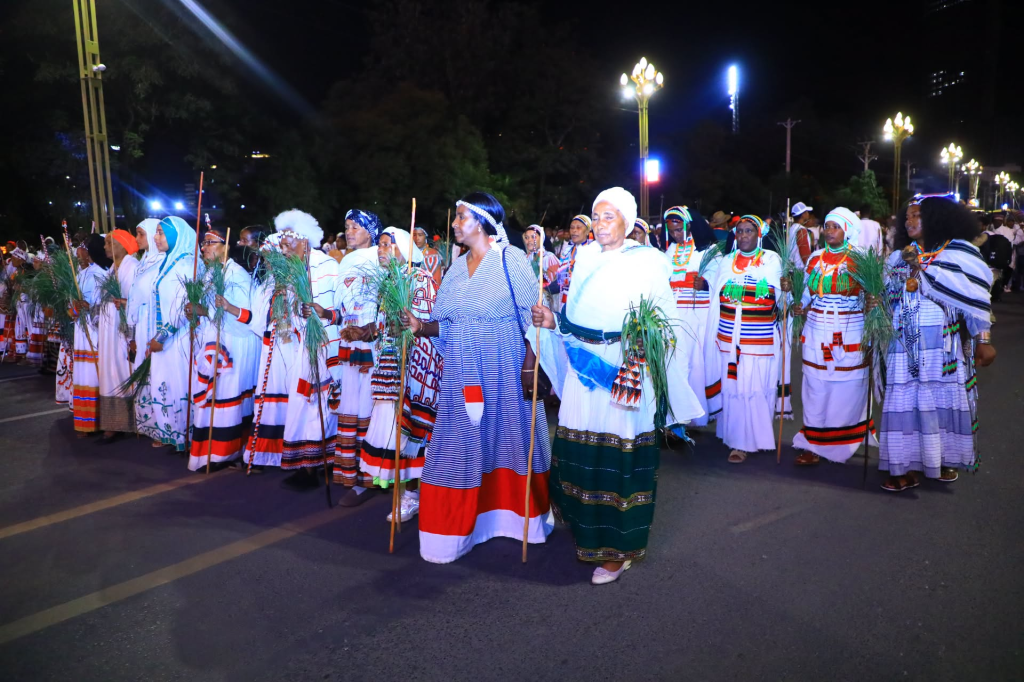
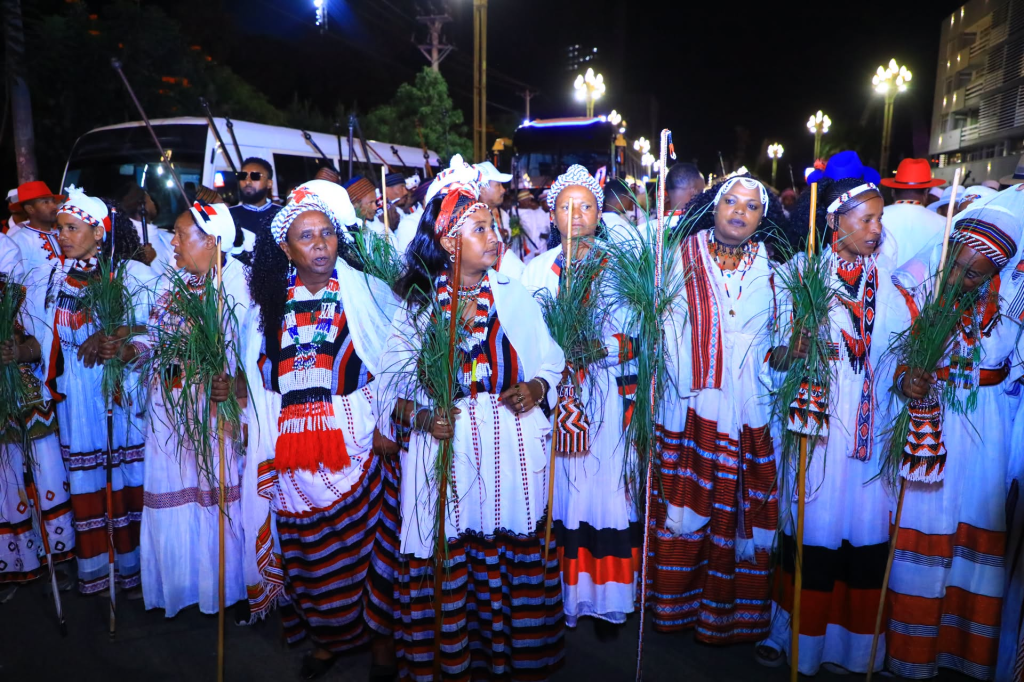
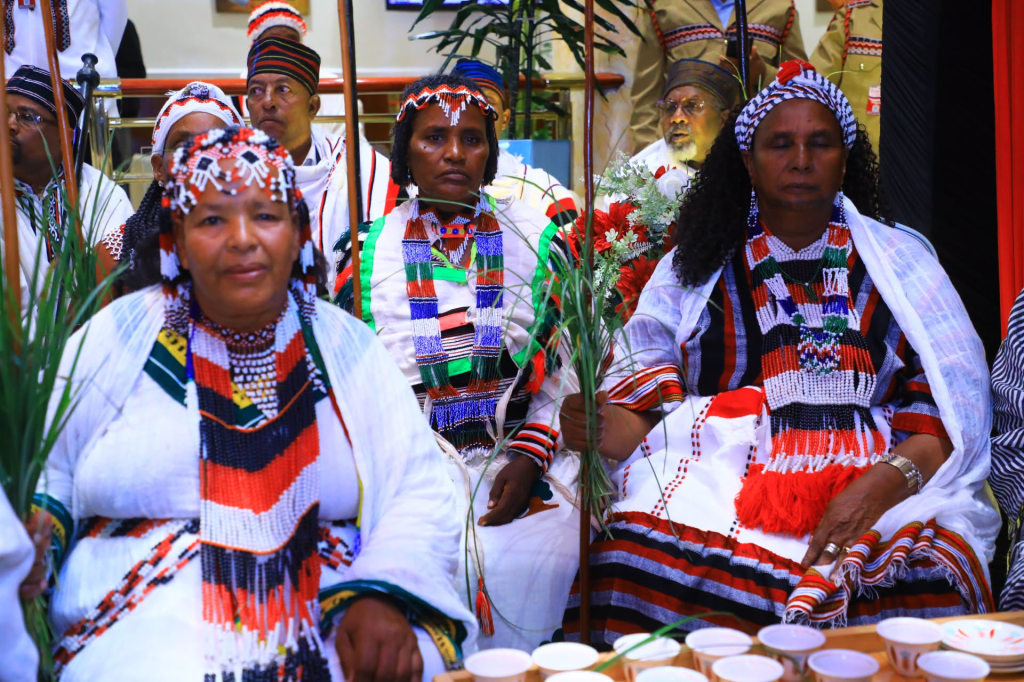
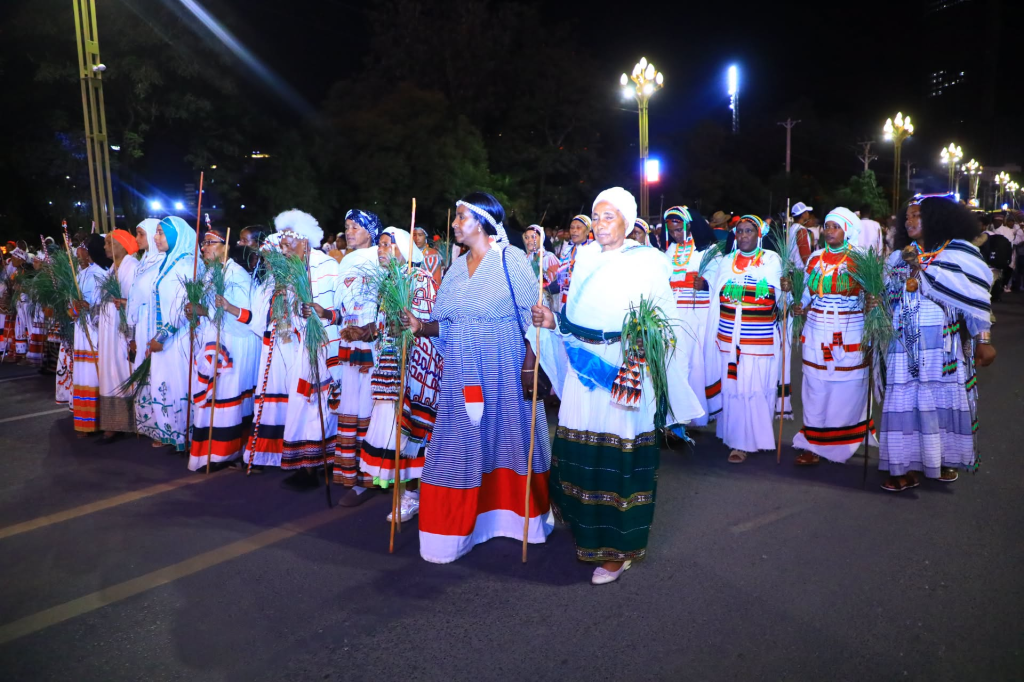
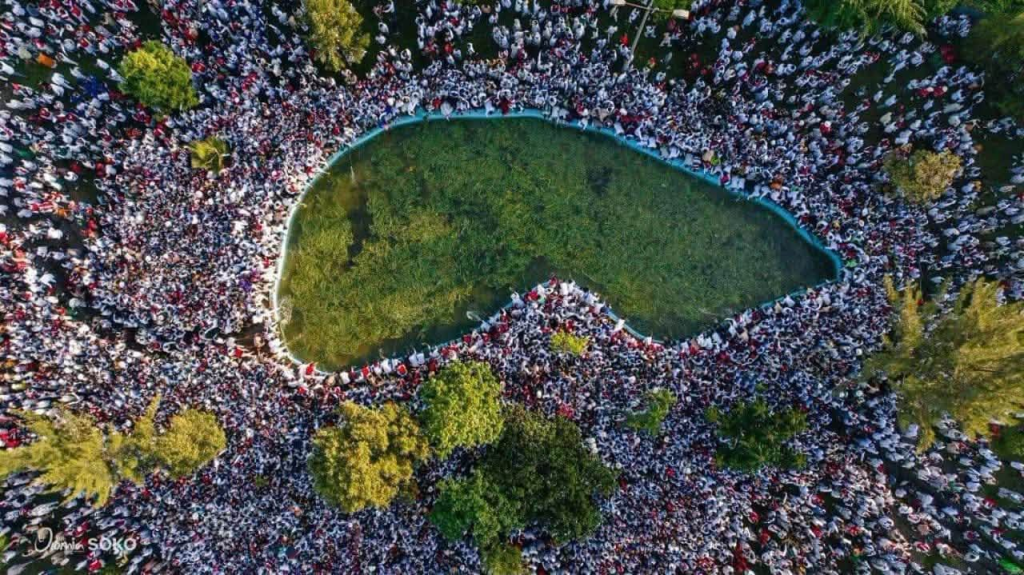
Millions arrive from across Ethiopia, from the diaspora, from every walk of life. Farmers and professors. Mothers and students. Elders and children. Muslims and Christians and practitioners of the old faith. They dress in white — a sea of unity that visually overwhelms the eye.
But the unification is not mere numbers. It is spiritual. It is the experience of dissolving the boundaries that separate human beings from one another. For one day, the Oromo people are not many. They are one.
This is tokkummaa — unity — and it is not an abstract ideal. It is a lived experience at the water’s edge. The person standing beside you is not a stranger. They are your brother. They are your sister. They are yourself.
Nageessaa Namummaa — The Peace-Bringing of Humanity
Irreechaan nageessaa namummaa. Irreechaa is the peace-bringing of humanity.
The Oromo greeting for the festival is “Baga Irreechaa nagaan geessan” — May the Irreechaa arrive in peace. This is not a casual wish. It is a declaration of intent.
Irreechaa does not merely celebrate peace. It produces it. The festival is a peace-making technology, an ancient ritual that creates the conditions for harmony between individuals, communities, and the divine.
Consider what happens when millions of people gather in a single place and commit, together, to reconciliation. Consider what happens when a nation’s largest cultural event is built on the requirement that participants set aside their conflicts. Peace is not the absence of conflict. It is the presence of araara. And Irreechaa makes that presence visible, tangible, and real.
Araarsaa Namummaa — The Forgiveness of Humanity
Irreechaan araarsaa namummaa. Irreechaa is the forgiving of humanity.
Araara is the Oromo word for reconciliation, but it carries a deeper meaning: the restoration of relationship, the healing of rupture, the return to wholeness. At Irreechaa, forgiveness is not a suggestion. It is a prerequisite.
The person who comes to the water carrying resentment is not participating in Irreechaa. They are merely present. True participation requires the internal work of forgiveness — the decision to release the debt, to let go of the grievance, to choose relationship over righteousness.
This is the fifth renewal: the forgiveness that makes all other renewal possible.
Part Two: The Reconciliation of Creation
The next several phrases expand beyond the human person to encompass the entire created order.
Waloomsaa Uumaa-Uumamaa — The Harmony of Creation
Irreechaan waloomsaa uumaa-uumamaa. Irreechaa is the harmonizing of creation.
The Oromo understanding of Irreechaa is not limited to human community. The festival reconciles the entire cosmos — uumaa (the Creator) and uumamaa (creation) — in a single act of thanksgiving.
When the Oromo gather at the water, they are not just repairing human relationships. They are restoring the primal harmony between the divine, the human, and the natural. The water is sacred. The grass is sacred. The sky, the earth, the trees, the animals — all are participants in the festival.
This is waloomaa — harmony — and it is the original condition of creation. Irreechaa returns what was broken to what it was meant to be.
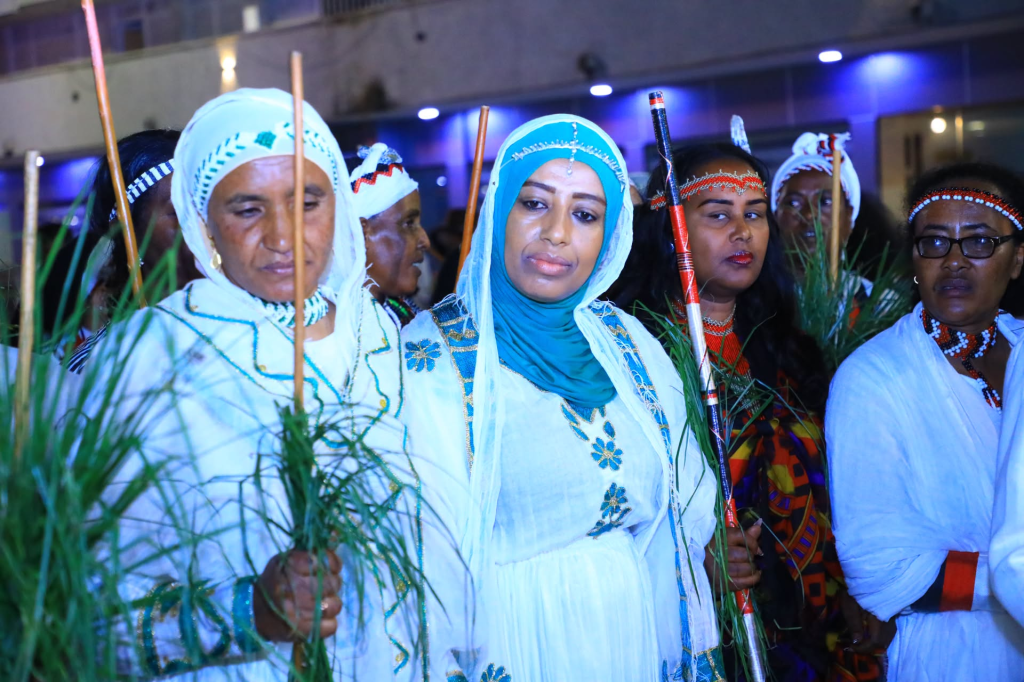
Sirna Galateeffannaa — The Order of Thanksgiving
Irreechaan sirna galateeffannaa. Irreechaa is the order of thanksgiving.
Sirna means order, system, institution, ceremony. Irreechaa is not spontaneous emotion. It is structured ritual — a carefully preserved system of thanksgiving that has been practiced for thousands of years.
The Gadaa system organizes Oromo society by age grades, each with defined responsibilities. Irreechaa is woven into this system. It is not just a festival. It is an institution — a sirna — that orders the relationship between the human community and the divine.
Thanksgiving, in Oromo cosmology, is not optional. It is the fundamental posture of the creature toward the Creator. To give thanks is to acknowledge reality: that we did not create ourselves, that we depend on forces beyond our control, that life is a gift.
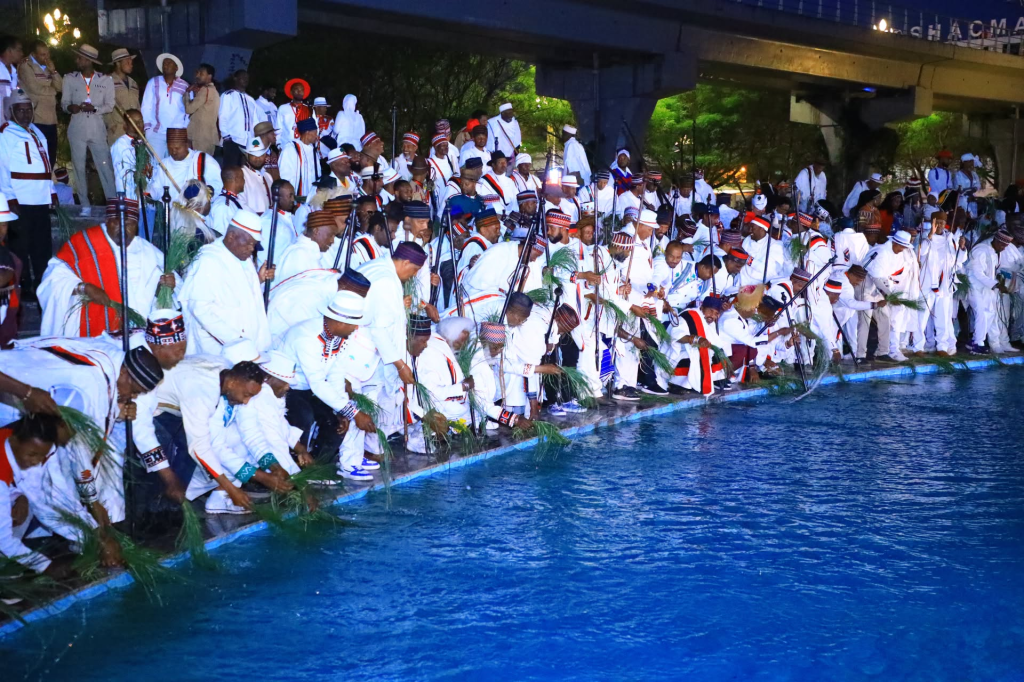
Yaadannoo Uumamaa — The Memory of Creation
Irreechaan yaadannoo uumamaa. Irreechaa is the memory of creation.
Yaadannoo means memorial, remembrance, commemoration. At Irreechaa, the Oromo people remember not just the harvest of the past year but the creation of the world itself.
This is sacred memory — not nostalgia, not sentimentality, but the deliberate act of recalling what is fundamental. The Oromo remember that they are creatures. They remember that the earth is sacred. They remember that water is the source of life. They remember that gratitude is the proper response to existence.
In a modern world that so often forgets the sacred, Irreechaa is a collective act of remembrance. It says: We have not forgotten who we are. We have not forgotten where we came from. We have not forgotten what we owe.
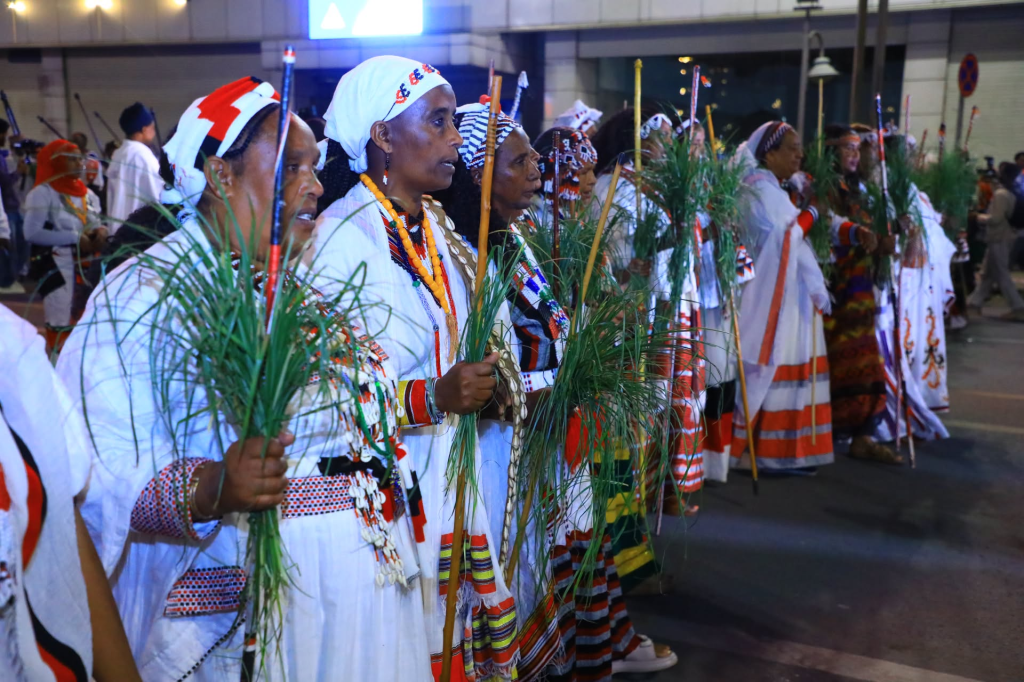
Hulluuqoo Hameenyaa — The Rejection of Evil
Irreechaan hulluuqoo hameenyaa. Irreechaa is the rejection of evil.
Hulluuqoo means that which is rejected, refused, cast out. Hameenyaa means evil, wickedness, malice. Irreechaa is not just the affirmation of good. It is the explicit rejection of evil.
At the water’s edge, the Oromo people collectively renounce the forces that destroy human community: hatred, jealousy, greed, violence, deception. They name these forces and cast them out. They declare that these things have no place in the renewed humanity they are creating.
This is spiritual warfare — not against flesh and blood, but against the principalities and powers that corrupt the human heart. And it is fought not with weapons but with water, grass, and words of prayer.
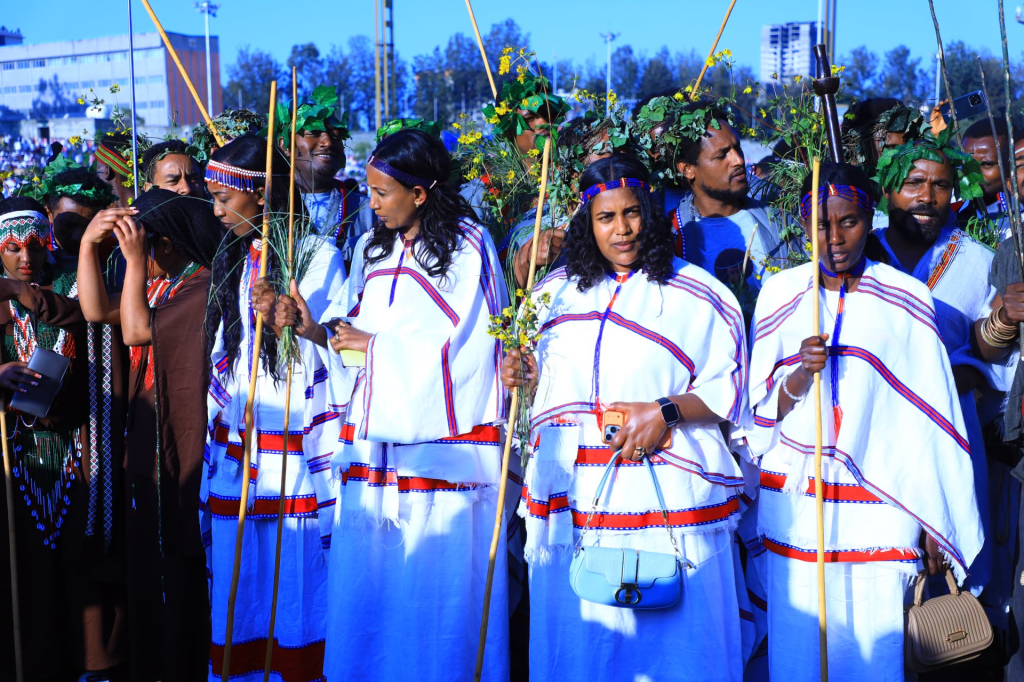
Mallattoo Ulfoo — The Sign of Love
Irreechaan mallattoo ulfoo. Irreechaa is the sign of love.
Ulfoo means love, compassion, mercy. Irreechaa is not just a festival of gratitude. It is a sign — a visible, tangible, public demonstration — of divine love.
The Oromo believe that Waaqa (God) loves humanity. The rains come. The harvest arrives. The sun returns after the darkness. These are not accidents of nature. They are expressions of divine love.
And Irreechaa is the human response to that love. It is the sign that the relationship is mutual. God gives; the people give thanks. God loves; the people love in return.
Part Three: The Reclamation of Time
The next phrases focus on Irreechaa’s relationship to time itself — its power to forgive the past, transform the present, and renew the future.
Yeroo Dhiifamaa — The Time of Forgiveness
Irreechaan yeroo dhiifamaa. Irreechaa is the time of forgiveness.
Yeroo means time, season, moment. Dhiifamaa means forgiveness, pardon, release. Irreechaa is not just a festival. It is a time — a specific, sacred season set apart for the work of forgiveness.
In the rhythm of the Oromo year, Irreechaa is the moment when the community pauses and says: Now is the time to make peace. Now is the time to release grievances. Now is the time to forgive.
This is the ritualization of forgiveness. It is not left to chance or whim. It is scheduled. It is expected. It is required.
Ce’umsaa Baraa — The Turning of the Year
Irreechaan ce’umsaa baraa. Irreechaa is the turning of the year.
Ce’umsaa means transition, passage, crossing over. Irreechaa marks the turning point of the year — the end of the rainy season Ganna and the beginning of spring Birraa. It is a threshold, a liminal moment between what was and what will be.
At this threshold, the old year dies and the new year is born. The mistakes of the past are released. The possibilities of the future are welcomed. The community stands at the hinge of time and chooses to move forward.
This is ce’umsaa baraa — the turning of the year. And it is not just a calendar event. It is a spiritual one.
Damboobsaa Namummaa — The Restoration of Humanity
Irreechaan damboobsaa namummaa. Irreechaa is the restoring of humanity.
The rainy season destroys. Rivers swell. Roads wash out. Crops are lost. The land itself seems to be in mourning.
Then the rains end. The sun returns. The harvest begins. The people gather at the water to give thanks.
Irreechaa is the celebration after the suffering. It is the moment when the community pauses and says: We made it through. We survived. We are still here.
This is restoration — not the erasure of hardship, but the transformation of hardship into gratitude. The floods came, and we endured. The darkness came, and we waited. The sun returned, and we give thanks.
Part Four: The Perfection of Humanity
The final phrases describe Irreechaa’s ultimate purpose: the perfection of the human person and community.
Fooyyessaa Namummaa — The Improvement of Humanity
Irreechaan fooyyessaa namummaa. Irreechaa is the improving of humanity.
Irreechaa is not content with survival. It seeks flourishing. The festival is not merely about maintaining what exists but about becoming more than you were.
Fooyya’uu means progress, development, growth. The person who participates in Irreechaa is not the same person who entered the festival. They have been improved — refined by the discipline of reconciliation, elevated by the experience of unity, deepened by the practice of gratitude.
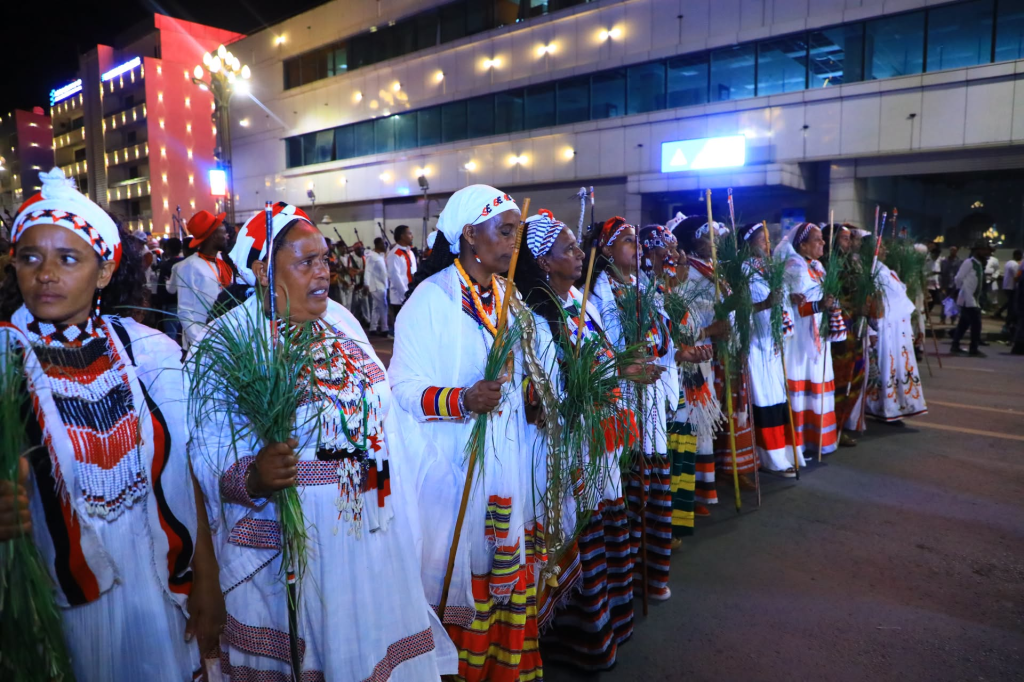
Fufsiisaa Namummaa — The Fulfillment of Humanity
Irreechaan fufsiisaa namummaa. Irreechaa is the fulfilling of humanity.
There is a deep longing in the human heart for completion — for the sense that life is not fragmented, that it has meaning, that it is going somewhere. Irreechaa answers that longing.
At the water’s edge, surrounded by millions of people who share your language, your faith, your hope, you experience a sense of completeness that modern life so often denies. You are not alone. You are not meaningless. You are part of something larger than yourself.
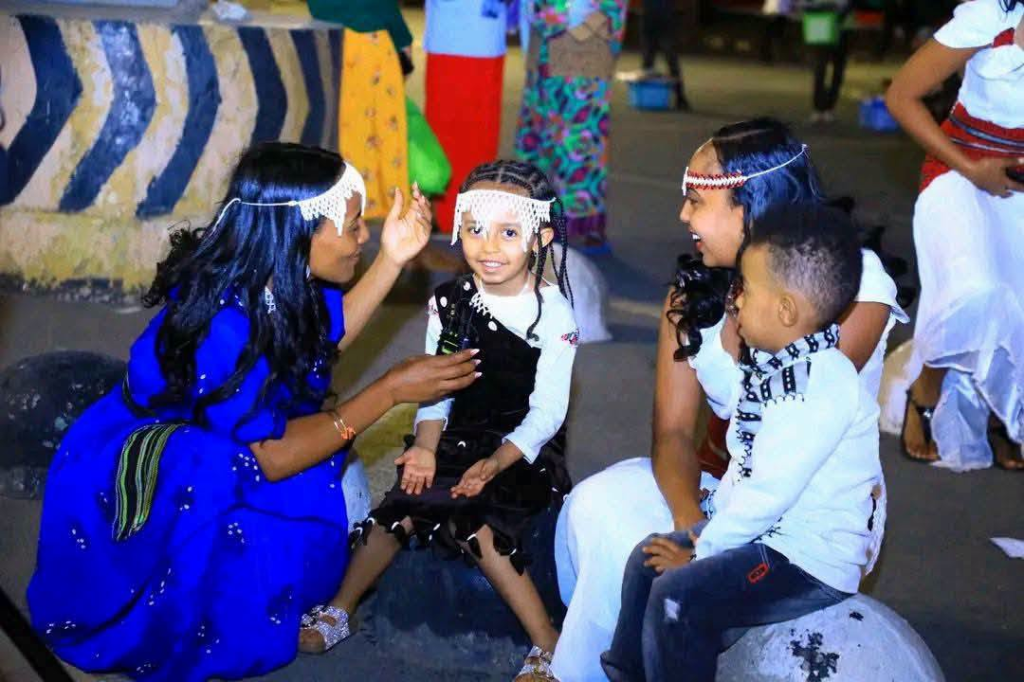
Fineessaa Namummaa — The Refinement of Humanity
Irreechaan fineessaa namummaa. Irreechaa is the refining of humanity.
Water is the medium of purification. At Irreechaa, participants dip sacred grass into the water and sprinkle it upon themselves and others. The Kormoomsaa — the blessing of the young men — cleanses and consecrates.
The refinement Irreechaa offers is the refinement of character. At the water’s edge, the layers of resentment, pride, and grievance are stripped away. What remains is the essential human being — vulnerable, grateful, connected, at peace.
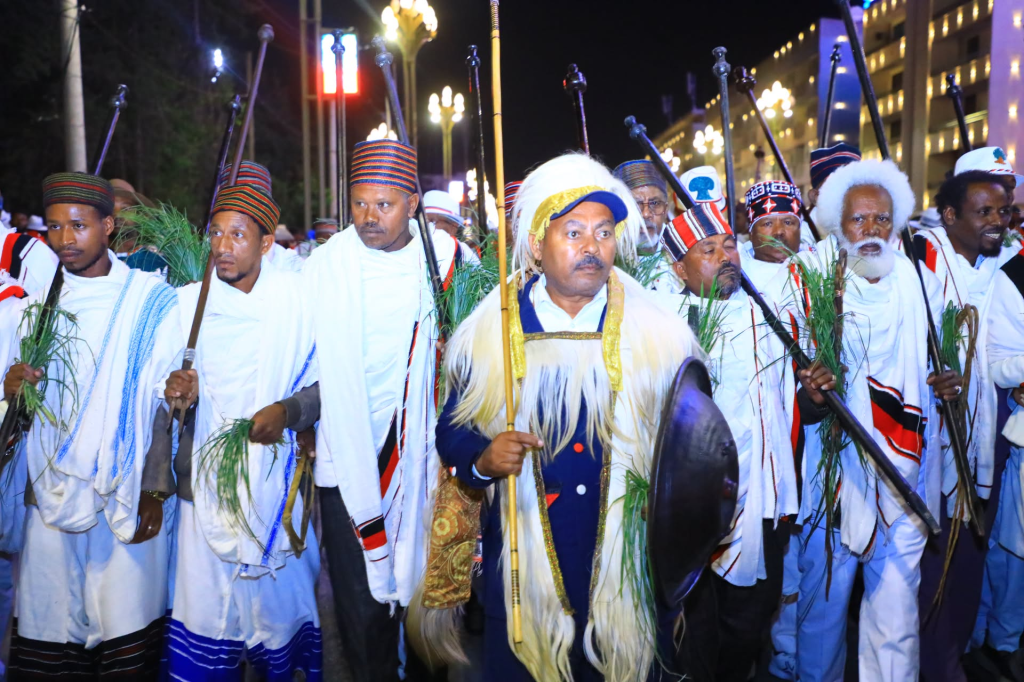
Guutessaa Namummaa — The Completion of Humanity
Irreechaan guutessaa namummaa. Irreechaa is the completing of humanity.
There is a difference between fulfillment and completion. Fulfillment is the experience of meaning. Completion is the achievement of wholeness. Irreechaa offers both.
The festival completes the cycle of the year. It completes the work of reconciliation. It completes the process of purification. It completes the community — bringing together all its members, from the youngest child to the oldest elder.
At Irreechaa, nothing is left out. No one is excluded. The festival is guutuu — complete, full, entire. The sea of white garments is not just a visual image. It is a theological statement: this is what wholeness looks like.
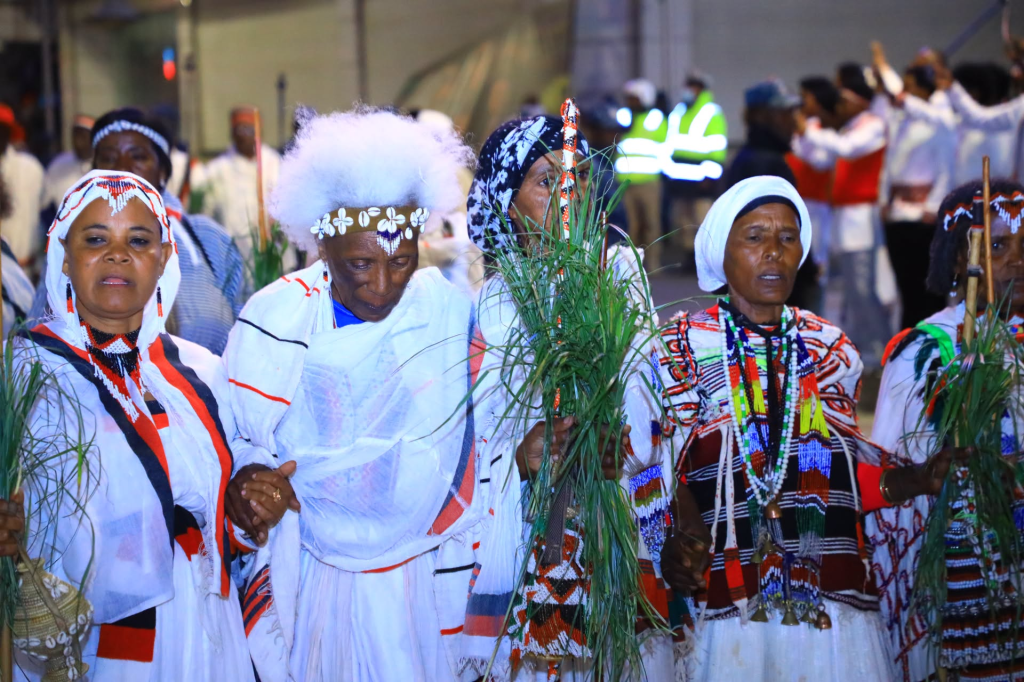
Kadhannaa Gaarummaa — The Prayer of Goodness
Irreechaan kadhannaa gaarummaa. Irreechaa is the prayer of goodness.
Kadhannaa means prayer, supplication, petition. Gaarummaa means goodness, virtue, excellence. Irreechaa is not just a festival of the past. It is a prayer for the future.
At the water’s edge, the Oromo people pray for goodness — for themselves, for their families, for their communities, for their nation, for the world. They ask Waaqa to make them good, to keep them good, to use them for good.
This is the prayer that summarizes all the others. It is the request that the renewal that has begun at Irreechaa will continue throughout the year.
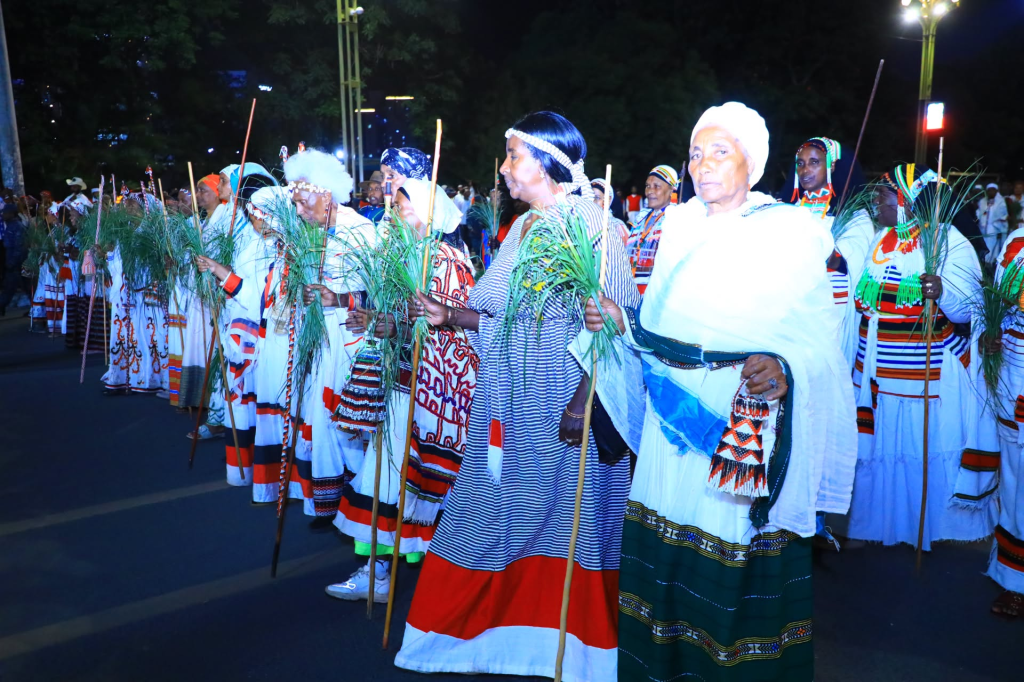
Haaromsaa Namummaa — The Renewal of Humanity
Irreechaan haaromsaa namummaa. Irreechaa is the renewing of humanity.
And so we arrive at the final phrase — the culmination of all the others.
Empowerment leads to reconciliation. Reconciliation leads to unity. Unity brings peace. Peace enables forgiveness. Forgiveness restores creation. Creation remembers its Creator. Evil is rejected. Love is affirmed. Time is redeemed. Humanity is restored, improved, fulfilled, refined, completed. And then — haaromsaa namummaa — humanity is renewed.
Irreechaa is not just a festival. It is a process — a spiritual technology that takes human beings as they are and transforms them into what they can become. It takes fractured people and makes them whole. It takes divided communities and makes them one. It takes a broken world and makes it new.
This is what the Oromo people have known for thousands of years. This is what they celebrate at the water’s edge every year. This is what they offer to Ethiopia, to Africa, and to the world.
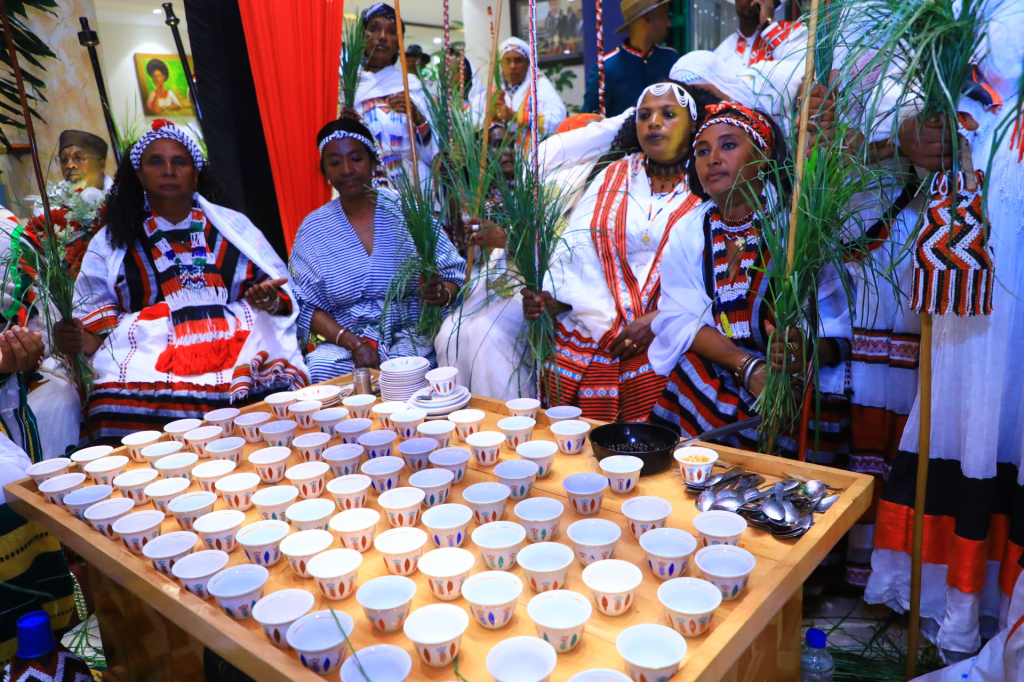
The Full Testimony
Let us read the sentence again — the full sentence — and hear it now with understanding:
“Irreechaan humneessaa namummaa, lachiisaa namummaa, marabeessaa namummaa, nageessaa namummaa, araarsaa namummaa, waloomsaa uumaa-uumamaa, sirna galateeffannaa, yaadannoo uumamaa, hulluuqoo hameenyaa, mallattoo ulfoo, yeroo dhiifamaa, ce’umsaa baraa, damboobsaa namummaa, fooyyessaa namummaa, fufsiisaa namummaa, fineessaa namummaa, guutessaa namummaa, kadhannaa gaarummaa, fi haaromsaa namummaa ti.”
Irreechaa is the empowering of humanity, the reconciling of humanity, the unifying of humanity, the peace-bringing of humanity, the forgiving of humanity, the harmonizing of creation, the order of thanksgiving, the memory of creation, the rejection of evil, the sign of love, the time of forgiveness, the turning of the year, the restoring of humanity, the improving of humanity, the fulfilling of humanity, the refining of humanity, the completing of humanity, the prayer of goodness, and the renewing of humanity.
This is not poetry. This is testimony. This is the Oromo people’s declaration of what Irreechaa does in the world.
Humanity can be renewed. Not through politics or economics or technology alone, but through the ancient practices of reconciliation, gratitude, purification, and community. Not through grand ideological projects, but through the simple, profound act of gathering at the water with your people, setting down your grudges, and giving thanks.
Irreechaa is the renewal of humanity. And it happens every year, at the water’s edge, one person at a time.
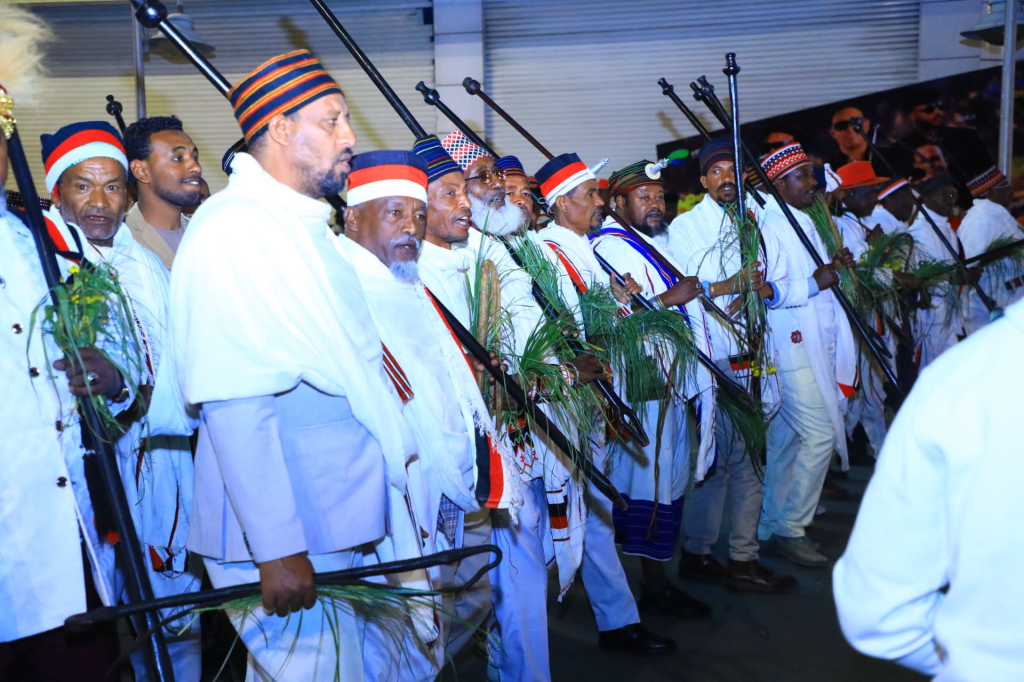
Baga Irreechaa Nagaan Geessan
The Oromo greeting says it all:
Baga Irreechaa nagaan geessan.
May the Irreechaa arrive in peace.
May the festival be empowering, reconciling, unifying, peace-bringing, forgiving, harmonizing, thanksgiving, memorial, rejecting of evil, sign of love, time of forgiveness, turning of the year, restoring, improving, fulfilling, refining, completing, prayerful, and renewing of humanity.
May the waters receive your gratitude.
May the grass carry your prayers.
May the nation, like the earth after the rains, emerge greener and stronger than before.
And may you — and all of us — be renewed.
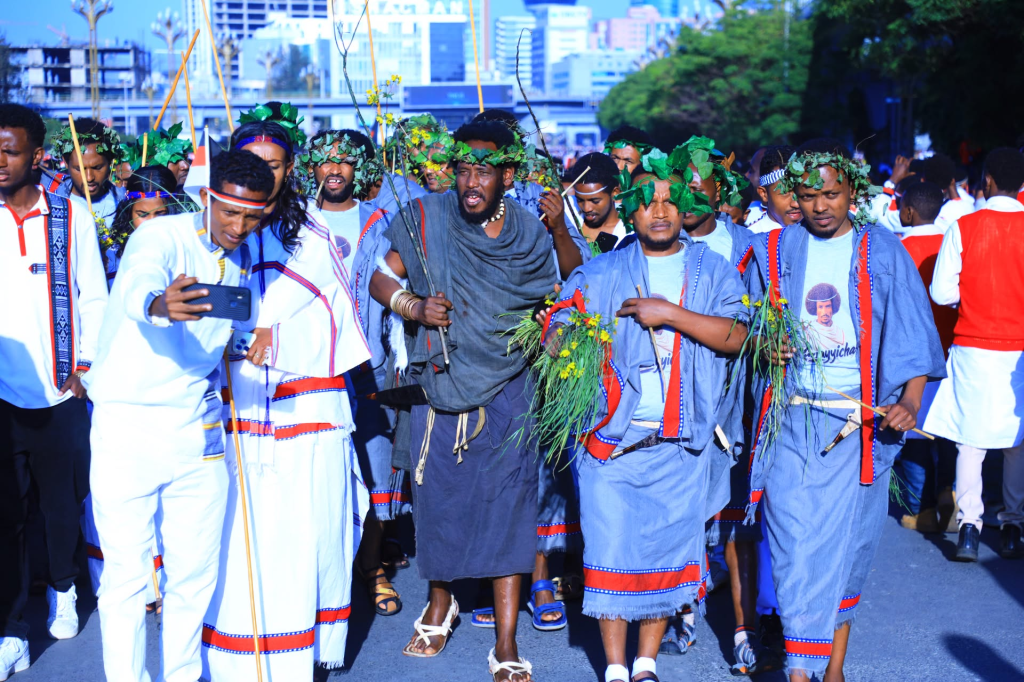
#Irreechaa #Oromia #Ethiopia #RenewalOfHumanity #HaaromsaaNamummaa #PeaceAndReconciliation #Thanksgiving #KadhannaaGaarummaa
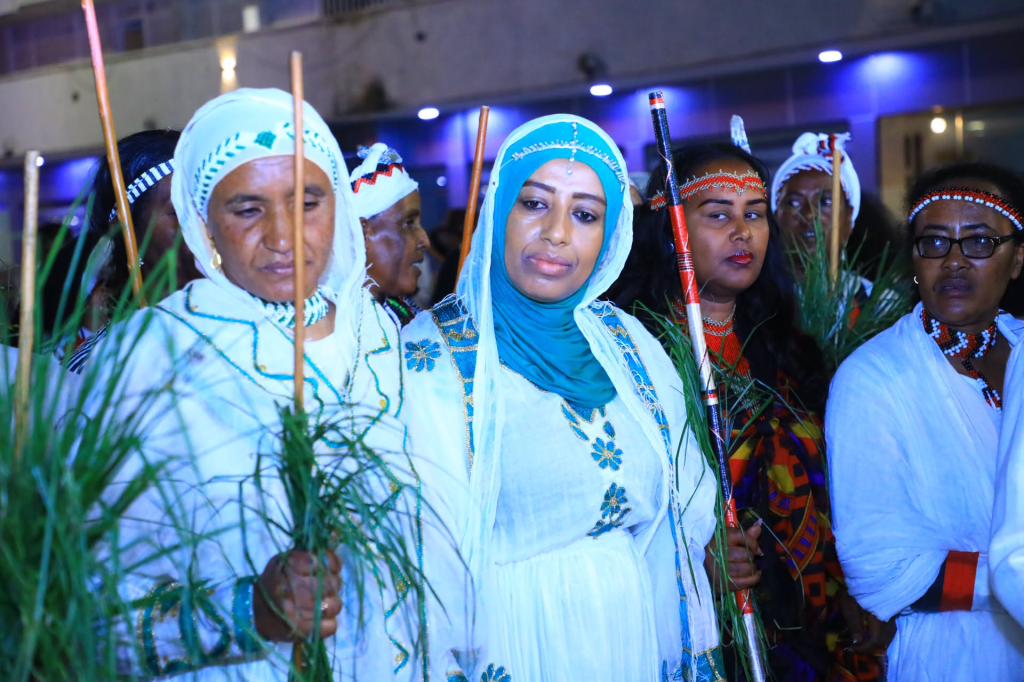
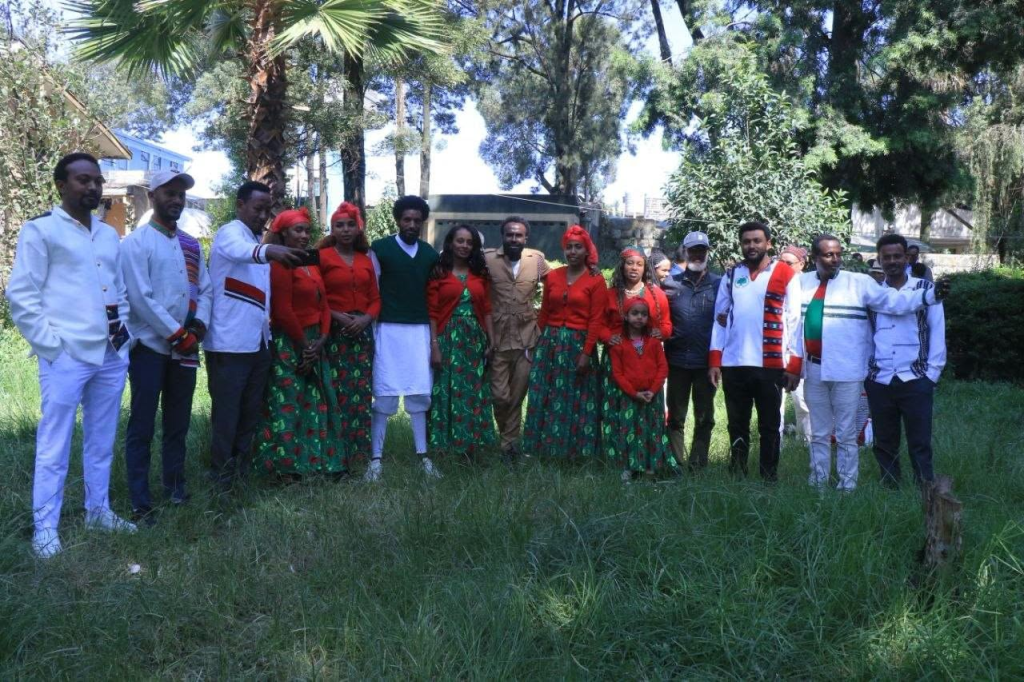
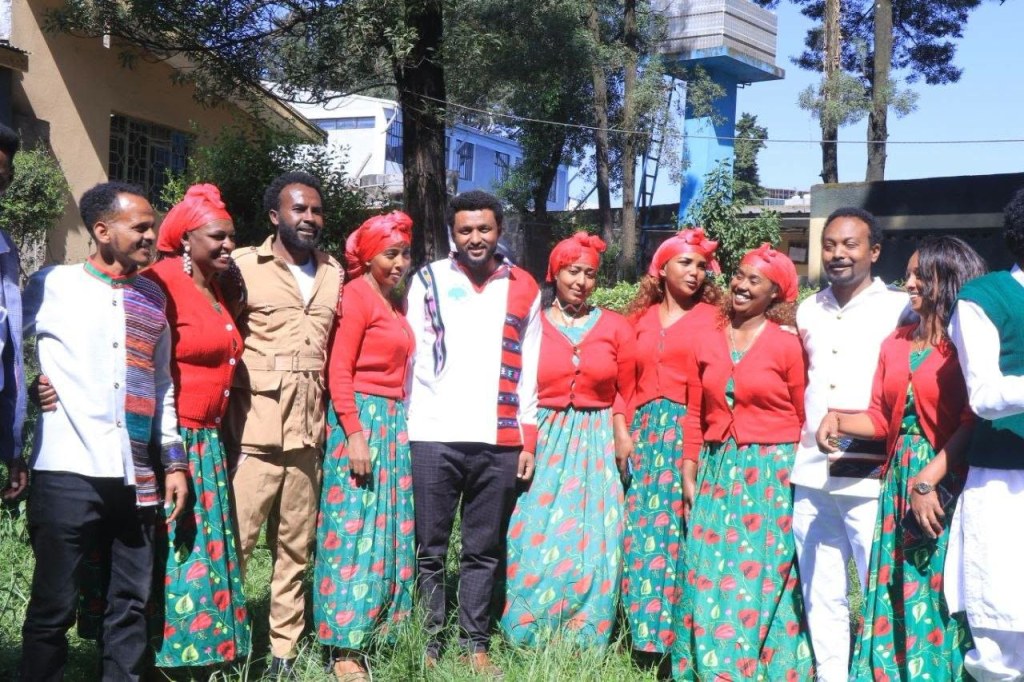
photos credit: OBN

Irreechaa: The Festival That Renews Humanity Itself
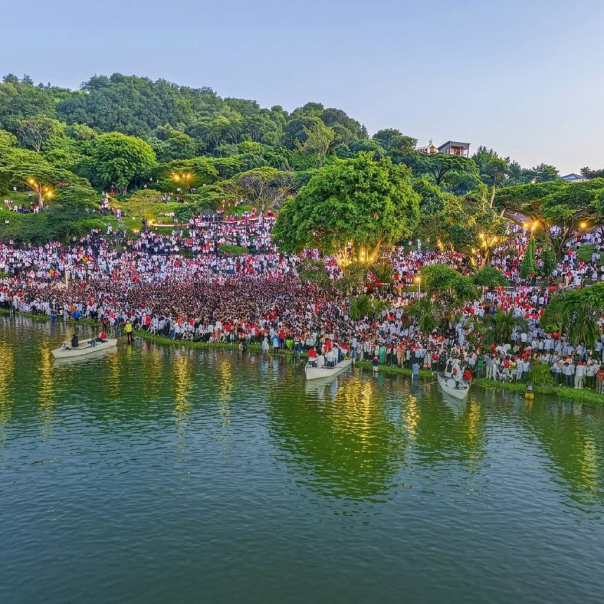
In the Oromo language, ten words capture what no single English phrase can hold: Irreechaa is empowering, reconciling, unifying, peace-bringing, restorative, improving, fulfilling, refining, completing, and renewing of humanity.
Beneath the sycamore trees, beside the sacred waters, a people gather not merely to celebrate — but to become whole again.
Ten Words, One Truth
There are moments when a single sentence carries the weight of an entire civilization’s wisdom. The Oromo people have such a sentence about Irreechaa:
“Irreechaan humneessaa, lachiisaa, marabeessaa, nageessaa, damboobsaa, fooyyessaa, fufsiisaa, fineessaa, guutessaa fi haaromsaa namummaa ti.”
Translated, it means: “Irreechaa is empowering, reconciling, unifying, peace-bringing, restorative, improving, fulfilling, refining, completing, and renewing of humanity.”
This is not poetry for its own sake. It is a theological statement, a philosophical declaration, and a psychological insight — all compressed into ten carefully chosen Oromo words. Each word describes not merely what Irreechaa does, but what it is. The festival is not a symbol of these things. It is the mechanism through which they happen.
To understand Irreechaa is to understand that humanity — fractured, exhausted, divided, grieving — can be regenerated. And the Oromo people have been practicing that regeneration for thousands of years.
Humneessaa: The Empowerment
Irreechaa begins with empowerment — humneessaa.
Before the festival, participants are asked to reconcile with themselves and with others. They set aside grudges. They release resentment. This is not weakness. It is the most difficult form of strength: the strength to lay down your weapons, to open your hands, to approach the sacred water without the armor of grievance.
The Oromo understand something that modern psychology is only now catching up to: unresolved conflict is a form of imprisonment. It binds the spirit. It drains the soul. To forgive — to seek araara — is to be liberated.
At Irreechaa, the person who has reconciled is not just morally superior. They are empowered. They have reclaimed energy that was being spent on resentment. They stand at the water’s edge lighter, freer, more capable of gratitude. This is the first regeneration: the empowerment that comes from letting go.
Lachiisaa: The Reconciliation
The second word is lachiisaa — reconciliation.
This is Irreechaa’s beating heart. Without araara, the festival cannot proceed. The tradition is explicit: you cannot participate in Irreechaa while holding a grudge. The water will not receive your thanks if your heart is still at war.
In a world that profits from division — where political parties, media ecosystems, and social platforms thrive on grievance — this requirement is revolutionary. Irreechaa says: Before you celebrate, reconcile. Before you give thanks, make peace. Before you approach the sacred, heal the human relationships that have been broken.
The Oromo do not pretend that reconciliation is easy. They do not suggest that pain should be ignored or injustice forgotten. They simply insist that the work of peace must be done — deliberately, consciously, before the community gathers. This is not naive optimism. It is disciplined spiritual practice.
At Hora Arsadi, at Hora Finfinne, at watersides across Oromia, millions of people perform this practice every year. They come as individuals carrying private wounds. They leave as a community bound by shared peace.
Marabeessaa: The Unification
Marabeessaa — unification. Gathering. Coming together as one.
Irreechaa is the largest gathering of Oromo people in the world. Millions arrive from across Ethiopia, from the diaspora, from every walk of life. Farmers and professors. Mothers and students. Elders and children. Muslims and Christians and practitioners of the old faith. They dress in white — a sea of unity that visually overwhelms the eye.
But the unification is not mere numbers. It is spiritual. It is the experience of dissolving the boundaries that separate human beings from one another. For one day, the Oromo people are not many. They are one.
This is what the Oromo call tokkummaa — unity — and it is not an abstract ideal. It is a lived experience at the water’s edge. The person standing beside you is not a stranger. They are your brother. They are your sister. They are yourself, reflected in the sacred waters.
In a nation and a world where ethnic, religious, and political identities so often divide, Irreechaa offers a different possibility: a unity that does not erase difference but transcends it. Everyone is welcome. Everyone is included. Everyone belongs.
Nageessaa: The Peace-Bringing
Nageessaa — peace-bringing.
The Oromo greeting for the festival is “Baga Irreechaa nagaan geessan” — May the Irreechaa arrive in peace. This is not a casual wish. It is a declaration of intent. Peace is not something that happens to you. It is something you arrive at, together, at the water, with your hands open and your grudges surrendered.
Irreechaa does not merely celebrate peace. It produces it. The festival is a peace-making technology, an ancient ritual that creates the conditions for harmony between individuals, communities, and the divine.
Consider what happens when millions of people gather in a single place and commit, together, to reconciliation. Consider what happens when a nation’s largest cultural event is built on the requirement that participants set aside their conflicts. Consider what happens when the sacred water receives only the prayers of those who have made peace with their neighbors.
Peace is not the absence of conflict. It is the presence of araara. And Irreechaa makes that presence visible, tangible, and real.
Damboobsaa: The Restoration
Damboobsaa — restorative. Renewing. Returning what was lost.
The rainy season in Oromia is long and hard. Rivers swell. Roads wash out. Crops are destroyed. Families are separated. The land itself seems to be in mourning.
Then the rains end. The sun returns. The harvest begins. And the people gather at the water to give thanks.
Irreechaa is the celebration after the suffering. It is the moment when the community pauses and says: We made it through. We survived. We are still here.
This is restoration — not the erasure of hardship, but the transformation of hardship into gratitude. The floods came, and we endured. The darkness came, and we waited. The sun returned, and we give thanks.
The Oromo understanding of restoration is deeply wise. It does not pretend that pain did not happen. It does not rush past grief. It simply insists that pain and grief are not the end of the story. The water is still there. The grass is still green. The community is still gathered. And the harvest, despite everything, has come.
Fooyyessaa: The Improvement
Fooyyessaa — improving. Making better.
Irreechaa is not content with survival. It seeks flourishing. The festival is not merely about maintaining what exists but about becoming more than you were.
This is the Oromo concept of fooyya’uu — progress, development, growth. The festival is connected to the harvest, to the productivity of the land, to the prosperity of the community. It celebrates not just what has been given but what has been built.
But the improvement Irreechaa seeks is not only material. It is moral, spiritual, and communal. The person who participates in Irreechaa is not the same person who entered the festival. They have been improved — refined by the discipline of reconciliation, elevated by the experience of unity, deepened by the practice of gratitude.
Irreechaa makes people better. Not through lectures or commandments, but through participation in a ritual that embodies the values it teaches.
Fufsiisaa: The Fulfillment
Fufsiisaa — fulfilling. Completing what was promised. Making whole.
There is a deep longing in the human heart for completion — for the sense that life is not fragmented, that it has meaning, that it is going somewhere. Irreechaa answers that longing.
The festival marks the fulfillment of a cycle. The rains came, and the harvest followed. The prayers were offered, and the blessings arrived. The year turns, and the community moves forward, not into emptiness, but into the next season of hope.
But fufsiisaa is more than seasonal. It is existential. At the water’s edge, surrounded by millions of people who share your language, your faith, your hope, you experience a sense of completeness that modern life so often denies. You are not alone. You are not meaningless. You are part of something larger than yourself — a people, a tradition, a story that stretches back thousands of years and forward into an unknown but blessed future.
This is fulfillment: the knowledge that you are exactly where you are supposed to be.
Fineessaa: The Refinement
Fineessaa — refining. Purifying. Making fine.
Water is the medium of purification in Oromo cosmology. At Irreechaa, participants dip sacred grass into the lake or river and sprinkle the water upon themselves and others. The Kormoomsaa — the blessing of the young men — is a ritual sprinkling that cleanses and consecrates.
This is not merely symbolic. The Oromo believe that water is the source of purity and the foundation of creation. To be sprinkled with sacred water is to be washed — not just physically, but spiritually, morally, and communally.
The refinement Irreechaa offers is the refinement of the human character. At the water’s edge, the layers of resentment, pride, and grievance are stripped away. What remains is the essential human being — vulnerable, grateful, connected, at peace.
The festival does not make people perfect. It makes them fine — purified of the things that separate them from themselves, from each other, and from the divine.
Guutessaa: The Completion
Guutessaa — completing. Making full. Filling up what was empty.
There is a difference between fulfillment and completion. Fulfillment is the experience of meaning. Completion is the achievement of wholeness. Irreechaa offers both.
The festival completes the cycle of the year. It completes the work of reconciliation. It completes the process of purification. It completes the community — bringing together all its members, from the youngest child to the oldest elder, from the nearest village to the farthest diaspora.
At Irreechaa, nothing is left out. No one is excluded. The festival is guutuu — complete, full, entire. The sea of white garments is not just a visual image. It is a theological statement: this is what wholeness looks like. This is what humanity becomes when it gathers in gratitude and peace.
The Oromo understanding of completion is radical. It insists that human beings are not complete as individuals. We are complete only in community. We are complete only in relationship with the divine. We are complete only when we gather at the water, together, with hands open and hearts reconciled.
Haaromsaa Namummaa: The Renewal of Humanity
And so we arrive at the final and greatest word: haaromsaa namummaa — the renewal of humanity.
This is the culmination of all the others. Empowerment leads to reconciliation. Reconciliation leads to unity. Unity brings peace. Peace enables restoration. Restoration opens the way for improvement. Improvement leads to fulfillment. Fulfillment demands refinement. Refinement produces completion. And completion is renewal.
Irreechaa is not just a festival. It is a process — a spiritual technology that takes human beings as they are and transforms them into what they can become. It takes fractured people and makes them whole. It takes divided communities and makes them one. It takes a broken world and makes it new.
This is what the Oromo people have known for thousands of years. This is what they celebrate at the water’s edge every year. This is what they offer to Ethiopia, to Africa, and to the world.
Humanity can be renewed. Not through politics or economics or technology alone, but through the ancient practices of reconciliation, gratitude, purification, and community. Not through grand ideological projects, but through the simple, profound act of gathering at the water with your people, setting down your grudges, and giving thanks.
Irreechaa is the renewal of humanity. And it happens every year, at the water’s edge, one person at a time.
Baga Irreechaa Nagaan Geessan
The Oromo greeting for the festival says it all:
Baga Irreechaa nagaan geessan.
May the Irreechaa arrive in peace.
May the festival be empowering, reconciling, unifying, peace-bringing, restorative, improving, fulfilling, refining, completing, and renewing of humanity.
May the waters receive your gratitude.
May the grass carry your prayers.
May the nation, like the earth after the rains, emerge greener and stronger than before.
And may you — and all of us — be renewed.
#Irreechaa #Oromia #Ethiopia #RenewalOfHumanity #PeaceAndReconciliation #Thanksgiving #HaaromsaaNamummaa
Irreechaa: The Regeneration of Humanity
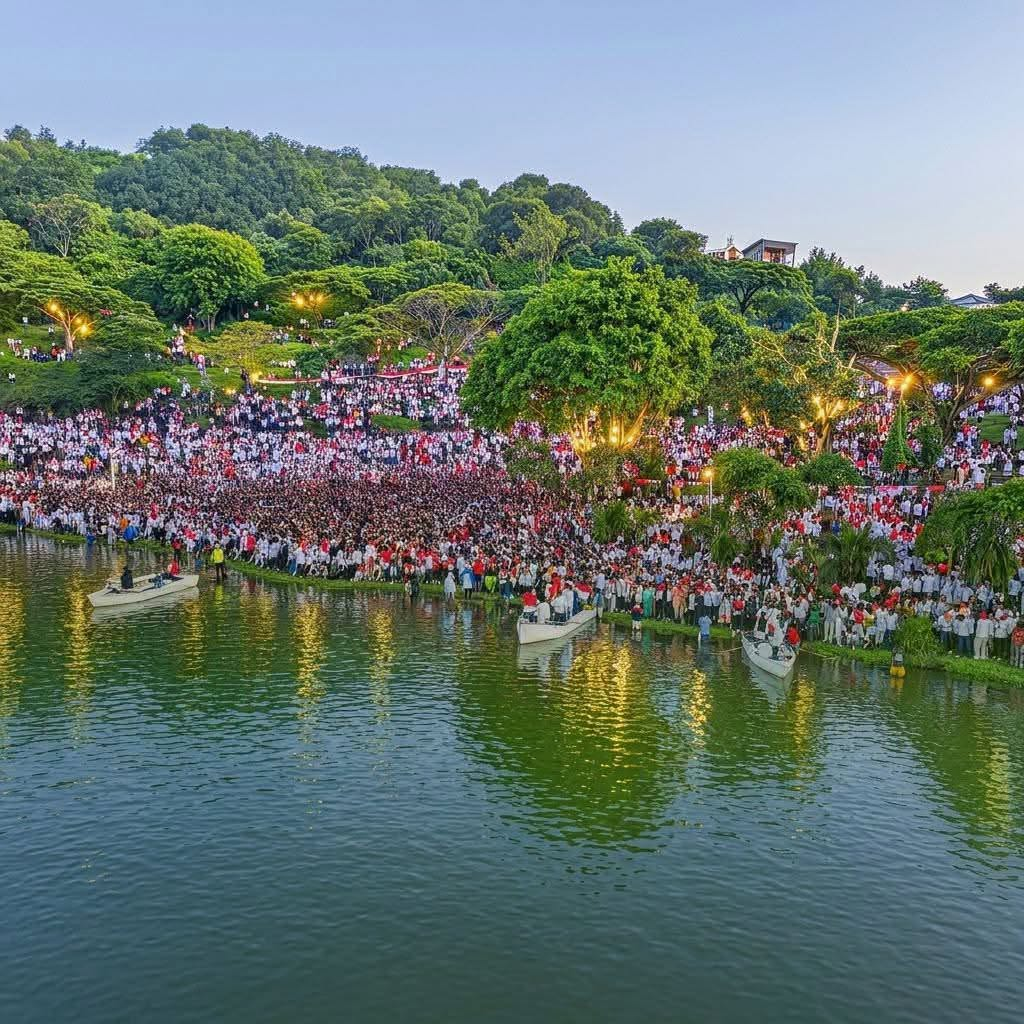
Beneath the sacred sycamores at Hora Arsadi, millions gather not merely to give thanks, but to become something new. In a world fractured by grievance and division, the Oromo thanksgiving festival offers a radical proposition: you cannot thank God while holding a grudge.
BISHOFTU, Ethiopia — The waters of Hora Arsadi do not discriminate.
They receive the freshly cut grass from the hands of a university student in her first traditional dress. They receive the prayers of an elder whose grandfather was forbidden from approaching this shore. They receive the flowers from a mother who buried a son in last year‘s conflict. And they receive the sprinkled droplets — Kormoomsaa, the blessing of the young men — upon the heads of strangers who arrived here as enemies and will leave as something else entirely.
This is Irreechaa. And to understand why it is the regeneration of humanity, you must first understand what the Oromo people have always known: that the human spirit, like the earth itself, needs a season to renew.
The Rejection of Resentment
There is a rule at Irreechaa that might strike the modern observer as impossibly naive. According to tradition, a person cannot participate unless they have resolved their disputes with others. Holding onto resentment is not permitted. You cannot come to the water carrying a grudge.
In an era where grievance has become identity, where political and social media economies thrive on division, where forgiveness is often mocked as weakness, this ancient requirement lands like a thunderclap.
“Before attending the festival, participants reconcile with themselves and others, setting aside grudges, anger, or resentment,” writes Girma Mirgisa of the Ethiopian News Agency. “This cleansing of the spirit gives the festival its essence as the festival of peace and reconciliation, where forgiveness, unity, and brotherhood take center stage”.
The Oromo word for this is araara — reconciliation. It is not merely a suggestion. It is the prerequisite. The water will not accept your thanks if your heart is still at war.
This is not a festival that asks you to feel grateful while ignoring pain. It asks you to set the pain down first — deliberately, consciously, as a spiritual discipline — and then approach the sacred.
Water as Origin, Water as Renewal
The Oromo philosophy of water is not ornamental. It is cosmological.
“The ancient Oromo philosophy regarding water views it as the source of purity and the foundation of creation and life,” Prime Minister Abiy Ahmed noted in his Irreechaa message this year. Water is where life begins. It is where life returns. It is the medium through which gratitude flows.
The Oromo proverb says it plainly: “A people without Melka — a river, a water source — is like a people without a head”.
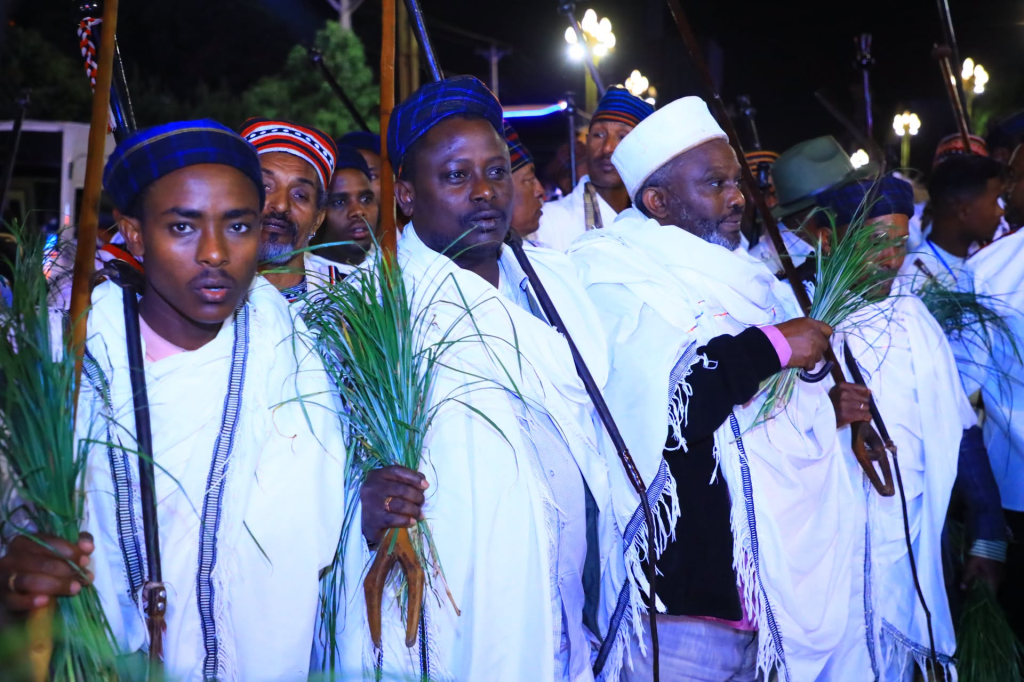
At Irreechaa Melka, celebrated at the close of the rainy season (Ganna) as Ethiopia enters spring (Birraa), participants carry green grass and daisies to the water‘s edge. They dip the grass into the lake or river. They sprinkle the water upon themselves and one another. They lift their hands in prayer.
The grass is not a symbol in the shallow sense. It is the thing itself: fertility, life, renewal, the stubborn persistence of green in a world that so often tends toward brown. The water is not just water. It is the medium of regeneration.
“The sown seed dies and is resurrected to bear fruit,” Abiy said, describing the Oromo understanding of harvest and divine providence. This is not a metaphor for the religious. It is the pattern of the cosmos. Death and resurrection. Rain and spring. Grief and gratitude. You cannot have one without the other.
The Dark Season and the Return of the Sun
To understand Irreechaa, you must understand Ganna.
The rainy season in Oromia is not a gentle drizzle. It is months of heavy downpour, swollen rivers, destroyed crops, impassable roads, isolation. Families cannot visit one another. Communities are physically separated by water that has become dangerous rather than life-giving.
The Oromo do not detest rain. But they recognize Ganna as a demanding season — a time of endurance, of waiting, of trusting that the sun will return.
“As the winter darkness clears, the Oromo people gather in unity at the river for traditional thanksgiving rituals,” Abiy said this year, drawing an explicit parallel between the natural season and Ethiopia’s long struggles with “economic, political, and administrative challenges”.
The Prime Minister’s comparison is worth noting, but it is the deeper spiritual parallel that matters. Irreechaa is the celebration after the suffering. It is the moment when the community pauses at the water‘s edge and says: we made it through. We survived. We are still here.
“The heavy rain brings with it lots of things like swelling rivers and floods that can destroy lives, cattle, crop, and homes,” notes the Ethiopian Herald. “The Oromo celebrate Irreechaa not only to thank Waaqa but also to welcome the new season of plentiful harvests following the dark and rainy winter season”.
This is regeneration: not the erasure of hardship, but the transformation of hardship into gratitude.
A Festival Older Than Empires
Irreechaa’s roots run deeper than any institution that currently exists on the African continent. Estimates place its origins at over 6,000 years, connected to the ancient Cushitic civilizations that predate the rise of modern empires and religions. Some accounts suggest the tradition has been celebrated in this part of Africa for 12,000 years.
The festival is intimately connected to the Gadaa system, the traditional Oromo governance structure recognized by UNESCO as an Intangible Cultural Heritage of Humanity. The Gadaa system organizes society by age grades, each with defined responsibilities and transition periods. Irreechaa is woven into this system — a spiritual punctuation mark in the rhythm of community life.
“When Europe is still in the Dark Ages, Africans were conducting a colorful, passionate, and heartfelt thanksgiving celebration,” writes Solomon Dibaba of the Ethiopian News Agency, “spiritually outsmarting the ‘civilizing’ mission of the European colonizers”.
This is not merely historical pride. It is the living proof that African civilizations developed sophisticated spiritual and philosophical systems long before colonial encounter — systems that understood gratitude, reconciliation, and renewal as the foundational architecture of human community.
The Reclamation of Space
For decades, Irreechaa was banned.
Under successive regimes, the Oromo people were denied the right to celebrate at their own sacred sites. Public gatherings were suppressed. The geography of the capital — the very place whose name Finfinne derives from the sacred lake around which it was built — was overwritten by imperial and colonial logics.
The revival of Irreechaa at Hora Finfinne, in the heart of Addis Ababa, is therefore not just a cultural event. It is an act of reclamation.
“Celebrating Irreechaa here is not just a cultural act,” writes Advocacy for Oromia. “It is a powerful reclamation of space, identity, and dignity”.
Prime Minister Abiy’s message this year acknowledged this directly: “The restoration and institutionalization of Hora Finfinnee Irreecha to its river site and the grand gatherings at Hora Harsadi in Bishoftu” are proof that “long-standing cultural questions regarding language and heritage have been fully answered”.
For the Oromo people, space is not abstract. The water is not interchangeable. Hora Arsadi is not simply a convenient lake. It is a specific, sacred geography where generations have come to pour out their gratitude and their grief. To ban Irreechaa is to sever the people from their own spiritual lungs.
To restore it is to allow them to breathe again.
The White Sea and the Dissolution of Difference
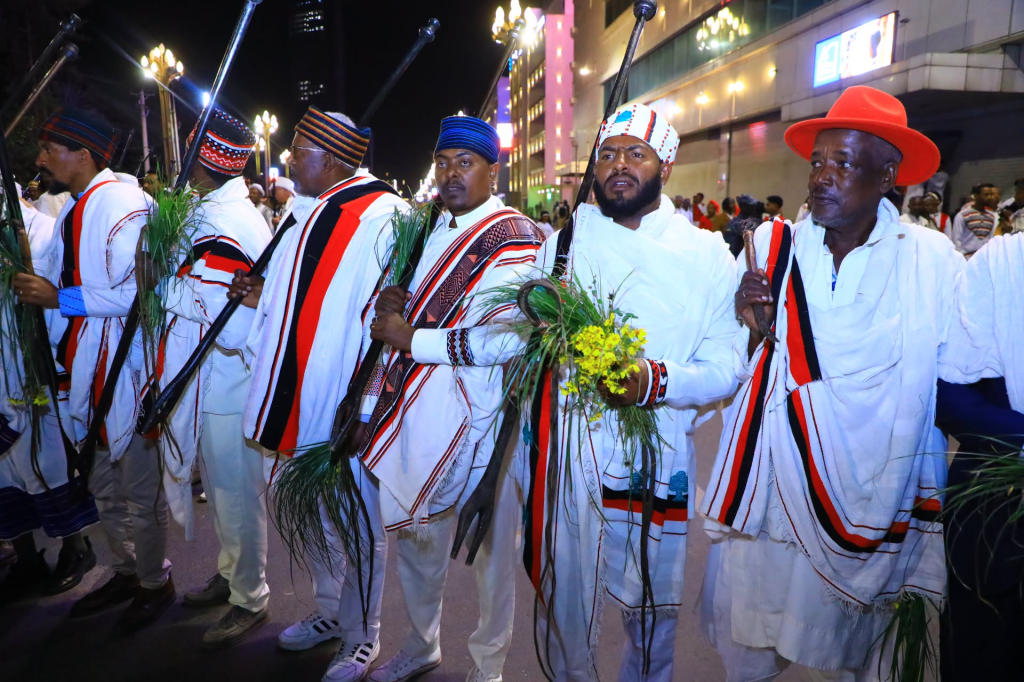
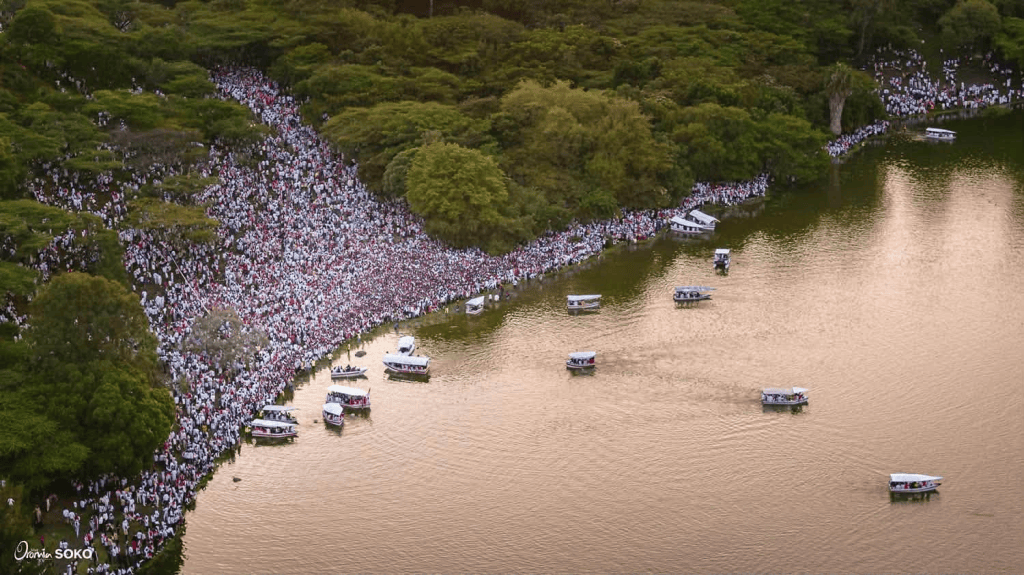
On the day of Irreechaa at Hora Arsadi, millions of people dress in white.
The image is overwhelming. A sea of white garments, traditional habesha kemis and gorro, moving toward the water. White turbans. White shawls. The white of purity, of peace, of renewal.
But the white does not erase difference. It holds it.
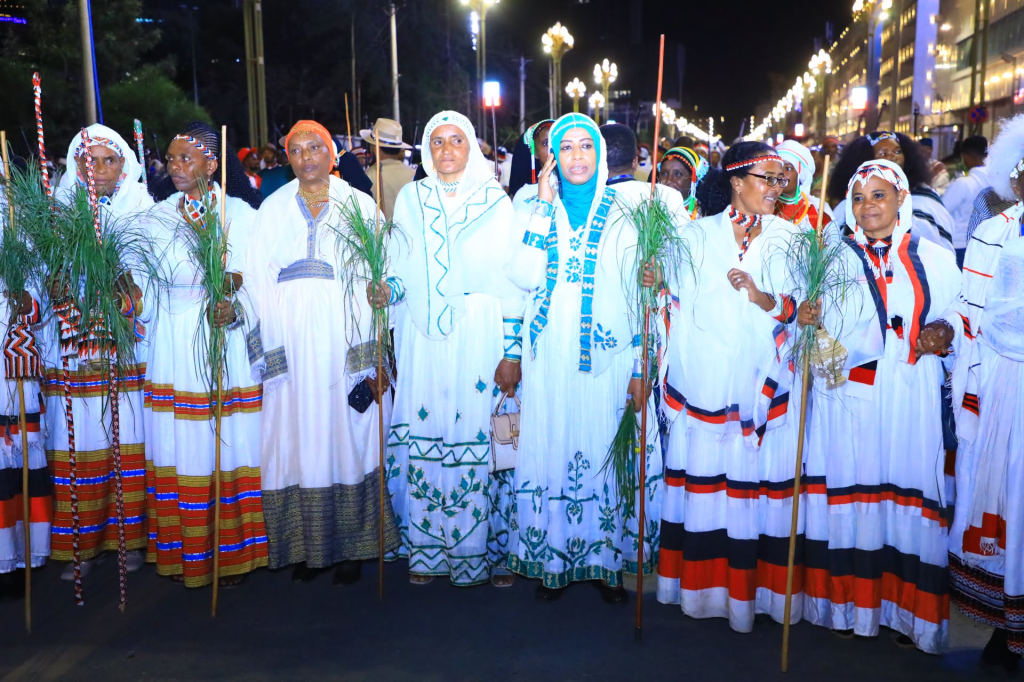
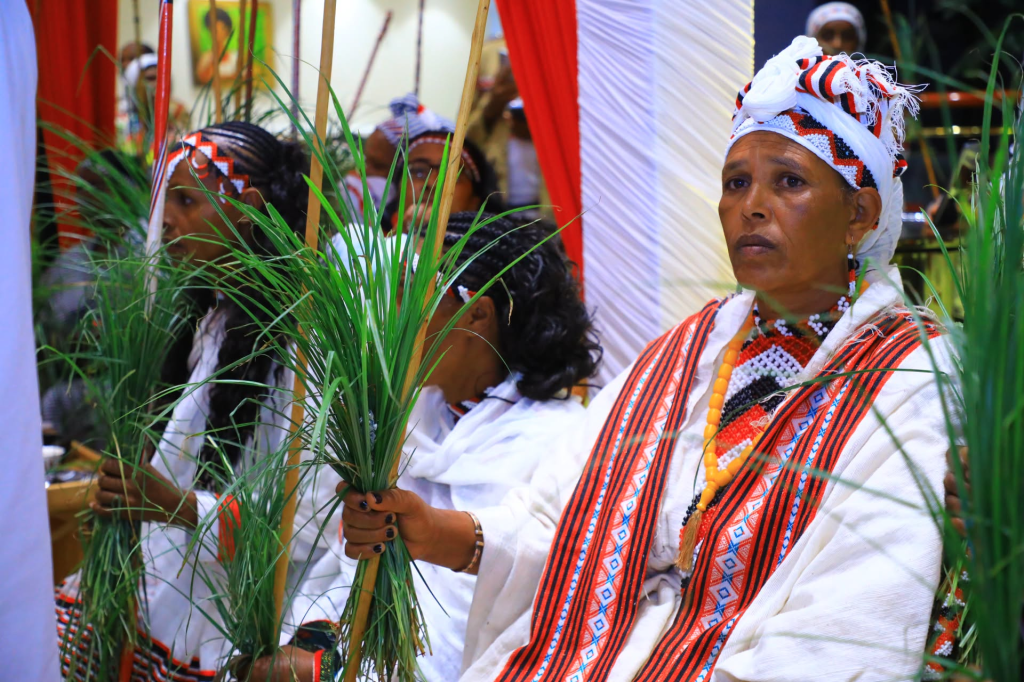
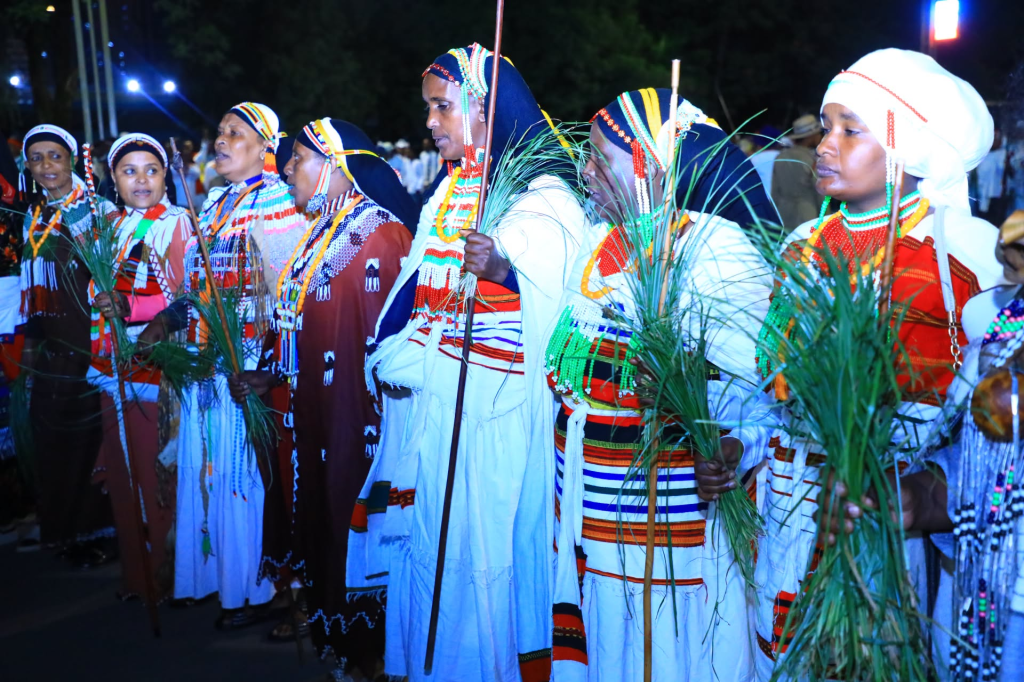
Women wear the caaccuu, beads of different colors. They carry the siiqqee, the stick traditionally held by Oromo women, a symbol of their agency and their role in preserving moral order. Men carry the haroresa, a traditional stick designated by the Gadaa system. The Abba Gadaas — fathers of the Gadaa system — lead prayers. The Haadha Sinqees — women entrusted with justice and peace — lift their siiqqee sticks, representing balance and protection.
There are Muslims here. There are Christians. There are practitioners of the old faith, the belief in Waaqa, the one God who created the heavens and the earth. They come together not because their differences have disappeared, but because something larger than difference calls them to the water.
“Irreechaa is not exclusively an Oromo festival,” says Yusus Omar Bocha, a Kenyan attendee. “Many Africans, Asians, and individuals from various nationalities also partake”.
Claire, a visitor from Belfast, Northern Ireland, described her experience to the BBC: “It is amazing. Everybody wants to say hello, everyone wants to give you a kiss and say welcome”.
This is regeneration: the ability to recognize oneself in the stranger, to offer blessing to those who do not share your language or your history, to become, for a moment, something larger than your own small identity.
Gratitude as Resistance
There is a tendency in modern discourse to treat gratitude as passive. To give thanks is to accept one’s circumstances. To express contentment is to abandon the struggle for change.
Irreechaa rejects this dichotomy.
The festival is, at its core, a profound act of seeing — of recognizing that despite the floods, despite the oppression, despite the losses, there is still something worth gathering by the water for. The harvest came. The rains ended. The sun returned. The community survived.
“We believe that a country without a sea outlet is a country without life,” Abiy said this year, connecting the Oromo philosophy of water to Ethiopia’s national quest for maritime access. The analogy is instructive: water is not just spiritual in Oromo cosmology. It is strategic. It is the foundation of prosperity. To be without it is to be incomplete.
But the deeper lesson of Irreechaa is that gratitude does not mean complacency. It means grounding. It means remembering what you have, what you have survived, what you have been given — and then moving forward from that foundation.
The 2025 Irreechaa theme, “Irreecha: For National Renewal,” captured this perfectly. The festival is not a retreat from the future. It is a ritual that prepares the community to build it.
The Regeneration of Humanity
To say that Irreechaa is the regeneration of humanity is not to claim that the festival makes humans biologically new. It is to claim something more radical: that the practices embedded in this ancient celebration — reconciliation, gratitude, purification, community, forgiveness — are the very mechanisms by which human beings become capable of living together again after fracture.
Every year, millions of people gather at the water. Every year, they are asked to set down their grudges. Every year, they dip the grass, sprinkle the water, lift their hands, and sing the songs their ancestors sang.
And something happens.
“Irreechaa has the potential to contribute significantly to national dialogue and national consensus,” writes the Ethiopian Herald. “It brings people from various ethnic backgrounds together. This inclusivity creates a space where diverse voices can be heard, perspectives can be shared, and different communities can engage in meaningful dialogue”.
This is regeneration: the slow, annual, ritual work of becoming a people again. Not a people defined by ethnicity or politics or grievance, but a people defined by their willingness to stand at the water‘s edge together and say: we give thanks.
The Oromo have a greeting for this festival: Baga Irreechaa nagaan geessan — May the Irreechaa have arrived in peace.
It is not a wish. It is an instruction. Peace is not something that happens to you. It is something you arrive at, together, at the water, with your hands open and your grudges surrendered.
That is the regeneration. That is Irreechaa.

Irreechaa: A Festival of Peace, Reconciliation, and Ethiopia’s Renaissance
A Feature Address Delivered by Prime Minister Abiy Ahmed Ali
FINFINNEE, October 2026 — As the dark clouds of the rainy season give way to the bright sunshine of spring, millions of Oromo people across Ethiopia and the world are celebrating Irreechaa — the ancient thanksgiving festival that marks the transition from darkness to light, from hardship to hope, and from isolation to unity.
This year’s celebration carries a message that resonates far beyond the Oromo community: Irreechaa is peace. Change is prosperity. And Ethiopia’s prosperity has not yet arrived.
A Season of Transition
Irreechaa is rooted in the agricultural and spiritual rhythms of Oromo life. The festival marks the end of Ganna — the dark, rainy season — and the beginning of Birraa, the bright spring season. During the rains, movement is restricted, roads become impassable, and daily life slows. When the rains end, the land blooms, rivers fill, and the people emerge to give thanks.
The Oromo people gather at riversides and lakeshores — at Hora Finfinnee in Addis Ababa and Hora Har-sadee in Bishoftu — to thank Waaqa (God) for bringing them safely through the darkness. Elders offer blessings. Mothers pray for peace. The green grass of the season is dipped into the water and sprinkled as a blessing for the land, the cattle, and the people.
The Symbolism of Darkness and Light
The text of this year’s celebration draws a powerful parallel between the natural seasons and Ethiopia’s political and economic journey.
For generations, Ethiopia has been a country of immense potential — rich in natural resources, strategically located, and home to diverse peoples. Yet, as the message notes, “Ethiopia, though a great country, has not been able to reach its potential.” The darkness of the rainy season serves as a metaphor for the decades of struggle, underdevelopment, and political turmoil that have held the nation back.
But just as the rains must eventually end, so too must the darkness of Ethiopia’s past give way to a new dawn. The message declares: “The sun of Ethiopia’s prosperity is beginning to rise.”
A Call for Unity and Reconciliation
Central to the Irreechaa message is a call for peace, reconciliation, and national unity.
The text invokes the Oromo proverb: “Bakka oolan irra bakka bulantu caala” — meaning that where one spends the night is better than where one grazes. In other words, reconciliation and return are preferable to prolonged conflict and estrangement.
The message extends an olive branch to those who have taken up arms against the state: if they return to peace, “the door of peace remains open.” It emphasizes that the Oromo struggle has been resolved through peaceful means, and that there is no longer any reason for armed conflict.
At the same time, the message reaffirms Ethiopia’s sovereignty and territorial integrity, invoking the legacy of Adwa — the historic victory of Ethiopian forces over colonial invaders in 1896. “We are continuing the heroism of our fathers at Adwa, protecting Ethiopia from enemies,” the text declares.
A Vision of Prosperity
The message outlines a vision of Ethiopia’s future built on the foundations of its ancient heritage and modern development.
It points to ongoing national projects — the completion of the Grand Ethiopian Renaissance Dam (GERD), the convening of the National Dialogue, the construction of fertilizer and fuel factories, and the development of Bishoftu International Airport — as signs that “the sun of Ethiopia’s prosperity is beginning to shine.”
The message also emphasizes the importance of the Gadaa system, the traditional Oromo governance structure recognized by UNESCO as intangible cultural heritage. It calls for the integration of Gadaa principles — including Safuu (moral code), customary courts, and community service — into modern governance.
“We are building a system that builds on our ancient traditions,” the text states. “Knowledge for all through Gadaa and Safuu education; justice for all through customary courts; service for all through public administration; and security for all through institutional protection.”
Irreechaa as a National Festival
This year’s Irreechaa celebration at Hora Finfinnee and Hora Har-sadee has drawn particular attention as a symbol of Oromo cultural revival and national unity.
The return of Irreechaa to Hora Finfinnee — the original sacred site in the heart of Addis Ababa — is seen as a historic reclamation of cultural space. For decades, public celebrations of Irreechaa were suppressed, and the Oromo people were denied the right to gather at their sacred sites.
The celebration at Hora Har-sadee in Bishoftu, attended by millions, has become one of the largest annual gatherings in Africa. The festival has also been celebrated by Oromo communities around the world — from Melbourne to Amsterdam to Minneapolis — where the diaspora gathers to maintain their cultural heritage.
A Message of Hope
The Irreechaa message concludes with a call to action and a prayer:
“Irreechaa is peace! Change is prosperity! Ethiopia’s prosperity has not yet arrived! May the green grass and flowers flourish! May Ethiopia be honored by the efforts of its children and live forever! May God bless Ethiopia and its people!”
As the green grass is sprinkled and the blessings are spoken, Irreechaa serves as a powerful reminder that after every dark season comes a season of light, and that the enduring spirit of a people — rooted in tradition, united in purpose, and committed to peace — can overcome any obstacle.
Irreechi Nagaadha! Gadaan Qaroomina! Qaroominni Itoophiyaa hin oolleedha!
Finfinnee, Ethiopia
October 2026

Irreechaa Celebration Honors Fallen Heroes at ABO Gullallee Headquarters
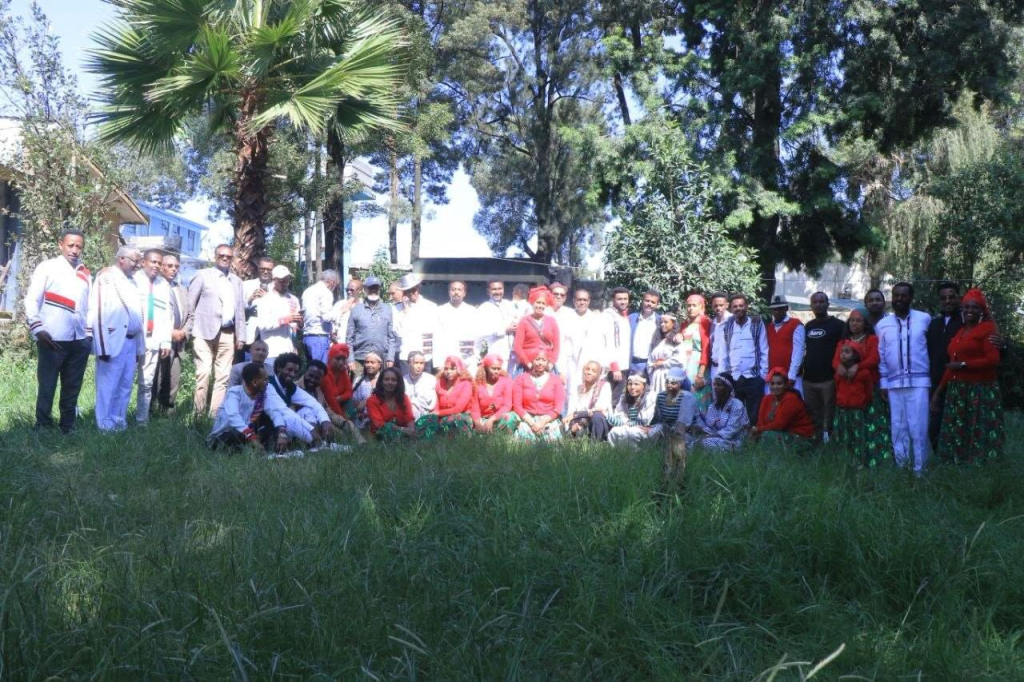
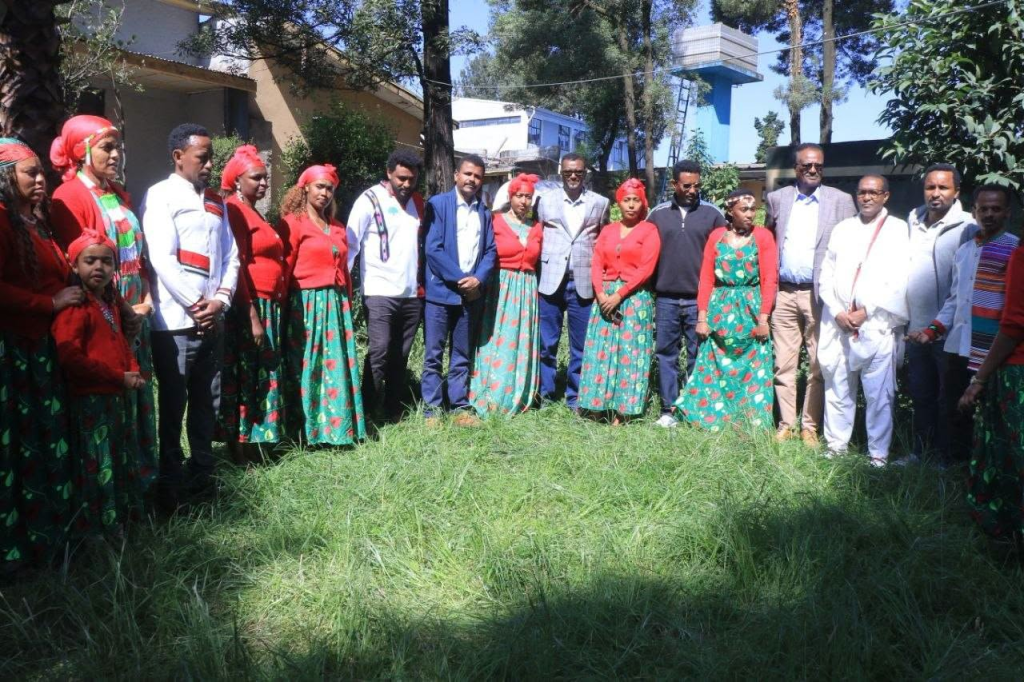
(Gullallee, OROMIA — October 1, 2026) — In a solemn yet joyful observance of tradition, members of the Oromo Liberation Army (ABO) gathered today at the organization’s Central Office in Gullallee to celebrate Irreechaa, the ancient Oromo thanksgiving festival marking the transition from the dark rainy season to the bright season of Birraa.
The celebration, held under the theme of remembrance and renewal, brought together members and leaders in a ceremony that honored both the spiritual foundations of Irreechaa and the sacrifices of Oromo heroes who have fallen in the struggle for freedom and dignity.
A Ceremony Rooted in Tradition
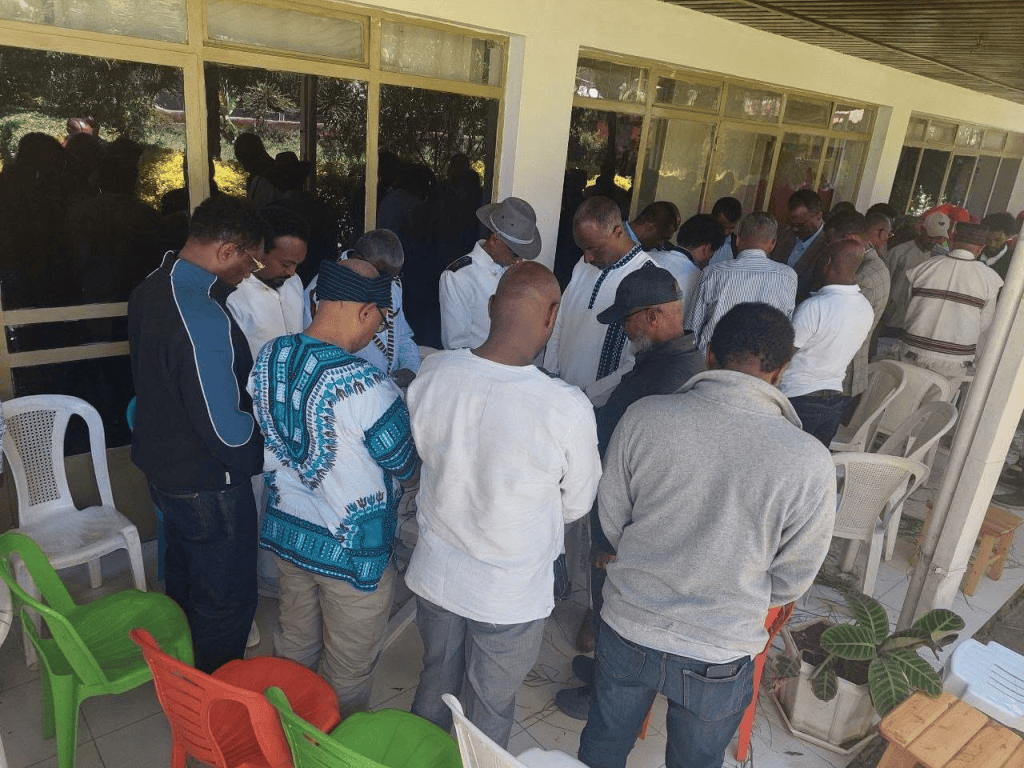
The day’s events unfolded in accordance with longstanding Oromo custom, beginning with Eebba Manguddootaa — the blessings of elders and community leaders. These blessings, central to any Irreechaa observance, invoked peace, prosperity, and divine favor upon the gathering and upon the broader Oromo nation.
Following the traditional blessings, participants turned their hearts and minds to remembrance. A memorial tribute was offered for the gootota wareegamtoota Oromoo — the martyred heroes of Oromia who gave their lives in the pursuit of freedom. The solemn moment served as a reminder that Irreechaa is not only a celebration of life and abundance but also an occasion to honor those who sacrificed everything for the generations that followed.
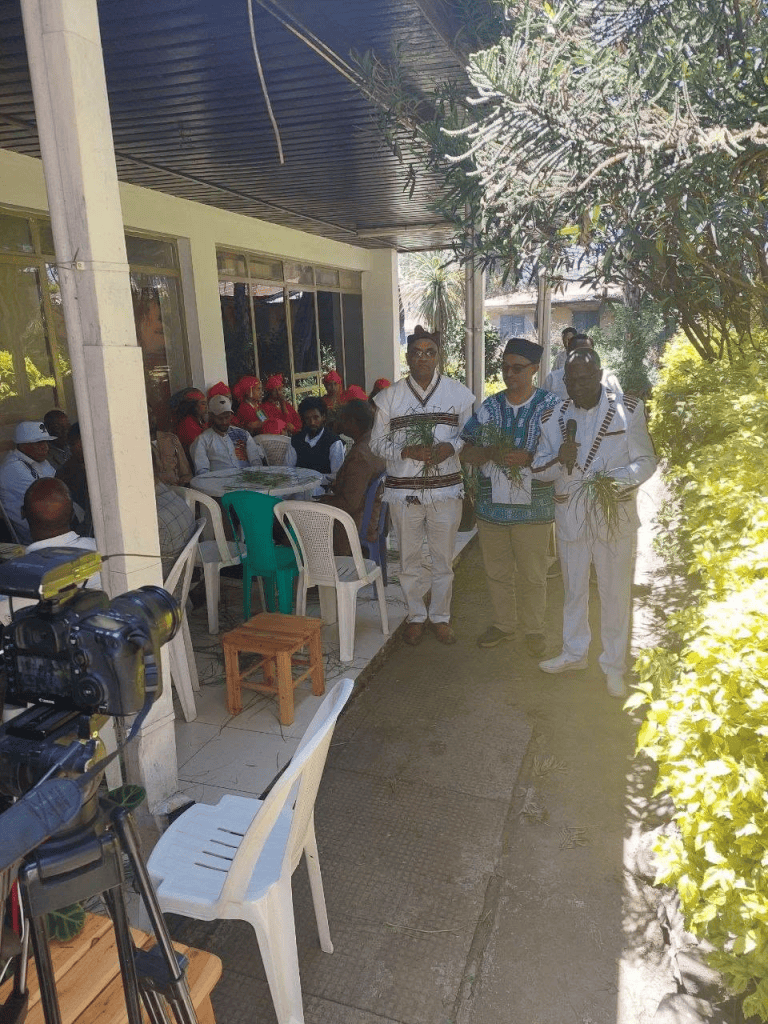
“From Where Did Irreechaa Rise, and Where Has It Arrived?”
The ceremonial program featured a keynote address delivered by a scholar on the theme: “Irreechi eessaa ka’ee eessa gahe?” — “From where did Irreechaa rise, and where has it arrived?”
The reflection traced the historical and spiritual journey of Irreechaa from its ancient origins in Oromo cosmology and the Gadaa system to its contemporary significance as a pan-Oromo cultural and political touchstone. The speaker explored how the festival has survived centuries of suppression, adapted to changing circumstances, and emerged today as one of the most powerful expressions of Oromo identity and unity.
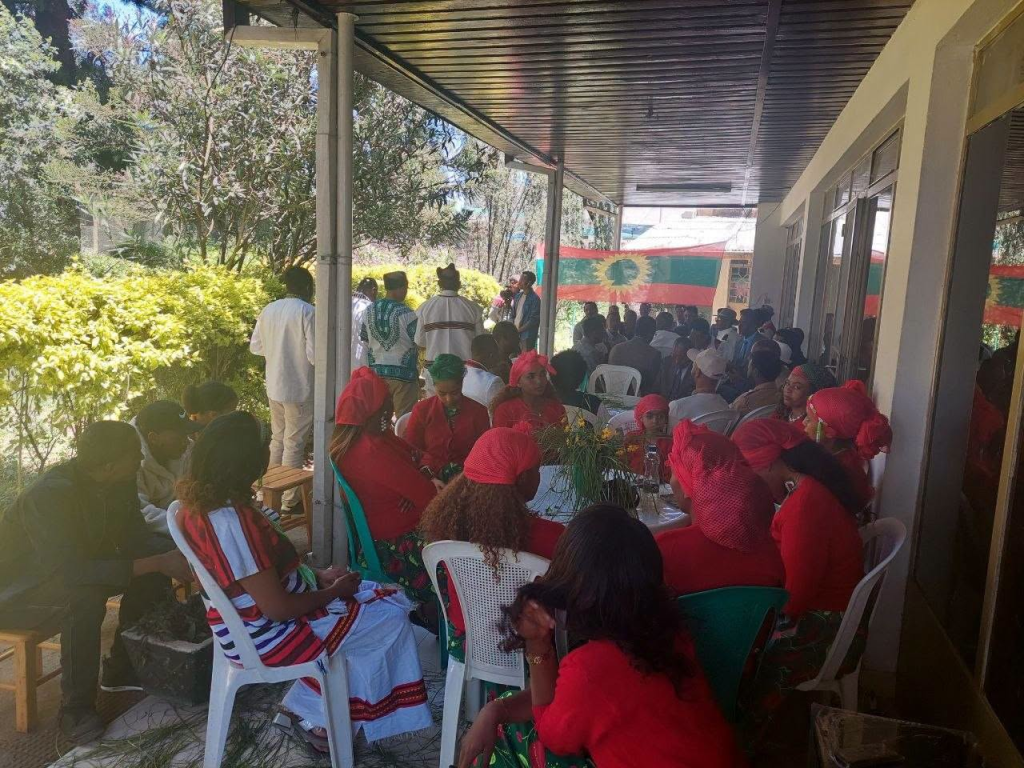
A Feast of Fellowship
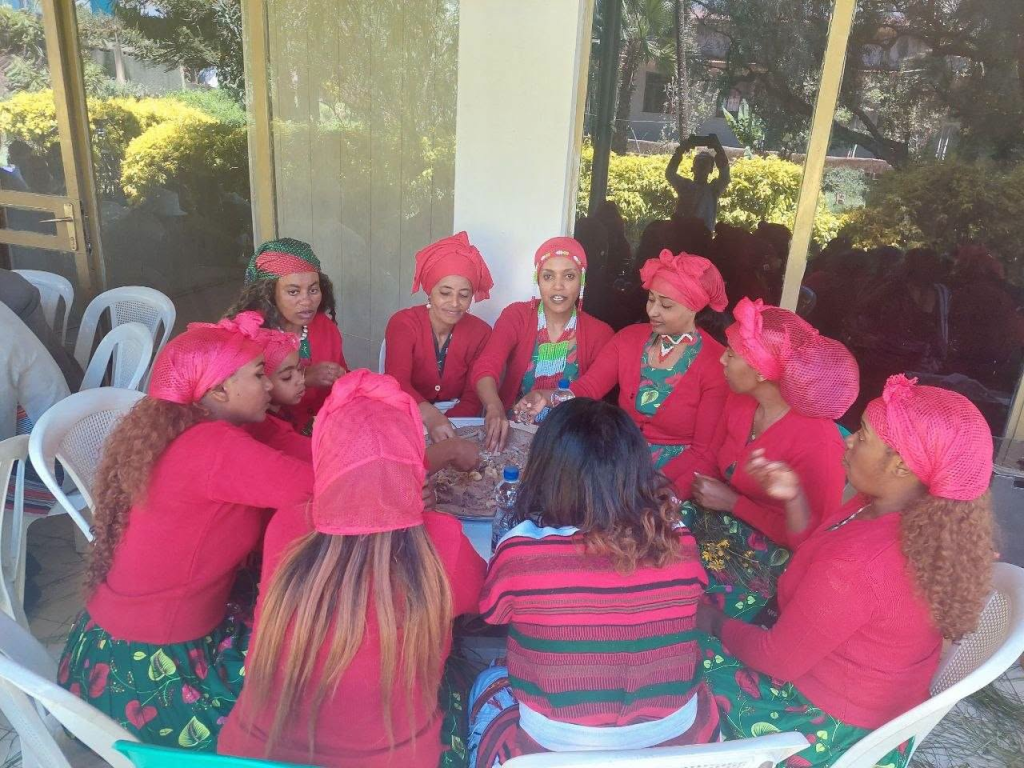
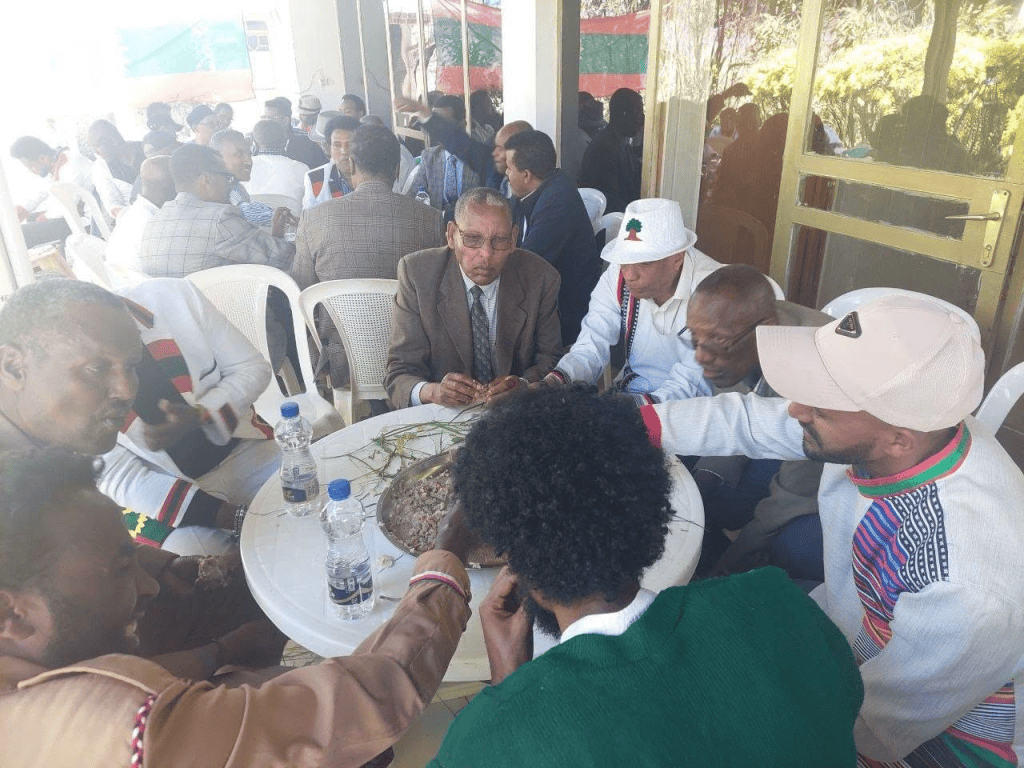
The formal proceedings concluded with a communal meal — a tradition that has marked Irreechaa celebrations for generations. Members shared food and drink in an atmosphere of brotherhood and solidarity, reinforcing the bonds that unite them in purpose and commitment.
The gathering was described as having concluded “with success and victory,” a phrase that resonated with the day’s dual themes of thanksgiving and resolve.
Irreechaa in Context
Irreechaa remains the most significant cultural and spiritual event on the Oromo calendar. Traditionally celebrated twice annually — at spring on hilltops (Irreechaa Tulluu) and after the rains at riversides and lakeshores (Irreechaa Malkaa) — the festival draws millions of participants from across Oromia and the global diaspora.
This year’s celebration at the ABO Gullallee headquarters reflects the enduring importance of Irreechaa as both a religious observance and a statement of cultural and national identity. For communities that have faced decades of marginalization and conflict, the festival serves as a vital space for gathering, remembrance, and the reaffirmation of shared values.
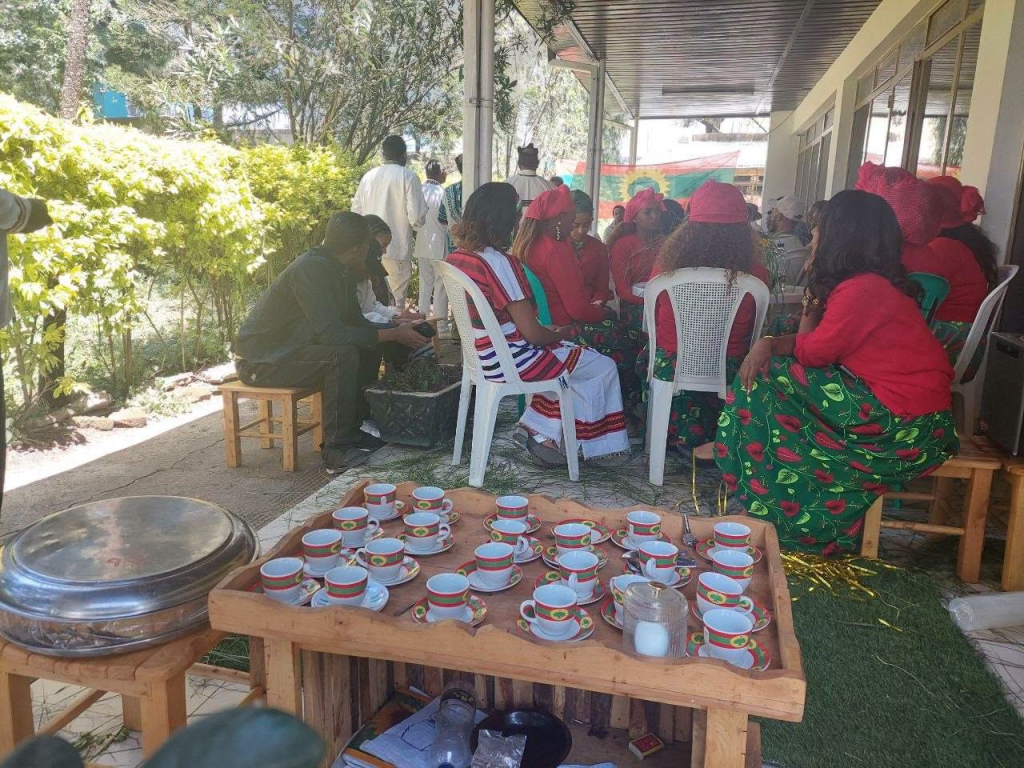
Looking Forward
As the Oromo people across Ethiopia and the world continue to observe Irreechaa celebration in the year 1959, the celebration at Gullallee stands as a testament to the resilience of tradition and the power of collective memory.
In honoring the past — both the ancient heritage of Irreechaa and the recent sacrifices of those who fought for freedom — participants looked toward a future of peace, unity, and the fulfillment of the Oromo people’s long-held aspirations.
Irreechi keenyas injifannoo keenya.

Irreechaa celebration in 1959: From Sacred Waters to a Global Stage
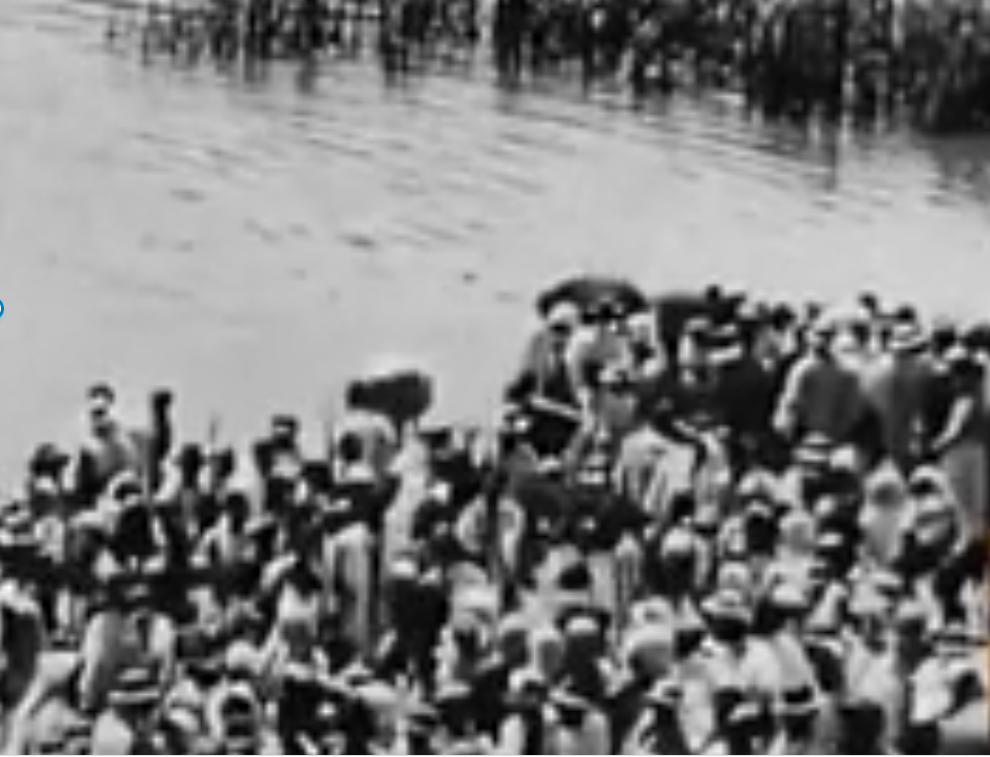
By Maatii Sabaa
The green grass that floated on the sacred waters of Hora Arsadi this week carried more than prayers for the harvest. It carried the weight of a people’s history — and a future still being written.
As the spring sun broke through the receding clouds of Ganna, millions of Oromo people gathered across Ethiopia and the world to celebrate Irreechaa celebration in 1959, the ancient thanksgiving festival marking the transition from the dark rainy season to the bright season of Birraa. From the shores of Lake Harsadi in Bishoftu to community parks in Melbourne and Amsterdam, the festival unfolded as both a spiritual ritual and a declaration of cultural resilience.
The Festival of Light Over Darkness
Irreechaa — sometimes spelled Irreechaa or Irrecha — is the Oromo thanksgiving to Waaqa (God) for protection through the rainy season and for the blessings of the year ahead. The festival is deeply rooted in the Gadaa system, the traditional Oromo governance structure recognized by UNESCO as an Intangible Cultural Heritage of Humanity.
The word itself carries profound meaning. Irreechaa is described as a “sign of reciprocating Waaqaa in the form of providing praise for what they got in the past, and is also a forum of prayer for the future”. It is not merely a celebration of a season’s turn — it is the moral heartbeat of a people.
Two Sacred Days, One Unifying Spirit
This year’s observance followed the traditional two-day structure set by the union of Oromo Abbaa Gadaa leaders:
Hora Finfinne: Reclaiming the Heart of the Capital
On Saturday, October 3, 2026, the celebration began at Hora Finfinne in Addis Ababa, marking a significant historical moment. For decades, public celebrations of Irreechaa were banned under successive regimes, and the Oromo people were denied the right to give thanks at their own sacred sites. The site now known as Finfinne was originally named for this very lake — a sacred geography that the construction of the capital attempted to overwrite.
Celebrating Irreechaa at Hora Finfinne is, in the words of one observer, “not just a cultural act; it is a powerful reclamation of space, identity, and dignity”.
Hora Arsadi: The World’s Stage
On Sunday, October 4, the festival moved to its grandest location: Hora Arsadi in Bishoftu, approximately 45 kilometers south of Finfinne. This crater lake has been the central site of Irreechaa for generations, drawing millions of participants from across Oromia and the global diaspora.
The scale of the gathering is staggering. In recent years, international media have broadcast images of hundreds of thousands — sometimes millions — of people dressed in traditional white attire moving with purpose and joy toward the water. It is recognized as one of the largest annual human gatherings on the African continent.
The Rituals of Renewal
At the heart of Irreechaa lies a simple yet profound act: the dipping of fresh green grass and yellow daisies into sacred waters.
Participants carry bundles of freshly cut grass — symbols of fertility, life, and renewal — to the lakeshore. At the water’s edge, they dip the grass into the lake, sprinkle themselves and those around them, and leave the offerings in the water. The shallows fill with green, a visible testament to collective prayer.
The grass itself carries deep symbolism. Green represents life and vitality; yellow daisies represent the joy of survival through the hardship of the rains. Water represents purification — the washing away of the past year’s difficulties.
Traditional songs, known as sirba, echo across the valley. Elders lead prayers in Afaan Oromoo. Women, adorned in traditional caaccuu beads and cultural dress, walk in procession. Youth sprinkle water as a gesture of blessing.
Reconciliation as Moral Requirement
One of the most striking aspects of Irreechaa is its demand for araaraa — reconciliation.
“Critical to Irreechaa is the requirement of reconciliation,” wrote one commentator observing the diaspora celebrations. “A person carrying a grudge, a dispute, or an unresolved conflict is not permitted to participate fully in the festival”.
This is not merely social etiquette. It is a profound statement of the Oromo moral order: gratitude and grievance cannot coexist. One cannot approach the sacred with a heavy heart. One cannot give thanks while holding anger. The festival enforces a communal ethic that prioritizes harmony over division.
The social roles of Irreechaa extend beyond the spiritual. The festival plays a “pivotal role in strengthening the unity of the people, promoting and exchanging cultures among the society, forcing elders to keep peace in the community”. Social rules are confirmed on the Irreechaa stage, and those who engage in evil are blamed and cursed while those who do good are appreciated and accepted.
A Nation in Transition
This year’s Irreechaa unfolded against a backdrop of significant national developments.
In Addis Ababa, the city has undergone dramatic transformation through urban corridor development projects. Expanded pedestrian and vehicle roads now welcome millions to the sacred sites, and Hora Arsadi Lake has been enhanced to make it more comfortable and accessible for festival-goers.
Genet Mekonnen, Head of the Bishoftu City Culture and Tourism Office, emphasized that Irreechaa “stands as a core symbol of brotherhood, peace, unity, freedom, and equality.” She noted that the festival’s inclusion of various Ethiopian nations, nationalities, and peoples — all participating in vibrant traditional attire — is “crucial for fostering people-to-people connection, strengthening solidarity, and enhancing a deep sense of national togetherness”.
The city’s goal, she added, is to become a major tourism destination, with comprehensive development efforts underway to accommodate the influx of visitors for this cultural landmark.
Beyond Borders: Irreechaa in the Diaspora
The Oromo diaspora ensured that Irreechaa celebration in 1959 was celebrated far beyond the Horn of Africa.
In Melbourne, Australia, hundreds gathered at the Botanical Gardens on September 27, 2026. Dressed in beautiful cultural attire, community members carried fresh green grass and flowers to the water’s edge, dipping them in the traditional manner — giving thanks that they had passed through the past year safely.
“The sight of families in their finest cultural dress, the sound of traditional songs, and the shared prayers created an atmosphere of joy and reverence that echoed celebrations back home in Oromia,” reported one attendee.
In Amsterdam, the Oromo community of the Netherlands gathered at Gaasperplas. Women in traditional dresses carried fresh green grass and yellow daisies; elders led prayers in Afaan Oromoo; and the sound of faaruu — traditional songs of gratitude — echoed across the park grounds.
For the diaspora, Irreechaa serves as a vital cultural anchor. “Irreechaa is a reminder that the Oromo system is portable. It travels across oceans. It survives in new climates and new languages. It does not require the soil of Oromia to flourish — only the hearts of Oromo people who refuse to forget”.
The Enduring Symbol
As the celebrations drew to a close and the green grass settled on the waters of Hora Arsadi, the meaning of Irreechaa celebration in 1959 resonated beyond the rituals.
The festival represents the “triumph of light over darkness” — not merely the seasonal transition from rainy Ganna to bright Birraa, but the enduring resilience of a people who have preserved their traditions through centuries of suppression.
The words of the Abbaa Gadaa leaders framed this year’s observance around national consensus — a theme that echoed across the lakeshores and diaspora gatherings alike.
For the Oromo people, Irreechaa is more than a festival. It is an expression of identity, a bond of unity, and a living link between generations. It is the moment when the past and present meet — where children learn the songs their grandparents sang, where elders see their traditions carried forward, and where a people remember, together, who they are.
As one celebrant in Addis Ababa put it: “What makes this year’s Irreechaa festival special is the completion of the Grand Ethiopian Renaissance Dam and the various development projects across the country. The ceremony in Addis Ababa city with wide roads and shining streets makes it special”.
But beyond the infrastructure and the politics, the heart of Irreechaa remains unchanged: a people giving thanks to Waaqa, carrying green grass to sacred waters, and reaffirming the bonds that have held them together for millennia.
Irreechi irree keenya — Irreechaa is our unity.
Irreechaa celebration in 1959
October 3-4, 2026
Finfinne & Bishoftu

“Peace is the Only Solution”: Global Peace 2030 Leader Issues Urgent Call for Ceasefire as Violence Escalates Across Ethiopia
By Dhabessa Wakjira
ADDIS ABABA — As explosions rock the Ethiopian capital and armed conflict intensifies across multiple regions, a prominent international peace advocate has issued an urgent appeal for all parties to lay down their arms and return to the negotiating table.
In a statement released on October 1, 2026, Mr. KC Kum, representing Global Peace 2030 and the European Peace Foundation, expressed deep concern over the deteriorating security situation in Ethiopia—citing reports of explosions in Addis Ababa alongside renewed fighting in Tigray and the neighboring Amhara and Afar regions.
“The developments raise grave concerns for civilian safety,” the statement read. “I call on all parties to cease hostilities immediately, protect civilians and come to the peace table.”
A Region on Edge
The statement comes at a perilous moment for Ethiopia, a nation already scarred by years of conflict and grappling with multiple overlapping crises. The reported explosions in the capital represent a significant escalation—one that threatens to destabilize the political heart of the country.
Meanwhile, renewed fighting in Tigray and the neighboring Amhara and Afar regions signals that the violence is neither contained nor resolved. These developments, taken together, paint a picture of a nation sliding backward into widespread conflict.
For ordinary Ethiopians, the consequences are immediate and devastating: loss of life, displacement, and the constant fear that accompanies living in a war zone.
“There Can Be No Justification for Continued Violence”
Mr. KC’s message was unequivocal in its condemnation of continued hostilities.
“I have repeatedly called for dialogue,” he stated. “Today, I renew my invitation to Ethiopia to join the ‘Peaceful Nation’ roadmap under Global Peace 2030. There can be no justification for continued violence when people seek peace, stability and national unity.”
This appeal to shared values—peace, stability, and unity—reflects a broader philosophy that underpins the Global Peace 2030 initiative. The organization positions itself as a neutral facilitator, ready to support dialogue and assist in mediation between parties.
Mr. KC made clear that his position is not one of partisanship but of principle.
“My position is clear: peace in Ethiopia is possible,” he affirmed. “All parties involved must agree to a ceasefire and engage in meaningful peace talks. I stand ready to support dialogue and assist in mediation with the agreement of the parties.”
The Path Forward
The statement offered a clear roadmap: cease hostilities, protect civilians, come to the table. It called on all parties to embrace dialogue over violence, negotiation over confrontation.
“The people of Ethiopia deserve lasting peace, stability and national unity,” Mr. KC emphasized. “Let us work together to achieve these goals.”
His concluding words were both a plea and a prescription: “Peace is the only solution.”
The International Dimension
The involvement of international organizations like Global Peace 2030 and the European Peace Foundation reflects the global community’s growing concern over Ethiopia’s trajectory. While the primary responsibility for ending the violence lies with Ethiopian actors, the willingness of external mediators to assist suggests that avenues for peaceful resolution remain open—if the parties are willing to pursue them.
Mr. KC’s offer to “support dialogue and assist in mediation with the agreement of the parties” is a reminder that peace processes require both local ownership and international support. The invitation to join the “Peaceful Nation” roadmap under Global Peace 2030 represents a concrete mechanism through which dialogue could be structured and sustained.
A Nation’s Crossroads
Ethiopia stands at a crossroads. The path of continued conflict leads to further destruction, deeper divisions, and untold suffering. The path of dialogue leads—however imperfectly—toward reconciliation, stability, and the possibility of a shared future.
The choice, ultimately, belongs to the parties engaged in the fighting. But the consequences extend far beyond their ranks.
For the mothers who fear for their children, for the families displaced from their homes, for the young people whose futures are being sacrificed to violence—the call for peace is not abstract. It is a matter of survival.
The World Is Watching
As explosions echo in Addis Ababa and guns fire in Tigray, Amhara, and Afar, the world is watching. The question is not whether Ethiopia can find peace—Mr. KC insists that it can—but whether its leaders will have the courage to choose it.
“The people of Ethiopia deserve lasting peace, stability and national unity.”
They do. And they deserve leaders who will prioritize that peace over power, dialogue over destruction, and unity over division.
The offer is on the table. The roadmap exists. The mediator is ready.
What remains is the will to take the first step.
Statement by Mr. KC Kum
Global Peace 2030 | European Peace Foundation
October 1, 2026
For more updates on peace initiatives and developments in Ethiopia, follow: https://t.me/addisreporter2
Contact Information:
Press/Media: +34 910 231 214
press@europeofoundation.org | press@gp2030.org
www.gp2030.org | www.globalpeace2030.org
Fundación Europa Peace
CIF: G87803852
Calle Oca, Número 63, Pasillo, Local 3, 28025, Madrid, España
Email: info@europeofoundation.org | www.europeofoundation.org

Ethiopia Closes Embassy in Asmara, Expels Ten Eritrean Diplomats in Escalating Diplomatic Rupture

By Daandii Ragabaa
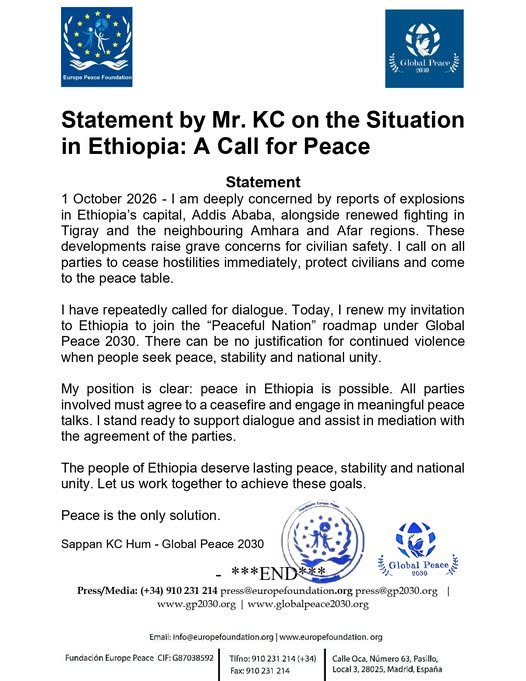
ADDIS ABABA — In a dramatic escalation of diplomatic tensions in the Horn of Africa, the Ethiopian Ministry of Foreign Affairs announced on October 1, 2026, that it has decided to close its Embassy in Asmara, Eritrea, and has declared ten Eritrean diplomats in Addis Ababa persona non grata.
The sweeping move, detailed in an official press statement released for immediate distribution, marks a severe deterioration in relations between the two neighboring states—a relationship already fraught with historical complexity and recent political friction.
A Direct Response to “Hostility and Belligerence”
The Ministry’s statement was unambiguous in its justification. The closure of the Ethiopian Embassy in Asmara comes “in response to Eritrea’s direct and indirect acts of hostility and belligerence against Ethiopia.”
This language signals a significant shift from previous diplomatic posturing to concrete, punitive action. The expulsion of ten Eritrean diplomats—accused of involvement in activities that “pose a direct threat to Ethiopia’s national security”—adds a sharp edge to the announcement.
Citing the Vienna Convention on Diplomatic Relations, the Ministry declared the diplomats persona non grata, a formal designation under international law that renders them unwelcome in the host country. They have been given a strict 48-hour ultimatum to leave Ethiopia.
A Breach of Diplomatic Norms
The reference to the Vienna Convention is significant. By invoking this foundational treaty governing diplomatic relations, Ethiopia is framing Eritrea’s alleged activities not merely as unfriendly, but as violations of established international norms.
The expulsion of diplomats is among the most serious actions a state can take short of severing relations entirely. It signals that Ethiopia believes Eritrean diplomatic personnel were using their official positions to undermine Ethiopian security—an accusation that, if substantiated, represents a profound breach of trust between nations.
Ethiopia’s Message: Strength and Restraint
Despite the severity of the measures, the statement struck a dual tone: firm in action, yet measured in rhetoric.
Ethiopia urged the Eritrean government to “cease all acts that are contrary to the principles governing relations between sovereign states.” This appeal to international principles positions Ethiopia as the party seeking adherence to established norms, even as it takes decisive action.
The Ministry further emphasized Ethiopia’s “strong historical, cultural, and people-to-people ties with Eritrea”—a deliberate acknowledgment of the deep bonds that transcend political disputes. It reaffirmed Ethiopia’s consistent prioritization of “peaceful coexistence, regional stability, and integration.”
Notably, the statement concluded with a commitment to “peaceful resolution of disputes and to working with all countries in the Horn of Africa to advance lasting peace, security, and regional integration.” This olive branch, extended alongside the punitive measures, suggests Ethiopia is leaving the door open for de-escalation—should Eritrea alter its course.
Regional Implications: A Horn in Flux
The Horn of Africa has long been a region where diplomatic ruptures carry outsized consequences. Ethiopia and Eritrea share a deeply intertwined history—one marked by both fraternal solidarity and devastating conflict.
The closure of an embassy is not merely a bureaucratic decision; it severs a primary channel of communication between governments. In a region already grappling with multiple armed conflicts, political instability, and humanitarian crises, the loss of this diplomatic lifeline raises serious questions about the trajectory of bilateral relations.
For Eritrea, the expulsion of ten diplomats represents a significant blow to its diplomatic presence in Ethiopia. For Ethiopia, the closure of its embassy in Asmara removes its ability to directly engage with Eritrean authorities on the ground—a decision that signals Addis Ababa’s assessment that such engagement has become either futile or dangerous.
What Comes Next?
The 48-hour ultimatum for the expelled diplomats adds a ticking clock to the crisis. How Eritrea responds in the coming days will determine whether this remains a serious but contained diplomatic incident or escalates into a broader rupture.
Ethiopia’s statement leaves room for both possibilities. Its firm action, coupled with its expressed commitment to peace and regional integration, suggests a strategy of calibrated pressure—demonstrating seriousness of purpose while maintaining the moral high ground.
For now, the Horn of Africa watches and waits. The closure of an embassy is a loud statement. The question is whether anyone in Asmara is listening.
Ministry of Foreign Affairs
Federal Democratic Republic of Ethiopia
October 1, 2026
For more updates and in-depth coverage of Horn of Africa affairs, follow: https://t.me/addisreporter2
Contact Information:
Office of the Spokesperson
Email: spokesperson@mfa.gov.et
Website: WWW.MFA.GOV.ET
Follow: @MFAEthiopia | #MFAEthiopia

Irreechaa: The Festival of Bright Seasons Over the Dark Rainy Seasons
By Dhabessa Wakjira
Irreechaa, known as the Festival of bright seasons over the dark rainy seasons, is a major transition festival celebrated with great joy and enthusiasm. For the Oromo people, it is more than a celebration; it is a spiritual journey from darkness to light, from hardship to hope, and from isolation to unity.
Meaning and Significance
The word “Irreechaa” means fresh grasses. It symbolizes the triumph of good over evil and brightness over darkness. This ancient festival, rooted in the Oromo Gadaa system, is a profound expression of gratitude to Waaqa (God) for the blessings of life, peace, and prosperity. It marks the end of the long, dark rainy season known as Ganna and the beginning of the bright, sunny season called Birraa. During this time, rivers overflow with life, fields turn green, and the land is renewed. The fresh grass carried by celebrants is not merely a symbol; it is a living prayer, a gesture of blessing, and a sign of purification.
Celebrations and Traditions
The celebration of Irreechaa is a vibrant tapestry of culture, faith, and community. People clean and decorate their homes with fresh grasses and daisy flowers, transforming their surroundings into spaces of beauty and welcome. Families wear new traditional clothes, adorned with colorful beads and intricate patterns, reflecting the richness of Oromo heritage.
On the day of the festival, communities gather at riversides and hilltops, the sacred places where Waaqa is believed to be closest to the people. Elders offer blessings for families, nations, and the country, praying for peace, wealth, and prosperity. The air fills with songs of praise, the rhythm of drums, and the joyful ululation of women. People share delicious Oromo foods, including cuukkoo, marqaa, and buna (coffee), strengthening bonds of kinship and friendship.
Children also enjoy the day with their friends and surroundings, running through the green fields, playing games, and learning the traditions of their ancestors. The festival brings love, unity, and happiness to everyone, regardless of age or background. It is a time when differences are set aside, and the community stands together as one, united by a shared identity and a common hope for the future.
A Festival of Transition and Triumph
Irreechaa is not just a seasonal event; it is a celebration of resilience and renewal. It reminds the Oromo people—and all who witness it—that after every dark season comes a season of light, and that gratitude, community, and faith are the pillars of a flourishing life. As the green grass is sprinkled and the blessings are spoken, Irreechaa carries forward an ancient legacy of hope, unity, and the enduring triumph of good over evil.
Irreechaa is celebrated annually by Oromo communities in Ethiopia and around the world, and is recognized as a symbol of cultural identity, peace, and shared humanity.

Irreechaa: The Oromo Thanksgiving Festival as a Living Heritage of Identity, Unity, and Spiritual Renewal
Introduction
Irreechaa stands as one of the most significant and vibrant cultural celebrations not only for the Oromo people but for the entire Horn of Africa region. As an annual thanksgiving festival that marks the end of the rainy season and the beginning of the harvest, Irreechaa embodies a deep spiritual connection between the Oromo people, their Creator, and the natural world that sustains them. This ancient tradition, rooted in the indigenous Oromo belief system known as Waaqeffannaa, has survived centuries of political upheaval, social transformation, and religious change to emerge today as a powerful symbol of cultural identity, social cohesion, and spiritual resilience. With millions of participants gathering at sacred sites across Ethiopia and the global diaspora, Irreechaa represents one of the largest annual human gatherings on the African continent and serves as a living testament to the enduring vitality of Oromo civilization.
This comprehensive essay explores the multifaceted dimensions of Irreechaa, examining its historical origins, spiritual significance, cultural expressions, social functions, and contemporary relevance. By analyzing the festival through multiple lenses—historical, theological, sociological, and political—this essay seeks to illuminate the profound meaning that Irreechaa holds for the Oromo people and its broader significance for understanding indigenous African religious traditions, cultural preservation, and national identity in contemporary Ethiopia.
Historical Origins and Evolution
The historical roots of Irreechaa extend deep into antiquity, with scholars tracing the festival’s origins back thousands of years to the Cushitic civilizations that inhabited the Horn of Africa . According to historical estimates, the Oromo people have celebrated Irreechaa for approximately 12,000 years, making it potentially one of the oldest continuously observed traditions on the African continent . This remarkable continuity speaks to the fundamental importance of the festival in Oromo spiritual and cultural life, as well as the resilience of indigenous religious practices in the face of external pressures and historical transformations.
The festival is intrinsically linked to the Gadaa system, the traditional Oromo socio-political and governance structure that UNESCO recognized as an Intangible Cultural Heritage of Humanity . The Gadaa system, with its age-based hierarchical organization and democratic principles of power rotation, provided the structural framework within which Irreechaa emerged and flourished. As a celebration embedded within this comprehensive system of social organization, Irreechaa served not merely as a religious observance but as a mechanism for reinforcing social cohesion, transmitting cultural values across generations, and maintaining the cosmic order that the Gadaa system sought to uphold .
Throughout its long history, Irreechaa has undergone periods of both flourishing and suppression. During the twentieth century, particularly under previous Ethiopian governments that sought to promote national unity through cultural homogenization, traditional Oromo religious practices including Irreechaa faced significant challenges . Attempts were made to confine the celebration to village levels and to discourage public observance of what was sometimes dismissively characterized as backward superstition. However, these efforts to suppress Irreechaa ultimately failed, as the tradition’s deep roots in Oromo consciousness and its fundamental role in cultural identity proved resistant to external pressures. Instead of disappearing, Irreechaa emerged from periods of suppression strengthened and more widely embraced, particularly by younger generations who increasingly view participation in the festival as an assertion of cultural pride and identity .
The contemporary history of Irreechaa has been marked by both triumph and tragedy. A pivotal moment occurred in 2016 when the festival became the site of political protests that resulted in a deadly stampede, causing the deaths of more than fifty participants . This tragic event became a catalyst for significant political change in Ethiopia, contributing to the emergence of new leadership that included the country’s first Oromo prime minister. Since then, Irreechaa has experienced a remarkable revival, with the festival being celebrated in Addis Ababa for the first time in 150 years and drawing unprecedented numbers of participants . This resurgence reflects broader changes in Ethiopia’s political landscape and the growing recognition of cultural diversity as a source of national strength rather than a threat to unity.
Spiritual and Religious Significance
At its core, Irreechaa is a profoundly spiritual event that expresses the Oromo people’s relationship with the divine through the natural world. The festival is rooted in Waaqeffannaa, the traditional Oromo religion that worships a single supreme Creator known as Waaqa . This monotheistic belief system, which some scholars describe as one of the oldest forms of monotheism, holds that Waaqa is the source of all life, blessing, and abundance . The Oromo people understand themselves as intimately connected to their Creator through a complex system of spiritual intermediaries called ayyaana, who convey human prayers and needs to the divine .
The timing of Irreechaa reflects its deep connection to agricultural cycles and the natural world. The festival is celebrated twice annually: Irreechaa Malkaa (or Irreechaa Hiyyessa) occurs in the spring at the edges of rivers and lakes, while Irreechaa Tulluu (or Irreechaa Guddaa) takes place in autumn on hilltops . The spring celebration marks the end of the dark, rainy season (Ganna) and the beginning of the bright, fertile season (Birraa), while the autumn observance occurs as the harvest season concludes. This dual celebration reflects the Oromo people’s dependence on agriculture and their deep reverence for the natural forces that sustain their way of life.
The spiritual significance of Irreechaa extends beyond simple thanksgiving to encompass themes of purification, renewal, and reconciliation. Water plays a central role in the rituals, with participants dipping green grass and yellow daisies into sacred lakes and rivers, then sprinkling the water upon themselves as a symbol of spiritual cleansing . Green grass represents life and fertility, while the yellow daisies symbolize the joy of survival after the hardship of the rainy season. These symbolic acts express the Oromo people’s understanding of their relationship with nature as one of mutual care and respect, rather than domination or exploitation.
A critical spiritual dimension of Irreechaa is its emphasis on reconciliation and the resolution of conflicts. Traditional Oromo beliefs hold that it is forbidden to participate in the festival while harboring resentment, anger, or unresolved grievances . Before approaching the sacred sites, participants are expected to make peace with those with whom they have disputes, seeking forgiveness and offering compensation where necessary. This requirement reflects the Oromo philosophical principle of safuu, which establishes boundaries and responsibilities governing relations between humans, the natural world, and the divine . The insistence on reconciliation before thanksgiving underscores the Oromo understanding that gratitude and grievance cannot coexist—that one cannot approach the sacred with a heavy heart.
The prayers offered during Irreechaa encompass both gratitude for past blessings and supplication for future needs. Elders and spiritual leaders known as Abbaa Gadaas lead the community in prayer, giving thanks to Waaqa for protection during the difficult rainy season and asking for continued blessings in the coming year . The prayers typically request peace, health, fertility for both people and livestock, abundant harvests, and prosperity for the entire community . These prayers are not merely ritualistic formulas but represent the genuine spiritual aspirations of a people who understand their well-being as dependent on divine favor and the maintenance of cosmic balance.
Cultural Expressions and Ritual Practices
Irreechaa is a vibrant celebration that engages all the senses and encompasses a rich array of cultural expressions. The festival brings together people of all ages, genders, and social statuses in a collective expression of identity and gratitude . The visual splendor of the celebration is striking, with participants adorned in traditional white attire known as wandaboo or uffannaa aadaa, often decorated with colorful embroidery and accessories . Women wear intricately woven dresses and carry baskets of fresh grass and flowers, while men dress in traditional garments that reflect their regional identities.
The ritual practices of Irreechaa are replete with symbolic meaning. The central act involves the sprinkling of water from sacred lakes and rivers, accompanied by prayers and blessings. Participants carry green grass called cuquliisa, which represents the renewal of life and the fertility of the land . The grass is dipped into the water and then sprinkled upon participants as a blessing. This ritual connects the community to the life-giving properties of water and the fertility of the earth, expressing gratitude for the abundance that sustains them.
Music, song, and dance are integral to the Irreechaa celebration, with traditional songs of praise and thanksgiving filling the air. Women sing special melodies such as the Mareehoo, which express themes of gratitude, forgiveness, and hope for the future . The lyrics of these songs often reference the agricultural cycle, the blessings of the Creator, and the shared identity of the Oromo people. Traditional dances performed during the festival serve both as expressions of joy and as markers of cultural identity, with specific dances associated with different regions and communities.
The ceremonial processions of Irreechaa are carefully structured according to traditional social hierarchies and Gadaa principles. Elders and spiritual leaders lead the procession, followed by women, then youth and children . This ordering reflects the Oromo understanding of social organization, in which age and spiritual wisdom confer authority and responsibility. The Abbaa Gadaas, as custodians of tradition, play a particularly important role, leading prayers, offering blessings, and ensuring that the rituals are performed according to ancestral custom .
The festival also features the exchange of greetings and blessings among participants, with the traditional greeting “Happy Irreechaa” exchanged widely . Families and friends who may not have seen each other during the rainy season reunite, sharing meals and stories. The communal aspect of the celebration reinforces social bonds and strengthens the sense of belonging to a larger community. For the Oromo diaspora, Irreechaa celebrations in cities such as Melbourne, Minneapolis, London, and Amsterdam serve as vital connections to their cultural roots, allowing them to maintain their identity and transmit traditions to younger generations born far from the ancestral homeland .
Social Functions and Community Impact
Beyond its spiritual and cultural dimensions, Irreechaa serves crucial social functions that contribute to the cohesion and well-being of Oromo communities. The festival provides an annual opportunity for the Oromo people to come together, transcending regional, religious, and social divisions to celebrate their shared identity . Participants include Oromos from all religious backgrounds—Christians, Muslims, and followers of traditional Waaqeffannaa—demonstrating the festival’s capacity to unite people across religious boundaries . This inclusivity reflects the Oromo cultural value of tolerance and the understanding that Irreechaa belongs to all Oromos, regardless of their individual religious affiliations.
The reconciliation function of Irreechaa is particularly significant in a region that has experienced recurrent conflicts and social tensions. The requirement that participants resolve their disputes before joining the celebration provides a powerful mechanism for conflict resolution and social healing . The presence of arbitration systems within the Gadaa framework, including the Gumi or Coffee assemblies, ensures that disputes can be addressed through dialogue and mutual agreement rather than through violence or permanent estrangement . By mandating reconciliation as a precondition for participation, Irreechaa creates an annual opportunity for communities to heal divisions, forgive grievances, and renew social bonds.
Irreechaa also plays a vital role in preserving and transmitting cultural heritage. The festival serves as a living museum of Oromo culture, where traditional songs, dances, attire, and rituals are performed and passed down to younger generations . In a world of rapid globalization and cultural change, Irreechaa provides a space where ancestral traditions remain vibrant and meaningful. The participation of large numbers of young people in contemporary celebrations is particularly encouraging, suggesting that the festival continues to resonate with new generations and will remain a vital part of Oromo identity for years to come .
The economic dimensions of Irreechaa have become increasingly significant, particularly in recent years. The festival generates substantial economic activity, from the production and sale of traditional clothing and accessories to the provision of food, transportation, and accommodation for millions of participants . For many small businesses and artisans, Irreechaa represents a major economic opportunity, with demand for traditional garments and festival-related goods spiking in the weeks leading up to the celebration. The Ethiopian government has recognized the tourism potential of Irreechaa, promoting it as a major cultural attraction that can draw international visitors and contribute to local economic development .
Political Dimensions and Contemporary Controversies
As Irreechaa has grown in scale and visibility, it has also become entangled in political dynamics that reflect broader tensions in Ethiopian society. The festival has historically been viewed with suspicion by some political actors who see in its celebration a potential vehicle for Oromo nationalism or opposition to central authority . Conversely, Oromo political movements have sometimes sought to harness the symbolism of Irreechaa for their own purposes, using the festival as a platform for articulating grievances and demands . This politicization of Irreechaa has created tensions between those who view it primarily as a religious and cultural observance and those who see it as a vehicle for political mobilization.
The 2016 Irreechaa tragedy, when protests at the festival led to a deadly stampede, marked a watershed moment in Ethiopian politics . The event galvanized opposition to the government and contributed to political changes that ultimately brought Abiy Ahmed, Ethiopia’s first Oromo prime minister, to power. Since then, Irreechaa has been celebrated with greater official recognition and support, including the first celebration in Addis Ababa in 150 years . However, tensions remain, with some Oromo activists arguing that the government’s embrace of Irreechaa is superficial and does not address deeper grievances regarding political representation and economic opportunity.
Contemporary debates about Irreechaa also touch on questions of religious identity and interfaith relations. Some Christian and Muslim leaders have expressed concern about the festival’s association with Waaqeffannaa, the traditional Oromo religion, viewing it as incompatible with their own faith traditions . However, many religious leaders have adopted a more inclusive stance, recognizing Irreechaa as a cultural celebration that can be embraced by Oromos of all faiths . This ongoing dialogue about the relationship between traditional religious practices and revealed religions reflects broader questions about religious pluralism and cultural identity in contemporary Ethiopia.
Global Diaspora and Transnational Dimensions
The Oromo diaspora, numbering in the millions across North America, Europe, the Middle East, and Australia, has played an increasingly important role in the celebration and perpetuation of Irreechaa. In cities around the world, Oromo communities organize annual Irreechaa celebrations that replicate the rituals and traditions of the homeland while adapting to local contexts . These diaspora celebrations serve multiple functions: they maintain cultural identity among dispersed communities, transmit traditions to younger generations born abroad, and raise awareness of Oromo culture and concerns among host populations.
In Melbourne, Australia, for example, the Oromo community gathers annually at local parks to celebrate Irreechaa with traditional songs, prayers, and rituals . Similar celebrations occur in Washington, D.C., Toronto, Berlin, Amsterdam, and Dubai, among other cities . These events often attract participation from non-Oromo Ethiopians and curious locals, providing opportunities for cross-cultural exchange and dialogue. For many diaspora Oromos, Irreechaa represents a vital connection to their ancestral homeland and a reaffirmation of their cultural identity in contexts where they may feel marginalized or invisible.
The globalization of Irreechaa has also contributed to the festival’s growing international recognition. International media coverage of Irreechaa celebrations has increased, and the festival has been featured in tourism promotions and cultural exchange programs . This international visibility has both positive and negative implications. On one hand, it brings attention to Oromo culture and can foster greater understanding and appreciation. On the other hand, there are concerns about the commercialization and decontextualization of the festival, as well as the potential for political exploitation of its symbolism.
Irreechaa and the Politics of Recognition
The recognition of Irreechaa as a significant cultural heritage has been a long-standing goal of Oromo cultural advocates and scholars. The inscription of the Gadaa system on UNESCO’s Representative List of Intangible Cultural Heritage of Humanity in 2016 represented a major milestone in this effort, providing international recognition for the Oromo socio-political system within which Irreechaa is embedded . Scholars and historians have called for Irreechaa itself to receive UNESCO recognition, arguing that the festival merits acknowledgment as a unique and valuable expression of human cultural heritage .
The politics of recognition surrounding Irreechaa reflect broader questions about the place of Oromo culture and history within Ethiopian national identity. For much of the twentieth century, Ethiopian national narratives marginalized or suppressed Oromo contributions, presenting the country’s history through the lens of Solomonic dynasty and Amhara-centric perspectives. The revival of Irreechaa and other Oromo cultural practices represents a challenge to these narratives, asserting the centrality of Oromo civilization to Ethiopian history and identity. This assertion has been met with both support and resistance, reflecting ongoing contests over historical memory and national belonging.
The contemporary Ethiopian government has adopted a more positive stance toward Irreechaa, with officials participating in celebrations and promoting the festival as a symbol of national unity . The theme of recent Irreechaa celebrations, “Irreechaa for National Renaissance,” reflects this official framing of the festival as a contributor to broader national development and unity . However, some Oromo activists view such official embrace with skepticism, seeing it as an attempt to co-opt Oromo cultural expression for political purposes while failing to address fundamental issues of political representation and economic justice.
Conclusion
Irreechaa stands as a remarkable testament to the resilience, vitality, and spiritual depth of Oromo civilization. From its ancient origins in the Cushitic past to its contemporary celebration by millions across Ethiopia and the global diaspora, the festival has maintained its essential character as a thanksgiving to Waaqa while adapting to changing historical circumstances. It embodies the Oromo people’s profound connection to the natural world, their commitment to reconciliation and social harmony, and their determination to preserve and transmit their cultural heritage across generations.
The significance of Irreechaa extends far beyond the Oromo community, offering valuable insights into the nature of indigenous African religious traditions, the dynamics of cultural preservation in the face of globalization, and the role of cultural festivals in building social cohesion and national identity. In a world marked by division, conflict, and the erosion of traditional cultures, Irreechaa provides a powerful example of how ancient traditions can remain vibrant and meaningful, connecting communities to their ancestors while addressing the challenges of contemporary life.
As Irreechaa continues to grow in scale and visibility, it faces both opportunities and challenges. The festival’s increasing international recognition brings potential for greater understanding and appreciation of Oromo culture but also risks of commercialization and political exploitation. The ongoing debates about the relationship between Irreechaa and religious identity, its political dimensions, and its place in Ethiopian national life reflect the complexity of navigating cultural diversity in contemporary societies. Yet through all these challenges, the essential spirit of Irreechaa—gratitude, renewal, and unity—remains intact, offering hope and inspiration to all who participate in its celebration.
Ultimately, Irreechaa is more than a festival; it is a living philosophy, a way of understanding and relating to the world that has sustained the Oromo people for millennia. It teaches that gratitude and generosity are fundamental to human flourishing, that reconciliation and forgiveness are necessary for social harmony, and that respect for the natural world is essential for survival. As the Oromo people continue their journey through history, Irreechaa will remain a guiding light, illuminating the path forward while connecting them to the wisdom of their ancestors. In its celebration, we witness not merely the preservation of tradition but the ongoing creation of culture—a dynamic process through which the Oromo people affirm their identity, express their values, and envision their future.






