Blog Archives

Empowering Oromos: Actions by the Australian Community

The Oromo community in Australia has a unique opportunity and responsibility to support their counterparts in Oromia, Ethiopia. Given their collective experience, cultural background, and the socio-political dynamics of Oromia, the Australian Oromo community can engage in several initiatives. Here are ten vital actions that they can undertake to improve the welfare and status of the Oromo people in Oromia:

### 1. **Advocacy and Awareness Raising**

The Oromo community in Australia can engage in advocacy efforts to raise awareness about the issues faced by Oromos in Ethiopia. This includes educating the Australian public and government officials about human rights abuses, political suppression, and socio-economic challenges faced by Oromos in Oromia. Hosting workshops, seminars, and cultural events can effectively disseminate this information, encouraging a broader understanding and potential support for Oromo causes.

### 2. **Establishing Partnerships with NGOs**

Collaborating with non-governmental organizations (NGOs) that focus on human rights and development in Ethiopia can amplify the impact of initiatives. The Oromo community can support NGOs working directly in Oromia by providing funding, volunteer services, and logistical support. This partnership can ensure that projects are culturally sensitive and aligned with the needs of the local population.

### 3. **Cultural Exchange Programs**

Initiating cultural exchange programs between the Oromo community in Australia and Oromia can foster mutual understanding and solidarity. Through cultural festivals, art exhibitions, and oral history projects, both communities can share their traditions, challenges, and triumphs. Such programs not only strengthen ties between the diaspora and the homeland but can also serve as a platform for preserving Oromo heritage.

### 4. **Educational Support and Scholarships**

Education is a powerful tool for social change. The Australian Oromo community can establish scholarship programs to support Oromo students in Oromia who face financial barriers to education. They can also partner with educational institutions in Australia to create opportunities for Oromo students from Oromia to study abroad, learn new skills, and gain exposure that they can bring back to their communities.

### 5. **Health Initiatives**

Access to healthcare remains a significant challenge in many parts of Oromia. The Oromo community in Australia can organize fundraising efforts to support health initiatives, including clinics, maternal health services, and mental health programs in Oromia. Collaborating with healthcare professionals in Australia to share knowledge and resources can also enhance healthcare delivery in their homeland.

### 6. **Economic Development Projects**

To support sustainable development in Oromia, the Australian Oromo community can invest in economic development projects. This could include microfinance programs for small businesses, agricultural cooperatives, or vocational training programs. By empowering individuals and providing them with the tools to succeed, the community can help lift families out of poverty and enhance local economies.

### 7. **Promoting Political Engagement**

Encouraging political awareness and engagement among the Oromo community in Australia is crucial. They can organize information sessions on how to participate in political processes, both locally and in relation to Ethiopia. By engaging in public discussions and lobbying efforts, they can advocate for policies that support democracy and human rights in Oromia.

### 8. **Documentation of Human Rights Abuses**

Establishing a documentation project to collect testimonials and evidence of human rights abuses against Oromos in Ethiopia is vital. This can serve as a resource to inform international bodies, human rights organizations, and policymakers. By creating a repository of stories and data, they can amplify the voices of those who have suffered, ensuring that these issues receive the attention they deserve.

### 9. **Support for Refugees and Asylum Seekers**

Many Oromos have sought refuge in Australia due to persecution in Ethiopia. The Australian Oromo community can provide support for fellow Oromos navigating the complexities of the refugee process, offering legal assistance, social integration programs, and mentorship. By creating a welcoming environment, they can help enhance the chances of successful settlement for refugees.

### 10. **Strengthening Community Bonds**

Finally, the Oromo community in Australia must prioritize strengthening their internal community bonds. By fostering a sense of unity and shared purpose, they can mobilize resources and support more effectively. Regular community gatherings, cultural celebrations, and dialogue platforms can help reinforce a shared identity and commitment to improving conditions for Oromos in Oromia.

### Conclusion

The Oromo community in Australia holds a significant position to make a difference in the lives of their counterparts in Oromia. Through advocacy, education, health initiatives, economic support, and cultural exchange, they can contribute to building a stronger, more empowered Oromo community both at home and abroad. By leveraging their skills, resources, and passion, the Australian Oromo community can be instrumental in achieving lasting positive change for the Oromo people in Ethiopia. Their commitment to these efforts not only benefits Oromos in Oromia but also enriches the cultural landscape of Australia and reinforces the importance of global solidarity.

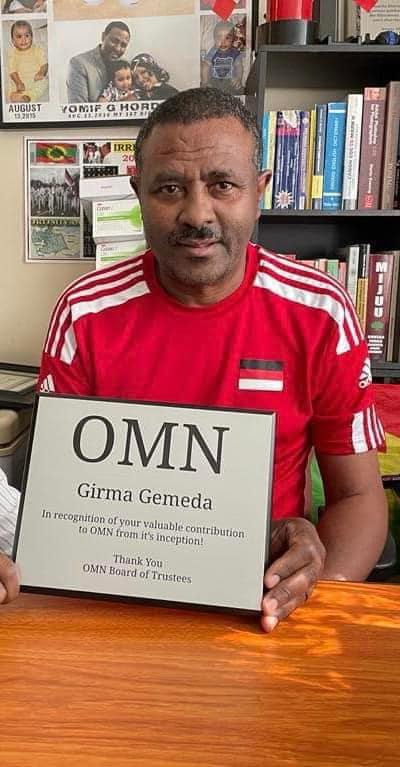
Remembering Girma Gamada: A Pillar of Oromo Volunteerism

How do we remember Girma Gamada?

Girma Gamada was born and raised in Oromia. When he was young, however, the political situation did not allow him to serve his countrymen. The passion and passion for promoting Oromo and Oromummaa did not disappear from him. Instead, this charity left the country with Girma and became an example of Oromo Volunteerism.

GIRMA GAMADAA: An Example of Oromo Volunteerism

Volunteerism is doing good for the community. This culture is to do work that benefits the community and the country. Everyone has the ability to be kind; but not everyone works beyond their own existence and livelihood for the benefit of other communities. But people who are born with this gift cannot hide themselves. When they get this opportunity, they start doing things that will promote and promote their nation.

We can take Girma Gammada as an example of the people that Oromo had like this, and lost in a short time.

Girma was exiled from Oromia for political reasons and lived in exile in Nairobi, Kenya. He then settled in Toronto, Canada. From then on, he started working to address the shortage of Oromo through advertising and information. In a short time, he promoted Oromo songs in various ways and made various posters.

He also made it known in the community by preparing advertisements for festivals and events.

He was doing advertising for various Oromo associations. He contributed greatly to the recognition and growth of the Waqeffannaa association by preparing many posters. He has been contributing to the international recognition and growth of the Irreecha festival.

He was involved in all Oromo structures such as OMN, sports associations and community building. He has done a basic job to make the history of the Oromo fighters like Jaal Bureyessso known to the Oromo people and follow their fancy.

Jawar Mohammed recalled Girma’s contribution to OMN as highly dedicated. “It is devastating to hear of the passing of Girma Gemda. We have lost a true friend and a selfless servant of our community. Girma was one of the most committed and consistent people I had the privilege to work with for more than a decade. He was with us from day one, through all the ups and downs. May you rest in peace, brother. My heartfelt condolences to his family and the Toronto community.”

Since arriving from Oromia, almost 20 years ago, Girma has been serving customers with his friendly and informative approach to seafood selections.

It is with heavy hearts that we inform you that Girma has been diagnosed with ALS (Amyotrophic Lateral Sclerosis or Lou Gehrig’s disease), a rare and life-altering condition. ALS is a neurological disease that affects the motor neurons; motor neurons are the nerve cells in the brain and spinal cord that control voluntary muscle movement. This diagnosis means that Girma can no longer work and provide for his family as he once did.

It also means he can no longer continue his volunteer work as a graphic designer for the Oromo Community Center or pursue his passion for photography. Girma’s photography skills were evident in his coverage of the Toronto Waterfront Marathon, Afrofest Toronto and African Fashion Week Toronto.

For people like Hawwinee Alamayehu, Girma was a brotherly advisor. “A patriot, a strong professional, a hero of man, for me to lose you from my own good brother is a strong sorrow beyond words.”

Girmaan was an adult who was strong in many ways. Tulluu Liiban testified to the achievements of Girma Gamada who will be well remembered by the community. “Girma Hordofa Gemeda, who has been a shining star in promoting the Oromo cause through his creative works over the past 2 decades, passed away untimely in North America and beyond hoped he would recover from his illness Unfortunately this humble and clean human being is gone capacity He has been rendering his works for free with passion.

” Moreover, Girma has designed promotional pieces including printable materials such as T-Shirts, caps, banners, artifacts, logos etc. He has also contributed to the design and editing of choreographies and photography. Girma has recorded and documented a number of vital events in Oromo, in videos and pictures. He has designed events, stages and presented auction items for free for community fundraisers. His Lega Xaafoo Studio is based in Toronto, Canada. Girma will be greatly missed because of his invaluable contributions and commitment to the Oromo people throughout his life.”

Girma was being treated for a neurological disease. However, he could not be cured by treatment. He passed away on July 4,2024. Girmaan was the father of one child; condolences to his wife and child.

Girmaan is not with us today. His voluntaristic work will live with us forever. People like Birhanu Olana are remembering him as very committed Oromo professional.”Girman was a strong Oromo son. He was a strong cameraman and graphics expert that he was helping us day and night when we were looking for such professionals and he never asked us for payment for his services.”

Just Out Of Jail, Bekele Gerba Brings A Sharp Message To Obama

(Advocacy4Oromia) Just a few months ago, Bekele Gerba was languishing in a high security Ethiopian jail, hearing the cries of fellow prisoners being beaten and tortured. Now, the 54-year-old foreign language professor is in Washington, D.C., for meetings at the State Department. His message: The Obama administration should pay more attention to the heavy-handed way its ally, Ethiopia, treats political opponents — and should help Ethiopians who are losing their ability to earn a living.

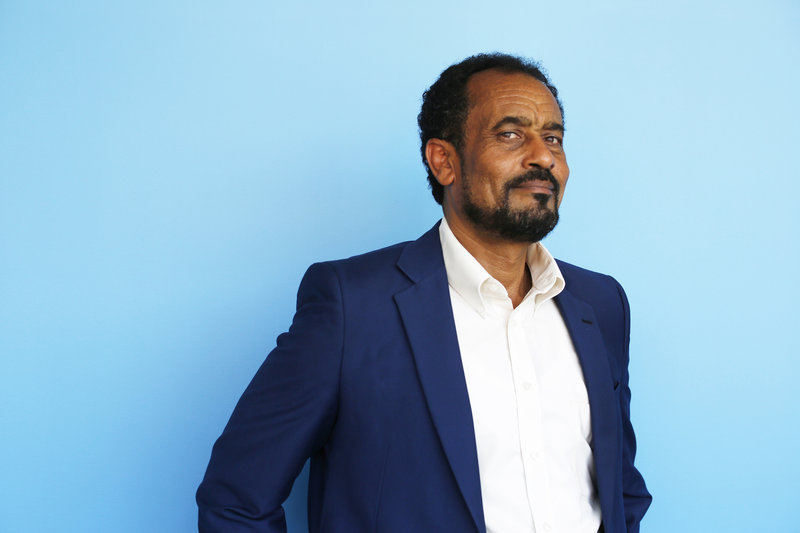
Bekele Gerbac85Gerba is a leader of the Oromo Federalist Congress, a political party that represents one of the country’s largest ethnic groups. With estimated numbers of about 30 million, the Oromo make up about a third of Ethiopia’s population.

In 2011, Gerba was arrested after meeting with Amnesty International researchers and sent to prison on what he calls trumped up terrorism charges, often used in Ethiopia against political dissidents. In court he made remarks that have been widely circulated in Ethiopia and beyond: “I am honored to learn that my non-violent struggles and humble sacrifices for the democratic and human rights of the Oromo people, to whom I was born without a wish on my part but due to the will of the Almighty, have been considered a crime and to be unjustly convicted.”

Gerba was released from jail this spring in advance of President Obama’s July visit to Ethiopia. A soft spoken man, who seemed exhausted by his prison ordeal and his numerous appearances at U.S. universities and think tanks, Gerba tells NPR that Obama’s trip sent all the wrong messages.

“He [Obama] shouldn’t have shown any solidarity with that kind of government, which is repressive, very much authoritarian and very much disliked by its own people,” Gerba says.

Since Ethiopia’s ruling party and its allies control all of parliament, his party doesn’t have a voice, he says. What’s more, he says, his people are being pushed off their land by international investors.

“The greatest land grabbers are now the Indians and Chinese …. there are Saudi Arabians as well,” he says, adding that many families are being evicted and losing their livelihoods.

Gerba says those who do get jobs are paid a dollar a day, which he describes as a form of slavery. He is urging the U.S. to use its aid to Ethiopia as leverage to push the government to give workers more rights and allow people to form labor unions.

timthumbGerba’s case has been featured in the State Department’s annual human rights reports. He describes himself as a Christian who believes in non-violence and says he spent his four years in prison pouring over the sermons and speeches of Martin Luther King and translating them into the Oromo language for a book that he hopes to see published. The title: “I Had A Dream.”

Bekele Gerba is not sure what he will face when he returns home from the U.S. When he was jailed, his wife, a high school teacher, lost her job. His family has struggled financially and psychologically.

“Nobody is actually sure in Ethiopia what will happen to him anytime,” he says. “Anytime, people can be arrested, harassed or killed or disappeared.”

Still, he plans to return home next week. He’s expected to return to his job at the Foreign Languages Department at Addis Ababa University.

Source: http://www.npr.org/sections/goatsandsoda/2015/08/26/434975424/just-out-of-jail-ethiopian-leader-brings-a-sharp-message-to-obama?utm_campaign=storyshare&utm_source=facebook.com&utm_medium=social

MEDIA ALERT: FOR IMMEDIATE RELEASE

90 graduations later…. Minnesotans are changing the world one girl at a time!

WHEN: Saturday, May 2, from 5-7:30pm

WHERE: Plymouth Congregational Church

            1900 Nicollet Avenue, Minneapolis

Doc1Over the last 10 years, more than 90 girls completed their education in Ethiopia thanks to the support and contribution of Minnesotans and the work done by the Minnesota based organization, Resources for the Enrichment of African Lives (REAL). In a country where less than one in five girls makes it to secondary school, this is quite an achievement and a testimony to the unique education model created by the organization. REAL is celebrating its ten year anniversary and getting ready for 120 more graduations!

You can join REAL’s ten year celebration of educating disadvantaged girls in Ethiopia on May 2nd. The evening will include the Keynote Speaker, Michele Garnett McKenzie, Director of Advocacy at The Advocates for Human Rights as well as a Traditional Ethiopian dinner, music and inspiring stories of girls who changed their lives through the support from REAL.

Why Girls Education & Why Ethiopia?

The need to empower girls and women in Ethiopia is critical. According to World Health Organization study, 81% women said that battering a women/wife is justified. And there are a lot of studies on girls school dropout rates, domestic violence, circumcision and harmful practices that impact the wellbeing of girls and women in Ethiopia. Though education can make a woman to be financially self-sufficient and independent, it takes a great deal of strategizing and investment to change the attitude of the society in general. Our organization is dedicated to have lasting transformation to change the condition of girls and women in Ethiopia.

About REAL

REAL helps brilliant yet disadvantaged girls and young women stay in school by providing them with school fees and mentorships to help them break the cycle of poverty for themselves and their families and, possibly their country. In sub-Saharan Africa, less than one in five girls makes it to secondary school, a fact that has a multitude of causes, one of these being poverty. Through its holistic structure, REAL aims to not only make it possible for disadvantaged girls to attend school, but to also financially empower them and their families.

Currently, over a hundred girls are supported by REAL. There are fifty three REAL girls attending universities, pursuing degrees in medicine, engineering, teaching, and law. Nine have already graduated and are currently employed. Additionally, thirty nine graduated from vocational colleges and are employed in different fields and are giving back to their communities. Over 10 years, 0ver 300 girls have been the program and impacted over 2,000 family members.

REAL focuses on educating and empowerment of girls, but the name points to the true effect of educating women—the enrichment of African lives. REAL founder Tsehai Wodajo says, “Girls, families, villages, countries are changed when girls are educated.” Ten years of this carefully structured program has proven this to be true.

REAL’s work is supported by volunteers from the US and Ethiopia, and nine fulltime employees at the eight sites.  REAL proves again the truth of Margaret Mead’s famous statement: “Never doubt that a small group of thoughtful, committed citizens can change the world. Indeed, it is the only thing that ever has.” This is what REAL has been doing.

Please visit our website at www.real-africa.org.to learn more and to RSVP for the May 2nd celebration, or contribute online. We also appreciate if you can cover our story.

Media Release in PDF Press_Release_REAL_2015-version4

Press Contact:

Tsehai Wodajo, REAL Executive Director

612-724-2096, Email-director@real-africa.org


Oromos face chilling oppression in Ethiopia

In Ethiopia they live like animals, relentlessly persecuted, hunted down like games, killed at will and incarcerated en masse. No mercy is shown even to women and children. They are the Oromos — the largest ethnic group, the most marginalised in Ethiopia and arguably one among the most oppressed people in our planet. Despite their numerical majority, the Oromos, much like the Palestinians, are facing xenophobic oppression.

Amnesty International’s report on the state of existence of the Oromos, published last year, has been damning. It painted a chilling picture of the brutality unleashed by Ethiopian government on the hapless community to which the country’s President, Mulatu Teshome, belongs. The rights group, based in London, said: “At least 5,000 Oromos have been arrested based on their actual or suspected peaceful opposition to the government”. And most of them have been “subjected to treatment amounting to torture and other cruel, inhuman or degrading treatment”.

Amnesty researcher Claire Beston has been scathing. She said, “The Ethiopian government’s relentless crackdown on real or imagined dissent among the Oromo is sweeping in its scale and often shocking in its brutality. This is apparently intended to warn, control or silence all signs of ‘political disobedience’ in the region”. Beston, in her report, said in no uncertain terms that she saw “signs of torture, including scars and burns, as well as missing fingers, ears and teeth” on those Oromos she interviewed.

The scenario in the country is perhaps far more terrifying. The United States, in its 2013 Human Rights Report, has pointed out that at least 70,000 persons, including some 2,500 women and nearly 600 children are incarcerated with their mothers, in severely overcrowded six federal and 120 regional prisons. “There also were many unofficial detention centres throughout the country, including in Dedessa, Bir Sheleko, Tolay, Hormat, Blate, Tatek, Jijiga, Holeta, and Senkele,” the report added further.

Plurality, respect for basic democratic values and tolerance for dissent have never been the fortes for which Ethiopia is known in the world. It is for reasons on the contrary the country has already earned a massive notoriety internationally. Corruptions are rampant and behind the façade of development the government in Ethiopia is infamous for selling out the country to the western world and foreign corporations and, of course, for its blatant violation of basic human rights.

What defines Ethiopia today is the greed and corruption of its politicians, especially those in power. The brazenness with which the government is trying to sell out Omo Valley to foreign corporation is a shame and a heinous crime. Twice the size of France and UNESCO World Heritage Site, Omo Valley is known as the ‘cradle of mankind’ which, according to ancient-origins.net, has the world’s largest alkaline lake as well as the world’s largest permanent desert lake.

The Ecologist says, Lake Turkana in Omo Valley was a prehistoric centre for early hominids. Some 20,000 fossil specimens have been collected from the Turkana Basin. Anthropological digs have led to the discovery of important fossilised remains, most notably, the skeleton of the Turkana Boy, (or Nariokotome Boy). Finding Turkana Boy was one of the most spectacular discoveries in palaeoanthropology.  His reconstruction comes from the almost perfectly preserved skeleton found in 1984 at Nariokotome near Lake Turkana.

Discovery of the fossilised Turkana Boy, aged between seven and fifteen who lived approximately 1.6 million years ago was a milestone in the study of our origin and ancestry. Yet, to the corrupt, shameless and avaricious Ethiopian government it is of no significance. And neither is the welfare of the indigenous people of the valley who are believed to be the living descendants of the early hominids.

Alas! Ethiopian government wants to sell out this important archaeological treasure trove to foreign corporations where they want to develop sugar, cotton and biofuel plantations. A shameless land grab is underway in Omo Valley where hundreds of more fossilised skeletons of our forefathers are expected to be found and retrieved.

Misrule, human rights violations, hubris, arrogance and corruption plagues Ethiopia. Continuous demagoguery against the Oromos has made Ethiopia sit atop a huge mound of gun powder waiting for a spark to explode. The Oromo Liberation Army (OLA), the armed wing of the Oromo Liberation Front (OLF) is getting ready for yet another armed struggle to overthrow the present political dispensation in power.

And given the history of insurgency in Ethiopia the country today seems to be heading fast towards a fresh bout of armed insurrection.

A low intensity struggle has already started as the Oromos are no more in mood to take the oppression, they are in no mood to suffer in silence their marginalisation. The ethnic fire the Ethiopian government has been stoking is gradually turning into an inferno.

We know human stupidity is endless and that of Ethiopia is infinite and dark. It cannot achieve growth and progress keeping its people delegitimised and aggrieved. The oppressed and tortured shall one day erupt to claim what legitimately belongs to them as well.

Source:http://www.timesofoman.com/Columns/2752/Article-Oromos-face-chilling-oppression-in-Ethiopia?fb_action_ids=10205209354127404&fb_action_types=og.shares#

The author is the Opinion Editor of Times of Oman. All the views and opinions expressed in the article are solely those of the author and do not reflect those of Times of Oman. He can be reached at opinioneditor@timesofoman.com

Sexual violence with special emphasis on sexual aggression in Oromia

Love and Honour for our living and fallen heroes who resisted any barbarian act against Oromo nation 

AsliAddee Asli Oromo: The first woman in the history of Ethiopian Empire that sentenced to death because of her political vision about Oromo people but released after 18 years in prison as a result of international communities campaign. UrjiiAddee Urjii Dhaabaa: Is one out of many Oromo Women that survived sexual aggression of Ethiopian government military force, police and security agents.


unpo1
unpo2
Thank you Mr, Chairman

Your excellences member of the European parliament, Dear participants, Ladies and Gentlemen, my most heartfelt thanks are extended to the Organising Committee of this seminar. I am particularly grateful to my informants Asli Oromo, Urjii Dhaabaa, Ilfinesh Qano and Dinkinesh Dhereessaa whom I am able to speak to about the agony they endured and who also morally supported of the Oromo women survivors of sexual violence who able to speak to them while their stay in Ethiopian Prison.

Ladies and Gentlemen,

unpo3Ethiopia is the tenth largest country in Africa and it is the second most populated country in Africa with projected population of 100 million by 2020. It has a number of nations/ nationalities with distinct culture. Ethiopia consists of peoples speaking more than 80 different languages (CSA, 2006)[1]. Currently, Ethiopia is classified into nine regional states. Oromia is the largest regional state in land mass and population. Ecologically and agriculturally Oromia region is the richest region in the Horn of Africa. Oromos are accounted for more than 45% of the population of the Ethiopian empire. The population size of the Oromo people and their resources makes Oromia the heart of Ethiopia. Failure and progress in Oromia regional state is grossly contribute to the failure and progress to Ethiopia.

unpo4Oromo people are egalitarian society. Historically their democratic system of government known as “Gadaa” governed the social, economic political affairs of the Oromo people. Under Gadaa, Oromo women developed their own unique institution known as “Siiqee”.  Oromo women used Siiqee institution to defend their rights, promote their interests and challenge male domination. After the Oromo people are colonized in 1880s all Oromo institutions are either totally banned or incapacitated. Since then the Oromo people are denied the right to determine on their social, economic, political and cultural affairs. For example, banning or incapacitating Siiqee hindered the Oromo women defending their rights. The colonial power not only banned and incapacitated Oromo institutions but also introduced and/or widened gender hierarchy and discriminatory social practices. This conditioned Oromo women to bear double burdens (i.e. colonial and male domination) and exposed them to sexual violence.

Ladies and Gentlemen,

unpo5The definition and the scope of sexual violence is a major problem in communications as it can be defined either narrowly or broadly. Here are four selected exemplary definitions of the term for the purpose of this presentation. The United Nations Declaration on the Elimination of Violence against Women (UN, DEVAW, 1993)[2], defines violence against women as: ‘any act of gender-based violence that results in, or is likely to result in, physical, sexual or psychological harm or suffering to women, including threats of such acts, coercion or arbitrary deprivation of liberty, whether occurring in public or private life.

The second definition of violence which is worthy to consider is one that is found in the Protocol to the African Charter on Human and Peoples’ Rights on the Rights of Women in Africa, better known as the Maputo Protocol, which was adopted by the African Union in 2003 in Maputo, Mozambique and entered into force in 2005 (AU, Maputo Protocol, 2003)[3]. As per this protocol, violence against women means: “all acts perpetrated against women which cause or could cause them physical, sexual, psychological, and economic harm, including the threat to take such acts; or to undertake the imposition of arbitrary restrictions on or deprivation of fundamental freedoms in private or public life in peace time and during situations of armed conflicts or of war” (AU, Maputo Protocol, 2003: article 1.b. paragraph. 8)

For more information: https://advocacy4oromia.org/campaigns/sexual-violence-with-special-emphasis-on-sexual-aggression-in-oromia/

Amnesty Says Ethiopia Detains 5,000 Oromos Illegally Since 2011

October 27, 2014


Victims include politicians, students, singers and civil servants, sometimes only for wearing Oromo traditional dress, or for holding influential positions within the community, the London-based advocacy group said in a report today. Most people were detained without charge, some for years, with many tortured and dozens killed, it said.

“The Ethiopian government’s relentless crackdown on real or imagined dissent among the Oromo is sweeping in its scale and often shocking in its brutality,” Claire Beston, the group’s Ethiopia researcher, said in a statement. “This is apparently intended to warn, control or silence all signs of ‘political disobedience’ in the region.”

The Oromo make up 34 percent of Ethiopia’s 96.6 million population, according to the CIA World Factbook. Most of the ethnic group lives in the central Oromia Regional State, which surrounds Addis Ababa, the capital. Thousands of Oromo have been arrested at protests, including demonstrations this year against what was seen as a plan to annex Oromo land by expanding Addis Ababa’s city limits.

Muslims demonstrating about alleged government interference in religious affairs were also detained in 2012 and 2013, Amnesty said in the report, titled: ‘Because I am Oromo’ – Sweeping Repression in the Oromia Region of Ethiopia.

Government Denial

The state-run Oromia Justice Bureau said the findings were “far from the truth” in a reply to Amnesty included in the report. “No single individual has been and would not be subjected to any form of harassment, arrest or detention, torture for exercising the freedom of expression or opinion.”

The majority of detainees are accused of supporting the Oromo Liberation Front, which was formed in 1973 to fight for self-determination, according to Amnesty.

Senior Oromo politicians Bekele Gerba and Olbana Lelisa were jailed in 2012 for working with the group, which was classified as a terrorist organization by lawmakers in 2011.

“The accusation of OLF support has often been used as a pretext to silence individuals openly exercising dissenting behavior,” Amnesty said.

The bulk of Amnesty’s information came from interviews with 176 refugees in Kenya, Somalia and Uganda in July this year and July 2013. More than 40 telephone and e-mail conversations were also conducted with people in Ethiopia, it said.

Some interviewees said they fled the country because of conditions placed on them when released, such as being told to avoid activism, meeting in small groups, or associating with relatives who were political dissenters, the report said.

Amnesty has been banned from Ethiopia since 2011 when its staff was deported.

To contact the reporter on this story: William Davison in Addis Ababa at wdavison3@bloomberg.net

To contact the editors responsible for this story: Antony Sguazzin at asguazzin@bloomberg.net Paul Richardson, Karl Maier

Source: http://www.businessweek.com/news/2014-10-27/amnesty-says-ethiopia-detains-5-000-oromos-illegally-since-2011

(A4O, 1 November 2014) A new report released on Tuesday by an international human rights group said Ethiopia has “ruthlessly targeted” the Oromo people, the country’s its largest ethnic group.

Amnesty International said thousands of Oromo people had been systematically subjected to unlawful killings, torture and enforced disappearance.

“Because I am Oromo” – Sweeping repression in the Oromia region of Ethiopia exposes how Oromos have been regularly subjected to arbitrary arrest, prolonged detention without charge, enforced disappearance, repeated torture and unlawful state killings as part of the government’s incessant attempts to crush dissent.

The report said at least 5,000 Oromos had been arrested between 2011 and 2014 for their “actual or suspected peaceful opposition to the government”.

“The Ethiopian government’s relentless crackdown on real or imagined dissent among the Oromo is sweeping in its scale and often shocking in its brutality,” said Amnesty International researcher Claire Beston.

Amnesty said that the majority of the Oromo people were targeted over their alleged support to the Oromo Liberation Front (OLF), a group that is fighting for the self-determination of the Oromo people.

The report was compiled based on testimonies from 200 exiled Oromo people, including former detainees.

Torture

Amnesty International’s report documents regular use of torture against actual or suspected Oromo dissenters in police stations, prisons, military camps and in their own homes.

A teacher told how he had been stabbed in the eye with a bayonet during torture in detention because he refused to teach propaganda about the ruling party to his students.

A young girl said she had hot coals poured on her stomach while she was detained in a military camp because her father was suspected of supporting the OLF.

A student was tied in contorted positions and suspended from the wall by one wrist because a business plan he prepared for a university competition was deemed to be underpinned by political motivations.

Former detainees repeatedly told of methods of torture including beatings, electric shocks, mock execution, burning with heated metal or molten plastic and rape, including gang rape.

Although the majority of former detainees interviewed said they never went to court, many alleged they were tortured to extract a confession.

“We interviewed former detainees with missing fingers, ears and teeth, damaged eyes and scars on every part of their body due to beating, burning and stabbing – all of which they said were the result of torture,” said Claire Beston.

Detainees are subject to miserable conditions, including severe overcrowding, underground cells, being made to sleep on the ground and minimal food. Many are never permitted to leave their cells, except for interrogation and, in some cases, aside from once or twice a day to use the toilet. Some said their hands or legs were bound in chains for months at a time.

As Ethiopia heads towards general elections in 2015, it is likely that the government’s efforts to suppress dissent, including through the use of arbitrary arrest and detention and other violations, will continue unabated and may even increase.

“The Ethiopian government must end the shameful targeting of thousands of Oromos based only on their actual or suspected political opinion.  It must cease its use of detention without charge, torture and ill-treatment, incommunicado detention, enforced disappearance and unlawful killings to muzzle actual or suspected dissent,” said Claire Beston.

Interviewees repeatedly told Amnesty International that there was no point trying to complain or seek justice in cases of enforced disappearance, torture, possible killings or other violations. Some were arrested when they did ask about a relative’s fate or whereabouts.

Amnesty International believes there is an urgent need for intervention by regional and international human rights bodies to conduct independent investigations into these allegations of human rights violations in Oromia.

Former detainees told Amnesty that methods of torture included “beatings, electric shocks, mock execution, burning with heated metal or molten plastic and rape, including gang rape”.

BBC interviewing torture survivor and Dr Awol K on Amnesty report.

The Oromo account for nearly 45% of the country’s 94 million population.

Against the waves

Insights of the 2014 Irreecha festival

By Daniel Dormeyer

When they left from Addis Ababa early in the morning of Sunday October 5, the two Europeans, James Cator from England and Daniel Dormeyer from Germany, accompanied by two Ethiopians, Minassie Alemayehu and Haile Mekonen, did not really gauge the significance and importance of what they would experience when attending Irreecha in Bishoftu, Oromia regional state, around 45 minutes south of the capital.

With almost one third of Ethiopia’s population, the Oromo constitute the largest ethnicity in Ethiopia and the wider Horn of Africa.

Cator and Dormeyer had just arrived, excited about a country charged of history, culture and noble values, and willing to overcome waves of preconceived ideas about Ethiopia.

The season of blessing and love

Traditionally decorated Oromos headed by a man with baboon skin head dress

Traditionally decorated Oromos headed by a man with baboon skin head dress

Established by Oromo forefathers, Irreacha (also called Irreessa) takes place annually throughout Oromia and amongst Oromo communities abroad on the first Sunday of last week of September or the first Sunday of the first week of October according to Oromo time reckoning (Dhahaa). Bishoftu hosts the major gathering of a festival believed to be one of the largest in Africa.

Known as Oromo’s Thanksgiving to their God (Waaqa) for his goodness over the past year, Irreecha marks the beginning of a new lunar calendar and a seasonal change from winter to spring, and more particularly the end time of starvation (Gadaa Belbaa), disunity, chaos (Mormor), and the auspicious occasion to wish plentiful harvests in the upcoming year.

After a pleasant drive through enchanting though unexpected landscapes on the uncrowded highway in the wee hours of the morning, during which they wondered about a dead hyena and the probability of getting hit by a car, the multicultural group of friends finally reached Bishoftu.

Bishoftu means “the land full of water” in Oromiffa language. Indeed, the main ceremony would take place at the Lake Hora Arsadii. In fact they reached sacred ground, where Oromo people believe God will grant all their wishes.

Waves of joy, harmony and unity

The car needed to get parked right before a blocked area. It was a short, but already crowded walk down to the lake. The rising sun dispelled the last clouds around Bishoftu, and casted bright spotlights on first waves of chanting and dancing people running down the street and moving towards the venue. Like tens of thousands of Ethiopia’s ethnic Oromo, they gathered for Irreecha to celebrate the transition from the dark and challenging rain season to the sunny new Birraa (Spring) season.

Even though some habitants got together in front of their homes around a delicious coffee while teenagers were still playing football, they knew that new waves of people from different parts of the country would arrive soon and just take them along to the ceremony. The effervescence, an irresistible attraction was already palpable.

“I was so impressed by the huge number of people, all beautifully dressed and moving ahead peacefully and cheerfully. A real festival of colors. I can’t remember having seen in my country such a traditional event respected and followed by so many people and with so much passion.”, Cator says.

Symbols of an identity and a worldview

The group of four bought scarfs in the traditional white / red / black colors and a green tree on it, as well as the green grass and yellow flowers (umama) to comply with the tradition. Indeed, everything related to Irreecha has a meaning and a purpose: for instance the Oromo gather in symbolic places such as hilltops, river sides and the shades of big sacred trees. Green being a symbol of fertility, peace, abundance and rain.

At Lake Hora Arsadii the three predominant Oromo colors on the Oromia’s traditional dressings sticked out of this huge green area.

Waves of joy and happiness brought the pilgrims and the group of four to the shores, amongst thousands of people already standing there and waiting the elders to stir long grasses in the lake before sprinkling the blessed water. They believe to get blessed as well and that it will bring them closer to Waaqa (God). Many of them also made presents to thank God for the blessings and mercies received in the previous year.

In the distance various boats could be spotted on the lake, sometimes with newly married couples aboard.

An older man started explaining the spiritual significance of Irreecha to Minassie and his obligation to convey the meaning of a ritual that has been passed down many generations and that will be passed to the next ones.

Then the group of friends also dipped their grass in the water, trying to imitate the repetitive hand movements people did to reject all possible bad vibrations while making wishes. Probably more generally about peace and health when the Oromos praise God also for fertility and abundance with regards to the one who matter to them, their livestock and the upcoming harvest.

Three united dimensions

Overwhelmed by this visual feast of colors and the irresistible vision of fraternity, the four friends climbed back to a clearing where the main ceremony would take place. The white seats in the shade of the big sacred trees they spotted when walking down to the lake were now occupied by the central persons of the blessing festival.

At this very moment the group of four realized the union of three dimensions of Irreecha: religious, political and social.

First this thanksgiving embraces all religious persuasions: Christians (amongst them Orthodox, Protestants), Muslim and Animists. They all came to thank the higher force and pray for a fruitful harvest.

Second Oromos from all ages and all stripes gather to Irreecha, sharing the same values and respect for the traditions.

Third various officials (speaker of the House of Peoples’ Representatives, officials from the Ministry of Culture and Tourism, President of the Oromia Regional State) performed in harmony with the honored Abagedas (the elders, the traditional leaders of the Oromo community, elected according to the traditional Gadaa principles). The speeches were held in three languages: English, Amharic and Oromiffa. Solemnity, pride, confidence and magnificence emerged from the speeches, reminding people about the uniqueness of this highly symbolic and truly global event.

Ethiopia is coming

Warmth was in the air and also in the words. Besides the respect of tradition and the awareness for the Oromo culture and history, this unique event symbolizes the pride and rise of Ethiopia.

Elites and supporters got encouraged to help paving the way for promoting Ethiopian values of sharing and fraternity conveyed by Irreecha, but also to convince the United Nations Educational, Scientific and Cultural Organization (UNESCO) to register this outstanding festival on the representative list Intangible Cultural Heritage of Humanity.

“The holiday is the only occasion, to the best of my knowledge, that brings together members from all religious persuasions to honor it. Seeing the masses attending this day is an evidence to how people here have not abandoned their traditional values even as they embrace modernity. It’s no wonder that it is a candidate for UNESCO’s World Heritage list with generations after generations protecting it,”Minassie says.

A sign sent to the world

When the group of four left, they walked back against further, even more massive waves of people joining the celebration. Waves of peace (Nagaa), freedom (bilisummaa), unity (tokkummaa), and reconciliation (araara), bringing people closer to each other and making religious, political and social bonds.

The two Europeans perceived Irreecha also as a positive movement against many waves they are experiencing in their societies: tradition resisting to modernity (people still looking for endorsement by the elder), all ages united instead of generations divided, all social classes brought together rather than class struggle, all confessions in harmony unlike so many parts of the world.

This year Oromos celebrated the Irreecha blessing festivities in millions. The group of four felt proud and honored to have been part of this movement. And they simply let themselves go with these positive waves.

Source: http://www.thereporterethiopia.com/index.php/living-and-the-arts/society/item/2608-against-the-waves


Irrecha: From Thanksgiving Ritual to Strong Symbol of Oromo Identity

By Asebe Regassa, PhD Candidate, Bayreuth University | August 24, 2013

Introduction: Irrecha celebration in Hora Arsadi
  
 1186672_10201587883435512_1748561943_nIt has become evident since recently that the Oromo across religious, political and geographical boundaries have converged together in celebrating an annual ritual/festival called irrecha. Historically, irrecha has been understood and practiced within the context Oromo religion, Waaqeffannaa – a belief in one supernatural power called Waaqa (God). However, as I will discuss shortly in this piece, irrecha has undergone some transformations in accommodating non-religious aspects of Oromo culture and thus has played significant role in building Oromo identity and sense of unity. In the contemporary context where the ritual brings Oromo across different walks of life, irrecha should be understood more as an arena where Oromo identity is articulated, reconstructed, built and practiced, rather than as a religious-oriented or a mere thanksgiving celebration. Before delving into some historical trajectories that shaped irrecha to be the way it is practiced today, I will briefly clarify on some conceptual understandings of the ritual itself.

Traditionally, the Oromo practiced irrecha ritual as a thanksgiving celebration twice a year (in autumn and spring) to praise Waaqa (God) for peace, health, fertility and abundance they were given with regards to the people, livestock, harvest and the entire Oromo land. Irrecha is celebrated as a sign of reciprocating Waaqa in the form of providing praise for what they got in the past, and is also a forum of prayer for the future. In such rituals, the Oromo gather in places with symbolic meanings such as hilltops, river side and shades of big sacred trees. Here, I would like to make clear that Oromo people never worship any of these physical landscapes though some outsiders and detractors of Oromo culture and religion represent it as such. Rather, these physical landscapes are chosen for their representations in Oromo worldviews, for example, green is symbolized with fertility, peace, abundance and rain.

In Oromia, the core center of irrecha celebration has been around Hora Arsadi in Bishoftu town, some 25kms to the south of Finfinne, the capital city. Annually, particularly during the Irrecha birraa (the Autumn Irrecha) in September or October, the Oromo from different parts of the country come together and celebrate the ritual. In the past few decades, irrecha celebrations have been expanded both in content as well as geographical and demographic representations. This short commentary deals with such historical trajectories by contextualizing the changes within political discourses in Ethiopia vis-à-vis Oromo nationalism.

Irrecha in Pre-1991 PeriodsAny analysis of the rights of Oromo people to exercise its culture, religion, economy, governance, language and identity within the Ethiopian state should be positioned within the historical trajectories that brought the birth of the modern Ethiopian state and the subsequent political, economic and cultural dominations unfolded upon the subjugated peoples of the South in which the Oromo people was a part. Following the military conquest of the different hitherto autonomous states of the South by the army of Menelik II in the late 19th century, the Amhara ruling group imposed its culture, language, religion and political dominance over the subjugated nations and nationalities. Menelik’s soldiers dispossessed the land of the conquered people and reduced them to the status of tenancy. In areas of religion, Orthodox Christianity was installed as the only legitimate religion while other religious practices were denigrated, discouraged and at times banned. For instance, Orthodox priests took the place of Oromo Abba Qaalluu and other religious leaders. Oromo religious and cultural practices became targets of state repression during those times. Irrecha rituals were very restricted and were portrayed by state backed Orthodox Christian church as a practice of devilish worship.

The military regime that overthrew the imperial regime in 1974 initially seemed to have tolerated traditional cultural practices, language diversity and religion but its communist orientation and ‘modernist’ discourse had placed the regime at odds with these fundamental rights of the peoples of the country – the right to cultural and religious practices. While it outlawed ‘religion’ – though Orthodox Christianity did not face state persecution as other religious sects – it labeled traditional cultural practices such as irrecha as ‘backward’ and obstacles to development and revolutionary ethos of the regime. As a result, irrecha and other Oromo religious and cultural practices were banned by the government.

It is imperative to mention two fundamental motives behind state suppression of irrecha (as common to other Oromo cultural practices) during those eras. First, successive Ethiopian regimes had subtle and overt policies of establishing culturally, linguistically and religiously ‘homogenized’ Ethiopia in their quest to build Ethiopian nationalism as a replica of Amhara and to some extent Tigrayan identities. Secondly, the Ethiopian state was built on a cultural and political identity that depicted Amhara/Tigrayan cultural/political superiorities. The myth of ‘great tradition’ that portrays the North as cradle of ‘civilization’ and conversely demotes the South to the opposite was in the center of Ethiopian state identity. This myth has been used to legitimize exclusionary policies of the state against the people in the conquered region in the process of political, economic and cultural representations. In the process, denigrating the culture or religion of the ‘Others’ as ‘backward’ was used as strong instrument to place one’s own on the privileged position.

The Revitalization of Irrecha in post-1991 PeriodIn 1991, Ethiopia underwent remarkable political reconfiguration following the overthrow of the military regime. The analysis of the political ideologies of the new regime is not the objective and scope of this piece. Rather, it suffices to mention that the new political arrangement along ethnic federalism fundamentally deconstructed the old illusion of nation building along one dominant cultural path. Ethnic groups (nations and nationalities) were for the first time given a constitutional right to exercise, preserve and promote their religion, culture, language and history. Although the translation of these constitutional rights into practice has faced inconsistencies and flaws all through the last twenty years, it was a breakthrough in providing a political space for cultural revitalization.

Under the initiative and organizational leadership of Macha-Tulama Association, irrecha celebrations were started in Hora Arsadi in mid 1990s. As the period was the heyday of Oromo nationalism and self-conscious, irrecha became not only a religious practice as in the past; rather it served as an arena where Oromo people across religious boundaries could meet and share their common identity. However, it maintained its fundamental element of Oromo’s connection to Waaqa (God). The thanksgiving ceremonies, prayers and blessings by elders have put Waaqa in the center of the ritual while songs and material culture the youth decorated themselves with brought into the scene political and emerging Oromo national identity. In both cases however, two fundamental principles of the ritual were consistent across different time spans. Firstly, irrecha served and still serves as a medium or symbol of connection between Oromo and Waaqa through thanksgivings, prayers and blessings. Secondly, irrecha rituals reflect how emotional, cultural, psychological, spiritual and identity issues are embedded and embodied within the Oromo and thus one cannot dissociate one of these elements from another.

Another major feature of the post-1991 irrecha celebration was that it attracted more of the youth and the educated class than before. This should be contextualized within the broader Oromo consciousness and the rise in Oromo nationalism. University students, government civil servants, businessmen/women and people in different professions were highly involved in the celebrations. It became at times an arena where people could meet, discuss and demonstrate their common issues – political and cultural to a larger extent.

However, it soon became a contested space between different actors, mainly between political parties (the ruling party and opposition political parties and movements). The ruling party was confronted by two ambivalent developments on its side with regard to irrecha and other Oromo cultural revitalization movements. Firstly, the constitutional provisions its enacted grants, in theory, the right of nations and nationalities to exercise their culture, religion, language and history. On the other hand, people’s exercise of such rights – like the case of irrecha, music, language, etc. – would inevitably raise the level of self-consciousness of the people that would in the long run challenge the status qou. For example, using the constitutional right as a legal protection, many participants on irrecha used to ecorate themselves with material culture and costumes that reflect the flags of the Oromo Liberation Front (OLF) rather than that of Oromo People’s Democratic Organization (OPDO). Around the year 2003/04, the government of Ethiopia heavily scrutinized irrecha festival and tried to manipulate it for its own advantage. Since then, irrecha in Oromia fell under full control of the government. While such intervention gave irrecha more publicity on the one hand, as the celebration was at times given huge coverage on state media, it has added a political dimension on the other hand. It should be noted, however, that the contestability of this cultural field still persists despite strong state intervention.

Irrecha in ExileIrrecha is not only practiced among the Oromo in Oromia. As hundreds of the Oromo are in exile for different reasons, their culture, religion, language and identity also exiled with them. Because irrecha has a cultural ambiance in connecting the people to Oromo land and the creator, Waaqa, it still remained as strong element of connection between the Oromo in diaspora and home – Oromia. In the past ten years or so, the Oromo across different parts of the world (from Toronto to Melborne and Bergen to Johannesburg) have come together and celebrated irrecha as a common icon of their identity. If anything could be mentioned in bridging the differences (political and religious) within Oromo in the diaspora, irrecha has become the major binding force not as a mere cultural or religious practice but for its conjoint constitution of culture and identity. Currently, irrecha has got publicity among the non-Oromos (Ethiopians and non-Ethiopians alike) to the extent that city administrations in different countries recognized the celebration and granted the Oromo with the spaces for the ritual.

To sum up, irrecha as one of the Oromo cultural practices has responded to different forms of internal and external influences but persisted across history in binding the Oromo across religious, political and geographical boundaries together. Today, it is considered as the major unifying emblem of Oromo identity. Despite relentless attempts by different actors (interest groups) to appropriate irrecha for their interests or to demote it altogether, it continued to be a marker of Oromo’s embedded cultural identity. Among the diaspora in particular, where political rift is more apparent, irrecha is believed to converge differences and in the future investing on how Oromo common markers of identity would contribute to common visions of the people should be the core agenda of all the Oromo.
