Monthly Archives: May 2020

OLF,OFC URGE GOV’T TO TAKE REPORT BY AMNESTY SERIOUSLY; HEED RECOMMENDATIONS TO REVERSE TROUBLING HUMAN RIGHTS ABUSE RECORD

(A4O, May 29/2020,Oromia) – In a joint statement released by opposition parties Oromo Liberation Front (OLF) and Oromo Federalist Congress (OFC) on Amnesty International’s Report, the parties urged “the federal and regional authorities to take the report by Amnesty International seriously, heed the recommendations put forth and promptly reverse the government’s deeply troubling record on rights and liberty.”

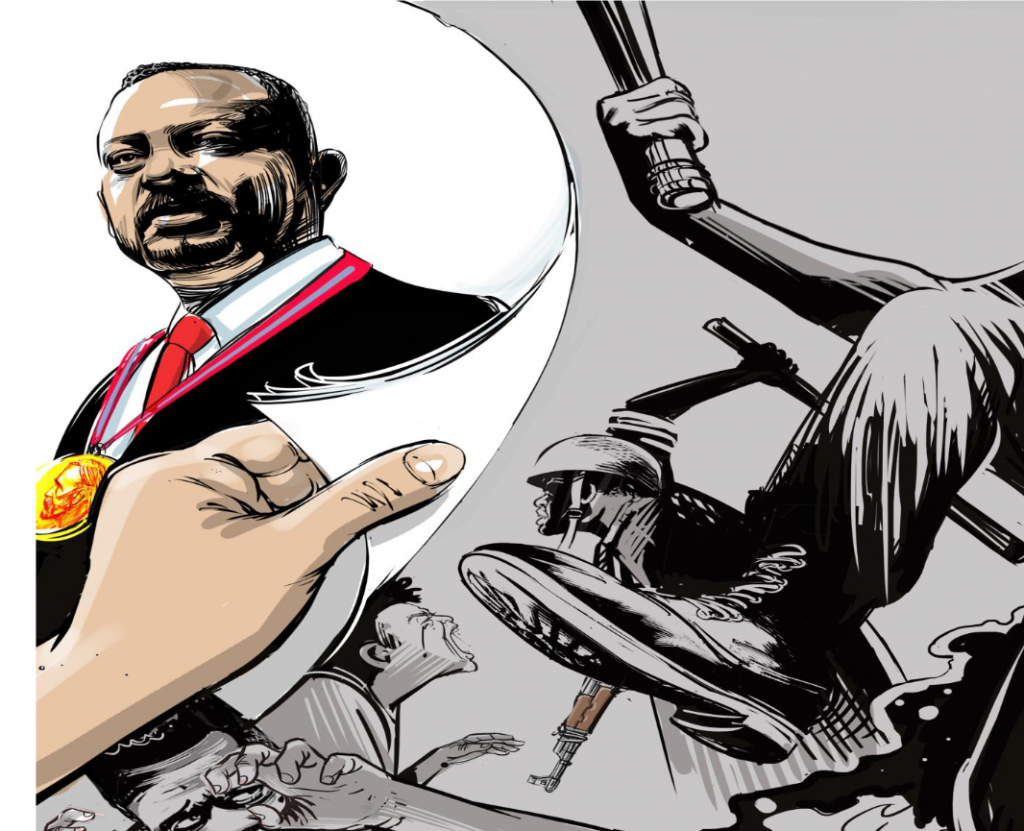
In a report released today, Amnesty International said “Ethiopian security forces committed horrendous human rights violations including burning homes to the ground, extrajudicial executions, rape, arbitrary arrests and detentions, sometimes of entire families, in response to attacks by armed groups and inter-communal violence in Amhara and Oromia.” Graphic design: Amnesty International

“In a new report, Beyond law enforcement: human rights violations by Ethiopian security forces in Amhara and Oromia, Amnesty International documents how security forces committed grave violations between December 2018 and December 2019 despite reforms which led to the release of thousands of detainees, expansion of the civic and political space and repeal of draconian laws, such as the Anti-Terrorism Proclamation, which were previously used to repress human rights,” Amnesty International.

Below is the full text of the joint statement sent to Addis Standard.

In its first comprehensive report since Prime Minister Abiy Ahmed’s government came into office, Amnesty International has presented a detailed account of the gross human rights violations perpetrated by the Ethiopian security forces against dissidents and perceived political opponents particularly in the Oromia and Amhara regions.

The report titled “Ethiopia: Beyond Law Enforcement” and released on May 29, 2020,   has precisely exposed the wanton destruction of property, rampant extrajudicial killings, arbitrary arrest and imprisonment of members of the opposition, mass detentions and forced political indoctrination, and the application of torture and gender-based violence by state actors as a means of stamping out dissent in the last two years.

The report is further proof that the new administration has not parted ways with the practice of forcefully stifling dissent, committing egregious human rights violations and carrying out extrajudicial killings common under its predecessor- he Ethiopian People’s Revolutionary Front- despite taking over in April 2018 off the back of a much touted promise to reform itself.

Although the report provides a very good and consolidated highlight of the continued human rights violations under the current regime, it doesn’t come close to disclosing the full extent of the horrendous abuses and gruesome atrocities committed by the security forces.

The report covers mostly the period up to the end of 2019. However, the situation in Oromia region specifically has gotten progressively worse this year (2020), with a substantial rise in mass incarcerations, extrajudicial killings and destructions of property in provinces that were not previously affected. The Amnesty Report highlights abuses carried out by the federal army. Nevertheless, the regime has also been using newly trained regional militia forces named ‘Liyu Police’ which have unleashed a reign of terror in parts of Oromia.

As we speak, these forces are carrying out gross human rights violations against political prisoners and perceived political adversaries, with some being held without due process, the whereabouts of many is still not known after their abduction and on several instances relatives are finding the human remains of some of the abductees in the bushes.

Reports of systematic disappearances and gruesome killings at the hands of security forces is a daily occurrence, particularly in western Oromia.

Therefore, we

  • Urge the federal and regional authorities to take the report by Amnesty International seriously, heed the recommendations put forth and promptly reverse the government’s deeply troubling record on rights and liberty.
  • Would like to remind the government that continuing along this dangerous path of wanton disregard for human life and dignity and rampant violation of rights will have far reaching consequences for the country.
  • Call upon local and international human rights organizations to conduct further investigations and expose the worsening situation across the country, particularly in recent months.
  • Call upon the international community to hold Ethiopian authorities to account for clearly reneging on their promise to help the country transition towards a peaceful and democratic order, and for choosing to chart an authoritarian path in keeping with the tradition of previous regimes.

Finally we would like to remind all stakeholders that human rights violations, the use of extrajudicial killings, torture and intimidation is what got Ethiopia into the current multifaceted socio-economic and political crisis.

Continuing with such abuse will only deepen the crisis, fracturing the society, paralyzing the economy and paving the way for potential disintegration of the country itself. Therefore, we urge the government to refrain from repeating mistakes by past regimes and ask internal development partners to exert maximum pressure to ensure the transition towards a democratic state is put back on track before it’s too late.

Oromo Liberation Front (OLF)

Oromo Federalist Congress (OFC)

Ethiopia’s security forces accused of torture, evictions and killings – report

(A4O, 29 May 2020, Oromia) Prime minister Abiy Ahmed has been lauded for his democratic reforms. But Amnesty International are now urging him to investigate allegations of serious human rights abuses

A man waves an Oromo flag
 A man waves an Oromo flag as people from the community gather in Addis Ababa in October 2019, on the eve of Irreecha, their thanksgiving festival. Photograph: Yonas Tadesse/AFP

Ethiopia’s Nobel peace prize-winning prime minister Abiy Ahmed has been urged to investigate allegations that state security forces have committed a raft of serious human rights abuses including torture and unlawful killings since he came to power in 2018.

According to a report by Amnesty International, published on Friday, Ethiopia’s military and police in its two most populous regions arbitrarily detained more than 10,000 people, summarily evicted whole families from their homes – some of which were burnt and destroyed – and in some cases were complicit in inter-communal violence targeting minorities.

Federal authorities have not responded to the report, which focuses on the period between January and December 2019 in the regions of Amhara and Oromia.

“Given the gravity and the duration [of the period in which abuses were reported] I cannot believe top officials are not aware of what was happening,” the report’s author, Fisseha Tekle, told the Guardian. “And if they are not then it is a dereliction of duty.”

In Oromia, security forces are waging a counter-insurgency campaign against rebels from the Oromo Liberation Army (OLA), an armed guerrilla movement demanding more autonomy for Oromos, which returned from exile in 2018 after Abiy removed it from Ethiopia’s list of terrorist organisations.

The move was part of a package of democratic reforms which won the prime minister widespread acclaim and, along with making peace with neighbouring Eritrea, secured him the Nobel peace prize last year. Shortly after becoming prime minister Abiy also confessed that security officials had in the past committed torture, and promised to ensure the sector was fully accountable in the future.

But the OLA has since returned to armed conflict, and accuses the government of failing to deliver its promises of more democracy and self-rule for Oromos.

Fighting in western and southern parts of Oromia has involved targeted killings of local officials and community leaders and what the UN has described as “serious human rights violations”. In Oromia’s Guji district the unrest had driven 80,000 people from their homes by the start of this year.

Amnesty said it had a list of 39 people suspected of supporting the OLA who had been unlawfully executed in two parts of Guji since January 2019. It also said that on a single day in December 2018, soldiers from the federal military killed 13 people in the town of Finchawa in West Guji. One of those killed was an old woman selling milk on the street, according to an eyewitness who spoke to Amnesty.

Security forces are estimated to have detained more than 10,000 men and women suspected of supporting or working for the OLA, among other abuses documented by the organisation.

Many were detained for several months without being charged, in violation of both national and international human rights laws, under conditions which at times amounted to torture, the report found. Detainees were made to undergo two months of “training” in subjects such as constitutionalism, the rule of law and the history of the Oromo people’s struggle.

In Amhara, according to the report, regional police, militia and local vigilante groups engaged in targeted attacks on ethnic Qemant, a minority group demanding more autonomy, in inter-communal violence which resulted in at least 130 deaths last year. In January 2019, at least 58 people were reportedly killed in less than 24 hours and buried in mass graves.

Nobody has yet been held accountable for the atrocity.

Amnesty said it had sought responses to its findings from nine government offices including the defence ministry and the attorney-general’s office but had only received a response from Amhara’s regional security bureau, which denied that state security forces had been involved in any atrocities.

The rights group called on the government to carry out full investigations into human rights violations and to order security forces to stop carrying out unlawful executions, arbitrary arrests and detention, as well as forced evictions and destruction of property belonging to people suspected of supporting opposition political parties or armed groups.

In February last year the former head of the Ethiopian army said it had embarked on “deep institutional reform” as part of the democratic changes sweeping the nation.

The head of the Ethiopian Human Rights Commission, Daniel Bekele, told the Guardian: “While the Amnesty findings and ongoing reports of killings and arrests in parts of Oromia region should be taken seriously and fully investigated, it is also important to understand the complex nature of the security operations where armed groups are seriously destabilising the affected areas.”

The prime minister’s office said it would put the Guardian’s request for official comment to the peace ministry, which did not respond in time for publication.

Source: The Guardian 
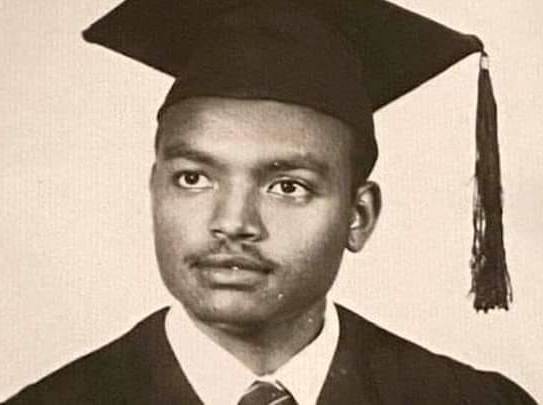
Mohammedamin Siraj brutally murdered and thrown in the bush

On Thursday, May 14th, 2020, Mohammedamin Siraj was abducted by the Ethiopian government securities from his office in Harar city. He was an employee of Oromia cooperative work office of eastern Hararge province (waldaya Hojii gamtaa Oromiyaa godina Haragee bahaa).

He was arrested under a pretext of ‘quarantining for suspicion of contracting #COVID-19’; which turned out to be an outright lie; brutally murdered and thrown his body out in the bush around Babile town.

After few days of disappearance, on Monday 18th of May, local farmers found a leftover of a human remains partially eaten by scavengers and reported the scene to the police. Later that day, the police buried a partially scavenged body without a proper investigation and consent of his family.

Mohammedamin Siraj was a brave soul. He was an outspoken critic of the government. He has never been silenced to speak out against the injustice perpetrated to the Oromoo people from the successive Ethiopian regimes. Because of that, he had suffered numerous intimidation, death threats, tortures and detentions.

Mohammedamin Siraj was born in Galamso town of eastern Oromia; graduated from Jimma university. He was a family man and he is a father of two minor children. #JusticeForMohammedAminSiraj

Oromia: Arbitrary Arrests and Extra-Judicial Killings of Political Dissents Continued in Ethiopia

(A4O, 26 May 2020, Oromia) Arbitrary arrests and extra-judicial killings of political dissents continued in Ethiopia amid the looming danger of Covid-19 over the Country.

Image may contain: 3 people, text

According to HRLHA’s Urgent Appeal, no progress to arrest of political dissents in Oromia. “Arbitrary arrest and forced disappearance of political dissents have been escalating throughout Oromia region compared to other regions of the country at this critical moment when the danger of Corona virus is highly threatening the country.”

HRLHA also revealed the details of many innocent citizens, supporters and members of the two vanguard oppositions namely Oromo Federalist Congress (OFC) and Oromo Liberation Front (OLF)
who have been languishing in different known and unknown detention centers for several months.

“Hundreds have been mercilessly killed and even some of them were denied burial and eaten by hyena,” says the appeal.

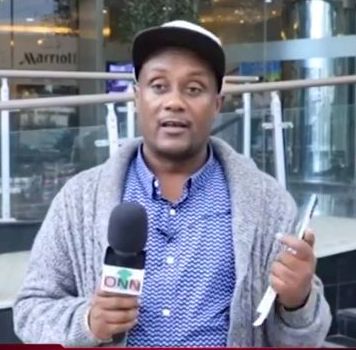
According to the HRLHA’s argent appeal, journalists of Sagalee Qeerroo Bilisummaa Oromoo (Voice of Oromo Youth for Freedom) among others, Adugna Kesso and Gada Bulti; as well as Oromia News Network (ONN) journalists Dasu Dula and Wako Nole were arbitrarily arrested, denied safeguards of due process of law and remain suffering behind the Bar.

It also added that top OLF leadership and senior members such as Kayyo Fufa, Yaasoo Kabada, Dandi Gabroshe, Efrem Geleta, Mo’a Abdisa, Tariku Abdisa, Bayana Ruda (Prof), Aliyi Yusuf, Abdi Ragassa, Batire File, Gada Gabisa, Blisumma Ararsa, Olika Chali etc have been languishing in known and unknown prisons for several months without charge.

This Urgent Appeal addresses recent detailed arbitrary arrests, extra judicial killings and physical assaults where each cases are substantiated by photograph and important facts of the violations.

For further detail here is the link of the PDF format of the appeal: 1-May 25, 2020- HRLHA Urgent Appeal

Ethiopian police ignore court orders to free journalists held since March

Nairobi, May 22, 2020 — Ethiopian police should immediately and unconditionally free journalists Dessu Dulla and Wako Nole and media worker Ismael Abdulrzaq, the Committee to Protect Journalists said today.

On March 7, police in the town of Burayu, on the outskirts of the capital Addis Ababa, arrested Dessu, a deputy director at the privately owned Oromia News Network broadcaster, Wako, who contributes to the network and also reports for the radio broadcaster Sagalee Bilisummaa Oromoo, and Ismael, a driver for the station, according to the network’s chairperson, Buli Edjeta Jobir, and CPJ reporting from the time.On March 30, a court in Burayu ordered the three employees’ release after prosecutors said they could not make a case against them, according to Buli and their lawyer, Mulisa Ejetaa, both of whom spoke to CPJ in phone calls and via messaging app.

However, as of today, the three remain in detention, in violation of court orders issued in March, April, and May, while police claim to be investigating unspecified allegations against them, according to Mulisa, Buli, and an April 21 court document seen by CPJ.

The Oromia News Network, which operated in exile until 2018, primarily covers politics and is targeted at an Afaan Oromo-speaking audience; Sagalee Bilisummaa Oromoo, which broadcasts some of its programming on the news network, hosts programming that is supportive of the Oromo Liberation Front opposition party and also covers regional news, according to CPJ’s reporting.

“The detention of Dessu Dulla, Wako Nole, and Ismael Abdulrzaq, even after prosecutors said they had no case against them, and in defiance of court orders, is an unacceptable violation of their rights of due process,” CPJ’s sub-Saharan Africa representative, Muthoki Mumo. “They should be released unconditionally, and those responsible for infringing their rights should be held to account.”

The three network employees were arrested alongside two members of the Oromo Liberation Front, Gada Gabbisa and Batire File, shortly after they visited Abdi Regassa, a member of the party’s leadership, who was detained at a Burayu police station, according to Buli, who was also at the station at the time, and CPJ’s reporting from March.

The network employees knew Abdi personally and also intended to file news reports about their visit, according to Buli, who said that Ismael is also a member of the party. Police initially accused the three of illegally photographing the police station, and claimed that Ismael had intentionally involved himself in a minor traffic accident with the intention of killing the officers who arrested them, Buli said.

After the police ignored the Burayu court’s release order on March 30, Mulisa filed a habeas corpus application on April 6, and police were ordered to produce the detainees in court, according to Buli and Mulisa. When they did not do so, a subsequent release order was issued on April 8, Buli said.

Police produced Ismael in court on April 9, but then returned him to custody and, in the weeks since, police have not complied with several subsequent orders to produce the detainees in court and to release them, Buli and Mulisa said.

In the April 21 court document reviewed by CPJ, the court said police did not comply with orders, failed to produce defendants when requested, and did not provide evidence for their case. The court ordered the officers to provide an explanation during an April 23 hearing, but they did not appear in court, Buli said.

On May 13, Burayu police said that Dessu, Wako, and Ismael had been transferred out of their custody, according to Buli and Mulisa. As of May 22, they were being held at a police station in Gelan, a town south of Addis Ababa, according to Buli and another source who is familiar with the case but asked not to be named for safety concerns, both of whom said the police did not disclose a reason for the transfer.

In a phone call last week, Oromia regional government spokesperson Getachew Balcha declined to respond to questions on the case, and referred CPJ to the regional attorney general, Daniel Asefa.

On May 14, Daniel told CPJ via phone that his office was investigating why the journalists were being detained. Today, he said that his office’s inquiry was still ongoing and he could not yet provide comment.

In a text message, Abebe Geresu, the deputy head of Oromia’s Peace and Security bureau, told CPJ that he did not know about these cases.

When Jibril Mohamed, head of the Oromia Peace and Security Bureau, was reached on the phone this afternoon, he said he could provide CPJ with comment in two hours. He did not answer subsequent calls.

Source: CPJ

THIS IS JUST A LITTLE ADVICE

By  Teshale Aberra

I came across something in a book I grabbed this morning called “POLITICS BY OTHER MEANS: Law in the struggle against apartheid. 1980-1994.”

Somewhere in this book, it says the following about apartheid South Africa ‘s Courts:

“[They] occasionally invalidated racist actions by the executive or legislator, such as segregation of public accommodation or disenfranchisement of Cape Coloured voters.”

Apartheid South Africa courts were not the ideal types of courts. No sane person is meant to praise that era’s judicial system, as there is nothing praise worthy about them.

And yet, there were instances where they were used by the oppressed majority black people to defend some of their rights. They were used as a channel through which oppression was aired, dramatized, exposed and challenged.

In short, even apartheid South Africa Courts were used to challenge the force of apartheid.

My question is, can Ethiopia’s courts, both Federal or States level draw some lesson from apartheid South Africa’s Courts?

To be honest, I have always thought that way and puzzled by this comparison.

I say so, because, leave alone judges who are paid by the government and frequently removed from office, allegedly, for lack of loyalty to the ruling party, even private attorneys (lawyers) are not free to take up cases which they think could call the attention of the ruling party. Fear of reprisal is real.

We witnessed time and again while lawyers decline cases for fear of reprisal. I am sure the South African lawyers were not totally free to represent the victims of the system of apartheid.

But they tried their best and some judges did what they had to. They are, as judges and their decision as the work of courts is remembered for the good work done.

I think Ethiopia’s courts may try to follow their suit.

Just imagine what could happen if lawyers brought a legal case at Ethiopia’s courts to challenge ‘the recent government measure of deployment of the deffense force, which put a large part of the country under miltary administration, suspending civil and political rights of people in those areas and caused huge loss of life and property, all in clear violation of the constitution!

Perhaps the lawyers who contributed to this kind of effort and the judges who could have made a decision to stop this kind of madness would have been remembered for generations. Above all they could have contributed something towards the continuity of Ethiopia as a state/nation.

More importantly they could’ve contributed in efforts of or wishes to establish a somehow independent judiciary.

Rather than participating in the melodrama and orchestration of breaking the constitution, as we saw on TV yesterday, judges, legal scholars and lawyers better spend their time on devising strategies on how to pull the entire judiciary out of the deep crisis it puts itself in, or the crisis forced on it by the system.

THIS IS JUST A LITTLE ADVICE

UNLAWFUL ARRESTS REMINISCENT OF ETHIOPIA’S UNCHANGED POLITICS: OLF CHAIRMAN

Abdi Regassa is one of the ex-rebels who returned to Ethiopia in 2018 and subsequently became a member of OLF’s Executive Committee. Picture: Social media

Zecharias Zelalem

A4O, May 16/2020 – The Chairman of the Oromo Liberation Front (OLF) Dawud Ibssa, has told Addis Standard that he was deeply disappointed with the security forces’ recent arrests of nine OLF party members and leaders. The group were rounded up on 29 February from a gathering at a house in Addis Abeba.

While eight of the group were released the next day, one of them, Abdi Regassa, former Commander of Oromo Liberation Army (OLA) who is one of the ex-rebels who returned to Ethiopia in 2018 and subsequently became a member of OLF’s Executive Committee, remains in prison, and the police are denying that he is even in their custody.

“These arrests are unlawful,” said the OLF’s Chairman, whose party hopes to participate in this year’s Ethiopian Elections scheduled for August 2020. “These are our leaders and they’ve broken no laws. Abdi Regassa remains a political prisoner.”

OLF party members who were arrested and released include Mikael Gobena, Dr. Shugit Geleta, Kenessa Ayana, Muhe Raya, Tesfaye Meko, Selemon Teshome, Gamtessa Boru and Abdulkarim Abdurehaman. According to an OLF press statement released on March 04, all of them were handcuffed, shackled together, kept waiting for a lengthy period of time in the rain before being transported to a police station. The press release also revealed that the homes of the nine were ransacked by police officers on the morning of March 1st, after detaining the individuals.

“Security forces broke into the homes of these nine members and searched their houses,” reads part of the statement sent to Addis Standard by the OLF’s youth wing head, Lammi Begna. “Note that the police had neither legal authority nor a court warrant to search these homes or to arrest any of them.”

The government’s refusal to account for the whereabouts of Abdi Regassa has prompted Amnesty International to appeal for his release.

OLF Chairman Dawud Ibssa. Photo: Archive

“Abdi Regassa’s family and lawyers have spent the last couple of days frantically searching police stations and detention centers across Addis Abeba in an attempt to locate him,” Seif Magango, the organization’s Deputy Director for East Africa, the Horn and the Great lakes said in Amnesty’s communique.

The OLF, founded in the the seventies, has among its stated aims the safeguarding of the rights and dignity of the Oromo people. Engaged in armed struggle for most of the time since its establishment, it was among a number of formerly exiled and outlawed political organizations that were invited to return and participate in Ethiopia’s political process in 2018. The then newly appointed Prime Minister was globally lauded for his reforms that decriminalized armed political groups including OLF.

The OLF has since gained a legal recognition as a political party in Ethiopia. But in recent months, hundreds of its supporters and party members have been arrested, often whilst on the campaign trail. On February 19, OLF released dozens of names of its supporters and members who are in police custody.

“The tactics being used against our staff and supporters are reminiscent of the sort of tactics employed by the [EPRDF] led government for 27 years,” Dawud Ibssa said by phone from his office.

According to him, police took away the cellphones, passports, driver’s licenses and even the watches of the nine detained individuals. When the group probed police about getting their items back, they were told “ask our superiors.”

“We are disappointed with the manner in which the government is conducting itself in the run up to the elections,” Dawud said, noticeably dejected. “Our members are second guessing the legitimacy of the process. But we take comfort in the solidarity expressed by members of various other parties representing constituencies in the Oromia, Amhara and other regions. These members have personally reached out to express their sadness at the arrest of our people who were merely practicing their democratic rights.”

In a press briefing held on March 04 at the OLF’s headquarter in Gullele, Addis Abeba, the party’s leaders described the “harassment and intimidation” they are facing today as “unprecedented” in the history of the party since its inception. They also warned that if appropriate measures were not taken on time, “it could ignite a political fire which will be hard to put off.” AS

IN-DEPTH ANALYSIS: TOWARDS TIGRAY STATEHOOD?


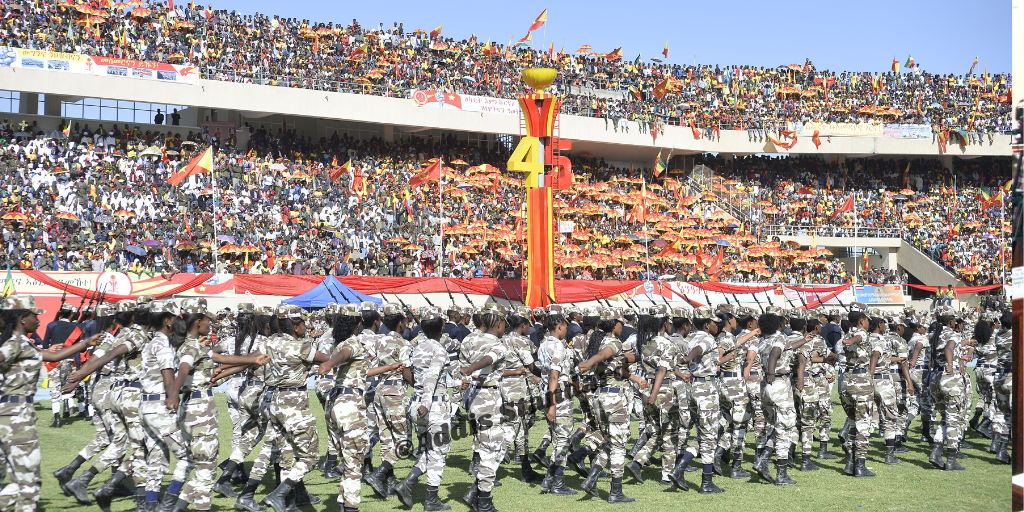
Debretsion G/Michael, President of Tigray Regional state, greeting a crowd of hundreds of thousands during the 45th founding anniversary of TPLF in Mekelle on February 11, 2020.

KJETIL TRONVOLL @KJETILTRONVOLL

(A4O, May 15/2020)– The postponement of the elections and Prime Minister Abiy Ahmed’s proposal on how to solve the upcoming constitutional crisis in Ethiopia, has accentuated Tigrayan nationalism and the process of ensuring de facto Tigray statehood. The current political dynamics in the country, if continued unchecked, may push the Tigrayan discourse even further, as voices advocating for secession and Tigrayan independence are increasingly heard. How come Tigray, the cradle of Ethiopian civilization and the ‘country’s engine’, according to Abiy Ahmed, entertain ideas of statehood and secession? What developments have compelled both the people and some political elites to argue that the perceived best solution may possibly be to leave Ethiopia?

An axiom in conflict resolution is to understand your adversary’s positioning and context, and from that basis interpret her/his argument. What may appear irrational and illegitimate from your point of view, may actually resonance quite well among the followers of your opponent. Knowledge about each other’s positioning and contexts may thus contribute to creating a common frame of communication; i.e. that both sides are equally informed about each other’s views about the issue of contestation at hand they seek to address. This article aims to present how various Tigrayan actors are engaging in the discourse on statehood, to contribute to mitigating continued escalation of the discord.

Political Anxiety

The people of Tigray have for many years been critical towards the regional government over maladministration, corruption, and abuse; and accused TPLF of forgetting Tigray while concentrating on developing Ethiopia. Hence, demands for reforms of TPLF were heard in Tigray already in early 2000s, but were later overtaken by events with the advent of the Oromo, and subsequent Amhara, protest movements. During this period of turmoil, Tigrayans increasingly became the target of hate speech and ethnic slurs in Ethiopia, as they often were collectively blamed for the authoritarian rule and maladministration exhibited by TPLF/EPRDF over the past 27 years. Fear and frustrations about the turn of events led to mixed sentiments among large share of the population in Tigray, as the key slogan for the Oromo protest movement in its initial phase was “Down, down Woyane”.

Conflating the TPLF and the Tigrayan population has been a common, although flawed, assumption exhibited by many Ethiopians throughout the rule of TPLF/EPRDF. Consequently, Tigrayans were collectively blamed and persecuted for the wrongdoings of TPLF, although they themselves had equally suffered under its suppressive politics. A mixed set of feelings were thus prevalent among Tigrayans during the protests:

  • a feeling of loss, as a consequence of the obvious decline of TPLF’s influence at the center;
  • a feeling of betrayal, as the Tigrayan sacrifices during the 17-years struggle against the Derg and their collective effort to develop Ethiopia after 1991 were not given credit or appreciated by rest-Ethiopia;
  • a feeling of anger, against the federal government and EPRDF for not protecting civilian Tigrayans during the Amhara uprising in Gondar and individual attacks throughout Ethiopia;
  • a feeling of anxiety and fear, as they understood the potential devastating consequences against Tigrayans individually and collectively, if the federal government’s security control continued to unravel (as was seen during the protests and after).

The change of leadership in TPLF in 2017 brought hope for reforms to many in Tigray, as their grievances were finally heard and a new reform-friendly leader in Debretsion Gebremichael was elected. The political opening also saw the establishment of new political parties critical to TPLF, as Salsay Weyane and Baitona, advocating a more explicit Tigrayan nationalistic agenda. At the time when the EPRDF crisis peaked with the resignation of chair Hailemariam Dessalegn, most Tigrayans were demanding that TPLF should refocus their efforts to develop Tigray, and leave the control of the center and Ethiopian developments to the Oromo and Amhara fractions. Thus, nation-wide reforms accelerated by PM Abiy and the opening of democratic space and acceptance of pluralism of opinion, were initially equally warmly welcomed in Tigray as elsewhere in Ethiopia.

Before long, however, the feeling of victimhood once again escalated, as the Tigrayans increasingly felt encircled by enemies as PM Abiy engaged in mopping up of ancien règime representatives which happened mostly to be Tigrayans, simultaneously as he befriended their arch enemy President Isaias Afwerki and commenced the Eritrea peace process without consulting Mekelle. Tigrayans felt ‘encircled by enemies’ with their back against the wall with a vengeful and gloating Eritrean Commander in Chief threatening them on their northern border, as Amhara political entrepreneurs on their southern border also turned against Tigray and advocated to forcefully reclaim what they perceived to be their lost territories of Welkeit and Raya, simultaneously as they blocked the main thoroughfares in and out of Tigray regional state to rest-Ethiopia and the capital Addis Ababa. As a consequence of these events, a siege mentality started to fester, influencing Tigrayan interpretations and perceptions of political dynamics in Ethiopia and beyond.

Women members of Tigray’s Regional State’s Special forces staged military parade
during the 45th founding anniversary of TPLF in Mekelle on February 11, 2020.

Claiming de facto Statehood

The aspiration of Tigray statehood, de facto or de jure, has been nurtured by segments of the political strata for decades. The first material evidence of this is the infamous first manifesto of TPLF, which defined an Independent Republic of Tigray as the ultimate objective of their nascent struggle. Although this objective was quickly discarded in favor of political autonomy for Tigray within a democratic Ethiopia in the subsequent revised manifesto, their ‘hidden’ intent of secession and independence for Tigray has been used by the Ethiopianist camp to delegitimize TPLF/EPRDF rule in Ethiopia ever since they took power in 1991.

The current process of claiming de facto statehood in Tigray, however, is a result of both internal grievances and aspirations and external threats and opportunities, and as such ticks all the boxes on how nationalism is one of the most potent tools in politics.

Inception: Harnessing Political Consciousness

The inception of the specific discourse on ‘de facto statehood’ may perhaps be traced to a group of internationally-based Tigrayan scholars offering their academic capacities to assist the development endeavors in Tigray. The first conference of ‘The Global Society of Tigrean Scholars’ (GSTS) was conducted in Mekelle in July 2018, under the heading “Quo Vadis Tigray? Building Knowledge-based Economy and Society in Tigray”, focusing on enhancing Tigray’s economic, political, social, and security advantages. This was followed by second grand conference the following year, drawing more than 2,000 Tigrayan diaspora scholars to Mekelle. During these deliberations, an explicit concern about the political directions Ethiopia was heading under PM Abiy Ahmed underpinned how one should frame and conceive Tigrayan options of development, to secure the protection of hard-won political autonomy, language rights, resource extraction and allocation, cultural traditions, etc.. An increasing concern about the possibility unrest and conflicts in other regions of Ethiopia which could have a spill-over effect to Tigray, as well as the potential emergence of a federal government with hostile intentions towards Tigray, also informed the discussions.

Although Debretsion publicly has appreciated the work and advise from the Tigrayan scholars, TPLF is wary to buy into the full nationalist agenda due to their ideological anchoring. The emergence of the nationalist’s parties of Salsasy Woyane and Baitona, and more recently Tigray Independence Party, has, however, forced TPLF to gravitate towards such an agenda.

Economy: Releasing Their Potential

A more prominently factor pushing Tigray towards de facto statehood is the actual experiences of administering the regional state under the government of Abiy Ahmed. With the rejection of joining the PP, TPLF is an opposition party to the federal government, and all TPLF members of the cabinet where relieved of their duties in early 2020. This of course also influence how the Tigray regional government is perceived and handled by the federal government. Over the last couple of years, Tigray regional government have experienced increasing challenges related to general administration of regional affairs and the transfer of the federal grant. As commented by Dr Abraham Tekeste, vice president of Tigray responsible for administrative affairs and economic development: “The politics have also influenced the administrative relationship, unfortunately in a negative and counterproductive way. I see that the Federal Government use various means to achieve some political gains over us. Not by conviction, but by pressure and intimidation.”[i]

Abraham Tekeste, being the longest serving Minister of Finance in Ethiopia in modern history, knows well how the federal administrative and economic arrangement work. He pointed out several areas where Tigray experienced obstructions either put in place by the federal government, or if undertaken by other political actors, silently consented by PM Abiy. Of these measures negatively impacting Tigray, he listed:

  1. The blockage of main road infrastructure south and west through Amhara regional state, which impedes the trade in/out of Tigray. All trade has to be routed through Afar road, which incurs a higher cost to Tigray producers and consumers. As pointed out by Abraham: “This is a federal highway, and the federal government accepts the blockage. The federal government thus de facto accepts that a partial embargo is put on us.”
  2. The opening of the border to Eritrea greatly benefited the Tigrayan economy in addition to people-to-people reconciliation, and Abraham states: “As this was not in the two governments’ interests, they closed the border again. It hurts us socially and economically.”
  3. Abraham Tekeste was particularly concerned about the impediment put by the federal government on private investments to Tigray. He claimed that:

“Tigrayan, non-Tigrayan, and foreign companies are all intimidated. If they want to do investments in Tigray, they will hear that this is not acceptable. If they are foreigners, they first try by persuasion to convince them to invest in other regions instead. If not heeded to, they will use measures that are more explicit. Like denying the Chinese business delegation to travel to Tigray, for instance.[i] Local Ethiopian investors are directly threatened and intimidated to drop their plans. … So if it continues like this we will suffer economically.”

4. The final impediment raised by Addis Abeba, according to Abraham, was the direct threat uttered by PM Abiy to hold back the federal grant to Tigray regional state. Abraham underlines: “He has not done it yet. But he has threatened us many times. He wants TPLF to join PP and submit to the new politics, stop criticizing his performances.”

This latter point, if effectuated, is clearly the most serious peril, not only to Tigray’s economy, but also to the stability of the Ethiopian federation as such. Abraham Tekeste, known for his calm and thoughtful demeanor, became disconcerted when elaborating on this issue:

It is a prescribed constitutional procedure to dispense federal grants, approved by the House of Representatives. If PM Abiy effectuates a fiscal retaliation on Tigray, he not only breaches the constitution, but he sabotages health, education, water supplies, and service delivery to a segment of the Ethiopian population. That will be equivalent of declaring war on us. I do not know what will happen. However, we have to prepare for any eventuality.

In order to prepare for increased autonomy and economic self-reliance, Tigray regional government is looking into the potential of additional tax and sources of revenue that can be impose regionally under the current constitutional framework. The tax prerogatives of regional governments are personal income tax and taxation of small business enterprises. Additionally, municipal revenue sources are also under the authority of regional governments, and Tigray has recently updated such tariffs.

Security: Building Deterrence Capacity

All Tigrayan actors stress the need for the regional government to build sufficient capacity to deter any attack on their region, as articulated by Abraham Tekeste: “Peace, stability, and security are our no 1 priority. We do not want to be dragged into any confrontation. We do not want Tigray to destabilize. Any conflict is very costly. So the first thing we do is to avoid any conflict.”

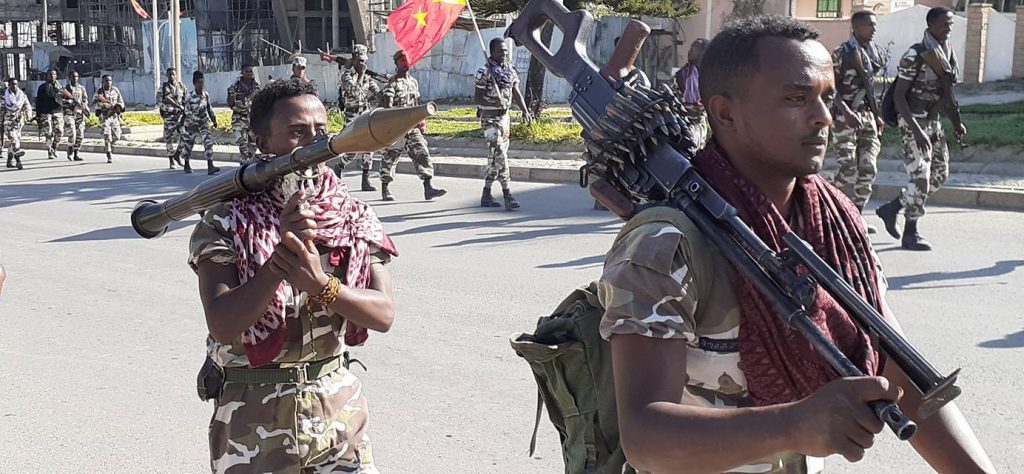
A military parade by heavily armed elite members of Tigray regional state’s special forces in the streets of Mekelle, the capital, prior to the celebrations on February 11/2020 of TPLF’s 45th founding anniversary. Image: Social Media

As per constitutional mandate, all regional states have their police force and militia, in addition to so-called Special Forces. The regional security forces’ size, training, equipment, and experiences vary greatly. Historically it has been the Tigray militia that has been the strongest in numbers and battle-hardened as they constituted a large part of the troops in the war against Eritrea; and is still conducting border patrol. Recent years, however, have seen the recruitment of tens of thousands of recruits to particularly Oromia and Amhara regional states’ security forces, so in terms of number they may outmatch Tigray. In terms of experience and capacity, on the other hand, it may tilt in Tigray’s favor. And, the new Tigrayan recruits to the re-organised special forces are of a different caliber than earlier, as explained by Alula Hailu of Salsay Woyane party: “The new generation of soldiers are not brainwashed. Therefore, they are nationalists, not TPLF’ites. You do not have to be a party member to be recruited. They are not joining to save the TPLF, but to defend and save Tigray.” But more than the quality of the training and personnel, Alula stressed: “Tigray has now the best military capacity and capability in the region, because we will fight as one with a mission and dedication if we are attacked. Even I.“[iii]

Armed forces are essential for providing security and deterrence if under threat, but is also the most potent manifestation of nationalism. Lekatit 11 (February 18) is the date of establishment of TPLF and hence the start of the Tigrayan revolution. This year’s Lekatit 11 marked the 45th anniversary of TPLF, and due to the particular political context, it was celebrated in a manner never seen before. Thousands of people flocked to the streets all over Tigray, waving flags and banners, commemorating martyrs and exhibiting solidarity and national cohesion. As observed by a Tigrayan intellectual:

“The Yekatit 11 celebrations this year differed very much from earlier years. This time all people were mobilized. We are feeling that we are under attack, from both Eritrea and Abiy. Everyone was interested to participate in the celebrations to show that we are standing together. It was not perceived as a TPLF anniversary, as before; it was understood as a Tigrayan event. A great display of solidarity and collectiveness. The second reason they differed was the display of military forces and might. Militia, police, and Special Forces were showing off at every tabia and woreda throughout Tigray. It was a surprise to see. We have never seen his before, may be only during the struggle. I guess the reason why they needed to display these forces now is a deterrence against the alliance between Abiy and Isaias. It is clear to see that they are collaborating to crush us. So for the TPLF it was needed to show a strong military force to reassure us that TPLF can defend Tigray against this threat. It is a deterrence strategy towards Eritrea, Amhara, and Abiy.”[iv]

De facto Statehood Fulfilled

As there are no clear definition of what de facto statehood entails, its attributes are thus in the eye of the beholder. Late last year, the official organ of TPLF, the Woyen magazine, had a special issue out on the “6th National Election, the survival of our country and our regional state.” All its 48 pages were dedicated to discussing the 2020 election process, and the outlooks and dangers associated with it as seen from Tigray. In particular, it warned about the realignment of political forces in the country, and argued strongly against a possible postponement of the elections originally scheduled to be conducted in end of May 2020. In its concluding sections, the question on “what shall be done” in maintaining lasting peace and development in Tigray; the following paragraph summed up the regional government’s strategy in such concern:

“To ensure the security of our people and to fiercely protect the relative freedom of Tigray and thereby strengthen our capacity to accomplish all kinds of tasks we started to work on and to further strengthen our capability of defending ourselves and to show to our enemies and friends that we are capable of doing that even when it comes to using force. Specifically, to accomplish our development endeavors and ensure our people all round safety and security, and to continue our efforts in providing equitable benefits, we need to maintain the stability of Tigray and make it an enduring exemplary of peace by having full-fledged government structures (de facto status).”[v]

De facto statehood is here interpreted as a set of technical capacities and capabilities affixed to an administrative entity, in this case the Tigray regional state. The regional government, in collusion with Tigrayan academics and business investors at home and in diaspora, civil society, and the people at large, seems all to pull in the same direction to secure these capacities and capabilities. As summed up by the vice president of Tigray, Abraham Tekeste: “Right now Tigray has all attributes of statehood: law and order, security, social services. So we are a de facto state.”[vi]

Beyond de facto Statehood – Secession?

The technical process of constructing de facto statehood, to unite a distinct people to a defined territory through common and standardized administrative procedures, is basically completed in Tigray. Will the nationalists’ needs and wants hence be fulfilled? Or will more profound aspirations and desires drive the process further towards independence? History is fraught with nationalist movements running its full course: either the successful establishment of the coveted nation-state, or its annihilation in the pursuit of it in face of an overpowering adversary force.

Tigray has all the fundamentals needed for a robust nationalist movement to take root with the ultimate objective to seek independence and sovereignty:

  • A commonly shared historical narrative and myth of origin stretching back two millennia or more;
  • A cohesive identity, common language and culture; and a homogenous population;[vii]
  • A historical homeland saturated with blood by sacrifices made to defend it from foreign aggression throughout centuries;
  • A political consciousness shaped by internal aspirations and external marginalization;
  • An economy and livelihood with great potential, but perceived to be held back by outsiders;
  • A deep-rooted warrior culture and military capacity, in the face of felt victimhood and external security threats.
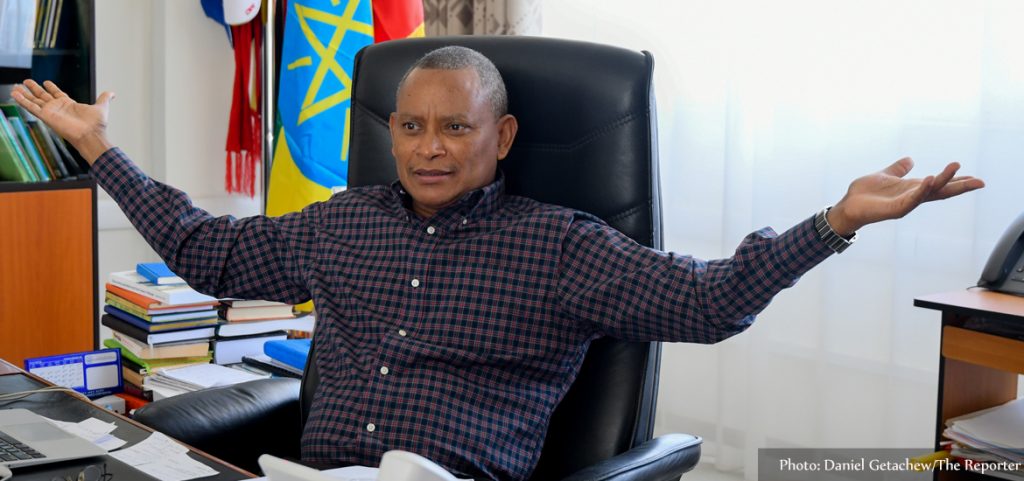
Debretsion Gebremichael during the interview with The Reporter Ethiopia Newspaper in June 2019

Nationalism is not an ideology anchored in rational calculations or bound by administrative procedures and institutions of checks-and-balances; whence created it often appears unstoppable. If so, the next step for the nationalist movement beyond the demand for de facto statehood would thus be for secession and sovereignty. Whether this will be the case in Tigray, remains to be seen. The argument for secession is existing however – and appears swelling –  something also acknowledge by the TPLF chair and regional head Debretsion Gebremichael when he was asked by the newspaper The Reporter whether the people of Tigray wanted to secede from Ethiopia:

Yes, there is a growing feeling among the public. It is only us [TPLF] who are saying that we shouldn’t resort to such feelings. We, as the regional government, are telling our people that those problems will be solved and we are telling them to be patient. However, the pressure from the public is different. … All those things pushed the people to the edge. They feel hopeless and are saying that we should secede from Ethiopia.”

It seems however that TPLF is split on the issue of secession, although the dominant fraction still remains loyal to a federal Ethiopia. The political opposition in Tigray is also split on the issue of independence, with only one party arguing outright for secession, namely Tigray Independence Party. However, the two opposition parties with the assumed strongest popularity in the region, Salsay Woyane and Baitona, both have secession as an optional strategy B. As explained by the Baitona chair Kidane Amane: “Most Tigrayans are not separatists. The majority want to remain in Ethiopia. But they may be pushed into separatism if the instability and persecution continues.”[viii]

The strength of the nationalist cum secessionist movement will thus react to and reflect the political developments in Ethiopia at large in the near future. Unfortunately, however, finding solace in Ethiopian politics these days may be a stretch too sanguine even for die-hard optimists. Most people in Tigray, be that party leaders, intellectuals, or the common ‘man in the street’, fear a negative development. In particular the election was identified as a triggering event for ensuing chaos. If PP wins, it will be understood as a continued centralization of the Ethiopian state, fueling the nationalist demand for secession. However, most respondents predicted an election process collapsing into violence and instability. ‘Aboy’ Sebhat Nega, the ‘father’ of TPLF, outlined a dramatic scenario for Ethiopia in the near future:

“What will come? Civil war. Civil war is inevitable. 100%. Either before election or for sure after. The consequences will be terrible. The civil war will be all-embracing; between regional states over territory, intra-region between various elites, and between religions. It will be all-encompassing. The triggering factor will be a cancelled or rigged election.”[ix]

A similar prediction was echoed by Baitona chair Kidane Amane:

“The tensions are increasing. The government institutions are paralyzed or hijacked by certain groups. The Arabs are fueling the chaos with money. You will likely have a civil war, maybe even prior to the elections. War seems inevitable. This may very well be the war leading to Ethiopia’s disintegration. We are going back to the Era of Princes,[x] where we had no center.”[xi]

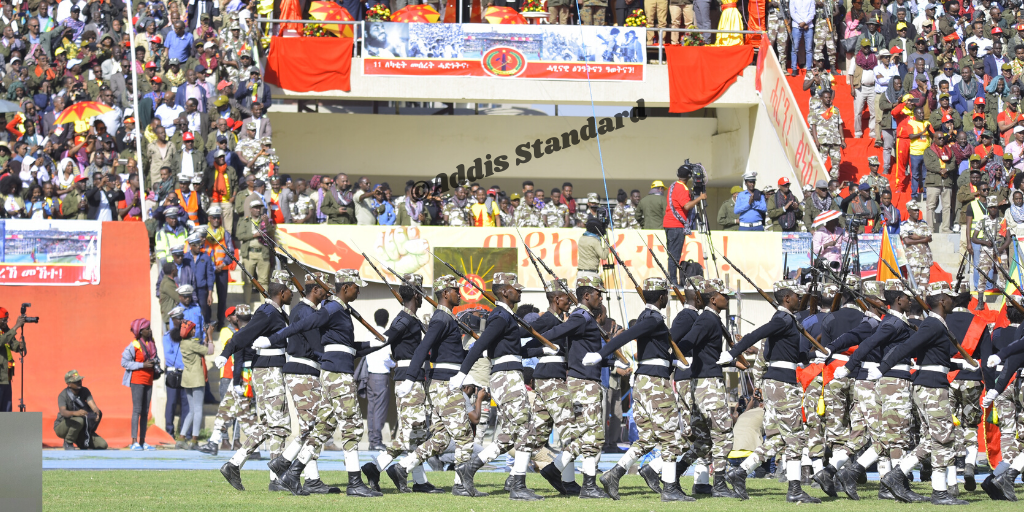
Men members of Tigray’s Regional State’s Special forces staged military parade
during the 45th founding anniversary of TPLF in Mekelle on February 11, 2020.

It seems that most Tigrayan observers and analysts predict in best case a much weakened federal authority and a transition to a confederal type of arrangement, possibly with ‘split sovereignty’ between the center and regional states; or in the worst case an implosion of power and the disintegration of Ethiopia. These two scenarios, and everything in-between, are possibly all too pessimistic; but as stated optimists are hard to find in Ethiopia these days, let alone in Tigray. The most recent development is pushing towards a political confrontation between TPLF and PP; between the regional state government and the federal authority, as stated in TPLF’s Executive Committee statement from May 4, 2020:

“Even though TPLF is ready to play its role in good faith as part of various national efforts aimed at counteracting the destabilizing consequences of this phenomenon, it will never accept the casual jettisoning of the right of self-administration made possible by the constitutional system that the people of Tigray erected through tremendous sacrifices. To that end, together with the people of Tigray as well as other political actors that fully recognize the Tigrean people’s right of self-administration, we will make region-wide preparations, including the holding of regional elections, to fend against conditions that might imperil the rights of our people.”[xii]

The TPLF decision to move forward with conducting regional elections, was not well received by PM Abiy Ahmed, who threatened that: “we will be forced to take action against those who attempt to hold fake elections”.

History is ripe with cases on how nationalistic sentiments are enhanced in the face of external threats; a clear and present danger to their collective safety and security is exactly the optimal tool for nationalists to prove that the only way to salvation is independence. It rests thus upon the federal government to reassure the Tigrayan constituency that they belong in Ethiopia and that their rights and privileges according to the Constitution are protected. A law lecturer at Mekelle University perhaps said it the best:

Ethiopia is a choice to us. It is like an elective course. We select it and stay if we are comfortable with it. If not, we leave. This is the general perception among the youth. We can be in a partnership with other groups on equal terms. If not, we disconnect the partnership.”[xiii]

__________________________________//___________________________________

Editor’s Note: Kjetil Tronvoll is Professor of peace and conflict studies, Bjorknes University College, Norway.

He can be reached at Kjetil.Tronvoll@bhioslo.no


Footnote:

[i] Interviewed by K. Tronvoll, 27.02.20, Mekelle, Tigray.

[ii] Late 2019 a Chinese official business delegation èn route to Mekelle was stopped at Bole by NISS and denied to enter the flight. No specific reason was given. Subsequently Ethiopian MFA issued a statement denying their involvement in preventing the delegation to travel to Tigray.  

[iii] Interviewed by K. Tronvoll, 26.02.20, Mekelle, Tigray.

[iv] Interviewed by K. Tronvoll, 25.02.20, Mekelle, Tigray.

[v] Woyen Magazine, September-December 2019, Page 40, paragraph three (unofficial translation).

[vi] Interviewed by K. Tronvoll, 27.02.20, Mekelle, Tigray.

[vii] This is with certain modifications, of course. You have Irob, Kunama and other minorities within Tigray; in addition to border populations in certain areas (Raya for instance) which may have a more fluid identity. However, these groups taken together constitute a very small minority of the total Tigrayan population. 

[viii] Interviewed by K. Tronvoll, 26.02.20, Mekelle, Tigray.

[ix] Interviewed by K. Tronvoll, 26.02.20, Mekelle, Tigray.

[x] Era of Princes (Zemene Mesafint) was the period between 1769 to 1855 where there was no Negus Negast (Emperor) and the country was split between various warring provinces trying to claim the throne. 

[xi] Interviewed by K. Tronvoll, 26.02.20, Mekelle, Tigray.

[xii] See: https://www.facebook.com/1056328604419403/posts/3162356003816642/?d=n

[xiii] Interviewed by K. Tronvoll, 01.03.20, Mekelle, Tigray.

ዳውድ ኢብሳ: አንጋፋ ታጋይ እና የኦነግ መሪ

ትውልዱ ሆሮ ጉዱሩ ሲሆን ከአራት ኪሎ ዩንቨርስቲ በስታትስቲክስ ተመርቋል በተማሪዎች እንቅስቃሴ ወቅት ደርግ ለሁለት አመታት አሰሮ ፈትቶት ነበር ከእስር ሲለቀቅ ወደ ኦነግ የትጥቅ ትግል ገባ ። ኦነግ በ1968 ሃያ ስምንት ማእከላዊ ኮሚቴ ስመረጥ ይህ ሰው አንዱ በመሆን ተመረጠ ፡፡ ወቅቱ 1971 ነው ኦነግ ትግሉን በምእራብ ኢትዮጵያ ለማሰፋፋት ሲወስን ዳውድ ኢብሳ እና የኦቦ ሌንጮ ለታ ወንድም አባ ጫላ ለታ ዋናና ምክትል ሆነው የምእራቡን ትግል እንዲመሩ ተመድበው በጥቅሉ 17 የሰው ሀይል በመያዝ በሱዳን በኩል አቋረጠው ወለጋ ቤጊና ጊዳሚ አከባቢ እንቅሰቃሴ ይጀምራሉ፡፡

ደርግ ይህን የኦነግ የምእራብ እንቅስቃሴ ለማፈን ትኩረት ሰጥቶ ማጥናት ይጀምራል፡፡ በወቅቱ የጊዳሚ ወረዳ አሰተዳዳሪ ሂካ መሳዲ እና የወለጋ ክ/ሀገር አሰተዳዳሪ ንጉሴ ፋንታ የኦነግን የትግል ጅማሮ ለማጨናገፍ አንድ መላ ይዘይዳሉ፡፡ በጃሌ ዳውድ ኢብሳ ይመሩ ከነበሩት 16 ታጋዮች የአንዱ ወንድም ዘካሪያስ ሾሮ ይባላል፡፡

.የጊዳሚ ወረዳ አስተዳዳሪ ደነበረው ሂካ መሳዲ ዘካርያስን ጠርቶ እንዲህ የሚል ግዳጅ ይሰጠዋል። ወንድምህንና ጓደኞቹን ቤትህ እራት ትጋብዛቸዋለህ የምንሰጥህን መርዝ ደግሞ ምግቡ ውስጥ ትጨምርና ታበላቸዋለህ፡፡ ይህን የማትፈጽም ከሆነ ከእነ ቤተሰብህ ትገደላለህ! ከብትህ ይዘረፋል! መሬትህን ታጣለህ! ዘርህ ከምድረ ገጽ ይጠፋል…..”
.
ዘካሪያስ ግዴታ ሆኖበት እንደ ተሰማማ የደህንነቱ ሪፖርት ላይ ተጠቅሷል፡፡” ወንድሜንስ እንዴት ብዬ እገላለው…” ብሎ አቅማምቶ ነበር፡፡ የተሰጠው ምላሽም “….እንግዲያውስ ከቻልክ ወንድምህን ለይተህ እንዳይበላ አድርገው፡፡ ካልተቻለ ግን አብሮ ይሙት! ወንድምህ አገር ሊያጠፋ የተቀጠረ ከሃዲ ነው” በማለት በግልጽ ይነግሩታ፡፡

..ይህ ዝግጅት ከተደረገ ቦሀላ የገበሬ ልብስ የለበሱ ወታደሮች በአከባቢው አድፈጠው ዘካርያስ ሾሮ እንዳያመልጥ ይጠብቁት ነበር፡፡ ምግብ ውሰጥ የሚጨመር መረዝ ከአዲሰ አበባ ተልኮ በንጉሴ ፋንታ በኩል ለሂካ መሳዲ ተሰጠ፡፡ሂካ መሳዲ ለዘካርያስ አሰረከበው፡፡

…በንጉሴ ፋንታ ትእዛዝ የተገዛው ሙክት ከተላከ ቦሀላ ዘካርያስ ለወንድሙና ለጓደኞቹ የራት ግብዣ ጥሪ እንዲላክላቸው ተደረገ፡፡ ቀጥሎም በጉ ታርዶ ጥሩ ምግብ አዘጋጀ፡፡ በዚያን ሰሞን 17ቱየኦነግ ታጋዮች ለሁለት ተከፍለው ነበር የሚንቀሳቀሱት፡፡ አባ ጫላ ዘጠኝ ራሱን ሆኖ በሌላ አቅጣጫ ይንቀሳቀሰ ነበር፡፡ ዳውድ ኢብሳ የሚመራት ቲም የዘካርያስን የራት ግብዣ ተቀብለው ማምሻው ላይ በገበታው ዙሪያ ተገኙ፡፡

በሰአቱም ዘካርያስ ወንድሙን ለይቶ ለማሰቀረት ሳይቻለው ቀረ፡፡ “…አንተ ቆይ ቦሃላ ትበላለህ ..”ቢለውም ወንድሙ አሻፈረኝ ብሎ ለገበታው ቀረበ፡፡ ወንድሙና ጓደኞቹ በመረዝ የተለውሰውን ምግብ ሲበሉ ዘካርያስ የጎጆውን ምሰሶ ተደግፎ በትካዜ እና በሰቆቃ ይመለከታቸው ነበር፡፡
ዳውድ ኢብሳ ከምግቡ ትንሽ ቀማምሶ ደጅ ጥበቃ ላይ የነበረው ጓደኛቸውን ለመተካት ገበታውን ትቶ ወደ ደጅ ወጣ፡፡ ሌሎች የተመረዘውን ምግብ መብላቱን ቀጠሉ ነገር ግን ብዙም ሳይቆዩ መላ ሰውነታቸው እንደ እሳት እያቃጠላቸው እየጮሁ ይወድቁ ጀመረ፡፡

ዘካርያስ የታናሽ ወንድሙን ሬሳ እጁ ላይ ታቀፈ፡፡ ዳውድ በወቅቱ ብዙም የተመገበ ባይሆንም ከመመረዝ አላመለጠም፡፡ በጥበቃው ላይ እያለ ሰውነቱ ሲቃጠልበት መመረዛቸው ስለገባው በፍጥነት ቅጠላ ቅጠልና አፈር እየቃመ ውሃ በብዛት ጠጣበት፡፡ ደግሞ ደጋግሞ አሰታወከ፡፡ሆኖም ከመውደቅ አልዳነም፡፡ራሱን ስቶ እንደ ጓደኞቹ ከዘካርያስ ጓሮ ወደቀ፡፡ የገበሬ ልብስ ለብሰው በአከባቢው አድፍጠው ውጤቱን ይጠብቁ የነበሩ ወታደሮች በተያዘላቸው ቀጠሮ ዘካርያስ ቤት ሲደረሱ ሰባቱ ታጋዮች ሞተው ዳውድ ኢብሳ ግን ነፍሱን እንደሳተ አገኙት፡፡

ዳውድነን ይዘው ወደ ደምቢዶሎ ከነፉ፡፡ የኦነግን ሚስጥር ከእሱ ለማግኘት ፍላጎት ሰለ ነበራቸው ፈጣን ህክምና ሰጥተው ህይውቱን አተረፉት፡፡ ቀጥሎም ከደምቢ ዶሎ ወደ ነቀምት አዘዋውረውት ተጨማሪ ህክምና ሰጡት፡፡
ነቀምት ላይ ትንሽእንዳገገመ ወደ እስር ቤት በመውሰድ ገልብጠው ይገርፉት ጀመር፡፡ በወቅቱ ስለ ሁኔታው የተገኘው ማስረጃ የወለጋው የደህንነት ሪፖርት እንደሚገልጸው አሉ የተባሉትን የምርመራ እርምጃዎችን
የተጠቀሙበት ቢሆንም ከዳውድ ኢብሳ አንደበት አንዳችም ሚሰጢር ሊያገኙ አልቻሉም፡፡ሲያቅታቸው ወደ አዲሰ አበባ ወደ ማእከላዊ ላኩት፡፡

እዚያም በቤንዚንና በቆሻሻ ውሃ የሞላ በርሜል ውሰጥ እየደፈቁ መረመሩት፡፡ ለመሞት ዝግጁ ሰለ ነበር አንዳችም የተነፈሰው ነገር የለም፡፡ደግመው ደጋግመው ማእከላዊና አለም በቃኝ እያመላለሱ በተለያዪ ማሰቃያ ሰልቶች እንደ መረመሩት የደህንነቱ መ/ቤት ሰነድ በዝርዝር ያብራራል፡፡
ዳውድ ኢብሳ! በአለም በቃኝ አምስት አመታት ታሰረ፡፡ በሂደትም ከመላመድ ብዛት ጠባቂ የነበረውን ፖሊስ ማሳመን ቻለ። ለህክምና ሲወጡም ከሁለት ባልደረቦቹ ጋር ከሆስፒታል አምልጦ ወለጋ ገባ፡፡
.
የቤንሻጉል ጫካዎችን በማቋረጥ ዳግም ኦነግ ከአለበት ቦታ ለመድረሰ የሁለት ሳምንት የሌሊት ጉዞ አድርጓል፡፡ እሱ መርዝ በልቶ ሲማረክ ምእራብ ወለጋ ጫካ ውሰጥ የቀሩት አባጫላ ለታ እና ዘጠኝ ጓደኞቹ ከአንድ ብርጌድ በላይ ሰራዊት ሆነው ነበር የጠበቁት፡፡ የመሪያቸውን በህወይት መመለስ ማመን ያልቻሉት ታጋዮች በታላቅ ደሰታ ተቀበሉት!!
.
ይህ ተአምር ከሞት_የተረፈ_በብልጠቱ_ከደርግ_እስር_ቤት ያመለጠው ሰው የዛሬው_ የኦነግ_ ሊቀመንበር_ ጃሌ_ ዳውድ_ኢብሳ_ነው ፡፡ ዳውድ ኢብሳ ባመነበት የትግል መንገድ ለኦሮሞ ህዝብ ህልውና ሲል ሲታገል እና ሲያታግል እድሜው የጨረሰ ጀግና ነው ። ታሪክ ታሪክ ነው እና የምናውቀውን አጋራናችሁ ።

“Fayyaa fi Nagaan adda hin bahu!” Dr Kuwee Kumsaa