Monthly Archives: June 2020
Two Oromo elders- wife and husband were killed by the Abiy’s regime forces in western Oromia
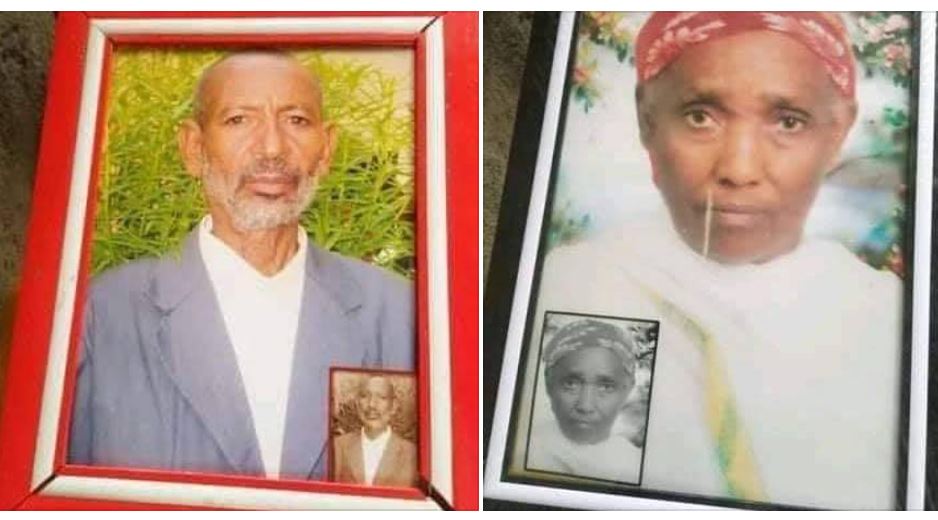
Ob Ceesisaa Gabbisaa and Ad Faantayee Daanyee, father and mother of Caalaa, a fighter of Oromo Liberation Army
(A4O, 8June 2020) Two Oromo parents- wife and husband were killed by the Abiy’s regime forces in western Oromia
Sources indicate that the Abiy’s regime security forces have committed the worst crime against two Oromo elders- wife and husband in western Oromia.
The coward regime agents who could not fight Caalaa Ceesisaa, an Oromo liberation fighter, in battle killed his innocent parents, mother, Fantaayee Daanyee and father, Ceesisaa Gabbisaa, in Qeellam Wallggaa zone, Western Oromia.
Many agree that this is an outrageous violation of Geneva Convention.

Caalaa Ceesiaa, an Oromo liberation fighter
The act of killing the mother and the father of Caalaa, an Oromo liberation fighter, by the Abiy regime shows the extent it can go to commit genocide on the Oromo people.
“If this terrorist government is allowed to survive, it will totally exterminate the entire Oromo people,” says Dr Asafa Jalata oh his Facebook page
Abiyi is repeating the genocide Menelik and Gobana committed on the Oromo nation.
The Oromo nation – you have to make your choice: you must rise up and liberate yourself or you should accept your total annihilation and give your country to the neo-nafxanya regime.
Ethiopian Government Violates Basic Human Rights Under The Guise Of COVID-19 State Of Emergency
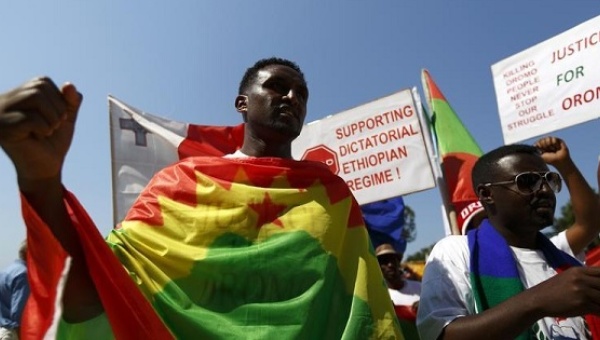 We, the undersigned Oromo Scholars and Professionals, have been carefully monitoring the COVID-19 situation and associated government activities to combat the spread of the disease in Ethiopia. We recognize fighting this pandemic is extremely challenging everywhere. Ethiopia declared a state of emergency on April 10, 2020, following the official acknowledgement of the spread of the disease to that country. While the initial reluctance of the government to start taking preventive actions (for example, allowing the country’s national carrier, the Ethiopian Airlines, maintain regular flights to global COVID 19 hotspots) was deplorable, we support every effort to contain the pandemic and prevent its potentially devastating impact. At the same time, we are also deeply concerned with the simultaneous war that the government of Prime Minister Abiy Ahmed has been waging on the Oromo people along the COVID-19 pandemic.
At the time when all efforts and resources ought to be devoted to controlling the spread of this disease, the Prime Minister is deploying the federal defense forces and the Oromia State special police force to several parts of Oromia under the pretext of flushing out “shifta” (bandits/insurgents). Until mid-March, 2020, areas where the government alleges the insurgent group is operating—all four zones in Wallaga, and Gujii and Borana zones—are closed off and placed under unofficial and illegal military Command Posts.
The Command Posts were later extended to other areas in Oromia, including Western Shawa zone. At a time when citizens are terrified by the potentially devastating impact of the COVID-19 pandemic, the government has intensified arbitrary arrests and extra judicial killings. Even after some detained individuals were released in mid-March 2020, there are still thousands of political prisoners throughout Oromia’s overcrowded jails. For example, pictures recently taken by concerned citizens and released on social media show that the notorious Jaatoo state prison in Nekemte city, Eastern Wallaga, is holding extremely large number of inmates, including many unjustly detained youth, teachers, mothers and civil servants suspected to be supporters of the Oromo Liberation Front (OLF) and other opposition Oromo political parties. Under the cover of the COVID-19 State of Emergency, the Ethiopian Federal Government and the Regional State of Oromia are engaged in widespread arrests further bulging the already crowded prison population, an act that defeats the very purpose of fighting the COVID-19 pandemic.
Since the government does not allow independent journalists to freely report on human rights violations and COVID-19 cases, it is difficult to collect and disseminate information to the public in a timely manner. For instance, until mid-March, the government severed all basic communication services, such as telephone and internet, in all four zones of Wallaga and in Gujii zone, condemning the citizens to information blackout and, under its cover, unleashing its brutal army to terrorize ordinary citizens and leaders and members/supporters of opposition political parties away from the eyes and ears of national and international communities. According to the latest report by the Human Rights League of the Horn of Africa (HRLHA), “gross human rights violations, and government sponsored killings, forced disappearances, rapes, detentions, property destructions” are taking place daily in Oromia regional state both during and after the communication blackout (HRLHA, May 2, 2020). This report indicates at least the detention of 264, and death of 169 persons since January 2020. Many more have been imprisoned and/or killed since the release of the KRLHA report.
The Ethiopian regime has never provided a shred of evidence to establish these victims are indeed members of any illegal group or committed any crime. Most of these victims are ordinary citizens caught up in government’s hysterical political campaign of weakening opposition parties that are considered to be a threat to its stay in power. Members of legally registered opposition political parties were not spared from the indiscriminate acts of harassments and intimidations by government military and security apparatus. For example, on February 29, 2020, the regime’s security forces raided the homes of the Oromo Liberation Front (OLF) leaders and illegally arrested and detained five senior party officials and four supporters. While most were released after public humiliation and mistreatment for 24 hours, Mr. Abdi Regassa, a senior OLF official, still remains in detention (Amnesty International, March 3, 2020). On March 7, 2020, government police arrested two journalists, Dessu Dula and Waqo Nole. According to the statement by Committee to Protest Journalists released on March 18, 2010, these journalists also remain in jail. Earlier, Col, Gemechu Ayana, a high-ranking member of the OLF, who was arrested on January 17, 2019 spent almost a year in prison on bogus charges of terrorism and was released on December 24, 2019.
All these arrests, detentions, and intimidations are taking place under the watch of the Prime Minister, whose promises following his accession to power on the back of Oromo People’s bitter struggle for freedom and democracy some two years ago was hailed as the mark of the dawn of democracy in Ethiopia. However, that optimism was short lived and the prospect of political freedom and the rule of law in the country is squashed once again. During his early weeks and months in power, the Prime Minster had repeatedly condemned the gross violations of human rights perpetrated by the Ethiopian Peoples’ Revolutionary Democratic Front (EPRDF) government, which he served as a high ranking official (e.g. as a security and military officer, a federal agency head, a minister, to name a few). He also confessed that the EPRDF government itself was a terrorist when it detained thousands of people on fake charges and went on to promise a thorough reform and transition to genuine democracy. Such pronouncements and promises, and the normalization of relations with the neighboring Eritrea quickly earned him credit from near and a far including the 2019 Noble Peace Prize. The Prime Minster continues to present himself to the outside world as a reformist, and his government as democratic. But the true color of Abiy Ahmed and his government has become crystal clear to millions of people, at least to thousands of innocent victims and families of the victims who were made to disappear, openly killed or remanded on trumped up charges and thus languishing in overcrowded prisons.
Nothing can be more disappointing than learning that a government that is supposed to protect the wellbeing of its citizens from emergencies such as COVID-19 is using it as a weapon to eliminate its political adversaries. The recently declared COVID-19 State of Emergency, for example, is being implemented illegally and without accountability. Article 93 of the Ethiopian constitution that allows the government to declare state of emergency also requires the House of Peoples’ Representatives (Parliament) to establish the State of Emergency Inquiry Board consisting of seven persons representing the house and legal experts. This inquiry body is supposed to have legal power to obtain identity of people detained under the terms of the state of emergency and announce their names and reasons for their detentions. The law also authorizes the investigation of any inhumane treatment and recommend corrective actions to the Prime Minister to ensure prosecution of violators. Ironically, the Prime Minister himself recently brushed aside concerns raised by opposition party leaders about gross human rights violations by his military in a public setting and justified that the alleged measures were taken to prevent the spread of COVID-19. The fact of the matter, however, is that the vast majority of people detained or killed are members and supporters of opposition parties, and it is hard to believe that only opposition party members break the state of emergency.
At the time of this writing, it is not clear if the State of Emergency Inquiry Board has been created when the state of emergency was declared, and no announcement of the identities of people detained and the state of their wellbeing while in detention have been made. But we have credible information that hundreds of people have been rounded since the declaration of the state of emergency suffering in various detention centers. The declaration of a state of emergency without the creation of the constitutionally mandated inquiry body and the glairing absence of transparency in the implementation of the state of emergency is colossal violation of the law and the rights of citizens.
We end this piece by calling upon:
- The Ethiopian government to refrain from using the state of emergency as a disguise to harass, intimidate, imprison, and kill innocent Oromo people, and to unconditionally release all political prisoners.
- International community to use their political and financial leverage to pressure the Ethiopian government into respecting basic human rights of its citizens.
- The Oromo people to be cognizant of the fact that the struggle you sustained for over a century and the sacrifices you made along the way has been hijacked before it reached its final destination. You have no other choice but to rise up in unison, once again, and push it across the goal line.
- The Ethiopian people to understand that Oromo people’s struggle is not against any specific group but against the oppressive system that marginalizes some sectors of the Ethiopian population. As such, all peace-loving Ethiopians should support the Oromo people’s struggle for freedom, justice, and democracy.
Signatories (in alphabetical order)
| Adugna Birhanu (Ph.D) | Galaana Balcha (MD) | Namara Garbaba (Ph.D) |
| Alemayehu Biru (Ph.D) | Gizachew Tesso (Ph.D) | Oli Bachie (Ph.D) |
| Alemayehu Kumsa (Ph.D | Gobena Huluka | Samuel Geleta (Ph.D) |
| Amanuel Gobena (Ph.D) | Guluma Gemeda (Ph.D) | Rundassa Eshete (Ph.D) |
| Asefa Jalata (Ph.D) | Habtalem Kenea (Ph.D) | Solomon Geleta (Ph.D) |
| Asfaw Beyene (Ph.D) | Haile Hirpa (Ph.D) | Teferi Margo (Ph.D) |
| Ayana Gobena (Ph.D) | Hambisa Belina (Ph.D) | Tekleab Shibru (Ph.D) |
| Bahiru Duguma (Ph.D) | Ibrahim Elemo (Ph.D) | Tesfaye Negeri (Ph.D) |
| Baro Deressa (MD) | Iddoosaa Ejeta (Ph.D) | Tesfaye Tesso (Ph.D) |
| Bedassa Tadesse (Ph.D) | Ismael Abdullahi (Ph.D) | Thomas Baisa (MD) |
| Begna Dugassa (Ph.D) | Jamal Ebrahim (MD) | Tolawak Beyene (MD) |
| Bekele Temesgen (Ph.D) | Jemal Hebano (PharmD) | Workineh Torben (Ph.D) |
| Benti Getahun (Ph.D) | Jenberu Feyisa (Ph.D) | Worku Burayu (Ph.D) |
| Berhanu Kedida (MD) | Junaidi Ahmed (MD) | |
| Bersisa Berri (Ph.D) | Koste Abdissa (Ph.D) | |
| Bichaka Fayissa (Ph.D) | Mekbib Gebeyehu (Ph.D) | |
| Daniel Ayana (Ph.D) | Mekuria Bulcha (Ph.D) | |
| Degefa Abdissa (MD) | Moa Apagodu (Ph.D) | |
| Dessalegn Negeri (Ph.D) | Mohammed Hassan (Ph.D) | |
| Desta Yebassa (Ph.D} | Mosisa Aga (Ph.D) |

Dawud Ibsa: A Leader with Moral Authority!
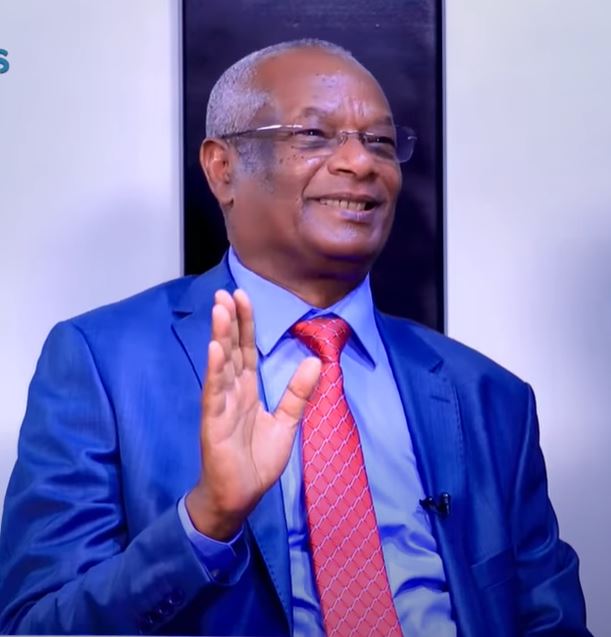
The OLF had many leaders who are noble, brave and worthy of praise. All of them gave up opportunities almost every Oromo had for the sake of their own people. Many of the OLF leaders, dead or still alive, are adored for that. However, only very few of them possess the moral authority that makes them stand tall.
Dawud Ibsa, the current leader of the OLF, is an exception in that he proved himself as a leader with moral authority – a quality very few other OLF leaders can claim.
You may ask why? And how? First, let me define moral authority – having the weight, a sense of wisdom and experience that encourages other people to put their trust in you.
A leader with a moral authority is someone who has turned time into an ally— proved to be consistently competent, maintained a consistent character, and showed consistent courage. Note that there is a common theme here—Consistency.
Consistency is key to leadership and success. In fact, it’s the sign qua non of leadership. If you do the right things the right way for the right reasons when you are young, it often goes unnoticed by the world at large. But do that over decades (40 years in the case of Dawud Ibsa), more credit, love and respect than you think you deserve will flow your way.
Are you bracing for evidence? Look no further than the date more than 5 million Oromos gathered in Finfinne ( September28, 2018) to welcome Dawud Ibsa and the OLF leadership back to Oromia.
Back to my point on consistency! Dawud Ibsa have been consistent in his personal growth, political position, character, thinking, and interactions with his colleagues and the Oromo people—and because of that, he has been able to stay in the game for over forty years. Call that a layered living—the benefits and gains of the sufferings he endured to produce a life of leadership that others may want to learn from and emulate.
Fast forward that to moral authority. In a world filled with daily changes and continuous disruptions, people look for a leader who can provide stability. A leader with moral authority is flexible enough to accept changes while steadfastly trustworthy and providing hope. Spend an hour with Dawud Ibsa, you will come across with the conclusion that his consistency exudes trust and hope even in the face of adversity.
Dawud Ibsa also excells in three critical areas that earn him the moral authority:
Competence—the ability to lead well. Making smart decisions, knowing your people, understanding your field, and committing to personal growth. Dawud Ibsa demonstrates that he knows what he is doing—and that he learns from his mistakes. To me this is what enabled him to establish himself as a leader worth following.
Courage—moving forward in the face of fear. Courage is not the absence of fear, but the presence of mind to act when afraid. Dawud Ibsa has the courage to make hard decisions, needed changes, and cast vision.
Character—being bigger on the inside than the outside. Leaders of character know who they are is more than what they achieve. Dawud Ibsa has unparalleled commitment integrity, authenticity, humility, and love.
He always puts people first; lives to make a difference, not to make money; he is always himself; expressed gratitude, rejects entitlement; has the will to be misunderstood and lonely for the right reasons.
I assume that he had made the commitment to live out those things, not because he saw them as a means to an end, but because he felt they were simply the right things to do.
Finally, I feel that Dawud Ibsa is a leader with moral authority, because he never granted himself the authority, but allowed the rest of us to see it, deny or grant him.
Summing up, in a shifting world, leaders with moral authority provide the foundation for others to build upon. Dawud Ibsa’s leadership, whether you agree with me or not, is a leadership worth its making and I am very proud to say it.




 Advocacy for Oromia