Monthly Archives: April 2025
𝗧𝗵𝗲 𝗨𝗻𝗳𝗶𝗻𝗶𝘀𝗵𝗲𝗱 𝗦𝘁𝗿𝘂𝗴𝗴𝗹𝗲: 𝗗𝗿. 𝗚𝗲𝗺𝗲𝘁𝗰𝗵𝘂 𝗠𝗲𝗴𝗲𝗿𝘀𝘀𝗮 𝗮𝗻𝗱 𝘁𝗵𝗲 𝗢𝗿𝗼𝗺𝗼 𝗣𝗲𝗼𝗽𝗹𝗲’𝘀 𝗙𝗶𝗴𝗵𝘁 𝗳𝗼𝗿 𝗖𝘂𝗹𝘁𝘂𝗿𝗮𝗹 𝗦𝘂𝗿𝘃𝗶𝘃𝗮𝗹
𝘼 𝙎𝙘𝙝𝙤𝙡𝙖𝙧 𝙪𝙣𝙙𝙚𝙧 𝙋𝙚𝙧𝙨𝙚𝙘𝙪𝙩𝙞𝙤𝙣, 𝘼 𝙋𝙚𝙤𝙥𝙡𝙚’𝙨 𝙎𝙞𝙡𝙚𝙣𝙘𝙚
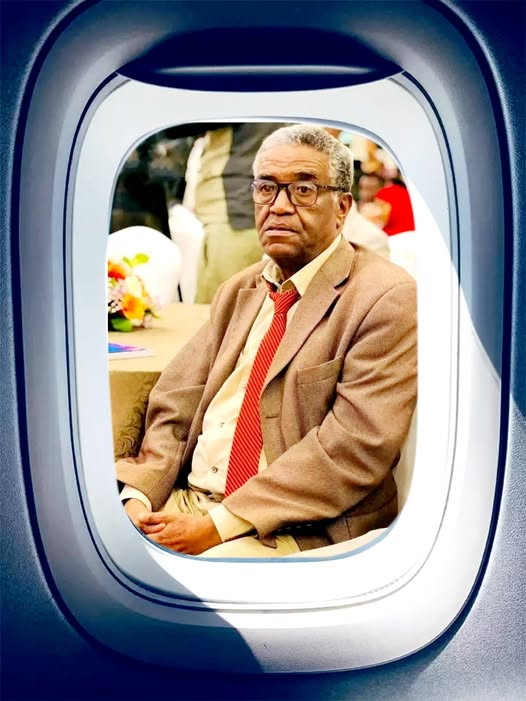
For centuries, the Oromo endured political subjugation, their language suppressed, their Gadaa system delegitimized, their history rewritten by conquerors. Yet, in the face of this cultural suffocation, Dr. Gemetchu emerged as a torchbearer, excavating buried wisdom and challenging the structures of colonial knowledge. Now, as he retreats to Dembi Dolo, fleeing state harassment, his people’s silence is deafening. If Oromummaa is to mean more than a slogan, it must be defended—not just in protests, but in the unwavering protection of those who define it.
History remembers the names of those who dared to illuminate the path of their people—Galileo, Newton, Darwin, Einstein—visionaries who reshaped human thought despite persecution. Among the Oromo, a nation long subjected to systemic erasure, Dr. Gemetchu Megerssa stands as one such figure: a scholar who dedicated his life to reviving Oromo knowledge, only to face banishment in his twilight years. His story is not just one of personal struggle but a mirror held up to the Oromo people—revealing both the brilliance of their intellectual heritage and the painful complacency that allows their thinkers to suffer alone.
𝙏𝙝𝙚 𝙃𝙞𝙨𝙩𝙤𝙧𝙞𝙘𝙖𝙡 𝙏𝙝𝙚𝙛𝙩: 𝙃𝙤𝙬 𝙊𝙧𝙤𝙢𝙤 𝙆𝙣𝙤𝙬𝙡𝙚𝙙𝙜𝙚 𝙒𝙖𝙨 𝙎𝙪𝙥𝙥𝙧𝙚𝙨𝙨𝙚𝙙
The Oromo, once the dominant cultural and political force in the Horn of Africa, faced deliberate dismantling under successive regimes. Emperor Menelik’s conquests in the late 19th century marked the beginning of systemic oppression—land seizures, forced assimilation, and the banning of Oromo language in education and governance. The Derg regime continued this erasure, treating Oromo identity as a threat to Ethiopian unity. Even today, despite constitutional recognition, Afaan Oromo struggles for full legitimacy in academia, media, and technology—a lingering effect of policies designed to stifle its growth.
This suppression was not just political but epistemic—an attack on the Oromo way of knowing. Oral traditions, cosmological wisdom, and indigenous governance systems like Gadaa were dismissed as primitive, replaced by imposed narratives. The result? Generations of Oromo grew up alienated from their own intellectual heritage, taught to view their culture through the lens of the colonizer.
𝙂𝙚𝙢𝙚𝙩𝙘𝙝𝙪 𝙈𝙚𝙜𝙚𝙧𝙨𝙨𝙖: 𝙏𝙝𝙚 𝙎𝙘𝙝𝙤𝙡𝙖𝙧 𝙒𝙝𝙤 𝙁𝙤𝙪𝙜𝙝𝙩 𝘽𝙖𝙘𝙠
Into this void stepped Dr. Gemetchu Megerssa—grandson of the legendary Ruda Kura, inheritor of Oromo oral traditions, and an anthropologist who weaponized academia for liberation. His 1993 doctoral thesis, “𝑲𝒏𝒐𝒘𝒍𝒆𝒅𝒈𝒆, 𝑰𝒅𝒆𝒏𝒕𝒊𝒕𝒚, 𝒂𝒏𝒅 𝒕𝒉𝒆 𝑪𝒐𝒍𝒐𝒏𝒊𝒛𝒊𝒏𝒈 𝑺𝒕𝒓𝒖𝒄𝒕𝒖𝒓𝒆,” was revolutionary. It exposed how colonial and Ethiopian state structures deliberately distorted Oromo history to justify domination. More than a thesis, it was an act of reclamation—centering Oromo elders as knowledge producers, not subjects to be studied.
For decades, he taught at Addis Ababa University, shaping generations of Oromo intellectuals. His lectures were not mere academic exercises; they were resistance. He challenged the Eurocentric frameworks dominating Ethiopian scholarship, insisting that Oromo cosmology, law, and philosophy deserved rigorous study. 𝑯𝒊𝒔 𝒘𝒓𝒊𝒕𝒊𝒏𝒈𝒔—𝒐𝒏 𝑺𝒂𝒇𝒖𝒖 (𝒎𝒐𝒓𝒂𝒍 𝒃𝒂𝒍𝒂𝒏𝒄𝒆), 𝑨𝒚𝒚𝒂𝒂𝒏𝒂𝒂 (𝒔𝒑𝒊𝒓𝒊𝒕𝒖𝒂𝒍 𝒆𝒔𝒔𝒆𝒏𝒄𝒆), 𝒂𝒏𝒅 𝑮𝒂𝒅𝒂𝒂—𝒓𝒆𝒗𝒊𝒗𝒆𝒅 𝒄𝒐𝒏𝒄𝒆𝒑𝒕𝒔 𝒕𝒉𝒂𝒕 𝑬𝒕𝒉𝒊𝒐𝒑𝒊𝒂𝒏𝒊𝒔𝒕 𝒏𝒂𝒓𝒓𝒂𝒕𝒊𝒗𝒆𝒔 𝒉𝒂𝒅 𝒕𝒓𝒊𝒆𝒅 𝒕𝒐 𝒆𝒓𝒂𝒔𝒆.
Yet, this very brilliance made him a target. The state, threatened by any discourse empowering Oromo consciousness, harassed him—forcing him into early retirement, then banishment. Today, as he seeks refuge in his birthplace, one question lingers: Where is the outrage of the Oromo people?
𝙏𝙝𝙚 𝘾𝙤𝙨𝙩 𝙤𝙛 𝘾𝙤𝙢𝙥𝙡𝙖𝙘𝙚𝙣𝙘𝙮: 𝘼 𝙋𝙚𝙤𝙥𝙡𝙚’𝙨 𝘽𝙚𝙩𝙧𝙖𝙮𝙖𝙡 𝙤𝙛 𝙏𝙝𝙚𝙞𝙧 𝙊𝙬𝙣
A civilization is measured by how it treats its thinkers. The ancient Greeks exiled their philosophers—only to later enshrine their words. The Oromo risk doing the opposite: allowing their scholars to be persecuted while history moves on. Dr. Gemetchu’s isolation is not just his tragedy—it is a test of Oromo collective conscience.
Where are his former students, now professors, activists, leaders? Where are the Oromo business elites who fund political campaigns but not intellectual freedom? Where is the Oromo media, quick to amplify grievances but slow to defend their own scholars? Silence in the face of injustice is complicity. If the Oromo cannot protect a man who gave them the tools to understand themselves, what hope is there for the survival of their culture?
𝙏𝙝𝙚 𝘾𝙖𝙡𝙡 𝙩𝙤 𝘼𝙘𝙩𝙞𝙤𝙣: 𝘿𝙚𝙛𝙚𝙣𝙙𝙞𝙣𝙜 𝙩𝙝𝙚 𝙇𝙞𝙜𝙝𝙩
The time for passive admiration is over. If Oromummaa is to thrive, it must be fought for—not just in protests, but in the unwavering defense of those who define it. 𝑶𝒓𝒐𝒎𝒐 𝑰𝒏𝒕𝒆𝒍𝒍𝒆𝒄𝒕𝒖𝒂𝒍𝒔—𝒃𝒓𝒆𝒂𝒌 𝒚𝒐𝒖𝒓 𝒔𝒊𝒍𝒆𝒏𝒄𝒆; 𝒑𝒖𝒃𝒍𝒊𝒔𝒉, 𝒕𝒆𝒂𝒄𝒉, 𝒂𝒏𝒅 𝒐𝒓𝒈𝒂𝒏𝒊𝒛𝒆 𝒊𝒏 𝑮𝒆𝒎𝒆𝒕𝒄𝒉𝒖’𝒔 𝒏𝒂𝒎𝒆. 𝑶𝒓𝒐𝒎𝒐 𝑩𝒖𝒔𝒊𝒏𝒆𝒔𝒔 𝑳𝒆𝒂𝒅𝒆𝒓𝒔—𝒇𝒖𝒏𝒅 𝒉𝒊𝒔 𝒔𝒂𝒇𝒆𝒕𝒚, 𝒉𝒊𝒔 𝒓𝒆𝒔𝒆𝒂𝒓𝒄𝒉, 𝒉𝒊𝒔 𝒍𝒆𝒈𝒂𝒄𝒚. 𝑸𝒆𝒆𝒓𝒓𝒐𝒐 𝒂𝒏𝒅 𝑸𝒂𝒓𝒓𝒆𝒆—𝒅𝒆𝒎𝒂𝒏𝒅 𝒉𝒊𝒔 𝒘𝒐𝒓𝒌𝒔 𝒃𝒆 𝒕𝒂𝒖𝒈𝒉𝒕 𝒊𝒏 𝒔𝒄𝒉𝒐𝒐𝒍𝒔. 𝑴𝒂𝒌𝒆 𝒉𝒊𝒎 𝒖𝒏-𝒆𝒓𝒂𝒔𝒂𝒃𝒍𝒆. 𝑶𝒓𝒐𝒎𝒐 𝑬𝒍𝒅𝒆𝒓𝒔—𝒊𝒏𝒗𝒐𝒌𝒆 𝒕𝒓𝒂𝒅𝒊𝒕𝒊𝒐𝒏. 𝑨 𝒑𝒆𝒐𝒑𝒍𝒆 𝒘𝒉𝒐 𝒂𝒃𝒂𝒏𝒅𝒐𝒏 𝒕𝒉𝒆𝒊𝒓 𝒘𝒊𝒔𝒆 𝒎𝒆𝒏 𝒍𝒐𝒔𝒆 𝒕𝒉𝒆𝒊𝒓 𝒔𝒐𝒖𝒍.
History will judge this moment. Will the Oromo be remembered as a people who let their light be extinguished—or as a nation that stood, unbroken, beside those who carried its flame? When the light of Oromo wisdom flickered, who stood? Who fought? Let our answer shake the earth! Let us be the generation that said, ‘Never again!’—that shielded our scholars, honored our elders, and declared, We are Oromo: we protect our own. The time for whispers is over. Rise. Speak. Act.
Urgent Call for National Recognition: Honoring Four Pillars of Oromo Scholarship and Activism
The Oromo nation stands on the shoulders of intellectual giants who have dedicated their lives to preserving our culture, defending our humanity, and fighting for our rights. Yet today, Prof. Asmarom Legesse, Qabbanee (Bonnie Holcomb), Dr. Gammachu Magarsa, and Dr. Trevor Trueman (Galato)—four monumental figures in Oromo scholarship and activism—are at risk of being forgotten due to a lack of institutional recognition.
We demand immediate and permanent national recognition for these scholars while they are still alive, ensuring their legacies are enshrined in Oromo history for generations to come.
Why These Four Scholars Must Be Honored Now
1. Prof. Asmarom Legesse
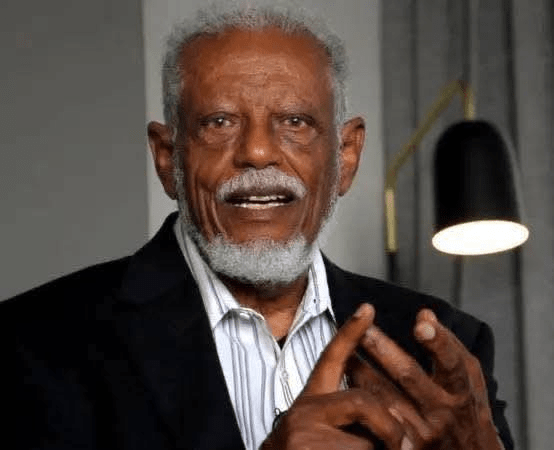
- Revolutionized Gadaa Studies: His seminal work, “Gadaa: Three Approaches to the Study of African Society”, proved that Oromo democracy predated Western systems and remains a model of indigenous governance.
- Challenged Colonial Narratives: Dismantled Ethiopianist historiography, reclaiming Oromo agency.
- Legacy at Risk: Died without seeing a major Oromo institution bear his name.
2. Qabbanee (Bonnie Holcomb)
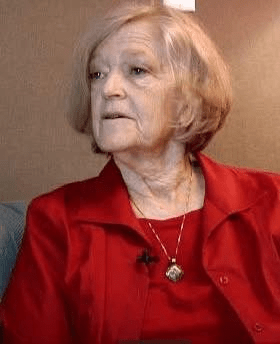
- Co-architect of Oromo Political Thought: Her book “The Invention of Ethiopia” (1990) exposed Ethiopian state violence and redefined Oromo nationalism.
- Voice for Oromo Women: Highlighted the intersection of gender and liberation in Oromo struggle.
- Still Fighting: Yet, no university, library, or research center honors her work.
3. Dr. Gammachu Magarsa
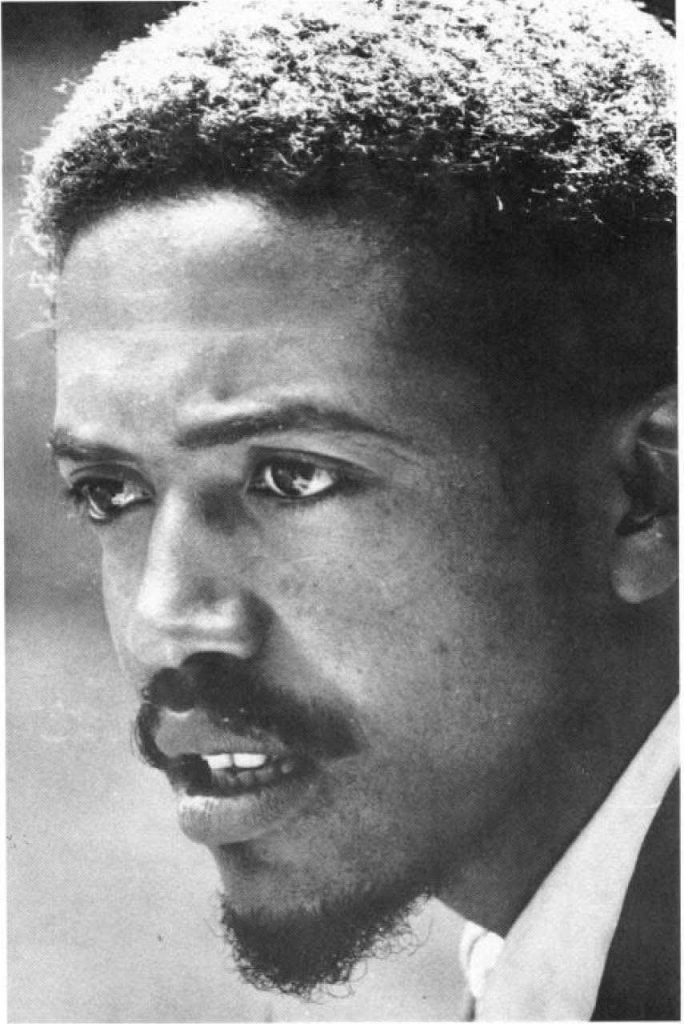
- Living Archive of Oromo Knowledge: Key informant for scholars like Lambert Bartels, preserving Oromo religion, Gadaa rituals, and oral history.
- Dying in Neglect: Now elderly and isolated in Dambi Dollo, his unrecorded wisdom risks being lost forever.
- Demand: Immediate documentation + a Dr. Gammachu Magarsa Center for Indigenous Knowledge.
4. Dr. Trevor Trueman (Galato) – OSG, Human Rights Activist
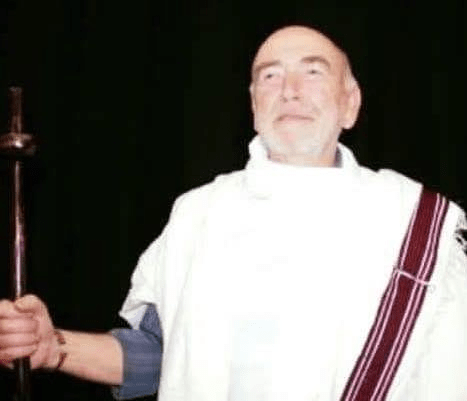
- International Advocate: As part of the Oromo Support Group (OSG), he exposed genocide, torture, and repression against Oromos to the world.
- Bridge Between Oromos and Global Justice Movements: Amplified Oromo voices in UN and EU forums.
- Unsung Hero: No official Oromo recognition for his decades of sacrifice.
How to Honor Them While They Are Still Alive
✅ Establish Permanent Memorials:
- Asmarom Legesse Institute for Indigenous Democracy (Finfinnee/Addis Ababa)
- Bonnie Holcomb Library of Oromo Political Thought (Minneapolis/Dire Dawa)
- Dr. Gammachu Magarsa Center for Oral Traditions (Dambi Dollo)
- Dr. Trevor Trueman Human Rights Award (Annual recognition for Oromo rights defenders)
✅ National Holidays/Lectures:
- Annual Oromo Scholars Day (Featuring their works)
- Gadaa Studies Symposium in honor of Legesse & Holcomb
✅ Documentary Films & Curriculum Inclusion:
- Record Dr. Gammachu’s knowledge before it’s too late.
- Teach their books in Oromo schools and universities.
✅ Public Monuments: Statues, plaques, or renamed streets in Finfinnee, Naqamte, and major diaspora hubs.
“A Nation That Forgets Its Thinkers Has No Future”
These scholars are not just academics—they are the guardians of Oromummaa. To neglect them is to erase our own intellectual heritage.
#HonorOromoScholars #LegesseHolcombGammachuTrueman
✊🏾 “Seenaan keenya haa mul’atu! Gadaan keenya haa jiraatu!” (May our history be visible! May our Gadaa endure!)
📢 Immediate Actions Needed:
- Tag Oromo institutions (Oromia Cultural Center, A4O, OLLAA, Oromo Studies Association) to endorse this.
- Share their books, quotes, and stories widely. #KnowYourScholars
- Pressure Oromia regional government to fund memorials and research centers.
“Recognition delayed is recognition denied. Act NOW.” 🔥
Oromo Martyrs’ Day: Honoring Heroes and Their Legacy
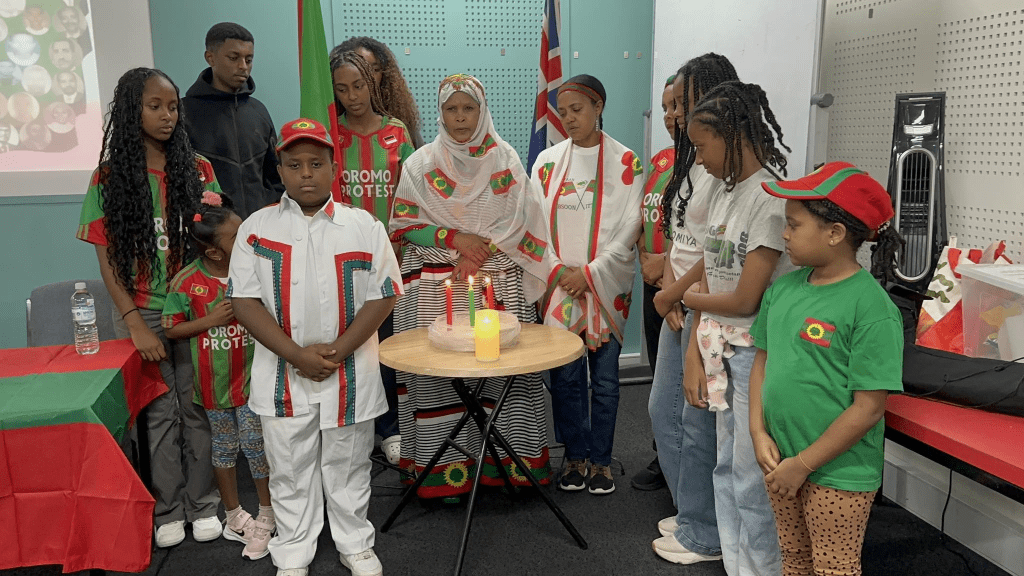
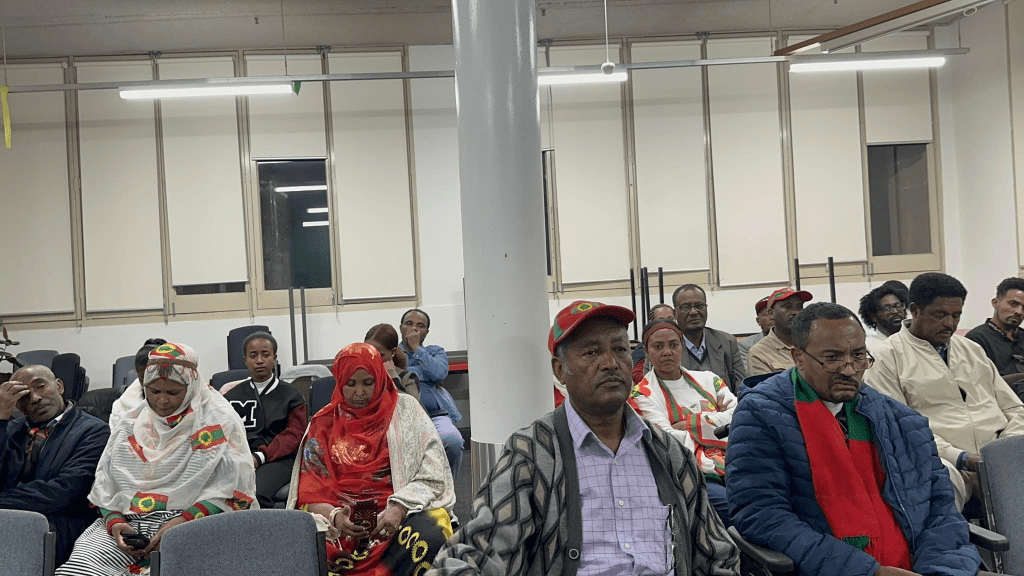
[Melbourne, April 27, 2025, Ross House Association]-The Konyaa Victoria of Oromo Liberation Front Honors Oromo Martyrs’ Day with Resolve and Remembrance.
Members of the Konyaa Victoria Oromo Liberation Front (KVOLF) gathered today in a powerful commemoration of Oromo Martyrs’ Day, honoring the countless heroes who sacrificed their lives for the liberation and dignity of the Oromo people.
This year’s observance carried special significance, reflecting both the enduring spirit of resistance and the unbroken chain of Oromo struggle.
A Day of Tribute and Defiance
The event featured:
 Speeches & Testimonies – Veterans and youth shared stories of fallen martyrs, from the early days of the Oromo liberation movement to recent victims of state violence.
Cultural Performances – Songs, poems, and traditional Oromo dances embodied the resilience of a people who refuse to be erased.
Candlelight Vigil – Names of known martyrs were read aloud, ensuring their memories live on in the fight for bilisummaa (freedom).
“Their Blood Waters the Tree of Liberty”
Speakers emphasized:
– The martyrs’ legacy demands action—not just mourning.
– Global Oromo unity is critical as repression continues in Oromia.
– Konyaa Victoria OLF’s role in amplifying the struggle through advocacy and grassroots organizing.
A Pledge to Continue the Fight
The gathering closed with a collective vow:
“We will never forget. We will never surrender. Oromia shall be free!”
#OromoMartyrsDay#VictoriaOromo#Bilisummaa
 “*Hundeen keenya wareegama keenya hin dagannu!* (All that we have, we gave—we shall not retreat!)*
 Photos from the event: [Attach/share images of attendees, performances, and vigil]
 Next Steps: Join KVOLF’s campaigns for Oromo political prisoners, land rights, and global awareness.
“The struggle continues—until justice flows like the rivers of Oromia.” 


Pope Francis: A Legacy of Social Justice, Peace, and Advocacy for the Marginalized
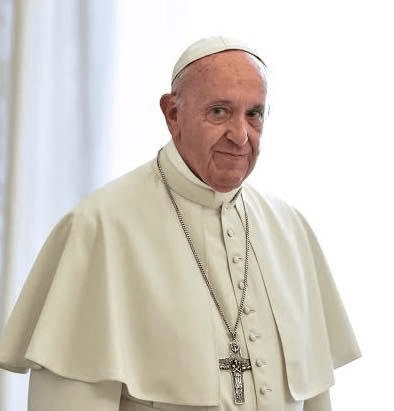
Vatican City– Pope Francis, the first Latin American pontiff in the history of the Catholic Church, has left an indelible mark on the world through his unwavering commitment to **social justice, peace, and the rights of oppressed communities**. His papacy has been defined by **bold advocacy for refugees, environmental justice, economic equality, and interfaith dialogue**—making him one of the most transformative religious leaders of our time.
Key Pillars of His Legacy:
**Champion of the Poor & Refugees** – From denouncing global indifference toward migrants to washing the feet of prisoners, Pope Francis embodied the Gospel’s call to serve “the least of these.”
**Voice for Peace** – He mediated conflicts, condemned wars, and famously embraced **South Sudan’s rival leaders**, urging reconciliation.
**Environmental Justice** – His groundbreaking encyclical *Laudato Si’* called for urgent action against climate change, linking ecological destruction to economic injustice.
**Critic of Unchecked Capitalism** – He challenged global inequality, calling unfettered greed “the dung of the devil.”
**Bridge-Builder** – Historic visits to **Iraq, Egypt, and the UAE** advanced Muslim-Christian dialogue.
A Pope for the Oppressed: Echoes for Oromo & Global Struggles
While Pope Francis has not specifically addressed the Oromo struggle, his teachings on **human dignity, resistance to tyranny, and the moral duty to protect persecuted peoples** resonate deeply with movements like the Oromo quest for justice. His stance against **ethnic persecution and displacement** mirrors the cries of Oromo victims of state violence.
“Who am I to judge?” – His famous words on inclusion remain a challenge to all systems of oppression.
Final Reflection
History will remember Pope Francis as the “People’s Pope”—a shepherd who walked with the wounded, challenged empires, and redefined modern moral leadership. As the Oromo people and other oppressed nations continue their struggles, his message remains clear: “Peace is not the absence of war; it is justice.”
**#PopeFrancis#SocialJustice#Peace#OromoRights#LaudatoSi**
**”The cry of the poor is the cry of the Earth.” – Pope Francis** 
A Heartfelt Tribute to Professor Mosisa Aga: Scholar, Trailblazer, and Light to Many
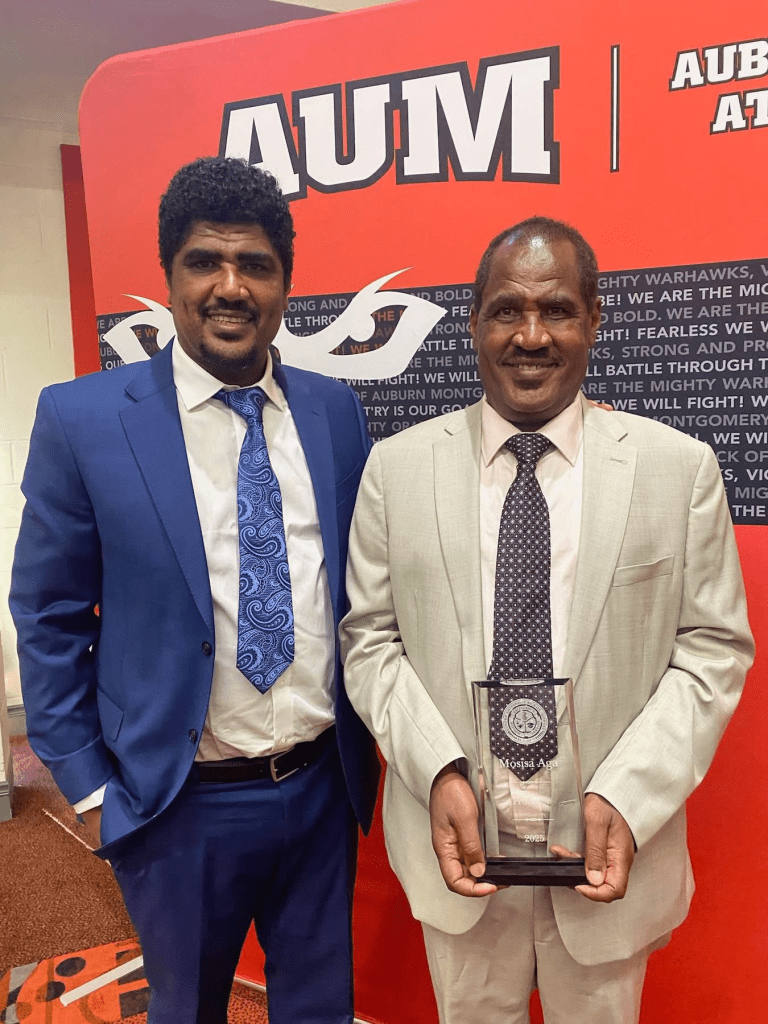
What a monumental milestone—your ascension to Full Professor of Mathematics at Auburn University (AUM) is not just a personal triumph but a historic victory for the Oromo people and all who believe in the transformative power of education. Your journey—from the rural heartlands of Oromia, where roads and schools were scarce, to the highest echelons of academia in America—is a living testament to what faith, resilience, and unyielding determination can achieve.
✨ A Legacy of Firsts and Fearless First Steps
- The first Oromo to attain a Full Professorship in Mathematics—a barrier shattered, a ceiling broken.
- A pioneer who translated math textbooks into Afaan Oromoo in the 1990s, ensuring knowledge reached even the most marginalized.
- A scholar who authored Geometrii Oromummaa, proving that excellence and cultural pride are inseparable.
- A mentor whose life whispers to every Oromo child: “Your dreams are valid, no matter where you begin.”
🌱 More Than a Mathematician: A Man of Faith, Family, and Service
While your mathematical brilliance has earned global recognition, your true legacy shines in the love you pour into your family, the humility you carry despite your achievements, and the quiet strength of your faith. As Galatians 6:9 reminds us, “Let us not become weary in doing good, for at the proper time we will reap a harvest if we do not give up.” You, Professor Aga, are that harvest—proof that steadfastness bears fruit.
Your children will inherit not just your name but the blueprint of perseverance. Your students will remember not just your theorems but your belief in their potential. And your people, the Oromo, will forever cherish you as a symbol of what is possible when intellect meets integrity.
🎉 A Prayer for the Journey Ahead
May Waaqayyo continue to amplify your light as you:
- Inspire the next generation of Oromo scholars,
- Strengthen your community with wisdom and grace,
- Honor your roots while reaching new heights.
To you, Professor Mosisa Aga, and your beloved family:
“Maqaan Waaqayyo haa ulfaatu! May your story keep igniting fires of hope in hearts worldwide!”
#OromoExcellence #Pioneer #FaithAndScholarship #GratefulForYou 🎓🙌🏾
OSG Report 69: A Call for Global Action on Oromia’s Humanitarian Catastrophe
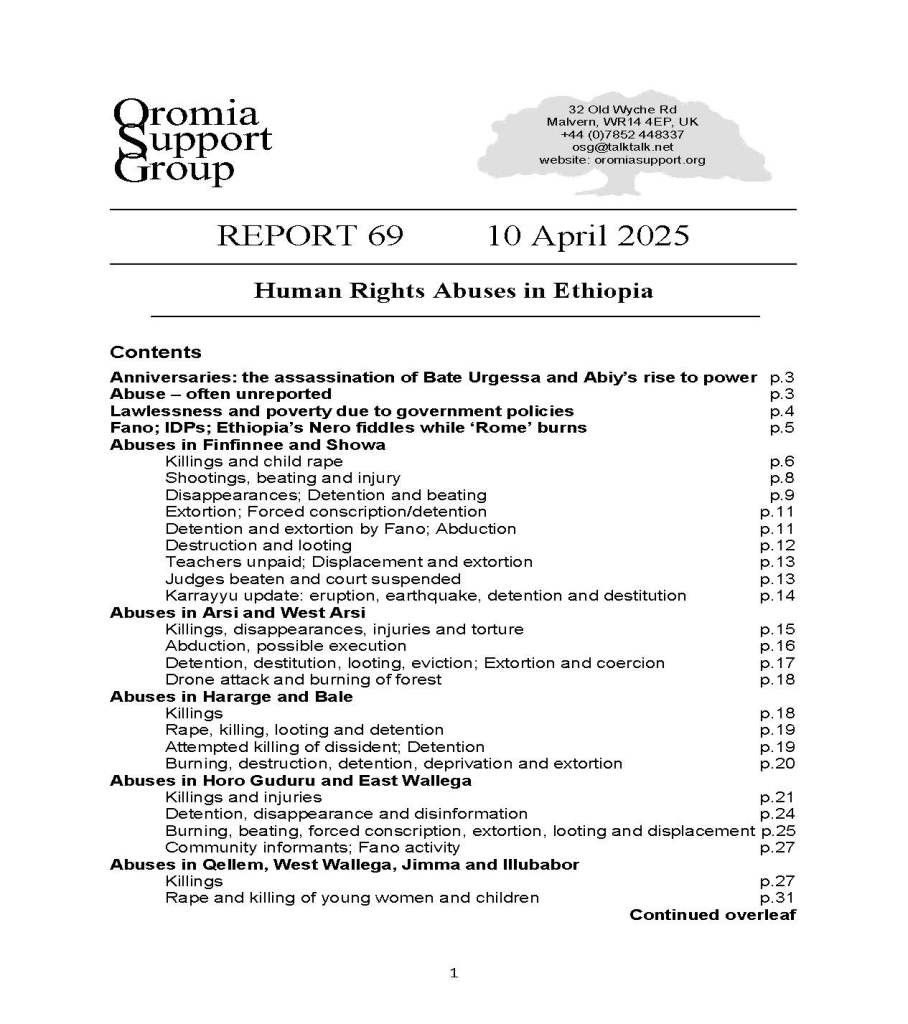
10 April 2025 | Dr. Trevor Trueman, Chair, Oromia Support Group
Key Findings from the Report:
- Systematic Persecution of Oromo Youth (Qeerroo)
- Extrajudicial killings by Abiy Ahmed’s forces (ENDF, regional police, militia) target the same youth who propelled him to power in 2018.
- Documented cases: Massacres in Guji, West Guji, and urban centers like Adama.
2. State-Sanctioned Economic Violence
- Forced grain sales: Farmers compelled to sell crops to the government at below-market prices.
- Predatory taxation: Villagers extorted for “construction fees,” “health insurance,” and militia supplies.
3. Ethnic Cleansing by Fano Militias
- Amhara ultranationalist ideology (“Make Amhara Great Again”) fuels attacks in Oromia’s border zones (Horo Guduru, East Wallega).
- Looting and massacres: Fano operates from Oromia-based bases, displacing thousands.
4. Militarized Conscription & Lawlessness
- Child soldiers: Parents forced at gunpoint to surrender children to federal forces.
- Militia terror: Undisciplined troops demand money, livestock, and “party membership fees.”
The Bigger Picture: Ethiopia’s Existential Crisis
- Abiy’s broken promises: The Prosperity Party falsely branded as an “Oromo government” while waging war on Oromia.
- Amhara suffering: ENDF and Fano engage in reprisal killings, trapping civilians in a zero-sum ethnic war.
- International silence: The UN/AU ignore atrocities, emboldening perpetrators.
Urgent Calls to Action
1. Global Advocacy
- Pressure the UN Security Council to investigate crimes against humanity in Oromia.
- Demand sanctions on Ethiopian officials and arms embargoes (e.g., via #SanctionAbiy campaigns).
2. Humanitarian Response
- Support OSG’s documentation efforts to evidence ICC cases.
- Fund underground networks aiding displaced Oromo families.
3. Media Amplification
- Share OSG’s findings with BBC, Al Jazeera, Reuters.
- Expose Fano’s ideology as akin to Rwandan génocidaires.
4. Diplomatic Pressure
- Lobby the U.S. State Department to revoke Ethiopia’s AGOA trade privileges.
- Push Kenya/Egypt to raise Oromia at IGAD/AU summits.
Why This Matters
“Ethiopia’s survival hinges on negotiating peace with Oromo and Amhara forces—not crushing them.”
– Dr. Trevor Trueman
The world cannot afford another Rwanda-style genocide in the Horn of Africa.
🔗 Read the Full Report: [Oromia Support Group Website]
📢 Hashtags: #BreakTheSilence #OromiaUnderAttack
“Injustice anywhere is a threat to justice everywhere.” – Martin Luther King Jr.
Oromo Women’s Day Celebrated in Melbourne
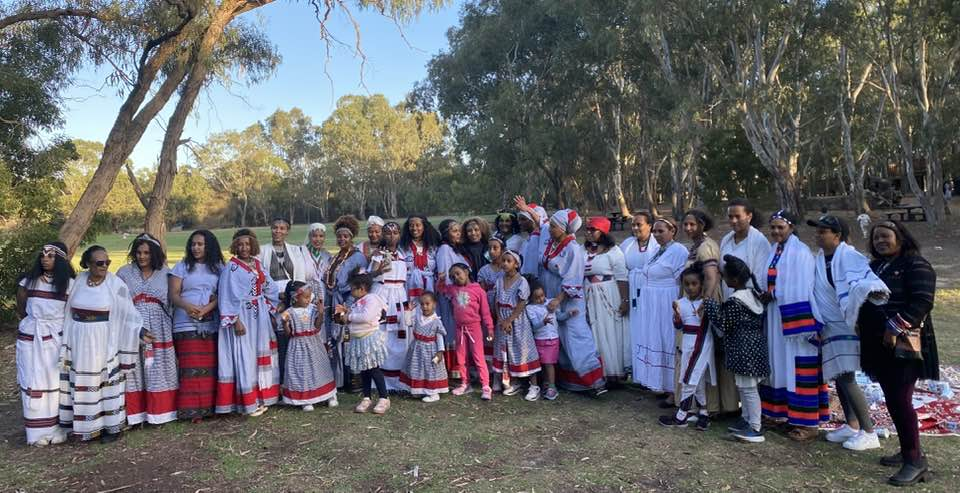
The Oromo community in Melbourne, Australia, today celebrated Oromtittii Day or Oromo Women’s Day at Braeside Park, Victoria, to honor Oromo women’s contributions to cultural preservation and family resilience.
Organized by the Oromo Community in Melbourne, the event emphasized gratitude for women’s roles in sustaining traditions through challenging circumstances.
Chairman Alemayehu Qubee highlighted the festival’s aim to recognize Oromo women’s efforts in maintaining cultural heritage “with love and respect,” particularly in diaspora settings where cultural continuity can be challenging.
Participants, including women, men and children, wore traditional Oromo attire, such as colorful garments like the *horo*, symbolizing cultural pride. This visual element underscores intergenerational transmission of traditions.
The Oromo, an ethnic group primarily from Oromia, East Africa have a growing diaspora in Australia.
Events like this reinforce identity and community cohesion.
Cultural festivals in public spaces like Braeside Park may also serve to educate the broader Australian community about Oromo heritage, promoting multicultural exchange.
Such events often feature traditional music, dance, storytelling, and food, fostering communal bonds and showcasing cultural practices.
Celebrations like this acknowledge women’s dual roles in upholding familial and cultural responsibilities, common themes in diaspora communities striving to balance integration with heritage preservation.
This event reflects a broader trend of migrant communities using public celebrations to strengthen identity and visibility, while addressing the challenges of cultural preservation abroad.


Oromo Research Institute: Advancing Heritage and Knowledge
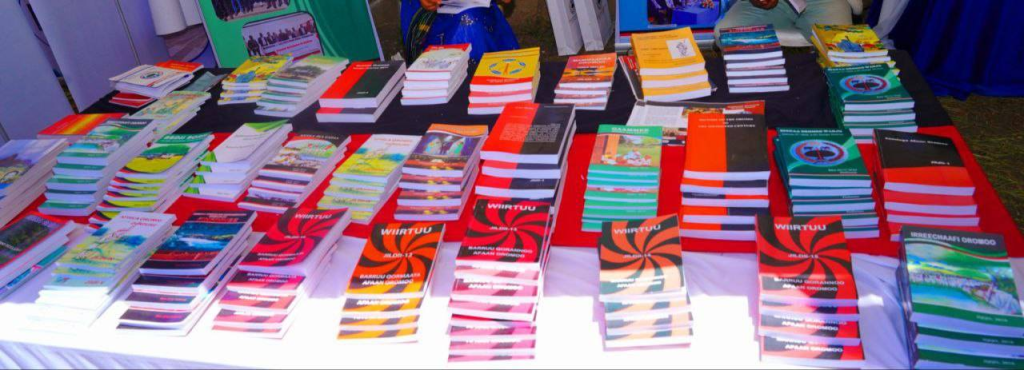
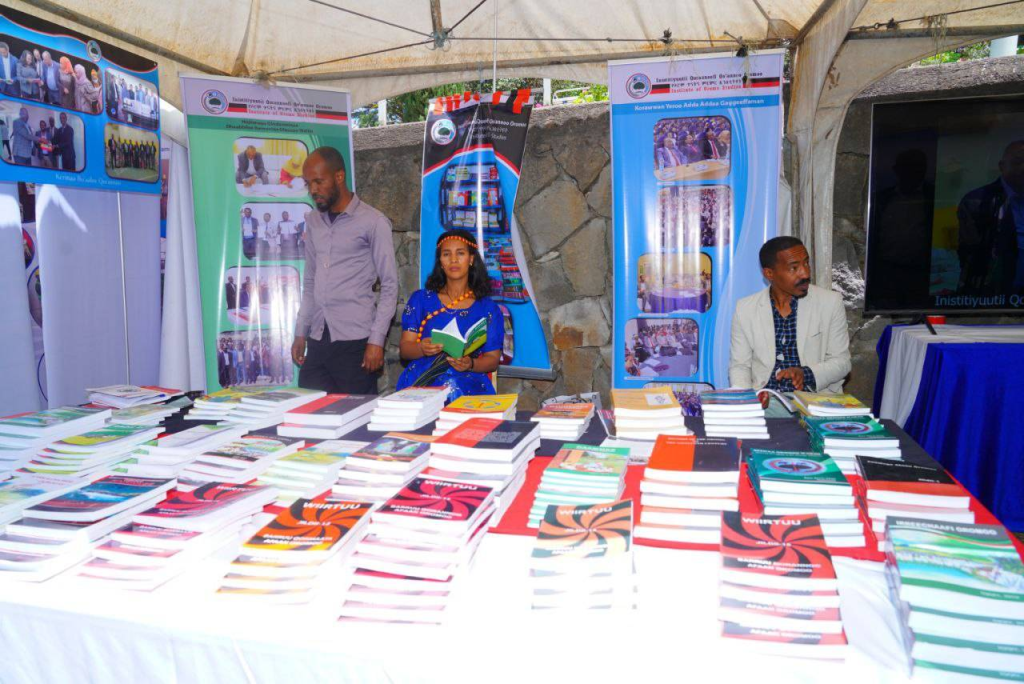
Oromo Research and Studies Institute: Preserving Heritage, Advancing Knowledge
Established in 2022 to reclaim Oromo narratives and foster democratic scholarship
1. Mission and Establishment
- Founded in 2022 in Seenessa Oromia, the institute is a groundbreaking initiative to:
- Research and document Oromo language, history, culture, and arts freely.
- Counter historical distortions imposed by past regimes.
- Promote democratic values and Pan-African solidarity.
2. Key Objectives
- Truth-Telling:
- Uncover suppressed Oromo histories (e.g., pre-colonial governance, resistance movements).
- Debunk colonial-era myths that marginalized Oromo identity.
- Academic Collaboration:
- Partners with universities and scholars globally to produce peer-reviewed research.
- Publishes books (21 titles to date) on Oromo epistemology.
- Youth Empowerment:
- Trains young Oromo researchers in critical scholarship and cultural preservation.
- Hosts annual conferences on Oromo studies.
3. Director’s Vision (Aadde Masarat Ayyaanaa)
- “Our institute ensures Oromo knowledge is no longer written by outsiders, but by Oromos themselves.”
- Focus areas:
- Language revitalization (Afaan Oromo lexicography).
- Artistic resistance (studies on Oromo music, geerarsa).
- Policy advocacy (decolonizing Ethiopian historiography).
4. Impact and Future Goals
- Digital Archives: Creating an open-access repository of Oromo oral histories.
- Global Networks: Collaborating with diaspora scholars to amplify Oromo voices.
- Justice-Centered Research: Investigating crimes against Oromo civilians (e.g., Irreecha Massacre).
Why This Matters
The institute is a revolutionary tool to:
✅ Reclaim Oromo agency in academia.
✅ Combat state-sponsored historical erasure.
✅ Empower the next generation with culturally rooted education.
“When we research ourselves, we liberate ourselves.”
#OromoResearch #SeenessaOromia #DecolonizeKnowledge
Key Oromo Terms Used:
- Qorannoo = Research
- Inistiitiyuutii = Institute
- Safuu = Moral-cultural code
- Gadaa = Oromo governance system
Oromo Martyrs’ Day (April 15): Honoring the Fallen, Renewing the Struggle
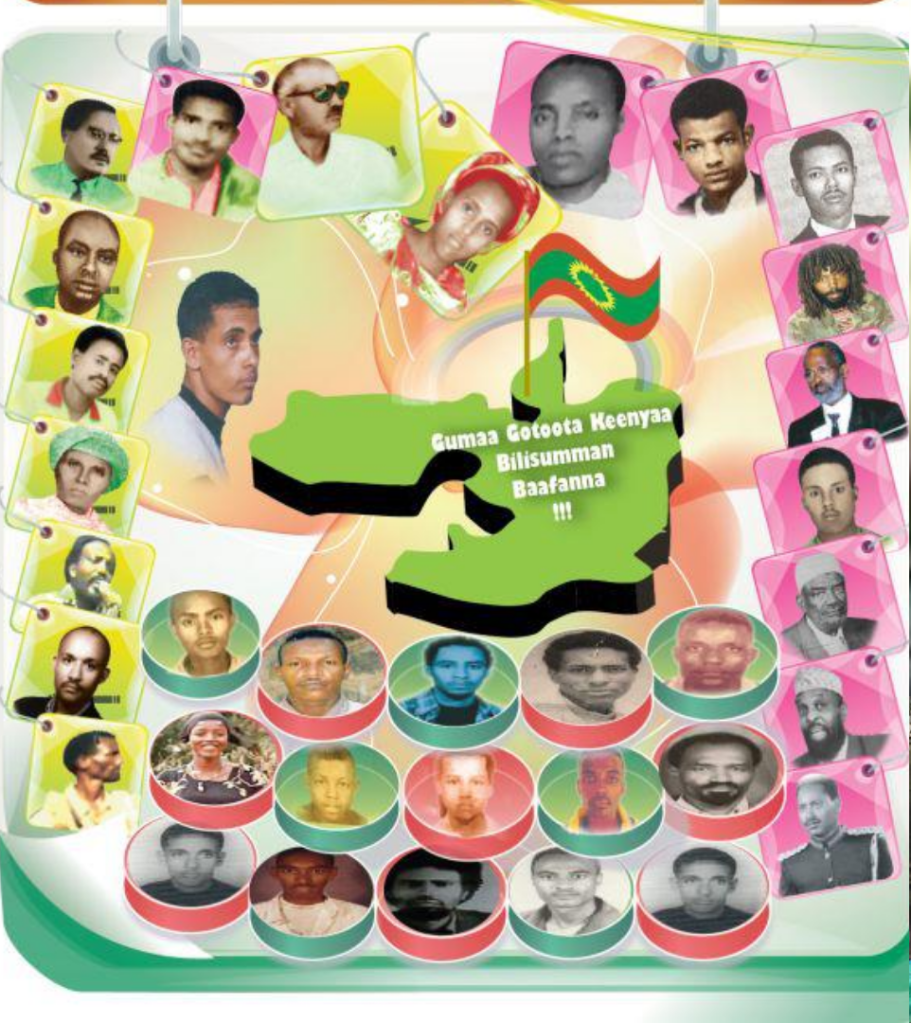
April 15 stands as a sacred day in the Oromo struggle—a day of remembrance, resistance, and recommitment to the cause for which countless heroes laid down their lives. This date marks Oromo Martyrs’ Day, commemorating the sacrifices of those who fought—and fell—for Oromo freedom, dignity, and self-determination.
1. Why April 15? The Shinnigga Massacre (1980)
On April 15, 1980, a defining tragedy struck the Oromo Liberation Front (OLF) when 11 of its top leaders were martyred in Shinnigga, Ogaden, in a brutal ambush.
The Martyrs of Shinnigga:
- Comrade Bariso Wabe (Jaal Magarsa Bari) – OLF Chairman
- Comrade Gada Gamada (Damise Tachane) – Deputy Chairman
- Comrade Abba Xiqi (Aboma Mitiku)
- Comrade Dori Bari (Yigazu Banti)
- Comrade Falmata (Umar Chachabsa)
- Comrade Fafam Doyo
- Comrade Irana Qachale (Dhinsa)
- Comrade Dhadacho Boru
- Comrade Dhadacho Mulata
- Comrade Mari Galan
The Betrayal & Heroism
- The leaders were ambushed by Somali militants and ordered to separate by religion (Muslims vs. Christians).
- They refused, declaring: “We are Oromos, united—we will not divide!”
- All were executed except one guide, who survived to tell the story.
The Aftermath: A Second Blow (December 1981)
The Gidamii Poisoning Betrayal (December 1981): A Dark Chapter in Oromo Struggle
The poisoning of Oromo Liberation Front (OLF) members in Gidamii, Begii, and surrounding areas in December 1981 remains one of the most treacherous acts of betrayal in Oromo history. This event, orchestrated by collaborators with the Ethiopian regime, led to the martyrdom of 16 OLF fighters—with only Jaal Daawud Ibsaa surviving.
1. How the Betrayal Unfolded
The Trap
- Food as a Weapon: A man named Zacharias Shorro (brother of Tadesse Shorro, an anti-OLF collaborator) was assigned to deliver food to OLF members.
- Coordinated by Ethiopian Officials:
- Nuguse Fanta (local administrator)
- Dirriba Mogga
- Hikka Masadi (Governor of Gidami District)
- Poisoned Grain: The food was laced with a deadly substance before being distributed.
The Aftermath
- Among 16 OLF Members:
- 10 in Gidami District poisoned.
- 6 in Begi District
- Only Survivor: Jaal Daawud Ibsaa (current OLF Chairman)
- He ate less of the food because he was busy leading operations.
- His survival exposed the conspiracy.
2. The Deeper Betrayal: Brother Against Brother
- Zacharias Shorro’s Role:
- His brother, Tadesse Shorro, was an active opponent of the OLF.
- Zacharias was forced/coerced into poisoning his own people.
- A Pattern of Collaboration:
- The Ethiopian regime used local informants to infiltrate and weaken the OLF.
- This event marked the beginning of systematic betrayals for political gain.
3. Why This Matters Today
A Lesson in Vigilance
- The Gidamii poisoning shows how enemies of the Oromo struggle exploited trust.
- It underscores the need for internal security in liberation movements.
A Call for Justice
- The perpetrators (Nuguse Fanta, Hikka Masadi, Zacharias Shorro) were never held accountable.
- Their actions represent war crimes—targeted assassinations via poisoning.
The Unbroken Spirit
Despite the betrayal, the OLF continued its struggle, proving that no act of treachery can extinguish the Oromo quest for freedom.
4. Remembering the Martyrs
The victims of the Gidamii Massacre are among the thousands of Oromo heroes who sacrificed for Bilisummaa (freedom). Their names may not all be recorded, but their legacy lives on in the Oromo resistance.
“A traitor may kill a fighter, but never a revolution.”
2. The Birth of Oromo Martyrs’ Day
- First commemorated in 1984 by the OLF Central Committee.
- Officially observed since 1985 every April 15.
- A day to honor all Oromo martyrs, from the Mecha-Tulama movement to the Irreecha Massacre victims (2016), Haacaaluu Hundeessaa (2020), and thousands of unnamed heroes.
3. How Oromos Remember: Rituals of Resistance
A. Ceremonies & Vigils
- Candlelight marches (where permitted, often underground).
- Silent protests at symbolic sites like Finfinnee or Madda Walaabuu (Oromo spiritual center).
- Weedduu (prayers) at rivers, invoking the martyrs’ names.
B. Art & Culture as Resistance
- Songs: Haacaaluu’s “Maalan Jira?” (“What Is My Fate?”) echoes martyrs’ voices.
- Poetry: Geerarsa (praise songs) for fallen heroes.
- Graffiti: “April 15—Qabsoon Itti Fufa!” (“The Struggle Continues!”)
C. The Shinniga Oath Campaign (2024)
- The Oromo Liberation Army (OLA) launched “Dula Irbuu Shinnigga” (Shinnigga Oath Offensive) against Abiy Ahmed’s regime.
- Objective: Weaken the Ethiopian National Defense Force (ENDF), which has resorted to forcibly recruiting Oromo children (some under 15 years old).
4. The Unfinished Struggle
The martyrs did not die in vain. Their legacy demands:
✅ Justice for the fallen (e.g., UN investigations into massacres).
✅ Freedom for political prisoners (e.g., Jawar Mohammed, Bekele Gerba).
✅ An end to forced conscription of Oromo youth.
✅ International pressure on Ethiopia to recognize Oromo rights.
5. A Vow to the Martyrs
“We will not let your blood dry in the sand.
We will not let your names fade in the wind.
We will fight until the last chains break—
Until Oromia is free.”
Qabsoon Itti Fufa!
(The Struggle Continues!)
April Remembrance: Honoring the Sacrifices That Forged the Oromo Struggle
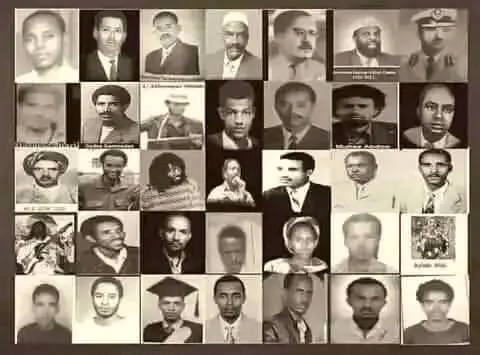
The Oromo liberation movement stands on the shoulders of countless martyrs—women, men, and children who paid the ultimate price for justice. As we honor them this April, their blood whispers a sacred charge: Never forget. Never relent.
1. The Weight of Sacrifice
- Generational Loss:
- From the Macha-Tulama martyrs (1960s) to the Irreecha Massacre victims (2016), each death etched resilience into Oromo DNA.
- Unmarked graves dot Oromia’s landscape—silent witnesses to state violence.
- Names That Live:
- Comrade Bariso Wabe (Jaal Magarsa Bari) – The then OLF Chairperson (martyred on April 15, 1980)
- Comrade Gada Gamada (Damise Tachane) – The then Deputy Chairperson of the OLF (martyred on April 15, 1980)
- Comrade Abba Xiqi (Aboma Mitiku)-(martyred on April 15, 1980)
- Comrade Dori Bari (Yigazu Banti)-(martyred on April 15, 1980)
- Comrade Falmata /Umar Chachabsa-(martyred on April 15, 1980)
- Comrade Fafam Doyo-(martyred on April 15, 1980)
- Comrade Irana Qachale (Dhinsa)-(martyred on April 15, 1980)
- Comrade Dhadacho Boru-(martyred on April 15, 1980)
- Comrade Dhadacho Mulata -(martyred on April 15, 1980) and
- Comrade Mari Galan-(martyred on April 15, 1980)
- Baaroo Tumsaa (sacrificed his life for the freedom of the Oromo nation in 1978)
- Haacaaluu Hundeessaa (singer, murdered 2020)
- The 862 documented killings during the 2014–2018 protests (Ethiopian HRC report)
2. April: A Month of Fire and Memory
- Historical Flashpoints:
- April 1974: The Derg’s crackdown on Mecha-Tulama leaders began.
- April 1992: OLF forced into exile after elections turned violent.
- April 2014: Student protests sparked the #OromoProtests movement.
- Rituals of Remembrance:
- Candlelight vigils at Finfinnee Square (despite bans)
- Secret weedduu (prayers) at riverbanks, invoking martyrs’ names
- Art as Resistance: Poets recite geerarsa (praise songs) for the fallen.
3. “Their Blood Waters Our Resolve”
The martyrs’ legacy demands more than grief—it demands action:
- Protect the Living:
- Support political prisoners (e.g., Jawar Mohammed, Bekele Gerba).
- Document abuses via OLLAA (Oromo Legacy Leadership & Advocacy Association).
- Amplify Their Stories:
- Teach children about Madda Walaabuu (Oromo origin site) and its defenders.
- Screen banned films like “The Oromo Martyr” in underground screenings.
- Internationalize the Struggle:
- Pressure the UN to investigate the 2016 Irreecha killings.
- Demand #JusticeForHaacaaluu at global forums.
4. A Vow to the Fallen
“We will not let your death be a period—only a comma in our people’s story.”
- Farmers sow seeds where activists fell.
- Artists tattoo martyr’s names on their skin.
- Mothers whisper “Bilisummaa” (freedom) over newborns.
This April, we remember not with tears, but with tightened fists.
Qabsoon itti fufa—The struggle continues.




 Advocacy for Oromia