Daily Archives: April 13, 2026

Oromo Diaspora in the Netherlands Declares Independence, Rejecting Ethiopian Rule
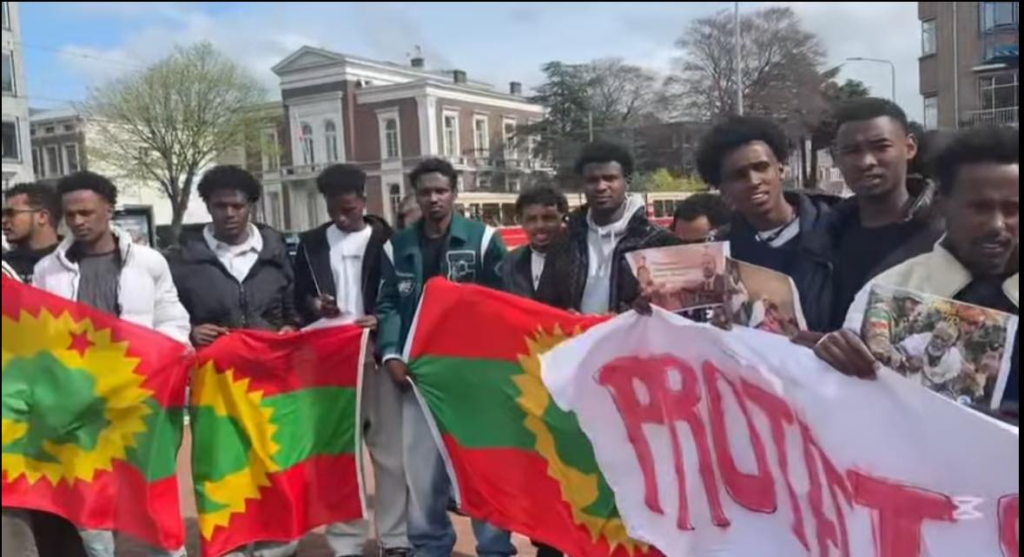
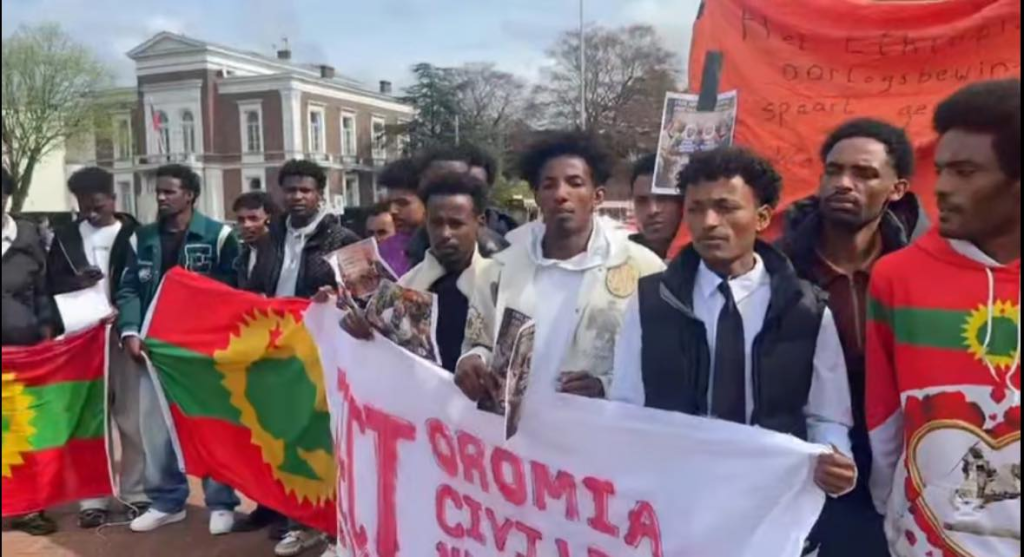
(THE HAGUE, Netherlands – April 10, 2026)– In a historic gathering that shook the diplomatic silence of this international city, members of the Oromo diaspora assembled in the heart of The Hague on Friday to declare their independence from the Ethiopian government, citing decades of alleged atrocities, border violations, and ongoing military campaigns in their homeland.
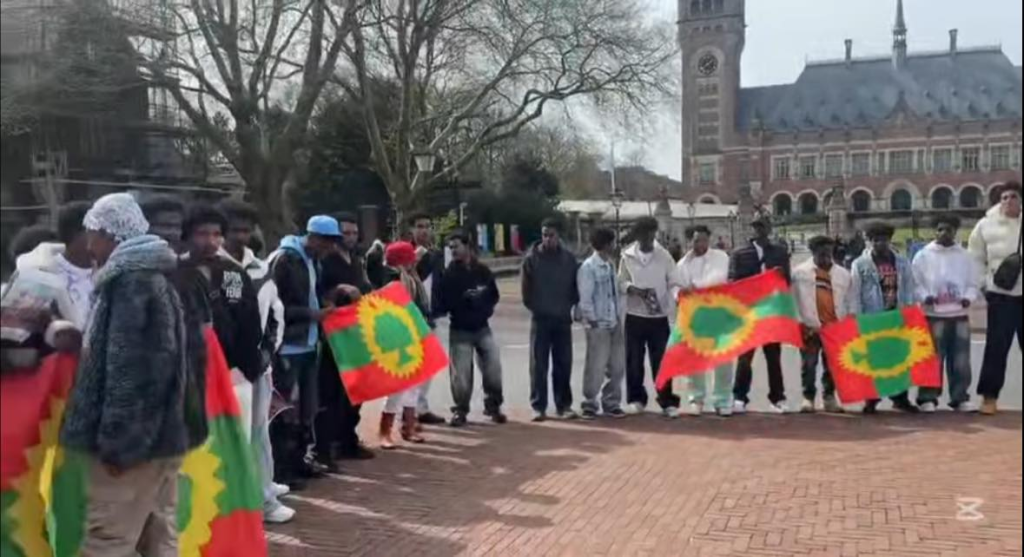
The declaration, which unfolded in a solemn ceremony near the Peace Palace, saw hundreds of Oromo men and women raise their voices in a chorus of defiance. For nearly four hours, testimonies echoed through the square—stories of loved ones lost, villages razed, and a people determined to chart their own destiny.
“We are no longer asking,” said one community elder who helped organize the event, speaking on behalf of the gathered crowd. “We are declaring. The blood of our people has soaked the soil of Oromia for too long.”
A Protest Born from Blood
The independence declaration did not emerge from a vacuum. Organizers and participants pointed to three specific grievances that have galvanized the movement:
Extrajudicial killings – Allegations that Ethiopian security forces have systematically targeted civilians in Oromia, with witnesses describing massacres in rural villages that never make international headlines.
Border violations – Claims that the Ethiopian government has unilaterally redrawn regional boundaries, carving up traditional Oromo lands and displacing entire communities without consultation or consent.
Ongoing war – The continuation of military operations across Oromia, which protesters described not as counterinsurgency but as collective punishment against the Oromo people.
“We have watched our children die. We have watched our elders dragged from their homes,” said a woman who identified herself only as Fatuma, her voice cracking as she addressed the crowd. “We are here because The Hague is where the world comes to talk about justice. And we need the world to finally listen.”
The Hague as a Stage for Justice
The choice of location was deliberate. The Hague, home to the International Court of Justice and the International Criminal Court, has long served as the symbolic capital of international law. For the Oromo diaspora—scattered across Europe, North America, and Australia—it represented the one place where their voices might carry legal and moral weight.
“Ironically, we cannot seek justice in our own land because the institutions there are controlled by those who oppress us,” said one young protester, a university student who arrived in the Netherlands as a refugee three years ago. “So we bring our case here, to the world.”
Throughout the afternoon, speakers took turns reading aloud the names of villages they said had been destroyed. Each name was followed by a moment of silence. The list stretched long enough that by the twentieth village, many in the crowd were weeping openly.
Testimonies of the Displaced
The gathering also served as an informal truth commission. Diaspora members who had fled Ethiopia at different times over the past decade compared accounts, finding disturbing consistencies in their stories.
One man, a former farmer from western Oromia, described how government forces arrived in his village at dawn. “They separated the men from the women. They took my brother behind a tree. I heard the shot. I never saw him again.” He fled to Kenya the following week, eventually making his way to Europe through a patchwork of smugglers and humanitarian visas.
Others spoke of families scattered across three continents, of parents who refused to leave ancestral lands despite the dangers, of children born in refugee camps who have never seen the Oromia their parents describe with such aching nostalgia.
“Independence is not a slogan for us,” said another organizer, a woman in her forties wearing traditional Oromo colors woven into a contemporary scarf. “It is survival. It is the only guarantee that what happened to our parents will not happen to our children.”
Ethiopian Government Response
As of press time, the Ethiopian government had not issued an official response to the declaration. However, in previous statements regarding diaspora activism, Ethiopian officials have characterized such movements as the work of “a small, extremist fringe” amplified by foreign media and hostile foreign governments.
Human rights organizations tracking the Horn of Africa have offered more nuanced assessments. Multiple reports from international bodies have documented abuses in various Ethiopian regions, though attributing responsibility remains complex in a country fractured by ethnic federalism and competing armed groups.
What Independence Would Mean
The declaration in The Hague carries no immediate legal weight. No nation has extended recognition. No ambassador has been dispatched. But for the thousands of Oromo in the Netherlands—and the millions more across the global diaspora—the act of declaration was itself a form of liberation.
“Legally, we know what we are doing today changes nothing on the ground tomorrow,” one speaker acknowledged to the crowd. “But politically? Morally? We have said what needed to be said. We have drawn our line. The world cannot claim it did not hear us.”
As evening fell over The Hague, the crowd did not disperse angrily. Instead, they stood in small clusters, embracing one another, singing old songs that had been passed down through generations—songs of resistance, of longing, of a homeland they refuse to surrender.
The declaration papers, signed by dozens of community representatives, were formally presented to a representative of the city government—a symbolic gesture, but a gesture nonetheless.
“We will send copies to the United Nations. To the African Union. To every embassy that will accept mail from us,” the lead organizer said. “And if no one responds, we will declare again. And again. Until our independence is no longer a declaration. It is simply a fact.”
For now, the Oromo diaspora in the Netherlands has planted its flag—not on soil, but in history. Whether the world will salute or look away remains to be seen. But on April 10, 2026, in The Hague, a people spoke.
And for one afternoon, the world listened.