The Pharmacist Who Prescribed Freedom: Baro Tumsa and the Birth of the Oromo Dream
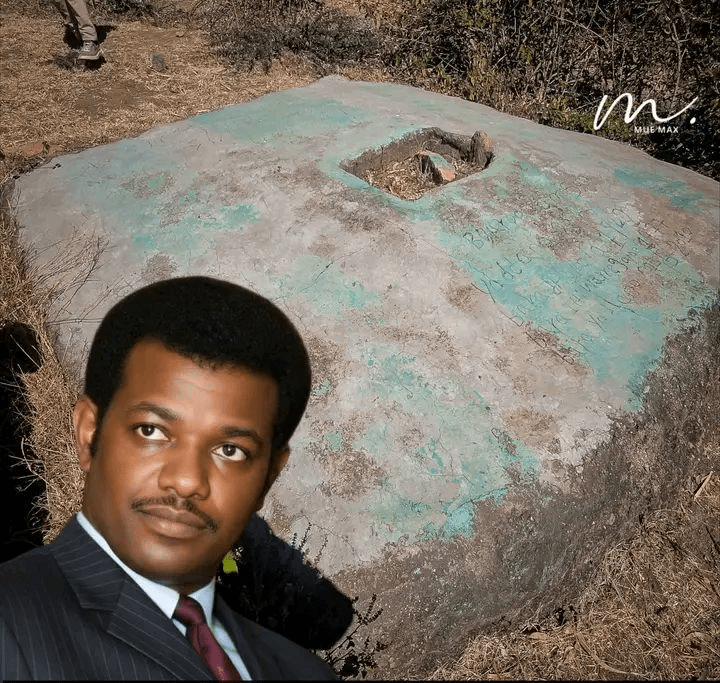
He carried two degrees—one in pharmacy, another in law. But his greatest prescription was not a pill or a legal brief. It was the idea that the Oromo people deserved a name, a flag, and a future.
In the cold, damp cells of an Ethiopian prison in 1978, a man in his forties scratched a final message into a piece of torn cardboard. He was not a soldier by training. He had never fired a weapon in anger. But he was about to become one of the most dangerous men the Dergue regime had ever captured.
His name was Jaal Baaroo Tumsaa. To his people, he was simply Baro Tumsa—the quiet revolutionary who built an army not with bullets first, but with books, chemistry, and a radical belief in Oromo unity.
The Making of a Nationalist
Born in 1938 in western Oromia, Baro Tumsa grew up in a world where speaking Afaan Oromo in a classroom could earn you a slap. Where Oromo history was written by the conquerors. Where the word Oromo itself was sometimes used as an insult.
But young Baro had a different chemistry in his blood.
He excelled in school—brilliant with numbers, sharper with words. He became a pharmacist, learning the precise science of healing bodies. But he soon realized that a deeper sickness afflicted his people: the sickness of silence, of land alienation, of a culture forced underground.
So he went back to school. This time, he studied law.
Now he had two weapons: the knowledge of how to heal, and the knowledge of how to fight injustice within a system that had been designed to ignore the Oromo.
The Quiet Architect of the OLF
By the early 1970s, Baro Tumsa had become a restless soul. He watched as successive Ethiopian regimes—imperial, then Marxist—treated Oromia as a colony within a colony. Land was taken. Languages were suppressed. Young Oromo men were conscripted into wars that were not theirs.
Baro Tumsa began to meet with other Oromo intellectuals, students, and farmers in secret. In living rooms, under odaa trees, in the back rooms of pharmacies in Addis Ababa, they asked a forbidden question: What if the Oromo organized for themselves?
That question became the seed.
In 1973, Baro Tumsa became one of the principal founders of the Oromo Liberation Front (OLF). Unlike the armed struggle that would follow, his early role was ideological and structural. He helped draft the movement’s early political programs. He connected rural grievances with urban intellect. He argued, passionately, that Oromo liberation was not a tribal ambition—it was a democratic necessity for all of Ethiopia.
He was, in every sense, the goota jiraachuu—the living hero who gave his life so that Oromiyaa could be built from the bones of the fallen.
The Arrest and the Silence
The Dergue, the brutal military junta that seized power in 1974, had long ears. By 1978, Baro Tumsa was on their most-wanted list. They did not want him for a crime. They wanted him because he had given the Oromo people something harder to kill than any guerrilla: a political consciousness.
He was arrested. Not in a dramatic firefight, but in the quiet way revolutions are often crushed—a knock at dawn, a hood over the head, a car disappearing into the gray morning.
For weeks, he was interrogated. The regime wanted names. They wanted confessions. They wanted him to renounce the OLF on the radio.
According to surviving accounts from fellow prisoners, Baro Tumsa refused every time. He did not shout. He did not weep. He simply repeated, in his calm pharmacist’s voice: “You can kill a man. You cannot kill a people’s right to exist.”
Freedom Fighter in the Mountains of Gara Mulata
Tumsa left behind the comfort of his privileged life in Finfinne to join the nascent guerrilla force of the OLF in the eastern command in 1978 and sacrificed his life for the freedom of the Oromo nation.
By then he was married and a father of three children. He comes from an unprivileged background and established himself as a member of the urban elite educated and well connected middle class.
However, he swapped these luxuries for the hardships in the mountains of Oromia for the sake of the freedom of his people whom he loved with all his heart and mind. The circumstances of his death remains unclear to this day.
He was 40 years old.
His body was never returned. No grave bears his name. The regime buried him in anonymity, hoping that without a tomb, the man would also be forgotten.
Why Ebla 15 Still Burns
Every year on Ebla 15, Oromos across the globe—from Finfinne (Addis Ababa) to Minneapolis, from Nairobi to Melbourne—pause. They do not hold parades with permission. They do not wait for government recognition. They light candles. They recite poetry. They name their children Baro and Tumsa.
They remember not just a man, but a generation: the gootota tokkummaa Oromoo—the heroes of Oromo unity who were executed together in 1980 so that a movement could live.
And they say a simple prayer, whispered in Afaan Oromo:
“Bakka jirru maratti maqaa isaa ol kaafnee faarsina.”
(Wherever we are, we raise his name and praise him.)
The Unfinished Pharmacy
Baro Tumsa left behind no mansion, no autobiography, no statue in a capital city. What he left behind was something more fragile and more powerful: an example.
He showed that an intellectual can be a revolutionary. That a pharmacist can heal a nation’s spirit before its body. That law, when it fails the people, must be resisted by a higher law—the law of dignity.
Today, the OLF has gone through splits, peace talks, and transformations. Ethiopian politics has shifted in a thousand ways. But the question Baro Tumsa asked in 1973 has never gone away: Who speaks for the Oromo?
And every Ebla 15, the answer echoes back: We do. Because he did.
Epilogue: The Cardboard Testament
They say that in his final days, Baro Tumsa wrote a message on a scrap of cardboard—a last prescription. It was smuggled out of prison by a guard whose heart had turned.
It read, in part:
“Do not cry for me. Cry for the land that makes its children prisoners. Then dry your tears. And finish what we started.”
The cardboard was lost. The guard disappeared. But the words have been memorized by thousands of Oromo youth who never met Baro Tumsa, but who carry him in their names, their songs, and their unbroken walk toward Bilisummaa—freedom.
He was not just a hero of the past. He is a verb in the present tense.
“Goota ofii wareegamee dhiiga lafee isaan Oromiyaa ijaare darbe.”
(A hero who sacrificed himself, whose blood and bones built the foundation of Oromia, has passed.)
Ebla 15. Remember. Raise his name. Continue the walk.

Posted on April 14, 2026, in Aadaa, Events, Finfinne, Information, News, Oromia, Press Release, Promotion. Bookmark the permalink. Leave a comment.




 Advocacy for Oromia
Leave a comment
Comments 0