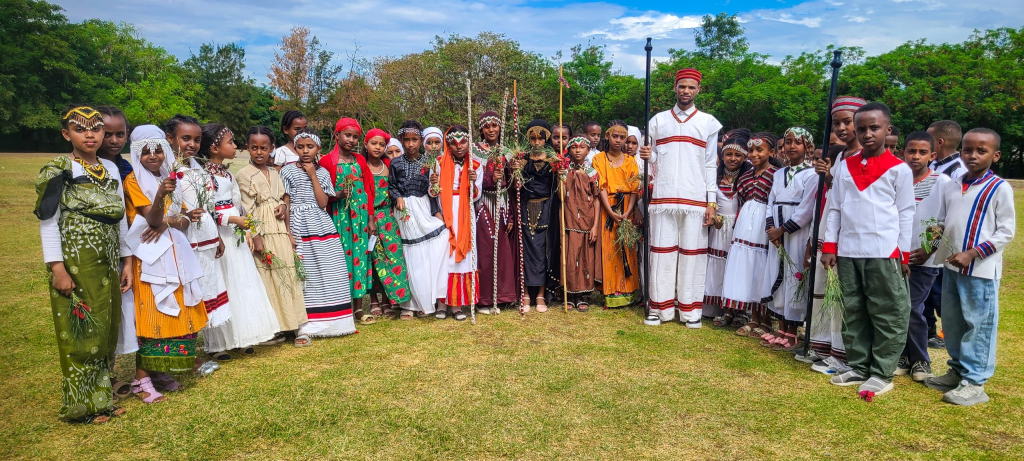
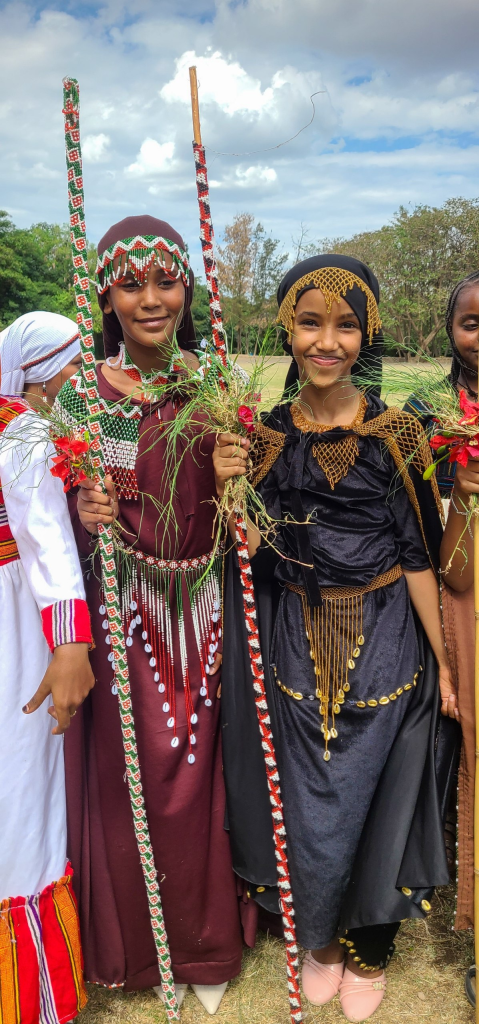
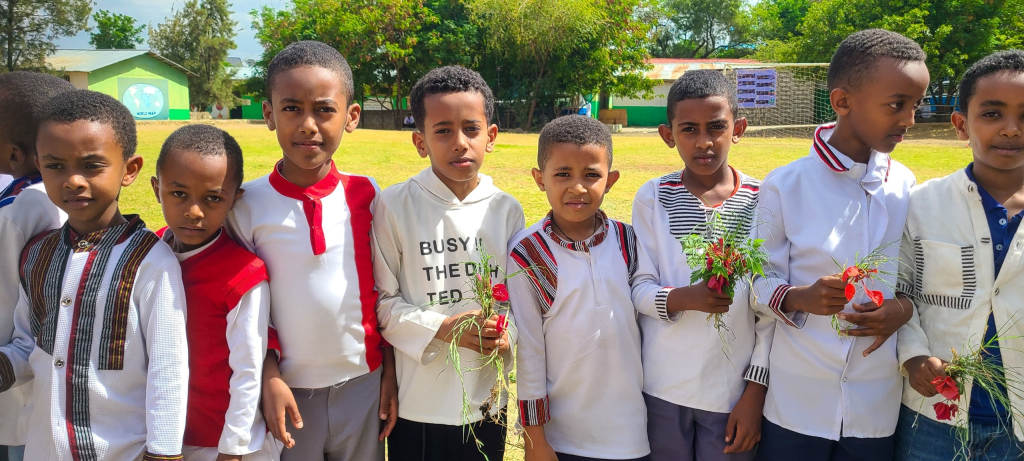
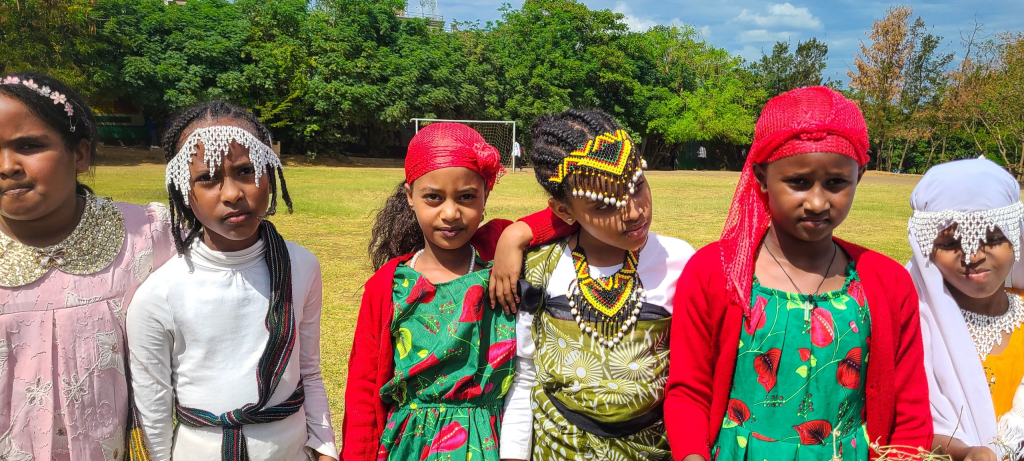
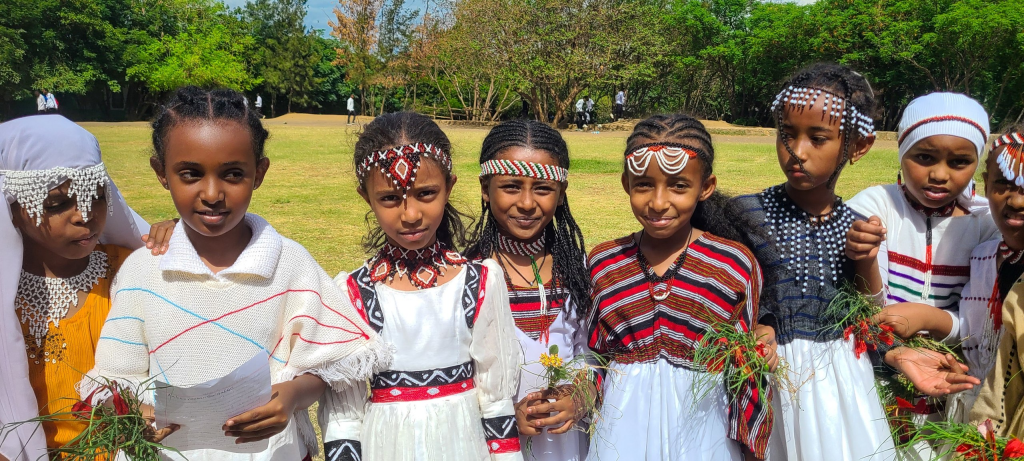
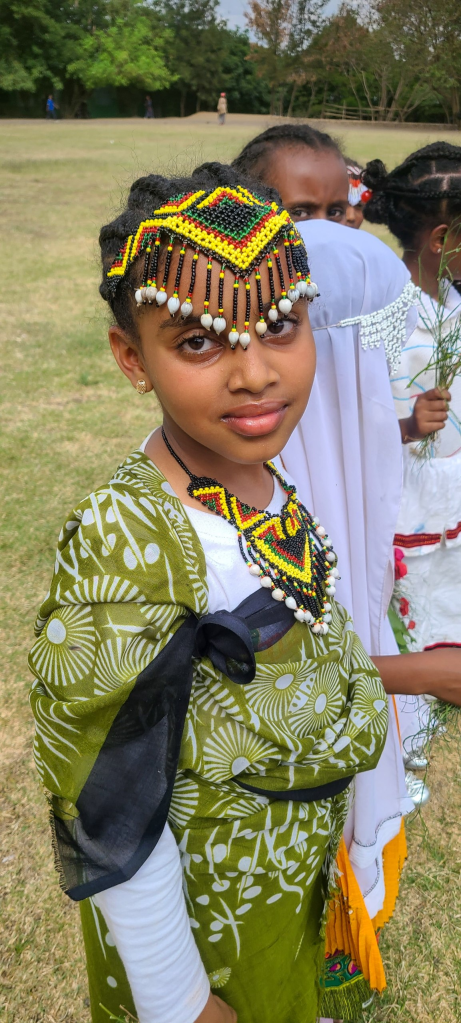
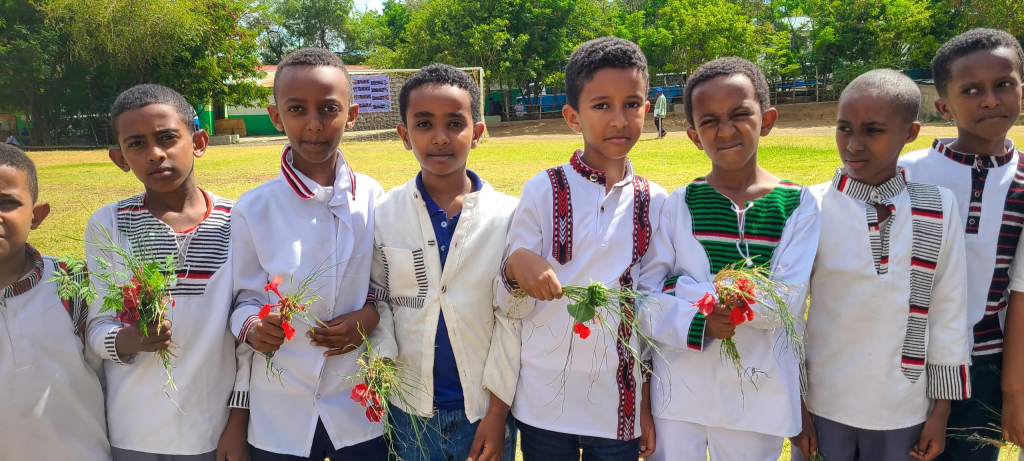
In a heartwarming cultural demonstration, young students proudly showcase the traditions of Oromo thanksgiving.
A Feature Story | Education & Cultural Preservation | April 2026
PROLOGUE: The Future Honoring the Past
In a small but powerful ceremony, a group of Grade 3 students recently demonstrated how the sacred Oromo festival of Irreecha is celebrated. With grass in their hands, traditional attire on their shoulders, and songs on their lips, these young children proved a timeless truth:
Culture does not die when it is taught to the young.
The demonstration was not merely a school performance. It was an act of cultural preservation. It was a statement that the Oromo identity – suppressed for generations – is alive, thriving, and being passed deliberately to the next generation.
PART ONE: What Is Irreecha?
Before understanding the significance of the students’ demonstration, one must understand Irreecha itself.
Aspect
Detail
Name
Irreecha (also known as Irreessa or Thanksgiving)
Occasion
Annual Oromo thanksgiving festival
Timing
End of rainy season / beginning of spring (September/October)
Location
Near bodies of water (rivers, lakes, springs)
Purpose
To thank Waaqa (God) for the passing year, for rain, for harvest, for life
Cultural significance
One of the largest indigenous festivals in Africa
Modern celebration
Celebrated in Oromia and globally by Oromo diaspora
Irreecha is not merely a festival. It is the spiritual and cultural heartbeat of the Oromo people. For centuries, even when it was suppressed, Oromos found ways to gather at water bodies, raise their hands in prayer, and thank their Creator.
Today, Irreecha is celebrated openly – in Finfinne’s Hora Finfinne, in Bishoftu’s Hora Arsadi, and in cities across North America, Europe, Australia, and the Middle East.
PART TWO: The Demonstration – What the Students Did
The Grade 3 students, dressed in traditional Oromo attire, gathered to reenact the Irreecha celebration.
What They Wore
Item
Significance
Traditional clothing (Uffata Aadaa)
Woolen cloaks, colorful wraps, and cultural garments that connect them to their ancestors
Wet grass (Marga jiidhaa)
Fresh grass is traditionally carried or worn during Irreecha as a symbol of life, fertility, and connection to the earth
Ceremonial items (Meeshaalee barbaachisan)
Traditional instruments, prayer items, and symbolic objects used during the festival
What They Did
The students:
Carried wet grass (marga jiidhaa) – a central element of Irreecha representing new life and gratitude
Wore traditional clothing with pride and respect
Sang Irreecha songs (sirba guyyaa ayyaanichaa) that have been passed down through generations
Demonstrated the proper way to approach water bodies for thanksgiving
Raised their hands in symbolic prayer – imitating the elders who bless Waaqa for the harvest
The demonstration was not a mockery or a simplified “children’s version.” It was a faithful, respectful reenactment – showing that even the youngest Oromos can carry the weight of their heritage.
PART THREE: The Significance of Children Celebrating Irreecha
Why does it matter that Grade 3 students – children of approximately 8-9 years old – are learning and demonstrating Irreecha?
Reason One: Breaking the Cycle of Erasure
For generations, Oromo culture was suppressed.
Era
Suppression
Imperial era
Afaan Oromo banned in schools; Irreecha prohibited
Derg era
Cultural festivals monitored or forbidden
Early EPRDF era
Limited recognition, but fear remained
When children are not taught their culture, culture dies within one generation. When children are taught their culture, culture lives forever.
“The grave is not the end of a people. The end comes when the children no longer know the songs.”
Reason Two: Pride Over Shame
Older generations of Oromos grew up feeling shame about their identity. They were told their language was “backward,” their traditions “primitive,” their festivals “pagan.”
When young children stand proudly in traditional clothing, singing traditional songs, carrying grass to honor Waaqa – that is decolonization in action. That is the replacement of shame with pride.
Reason Three: Cultural Continuity
Irreecha is not a static relic of the past. It is a living tradition. Living traditions require living practitioners. By teaching Grade 3 students how to celebrate Irreecha, the community ensures that:
The songs will be sung next year
The grass will be carried next generation
The hands will be raised in gratitude forever
PART FOUR: The Role of Schools in Cultural Preservation
The fact that this demonstration took place in a school setting is significant.
Traditional Learning
School-Based Learning
Elders teach children informally
Structured curriculum ensures all children learn
Limited to certain families
Accessible to all students
Vulnerable to disruption
Institutionalized and protected
Oral transmission
Combined with written and visual resources
When schools teach Oromo culture – including Irreecha – they:
Legitimize traditions that were once banned
Ensure equal access to cultural knowledge
Create a permanent place for Oromo heritage in formal education
Prepare students to be proud, knowledgeable Oromos in a globalized world
“The classroom is not separate from culture. Culture belongs in the classroom – especially for children whose culture was once forbidden there.”
PART FIVE: The Songs of Irreecha – A Living Archive
The students sang sirba guyyaa ayyaanichaa – the songs of Irreecha. These songs are not mere entertainment.
Function of Irreecha Songs
Purpose
Praise Waaqa
Thanksgiving and prayer
Remember ancestors
Honor those who came before
Teach values
Courage, gratitude, community, resilience
Transmit history
Events, heroes, struggles encoded in lyrics
Unite participants
Collective singing builds solidarity
When children learn these songs, they inherit not just melodies – but worldviews, values, and memory.
PART SIX: What the Demonstration Represents
The Grade 3 students’ Irreecha demonstration is a small event with enormous meaning.
It Represents
Because
Resilience
Despite generations of suppression, Irreecha survives
Hope
The next generation is learning and will continue the tradition
Pride
Young Oromos are not ashamed – they are proud
Continuity
The chain of transmission remains unbroken
Freedom
Oromos can now celebrate openly, without fear
Education
Schools are embracing, not erasing, Oromo culture
PART SEVEN: A Message to the Oromo Community
To the parents, elders, teachers, and community leaders who made this demonstration possible:
Thank you.
Thank you for ensuring that the children know their songs. Thank you for dressing them in traditional clothing. Thank you for teaching them to carry the grass. Thank you for showing them how to raise their hands to Waaqa.
You are not just teaching culture. You are securing the future.
To the Grade 3 students who demonstrated Irreecha:
You are the future.
One day, you will be the elders. One day, you will teach your own children. One day, you will explain to them what Irreecha means.
And you will remember: I learned this when I was young. I have always known who I am.
PART EIGHT: A Call to Other Schools
This demonstration should not be an exception. It should be a model.
Action
Why It Matters
Teach Irreecha in schools
Normalize Oromo cultural education
Include Oromo songs in music classes
Preserve musical heritage
Encourage traditional dress on cultural days
Build pride through wearing
Invite elders to speak to students
Connect generations
Celebrate Irreecha as a school event
Institutionalize the tradition
Every school with Oromo students has a responsibility to teach Oromo culture. Not as a token “multicultural day” – but as core curriculum.
CONCLUSION: The Grass Will Never Wither
The wet grass (marga jiidhaa) that the Grade 3 students carried is a symbol of life, fertility, and gratitude.
But there is another meaning.
The grass is green because it is connected to the earth. It draws life from the soil of Oromia. It bends in the wind but does not break.
That is the Oromo people.
We have bent. We have not broken. We have suffered. We have survived. We have been suppressed. We have risen.
And as long as our children carry the grass, sing the songs, and raise their hands to Waaqa – we will never be erased.
Final Tribute
To the Grade 3 students who demonstrated Irreecha:
You are young. But you are already carrying something heavy – the weight of your ancestors, the hope of your people, the future of your culture.
Do not let go.
Sing the songs until your voice is hoarse. Wear the clothing until the fabric fades. Carry the grass until your hands are green.
And when you have children of your own, teach them.
Because Irreecha is not a memory. It is a living prayer. And you are the ones who keep it alive.
“The children carried grass. They sang songs. They wore their culture on their shoulders. And in doing so, they proved: the Oromo spirit does not fade. It is passed from hand to hand, from heart to heart, from generation to generation.” 🌿🇴🇲
Waaqni isin haa eegu. May God protect you.
Irreecha keessan haa fudhatamu. May your thanksgiving be accepted.
Aadaan Oromoo haa jiraatu. May Oromo culture live forever.
The aim of Advocacy for Oromia-A4O is to advocate for the people’s causes to bring about beneficial outcomes in which the people able to resolve to their issues and concerns to control over their lives. Advocacy for Oromia may provide information and advice in order to assist people to take action to resolve their own concerns. It is engaged in promoting and advancing causes of disadvantaged people to ensure that their voice is heard and responded to. The organisation also committed to assist the integration of people with refugee background in the Australian society through the provision of culturally-sensitive services.
Advocacy for Oromia was established in 2010 with the purpose of enabling and empowering Oromo people by providing accurate and timely information that will help to make better choices to create the kind of future in which they wish to live.
It also provides information focus on the major issues facing us in the 21st century and it is going to try and bring a balanced approach with factual information that is positive and solution based.
The website has been in operation for the last nine years with the mission of promoting and advancing causes of Oromo people through advocacy, community education, information service, capacity building, awareness raising and promotion.
The website is also the official site of Advocacy for Oromia Association in Victoria Australia Inc., a non-profit organisation, registered under the Associations Incorporation Reform Act 2012 in Victoria as April 2014.
Our team already had considerable community development experience and expertise. Our various projects helped to develop our confidence and the capacity of our agency. Our team used every gained knowledge, skills and experiences as an opportunity to design and develop new approaches, to documenting progress, supporting positive employment outcomes, liaising with community stakeholders, and conduct evaluation.
Advocacy for Oromia is devoted to establishing Advocacy for Oromia organisation to close the gaps where we can stand for people who are disadvantaged and speaking out on their behalf in a way that represents the best interests of them. We are committed to supporting positive settlement and employment outcomes for Victoria’s Oromo community.
Advocacy for Oromia Office
Addresses:
39 Clow St,
Dandenong VIC 3175
=====================
247-251 Flinders Lane
Melbourne VIC 3000
Activities Address
Springvale Neighbourhood House Inc
Address: 46-50 Queens Ave, Springvale VIC 3171
Postal Address:
P. O. Box 150
Noble Park, Vic 3174
With your support, we can continue to help community build a better future.
Advocacy for Oromia Mental Health Program
The aim of the program is to improving the mental health and well-being of Oromo community in Victoria. It aims to assist those experiencing, mental ill-health, their families and carers of all ages within this community to address the social determinants of mental health for Oromo community. It helps:
Identify and build protective factors,
Reduce stigma and discrimination
Build capacity for self-determination
Better understand mental wellbeing, mental ill-health and the impacts of trauma
The goal of the project is to increase mental health literacy of Oromo community that aims:
To assist people with mental health issues
To increase the capacity of mental health worker
To better understand mental wellbeing
To provide mental health education and information
To address the social and cultural causes of mental health issues
Advocacy for Oromia will organise information session, women performance, radio programs, culturally adopted conversations on Oromo Coffee Drinking ceremony, providing training for mental health guides and forum and producing educational materials on the selected groups and geographical area.
Human Rights Education Program
The Human Rights Education Program is a community based human rights program designed to develop an understanding of everyone’s common responsibility to make human rights a reality in each community.
Human rights can only be achieved through an informed and continued demand by people for their protection. Human rights education promotes values, beliefs and attitudes that encourage all individuals to uphold their own rights and those of others.
The aim of the program is to build an understanding and appreciation for human rights through learning about rights and learning through rights. We aimed at building a universal culture of human rights. Thus, we aimed:
To build an understanding and appreciation for human rights through learning about rights and learning through rights.
To build capacities and sharing good practice in the area of human rights education and training
To develop human rights education and training materials and resources
The goal of the project is to increase human rights literacy of Oromo community that aims:
To better understand human rights
To increase the capacity of human rights worker
To analyse situations in human rights terms
To provide human rights education and information
To develop solidarity
To strategize and implement appropriate responses to injustice.
The ultimate goal of education for human rights is empowerment, giving people the knowledge and skills to take control of their own lives and the decisions that affect them.
Human rights education constitutes an essential contribution to the long-term prevention of human rights abuses and represents an important investment in the endeavour to achieve a just society in which all human rights of all persons are valued and respected.
Advocacy for Oromia will organise information session, performance, radio programs, culturally adopted conversations on Oromo Coffee Drinking ceremony, providing training for Human Rights guides and forum and producing educational materials on the selected groups and geographical area.
Community Safety Program
The program aims to strengthen existing collaborations and identify opportunities for the development of partnerships aimed at community safety and crime prevention activities. This approach seeks to improve the individual and collective quality of life by addressing concerns regarding the wider physical and social environment. Importantly, community safety means addressing fear of crime and perceptions of safety as without this any actions to address the occurrence of crime and anti-social behaviour are of less value.





 Advocacy for Oromia
Leave a comment
Comments 0