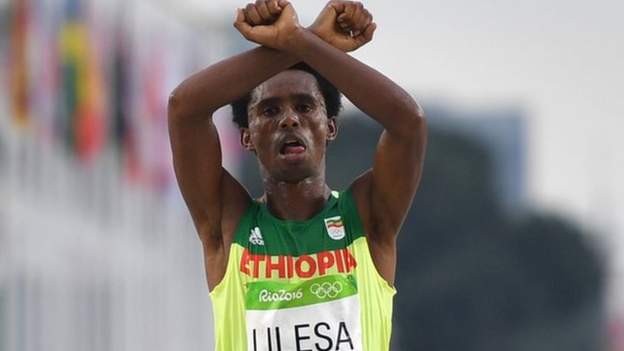
Author Archives: advocacy4oromia

How an Oromian slave became a South African teacher

27 Aug 2011

Sandra Rowoldt Shell University of Cape Town

Bisho Jarsa, trained as a domestic servant, went on to become a teacher

When Neville Alexander used to visit his maternal grandmother Bisho
Jarsa as a boy, he never suspected the extraordinary story of how she
had come from Oromia, East Africa, to the South African city of Port
Elizabeth.

Bisho was one of a group of Oromo slaves freed by a British warship
in 1888 off the coast of Yemen, then taken round the African coast and
placed in the care of missionaries in South Africa.

“We were overawed in her presence and by the way she would mumble to
herself in this language none of us understood,” recalls Mr Alexander,
now 74.

This was Afaan Oromoo, Oromia’s national language, Bisho’s mother tongue, which she reverted to as she grew older.

Mr Alexander, who was a political prisoner in the 1960s, sharing
Robben Island with Nelson Mandela, is today one of South Africa’s most
eminent educationists.

He remembers his younger siblings asking their mother, Dimbiti:
“What’s Ma talking about… what’s the matter with her? What’s she
saying?”

Their mother would respond: “Don’t worry about Ma… she’s just talking to God.”

When he was in his late teens, his mother told him about his Oromian
origins but Mr Alexander thinks even she may not have known all the
details, which he only discovered when he was in his fifties.

He found out that the freed Oromians had all been interviewed on their arrival in South Africa.

The story began on 16 September 1888, when Commander Charles E
Gissing, aboard the British gunship HMS Osprey, intercepted three dhows
carrying Oromians to the slave markets in the Arabian port of Jeddah.

Sold for maize

Commander Gissing’s mission was part of British attempts to end the
slave trade – a trade that London had supported until 1807, when it was
abolished across the British Empire.

Ethiopian children, enslaved in Ethiopia, freed by the British navy arrive in Aden. Photo: University of Cape Town
On their arrival in Yemen, the children were looked after by local families and missionaries

All the 204 slaves freed by Commander Gissing were from the Oromo ethnic group and most were children.

The Oromo, despite being the most populous of all Ethiopian groups,
had long been dominated by the country’s Amhara and Tigrayan elites and
were regularly used as slaves.

Emperor Menelik II, who has been described as Ethiopia’s “greatest
slave entrepreneur”, taxed the trade to pay for guns and ammunition as
he battled for control of the whole country, which he ruled from 1889 to
1913.

Bisho Jarsa was among the 183 children found on the dhows.

She had been orphaned with her two brothers, as a result of the
drought and disease that swept through Ethiopia in 1887, and left in the
care of one of her father’s slaves.

But the continuing threat of starvation resulted in Bisho being sold to slave merchants for a small quantity of maize.

After a journey of six weeks, she reached the Red Sea, where she was
put on board one of the Jeddah-bound dhows intercepted by HMS Osprey.

Continue reading the main story

“Start Quote

The missionaries recorded detailed histories of the former slaves, educated them and baptised them into the Christian faith”

Her first memory of the British was the sound
of automatic gunfire blasting into the sails and rigging of the slave
dhow while she huddled below deck with the other Oromo children.

They all fully expected to be eaten as this is what the Arab slave
traders had told them would happen if they were captured by the British.

But Commander Gissing took the Oromo to Aden, where the British authorities had to decide what to do with the former slaves.

The Muslim children were adopted by local families. The remaining
children were placed in the care of a mission of the Free Church of
Scotland – but the harsh climate took its toll and by the end of the
year 11 had died.

The missionaries sought an alternative home for them, eventually
settling on another of the Church’s missions, the Lovedale Institution
in South Africa’s Eastern Cape – on the other side of the continent.

Bisho and the rest of the children reached Lovedale on 21 August 1890.

The missionaries recorded detailed histories of the former slaves, educated them and baptised them into the Christian faith.

Mandela fascinated

Continue reading the main story

“Start Quote

Neville Alexander

Her real liberation was not the British warship but the education she later received in South Africa”

Neville Alexander

Life was tough here too, however, and by 1903, at least another 18 of the children had died.

In that year, the Lovedale authorities asked the survivors whether they would like to return to Ethiopia.

Some opted to do so, but it was only after a protracted process,
involving the intervention of German advisers to Emperor Menelik, that
17 former slaves sailed back to Ethiopia in 1909.

The rest had by this time married or found careers and opted to stay in South Africa.

Bisho was trained for domestic service, but she must have shown signs
of special talent, because she was one of only two of the Oromo girls
who went on to train as a teacher.

In 1902 she left Lovedale and found a position at a school in
Cradock, then in 1911 she married Frederick Scheepers, a minister in the
church.

Frederick and Bisho Jarsa had a daughter, Dimbiti. Dimbiti married
David Alexander, a carpenter, and one of their children, born on 22
October 1936, was Neville Alexander.

By the 1950s and 60s he was a well-known political activist, who helped found the short-lived National Liberation Front.

Continue reading the main story

Ethiopia Returnees

If you know these people – the freed slaves who decided to return home in 1909 – please use the form below to let us know:

  • Aguchello Chabani
  • Agude Bulcha
  • Amanu Figgo
  • Baki Malaka
  • Berille Boko Grant
  • Dinkitu Boensa
  • Fayesse Gemo
  • Fayissa Umbe
  • Galgal Dikko
  • Galgalli Shangalla
  • Gamaches Garba
  • Gutama Tarafo
  • Hawe Sukute
  • Liban Bultum
  • Nagaro Chali
  • Nuro Chabse
  • Rufo Gangilla
  • Tolassa Wayessa

He was arrested and from 1964 until 1974 was jailed in the bleak prison on Robben Island.

His fellow prisoners, Nelson Mandela and Walter Sisulu, were
fascinated by his part-Ethiopian origins but at the time, he was not
aware that his grandmother had been captured as a slave and so they
could not draw any comparisons with their own fight against oppression.

So what did he feel when he found out how is grandmother had ended up in South Africa?

“It reinforced my sense of being an African in a fundamental way,” he told the BBC.

Under apartheid, his family was classified as Coloured, or mixed-race, rather than African.

“We always struggled against this nomenclature,” he said.

He also noted that it explained why he had often been mistaken for an Ethiopian during his travels.

The strongest parallel he can draw between his life and that of his grandmother is the role of schooling.

“Her real liberation was not the British warship but the education she later received in South Africa,” he said.

“Equally, while on Robben Island, we turned it into a university and
ensured that all the prisoners learned to read and write, to prepare
them for their future lives.”

The Oromian Gadaa: Ancient rituals and modern practices

By Tony Henderson* |

It is generally thought that separation of the powers of Church and State, and an independent judiciary are new considerations, and the universal humanists too may think that the Law of Political Accountability is quite new – think again – and look to Africa. Bereket Alemayehu, an organiser with Convergence of Cultures on the African Continent, introduces us to the Gada system.

Gadaa.com
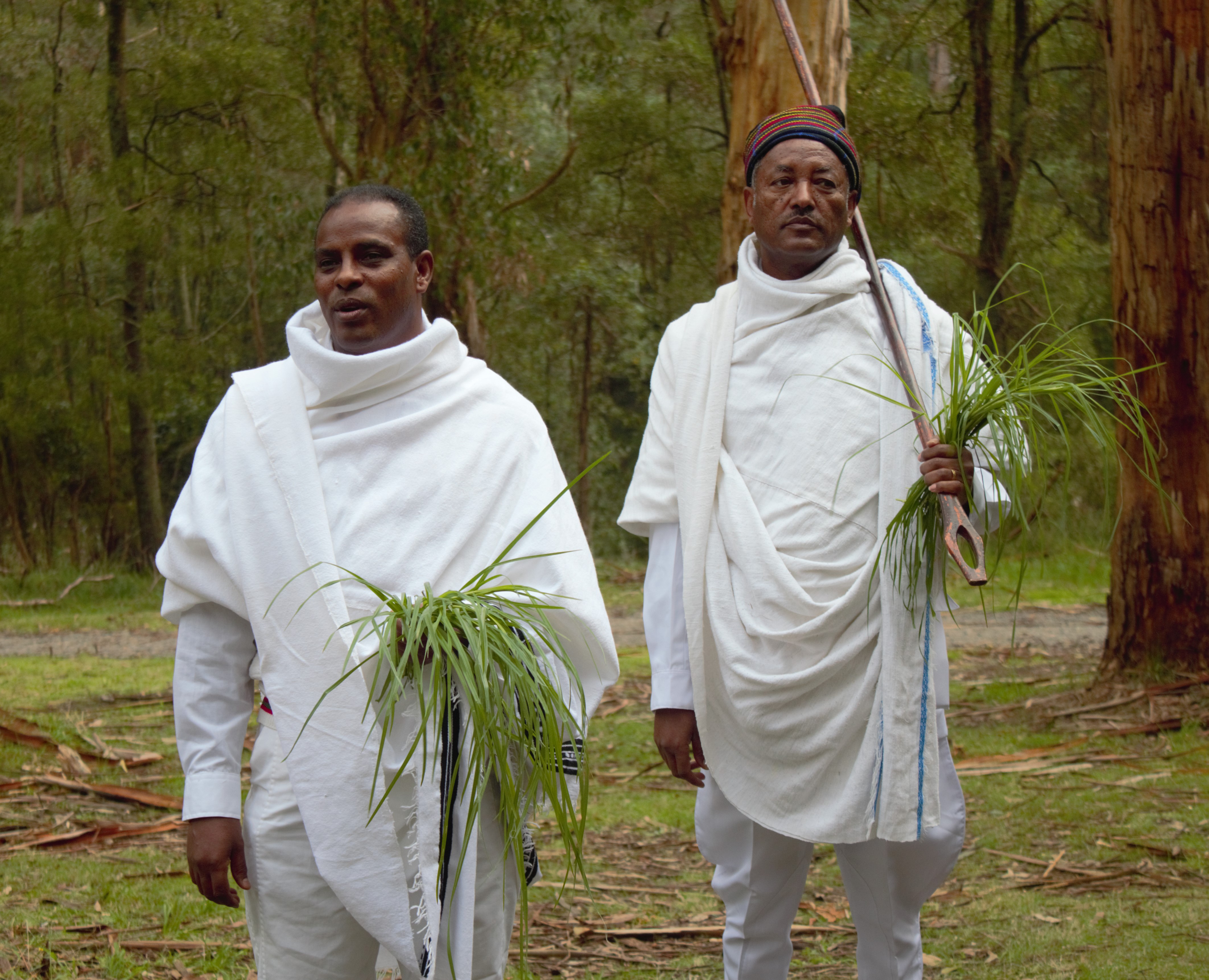
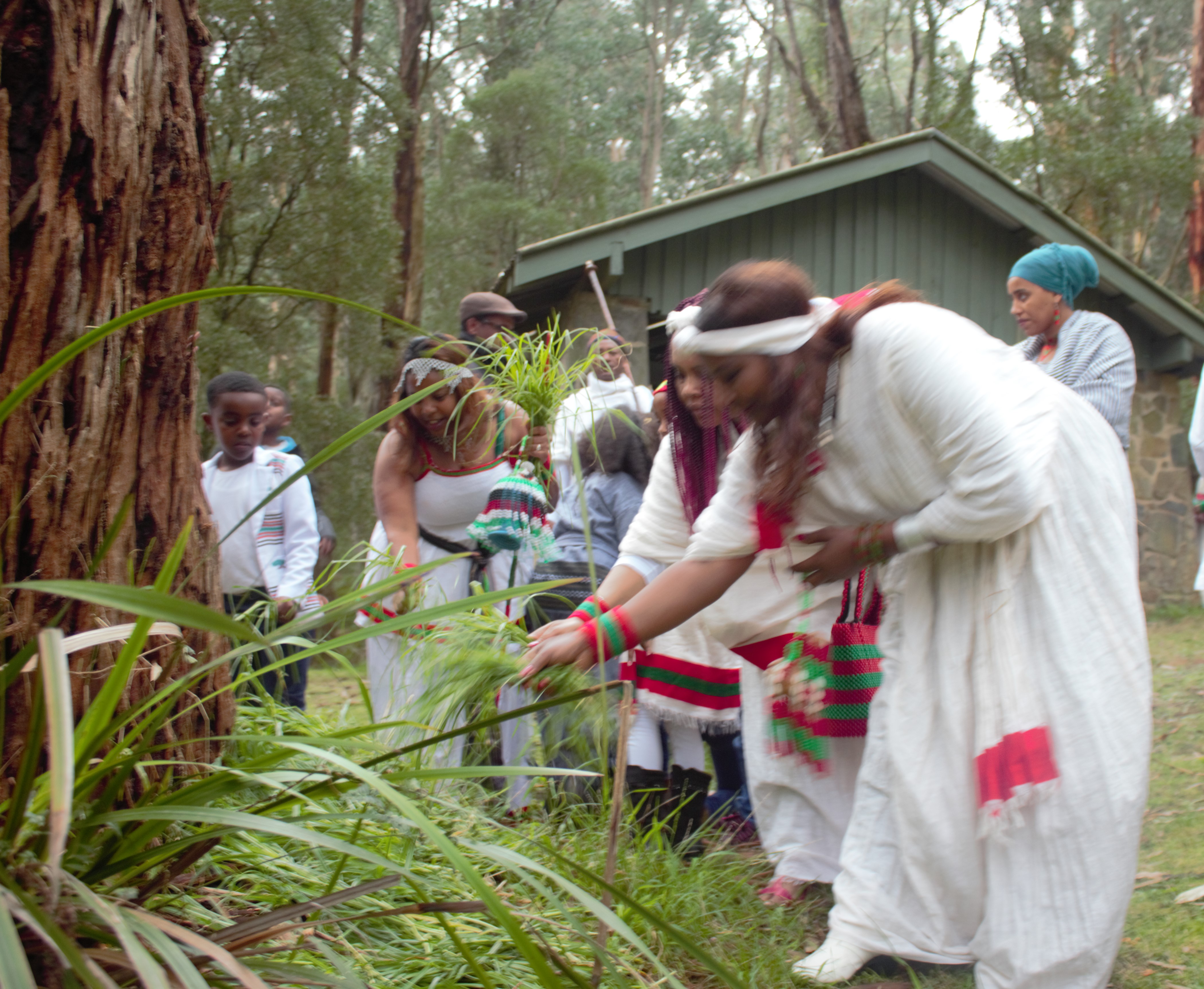
Rural Ethiopia near Oromia riverside celebration (Image by: Bereket Alemayehu)

(Pressenza Oromia, 6/20/11) “I took this picture recently in a rural area of Oromia (Ethiopia) while observing the Oromo people’s ancient traditional democratic system in celebration mode, which is called the Gada system,” says Bereket Alemayehu, with Convergence of Cultures, an organism that applies to the dialogue between cultures and combating all forms of violence and discrimination.

“Every eight years they perform a special event of the system at the household level by preparing a get-together feast and holding a public celebration for everyone at large. This is the uniqueness of this system that gets total attention from everyone, every member of the family,” he added.

“I was so privileged to be a witness – and enjoyed the feast – but more than anything I was touched by the ceremony of reconciliation and forgiveness moment of the day at the river bank,” he ended.

This latter note brings to mind to members of Convergence of Cultures the important works of reconciliation as proposed in the personal studies that are part of Universal Humanism, the base of the Convergence of Cultures.

While it is appreciated that the Oromos are struggling for the opportunity to rule themselves and reinvent an Oromian state that will reflect the Gada system, it is hoped that the practical effect of the Gada system, which can instill non-violence as a byproduct, can help bring peace and stability to this region.

Note: Oromiyaa (or Oromia in the Oromo language) is one of the nine ethnic divisions in southern and western Ethiopia. A 2007 census reported its population at over twenty-seven million, making it the largest state in terms of both population and area. Its current political capital is Finfinnee and economic capital city is Adama***. Prior to 2000, the Regional capital of Oromia was Addis Ababa, also known as “Finfinne” (the original name in the Oromo language). The relocation of the regional capital to Adama sparked considerable controversy. (Following that resistance, the regional government forced to named Adama economic capital city and re-named  Finfinnee as a political capital city.)***

The Oromia Region is the birthplace of Ethiopian coffee and it was because of coffee that the region came to renown, after a film titled: Black Gold was made, released in 2006. The film was directed by Mark Francis and Nick Francis, British. These brothers brought the plight of Ethiopian coffee growers and the people in the related infrastructure to an international audience. The problem turned around the dependance of lowly workers on the international coffee prices as determined by big-name enterprises selling coffee.

In the past, Oromos had an egalitarian social system known as Gada. Their military organization made them one of the strongest ethnic groups in the Horn of Africa between the twelfth and nineteenth centuries. Gada was a form of constitutional government and also a social system. Political leaders were elected by the men of the community every eight years. Corrupt or dictatorial leaders would be removed from power through buqisu (recall) before the official end of their term. Oromo women had a parallel institution known as siqqee. This institution promoted gender equality in Oromo society.

The Gada government was based on democratic principles. The abba boku was an elected “chairman” who presided over the chaffee (assembly) and proclaimed the laws. The abba dula (defense minister) was a government leader who directed the army. A council known as shanee or salgee and retired Gada officials also helped the abba boku to run the government.

All Gada officials were elected for eight years. The main qualifications for election included bravery, knowledge, honesty, demonstrated ability, and courage. The Gada government worked on local, regional, and central levels. The political philosophy of the Gada system was embodied in three main principles: terms of eight years, balanced opposition between parties, and power sharing between higher and lower levels. These checks and balances were created to prevent misuse of power. The government’s independent executive, legislative, and judicial branches also were a way of balancing power. Some elements of Gada are still practiced in southern Oromia.

The Gada system was the basis of Oromo culture and civilization. It helped Oromos maintain democratic political, economic, social, and religious institutions for many centuries. The Gada political system and military organization enabled Oromos defend themselves against enemies who were competing with them for land, water, and power. Today, Oromos are engaged in a national liberation movement. Under the leadership of the Oromo Liberation Front (OLF) they work to achieve self-determination. (Details by courtesy of Wikipedia)

* Tony Henderson is a freelance writer working in Hong Kong since 1980, and previously Japan, for seven years following two years in Mauritius after a year in Libya.

** PRESSENZA is an international press agency specializing in news about Peace, Nonviolence, Humanism and Non-discrimination – Read More.

*** The minor  correction is given by the Admin

source: http://world.pressenza.org/npermalink/ancient-rituals-and-modern-practices

The Oromian Gadaa: Ancient rituals and modern practices

It is generally thought that separation of the powers of Church and State and an independent judiciary are new considerations and the universal humanists too may think that the Law of Political Accountability is quite new – think again – and look to Africa. Bereket Alemayehu, an organiser with Convergence of Cultures on the African Continent, introduces us to the Gada system.

9a61000d993c012a126dd2a29bf8259db3e5c41c.1280x960

Image by: Bereket Alemayehu, Rural Ethiopia near Oromoia riverside celebration

Pressenza Oromoia, 6/20/11 “I took this picture recently in a rural area of Oromoia (Ethiopia) while observing the Oromo people’s ancient traditional democratic system in celebration mode, which is called the Gada system,” says Bereket Alemayehu, with Convergence of Cultures, an organism that applies to the dialogue between cultures and combating all forms of violence and discrimination.

“Every eight years they perform a special event of the system at the household level by preparing a get-together feast and holding a public celebration for everyone at large. This is the uniqueness of this system that gets total attention from everyone, every member of the family,” he added.

“I was so privileged to be a witness – and enjoyed the feast – but more than anything I was touched by the ceremony of reconciliation and forgiveness moment of the day at the river bank,” he ended.

This latter note brings to mind to members of Convergence of Cultures the important works of reconciliation as proposed in the personal studies that are part of Universal Humanism, the base of the Convergence of Cultures.

While it is appreciated that the Oromos are struggling for the opportunity to rule themselves and reinvent an Oromian state that will reflect the Gada system, it is hoped that the practical effect of the Gada system, which can instill non-violence as a byproduct, can help bring peace and stability to this region.

Note: Oromiyaa (or Oromia in the Oromo language) is one of the nine ethnic divisions in southern and western Ethiopia. A 2007 census reported its population at over twenty-seven million, making it the largest state in terms of both population and area. Its current political capital is Finfinnee and economic capital city is Adama***. Prior to 2000, the Regional capital of Oromia was Addis Ababa, also known as “Finfinne” (the original name in the Oromo language). The relocation of the regional capital to Adama sparked considerable controversy. (Following that resistance in Oromia, the regional government  forced to named Adama as  economic capital city and re-named  Finfinnee as a political capital city.)***

The Oromia Region is the birthplace of Ethiopian coffee and it was because of coffee that the region came to renown, after a film titled: Black Gold was made, released in 2006. The film was directed by Mark Francis and Nick Francis, British. These brothers brought the plight of Ethiopian coffee growers and the people in the related infrastructure to an international audience. The problem turned around the dependance of lowly workers on the international coffee prices as determined by big-name enterprises selling coffee.

In the past, Oromos had an egalitarian social system known as Gada. Their military organization made them one of the strongest ethnic groups in the Horn of Africa between the twelfth and nineteenth centuries. Gada was a form of constitutional government and also a social system. Political leaders were elected by the men of the community every eight years. Corrupt or dictatorial leaders would be removed from power through buqisu (recall) before the official end of their term. Oromo women had a parallel institution known as siqqee. This institution promoted gender equality in Oromo society.

The Gada government was based on democratic principles. The abba boku was an elected "chairman" who presided over the chaffee (assembly) and proclaimed the laws. The abba dula (defense minister) was a government leader who directed the army. A council known as shanee or salgee and retired Gada officials also helped the abba boku to run the government.

All Gada officials were elected for eight years. The main qualifications for election included bravery, knowledge, honesty, demonstrated ability, and courage. The Gada government worked on local, regional, and central levels. The political philosophy of the Gada system was embodied in three main principles: terms of eight years, balanced opposition between parties, and power sharing between higher and lower levels. These checks and balances were created to prevent misuse of power. The government’s independent executive, legislative, and judicial branches also were a way of balancing power. Some elements of Gada are still practiced in southern Oromia.

The Gada system was the basis of Oromo culture and civilization. It helped Oromos maintain democratic political, economic, social, and religious institutions for many centuries. The Gada political system and military organization enabled Oromos defend themselves against enemies who were competing with them for land, water, and power. Today, Oromos are engaged in a national liberation movement. Under the leadership of the Oromo Liberation Front (OLF) they work to achieve self-determination. (Details by courtesy of Wikipedia)

* Tony Henderson is a freelance writer working in Hong Kong since 1980, and previously Japan, for seven years following two years in Mauritius after a year in Libya.

** PRESSENZA is an international press agency specializing in news about Peace, Nonviolence, Humanism and Non-discrimination – Read More.

*** The minor  correction is given by the Admin

source: http://world.pressenza.org/npermalink/ancient-rituals-and-modern-practices

The Exhibit Bareedina: Women of Oromia,

 7Share  

CSUN student showcase sheds light on Oromo women’s ensembles


The photograph, taken by Art History Professor Dr. Peri Klemm, is part of the exhibit Bareedin: Women of Oromia. Photo Credit: Krista Daly / Senior Reporter

The Art 404 exhibition design class designed the exhibit Bareedina: Women of Oromia, based on their art history professor’s dissertation.

Dr. Peri Klemm traveled to Ethiopia as a graduate student to conduct research for her dissertation. The question turned out to be why women who were so poor spent so much time and energy on the arts of the body, which included hairstyles, tattoos, dress, jewelry and generally the ensemble of things that make up body art.

Bareedduu Oromiyaa

“The Oromo are the ethnic majority within Ethiopia but they have lived under Ethiopian imperial rule,” Klemm said. “It is within this context, where issues of identity are crucial, that women’s costume in Oromia becomes especially important.”

In the Afaan Oromo language, Bareedina refers to the state of being beautiful, Klemm said.

“I realized that for an Oromian woman, her personal arts are very important for a variety of reasons,” Klemm said. “They communicate something about her age, her religion, her occupation, what political affiliation she holds and most importantly her identity as an Oromio.”

Klemm added that it’s through language, culture and art that they maintain a sense of themselves.

“Women’s bodies become a really important canvas for Oromo identity and Oromo expression,” Klemm said.

She said she took the photos in the exhibit to document what women are doing with their bodies.

Joan Klemm, Peri’s aunt, said she thought the photographs are beautiful.

“I knew of her travels, but I had never been acquainted with her photos,” Joan said. “The people themselves are very beautiful. The way people decorated themselves even through their poverty is just amazing.”

Peri added that the exhibit is very accessible and at the same time very different.

Julie Moss, a grad student in art history, said she doesn’t think a lot of students get to see the end result of their research.

“Of course it’s a beautiful exhibit, the way they have it arranged, but also being able to have them see the fruition of the work and their studies, that to me is what’s unique about it,” said Moss, 42.

Peri Klemm said students chose the photos, designed the exhibit, created a website and a catalogue.

“The catalogue is wonderful,” Peri Klemm said. “It makes you really remember what you’ve seen. In the peace and quiet of your own home, you can get to know the people a little more.”

Monica Tobon, art history major, was involved in telling people about the exhibit.

“We work as more of a team than a class,” Tobon said. “All of us do something different.”

Peri Klemm said the guest speaker, Mardaasa Addisu, is an Oromo activist she met at a conference a couple years ago.

“He has continued to promote the love and generosity of the Oromos,” Peri Klemm said. “He continues to inspire me.”

Addisu is involved in the organization Macha Tulama, which helps Oromo people improve their health care, education and even what it means to be Oromo.

In the last few months, he said he has been active in helping Oromian refugees.

“Being recognized as Oromo was a challenge,” Addisu said. “They were all lumped into Ethiopian.”

Marathon runners are having the same identity issue, he added. Oromian runners are still considered Ethiopian and Addisu said he is trying to help them to be recognized as Oromo.

Addisu said he has been working on a pollution project for the last four years because many have died from it in Oromia.

No one enforces the environmental protection law and Addisu said the EPA director said enforcing the policy is extreme.

The Bareedina: Women of Oromia exhibit will be at the West Gallery until May 5.

Mil’uu Xiinxala Kitaaba Aadaa Booranaa – A Dictionary of Borana Culture


Reviewed by Taammanaa Bitimaa*

ISBN 10: 9994400053
ISBN 13: 9789994400058
Publisher: Shama Books
Publication Date: 2006
Authors: Ton Leus with Cynthia Salvadori
Book Title: AADAA BOORANAA – A Dictionary of Borana Culture
Language: Oromo
Pages: 709


Gadaa.com

Kitaabni kanaa olitti kaayame kun fuuleewwan 709 qaba. Fakkoolee (footota) kan waayee garagaraa agarsiisan danuu of-keessatti baaddhatee argama. Kitaabichi aadaa, seenaa, dinagdee fi Afaan Oromoo sirriitti kan muldhisu. Kitaabni kun duraan bara 1995 keessa “BORANA DICTIONARY” maqaa jedhamuun bayee ture. Ammoo, inni kun waan isa durii caala qaqqajeelee wanni daran hedduus itti- dabalamee bayeef, barroo (kitaaba) haaraa dha jechuutu dandayama. Mee waan hundaa dura waayee barreessicha beekamaa kanaa, waayee Ton Leus gabaabinaan haa ilaallu!

Ton Leus dhalootaan nama Biyya Hoolandaa yoo tahu, Oromiyaa teenya biyya ofii tan lammaffaa godhachuun waggaalee 27 keessa jiraate. Kan jiraates godina Booranaa yoo tahu, akkuma uummataatti jiraachuun kabaja, jaalalaa fi raajeffannoo uummata keenyaa nama dhuunfate ture. Inni karaa amantiitiin nama Kaatolikii yoo tahu, kan qeyee ofii taasifacuun bara dheeraa uummataaf tajaajila barbaachisu kennaa ture, ganda naannoo Yaaballootti argamu Dhaddiim keessa. Ton Leus waggaalee jedhaman kana keessa aadaa fi Afaan Oromoo qorachuu hojii isaa keessaa isa duraasaa waan godhateef, kunoo kitaaba hedduu tujuba-qabeessa akkanaa nuuf dhiisee dabruu dandaye. Ton Leus bara 2007 keessa du’ee kan awwaalames bakka Oromoonni dhibbi baay’een argamanitti, dachee Oromiyaa irratti, biyyee Oromiyaa keessatti, ganda Dhaddiim kan qeyee ofii taasifate san keessatti. Sanduuqa reeffaa keessa kaayamuun kitaaba isaa kana keessaa tokko, isa waliin awwaalame. Inni nu dhiisee dabrullee gumoon hojii isaa, kitaabni kun akka bakkalcha bariitti dhaloota Oromoo dhufuuf ifaa jiraata.

Mee amma gara handhuura barroo kanaatti ceenee, wanneen tokko tokko haa ilaallu! Yoo barreessichi kitaaba isaa kanaan galmee-jechootaa (“dictionary”) jedheenillee, inni galmee-jechootaa otoo hin taane, kubee (kuusaa-beekumsaa – “encyclopedia”) dha. Kubeedhuma keessayyuu kan hedduu tujuba-qabeessa tahe. Kitaabichi aadaa, afaani fi seenaa Oromoo, keessaumaa kan Oromoo Booranaa akka gaariitti kan ibsu. Waan hundumaa caala Afaan Oromoo afaan sooressa, baldhaa fi dilbaayaa tahuu isaa kan sirriitti muldhisu. Mee isa kana fakkeenyota muraasa wayii fudhanneetoo haa ilaallu!

Kitaabichi akka galmee-jechootaa kanneen biroo fakkeenyaaf aannan = “milk” jedheetoo kan bira dabru otoo hin taane, aadaa aannanii kan Oromoon qabuu fi gosa aannanii tokko tokkoon tarreessa. Jecha kophee = “general word for shoe” jedhamu jalatti, Oromoon Booranaa gosa kophee 11 qabaachuu isaa addeessa. Kunis: kophee gogaa, kophee hoddhaa, kophee salaalaa, kophee yabbuu, kophee imbiraa, kophee iskarbaa, kophee lailonii (naayilonii), kophee mukaa, kophee odaa, kophee yabbuu satawwaa, burkaanii. Jecha loon = “cattle, livestock, herd, herd of cattle” jedhamu jalatti immoo jechoota 20 ol tarreessa. Akkanuma jecha sirba = “song, singing, dance” jedhamu jalatti gosa sirbaa kan Oromoon Booranaa qabu 26 kenna. Kitaabni kun sonaan hedduu dilbaayaa waan taheef, akkanumatti jecha tokko fudhachuun isa jalatti jechoota baay’ee tarreessa. Dabaleesoo, aadaa fi seenaa jecha san wajjin walqabatanis tolchee ibsa. Afaan Oromoo hedduu sooressa, baldhaa fi miidhagaa tahuu isaa, kitaabni kun akka daawwitiitti nu fuuldura qabeetoo sirriitti nutti agarsiisa. Afaanuma Oromoo keessayyuu loqoddaan Booranaa akkaan sooressa tahuu isaa muldhisa. Loqoddaan Booranaa kan loqoddaalee Afaan Oromoo isaan biroo irra sooressaa fi badhaadhaa tahee argumas, waan Oromoon Booranaa sirna gadaa: isa sirna aamantii, sirna taliigaa, sirna dinagdee fi sirna gamtaa of-keessaa qabu saniin, hanga ammaattuu buluufi.

Karaa seenaas yoo fudhanne, keessumaa waayee sirna gadaa fi amantii Oromoo, Waaqeffannaa akka gaariitti ibsa. Gadaa Oromoo Booranaa bara 1467 irraa kaasuun hanga bara 2008-2016-tti abbootii gadaa 70 tarreessuun gosa fi maqaa gadaa isaanii wajjin kenna. Kunis abbaa gadaa Oromoo Booranaa isa jalqabaa: Gadayyoo Galgaloo Yaayyaa (1467 – 1475) irraa hamma abbaa gadaa isa bara 2008 filameetti, jechuun Guyyoo Gobbaa Bulee-tti (2008 – 2016) tarreessa. Kan biraa dhiifnee yoo bara jedhame kana (1467) akka jalqaba gadaa Oromootti fudhannellee, kun karaa sirna dimokiraasii kan addunyaa keessatti raajeffatamu. Otoo warri Oroppaa bara 1492 irraa kaasanii Kolumbus faa ardii Atilaantika gamaatti erganii, “Ameerikaa arganne” jechuun hin odeeffatinii fi hin ololeeffatin dura, Oromoon sirna qaroominaa kan tahe, sirna gadaa isa dimokiraasii irratti bu’ureeffameen bulaayyu jechaa dha.

Mee ergan kitaaba kana raajeffannoo cimaa taheen isiniif dhiyeessee booda, waan tokko kan dogoggora tahen tuqee dabra. “Kan hin dogoggorre Waaqa qofa” jedha, mammaaksi Oromoo tokko. Kunis akka maxxansa kitaaba kanaa isa lammaffaa irratti qajeelfamuufi malee, akka aadaa Oromoottillee nama boqote qeeqachuun hin malu.

Kitaabni kun jechoota Oromoon afaanota biroo irraa ergifachuun qaama jechoota ofii taasifate garii kenneeti jira. Kunis waan dansaa tahe. Ammoo, karaa kanaan daddhabbiiwwan tokko tokko muldhatanii argamu. Qorannoon madda-jechootaa (“etymology”) badhee (“field”) mataa ofii dandaye qaba. Kunis kan yeroo dheeraa fi qarannoo cimaa barbaachisu taha. Kitaabni kun jechoota Afaan Oromoo keessumaa kan loqoddaan Booranaa afaanota: Arabaa, Iswaahilii, Somaalee, Amaaraa, Ingilizii, Faransaa fi Xaaliyaanii irraa ergifate ni agarsiisa. Kan afaanota Ingilizii, Faransaa fi keessumaa Xaaliyaanii irraa afaan keenya ergifate dogoggora malee, akka gaariitti muldhisa. Garuu, kan Afaan Arabaa irraa ergifataman garii isaanii akka waan Afaan Amaaraa irraa ergifatamaniitti dhiyeessa. Dhugaa dha; isaan kana keessaa kan Afaan Oromoo karaa Afaan Amaaratiin ergifates ni jiru. Haatahu malee, kan inni kallachumatti Afaan Arabaa irraa ergifates Afaan Amaaraa irraayyi ergifate jechuun dogoggora taha. Akkanuma kan Afaan Oromoo Afaan Arabaa irraa kalachumaan ergifates akka waan Afaan Iswaahilii irraa ergifateetti dhiyeeffamee jira. Fakkeenyaaf jechoonni: kitaaba, kibriita/ kibritii, saabunaa/ saamunaa, sanduuqa, shaa’ii/ shaayii, si’aasaa/ siyaasaa, sigaaraa/ sijaaraa, sukkaara/ shukkaara, maqasii, Kamisa jedhaman faa Oromiyaa guutuu fi dabres Biyya Oromoo hundumattuu ni beekamu. Isaan akkanaa kana Afaan Oromoo kallachumatti Afaan Arabaa irraayyi ergifate malee, akka kitaabicha keessatti jedhame kan Afaan Iswaahilii irraa ergifatee miti. Kun barroo raajeffatamaa keenyaa, kan Ton Leus keessatti callaa otoo hin taane, kan namoota alagaa isaan galmee-jechoota Afaan Oromoo dhiyeessan danuu keessattis kan muldhatu. Kunillee dogoggora yartuu wayii ti. Dogoggorrin ani amma kanaa gaditti dhiyeessu isa jechoota handhuuraa Afaan Oromoo tahan, akka waan Afaan Amaaraa irraa ergifatamaniitti kennamanii kan ilaalu. Isa kana bakka lamattan qoodee ibsuuf yaala.

a) Jechoota Afaan Amaaraa Afaan Oromoo irraa ergifate akka waan Afaan Oromoo Afaan Amaaraa irraa ergifateetti dhiyeessuu; fakkeenyota : cuubee, (“a large knife”), callee (“small colourful beads”), caakkaa (“dense forest”), bordee (“beer brewed from maize or other grains”) , goojjoo/ godoo (“shack”), daboo (“helping one another in agricultural work”), qabattoo (“strap, belt”), qaboo (“calling a few people together for work”), qoroo (“Borana agents appointed by the representative of the government”) faa. Mirkana; isaan kana keessaa garii Oromoon Booranaa karaa warra Amaaraa dursee dhagayuun ni mala. Ammoo, kun amala warra galmee-jechoota Oromoo barreessanii jechuun warra biyyoota alaa taheetu, isaan akkanaa kana akka waan jechoota Afaan Amaaraa tahanitti dhiyeeffama. Mee amma dubbii waan kana sirriitti nu hubachiisu tokkon, gabaabsee dhiyeessuu fedha.

Oromoonni Booranaa akka qoosaattis tahu Oromoota Shawaa fi Wallaggaa kan ittiin waaman dubbii tokko qabu. Kunis: “warra yaa gooftaa-koo jedhu”, isa jedhamu. Oromoonni Booranaa akkuma Oromoota Tuulamaa fi Maccaa isaan durii-durii ilmoo namaatiin “gooftaa” hin jedhani. Isaaniif “gooftaan” Waaqa duwwaa dha. Aadaa Oromoo keessa ilmoo namaatiin “yaa gooftaa-koo” jedhaniitoo gadi-jechuunis hin turre. Amantii Oromoo, Waaqeffannaa keessattis “gooftaan” Waaqa tokkicha qofa waan taheef, fudhatama hin qabu. Oromoonni Biyya Habashaa waliin daangaa qaban kan akka: Raayyaa, Walloo, Tuulamaa fi Maccaa faa booda keessa akkuma warra Amaaraa namanis “gooftaa” jechuu eegalani. Kun kan nutti muldhisu Oromoon Booranaa jecha kana dursee kan dhagaye Oromootuma irraayyi jechaa dha. Kanaafuu, jechoota Afaan Oromoo kan naannolee biroo irraa Oromoon Booranaa dhagayee ergifate, akka jechoota Amaaraatti kennuun sirrii hin tahu. Wanni kun warra gara fuulduraatti galmee-jechootaa kan Afaan Oromoo nuuf dhiyeessaniin qulqullaayee lafa kaayamuun, dirqama saayinsiin afaanii hordofu taha.

b) Jechoota Oromoo kan gonkumaa Afaan Amaaraa keessatti hin argamne, akka waan Oromoon Booranaa Afaan Amaaraa irraa ergifateetti dhiyeessuu; fakkeenyota: batatee/ babattee (“in a plow, the pair of triangular pieces of wood that support the metal blade”), dafi (“quickly, in hurry”), fida (“to bring”), furaa/ furtuu (“key”), jirbii (“cotton”), qaanessa (“to disgrace, embarrass”), qamadii (“wheat”), qanani’a (“to have a good life”), qophaa’a (“to be ready”), qullubbii (” garlic”), shaanaa (“cabbage”), shawwee (“fresh maize”), shila’a (“to pass through, go through”), shufuroo (“a careless person, one who is antidy”), talallaa (“vaccination”), tiiqii/ xiiqii (“revenge”), ukkuma (“to order forcefully, coerce with force”), gooftaa (“master, lord”), boggee (“pants, shorts”), bonkisa (“to thresh grain”), daanoo/ daana’oo/ daanawoo (“weevil”), kokii (“cup”) faa. Egaa, jechoonni kun akkuman kanaa olitti tuqe matumaa kan Afaan Amaaraa keessa hin jirre waan tahaniif, loqoddaan Booranaa loqoddaalee Oromoo warra biroo irraayyi ergifate jechaa dha. Namni waan ofii hin qabne, waan ofii hin beekne namaaf liqeessu yookaan ergisu hin jiru!

Dogoggorrin kanaa olitti ibsuuf yaale, dogoggora namni waa hojjatu gochuu dandayu waan taheef, maalaleffannoo kitaaba kanaa kan gadi-xiqqeessuu miti! Kitaabni Ton Leus kun kan akkanatti sooromee, badhaadhee, miidhagees nuuf dhiyeete, waan barreessichi aadaa fi Afaan Oromoo uummata keessa jiraachuun bara dheeraa gadi-fageenyaan qorateefi. Dabaleesoo, waan inni Oromoota hedduu deeggartoota ofii godhachuun keessatti hirmachiiseefi. Malli inni itti-dhimma baye kun, gara fuulduras warra aadaa fi Afaan Oromoo qorachuu fedhaniif fakkeenya qajeelaa fi sirrii kan tahu. Oromoonni waa dubbisuu dandayan cufti kitaaba guddichaa fi tuujaba-qabeessa kana, akka mana ofii keessaa hin dhabnen cimsee dhaamsa kiyya dabarsa!

* Taammanaa Bitimaa: Gurree@web.de

Barliin, Jarmanii

20. 04. 11

The Oromian Taste

The Oromian National Food-Dhangaa

The main foods of Oromos are animal products including foon (meat), aannan (milk), baaduu (cheese), dhadhaa (butter), and cereals that are eaten as marqaa (porridge) and bideena (bread). Oromos drink coffee, daadhii (honey wine), and faarsoo (beer). Some Oromos chew chat (a stimulant leaf).

The special dish of Oromos is ittoo (made with meat or chicken, spices, hot pepper, and other ingredients) and bideena bread (made from xaafii or millet). Sometimes marqaa or qincee (made from barley) is eaten for breakfast. Ancootee (a food made from the roots of certain plants) is a special food in some parts of western Oromia.

All members of the family eat together. Members of the family sit on stools, eat off wooden platters or dishes, use wooden spoons for liquids, and use washed hands to pick up solid foods. The majority of Oromos eat twice a day, in the morning and at night. Muslim Oromos do not eat pork for religious reasons.
www.youtube.com/watch


Oromo and Oromia

PRONUNCIATION: AWR-uh-moz

LOCATION: Ethiopia; Kenya; Somalia

POPULATION: 28 million

LANGUAGE: Afaan Oromoo

RELIGION: Original Oromo religion (Waaqa); Islam; Christianity

1 • INTRODUCTION

Although Oromos have their own unique culture, history, language, and civilization, they are culturally related to Afars, Somalis, Sidamas, Agaws, Bilens, Bejas, Kunamas, and other groups. In the past, Oromos had an egalitarian social system known as gada. Their military organization made them one of the strongest ethnic groups in the Horn of Africa between the twelfth and nineteenth centuries. Gada was a form of constitutional government and also a social system. Political leaders were elected by the men of the community every eight years. Corrupt or dictatorial leaders would be removed from power through buqisu (recall) before the official end of their term. Oromo women had a parallel institution known as siqqee. This institution promoted gender equality in Oromo society.

Gada closely connected the social and political structures. Male Oromos were organized according to age and generation for both social and political activities. The gada government was based on democratic principles. The abba boku was an elected "chairman" who presided over the chaffee (assembly) and proclaimed the laws. The abba dula (defense minister) was a government leader who directed the army. A council known as shanee or salgee and retired gada officials also helped the abba boku to run the government.

All gada officials were elected for eight years. The main qualifications for election included bravery, knowledge, honesty, demonstrated ability, and courage. The gada government worked on local, regional, and central levels. The political philosophy of the gada system was embodied in three main principles: terms of eight years, balanced opposition between parties, and power sharing between higher and lower levels. These checks and balances were created to prevent misuse of power. The goverment’s independent executive, legislative, and judicial branches also were a way of balancing power. Some elements of gada are still practiced in southern Oromia.

The gada system was the basis of Oromo culture and civilization. It helped Oromos maintain democratic political, economic, social, and religious institutions for many centuries. The gada political system and military organization enabled Oromos defend themselves against enemies who were competing with them for land, water, and power. Today, Oromos are engaged in a national liberation movement. Under the leadership of the Oromo Liberation Front (OLF) they work to achieve self-determination. Most Oromos support this liberation organization and its army, the Oromo Liberation Army. There are many Oromo organizations in North America, Europe, and Africa that support the Oromo national movement. Oromos are struggling for the opportunity to rule themselves and reinvent an Oromian state that will reflect the gada system.

2 • LOCATION

Oromos call their nation and country Oromia. They have been living in the Horn of Africa for all of their known history. They are one of the largest ethnic groups in Africa, with a population estimated at 28 million people in the mid-1990s. Oromia is located mainly within Ethiopia and covers an area of about 232,000 square miles (600,000 square kilometers). The 3.5 million-year-old fossilized human skeleton known as "Lucy" (or "Chaltu" in Oromo) was found by archaeologists in Oromia. Present-day Oromos also live in Kenya and Somalia. In the late nineteenth century, Oromos were colonized and mainly joined with- Ethiopia. They lost their independent institutional and cultural development. Great Britain, France, and Italy supported the Ethiopian colonization of Oromos.

Oromia is considered the richest region of the Horn of Africa because of its agricultural and natural resources. It is considered by many to be the "breadbasket" of the Horn. Farm products, including barley, wheat, sorghum, xafi (a grain), maize, coffee, oil seeds, chat (a stimulant leaf), oranges, and cattle are raised in abundance in Oromia. Oromia is also rich in gold, silver, platinum, marble, uranium, nickel, natural gas, and other mineral resources. It has several large and small rivers used for agriculture and for producing hydroelectric power.

3 • LANGUAGE

The Oromo language is called Afaan Oromoo. Afaan Oromoo has more than thirty million speakers. Ethnic groups such as the Sidama, Berta, Adare, Annuak, Koma, Kulo, Kaficho, and Guraghe speak the Oromo language in addition to their own languages. Afaan Oromoo is the third most widely spoken language in Africa, after Arabic and Hausa. It is the second most widely spoken indigenous language in Africa south of the Sahara.

In spite of attempts by Ethiopian regimes to destroy the Afaan Oromoo language, it has continued to exist and flourish in rural areas. Until recently, Oromos were denied the right to develop their language, literature, and alphabet. For almost a century, it was a crime to write in this language. With the rise of the Oromo national movement, Oromo scholars adopted Latin script (the alphabet used for English and most other European languages) in the early 1970s. The OLF adopted this alphabet and began to teach reading and writing in Afaan Oromoo.

4 • FOLKLORE

Oromos believe that Waaqa Tokkicha (the one God) created the world, including them. They call this supreme being Waaqa Guuracha (the Black God). Most Oromos still believe that it was this God who created heaven and earth and other living and non-living things. Waaqa also created ayaana (spiritual connection), through which he connects himself to his creatures. The Oromo story of creation starts with the element of water, since it was the only element that existed before other elements.

Oromos believed that Waaqa created the sky and earth from water. He also created dry land out of water, and bakkalcha (a star) to provide light. With the rise of bakkalcha, ayaana (spiritual connection) emerged. With this star, sunlight also appeared. The movement of this sunlight created day and night. Using the light of bakkalcha, Waaqa created all other stars, animals, plants, and other creatures that live on the land, in air, and in water. When an Oromo dies, he or she will become spirit.

Some Oromos still believe in the existence of ancestors’ spirits. They attempt to contact them through ceremonies. These ancestral spirits appear to relatives in the form of flying animals.

Original Oromo religion does not believe in hell and heaven. If a person commits a sin by disturbing the balance of nature or mis-treating others, the society imposes punishment while the person is alive.

Oromo heroes and heroines are the people who have done something important for the community. Thinkers who invented the gada system, raagas (prophets), and military leaders, for example, are considered heroes and heroines. Today, those who have contributed to the Oromo national movement are considered heroes and heroines.

5 • RELIGION

Oromos recognize the existence of a supreme being or Creator that they call Waaqa. They have three major religions: original Oromo religion (Waaqa), Islam, and Christianity.

The original religion sees the human, spiritual, and physical worlds as interconnected, with their existence and functions ruled by Waaqa. Through each person’s ayaana (spiritual connection), Waaqa acts in the person’s life. Three Oromo concepts explain the organization and connection of human, spiritual, and physical worlds: ayaana, uuma (nature), and saffu (the ethical and moral code).

Uuma includes everything created by Waaqa, including ayaana. Saffu is a moral and ethical code that Oromos use to tell bad from good and wrong from right. The Oromo religious institution, or qallu , is the center of the Oromo religion. Qallu leaders traditionally played important religious roles in Oromo society. The Ethiopian colonizers tried to ban the Oromo system of thought by eliminating Oromo cultural experts such as the raagas (Oromo prophets), the ayaantus (time reckoners), and oral historians.

Today, Islam and Christianity are the major religions in Oromo society. In some Oromo regions, Eastern Orthodox Christianity was introduced by the Ethiopian colonizers. In other areas, Oromos accepted Protestant Christianity in order to resist Orthodox Christianity. Some Oromos accepted Islam in order to resist Ethiopian control and Orthodox Christianity. Islam was imposed on other Oromos by Turkish and Egyptian colonizers. However, some Oromos have continued to practice their original religion. Both Christianity and Islam in Ethiopia have been greatly influenced by Oromo religion.

6 • MAJOR HOLIDAYS

The Oromo celebrate ceremonial rites of passage known as ireecha or buuta , as well as Islamic and Christian holidays. The Oromos have also begun celebrating an Oromo national day to remember their heroines and heroes who have sacrificed their lives trying to free their people from Ethiopian rule.

7 • RITES OF PASSAGE

Since children are seen as having great value, most Oromo families are large. The birth of a child is celebrated because each newborn child will some day become a worker. Marriage is celebrated since it is the time when boys and girls enter adulthood. Death is marked as an important event; it brings members of the community together to say goodbye.

Traditionally Oromos had five gada (grades) or parties. The names of these grades varied from place to place. In one area, these grades were dabalee (ages one to eight), rogge (ages eight to sixteen), follee (ages sixteen to twenty-four), qondaala (ages twenty-four to thirty-two), and dorri (ages thirty-two to forty). There were rites of passages when males passed from one gada to another. These rites of passages were called ireecha or buuta.

Between the ages of one and eight, Oromo male children did not participate in politics and had little responsibility. When they were between eight and sixteen years old, they were not yet allowed to take full responsibility and marry. Between ages sixteen and twenty-four, they took on the responsibilities of hard work. They learned about war tactics, politics, law and management, culture and history, and hunting big animals. When young men were between twenty-four and thirty-two years of age, they served as soldiers and prepared to take over the responsibilities of leadership, in peace and war. Men thirty-two to forty years old had important roles. They shared their knowledge with the qondaala group and carried out their leadership responsibilities.

Nowadays, those who can afford it send their children to school. These children complete their teenage years in school. Children and teenagers participate in agriculture and other activities needed for survival. Between the ages of sixteen and twenty-four, young Oromos marry and start the lifecycle of adulthood.

8 • RELATIONSHIPS

Oromos are friendly people, and they express their feelings openly. Oromos greet one another by shaking hands; they talk to one another warmly. Asahama? (How are you?) , Fayaadha? (Are you healthy?), and Matinkee atam? (Is your family well?) are common greeting phrases or questions. The other person answers, Ani fayaadha (I am fine), Matinkos nagadha (My family is o.k.), and Ati fayaadha? (What about you, are you fine?).

When Oromos visit other families, they are provided with something to drink or eat. It is expected that visitors will eat or drink what is offered. People can drop by and visit friends or relatives without letting them know ahead of time.

Dating is an important step for a boy and a girl. Usually a young boy begins by expressing his love for a girl whom he wants to date. When a girl agrees that she loves him, too, they start dating. Premarital sex is not accepted, but kissing and dancing are acceptable. Parents are not usually told about a dating relationship. Dating may or may not lead to marriage. Having girlfriends and boyfriends gains young people social status and respect from others.

9 • LIVING CONDITIONS

Since Oromos are colonial subjects, their natural resources are extracted mainly by wealthy and powerful Ethiopians and their supporters. Most Oromos are rural people who lack basic services such as electricity, clean water, adequate housing, reliable transportation, clinics, and hospitals. Electricity that is produced by Oromian rivers is used mainly by Amhara and Tigrayans.

Hunger is a problem among the Oromo and many attribute it to exploitation by the Ethiopian government. Since Oromos have been denied education by a successive series of Ethiopian regimes, the Oromo middle class is very small. The living conditions of this class, however, are better than those of most Oromos. Members of this class mainly live in cities and towns.

Because of the military conflict between the Oromo Liberation Front army and the Ethiopian government army, Oromo peasants are constantly threatened, murdered, or imprisoned by the government. The Ethiopian government takes their property, claiming that the Oromo are hiding guerrilla fighters. Because of poverty, war, lack of modern farming methods, lack of education, and exploitation, the living standard of the Oromo people is very low. They live in overcrowded dwellings, which often house large extended families.

Oromos use human labor and animals such as donkeys and horses for transportation in rural areas. They use cars, wagons, buses, and trucks for transportation in cities and towns.

10 • FAMILY LIFE

The basic unit of a household is the patrilineal (male-headed) extended family. Neighborhoods and communities are important social networks connected to the extended family. A man, as head of the family, has authority over his wife (or wives) and unmarried sons and daughters. The typical Oromo man has one wife. But because of religious conversion to Islam and other cultural influences, some Oromo men marry more than one wife (a practice known as polygyny). Divorce is discouraged in Oromo society. Oromo women have begun to resist polygyny.

Because of patriarchy and sexism, Oromo women are treated as inferior to men and have little power. Oromo women live under triple oppression: class, gender, and ethnic/racial oppression. Before colonization, Oromo women had an institution known as siqqee to help them oppose male domination and oppression. Although there are Oromo women fighters and military leaders in the liberation struggle, the status of Oromo women has not changed.

11 • CLOTHING

Some Oromo men wear woya (toga-like robes), and some women wear wandabiti (skirts). Others wear leather garments or animal skin robes, and some women wear qollo and sadetta (women’s cloth made of cotton).

Modern garments from around the world are also worn. In cash-producing areas and cities, Oromos wear modern Western-style clothes. Oromos have clothes designated for special days. They call the clothes that they wear on holidays or other important days kitii and the clothes that they wear on working days lago.

12 • FOOD

The main foods of Oromos are animal products including foon (meat), anan (milk), badu (cheese), dhadha (butter), and cereals that are eaten as marqa (porridge) and bideena (bread). Oromos drink coffee, dhadhi (honey wine), and faarso (beer). Some Oromos chew chat (a stimulant leaf).

The special dish of Oromos is itoo (made with meat or chicken, spices, hot pepper, and other ingredients) and bideena bread (made from xafi or millet). Sometimes mariqa or qincee (made from barley) is eaten for breakfast. Ancootee (a food made from the roots of certain plants) is a special food in some parts of western Oromia.

All members of the family eat together. Members of the family sit on stools, eat off wooden platters or dishes, use wooden spoons for liquids, and use washed hands to pick up solid foods. The majority of Oromos eat twice a day, in the morning and at night. Muslim Oromos do not eat pork for religious reasons.

13 • EDUCATION

Literacy (the ability to read and write) is very low among Oromos, probably less than 5 percent of the group. Oromos depend mainly on family and community education to transmit knowledge to the younger generation. Older family and community members have a responsibility to teach children about Oromo culture, history, tradition, and values. When children go to colonial schools, the Oromo oral historians and cultural experts make sure that these children also learn about Oromo society.

Although their numbers are very limited, there are three kinds of schools in Oromia: missionary, madarasa (Islamic), and government schools. Islamic schools teach classes through the sixth grade, and the other schools go through grade twelve. Oromos do not have control over these schools. Oromo culture and values are constantly attacked in them. Despite all these problems, Oromo parents have very high expectations for education. If they can afford it, they do not hesitate to send their children to school.

14 • CULTURAL HERITAGE

Oromos respect their elders and value social responsibility, helping others, bravery, and hard work. Knowledge of history and culture is admired. Oromos can count their family trees through ten generations or more. These values are expressed in geerarsa or mirisa (singing), storytelling, poems, and proverbs. Geerarsa is used to praise good behavior and discourage inappropriate behavior.

Oromo cultural heritage is expressed through mirisa, weedu, and different cultural activities. There are different kinds of weedu, such as weedu fuudha (a marriage song), weedu lola (a war song), and weedu hoji (a work song). Oromo women have their own song, called helee, that they use to express their love for their country, children, and husbands. Young boys invite girls to marriage ceremonies by singing hurmiso. Men do dhichisa (a dance to celebrate the marriage ceremony) and women do shagayoo (singing and dancing) during marriage ceremonies. There are prayer songs called shubisu and deedisu.

15 • EMPLOYMENT

Oromos are mainly farmers and pastoralists (herders). Young educated Oromos move to cities to look for jobs. There are also a small number of merchants in Oromo society, as well as weavers, goldsmiths, potters, and woodworkers.

16 • SPORTS

Hunting and practicing military skills were important sports in Oromia before it was colonized. Oromo men used to hunt large animals as a test of manhood. They used hides, ivory, and horns in their arts and crafts. Hunting was seen as training for warfare for young Oromos. It helped them learn how to handle their weapons and prepare themselves for difficult conditions.

Popular sports among children and young adults in Oromo society include gugssa (horseback riding), qillee (field hockey), darboo (throwing spears), waldhaansso (wrestling), utaalu (jumping), and swimming. Oromo society has produced athletes who have competed and won in international sports events. In 1956, Wami Biratu, an Oromo soldier serving in the Ethiopian colonial army, was the first Oromo athlete to participate in the Olympic Games. He became a source of inspiration for other Oromo athletes. Ababa Biqila, another Oromo soldier, won the 1960 Rome Olympic Marathon and set a new world record, running barefoot. Another Oromo soldier, Mamo Wolde, became the 1968 Olympic Marathon champion. Other Oromo soldiers have succeeded in international competitions as well.

In 1988, Ababa Makonnen (Ababa Biqila’s nephew) won the Tokyo Marathon, and Wadajo Bulti and Kabada Balcha came in second and third. Daraje Nadhi and Kalacha Mataferia won first and second place, respectively, in the World Cup marathon in 1989. In 1992, Daraartu Tullu (1969–), an Oromo woman, won the gold medal for her victory in the 10,000-meter race in the Barcelona Olympic Games. In 1996, another Oromo woman, Fatuma Roba, became a women’s marathon gold medalist. She was the first from Africa to win this kind of race, and she was the fastest marathon runner in the world. The successes of these Oromo athletes demonstrate the rich cultural heritage of athletic ability in Oromo society. The victories of these athletes went to Ethiopia.

17 • RECREATION

Oromos gather and enjoy themselves during ceremonies such as weddings, holidays, and harvest festivals. At these events they eat, drink, sing, dance, and talk together. Jumping, running, swimming, wrestling, and other sports activities are recreation for boys and young adults. Oromo adults like to sit and chat during weekends, after work, and on holidays.

18 • CRAFTS AND HOBBIES

There are Oromos who specialize in making musical instruments such as the kirar (five-stringed bowl-lyre), masanqo (one-stringed fiddle), and drums. Iron tools such as swords, spears, hoes, axes, and knives have been important for farming, fighting, and hunting. There is a long tradition of woodworking in this society. Carpenters make such objects as platters, stools, spades, tables, plows, bows and arrows, wooden forks, and honey barrels.

Goldwork has been practiced in some parts of Oromia. Goldsmiths specialize in making earrings, necklaces, and other gold objects. There are Oromos who specialize in making other utensils from horn, pottery, and leather. Mugs, spoons, and containers for honey wine are made from horn. Basins, dishes, water jars, and vessels are made from pottery. Various kinds of bags to hold milk are made from leather.

19 • SOCIAL PROBLEMS

Oromo’s human rights and civil rights have been violated by one Ethiopian government after another. Oromos do not have control over their lives, lands, other properties, or country. They do not have a voice in the government, and they are not allowed to support independent Oromo political organizations. Oromos have been threatened, murdered, or imprisoned for sympathizing with the Oromo national movement, especially the OLF (Oromo Liberation Front). Oromos are not treated according to the rule of law.

Today thousands of Oromos are kept in secret concentration camps and jails just for being Oromo. Some Oromo activists or suspected activists are killed by Ethiopian soldiers. Their bodies are thrown into the streets to terrorize the Oromo people and to prevent them from supporting the Oromo national movement. Human rights organizations such as Africa Watch, the Oromia Support Group, and Amnesty International have witnessed many contracts aimed at reducing human rights abuses.

20 • BIBLIOGRAPHY

Abebe, Daniel. Ethiopia in Pictures. Minneapoli, Minn.s: Lerner Publications Co., 1988.

Fradin, D. Ethiopia. Chicago: Children’s Press, 1988.

Gerster, Georg. Churches in Stone: Early Christian Art in Ethiopia. New York: Phaidon, 1970.

WEBSITES

Internet Africa Ltd. Ethiopia. [Online] Available http://www.africanet.com/africanet/country/ethiopia/ , 1998.

World Travel Guide, Ethiopia. [Online] Available http://www.wtgonline.com/country/et/gen.html , 1998.

What is the Gada system?

What is the Gada system? Was it a system used through out Oromia or was it prevalent in one region of Oromia only? and the follow up question is politically speaking, was there an Oromia nation before Menelik?


The original homeland of the Oromo people is East Africa,Oromia. However, this original land of Oromo people was  deliberately slanted to the present region of Bali and Borena. Particularly, Guji and northern Borena land areas seemed to be recognized as the cradle land of Oromo culture. Further more, it was said from these areas that the Oromos  moved into the eastern, western, and central highlands of Ethiopia and intermingled with the people inhabiting over these areas starting from the second quarter of the sixteenth century. However, the Oromo were and are pastorals and semi agriculturalist, and their social organization was based on an egalitarian socio-political and cultural institution called Gadaa system.

The Gadaa system was a system of an age-grade classes (luba) that succeed each other every eight years in assuming military, economy, political and ritual responsibilities. Each Gada class remained in power during a specific term (Gada) which began and ended with a formal power transfer ceremony. Before assuming a position of leadership, the Gada class is required to wage war against a community that none of their ancestors had raided. This particular war is known as Butta and is waged on schedule every eight years. (See, Asmarom Legesse (1973), Gada: Three Approaches to the Study of African Societies. London, p.8; Mohammed Hassen (1990), The Oromo of Ethiopia: A History 1570-1860). Cambridge, pp. 9-17). The Gada system spread with the migration and intermingle of the Oromo ethnic group and following their permanent settlement the system began to shade its traditional egalitarian socio-political character. (Refer our earlier discussion on the Zemene Mesafint in Southern Ethiopia).

Regarding the second part of the question, "was there an Oromia nation before Menelik", I could not find literature specifically addressing this point. During my stay at the 12th International Conference of Ethiopian Studies, I asked this same question to one scholar who is an Oromo by ethnic. He said "you have the Oromigna language that has different dialects; you have a Gada system which gives sense to an Oromo living in Welega and Hara". I then asked him bluntly if he meant by that an Oromia nation and he said yes. Accordingly, he has considered two or three factors to define a nation: common language, culture, and I suspect he had also in mind defined geography. Others may have different definition, but what is the point to try discuss and write on "Oromia nation", for that mater on any "non-dominant" ethnic group. What is the purpose behind the "scholarly" interest to construct the historical past of an ethnic group and attempts to mythology. And how are we able to analyse and understand the various activities by national(ist) movements of a "non- dominant" ethnic groups?

I would like to take this opportunity to raise some issues and methods which I believe may help us to understand nation and national(ist) movements by "non-dominant" ethnic groups. Looking back to the history of Europe, and going through the bulk of literature on nations and nationalism, one has the impression that "nation" is a product of long and complicated process of historical development. To all intents and purposes, "nation" is defined as "a large social group integrated not by one but by a combination of several kinds of objective relationships (economic, political, linguistic, cultural, religious, geographical, historical), and their subjective reflection in collective consciousness". Many of these ties could be mutually substitutable, but, among them, three stands out as irreplaceable:

i) a memory of some common past, treated as destiny of the group,

ii) a density of linguistic or cultural ties enabling a higher degree of social communication within the group than beyond it,

iii) a conception of the equality of all members of the group organized as a civil society.

If we follow this definition, then there was no "Oromia nation" in the past. There were Oromo people, their history and socio-political organization, but we do not find the ties in a "collective consciousness". That is why today we find activists both inside and outside the government demanding national self determination, and the discussion around "Oromia nation", as part of an effort to create "memory of some common past". Ethnic national movement starts the moment when selected groups within the non-dominant ethnic community begin to discuss their own ethnicity and to conceive of it as a potential nation-to-be. The demand for national self determination could mean autonomy or statehood, and it all depends on the political development. The growth from cultural national movement to a political one (to a state nationhood) has at least three stages:

Phase One: the "patriotic stage", at this stage the energy of the activists is devoted to scholarly enquiry into and dissemination of an awareness of the linguistic, cultural, social and sometime historical attributes of the non-dominant ethnic group. At this stage the activists may not press specifically national demands. Their intellectual activity may not be called an organized social or political movement. Some members of their group may not even believe that their ethnic could develop into a nation. At this stage the activists mainly collect information about the history, language and custom of their ethnic group. They try to "discover" the ethnic group and lay a base for the subsequent formation of a "national identity".

Phase Two: is the stage of "national agitation", a new range of activists emerge seeking to win over as many of their ethnic group as possible to the project of creating a future nation, by agitation to awaken national consciousness among them.

Phase Three: the stage of "mass movement", in which the major part of the ethnic population store their special national identity. This stage heralds the birth of the nation state.

The question is now does an ethnic movement which passed the first two phases reach into the critical phase three? In other words what are the objective circumstances which ultimately lead successfully in passing over into a mass movement of phase three and attaining the imagined nation. There are three factors:

i) the degree of success in creating and agitating the "memory of former independence or statehood situated far in the past". This could stimulate not only historical consciousness and ethnic solidarity, but the continuity of past history and "violation of a historical right". In Ethiopia, we have seen cases argued based on theory of colonialism and colonial history.

ii) the degree of social mobility and communication: if more members and activists from the ethnic group attain higher vertical social mobility, "national agitation", (phase two), has more appealing. In other words increase in the number of educated elite from the non-dominant ethnic group. In addition, the rate of literacy among the peasant population (literary tradition of the ethnic group) facilitates social communication as the transmission of information. (Activists of the Oromo national(ist) movement have introduced Latin alphabet in the Oromo language, have they considered this alphabet as an asset?)

iii) besides the above two circumstances, a weighing factor is the degree of crisis and conflict of interests: absolute repression lives no room for a developed form of political discourse or argument. In this kind of system it is easy to articulate social contradictions or hostilities in national language–as danger to a particular language or ethnic group. In societies where you have a high level of political culture and experience, conflicts of interests are often articulated in political terms not in national terms. Issues of human and civil right are, therefor, important for national integration.

To conclude, theoretically speaking, the basic precondition of all national(ist) movements of ethnic group is a deep crisis of the order, with the breakdown of its legitimacy, and of the values and sentiments that sustained it. This crisis is combined with economic depression and wide spread poverty, social decline, generating increasing popular distress. A third crucial element of the situation is the prevalence of low level of political culture and experience particularly among the elite. The coincidence of these three conditions unleash ethnic movements and once they acquire a mass character, they can not be stopped by use of force. The remedy against this danger is prevalence of unconditional democracy and economic prosperity.

Further Readings:

Hroch, Miroslav (1985), Social Preconditions of National Revival in Europe,London.

Hobsbawn, E.J. (1990), Nations and Nationalism Since 1780. Programme, Myth and Reality. Cambridge.


 ACCOMMODATION: A mechanism of change in nonviolent action in which the opponents resolve, while they still have a choice, to agree to a compromise and grant certain demands of the nonviolent resisters. Accommodation occurs when the opponents have neither changed their views nor been nonviolently coerced, but have concluded that a compromise settlement is desirable. The accommodation may result from influences which, if continued, might have led to the conversion, nonviolent coercion, or disintegration of the opponents’ system or regime.

AUTHORITY: The quality of leadership which enables the judgments, decisions, recommendations, and orders of certain individuals and institutions to be accepted voluntarily as prudent or wise and therefore should be implemented by others through obedience or cooperation. Authority is a main source of political power, but is not identical with it.

BOYCOTT: Refraining from patronizing a service, buying a product, having contact with certain people, or having transactions with certain institutions or businesses.

CIVIC ABSTENTION: A synonym for acts of political noncooperation.

CIVIC ACTION: Nonviolent action by civil society conducted for political purposes.

CIVIC DEFIANCE: Assertive acts of nonviolent protest, resistance or intervention conducted for political purposes.

CIVIC RESISTANCE: A synonym for nonviolent resistance by civil society with a political objective.

CIVIC STRIKE: A shut-down of economic and social space conducted for political reasons. Not only workers may go on strike, but importantly students, professionals, shopkeepers, white-color workers (including government employees), and members of upper classes can participate.

CIVIL DISOBEDIENCE: A deliberate peaceful violation of particular laws, decrees, regulations, ordinances, military or police orders, and the like.

These are usually laws which are regarded as inherently immoral, unjust, or tyrannical. Sometimes, however, laws of a largely regulatory or morally neutral character may be disobeyed as a symbol of opposition to wider policies of the government.

CONVERSION: A change of viewpoint by the opponents against whom nonviolent action has been waged, such that they come to believe it is right to accept the objectives of the nonviolent group. This is one of four mechanisms of change in nonviolent action.

DISINTEGRATION: The fourth mechanism of change in nonviolent action, in which the opponents are not simply coerced, but their system or government is disintegrated and falls apart as a result of massive noncooperation and defiance. The sources of power are restricted or severed by the noncooperation to such an extreme degree that the opponents’ system or government simply dissolves.

ECONOMIC SHUT-DOWN: A suspension of the economic activities of a city, area, or country on a sufficient scale to produce economic paralysis. The motives are usually political.

This may be achieved with a general strike by workers while management, business, commercial institutions, and small shopkeepers close their establishments and halt their economic activities.

FREEDOM (POLITICAL): A political condition which permits freedom of choice and action for individuals and also for individuals and groups to participate in the decisions and operation of the society and the political system.

GRAND STRATEGY: The broadest conception of how an objective is to be attained in a conflict by a chosen course of action. The grand strategy serves to coordinate and direct all appropriate and available resources (human, political, economic, moral, etc.) of the group to attain its objectives in a conflict.

Several more limited strategies may be applied within a grand strategy to achieve particular objectives in subordinate phases of the overall struggle.

GRIEVANCE GROUP: The general population group whose grievances are issues in the conflict, and are being championed by the nonviolent resisters.

HUMAN RESOURCES: A term that is used here to indicate the number of persons and groups who obey "the ruler" (meaning the ruling group in command of the state), cooperate with, or assist the ruling group in implementing their will. This includes the proportion of such persons and groups in the general population, and the extent, forms, and independence of their organizations.

A ruler’s power is affected by the availability of these human resources, which constitute one of the sources of political power.

MATERIAL RESOURCES: This is another source of political power. The term refers to property, natural resources, financial resources, the economic system, means of communication, and modes of transportation. The degree to which the ruler controls, or does not control, these helps to determine the extent or limits of the ruler’s power.

MECHANISMS OF CHANGE: The processes by which change is achieved in successful cases of nonviolent struggle. The four mechanisms are conversion, accommodation, nonviolent coercion, and disintegration.

METHODS: The specific means of action within the technique of nonviolent action. Nearly two hundred specific methods have thus far been identified. They are classed under three main classes of nonviolent protest and persuasion, noncooperation (social, economic, and political), and nonviolent intervention.

NONCOOPERATION: A large class of methods of nonviolent action that involve deliberate restriction, discontinuance, or withholding of social, economic, or political cooperation (or a combination of these) with a disapproved person, activity, institution, or regime.

The methods of noncooperation are classified in the subcategories of social noncooperation, economic noncooperation (economic boycotts and labor strikes), and political noncooperation.

NONVIOLENCE (RELIGIOUS OR ETHICAL): Beliefs and behavior of several types in which violent acts are prohibited on religious or ethical grounds. In some belief systems, not only physical violence is barred but also hostile thoughts and words. Certain belief systems additionally enjoin positive attitudes and behavior toward opponents, or even a rejection of the concept of opponents.

Such believers often may participate in nonviolent struggles with people practicing nonviolent struggle for pragmatic reasons, or may choose not to do so.

NONVIOLENT ACTION: A general technique of conducting protest, resistance, and intervention without physical violence.

Such action may be conducted by (a) acts of omission — that is, the participants refuse to perform acts which they usually perform, are expected by custom to perform, or are required by law or regulation to perform; or (b) acts of commission — that is, the participants perform acts which they usually do not perform, are not expected by custom to perform, or are forbidden by law or regulation from performing; or (c) a combination of both.

The technique includes a multitude of specific methods which are grouped into three main classes: nonviolent protest and persuasion, noncooperation, and nonviolent intervention.

NONVIOLENT COERCION: A mechanism of change in nonviolent action in which demands are achieved against the will of the opponents because effective control of the situation has been taken away from them by widespread noncooperation and defiance. However, the opponents still remain in their official positions and the system has not yet disintegrated.

NONVIOLENT CONFLICT: A conflict in which at least one party uses nonviolent action as its means to wage the conflict.

NONVIOLENT INSURRECTION: A popular political uprising against an established regime regarded as oppressive by use of massive noncooperation and defiance.

NONVIOLENT INTERVENTION: A large class of methods of nonviolent action which in a conflict situation directly interfere by nonviolent means with the opponents’ activities and operation of their system. These methods are distinguished from both symbolic protests and noncooperation. The disruptive intervention is most often physical (as in a sit-in) but may be psychological, social, economic, or political.

NONVIOLENT PROTEST AND PERSUASION: A large class of methods of nonviolent action which are symbolic acts expressing opposition opinions or attempting persuasion (as vigils, marches or picketing). These acts extend beyond verbal expressions of opinion but stop short of noncooperation (as a strike) and nonviolent intervention (as a sit-in).

NONVIOLENT STRUGGLE: The waging of determined conflict by strong forms of nonviolent action, especially against determined and resourceful opponents who may respond with repression.

NONVIOLENT WEAPONS: The specific methods of nonviolent action.

PILLARS OF SUPPORT: The institutions and sections of the society which supply the existing regime with the needed sources of power to maintain and expand its power capacity.

Examples are the police, prisons, and military forces supplying sanctions, moral and religious leaders supplying authority (legitimacy), labor groups and business and investment groups supplying economic resources, and similarly with the other identified sources of political power.

POLITICAL DEFIANCE: The strategic application of nonviolent struggle in order to disintegrate a dictatorship and to replace it with a democratic system.

This resistance by noncooperation and defiance mobilizes the power of the oppressed population in order to restrict and cut off the sources of the dictatorship’s power. Those sources are provided by groups and institutions called "pillars of support."

When political defiance is used successfully, it can make a nation ungovernable by the current or any future dictatorship and therefore able to preserve a democratic system against possible new threats.

POLITICAL JIU-JITSU: A special process that may operate during a nonviolent struggle to change power relationships. In political jiu-jitsu negative reactions to the opponents’ violent repression against nonviolent resisters is turned to operate politically against the opponents, weakening their power position and strengthening that of the nonviolent resisters. This can operate only when violent repression is met with continued nonviolent defiance, not violence or surrender. The opponents’ repression is then seen in the worst possible light.

Resulting shifts of opinion are likely to occur among third parties, the general grievance group, and even the opponents’ usual supporters. Those shifts may produce both withdrawal of support for the opponents and increased support for the nonviolent resisters. The result may be widespread condemnation of the opponents, internal opposition among the opponents, and increased resistance. These changes can at times produce major shifts in power relationships in favor of the nonviolent struggle group.

Political jiu-jitsu does not operate in all cases of nonviolent struggle. When it is absent the shift of power relationships depends highly on the extent of noncooperation.

POLITICAL POWER: The totality of influences and pressures available for use to determine and implement official policies for a society. Political power may be wielded by the institutions of government, or in opposition to the government by dissident groups and organizations. Political power may be directly applied in a conflict, or it may be held as a reserve capacity for possible later use.

SANCTIONS: Punishments or reprisals, violent or nonviolent, imposed either because people have failed to act in the expected or desired manner or imposed because people have acted in an unexpected or prohibited manner.

Nonviolent sanctions are less likely than violent ones to be simple reprisals for disobedience and are more likely to be intended to achieve a given objective. Sanctions are a source of political power.

SELF-RELIANCE: The capacity to manage one’s own affairs, make one’s own judgments, and provide for oneself, one’s group or organization, independence, self-determination, and self-sufficiency.

SKILLS AND KNOWLEDGE: A source of political power. The ruler’s power is supported by the skills, knowledge and abilities that are provided by persons and groups in the society (human resources) and the relation of those available skills, knowledge and abilities to the ruler’s needs for them.

SOURCES OF POWER: These are origins of political power. They include: authority, human resources, skills and knowledge, intangible factors, material resources and sanctions. These derive from the society. Each of these sources is closely associated with and dependent upon, the acceptance, cooperation, and obedience of the population and the society’s institutions. With strong supply of these sources the ruler will be powerful. As the supply is weakened or severed, the ruler’s power will weaken or collapse.

STRATEGIC NONVIOLENT STRUGGLE: Nonviolent struggle that is applied according to a strategic plan that has been prepared on the basis of analysis of the conflict situation, the strengths and weaknesses of the contending groups, the nature, capacities, and requirements of the technique of nonviolent action, and especially strategic principles of that type of struggle. See also: grand strategy, strategy, tactics, and methods.

STRATEGY: A plan for the conduct of a major phase, or campaign, within a grand strategy for the overall conflict. A strategy is the basic idea of how the struggle of a specific campaign shall develop, and how its separate components shall be fitted together to contribute most advantageously to achieve its objectives.

Strategy operates within the scope of the grand strategy. Tactics and specific methods of action are used in smaller scale operations to implement the strategy for a specific campaign.

STRIKE: A deliberate restriction or suspension of work, usually temporarily, to put pressure on employers to achieve an economic objective or sometimes on the government in order to win a political objective.

TACTIC: A limited plan of action based on a conception of how, in a restricted phase of a conflict, to use effectively the available means of action to achieve a specific limited objective. Tactics are intended for use in implementing a wider strategy in a phase of the overall conflict.

VIOLENCE: Physical violence against other human beings which inflicts injury or death, or threatens to inflict such violence, or any act dependent on such infliction or threat.

Some types of religious or ethical nonviolence conceive of violence much more broadly. This narrower definition permits adherents to those beliefs to cooperate with persons and groups that are prepared on pragmatic grounds to practice nonviolent struggle.

* Source: Gene Sharp, There Are Realistic Alternatives, (Boston: The Albert Einstein Institution, 2003). pp. 31-38. Some modifications have been made to Sharp’s definitions.

The Oromo Fashion

 The Oromo Fashion
                                     by Dr Peri Klemm
 
Introduction

This article appears as “Oromo Fashion: Three Contemporary Body Art Practices among Afran Qallo Women” in African Arts. vol. 42, no. 1 2009. All photographs are the property of the author and may only be reproduced with the author’s written consent. For access to the longer version and a list of full citations and bibliographical information, please contact peri.klemm@csun.edu.

In 1998, when I first visited Harar a town in eastern Ethiopia, I was traveling with a young Muslim Oromo-American woman. Wherever we ventured in and around the old walled city, people stopped dead in their tracks and stared. Not at me, per se, although my light skin and hair color certainly attract attention, but at my traveling companion. She looked Ethiopian, certainly, and even Oromo. Her headscarf indicated her faith in the devoutly Islamic region of Harar and though I also covered my head as a sign of respect, for her it was culturally and religiously motivated. Unlike Oromo women in Harar, however, she usually wore the clothes of an American college student and she appeared heavier than most Ethiopian women in her t-shirts, jeans, and sneakers. In Harar, those bold enough, usually men, stopped her on the street to ask her with some insistence: What is your father’s name? Where is your family’s house? Why do you dress this way? Those living in and near Harar, we learned, were particularly curious about my friend because she could not easily be identified. I, on the other hand, as a white foreigner, was either classified as part of the growing tourist presence in Harar or as an NGO worker on temporary leave.

Oromo FashionCategorizing people by ethnicity, religion, marital status, social and economic class, and occupations is by no means limited to the inhabitants of eastern Ethiopia. Throughout Africa, one could argue, those not easily deposited into recognized and accepted expressions of personhood, are suspect and afforded considerable attention. In Harar, however, where four major ethnicities live and work within close proximity to one another, identifying and categorizing others through visual signifiers such as clothing, hairstyle, and body markings is crucial to formulating all future modes of interaction. This is particularly overt for women. Men from all local ethnicities- Harari, Argobba, Somali, and Oromo- wear similar types of clothing, including waist wraps made of imported Indonesian textiles or pants with t-shirts, dress shirts, and jackets, which render them virtually indistinguishable from one another. Women, on the other hand, clearly differentiate themselves through specific dress ensembles that convey their regional ties, clan affiliation, class, and life cycle stage. This information is clearly communicated to individuals who understand the complex language of dress in eastern Ethiopia. Beyond the immediate visual correspondences more subversive political references also exist, many of which have developed during the last generation. This paper examines three body arts created and worn by Oromo women and explores how each communicates ethnic and politically seditious codes. Each is a relatively new art form created within the last fifty years, easily situated within the framework of fashion. In the following three examples- qarma, ambarka, and kula- Oromo women have adapted wearable, imported commodities in ways that render them culturally appropriate and politically meaningful. In doing so, they claim a place for themselves in a rapidly changing and increasingly modern Ethiopian economy, while still maintaining ties to indigenous practices.

Oromo Aesthetics and Women’s Dress

Rural Oromo women are constantly on the move. As traders they haul heavy bundles of wood, coal, produce, and water along the main thoroughfare to and from local markets in the city of Harar and in surrounding communities. Oromo women in this Eastern Ethiopia are currently facing a debilitating drought that is affecting livestock and crops and sending many to seek aid in urban centers in Jijiga, Dire Dawa, and Hargeisa and refugee camps near the border with Somalia. In addition, hunger, malaria, cholera, dysentery, and infectious diseases are a constant battle. Yet even in the face of these challenges, these same women, both young and old, are deeply invested in fashion. Oromo woman interviewed throughout Eastern Hararghe confessed that they take fashion very seriously for it provides them access to specific kinds of modernity. Through contemporary costume women reconfigure and make relevant the markers that connect them to their cultural, religious, and familial heritage. They also use dress to make sense of their current situations and to create visual networks to distant, and often unfamiliar Oromo communities in the Diaspora, many of which are inscribed in a current struggle for nationalism and self-determination. Creating conscious connections to a larger Oromo identity is achieved through personal expressions found on the body, particularly around the neck, on the face, and in the hair. Herein I will discuss three parts of this ensemble of bodily embellishments used by unmarried, rural Oromo women in order to emphasize the importance of transnational fashion as a pliable medium used to communicate a political voice. These three body arts are: a beaded necklace called ambarka, a beaded headband called qarma, and temporary facial markings known as kula, literally ‘to color the face’. Each of these items is constructed with newly imported materials that travel from ports along the Somali coast to local markets in Ethiopia’s eastern Highlands. Each item is also filtered through specific design strategies that either copy directly or visually reference dress styles of the past. While Oromo women today are constantly redefining their individual tastes and priorities, they are collectively rooted in an indigenous aesthetic system and governed by culturally endorsed prescriptions surrounding the degree to which innovation is encouraged or discouraged in their personal arts. Within these prescriptions, fashion in the form of constantly changing, imported commodities can be manipulated to reflect meaningful connections to indigenous notions of family, individuality, value and memory.

What is worn is largely dictated by what is considered to be appropriate, financially viable, and above all, beautiful. But due to the limited repertoire of materials available for purchase in the urban markets, which are visited by the various ethnic groups who rely on these centers for their outfits, many of the same articles are incorporated into costumes across ethnic lines. Yet, Oromo dress is distinctly Oromo in several ways. For example, women’s body arts are rendered uniquely Oromo through the specific design and color choices that women make; these rely heavily on stylistic conventions, durability, financial restraints, and material availability in the production of textiles, leather, bead, and metalwork. In addition, items that may appear similar to another ethnic group’s body art are encoded with Oromo folklore and historical narratives. They thus become wearable markers that constantly refer backward in time to a distinctly Oromo heritage much in the same way that the past is evoked today through women’s songs and dance gestures.

As objects and bodies change through time and place, meaning also fluctuates and shifts. An object worn on the body is as much noted for the act of its placement and for the relationship it holds to the body and other objects as for its ability to beautify. The Oromo manage this negotiation through their categorization and placement of dress. Oromo aesthetic of dress arrangement is dependent on two competing concepts within wider Oromo society. On the one hand, sacred objects and acts should be kept hidden. In this sense, the most spiritually or socially powerful body art practices should not be perceptibly pronounced. On the other hand, women should be recognized first and foremost for their ethnic distinction, a process that is only possible by drawing attention to the ensemble of things with which they decorated their bodies. These two ideals between hiding that which is most value-laden and making available the visual symbols of Oromo identity are brought into dialogue on the body through an aesthetic of accumulation that mixes the textures and colors of various body modifications and supplements. At an Oromo woman’s head, for example, she layers fiber, cloth, and beaded bands over and under a hairnet or headscarf that may be further ornamented with modern accessories like butterfly hairclips while more potent medicines and amulets remain invisible, tucked under her hair. The layering effect both disguises the clarity of individual objects and brings them into a relational patterning with other similar and different items. As objects shift in position or as they are replaced with items of more modern appeal, such as temporary pink nail polish dabbed onto the face instead of permanently tattooed marks, they continue to be arranged appropriately, through an aesthetic of accumulation.

The Afran Qallo Oromo of Eastern Oromia

The Oromo population resides primarily in Ethiopia but also in Somalia, Kenya, and abroad. Within Ethiopia, they number close to thirty million people or forty percent of the population. The Oromo in Ethiopia recognize their nation as Oromia, extending 600,000 square kilometers from the Nile River in the north to the Hararghe Plateau in the southeast. After Arabic and Hausa, the Oromo language, Afaan Oromo, is the most extensively spoken language on the African continent. Despite the wide use of the language, until the 1990’s, Afaan Oromo was only formally recognized and taught in schools during Ethiopia’s brief Italian Occupation (1936-41) and only under the present government has any significant progress been made in the development of the Oromo language at the national level, including the publication of the first texts exclusively in Afaan Oromo using the Latin script rather than the established Amharic Sabean syllabary.

While the Oromo constitute the ethnic majority within Ethiopia, they have historically been marginalized politically, economically, and socially within the Ethiopian state. The Eastern Oromo, for example, lived under Ethiopian imperial rule most of the last century and intermittent conditions of subordination within the region of Harar since the eighteenth century. Today, they live within a nation-state that is built upon the recognition of ethnic diversity. It is within these contexts, where issues of identity are crucial, that women’s costume in eastern Ethiopia becomes especially telling.

When and from where the Oromo first appeared in present-day Ethiopia is a contentious issue that precipitates controversy about land use and indigineity and that continues to be heavily debated among Oromo and non-Oromo populations alike. Most scholarship characterizes Oromo movement into Ethiopia as a single wave of migration from either the Somali coast in the east or Lake Turkana in the south, or from the northern Highlands near present-day Bale spurred by pressures from Somali herders during the sixteenth century. These accounts rely heavily on a highly biased and propagandistic account written by a monk named Bahrey who lived in southern Ethiopia in 1593. More recent revisionist scholarship challenges the claim that the Oromo fled in mass exodus into the Ethiopian interior. Since the existence of nomadic pastoralist bands has been verified by archaeological evidence several centuries earlier (especially in the eastern regions of Ethiopia) it is possible that the Oromo migration and their subsequent assimilation was, in fact, a gradual transition that happened at various moments in different places.

The Oromo are the largest ethnic group in the central eastern region of the country. They are organized through a segmentary patrilineal structure. They come from the Barentuma branch or eastern division of the great Oromo confederacy which was born out of the union of Xabboo and Haromeetu, the original Oromo father and mother and propagated through their two sons Barentuma (also known as Barentu) and Boran (also known as Borana). Those descendants of the Barentuma lineage near to Harar, the Ala, Oborra, Baabbile, and Daga, are known as the Afran Qallo, literally ‘the four sons of Qallo.’ Oromo clan, or gosa, traces its line of descent to Ala, Oborra, Baabbile, or Daga. Thirty years ago, the Oromo of the former Eastern Hararghe province were conservatively estimated to number one and one half million although it is likely to be closer to four million today. The Afran Qallo Oromo have largely given up pastoralism and RabaDori, their traditional governance system known among other Oromo groups as the gada system. Referred to as Qottu or ‘those that dig’ in the past, the Afran Qallo are principally rural agriculturalists today. The fact that they have remained settled in communities for the past century has meant that the Afran Qallo Oromo have had increasingly better access to markets and trade goods. This access is reflected in the types of materials incorporated into Oromo women’s dress.

The stylistic choices of diamonds and horizontal bands are also significant in this discussion of nationalism and Oromo identity. Certainly women are drawing on basketry as a model in their ambarka beading through the same concerns with containment of shapes, the repetition of form and pattern and the use of primary color sets of stripes and diamonds. We know from Phillip Paulitschke, the Viennese ethnographer who visited Harar in the 1880’s, that 120 years ago, the rhombus was the most reproduced figure in dress and jewelry designs and on the flat expanses of everyday objects. This shape is still visible on the incised gourds made by Oromo men. Yet, a review of the ambarka reveals that ambarka diamonds are further divided into four by two strong diagonals. When I asked what this division of the diamond was called, women told me it was simply known as ‘Afran Qallo’ and I dismissed the divided diamond design as nothing more than a genealogical identifier. In hindsight, however, I believe that there is more to it. This divided diamond pattern is unique to the ambarka and is a very recent bead pattern. It emerged at a time when the EPRDF government was attempting to suppress all forms of Oromo nationalism. In this context, this divided diamond pattern may directly represent the Afran Qallo or more specifically ‘the four sons of Qallo.’ The larger diamond is Afran Qallo and the four smaller diamonds are his four sons from which all Afran Qallo trace their genealogy: Ala, Oborraa, Baabbile, and Daga. Each of these clan names is thought of as a large shade tree, the symbolic location for traditional worship, court counsel, and business matters for the Oromo, and today a metaphor of cultural vitality and unity.

                    Kuula: Color
Throw up your head in the air,
tilt it and lay your naannoo in harmony
Shaggee of straight nose
black edged eyelids and close eye brows
that look as if they are carved
“your kula and qarma
faroora and kulkultaa
I saw, they look as if they are flawlessly created”
                                                              -From the song Mari Mee, recorded in 1994

In the song Mari Mee above, the singer compliments the decorated space between the young Oromo woman’s eyes, the central focus for cosmetics. Adorning the eye area and the cheeks with colored pigment known as kula is a recent phenomenon. Today, women no longer utilize natural mineral pigments on the face but instead, invest in more fashionable and easily applicable substances: bottles of nail polish. Nail polish is today applied to the bridge of the nose, between the eyebrows, and to the cheeks. Nail polish decoration, which either exists side by side with tattooing and scarification on young women’s faces or has replaced them entirely, falls along a continuum in the indigenous practice of facial alteration. Historically, an Oromo woman’s face became a canvas for subtle tattoo marks, tumtuu, applied in conjunction with scarification, haaxixa (Fig. 20).

Scars are usually incised with a sharp thorn or razor that lacerate the first few layers of skin above the eyebrow, along the bridge of the nose, and on the cheeks and that heal in a recessive dell. These marks, which are usually made at the onset of puberty, become meaningful on several levels: when those above the eye are cut, the blood is allowed to drip down and cleanse the eyeball, which is believed to free it from disease; the mark along the nose is intended to visually lengthen the nose and enhance its appeal; the marks on the cheeks further beautify a woman’s face and can suggest geographical identity. Often haaxixa are enhanced with tumtuu, in which a green black paste made of soot and plant extract is applied with thorns pricked under the skin. Today, the process of scarification and tattooing is usually discussed as a feature-enhancing cosmetic that, like dots of polish, adds to a woman’s attractiveness. Haaxixa placed above the eyebrow, along the bridge of the nose, and on the cheeks are intended to heal, protect, and beautify. But marks around the eyes are also meant to divert the gaze of strangers who could potentially inflict harm through attack with the evil eye. The evil eye as a pan-Ethiopian phenomenon is most widely known as buda, a term which references both the inherent eye power and the individuals who possess it; usually castes that smelt iron, tan leather, and fashion pots as their primary means of livelihood. The practice of scarring the face is also reported to have been used specifically during the first reign of Haile Selassie I to make ugly, rather than to beautify.

The Oromo speak of a turbulent time in the 1920’s when young men and women began disappearing in great number. As most Afran Qallo Oromo had had little exposure to Ethiopia’s government or state-sponsored education at this period, an uncertainty grew concerning the motivations of a distant leader called Haile Selassie I. Severe changes to land use policy, the complete eradication of the traditional socio-political governing institutions, and new demands for labor and a national militia, created mounting distrust toward the Ethiopian state. Informants state that in the 1930’s it was confirmed by a famous Oromo mantiyya, a jarrii spirit expert, that Haile Selassie was himself possessed by a jarrii spirit. This spirit was said to inhabit his dog, a Chihuahua breed with bulging eyes that often appeared with his master in official photographs and news broadcasts. Afran Qallo Oromo feared that the small dog was masterfully controlling Haile Selassie to tour the country to collect and consume the most attractive people. As a result, people believed that the most beautiful Oromo men and women were being confiscated by government troops and eaten by this insatiable ruler. Mothers began to hide their children and disfigure their faces to keep them from abduction.

In this sense, excessive haaxixa was used as a means of marring beauty and keeping young men and women safe. While haaxixa was practiced much earlier than this, it was because of the harshness of the Amhara administration, especially from 1887 to 1936, that Oromo tradition emphasized the importance of heavy haaxixa in the 1930’s. This visual and oral evidence suggests that fear of buda and the foreign administration of the imperial Ethiopian governments was not prevalent in Oromo belief until the first reign of Haile Selassie- a time when the wearing of scars was on the increase.

Nail polish operates both within this belief system as a way of diverting the gaze from the eye area but also as a beautifying agent intended to harness visual attention. Adorning the body to invite the attention of mates or to hide from those with buda speaks to issues of disclosure and concealment inherent in all of the body arts used by Oromo women.

Women say they like nail polish for its impermanence, its color variety, and its foreign manufacture. While permanent scars and tattoos bleed, fade, and shift over time, nail polish can be applied quickly and painlessly, then scraped off and reapplied again. Applied polish also promotes personal expression. Dabs of polish allow a young woman creative space to articulate an individual style that will catch the attention of potential suitors she might meet on her way to and from market or on wood gathering excursions. Decorating with polish also suggests a high economic status. The price of an imported bottle of polish fetches the equivalent of four days work for a wood or coal seller. Despite the cost, women are reluctant to collectively buy a bottle together since styles copied in a communal color from one face to another would not give the woman her unique look and promote her individual appeal.

Polish is rarely wasted on the fingernails since it is not an area that traditionally gets painted and thus, not a candidate for the dissemination of cultural meaning. Young men, however, who travel broader distances than women and come into contact with nail salons or fashion magazines, commonly wear polish on their nails. This again suggests women’s astute decision to limit cosmetics to places on the body that continue to be decorated in traditional ways and whose decoration conveys important cultural meaning. Even though kula made with bright pink and red polish is becoming increasingly popular the practices of scarring and tattooing persist. As a personal art, polish can literally exist alongside or on top of other kinds of markings that make resonant connections with collective Oromo values and belief systems.

Women’s Participation in Oromo Nationalism

Among the Afran Qallo Oromo, a series of moral codes shaped through a shared past, common religious belief, and conditions of subordination dictate bodily restraints and determines which collective physical representations are withheld or reproduced at particular moments and within specific contexts. The collective presentation of the Afran Qallo female body runs parallel today to the emergence of an Oromo national consciousness, one that extends beyond the borders of present-day Ethiopia into the surrounding nation-states that are also home to large Oromo populations. This consciousness is largely informed by a debate centered on whether the Oromo in their nation of Oromia should attempt to secede from the Ethiopian state or rally for equal treatment and self-determination as members of a unified Ethiopia.

The cultural glue of this nationalist movement within Oromia, which is the Oromo regional state within Ethiopia, and the Oromo Diaspora is largely founded on the shared experience of language, history, and political domination. The historic gada or RabaDori system, common to all Oromo, is often promoted as a socio-political organizing ideology through which to mold an independent Oromo nation. While both Oromo men and women throughout Oromia can lay claim to a shared experience, including the move from the stratified grades of the RabaDori institution to the court system enforced by the Ethiopian state, the loss of rights to grazing and farm lands, and increased state-sponsored violence, Oromo nationalism has been most publicly formulated and articulated by educated Oromo men in a male-centered paradigm. Kuwee Kumsa reports that Oromo national movements, particularly the Oromo Liberation Front, have not adequately acknowledged the role of women in its formation and struggle nor has the organization included a women’s voice. Further, the place of women and the roles played by women’s arts have not been formally acknowledged as a relevant component of nationalist sentiment.

Yet, as these three examples have shown, women’s bodies and their personal arts are instrumental in the production, albeit subtle and symbolic, of Oromo identity and Oromo consciousness. Further, Oromo society views women as the dominant creators and assimilators of cultural symbols. The reason the decorated body is left out of this debate has much to do with the ways in which Oromo nationalism was first conceptualized as an abstract ideal. The establishment of the Macha-Tuluma self-help organization among western Oromo in Ethiopia in the 1960’s and the participation in government sponsored programs under the Derg regime in the late 1970’s coupled with an increased exposure to secondary education and urban jobs, created a uniquely modern Oromo consciousness for young men as Mekuria Bulcha has written. In this male-centered political climate, the expressions of rural women in localized areas went largely unnoticed. At this time, however, women were independently creating their own material expressions based on the emerging nationalist consciousness sweeping the Oromo countryside, and these practices continue today through the manipulation of new materials in the production of upper torso body art.

Oromo women’s dress is most closely associated with the lower body and its association with procreation. For the Oromo, the lower body is connected to the past through its link to the ground, to birthing, and to containment. This is a space where loose, layered skirts and a tight, cloth belt become metaphors for the opening and closing of the body. The upper body, on the other hand, is where the future rests and a whole host of objects, including amulets, beadwork, and face paint, are brought together here to assert a national identity in anticipation of future encounters.

Conclusion

I have introduced three body art practices that underscore how fashion can be manipulated to resonate meaningful connections to indigenous notions of individuality, community, and memory. These beaded bands and color swatches celebrate the individual style of each young woman and therefore, no two should look identical. Yet, in this multiethnic environment, these body arts are clearly a communal Oromo visual expression. The beaded ambarka necklace and the beaded qarma headband are both patterned with the diamond – a shape that dominates older basket forms while the kulaface paint is modeled after older permanent facial markings. To be fashionable among the Oromo, then, carries with it the limitations imposed by a bounded aesthetic system, one that Afran Qallo women are largely responsible for generating, maintaining, and communicating both as objects and as subjects. This system requires the layering of old and new forms, intended to both catch and confuse the eye, simultaneously revealing and concealing; beautifying and repelling; personalizing and unifying to those that understand the language of dress.

Throughout the historical period discussed, Oromo women have developed a clear, cultivated fashion sense that connects them to peoples and places beyond their region. As increasingly active agents, Afran Qallo women are creating new looks that draw from and resonate with historically relevant body art practices and which link them to a wider global world. Further, contemporary dress is a symbolic means through which Afran Qallo women come to understand and make sense of their socio-political and economic experiences and their identity as Oromo within the Ethiopian state today.
_______________________
Dr. Peri Klemm is an African art historian at California State University, Northridge. She is currently working on a book about dress throughout Oromia. Any information or suggestions you would like to share are welcome atperi.klemm@csun.edu.