Author Archives: advocacy4oromia
Made in Africa: Will Ethiopia’s Push for Industrialization Pay Off?
A 27-year-old mother of one from the nearby capital, Addis Ababa, Yimam has spent the past six years toiling for Ayka-Addis, a Turkish-owned textile and garment factory and the largest firm in Ethiopia’s emerging apparel industry. Six days a week, for 1,500 birr ($68) a month after taxes, she rises early for her eight-hour shift, dons her spotted blue and white Ayka uniform, and spends her day churning out cotton for t-shirts, pajamas and bed sheets bound for Europe. As a relatively senior employee, she’s better paid than many of Ayka’s 6,000 Ethiopian staff. With her 10th-grade education, she admits it would be hard to find better. Yet Yimam and her husband still struggle. “There aren’t many companies that pay more than Ayka,” she says over the whirl of more than 200 knitting machines. “But it’s still barely enough.
Source: Made in Africa: Will Ethiopia’s Push for Industrialization Pay Off?
Politics of Devolution from Fibrosis to Cirrhosis
BY *Baaroo Keno Deressa (Dr)
The Oromo people are survived the lethal colonialist rule of previous one (they change the Oromo name from Tolesa and Gemechu to Getnet and Gebremeskel and they change the name of our town namely Finfinnee to Addis Abeba, Bishoftu to Dabrezeit and Adama to Nazret).
The current colonialist TPLF elite plays in multiple cards and faces (mixing up the definition of Oromo people goal self-determination, statehood, sovereignty, and democracy, and creating dysfunctional organization like OPDO to distract the real goal of the struggle). But We Oromo people have to be proud to be an Oromo by challenging all those obstacles and keeping our determination intact for freedom with limited resources and absence of external assistance.
GERBA ET.AL TO COURT BAREFOOT, WEARING ONLY SHORTS AND T-SHIRTS
-
The police failed to bring Tesema Regasa and 15 others in the same file to the court
-
Mr Bekele Gerba and and the 21 others in the same file for a hearing at a court all barefoot.
-
The detainees were also wearing mere shorts and t-shirts when they appeared at the Federal High Court 19th Criminal Bench.
-
They left Qilinto only in underwear.
 (A4O, 03.06.2016, Finfinnee, Oromia) The Addis Abeba prison administration Qilinto prison police have this morning brought prominent opposition figure Bekele Gerba and the 21 others in the same file for a hearing at a court all barefoot. The detainees were also wearing mere shorts and t-shirts when they appeared at the Federal High Court 19th Criminal Bench here in the capital.
Once inside the court room the detainees, through Bekele Gerba, first secretary general of the opposition Oromo Federalist Congress (OFC), told the judges that the police have come to their cells in Qilinto, a prison in the outskirt of south of Addis Abeba, yesterday and stripped them all of their clothes and shoes to prevent them from wearing black upon appearing in court this morning.
On May 11 the police have failed to bring the 22 detainees, all charged with Ethiopia’s infamous Anti-Terrorism Proclamation, ATP, to the court because all them were wearing black to protest their arrest. However, the police have told the court this morning that they didn’t bring defendants during the last hearing because they have not received a letter from the court. The judge told the police at the court this morning that the police officers on duty on May 11 must appear in court to explain the real reason.
Bekele also told the court that he and his co-defendants were subjected to torture and other forms of physical and psychological abuses inside the prison and requested the judge for a change of prison. But the judge denied the request.
The 22 defendants were all arrested between November and December 2015, shortly after the start (and in connection with) Oromo protests in November that gripped the nation for the next five months. Defendants include several members of OFC, students and civil servants who came from various parts of the Oromia regional state.
Prosecutors have charged the 22 with various articles of the ATP. The charges include, but not limited to, alleged membership of the banned Oromo Liberation Front (OLF), public incitement, encouraging violence, as well as causing the death of innocent civilians and property destructions in cities such as Ambo and Adama, 120km west and 100km east of Addis Abeba during the recent Oromo protests in Ethiopia. This morning all of the defendants have presented a written defense statement. The court adjourned the next hearing until June 27.
In a related development, the police at Qilinto have failed to bring this morning 16 other individuals, all from the Oromia regional state and were detained in connection with the #OromoProtests, to the court. The 16 detainees, under the file name of Tesema Regasa were first brought to the court on April 26. They were subsequently charged with the ATP and have, last month, presented their defense statements to the court. Today’s court appearance was adjourned to hear prosecutors’ counter response for the defense statements. The court re-adjourned the next hearing until June 15.
Wondimu Ebbissa, who is representing Bekele Gerba et.al, said last month that more than 80 defendants, including Bekele Gerba et al, were held in Qilinto and a further 97 were believed to be either at the Ethiopian Federal Polcie Force Central Bureau of Criminal Investigation, known in Amharic as Ma’ekelawi, or the Addis Abeba police prison facility near it. All of them are detained in connection with #OromoProtests.
In a separate development, the Federal High Court 19th Criminal Bench yesterday adjourned the hearing for Yonatan Tesfaye, former spokesman of the opposition Semayawi (Blue) Party, until June 21. The court received Yonatan’s defense statement in its hearing and adjourned the next hearing to receive prosecutor’s counter statement.

Last month prosecutors have charged Yonatan with ATP and have presented as evidence the defendant’s Facebook status updates during the #OromoProtests. The charges against Yonatan allege that he was posting inciting message on his Facebook, encouraging protesters to loot and destruct properties. Charges also allege Yonatan was calling for regime change through violence.
Friday 22 April 2016: Who is really charged with “terrorism”?
By Etana Habte (April 23, 2016)
“My blood is not shed in vain, it is a blood paid to achieve the Oromo people’s right [for self-rule]. The Oromo nation inevitably achieves its rights through [the price paid in] my blood and of numerous other Oromo children yet to be sacrificed…” Maammoo Mazammir (1937-1970) (Olana Zoga, 1985 EC:428)
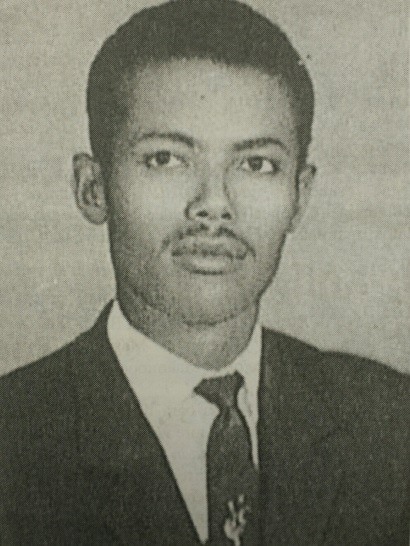 Many of us today may think that accusing potential and real enemies with charges of “terrorism” is in the natural behaviours of Ethiopia’s incumbent regime. This has been true over the last few years. But this does not mean that all accusations send out the same message to the public, especially when it comes to the Oromo. Considerable changes have been witnessed over the last five months. With the change of the status of Oromo national struggle the meaning such accusation carries has changed. I want to state that, today (22/04/16) by accusing 22 celebrated Oromo politicians with “terrorism” the Ethiopian state levelled such accusation against Oromoness (Oromo national identity)—a mark of over 40 million people— than a few politicians. It reminded me of all Oromo martyrs but I mention only one example, Maammoo Mazammir, mainly for lack of space.
Source: Friday 22 April 2016: Who is really charged with “terrorism”?
The Morality of Leaking Exams
By Awol Kassim Allo
=======================
Source: The Morality of Leaking Exams
On Using Ethiopia’s other ‘others’ to Silence the Oromo and to Degrade their Quest for Justice
Tsegaye Ararssa, (27 May at 17:10 )
For some people, the urge to trivialize the Oromo demand for justice makes them “liberation fighters” for the other “others” of Ethiopia. They recklessly mention names of people whose existence they never knew, at the sounds whose names they have endless laughter.
They mention people whose names are otherwise the stuff out of which Amharic comedies are made. They mention these names just so they can talk about them as victims of various Oromo groups.
They talk about the rights of the people they don’t even know in order to disavow responsibility for the injustice they perpetrate on the Oromo they know.
Source: On Using Ethiopia’s other ‘others’ to Silence the Oromo and to Degrade their Quest for Justice
‘Did Menelik II really say he is Caucasian?’: Fragments for the Little chaps, Lest you celebrate Prematurely
There is a renewed frenzy among social media activists in the Ethiopian right, who vow that Emperor Menelik II of Ethiopia never claimed to be a Caucasian. They dispute the accuracy of his statement in which he said “I am not a Negro at all; I am a Caucasian.” In their most recent iteration, they claim that, among other things, the invocation of this statement is an attempt by “Some Oromo intellectuals” to trivialize the image of Menelik II and the famous battle of Adwa that supposedly he fought and won for the entire black race.[1] They also claim, wrongly, that these ‘Oromo nationalists’ are doing so motivated by an ideological commitment to vindicate the Oromo right to secession and destroy the Ethiopian state. They insist that there is a sinister motive behind this calculated move to trivialize Adwa because Adwa is not only the symbol of black independence but also the foundational moment of the unity of the Ethiopian people (people in the singular). By undermining the significance of Adwa, their rant goes, ‘some Oromo intellectuals’ in general, and especially I, in particular, seek to undermine the basis of Ethiopian unity. Nothing can be further from the truth.
Menelik II is the Least of my Worries: A Note to the Apologists of Empire
Tsegaye R Ararssa 26/05/16 ==================================
 This is a short memo to the Ethiopian extreme right activists who charge us that we trivialize Menelik II’s persona and his deeds. While we note trivializing of such figures as a mode of critical engagement is legitimate and so doing is long overdue, I like to say that Oromos are not interested in doing so. I like to say that Menelik II is the least and the last of our Oromo worries. Here is why:
Menelik II is the last and least of my worries now.
If you worry about his image, that is fine. Do worry about it.
If you think he put you to shame because he said he is not black, that is your problem.
If he falsified your chants about TIKUR SEW, or if he destabilized the false narrative regarding him as the messiah of the black race, that too is your headache, not mine.
Source: Menelik II is the Least of my Worries: A Note to the Apologists of Empire
THE PEOPLES’ ADWA: The Imperative of Embracing Plural Interpretation
Tsegaye R. Ararssa (1 March 2016)
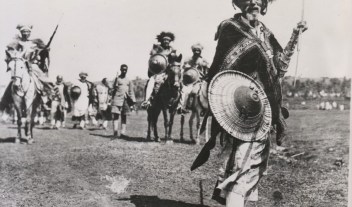 Every year, when March is around the corner, Ethiopian social media activists start to be noisy. The defenders of Adwa as a phenomenal black history moment and the revisionists battle it out, often in a vulgar mode of exchange. Over the last two years, I have been observing this discussion between those who seek to promote the old narrative of state orthodoxy as the only and the universal meaning of Adwa and those who take a more sceptical stance seeking to show the darker sides that the Adwa moment signifies. The following paragraphs were written in response to those who seek to impose on the Oromo this exhausted old narrative of the ideologically motivated imperial State Orthodoxy.
1. There are right reasons to celebrate the battle of Adwa. But to say Adwa is a black man’s war fought for securing the freedom of the people of the black race is celebrating the event for the wrong reason.
- Truth be told, it was a colonial war fought among colonial empires, framed by rules of colonial international law, with a colonizing consequence for Africa.
- It was a war fought between two maiden empires competing over the fate of black peoples in Ethiopia and beyond. This was clearly stated by the emperor himself several times, the emperor who also clearly denied that he is black, the emperor who rather mysteriously claimed to be Caucasian, the emperor who refused to identify with Afro-Americans and Haitians who saw him as one of their own and sought to salute him for his achievements at Adwa, the emperor who brutally murdered millions of black people, the emperor who personally owned over 70, 000 black slaves, the emperor who negotiated with white colonial powers on the fate of other black peoples (Eritreans, Djiboutians, Somalis, and the Sudanese) under white colonial rule.
- To say Adwa is a pride of black people, therefore, is a distortion of historical truth and a gross misrepresentation of the man and the event.
- To say that our people sacrificed, especially those of them who were in chains, to preserve a semblance of an African sovereignty; to commemorate the lives lost in that war and to honor the sacrifices thereof is the right reason to celebrate it. As someone whose forefathers have paid dearly for this and for the subsequent fascist war, I feel the pain, I share the loss, and I honor their sacrifice.
- As I honor their sacrifice and commemorate and celebrate the lives of the many black bodies lost there, I speak the truth, the whole truth, and stick only to the truth.
- To my compatriots who insist that we should celebrate it for the wrong reason, I insist in telling you the truth, the raw truth, especially on the issues we disagree strongly. Doing this is paying a proper tribute to the agony and anguish of those who lived and died in chains to defend a state that left them outside of the polity. To do this is a sacred duty, a civic duty, an act of loyalty–even to the state that is formed on my forefathers’ graves.
Source: THE PEOPLES’ ADWA: The Imperative of Embracing Plural Interpretation
Jimma University hosts the First International Conference on Oromo Studies
(A4O, Jimma, Oromia) Jimma University organized the first international conference on Oromo studies under the grand theme ‘Oromo Knowledge Systems and Practices.’ The conference was held from 21st – 22nd May, 2016 at Jimma University College of Agriculture and Veterinary Medicine Conference Hall. It was attended by dignitaries, representatives from several government institutions, university presidents, scholars extensively engaged in Oromo studies and Aba Gedas’ from different parts of Oromia National Regional State.


The conference is aimed at bringing together scholars from various disciplines and institutions that are engaged in Oromo studies and also creating the opportunity to identify core thematic research areas, generating scholarly views to identify core activities to be undertaken in the future and indicating directions to policy makers. It is also aimed to serve as an initiative for collaboration among universities in the country and other governmental and non-governmental organizations.
 The conference was started by the blessing of all Aba Gedas present at the conference who colorfully expressed their good wishes and blessings as per the Oromo culture. Professor Fikre Lemessa, President of Jimma University, while welcoming all the guest and participants of the conference underscored that initiating a scientific discourse on Oromo studies was pretty well unimaginable a century back while the Oromo people had unfathomable oral traditions and were also farsighted and endowed with hospitality.
He also underlined that the knowledge systems and practices exercised by the Oromo people has not been recognized at national and international level, despite the language is spoken by many other ethnic groups in Ethiopia and the Oromo people practiced a democratic system of governance during the time when democracy was a luxury for significant portion of the world population and western ideals of democracy has not be as ubiquitous as today. It is in line with recognizing these historical facts that JU launched the Institute of Oromo Studies. The community is in the ambit of JU’s philosophy and it fully affirms the very important benefit of taking indigenous knowledge of the community in to account as an engine of scientific exploration. Therefore, according to him, the institute will serve as an interdisciplinary, extra- departmental and interuniversity collaborative institute with the primarily focus on research and outreach making the community as orbit of attention. He has also firmly stated that, the conference will be a landmark in Oromo Studies to open the doors for well-organized and high quality research in the area.
Present on the occasion and guest of honor of the event was Dr. Kaba Urgessa, Minister of the F.D.R.E ministry of Education. He stated that the Ethiopian government has been relentlessly endeavoring and investing huge sum of capital on building facilities and building human resource capacity to ensure access to quality education. Education is the key for the aspired for national development and the government is investing to its highest possible capacity to improve access and quality of education in the country. He further underlined that, Universities are fully mandated in their three major functional areas of teaching, research and community services and as a result should give sufficient attention to reflect the culture, values and practices of their surrounding community. He further stated that, the existing constitution and federal state arrangement has created a fertile political ground and a level field for the representation, refection and practice of the values and cultures of the diverse ethnic groups in the country.
In this regard, according to him, JU has been on the right path and can be exemplary to all other higher education institutions in the country, as it took the initiative to open the department of Afan Oromo in 2002 and yet again pioneered the launching of the Institute of Oromo Studies currently. The institute will definitely play a crucial role in promoting the culture of the Oromo people on the basis of scientific evidences and will also contribute in initiating network of scholars and institutions to expand the efforts with hands joined from all relevant stakeholders. He finally affirmed that the Ministry will fully support JU to strengthen the institute and solicit efforts from other similar institutions.
At the subsequent stages of the conference, thirty one papers were presented by different prominent scholars in the plenary and four parallel sessions. Among the scholars presented lead paper at the conference were Professor Ephraim Issac, Professor Tessema Ta’a, Dr. Taddesse Berisso, Dr. Chikage Oba-Smidt and others.
 At the final stage of the conference, Mr. Kora Tushune, V/P for Business and Development of JU chaired the session that discussed on the way forward to glean out outstanding issues which have to be emphasized for the successful accomplishment that aspired for targets of the institute at institutional, national and international level. Mr. Kora presented a comprehensive list of proposals that needs due attention to enrich the institute, sustain its efforts and take it further steps to meet its set forth goals. The points he raised were instrumental in shaping the discussions and later on substantiated by the panelists of the session and the participants. Finally, it was agreed that, the institute should target the production of high quality research outputs and dissemination, ensure scientific and evidence based promotion of the Oromo cultural values and practices, gather all research outputs and books at national and international level to organized an archive of Oromo studies and support future young researchers, form robust network of institutions and scholars to extend the efforts initiated by JU and institutionalize the efforts to a broader level of collaboration to bring international actors on board.
The Conference was wrapped up after certificates were awarded to paper presenters and institutions sponsored the workshop and with a closing speech by Dr. Taye Tolemariam, V/P for Academic Affairs of JU who extended his gratitude for participants from abroad and within Ethiopia and organizers of the workshop. He has also underlined the importance of giving special emphasis on the outstanding issues suggested by participants and panelists to register sustained success by the institute in the country and beyond.
Source: https://www.ju.edu.et/ju-hosts-first-international-conference-oromo-studies




 Advocacy for Oromia