Author Archives: advocacy4oromia
THE OROMO NATION HAVE RIGHTS TO CELEBRATE IRREECHA FREE FROM ATTACK
(A4O, Press Release, 30 Sept 2020) We support the right of the Oromo people in their home state of Oromia to peacefully celebrate one of the most important Oromo cultural holidays, Irreecha, on October 3-4, 2020. Each year, massive crowds gather in Finfinnee and Bishoftuu, Oromia for the Oromo annual festival, Irreechaa.
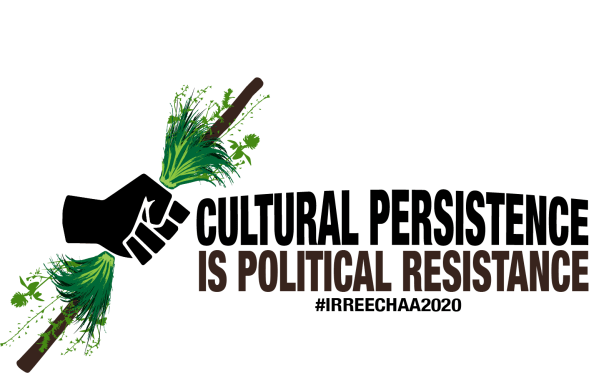
The Irreecha -Oromo Thanksgiving Day, has gone on for many years to celebrate the harvest season. Irreechaa is celebrated as a sign of reciprocating Waaqa in the form of providing praise for what they got in the past and is also a forum of prayer for the future. In the past, it has also been a forum for peaceful political protest and expression. In Oromo culture, both types of peaceful demonstrations are fully permissible.
This year’s festival, on October 3 and 4, occurs against the backdrop of escalating tensions and unrest in Oromia. Both federal and regional officials have stated that they will limit participation and political expression in this longstanding peaceful celebration. What is perhaps most concerning is the increased military-style presence of security forces in Oromia.
Our Appeals
We view the government’s attempts to limit participation in Irreechaa with suspicion. Though, reasonable restrictions on public gatherings may be justified during this pandemic period, the government should show restraint at upcoming festival.
In this forum, the Oromo people have every right to peacefully voice their opposition to the government’s policies and governance. Any effort by the security forces to stop such free speech should be considered a limit on freedom of speech and unacceptable.
We urge caution by Ethiopian security forces and respect for citizen rights to avoid a repeat of 2016 attack and aggression that left hundreds of dead.
The Oromo nation have rights to celebrate Irreechaa free from any repression and attach.
Thanks to God for all the blessing
This festival is a spectacular show of cultural, historical, and natural beautification in their full glory at the height of the season. It has spawned somewhat of a science of knowing just when the blooms will peak at blooms and decline, depending on the wind, rain, and sunshine they get.
Now it is the beginning of 2020 Irreechaa celebrations, the premier holiday of the Oromo people marks the end of the dark-rainy season and the beginning of a blossom harvest season. The event is very important for our nation as it brings the nation together and helps to connect and share experiences in their day to day life.
The theme of this year Irreechaa is “Moving Forward: A Year of Consensus” in which it aims to celebrate Irreechaa as a medium for bringing all Oromias together to promote a process of our tradition group decision-making where the members are willing to work together to find the solution that meets the needs of Oromo people.
Together, we can make our destiny better everywhere.
Yours faithfully,
Dabessa W Gemelal,
Director, Advocacy for Oromia
Response from CARE Ethiopia
Thank you for sharing your concerns with us. We take all allegations seriously.
CARE International in Ethiopia has issued a statement on the matter, as follows:
“CARE International in Ethiopia would like to note that as an organization held accountable by strong, globally agreed core values of respect, integrity and diversity, we are a non-partisan, non-religious entity that does not discriminate on any basis. We recognize that the erroneous language used in an internal advisory has understandably caused pain and anger. We confirm that no ill will was intended. The communication was purely intended as an internal advisory in advance of any festivals or holidays, to keep our staff safe and secure.”
CARE is investigating this matter in order to ensure that any actions taken are consistent with our values as an organization.
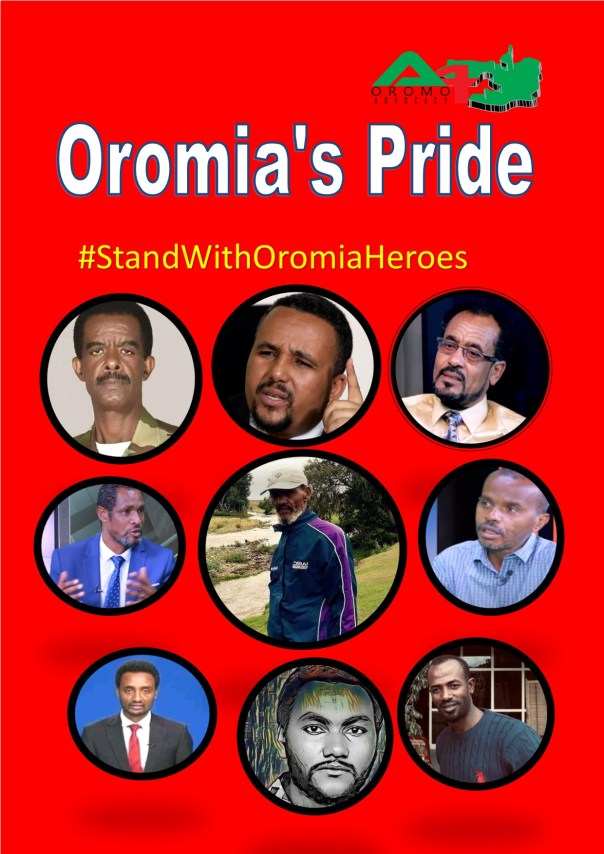
Oromia’s Pride
Abdi Raggasa, Jawar Mohammed, Bekele Gerba, Dejene Tafa, Dhaqqaba Wario, Gammachu Ayyana, Mallasa Dirribsaa, Lammii Beenyaa, Yaasoo Kabbabaa and many thousands of Oromo political leaders, human rights defenders and journalists behind bars: you are the Freedom’s Pride; you are the Oromia’s Pride.
Your bravery, strength and passion for peace, freedom, justice and democracy will prevail.
A4O sent a letter to CARE Ethiopia
(A4O, 27 Sept 2020) Advocacy for Oromia expresses its great concern regarding recently leaked email sent out to CARE Ethiopia staff.
In the letter sent to CARE Ethiopia, Advocacy for Oromia indicated that the email sent out to give advice to the staff contained oppressive content.
“The email was unprofessional, based in propaganda, unethical, and violates the code of conduct of CARE International,” says the letter.
Advocacy for Oromia further indicates that the content of the internal email contained highly biased words, sensationalised warnings which were discriminatory and vilified Oromos.
The writer of the leaked email, Mr. Abreham Abebe made a bold and false allegation about Jawar Mohammed with no evidence, again inserting highly politicized propaganda into a professional email without context.
Advocacy for Oromia says such remarks are very harmful to the Oromo people (which CARE serves) who are currently facing a government that is accusing and detaining all prominent Oromo leaders to prevent them from participating in the election.
The leaked email is currently circulating on social media and raising concern about CARE Ethiopia’s political involvement in Ethiopia.
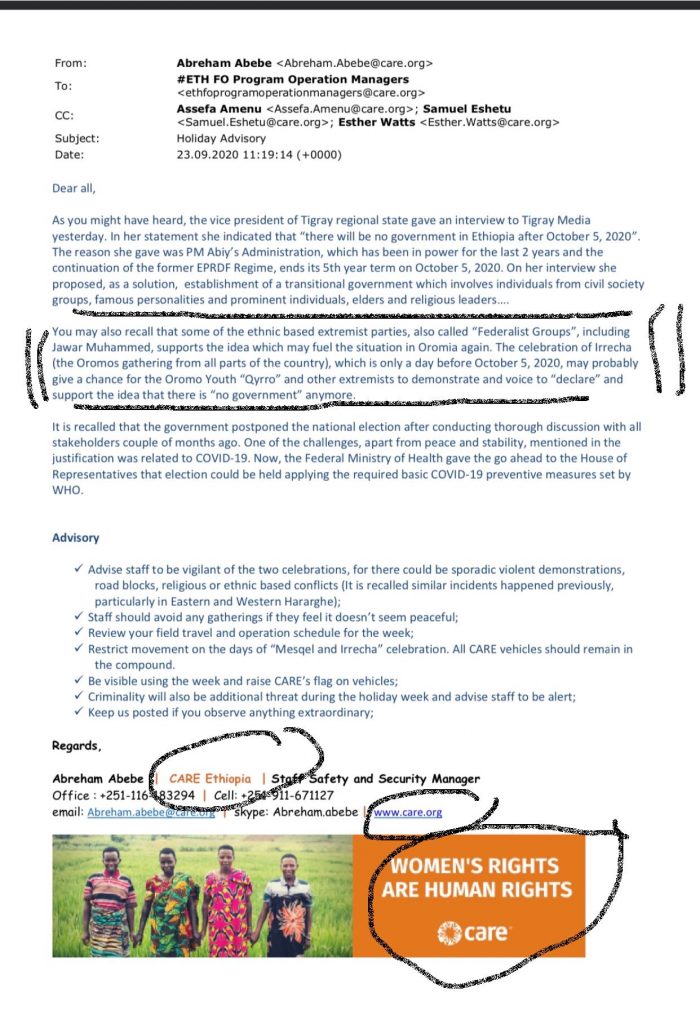
Though, Advocacy for Oromia appreciates the services that CARE Ethiopia provides for our community, we also expect respect and dignity to the people being served.
We kindly ask your office to carefully investigate this allegation and to make your stance clear regarding the content of this email sent by Mr. Abebe on 23 September 2020,” says A4O in its letter

Ethiopia detains – then releases – Norwegian academic after he observed Tigray election
The arrest and detention of Kjetil Tronvoll, a highly regarded and engaged scholar with a particular expertise on Ethiopia and the Horn of Africa, will have a chilling effect on freedom of expression and academic inquiry.
Kjetil has now been freed and is on his way home. He has attended two Eritrea conferences hosted by Eritrea Focus.
Source: Blankspot
Norwegian professor detained at Ethiopia airport
By Martin Schibbye | September 13, 2020
Norwegian professor Kjetil Tronvoll is said to have been abducted by police at Bole Airport in the capital Addis Ababa. He most recently came from Mekelle in the Tigray region, where he followed the “illegal election” criticized by the central government.
According to the Norwegian Ministry of Foreign Affairs, information was received during the evening that a Norwegian citizen had been detained at the airport.
– We have also been informed that he has now had the opportunity to travel further, says Ane Haavardsdatter Lunde at the press service at the Norwegian Ministry of Foreign Affairs to Blankspot.
Kjetil Tronvoll is head of the think tank Oslo Analytica as well as professor of peace and conflict knowledge at Bjorknes University. For the past thirty years, he has conducted field studies in Ethiopia, Eritrea and Zanzibar and also worked as an advisor and mediator in several peace processes.
One of his special areas is the development of democracy on the African continent.
But his presence during the election, which was won by the former ruling TPLF party, has been criticized by supporters of Prime Minister Abiy Ahmed for taking a stand for the opposition party.
Something he rejected on twitter this week.
“Just to clarify. I observe the election as part of my 30-year research on political developments in Tigray and Ethiopia. Studying a process does not mean supporting it, but the empirical reality is a key to later being able to analyze the situation. Some seem to confuse this, “wrote the Norwegian professor.
In another follow-up comment on twitter, Kjetil Tronvoll wrote that there was a smear campaign against his presence with allegations that he was there and working illegally on a tourist visa.
“It’s fake! I am here as part of my work as an adjunct professor at the University of Mekelle on an official visa issued by the Ethiopian government. ”
The whole of Ethiopia was supposed to go to the polls in August, but they were postponed to the future. However, politicians in the Tigray region have opposed the postponement of national elections indefinitely, criticizing the Prime Minister for remaining in power without winning any election.
That is why the region’s politicians have arranged their own.
In an interview that Kjetil Tronvoll did recently with Al-Jazeera, he highlighted that both the people in the region and the TPLF party have undergone radical changes in recent years.
According to the ruling party TPLF, what has now taken place is a historic election that has given citizens an opportunity to choose between different political alternatives. They have also warned the government against intervening or in any way trying to stop the election because, according to them, it would be “a declaration of war”.
Relations between Tigray and the central government in Addis Ababa are strained, and in the past the TPLF, the dominant party in Tigray, has dropped out of government cooperation.
When asked by state television (EBC) about the election, the prime minister replied that it was a “minor headache” and that “the election is illegal because only the country’s national election commission can organize elections in Ethiopia”.
When Professor Kjetil Tronvoll returned to Addis Ababa’s airport Bole, he was taken away and detained, according to other passengers.
On Twitter, The Economist correspondent Tom Gardner writes that he was taken to a hotel.
According to the Norwegian Ministry of Foreign Affairs , he now has the opportunity to continue his journey.

Youth Lead Summer of Oromo Protests in Minnesota
By Niko Georgiades & Jenn Schreiter, Unicorn Riot September 9, 2020
Saint Paul, MN – On June 29, famed Oromo singer and activist Hachalu Hundessa was assassinated in Addis Ababa, Ethiopia, sparking renewed rounds of protests by Oromo people across the world.
Hundreds have been killed protesting in Ethiopia since Hachalu’s murder, with upwards of 10,000 arrested in a government crackdown that included a three-week Internet shutdown.
While Oromo people make up Ethiopia’s largest ethnic group, with over 36 million people, they’ve struggled for land rights and human rights for centuries.
The Oromo population in Minnesota is upwards of 40,000 people and has been a hotspot for recent #OromoProtests.
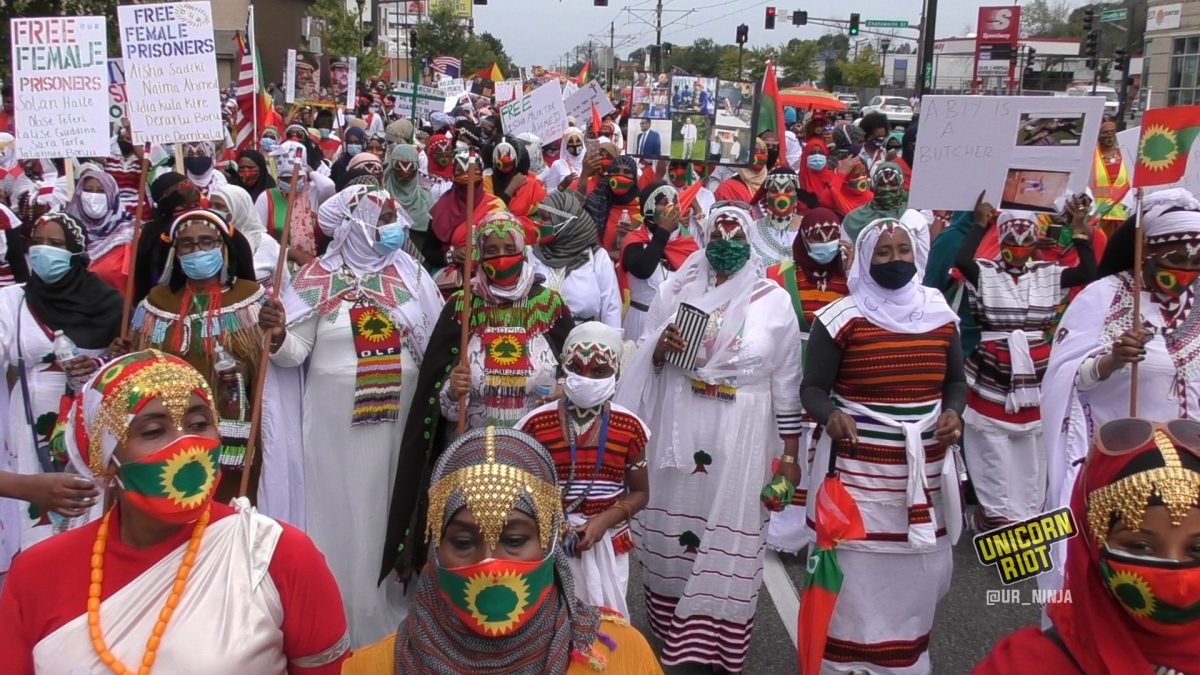
Dozens of demonstrations have occurred this summer in the Twin Cities metro area, including: protests and car caravans on the interstate; religious actions; women’s marches; hunger strikes; a 48-hour protest at the state capitol; and an ongoing occupation outside the new Ethiopian Consulate General office in St. Paul.
In August, Unicorn Riot reported from several Oromo protests—you can find the live streams below. During our coverage, we heard the opinions of many Oromo people, from youths to elders.
We listened for hours before and after the demonstrations. We heard of forced assimilation, of cycles of generational trauma and horror stories going from past generations leading up to newly arrived refugees who escaped persecution, torture, and possible death.
We also heard from Ethiopians who said they were against the protests, which they view as furthering an already-existing tension amongst ethnic groups in Ethiopia.
The following report links to some of the Oromo protests Unicorn Riot covered in Saint Paul during the summer of 2020 and attempts to contextualize some of the reasons behind them and this East African conflict.
Oromo Protests in Saint Paul–Minneapolis
Similar to the ‘qeerroo/qarree’ (youth) uprising that has occurred this summer in Ethiopia, Oromo youth in the Twin Cities are the driving force behind a movement demanding human rights for the Oromo people and justice for Hachalu.
In Saint Paul, Oromo youths with Qeerroo Minnesota have occupied an area outside of the Ethiopian Consulate on University Avenue since August 6. Their planned sit-in turned into an occupation of the property after workers in the consulate refused to meet with them.
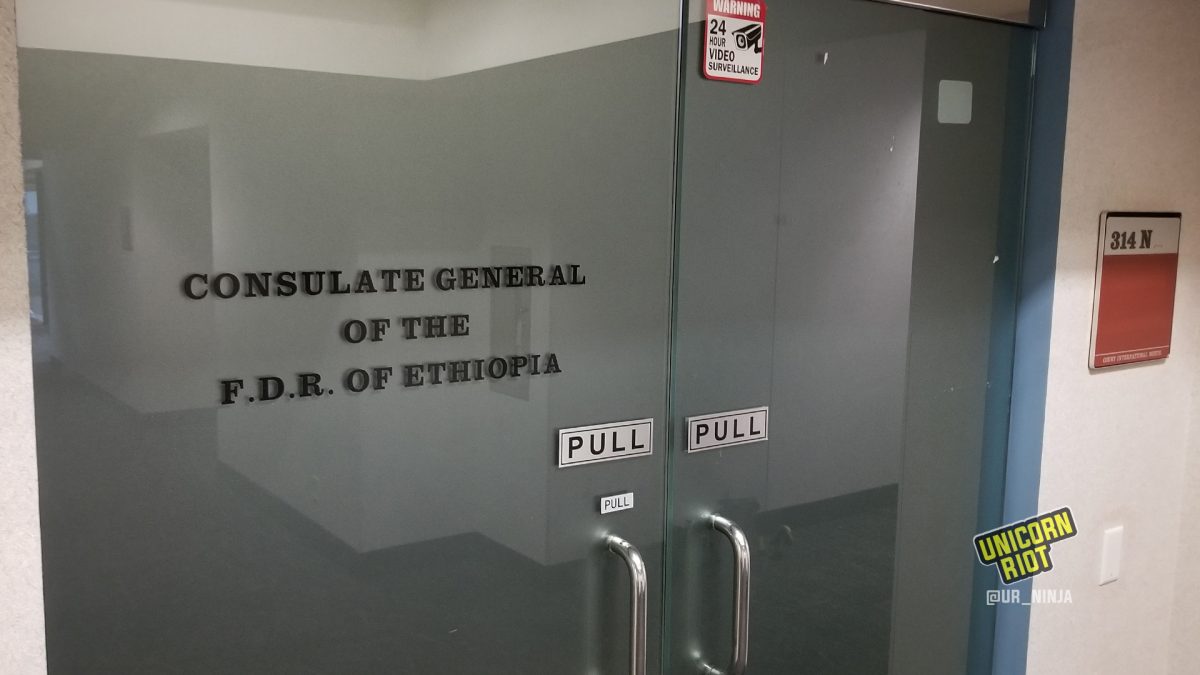
The qeerroo staged the occupation seeking to speak with the consulate, draw attention to what they deem human rights violations against the Oromo people, have an ongoing vigil space for Hachalu Hundessa, and to protest the government crackdown and detention of opposition leaders such as Jawar Mohammed and Bekele Gerba.
As the qeerroo and qarree set up their occupation on August 6, we streamed live from the steps of the building that houses the consulate. Oromo flags were flown and a large sign reading “Abiy Must Go,” referring to Prime Minister Ahmed Abiy, was placed in sight of the busy University Avenue.
Abiy is Ethiopia’s first Oromo prime minister. Though he was awarded the Nobel Peace Prize in 2019 for his efforts in brokering peace between Eritrea and Ethiopia, members of the Oromo diaspora are split when it comes to backing Abiy.
A constant demand during the Oromo protests is that Abiy and his administration resign and he be stripped of his Peace Prize due to his human rights violations.
Unicorn Riot heard from Qeerroo Minnesota organizers at the start of their occupation outside the Ethiopian Embassy in Saint Paul:https://www.youtube.com/embed/mqRaExw1ggU?feature=oembed
One protester at the occupation emphasized that although the number of protesters that day in St. Paul was small, their worldwide energy was apparent.
Members of younger generations of the Oromo Diaspora have been rallying across the earth to demand an end to human rights violations in their homeland. Protests and occupations have taken place outside of Ethiopian embassies throughout Europe, including the embassy in Berlin, Germany:
“There’s a lot of protests going on, and I feel like this generation, our generation, will end it, you know?” — protester at sit-in outside Ethiopian consulate in St. Paul, August 6, 2020
Although the qeerroo in Minnesota said they’re demanding justice for the Oromo people, they were there “for humans in general. There’s a lot of human rights violations going on in this world.“
“We’re here for people in Kashmir; we’re here for Palestine; we’re here for #BlackLivesMatter; we’re here for the Uyghur Muslims who are suffering at the hands of the Chinese government. We’re here for all humans. But our people, Oromo people, they’ve have been suffering for so long. And it’s the government that’s been hurting our people—it’s systematic oppression.“
While the consulate is supposed to act as a conduit of access for Ethiopians in Minnesota to Ethiopian government officials, the youths said that the consulate was nowhere to be found after Hachalu’s assassination—hence the occupation at the embassy to demand a meeting.
The internet was turned off earlier this summer as turmoil, unrest, and violence swept areas of the Oromia region, making communication challenging for those in America with loved ones back home. People were not able to speak with ambassadors, and could only attempt to contact their family and friends through landlines.

After nearly a month of camping outside the consulate, one of the youths’ demands was met—a video meeting with the consulate. A Qeerroo Minnesota organizer told Unicorn Riot that although during the meeting the ambassadors “pretty much avoided all questions” youths were able to share their thoughts and demand the consulate make a public statement.https://platform.twitter.com/embed/index.html?creatorScreenName=ur_ninja&dnt=false&embedId=twitter-widget-2&frame=false&hideCard=false&hideThread=false&id=1295645281804079106&lang=en&origin=https%3A%2F%2Funicornriot.ninja%2F2020%2Fyouth-lead-summer-of-oromo-protests-in-minnesota%2F&siteScreenName=ur_ninja&theme=light&widgetsVersion=219d021%3A1598982042171&width=550px
Many Oromo Minnesotans have family members who’ve been affected by the happenings in Ethiopia. On August 7, women organized a large march in protest of the repressive policies in Ethiopia and demanding freedom for political prisoners, and that the U.S. stop funding the Ethiopian government. Participants marched to Governor Walz’ residence from the Oromo Community Center in St. Paul.
Since 2016, total U.S aid to Ethiopia has averaged around $1B a year. Last month, disagreements over the controversial Grand Ethiopian Renaissance Dam on the Nile River led to about $130 billion of U.S. aid to Ethiopia being cut by U.S. Secretary of State Mike Pompeo.
During the women’s march in Saint Paul, one participant explained, “People are out here because there’s a huge government crackdown going on in Ethiopia. We also have minority groups that have been attacked.” The Ethiopian government, she said, is scapegoating protesters for the violence rather than investigating the hundreds of deaths that have occurred.
Watch our stream from the women’s march on August 7, 2020:https://web.facebook.com/v8.0/plugins/video.php?app_id=&channel=https%3A%2F%2Fstaticxx.facebook.com%2Fx%2Fconnect%2Fxd_arbiter%2F%3Fversion%3D46%23cb%3Df1cedf43c851e84%26domain%3Dunicornriot.ninja%26origin%3Dhttps%253A%252F%252Funicornriot.ninja%252Ff6eb1385bb74b%26relation%3Dparent.parent&container_width=0&href=https%3A%2F%2Fwww.facebook.com%2Funicornriot.ninja%2Fvideos%2F306507303940525%2F&locale=en_US&sdk=joey&width=640
This journey for change has also steered its way onto Twin Cities highways. In one of the roadway takeovers, on August 12 (see below), dozens of vehicles crawled slowly along I-94 West in Saint Paul, stalling traffic during rush hour.
After portions of the caravan exited the interstate in Minneapolis that day, a few vehicles were pulled over by Minnesota State Troopers and given traffic citations.https://player.vimeo.com/video/447572600?dnt=1&app_id=122963
During a late-night visit to the occupation outside of the Ethiopian Consulate on August 13, numerous qeerroo shared their perspectives with Unicorn Riot during a nearly two-hour long live stream (see below).https://www.youtube.com/embed/tUKBPowNlR8?feature=oembed
Many of the youth compared aspects of the movement for Oromo liberation to the movement for Black lives in the United States.
Asked about reports of buildings being burned down in the Oromia region of Ethiopia, one man used the example of the property set aflame in the George Floyd protests, saying:
“Oromo people are not just burning anything down. We’re trying to be heard. We’ve tried the peaceful protest. BLM has tried the peaceful protests, and nothing has been changed from that.” — Qeerroo organizer in Minnesota
After meeting with members of the consulate, organizers with Qeerroo Minnesota are no longer sleeping outside the building, but are still holding space in front of the embassy during business hours to continue to demand a public statement and to protest.
Assassination of Hachalu Hundessa
Imprisoned in Ethiopia at age 17 for political activities, Hachalu Hundessa released his first album in 2009, one year after his five-year sentence had ended.
Hundessa became increasingly popular as his songs about the struggles of the Oromo people struck a chord with the public. On June 22, 2020, a week before his murder Hundessa commented on the repression of Oromos during an interview on Oromo Media Network (OMN). After this he received intense criticism and threats on social media, which many say directly led to his death.
Hundessa was shot to death on June 29, 2020 in a suburb of Ethiopia’s capital city, Addis Ababa. The government claims members of the Oromo Liberation Front (OLF) perpetrated the assassination; the OLF has denied responsibility.
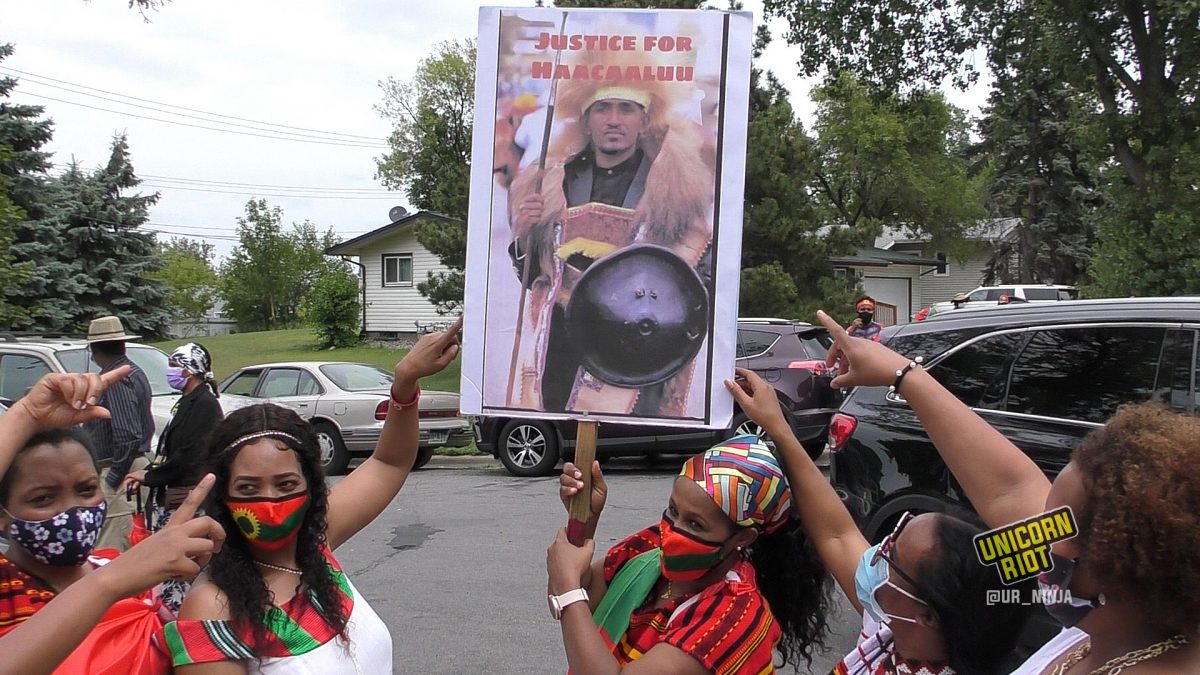
Immediately after Hachalu’s murder, the Ethiopian government shut down the internet and arrested about 50 top-level government officials. Mass protests erupted. Buildings across dozens of districts were set ablaze and entire regions were wrought with intercommunal violence.
At least 5,000 people, mostly Oromo, were rounded up in the following days. Filling the jails, many more were locked up in the subsequent weeks, leading the government to set up makeshift jails in school buildings.
Hundreds of imprisoned people crowded together in close quarters during the COVID-19 pandemic has predictably led to more outbreaks of the virus. Community members at the Oromo Community Center of Minnesota allege that government forces have sent inmates who tested positive for coronavirus to jails with no infections in a deliberate attempt to spread the disease among Oromo protesters.
Oromia Media Network and Jawar Mohammed
Oromo Media Network, a nonprofit news organization headquartered in Minnesota, was created in part by a prominent leader of the 2016 Oromo protests and the ‘Qeerroo’ movement, Jawar Mohammed.
Educated at Stanford and Columbia University, 34-year-old Mohammed recently lived in Minnesota for some years before returning to Ethiopia in 2018 after Abiy became Prime Minister and lifted bans on opposition groups. Jawar stepped down from his role at OMN after setting up a branch in Addis Ababa, and joined the Oromo Federalist Congress to run for office in Ethiopia.
On June 30, Jawar Mohammed was arrested after a disagreement with the government over the location of Hachalu Hundessa’s burial site. Members of his family were also arrested, along with political leader Bekela Gerba and others. Many of these political prisoners are still locked up.https://platform.twitter.com/embed/index.html?creatorScreenName=ur_ninja&dnt=false&embedId=twitter-widget-3&frame=false&hideCard=false&hideThread=false&id=1295645281804079106&lang=en&origin=https%3A%2F%2Funicornriot.ninja%2F2020%2Fyouth-lead-summer-of-oromo-protests-in-minnesota%2F&siteScreenName=ur_ninja&theme=light&widgetsVersion=219d021%3A1598982042171&width=550px
OMN continues to operate, playing a vital role in broadcasting information to the Oromo Diaspora and consistently posting to social media. On September 4, OMN interviewed Minnesota-based human rights advocate Najat Hamza about recent occurrences in Oromia and through the diaspora.https://web.facebook.com/v8.0/plugins/video.php?app_id=&channel=https%3A%2F%2Fstaticxx.facebook.com%2Fx%2Fconnect%2Fxd_arbiter%2F%3Fversion%3D46%23cb%3Dfaa2880cc001b%26domain%3Dunicornriot.ninja%26origin%3Dhttps%253A%252F%252Funicornriot.ninja%252Ff6eb1385bb74b%26relation%3Dparent.parent&container_width=0&href=https%3A%2F%2Fwww.facebook.com%2FOromiaMedia%2Fvideos%2F314417556504565%2F&locale=en_US&sdk=joey&width=640
There is a notable lack of free press in Ethiopia. An interviewee during the women’s march explained to Unicorn Riot that the Ethiopian courts work with the government, and that lawyers don’t have “any right to advocate for the people.“
Itichaa Guddataa, a journalist formerly with OMN and now with Oromo Diaspora Media, said that ‘”there is no press freedom” and that journalists, bloggers, radio hosts, and others are locked up simply for reporting on Oromo news.
Since Jawar Mohammed’s arrest, OMN employees based in Addis Ababa have been detained by the Ethiopian federal government on suspicion of “operation of illegal communication equipment.” Several other journalists have also been recently arrested or detained.
Outside the embassy in Saint Paul, OMN has interviewed the protesters at the occupation a few times, including during an occupation eviction scare.https://web.facebook.com/v8.0/plugins/video.php?app_id=&channel=https%3A%2F%2Fstaticxx.facebook.com%2Fx%2Fconnect%2Fxd_arbiter%2F%3Fversion%3D46%23cb%3Df3aefba78b423%26domain%3Dunicornriot.ninja%26origin%3Dhttps%253A%252F%252Funicornriot.ninja%252Ff6eb1385bb74b%26relation%3Dparent.parent&container_width=0&href=https%3A%2F%2Fwww.facebook.com%2FOromiaMedia%2Fvideos%2F3878772145483121%2F&locale=en_US&sdk=joey&width=640
As of this article’s publication, Jawar Mohammed is still incarcerated, along with a litany of other political prisoners.
In late August, two Minnesota politicians wrote a letter to Ambassador Nagy, the American ambassador to Ethiopia, condemning Ethiopia’s detention of Jawar Mohammed and Mishi Chiri. Misha also works with OMN and came to Ethiopia from Minnesota in 2018 with Jawar.
The politicians urged the State Department to take every appropriate action “to ensure that they [Jawar and Mishi] are treated humanely and assist them in protecting and exercising their full legal rights.“https://platform.twitter.com/embed/index.html?creatorScreenName=ur_ninja&dnt=false&embedId=twitter-widget-4&frame=false&hideCard=false&hideThread=false&id=1291833062867775488&lang=en&origin=https%3A%2F%2Funicornriot.ninja%2F2020%2Fyouth-lead-summer-of-oromo-protests-in-minnesota%2F&siteScreenName=ur_ninja&theme=light&widgetsVersion=219d021%3A1598982042171&width=550px
A week before the letter for Jawar and Mishi, 20 members of Congress, led by Congressman Dean Philips (D-MN), wrote to Secretary of State Mike Pompeo urging the U.S. administration to work with Ethiopia to ensure dialogue and political opposition to Prime Minister Abiy and among other demands, an independent investigation into Hundessa’s killing.
Oromia and Ethiopia
Oromia is a region in Ethiopia, the second-most-populated country on the African continent. The Oromo people are indigenous to east and northeastern Africa and historic regions of Oromia spread beyond Ethiopia into Somalia and Kenya.
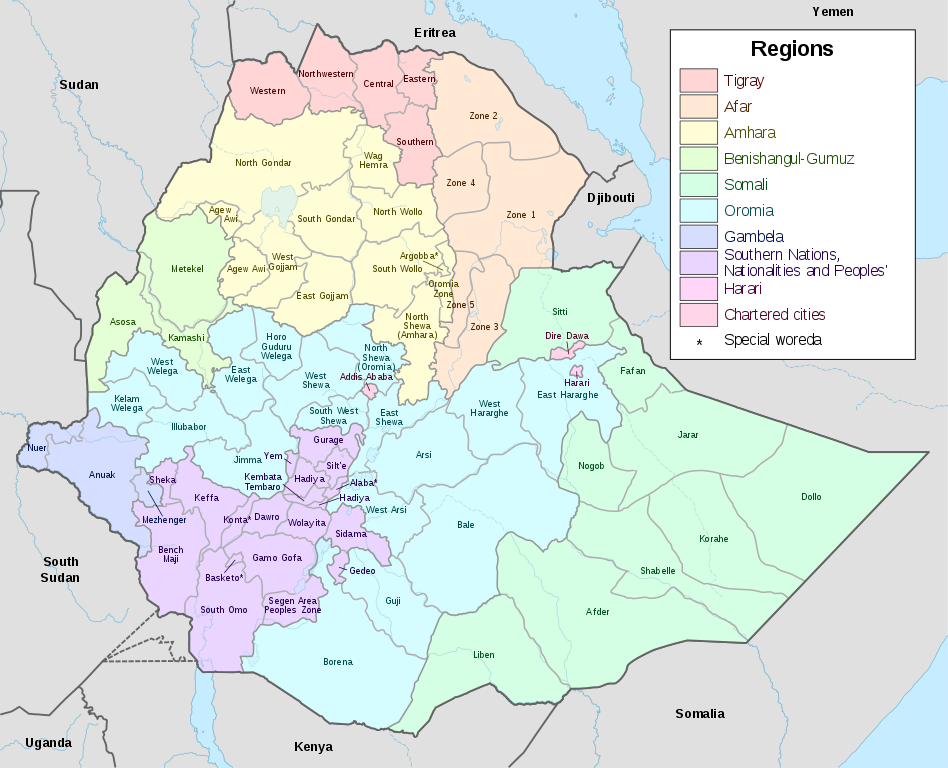
Ethiopia is the home of over 80 ethnic groups and multiple religions and languages. At about one-third of Ethiopia’s population, Oromo people make up the largest ethnic group in the country.
Historically rooted as one of the first Christian states in the world, over 60% of those living in Ethiopia are Christian, with another third of the population practicing Islam. Judiasm, Baháʼí, and traditional indigenous beliefs such as Waaqeffannaa are also practiced, among others.
The Oromo language is the most-spoken language in Ethiopia, yet Oromo is not recognized as an official federal language in the country.
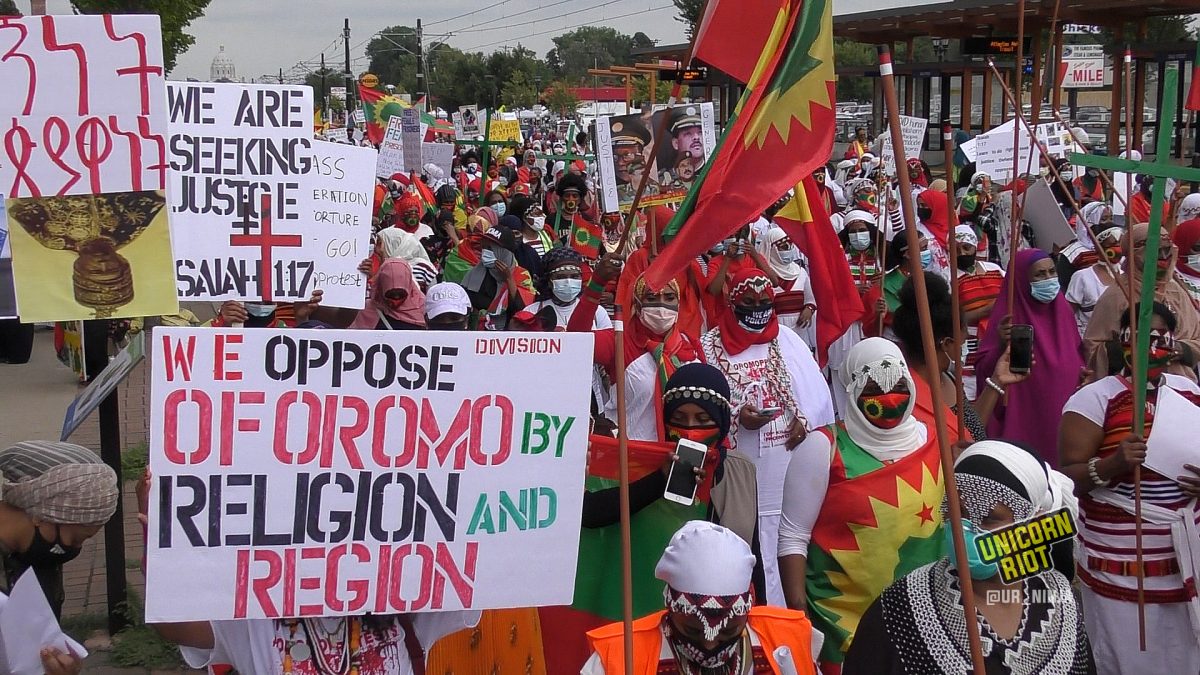
While in the last 150 years Ethiopia has been celebrated for resisting white supremacist colonization, the country has continued to suffer through ethnic violence. Abyssinian rule in the 19th and 20th centuries laid out a continuing regime of systematic oppression against groups like the Oromo.
Oromo people are faced with forced assimilation in their homeland and an erasure of their history. Oromo have been branded by Abyssinians as outsiders and called the derogatory term ‘galla’, meaning ‘savage’, ‘slave’, or ‘enemy’.
Oromo youth outside the consulate in Saint Paul compared the Oromo people’s forced assimilation through religion, language, and cultural conversion to the genocide enacted on Indigenous North American populations by the United States.
Statutes of Emperor Menelik II have been targeted in Ethiopia, in a worldwide wave of colonialist statutes being toppled. In London, a bust of Haile Selassie and his father were both destroyed during the 2020 protests.
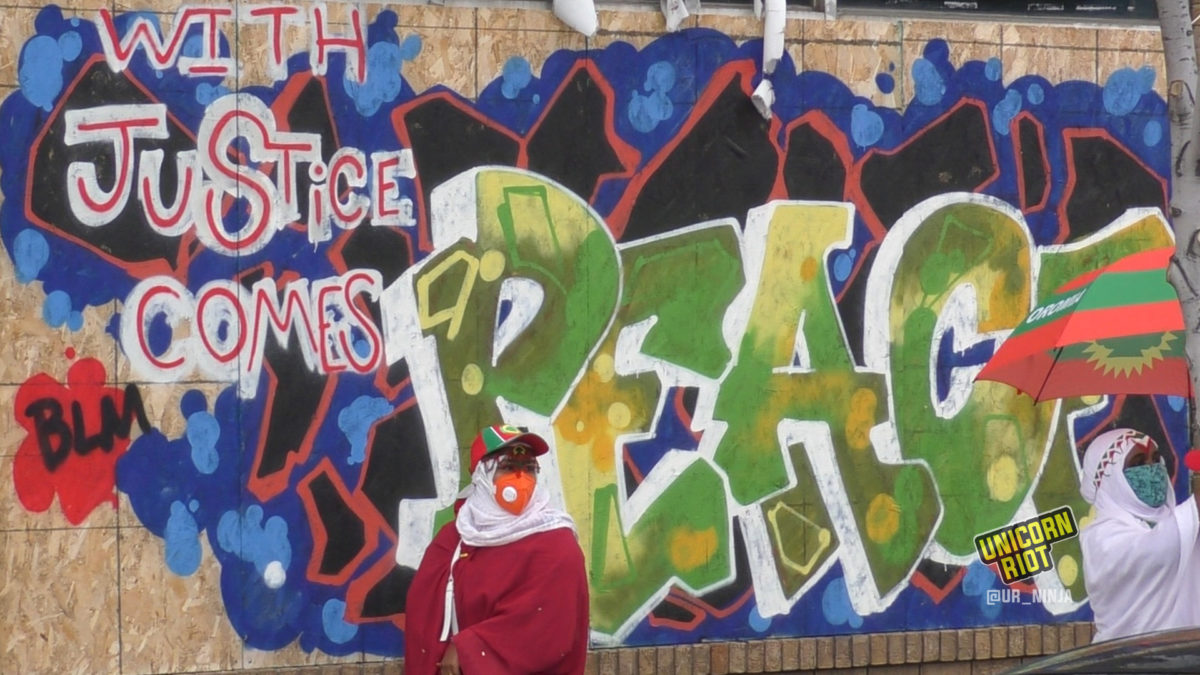
Marginalization of Oromo-based political movements from national politics has continued into the 2000s. Massacres of Oromo and political activists have been perpetrated by the Ethiopian government numerous times in the last 20 years, including killings of hundreds in 2005 and 2015.
In 2016, mass Oromo protests were sparked from a government plan to take over Oromo land in and around the capital of Ethiopia, Addis Ababa. Hundreds were killed during the protests and thousands were jailed.
Two years later, protests helped pave the way for the resignation of Prime Minister Hailemariam Desalegn; this is when Abiy Ahmed was placed into power. Since then, the country has experienced “an increase in killings of people critical of the government and political personalities in the country“, according to Amnesty International.https://platform.twitter.com/embed/index.html?creatorScreenName=ur_ninja&dnt=false&embedId=twitter-widget-5&frame=false&hideCard=false&hideThread=false&id=1291824136474566658&lang=en&origin=https%3A%2F%2Funicornriot.ninja%2F2020%2Fyouth-lead-summer-of-oromo-protests-in-minnesota%2F&siteScreenName=ur_ninja&theme=light&widgetsVersion=219d021%3A1598982042171&width=550px
As new information out of Ethiopia is slowly gleaned, Oromo protests following Hundessa’s killing earlier this summer are continuing to happen in Oromia and across the world.
Continue to follow Unicorn Riot for further specials on the Oromo protests in Minnesota.
Georgia Fort contributed to this report.
Follow us on Twitter, Facebook, YouTube, Vimeo, Instagram, and Patreon.
Please consider a tax-deductible donation to help sustain our horizontally-organized, non-profit media organization:
About this postCategories: Community, GlobalTagged: #oromoprotests, abiy ahmed, addis ababa, ethiopia, hachalu, hachalu hundessa, hundessa, jawar mohammed, Minnesota, oromia, oromia media network, oromo, oromo community center of minnesota, oromo diaspora, oromo diaspora media, political prisoner, qarree, qeerroo, qeerroo minnesota, Twin Cities, womens marchPublished September 9, 2020MORE FROM UNICORN RIOTHistoric Squats, Rosa Nera and Terra Incognita, Raided by Greek Police
More understanding and less blaming are key to a solution for the self-determination crisis of the Oromo and other Ethiopian communities
(ethiopia-insigh)–A powerful and disturbing narrative is gaining traction among reporting on Ethiopia, its bias reflecting the connections of the current and past political and business elites with national and international media, NGOs, and foreign governments.
Most see Ethiopia through the eyes of what has long been Ethiopia’s dominant culture, the Amharic language, script, and calendar, and the Orthodox Church. Subconsciously, most outsiders absorb the sense of entitlement and superiority of those who practise and belong to this culture over the other— majority—peoples of Ethiopia who do not.
Institutional and institutionalized racism against Oromo and against the smaller nationalities in Ethiopia is enabled and empowered by zero-sum politics and its associated societal and domestic authoritarianism. Prejudice against people not represented in the dominant culture portrayed abroad as Ethiopia is rubbing off on journalists and power brokers.
Some commentators believe Prime Minister Abiy Ahmed’s Prosperity Party plans to dismantle the limited regional autonomy guaranteed in the 1995 Ethiopian Constitution and claim that those who oppose this plan are violent ethno-nationalists who threaten Ethiopia’s democracy. That is the narrative gaining traction. It is as false as it is dangerous and it is a narrative that is driving a response.
In 1991, the Oromo Liberation Front (OLF) participated in the overthrow of the military regime, and participated for a year in the Transitional Government of Ethiopia organized by the Tigray People’s Liberation Front (TPLF), before it withdrew from the 1992 elections and its troops, encamped by agreement with U.S. and Eritrean mediators, were overrun.
In that year, the Minister of Education, Ibsa Gutama (one of four OLF Ministers), ensured primary education was to be carried out in Afaan Oromo in Oromia and in relevant languages in other regions. Indeed, under the federal system created after 1991 by the TPLF, for the first time Oromo people were governed, taught and were heard in court in their own language. To use the word ‘Oromia’, to use the better-suited Latin script for the Oromo language and to see it written down were each huge steps forward for the recognition of Oromo culture.
Those who promoted anything else Oromo, however, were persecuted.
After 2014, driven by the taking of land from Oromo farmers around Finfinnee (Addis Ababa) and by continuing political and economic marginalization, Oromo students, the Qeerroo/Qarree, launched a series of increasing protests. When these spread to other regions, Prime Minister Abiy Ahmed was propelled to power in April 2018, launching a series of reforms, including his declaration that political harassment is gone for good, releasing political prisoners, pardoning opposition parties and inviting exiled leaders to return and participate in a peaceful democratic process, declaring freedom of speech and press and ending a 20-year conflict with neighboring Eritrea, which earned him the 2019 Nobel Peace Prize.
In September 2018, the return of the OLF leadership to Finfinnee was celebrated by millions. There was talk of truth and reconciliation, mass education about human rights, and real representative democracy. Hope and confidence in progress, prosperity and equality was almost tangible.
It did not last.
Oromia Support Group reports have detailed how extrajudicial killings and large-scale detention have continued and accelerated. Since the assassination of singer Hachalu Hundessa on 29 June, many more have died in violent protests and many properties have been destroyed. Detentions, rape, burning of property and crops—an old-fashioned scorched earth policy—is under way in areas perceived to be supportive of the OLF. In February, many top officials of the OLF were arrested; leader, Dawud Ibsa, is now under house arrest
There is now a media campaign against the OLF and anything Oromo and the Ethiopian government is working hard to persuade the outside world that Oromo journalists and supporters of the OLF and Oromo Federalist Congress (OFC) are all terrorists. The similarities to 1992 and the subsequent crackdown on Oromo organisations that were also then labelled as terrorists are depressing.
The killing of Hachalu immediately reminded me of the killing of singer Ebbisa Addunya on 30 August 1996. Like Hachalu, he was inspirational to a generation of young Oromo. Today, just as in the 1990s, national and international media echo government claims of atrocities instigated by organised Oromo groups, amplified by biased social media. Internet and media closures are ensuring that the government version of events, aided by anti-Oromo national outlets, becomes received wisdom in the outside world; just as it did in 1992.
The man difference of the current repression with that of its predecessor is ominous.
The broad consensus among Oromo is that any degree of autonomy enjoyed under the 1995 Constitution is under threat. This would mean one step forward and two steps back: not the other way around. Not back to 1992, but back to 1974, the time of a highly unitary state; of one language, one culture, one religion, and Amhara identity, under the cover of Ethiopian nationalism. Oromo people are being forced against their will to belong to a country in which they feel disempowered and unrepresented. Again, their desire for at least a degree of autonomy is ignored and not taken seriously, as though they don’t matter. This is a recipe for disaster.
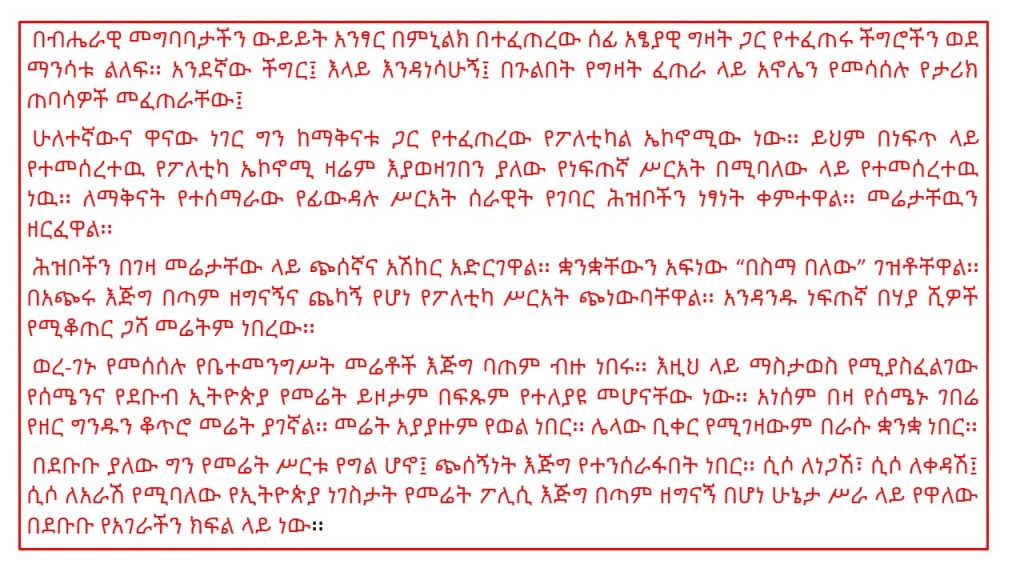
It is also necessary to understand that the authoritarian nature of northern Ethiopian society, regional zero-sum politics, and the assumption of rights over and above the conquered peoples of Ethiopia is based on racism. And only when this racism is acknowledged can Ethiopia progress toward a multicultural, rich, resource-abundant state with enough for all its peoples. But there must be equality; no domination of one culture over another. Dismantling the current federal structure of Ethiopia, whatever superficial guarantees of fairness and equality are given, will result in more marginalization of all cultures, except that of the Amhara, which is the lens through which almost all outsiders view Ethiopia.
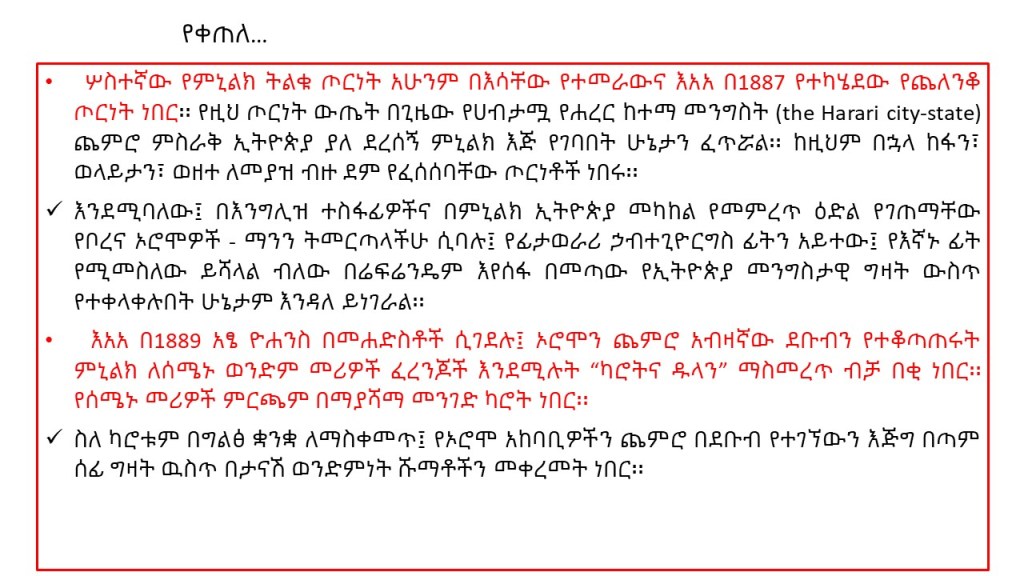
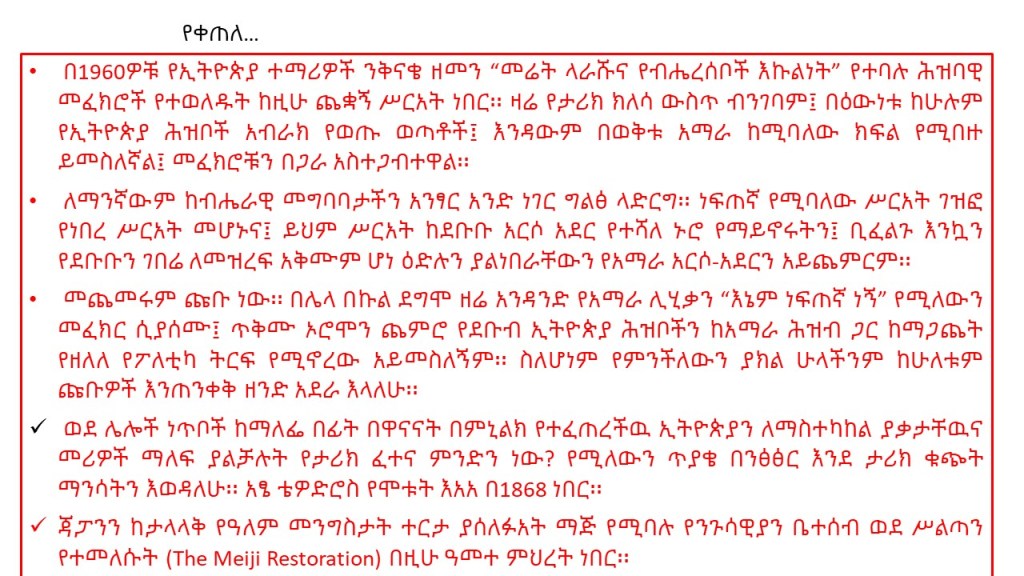
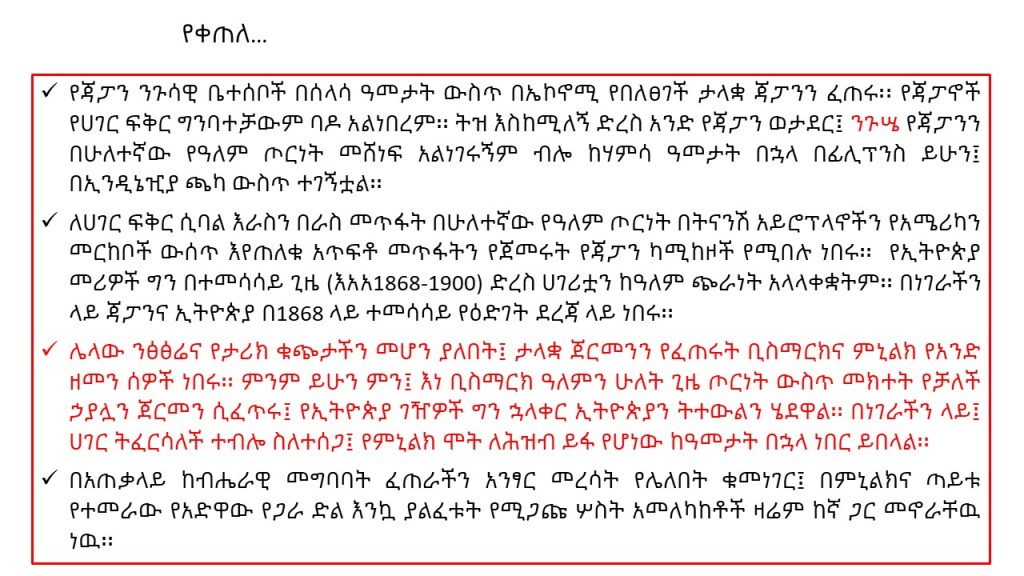
Acceptance and agreement of the events and facts concerning the expansion of Abyssinia in the late 19th century is a much-needed foundation stone for a stable future Ethiopia. With an agreed history and a degree of regional autonomy, it is possible for all the peoples of Ethiopia to live their own culture with respect for the rights of others, with inclusivity in decision-making at an appropriate level, and respect for natural resources.
More violence and suppression, however, will eventually lead to the breaking up of Ethiopia, with most of the people in the southern two-thirds leaving the original Abyssinia as a rump state in the northwest. If the country of Ethiopia can only be maintained by state violence against its people, resentment will build until it fragments, like Yugoslavia. Far better to establish a mutually agreeable state structure.
The greater and more ingrained a prejudice is, the harder it is to be aware of it and tackle it. It is time for the Oromo and other peoples of Ethiopia to be treated equally and fairly. To deny people self-determination, to label those who wish to exercise this right as terrorists, and to force an unwilling population to belong to any geographic, political or cultural moiety is as dangerous as it is short-sighted. Equally, it could be so easily avoided if only the two sides of the self-determination debate, which has become ethnicized whether we like it or not, consider, understand and accommodate each other’s point of view. This can be settled in a civilized manner, without coercion or bloodshed.
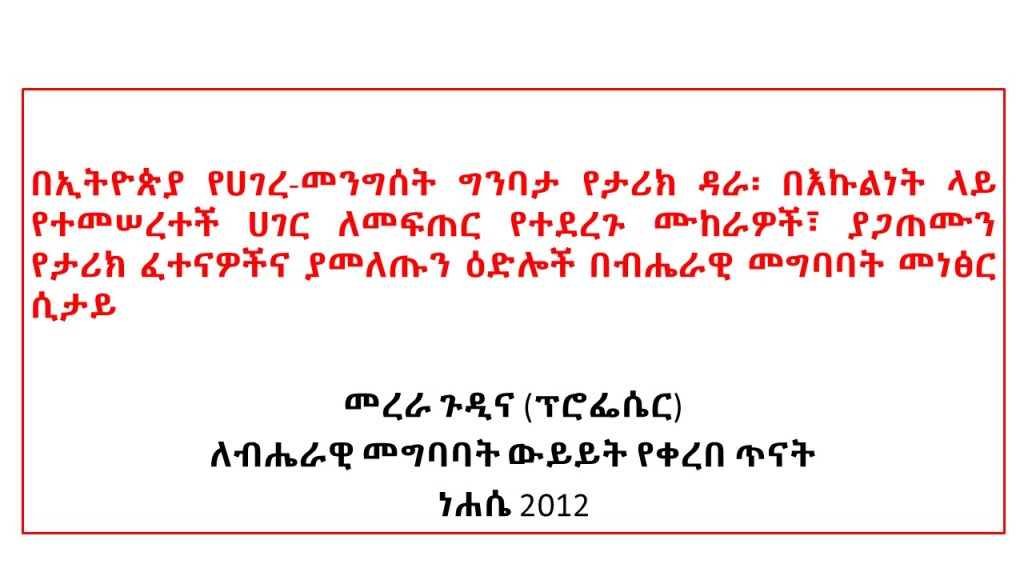
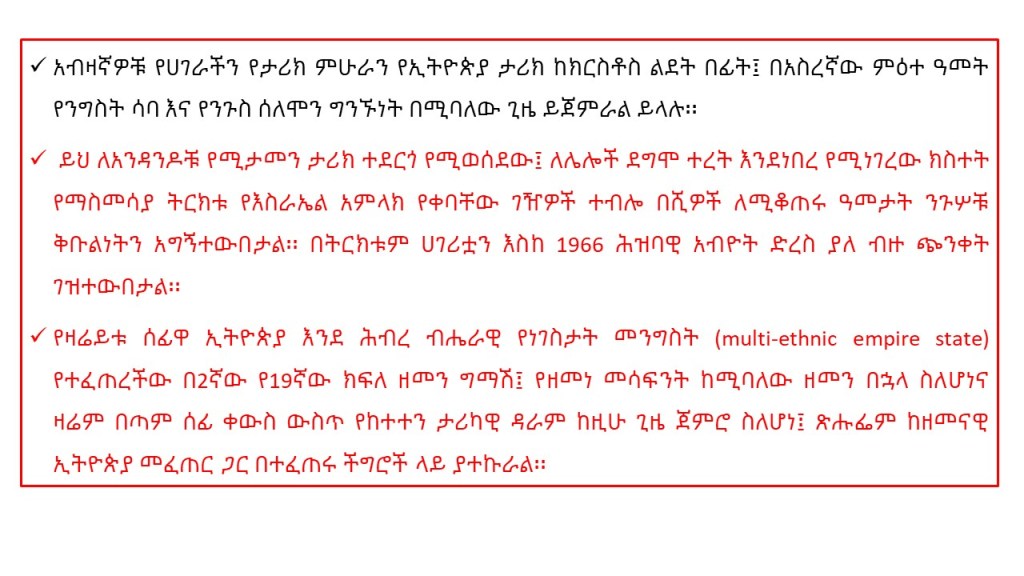
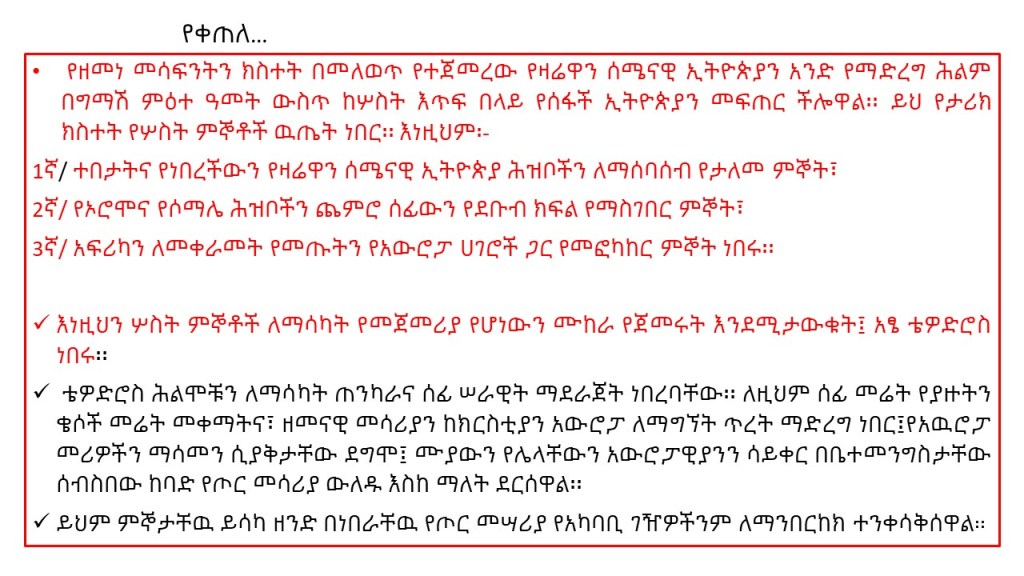
On the Power of Phrases

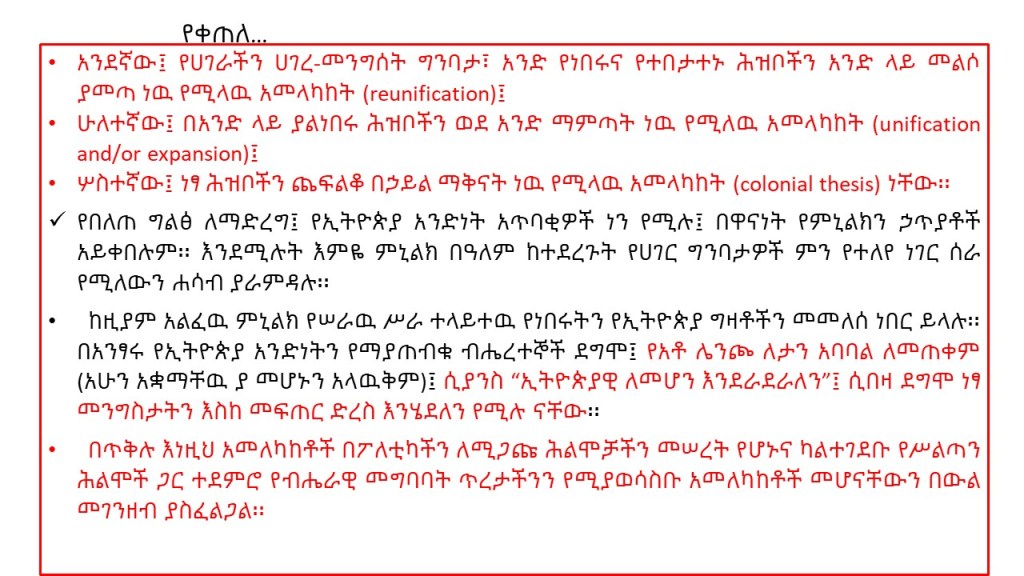
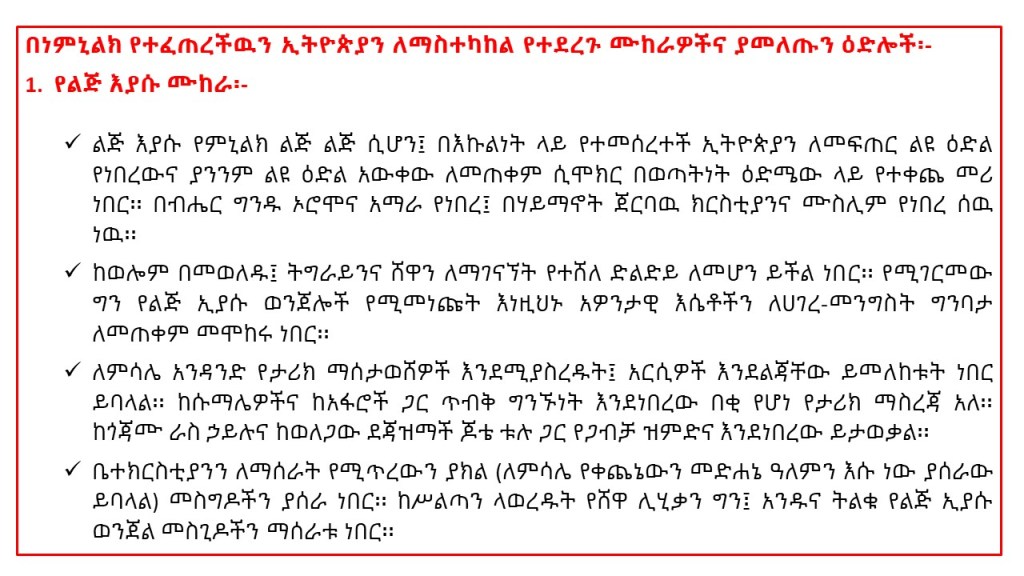
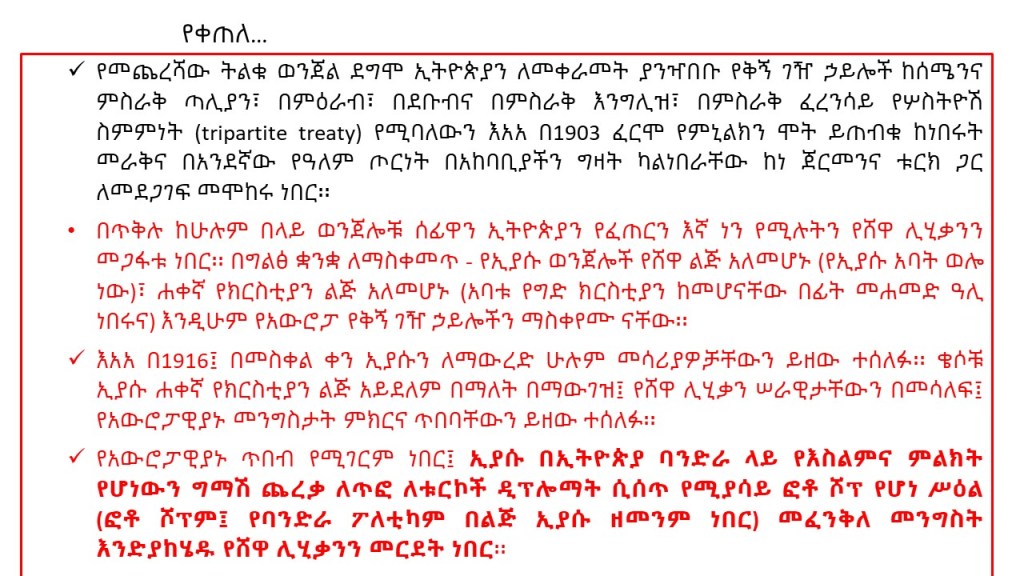
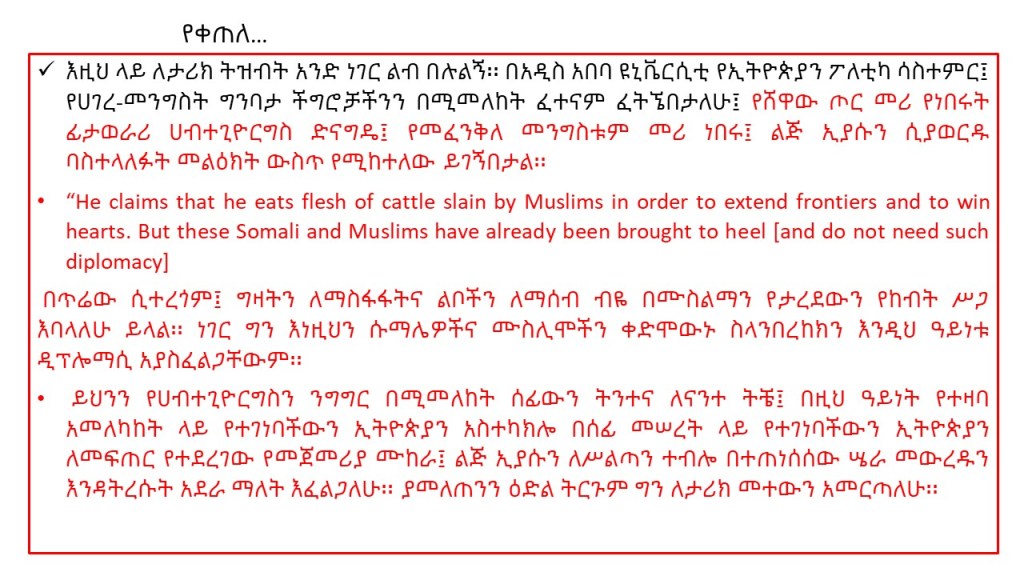
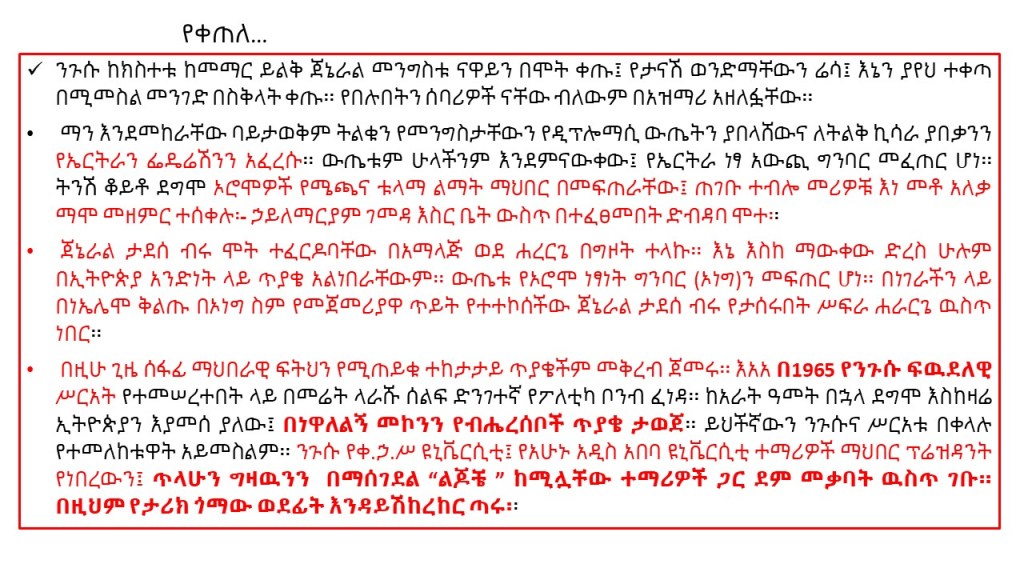
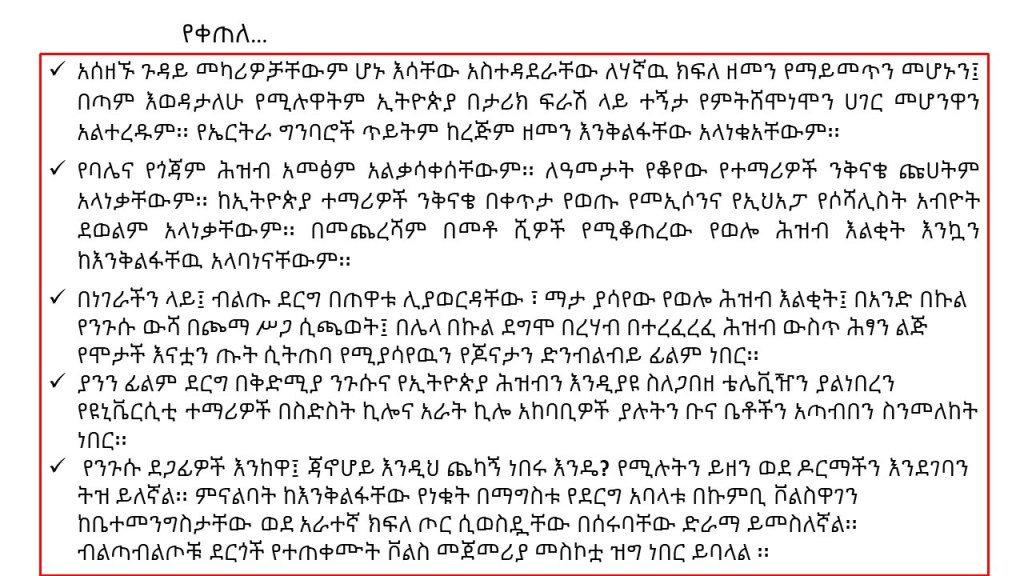
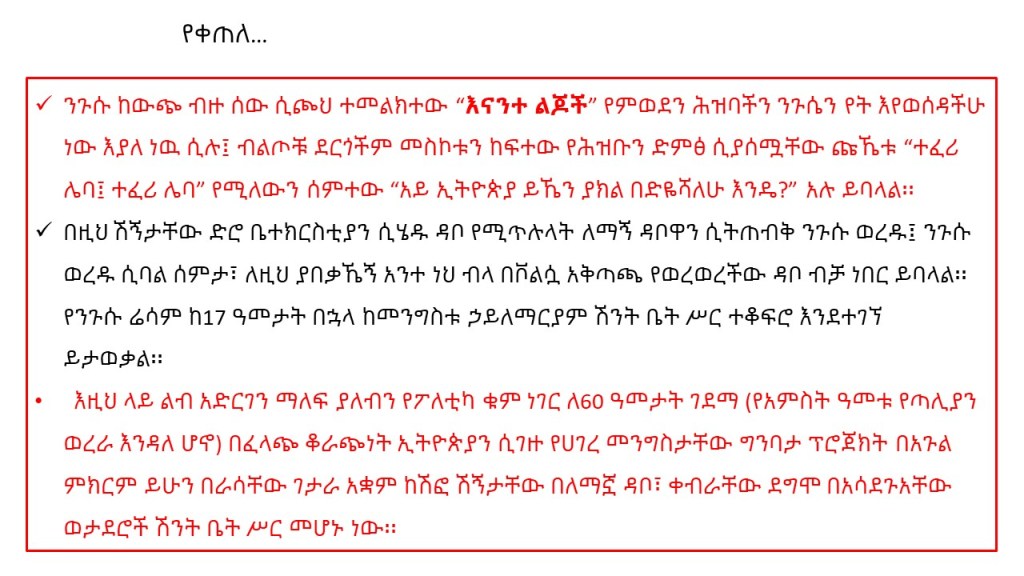
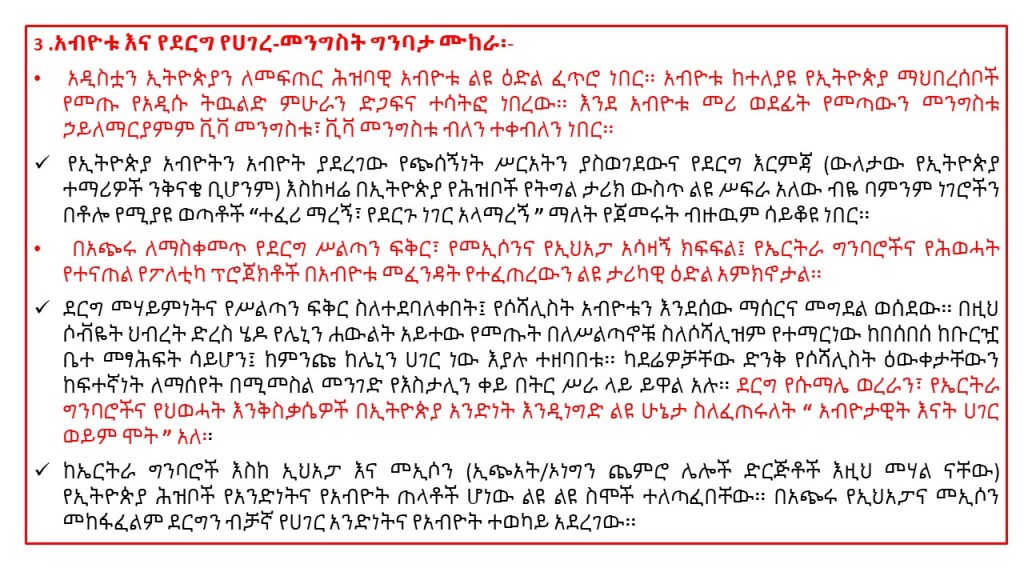
This article, penned by H. Q. Loltu, was first published on The Kindling Point, an occasional print that was active in the 1980s to be a voice for historically marginalized people.
When I declared my own personal independence from Ethiopia, all I had to do was tell my friends and acquaintances to start referring to me as an Oromo. Abyssinians had their own special curse word for their longtime mortal enemies who recently became their slaves; that word was “Galla.” What is unbelievable is that they were able to get the world also to call us “Gallas” for almost a hundred years. If you go to the card catalog of any library, you find the word “Galla” to refer to my people instead of Oromo. But you cannot find anyone living on the land who will use that word to refer to himself. It has always been an insult for Oromos.
The closest thing that I can think of that is as strong as “Galla” is the American word “nigger.” Can you imagine a European coming to the United States in the 1800’s and going around the plantation with the master observing the situation and then writing a report on “Niggers in America”? That is exactly what has been happening inside the Ethiopian empire ever since the Abyssinians conquered the Oromo republic in the 1890’s, cut it into pieces, and made its citizens their tenants. This happened after they got their hands on Remington rifles. The word Oromo and the greatest democratic tradition on the African continent, Gada, were replaced by an institutionalized insult: “Galla,” and a network of suspicious landlords and police. They carried those Remington rifles everywhere and their spy network reported on any “uppity Galla.”
Any son of a slave (“ Galla”) who went to school had to prove how deserving he was to be going into the armed stronghold, the town, which was really foreign territory to him, and to be learning the language of the conquerors. He was taught that this government by armed men was called “Ethiopia” and he was told that it was the greatest African empire on the earth. He had to memorize the geneology of its conquering generals and kings. He learned that the “Gallas” had been horrible savages and ruthless killers who were sent out on bloodthirsty missions and carried home the genitals of their victims. He was taught that the “Gallas” had a heathen culture that had to be destroyed for the good of mankind. It was the job of all educated “Gallas” to help replace those pagan traditions with Amhara culture and substitute this primitive language with Amharic.
I was one of these educated. It was our privilege to be a part of this civilizing process. It seems amazing now, but many of us accepted the assignment. Schoolchildren like myself became ashamed to admit that we had anything to do with these horrible “Galla” people. Most of us accepted Amharic names and tried to pass for Abyssinian. When I think of what proof they tried to give us about the culture of “Gallas” and how they behaved, I remember that teachers used to read from old Amhara monks’ diaries and from the position papers written by the Emperor’s scribes which were meant to justify the massive killings by Abyssinian kings of neighboring peoples. The stories did not match with what my grandfather had told me about the Oromos. These school lessons did not match what I knew when I was growing up in the Oromo countryside about the way our lives were organized around the concept of peace and reconciliation. But that did not occur to me then.
It has occurred to me now. It has occurred to a great number of Oromos that our very own history has been written by other people. It is not a new thing on the African continent for the history of a people to be written by their conquerors. Coming out of darkness about one’s own past has always been part of the process of liberation.
Everyone recognizes that this kind of national liberation is a battle of all the people together. But it is also a difficult personal battle for the educated ones. Our battles do not take place on the battlefields; the ammunition that disables us is words. For us, a single phrase can be more powerful than a bullet. It can go straight to the heart and make a person weak with terror. It can go to the brain, scramble thoughts. A phrase or a label can silence a person completely. It can make him impotent. Our conquerors built up a huge arsenal of potent phrases to use against us every time we showed interest, sympathy, or pride in our own tradition, and they took a shot at us every chance they got. They still do.
When I think of the times that I was silenced by a single word or phrase, it amazes me. All someone had to do was suggest that I might be a “separatist,” or an “extremist,” and I shut my mouth. I was simply terrified of being “misunderstood” and losing my “friends.” If someone labeled me, it had the same effect as if he had put a bullet in my brain at close range. One difference: If I had been shot, no one could possibly suggest that I was silent because I was fine and everything satisfactory.
For me to decide to call myself an Oromo and to insist that all others call me an Oromo was my moment of truth. You may think that it is just a small thing. But for me it was war. It was easier for me with strangers met at parties. When I decided to draw a line for my old school friends and Ethiopian social acquaintances not to cross, I knew had reached a point of no return. It took me a long time to work up the courage. At first, I reduced my contact with many friends, saying that I was busy and out of town. In that time I was reading everything I could find on Ethiopia and Oromo, all with a new perspective.
Finally, after a long period, an Ethiopian friend called me on the Ethiopian New Year. I decided to respond.
“Hello, Happy New Year! It has been a long time since you disappeared. Let’s celebrate together anyway and catch up with each other.”
“Hi. What is it that you are celebrating?”
“It is our new year.”
“Ours?” I asked. But I agreed to go.
When I arrived at the restaurant, two more Ethiopians were there. It is what I expected. None of them ever talked to me about politics or anything controversial when we were alone, but when everyone got together, then each one individually got brave. I have always been the one who felt that I had to prove myself and my loyalty by repeating their ideas with more force than they used. I would be the first to say something negative or to condemn the Gallas who wanted to make trouble. It was done to avoid being categorized. Tonight would be different.
At the dinner, it was not long until they detected the change in me, my unwillingness to do as before. Then came the test. “Well, how about the Tigray victories these days? And some of the Gallas are saying that they are a colony?”
I said that I thought the Tigrayans had a legitimate question of democracy which they are entitled to. “As for the Gallas, why do I have to prove myself to you all the time? Listen to me, I do not want to hear the word Galla any more. You should address me as an Oromo. I will not even speak to anyone from now on who refers to me or to my people as Gallas or to our language as Gallinya.”
“Since when?” one asked, “What happened?”
“Is that why you have been so cool?” asked another.
The friend who had first called to invite me out said, “Does this have anything to do with why you said, ‘Ours?’ when I reminded you about the new year?”
“Yes, It is not mine, but yours. Oromo New Year has not come yet.”
“Oh, sorry you see it that way. Nobody here ever said that you are not a Galla—sorry, I mean Oromo—but just that you are Ethiopian first. Like us, Aren’t you?”
“No, I was an Oromo first, and I am an Oromo first.”
“This is new. Does that mean that you have joined the WORROOMOO revolution?”
I looked at them and for the first time in my life, I felt sorry for them. These are the sons and daughters of the armed guards who were over Oromos. Their parents had been the landlords over my people. They had been raised in the towns and gone to school there. Their whole way of life was built upon the backs of working Oromos. They looked down on ones who worked hard. Their families had actually produced very little but instead spent all of their time in court arguing and backbiting each other and fighting over who was going to get a bigger share of what the Oromos had produced, dividing and redividing among themselves what there was.
“You used to laugh at Oromo kids, who you called ‘Gallas,’ when they were whipped for speaking their own language on the school grounds. Don’t make the same mistake again. Don’t make fun of the Oromos or some of us who decide to support those who are defending themselves against this kind of outrage today.”
“Can’t we forget what is passed? Yes, that was wrong.”
“Has it passed?” I asked, “Today it is worse. Instead of being whipped on the schoolyard, people are being imprisoned, sent away to the military, suspected of being a ‘narrow nationalist’ and receiving ‘revolutionary justice.”
“We don’t approve of that. That is also wrong. Can’t we build a country together? We are one people,”
What makes you and me one? We do not speak the same language; we do not share the same history or the same culture. We never had the same governmental structure. Oromos do not have any more in common with you than with all other human beings on the earth. There are many societies with whom the Oromos share much more in terms of history and common experience than with Abyssinia.”
They were shocked to hear this coming from me.
“Then what do you want? Do you want to break the country up into tiny pieces? Are you advocating fragmentation? Is that your objective? That would lead to a crisis; you know that very well.”
I stopped and realized that there was a time when I would have been absolutely terrified at the accusation that I was advocating fragmentation. But I sat there and looked back at them and said, “Tell me. How could this empire be in any worse crisis than it is now? Millions are starving. The government is bombing people on every side. And you are telling me fragmentation would bring crisis? Tell me. How would the demands of people for their rights bring fragmentation? Tell me what you mean by fragmentation.”
“It is getting late; let’s stop it right there,” they said, Good night.”
“Good night,” I said, leaning back in my chair.
That was when the power of their phrases lost any control over me.
Political Solidarity and Framework: The Federalist Forces
By: Najat Hamza
The Oromo protest movement from 2014 to 2016 has secured a regime change or a change in power in Ethiopia. The power structure and the remnants of the past regime emerged as a reformed body to carry the country forward into a democracy. There were a significant and promising start initially, but it was short lived. The regime reverted to its old bloody ways and actively started to work against the very movement that made the reform possible.
The Oromo people fought for the change and ushered the change in but sadly have fallen victims’ ones more. Our leaders are imprisoned on bogus charges, our political organizations are paralyzed, our identity is under attack and our people are being hunted daily. This is true for all nations and nationalities in one form or another. The unitary system came back with vengeance to eliminate and eradicate our diverse identity and every gain we achieved in the past five decades. The main goal or reason is to disable the Oromo struggle and squash the aspirations of millions so that Ethiopia can thrive in the image that they want. The Ethiopia that excludes, executes dissident voices and mold ethnicities into one bland identity they call Ethiopiawinet.
There is no doubt that Ethiopia has descended into uncharted territories since Prime Minister Abiy Ahmed came to power. Oromo people is the target of Abiy regime because they are the biggest defenders of federalism. We know that federalism is on trial. That means all nations and nationalities of Ethiopia should stand together not only defend federalism but implement it in its full potential. How? By standing in solidarity with one another in clear and defined way. What does that solidarity look like? How can we move together in securing the future for all federalist forces and chart a better future for all involved? We can answer most of these questions if we look at political solidarity and the framework it requires to deliver the results we want.
Political solidarity for all federalist forces should be defined and structured in a way each individual body can secure a better future for ourselves and collectively as a country. The goal of political solidarity is to effect social, political, and cultural landscape of Ethiopia into an inclusive space. The responsibilities of the federalist forces should be defined and carried out. Our political solidarity is based on the idea of fighting injustice and oppression together as one body. The responsibility of each member is to defend federalism, to be a voice for our people and to curve the future we can see ourselves in. The Oromo protests is a movement created to carry out these core goals of fighting injustice and oppression in Ethiopia. We understand the current Ethiopian media landscape and government supporters across the globe is busy painting the Oromo protests in a negative light. We have shown the world Oromo protests is a peaceful movement fighting to change the fate of Oromo people and other nations and nationalities facing the same treatment.
Therefore, all the federalist forces should come together in a meaningful way to fight for our future together. It is beautiful to show up together in rallies with our beautiful flags to say we stand with one another, but it needs to translate to a tangible solidarity, a political solidarity. A political solidarity of federalist forces means pulling our resources together, to stand together, to participate actively to effort on the ground across Ethiopia and to collectively be a voice here in the diaspora. We have a duty and responsibility to stand together to protect our future, our perspective regions, and our people from harm. When Oromo people are calling for market boycott, protesting across Oromia or they launch a campaign against the government join it for more impact. We do not have to wait until each area is targeted to react. We must work hard to harness a collective support for our efforts to bring the change we desire.
Political solidarity can be an effective model of change when we clearly identify our responsibilities and duties as federalist forces. This is not an era of empty rhetoric or empty promises. It is time to put our words and actions together and breakdown this system of oppression for once and for all. That comes with the understanding the Oromo protest is your protest. It is a protest movement of all subjugated nations and nationalities of Ethiopia. The time to stand together with purpose is now. #OromoProtests #UnitedWeStand #AbiyMustGo #FreeAllPoliticalPrisoners





 Advocacy for Oromia