Author Archives: advocacy4oromia
Irreechaa Arfaasaa 2022
Irreechaa Arfaasaa is a day of thanksgiving at the end of dry seasons and beginning of rainy season every year at the top of hills or mountains to acquire and celebrate good spirit. For this event, the Oromos usually go to the mountain during the time of their worshiping rituals, or during Irreessaa celebration.
Purpose and Meaning
Irreecha Arfaasaa is another annual Oromo Thanksgiving Day that repeats once in May to mark the end of the dry season and beginning of the rainy and planting season. It marks the end of the dry season (October to April) and the beginning of the rainy season for planting (May to September). It is a unique Oromo cultural, historical and natural beautification (planting) in their full glory at the height of the season.
On this day, people come to gather on mountain tops to give thanks to the almighty Waaqaa (God) for all the blessings throughout the past dry season and ask for Araaraa (Reconciliation), Nagaa (Peace), Walooma (Harmony) and Finnaa (Holistic Development) for the present and the future. There is also a ceremony of thanking all forebears for their endurance and determination to survive their culture and history – paving the way for further social victory. Irreecha Arfaasaa has been observed by the Oromo people for more than 6400 years. The ceremony honors elders’ blessings and wisdom, preserves the heritage and assesses the progress of humanity.
We warmly invite you to join us at the 2022 Irreecha Arfaasaa festival at Kokoda Track Memorial Walk. It is an Oromo Good Spirit tradition of respect for nature and gratefulness for life.
Venue: Kokoda Track Memorial Walk (1000 Steps),
Address: Tree Fern Gully Track, Tremont, VIC, 3785
Date: June 12, 2022
Time: 11:00AM – 4:30PM

Make an End to Ethiopia’s State Terror
An Urgent National Call
May 2022

Gurmuu Hayyoota Oromoo – Oromo Intellectual’s Society (GHO-OIS), after due deliberation on the current situation in Oromia and Ethiopia, particularly on the ongoing state terror and ethnic genocide directed at the Oromo Nation, makes the following calls upon all Oromos and friends of Oromo National Cause as a matter of urgency.
Key Notes:
At the present, the clique that wields state power in the name of the so called “Prosperity Party” in Ethiopia, has deployed all armed forces at its disposal (including foreign forces) and is committing indiscriminate mass killings and systematic genocide against the Oromo people.
The ruling party in Ethiopia has declared a systematic war against the Oromo people to eradicate Oromumma (Oromoness) and the Oromo as a nation, in a bid to renew the imperial policy of creating a unitary state under Amhara political, cultural and economic hegemony. It deployed the Ethiopian National Defence Forces, Special Forces of Oromia, Amhara, Somali and other regional states, the Amhara organized bandits called “Fanno” and units of the Eritrean military ostensibly to wipe out the Oromo Liberation Army (OLA). These forces are rather killing Oromo civilians indiscriminately and with utmost brutality, looting and plundering private properties and burning down whole villages and farms like an invading foreign army of bygone times.
Although many regimes of different political makeup have risen and fallen in Ethiopia since its creation as a colonizing imperial state by king Minilik of Abyssinia, each successive regime failed to resolve its foundational predicament and thus continued on a path of repression and suppression of the quest of the colonized nations and nationalities for freedom and equality with increasingly systematic vigour and brutality. The current war of the ruling elite under the so called “Prosperity Party” against almost all the peoples of Ethiopia in general, and Tigray and Oromia in particular, is a continuation of this political culture and a clear testimony that repeated endeavours to transform the empire has unquestionably failed once again, proving that this empire can’t be democratized.
Clearly, the current ruling clique, continuing repressive and suppressive methods of the past in a more vicious manner, is conducting not only systematic ethnic and cultural genocide but also demonstrated acts of fascism against the people it is supposed to govern.
The only option left for the Oromo nation to free itself from 150 years of cyclic repression, exploitation, war and humanly suffering, and particularly to save itself from the current wholesale killings and total war of genocide, is consequently intensifying its current armed struggle led by the Oromo Liberation Army (OLA) to make an end to Ethiopia’s colonial occupation of Oromia.
Noting that saving the Oromo people from armed violence, state terror and mass murder now engulfing the whole of Oromia is the historic burden and responsibility bearing upon the current generation of Oromo sons and daughters;
Bearing in mind that the only option to end the vicious cycle of colonial repression and war of exterminating the Oromo as a nation is for Oromos from all walks of life to set aside minor political differences, and unite and bundle our human, material and intellectual resources to liberate our Nation from the yoke of colonial subjugation;
GHO/OIS calls upon all Oromians to rise in unity to discharge the historic responsibility we bear in common to liberate the Oromo, the last great nation that is still languishing under colonial yoke in the 21st century.•
I. Root of the Problem: Continuation of Colonial Rule
The Oromo is a great nation that counts the Horn of Africa as its origin and the cradle of its egalitarian Gadaa system and civilization. The Gadaa system is the epitome of equality and democracy, which has served as the administrative, cultural and psychological basis of the Oromo people for thousands of years.
However, through the invasion of kings Yohannes IV and Minilik II of Abyssinia starting in the 1870’s, the whole of Oromia was conquered and became part of the present Ethiopian empire. As a colonial subject, the Oromo nation has been subjected to abhorent repression, systematic exploitation of its human and material resources, and cultural genocide through prevarication of its history and attempted eradication of its language and culture. These colonial repressions aimed at cultural and ethnic genocide are being conducted by the current fascist regime in Ethiopia in a more systematic and vicious manner.
The aim of a colonizer is not only to occupy the invaded land, dispossess the indigenous people of their material wealth and labor produces and destroy their culture and identity, but also to eliminate the elites of the conquered people to root out potential leaders of resistance against the alien rule. Through such a brutal policy, the colonizer denies the subject nation of its own elites that could keep its history, culture and language for next generations, thereby leading to the eradication of cultures and languages of colonized peoples.
History of the Oromo nation under the subjugation of the Ethiopian empire bears witness to such extensive colonial repressions:
a. During the invasion by kings Yohannes and Minilik of Abyssinia, millions of people in Oromia and the current Ethiopia’s South were killed in wars of resistance or were rounded up and sold into slavery. Million others perished as a consequence of famine that followed an intentional spread of cattle plague. Historical documents show that the population of Oromia was reduced by half and some other smaller ethnics were brought to the brink of extinction. The land of the indigenous peoples was carved up among the invading army of Minilik and the natives who survived the devastation were made “Gabbar” – a brutal form of slavery – in which wholes families were made to toil their ancestral lands to feed and serve families of the new colonizers. The Ethiopian Orthodox Church also got its share of the booty according to its ancient pact with Abyssinian kings.
b. Emperor Haile-Silassie‘s regime, not only intensified the Gabbar system, but also embarked on the project of ‘modernizing’ his empire, in which all other languages except Amharic were banned from use in schools and public institutions. Orthodox Christianity and the Amharic language and culture were promoted as ‘national’ religion and culture, whereas all others languages and cultures were banned to gradually wither away. The aim was to amharanize (convert to Amhara) all the subjugated peoples into a one language – one culture – one religion unitary state.
c. The Dergue communist military dictatorship that ousted Haile-Silassie, in a bid to pacify the central ‘Land to the tiller’ demand of student movements against the Gabbar system, first declared all land in Ethiopia to be government property. It then exacted more onerous dues and services from the peasantry than before. To better control the rural population from supporting the various liberation fronts fighting against it, the regime embarked on Stalinist collectivization of peasants into villages. For additional control, the regime also settled northern farmers in the South and among the Oromo. Through consequent starvation and government killings in the name of fighting the rebels, millions of civilians lost their lives. In a vicious move, the regime also destroyed many Oromo religious centers and irreplaceable cultural artefacts.
d. After the Dergue was overthrown through the armed struggle of the Oromo and other rebel groups in 1991, an experiment at a system of ethnic federation began, in which the current borders of Oromia were demarcated and Afaan Oromo became the official language in Oromia. However, the TPLF from Tigray, which militarily monopolized state power, reduced the federal arrangement to the status of Haile-Silassie’s governorate generals, and similarly ruled from the centre through satellite organizations it created in the name of the various nations and nationalities in the empire. Oromia and other regions were more systematically looted and exploited to build Tigray and enrich Tigrayans. Evicting Oromo farmers at gun point, their farms were sold to the so-called investors and lands around cities especially around Finfinnee were carved up among the new Tigrayan rich and their lackeys to build villas and high rise buildings. Those who protested against these brazen dispossessions and consequent wiping out of innumerable Oromo farmer families were declared as terrorists and were either arrested, tortured and killed or were forced to flee the country.
e. After the TPLF was forced to vacate its dominant position in the ruling Ethiopian People’s Revolutionary Democratic Front (EPRDF) coalition mainly through the Oromo Qeerroo/Qarree movement and public uprising, the group led by Abiy Ahmed disbanded the former EPRDF coalition and leaving out the TPLF but co-opting other former satellite organizations, organized itself as the „Prosperity Party“ (PP). This party, without meeting the requirements for a political party under the country’s laws and as a new party without popular or any other legal mandate, grabbed state power and continued to rule the country. To consolidate its authoritarianism and to thwart any future contestation against its dictatorial rule, it declared war on parties and groups demanding more plural politics and cultural & political autonomy for their respective ethnics.
In general, although Ethiopia has seen despots and dictators of varying political tints and tones – from emperors to communists to „revolutionary democrats“ ala TPLF – one thing remained unchanged: the colonial nature of the empire, the suppression, repression and wars necessary to maintain it, and the consequent widespread human rights violations and human misery that is still ongoing in more brutal and vicious manner.
II. The Currently Ongoing Genocide
As stated above, the present ruling Prosperity Party clique took over state power without any formal mandate required of it as a new political party and without even meeting requirements under the country’s laws governing political parties. To maintain state power it usurped, it reverted to massively harass, intimidate and imprison its political opponents. After disenfranchising many opposition parties and mass arrest of members and supporters of the two main Oromo political parties, the OLF and OFC in particular, PP declared itself the winner of an election it planned, conducted and competed in alone.
To hang onto power uncontested for the foreseeable future, the clique furthermore,
a) co-opted remnants of the former communist junta and the terrorist EPRP group;
b) allied with extremist and expansionist Amhara nationalists who are striving to re-establish Amhara hegemony of Minilik II’s colonial era;
c) invited foreign armies especially that of Eritrea and other alien forces that are eager for land grab and other plunder;
and started a destructive war against political bodies that are striving for genuine democracy and the fundamental rights of nations and nationalities in the country.
Colonel Abiy Ahmed, head of the ruling party, taking Isayas Afawarqi of Eritrea as role model, mentor and supporter, aims to exterminate any political opposition for good and remain the uncontested strong man of Ethiopia. To this end, his regime tramples upon the country‘s laws and constitution and, in contravention of international conventions and norms, is committing widespread human rights violations, war crimes and crimes against humanity. The regime’s armed and security forces and regional militia forces are currently laying waste parts of Oromia and Benishangul-Gumuz, worse than they did in Tigray earlier.
The regime in Oromia particularly,
• arrested en masse leaders, members and supporters of the OLF and the OFC, the two main Oromo political parties, and holds them under criminally abominable conditions;
• hunts down and kills conscious Oromos extra-judicially and throws them into the bush for the wild beasts to devour;
• deployed the country’s national defence forces supported by fighter drones, helicopters and fighter jets, its security apparatus, police and militia forces of Oromia and neighbouring regions as well as units of Eritrean defence forces, which are currently conducting civilian massacre, burning of Oromo homesteads and whole villages, and mass eviction;
• and is openly committing war crimes, crimes against humanity and genocide.
A ruling clique, however authoritarian it may be, won’t willingly surrender sovereignty of its country and become servile to a foreign entity. The group currently ruling Oromia in the name of OPDO/PP was basically doing that from the start. It is indeed organized and steered by foreign forces for the sole purpose of suppressing and repressing the Oromo people to enable these aliens exploit and plunder the resources of Oromia. In line with the crimes it was committing in the service of the TPLF for over 27 years pre 2018, the former OPDO (now PP) recently, for example, gave large sums out of Oromia‘s budget to Amhara and other regions as a gift or bribe and invited militia and special forces of these regions to invade Oromia.
Following the motto of “drying out the sea to kill the fish”, as suggested by one party member on a session of PP’s Oromia parliament, to defeat the Oromo Liberation Army, the ruling clique officially gave the army and militia forces a free reign to conduct indiscriminate massacre of civilians, burning of homes and vicious destruction of properties.
In addition, though posturing as an Oromo regime ruling Ethiopia, the clique massacres Oromos and, in collaboration with avowed anti-Oromo elements in the country and abroad, falsely reports it as if Oromos murdered Amharas, simply to present the Oromo people as monsters in the eyes of the international community. The group calling itself OPDO (now PP) has thus proved to be more anti-Oromo than the worst enemy the Oromo people ever had.
All in all, the current regime is committing boundless crimes and fascism to eliminate Oromo nationalists and to eradicate the Oromo as a nation. The ultimate goal of Prosperity Party’s war against the people is to dismantle the current multi-ethnic federal arrangement and reinstitute the old colonial system of forced Amharanization, slavery and deprivation.
The result we see today is extensive destruction, civil war and economic collapse and possible disintegration of the empire altogether.
III. National Duty as an Oromo
History of the Ethiopian Empire, especially that of the last 60 years teaches us that, though many ideologues have exchanged hands to rule the empire, at least three attempts at democratizing it proved unsuccessful. Years of endeavour to transform Ethiopia into a modern state, where all nations, nationalities and peoples in its borders have equal rights and obligations, and where individual and group rights are respected, failed to bear fruit because of its foundation as a colonial empire that remained unchanged. It proved that an empire cannot be reformed and democratized, especially in the face of Habesha resistance to modernization and democratization.
What should be done then?
Recognizing that transforming the Ethiopian empire into a democratic state proved to be unachievable, the only option left to bring about a lasting solution of setting an end to the vicious cycle of repression, war and destruction and cutting short the era of destitution and tribulation of our people, is to intensify our national liberation struggle and consummate the right of our nation to self-determination.
The present dictatorial regime in Ethiopia is making a last ditch attempt to re-establish Ethiopia under Habesha /Amhara hegemony by reversing the few rights Oromos won through the bitter sacrifices of millions of our compatriots. To this end, the regime is conducting mass murder and eviction of Oromos from their ancestral homes, a fascistic act targeting the Oromo as a people.
Our silence and disconcert at this moment of distress of our people would later cost us all dearly and won’t save us from the judgement of history. Therefore, getting organized and organizing our people to stand up together to thwart the war of extermination targeted against the Oromo nation has become the burning issue requiring immediate response from us all children of Oromia.
After repeated attempts at dismantling colonial settings to bring peace, equality and democracy to all peoples in Ethiopia have proven futile within the confines of empire, it is naive to believe that peaceful political means would lead to attainment of liberty and self-rule especially when the ruling elite is determined to quash Oromo Quest for freedom and equality through means of brute force. Recognizing that this would only confuse and demoralize our people, it is our national duty and patriotic obligation to provide due moral, material and intellectual support to our people’s armed struggle spearheaded by OLA.
IV. Let’s Bring Oromo National Liberation Struggle to its Natural Conclusion:
Whereas the Oromo people have been continuously subjected to inhuman treatments, barbarous repression, mass evictions, exploitation and plunder as the colonial policy of the Ethiopia empire for the last 150 years;
whereas many regimes of various political colour have exchanged hands in ruling Ethiopia, and that none have addressed the root cause of the incessant political turmoil in the empire, namely its colonial foundation and continued existence as such, but rather intensified colonial repression at every turn;
whereas the current ruling clique, in a scorched earth policy tries not only to suppress the Oromo Quest for freedom and equality but also to eradicate the Oromo as a nation altogether, is thus committing abhorrent human rights violations, war crimes and crimes against humanity;
whereas liberty of the individual and freedom of every nation from alien rule are inalienable rights enshrined in UN Declaration of Human Rights, that every nation reserves the right to use any means at its disposal to regain and protect these rights and the right to self-determination;
whereas the Oromo is the last big nation still languishing under the anachronistic colonial subjugation in the 21st century, that it is imperative to close this dark chapter of African history;
To set an end to the era of brutal repression, colonial exploitation, slavery and human misery under Ethiopian colonial rule, the Oromo people have been left with a single option, namely to intensify the ongoing armed struggle led by Oromo Liberation Army (OLA) and bring it to its natural conclusion of establishing an independent Democratic Republic of Oromia.
Let’s rise up in unison to realize it!
V. A National Call of Oromumma
that democratization of the Ethiopian empire proved to be a futile undertaking, and any further attempt to reform it would only prolong the suffering of the peoples in the empire, thus to quicken its demise;
that members of the OPDO/PP, while speaking Afaan Oromo and claiming to be Oromo, are from the outset committing all the atrocities in Oromia as henchmen of alien rule, so the organization proving itself to be the worst enemy of the Oromo people, and thus must be uprooted;
that providing the Oromo national liberation struggle with financial, intellectual and manpower assistance as to hasten its goal of uprooting colonial subjugation is a national duty that demands immediate response from each and every Oromo;
1) we call upon all Oromo civic, professional and political organizations to leave minor differences aside and forge strategic alliances to foil the ethnic and cultural genocide targeted against the Oromo as a nation and lead it out of the hitherto brutal colonial bondage.
2) we call upon all Oromo sons and daughters all over the world to heed the distress call of our people and rise in unison to save our nation from the barbaric atrocities and eventual annihilation targeted against it by builders and maintainers of the colonial empire of Ethiopia. We call upon Oromo intellectuals, specifically those who tried (and still try) in vain to democratize Ethiopia and in doing so only helped maintain the vicious cycle of tyranny, war and human suffering, as the last 60 years history of Ethiopia bears witness, to invest their time and resources instead to find a lasting solution, namely the realization of the right of nations and nationalities in the empire to self-determination.
3) Given the fact that the OPDO/PP proved to be the worst enemy that from the outset made as its stated duty the repression and subjugation of the Oromo people to subdue them to alien rule, and is currently conducting state terror to annihilate the Oromo, we call upon all Oromos serving this regime in any capacity to distance themselves from the body massacring their brethren. Continuing to serve this fascist regime would undoubtedly leave an indelible mark of shame on themselves and their descendants.
That the only option left to the Oromo Nation to free itself from more than a century of state terror and humanly suffering is to fight for the establishment of the free state of Oromia;
That the stated goal of the Oromo National liberation struggle is reinstating Oromo people’s cultural and political sovereignty and Oromia’s righteous place among the free nations of the world by ending the state of colonial subjugation and exploitation;
We extend our national call to all Oromo sons and daughters to rise hand in hand for this dignified and noble cause.
Victory to the Oromo people!
Oromia shall be free!
OSG Report 59 released today, documents continuing human rights failures in Ethiopia.
OSG Press Release: Beware genocide; Ethnic cleansing; Qeerroo deliberately targeted by Abiy Ahmed; Hate speech; Wallega report; OLF detainees
Although the execution of Karrayyuu Gadaa leaders on 1 December (pp.15-17) was not genocidal in extent, the ethnic cleansing and expansion of Amhara territory which preceded and followed the massacre is part of a process which is approaching genocide in its ideology and, arguably, in its practice.

It is evident within Amhara Region as the mass graves from retaliatory killings in Wollo (p.14) attest, as do previously reported killings of Agaw (Report 57, p.23) and Kemant (Report 58, pp.17-18).
The process of killing and razing villages of non-Amhara is evident around Amhara Region too – mass killings in East and West Showa (pp.9-10), East Wallega and Horo Guduru zones, Oromia Region (pp.21-22), and in Metekel zone of Benishangul-Gumuz Region (pp.28-29).
These killings are preceded, justified and followed by hate speech aimed at the victims (pp.5-7). False claims of atrocities attributing them to OLA (p.22) are another form of hate speech – designed to increase hostility and hatred.
Civilians are also killed throughout Oromia in scorched earth campaigns in West Wallega (pp.19-21) and in East and West Guji zones (p.30). Government soldiers are told ‘to do whatever they want be it legal or illegal including murders’ (p.27).
On taking power, Abiy Ahmed’s top priority, however, was the elimination of the very group which enabled his ascendancy, the Qeerroo non-violent pro-democracy protestors. Former Minister Milkessa Gemechu confirmed that the observed trend was deliberate policy (pp.3-4).
The devastating local effects of the civil war in Oromia are revealed by the third report from the Human Rights Defenders Group, based in West Wallega (pp.24-28).
OLF political prisoners remain in filthy, secret dungeons (pp.10-13) after the release of a few OFC leaders on 7 January. Bate Urgessa, OLF Public Relations head, was released from prison on a stretcher and remains severely ill.
Opposition leaders together with civil society and grassroots organisations, must be the drivers of any dialogue to navigate Ethiopia out of its multiple crises and must be released.
Fur further details: https://advocacy4oromia.org/osg-report-59-beware-genocide/
A Diasporan Oromo Visits Kenya: A Reflection
Being from the Ethiopian side of the border, travelling and getting to know my people on the Kenyan side has brought me back down to earth regarding the way I have previously viewed the Borana Oromo.
By Soreti Kadir
I left Oromia just before turning two years old and I grew up among the first Oromo people to call Melbourne home. I vividly remember the days when we were so few that, in Clayton South, the suburb in which I spent 16 years of my life, there was an Oromo family on almost every block. Being such a small community, we didn’t scatter across the breadth of the city but huddled together in a small enclave for safety, support, and the comfort of familiarity. In those days, weddings, birthday parties, funerals, and other community events were attended by people from all the regions of Oromia who made up our little community.
But as our community grew in number, and as the number of people from every region of Oromia grew, I started to see a divide in how we congregated. By my mid-teens, I was almost completely disconnected from the spaces and networks that included Oromo people from outside the Arsi region, where I come from. Naturally, as I reached adulthood, I attended cultural and community events on my own initiative rather than at the invitation of my family.
I started to learn about my community all over again. And in the course of this experience, I was never directly and deliberately taught who the Oromo are, who I was as an Oromo, and how and why other Oromo people were different, or the same, to my family. Whereas this learning is experiential for one growing up in Oromia, there are gaps when this way of learning is transferred to the diaspora, or even to urban areas in Oromia, and so more recent generations are developing different tools and spaces for learning Oromo identity, culture, and history. What I did learn experientially though, were the nuances that make one a person from Wallaga, another from Haararge, Shewa, Arsi, etc.
Still, l had little knowledge regarding the Borana Oromo. As one who developed Oromomumma (Oromo identity) in the diaspora, and as someone who has spent over a year and a half living in the homes of Borana and Orma Oromo in Kenya, my relationship with this part of my community has developed in an intriguing and adventurous way, and it holds a special place in my heart.
I met Addee Jiloo, a Borana woman, in my early twenties. Each time I had attended Irreechaa (an Oromo thanksgiving festival), it was Addee Jiloo that led the procession to the water. If a woman needed her Gutino (Borana cultural dress) tied at an event, we would frantically search for Addee Jiloo. If we had public events, she would be the one conducting the coffee ceremonies. In many ways, she was collectively identified as a keeper of cultural knowledge, a leader of cultural practice, and an advisor on cultural affairs.
Over the years, I remember repeatedly hearing that “Borannii Hangafaa Oromo”, that the Borana are the oldest of the Oromo. This refers to the position Borana and Bareentu, as the first sons of Oromo, hold as the moieties of the Oromo nation. I had also come to learn that the Borana were among the few Oromo to still practice the Gadaa system, one of the greatest cultural assets of the Oromo nation. To me, the Borana felt almost like a thing of legend, a mystery to be revered and respected. They seemed to know things about being an Oromo that others didn’t. They seemed to have succeeded in preserving practices that the rest of us were no longer connected to. They seemed to be Oromo with the kind of defiance, resilience, and resistance that I wanted to embody. Although, from what I could see, it seemed like the Borana did so without the existential effort I sometimes felt it took to embody Oromummaa.
Language
I stayed with a Borana family for a few months when I first moved to Nairobi, but for the first few weeks of my stay, I had almost no idea what anybody was saying. I was used to most Afaan Oromoo dialects and Addee Jiloo’s dialect never sounded very different from anybody else’s, so my Kenyan experience sent me into a state of severe culture shock. With time, however, I became used to the difference in dialect and was able to improve my communication and now you can probably detect the influence of the Borana dialect in my spoken Afaan Oromoo.
In many ways, she was collectively identified as a keeper of cultural knowledge, a leader of cultural practice, and an advisor on cultural affairs.
Almost simultaneously with this sense of shock came a sense of overwhelming awe and admiration. Afaan Oromoo is a language that you feel. It is poetry in motion. Intimate, alive, revealing. I found this exemplified in the Borana dialect.
When I first heard my host answer the phone and greet the person on the other line with, “Qileensii urgooftuu?” Is the air fragrant? I almost wept. Welcoming a guest, the Orma of Tana River along the northern Kenyan coast, say “Diyaadhaa”, come closer, be close. This is a common saying among the Borana and Orma people, and I experienced it frequently during my stay in Tana River. If language is supposed to connect us, I think that the breadth of the Oromo language does so profoundly, and the dialect spoken amongst the Borana and Orma achieves this objective to grand effect.
Traveling up north
When I travelled to northern Kenya, I was bubbling with expectation. I remember sitting at a small shop trying to recover from the long journey, and striking up a conversation in Afaan Oromoo with the shop owner. He responded in a mix of Swahili and Afaan Oromoo. We continued talking and I told him that I was an Oromo from the other side of the border. This meant, well, not much at all to him.
I had expected a dramatic reunion. What I got was a shopkeeper who was not surprised or touched in any way by my presence. The cultural and linguistic relationship that we shared, despite the borders, was not profound for him. The reason that this surprised me was that, when I visited Tana River, there was a palpable sense of connection with everyone I met, for the very reason that we had a shared identity across borders.
Given that I was closer to the border of Oromia and I was in a place that was, in many ways, more engaged with the Oromo cultural and political identity, I think I expected this sense of connection to be amplified. What I experienced after leaving this shop showed me that it was actually because of the consequence of this proximity to Oromia’s border and the political landscape of the area at large, that meant that Oromos connecting and sharing experiences across borders was no special occurrence.
I sat for lunch in the compound of an ordinary looking house. As we ate, a friend, someone who had grown up in the town we were in, began to tell me stories about where we were. In 2002, the house we were in was the target of a bombing by Ethiopian government forces. Luckily, nobody was home. Chief Ibrahim Abdi Dido and his family lived in the house at the time. In the same year, Chief Buke Liban, Chief Taro Sora, Chief Denge Okotu, Chief Huqa Guled, Boru Jiloo, Sheikh Hassan (Moyale), Qasim Abdi and many others were similarly targeted by Ethiopian government forces and in most cases, these community leaders, and oftentimes, their families, did not survive. Although I knew a little about how the Ethiopian government targeted Oromo people across the border in Kenya, including the kidnapping and assassination of political refugees in urban centres, the arrest and extrajudicial killing of young people, and the displacement of communities, in the months that followed, I learned that the extent and severity of this persecution was far greater than I had first understood.
When I first heard my host answer the phone and greet the person on the other line with, “Qileensii urgooftuu?” Is the air fragrant? I almost wept.
Through listening to the stories of the many people I met on my travels, I also learned that local cultural leaders played and continue to play a role in this persecution by collaborating with the Ethiopian security forces. This was sobering to understand because it resembled the dynamic that’s been at play across Oromia since the onset of Abyssinian colonisation, whereby Oromo people, including local leaders, have opted to participate in the violence perpetrated against their own people.
My experience in northern Kenya brought me back down to earth regarding the way I viewed the Borana Oromo. I was in a place where the people were living with the challenges and consequences of choosing to live their Oromoness every day. Just as it would be incredibly weird for me to go to Wallaga or somewhere in Eastern Haragee or Balee and start wandering around asking people if they thought it was wonderful that we share a language, culture, and political reality (which I have never done), it was weird for me to do so in northern Kenya too.
The Oromo of Ethiopia and the Oromo of Kenya are, in many ways, fighting the same fight. Both make huge sacrifices for the political struggle, and suffer the consequences of this, along with enduring the consequences of simply being an Oromo in relation to the Ethiopian state, political activity or not. The indifference of the shopkeeper I met at the beginning of my travels makes sense. He experienced the same, if not more, breadth and depth of Oromummaa as I did; there was nothing novel I offered him in being an Oromo from the other side of the border.
The Borana-Gabra conflict
When I arrived in northern Kenya, I remember getting off the bus from Nairobi and wondering why on earth it had dropped me so far away from the town I was going to, only to learn that it was an Orma-owned bus company, and they were careful about infringing on the territory of the Borana. The same person who told me the story about the house in which we ate lunch has lost family to protracted conflict between the Borana and Gabra people. When I asked him what the root cause of the conflict was, he said, “It just started a long time ago. We speak the same language, we are the same people, but a feud that started between a few, a long time ago, has continued on.” I didn’t know if the origins of the conflict were as vague as my friend described them to be, or if his description is just how the existence of the conflict feels to someone who has suffered because of it, but I did come to learn that access to resources like water and land between nomadic pastoralists (Borana) and settled subsistence farmers (Gabra) and ongoing political power struggles play a huge role in the enduring and deadly conflict.
Lamu
Many years ago I spent some time in Lamu and I met two Orma people on the Island. At the time I thought that it was just a bizarre coincidence that they were there but I now know that the Orma have been living in the northern coastal region of Kenya since the late 1800s.
Being from the Ethiopian side of the border, a landlocked country, it is very interesting for me to think that I share a language, history and, even if only in small ways, a culture with a people that have lived along the coast for over a century. The Oromo worldview places great emphasis on our relationship with and duty towards land. As one develops the essence of Oromummaa, I believe that a person intuitively connects with this worldview. From this perspective, learning that we are connected to a people whose relationship to land is connected to the ocean — there is just something about that that stirs something in me.
I was in a place where the people were living with the challenges and consequences of choosing to live their Oromoness every day.
Who we are as a people is infinitely complex. I am talking about the Oromo, of course, but I think I’m also talking about us all. If I have learned anything over the past year and seven months, it is that I will only ever keep living and reliving this one truth: people, their stories, and their lived realities are not linear, rigid, or made to be easily and simply comprehended. Life exists on a continuum of relationships and storytelling. I want to remain willing to relate to who people are, as they are, rather than clinging onto what I have constructed of a people through imagination, hearsay, and the effects of groupthink. I want my analysis of the world to shift and change as I learn and grow, and I want my posture of service to people to also shift and change as I learn anew. Getting to know my people on the other side of the border has taught me that state violence is pervasive, unconfined by borders, and resistances adapt accordingly. I also learned that I can do little to effect real and lasting change if I do not cultivate my ability to meet the complexity in individuals and in communities with a willingness to learn and an openness of heart and mind.
Read more at: https://www.theelephant.info/op-eds/2022/04/22/a-diasporan-oromo-visits-kenya-a-reflection/?fbclid=IwAR1b_0cRJRYE3niprfAoV_nuwBv7BYauY6bEAwVeIdezs0IaK_Cc8rpu7rw#.YmM2ZklBDSg.facebook
The Elephant – Speaking truth to power.
New Book: Dressing Modern Like Our Mothers: Dress, Identity, and Cultural Praxis in Oromia
(17 February 2022, A4O) Author Peri Klemm has published new book titled ‘Dressing Modern Like Our Mothers: Dress, Identity, and Cultural Praxis in Oromia’.

Oromo women live as traders, wood carriers, shepherds, and farmers in and around the ancient trade center of Harar, Ethiopia. They have lived with the uncertainties of drought, famine, war, and political unrest for several generations and experienced poverty, disease, and severe restrictions in personal freedom.
These same women, both young and old, adorn themselves with an array of body modifications and supplements.
What is it about the objects and practices themselves that appear to hold such significance? This rich ethnography illustrates why Oromo women decorate their bodies in particular ways and why they invest so much timeand effort in doing so.
By tracing the development of dress within the Oromo social system from the mid-nineteenth century to today, and through a close examination of dress activated on the body in particular contexts like lifecycle rituals, spirit possession practice, and nationalist movements, the reader will uncover how truly valuable a woman’s decorated body is as an aesthetic and symbolic system.
The cover features a painting of an Afran Qallo Oromo woman by the talented Yadesa Bojia.
You can order the book online from the following links.
Africa world press books: https://africaworldpressbooks.com/dressing-modern-like-our-mothers-dress-identity-and-cultural-praxis-in-oromia-by-peri-m-klemm-hb/
Amazon: https://www.amazon.com/Dressing-Modern-Like-Our-Mothers/dp/1569027803
Tarkaanfii Lagannaa Nyaataa Hooganootaafi Qondaalota ABO Geessees Fi Haala Keessa Jiran

(A4O, Gabaasa Addaa, Finfinnee, 14/02/2022) Tarkaanfii lagannaa nyaataa Hooganooti fi Qondaaloti ABO hidhaa keessa jiran gaggeessanii fi haala isaan keessa jiran irratti gabaasa addaa qindeeffame.
Hoogganootni fi qondaalotni ABO kanneen akka :
Jaal Mikaa’el Booran,
Jaal Kennesaa Ayyaanaa,
Jaal Lammii Beenyaa,
Jaal Dawwit Abdataa,
Jaal Battee Urgessaa fi
Jaal Gadaa Gabbisaa kan jedhaman miseensota fi hoggantoota ABO biroo waliin yeroo turtii waggaa lamaaf hidhaa Keessa turuun ni yaadatama.
Waggaa lamaan kana kessatti garii isaanii manni murtii bilisa isaan gadhiisee, garii isaanii abbaa Alangaa <<himata irraa hin qabu, >> jedhee, kaan ammoo himatni homaatuu osoo itti hin dhihaatiin haala ulfaataa ilmaan namaaf hin malle keesaatti bakka tokkorraa bakka biraatti adaraa kennamaa dabarsan.
Manni murtii adeemsa seeraan bilisa isaan godhus Koomishiniin Poolisii Oromiyaa itti cichee isaan gadhiisuu dide.
Dhimma isaanii yeroo gaafataniis, Poolisiis ta’e qoratan, << Dhimmi keessan nu bira miti, furmaata isiniif kennuu hin dandeenyuu! >> deebii jedhu argataa turan.
Baatii jahan darbe ammoo bakka maatii, abukaatoo fi ummatni isaan hin arginetti geessanii dhoksaatti hidhan. Gaaffii mirgaa isaan deddeebisanii kaasaa turaniif afaaniin sobuu malee falli hin argamne.
Kanaaf isaaniis dhumarratti hidhaa seeraan alaa, roorroo fi daba kana jalatti roorrifamaa jiraachuurra du’a nuuf wayya jedhanii takkaahuu hiikamuu ykn kabajaan falmataa du’uuf murteessanii waliif kakachuun gaafa Guraandhala 1, 2022 lagannaa nyaataa eegalan.
Yeroo kanatti qondaalotni Koomishiniin Poolisii Oromiyaa itti deddeebi’an, << Dhimmi keessan guyyaa muraasa keessatti furamaa nyaata nyaadhaa!>> jedhanii kadhatan. Isaanis, << takkaahuu ammuma nu furaa, ykn nutu of fura!>> jechuun ejjennoo isaaniitti cichan.
Kana gidduutti gaafa 05/02/2022 Jaal Kennesaa Ayyaanaa waan laaffataniif hospitaala geeffamanii yaalii xiqqoo booda deebifamanii lagannaa eegalanii guyyaa saddeet booda lubbuu isaaniif waan sodaataniif bakka dhoksaatii isaan baasuun Q/P/B/Magaalaa Buraayyuutti isaan darbatan.
Achitti lagannaa waan itti fufaniif gaafa guyyaa kurnaffaa manguddoonni Waldaa Maccaa fi Tuulamaa, Abbootiin Gadaa fi Haadholii Siiqqee marga qabatanii jilbeenfatanii itti booyan.
Obbo Dirribii Damisee fi Pirooeser Asaffaa Tafarraa isaan keessatti argamu. Isaanis haala suukanneessaa keessatti dararaman ibsaniifi , << hidhaan seeraan alaa fi roorroo hamtuu kana keessa hiikamuu ykn murtii keenyan of furuu qabna!>> ejjennoo jedhu ibsaniif.
Yeroo kanatti manguddoonni jilbeenfatanii, << Nuti gama keenyaan dirqama ofitti fudhannee dhiibbaa kamuu ni goona, isin hanga tole nuuf jettanitti hin deemnu!>> jechuun imimmaan buusanii isaan kadhatan. Hoogganooti fi qondaaltonni ABOs kabaja manguddootaaf jecha mana yaalaa deemuuf waliigalan.
Haala Kanan gaafa guyyaa kurnaffaa galgala hospitaala seenanii gaafa guyyaa kudha tokkoffaa hospitaala Poolisii fi Beetezaataatti yaalaman.
Qormaata hospitaalatti taasifamaniin Jaal Battee Urgessaa dhibee tiruuf saaxilamuun hubatame. Hundi isaaniituu miidhaa qaamaaf waan saaxilamaniif hanga qaamni isaanii deebisee of danda’utti guyyaa Shanan itti aanan nyaata sasalphaa ogeessi fayyaa tartiibaan akka fayyadaman gorse fudhatu. Amma nyaata sasalphaa eegalaniiru.
Ethiopia Government forces kill 14 civilians in Oromia

Ethiopian Human Rights Commission, the independent organization funded by the Government of Ethiopia, today exposed the assassination of 14 civilians in Oromia Region by the Oromia Special Force at the end of last November.
The traditional leader of Kereyu – Abba Geda Kedir Hassen, is among the 14 civilians killed (described as ‘extra judicial killing’ in the report) by the Oromia special force, according to the report of the Commission released today. The report stated that the revenge killing by the Oromia special forces has occurred around Fentale – Metehara area in Oromia region of Ethiopia a day after 11 Oromia special force members are killed by unknown armed group.
The 8 pages report of the Commission has interviewed 46 witnesses. The report released in Amharic language stated that before killing the civilians the Oromia Special force members has taken the 30 civilians and made 14 of them to lie on the ground and assassinated them.
It is stated that before taking them to the bush for assassination, the members of the special forces of Oromia have asked the dead to tell them who killed their 11 colleges (members of Oromia Special forces) the previous day.
After the brutal revenge killings of the 14 civilians who are members of the Kereyu Michle Geda Jilla tribe, the relatives of the dead are forbidden by the killers (members of Oromia Special forces) from taking and burying their family members, according to the report. So far neither Oromia Police nor the attorney general of the region or that of Ethiopia has responded for the investigation of the Commission.
It is recalled that about a week ago, at the outskirt of Addis Ababa around Burayu area 3 civilians (followers of the Ethiopian Orthodox Church) are killed by the Oromia special force members during the celebration of Ethiopia’s Timkat (Epiphany). The three civilians are allegedly killed for weaving Ethiopia’s old smooth green, yellow and red colored flag.
Following the killing Ethiopia Government Communication Service head Legesse Tulu has indicated that the issue is being investigated. Meanwhile so far neither the Oromia Region nor the federal Government of Ethiopia has issued public statement about who from the Oromia special force have assassinated the three individuals and what action has been taken against them.
The Commission in its report urged the Government of Ethiopia to compensate the relatives of the people who lost their lives and those who are sustaining severe injuries due to the attack by the Oromia special forces.
Before the investigation of the Commission, the Government media at the time reported that the 14 civilians are killed by the armed group designated as a terrorist group in Ethiopia – Oromia Liberation Front (OLF-Shene).
በከረዩ የሚችሌ ገዳ የጅላ አባላት ግድያ ላይ የተደረገ የምርመራ ሪፖርት
የኢትዮጵያ ሰብአዊ መብቶች ኮሚሽን (ኢሰመኮ) በኦሮሚያ ክልል ምሥራቅ ሸዋ ዞን ፈንታሌ ወረዳ በኅዳር 22 ቀን 2014 ዓ.ም. የከረዩ የሚችሌ ገዳ አባላት አርዳ ጅላ ላይ በተፈጸመ ጥቃት የሕይወትና የአካል ጉዳት ስለመፈጸሙ በደረሰው ጥቆማ መሰረት፣ ከታኅሣሥ 7 እስከ ታኅሣሥ 12 ቀን 2014 ዓ.ም. በቦታው በመገኘት ምርመራ አካሂዷል።

Dhaabbileen Oromoo Jaatamaa ol Ta’an Marii Biyyalessaa Irratti Yaaddoo Qaban Ibsan

Finfinnee, Amajjii 21/2022-Dhaabbileen hawaasaa Oromoo jaatamaa ol ta’an hundeeffamuu Komishiini Marii Biyyalessaa Itoophiyaa ilaalchisuun ibsa kennan. Yeroo jalqabaaf dhaabbilee Sivikii, Falmattoota Mirga Dhala Namaa fi Waldaalee Hawaaasaa Oromoo idil-addunyaa walitti dhufanii marii biyyaalessaa adeemsifamuuf jiru irratti yaaddoo qaban ibsan.
Sadaasa darbe manni maree bakka bu’oota uummaataa labsii hundeeffama Komishiini Marii Biyyaalessaa raggaasisuun isaa ni yaadatama. Manni maree bakka bu’oota uummaataa labsiin kun beekumsa biyyaa keessaa fayyadamuun furmaata waaraa ni fida, akkasumas duudhaalee hawaasaa walitti ni hidha jedhe. Manni marichaa hoggansa Komishiini Marii biyyaalessaa uummataan akka kadhimamuu fi mana maree bakka bu’oota uummaataatiin akka ragga’u eere.
Dhaabbileen kunneen adeemsa fi tarkaanfileen marii biyyaalessaa keessatti fudhatamanii amanamuummaa uumuun marii dhugaatiif haala ni mijeessuu danda’an lafa kaa’an. Ibsi kun marii biyyaalessaan dura tarkaanfilee fudhatamuu qaban tarreessa. Isaanis Lammilee waraanan miidhaman hundaaf haal duree tokko malee deeggarsa namooma adda hin cinne taasisuu, hidhamtoota siyaasaa hunda haalduree tokko malee hiikuu fi Humnootni alaa hunduu, keessumaa humni nageenyaa, loltootni fi basaastotni Ertiraa, Itoophiyaa keessaa akka ba’an dabalata. Dhaabbileen Oromoo kunneen mootummaa Itoophiyaa fi qooda fudhattoota hundaaf tarkaanfii waraana dhaabsisuu fi marii walabaa, hunda haammate fi hunda hirmaachise akka taasifamuuf qooda isaanii akka ba’atan waamicha dhiyeessan.
“Marii biyyaalessaa keessatti adeemsii fi tarkaanfileen fudhataman amanamuummaa uumuun marii dhugaatiif haala mijeessa. Kunis Oromiyaa keessattii fi naannoollee hundatti alatti dirree siyaasaa jiru bal’isuun miidiyaaleen walabaa akka jiraatan, mariiwwaan bu’uraa fi lammilee hundaa hirmaachisu taasisutu barbaachisa. Haaluma kanaan marii bal’aani fi hirmaachisaan qamoolee dhimmi ilaallatu waliin,yeroo, turtii, raawwii, iddoo, qabiyyee, saffisa, adeemsa, fi hojiirra oolmaa marichaa irratti akka taasifamu irra deebi’uun waamicha dhiyeessina.” jedha ibsichi.
Ibsa Guutuu
Ibsa hundeeffama Komishinii Marii Biyyalessaa (KMB) Itoophiyaa ilaalchisuun Dhaabbilee Sivikii, Falmattoota Mirga Dhala Namaa fi Waldaalee Hawaaasaa Oromoo idil-addunyaa irraa kenname.
Nuti dhabbileen asii gaditti maqaan keenya dhahame, qophii mootummaan Itoophiyaa dhimmoota bu’uraa biyyaalessaa irratti waliigaltee umuuf, marii biyyaalessaa jalqabuuf taasisu itti dhiyeenyan hordofaa jirra.
Mootummaan labsii hundeeffama KMB ulaagaa ifa hin taaneen kophaa isaa raggaasiseera. Yeroo ammaa kana, hojimaata ifa hin taanee fi abbootii dhimmaa ijoofi deeggartoota waliin marii ga’aan utuu hin taasifamiin namoonni Komishiini Marii Biyyaalessaa gaggeessan filatamaa jira.
Hidhamtootni siyaasaa muraasni hiikamuu isaanii agarree jirra; garuu hidhamtootni kuma hedduu ta’an ammayyuu mana hidhaa jiru. Tarkaanfiin dura kun mootummaan biyya bulchaa jiru hidhamtoota siyaasaa hafanillee hiikuuf akka yaade fi qalbii guutuun maricha irratti hirmaachuuf fedhii qabaachu agarsiisa jennee abdanna.
Haa ta’u malee, mootummaan Itoophiyaa qaama walaba, Komishiinii loogii siyaasa irraa bilisa ta’e hundeessuu danda’u miti. Kuni ammoo marii biyyaalessaa hunda hammate godhuuf ulaagaa ijoofi barbaachisaadha .
Kanaafuu, ibsa Hagayya 18, 2021 basneen waraanii akka dhaabatuu fi mariin hunda hirmaachise akka taasifamu gaafatu irra deebi’uun, gaaga’amni siyaasaa walxaxaan biyyattiin keessa jirtu furamee nageenni waaraan akka dhufu gorsa armaan gadii dhiyeessuu barbanna.
1.Waraanni hatattamaan akka dhaabbatu taasisuun, humnoota federaalaa fi garee hidhattootaa naannoo Oromiyaa, Tigraay, Beenishaangul Gumuz, Amhaara fi Affaar keessa jiran giddutti walii galteen dhukaasa dhaabuu taasifamee, mariin siyaasaa hunda hirmaachise akka godhamuuf haala miijessuu.
2.Lammilee waraanan miidhaman hundaaf dhiyeessii nyaataa fi qorichaa dabalatee deeggarsa namooma adda hin cinne haal duree tokko malee akka taasifamu; kanneen amma sababa hongeetiin beelaaf saaxilaman deeggaruu fi tajaajiloota bu’uura akka baankii, telekoomi, geejjibaa fi tajaajila ibsaa, lammilee miliyoonan lakkaa’aman naannolee Oromiyaa, Tigraayi, Beenishaangul Gumuuz, Affaar, Amaaraa fi Somaalee keessatti argamaniif akka deebi’u.
3.Hoggantoota Adda Bilisummaa Oromoo (ABO) dabalatee, hidhamtootni siyaasaa hundi haalduree tokko malee akka hiikaman. Caamsaa 2021 irraa eegalee hidhaa mana keessaarra kan jiran hayyu dureen dhabichaafi, dargaggootni Oromoo kumatamootan mana hidhaa adda addaa keessa jiranii fi hidhamtootni biroo haalaa sabummaa irratti xiyyeffateen erga labsiin yeroo muddamaa bahe hidhaman hundi akka hiikaman.
4.Humnootni biyya alaa hunduu, keessumaa humni nageenyaa, loltootni fi basaastotni Ertiraa, Itoophiyaa keessaa akka ba’an taasisuun biyyootni naannoo gaanfa Afrikaa fi biyyootni Itoophiyaa wajjiin walitti dhufeenya qaban deeggarsa akka godhaanii fi haala dhiittaan mirgaa akkasumas wal waraansi waliinii itti dhaabbatu haala miijessuu.
5.Komishiinii marii biyyaalessaa walaba ta’e, qooda fudhattoota hundaa biratti fudhatamummaa qabu fi marii biyyaalessaa ifaa fi hunda haammataa ta’eef haalaa miijessu danda’u hundeessuu. KMB mootummaan deeggaramu itti gafatamummaa barbaachisaa fi seena qabeessa kana amanamummaan ba’uu danda’a jennee hin amannuu; komishiiniin qaama kamirrayyuu walaba ta’e akka hundeeffamuuf hawaasni idil-addunyaa deeggarsa barbaachisa akka taasisu waamicha dhiyeessina.
6. Marii biyyaalessaa keessatti adeemsii fi tarkaanfileen fudhataman amanamuummaa uumuun marii dhugaatiif haala mijeessa. Kunis Oromiyaa fi naannoollee hundatti dirree siyaasaa bal’isuun miidiyaaleen walabaa akka jiraatan, mariiwwaan bu’uraa fi lammilee hundaa hirmaachisu taasisutu barbaachisa. Haaluma kanaan marii bal’aani fi hirmaachisaan qamoolee dhimmi ilaallatu waliin,yeroo, turtii, raawwii, iddoo, qabiyyee, saffisa, adeemsa, fi hojiirra oolmaa marichaa irratti akka taasifamu irra deebi’uun waamicha dhiyeessina.
Nuti dhabbileen asii gaditti maqaan keenna eeramee, waldaaleen hawaaasaa, dhaabbileen Ogeeyyii, falmattoonni mirgoota namoomaa fi hawaasni waligalaa Oromoo, mootummaa Itoophiyaa fi qooda fudhattootni biyyattii hundaa akkasumas Hawaasa idil addunyaa, Dhabbatni Motummoota Gamtoomanii, Yunaayitid Isteets, Chaayinaa, Gamtaan Awurooppaa fi biyyootni miseensa gamtichaa, Gamtaan Afrikaa fi biyyootni miseensa gamtichaa, Gamtaan Emireetota Arabaa, Turkii fi Iraan, naannolee Itoophiyaa hunda keessatti walitti bu’iinsi akka dhaabbatuu fi adeemsi marii biyyalessaa haqa qabessaa fi hirmaachisaa ta’e akka itti fufuf tarkaanfii barbaachisu akka fudhattan gaafanna.
A Dagger to the Heart: Ethiopian Party Officials Order the Killing of 14 Indigenous Oromo Leaders
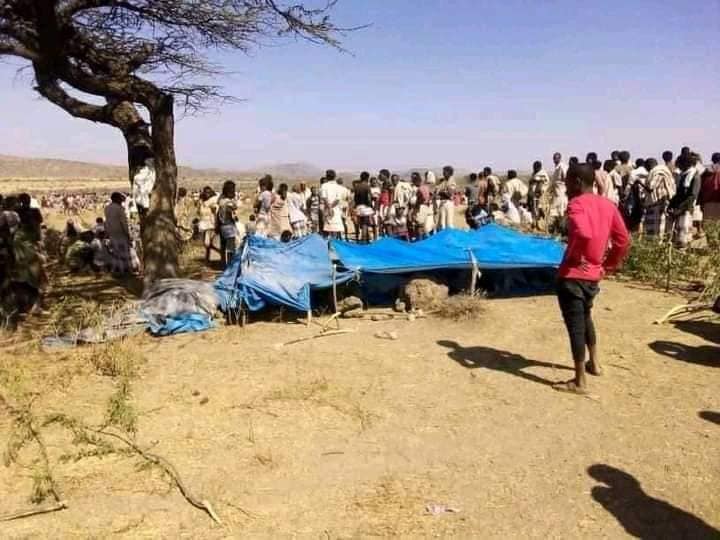
On the evening of December 1, 2021, 14 respected, experienced and culturally venerated leaders
in the Karrayyuu Oromo community of 100,000 in central Ethiopia were killed in minutes by
Oromia Special Police and Federal forces operating on orders by ruling party officials sitting a
hundred kilometers away in Adama city. The murdered men were located at Fantalle district,
East Shewa Zone of the Oromia regional state in Ethiopia. They were killed execution-style at
7:00 PM far from the village where they were abducted when Prosperity Party bosses gave the
go-ahead signal via cell phone message to awaiting members of the special forces. The murdered
men had just finished conducting Waaqa Kadhaa, a sacred indigenous prayer ceremony held on
special ground designated for that purpose. In the close-knit iconic livestock-rearing culture of
the Karrayyuu people, this was an unthinkable atrocity.
We, a coalition of Oromo advocacy and human rights groups operating internationally consider
that this horrifying series of events indicate the intentionality and destructiveness of Abiy
Ahmed’s government against Oromo and other Southern and marginalized peoples who do not
support his direction for the country. We urge the international community, in particular those
concerned with justice, peace, stability and human rights, to take note of what has happened in
Karrayyuu. Those who were deeply committed to spirituality and to democratic principles above
all, were brutally massacred with lightning speed: an act that sends a menacing warning to the
populace that no one is safe right now in Ethiopia.
Historic, Political and Economic Contexts
The shocking massacre was carried out amid ongoing brutal wars between Ethiopian Defence
Forces and the Tigray Defence Forces in the north of the country and with the Oromo Liberation
Army in the south. The site of the killing is the Karrayyuu camel-rearing, pastoral grazing and
watering lands located near coveted trade routes for lucrative commodities in a cash-strapped
economy. This valued territory has become a target of territorial expansionism by Amhara
militias emboldened by Abiy Ahmed’s government’s failure to protect vulnerable peoples like
the Karrayyuu. In the days leading to the event, the Karrayyuu Oromo’s community leaders had
resisted releasing young people to be conscripted to leave their homeland to fight as part of the
Ethiopian Defense Forces in the north. Among Oromo communities throughout Ethiopia, the
Karrayyuu are well-known and esteemed for their consistent practice of the principles of the
time-honored Gadaa system of socio-political organization that encompassed all Oromo prior to
incorporation into Ethiopia at the turn of the 20th century. These and other factors make the
tragedy of December 1 resonate throughout the population and account for an ongoing sense of
threat and foreboding among other vulnerable groups in the country.






