Category Archives: Uncategorized

Message to the Ethiopian Government – I Stand with the Oromo People.

Anthony Byrne

Violent clashes in Ethiopia over ‘master plan’ to expand Addis

Extending capital into surrounding farmland is part of ongoing discrimination against Oromo people, say protesters. Global Voices reports

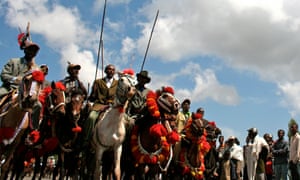
Men parade in the Oromia region outside Addis Ababa.
Men parade in the Oromia region outside Addis Ababa. Photograph: STR New/Reuters

At least 10 students are said to have been killed and hundreds injured during protests against the Ethiopian government’s plans to expand the capital city into surrounding farmland.

According to Human Rights Watch, the students were killed this week when security forces used excessive force and live ammunition to disperse the crowds.

The students were protesting against a controversial proposal, known as “the master plan”, to expand Addis Ababa into surrounding Oromia state, which they say will threaten local farmers with mass evictions.

According to the Ethiopian constitution, Oromia is one of the nine politically autonomous regional states in the country, and the region’s Oromo people make up the largest ethnic group in Ethiopia.


However, rights groups say the Oromo have been systematically marginalised and persecuted for the last 24 years. By some estimates, there were as many as 20,000 Oromo political prisoners in Ethiopia as of March 2014.

It’s not the first time the security forces have reacted violently to protests in support of the group. At least nine students were killed in May 2014 while defending the rights of famers in the region when the “master plan” was first announced.

In response to the violence, Amnesty International issued a report on government repression last year, noting that “between 2011 and 2014, at least 5,000 Oromos [were] arrested based on their actual or suspected peaceful opposition to the government.”

The human rights organisation found that in numerous cases “actual or suspected [Oromo] dissenters were detained without charge or trial, killed by security services during protests, arrests and in detention.”

The ruling elite and members of government are mostly from the Tigray region, which is located in the northern part of the country.

Social media

The Ethiopian media has paid little attention to the protests. Demonstrators have been taking to Facebook and Twitter to report the clashes, with additional coverage coming from diaspora media.

— Soli ( ሶሊ) (@Soli_GM)December 7, 2015

The sad state of press in #Ethiopia , no media can give us information about#OromoProtests, social media is the only existing source.

“The Oromo youth are a powerful political entity capable of shaking mountains,” one Facebook user, Aga Teshome, wrote in support of the protesters. “This powerful political entity is hell bent on exposing the [ruling party] EPRDF government’s atrocious human rights record and all round discriminatory practices.”

Another user said more should be done to shine light on the movement: “The silence has truly been deafening. We need to see and hear the inspiring actions undertaken by huge numbers of ‪#‎Oromo‬ in ‪#‎Ethiopia.”

— Oromo Press (@oromopress)December 10, 2015

Justice for massacred #Oromo students. #OromoProtests @WhiteHouse@StateDept #Ethiopia pic.twitter.com/WfnWgPao6h

Desu Tefera echoed the calls for better media coverage: “We call upon the media to investigate the conditions that these students died trying to expose and resist,” he wrote.

“Oromia needs a new kind of reporting by the international media, which gives voice to the voiceless Oromo people, who for a very long time have been killed, mistreated, abused, neglected and repressed in Ethiopia.”

Dubious development

For many Ethiopians, this week’s clashes show that the issue of Oromo rights refuses to go away.

Protests against the master plan for expansion first began in April last year, when students from outside the capital argued that if the proposal was implemented, it would result in Addis further encroaching into the surrounding territory, allowing the capital to subsume surrounding towns and leaving informal settlements vulnerable to government redevelopment.

The government rejected the accusation, claiming that the plan was intended only to facilitate the development of infrastructure such as transportation, utilities and recreation centres.
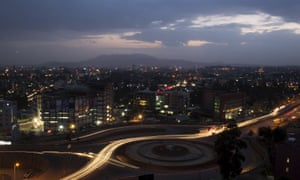
A general view of Addis Ababa at night, taken in May.
Pinterest
A general view of Addis Ababa at night, taken in May. Photograph: Siegfried Modola/Reuters

The unrest halted the development until now, but in November resentment boiled over again when it became clear the government had resumed its plan.

Since the highly contested 2005 national election forceful evictions and urban land grabbing have become frequent in Addis and its environs, opposition groups say. The city’s rapid growth has resulted in increasing pressure to convert rural land for industrial, housing or other urban use.

The population of the capital is estimated to have grown at a rate of 3.8% per year since 2007, but the repurposing of land in order to accommodate the expansion has been a particularly contentious issue.

Ermias Legesse, a high profile government defector, has argued that since 2000 the Addis Ababa city municipality, with the support of the federal government, has enacted five different pieces of legislation to “legalise” informal settlements, allowing them to be sold on to private property developers.

“Sometimes the informal settlers are given only a few days’ notices before bulldozers arrive on the scene to tear down their shabby houses and lay foundations for new investors,” Legesse said in an interview last week.

A version of this article first appeared on Global Voices

Source: http://www.theguardian.com/world/2015/dec/11/ethiopia-protests-master-plan-addis-ababa-students

Join The Movement: An Oral History of the recent Oromo Protests

#OromoProtests -10 confirmed dead

(A4O, 09 MUdde 2015) #OromoProtests list* those confirmed killed by Ethiopian police and paramilitary forces during the current protest.

Dead_n


*Compiled by Abiy Atomssa, 9 December 2015

Message from Oromo Community of Western Australia

Dear Oromo brothers and Sisters,
Dhábasá W. Gemelal's photo.As we all know, Oromo students at home are standing against the Agazi TPLF gangs, who have no competitor for their brutality and ruthless act.
The Oromo Community in WA is organising a public rally in Perth in protesting against such atrocities.

This is the time that we all need to stand hand in hand and show our solidarity and respect to our kids, who are paying a huge price for our identity, (i.e “OROMUMMA”) & “FREEDOM” of our country Oromia.

If our kids sacrifices their precious life for who we are, WHY CAN’T we leave everything aside for one day and say to them clear and loud we are beside you, our hearts and mind are with you, and continue struggle you have started for justice and freedom.


I urge you to wear the Oromo cultural clothes and to bring our flags along with you.

Please come on time too.


Rally date: Friday Dec 11, 2015
Time: 3:00 PM-5:00 PM
Place: Harvest Terrace, West Perth
Victory to the oromo people
Thank you
Chairman

Message from Oromo Community of Sydney (New South Wales)

Dear Oromo brothers and Sisters,
Dhábasá W. Gemelal's photo.I want you to know that our people killed in Oromia for voicing their concern on the expansion of the ” master plan” around Finfinne.
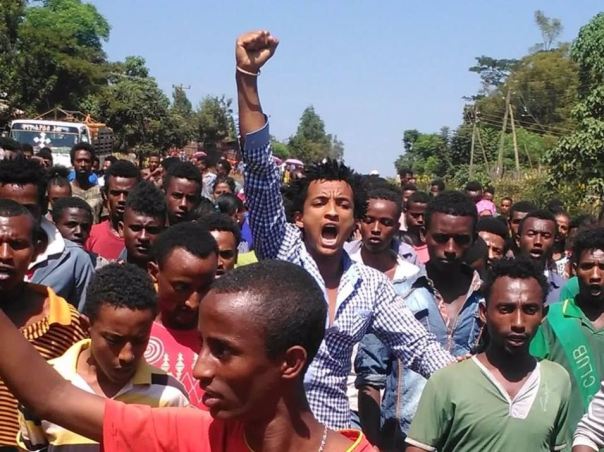
Today the Oromo people calling from every corner of the world to stop killing our students and our people which fights for freedom and justice.

Hence, we, the Oromo community in Sydney would like to show our solidarity on coming Friday, 11/12/2015.

The meeting place will be at Merryland station, then we will go to city Martin Place as one people and one nation.

Date: Friday Dec 11, 2015
Time: 10:00 PM-1:30 PM
Place: Martin Place, Sydney

Together we can win all the time!

Thank you all.


For further information contact: Jemal Ayoube

http://www.oromocommunitynsw.org.au/


FINFINE Master Plan is the Extension of Tigrian Colonialism over Oromia

By Hailu Goche

OromoProtestsReview2015_23 (1)The Addis Abeba or FINFINE Master Plan is the Extension of Tigrian Colonialism over Oromia & MUST BE treated as an Existential threat to the existence of the Oromo Nation and People!
During the expansion of the Ethiopian Empire to the South ( Oromia & the Southern Nations) by Minilik Abyssinian army at the beginning of the 20th Century with the help of the then European powers, Tigrians were the foot-soldiers for the then invading Minilk army.
After defeating the Amhara hegemony in 1991, the interest of the TPLF rulers has been how to contain & then destroy Oromo Nationalism, which they saw as a threat to their dominance of the Empire state for the next century.
To help them contain and destroy Oromo Nationalism, the TPLF leaders created a Trojan horse PDO’s who speak Afaan Oromo from prisoners of war who were captured by TPLF & EPLF fighters during a war of Eritrean I & Greater Tigrai independence.
Since assuming power in 1991, TPLF gangsters have crafted a double-face Ethiopian Empire. The first facade of TPLF Ethiopia is created for internal consumption by adopting a federal structure to silence the Nations & Nationalities demand for genuine autonomy and administering their own internal affairs.
The second facade of TPLF Ethiopia has been presenting Ethiopia as a stable Country with double-digit economic growth in the troubled part of the Horn of Africa,
How ever, the glaring fact about TPLF Ethiopia since 1991 has been committing environmental, economic, political and human genocide on the Southern people, in particular on the Oromo people, which they see as a threat to their hegemony for the years to come.
In order to maintain their political grip on Oromia & the South, TPLF & Co. understood the need to dominate and control the economic power of the Empire. To this end, they disguised their evil tactic in the name of privatization & transferred major economic resources, including land, factories, Oromia towns & cities that generates much economic significance under their control in the name of federal administration.
The current Addis Abeba Master plan was hatched when the former TPLF rulers was alive, & OPDO was not aware of the secret Addis Abeba Master Plan. Indeed, the plan was secretly designed by the former TPLF ruler & top TPLF officials. Among the top OPDO officials, Kuma Damkasa & the current Oromia State president were the only two OPDO officials participated in its plan.
The Finfine Master plan was a plan designed to destroy the existence of the Oromia State by settling large number of Tigrians from the North by displacing the local Oromo population, & hence completely changing the demographic of the population. The end aim being to erase the question of the Oromo on Finfine, & destroying the viability of the Oromia State as a federal state.
There fore, the implementation of this evil master plan is not only displacing the lively-hood of the Oromos residing around Finfine but also to negate the existence and viability of the Oromo people, and hence must be treated as an existential threat to us a nation in that part of the world.

Oromia Shall Be Free!!

Agazi Invaders Lose Their Moral Balance.

On December 6 and 7, 2015, Oromo protests against the Addis Ababa Master plan continued in Oromia and across Ethiopia; according to reports, the Oromo protests were held at Ambo University, at Finfinne University, in Sululta, at Adama University, at Mekelle University (Tigray State), at Arba Minch University (Southern State), at Jimma University, in Tulu Bolo (Shawa), in Chiro (Hararge), in Guder (near Ambo), in Asebot (Hararge), in Boke (Hararge), in Horo Guduru (Wallaggaa), in Anfilo (Wallaggaa), in Bate (near Haromaya), in Mogor (Shawa), at Dilla University (Southern State), in Sababoru and Adole Rede (Guji), Bule Hora (Borana), in Chobi (Shawa), at Haromya University (outside the campus), in Burayu, in Arjo Gudatu (Wallaggaa), in Dugda Dawa (near Bule Hora, Borana), in Muger (Shawa), in Dodola (Arsi), in Dirre Inchini, at Dilla University (Southern State), in Dongoro (Wallaggaa), among others.

So far, the government’s response has been to use deadly and maiming force in order to put down the peaceful Oromo protests. Across Oromia, militarized police (such as the Agazi force’s unit, loosely known as “Hayelom Araya,” as well as a military unit from the Hurso Garrison, as per a reliable report) have been dispatched to crush the popular Oromo protests against the Addis Ababa Master Plan. On December 7, 2015, there were reports of fatality and injuries from shots fired by the Ethiopian force: Murad Abdi, a Bate High-School student near Haromaya, was killed by the police; student Bekele Seboka of Inchini (Shawa) is in a critical condition (according to the latest report) after being shot by the police; several students were wounded by the police force at Ambo University, at Bule Hora University, near Haromaya University, among others, while peacefully protesting against the Addis Ababa Master Plan.

Here are some of the photos of the Ethiopian Federal government’s militarized force dispatched across Oromia to crush the peaceful and popular Oromo protests against the Master Plan, and the photos of the deceased and wounded Oromo students.

Near Ambo

Near Ambo

HayelomAraya2015_2

HayelomAraya2015_3

At Bule Hora

At Bule Hora

At Ambo

At Ambo

Student Murad Abdi - killed near Haromaya University

Student Murad Abdi – killed near Haromaya University

HayelomAraya2015_10

HayelomAraya2015_8

HayelomAraya2015_7

HayelomAraya2015_9

HayelomAraya2015_17

HayelomAraya2015_11

HayelomAraya2015_12

HayelomAraya2015_13

HayelomAraya2015_14

HayelomAraya2015_15

HayelomAraya2015_18

HayelomAraya2015_16

Message from Australian Oromo Community in Victoria

(A4O, 08 December 2015) The Australian Oromo Community in Victoria held a public forum on Sunday 06 December 2015, decided to join the global rally in solidarity with Oromo students on Friday December 11, 2015.

logoOrganizing committee has been elected; Rally will be held at Spring Street and corner of Treasury Place, next to Victoria Parliament in a bid to express our support to the Oromo students who are protesting to defend the Oromo interest.

The objective of the demonstration is to denounce the brutal action of the Ethiopian government and to stand with the Oromo students who are protesting the expansion of Addis Ababa master plan and supporting Oromo self-determination in Oromia.

The rally is happening in Melbourne on the 11th of December 2015 starting at 10:00 am.

Address:2-18 Spring st, corner of  The Treasury Gardens, next to Victoria Parliament, East Melbourne

Date: Friday, 11 December 2015

Time: 10:00am

Being silence on the face of injustice is like supporting the oppressor!

For more information, please contact Mr Yadata Saba on 0412 795 909

“If you are neutral in situations of injustice, you have chosen the side of the oppressor.” Desmond Tutu

The Making of Addis Ababa and the Alienation of the Oromo

By Teferi Mergo (Prof.)* | December 2015

In a recent interview he gave to the Oromia Broadcasting Service (OBS), artist Sayyoo Daandanaa was asked what motivated him to write his now famous tune Boole. His eloquent response alluded to a poignant encounter he had while on a show-biz related trip to Eerar some years ago — an encounter that suggested to him that the alienation of the Oromo from their own land (Finfinnee) is so complete that they have grown to resent the city. Because of this alienation, the Oromo of Eerar (as he explained it) traveled to Sandaafaa for trading purposes, instead of going to Finfinnee, despite the latter’s clear favourability in terms of geographic proximity.

Eerar (misnamed Yerer by Amharic speakers) is located a few kilometers to the southeast of Bole Airport, and not too long ago, it used to be a rural community where certain members of the Tuulamaa Oromo lived in relative peace and harmony, earning an honest living cultivating their plots. I remember this Eerar, because I had been there, in more ways than one. I grew up in Finfinnee proper – in the so-called Doro Manaqiya Sefer (not very far from the old airport), and had made numerous excursions as a lad with my peers or cousins into the rural villages and communities that used to surround Finfinnee (Furii, Wacacaa, Eerar, Lagatafo etc.) – outings we relished, because it gave us opportunities to engage in boyhood mischief not approved by our parents (e.g. swimming in the areas’ rivers and streams). I still remember with great fondness the Eerar, the Wacacaa, the Furii and the Lagatafo of my younger days, where I felt liberated enough to speak Afaan Oromoo with the local people without “my buddies” making injurious comments about my language, my identity.

But, of course, the Eerer of yesteryear which offered me glimpses of what could be and should be, is no more. Today, it is a space where “white fences and manicured lawns surround the villas of an elegant housing estate … a potent symbol of the emerging elite in a country better known for drought and famine.” (Taste for luxury: Ethiopia’s new elite spur housing boom By AFP PUBLISHED: 07:28 GMT, 2 December 2015 | UPDATED: 07:29 GMT, 2 December 2015) I am well aware that the Ethiopian government is doing its utmost to promote a positive image of the country, trying to sell a narrative that it is overseeing an impressive expansion of the country’s GDP, with a promise of making Ethiopia a middle-income country by the year 2025. It turns out that Eerar and similar other spots in the vicinity of Finfinnee have become ground zero for this number-focused and image-heavy marketing strategy.

I am also aware of arguments some have made about the importance of integrated urban development in a country that aims to climb the development ladder. I currently teach Economics at the University of Waterloo in Canada, and have been making regular trips to Finfinnee to conduct empirical researches on economic development. I have thus a professional opinion of what is taking place around Finfinnee in the name of urban development, but leaving that for another piece (I will present a paper on this topic at the upcoming OSA Mid-year Conference at the London School of Economics), I want to recount a couple of my encounters during some of those research-related trips to the homeland, incidents that speak to the burning issue of our time – the alienation of the Oromo from their ancestral land.

The first one happened in the summer of 2010, when my wife and I went for a spin to one of those now virtually non-existent rural villages, largely out of curiosity to discover what has become of my boyhood stomping grounds. Needless to say, the transformation is devastatingly complete, as captured by the above mentioned article. On this trip, I wandered off the paved path (which is not out of character for me) without much resistance from my lovely wife, past the new developments, into what is left of the Eerar countryside, running into a young Oromo couple who were going about their business. I stopped to have a few words with them, to which they initially reacted with unmistakable agitation – which they couldn’t hide despite their best effort at composure. I don’t blame them, because they had been conditioned to be apprehensive of strangers, particularly the type that shows up at their doorstep, uninvited. Who knows they might have thought that I was one of the would-be “developers” of what are shaping up to be apartheid-like estates adorning their former farmlands.

The reaction I didn’t expect from the young couple, and one that will stay with me, is what happened next. When I greeted them in Afaan Oromoo, they looked at each other first, as if they were questioning what had just transpired, and then managed beautiful smiles that could not have been counterfeited – smiles of recognition, of understanding, and of identification. After the initial awkward moments, we exchanged a few words about mundane matters and parted, but the key story of the young couple of Eerar that I am trying to recount here, was communicated to me through their body language, and mostly with their eyes.

The second anecdote occurred during my most recent trip to Finfinnee in July and August of this year. Largely because we wanted my super-energetic four-year-old son to have convenient access to some facilities that can only be found in the city center, my family chose to stay in the Kazanchis area, in one of the high-rises recently built by one of the newly-minted instant millionaires. The property had a few gate-keepers (zebegnas, they call them in the local lexicon), three of whom are/were Oromo Abbaa Worraas from the local areas, into which Addis is currently expanding with blinding speed – displacing millions of farming families, exposing them to monumental socio-economic crises, with which they have been unfamiliar and ill-equipped to deal.

I was particularly struck by one of the gentlemen – an elderly man hailing from the Sabbata area – who gave me the distinct impression that he had seen better days, and was struggling to make sense of what is (in all likelihood) the last chapter of his life. I enjoyed talking with him whenever I had a chance, but I never pried too much for fear that perhaps overly intimate questions about his past might trigger unpleasant memories. I understood his fragile existence and respected his boundaries, but my daily encounters with him during those months reminded me of my own alienation, not unlike his and the young couple’s I attempted to describe above.

I was enrolled at a local school then known as Menen Asfaw under the name Biiftuu, a name my father gave me to signify that I was his first born. Once I discovered that some of my classmates were butchering my name intentionally, however, I asked my parents to give me a different name, but the request went nowhere, with my father deeming my entreaty a non-starter. Even though I liked school and I was a well-regarded kid among teachers and most of my peers mainly for academic reasons, it did not stop the system from brutalizing me because of my Oromo given name. Thus, without fully understanding the consequences of my actions, and under the worst of circumstances while my father was jailed by the brutal Dergue regime, I traded Bifftuu for Teferi – a name a close family friend (Aboy G/Egziabiher G/Medhin, RIP) gave me at my Christening – just to be able to fit into a system designed to alienate me from my identity.

Here is the moral of this narration: regardless of our stations in life, Finfinnee (Addis Ababa) has been a constant source of anguish for its rightful owners, the Oromo people. The city was founded on the gravesites of our forebears, decimating its original inhabitants – some of the clans of the Tuulamaa Oromo. Its growth and expansion have always come at the expense of Oromo identity, made possible only through diminishing the Oromo in every way – demographically, economically, politically, socially, psychologically, etc. It is demanding much more than we can afford to give, under the pretext of integrated urban development, and we have no option but to say: No, thanks!

I would like to end this piece with a now famous chant that is being heard throughout Oromia, loud and clear. Here is the English translation:

Our land: We were born here

We were raised here

We came of age here

We have raised our families here

Where should we go?

We shall be evicted no more!

—-

* Teferi Mergo (Prof.) – Assistant Professor of Economics at the University of Waterloo.
