‘Why is it so brutal, immoral, inhuman, and so atrocious.’
Oromia Support Group Australia
Issue 2, April 2019
Oromia Support Group Australia (OSGA) grievously worries about the severe human rights violation in Guji area, State of Oromia. The Ethiopian military forces, regional and zonal administrations are, in collaboration, committing a grave violation of human rights that include mass killing, incineration of people alive, mass detention, burning of villages, and confiscation of properties, torture and starvation of villagers. The action of brutality has been carrying out only in the name of stamping out OLF (Oromo Liberation Front) forces from the area.
Since December 2018 right after the deployment of Ethiopian military to the area, there have been many atrocities committed by the army and the zonal administration forces in the area. For instance:
1. 28 December 2018, thirteen innocent civilian from Finchawa town, Dugda Dawa district and six civilians from a village called ‘Maxxaarrii’ in Galana Abaya districts were brutally killed. The same day, around 10 pm local time many people were injured some of which died later due to their injuries. What made the killing so horrendous was that it happened at a time when the village was peaceful, and the residents of the town were on their regular daily routine. The residents in the area unsuspicious as to what was going to happen even to take a cover to avoid the spontaneous raining bullets and heavy machine guns that burned everything it hits (vehicle, motorbike, house, tree) including human being.
As a human being, no one thinks would enjoy the sight of tarred corpus and can easily imagine what the family and society would feel seeing their beloved torched in broad daylight without his or her sin.
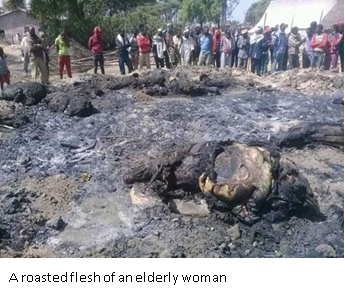
2. Similarly, on 15 January 2019, an elderly woman who was sitting in her hut was incinerated after the door of the shelter she was living in was locked from behind and torched while she was alive. What made this killing too shockingly inhuman was the brutality of the soldiers that waited to make sure the elderly that was burning to ashes was completed and fled the scene pinching their noses due to the roasting flesh that smoked the area. This brutal killing has happened after the soldiers had indiscriminately killed at least ten and injured many in and around Karcha town and killed many unaccounted along their way including an elderly man who was riding a horse 100 meters away from the house they torched with the elderly woman.
Besides these significant incidents, without any late up, the killing rampage of two, three, five, ten, here and there across the area has continued to date including burning of villages, displacement of villagers, confiscation of properties and killing of anyone who rides a motorbike without any impunity.
3. On 19 February 2019, for instance, an indiscriminate shooting on artisanal gold miners in the Dakara village in Arero district killed six civilians on the spot and injured many who run into the thorny bush and ragged rocks that further harmed women and children.
4. Gujii area is totally under siege. Motorbike, the only means of transportation for remote villagers, is prohibited. Much of it is confiscated as such people have to walk a day or so on foot to access markets. In some areas, even those markets are restricted. The amount of food one carries is limited to less than five kilos yet if one has to have a family of ten or more which is common in Gujii area.
5. Night curfew is imposed in the rural and urban areas. One can’t walk in the night to reach the village, and he or she has to walk in the scorching sun to avoid the killing and detention that comes due to the breach of the night curfew. No one can complain about why someone is arrested and why someone is shot. The number of people who moved to the concentration camp has increased by the day. At the time of this report conducted more than two hundred and fifty people from Bule Hora, ninety-four from Qarcha, fifty-five from Malkaa Soda and many more from various areas of Gujii are on course to be transported in addition to thousands who have already been transported to some undisclosed harsh concentration camp. People have to run to bushes with their children to avoid capture. It is so hostile beyond human imagination.
6. Just recently as if all the atrocities committed by the military are not enough they have trained local militias whose task is to burn properties of families of suspected sympathisers of the rebel groups as such many suspects’ properties in many places in the area are burned to ashes. Those who objected to the tactic are taken to concentration camps. While that is one thing what is worrying is the identity of those who are burning properties. As stated these militias are locals and they are known, people. At the same time, those of who whose properties are destroyed are locals. They know who is doing this. Guji community is known for its cooperation along its lineage. If the family or sub-clans of those whose properties are destroyed respond to the action of the local militias and the families or sub-clans of the local militias counter, it is not hard to imagine what would happen in the area.
Oromia Support Group Australia urges all the concerning bodies to pay immediate attention to these grave human rights violations and instantly call for the cessation of these brutal collective punishments. All the breadwinners of their family should be released from concentration camps. Peace and stability need to be restored in the area through civilised negotiation instead of resolving the differences through military means. Those who have committed grave crimes should be brought to justice for the accountability of the evil they have committed.
Re: We wish the planned visit will not send the wrong message to the dictators
Advocacy for Oromia, a non-profit organization incorporated in Australia, to advocate for human rights and for social justice, would like to address the planned visit of US President Barack Obama to Ethiopia in July 2015. We respect the policy of the United States whose foreign policy in principle is committed to promoting the ideals of human rights, the rule of law, and democracy. However, we strongly entreaty to the USA to cautiously assess that such visit will not send the wrong message to the dictators as we are extremely concerned about the human rights abuses in Oromia.
For over six thousand years, the Oromo people maintained a unique national identity distinct from the national identity of Abyssinia. In 1900, the Abyssinian rulers invaded the land of Oromo people and embarked on a policy of occupation and oppression that seriously threatens the continued survival of the unique cultural and religious identity of the Oromo people. Tragically, a world that condemns colonialism has largely ignored Abyssinia’s occupation of Oromo land. The human cost to the Oromo people has been of tragic proportions. Hundreds of thousands of Oromo’s were killed outright or died as the result of aggression, torture or starvation. Over 8,000 sacred places and centre of Gadaa were destroyed.
This week (23rd February 2015), Aliye Geleto, the host of OVR English Program, Oromia Insight, talks to two Special Legal Experts: Dr. Awol Allo and Tsegaye R. Ararssa on the Speech of Abay Tsehaye & Implications.
Dr. Awol Allo is LSE Fellow in Human Rights at the Centre for the Study of Human Rights and Department of Sociology. He holds degrees from Addis Ababa University (LLB) and the University of Notre Dame (LLM, International Human Rights Law), and completed his PhD at the University of Glasgow; and Mr. Tsegaye R. Ararssa is Doctor of Philosophy (PhD) Graduate Research Student at the University of Melbourne.
Re: Great Loss to the Human Rights Community as Legendary Dr. Martin Hill Passes On
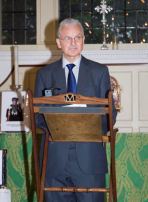
Dr Martin Hill
We are deeply saddened to hear the death of Dr Martin Hill, and we want to express our sincerest condolence to his wife and his family on behalf of the Advocacy for Oromia Association in Victoria Australia. Dr Martin was a long time friend and voice for the voiceless oppressed peoples of the world including the Oromo, and we greatly benefit from his support. Dr. Martin Hill passed away on Friday 9 January 2015.
Dr. Hill’s legacy at the Amnesty Secretariat office in London, as a researcher and a campaigner on the Horn of Africa in the human rights field for over 32 years, has many aspects. At sub-regional level where many human rights violations and suffering for the past three decades and lack of attention globally, Dr. Hill brought human rights issues and concerns in the limelight and earned the admiration and love of many people particularly Oromians, Eritreans, Ethiopians, and Somalis.
Dr. Hill worked with many voiceless people and individuals on the protection and promotion of human rights. Many of our friends particularly remember the first human rights defenders training for Somalis that Dr. Hill organized in 1997 in Kenya. He was instrumental in organizing sub-regional networks consultation meetings to the run up of the All Africa Human Rights Defenders Conference I 1998 and subsequently the global human rights summit in Paris in December 1998.
Dr. Hill will be remembered for his ardent support to human rights in the Horn of Africa. He inspired and mentored so many human rights activists who are now working with prominent human rights organizations around the world. He contributed to the fight against human rights violations and ending the culture of impunity in the sub-region.
Our thoughts are with his family and many friends around the world. The Advocacy for Oromia, a non-profit advocacy organisation working to ensure that the Oromo people’s rights and wishes are respected, extends its sincerest condolences to his wife, Dawn Hill and children. Dr Hill was a remarkable man, who made a difference in the lives of many voiceless people through his researching and campaigning activities on the Horn of Africa in the human rights field for over 32 years.
(Advocacy for Oromia)We are deeply saddened to hear the death of Dr Martin Hill, a long time friend and voice for the voiceless oppressed peoples of the world including the Oromo. Dr. Martin Hill passed away on Friday 9 January 2015.
Dr. Hill worked at the Amnesty Secretariat office in London, as a researcher and a campaigner on the Horn of Africa in the human rights field for over 32 years.
I first met Dr. Hill in 1989 when he led the first Amnesty International delegation to Somalia during the period of military dictatorship. At sub-regional level where many human rights violations and suffering for the past three decades and lack of attention globally, Dr. Hill brought human rights issues and concerns in the limelight and earned the admiration and love of many people particularly Ethiopians, Eritreans and Somalis.
Dr. Hill was a friend to me and to my late uncle, Dr. Ismail Jumale Ossoble, (the only human rights lawyer who consistently defended prisoners of conscience in the dreaded national security court). Dr. Ossoble was a prisoner of conscience himself and was Amnesty International’s principle research contact in Somalia during the 80s and 90s. We subsequently established Dr. Ismail Jumale Human Rights Centre in 1996 and I co-directed the centre for 6 years starting in 1996 before I went into exile. During this period, I was the principle Somali contact for Amnesty International and I worked very closely with Dr. Hill.
Dr. Hill worked with us on the protection and promotion of human rights for Somalis including a sign up campaign during the 50th UDHR anniversary celebrations where Dr. Ismail Jumale Centre was able to garner over 1.5 million signatures including first signature by the founding first President, the late Aden Abdulle Osman at his farm in Shalambood District of lower Shabale region, former Prime Ministers, faction leaders, and civil society groups among others.
I particularly remember the first human rights defenders training for Somalis that Dr. Hill organized in 1997 in Kenya and I was part of that training. He was instrumental in organizing sub-regional networks consultation meetings to the run up of the All Africa Human Rights Defenders Conference I 1998 and subsequently the global human rights summit in Paris in December 1998.
He also supported our research initiative during our initial mission, Africa Human Rights Defenders Project in the East and Horn of Africa while I was at York University. Dr. Hill was present as founding member of East and Horn of Africa Human Rights Defenders Network in 2005 in Entebbe, Uganda.
Dr. Hill will be remembered for his ardent support to human rights in the Horn of Africa. He inspired and mentored so many human rights activists who are now working with prominent human rights organizations around the world. He contributed to the fight against human rights violations and ending the culture of impunity in the sub-region.
Our thoughts, and those of the wider human rights community, are with his family and many friends around the world. The East and Horn of Africa Human Rights Defenders Project staff, East and Horn of Africa Human Rights Defenders Network and the Pan Africa Human Rights Defenders Network, extend our sincerest condolences to his wife, Dawn Hill and children.
Today is International Human Rights Day, which marks the anniversary of the adoption of the Universal Declaration of Human Rights on December 10, 1948. Crafted in the shadow of the horrors of the Holocaust and World War II, the Declaration gave the world the vision it needed to stand up to fear and the blueprint it craved to build a safer and more just world.
It is a bold document, based on a single premise – that the “recognition of the inherent dignity and of the equal and inalienable rights of all members of the human family is the foundation of freedom, justice and peace in the world.” Eleanor Roosevelt, who led the drafting and adoption of the Declaration, understood that we are all members of the human family, and that for governments to prosper and wars to cease, we must treat each other with the same respect and candor that we treat our own families. She knew this would not be easy or popular and that she would be accused of championing ideals that could never be achieved. But she persisted; knowing that without ideals, politics and policy are merely power games without a soul.
She urged America and the world to recognize that human rights “begin in small places, close to home…the places where every man, woman and child seeks equal justice, equal opportunity, equal dignity without discrimination.” And that “unless these rights have meaning there, they have little meaning anywhere.” But she also knew that rights come with responsibilities. For rights to exist here and around the world, we must recognize, implement, and defend them. As she often argued: “Without concerned citizen action to uphold them close to home, we shall look in vain for progress in the larger world.”
Eleanor Roosevelt dedicated her life to promoting this vision. Hillary Clinton dedicates her life to implementing it. It is not simple work. “Our challenge,” Hillary wrote in “Hard Choices,” “is to be clear eyed about the world as it is while never losing sight of the world as we want it to be.”
From the White House to the halls of the Senate and the State Department, Hillary strove to make these ideals a vibrant part of American domestic and foreign policy. Sometimes she did it with bold pronouncements on the world stage as she did in Beijing when she declared that “women’s rights are human rights, and human rights are women’s rights.”
Sometimes she did it by creating departments like the Global Office of Women’s Issues or elevating the State Department’s human rights office. Other times she did it in hundreds of quiet meetings with human rights activists and dozens of town hall meetings she held in communities from Argentina to Pakistan to South Korea. These conversations were not easy. Some leaders feared for their lives, others for their families, and others challenged Hillary to do more than she could possibly do. But she did not shy away from them. Indeed, she sought them out – even when she could do no more than lend the power of her position and her stature to their defense.
But three examples stand out.
In 2011, Ugandan thugs killed David Kato, a gay rights activist, and the Ugandan minister of ethics and integrity announced that “homosexuals can forget about human rights.” Rather than just mourn David and issue a formal rebuke, Hillary decided to confront, head on, the targeting of LGBT people sweeping Kenya, Nigeria, Uganda, Iran, and Russia.
She decided to return to Geneva, home of the United Nations Human Rights Council and thousands of global diplomats, on International Human Rights Day. Before an overflow audience, in remarks streamed live around the world, she confronted this outrageous behavior. LGBT people are part of the world’s family. “Like being a woman, like being a racial, religious, tribal, or ethnic minority, being LGBT does not make you less human. And that is why gay rights are human rights, and human rights are gay rights.”
In 2012, in the middle of our nation’s most intense economic negotiations with China, Hillary had an unexpected, stark choice to make. One of China’s most famous dissidents, the blind Chinese human rights activist Chen Guangcheng, had made a daring midnight escape from the guards surrounding his home, to seek sanctuary in the U.S. Mission. He did not know if he wanted to leave China and he had broken his foot during his flight. He called the Beijing Mission, which then called Hillary in the middle of the night. Hillary had worked hard to develop candid and productive relationships with the Chinese ministers so she knew how the Chinese would react and the damage the news of Chen’s escape could do to the summit. But she wanted to help Chen. She instructed embassy staff to find him, bring him in, and give him medical care. The Chinese were shocked, but Hillary kept them at the table, the summit continued, and Chen enrolled in a New York law school. His family came with him.
At home, America reels from the tragic deaths of Michael Brown and Eric Garner. A bitterly divided nation once again questions whether justice is possible and whether different races can pierce the divides that separate and stereotype them. As protests erupted across the nation, Hillary challenged us not to lose sight of our common humanity. “I know that a lot of hearts are breaking, and we are asking ourselves, ‘Aren’t these our sons? Aren’t these our brothers?’ The most important thing each of us can do is to try even harder to see the world through our neighbors’ eyes. To imagine what it is like to walk in their shoes, to share their pain and their hopes and their dreams. These tragedies did not happen in some far-away place. They didn’t happen to some other people. These are our streets, our children, our fellow Americans, and our grief. We are all in this together, we can all do better.”
We can do better. That’s what human rights mean.
Eleanor Roosevelt believed it and Hillary knows it. It is hard, tiring work. It takes the courage to dream, the political skills necessary to implement the dream, and a heart fierce enough to continue the struggle. On this day, let us recommit. Let us hear Hillary’s call. We must “never rest on [our] laurels. Never quit. Never stop working to make the world a better place. That’s our unfinished business.”
ALLIDA BLACK, Ph.D., is the chair of Ready for Hillary and an Eleanor Roosevelt historian. She is a research professor of history and international affairs at the George Washington University in Washington, D.C.
(A4O, 16 September 2014) On July 1, 2014, the International Oromo Youth Association and the Advocates for Human Rights submitted a detailed report to the Pre-Sessional Working Group of the Committee on the Rights of the Child.
The report identified numerous human rights violations of the rights of children under the age of 18 in Ethiopia. The report concluded that ethnic identity is a major risk factor—children belonging to certain ethnic groups such as the Oromo face severe discrimination and rights violations. The report specifically focuses on human rights violations that followed the recent peaceful protests that occurred across schools in the Oromia region. Other issues pertaining to liberty, security, privacy, freedom of expression and association, family, basic health and welfare, education, and leisure and cultural activities were also included in the report.
On July 17, 2014, IOYA received a letter of invitation to present the report at the closed session for the Committee on the Rights of the Child, part of the UN Human Rights Office in Geneva, Switzerland on Friday, September 26, 2014. IOYA will be sending two representatives from the executive board. Human Rights attorney Amy Berquist of the Advocates for Human Rights and IOYA president Amane Badhasso will present the report at the closed session and answer questions posed by the committee. In addition to the report, representatives of both organizations will have weeklong opportunity to meet with UN organizations and other NGO’s while in Geneva.
This is indeed a huge step for Oromos and other groups across the globe who have tirelessly worked to expose human rights violations in Ethiopia, particularly those against Oromo students. None of this would be possible without the financial contribution of Oromo Communities and individual donors. We are very grateful for the generous support and assistance provided to IOYA throughout the planning process.
We believe in the rule of law and implementation of human rights, as well as protection of all groups against violations of freedoms granted to all persons.
(A4O, 21 July 2013) Jawar Mohammed speaks, finally: “For those who are still attempting to recycle the old divide and destroy tactic, be sure that Oromos have a time tested culture and system that cherishes its diversity and promotes pluralism.”
In recent weeks, several video clips from my speeches at various events have been systematically edited to present a narrative that portrays me in the worst moral and political light. The latest of these doctored videos are pieced together to create the impression that I was advocating violence against Christians in Ethiopia. Needless to say, this is a calculated and horrendous political strategy so commonplace in the Ethiopian political landscape. Let me say as clearly as I can: I find such views so revolting and so repugnant that it has no place in any civil political discourse. Whatever motivated those who engaged in EPRDF style character assassination, this past week has given us an impeccable evidence about the state of our media and the place of truth, and journalistic ethics in their operations. It is also ironic that many of the individuals and groups engaged in this propaganda are the same people who went a long way to disparage me as ’naïve’, ‘spineless’, and ‘passivist’ for writing and speaking about nonviolence. Given the sensitivity of the issue and the malicious manner in which these videos were edited and presented, I want to take this opportunity to explain the context in which that particular speech was delivered.
On May 25, 2013, I was invited to speak at a town hall gathering organized by Risala International, a consortium of three Minnesota-based mosques. There were several prominent spiritual and secular leaders from various communities in North America. Present were also representatives from the Minnesota delegation to the U.S. congress. Based on my own observation and the organizers account, the audience consisted of Muslim Oromos, non-Muslim Oromos, non-Oromo Muslims, and Ethiopians of other faiths.
As I do with every invitation, I asked the organizers to give me a specific topic to address, a language of their preference, and format of the presentation. In this case, the organizers asked me to analyze whether the Oromo struggle and ongoing Muslim protests for religious freedom are complementary or contradictory. I prepared my presentation in Afan Oromo, however, after learning there were attendees who do not understand the Oromo language, I ended my comments with a rather condensed summary in Amharic. Given the moderator was flying the ‘times up’ sign on my face, I did not have the privilege of explaining my point in details
It was at the end of that comment that I made a statement which led to a controversy and used by interested group to advance their own political agenda. I said where I grew up, where Muslims make up majority, there is a broad consensus that people would stand up and fight; and the saying goes, they would fight with what is traditionally known as Menca in Afaan Oromo. Here I was trying to underscore the point that even if politically powerless, being numerical majority brings about a sense of collective security which leads people to confront the abusive state head on forcefully. Hence, this serves as a restraining factor against those who seek to undermine their dignity. In contrast, where the politically oppressed is also numerically outnumbered, the sense of vulnerability might lead to submission to injustice; consequently enabling the oppressive system to violate their rights with no fear of repercussion.
Every normative community has its own unique way of assigning and discerning meaning in a text or utterance. The expression I used is a sarcastic expression used for a humorous effect. Although it did not occur to me at the time, sarcasm, like satire and irony, works precisely on the slippage between what is said and what is meant. It is often joked among Oromos that Manca is a weapon of pride in Hararghe, as Shimala (a stick) is in Shawa, Eboo (a spear) is among the Arsi, Togorri for Karrayyuu and so on. These cultural expressions make meaning only within the cultural geography in which they are uttered. I suspect that the majority of the participants attending the consortium understood that the expression is intended not as a statement of fact but as sarcastic expression that signifies almost the opposite of what it seems to say. However, when several versions of the video—some of it doctored to generate the political effects needed by my detractors—several friends, colleagues, and other individuals who did not understand this cultural context expressed their disappointment, hurt, and even a rage. I fully regret these unintended consequences and the lack of foresight on my part.
I understand that a lot of Ethiopians disagree with my views and I welcome all constructive debates and criticisms. However, taking my statements out of context and juxtaposing unrelated events for mere character assassination is not only malicious but also an outdated political tactic. In this era of heightened instant communication lies have a shelf life of minutes before being countered by facts. But during that short lifespan, they could cause serious harm, not so much to their targeted subject, but more so to the unsuspecting general public.
If it is of any help, those who want to mislead the public should know that I am a product of an interfaith marriage. My father was a Muslim and my mother was from an Orthodox Christian background. Moreover, my wife is a Lutheran. I do not advocate religious freedom and interfaith understanding and tolerance because it is fad of the time. I was raised with and live by those values.
Now let me return to the real issue at stake. I would like to remind all that the defamation campaigns, including the distortion of this video followed the Al Jazeera program that focused on the plight of the Oromo people, in which I was a panelist. The frenzy has now gone beyond defamation and verbal threat. Abdi Fite, a young Oromo journalist was recently ambushed in Washington DC, physically attacked and threatened with knife to his throat. This attack happened following a video Abdi released sharing his perspective on being an Oromo. Those who are trying to silence the Oromo voice through physical and symbolic violence should reflect on history and revise their strategy. My reading of history is that targeting Oromo individuals have not yielded the intended result of destroying the struggle of Oromo People.
The Oromo people have a just cause that no amount of violence nor distortion can delegitimize. The Oromo nation has produced and continue to produce sons and daughters that pick up and carry the flag when one comrade falls. For those who are still attempting to recycle the old divide and destroy tactic, be sure that Oromos have a time tested culture and system that cherishes its diversity and promotes pluralism. Oromos are masters of coexistence with their neighbors. They are also fierce warriors in defense of their sovereignty. The just Oromo struggle is about restoring dignity to a people who have been ruthlessly denigrated, and violently subjugated. It is a struggle that gives back to the people their right to self determination in its fullest sense. This sacred goal must be achieved no matter the cost.
(A4O, June 8, 2013)According to the Oromia Support Group 4498 extra-judicial killings and 1010 disappearances of civilians in Ethiopia has been reported. Hundreds of thousands have been placed in illegal detention, where torture is routine and rape is commonplace.
OSG, a non-political organisation which attempts to raise awareness of human rights violations in Ethiopia, also compiled its 49th annual report based on information obtained from Oromo and Ogadeni refugees in South Africa in October and November 2012.
According to the report, fifty-eight Oromo and two Ogadeni refugees from Ethiopia were interviewed in Johannesburg, Alexandra township and Randfontein, in Guateng province, and in Kinross and Evander, Mpumalanga province, in October and November 2012. The refugees reported serious abuse in Ethiopia and hazardous journeys to South Africa.
The 60 interviewees corroborated previous reports of extraordinarily high rates of torture in places of detention in Ethiopia. 26 (43%) had been tortured-58% of the men and 26% of the women. Of the 38 who had been detained, 68% reported being tortured. All had been
severely beaten. 76% of detained men and 54% of detained women were tortured.
Reported conditions of detention in Ethiopia were atrocious. Torture was routinely practised in military camps, prisons, police st ations and unofficial places of detention. Methods included arm-tying (falantis), severe enough to cause nerve damage; flaying of the soles of the feet (bastinado); mock execution; whipping; immersion of the head in water and other forms of asphyxiation; walking and running on gravel, barefoot or on knees; suspension by the wrists or ankles; stress positions; sleep deprivation by flooding cells; drenching and other exposure to cold; electrocution; suspension of weights from genitalia; and castration.
Previous reports of high mortality rates among detainees in military camps, especially Hamaresa in E. Hararge, were corroborated by former detainees. In addition to the many who were killed or died in detention, the interviewees reported 91 killings of family and friends. These included 21 summary executions, some of which were public. Interviewees also reported 18 disappearances, ten of close relatives.
Only two of 13 women former detainees were raped in custody, considerably less than the 50% in previous reports, but this probably reflects the small size of the sampled population. Another interviewee was raped in her home by a government official and then in Kakuma camp, Kenya, by an Ethiopian security agent. Three interviewees reported rape of others in Ethiopia, including the multiple gang-rape of a 14 year-old in the Ogaden, who was strangled to death after ten days by the soldiers who raped her.
Although almost all of the abuses were justified by state actors on the basis of victims’ involvement with the Oromo Liberation Front, only half of the interviewees had ever had any personal or family association with the organisation. Only three were themselves involved after the OLF left government in 1992.
Travellers to South Africa were at risk of abuse,including rape, by people-smugglers. Several deaths were witnessed during dangerous and harsh journeys lasting up to 12 months, during which migrants were often short of food and water. Detention in unsanitary, severely overcrowded conditions, especially in Zambia, Tanzania and Malawi, for up to five months, was experienced by 18 interviewees (21 episodes). Deportation and attempted deportation was reported by four.
Making a living in South Africa, although legal, is difficult and dangerous. The majority of interviewees work or have worked in township tuckshops, which are frequently subject to armed robbery and xenophobic attacks. At least five Oromo died in tuckshop attacks in 2012 alone. On average, each tuckshop is robbed every 5-6 months. Several organised racist attacks against tuckshops were reported and xenophobic threats, direct and via distributed leaflets, were recorded.
Violence and robbery on the street is common. One young woman was raped on her way to work one Sunday morning, in central Johannesburg, a few days before interview.
The South African government appears unenthusiastic in tackling xenophobic violence and, at best, ambivalent in honouring its responsibilities to refugees, according to international law and its own constitution. It has failed to address the ubiquitous high level of violence.
Xenophobia is fuelled by local leaders and politicians in order to bolster their popularity and power.
The refugee determination process is thoroughly corrupted and meaningless. Refugee status is virtually sold as a commodity.
Whereas refugees are able to make a living in South Africa better than elsewhere on the continent, this is at a price. The violence which is characteristic of everyday life in the country is particularly likely to impact on the poor and the immigrant.
A vibrant civil society stands in bright contrast to the ANC government and is a hopeful sign that prosperity and tolerance may eventually prevail in South Africa.
Advocacy for Oromia was established in 2010 with the purpose of enabling and empowering Oromo people by providing accurate and timely information that will help to make better choices to create the kind of future in which they wish to live.
It also provides information focus on the major issues facing us in the 21st century and it is going to try and bring a balanced approach with factual information that is positive and solution based.
The website has been in operation for the last nine years with the mission of promoting and advancing causes of Oromo people through advocacy, community education, information service, capacity building, awareness raising and promotion.
The website is also the official site of Advocacy for Oromia Association in Victoria Australia Inc., a non-profit organisation, registered under the Associations Incorporation Reform Act 2012 in Victoria as April 2014.
Our team already had considerable community development experience and expertise. Our various projects helped to develop our confidence and the capacity of our agency. Our team used every gained knowledge, skills and experiences as an opportunity to design and develop new approaches, to documenting progress, supporting positive employment outcomes, liaising with community stakeholders, and conduct evaluation.
Advocacy for Oromia is devoted to establishing Advocacy for Oromia organisation to close the gaps where we can stand for people who are disadvantaged and speaking out on their behalf in a way that represents the best interests of them. We are committed to supporting positive settlement and employment outcomes for Victoria’s Oromo community.
Advocacy for Oromia Office
Addresses:
39 Clow St,
Dandenong VIC 3175
=====================
247-251 Flinders Lane
Melbourne VIC 3000
Activities Address
Springvale Neighbourhood House Inc
Address: 46-50 Queens Ave, Springvale VIC 3171
Postal Address:
P. O. Box 150
Noble Park, Vic 3174
With your support, we can continue to help community build a better future.
Advocacy for Oromia Mental Health Program
The aim of the program is to improving the mental health and well-being of Oromo community in Victoria. It aims to assist those experiencing, mental ill-health, their families and carers of all ages within this community to address the social determinants of mental health for Oromo community. It helps:
Identify and build protective factors,
Reduce stigma and discrimination
Build capacity for self-determination
Better understand mental wellbeing, mental ill-health and the impacts of trauma
The goal of the project is to increase mental health literacy of Oromo community that aims:
To assist people with mental health issues
To increase the capacity of mental health worker
To better understand mental wellbeing
To provide mental health education and information
To address the social and cultural causes of mental health issues
Advocacy for Oromia will organise information session, women performance, radio programs, culturally adopted conversations on Oromo Coffee Drinking ceremony, providing training for mental health guides and forum and producing educational materials on the selected groups and geographical area.
Human Rights Education Program
The Human Rights Education Program is a community based human rights program designed to develop an understanding of everyone’s common responsibility to make human rights a reality in each community.
Human rights can only be achieved through an informed and continued demand by people for their protection. Human rights education promotes values, beliefs and attitudes that encourage all individuals to uphold their own rights and those of others.
The aim of the program is to build an understanding and appreciation for human rights through learning about rights and learning through rights. We aimed at building a universal culture of human rights. Thus, we aimed:
To build an understanding and appreciation for human rights through learning about rights and learning through rights.
To build capacities and sharing good practice in the area of human rights education and training
To develop human rights education and training materials and resources
The goal of the project is to increase human rights literacy of Oromo community that aims:
To better understand human rights
To increase the capacity of human rights worker
To analyse situations in human rights terms
To provide human rights education and information
To develop solidarity
To strategize and implement appropriate responses to injustice.
The ultimate goal of education for human rights is empowerment, giving people the knowledge and skills to take control of their own lives and the decisions that affect them.
Human rights education constitutes an essential contribution to the long-term prevention of human rights abuses and represents an important investment in the endeavour to achieve a just society in which all human rights of all persons are valued and respected.
Advocacy for Oromia will organise information session, performance, radio programs, culturally adopted conversations on Oromo Coffee Drinking ceremony, providing training for Human Rights guides and forum and producing educational materials on the selected groups and geographical area.
Community Safety Program
The program aims to strengthen existing collaborations and identify opportunities for the development of partnerships aimed at community safety and crime prevention activities. This approach seeks to improve the individual and collective quality of life by addressing concerns regarding the wider physical and social environment. Importantly, community safety means addressing fear of crime and perceptions of safety as without this any actions to address the occurrence of crime and anti-social behaviour are of less value.








 Advocacy for Oromia