Blog Archives

OROMO PROTESTS: DEFIANCE AMIDST PAIN AND SUFFERING

By Mahlet Fasil and Tsedale Lemma
Oromo-Protests-300x166It all began on No 12th in Ginchi, a small town some 80 Kms South West of the Capital Addis Abeba. It is a town of not more than 50, 000 inhabitants, “95% of whom are Oromos”, a nation whose ethnic makeup is known to represent more than 35% of Ethiopia’s 90 million plus diverse population.

But as far as the story of township significance (for Ethiopia) goes by, Ginichi is the last town anyone could think of. It’s a sleepy town; but it’s surrounded by serine farmlands and a breathtaking forest reserve in and around the small hills on the outskirts of the town. Most of its communities are farmers with some small time traders who run the center of the town.

That status, however, may have changed on a sunny Sunday of Nov. 12th when a group of young (and some old) residents of the town confronted a government inspecting team of not more than “half a dozen,” according to a young grocery owner in the area. Residents suspect the officials were there to push though deals to transfer a nearby field used by local youngsters as Sunday football pitch and clear a forest reserve for an upcoming investment project. Officials from the Oromiya regional state, to which Ginchi belongs to, and the central government deny any of this happening. But it was too late to stop scenes of extraordinary defiance and students-led protest that started from Ginchi and spread throughout the country for the last four weeks.

Reason?

It was no longer the football pitch and the forest residents of Ginchi say they would protect at any cost; it was the Addis Abeba city hall’s ambitious (if ill-fated) plan – ‘Addis Abeba and the Surrounding Oromia Special Zone Integrated Development Plan’. Known in short the “Addis Abeba Master Plan”, federal authorities say it is merely aimed at creating an economically integrated Addis Abeba with six of its surrounding localities currently under the special administration of the Oromiya regional state.

The four weeks that since ensued have seen protests (most of them led by elementary and high school students, but also joined by University students in cities where university campuses are available) spread like bushfire. Geographically, all protests are happening throughout the Oromiya regional state, the largest of the nine states that makeup Ethiopia. Commenting on the domino effect of the small protest in Ginchi, the young grocery owner said: “never in my lifetime could I imagine this.”

It’s a statement many could agree with, but not the protestors.

Ambo was next
A university city just over 30 km before Ginchi, and 120 kms west of Addis Abeba, Ambo, a three hrs drive from Addis Abeba, is the bedrock of Oromo opposition politicians such as the renowned Prof. Merera Gudina and their constituency. Going by a recent past, similar Oromo students’ protests in April and May 2014 saw the highest death toll per city and a fierce crackdown by government security personnel that also saw the arrest of several protesting university students. Oromo activists say more than 60 protestors were gunned down during the two month 2014 protest; the government’s own account put the death toll at just 11.

The current protest at Ambo University began barely a week after the small protests in Ginchi that went largely peaceful. Students at the university were having their dinner at the compass’s cafeteria when power went off – not an unusual incident. But the week was preceded by news from Ginchi and several indications that the federal government, which temporarily put off the implementation of the Addis Abeba Master Plan in the aftermath of the April 2014 protest (and said it was doing so to ensure greater public participation), was bent on proceeding with the implementation.

Once darkness fell, students began throwing their cutlery and started chanting “Say No to the Master Plan”, a slogan recently adopted by social media activists. A few minutes later, the cafeteria was surrounded by campus police who agreed with the students that they can have their grievances peacefully staged the next morning, according to Workinesh Hinsarmu, who works at the university. But that ‘hold it until morning’ promise was not to come; the next morning the compound was heavily surrounded by not only the regional police but also the federal police forces.

“On a Monday morning at 8:30 we moved out from our dormitories to start our peaceful demonstration but about five federal police officers approached us and told us to stop. We continued shouting our slogans. By this time other group of the federal police came and took three of our friends and started kicking them violently,” remembers Gudeta, a third year student who only wanted to be mentioned by his given name. The situation escalated when hundreds of students ran to their dormitories and (“mostly federal”) police pursued after them. “They went from dormitories to dormitories and captured many of us – even those who didn’t participate in the rally.” Gudeta recounted of the violent physical assault by the police including “an order for us to stare at the blazing sun for nearly 40 minutes.”

Gudeta says many elementary and high schools in the city were already closed by the time the university students tried their chance to protest against the so called Master Plan. The university administration put up an emergency notice calling for the resumption of class as of the next morning. But the students demanded the withdrawal of the police and federal security personnel from campus. A senior administrative official told us “the police were here to stay for six months, or even a year and half if necessary,” Gudeta said.

Caught in the crossfire is Abel Tamrat, a 2nd year student who wasn’t planning to participate in the protest rally but was taken from his dorm during police’s search for those who ran away from the aborted rally. “All I wanted was to sleep in my bed, but they broke into our dorm and took me and started beating me. I tried to tell them I wasn’t a part of the protest rally, but no one was listening. Instead one of them started beating me on my face with his gun’s butt. Next thing I know I am at a hospital missing four of my front teeth.” Abel tells of a disturbing scene at the hospital, where the doctors and nurses were soaked in tears and despair to attend their patients. “We were many.”

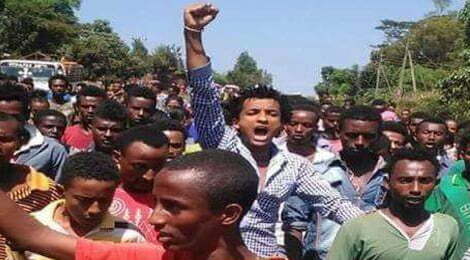
oromo students fresh protest

The iconic photo that became the face of the ongoing Oromo protests (Photo: Social media)

The whereabouts of several other university students is not known. Both Abel and Gudata told Addis Standard (often looking at their shoulders and still scared) that they are frantically trying to locate their missing friends.

Students from other cities in the country are the hardest hit. Sheltered at an Orthodox Church, around 50 students who were even scared of showing their faces told Addis Standard’s reporter Mahlet Fasil that they can’t leave the town for lack of money and police’s control in the city exists. Upon checks on busses leaving town anyone with a student ID is haunted and returned back to the city. All of them say they couldn’t withdraw the money their parents have sent them from different banks operating in the city. Berka Gudata, a bank employee, confirmed their story. “We have no network in the bank. They ask as to help them, but there is nothing we can do.”

In the last three weeks Ambo and its surrounding turned itself into a hot spot of protest when residents from several villages surrounding the city joined students to express their anger both at the violent way the security personnel dealt with the protestors and the fundamental question – the Master Plan. In follow up calls (when available) with eye witnesses in the city, people tell of the death of protesters at the hands of the police (no accurate figures are available); and last Saturday a grenade exploded near Abebech Hotel in the center of the town. No causality was reported. Security officers patrolling the town are extremely vigilant; they routinely stop individuals on the street (as was the case with our reporter Mahlet Fasil, who was stopped from taking pictures and was told by a plain clothed security officer that she looked “a stranger and should go back to where you came from as soon as possible.”)

The southern part of Ambo, off the rough road leading to Wonchi Creator Lake and further south to Woliso town (administratively known as South-west Shewa zones) in local areas such as Ameya and Geldu news that both regional and federal police have lost control of the villages is rife. Lemma Gaddisa, an eye witness describes “carnage, looting and vandalism committed both by security officers and people who are total strangers to the area.” “The people in the area have destroyed roads leading to villages to prevent security officers entering the villages,” Lemma said on the phone.

Further afield to the north of Ambo in an area called Ginde Beret, another eye witness who is sheltering at relatives in Ambo town and says he is wanted by the police for helping print banners told Addis Standard he has seen a fierce battle between residents and the police. “I saw many people shot and lying on the road.” He also talked of “ransacked government offices, cadres badly beaten and cars and tyres burned on the street.”

Woliso
Accessible both from Ambo and the capital Addis Abeba, Woliso is located some 200 kms west of Addis Abeba. Previously unknown as a city of protest, Woliso serves as the center of trade between Addis Abeba and Jimma, another major town in the Oromiya regional state some 360kms west of Addis Abeba. But on Wednesday Nov. 25th Woliso witnessed what some of its residents said was an “unprecedented standoff between residents and the regional and federal police” when security agents started to randomly detain students and young people on the streets. The town’s people then got news from Ambo and its surrounding and connected the dots on why their children were being preemptively picked up by security forces. Hundreds of students have gathered and started shouting “stop killing our brothers,” said Dirbe Arega, a long time resident of the town and a mother of five. “Soon the shooting began. I ran to the middle of it because two of my five children aged 13 and 15 were on their way from school.” Dirbe said already in mid-morning after she saw an unusual deployment of security forces she went to the school and took three of her younger children from an elementary school not far from her house. “I have lived in this town for nearly 30 years but I have never seen anything like this.”

Four nearly four days between Nov. 25th – 30th Woliso was isolated (for a better part of the days) from both roads leading to Jimma and Addis Abeba. The extraordinary scenes of defiance started unfolding when protestors returned to the streets on Friday Dec. 11th. “This time, protestors came with piles of tyres to keep the police away and set them on fire,” a young student attending training as tailor for school leaving girls told Addis Standard. She is attending the training at a project financially supported by a government micro financing scheme, but she got the chance only after she was registered as a member of the ruling party. “Many young people went to the micro finance office and have tried to set it on fire. They are angry because not everyone is lucky enough to receive support.” She says as the week went by the question of the Oromo students protesting was no longer the Addis Abeba Master Plan, but “a better opportunity for all of them.”

Pictures allegedly sent by the protestors and were posted by activities on social media show two dead young men lying on the street. After the Friday’s shooting the biggest hospital in the town, St. Luck Catholic Hospital, was overstretched “beyond its capacity,” a worried nurse told Addis Standard on the phone. The road to the hospital was blocked by security officers who were busy preventing relatives from coming into hospitals. With news of road blockades on the road to Addis Abeba, virtually every business closed and a scene of utter chaos on the streets, Woliso, a town of lodges and several hotels known for many tourists, felt no more safe. Follow up phone calls confirm the town as slowly returning to normal, but a it remains tense and apprehensive.

Adama

A bustling city 100 km south of Addis Abeba, Adama is the second most important administrative city next to Addis Abeba. It was once made to become the capital of the Oromiya regional state, a politically toxic decision that cost the lives of unaccounted numbers of Oromo university students in the hands of security forces during a protest in 2001 against the decision. Since then, Adama is “under the vigilant supervision of the federal government,” says a professor at the Adama Science and Technology University, the largest of its kind.

Oromo protests at the university began the last week of November. It started with the students demanding the University for the withdrawal of the increasing numbers of federal and regional police forces from the compound. According to a civilian security of the campus gate, who wishes to remain anonymous, the police became suspicious about the demands and started checking the students thoroughly upon leaving and coming in to the compass. That set off the protest.

But instead of the usual confrontation between unarmed students and police officers armed to the teeth, the students did an unexpected display of solidarity with Oromo student protestors, by now happening in more than 50 cities, according to campaigners and activists. More than 600 students at the Adama Science and Technology University gathered at the canteen for lunch and received their lunches but left every single plate of it untouched.

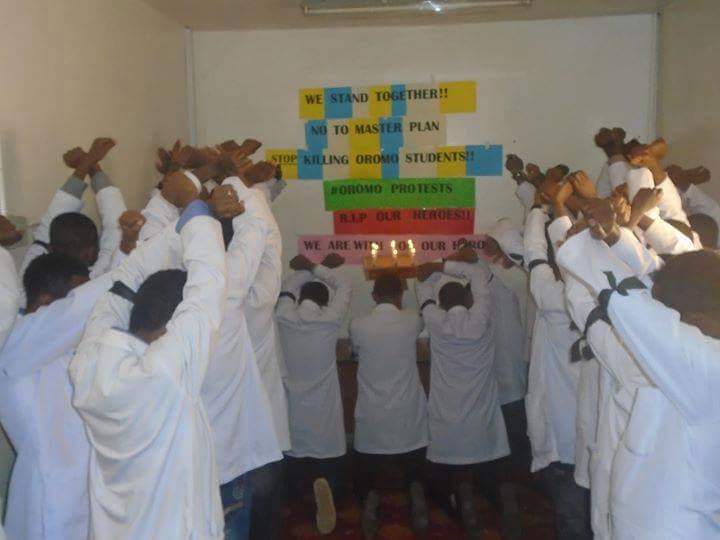
Peacefull protests

The ongoing Oromo protests have not all been voilence. Symbolic peaceful protestes like shown here have spread widely (Photo: Social media) 

It became an act of solidarity widely repeated around several university campuses including here at the Addis Abeba University main campus.

But that peaceful display of solidarity didn’t spare the students from gun shots. Hana who works in the administrative department of the campus and wanted to be called by her given name only, told Addis Standard that she heard “guns being fired at around freshmen dormitories.” For the next three days, the campus was a scene of despair and chaos, but also persistent protest. Although the protests didn’t spread to the town, many students were “wounded by bullets”, according to Nahom Endale, a 3rd year marketing student; many have also left the campus; it is unclear who will show up and who will not when this is over.

Molla Yerga, a father from Gondar who came to pick his son spoke with Addis Standard with utter sense of despair: “I couldn’t find my son. When he called me to tell me there was a problem at the campus, I warned him to stay in his dorm but he is not there. All his friends told me they haven’t seen him.” Molla said his son’s cell phone is also switched off. “I trusted the safety of my son to the government when he came to study at the campus, now my son is missing. It is a shame.”

On Dec. 5th evening the federal anti-terrorism task force issued an alarming statement labeling persistent protests as attempts of terrorism and indicating that the task force will do everything necessary to bring law and order in some areas. In other words, there is “more death to come,” said Gonfa Abera, a student at Ambo University but who is staying here in Addis.

The protests have spread to more than 80 cities and the opposition, Oromo Federalist Congress (OFC), says more than 50 protestors have so far been gunned down by the police and more than 500 arrested. The government puts the number of death at just five and maintains the protests are happening in “few areas by a few individuals.”

But as of the publishing of this news, information coming from social media activists (supported by still pictures, videos and audios) show defiant protests happening in cities in Oromiya regional state from east to west, south to south east of the country.

Source: http://addisstandard.com/oromo-protests-defiance-amidst-pain-and-suffering/
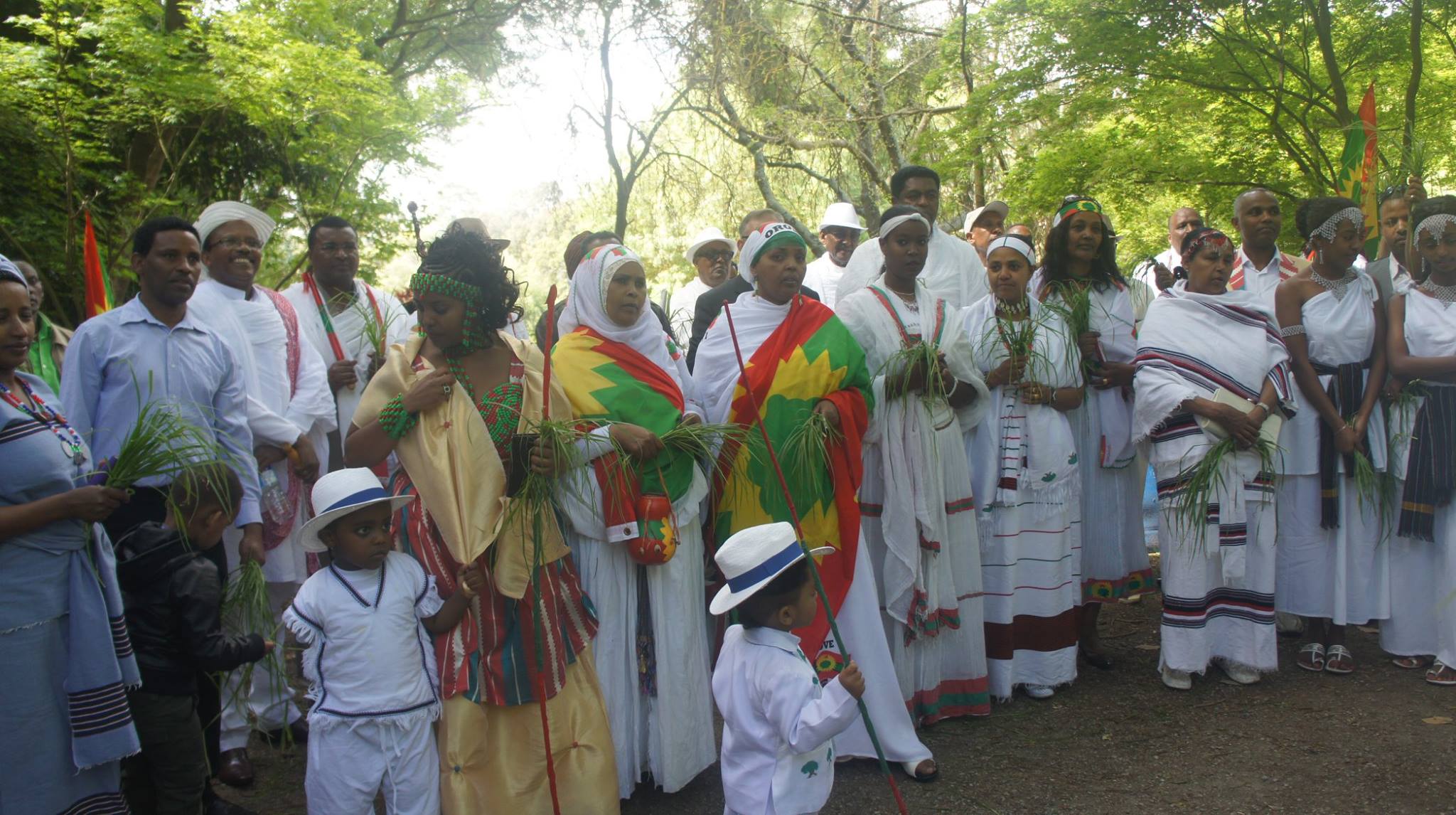
2015 Annual Irreechaa Birraa is COMING!!

(A4O, 3 September 2015) It is with great pleasure that to invite you to the annual Irreecha Birraa festival, Oromo National Thanksgiving day, of the year on Sunday 4 October 2015.

Irreechaa 2014Irreechaa Birraa is a celebration that repeats once in a year-in birraa and involves special activities or amusements as it has a lot of importance in our lives. It symbolizes the arrival of spring and brighten season with their vibrant green and daisy flowers.
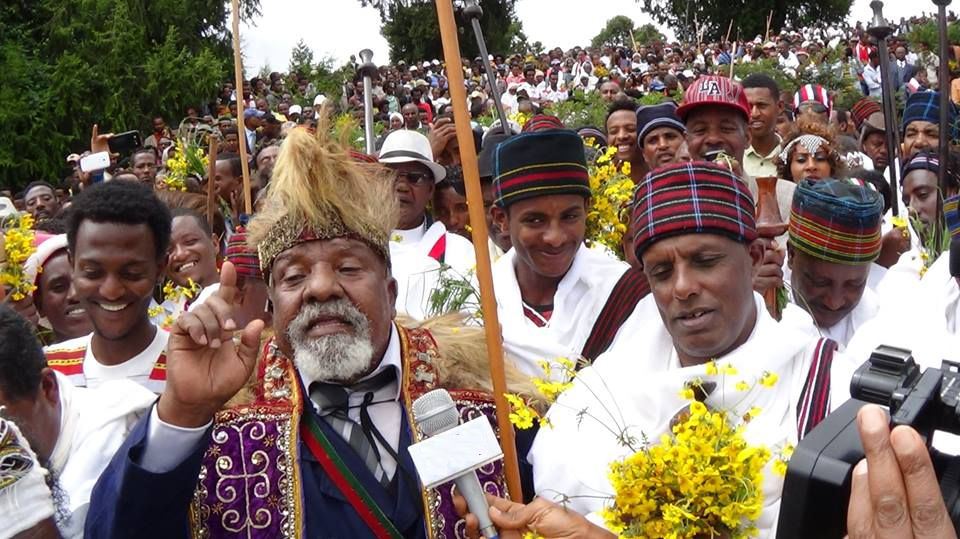
It’s a day all Oromian’s celebrate and cherish due to our ties to our root: Oromo Identity and country. It’s a time for reflection, celebration and a good connection with our best heritage, Oromummaa.

Theme: Moving Forward: A Year of Networking 

This year’s Oromian Irreechaa Festival is going to be bigger and better than ever, with a whole theme park devoted to diverse Oromian cultural Identity. The theme of this national Thanksgiving Day is “Moving Forward: A Year of Networking ” in which it aims to celebrate Irreechaa festivals as a medium for bringing all Oromias together to follow and promote our tradition and religion in society, to create public awareness where Oromo cultural and religious issues will be discussed, to provide a better understanding of Oromo culture and history, to pave the way for promotion of the Oromo culture, history and lifestyle and to celebrate  Oromo Irreechaa, a national Thanksgiving Day.

We celebrate Irreechaa to thank Waaqaa for the blessings and mercies we have received throughout the past year at the sacred grounds of Hora Harsadi (Lake Harsadi), Bishoftu, Oromia. The Irreechaa festival is celebrated every year at the beginning of Birraa (the sunny new season after the dark, rainy winter season) throughout Oromia and around the world where Diaspora Oromos live.

We celebrate Irreechaa not only to thank Waaqaa (God) also to welcome the new season of plentiful harvests after the dark and rainy winter season associated with nature and creature. On Irreechaa festivals, friends, family, and relatives gather together and celebrate with joy and happiness. Irreechaa Festivals bring people closer to each other and make social bonds.

OromiyaaIrreecha2014_8Moreover, we are celebrating this auspicious event to mark the end of rainy season[1], known as Birraa, was established by Oromo forefathers, in the time of Gadaa Melbaa[2] in Mormor, Oromia. The auspicious day on which this last Mormor[3] Day of Gadaa Belbaa[4]-the Dark Time of starvation and hunger- was established on the 1st Sunday of last week of September or the 1stSunday of the 1st week of October according to the Gadaa lunar calendar ‐‐ has been designated as our National Thanksgiving Day by modern‐day Oromo people.    Oromo communities both at home and abroad celebrate this National Thanksgiving Day every year.

Irreechaa as a medium for bringing all Oromias together

The Oromian Irreechaa Festival will not only serve as a medium for bringing all Oromias together, from all its diasporas, as one voice, but will also focus on promoting and enhancing Oromummaa in freedom struggle, tourism, arts and crafts, business, restaurants and hospitality, and entertainment. Moreover as a moving and flourishing heritage, Irreechaa also connects our Oromo identity with the global civilization in which the industrial and manufacturing sectors of heavy and light machinery of natural resources and raw materials.

During the event, we will be serving with Oromo foods and featuring with traditional dances by Oromo children, youth and dance troupes. Irreechaa is about a lot more than just putting on shows, it encourages engagement and participation from everyone in the greater community across our great city, country and the globe.

Please join and experience  Oromo culture.

[1] Rainy season symbolized as a dark, disunity and challenging time in Oromia.

[2] Gadaa Melbaa was established before 6400 years ago at Odaa Mormor, North-west Oromia.

[3] Mormor in Oromo means division, disunity, chaos.

[4] Gadaa Belbaa is the end time of starvation.


Gadaa System: an Indigenous Democratic Socio-political System of Oromo People

The Oromo Nation is the community concerned with the nominated element. The Gadaa System has been practiced for centuries and remains functional into the present among all of the major Oromo clans such as Borana, Guji, Gabra, Karrayu, Arsi, Afran Qallo, Ituu, Humbana, Tulama and Macha clans in Oromia, East Africa.

http://www.unesco.org/culture/ich/index.php?pg=00774&include=slideshow.inc.php&id=01164&width=620&call=slideshow&mode=scroll


Voicing the Oromo Issue

By Panos Institute West Africa (PIWA)

(Advocacy for Oromia) This is an interview with two representatives of Oromo from Oromia, East Africa explaining the origin of the “crimes” against Oromo. They were taking part in the World Social Forum 2015 in Tunisia.

Oromo Voice Radio (OVR) broadcasts Oromia Insight program

Oromo Voice Radio (OVR) broadcasts Oromia Insight program every Monday for 15 minutes at 7:15 PM Oromia local time. This week Soreti Kadir,the host of Oromia Insight, talks with Afaan Publication founder, Toltu Tufa.

You can find more information about Afaan publication on http://www.afaan.com.au/.
Oromo Voice Radio broadcasts to Oromia on Wednesdays, Saturdays and Mondays at 7:00 PM local time at 16 MB or 17850 kHz. Oromo Voice Radio is operated by Madda Walaabuu Media Foundation.

OROMIA @ FEDERATION SQUARE: A CELEBRATION OF OROMUMMAA

On Dec. 21, 2014, more than 2,000  Oromo-Australians and friends of Oromo people floked to  Melbourne’s iconic Federation Square, braving dank and steamy spa-like weather conditions for the 7th annual “Oromia at Federation Square.”

SONY DSCStarted in 2008, the Oromia@fedsquare is a community festival organized by the Australian Oromo Community Association in Victoria meant to “celebrate and commemorate the beauty of the Oromo culture.” For the thriving Oromo-Ausralian community, the  event is an opportunity to share their history and rich cultural heritage with the city’s multicultural communities. For members of the Oromo community, it’s also a way of reconnecting with and honoring their customs and traditions.

“Starting Sunday afternoon, people visiting or passing by the Federation Square in Melbourne feel as though they’ve landed in another country in a different continent – Oromia, in the Horn of Africa,” the organizers said in a press release last week. The fedsquare, one of the busiest venues in Melbourne, hosts more than 2,000 jam-packed events and celebrations every year. The attendance of members of parliament Adam Bandt of Melbourne and representatives from Anthony Byrne office, who represents Holt, and Victorian Multicultural Commission Commissioner Chin Tan is an important recognition of Oromos contribution to the country’s multiculturalism. As with other new immigrant communities, Oromos have added color and so much significance to the Australian society in general. Most of its leaders have been recognized and awarded both locally and internationally for their active participation and outstanding contributions.

The event brings together families and friends from across Melbourne. Oromos from interstate and neigbouring countries such as New Zealand ocassionally join in the celebration. This year was not different. Visitors came from Brisbane, Sidney and even as far as Europe. Parents brought childred adorned in colorful cultural attires. This is the community’s way of educating other Australians about their identity while also passing on history and cultural heritage to the younger generation. The event features Oromo dance, spoken word, art exhibition, fashion show, a live-concert and elders blessings.

Amid chaotic diasporic life and recent political setbacks among the diaspora,  Oromia@fedsquare is one event that has not lost its colors and form over the last seven years. In fact, it has become a model for Oromo diaspora events. It brings together Oromos from all walks of life and political persuasions. It’s one place where the community joins hands and sing songs of unity, harmony and longing.

To be sure, unlike most Oromo diaspora events, the Oromia@fedsquare was not simply about lamenting the multifaceted injustices that the Oromo continue to endure in Ethiopia. It’s a magnificent occasion where Oromos embrace and demonstrate their pride. It is a day where Oromia’s multidimensional diversity is celebrated in all its forms: from clothing, artifacts, food  to history with pride and joy. It is a momentous expression of Oromumma, the Oromo identity.

It is also where the youth reaffirms their commitment to preserving Oromo heritage by taking the lead in organizing and showcasing various cultural programs. Most of the activities at this festival were conducted by the community’s active and vigilant youth members. The elders, also draped in Oromo cultural attire, held green grass and a prominent stick ( coqorsa and bokkuu. With the Oromo flag flying high around the square, women ululate holding their Siinqee, the symbol of power and womanhood among the Oromo,  and sing in praise of their fallen heroes while the youth and children cheer on. All the while, the fresh aroma of Oromia’s coffee would fill the air. For brief moments, the fed square resembled Oromia, the Oromo homeland — full of joy and freedom.

But this year Oromia@fedsquare has even gotten bigger and better. Children adorned with saddeetta sang shagoyee, whilst those as young as five educated the spectators about the five Oromo odaas. The children also took the centrestage when the band played adding more color and beauty to the event.

This year also ushered in new faces as far as from Germany, young musician and rapper Leencho Abdushakur was invited to entertain the crowd with a mix of poetry, spoken word and singing. We also had other prominent personalities, including Oromo comedian Sadam Haska aka Sadamiyyo from Oromovines.  This year, federation square was not only about singing and dancing, it was about recognition and awards.

Early Sunday morning, excitement filled the sorrunding area as hosts, Soreti Kadir  and Toltu Tufa walked onto the stage beautified by their Qoloo (red and black striped Arsii dress). Commuters  from the trams, chariots, trains and vehicles stopped to a glimpse of what was happening before their lights turned green.

The event was formally opened with the singing of the unofficial Oromo “anthem”:  Alaaba Oromo. This was followed by a fashion show and dance performces which led many to shed tears of happiness and pride.

Melbourne-based rappers featuring Milkeysa Ahmed and Dammeysa Ahmed aka Dee Banga moved the crowd with their creative and peotic rap and hip hop in Afaan Oromo and English. Through their poetry and rap, the youngsters lamented about Oromo heritage and political struggle. Their song was also about belonging and longing, roughly put as a yearning of someone trying to fit-in or finding one’s place both in Oromia and Australia.

Abdi Johar, a young star from one of the most reknowned cities of Oromia, Dire, sang ‘’Assabelahoo- one of the most famed  songs of the legendary Ali Birra. The ground beneath felt as if it’s literally moving. His voice and the meaningfulness of the song moved the heart and minds of Oromos, young and old. In the euphoria of the moment, the song brought memories of homesickness and a collective sense of statelessness. Of course the band entertainment would be incomplete without the performance of the one and only Kumala Adunya, kicking off his best work with ‘asheeta’ and taking us through the melodies and sounds of Oromia

SONY DSCAt the conclusion of formal events, the crowd began to rock and roll Oromo style. As a symbol freedom and peace, white doves were released into the clear sky by the elders and  VIP guestsas crowd the screamed ‘’free Oromia’’ at their highest pitch.

Even after the formal conclusion of the event, the eunthisiastic crowd hang about fidgeting, posing for photos and anticipating about 2015, still in celbratory mood. It is no exaggeration to say Oromia @fedsquare was a celebration of Oromummaa in all of its diversity.

*The writer, Sinke Wesho, is a Melbourne-based OPride.com contributor.

Source: http://www.opride.com/oromsis/news/3782-oromia-at-federation-square-a-celebration-of-oromummaa

Oromia: Human Rights Speaks

Many Oromo people living in Oromia, East Africa, Marama was forced to leave to save his life. Since he reached the safety of Australia after spending years in a refugee camp, Marama does everything he can to help his people still suffering in Ethiopia. Through community run organisations such the Oromia Support Group and the Oromo Relief Association , Marama tirelessly campaigns to raise awareness about the plight of Oromo people, works to get Oromo people out of refugee camps to countries like Australia and helps them to settle into their new lives once they arrive. His own story is at the core of his motivation, as he understands better than most what it takes to survive.

Oromo Activists Fight US-Backed Land Seizures

Oromo ethnic group

Ethiopians of the Oromo ethnic group stage a protest against the ruling government. (Reuters/Darrin Zammit Lupi)

This article is a joint publication of TheNation.com and Foreign Policy In Focus.

Yehun and Miriam have little hope for the future.

“We didn’t do anything and they destroyed our house,” Miriam told me. “We are appealing to the mayor, but there have been no answers. The government does not know where we live now, so it is not possible for them to compensate us even if they wanted.”

Like the other residents of Legetafo—a small, rural town about twenty kilometers from Addis Ababa—Yehun and Miriam are subsistence farmers. Or rather, they were, before government bulldozers demolished their home and the authorities confiscated their land. The government demolished fifteen houses in Legetafo in July.

The farmers in the community stood in the streets, attempting to prevent the demolitions, but the protests were met with swift and harsh government repression. Many other Oromo families on the outskirts of Ethiopia’s bustling capital are now wondering whether their communities could be next.

These homes were demolished in order to implement what’s being called Ethiopia’s “Integrated Master Plan.” The IMP has been heralded by its advocates as a bold modernization plan for the “Capital of Africa.”

The plan intends to integrate Addis Ababa with the surrounding towns in Oromia, one of the largest states in Ethiopia and home to the Oromo ethnic group—which, with about a third of the country’s population, is its largest single ethnic community. While the plan’s proponents consider the territorial expansion of the capital to be another example of what US Secretary of State John Kerry has called the country’s “terrific efforts” toward development, others argue that the plan favors a narrow group of ethnic elites while repressing the citizens of Oromia.

“At least two people were shot and injured,” according to Miriam, a 28-year-old Legetafo farmer whose home was demolished that day. “The situation is very upsetting. We asked to get our property before the demolition, but they refused. Some people were shot. Many were beaten and arrested. My husband was beaten repeatedly with a stick by the police while in jail.”

Yehun, a 20-year-old farmer from the town, said the community was given no warning about the demolitions. “I didn’t even have time to change my clothes,” he said sheepishly. Yehun and his family walked twenty kilometers barefoot to Sendafa, where his extended family could take them in.

The Price of Resistance

Opponents of the plan have been met with fierce repression.

“The Integrated Master Plan is a threat to Oromia as a nation and as a people,” Fasil stated, leaning forward in a scuffed hotel armchair. Reading from notes scribbled on a sheet of loose-leaf notebook paper, the hardened student activist continued: “The plan would take away territory from Oromia,” depriving the region of tax revenue and political representation, “and is a cultural threat to the Oromo people living there.”

A small scar above his eye, deafness in one ear and a lingering gastrointestinal disease picked up in prison testify to Fasil’s commitment to the cause. His injuries come courtesy of the police brutality he encountered during the four-year prison sentence he served after he was arrested for protesting for Oromo rights in high school and, more recently, against the IMP at Addis Ababa University.

Fasil is just one of the estimated thousands of students who were detained during university protests against the IMP. Though Fasil was beaten, electrocuted and harassed while he was imprisoned last May, he considers himself lucky. “We know that sixty-two students were killed and 125 are still missing,” he confided in a low voice.

The students ground their protests in Ethiopia’s federal Constitution. “We are merely asking that the government abide by the Constitution,” Fasil explained, arguing that the plan violates at least eight constitutional provisions. In particular, the students claim that the plan violates Article 49(5), which protects “the special interest of the State of Oromia in Addis Ababa” and gives the district the right to resist federal incursions into “administrative matters.”

Moreover, the plan presents a tangible threat to the people living in Oromia. Fasil and other student protesters claimed that the IMP “would allow the city to expand to a size that would completely cut off West Oromia from East Oromia.” When the plan is fully implemented, an estimated 2 million farmers will be displaced. “These farmers will have no other opportunities,” Fasil told me. “We have seen this before when the city grew. When they lose their land, the farmers will become day laborers or beggars.”

Winners and Losers

The controversy highlights the disruptive and often violent processes that can accompany economic growth. “What is development, after all?” Fasil asked me.

Ethiopia’s growth statistics are some of the most impressive in the region. Backed by aid from the US government, the Ethiopian People’s Revolutionary Democratic Front (EPRDF), the country’s ruling coalition, is committed to modernizing agricultural production and upgrading the country’s economy. Yet there is a lack of consensus about which processes should be considered developmental.

Oromo activists allege that their community has borne a disproportionate share of the costs of development. Advocates like Fasil argue that the “development” programs of the EPRDF are simply a means of marginalizing the Oromo people to consolidate political power within the ruling coalition.

“Ethiopia has a federalism based on identity and language,” explained an Ethiopian political science professor who works on human rights. Nine distinct regions are divided along ethnic lines and are theoretically granted significant autonomy from the central government under the 1994 Constitution. In practice, however, the regions are highly dependent on the central government for revenue transfers and food security, development and health programs. Since the inception of Ethiopia’s ethno-regional federalism, the Oromo have been resistant to incorporation in the broader Ethiopian state and suspicious of the intentions of the Tigray ethnic group, which dominates the EPRDF.

As the 2015 elections approach, the Integrated Master Plan may provide a significant source of political mobilization. “The IMP is part of a broader conflict in Ethiopia over identity, power and political freedoms,” said the professor, who requested anonymity.

American Support

Standing in Gullele Botanic Park in May, Secretary of State Kerry was effusive about the partnership between the United States and Ethiopia, praising the Ethiopian government’s “terrific support in efforts not just with our development challenges and the challenges of Ethiopia itself, but also…the challenges of leadership on the continent and beyond.”

Kerry’s rhetoric is matched by a significant amount of US financial support. In 2013, Washington allocated more than $619 million in foreign assistance to Ethiopia, making it one of the largest recipients of US aid on the continent. According to USAID, Ethiopia is “the linchpin to stability in the Horn of Africa and the Global War on Terrorism.”

Kerry asserted that “the United States could be a vital catalyst in this continent’s continued transformation.” Yet if “transformation” entails land seizures, home demolitions and political repression, then it’s worth questioning just what kind of development American taxpayers are subsidizing.

The American people must wrestle with the implications of “development assistance” programs and the thin line between modernization and marginalization in countries like Ethiopia. Though the US government has occasionally expressed concern about the oppressive tendencies of the Ethiopian regime, few demands for reform have accompanied aid.

For the EPRDF, the process of expanding Addis Ababa is integral to the modernization of Ethiopia and the opportunities inherent to development. For the Oromo people, the Integrated Master Plan is a political and cultural threat. For the residents of Legetafo, the demolition of their homes demonstrates the uncertainty of life in a rapidly changing country.

Source: http://www.thenation.com/blog/181599/ethiopian-activists-fight-us-backed-land-seizures

Oromia: Enhanced Master Plan to Continue Committing the Crimes of Genocide

The actions taken were aimed at destroying Oromo farmers or at rendering them extinct.  

~Ermias Legesse, Ethiopia’s exiled EPRDF Minister

The announcement of the implementation of the Addis Abababa Master Plan (AAMP) was just an extension of an attempt by EPRDF government at legalizing its plans of ridding the Oromo people from in and around Finfinne by grabbing Oromo land for its party leaders and real estate developers from the Tigrean community. The act of destroying Oromo farmers by taking away their only means of survival—the land—precedes the current master plan by decades.  Ermias Legesse, exiled EPRDF Deputy Minister of Communication Affairs, acknowledged his own complicity in the destruction of 150,000[1] Oromo farmers in the Oromia region immediately adjacent to Finfinne. He testifies that high-level TPLF/EPRDF officials are responsible for planning and coordinating massive land-grab campaigns without any consideration of the people atop the land.  Ermia’s testimony is important because it contains both the actus reus  and dolus specials of the mass evictions[2]:

Once while in a meeting in 1998 (2006, Gregorian),the Ethiopian Prime Minster Meles Zenawi , we (ERPDF wings) used to go to his office every week, said.  Meles led the general party work in Addis Ababa.  We went to his office to set the direction/goal for the year. When a question about how should we continue leading was asked, Meles said something that many people may not believe. ‘Whether we like it or not nationality agenda is dead in Addis Ababa.’  He spoke this word for word. ‘A nationality question in Addis Ababa is the a minority agenda.’ If anyone were to be held accountable for the crimes, everyone of us have a share in it according to our ranks, but mainly Abay Tsehaye is responsible.  The actions taken were aimed at destroying Oromo farmers or at rendering them extinct.  29 rural counties were destroyed in this way.  In each county there are more or less about 1000 families.  About 5000 people live in each Kebele (ganda) and if you multiply 5000 by 30, then the whereabouts of 150,000 farmers is unknown.
Zenawi’s statement “the question of nationality is a dead agenda in Addis Ababa” implies that the Prime Minister planned the genocide of the Oromo in and around Finfinne and others EPRDF officials followed suit with the plan in a more aggressive and formal fashion.

Announcement of the Addis Ababa Master Plan and Massacres and Mass Detentions

AAMP was secretly in the making for at least three years before its official announcement in April 2014.[3]  The government promoted on local semi-independent and state controlled media the sinister plan that already evicted 2 million Oromo farmers and aims at evicting 8-10 million and at dividing Oromia into east and west Oromia as a  benevolent development plan meant to extend social and economic services to surrounding Oromia’s towns and rural districts. Notwithstanding the logical contradiction of claiming to connect Oromia towns and rural aanaalee (districts) to “economic and social” benefits by depopulating the area itself, the plan was met with strong peaceful opposition across universities, schools and high schools in Oromia. Starting with the Ambo massacre that claimed the lives of 47 people in one day[4], Ethiopia’s army and police killed over 200 Oromo students, jailed over 2000 students, maimed and disappeared countless others over a five-month period from April-August 2014.

The protests were sparked by the realization that the plan would compromise not only the territorial integrity of Oromia by dividing Oromia into two administrative regions and by forcefully separating Oromo from one another by settling aliens on depopulated lands,  but also by facilitating large-scale evictions that would result in genocide and slavery.

I will provide a brief context to the plan and what it means in terms of dividing Oromia into the east and the west and in terms of weakening and preparing the Oromo for genocidal occupation by Tigirean power.   The real intent of the plan—destroying Oromo people in whole or in part—is hidden under false narratives of “service provision” and “urban development”.

Not only did the Oromo not consent to the plan, but the plan is also unconstitutional on multiple levels.[5] First, the expansion and the evictions violate the 1995 Ethiopian Constitution’s Article 49 (5), which provides: ” The special interest of Oromia in Addis Ababa shall be respected in the provision of social services, the utilization of natural resources and in joint administrative matters arising from the location of Addis Ababa within Oromia State. The law shall specify the particulars.” In spite of the provision, the special interest of Oromia was never respected and no law was passed to determine the particulars over the last 23 years.  Oromos have been cheated out of their constitutional right by a manipulative minority in power. In fact, the ERPDF regime has denied Oromia the benefit of having Finfinnee as a capital city and kicked the OPDO administration in and out of it at whim to weaken the political influence of the Oromo in the nation’s and the region’s capital.

Second, surpassing the protection of Oromia’s special interest, the EPRDF has committed another constitutional violation and attempted to destroy the territorial integrity of Oromia by planning to split it into two halves and inserting settler occupation in the middle–all in order to grab land and shrink the geo-political size of Oromia.  In Article 39 (1), the EPRDF constitution says: “Every nation, nationality and people in Ethiopia have an unconditional right to self-determination, including the right to secession.”  By splitting Oromia into two halves—west  and east—the EPRDF imposes decisions of Tigrean elites on the Oromo without their  consent and unconstitutionally violates the Oromo people’s right to self-determination in Oromia. On the bleakest side, the plan intends to destroy the lives of millions of Oromo farmers and town dwellers in the area as declared by the Prime Minster when he said the “nationality agenda is dead in Addis Ababa.”  Of course, one cannot kill a collectivity’s agenda without killing them as threatened.

The plan and its implementation has already evicted a significant portion of the Oromo population, has brought a significant amount of Oromo land under EPRDF elite control, and has altered the demographic composition of Oromia. The plan is explicit about the regime’s intentions to incorporate over 6 Oromia’s cities and 8 rural aanaalee(counties) in the vicinity of Finfinnee[6] into Fininne against the will of the Oromo people.  Sululta, Bishoftu, Sabata Dukem, Holeta and Ambo are among the cities planned to be gobbled up by Addis Ababa.  Regime authorities  estimated that Finfinne, which currently sits on 54,000 hectares of Oromo land obtained through 19th and 20th century crimes of genocide, now wants to gain 1.1 million hectares of land from Oromia by the same criminal method—genocide.

The Oromo responses to this enormous project of extermination, which resembles Hitler’s “final solution”, have been equally enormous. Oromian students from primary schools to tertiary education demonstrated in thousands and protested the implementation of the plan and expressed that the plan benefits the Tigrean elites while destroying the Oromo people.[7] The loss of ancestral land accompanied by the loss of culture and identity binding the Oromo nation have been among concerns expressed by protesters as well as opposition party leaders.  The Oromo Federalist Congress (OFC) condemned the AAMP as follows:[8]

 In the countryside, Oromo farmers are being evicted from their plots of land without compensation and without any employment guarantee. In cities, the houses and properties of [Oromo] persons are being demolished and the owners are rendered propertyless and sanctioned to perpetual poverty. In contrast, it is seen that individual supporters of the regime (EPRDF/TPLF) are amassing wealth upon wealth by acquiring land in urban and rural areas using their connections, relatives and group memberships to get 30-40 land maps  and then trading in those maps to generate profit.
The rate and conditions under which Oromo farmers are evicted and exposed to poverty-stricken and diseases-infested calculated life conditions that will cause their demise is clear. Other consequences of the master plan that have already been witnessed have to do with the loss of language, culture and identity given that Abyssinian language, Amharic, and northern Ethiopian cultures have been violently imposed in the area systematically. OFC provides evidence supporting this all-rounded genocide:

It is not only land that is going to be taken from the people [the Oromo], it is also the right to speak and learn his[9] own language [Afan Oromo], the right to be judged in courts in his own language, the right to develop one’s own culture…all of these will be gone. As a result, the harm that will be inflicted on the region [Oromia], on the people [Oromo], and the farmers around these areas will be very heavy [difficult].

Evicting farmers because of membership in a group is an internationally recognized crime of genocide under the 1948 UN Convention on Genocide Article II (A-E).[10]  The land grab in Oromia, which has had genocidal characteristics, started in the last quarter of the 19th century and it is ongoing.  While crimes listed under the UNGC are being committed against the Oromo people on a daily basis, including “killing members of the group,” (Art 2(A) and “causing serious bodily or mental harm to members of the group,” (Art II (B), a provision that is specially applicable to the mass eviction and impoverishing of  Oromo famers is UNGC Article II (C) Deliberately inflicting on the group conditions of life calculated to bring about its physical destruction in whole or in part.”[11]

Under the Derg and the EPRDF governments from 1990 to mid 2000s, a total of 27,000 Oromo civilians of 200,000 captured and returned from Somalia were killed and buried in 10 different mass graves.[12] The skeletons were accidentally unearthed during a “government-sponsored construction work.”[13] The discovery reveals “one of the most gruesome mass murders” committed against people of Oromo nationality in one of several Ethiopia’s military camps used as concentration camps simultaneously. General Getachew Gedamu, Derg military commander and Smura Yunus, army chief of staff and commander of TPLF army’s eastern command, were in charge of gruesome killings described below:[14]

..they began angrily executing high profile prisoners during the day. When the night fell, the brought five bulldozers from the city and dug up huge holes outside the compound at the place called Sharif Kalid. First they loaded up bodies of those killed during the day. Then tied up the remaining prisoners and told them to line up facing the holes. They fired on them from behind. Many of the victims were thrown in alive. The bulldozers put back the soil on the top [covered them with soil].  

Local residents shocked by the skeletons they saw during the digging staged a three-day protest. The government fired on the protesters demanding dignity for the remains of their loved ones and injured a few.  Activists have issued statements asserting that what was revealed at the Hamaressa mass graves were the tip of the iceberg since EPRDF government-run military camps where people vanish are too many.

Western/Eastern funders of the Ethiopian government’s project of dislocation and massacre in Oromia have been gagged by official government rhetoric about development. The only voice denouncing the AAMP is that of Oromo students and it has been systematically silenced over the last 5 months (April-August, 2014). Students were killed, maimed and suspended from universities in droves across Oromia and state officials and their foot soldiers who carried out the massacres still enjoy impunity, promotion and pay increase per the kill they register with the government.

A second round of mass detentions, maiming and selective killings restarted this August following the refusal of Oromo students to accept the regime’s plan to indoctrinate and pacify them.   The students are put in a difficult position of accepting or agreeing with the crimes perpetrated on them by Ethiopian security forces, police and soldiers. The penalty to refuse to accept own death in the hands of the state ranges from mass expulsion from universities, selective detentions of those who demanded accountability and justice, and killings of outstanding activists.

There seem to be no real strategies and tactics on part of the Oromo political groups in ensuring the safety of Oromo students and  in answering the national questions they have raised.  Diaspora peaceful rallies and social media campaigns wax and wane with each passing day as volunteers experience burnouts and drop out due to over-extended time and the lack of relentless institutionalized leadership.


[1] These numbers are conservative estimates by an insider to the ruling party. Other people estimate that over 2 million people were evicted before the plan came into existence.

[2] Ermias Legesse,  “How More than 150,000 Oromo Farmers Were Evicted from 29 Oromia counties surrounding Addis Ababa [Finfinnee]. 2014 ESAT television interview. Retrieved May 2014 from, http://youtu.be/W0T5ajOk3l4 The interview was translated from the Amharic original into English by the current author.   Ermias’ estimates are the most conservative as he was involved with the regime and he might not have wished to reveal the whole truth. After the official implementation that followed the unwritten implementation many years before, it’s projected that 8-10 million Oromo farmers and residents in neighboring rural counties and small towns will be affected by the seismic activities of the Tigirean government policy of selectively removing the Oromo people from their ancestral land calculated to subject them to life conditions that will bring about their slow-motion demise.

[3] http://addisfortune.net/articles/plan-to-connect-addis-abeba-with-surrounding-special-zones/

[4] http://www.bbc.com/news/world-africa-27251331

[5] 1994 Ethiopian Constitution

[6] Finfinnee is the indigenous Oromo name for Addis Ababa.  Finfinnee was renamed Addis Ababa after Menelik’s  19th century genocide campaigns wiped out several Oromo ethnic groups and clans from the land on which Finfinne was built as a garrison city for Amhara armed settlers, naftagna.

[7] Ambo massacre http://oromopress.blogspot.com/2014/04/the-ambo-masscare-tplf-military-kills.html

[8] Gadaa.(2014, April).  “Oromo Federalist Congress (OFC) Sounds Alarm about the Ongoing Land-Grab in Oromia; Condemns the Ethiopian Govt’s Land Policy Being Enforced in Oromia Without Oromo’s Participation as Plan to Ignite Violence between Oromo Farmers and Investors.” Gadaa.com. Retrieved April 16, 2014 from

http://gadaa.com/oduu/25385/2014/04/15/oromo-federalist-congress-ofc-sounds-alarm-about-the-ongoing-land-grab-in-oromia-condemns-the-ethiopian-govts-land-policy-being-enforced-in-oromia-without-oromos-participation-as-plan-to-ignite/

This is a news item from Gadaa.com based on the statement by OFC. Quoted translation of parts of the statement  from Afan Oromo into English is by the current author.

[9] “His” is possessive for the Oromo people. The noun “Oromo” is masculine- gendered in Afan Oromo grammar.

[10] UN. 1948. Convention on the Prevention and Punishment of the Crime of Genocide.  Retrieved April 16, 2014 from  https://treaties.un.org/doc/Publication/UNTS/Volume%2078/volume-78-I-1021-English.pdf

[11] Emphasis added.

[12] Gulele Post. “Hamaressa Mass Grave: Background. http://www.gulelepost.com/2014/06/11/hameressa-mass-grave-background/

[13] Amy van Steenwyk, 2014.http://amyvansteenwyk.tumblr.com/post/88451067229/reservations-and-mass-graves-in-minnesota-and-oromia

[14] See footnote number 12.

Source:http://oromopress.blogspot.com.au/2014/08/enhanced-master-plan-to-continue.html

Waaqeffannaa Association Condemns Human Rights Violations in Oromia

(Melbourne, Victoria, 27 May 2014) – The Waaqeffannaa Association in Victoria Australia (WAVA), a non-profit religious organization incorporated under the Associations Incorporation Reform Act 2012 in Victoria, condemns the killing, torturing, and arresting of students in Oromia. As religious organisation, we affirm that life is sacred.

The situation in Oromia has been very disconcerting. The vast ongoing human rights violation by the government has urged the Waaqeffannaa Association in Victoria Australia (WAVA) to speak and condemn the ongoing onslaught on peaceful Oromo protestors. The level of instability in Oromia has never been more apparent than ever before.

Here is the press Release Waaqeffannaa Association Condemns Human Rights Violations in Oromia 25-05-2014