The Land Shall Belong to the Tiller – A Giant Remembered
FEATURE STORY
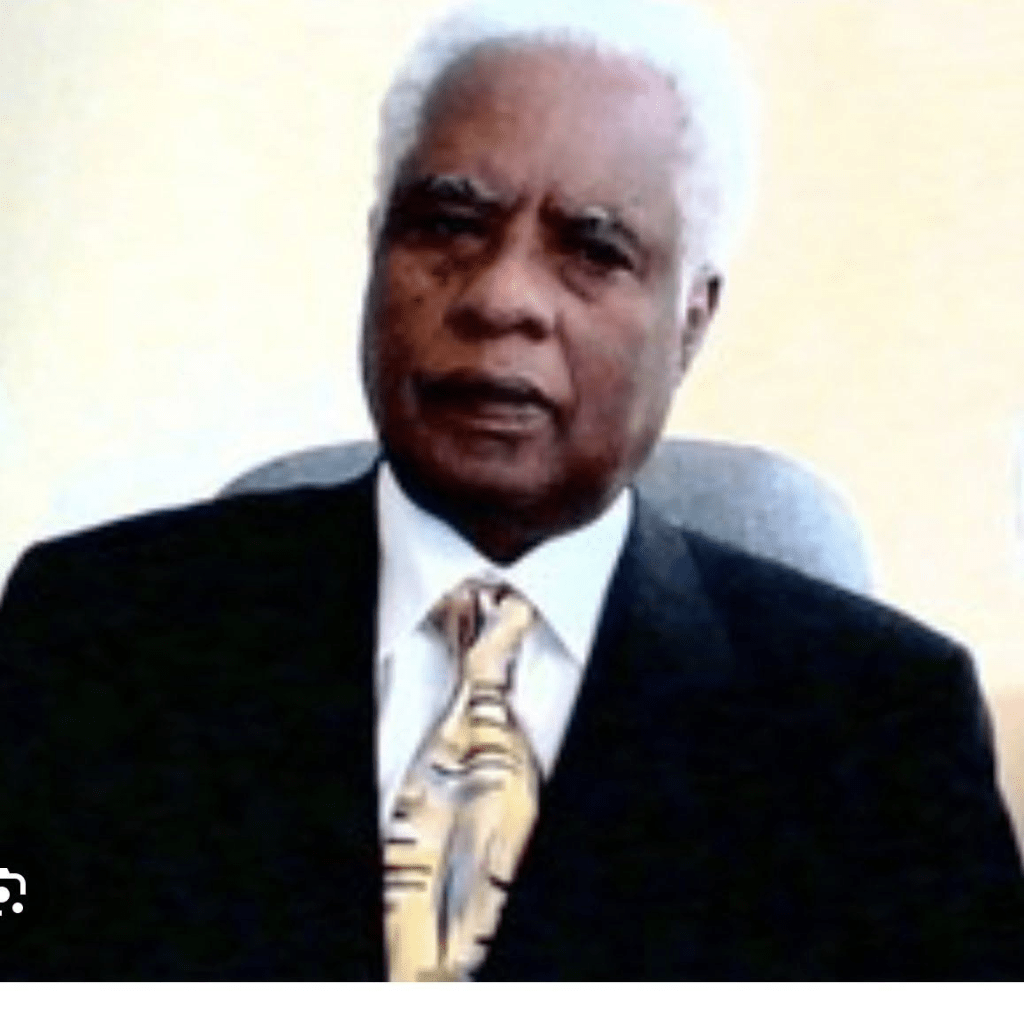
Here is a feature story compiled from multiple social media posts and tributes, honoring the life, legacy, and monumental contribution of Obbo Zegeye Asfaw Abdi (1942-2026) – the architect of Ethiopia’s historic land reform.
Voices from across generations unite in grief and gratitude for Zegeye Asfaw Abdi, the mastermind behind Ethiopia’s 1975 Land Proclamation
Compiled By: Dhabessa Wakjira
Date: 12 May 2026
Sources: Multiple social media tributes (Abba Malka-Goota bara dukkanaa, Beyan H. Asoba, Lammi Begna-Qabsoo, Yaadasaa Badhaasaa Kutuu, Alemayehu Diro, Dejene Gutema, Dereje Hawas, and others)
PROLOGUE: A Chorus of Gratitude
When a giant falls, the earth shakes. But when a giant who gave land to the landless falls, the earth does not merely shake – it weeps. Every furrow, every field, every harvest carried out on soil that was once feudal domain and is now free – these are the tears of the land itself.
Zegeye Asfaw Abdi has left this world in 2026. But before he departed, he did something that few in history have accomplished: he changed who owns the earth.
This is his story – told not in one voice, but in many. From Oromo farmers who remember the days of serfdom, to intellectuals who studied his proclamation, to friends who knew him personally, to scholars who analyzed his legacy. Their words, gathered from social media in the days following his passing, form a chorus of grief – and of undying gratitude.
PART ONE: The Argument That Began in Lower Cimaa
From Serf to Owner – The Great Demand
Before the land could be freed, an argument had to be won. And that argument was fought first in the hearts and mouths of the Oromo people.
Abba Malka-Goota bara dukkanaa (a name meaning “Father of Heroes of the Dark Era”) reminds us where the struggle began:
“Oromoo argued from the Lower Cimaa region that they should move from the Adaharii system (client/tenant farming) or Cissanyaa (serfdom) to becoming owners of their own land. From this world, many have mourned the passing of Obbo Zegeye, a guiding rock.”
The Adaharii and Cissanyaa systems were not merely economic arrangements. They were chains. Millions of Oromo farmers tilled land they would never own. They planted seeds they would never fully harvest. They worked, they sweated, they starved – and the fruit of their labor flowed upward to landlords who never touched a plow.
But the people of Lower Cimaa argued. They demanded. They refused to accept that the land beneath their feet could never be theirs.
Zegeye Asfaw heard that argument. And he did not just hear it. He became its champion.
PART TWO: The Proclamation That Changed Ethiopia Forever
1975 – Land to the Tiller
In 1975, one of the most extensive land reform programmes in history was enacted in Ethiopia. The Land Proclamation took land from the centuries-old aristocracy and returned it to the people who actually worked the soil. It was a revolution – not of bullets alone, but of justice.
Beyan H. Asoba places Zegeye exactly where he belongs in this history:
“Brother Zegeye Asfaw will always be remembered as one of the leading architects of the 1975 historic Land Proclamation of Ethiopia.”
Not a bystander. Not a signature on a document someone else wrote. An architect. One of the minds that designed the foundation upon which millions of Ethiopian farmers now stand.
Lammi Begna-Qabsoo (a voice from the 1960s student movement) adds deeper context:
“The student movement of the 1960s campaigned so that the land question – ‘Land to the Tiller’ – would receive a meaningful answer. Zegeye ensured that the 1975 Land Proclamation was issued. By causing the land to be returned to the cultivator, he laid the cornerstone for the transformation of the lives of the Oromo people and the peoples of the south.”
The student movement had demanded. The people had argued. But it was Zegeye – sitting inside the halls of power, bearing the weight of decision – who made it law.
PART THREE: A Personal Encounter with the Giant
The Lawyer, The Prison Visitor, The Respected Man
Not everyone knew Zegeye Asfaw through history books or proclamations. Some knew him through direct, personal encounter – and those stories reveal the man behind the giant.
Yaadasaa Badhaasaa Kutuu shares a memory that cuts through all abstraction:
“I saw this Zegeye Asfaw with my own eyes, on that very day. He came to the prison to visit someone. Even the Tigrayan guards knew him and respected him. He was a great man who served his people with full knowledge. He was a renowned lawyer. He led a great struggle to return land to the tiller. A strong and knowledgeable man.”
Consider this image: a prison yard, armed guards, the tension of a regime that imprisoned its enemies. And walking through that yard, calm and unafraid, is Zegeye Asfaw. Even the guards – from a different ethnic background, serving a different master – knew his name. They respected him.
That is not power given by title. That is authority earned by character.
PART FOUR: The Personal Cost of Principle
What He Sacrificed for the Land
Great deeds are never free. Every proclamation that changes a nation comes with a price. Zegeye Asfaw paid that price – in ways that the history books rarely record.
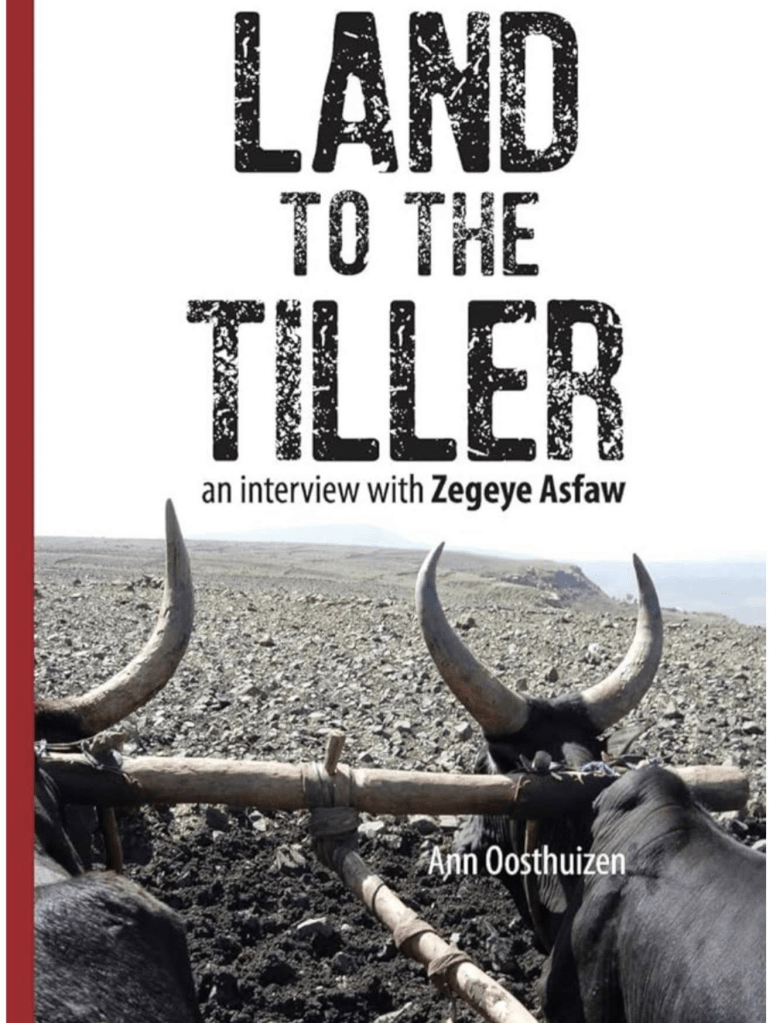
Dereje Hawas, who grew up hearing Zegeye’s name as a “giant of history,” points to a book review by Ann Oosthuizen that captures the personal dimension:
“In this 2012 interview, Zegeye tells the story of his life, of the struggle for land reform, and of the personal cost of that struggle for himself and others. The interview informs our understanding of current issues, and provides a very accessible introduction to recent Ethiopian history. It tackles the tensions between the North and South of Ethiopia; it throws light on the student movements that shaped the politics of the last fifty years; and it provides insights from inside the governments of three very different regimes. Most of all, it is a story of the land itself.”
Three very different regimes. Zegeye served under each of them – not out of political opportunism, but out of a single-minded commitment to the land and its tillers. The personal cost was immense: enemies on all sides, constant threats, nights of sleepless worry, and the loneliness of standing for principle in a world that often rewards compromise.
He bore all of it.
PART FIVE: The Lion’s Share
A Role Worthy of a Lion
Abba Malka-Goota bara dukkanaa describes Zegeye’s role in striking terms:
“Obbo Zegeye prepared the proclamation that said ‘the land shall belong to the tiller.’ He played a role worthy of a lion in freeing the cultivator from serfdom and making him the owner of his own land.”
In Oromo culture, the lion (Leencaa) is not just an animal. It is a symbol of courage, of leadership, of protection. To say someone played the role of a lion is to say they stood between danger and the people – and did not flee.
Zegeye played that role.
The land reform proclamation was not popular with the powerful. It threatened every landlord, every noble, every system that depended on the exploitation of the poor. To champion such a cause was to make enemies of the mighty. But Zegeye did not waver. He prepared the proclamation. He defended it. He implemented it.
That is the lion’s share. Not the share the lion takes – but the share the lion gives.
PART SIX: A Hero and a True Man of the People
The Humanity Behind the Title
Dejene Gutema speaks with direct and powerful simplicity:
“Obbo Zegeye Asfaw was a hero, the true man of the people, who championed, as a cabinet minister, Ethiopia’s historic and defining ‘Land to the Tiller’ proclamation during the Derg era. He was the true man of his people! REST IN POWER.”
Not a hero in a cape. A hero in a suit, sitting in a cabinet meeting, pushing a document across a table. That is where real history is made – not on battlefields, but in rooms where decisions are weighed and signed.
Alemayehu Diro expands on this:
“I was profoundly saddened to hear of the passing of Zegeye Asfaw Abdi. His departure is not only a heartbreaking loss to his beloved family and close friends, but also to the countless people whose lives were touched and transformed by his decades of selfless and devoted service.”
Alemayehu captures the essence of Zegeye’s character:
“Throughout his distinguished life, he served his people in various capacities with extraordinary passion, humility, integrity, and unwavering commitment. He stood as a symbol of dedication and patriotism, tirelessly working for the betterment of his people.”
And then, a line that should be carved somewhere permanent:
“He will be remembered not only for the positions he held, but for the humanity, kindness, and sense of responsibility with which he carried them.”
PART SEVEN: The Silence That Hurts
Gratitude That Came Too Late
One of the most poignant passages from the tributes comes again from Abba Malka-Goota bara dukkanaa:
“If Oromo had ever stood up and thanked him while he was still alive, his death would be a different kind of grief for me. But they did not. His death is another kind of sorrow.”
These words sting because they are true.
How often do we wait until the grave is dug before we speak the words of gratitude? How often do we let our heroes walk among us unrecognized, only to build statues after they are gone?
Zegeye Asfaw was not a man who sought praise. He was humble. He was quiet. He did his work without fanfare. But that does not excuse the silence of those who benefited from his labor.
The mourner continues:
“I wish for patience and strength for his family, relatives, and all friends.”
It is a wish born of grief – and of regret.
PART EIGHT: Rest in Power, Not Just in Peace
A Final Salute to the Architect
Across all the tributes, one phrase recurs: Rest in Power.
Not “Rest in Peace” – though peace he deserves. But “Rest in Power” – because his power was not the power of weapons or wealth. It was the power of principle. And that kind of power does not die.
Dereje Hawas ends his tribute with this:
“Rest in power, Obbo Zegeye!!!”
Dejene Gutema echoes:
“REST IN POWER.”
And Alemayehu Diro, in the Oromo tradition, offers a final blessing:
“Gash Zegeye, Chief, Abbaa Lafaa nagaatti, lubbuun kee jannataan haa qananiitu!”
(Gash Zegeye, Chief, Father of the Land – go in peace. May your soul rest and be refreshed in paradise.)
EPILOGUE: The Land Remains
Zegeye Asfaw Abdi has left this world. But the land he helped liberate remains.
- Every morning, when a farmer in Oromia walks out to his field and knows – truly knows – that the soil beneath his feet is his own, that is Zegeye’s legacy.
- Every harvest, when a family eats from the crop they planted on their own land, that is Zegeye’s legacy.
- Every child born on land that was once feudal domain, now free, that is Zegeye’s legacy.
- Every student of Ethiopian history who reads the 1975 Land Proclamation and asks, “Who wrote this?” – the answer is Zegeye Asfaw.
The giant is gone. But the earth he moved is still shifted.
And that, perhaps, is the only monument he would have wanted.
Compiled from social media tributes by:
- Abba Malka-Goota bara dukkanaa
- Beyan H. Asoba
- Lammi Begna-Qabsoo
- Yaadasaa Badhaasaa Kutuu
- Alemayehu Diro
- Dejene Gutema
- Dereje Hawas (with Ann Oosthuizen’s book review)
Rest in power, Obbo Zegeye Asfaw Abdi (1942-2026).
Nagaatti. Lubbuun kee jannataan haa qananiitu.
This feature story compiled by Dhabessa Wakjira from multiple social media posts and tributes, honoring the life, legacy, and monumental contribution of Obbo Zegeye Asfaw Abdi (1942-2026) – the architect of Ethiopia’s historic land reform.

Posted on May 12, 2026, in Aadaa, Events, Finfinne, Information, News, Oromia, Press Release, Promotion. Bookmark the permalink. Leave a comment.




 Advocacy for Oromia
Leave a comment
Comments 0