The Giant Who Gave Land to the People – Honoring Zegeye Asfaw Abdi (1942-2026)
FEATURE CONDOLENCE STORY
By: Dhabessa Wakjira
PROLOGUE: A Name Heard in Childhood, a Legacy Felt Forever
There are names that children hear whispered around dinner tables. Names that grown men speak with a mixture of reverence and awe. Names that are not merely remembered but are felt – across generations, across regions, across the very soil of a nation.
For Dereje Hawas, growing up, the name Zegeye Asfaw was such a name.
“Growing up, I heard the name ‘Zegeye Asfaw’ as a giant of history, a mastermind behind a proclamation that changed the land-based feudal Ethiopia for good.”
Not a politician hungry for titles. Not a general thirsty for power. A giant – because giants are not measured by their height, but by the weight of what they move. And Zegeye Asfaw moved the very earth beneath Ethiopia’s feet.
PART ONE: The Proclamation That Changed Everything
1974 – The Year Land Returned to the People
In 1974, Ethiopia was a country of sharp divides. A small aristocracy held vast tracts of land. Millions of peasants – the very people who tilled the soil – owned nothing. They were tenants on their own birthright. They grew food they could not eat, on land they could not claim.
Then came one of the most extensive land reform programmes in history.
The land was taken from the aristocracy and returned to the people who tilled it. It was a seismic shift – a political earthquake that changed the foundation of Ethiopian society forever.
And overseeing this historic transformation was a man named Zegeye Asfaw.
He was not a loud man. He was not a man who sought the front page or the parade. He was, as those who knew him describe, inspiring but humble – an Oromo, an Ethiopian, and a servant of the land itself.
PART TWO: A Book Review That Speaks Volumes
Anne Oosthuizen’s Tribute to a Giant
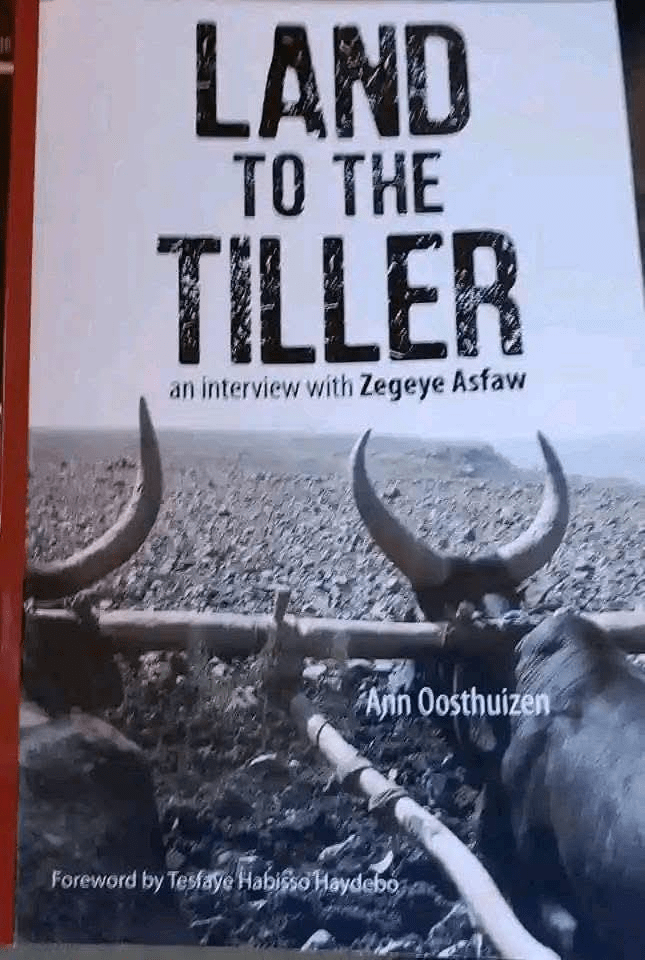
In her review of Zegeye Asfaw’s 2012 interview, scholar Anne Oosthuizen captured the essence of the man and his mission:
“In 1974, one of the most extensive land reform programmes in history returned the land from the Ethiopian aristocracy to the people who tilled it. Overseeing this land reform was an inspiring but humble figure, Zegeye Asfaw – Oromo and Ethiopian.”
The interview, Oosthuizen notes, tells the story of his life, of the struggle for land reform, and of the personal cost of that struggle – for himself and for others.
It is not a story of easy victories. It is a story of sacrifice. Of sleepless nights. Of enemies made on all sides. Of a man who stood between the old guard and the hungry masses and chose, again and again, to stand with the landless.
PART THREE: More Than a Reformer – A Bridge
Tackling the Tensions Between North and South
Oosthuizen’s review highlights that Zegeye’s story is not only about land. It is about Ethiopia itself.
“It tackles the tensions between the North and South of Ethiopia; it throws light on the student movements that shaped the politics of the last fifty years; and it provides insights from inside the governments of three very different regimes. Most of all, it is a story of the land itself.”
Zegeye Asfaw lived through three very different regimes. He served under each with the same principle: the land belongs to those who work it. He navigated the treacherous waters of Ethiopian politics not for personal power, but for the plow in the farmer’s hand.
He understood that the tensions between North and South, between aristocracy and peasant, between tradition and reform – all of these converged on a single question: Who owns the earth?
And his answer never wavered: The people.
PART FOUR: The Personal Cost of Principle
What He Sacrificed for the Land
Great deeds are not free. Every proclamation that changes a nation comes with a price. Zegeye Asfaw paid that price – in ways that the history books rarely record.
The personal cost was immense:
- Friends turned enemies – those who benefited from the old order did not forgive easily.
- Constant threats – power does not surrender without a fight.
- Sleepless nights – the weight of millions of hopes rested on his decisions.
- Loneliness – standing for principle can be a solitary road.
He bore all of it. Not for glory. Not for wealth. But because, as Dereje Hawas wrote, he was a mastermind – not of schemes, but of justice.
PART FIVE: An Oromo and an Ethiopian
A Identity That Bridged Worlds
In a country where identity is often used to divide, Zegeye Asfaw refused to choose between being Oromo and being Ethiopian. He was both – fully, proudly, and without apology.
He understood that love for one’s own ethnic nation and love for the broader Ethiopian family are not contradictions. They are harmonies.
His life demonstrated that an Oromo can lead national transformation. That an Ethiopian can honor his specific heritage while serving the whole. That land reform – so often a source of ethnic tension – can also be a source of unity when guided by a just hand.
PART SIX: A Legacy Etched in Soil
What Remains After the Giant Falls
Zegeye Asfaw passed from this world in 2026. He was born in April 1942. His body will return to the earth – the same earth he fought to liberate.
But what remains?
- Every farmer who owns their land today – in Oromia, in Amhara, in Tigray, in the South – owes a debt to his vision.
- Every family that eats from the soil they till – their security is built on the foundation he helped lay.
- Every student of Ethiopian history – will encounter his name and learn what one determined person can achieve.
As Dereje Hawas wrote:
“Rest in power, Obbo Zegeye!”
Not rest in peace – though peace he deserves. Rest in power – because his power was not the power of weapons or wealth. It was the power of principle. And that kind of power does not die.
EPILOGUE: A Prayer for the Giant
Nagaatti, Lubbuun Keet Jannataan Ha Qananiitu
We close with a prayer – inadequate, perhaps, for a life so immense, but sincere:
“May the Almighty grant Ob Zegeye Asfaw Abdi eternal peace among the righteous. May his family, friends, and all who mourn find strength in his legacy. May the land he loved continue to nourish the people he served. And may his name be spoken with gratitude for generations yet to come.”
The giant has fallen. But the earth he moved remains shifted. The proclamation he masterminded remains law. The land he returned to the people remains in their hands.
And that is a legacy that no grave can contain.
Rest in power, Obbo Zegeye Asfaw Abdi (1942-2026).
Nagaatti. Lubbuun kee jannataan haa qananiitu.
This Feature Condolence Story is written by Dhabessa Wakjira based on the grief post of Dereje Hawas and the book review of Anne Oosthuizen.

Posted on May 12, 2026, in Aadaa, Events, Finfinne, Information, News, Oromia, Press Release. Bookmark the permalink. Leave a comment.






Leave a comment
Comments 0