“THIS IS DUKAM”: A Shocking Act, A Baffling Bragging Rights, and a Deadly Question
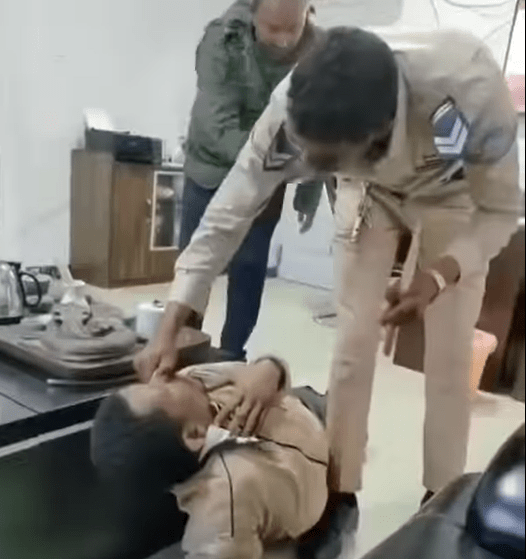
When security forces record their own brutality and celebrate it, is this policy – or a collapse of all rules of engagement?
Exclusive Investigative Feature
INTRODUCTION: THE NAME THAT BECOMES A CONFESSION
Kun Dukam.
“THIS IS DUKAM.”
Three words. Spoken like a signature. Uttered not in a courtroom, not in an interrogation room, not in a formal report – but on the scene of an act so shocking, so brazen, that it forces every observer to ask a single, terrifying question:
Was this ordered? Or has something far more dangerous been unleashed?
The act in question – a “suukanneessaa” (shocking, astonishing, almost unbelievable) deed – was captured on video or recounted by witnesses. And the perpetrators did not hide their faces. They did not whisper. They did not flee.
Instead, they announced themselves.
Kun Dukam.
This is Dukam.
As if the name itself were a badge of honor. As if the brutality were a brand. As if somewhere, someone had given them permission – not just to commit the act, but to own it, to record it, to boast about it.
This article investigates what happened at the Chaaynota Dukam office – a business establishment where this shocking event unfolded – and explores the deeper implications for Ethiopia’s security apparatus, its rules of engagement, and the very concept of justice.
PART ONE: THE SCENE – WHAT HAPPENED AT CHAAYNOTA DUKAM?
The Location
The incident took place at the Waajjira Chaaynota Dukam – the Dukam Chain Office, a business establishment whose exact nature remains under investigation. What is clear is that this was not a battlefield. This was not a remote forest or a clandestine detention center.
This was a place of business.
People were there to work, to trade, to live their ordinary lives – until the moment ordinary life ended.
The Act
The details of the “gocha suukanneessaa” (astonishing act) are still emerging. But according to available information:
- The act was so extreme, so outside the bounds of normal human behavior, that witnesses struggled to process what they had seen
- The perpetrators did not act in secret
- The act was recorded or documented in a way that left no doubt about who was responsible
- Those responsible then identified themselves openly – not as anonymous operatives, but as “Dukam”
The Signature
The phrase “Kun Dukam” – “This is Dukam” – appears to have been used as a kind of declaration.
In criminal underworlds, such signatures are common: cartels leave their marks on bodies; gangs spray-paint their names on walls. But those are criminals – people who operate outside the law.
The question haunting this case is: Was Dukam operating outside the law – or with the law’s protection?
PART TWO: THE PERPETRATORS – WHO IS “DUKAM”?
The name “Dukam” is not yet publicly identified as belonging to any known official security unit. This raises several possibilities:
| Possibility | Implication |
|---|---|
| A rogue unit | A group of individuals acting on their own, without official authorization, using a code name to conceal their identities |
| An unofficial “death squad” | A unit that exists in the shadows, known to superiors but not formally recognized, given informal permission to operate outside the rules |
| A criminal group impersonating security forces | Ordinary criminals who have adopted a name to create fear and intimidate victims |
| A nickname for an existing official unit | An established police or military unit that has acquired (or given itself) a street name |
Without further investigation, it is impossible to say which possibility is true. But the fact that the perpetrators announced themselves – “Kun Dukam” – suggests they are not afraid of being identified.
And that suggests protection.
PART THREE: THE CENTRAL QUESTION – ORDERED OR ROGUE?
“Waan akka qajeelfamaa (rule of engagement) wahiitu akkas godhaa jedhee itti kenname moo?”
“Is there something like a rule of engagement that was given to them, telling them to do this?”
This is the heart of the matter.
What Are Rules of Engagement?
Rules of engagement (ROE) are the guidelines that govern how security forces – police, military, intelligence operatives – may use force. They are supposed to ensure that force is used:
- Proportionally (not excessive)
- Legally (within the law)
- Necessarily (only when required)
- Accountably (those who use force can be investigated)
In functioning democracies, ROE are written, trained, and enforced. Violations lead to prosecution.
What If the ROE Themselves Are Corrupt?
The question posed in the original text goes deeper: not just “Did they follow the rules?” but “Were the rules themselves written to permit this?”
If the answer is yes – if someone in authority gave a unit called “Dukam” permission to commit shocking acts, to announce themselves, to operate with impunity – then the problem is not rogue actors.
The problem is state policy.
And that is far more dangerous.
The Spectrum of Possibility
| Scenario | Description | Accountability |
|---|---|---|
| Rogue actors | Individual officers acted without orders, violating their training and the law | Arrest and prosecute the individuals |
| Tacit approval | Superiors knew but did nothing; a culture of impunity allowed the act | Remove superiors; reform the unit |
| Written authorization | Someone gave written or verbal orders permitting such acts | That someone must face trial for crimes against humanity |
| Systemic policy | The act is not exceptional but routine; “Dukam” is one unit among many operating this way | The entire system must be dismantled and rebuilt |
PART FOUR: THE ACT ITSELF – WHAT MAKES IT “SUUKANNEESSA”?
The Oromo word suukanneessaa carries a specific weight. It describes something that:
- Shocks the conscience
- Defies normal explanation
- Leaves witnesses stunned and horrified
- Goes beyond ordinary cruelty into something almost surreal
Not every violent act is suukanneessaa. A shooting, a beating, an arrest – these are terrible but understandable within the framework of state violence.
A suukanneessaa act is different. It is the kind of act that makes people ask: How could a human being do this to another human being?
And when the perpetrators then brag about it – “Kun Dukam” – the shock deepens.

The Psychology of Bragging
Why would someone commit a brutal act and then announce their identity?
| Possible Reason | Explanation |
|---|---|
| Intimidation | To terrorize the community into submission |
| Competition | To prove superiority over other units or groups |
| Impunity | Because they believe (correctly) that they will never face consequences |
| Ideology | Because they believe their cause justifies any means |
| Orders | Because someone told them to make their identity known |
Each possible reason points to a different level of organization and authority. The most frightening is the last: if they were ordered to announce themselves, then the order came from someone who wanted the act to be seen – and feared.
PART FIVE: THE LOCATION – WHY A BUSINESS ESTABLISHMENT?
The fact that this act took place “waajjira Chaaynota Dukamitti business qababii keessatti” – at the Dukam Chain Office, inside a business establishment – is highly significant.
What This Tells Us
- This was not a battlefield. No one can claim this was collateral damage in a firefight.
- This was not a remote location. Business establishments are in towns, cities, areas with other people present.
- There were witnesses. Civilians saw what happened.
- The act was intentional. Going to a specific business location, targeting that place, committing an act there – this was planned.
- There may have been a commercial or economic motive. Was this about money? About control of a business? About sending a message to other business owners?
The Intersection of Security Forces and Business
In many conflict zones, security forces become entangled with business interests. They provide “protection” (or extortion). They take sides in commercial disputes. They use their authority to seize assets, settle debts, or eliminate competitors.
If the act at Chaaynota Dukam was connected to business, the implications are enormous: security forces may be operating as armed wings of commercial interests, using state power for private gain.
PART SIX: THE PATTERN – IS DUKAM A REPEATED NAME?
The information provided does not specify whether this is the first known act by “Dukam” or part of a longer pattern. Investigative journalists and human rights monitors should examine:
| Question | Action Required |
|---|---|
| Has “Dukam” been mentioned in other incidents? | Search databases, social media, witness testimonies |
| Do other units have similar “signature” behaviors? | Compare with known practices of other security units |
| Are there videos, photos, or recordings? | Forensic analysis of available media |
| Have victims or families come forward? | Outreach to communities where Dukam operates |
If “Dukam” is a known entity with a history of such acts, then this incident is not an anomaly – it is a data point in a system of terror.
PART SEVEN: THE LEGAL FRAMEWORK – WHAT SHOULD HAPPEN
Under Ethiopian Law
Extrajudicial killings, torture, and acts of shocking cruelty are prohibited by:
- The Ethiopian Constitution (right to life, dignity, and due process)
- The Ethiopian Criminal Code (murder, assault, illegal detention)
- Ethiopia’s international obligations (ratified treaties including ICCPR, CAT, etc.)
Under International Law
Acts of shocking brutality, if widespread or systematic, may constitute:
- Crimes against humanity (if part of a state-directed attack on a civilian population)
- War crimes (if committed in a context of armed conflict)
- Torture (defined as severe pain or suffering inflicted with state involvement)
The fact that perpetrators announced themselves – “Kun Dukam” – could be evidence of intent to terrorize a civilian population, a key element of crimes against humanity.
What Justice Would Require
| Step | Responsible Body |
|---|---|
| Identify the individuals in the “Dukam” unit | Ethiopian police, with international oversight if necessary |
| Identify their commanding officers | Military/police hierarchy |
| Determine if orders were given | Internal investigation, possibly independent commission |
| Arrest and prosecute perpetrators | Ethiopian courts or, if unwilling, international mechanisms (ICC) |
| Compensate victims | State budget, with international assistance if needed |
| Disband the unit if found to be systematically abusive | Executive order |
PART EIGHT: THE CULTURE OF IMPUNITY – WHY “DUKAM” BELIEVES IT CAN BOAST
The most chilling aspect of “Kun Dukam” is not the act itself – terrible as it may be.
It is the boasting.
Perpetrators of atrocities throughout history have often tried to hide their identities. They wear masks. They operate at night. They destroy evidence.
Not Dukam.
Dukam announces itself. Dukam records itself. Dukam leaves its signature like an artist signing a canvas – except the canvas is a crime scene.
What This Boasting Reveals
- A belief in impunity – They do not believe they will ever be held accountable.
- A sense of authorization – They believe someone above them approves.
- A desire for reputation – They want to be known, feared, respected (in their own twisted understanding).
- A collapse of professional standards – No professional security force allows its members to “sign” their operations.
The Danger of Normalized Brutality
When acts of shocking cruelty become routine – when perpetrators brag rather than hide – a society has crossed a threshold. The taboo against extreme violence has broken. What was once unthinkable becomes thinkable. Then it becomes doable. Then it becomes celebrated.
“Kun Dukam” is not just a statement of identity. It is a declaration of a new normal – one in which the state’s agents can commit any act, anywhere, against anyone, and then announce it to the world without fear.
PART NINE: THE RESPONSIBILITY OF WITNESSES AND JOURNALISTS
Acts like the one attributed to “Dukam” depend on silence. They depend on fear. They depend on witnesses looking away.
What Witnesses Can Do
- Document – Write down what you saw. Take photos if safe. Record audio.
- Preserve evidence – Keep any physical evidence in a safe place.
- Find others – You are likely not the only witness. Corroboration is powerful.
- Contact journalists – Investigative reporters can protect your identity while exposing the truth.
- Seek legal help – Human rights organizations may provide legal support.
What Journalists Must Do
- Investigate – Do not rely on official statements. Go to the scene. Find witnesses.
- Verify – Cross-check accounts. Seek multiple sources.
- Protect sources – Anonymity is not cowardice; it is survival.
- Name names – When evidence supports it, name the perpetrators, the commanders, the enablers.
- Follow the pattern – One incident is a story. A pattern is an exposé.
PART TEN: THE QUESTION THAT REMAINS – AND THE ANSWER WE DEMAND
The original text asks:
“Waan akka qajeelfamaa (rule of engagement) wahiitu akkas godhaa jedhee itti kenname moo?”
“Is there something like a rule of engagement that was given to them, telling them to do this?”
This is not a rhetorical question. It is a demand for information.
The Ethiopian people – and the international community – have a right to know:
- Who is Dukam?
- What unit do they belong to?
- Who commands them?
- Were they acting on orders?
- If so, whose orders?
- What rules of engagement – written or unwritten – govern their actions?
- Will anyone be held accountable for the act they committed and then boasted about?
Until these questions are answered, every Ethiopian citizen must assume that any security officer could be Dukam – could commit any act, anywhere, and then announce “Kun Dukam” without consequence.
That is not a state. That is a reign of terror.
CONCLUSION: THE NAME THAT MUST BECOME A VERDICT

Kun Dukam.
Today, those words are a boast – a signature of impunity, a declaration of power without accountability.
But tomorrow, those same words could become something else.
They could become evidence.
They could become indictment.
They could become conviction.
Every time a perpetrator announces “Kun Dukam,” they are writing their own confession. They are providing their own name. They are creating the record that will one day be used to put them in prison.
The hyenas ate Tomas Getacho’s body, but the truth survived. Dukam may believe its acts will be forgotten, its name will fade, its crimes will be buried.
But the truth has a long memory.
And the truth is this: No one who commits an act of shocking cruelty – and then boasts about it – can hide forever.
Kun Dukam.
Yes. This is Dukam.
And one day, this will be Dukam’s downfall.
To the victims of Dukam: May your suffering be acknowledged.
To the witnesses: May your courage be honored.
To the perpetrators: May justice find you.
And to those who gave the orders – if orders were given: May you face a court that does not recognize your name.
© 2026 – An Investigative Feature on the Dukam Incident

Posted on April 18, 2026, in Aadaa, Events, Finfinne, Information, News, Oromia, Press Release, Promotion. Bookmark the permalink. Leave a comment.




 Advocacy for Oromia
Leave a comment
Comments 0