Tortured for his Oromo identity, scarred for life, yet still standing – Hussein Ahmed embodies the price of resistance and the resilience of a people.
A Feature Story – Human Rights, Resistance, and Unbreakable Will
PROLOGUE: A PHOTOGRAPH THAT SPEAKS VOLUMES
The image is stark. It is painful. It is necessary.
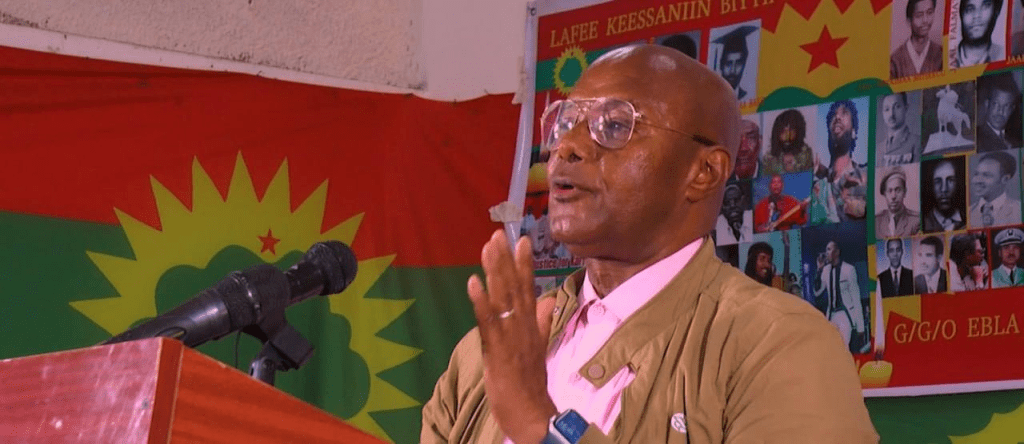
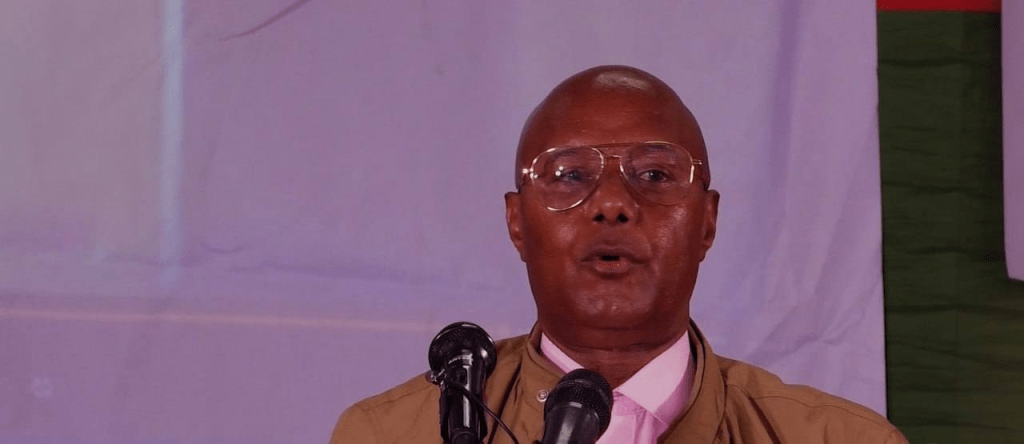
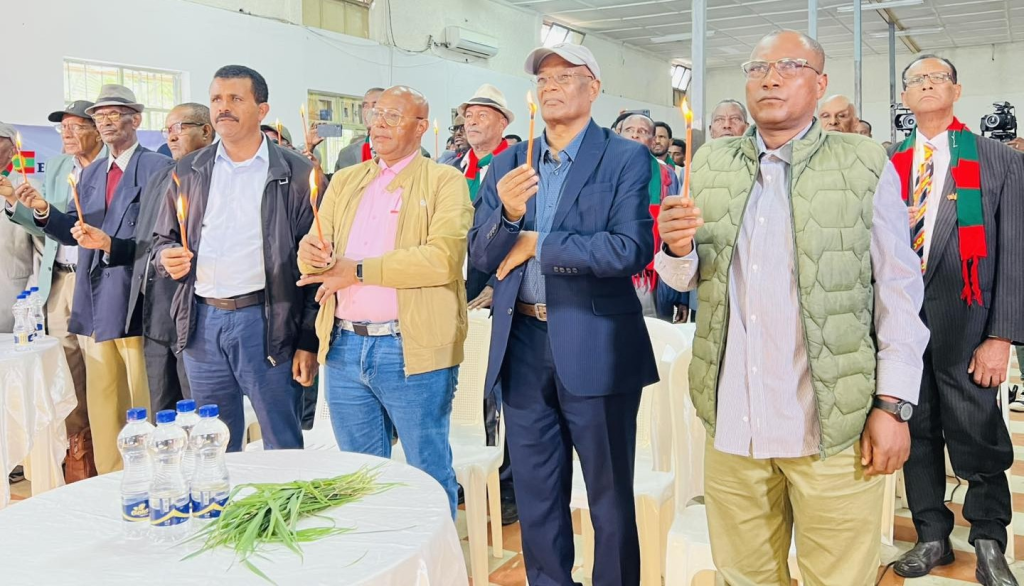
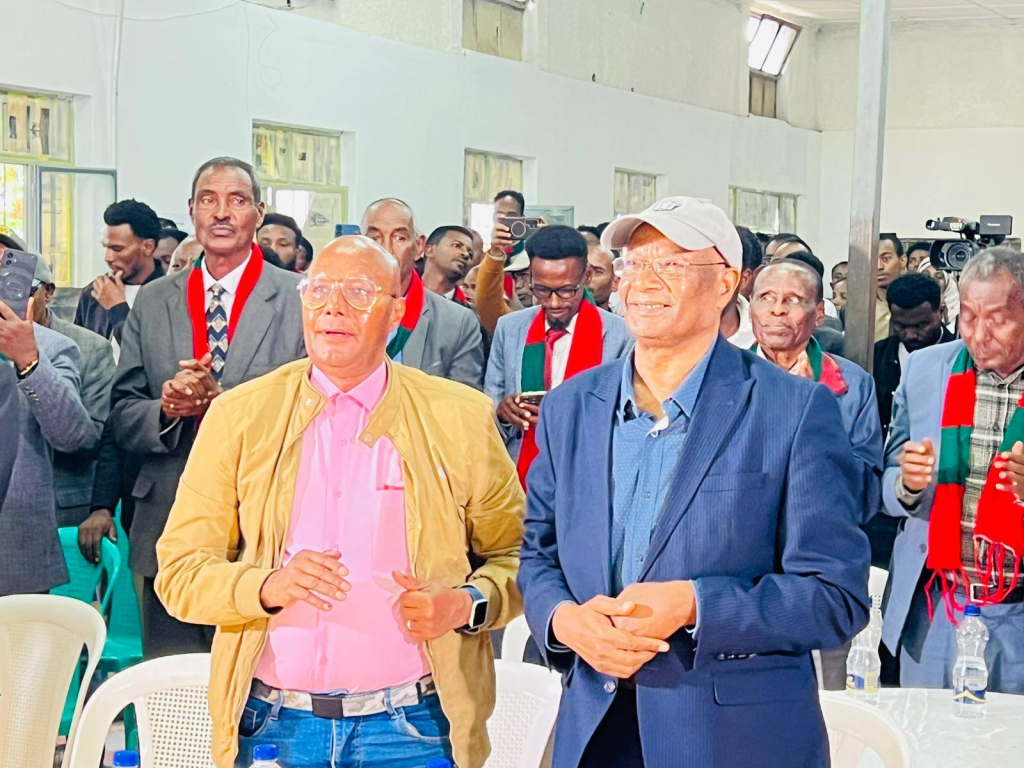
Taken on April 15, 2026 (Ebla 15, GGWO), the photograph captures a man who has been broken by the state – but not defeated. His body bears the evidence of cruelty. His eyes carry the weight of suffering. And yet, he stands.
This is Jaal Hussein Ahmed.
He is a fighter for the Oromo cause. He is a man who paid for his Oromummaa (Oromo identity) with his own flesh. He was tortured in Huurso – forced to carry 70 kilograms of stone on his back until his body was permanently disfigured.
Today, even now, he is described as someone who “walks as if broken” – leaning, limping, carrying forever the physical memory of what was done to him.
But he walks. He still walks. He still stands. He still fights.
This feature article tells his story – not as a tragedy, but as a testament. A testament to the brutality of oppression. And a testament to the unbreakable spirit of those who refuse to bow.
PART ONE: THE MAN – WHO IS JAAL HUSSEIN AHMED?
Fact
Detail
Name
Jaal Hussein Ahmed
Identity
Oromo patriot, political activist, prisoner of conscience
Affiliation
Oromo liberation movement (exact affiliation not specified in available record)
Known For
Enduring extreme torture for his Oromo identity; surviving; continuing the struggle
Current Status
Living – “still in the struggle”
Jaal Hussein Ahmed is not a general. He is not a politician. He is not a wealthy man or a famous figure. He is, by most measures, an ordinary Oromo – except for one thing: he refused to deny who he was.
And for that refusal, the state made him pay.
PART TWO: THE TORTURE – HUURSO AND THE 70 KILOGRAM STONE
The Location: Huurso
Huurso is a name that strikes fear into the hearts of many Oromos. It is associated with detention, interrogation, and systematic torture – a place where the state has, for years, attempted to break the bodies and spirits of those who dare to demand Oromo rights.
The Method: Carrying Stone
The torture inflicted on Jaal Hussein Ahmed was not subtle. It was not psychological warfare or sleep deprivation or the more “sophisticated” methods of modern interrogation.
It was primitive. It was brutal. It was physical.
“Nama Oromummaa isaan yakkamee Huursotti Dhagaa 70 KG dugdatti fe’uun qaamaa hir’isanii dha.” *”He was accused of Oromummaa (Oromo identity/nationalism). In Huurso, they made him carry a 70 KG stone on his back, and in doing so, they mutilated his body.”*
Seventy kilograms. That is roughly the weight of an adult human. That is more than many people can lift, let alone carry on their backs.
And he was made to carry it – not for a moment, not for a minute – but as an act of torture designed to break his spine, to crush his organs, to destroy his body so completely that he would never again be able to stand up straight.
The Result: Permanent Disfigurement
The torture worked – not in breaking his spirit, but in breaking his body.
Today, Jaal Hussein Ahmed walks “as if broken” (“akka cabanitti hokkolan”). He leans. He limps. His back, once straight, now carries the permanent memory of the stone. His body is a living archive of state cruelty.
But he is alive. And he is still standing.
PART THREE: THE MEANING OF TORTURE – WHAT THE STATE TRIED TO DO
The Purpose of Torture
Torture is never random. It is never merely about inflicting pain. Torture has specific political purposes:
Purpose
How It Was Applied to Jaal Hussein Ahmed
Punishment
Punishing him for his Oromo identity and political beliefs
Deterrence
Sending a message to other Oromos: “This is what happens to those who resist”
Confession extraction
Attempting to force him to renounce his Oromummaa or inform on others
Dehumanization
Reducing a proud man to a broken body, to show that the state has power over everything
Erasure
Trying to destroy not just the individual, but what he represents
Why They Failed
The state succeeded in breaking Jaal Hussein Ahmed’s body. They did not succeed in breaking his spirit.
He did not renounce his identity. He did not betray his comrades. He did not stop fighting.
The torture ended. The pain remained. But the man – the Oromo patriot – continued.
That is the failure of torture. It can destroy flesh. It cannot destroy conviction.
PART FOUR: THE PHOTOGRAPH – APRIL 15, 2026
The photograph mentioned in the original text is dated April 15, 2026 (Ebla 15, GGWO).
It is a recent image. It shows Jaal Hussein Ahmed not as a young man at the peak of his physical strength, but as a survivor – bearing the marks of what was done to him decades ago.
What the Photograph Shows
Element
What It Conveys
His posture
Bent, leaning, “as if broken” – the permanent legacy of the 70 KG stone
His face
Worn, aged by suffering, but not defeated
His eyes
Still alive. Still watching. Still resisting.
His presence
Still standing. Still here. Still fighting.
The Power of the Image
A photograph of a tortured man is not easy to look at. It demands something of the viewer: discomfort, empathy, recognition of shared humanity.
But the photograph of Jaal Hussein Ahmed is not merely a document of suffering. It is a document of survival.
It says: They tried to destroy me. I am still here.
It says: The Oromo struggle is not a slogan. It is written on bodies like mine.
It says: Do not look away.
PART FIVE: THE BROADER CONTEXT – TORTURE AS STATE POLICY
Jaal Hussein Ahmed is not alone. His story is one among thousands.
The Pattern of Torture in Ethiopia
Human rights organizations have documented systematic torture in Ethiopian detention facilities for decades. Methods include:
Method
Description
Beatings
With fists, batons, cables, and rifle butts
Suspension
Hanging prisoners by their wrists or ankles for hours or days
Electric shock
Applied to sensitive areas of the body
Burning
With cigarettes, hot metal, or chemicals
Sexual violence
Rape and genital mutilation
Weight-bearing torture
Forcing prisoners to carry heavy loads, as in Jaal Hussein Ahmed’s case
The Target: Oromo Identity
What makes Jaal Hussein Ahmed’s case particularly significant is the stated reason for his torture: Oromummaa – Oromo identity.
He was not accused of a crime. He was not charged with murder, theft, or violence. He was accused of being Oromo – of identifying with his people, of believing in Oromo rights, of refusing to assimilate into a state that has historically sought to erase Oromo distinctiveness.
This is not torture for a specific act. This is torture for identity.
And that is a crime against humanity.
PART SIX: THE SURVIVOR – LIFE AFTER TORTURE
Walking “As If Broken”
The phrase “akka cabanitti hokkolan” – “he walks as if broken” – is heartbreaking in its simplicity.
Every step Jaal Hussein Ahmed takes is a step of pain. Every movement reminds him of what was done to him. He cannot stand straight. He cannot run. He cannot carry heavy loads. He cannot forget.
And yet, he walks. He still walks.
The Psychological Toll
Torture does not only damage the body. It damages the mind.
Psychological Effect
How It May Manifest
Post-traumatic stress
Nightmares, flashbacks, hypervigilance
Depression
Hopelessness, withdrawal, loss of joy
Anxiety
Constant fear, difficulty trusting others
Chronic pain
Physical pain that never ends, affecting mental health
Jaal Hussein Ahmed likely carries these invisible wounds as well. And yet, he is described as someone who is “still in the struggle” (“namni qabsoorra jiruu dha”).
He is not just surviving. He is still fighting.
PART SEVEN: THE STRUGGLE – CARRIED ON THE BACKS OF THE BROKEN
“Qabsoon Oromoo namoota akka isaa kanaan tikfamee as gahe.” “The Oromo struggle has been carried forward by people like him, preserved and brought this far.”
This is a profound statement. It acknowledges a difficult truth:
The Oromo liberation movement has not been carried forward by the healthy, the comfortable, the powerful. It has been carried forward by the broken – by those who have been beaten, imprisoned, tortured, exiled, and killed.
They are the ones who have paid the price. They are the ones who have refused to give up. They are the ones who have ensured that the struggle continues from one generation to the next.
Jaal Hussein Ahmed is one of those people. His broken body is a foundation stone of Oromo resistance.
The Debt of Gratitude
Every Oromo who enjoys any measure of cultural freedom, political space, or linguistic recognition today owes a debt to people like Jaal Hussein Ahmed.
He did not benefit. He suffered. He did not grow rich. He was broken. He did not receive awards. He received stones.
And yet, because of him – and thousands like him – the Oromo cause remains alive.
PART EIGHT: THE QUESTION OF JUSTICE
What Has Been Done to Jaal Hussein Ahmed?
He was tortured.
His body was permanently disfigured.
His health was destroyed.
His life was shortened by years of suffering.
What Has Been Done to His Torturers?
Unknown. Likely nothing. In Ethiopia, as in many countries, torturers rarely face consequences. They are protected by their superiors, by the system, by a culture of impunity.
What Justice Would Require
Action
Why It Is Necessary
Investigation
Identify who ordered and carried out the torture
Prosecution
Bring torturers to trial, under Ethiopian and international law
Compensation
Provide medical care, financial support, and official acknowledgment to Jaal Hussein Ahmed
Memorialization
Ensure that his story – and the stories of others – are recorded and remembered
Systemic reform
End torture as a tool of state policy
None of these have happened. Yet.
PART NINE: THE SYMBOL – WHAT JAAL HUSSEIN AHMED REPRESENTS
Jaal Hussein Ahmed is one man. But he is also a symbol.
He Represents
Meaning
The cost of Oromummaa
Oromo identity is not free; it has been paid for in blood and broken bodies
The cruelty of the state
The Ethiopian state has used torture systematically against Oromo patriots
The resilience of resistance
Torture can break bodies; it cannot break spirits
The debt owed by the living
Current generations stand on the shoulders of the tortured
The unfinished struggle
As long as men like Jaal Hussein Ahmed are not healed, the struggle is not over
He is not a hero in the conventional sense – not a warrior with medals, not a speaker with crowds. He is a hero in the deeper sense: a man who suffered and did not break.
PART TEN: A CALL TO ACTION
The story of Jaal Hussein Ahmed demands a response.
For the Oromo People
Know his name. Do not let him be forgotten.
Honor his sacrifice. Acknowledge that your freedom – however limited – was paid for by people like him.
Continue the struggle. Do not let his suffering be in vain.
Care for the wounded. Torture survivors need medical care, psychological support, and community.
For Human Rights Organizations
Document his case. Add his testimony to the record of state torture.
Advocate for justice. Demand investigation and prosecution of his torturers.
Provide support. Medical, legal, and psychological assistance.
For the International Community
Condemn torture. Not in general statements, but in specific cases like this.
Apply pressure. Use diplomatic and economic leverage to demand accountability.
Support survivors. Fund programs for torture rehabilitation.
CONCLUSION: THE BROKEN WHO STAND
Jaal Hussein Ahmed was made to carry 70 kilograms of stone on his back. His body was permanently disfigured. He walks today “as if broken.”
But he walks.
He still stands. He still fights. He is still here.
The Oromo struggle has been carried forward on the backs of the broken. Jaal Hussein Ahmed is one of those backs – bent, scarred, but still bearing the weight of hope.
The photograph taken on April 15, 2026, shows a man who has been through hell and emerged – not unscathed, but unvanquished.
Let that image be seared into the memory of all who see it.
Let his name be spoken with reverence.
Let his torturers be named – and one day, judged.
And let the Oromo people remember: freedom is not free. It is paid for by people like Jaal Hussein Ahmed.
FINAL TRIBUTE
To Jaal Hussein Ahmed: You carried the stone. You bore the weight. You lost the straightness of your back but not the strength of your spirit. We see you. We honor you. We will not forget what was done to you – and we will not stop fighting until justice is done.
“They broke his back. They could not break his will. He walks as if broken – but he walks. And as long as he walks, the struggle walks with him.”
Waaqni jireenya kee haa eegu. May God protect your life.
Waaqni qaama kee haa fayyisu. May God heal your body.
Waaqni qabsoo Oromoo haa eegu. May God protect the Oromo struggle.
The aim of Advocacy for Oromia-A4O is to advocate for the people’s causes to bring about beneficial outcomes in which the people able to resolve to their issues and concerns to control over their lives. Advocacy for Oromia may provide information and advice in order to assist people to take action to resolve their own concerns. It is engaged in promoting and advancing causes of disadvantaged people to ensure that their voice is heard and responded to. The organisation also committed to assist the integration of people with refugee background in the Australian society through the provision of culturally-sensitive services.
Advocacy for Oromia was established in 2010 with the purpose of enabling and empowering Oromo people by providing accurate and timely information that will help to make better choices to create the kind of future in which they wish to live.
It also provides information focus on the major issues facing us in the 21st century and it is going to try and bring a balanced approach with factual information that is positive and solution based.
The website has been in operation for the last nine years with the mission of promoting and advancing causes of Oromo people through advocacy, community education, information service, capacity building, awareness raising and promotion.
The website is also the official site of Advocacy for Oromia Association in Victoria Australia Inc., a non-profit organisation, registered under the Associations Incorporation Reform Act 2012 in Victoria as April 2014.
Our team already had considerable community development experience and expertise. Our various projects helped to develop our confidence and the capacity of our agency. Our team used every gained knowledge, skills and experiences as an opportunity to design and develop new approaches, to documenting progress, supporting positive employment outcomes, liaising with community stakeholders, and conduct evaluation.
Advocacy for Oromia is devoted to establishing Advocacy for Oromia organisation to close the gaps where we can stand for people who are disadvantaged and speaking out on their behalf in a way that represents the best interests of them. We are committed to supporting positive settlement and employment outcomes for Victoria’s Oromo community.
Advocacy for Oromia Office
Addresses:
39 Clow St,
Dandenong VIC 3175
=====================
247-251 Flinders Lane
Melbourne VIC 3000
Activities Address
Springvale Neighbourhood House Inc
Address: 46-50 Queens Ave, Springvale VIC 3171
Postal Address:
P. O. Box 150
Noble Park, Vic 3174
With your support, we can continue to help community build a better future.
Advocacy for Oromia Mental Health Program
The aim of the program is to improving the mental health and well-being of Oromo community in Victoria. It aims to assist those experiencing, mental ill-health, their families and carers of all ages within this community to address the social determinants of mental health for Oromo community. It helps:
Identify and build protective factors,
Reduce stigma and discrimination
Build capacity for self-determination
Better understand mental wellbeing, mental ill-health and the impacts of trauma
The goal of the project is to increase mental health literacy of Oromo community that aims:
To assist people with mental health issues
To increase the capacity of mental health worker
To better understand mental wellbeing
To provide mental health education and information
To address the social and cultural causes of mental health issues
Advocacy for Oromia will organise information session, women performance, radio programs, culturally adopted conversations on Oromo Coffee Drinking ceremony, providing training for mental health guides and forum and producing educational materials on the selected groups and geographical area.
Human Rights Education Program
The Human Rights Education Program is a community based human rights program designed to develop an understanding of everyone’s common responsibility to make human rights a reality in each community.
Human rights can only be achieved through an informed and continued demand by people for their protection. Human rights education promotes values, beliefs and attitudes that encourage all individuals to uphold their own rights and those of others.
The aim of the program is to build an understanding and appreciation for human rights through learning about rights and learning through rights. We aimed at building a universal culture of human rights. Thus, we aimed:
To build an understanding and appreciation for human rights through learning about rights and learning through rights.
To build capacities and sharing good practice in the area of human rights education and training
To develop human rights education and training materials and resources
The goal of the project is to increase human rights literacy of Oromo community that aims:
To better understand human rights
To increase the capacity of human rights worker
To analyse situations in human rights terms
To provide human rights education and information
To develop solidarity
To strategize and implement appropriate responses to injustice.
The ultimate goal of education for human rights is empowerment, giving people the knowledge and skills to take control of their own lives and the decisions that affect them.
Human rights education constitutes an essential contribution to the long-term prevention of human rights abuses and represents an important investment in the endeavour to achieve a just society in which all human rights of all persons are valued and respected.
Advocacy for Oromia will organise information session, performance, radio programs, culturally adopted conversations on Oromo Coffee Drinking ceremony, providing training for Human Rights guides and forum and producing educational materials on the selected groups and geographical area.
Community Safety Program
The program aims to strengthen existing collaborations and identify opportunities for the development of partnerships aimed at community safety and crime prevention activities. This approach seeks to improve the individual and collective quality of life by addressing concerns regarding the wider physical and social environment. Importantly, community safety means addressing fear of crime and perceptions of safety as without this any actions to address the occurrence of crime and anti-social behaviour are of less value.







Leave a comment
Comments 0